15 Two Kids Bedroom Ideas for Fun, Stylish, and Shared Spaces
Designing a room for two kids is part puzzle, part interior design magic. You’re juggling personalities, storage needs, and the occasional “that’s MY side” drama — and yes, somehow, it has to look cute too.
Whether you’re dealing with siblings sharing for the long haul or a temporary sleepover arrangement, you can still create a space that’s functional, fun, and fight-free. The secret?
Smart layouts, personal touches, and a dash of creativity.
These 15+ ideas will help you nail a room that’s equal parts stylish and squabble-proof.
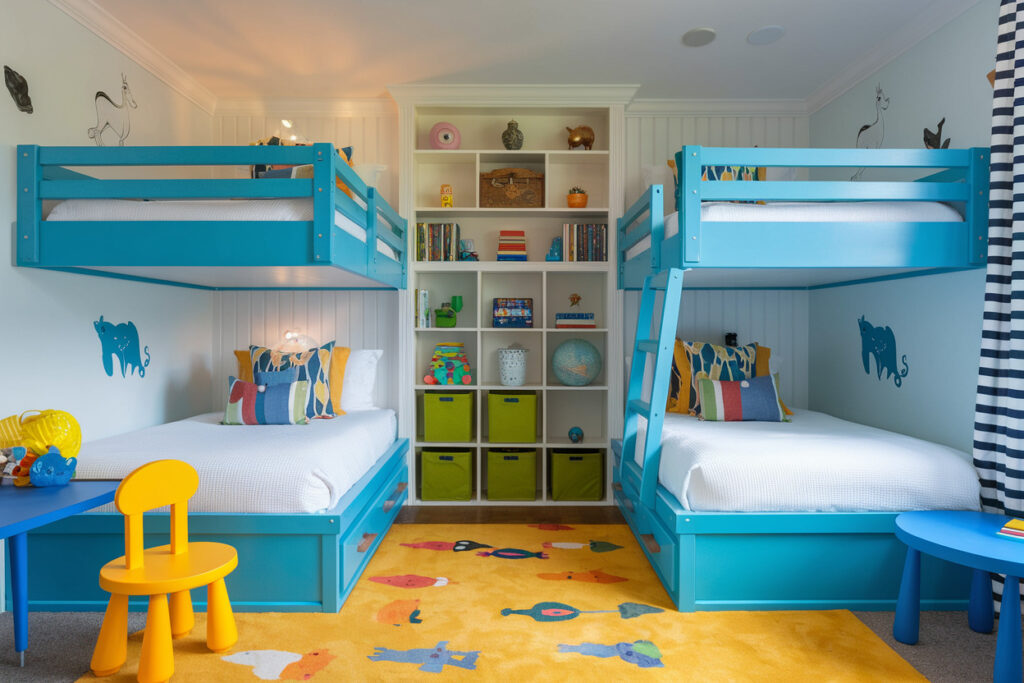
1. Go Bold with Bunk Beds

Bunk beds aren’t just a space-saver — they’re practically a childhood rite of passage. By stacking the beds, you free up valuable floor space for playtime, reading nooks, or an epic LEGO city.
If you want to take it to the next level, look for bunk designs with built-in drawers or shelves so each kid has their own stash space. That way, there’s no “he’s touching my stuff” situation brewing.
Feeling extra adventurous? Add fun extras like a slide or rope ladder. Yes, it’s slightly over the top — but imagine the bragging rights when their friends come over.
Bottom line: bunk beds = more room, more fun, and fewer “you’re in my way” complaints.
2. Parallel Twin Beds
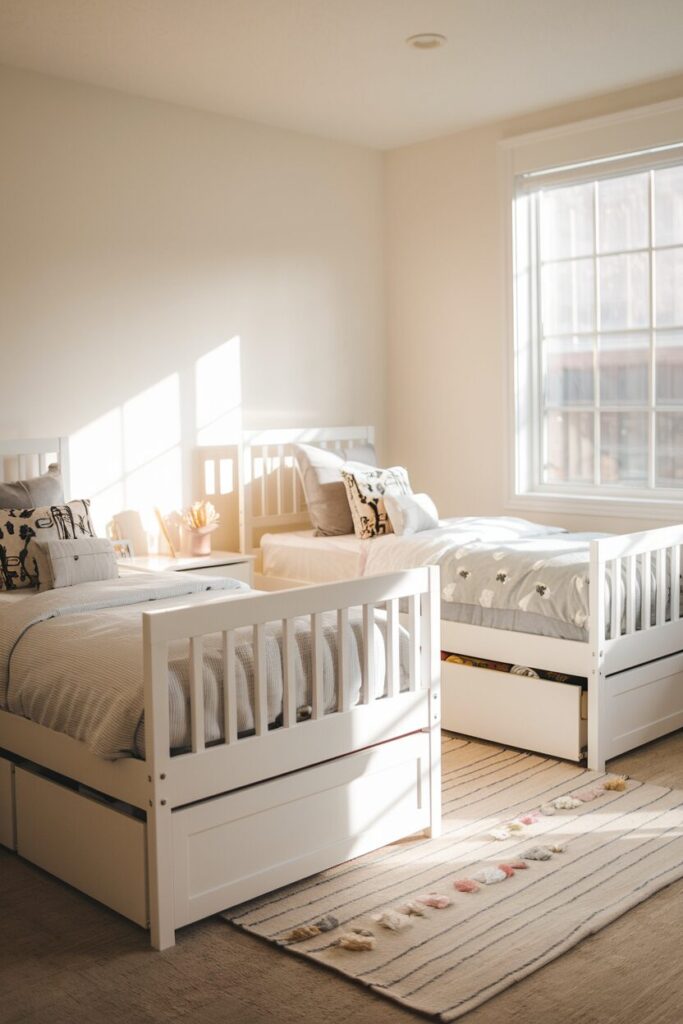
Sometimes, symmetry is the key to sibling peace. Parallel twin beds give each child the same amount of space, which can quietly solve those “my bed is bigger” arguments before they start.
Slide in under-bed drawers for hidden toy storage or spare bedding. This trick keeps the room tidy without sacrificing play space.
Matching bed frames create harmony, but let each kid pick their own bedding for personality points. It’s the perfect way to balance uniformity with individuality.
Pro tip: a rug running between the beds can tie the look together while defining each side.
3. L-Shaped Beds for More Floor Space
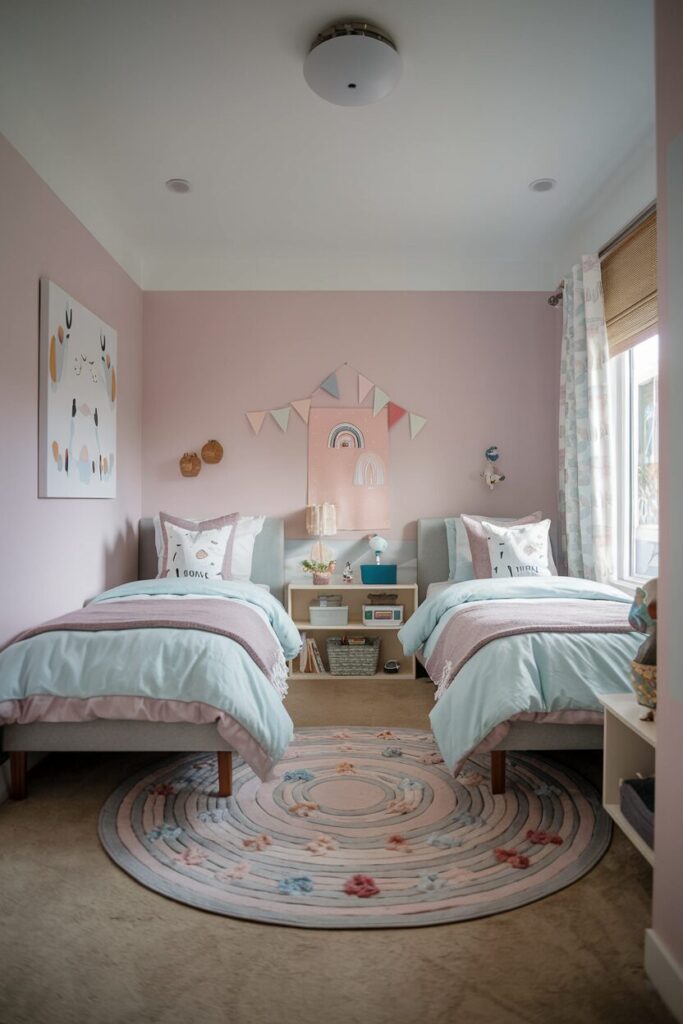
When space is tight, an L-shaped bed layout can be a game-changer. By tucking the beds into perpendicular corners, you open up the center of the room for activities.
This setup works especially well in awkward or small rooms, where fitting two beds side-by-side just isn’t practical.
Add a corner rug to soften the space and create a cozy shared zone for reading or board games. It also makes the whole setup feel intentional instead of “we had no choice.”
Plus, you’ll have plenty of wall space left for art, shelves, or a little study nook.
4. Loft Beds with Play Areas
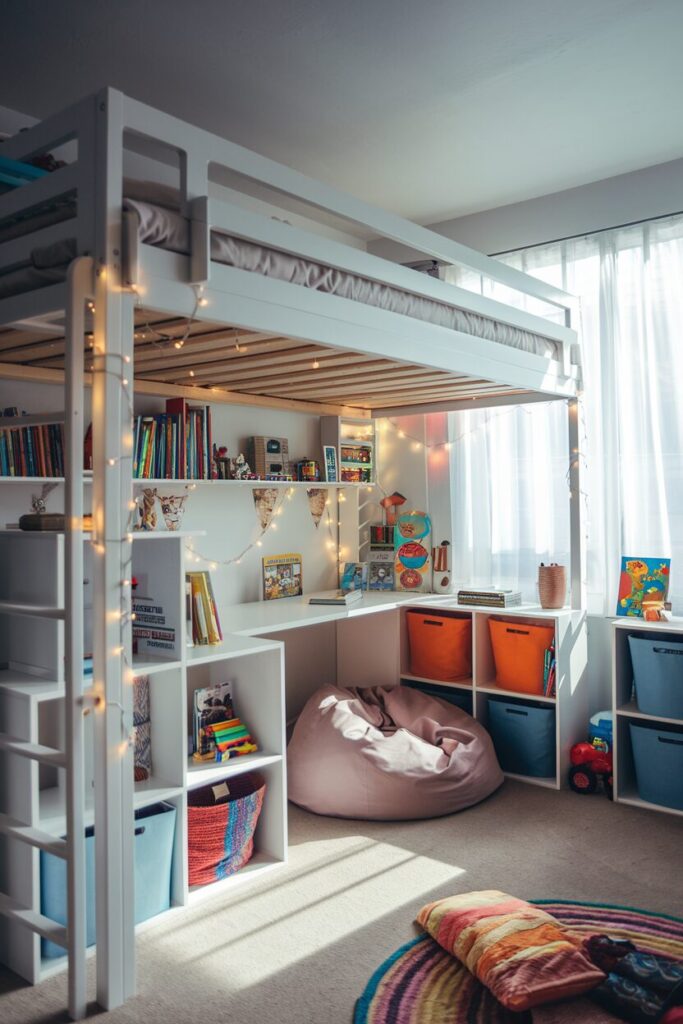
Loft beds aren’t just cool — they’re storage and play superheroes. The elevated sleeping space leaves room underneath for anything from a homework desk to a cozy beanbag corner.
This is especially useful if one or both kids have hobbies that need dedicated space. One could have an art table while the other gets a mini library.
Storage cubes under the loft can keep the clutter under control, so you’re not tripping over action figures or crayons.
And yes, it makes them feel like they’re sleeping in a treehouse — instant win.
5. Partition with a Bookshelf
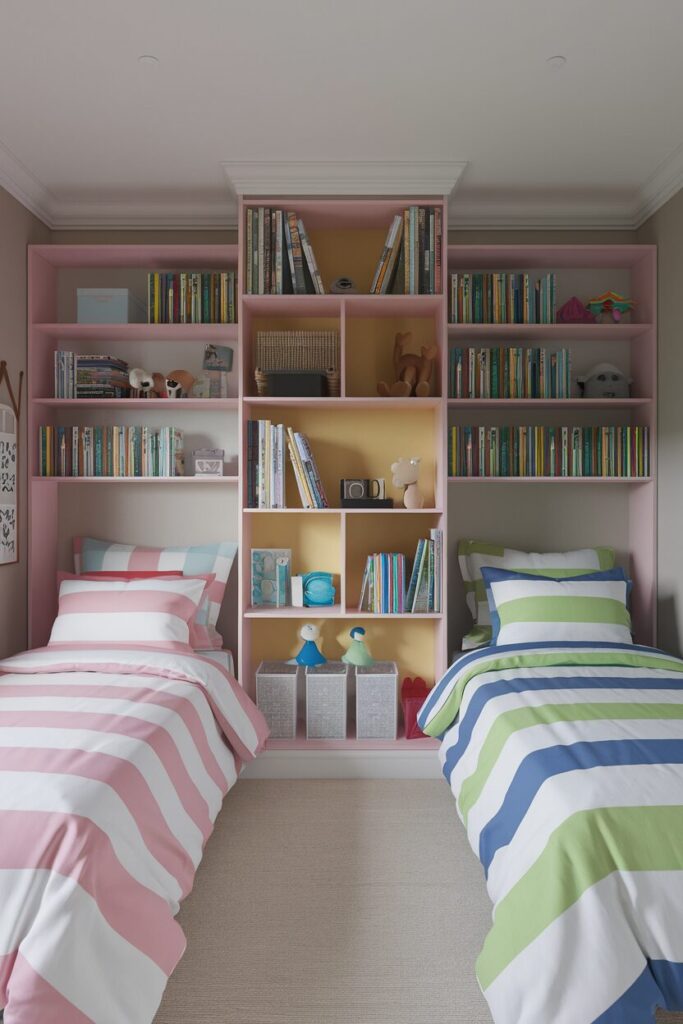
Sometimes, all a shared room needs is a bit of separation to keep the peace. A bookshelf makes a perfect divider: it creates a subtle “my side” and “your side” without shutting out light.
It’s also ridiculously practical — you get extra storage for books, toys, or decor. An open-shelf design keeps the room airy, while still giving each child a hint of privacy.
Bonus: the top shelves can be for shared items, while the lower shelves are for personal treasures (or snack stashes, if you’re feeling generous).
6. Color Zones for Each Child

If your kids are polar opposites in taste, color zoning is your best friend. Paint or decorate half the room in each child’s favorite shade — it gives them a sense of ownership without turning the space into a circus.
Keep the base neutral (white, gray, beige) so the colors pop without overwhelming the room. Bring in matching elements like rugs, bedding, or wall art in each kid’s hue to pull the look together.
This trick works wonders for helping each child feel the room reflects them — and yes, it might just reduce decorating arguments.
7. Gender-Neutral Themes That Work for Both
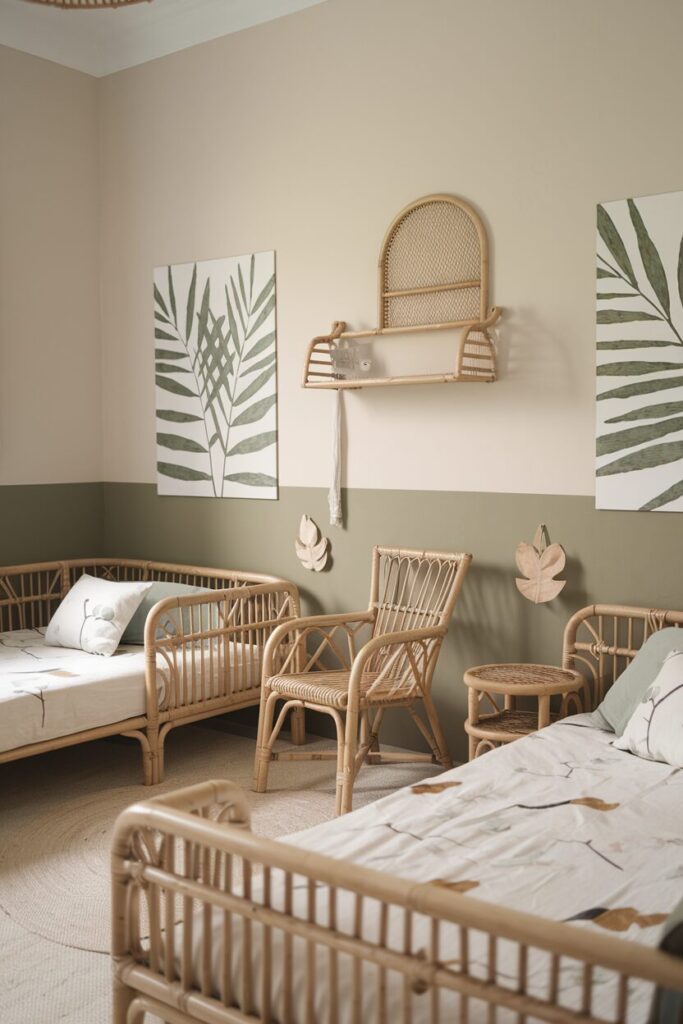
If you want to skip the pink-vs-blue battlefield, go for themes everyone can enjoy. Think nature, travel, adventure, or even a cozy cabin vibe.
Opt for simple patterns like stripes, polka dots, or geometrics. They’re timeless, easy to mix, and appeal to all ages.
Avoid heavily gendered colors and instead focus on textures and accessories to add personality. The best part? These themes grow with your kids — so you’re not redecorating every two years.
8. Jungle Safari Adventure

Got two wild explorers? Turn their bedroom into a mini jungle safari.
Start with leafy wall decals or a painted jungle mural. Add plush animals, natural fiber rugs, and wood accents for that “in the wild” vibe.
If space allows, hang a rope swing chair — not only does it look cool, but it’s also a reading nook in disguise.
This theme is perfect for imaginative play, and it’s surprisingly easy to pull off without looking overdone.
9. Outer Space Explorers
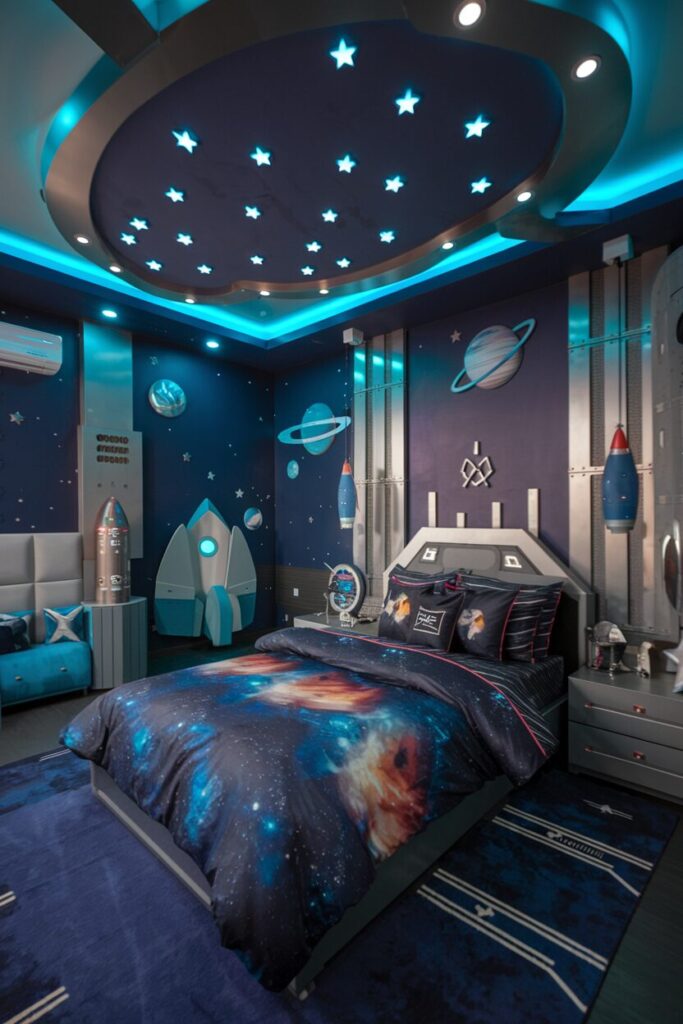
For future astronauts, outer space decor is unbeatable. Think glow-in-the-dark constellations on the ceiling and rocket ship wall decals.
Add metallic accents — silver lamp bases, chrome storage bins — for a futuristic touch. A starry rug or galaxy bedding instantly ties the theme together without making it too niche.
Bonus tip: You can get removable decals and peel-and-stick wallpaper so the room can evolve as your little astronauts grow.
10. Shared Study Station

A shared bedroom often means shared homework space, so why not make it functional and stylish?
A long desk with two chairs works wonders — it’s one piece, but each child gets their own spot. Give each kid separate drawers or rolling carts for their supplies to keep things organized.
Add individual corkboards or pegboards above their sections so they can personalize their study zones with photos, calendars, or doodles.
11. Clever Closet Organization

Two kids = double the clothes, and if you’re not careful, double the mess. The fix? A smart closet layout. Install double hanging rods to double the storage space instantly.
Use labeled bins so each child knows exactly where their stuff goes (and, in theory, puts it back).
Over-the-door hooks are perfect for backpacks, hats, or jackets — basically, anything that would otherwise end up on the floor.
12. Under-Bed Storage Solutions
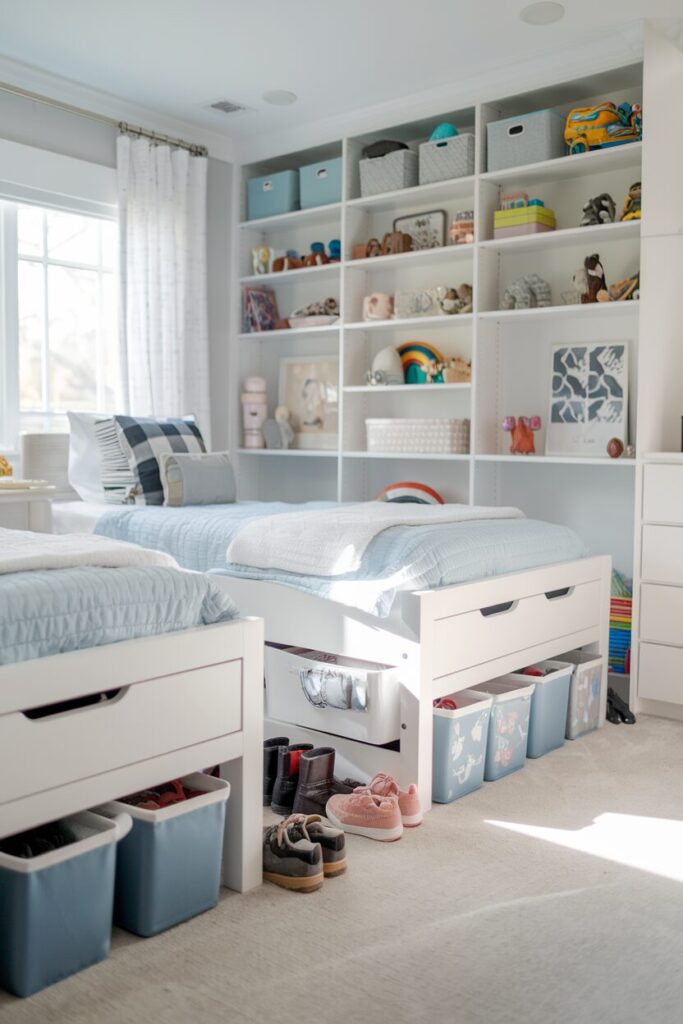
When two kids share a room, every inch counts — and under the bed is prime real estate. Rolling bins are perfect for toys, shoes, or extra bedding. They slide out easily and hide away just as quickly.
If you’re buying new frames, look for beds with built-in drawers for a more polished look.
You can even store seasonal clothes in vacuum-sealed bags to free up closet space. Just don’t forget to label everything — unless you like mystery boxes. 😉
13. Light That Doubles as Decor

Lighting can make a room feel magical, especially for kids. String lights instantly add charm and can double as a nightlight.
Pendant lamps over each bed create an individual reading space while looking stylish.
Clip-on lights are another win — they’re movable, personal, and perfect for bedtime bookworms. Lighting isn’t just about brightness; it’s about making the space feel warm, inviting, and a little bit whimsical.
14. Personalized Corners

Even in a shared room, each child should feel they have their own spot. Personalized corners make that happen.
Hang name signs or initials above their beds for instant identity.
Create a mini gallery wall of their art or display shelves for trophies, keepsakes, or collectibles. These touches remind them that even though they share, they still have something that’s truly theirs.
15. Multi-Function Furniture
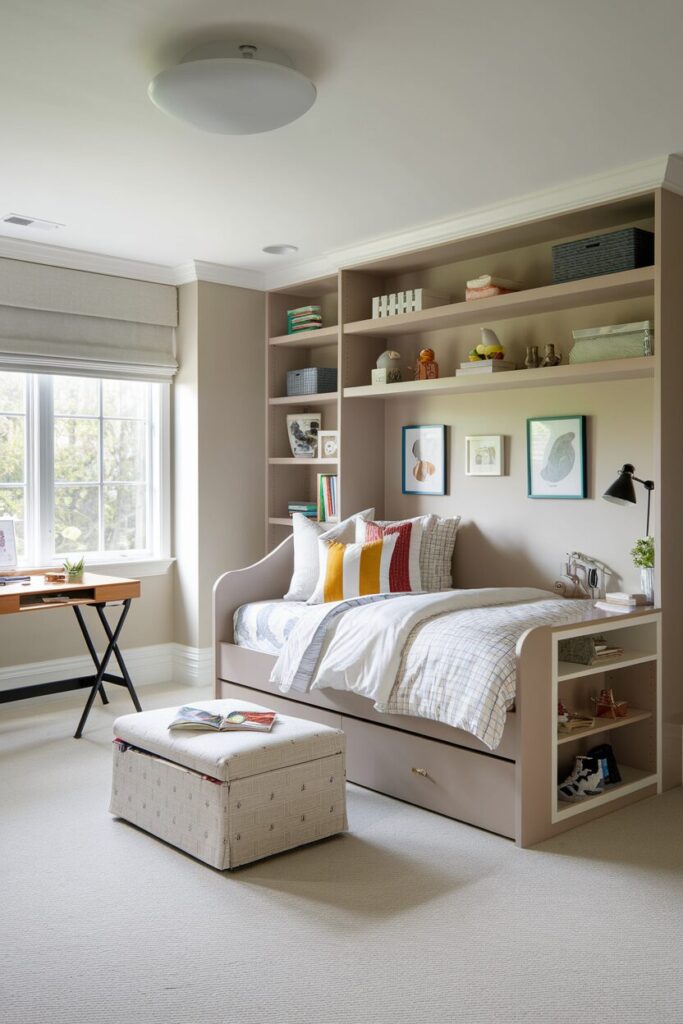
If one piece of furniture can do more than one job, it’s a keeper. Beds with built-in desks or shelves save space while adding storage. Storage ottomans are seating, toy chests, and footrests all in one.
Fold-out desks can disappear when not in use, freeing up play space in seconds. The more your furniture multitasks, the more room your kids have to actually live in their bedroom.
16. Add a Wow Wall (Bonus)

Sometimes, one bold feature can transform the whole room. A wow wall does exactly that. Think bold wallpaper, a full mural, or even a chalkboard wall where kids can unleash their creativity.
A rotating art display keeps things fresh and gives them pride in their creations. This single design element can tie the room together and make it feel extra special.
How to Design a Shared Kids’ Bedroom That Actually Works
Before you buy bunk beds or pick a jungle mural, you need a clear strategy. A shared kids’ bedroom works best when you balance layout, storage, and personal space from the start — not as an afterthought.
1. Start With the Layout First
Measure the room and map out furniture placement before purchasing anything. Focus on:
- Walking space between beds
- Clear access to closets and windows
- Defined zones for sleep, play, and study
When you prioritize flow, the room feels bigger and calmer instantly.
2. Define Personal vs. Shared Zones
Every shared room needs boundaries — even subtle ones.
- Individual bed areas
- A shared play or study zone
- Separate storage for personal items
This reduces arguments and increases ownership.
3. Plan Storage Before Decor
Storage isn’t glamorous, but it prevents chaos.
- Under-bed drawers
- Vertical shelving
- Closet dividers
Smart storage ensures the room stays functional long after the “Pinterest-perfect” moment fades.
Safety & Function: Non-Negotiables for Shared Spaces
Design matters — but safety always comes first.
- Secure bunk beds and loft beds properly to the wall when required.
- Use soft-close drawers to prevent pinched fingers.
- Anchor tall furniture like bookshelves and dressers.
- Choose durable, washable materials for bedding and rugs.
A stylish room means nothing if it isn’t safe and practical.
Long-Term Planning: Designing a Room That Grows With Them
Kids grow fast. Their tastes change even faster.
To avoid redoing the room every two years:
- Choose neutral base furniture and swap decor as they age.
- Use removable wallpaper and decals.
- Invest in adjustable desks and modular storage.
Think of the room as a flexible foundation — not a fixed theme.
Common Mistakes to Avoid
Even the best intentions can lead to design regret. Here are the most common mistakes parents make when designing a 2 kids bedroom — and how to avoid them.
1. Ignoring Storage Needs
Two kids create double the clutter. If you don’t plan storage from day one, the room will feel chaotic fast.
2. Overcrowding the Room
More furniture does not equal more function. Leave open floor space so kids can actually play.
3. Choosing Style Over Practicality
White fluffy rugs look beautiful — until juice spills happen. Choose materials that can handle real life.
4. Not Giving Each Child Personal Space
Even a small room can include personalized touches. Skipping this often leads to territorial arguments.
5. Over-Theming the Room
Extreme themes can limit flexibility. It’s better to use themed accessories that you can update easily.
Budget Planning: Where to Spend and Where to Save
Designing a shared bedroom doesn’t require a massive budget — but you should invest wisely.
Worth the Investment:
- Durable beds and mattresses
- Quality storage systems
- Safe, well-built desks
Where You Can Save:
- Decorative pillows
- Wall art (DIY works great)
- Peel-and-stick wallpaper
Prioritize structure first, aesthetics second.
Frequently Asked Questions
1. How do you fit two kids in a small bedroom?
Use vertical space like bunk or loft beds, choose multi-functional furniture, and maximize under-bed and closet storage.
2. How can I prevent siblings from fighting over space?
Create clearly defined zones for each child and ensure storage is divided evenly. Visual boundaries reduce conflict.
3. What is the best bed option for shared kids’ rooms?
It depends on room size. Bunk beds save space, while parallel twins offer balance and symmetry.
4. How do you design a shared room for different ages?
Keep the base neutral and personalize each side according to age. Adjustable desks and modular furniture help long-term.
5. Are themed bedrooms a good idea for shared spaces?
Yes, but keep the theme flexible. Use decor and accessories rather than permanent paint or built-ins.
6. How much storage does a shared kids’ room need?
More than you think. Plan for clothing, toys, books, school supplies, and seasonal items from the start.
Conclusion
A shared bedroom doesn’t have to mean compromise and chaos. With the right layout, storage solutions, and personal touches, you can make a space that feels like home to both kids.
Remember — balance is everything. Give each child a bit of themselves in the room while keeping it cohesive and functional.
So, whether you go bold with a bunk bed slide or keep it simple with color zones and smart storage, you’re not just designing a room — you’re creating memories. And trust me, in a few years, you might even miss hearing, “He’s on my side!”