11 Budget-Friendly Attic Bedroom Ideas for Sloped Ceiling Corners
Attic bedrooms come with charm and challenges. Those sloped ceilings and awkward corners can feel limiting, especially when you're working with a tight budget. But with a little creativity, you can turn those tricky spots into the coziest parts of your home.
The key is to work with the angles, not against them. Low-cost solutions like floating shelves, low-profile furniture, and strategic lighting can make a huge difference.
You don't need a big renovation to create a space that feels warm and inviting. In this listicle, we'll walk through 11 budget-friendly ideas that embrace the unique architecture of attic bedrooms.
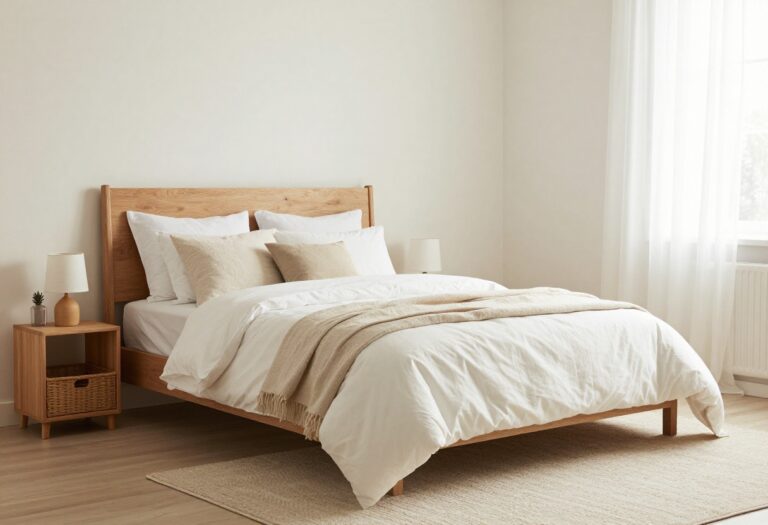
1. Low-Profile Platform Bed for Maximum Headroom
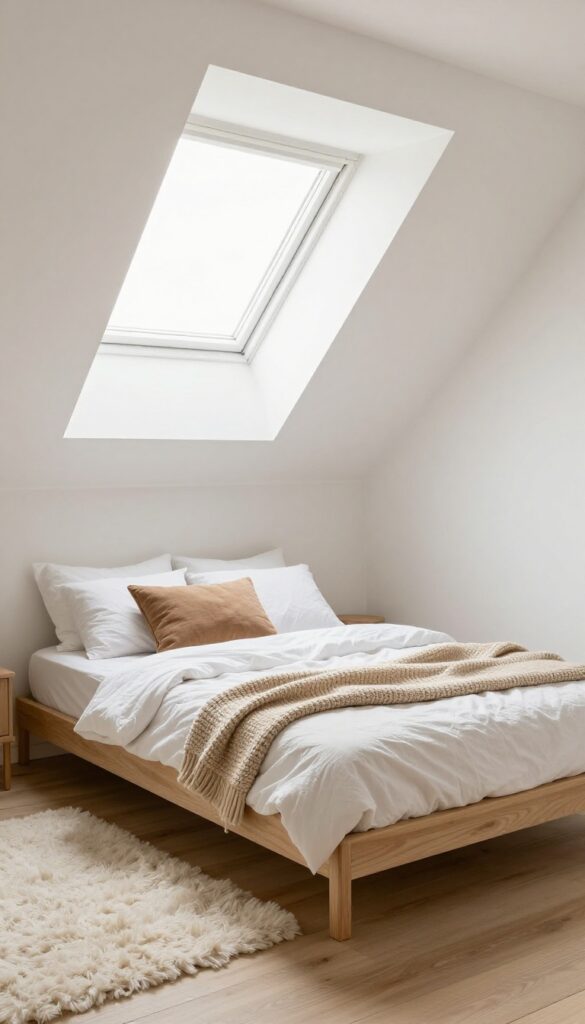
Sloped ceilings can make a standard bed frame feel towering and awkward. A low-profile platform bed hugs the floor, giving you precious inches of vertical space under the lowest part of the slope. It’s a simple swap that instantly opens up the room and keeps the focus on cozy textures rather than bulky furniture.
Why It Works
By sitting just a few inches off the ground, a platform bed eliminates the visual weight of a traditional frame and box spring. This creates a seamless, grounded look that makes the ceiling feel higher and the room less cramped.
Best For
Attic bedrooms with steep slopes on one or both sides, especially where a standard bed would block windows or make the space feel closed in.
Styling Tip
Layer a chunky knit throw and a few linen pillows in warm earth tones to keep the low profile feeling inviting, not sparse. A soft wool rug underneath adds warmth and defines the sleeping zone.
2. Floating Shelves in Awkward Nooks
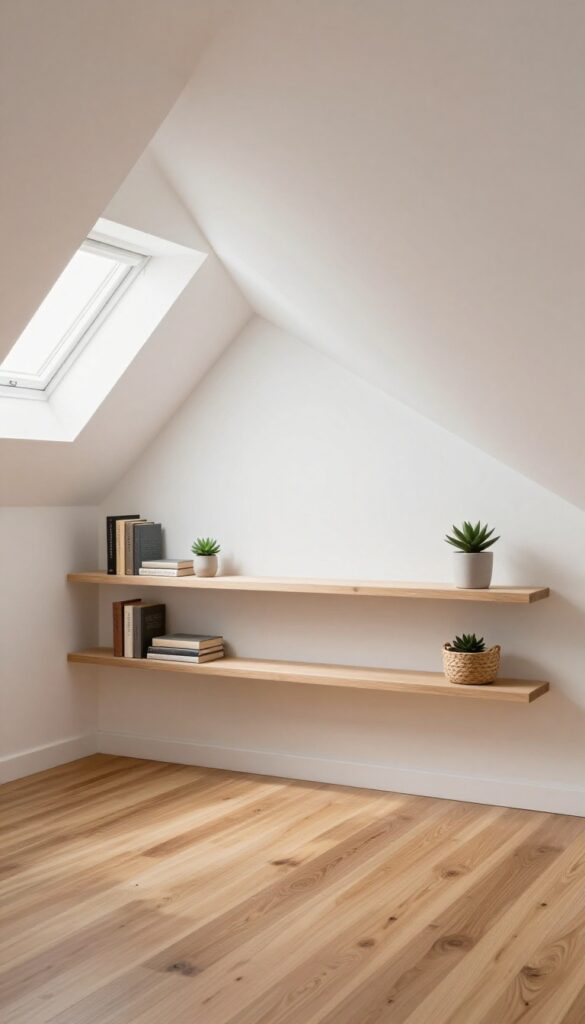
Those tight corners where the sloped ceiling meets the wall often end up as dead space. But instead of leaving them empty, install floating shelves to turn them into mini display areas. The key is to keep it simple—just a few slim shelves that fit the angle of the roof.
They add storage without taking up any floor space, which is exactly what a small attic bedroom needs.
Why It Works
Floating shelves are one of the most budget-friendly ways to add storage and personality to a sloped ceiling corner. They don't require any floor space, so they keep the room feeling open and uncluttered. Plus, they're easy to install yourself with just a drill and a level.
Best For
This idea works best in corners that are too narrow for a chair or small table. It's also great for displaying lightweight items like books, small plants, or framed photos. If you have a collection of anything—vintage cameras, tiny succulents, or favorite novels—this is the spot to show them off.
Styling Tip
Stick to a warm, cohesive color palette for the items on the shelves to keep the look intentional. Mix in a few natural textures like a small woven basket or a ceramic vase to add warmth. And don't overcrowd—leave some breathing room between objects so the shelves feel curated, not cluttered.
3. String Lights to Soften Sharp Angles
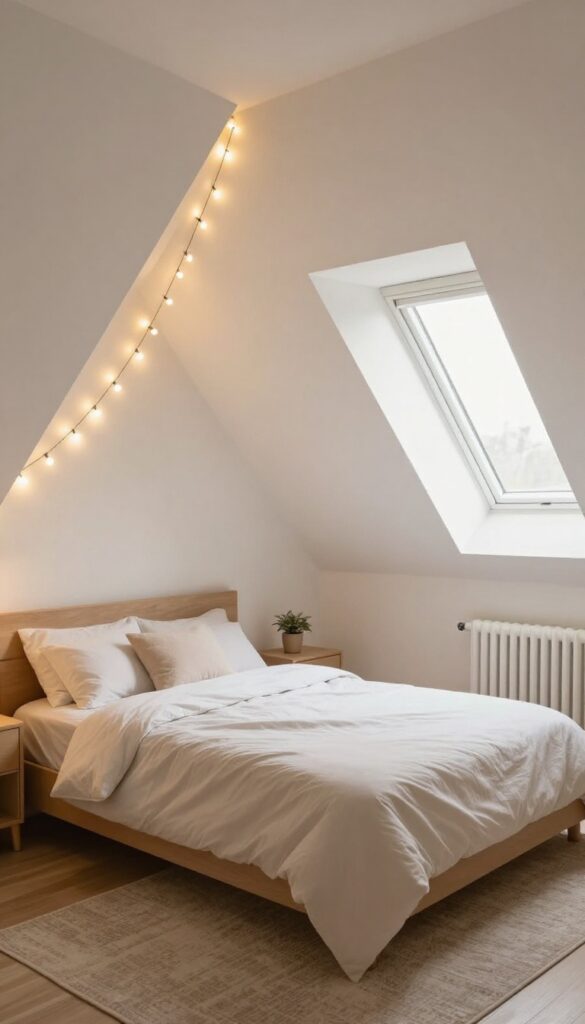
String lights are the easiest way to turn a harsh sloped ceiling into something dreamy. Draped loosely along the angle, they catch the eye and make the whole room feel softer. The warm glow instantly makes the space feel like a cozy hideaway, not a cramped corner.
Why It Works
The lights break up the hard line of the slope, creating a visual curve that feels more organic. The soft illumination also makes the ceiling feel higher by drawing attention upward, while the warm tone adds instant coziness without any major renovation.
Best For
This works especially well in attics with very low or steep slopes where you can't add much furniture. It's also perfect for renters who need a temporary, damage-free solution that still packs a lot of personality.
Styling Tip
Use warm white LED string lights with a dimmer to control the brightness. Drape them in a gentle swoop from one corner to the other, securing with small adhesive clips. For extra charm, weave in a few faux greenery vines.
4. Low Bookcase Under the Eaves
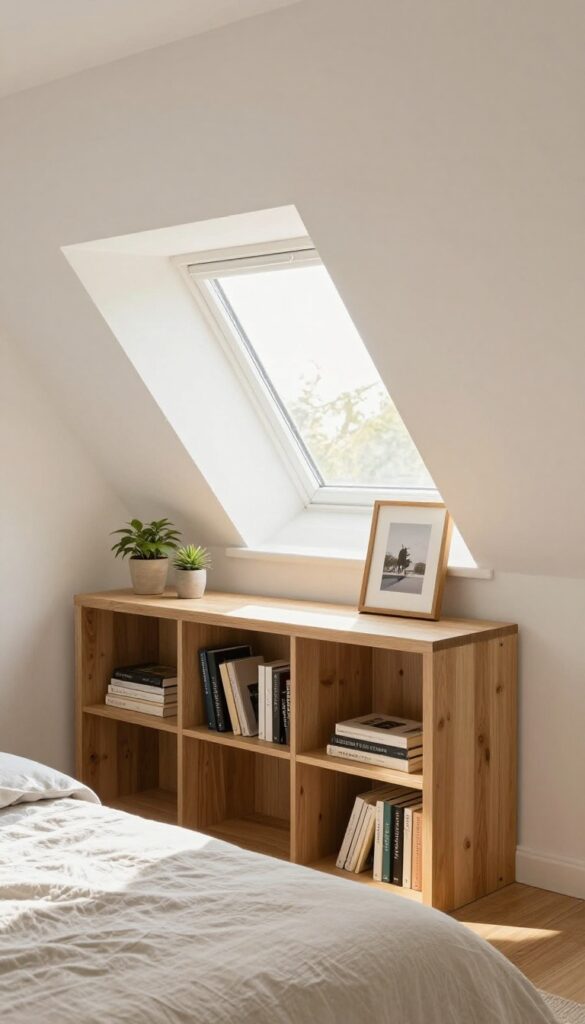
That awkward spot where the ceiling meets the floor often gets written off as unusable, but it is actually prime real estate for a low bookcase. By tucking a short unit right under the slope, you turn wasted space into a cozy reading nook or a spot for displaying treasures. The key is keeping it low so it doesn't fight the ceiling line or block natural light from the window.
Why It Works
A low bookcase fits perfectly under the eaves without overwhelming the room. It adds storage and visual interest without making the space feel tighter, and it keeps the floorplan open and airy.
Best For
This idea is ideal for attics with very low ceilings on one side, especially if you have a small collection of books, plants, or decorative objects you want to display without cluttering the main area.
Styling Tip
Stick with a warm wood tone or a painted finish that matches your trim to keep the look cohesive. Stack a few books horizontally, add a small plant or a framed photo, and leave some negative space so it doesn't feel crammed.
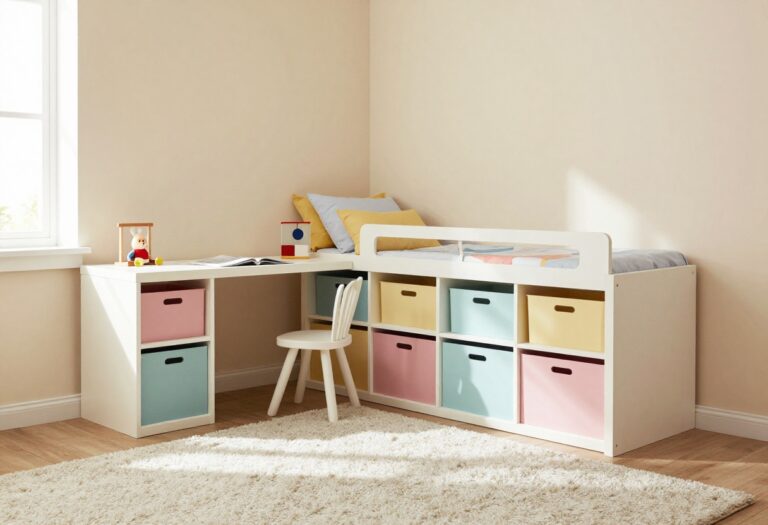
5. Corner Desk for a Tiny Workspace
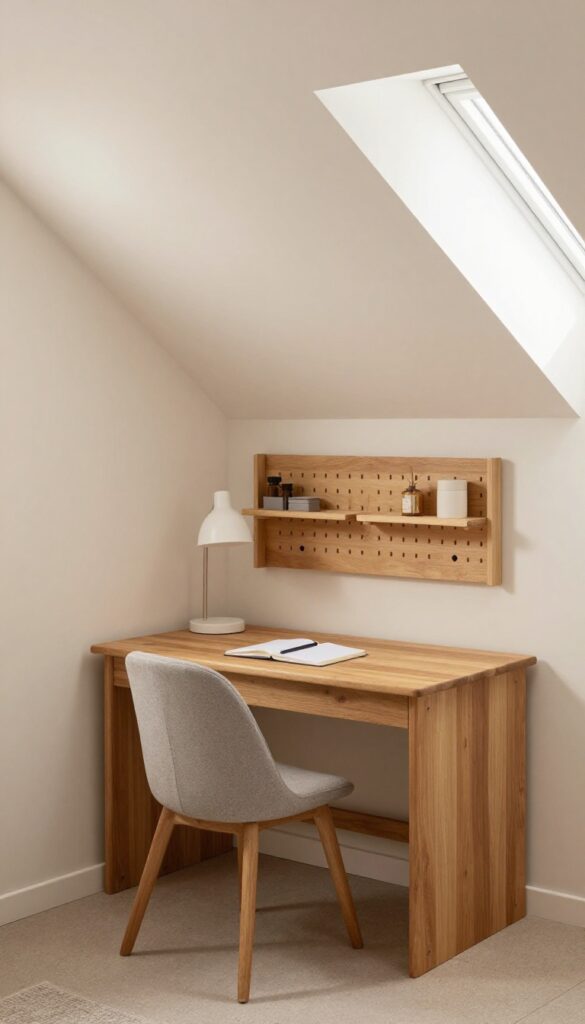
That awkward sloped corner where you can't put a dresser or a chair? It's the perfect spot for a pint-sized workspace. A small corner desk tucked into the alcove turns wasted square footage into a productive nook without eating into the main floor area.
The angled ceiling actually helps define the space, making it feel intentional and cozy rather than cramped.
Why It Works
By using a wall-mounted or folding desk, you keep the floor clear and avoid the visual bulk of a full desk. The sloped ceiling naturally frames the work area, so it feels like a built-in feature rather than an afterthought. Plus, you can customize the depth to fit the exact dimensions of your alcove.
Best For
This idea is ideal for attic bedrooms where you need a place to pay bills, do homework, or work from home but don't have room for a traditional desk. It's also great for guest rooms or kids' rooms where a full desk would make the space feel too tight.
Styling Tip
Paint the desk and the wall behind it the same soft color to make the nook feel larger. Add a warm-toned task lamp and a small rug or cushion on the chair to keep the cozy vibe. A pegboard above the desk holds supplies without cluttering the surface.
6. DIY Upholstered Headboard on the Slope
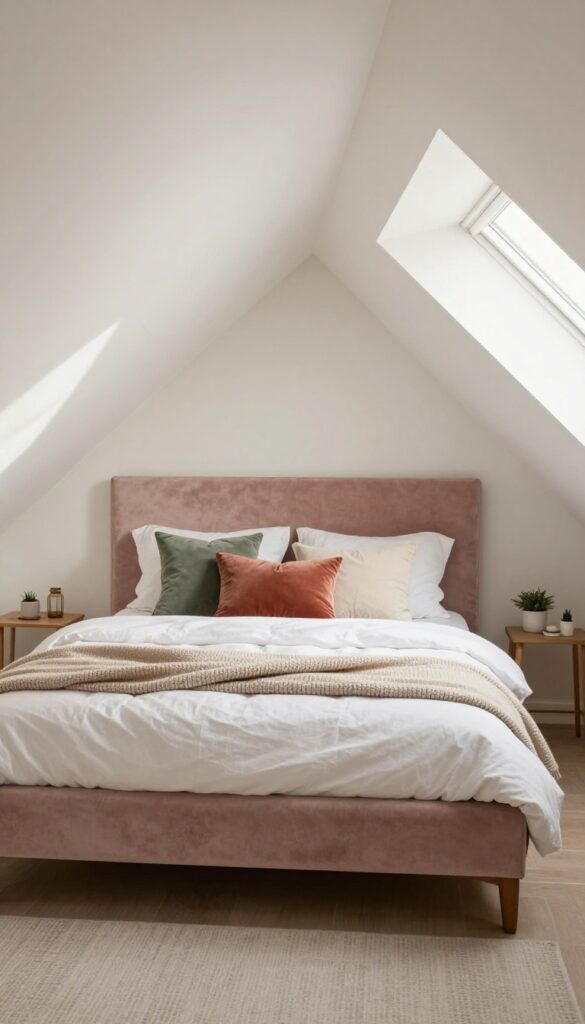
Sloped ceilings often leave an awkward gap above the bed, but that angled wall is actually prime real estate for a custom headboard. By attaching a padded panel directly to the slope, you turn an empty surface into a cozy focal point. This DIY project is budget-friendly because you control the materials—choose a plush velvet or a soft linen in a warm tone like dusty rose or camel to instantly make the room feel more inviting.
The headboard follows the line of the ceiling, so it feels intentional and built-in, not like an afterthought.
Why It Works
It solves the problem of wasted vertical space while adding softness and warmth to a room that can feel cold or angular. The padding also helps with acoustics in a small attic, making the space feel quieter and more cocoon-like.
Best For
Anyone with a low or steeply sloped ceiling who wants a headboard without sacrificing floor space. It's especially great for guest rooms or kid's rooms where you want a soft, safe surface.
Styling Tip
Keep the fabric color within your existing palette—if your bedding is neutral, go for a muted rust or sage green. Add a couple of throw pillows in a complementary texture, like chunky knit or velvet, to tie the look together.
7. Hanging Storage for Vertical Space
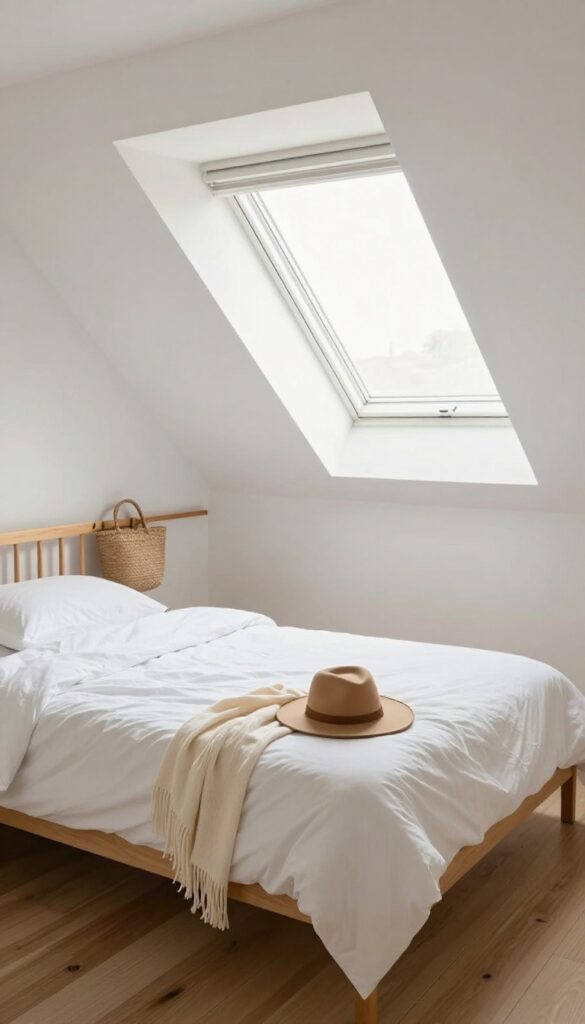
Sloped ceilings can make floor space scarce, but they offer plenty of wall area just waiting to be used. Hanging storage turns that awkward vertical stretch into a functional and charming feature. By adding hooks, a peg rail, or a set of organizers, you keep everyday items like hats and bags within easy reach while adding a cozy, lived-in feel.
Best of all, this approach costs very little and can be styled to match your warm, inviting aesthetic.
Why It Works
It makes use of otherwise wasted wall space, freeing up precious floor area. The visual clutter of hanging items is minimized when arranged neatly, and the warmth of wooden or brass hooks complements a cozy palette. Plus, it’s a budget-friendly solution that can be installed in minutes without major renovation.
Best For
Attic bedrooms with low or sloped ceilings where floor space is limited. It’s especially handy near the bed or entryway for storing daily accessories like scarves, hats, and bags, keeping them organized and visible.
Styling Tip
Choose hooks or a peg rail in a warm metal finish like brass or oil-rubbed bronze, or go with natural wood for extra coziness. Arrange items by color or type for a curated look—think a few woven baskets hanging for extra storage, or a mix of hats and a lightweight scarf to create a vignette.
8. Rug Layers to Define the Zone
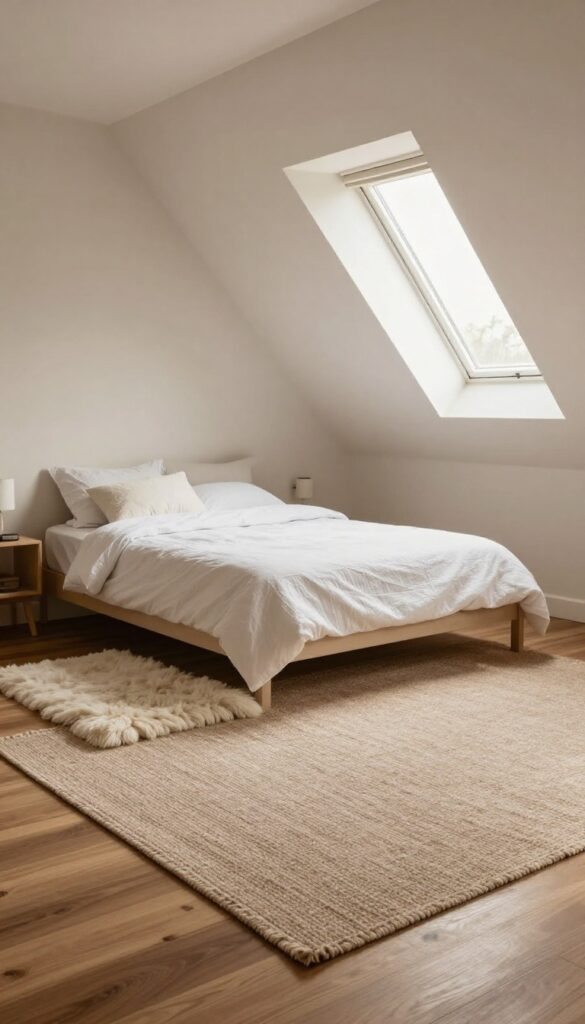
In a sloped ceiling attic bedroom, the floor can feel like one big open space without clear boundaries. That’s where rug layering comes in. By placing a small, plush rug on top of a larger neutral one, you instantly carve out a cozy zone—whether it’s for sleeping, reading, or just lounging.
It’s a budget-friendly trick that adds warmth and texture, especially on hard floors, without requiring any permanent changes.
Why It Works
Layering rugs creates visual depth and a clear focal point, which helps anchor the bed area in an irregularly shaped room. The contrast between the two rugs adds texture and softness, making the space feel more inviting and intentional.
Best For
This idea works well in attic bedrooms with hard flooring like wood or laminate, where you want to add warmth without breaking the bank. It’s also great for renters who can’t paint or install carpet.
Styling Tip
Choose a large jute or sisal rug as the base for its natural texture and low cost, then top it with a smaller wool or faux fur rug in a warm tone like cream, blush, or rust. Place the top rug perpendicular to the bed for a relaxed, layered look.
9. Curtains to Hide Clutter Under the Eaves
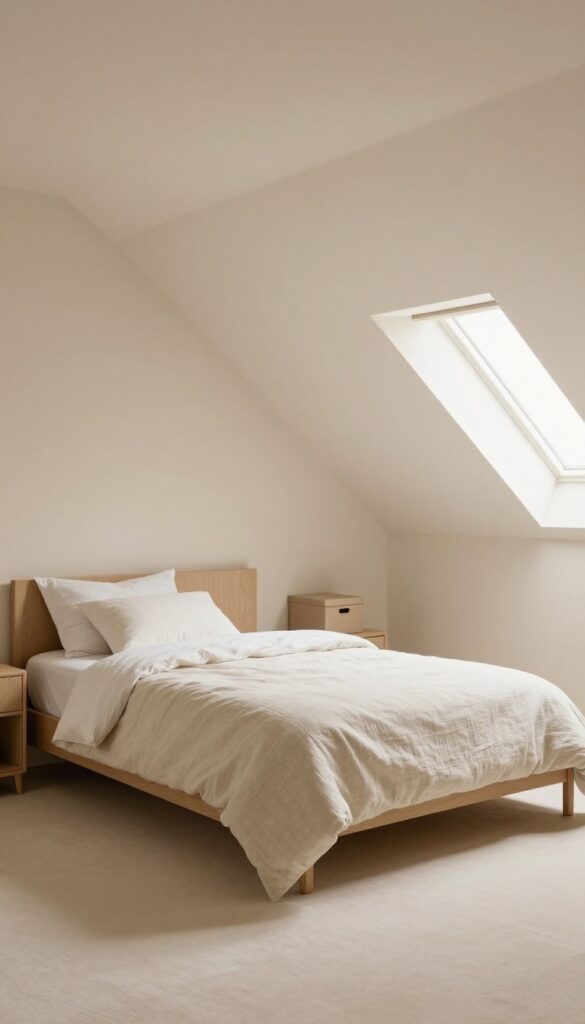
Under-eave corners often become dumping grounds for bins, boxes, and things you don't know what to do with. But instead of letting that area feel like an eyesore, you can soften it with a simple curtain treatment. A rod and a couple of fabric panels turn that awkward spot into a tidy, almost intentional part of the room—without spending much money or effort.
Why It Works
A curtain creates a visual barrier between your living space and whatever you're storing under the slope. It's a low-cost fix that instantly makes the room feel more polished and less chaotic, especially when you choose a fabric that blends with your wall color or adds a warm texture.
Best For
This trick works best in attics where you need hidden storage but don't have the budget for custom cabinetry. It's also great for renters who can't make permanent changes—just a tension rod and lightweight curtains do the job without damaging walls.
Styling Tip
Pick a fabric with a soft drape, like linen or cotton, in a tone that matches your walls so the curtain recedes visually. Hang the rod as close to the ceiling as possible to maximize headroom, and use curtain rings for an easy glide when you need to access what's behind.
10. Wall-Mounted Sconces Instead of Floor Lamps
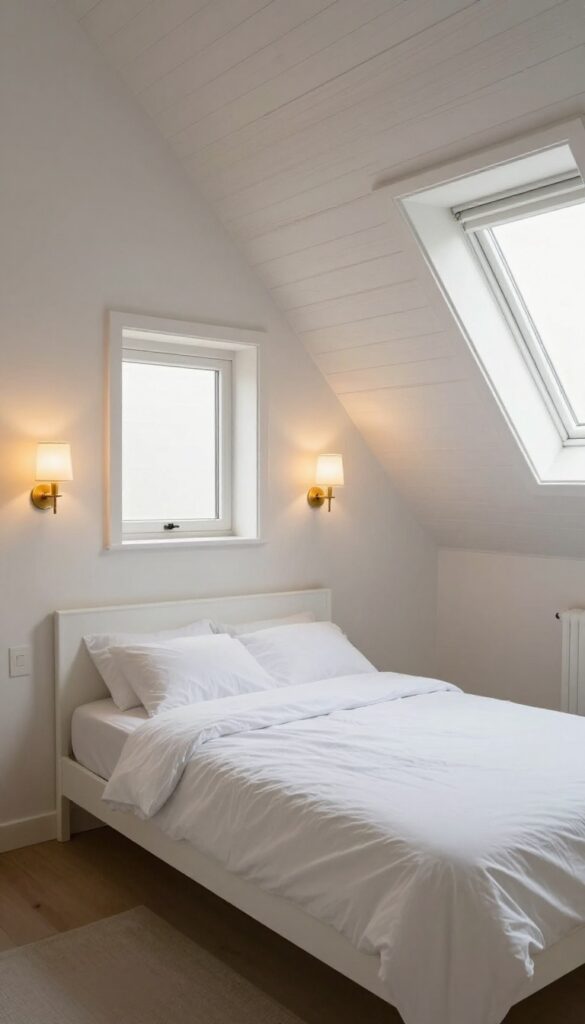
Floor lamps can be bulky in a small attic bedroom, especially when the sloped ceiling leaves little room for them to stand upright. Wall-mounted sconces solve this by attaching directly to the sloped wall, freeing up precious floor space while adding a warm, directed glow. They're an affordable swap that instantly makes the room feel more intentional and cozy, perfect for a reading nook or beside the bed.
Why It Works
Sconces don't take up any floor or surface space, so your room stays uncluttered. The light is directed exactly where you need it, creating a soft, ambient feel that's ideal for winding down. Plus, plug-in versions are easy to install without hardwiring, making them a renter-friendly option.
Best For
This idea works best in tight corners or next to a low bed where a floor lamp would be awkward. It's especially useful in rooms with limited floor area or where you want to keep walking paths clear.
Styling Tip
Choose sconces with adjustable arms so you can direct light onto a book or side table. Warm brass or matte black finishes add a touch of personality, while a fabric shade softens the glow for a truly cozy vibe.
11. Gallery Wall That Follows the Angle
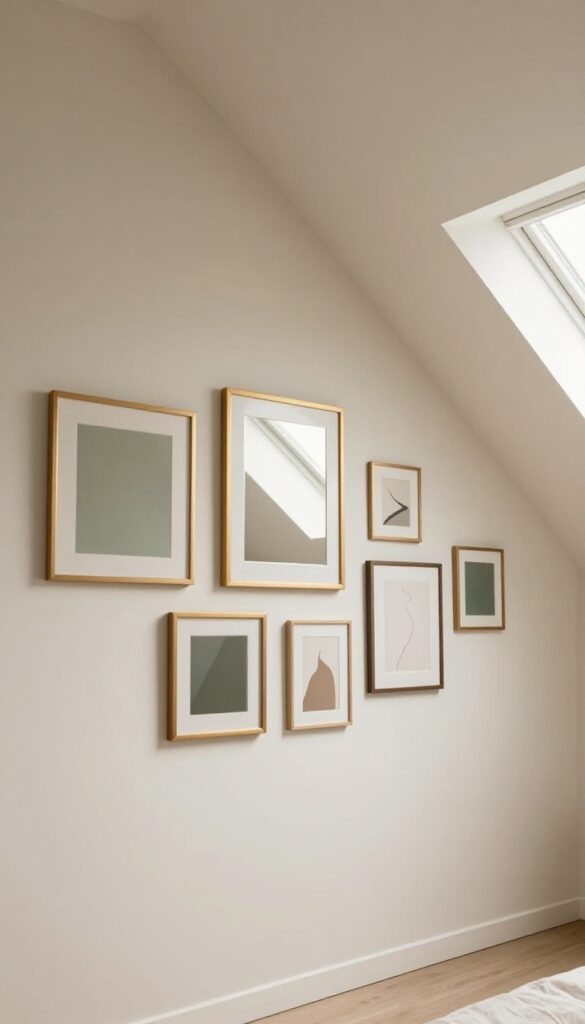
A sloping ceiling can feel like a design challenge, but a gallery wall that follows the angle turns it into a feature. By arranging small frames, mirrors, and wall art along the slope, you draw the eye upward and make the ceiling feel intentional. This approach is especially budget-friendly when you use thrifted frames and printable art, keeping costs low while adding personality.
Why It Works
The angled layout creates visual movement that complements the slope rather than fighting it. It makes the ceiling feel higher and more purposeful, transforming an awkward corner into a curated focal point.
Best For
This idea works well in attic bedrooms with low or steep slopes where standard artwork feels out of place. It's also great for renters since you can use lightweight frames and removable adhesive hooks.
Styling Tip
Stick with a cohesive color palette—warm neutrals, soft golds, or muted greens—to keep the gallery wall feeling intentional. Mix frame sizes and shapes, but keep spacing consistent along the angle for a polished look.
FAQ
How can I make an attic bedroom feel bigger on a budget?
Use light colors on walls and bedding, add mirrors to reflect light, and keep furniture low-profile. Avoid bulky pieces and clutter to maintain an open feel.
What is the best flooring for an attic bedroom?
Budget-friendly options include laminate, vinyl planks, or large area rugs. They are easy to install and can add warmth without the cost of hardwood.
How do I add storage to an attic bedroom with sloped ceilings?
Use low bookcases, floating shelves, under-bed storage, and hanging organizers. Custom-built solutions can be pricey, but DIY shelving and modular units work well.
What colors work best for a cozy attic bedroom?
Warm neutrals like beige, soft white, and light gray, paired with earthy accents like terracotta, sage green, or mustard yellow. These colors make the space feel inviting.
How can I improve lighting in an attic bedroom?
Maximize natural light with sheer curtains, add warm LED string lights, and use plug-in wall sconces or floor lamps. Layered lighting creates a cozy atmosphere.
Conclusion
Attic bedrooms don't have to feel cramped or cold. With a few budget-friendly tweaks, you can turn those sloped corners into your favorite spots in the house. Focus on low-profile furniture, smart storage, and warm lighting to create a space that feels both practical and inviting.
Remember, the best attic bedrooms embrace the angles rather than fight them. Use these ideas as a starting point, and don't be afraid to mix and match to fit your style and budget.