15 Living Room Corner Ideas to Maximize Your Space
You know that awkward living room corner that just sits there judging your decorating choices. I used to ignore mine until I realized it wasted some of the best square footage in the room.
Once I started paying attention to corners, the entire space felt bigger and more intentional.
Corners hold serious potential when you treat them like design features instead of leftovers. With the right idea, even a tiny corner can add function and personality.
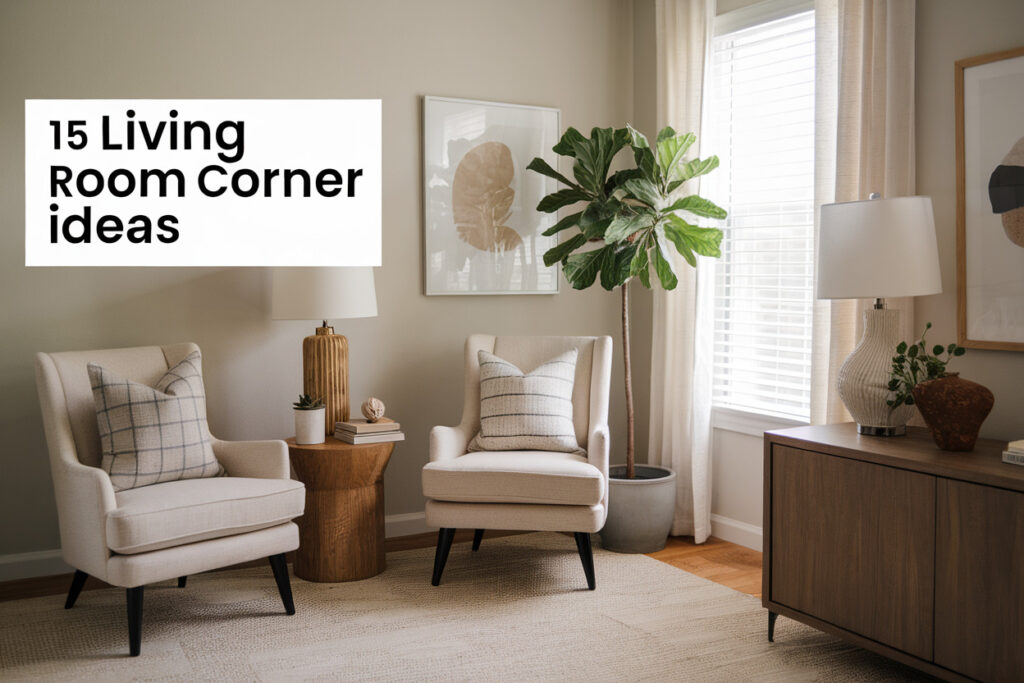
Let me walk you through my favorite ways to make living room corners actually earn their keep.
1. Create a Cozy Reading Nook
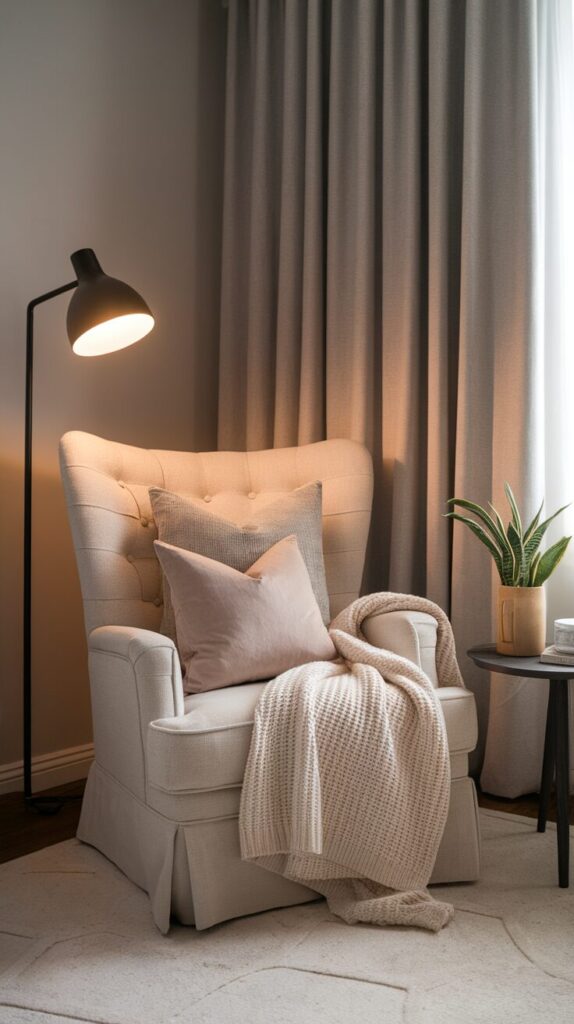
I love a reading nook because it instantly makes a living room feel lived in. A corner gives you natural boundaries, which makes the space feel snug without adding walls. You can turn even the emptiest corner into a place you actually want to sit.
Start with a comfortable chair that fits the corner without crowding it. I usually go for a slightly oversized armchair because comfort matters more than visual perfection. Add a small side table so you never balance coffee on your knee again.
Lighting changes everything in a reading corner. A floor lamp with a warm bulb keeps the space inviting and functional at night. I prefer lamps that arc over the chair because they save space and look intentional.
Throw in a soft blanket and one or two pillows to soften the look. I avoid overloading the chair because clutter kills the calm vibe. A simple woven basket nearby can hold books or extra throws without looking messy.
This setup works because it adds purpose without stealing floor space. The corner suddenly becomes a destination instead of a dead zone. Who wouldn’t want a quiet spot to unwind after a long day?
2. Add a Statement Floor Lamp
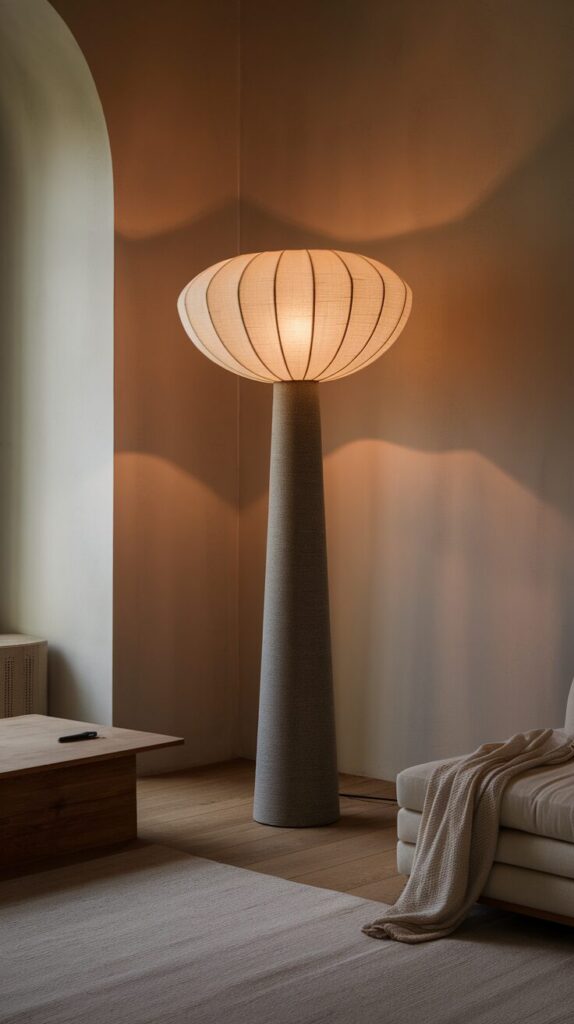
A floor lamp might sound boring, but hear me out. Corners beg for vertical elements, and a bold lamp draws the eye upward. This trick makes the ceiling feel higher and the room feel more balanced.
Choose a lamp with personality instead of a basic stick. I lean toward sculptural bases or oversized shades because they feel like décor, not just lighting. The lamp becomes art that also happens to glow.
Placement matters more than people admit. Tuck the lamp close enough to the corner so it feels anchored. Leave just enough space so it doesn’t look trapped or awkward.
Lighting tone sets the mood in your living room. Warm light feels cozy and relaxed, while harsh white light kills the vibe fast. I always test bulbs at night because daytime lighting can lie.
A statement lamp works especially well in small living rooms. It fills visual space without taking up floor area. FYI, this trick saves rooms that feel flat or unfinished.
3. Use a Corner Bookshelf
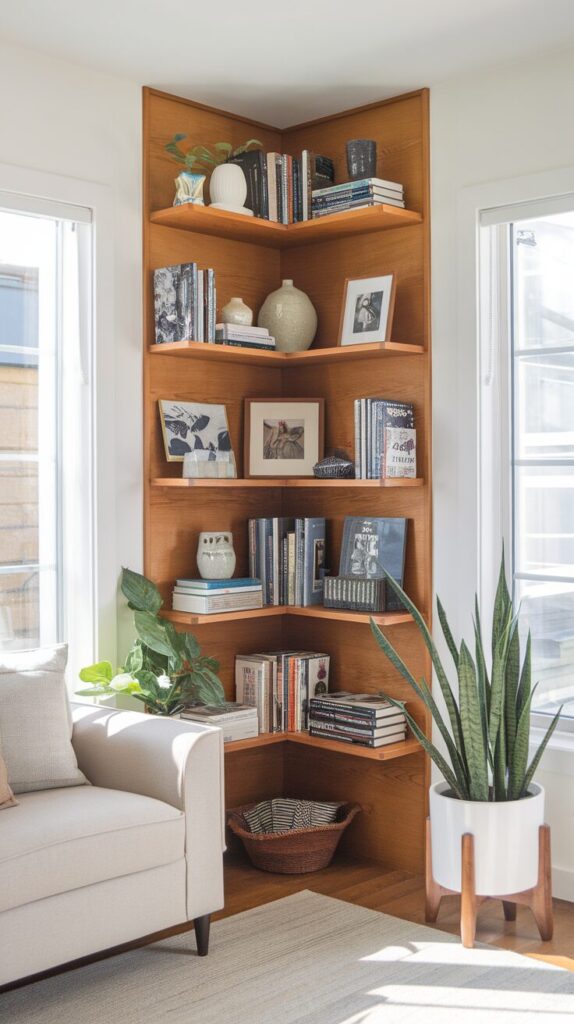
Corner bookshelves feel like a secret weapon for small spaces. They hug the walls and use space most people ignore. I added one years ago and immediately wondered why I waited so long.
Look for shelves designed specifically for corners. These units angle perfectly and avoid that awkward gap behind furniture. Floating corner shelves also work if you want something lighter.
Styling makes or breaks this idea. I mix books with decorative objects so the shelf feels curated instead of cluttered. Plants, small frames, and ceramics keep it visually interesting.
Balance matters when styling shelves. I avoid stacking everything evenly because that feels stiff. A little variation in height and spacing keeps things relaxed and natural.
Corner shelves shine because they combine storage and style. They give your living room personality without eating into walking space. IMO, they work better than bulky cabinets in tight rooms.
4. Place a Tall Indoor Plant
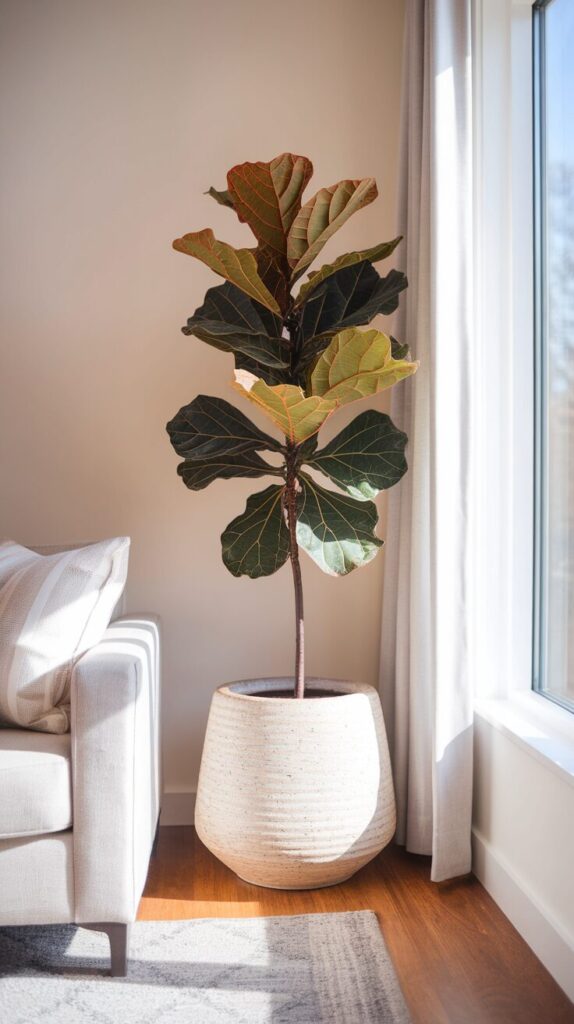
Nothing softens a living room like a tall plant in the corner. Corners often feel sharp or empty, and greenery fixes that instantly. I swear plants make rooms feel calmer and more human.
Choose a plant that grows upward rather than outward. Fiddle leaf figs, snake plants, and palms work well in corners. The height draws attention without crowding the floor.
Lighting determines plant success, so pay attention. If your corner lacks sunlight, pick low light plants that forgive neglect. I learned this the hard way after killing a very expensive plant.
A simple planter keeps the look clean. I usually pick neutral tones so the greenery stands out. Textured pots add interest without overwhelming the space.
This idea works because it adds life without adding furniture. The corner feels intentional and fresh. Plus, plants never judge your décor choices, which helps.
5. Create a Small Home Office Corner
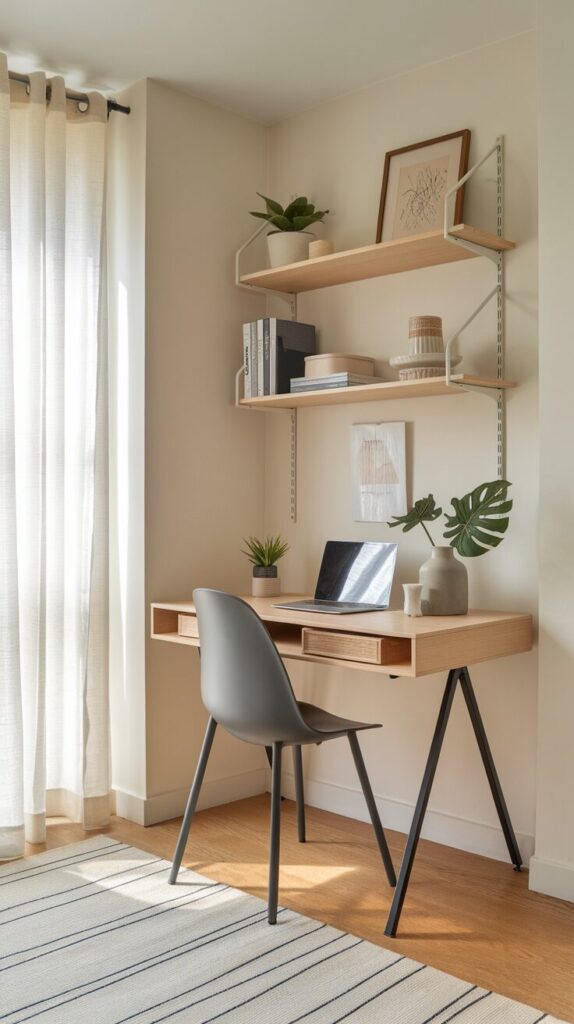
I never thought I wanted a desk in my living room until I tried it. A corner office setup keeps work contained instead of spreading everywhere. It feels organized even in small homes.
Start with a compact desk that fits the corner shape. Wall mounted desks work great if floor space feels tight. Pair it with a chair that you can tuck in easily.
Storage keeps this corner functional and tidy. Floating shelves above the desk hold supplies without crowding the surface. I keep only essentials within reach to avoid visual chaos.
Lighting matters more here than anywhere else. A focused desk lamp prevents eye strain and helps you stay productive. Natural light from a nearby window feels even better.
This setup works because it respects boundaries. When work ends, the rest of the room still feels like home. That separation saves your sanity more than you expect.
6. Style a Decorative Accent Chair
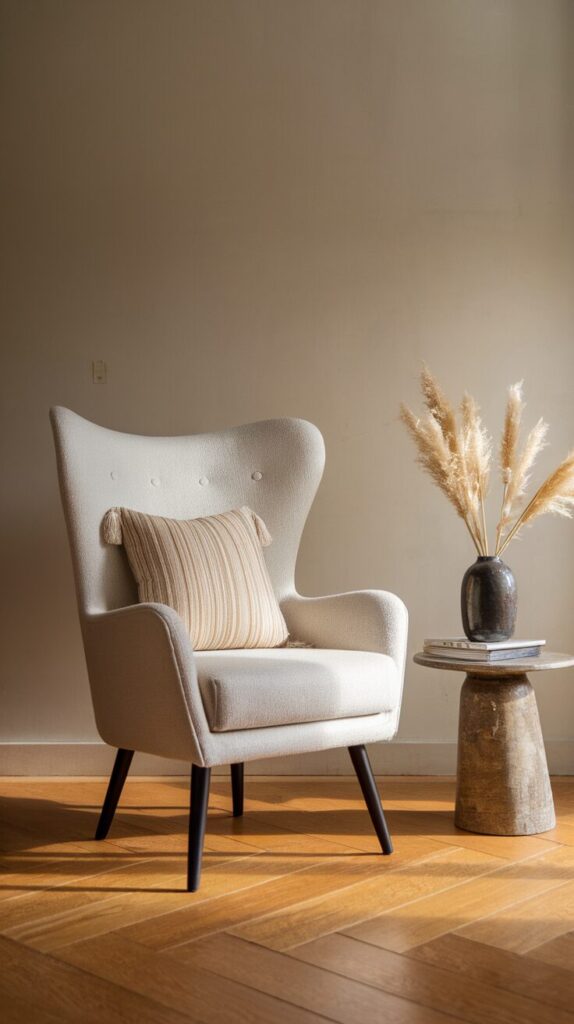
An accent chair in a corner adds seating without overwhelming the room. It also gives you a chance to play with color or texture. I love using chairs to add personality.
Pick a chair that contrasts with your sofa. If your sofa looks neutral, choose a bold fabric or shape. This contrast keeps the room from feeling flat.
Position the chair slightly angled toward the center of the room. This angle invites conversation and avoids that waiting room look. Corners feel more welcoming when furniture faces inward.
Add a small pillow or throw for comfort. I keep accessories minimal so the chair doesn’t feel cluttered. The goal stays simple and inviting.
This idea works because it adds function and style in one move. The corner stops feeling forgotten. Guests always end up sitting there, which says a lot.
7. Install Floating Corner Shelves
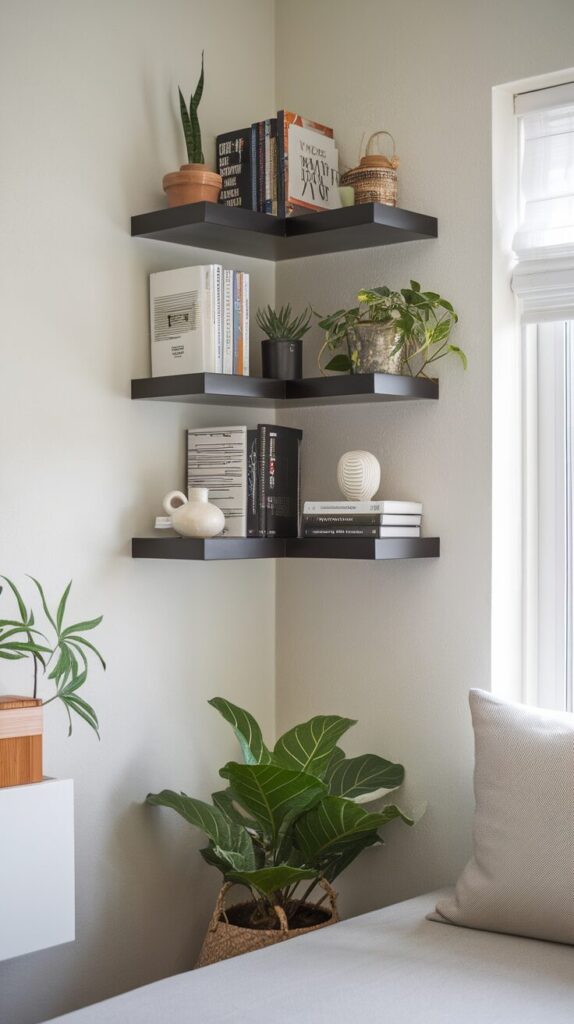
Floating corner shelves feel light and modern. They add storage without visual weight, which matters in smaller living rooms. I use them when I want function without bulk.
Install shelves at varying heights to keep things interesting. Straight lines everywhere feel boring fast. A little height variation adds movement to the wall.
Decorate with intention instead of filling every inch. I mix books, plants, and personal items for balance. Negative space matters as much as what you display.
Secure installation keeps things stress free. Corners can feel tricky, so proper anchors matter. Nothing ruins a vibe like shelves that sag.
These shelves work because they respect the room’s flow. They give you storage without blocking light or movement. That balance keeps the space open.
8. Add a Corner Media Console
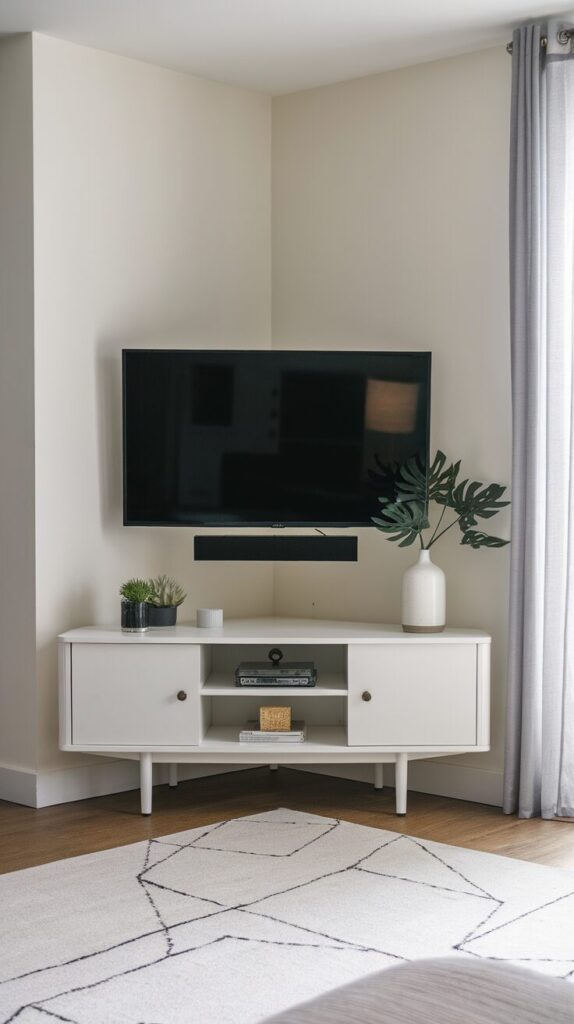
Corners can hold more than you think, including media furniture. A corner console frees up wall space for seating or art. I prefer this layout in smaller living rooms.
Choose a console designed for corners to avoid wasted space. These pieces fit snugly and look intentional. They also help hide cables and clutter.
Keep décor minimal on top of the console. A small plant or lamp works better than a pile of objects. Clean surfaces keep the area calm.
Cable management matters more than style here. Use cord organizers so wires stay hidden. A neat corner makes the entire room feel organized.
This setup works because it solves layout problems. The room feels open and balanced. You gain flexibility without sacrificing function.
9. Create a Mini Gallery Wall
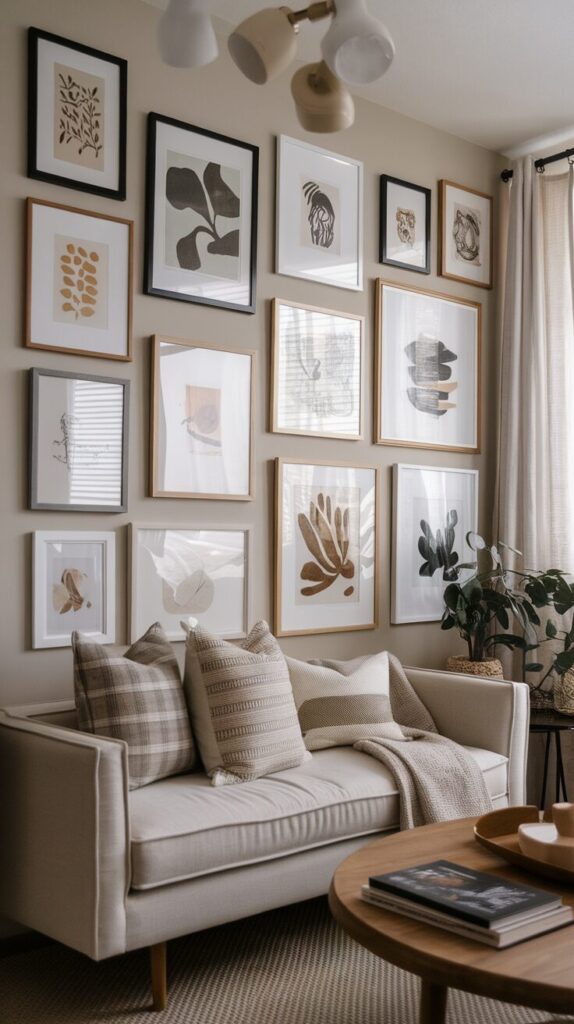
Corners make great gallery wall spots. The angle adds interest that flat walls sometimes lack. I love how art wraps around the space.
Choose a consistent frame style for cohesion. Mixing sizes works better than mixing everything else. This approach keeps the display intentional.
Lay out your frames on the floor before hanging. This step saves time and frustration. You can adjust spacing without patching walls later.
Keep the gallery tight to avoid visual chaos. A loose arrangement can overwhelm a corner fast. Controlled spacing keeps it polished.
This idea works because it adds personality. The corner becomes a focal point instead of an afterthought. Art always tells a story, even quietly.
10. Place a Slim Storage Cabinet
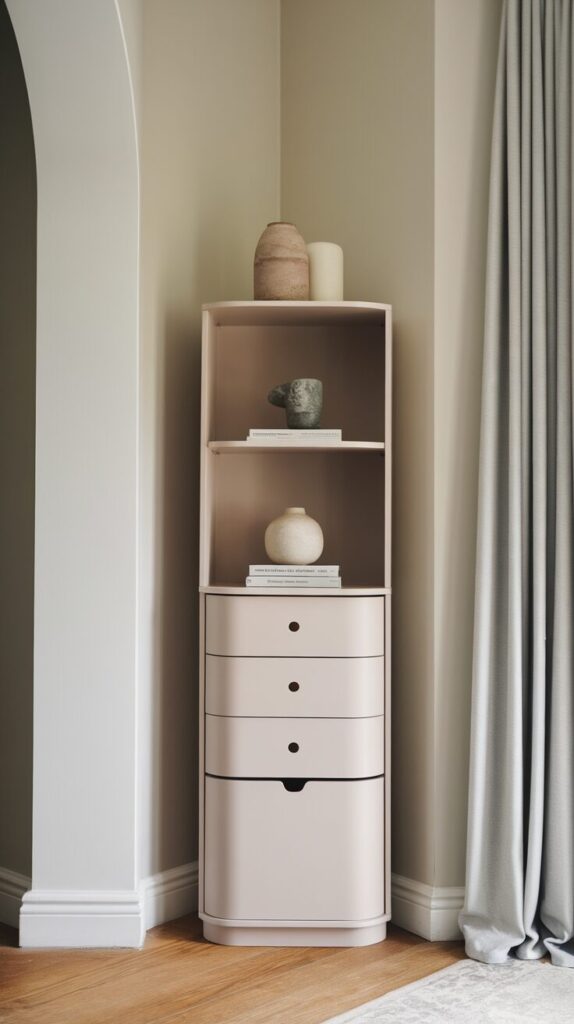
Slim cabinets fit corners beautifully when storage runs short. They add function without dominating the room. I rely on them for hidden storage.
Look for cabinets with clean lines. Heavy designs can overwhelm corners. Lighter silhouettes keep the space feeling open.
Use the cabinet to hide everyday clutter. Games, blankets, and electronics stay out of sight. A tidy room feels bigger instantly.
Style the top lightly with one or two pieces. I avoid clutter because storage furniture already carries visual weight. Simplicity wins here.
This idea works because it balances practicality and style. The corner serves a purpose without stealing attention. That balance keeps rooms livable.
11. Add a Corner Fireplace Feature
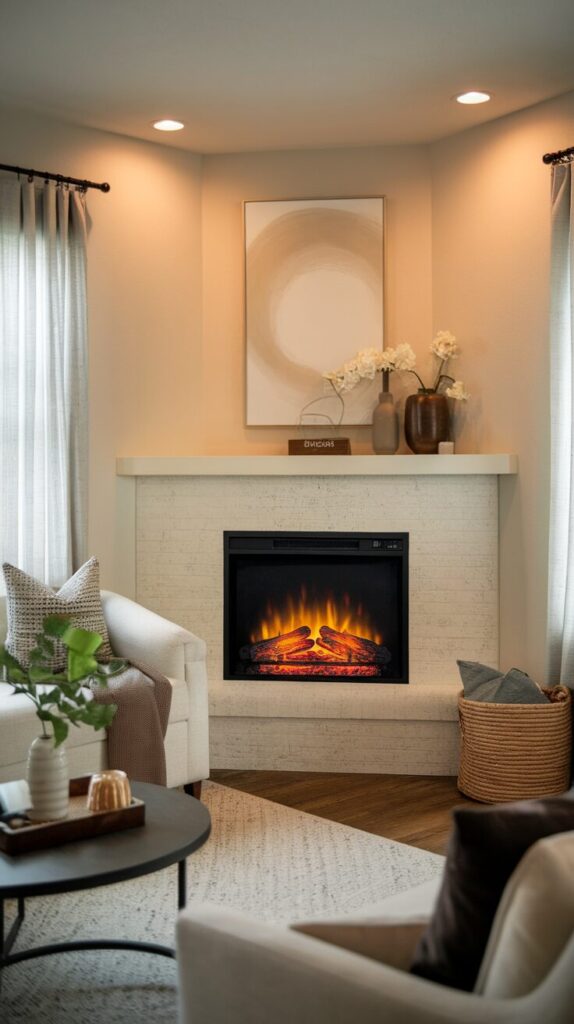
A corner fireplace changes the entire vibe of a living room. It creates warmth and a natural gathering spot. I love how it softens sharp angles.
Electric fireplaces work well if real ones feel unrealistic. They offer ambiance without construction headaches. Many designs fit neatly into corners.
Keep surrounding décor minimal to let the fireplace shine. A simple mantel or shelf works better than heavy décor. Let the glow do the talking.
Position seating to face the fireplace naturally. This arrangement encourages conversation and relaxation. Corners suddenly feel central instead of hidden.
This idea works because it adds emotion to the room. Warmth always draws people in. Even fake flames feel comforting.
12. Create a Music or Instrument Corner
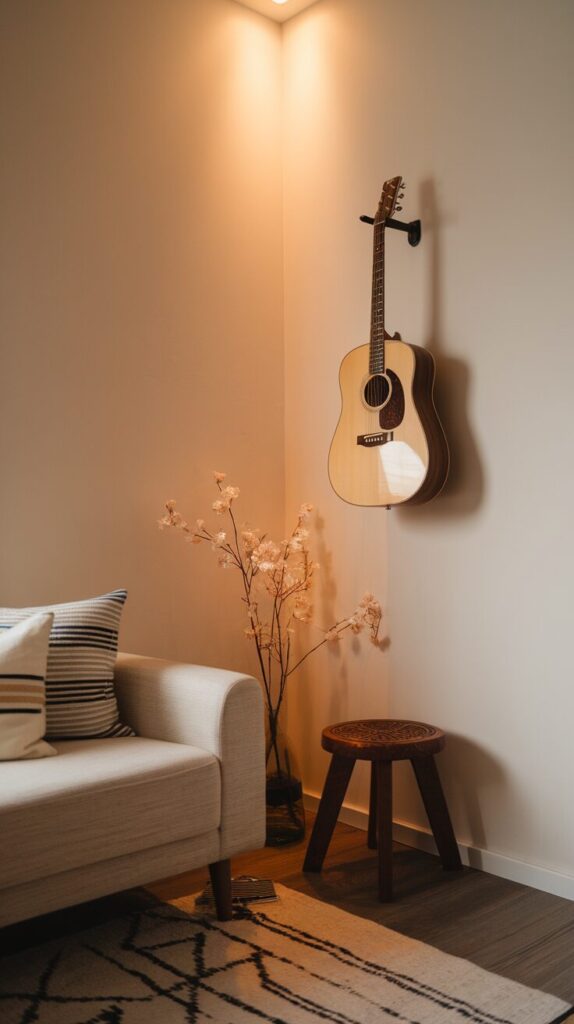
A music corner adds personality fast. Instruments deserve display instead of storage. I love how they tell a story about who lives there.
Use wall mounts or stands to keep instruments safe. Leaning them against walls feels risky and messy. Secure placement keeps things tidy.
Add a small stool or bench for practice. Comfort encourages use. Nobody plays instruments shoved into a corner with no seating.
Keep accessories minimal to avoid clutter. Sheet music and cables pile up fast. Simple storage keeps the space functional.
This idea works because it feels personal. The corner reflects your interests. Guests always notice it, which sparks conversation.
13. Add a Small Bar Cart or Drink Station
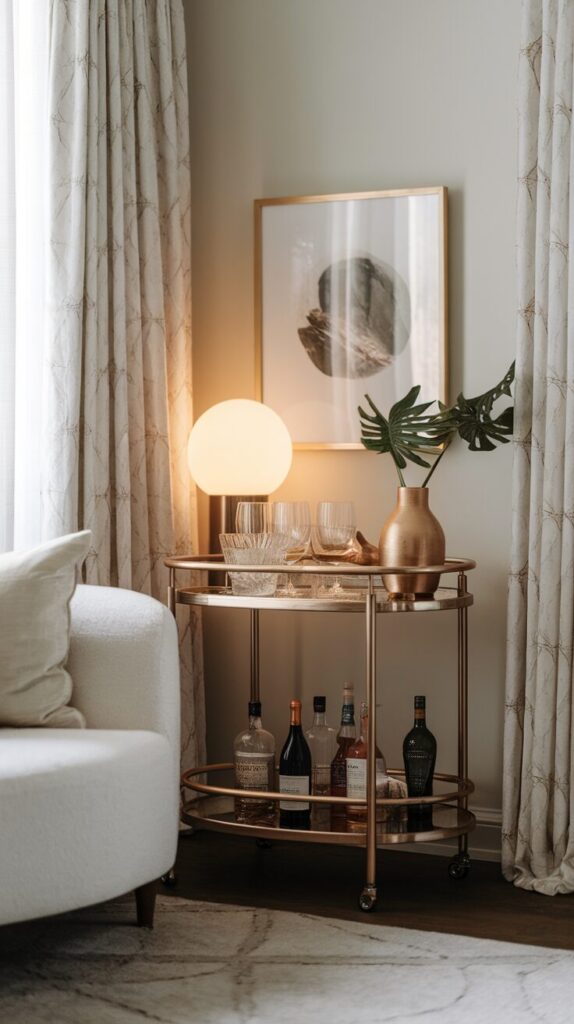
Corners make perfect drink stations. A bar cart adds function and style without taking over. I use mine constantly when friends visit.
Choose a cart with wheels for flexibility. You can move it when needed. Corners stay flexible instead of locked in.
Keep the setup simple and curated. A few bottles, glasses, and a tray look intentional. Overcrowding kills the charm.
Add a small piece of art or mirror above it. This touch elevates the corner instantly. The space feels styled instead of random.
This idea works because it adds hospitality. The corner becomes useful and social. Everyone gravitates toward it naturally.
14. Use a Corner Bench with Storage
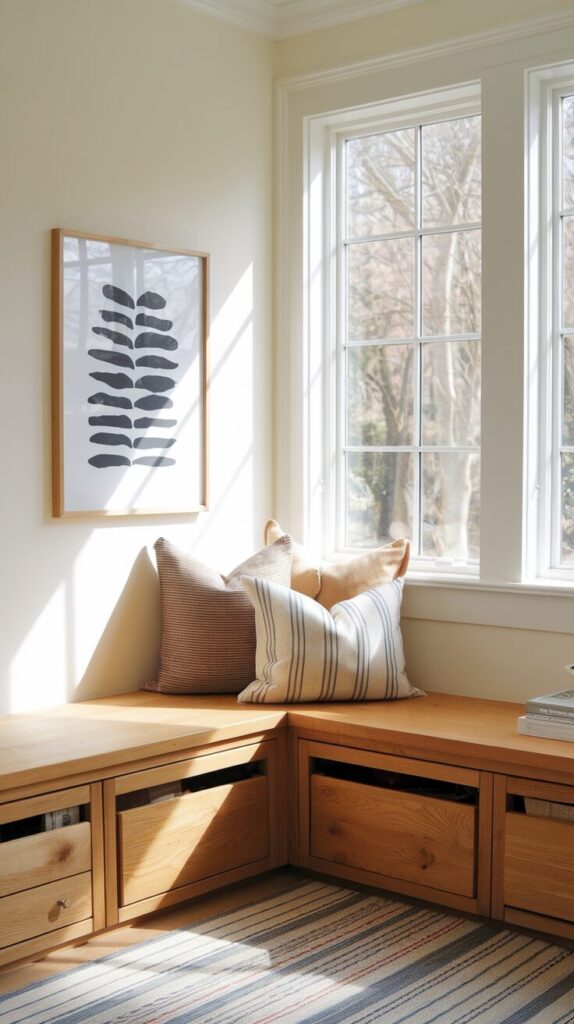
Corner benches offer seating and storage in one move. They work especially well in family living rooms. I love furniture that multitasks.
Look for benches with hidden compartments. These hide toys, blankets, or games easily. Less clutter keeps the room peaceful.
Add cushions for comfort and color. A bench without padding feels cold and unused. Softness invites people to sit.
Position the bench near windows if possible. Natural light makes seating areas more inviting. Corners feel brighter with sunlight.
This idea works because it solves multiple problems. You gain storage and seating together. That efficiency matters in real homes.
15. Style a Minimal Decorative Corner
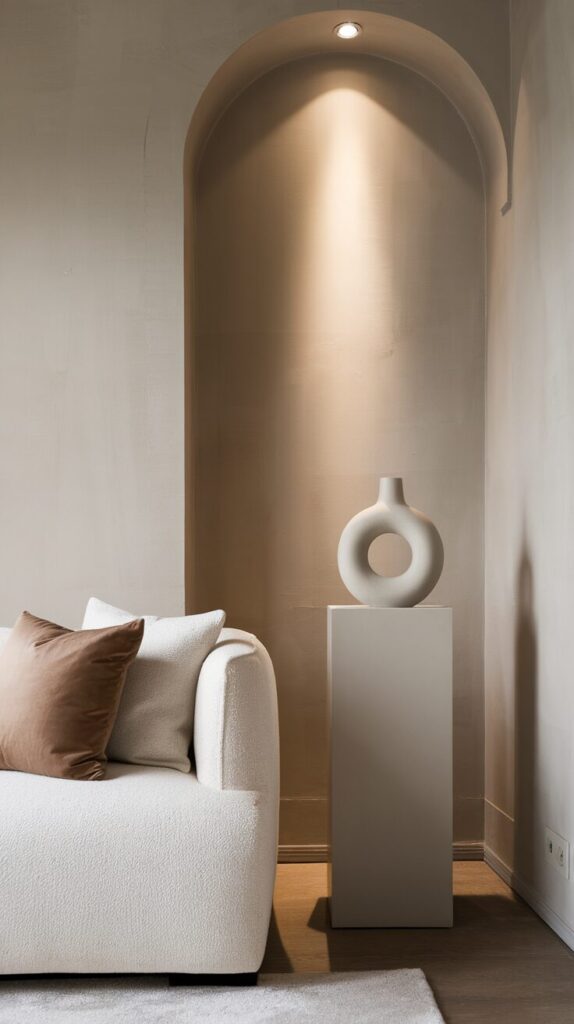
Sometimes less really does more. A minimal corner focuses on one or two elements. I use this approach when rooms feel busy.
Choose one standout item like a sculpture or vase. Let it breathe instead of surrounding it with clutter. Space gives it impact.
Add subtle lighting to highlight the piece. A small spotlight or lamp works well. Light directs attention naturally.
Keep everything else simple and calm. Neutral colors help the piece stand out. The corner feels intentional and serene.
This idea works because it respects restraint. Not every corner needs to shout. Quiet design often feels the most confident.
Corner Design Strategy: How to Plan Before You Decorate
Before you add anything to a living room corner, you need a clear plan. Random decorating creates clutter instead of value. I always start by asking what the room actually needs more of.
First, identify the corner’s purpose. Do you need more seating, storage, lighting, or personality? When you assign a job to a corner, you prevent impulse purchases that collect dust later.
Next, measure the space carefully. Corners look bigger than they really are, and oversized furniture can overwhelm them fast. I always map out dimensions before I even browse for furniture.
Think vertically as much as horizontally. Corners naturally support tall elements like lamps, plants, and shelving. Vertical design makes ceilings feel higher and maximizes usable space.
Finally, consider traffic flow. Corners should enhance movement, not block it. If you need to squeeze past furniture, you chose the wrong piece.
When you follow a simple strategy, you design with intention instead of guesswork. That mindset creates a living room that feels polished and purposeful. Smart planning always beats trendy decorating.
How to Choose the Right Corner Idea for Your Living Room Layout
Not every living room corner idea fits every layout. Open concept spaces require different solutions than compact apartments. I always match the idea to the room’s structure first.
If your living room feels small, prioritize light and vertical elements. Plants, slim shelves, and tall lamps work better than bulky cabinets. These keep the space airy and open.
If your living room feels large but empty, use corners to anchor the room. Accent chairs, benches, and reading nooks create cozy zones. Defined areas make big rooms feel intentional.
For multipurpose living rooms, choose functional corner ideas. Desks, storage benches, and bar carts support daily life. Practical corners improve how the space works, not just how it looks.
Always consider sightlines from entry points. When someone walks in, the corner should enhance the first impression. I often stand at the doorway to evaluate how the corner contributes to the room.
Matching the corner idea to your layout keeps everything cohesive. The room feels balanced instead of forced. Design decisions feel easier when you let the space guide you.
Common Mistakes to Avoid When Decorating Living Room Corners
People often treat corners as storage dumps. They push random items there and hope nobody notices. That habit creates visual clutter instantly.
Oversizing furniture ranks as another major mistake. A chair that feels perfect in a showroom can swallow a small corner at home. I always choose slightly smaller pieces for tight angles.
Ignoring lighting ruins even the best corner ideas. Dark corners feel forgotten and heavy. Adding proper lighting immediately improves the entire room’s atmosphere.
Overdecorating also causes problems. Too many accessories make a corner feel chaotic instead of styled. I limit décor to a few intentional pieces.
Forgetting balance disrupts the room’s flow. If one corner looks busy and the others look empty, the room feels uneven. Visual weight should feel distributed naturally.
Finally, skipping measurement leads to frustration. Guessing rarely works in tight spaces. Precision saves money and prevents regret.
Avoiding these common mistakes protects your design effort. Corners should elevate your living room, not complicate it. Thoughtful restraint keeps everything feeling cohesive.
Budget-Friendly Ways to Upgrade Your Living Room Corners
You do not need a massive budget to improve your living room corners. Small changes often create the biggest impact. I have upgraded corners with simple swaps that cost very little.
Start by rearranging what you already own. Move an unused chair or lamp into a corner to test a new layout. Free experiments help you discover possibilities without spending money.
Thrift stores offer great corner-friendly pieces. Slim shelves, vintage stools, and decorative mirrors often cost less than retail. Unique finds add character without draining your wallet.
DIY projects also work beautifully in corners. Floating shelves and painted accent chairs transform spaces affordably. A weekend project can completely change a forgotten angle.
Use paint strategically if you want dramatic impact. A subtle accent color in one corner creates depth and contrast. Paint costs less than new furniture but delivers strong results.
Lighting upgrades remain one of the most affordable improvements. Swapping bulbs or adding a small lamp instantly changes the mood. Smart lighting always feels like a design upgrade.
When you focus on smart upgrades instead of expensive trends, your living room feels intentional. Budget decorating forces creativity, and creativity often leads to better design.
FAQ
1. How do I decorate a small living room corner without cluttering it?
Choose vertical solutions like tall plants or floating shelves. Keep furniture slim and avoid oversized pieces. Minimal décor prevents the space from feeling crowded.
2. What is the best corner idea for renters?
Use movable furniture like accent chairs, bar carts, or floor lamps. Avoid permanent installations that require drilling. Flexible pieces adapt easily to new layouts.
3. Can I put a TV in a corner?
Yes, you can place a TV in a corner using a corner console or wall mount. This layout works well in small living rooms. Make sure you manage cables neatly for a clean look.
4. How do I make a dark corner feel brighter?
Add a warm floor lamp or table lamp. Use mirrors to reflect light around the room. Light colored décor also helps brighten the space.
5. Should all four corners of a living room be decorated?
You do not need to decorate every corner. Balance matters more than symmetry. Some corners benefit from minimal styling to keep the room breathable.
6. What corner idea adds the most value to a living room?
Functional ideas like storage benches or reading nooks usually add the most value. These improve both appearance and usability. Practical upgrades often make the strongest impact.
Conclusion
Living room corners hold more power than most people realize. When you give them purpose, the entire room feels more balanced and thoughtful. Small changes in corners often create the biggest visual wins.
You don’t need to use every idea here. Pick one or two that match your lifestyle and space. Once you see the difference, you might start eyeing every corner with new appreciation.