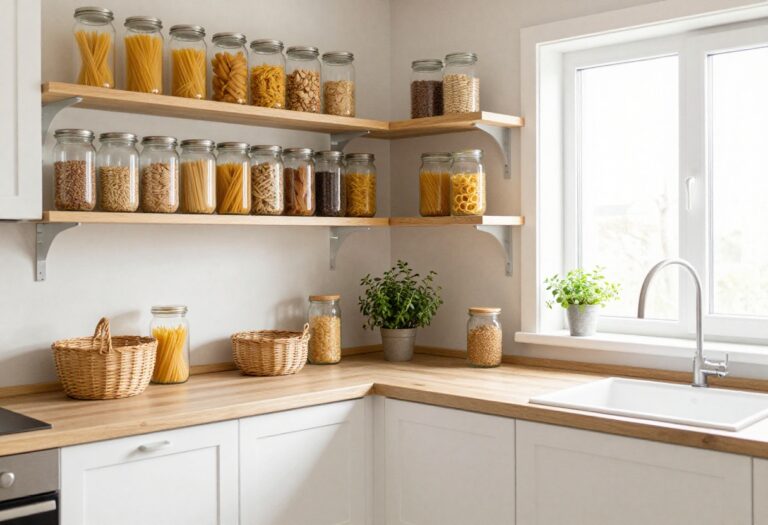
11 Small Kitchen Decorating Ideas for Cozy Spaces
Good layout decisions matter more than square footage when you’re dealing with a small kitchen. Function always wins first, and then style gets layered in after that.
The trick is knowing how to make both work together without overcrowding the space.
Small kitchens force you to be intentional, which honestly isn’t a bad thing. When every inch counts, you stop buying random décor and start choosing pieces that actually earn their spot.
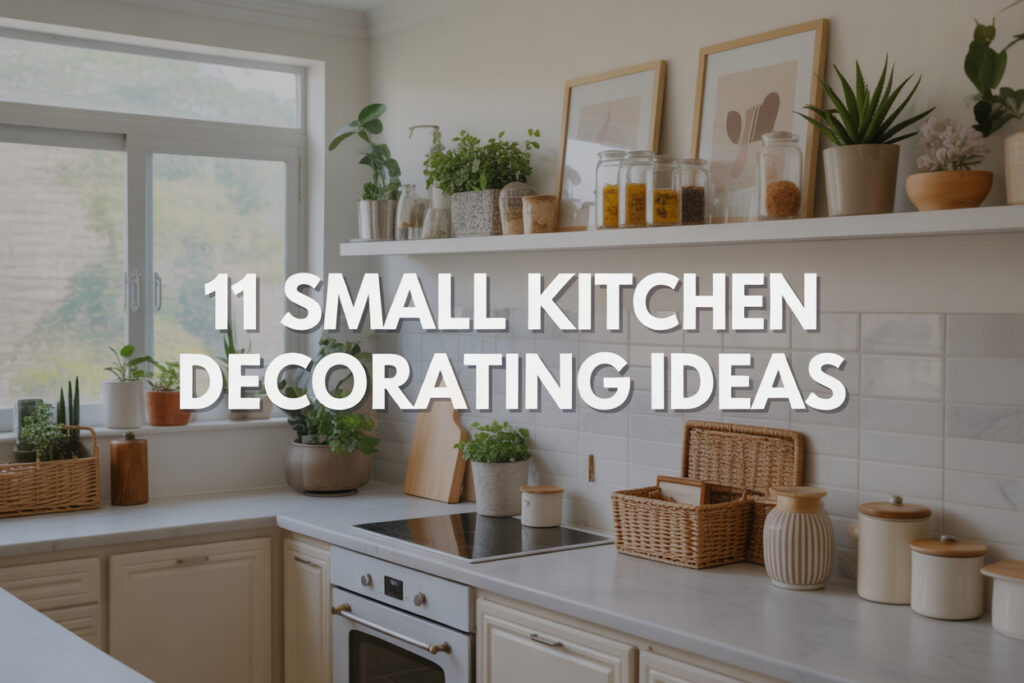
That’s where cozy meets practical in the best way.
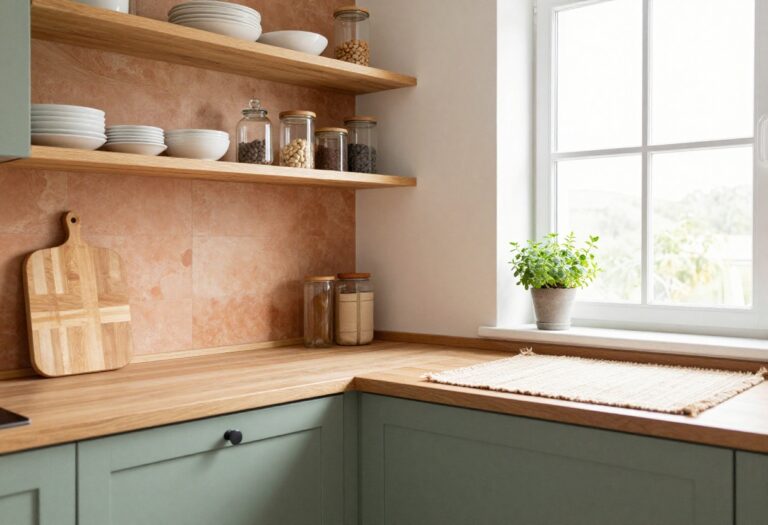
1. Open Shelving with Intentional Styling
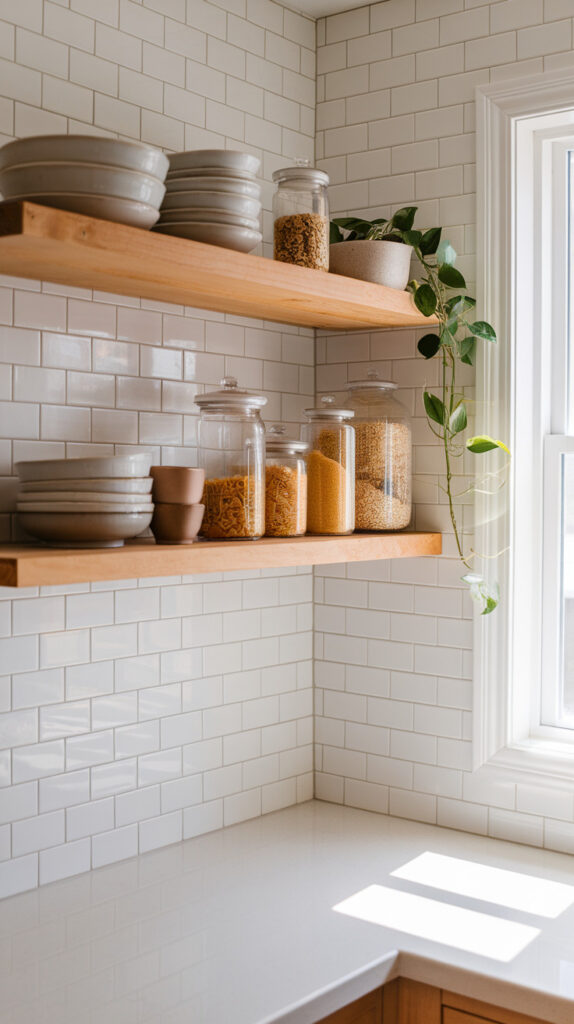
Cabinets can make a small kitchen feel boxed in, especially when they run from wall to wall. If storage feels heavy and overwhelming, open shelving can visually lighten everything while still keeping essentials within reach. The key is styling with purpose instead of turning shelves into a clutter zone.
I’ve tried open shelves in a tight apartment kitchen before, and I’ll be honest, it can look messy fast if you treat it like extra storage. But when you limit what goes up there and coordinate it, the space suddenly feels bigger and more personal.
Why This Works
Open shelves break up solid cabinet walls and allow your eye to move more freely around the room. That visual breathing room makes compact kitchens feel less cramped. It also encourages you to keep only what you actually use.
Functionally, it keeps everyday dishes accessible. Aesthetically, it adds warmth because you’re displaying real-life items instead of hiding everything behind doors.
How to Do It
- Remove one upper cabinet section rather than all of them to keep balance.
- Install sturdy floating shelves anchored into studs for safety.
- Display matching dishware, clear jars, or neatly stacked bowls.
- Leave at least 30% of shelf space empty to avoid overcrowding.
- Keep heavier appliances off shelves to prevent visual bulk.
Each step keeps the look intentional instead of chaotic. The empty space matters just as much as what you display.
Style & Design Tips
Stick to a limited color palette like white, wood tones, and one accent color. Too many patterns on display will make the shelves feel chaotic instead of cozy. Use natural textures like wood or ceramic for warmth.
Avoid mixing five different mug styles unless eclectic is your thing and you can pull it off confidently. Consistency makes small spaces look curated, not random.
Pro Tip or Budget Hack
If removing cabinets isn’t realistic, take the doors off existing ones and paint the interior a contrasting color. It gives you the open shelf look without buying new hardware. You can always reinstall the doors later if you change your mind.
2. Under-Cabinet Lighting for Instant Warmth
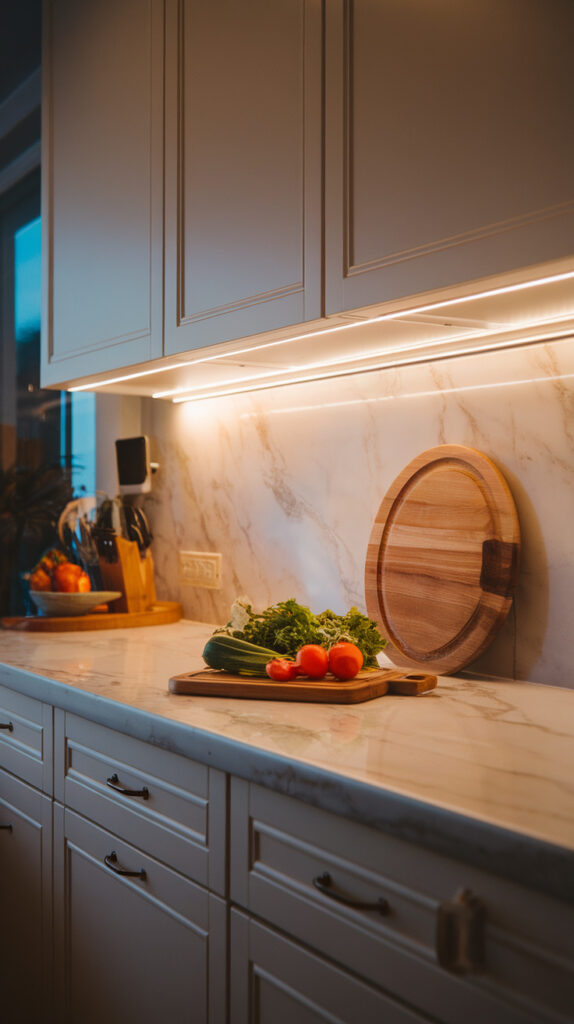
Overhead lighting alone usually casts shadows across countertops, which makes small kitchens feel darker than they actually are. Adding under-cabinet lighting changes how the entire space feels and functions. It’s one of those upgrades that looks expensive but doesn’t have to be.
I added adhesive LED strips in one rental, and it completely upgraded the vibe without rewiring anything. Cooking felt easier because I could actually see what I was chopping.
Why This Works
Lighting under cabinets eliminates shadows on prep surfaces. It makes counters look cleaner and more inviting. Good lighting also creates a soft glow that adds coziness without taking up any physical space.
Because small kitchens often lack natural light, layered lighting makes them feel intentional instead of dim.
How to Do It
- Measure cabinet lengths to determine how many light strips you need.
- Choose warm white LED strips for a softer, cozier effect.
- Install them toward the back of cabinets to avoid visible glare.
- Hide cords neatly along the underside for a clean look.
- Test brightness levels before fully securing them.
Placing lights properly prevents harsh shadows and keeps everything looking seamless.
Style & Design Tips
Avoid overly cool-toned lighting because it makes the kitchen feel clinical. Warm tones feel inviting and flattering to wood cabinets and food alike. Keep wires invisible so the installation doesn’t look DIY in a bad way.
If you want extra polish, use aluminum channels to diffuse the light evenly.
Pro Tip or Budget Hack
Battery-powered puck lights work great if outlets are limited. They’re inexpensive and easy to remove if you move. Look for versions with dimmer settings for flexibility.
3. Slim Rolling Cart for Flexible Storage
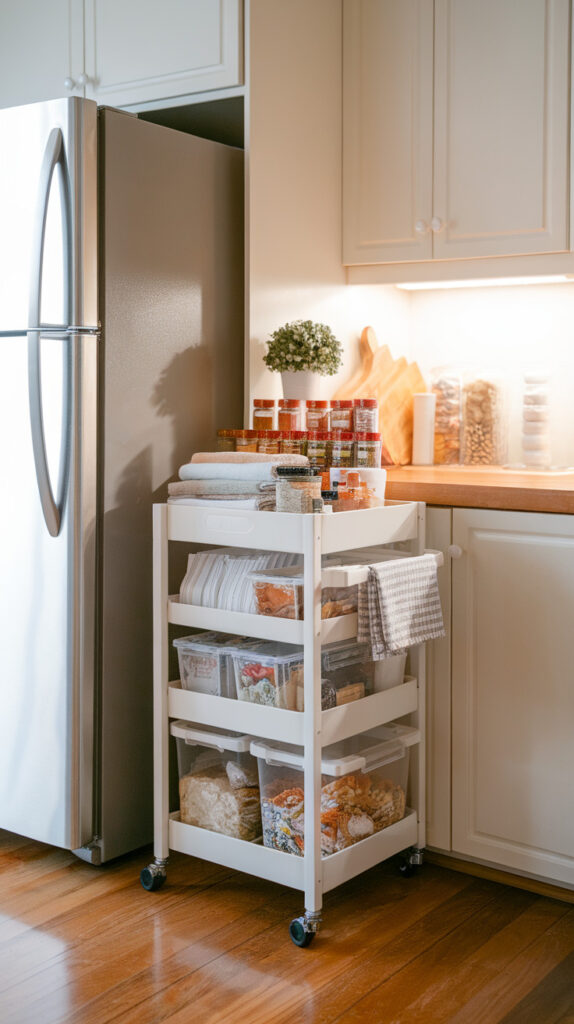
Permanent furniture can block pathways in tight kitchens. A slim rolling cart adds extra storage without locking you into a fixed layout. It moves when you need space and stays put when you need surface area.
I used one between my fridge and counter in a tiny space once, and it saved me from stacking pantry items everywhere. It’s small but mighty.
Why This Works
Rolling carts use awkward gaps that usually go unused. They add vertical storage without taking up prime walking space. Mobility means you can adapt the layout whenever needed.
Function and flexibility matter more than bulky furniture in compact rooms.
How to Do It
- Measure narrow gaps beside appliances or counters.
- Choose a cart under 8–12 inches wide for tight spots.
- Store dry goods, spices, or extra towels on shelves.
- Add small baskets to group similar items.
- Lock wheels if the cart has brakes to keep it stable.
Using vertical space efficiently keeps counters clear.
Style & Design Tips
Pick a cart that matches your kitchen’s tone, whether that’s wood, metal, or white. Avoid overcrowding it with mismatched containers. Use clear jars or labeled bins for cohesion.
If the cart is visible, treat it like part of the décor instead of hidden storage.
Pro Tip or Budget Hack
Check online marketplaces for secondhand carts. Many people sell barely used ones after moving. A simple coat of paint can completely transform a cheap metal cart.
4. Statement Backsplash in a Small Dose
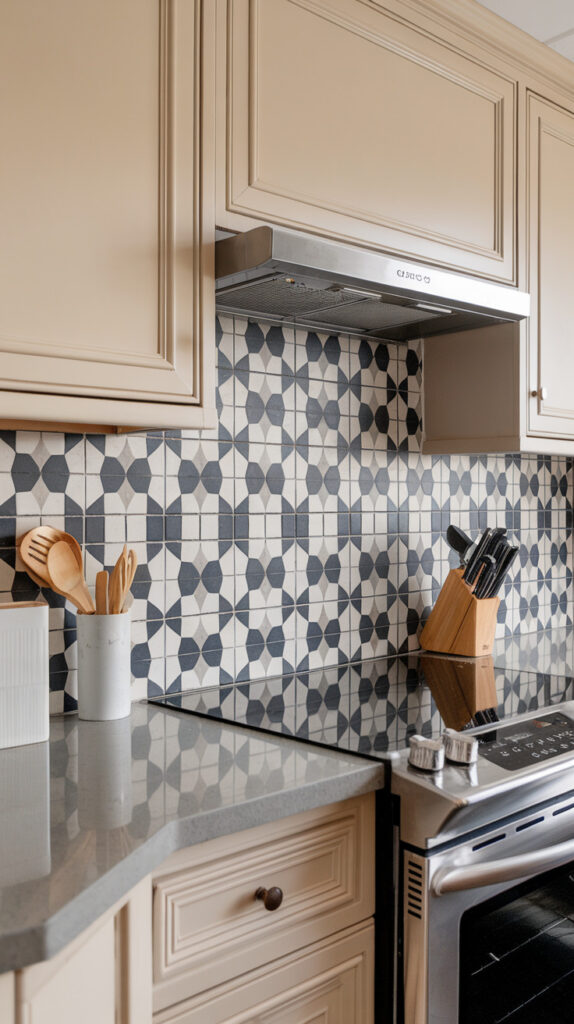
Small kitchens don’t need a full wall of bold tile to make impact. A focused backsplash area behind the stove or sink can create personality without overwhelming the room. It’s controlled drama.
I once installed peel-and-stick tile in a rental, and it looked shockingly good for the price. Guests assumed it was permanent.
Why This Works
A backsplash draws the eye to a central area. In a small kitchen, that focal point prevents the room from feeling flat. Even subtle patterns add dimension without clutter.
It’s decorative but still practical because it protects walls from splashes.
How to Do It
- Clean and prep the wall thoroughly.
- Measure carefully before cutting tiles.
- Start from the center and work outward for symmetry.
- Use spacers if applying real tile.
- Seal edges properly to prevent peeling.
Careful installation keeps the finish looking polished.
Style & Design Tips
Choose lighter tones if your kitchen already feels tight. Bold colors work best in small doses. Subway tile stays classic, while geometric patterns add modern flair.
Avoid dark grout in tiny kitchens unless you want strong contrast.
Pro Tip or Budget Hack
Peel-and-stick backsplash options are renter-friendly and affordable. Look for textured versions that mimic real ceramic or stone. They’re easy to remove later.
5. Vertical Herb Garden by the Window
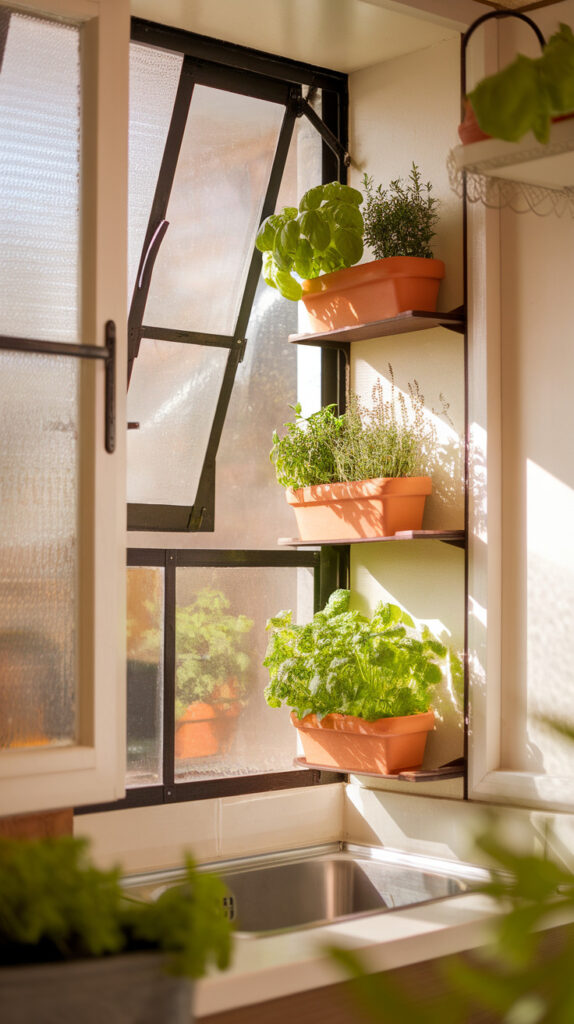
Counter space disappears quickly in small kitchens. Growing herbs vertically gives you greenery without sacrificing prep space. Plus, fresh herbs elevate everyday meals.
I tried this with basil and mint, and not only did it look great, but it made cooking feel more intentional.
Why This Works
Vertical gardening uses unused wall or window space. Plants add life and color without cluttering surfaces. Fresh herbs are practical décor because you actually use them.
Greenery softens hard kitchen materials like tile and metal.
How to Do It
- Install wall-mounted planters or narrow shelves.
- Choose herbs that thrive indoors like basil, thyme, or parsley.
- Ensure the spot gets adequate sunlight.
- Water consistently but avoid overwatering.
- Rotate plants occasionally for even growth.
Proper placement ensures plants stay healthy.
Style & Design Tips
Use matching pots for a cohesive look. Neutral ceramic or terracotta works beautifully. Avoid overcrowding the wall with too many varieties.
Keep labels simple and minimal for a clean aesthetic.
Pro Tip or Budget Hack
Repurpose glass jars as planters. Drill small drainage holes or add pebbles at the bottom. It’s inexpensive and looks charmingly rustic.
6. Magnetic Wall Strips for Utensils
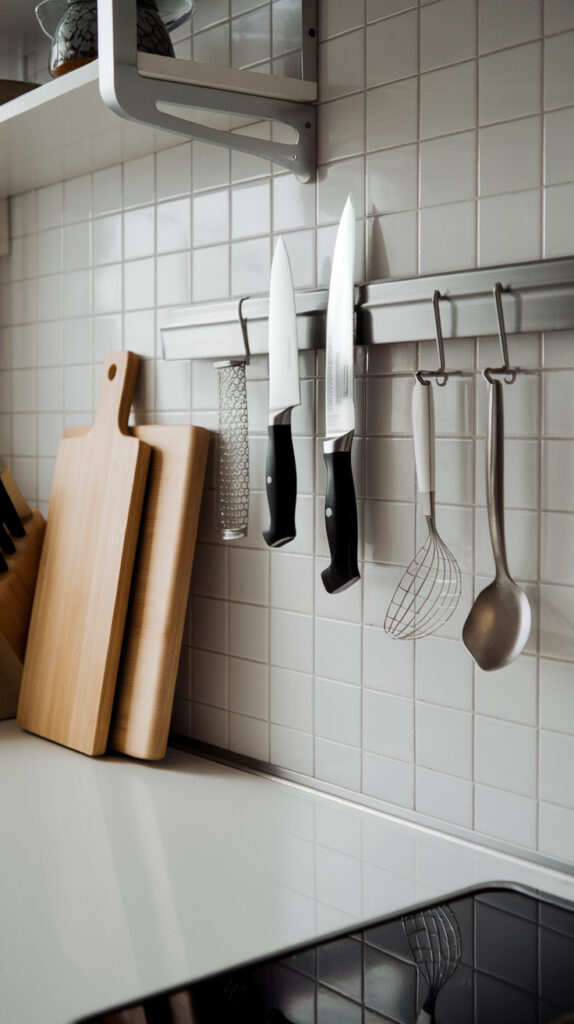
Drawer space disappears quickly in small kitchens, especially when you have bulky utensils. Magnetic wall strips keep knives and metal tools accessible without taking up counter or drawer space. It’s practical storage that doubles as visual interest.
I switched to a magnetic strip years ago, and I never went back to stuffing knives in a block. It freed up space instantly and made cooking smoother.
Why This Works
Wall-mounted storage uses vertical space instead of valuable drawers. It keeps frequently used tools within reach while clearing surfaces. When arranged neatly, it actually looks intentional instead of cluttered.
Seeing your tools also encourages better organization because you notice when something is missing or out of place.
How to Do It
- Choose a strong magnetic strip designed for kitchen use.
- Install it securely into wall studs for safety.
- Place it away from high-traffic zones to avoid bumps.
- Arrange knives largest to smallest for balance.
- Wipe tools before hanging to keep the wall clean.
Proper installation matters because safety always comes first. You don’t want heavy knives sliding off unexpectedly.
Style & Design Tips
Stick to matching knife handles for a cohesive look. Wood handles warm up the space, while stainless steel keeps things modern. Avoid overcrowding the strip with random gadgets.
Keep spacing even between tools so it looks curated rather than chaotic.
Pro Tip or Budget Hack
If you’re renting and can’t drill, try heavy-duty adhesive magnetic strips rated for weight. Test with lighter utensils first to make sure they hold. It’s a simple upgrade that saves drawer space immediately.
7. Light-Colored Cabinet Refresh
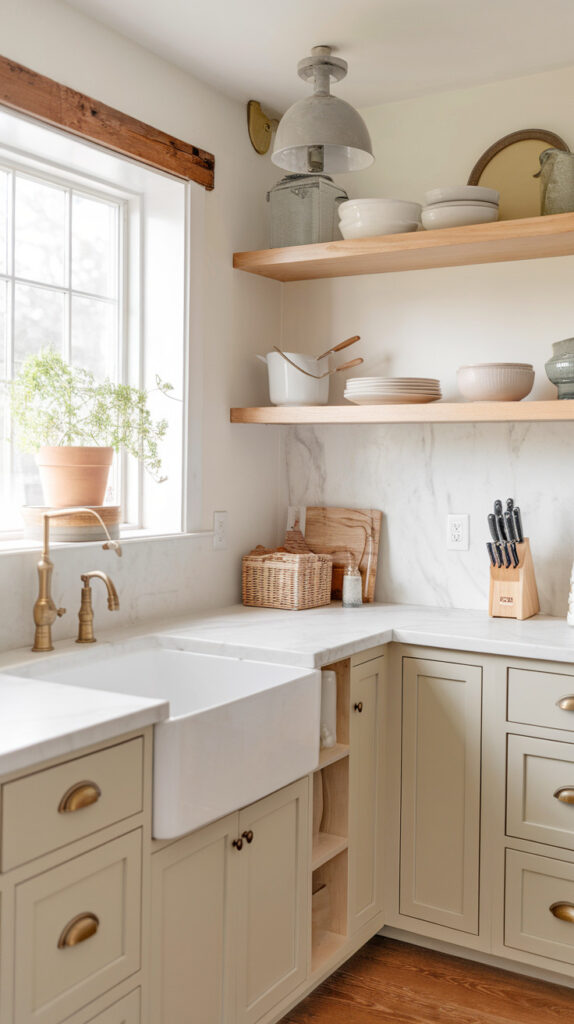
Dark cabinets can visually shrink a small kitchen fast. A lighter cabinet color reflects more light and makes the space feel open without changing the layout. Paint is one of the highest-impact upgrades you can make.
I once painted dated oak cabinets a soft warm white, and it felt like I gained square footage without knocking down walls. It’s wild how much color shifts perception.
Why This Works
Light colors bounce light around the room instead of absorbing it. That brightness creates the illusion of more space. Soft neutrals also feel cleaner and less heavy.
When cabinets don’t dominate visually, other design details get room to shine.
How to Do It
- Remove doors and hardware before painting.
- Clean surfaces thoroughly to remove grease.
- Sand lightly to help paint adhere.
- Use a high-quality cabinet paint for durability.
- Apply thin, even coats and let each dry fully.
Prep work determines how professional the final result looks.
Style & Design Tips
Avoid overly stark white if your kitchen lacks natural light. Warm whites or light grays feel softer. Swap outdated hardware for matte black or brushed brass to elevate the finish.
Don’t forget to paint the inside edges for a seamless look.
Pro Tip or Budget Hack
If painting feels overwhelming, start with just upper cabinets. Keeping lowers darker can ground the space while still brightening the room. It’s less work and still makes a difference.
8. Multipurpose Wall Hooks
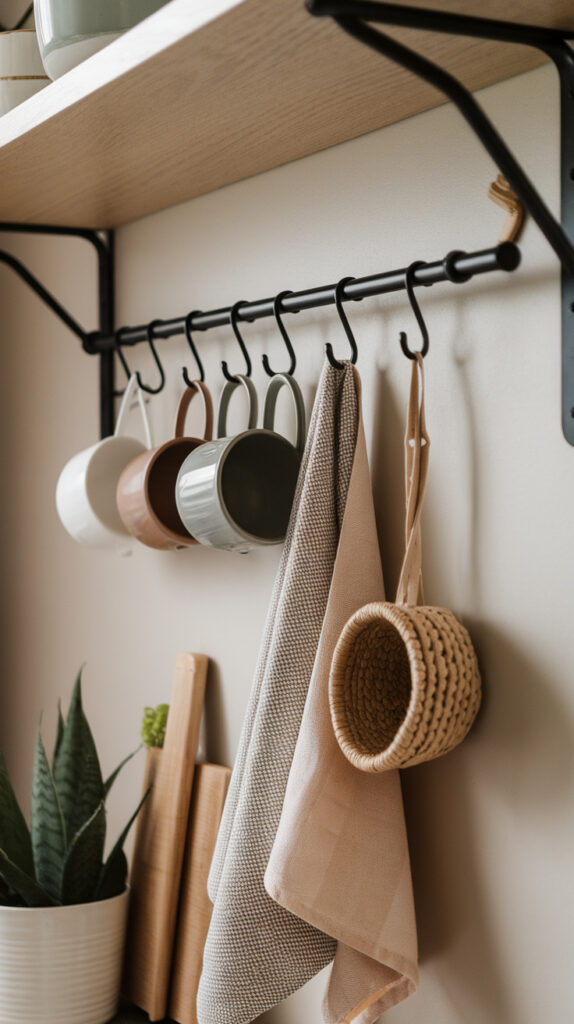
Towels, mugs, and small baskets often end up crowding counters. Wall hooks give those items a home without stealing workspace. It’s simple but surprisingly effective.
I added a row of hooks under a shelf once, and suddenly my everyday mugs stopped cluttering the cabinet. It made the kitchen feel organized without adding bulk.
Why This Works
Hooks keep frequently used items visible and accessible. They reduce drawer digging and free up cabinet space. Vertical storage always wins in small kitchens.
They also add a casual, lived-in charm when styled thoughtfully.
How to Do It
- Choose sturdy hooks that match your hardware.
- Install them into studs or anchors for support.
- Space them evenly to avoid a crowded look.
- Hang lightweight items like mugs or towels.
- Keep heavy cookware on stronger racks if needed.
Even spacing keeps everything looking balanced.
Style & Design Tips
Stick to one metal finish to avoid visual clutter. Mixing finishes can look messy in tight spaces. Choose hooks with simple shapes for a clean aesthetic.
Avoid hanging too many items at once because negative space keeps it cozy instead of chaotic.
Pro Tip or Budget Hack
Command hooks work well for lightweight items if drilling isn’t an option. Test weight limits carefully. They’re affordable and renter-friendly.
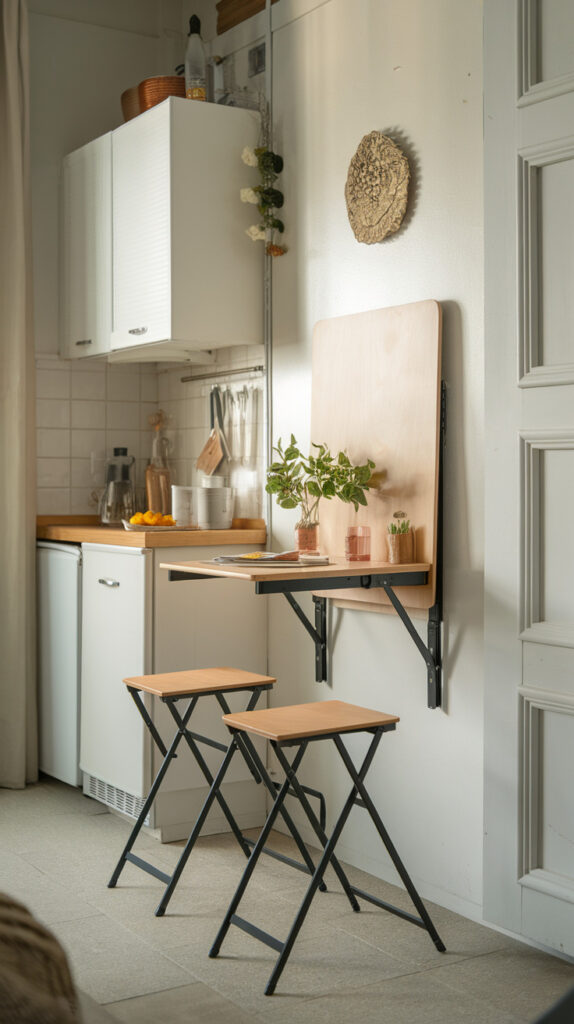
9. Fold-Down Wall Table
Small kitchens rarely have space for a full dining table. A fold-down wall table provides a surface when needed and disappears when you’re done. It’s a smart solution for multifunctional spaces.
I’ve seen these used as breakfast nooks, prep stations, and even laptop desks. The flexibility alone makes it worth considering.
Why This Works
Fold-down tables preserve floor space. When folded up, they barely take up room. When open, they provide essential functionality.
They adapt to your daily routine instead of locking you into a fixed layout.
How to Do It
- Measure your available wall space carefully.
- Purchase a wall-mounted drop-leaf table or build one.
- Secure brackets into studs for support.
- Test stability before placing weight on it.
- Fold up when not in use to clear pathways.
Safety and proper installation are crucial with weight-bearing furniture.
Style & Design Tips
Choose a tabletop that matches your counters for cohesion. Light wood keeps things airy. Avoid oversized designs that dominate the wall.
Pair it with stackable stools that tuck away easily.
Pro Tip or Budget Hack
Look for secondhand drop-leaf tables and modify them with wall brackets. You can customize size and paint color for less money. It’s practical and budget-friendly.
10. Coordinated Storage Containers
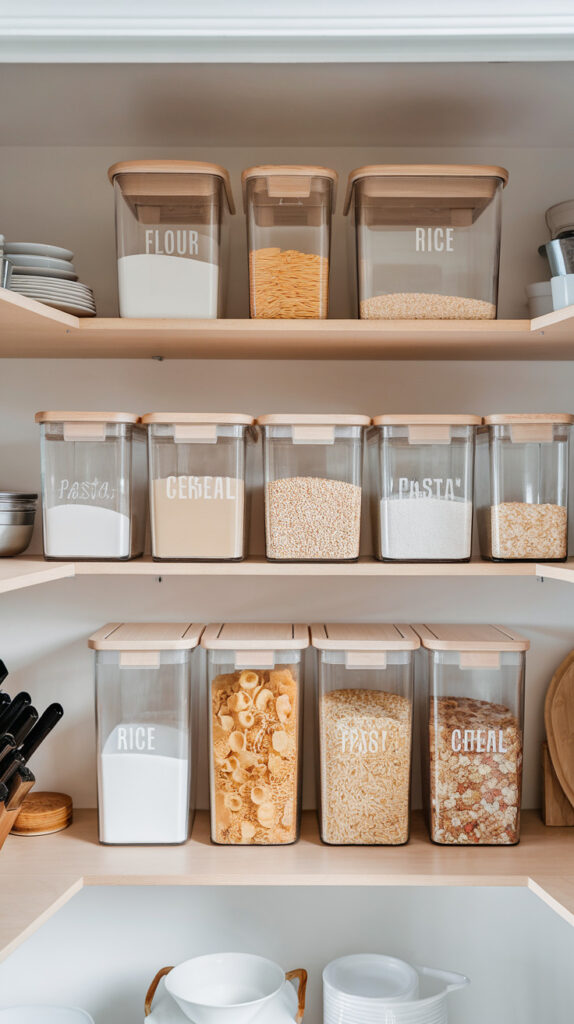
Mismatched packaging makes cabinets feel chaotic. Switching to coordinated storage containers instantly creates visual calm. It’s a small change with big payoff.
I reorganized a pantry once using clear bins and labeled jars, and the space looked twice as tidy. It also made grocery shopping easier because I could see what I had.
Why This Works
Uniform containers reduce visual noise. They make shelves look intentional instead of cluttered. Clear containers also improve efficiency.
When you see contents clearly, you waste less food and buy smarter.
How to Do It
- Empty cabinets and group similar items.
- Choose uniform containers that fit your shelf depth.
- Label each container clearly.
- Store heavier items on lower shelves.
- Keep frequently used items at eye level.
Organization becomes sustainable when placement makes sense.
Style & Design Tips
Stick to one container material like glass or BPA-free plastic. Avoid mixing too many shapes. Use minimal labels for a clean aesthetic.
Don’t overfill containers because breathing room matters visually.
Pro Tip or Budget Hack
Repurpose pasta sauce jars for dry goods. Remove labels and soak off residue for a clean finish. It’s practically free storage that still looks polished.
11. Statement Rug for Soft Contrast
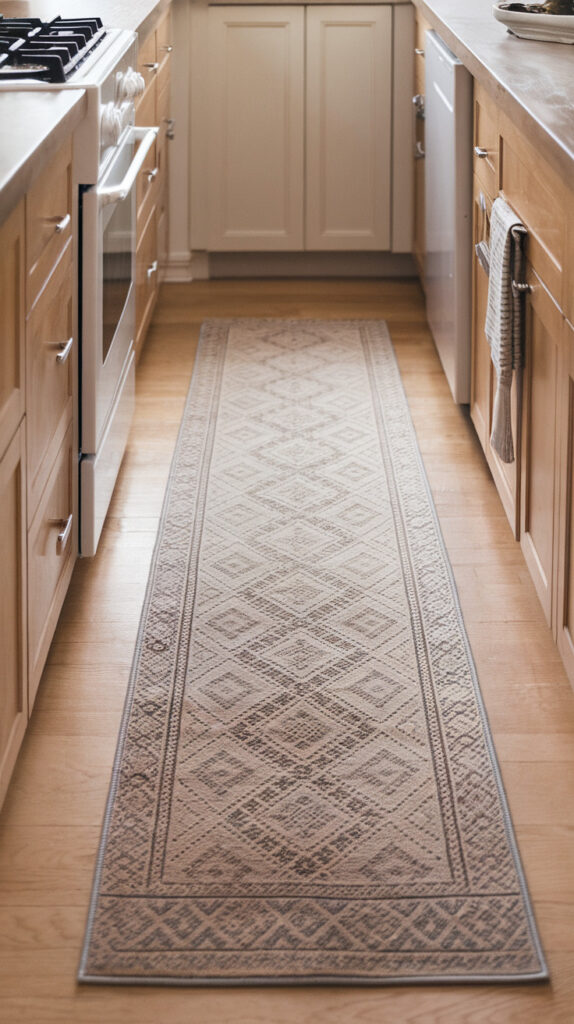
Hard surfaces dominate most small kitchens. Adding a slim statement rug introduces texture and warmth without adding furniture. It changes the feel instantly.
I was skeptical about rugs in kitchens at first, but a washable runner completely softened the space. It made standing at the counter more comfortable too.
Why This Works
Textiles break up tile and wood surfaces. They absorb sound and add comfort underfoot. In a compact space, softness balances hard edges.
A rug also defines zones in open-concept layouts.
How to Do It
- Choose a washable, low-pile rug for easy cleaning.
- Measure walkway areas before purchasing.
- Place it along prep zones or sinks.
- Use non-slip backing for safety.
- Clean regularly to maintain freshness.
Function matters just as much as style in kitchen rugs.
Style & Design Tips
Go for subtle patterns rather than bold prints in tight spaces. Lighter colors expand the room visually. Avoid thick shag rugs that trap crumbs.
Keep the rug proportionate to your walkway.
Pro Tip or Budget Hack
Look for indoor-outdoor rugs because they’re durable and easy to wash. They’re often cheaper than specialty kitchen rugs. Practical and stylish is always a win.
Small Kitchen Design Strategy: The Foundation That Makes Everything Work
Decorating a small kitchen without a strategy usually leads to clutter disguised as style. Before adding shelves, rugs, or lighting, you need a functional foundation that supports everyday cooking, cleaning, and movement. Cozy only works when the space still feels easy to use.
Start by evaluating your kitchen’s workflow. Pay attention to how you move between the sink, stove, and fridge, because that triangle determines efficiency more than décor ever will. If something blocks that flow, it doesn’t matter how pretty it looks.
Next, define your storage priorities. Keep daily-use items within arm’s reach and move occasional-use tools higher or lower. When everything has a designated place, decorating becomes about enhancing the system instead of hiding chaos.
Limit your color palette early. Small kitchens benefit from visual consistency, so choosing two to three core tones helps everything feel intentional. Once that base is set, accents and personality pieces feel curated instead of random.
Finally, edit aggressively. If you haven’t used it in six months and it’s not seasonal, it probably doesn’t deserve premium kitchen real estate. A streamlined base makes every decorative upgrade look more polished.
Common Mistakes to Avoid in Small Kitchen Decorating
Overdecorating is the fastest way to shrink a small kitchen visually. When every wall, shelf, and counter holds something decorative, the room loses breathing room. Negative space is not empty space; it’s visual relief.
Another mistake is choosing oversized décor. Large light fixtures, bulky stools, or heavy rugs overwhelm tight layouts. Scale matters more than trendiness in compact kitchens.
Ignoring lighting layers also creates problems. Relying on a single overhead fixture leaves shadows and makes the space feel flat. Even simple additions like under-cabinet lighting or a small lamp can transform functionality.
Many people skip measuring before buying furniture or storage pieces. That guesswork leads to blocked pathways and awkward layouts. Always measure twice and visualize movement before committing.
Lastly, mixing too many finishes creates visual clutter. Combining brass, chrome, black, and brushed nickel in a tiny space often feels chaotic. Choose one primary hardware finish and stick with it for cohesion.
Smart Storage Planning: Thinking Beyond Cabinets
Cabinets alone rarely solve storage challenges in small kitchens. Creative solutions like vertical racks, corner organizers, and pull-out inserts maximize existing space without renovations. The goal is to use depth and height efficiently.
Drawer dividers prevent utensils from piling into messy stacks. When everything has a slot, it stays organized longer. Small upgrades inside cabinets make just as much impact as visible décor changes.
Consider hidden storage whenever possible. Toe-kick drawers, over-the-door racks, and slim wall-mounted organizers use overlooked areas effectively. These solutions keep surfaces clear, which instantly makes the kitchen feel larger.
Avoid storing non-kitchen items in kitchen cabinets. When paperwork, tools, or random household objects creep in, usable space shrinks fast. Keep the kitchen dedicated to cooking essentials.
Budget Planning for Small Kitchen Upgrades
Improving a small kitchen doesn’t require a full renovation budget. Prioritize upgrades that improve both function and appearance, such as lighting, paint, and hardware. These changes deliver strong visual impact for relatively low cost.
Break your improvements into phases. Start with organization, then move to cosmetic upgrades, and finally add decorative elements. This approach prevents impulse purchases that don’t fit the overall plan.
Repurpose before replacing. A fresh coat of paint, updated handles, or repositioned shelving often achieves the same effect as buying new cabinetry. Strategic updates stretch your budget further.
Track spending as you go. Small purchases add up quickly, especially when buying containers, hooks, and décor pieces. Staying intentional keeps your design cohesive and financially manageable.
Kitchen Safety and Practical Considerations
Decorating should never compromise safety in a working kitchen. Keep flammable décor away from stovetops and ensure rugs have non-slip backing. Practical decisions protect both your home and your peace of mind.
Avoid blocking ventilation areas or electrical outlets with decorative pieces. Function must always come first in small layouts. Every item should support daily tasks instead of complicating them.
Secure heavy shelves, magnetic strips, and fold-down tables properly. Structural stability matters, especially in compact spaces where movement is tight. Investing in proper installation prevents long-term issues.
Also consider cleaning routines. Choose washable fabrics, wipeable surfaces, and durable finishes. A cozy kitchen still needs to withstand spills, steam, and everyday wear.
Frequently Asked Questions
How do I make a small kitchen look bigger without remodeling?
Focus on light colors, reflective surfaces, and layered lighting. Clear countertops and consistent storage containers reduce visual clutter. Strategic styling creates the illusion of more space without structural changes.
What colors work best in a small kitchen?
Warm whites, soft grays, and light neutral tones generally work well. These shades reflect light and prevent the space from feeling heavy. Accent colors should be used sparingly for balance.
Is open shelving a good idea in a tiny kitchen?
It can be, if styled intentionally and not overloaded. Limit displayed items to essentials and cohesive pieces. Too much variety can quickly make the space look messy.
How can I add personality without overcrowding the room?
Choose one or two focal elements, such as a backsplash or rug. Let those stand out while keeping the rest minimal. Controlled contrast creates character without chaos.
Are rugs safe in small kitchens?
Yes, as long as they’re low-pile and have non-slip backing. Washable materials make maintenance easier. Proper placement prevents tripping hazards.
What’s the most cost-effective upgrade for a small kitchen?
Lighting and paint usually offer the highest return for the lowest investment. Updating hardware also creates noticeable impact. These improvements transform the feel of the room without major expense.
Final Thoughts
Small kitchens reward smart choices more than big budgets. When you focus on vertical space, lighting, and cohesive styling, the room starts working harder for you. Every piece should serve a purpose.
I’ve learned that cozy doesn’t mean crowded, and practical doesn’t mean boring. When you balance both, even the tiniest kitchen feels intentional and welcoming.