11 Corner Shower Ideas for Small Bathrooms
Limited floor space forces smarter layout choices, especially in bathrooms where every inch has to work harder than usual.
Small bathrooms often feel cramped not because of their size, but because of how poorly the space gets used.
Corner showers quietly solve that problem by freeing up the center of the room, improving movement, and making the entire bathroom feel less boxed in.
Most people assume corner showers are only for tiny apartments, but honestly, they work beautifully in almost any compact bathroom layout.
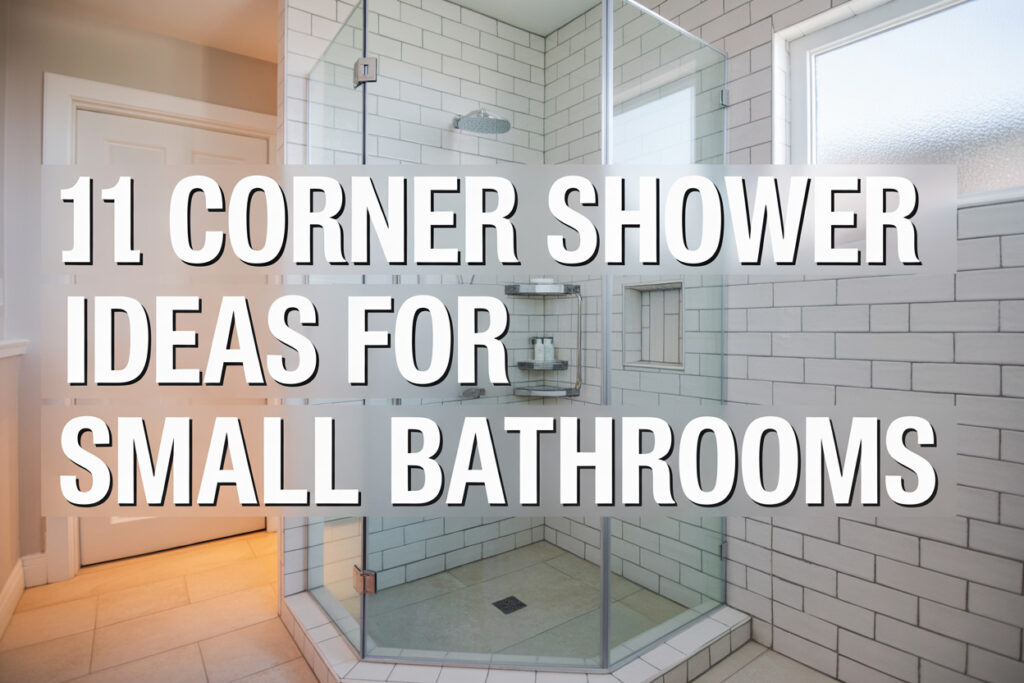
Over the years I’ve seen some surprisingly clever setups that turn awkward corners into stylish, functional shower spaces that feel intentional instead of squeezed in.
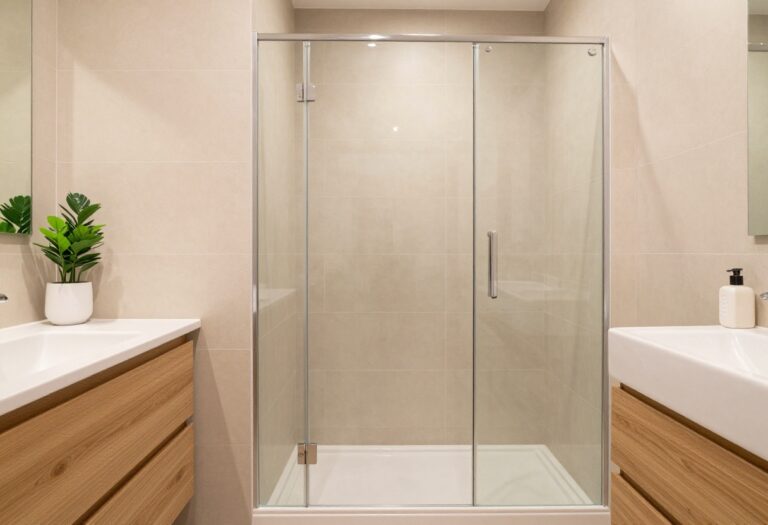
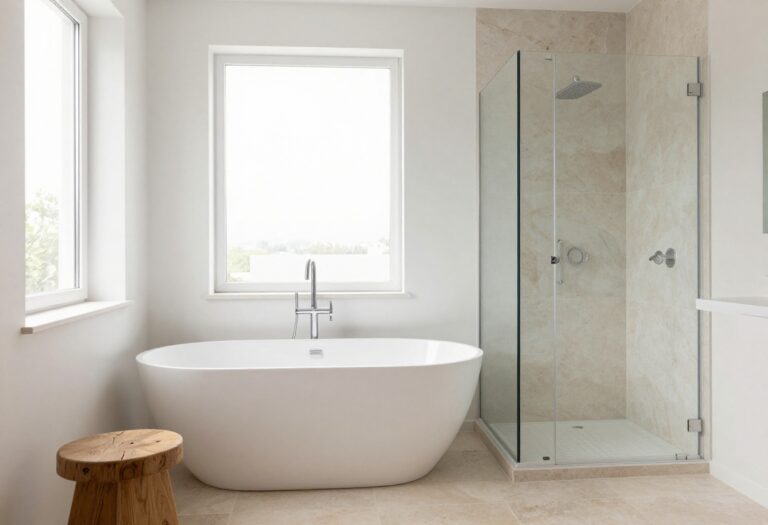
1. Frameless Glass Corner Shower
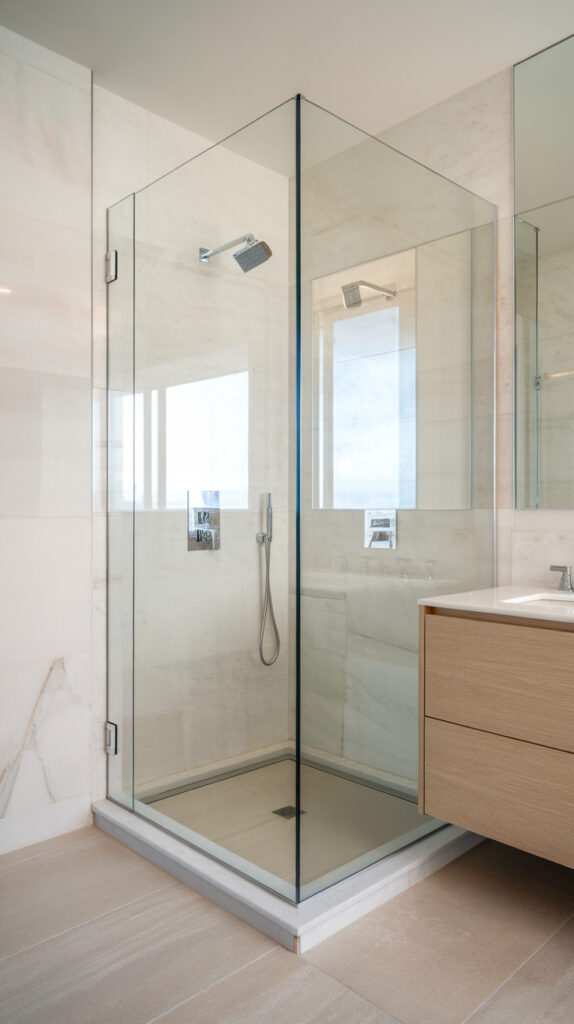
Bulky shower frames instantly make small bathrooms feel tighter, which is exactly why frameless glass designs have become so popular. A frameless corner shower keeps visual clutter to a minimum while still giving you a fully enclosed shower space. I’ve installed one in a small guest bathroom before, and the difference in openness was honestly shocking.
Why This Works
Frameless glass allows your eyes to travel through the space instead of stopping at heavy borders or metal frames.
That visual continuity tricks the brain into perceiving a larger room, even when the actual square footage hasn’t changed.
How to Do It
- Measure the corner carefully before choosing the glass panels to ensure a proper fit.
- Choose clear tempered glass instead of frosted if maximizing openness is your goal.
- Install minimal hardware such as slim hinges and small handles to keep the design clean.
- Use silicone sealing along edges to prevent leaks without bulky trim.
Style & Design Tips
Keep surrounding tile simple so the glass enclosure becomes the highlight rather than competing with busy patterns.
Light neutral tiles like soft gray, marble, or warm white help bounce light around the shower and make the whole bathroom feel brighter.
Pro Tip or Budget Hack
Custom frameless glass can get expensive quickly.
If budget matters, look for pre-sized frameless kits, which often cost half as much and still deliver the same sleek look.
2. Curved Corner Shower Enclosure
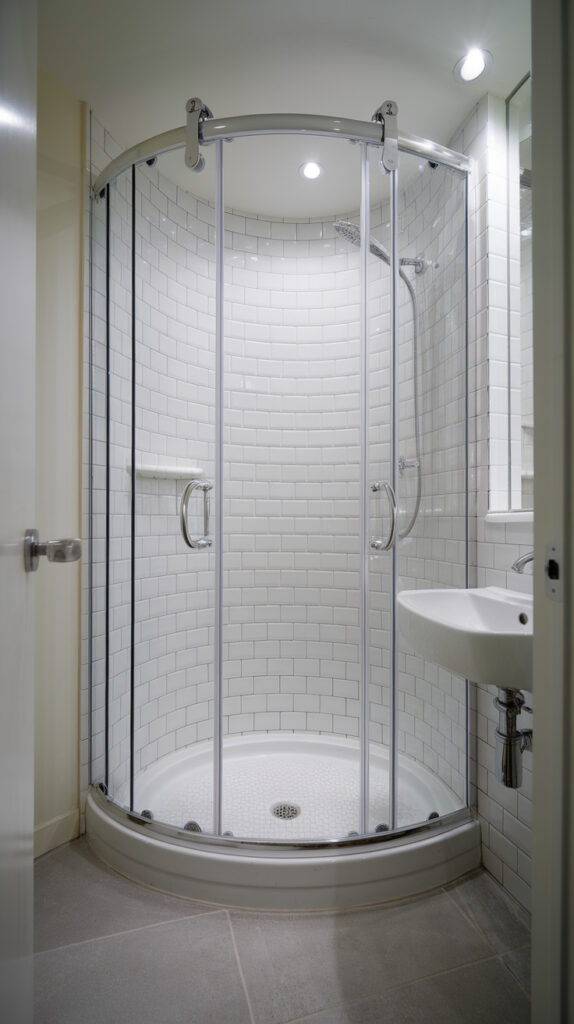
Sharp angles sometimes create awkward movement in small bathrooms, especially when the shower door swings into tight areas. Curved corner showers soften those angles while opening up walking space. I’ve seen these used in tiny condo bathrooms where every inch mattered.
Why This Works
The rounded front edge reduces the footprint of the shower without sacrificing interior space.
It also improves traffic flow, since there are no hard corners jutting into the room.
How to Do It
- Choose a quarter-circle shower base designed specifically for corner installations.
- Install curved glass panels that match the base shape.
- Use a sliding curved door instead of a hinged one to save space.
- Ensure proper leveling of the base before installing the enclosure.
Style & Design Tips
Curved showers pair beautifully with modern or contemporary bathrooms.
Avoid overly decorative hardware, since the smooth curve already creates a visual focal point.
Pro Tip or Budget Hack
Fiberglass curved shower kits cost far less than custom tile installations.
They’re surprisingly durable and install much faster, making them ideal for DIY renovations.
3. Corner Walk-In Shower
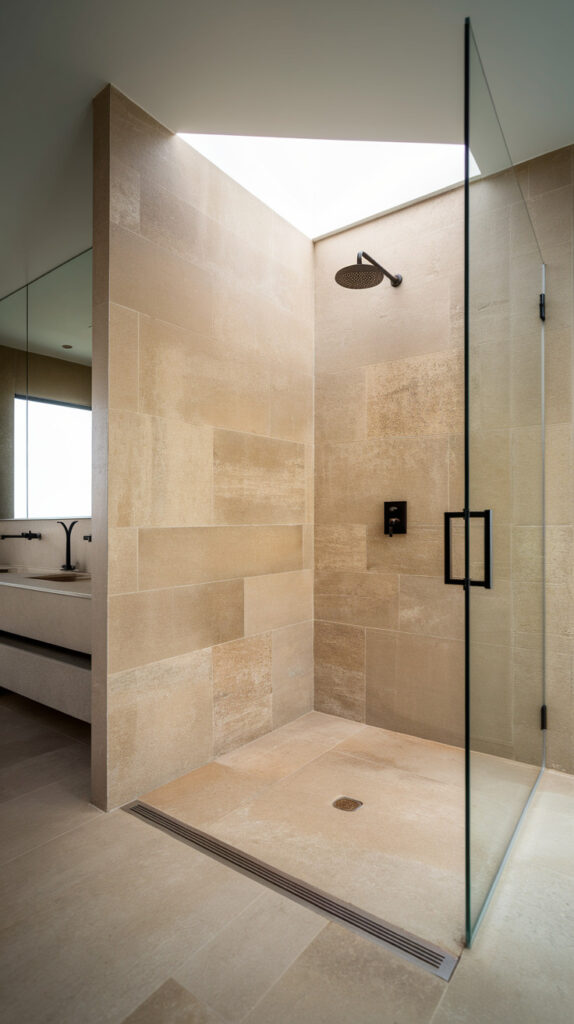
Doors aren’t always necessary in small bathrooms. A corner walk-in shower uses a partial glass panel while leaving one side open. The first time I tried this setup, I was skeptical about splashing, but the layout handled water surprisingly well.
Why This Works
Removing the door eliminates one of the biggest space barriers in compact bathrooms.
The open design makes the shower blend into the rest of the room rather than feeling like a separate box.
How to Do It
- Build a slightly angled glass panel that blocks the main spray area.
- Install a linear drain along the wall for better water flow.
- Slope the shower floor gently toward the drain.
- Use water-resistant tile across the entire wet zone.
Style & Design Tips
Large format tiles reduce grout lines and create a clean, seamless look.
Stick to one tile style across the shower and bathroom floor to visually expand the space.
Pro Tip or Budget Hack
Instead of buying custom glass, many hardware stores sell standard fixed shower panels that work perfectly for walk-in layouts.
4. Neo-Angle Corner Shower
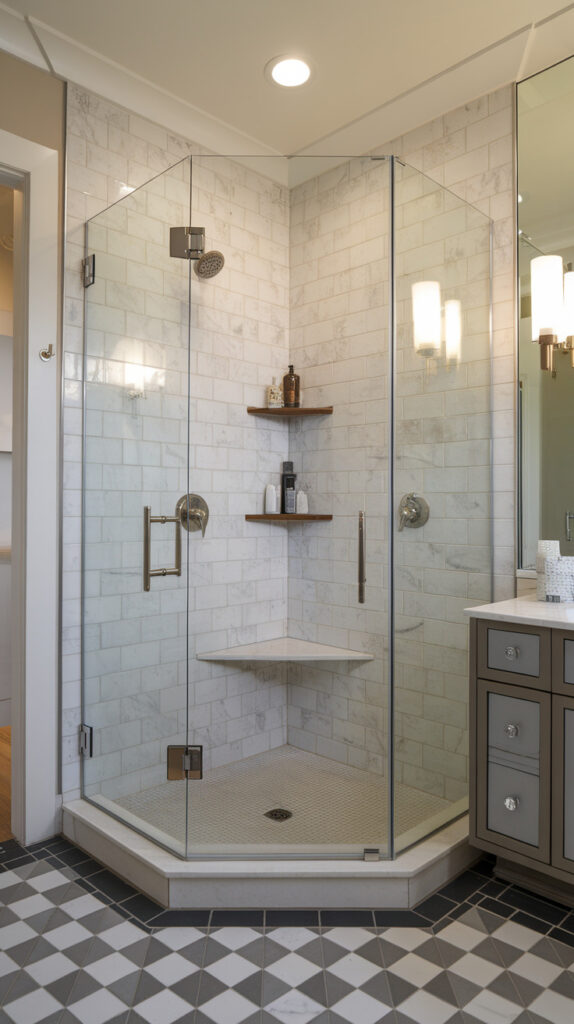
Some corners don’t accommodate curved enclosures easily, especially in rectangular bathrooms. That’s where a neo-angle shower becomes incredibly useful. The angled front creates more interior room while still fitting neatly into a corner.
Why This Works
The angled entrance increases usable shower space without taking up extra floor area.
It also provides a wider doorway compared to traditional square corner showers.
How to Do It
- Install a neo-angle shower base designed for three-panel glass systems.
- Mount two side panels against the walls and a door panel in the center.
- Secure all joints with waterproof seals.
- Double-check angles during installation to avoid door alignment issues.
Style & Design Tips
This design works especially well with modern geometric tile patterns.
Keep fixtures simple so the angular shape remains the main design feature.
Pro Tip or Budget Hack
Prefabricated neo-angle kits are widely available and much easier to install than custom-built glass enclosures.
5. Corner Shower With Built-In Bench
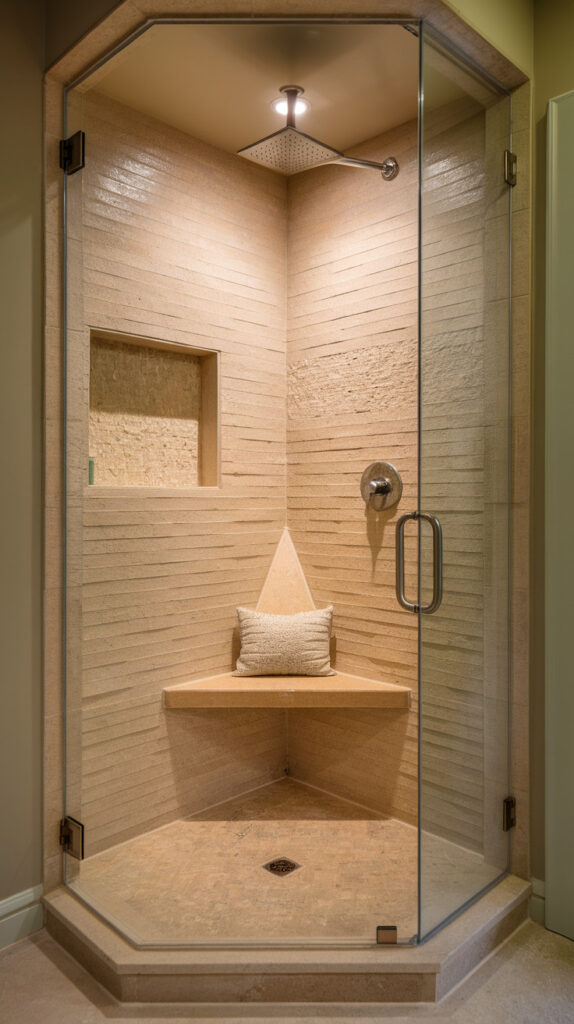
Comfort matters more than people think when designing a shower. A small built-in bench in the corner turns an ordinary shower into something far more relaxing. I added one in a renovation once, and the homeowner said it became their favorite feature.
Why This Works
Benches provide seating for shaving, washing feet, or simply relaxing during longer showers.
When placed in a corner, the bench uses space that would otherwise remain unused.
How to Do It
- Frame the bench structure with waterproof backer board.
- Cover it with the same tile used for the shower walls.
- Slightly slope the bench surface to prevent water pooling.
- Seal grout lines carefully to prevent moisture damage.
Style & Design Tips
Use contrasting tile on the bench top to highlight the seating area.
Rounded bench edges make the shower safer and more comfortable.
Pro Tip or Budget Hack
If building a permanent bench isn’t possible, consider a fold-down teak shower seat, which saves space and installs easily.
6. Tile-Wrapped Corner Shower
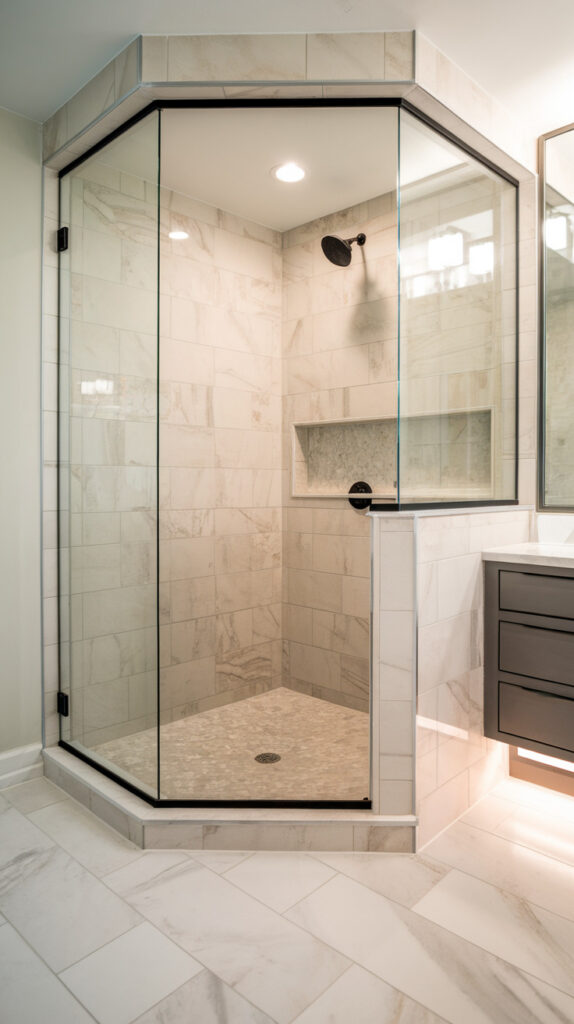
Tile has a way of transforming a simple shower into a design centerpiece. Wrapping the entire corner shower in tile creates a cohesive look that feels intentional rather than improvised.
Why This Works
Continuous tile patterns draw the eye upward and outward, which visually stretches the space.
This trick works especially well in small bathrooms where visual continuity matters.
How to Do It
- Choose a durable porcelain or ceramic tile suitable for wet environments.
- Extend the tile from floor to ceiling for maximum visual impact.
- Use waterproof backer board underneath the tile.
- Seal grout with moisture-resistant sealer.
Style & Design Tips
Vertical tile layouts make ceilings appear taller.
Avoid tiny mosaic patterns everywhere because too many grout lines can make a small shower feel busy.
Pro Tip or Budget Hack
Combine simple wall tile with a small accent strip instead of tiling everything with expensive designer tiles.
7. Corner Shower With Sliding Doors
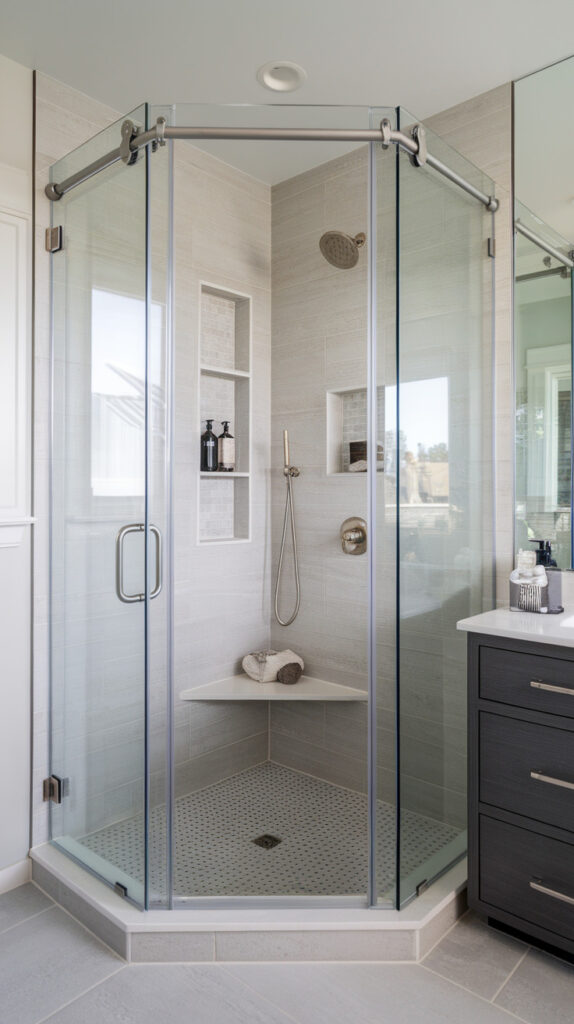
Swing doors require clearance that small bathrooms simply don’t have. Sliding doors solve that issue instantly while keeping the shower fully enclosed.
Why This Works
The doors glide along a track instead of swinging outward.
That means you can place sinks, toilets, or cabinets closer to the shower without blocking access.
How to Do It
- Install a track system designed specifically for shower doors.
- Mount tempered glass panels onto the sliding hardware.
- Ensure the track remains level for smooth operation.
- Seal edges to prevent water leakage.
Style & Design Tips
Choose matte black or brushed nickel hardware for a modern touch.
Clear glass keeps the shower feeling open and spacious.
Pro Tip or Budget Hack
Sliding door kits are widely available and often include all hardware needed for installation.
8. Frosted Glass Corner Shower
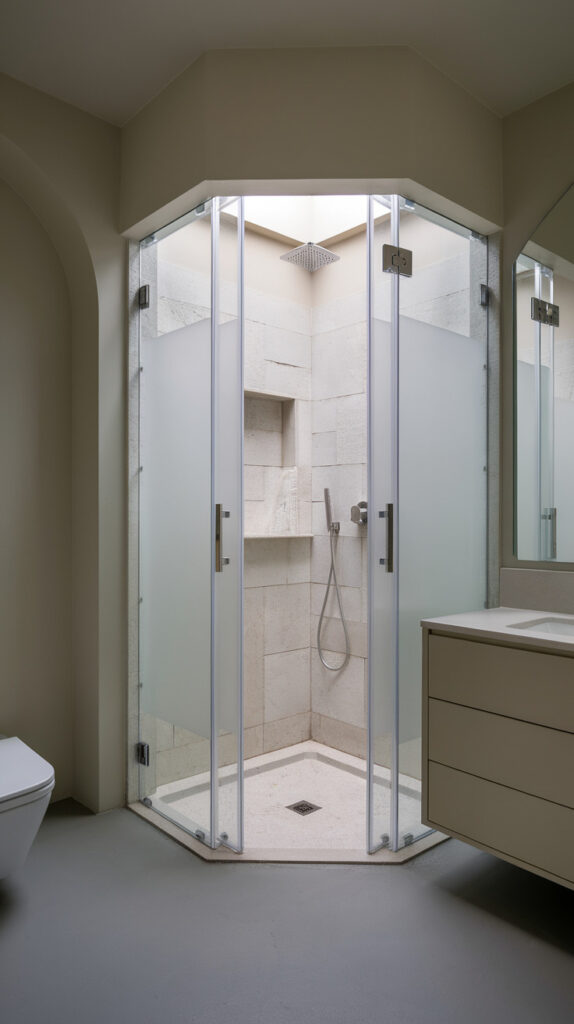
Privacy sometimes matters more than openness, especially in shared bathrooms. Frosted glass offers that privacy while still allowing light to pass through.
Why This Works
Frosted glass diffuses light instead of blocking it completely.
This maintains brightness while preventing clear visibility into the shower.
How to Do It
- Choose acid-etched or sandblasted glass panels for durability.
- Install the panels just like standard glass shower enclosures.
- Pair with waterproof wall materials behind the glass.
- Use subtle metal hardware to complement the finish.
Style & Design Tips
Frosted glass works well in minimalist or modern bathrooms.
Avoid overly decorative tiles behind frosted panels since most details won’t be visible anyway.
Pro Tip or Budget Hack
Apply frosted window film to clear glass panels for a cheaper alternative.
9. Corner Shower With Vertical Storage Niches
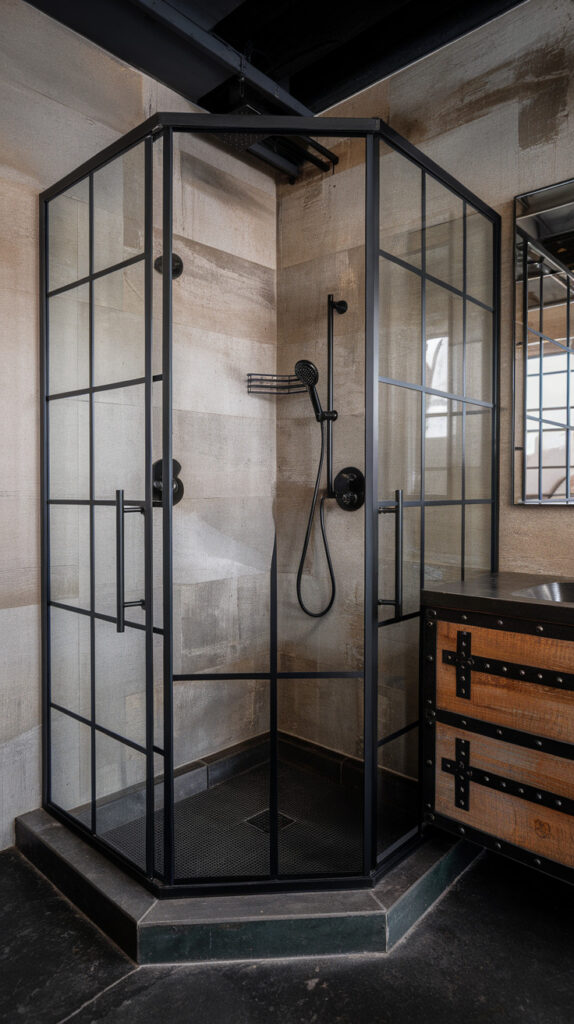
Storage becomes tricky in small showers. Adding built-in niches in the corner wall keeps shampoo bottles off the floor while maintaining a clean look.
Why This Works
Vertical niches use unused wall space without crowding the shower.
They also keep everyday items easily reachable.
How to Do It
- Frame the niche between wall studs.
- Line the interior with waterproof backer board.
- Tile the niche to match the rest of the shower.
- Slightly slope the base to prevent water buildup.
Style & Design Tips
Highlight niches using accent tile or contrasting grout.
Avoid making them too shallow, since large shampoo bottles need adequate depth.
Pro Tip or Budget Hack
Pre-formed shower niches are inexpensive and simplify installation significantly.
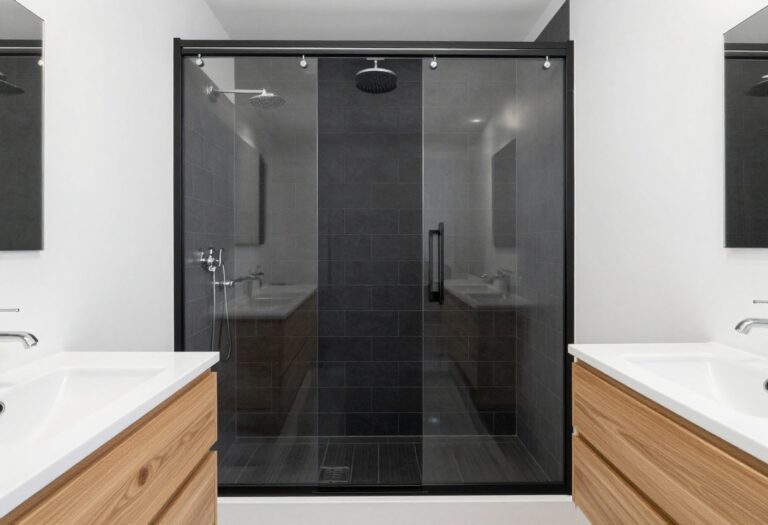
10. Industrial Style Corner Shower
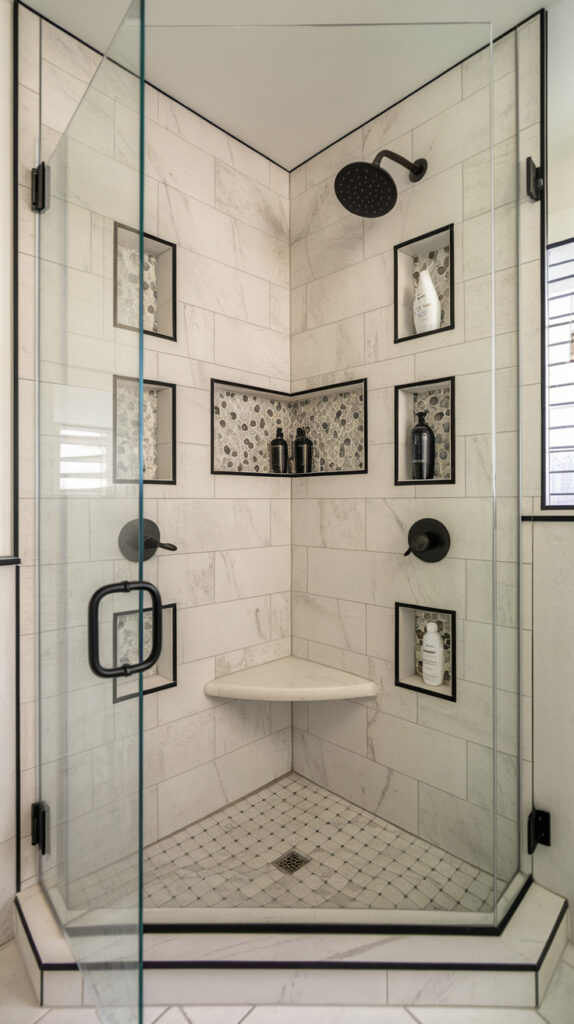
Industrial design brings a bold look to small bathrooms without adding clutter. Black metal frames combined with glass create a striking grid-style enclosure.
Why This Works
The grid pattern adds visual structure while still allowing light to pass through.
It also complements modern loft-style interiors beautifully.
How to Do It
- Install black framed shower panels or grid-style glass enclosures.
- Pair with matte black fixtures for consistency.
- Use durable tile or concrete-style walls.
- Ensure all metal components are corrosion-resistant.
Style & Design Tips
Industrial showers look best with neutral tones like charcoal, gray, or white.
Avoid mixing too many metal finishes in the same bathroom.
Pro Tip or Budget Hack
You can mimic this look by applying black metal trim strips to regular glass panels.
11. Minimalist Corner Wet Room Shower
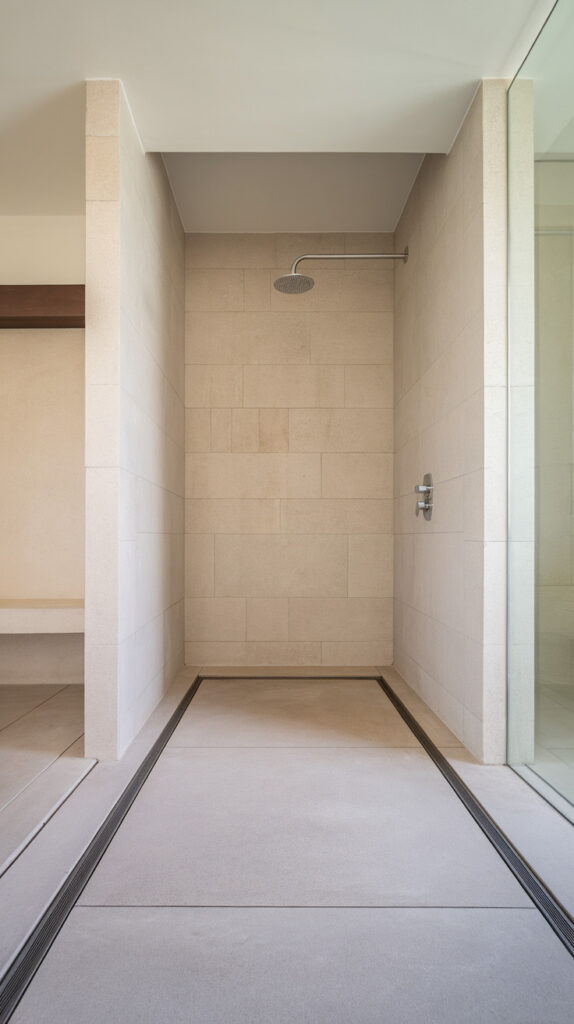
Sometimes the best solution involves removing the traditional shower enclosure entirely. A wet room style corner shower uses waterproof flooring and walls without barriers.
Why This Works
The open layout eliminates visual boundaries, making the bathroom feel dramatically larger.
It also simplifies cleaning since there are no shower doors or frames.
How to Do It
- Waterproof the entire bathroom floor using a membrane system.
- Install a linear floor drain along the shower wall.
- Tile the entire floor and shower walls.
- Slightly slope the shower area toward the drain.
Style & Design Tips
Use large tiles with minimal grout lines for a sleek minimalist look.
Consistent flooring throughout the room helps create a seamless design.
Pro Tip or Budget Hack
If a full wet room conversion feels too complex, start by removing the shower curb and installing a low-profile shower base.
How to Choose the Right Corner Shower for Your Bathroom
Choosing a corner shower sounds simple until you start comparing sizes, door styles, and layouts. A lot of people pick the first design they like visually, only to realize later that the door hits the vanity or blocks the toilet. I’ve seen that mistake happen more times than you’d think.
The smartest approach starts with understanding how the bathroom actually functions day to day. Pay attention to how people move through the space, where the plumbing lines sit, and how much clearance the shower entrance needs.
Start With Accurate Measurements
Always measure the corner area before choosing a shower design. Even a difference of two inches can change which enclosure styles will fit.
Most corner showers fall into three common footprint sizes: 32×32 inches, 36×36 inches, and 38×38 inches. The larger options feel more comfortable inside while still working well in small bathrooms.
Think About Door Clearance
The door style often determines whether the shower works in the space.
Hinged doors require swing space, which can block nearby fixtures. Sliding doors or walk-in designs usually perform better in tight bathrooms.
Plan Around Plumbing
Moving plumbing dramatically increases renovation costs.
If the existing plumbing lines already sit in the corner, installing a corner shower becomes significantly easier and cheaper.
Consider Visual Weight
Heavy frames, thick borders, and bulky bases make small bathrooms feel tighter.
Light materials like frameless glass, minimal hardware, and simple tile patterns keep the room feeling open.
Small Bathroom Layout Tips That Maximize Space
A corner shower alone won’t magically fix a cramped bathroom layout. The rest of the room needs to support the space-saving design.
Once the shower placement works correctly, the entire bathroom begins to feel more balanced and comfortable.
Keep the Center Floor Open
Open floor space creates the illusion of a larger bathroom.
Corner showers help achieve this by pushing the wet area to the perimeter while leaving the middle of the room free.
Use Wall-Mounted Fixtures
Floating vanities and wall-mounted toilets reduce visual clutter.
They also expose more floor space, which naturally makes the room feel bigger.
Choose Large Mirrors
Large mirrors reflect light and visually double the space.
A mirror that stretches across the vanity wall can dramatically improve how spacious the bathroom feels.
Stick With Light, Neutral Colors
Dark bathrooms tend to feel smaller.
Colors like soft white, warm beige, light gray, or marble tones reflect light and create a more open atmosphere.
Materials That Work Best for Corner Showers
The materials you choose influence durability, cleaning effort, and overall appearance. Cheap materials often look good for a few months but start showing wear quickly.
Choosing the right surfaces from the beginning saves a lot of frustration later.
Tempered Glass
Tempered glass is the standard for modern shower enclosures.
It’s strong, safe, and resistant to sudden temperature changes.
Porcelain Tile
Porcelain tiles perform extremely well in wet environments.
They resist water absorption and remain durable for many years.
Stone-Look Tiles
Natural stone looks beautiful but requires sealing and maintenance.
Stone-look porcelain tiles give you the same aesthetic with much easier upkeep.
Acrylic Shower Bases
Acrylic bases install faster than tiled shower floors.
They also reduce installation costs and help prevent leaks when installed properly.
Common Mistakes to Avoid With Corner Showers
Corner showers solve space issues, but poor planning can easily create new problems. Most mistakes happen during layout decisions rather than installation itself.
Avoiding these issues early saves time, money, and a lot of frustration later.
Choosing a Shower That’s Too Small
Some homeowners try to squeeze in the smallest possible shower.
A shower under 32 inches wide can feel cramped very quickly.
Ignoring Door Clearance
Swing doors can collide with sinks, cabinets, or toilets.
Always confirm the door has enough room to open comfortably.
Poor Drain Placement
Drain placement affects water flow and floor slope.
Improper positioning can cause standing water or slow drainage.
Overloading the Shower With Too Many Features
Shelves, benches, niches, and multiple fixtures can overcrowd a small shower.
Focus on the essentials instead of turning a compact shower into a complicated design.
Choosing Slippery Floor Tiles
Glossy tiles may look great but become dangerous when wet.
Textured tiles with slip-resistant finishes are always safer for shower floors.
Maintenance Tips to Keep Your Corner Shower Looking New
A well-designed corner shower should remain easy to maintain. Simple cleaning habits prevent soap buildup, water stains, and mildew from forming.
The goal is to keep the shower fresh without constant scrubbing.
Use a Daily Squeegee
A quick swipe of a squeegee after each shower removes water spots.
This habit dramatically reduces glass cleaning.
Ventilate the Bathroom Properly
Moisture buildup encourages mold growth.
Running an exhaust fan for 15–20 minutes after showers keeps humidity levels down.
Seal Grout Regularly
Tile grout naturally absorbs moisture.
Applying grout sealer once or twice a year prevents staining and mildew.
Clean Shower Tracks Monthly
Sliding shower doors often collect soap residue in the tracks.
Cleaning the track monthly keeps doors sliding smoothly.
Frequently Asked Questions
What size corner shower is best for small bathrooms?
Most small bathrooms work well with a 36×36 inch corner shower. This size provides comfortable interior space without overwhelming the room.
Are corner showers cheaper than traditional showers?
Corner showers can often cost less because they use fewer materials and require less wall space. Prefabricated corner shower kits are especially budget-friendly.
Do corner showers make bathrooms look bigger?
Yes, they often do. Moving the shower to the corner frees up the center of the room, which makes the entire space feel more open.
Are corner walk-in showers practical?
They can be very practical when designed correctly. A properly angled glass panel and good floor drainage prevent most water splash issues.
Is a curved corner shower better than a square one?
Curved showers improve movement in tight bathrooms because they eliminate sharp corners. Square showers, however, usually offer slightly more interior space.
Can a corner shower work in a very small bathroom?
Absolutely. Corner showers are one of the most effective ways to maximize usable space in compact bathrooms, especially when paired with wall-mounted fixtures and minimalistic design choices.
Final Thoughts
Smart layout decisions often matter more than square footage when designing a small bathroom.
Corner showers prove that even awkward spaces can become practical and stylish when handled thoughtfully.
The key is choosing a design that balances movement, storage, and visual openness.
Once you get the layout right, the rest of the bathroom starts working with you instead of against you.