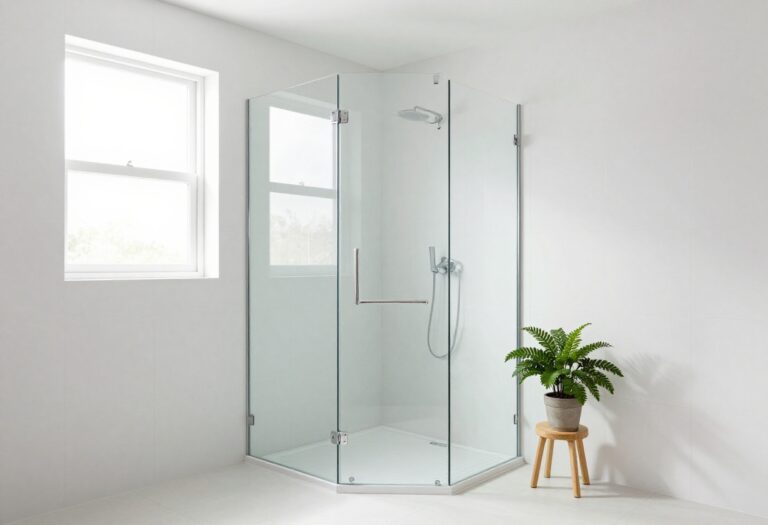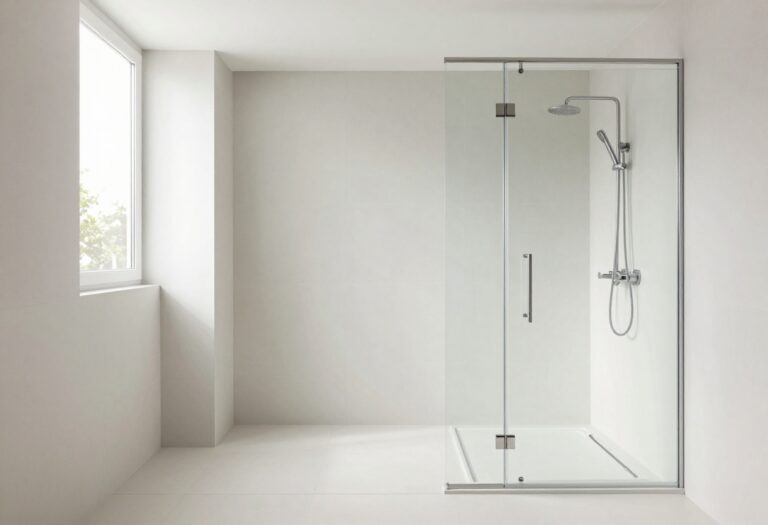
11 Modern Walk-In Shower Ideas for Stylish Bathrooms
Space planning inside a bathroom often improves more from removing things than adding them. Walk-in showers prove that point better than almost any other upgrade.
Traditional tubs and bulky shower enclosures tend to crowd the room and interrupt the natural flow of movement. A well-designed walk-in shower does the opposite.
The right layout can make a bathroom feel larger, cleaner, and surprisingly luxurious. Some ideas focus on smart design tricks, while others lean heavily on materials and styling.
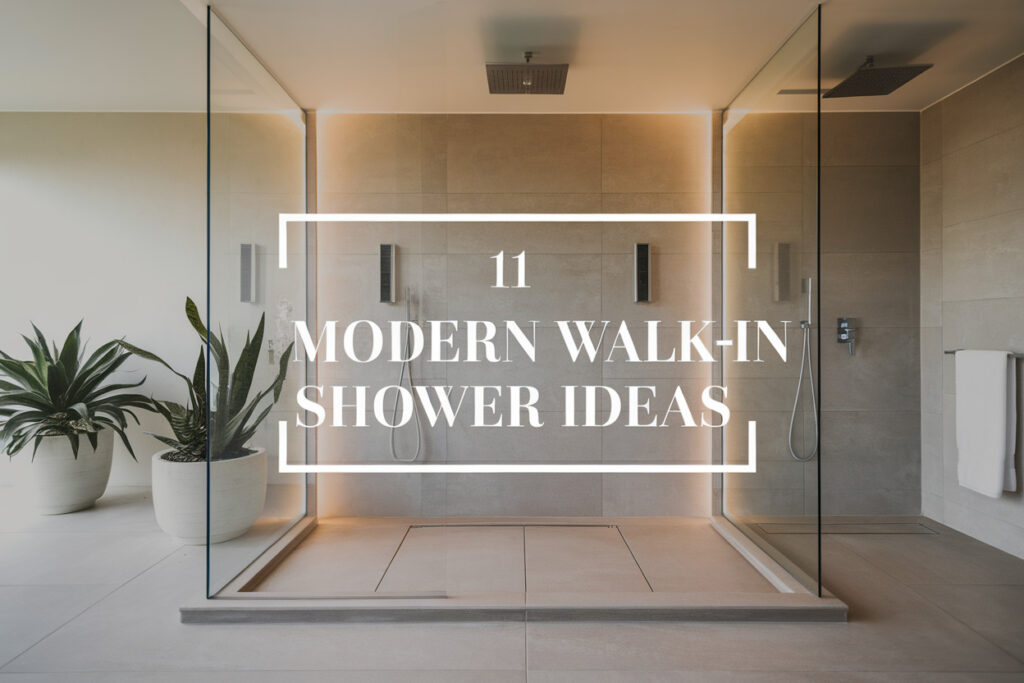
Either way, a modern walk-in shower can completely transform the personality of a bathroom without requiring a full renovation.
1. Frameless Glass Walk-In Shower
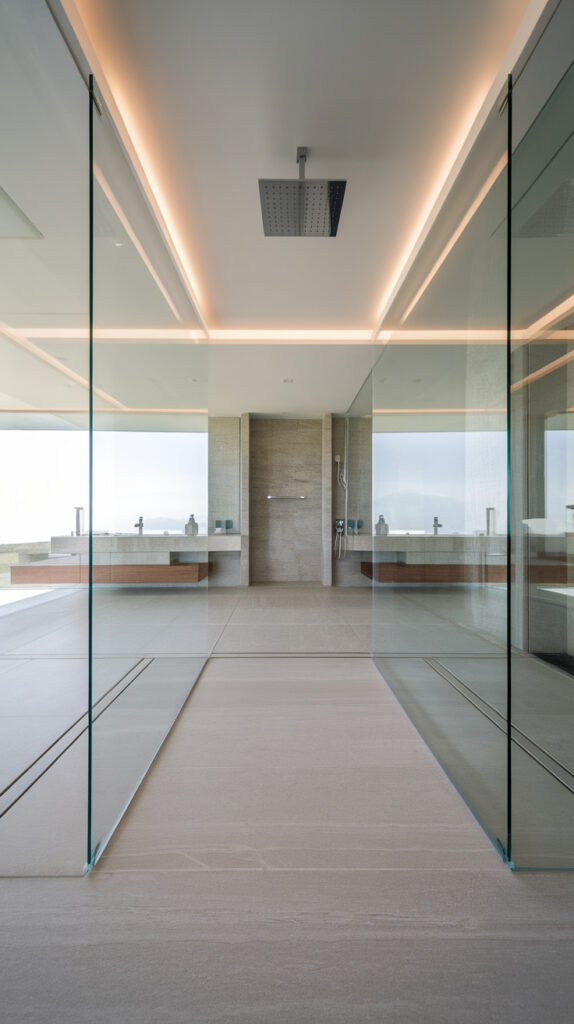
Small bathrooms often feel cluttered because of visual barriers rather than actual lack of space. Thick shower frames, curtains, and bulky doors break the visual flow and make everything feel cramped.
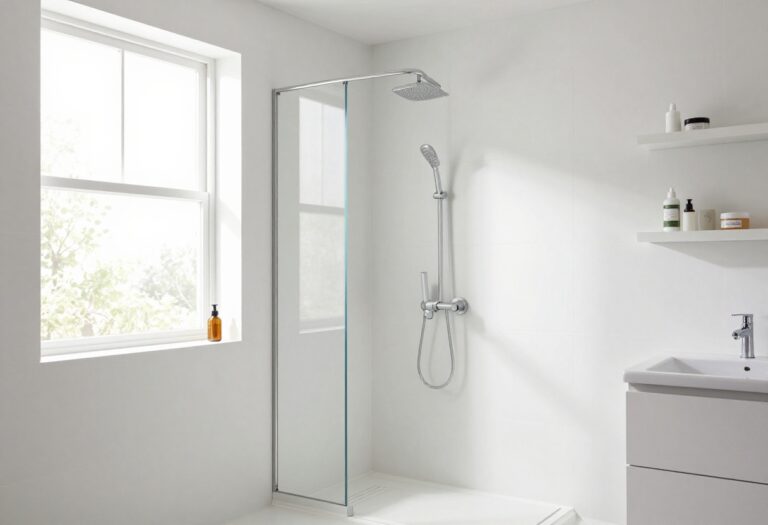
A frameless glass walk-in shower removes those interruptions entirely. Instead of dividing the room, the shower blends into the bathroom and creates a clean, open look.
I tried this approach in a friend’s guest bathroom renovation a couple of years ago, and the difference was honestly dramatic. The room suddenly looked almost twice as big.
Why This Works
Frameless glass keeps sightlines uninterrupted, which instantly expands the perceived size of the space. Even in larger bathrooms, this design makes the entire room feel more modern and calm.
The absence of metal frames also gives the shower a minimal, high-end appearance. Clean edges simply look better than bulky hardware.
How to Do It
- Measure the shower opening carefully to ensure the glass panel fits perfectly. Precision matters because frameless installations leave no room for sloppy gaps.
- Choose tempered safety glass, ideally around 3/8-inch thick, for strength and durability.
- Install a single fixed panel or a minimal swing door depending on your layout.
- Use discreet wall clips instead of large metal brackets for a clean finish.
Style & Design Tips
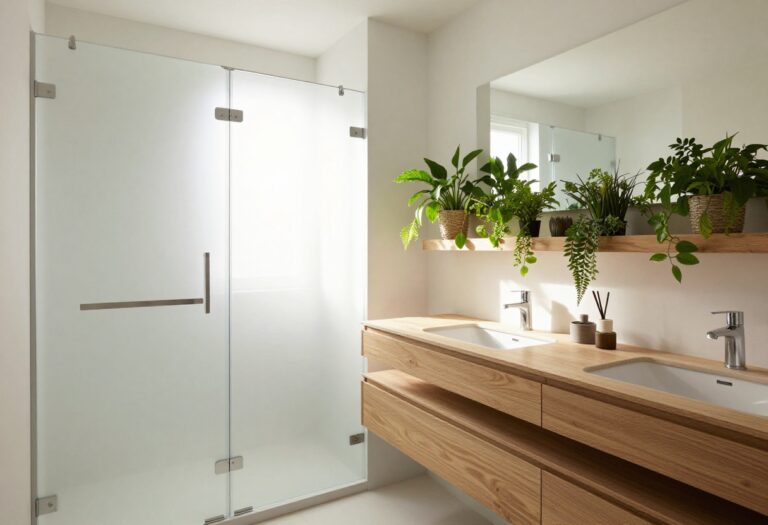
Clear glass works best when you want the bathroom to feel larger. Frosted or textured glass works better if privacy matters more.
Avoid overly decorative handles or hardware. Simple chrome, brushed nickel, or matte black accents usually look the most modern.
Pro Tip or Budget Hack
If full frameless glass exceeds your budget, try a semi-frameless panel with minimal hardware. It delivers almost the same visual effect while costing significantly less.
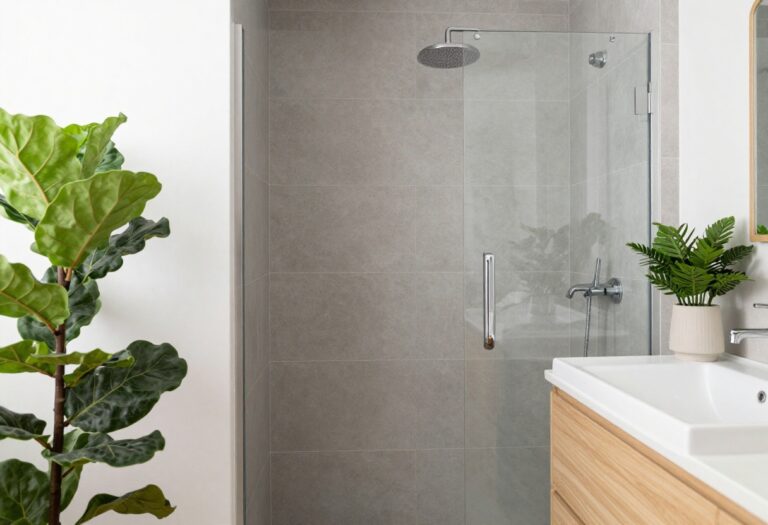
2. Floor-to-Ceiling Tile Walk-In Shower
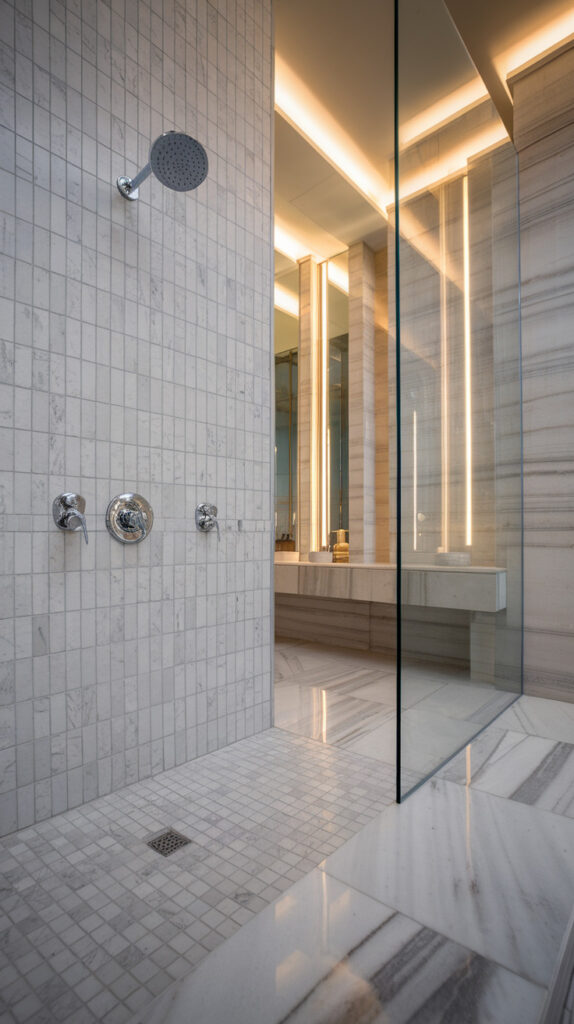
Many showers look unfinished because the tile stops halfway up the wall. That design might save money, but visually it often makes the bathroom feel shorter.
Extending tile from floor to ceiling instantly changes the atmosphere. The shower suddenly feels intentional and architectural rather than purely functional.
I used to think this idea was only for luxury bathrooms, but it works surprisingly well even in smaller spaces.
Why This Works
Vertical tile coverage draws the eye upward. That visual movement subtly increases the perceived height of the room.
Full-height tile also protects the walls from moisture damage. Bathrooms deal with constant humidity, so more coverage equals fewer long-term problems.
How to Do It
- Choose a tile style that complements the rest of the bathroom. Neutral tones tend to age better than trendy colors.
- Extend the tile all the way to the ceiling instead of stopping at the shower head.
- Use waterproof backer board beneath the tile to prevent moisture damage.
- Finish the top edge cleanly with a metal tile trim or bullnose edge.
Style & Design Tips
Large-format tiles create fewer grout lines, which makes the shower look cleaner and more modern.
Avoid mixing too many patterns in a small space. One statement wall plus neutral surrounding tile usually creates the best balance.
Pro Tip or Budget Hack
Use high-end tile on the main shower wall and simpler budget tile on side walls. Most people notice the focal wall first anyway.
3. Curbless Walk-In Shower
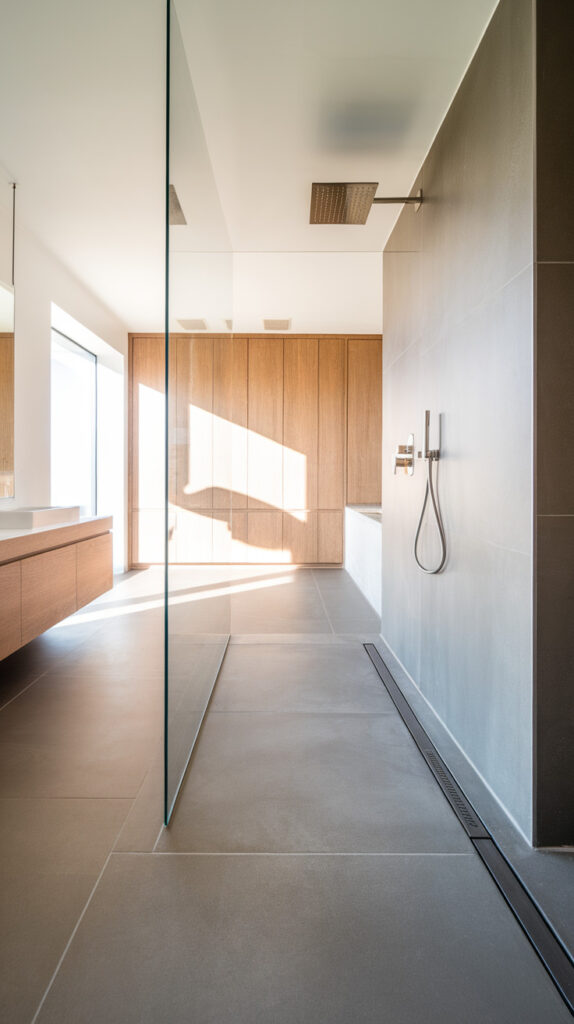
Stepping over a shower curb every day sounds minor until you realize how often it happens. Over time, that small obstacle becomes surprisingly annoying.
Curbless showers remove that barrier entirely. The shower floor flows directly into the bathroom floor with a subtle slope for drainage.
Besides looking modern, this design also improves accessibility.
Why This Works
A continuous floor surface makes the bathroom feel larger and more cohesive. The space reads as one unified layout rather than separate zones.
It also works better for long-term mobility needs. Many homeowners install curbless showers specifically for aging-in-place designs.
How to Do It
- Lower the shower subfloor slightly so the finished tile can slope properly toward the drain.
- Install a linear drain or center drain depending on the design.
- Waterproof the entire shower area using a membrane system.
- Maintain a gentle slope so water flows naturally without puddling.
Style & Design Tips
Using the same floor tile inside and outside the shower enhances the seamless look.
Avoid slippery tiles. Matte or textured surfaces provide better grip under wet conditions.
Pro Tip or Budget Hack
If fully curbless construction isn’t possible, create a low-profile curb less than one inch high. It delivers a similar visual effect while simplifying installation.
4. Statement Tile Accent Wall
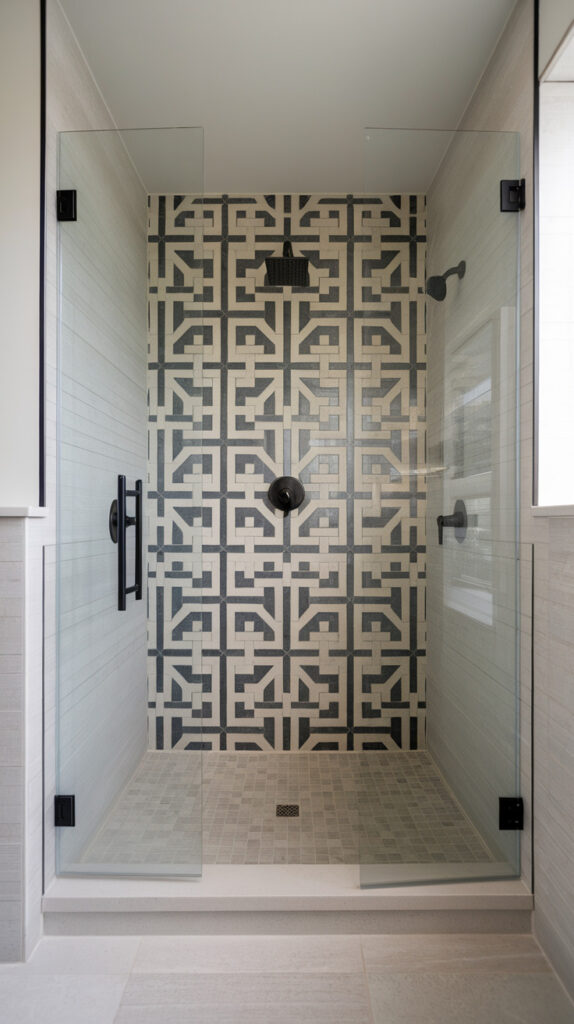
Neutral bathrooms sometimes feel a little too safe. A bold tile accent wall inside the shower adds personality without overwhelming the space.
This idea works especially well behind the shower head or along the back wall. One strong feature can anchor the entire bathroom design.
I’ve seen homeowners completely transform a bland bathroom simply by adding patterned tile in the shower.
Why This Works
An accent wall naturally draws attention. Instead of competing design elements, the room gets one clear focal point.
That approach keeps the rest of the bathroom simple and balanced.
How to Do It
- Select a bold tile pattern or color for the accent wall.
- Keep surrounding walls neutral so the feature stands out.
- Plan the tile layout carefully to avoid awkward cuts.
- Seal grout lines properly to prevent moisture problems.
Style & Design Tips
Geometric patterns, vertical tiles, and natural stone often look striking in walk-in showers.
Avoid combining too many strong materials. One statement feature is enough in most bathrooms.
Pro Tip or Budget Hack
Use decorative tile only on the center portion of the wall. Frame it with cheaper tile around the edges to reduce material costs.
5. Built-In Shower Niches
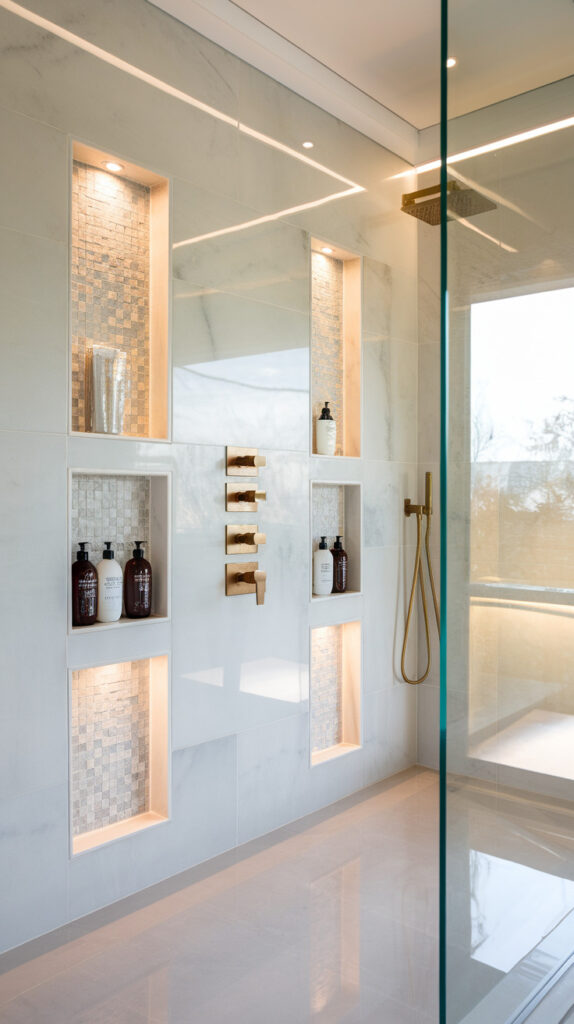
Shampoo bottles scattered on the shower floor rarely look stylish. Built-in niches solve that problem while adding practical storage.
Instead of installing metal racks or suction shelves, the storage becomes part of the wall itself.
This small feature makes the shower look custom and thoughtfully designed.
Why This Works
Recessed niches keep products organized without taking up space. Everything stays within reach while maintaining a clean visual appearance.
It also eliminates the need for external storage accessories that often look cluttered.
How to Do It
- Frame the niche area between wall studs during construction.
- Waterproof the entire cavity thoroughly before tiling.
- Add a slight downward slope on the niche shelf to prevent water buildup.
- Finish the edges with tile trim or stone borders.
Style & Design Tips
Horizontal niches work well for storing multiple bottles. Vertical niches look sleek in narrower showers.
Highlight the niche with contrasting tile or mosaic backing for a subtle design feature.
Pro Tip or Budget Hack
Install two smaller niches instead of one large one. This layout looks more balanced and often fits better between studs.
6. Linear Drain Walk-In Shower
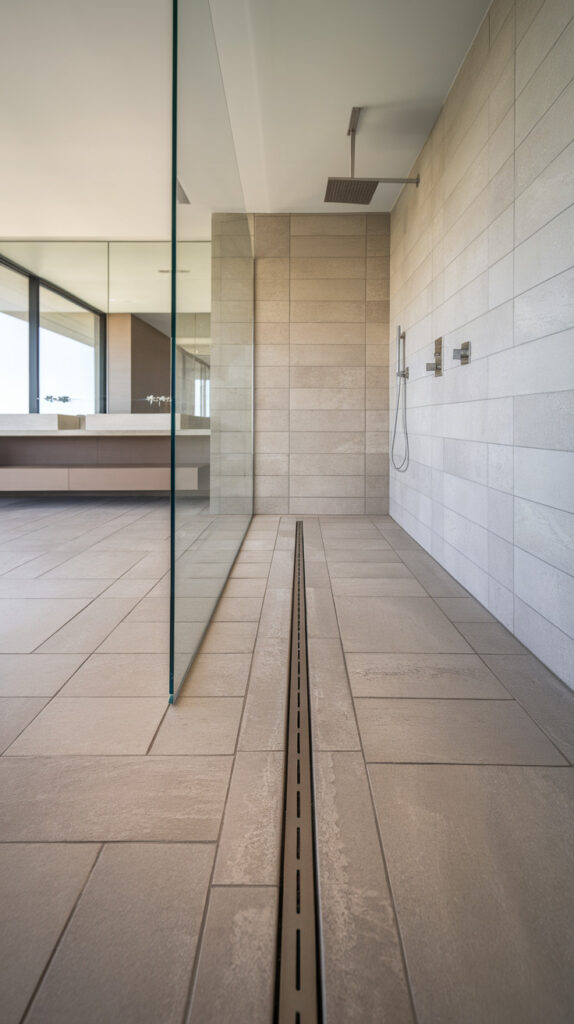
Traditional round drains sometimes interrupt the visual flow of the shower floor. A linear drain changes that completely.
Instead of sitting in the center, the drain runs along one edge of the shower floor in a slim rectangular channel.
It’s one of those small details that quietly elevates the whole design.
Why This Works
Linear drains allow the shower floor to slope in a single direction. That simplifies tile installation and creates a cleaner appearance.
They also pair beautifully with large-format floor tiles.
How to Do It
- Position the linear drain along the back wall or entrance edge.
- Create a consistent floor slope toward the drain channel.
- Waterproof the entire floor assembly thoroughly.
- Install a removable drain cover for easy cleaning.
Style & Design Tips
Choose a tile-in linear drain cover if you want the drain to blend seamlessly with the floor.
Stainless steel covers also look sleek in modern bathrooms.
Pro Tip or Budget Hack
If installing a new drain feels complicated, consider a retrofit linear drain system designed for easier installation.
7. Black Frame Walk-In Shower Panels
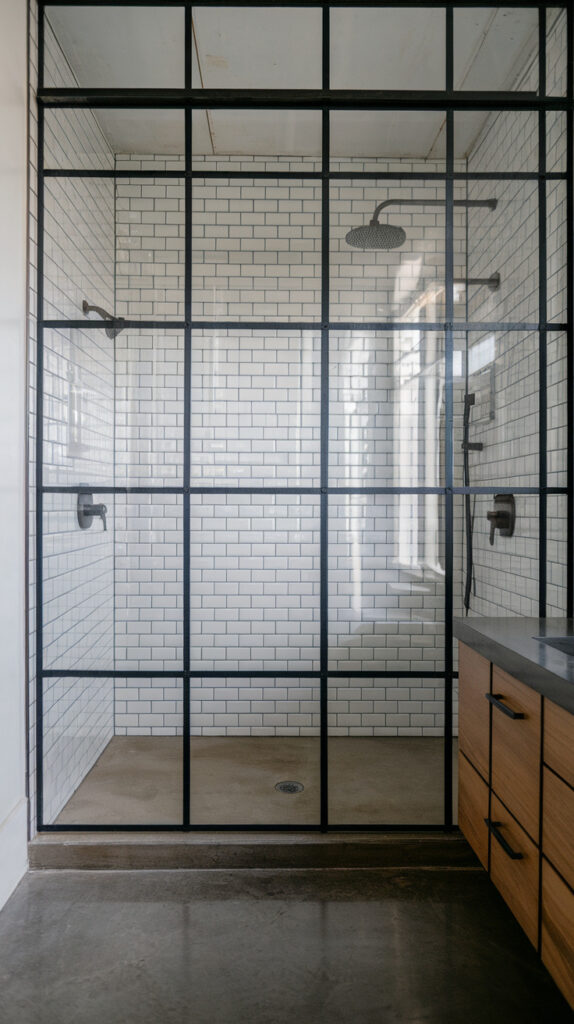
Completely frameless showers look beautiful, but some bathrooms benefit from a bit more structure. Black metal grid panels offer a stylish alternative.
This design creates the look of industrial glass partitions while still keeping the space open.
The style has become incredibly popular in modern homes.
Why This Works
The black grid pattern adds contrast and architectural interest. It frames the shower without making the room feel closed off.
That balance between openness and structure feels visually satisfying.
How to Do It
- Install black metal shower panels with fixed glass sections.
- Ensure the frame aligns with other black hardware in the bathroom.
- Use tempered glass panels for safety and durability.
- Seal all edges properly to prevent leaks.
Style & Design Tips
Black frames pair beautifully with white tile, marble, or concrete surfaces.
Avoid mixing too many metal finishes in the same bathroom. Consistency matters more than variety.
Pro Tip or Budget Hack
You can achieve a similar look by adding black metal trim strips to glass panels instead of buying custom grid frames.
8. Natural Stone Walk-In Shower
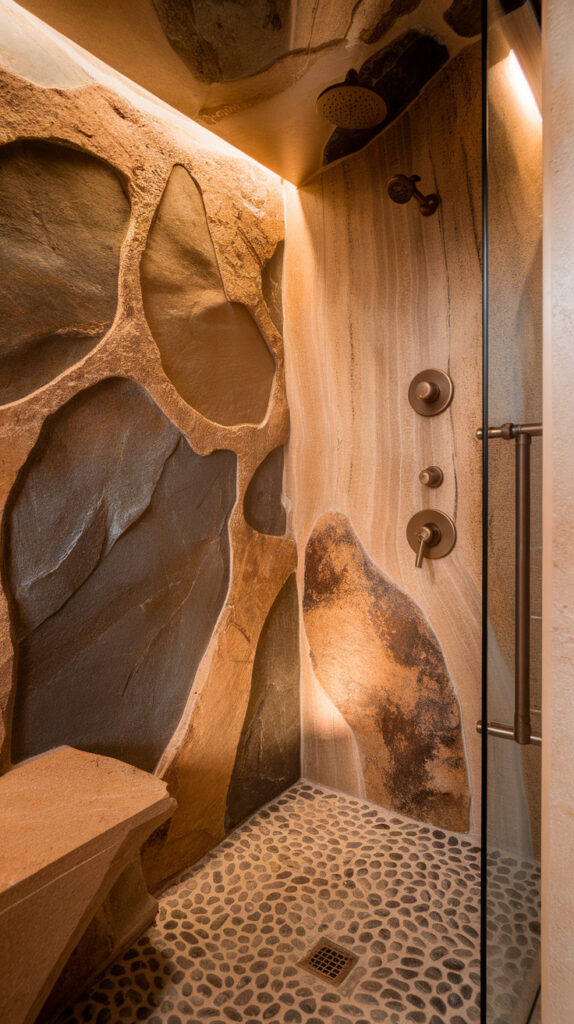
Tile dominates most bathroom designs, but natural stone introduces a completely different character. Materials like slate, marble, and travertine bring warmth and texture.
Stone showers often feel more like spa environments than typical bathrooms.
The materials also age beautifully over time.
Why This Works
Natural stone contains subtle color variations that create depth. No two tiles look exactly the same.
That organic variation prevents the shower from feeling flat or overly polished.
How to Do It
- Choose stone suitable for wet environments.
- Seal the stone thoroughly before installation.
- Install proper waterproofing beneath the stone surface.
- Maintain the sealant periodically to protect the material.
Style & Design Tips
Pair stone with minimal fixtures and simple glass panels so the material remains the focal point.
Avoid busy patterns that compete with the stone’s natural texture.
Pro Tip or Budget Hack
Use natural stone only on one wall and combine it with porcelain tile elsewhere. The visual impact remains strong while reducing cost.
9. Double Shower Heads
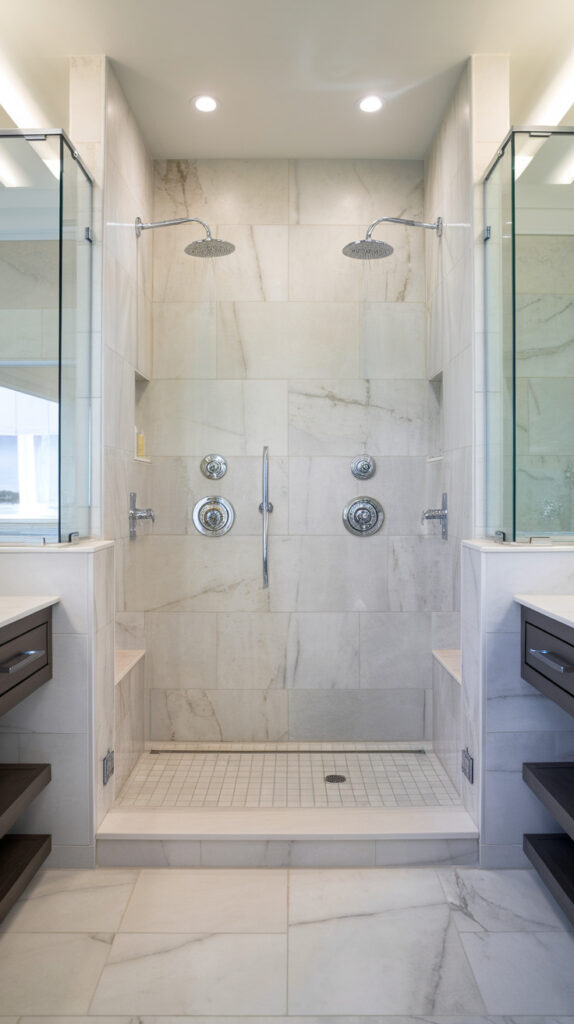
Sharing a shower might sound unusual at first, but it can be surprisingly practical in certain households. Double shower heads make the space more functional for couples.
Even if used alone most of the time, the layout creates a luxurious experience.
Hotels use this design frequently for a reason.
Why This Works
Two shower heads distribute water more evenly across the space. The user can also choose between different spray patterns or positions.
It transforms a basic shower into something closer to a spa setup.
How to Do It
- Install dual plumbing lines connected to separate shower heads.
- Position the heads on opposite walls or side-by-side.
- Include individual control valves for each head.
- Ensure the water heater capacity supports the extra demand.
Style & Design Tips
Use matching fixtures and finishes so the design feels intentional rather than improvised.
Rainfall heads combined with handheld sprayers offer excellent versatility.
Pro Tip or Budget Hack
If full plumbing upgrades aren’t possible, install a dual shower head splitter attachment that connects to a single pipe.
10. Minimalist Concrete Shower
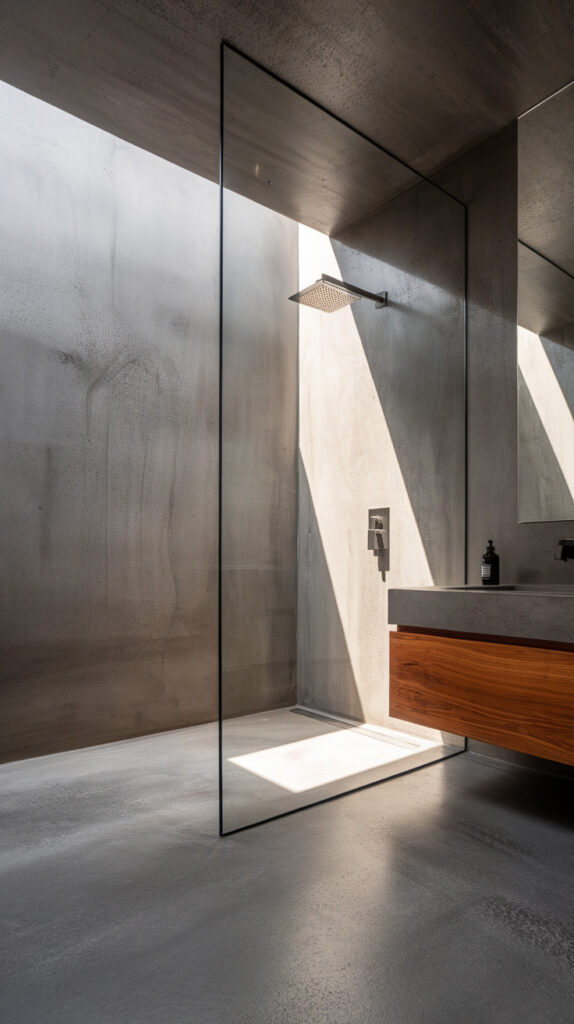
Concrete showers bring a surprisingly modern aesthetic to bathrooms. The look feels raw, clean, and architectural.
While it might sound cold at first, the finish often appears softer and more natural than glossy tile.
Concrete also works well in contemporary homes.
Why This Works
Seamless concrete surfaces reduce grout lines and visual clutter. The material also handles moisture extremely well when sealed properly.
The overall effect feels simple but sophisticated.
How to Do It
- Apply waterproof cement board beneath the finish layer.
- Use microcement or concrete plaster designed for bathrooms.
- Seal the surface thoroughly after curing.
- Maintain the sealant periodically.
Style & Design Tips
Combine concrete with warm wood accents or matte black fixtures to soften the industrial appearance.
Avoid overdecorating the surrounding space.
Pro Tip or Budget Hack
Microcement coatings can mimic poured concrete at a fraction of the cost while being easier to install.
11. Walk-In Shower With Bench Seating
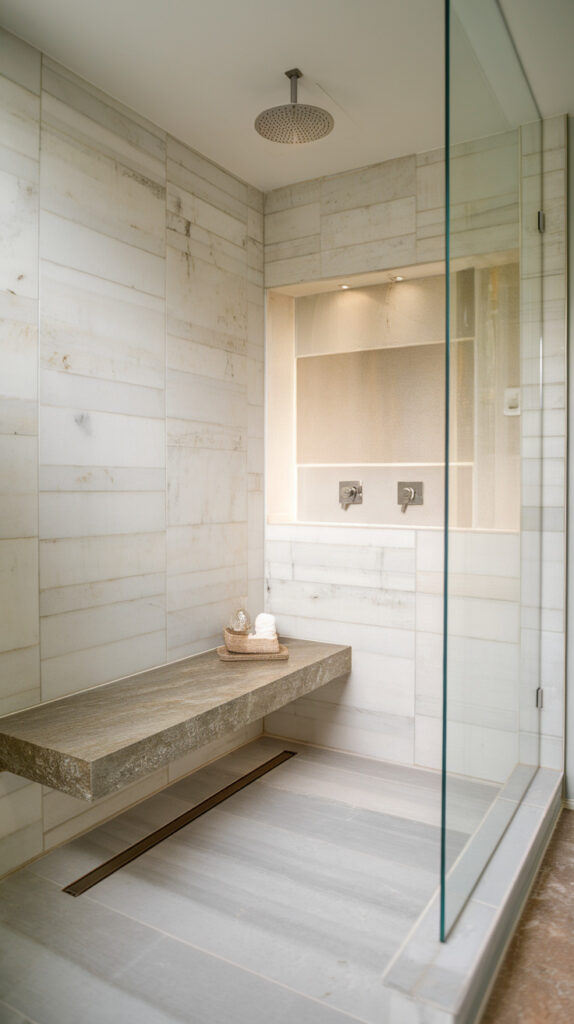
Standing for an entire shower isn’t always comfortable. Built-in bench seating adds a surprisingly practical upgrade.
It also makes the shower feel much more luxurious.
Once you use a shower bench regularly, going back to a basic setup feels like a downgrade.
Why This Works
A built-in bench provides comfort, accessibility, and storage. It also breaks up large tile walls visually.
Many homeowners appreciate having a place to sit while shaving or simply relaxing under the water.
How to Do It
- Frame the bench structure using waterproof construction materials.
- Cover the frame with cement board and waterproof membrane.
- Tile the bench using the same tile as the walls or floor.
- Slope the seat slightly so water drains properly.
Style & Design Tips
Floating benches create a lighter appearance compared to bulky built-in blocks.
Use contrasting tile or stone for the seat surface to highlight the feature.
Pro Tip or Budget Hack
A compact corner bench works well in smaller showers without sacrificing too much standing space.
Smart Planning Before Designing a Walk-In Shower
Most walk-in shower projects fail or succeed before the first tile even goes on the wall. Layout decisions, plumbing placement, and drainage planning determine whether the finished space feels effortless or frustrating.
The biggest difference between an average shower and a great one usually comes down to planning. When homeowners focus only on tile or fixtures, they often overlook structural details that affect how the shower actually functions.
A modern walk-in shower should feel seamless inside the bathroom. That means the shower area needs to connect naturally with the rest of the room instead of feeling like a separate box.
Start With Layout and Movement
Think about how someone physically moves through the bathroom. Doors, vanities, toilets, and showers all need enough clearance so the space doesn’t feel cramped.
Walk-in showers work best when the entrance feels open and intuitive. If someone has to twist around a door or squeeze past a vanity, the design probably needs adjustment.
Prioritize Drainage and Waterproofing
Water management matters more than any design choice. Poor drainage leads to puddles, slippery floors, and long-term structural problems.
A properly sloped floor and reliable waterproof membrane ensure water moves exactly where it should. Spending extra attention here prevents expensive repairs later.
Choose Materials That Last
Bathrooms experience constant humidity, temperature changes, and heavy daily use. Cheap materials often look good at first but age quickly in this environment.
Porcelain tile, sealed natural stone, stainless steel fixtures, and quality grout hold up much better over time. Durable materials also keep maintenance simple.
Balance Style With Practicality
Modern design trends look beautiful online, but not all of them work well in real homes. Ultra-dark tile or glossy floors may appear dramatic but can show water spots constantly.
Good design balances aesthetics with everyday practicality. If the shower looks amazing but becomes annoying to maintain, the novelty fades fast.
Walk-In Shower Layout Ideas That Maximize Space
Not every bathroom offers unlimited square footage. A smart layout helps even smaller bathrooms accommodate a stylish walk-in shower without feeling crowded.
Strategic placement of walls, glass panels, and plumbing can make a huge difference. Sometimes shifting a shower by just a few inches dramatically improves the room’s flow.
Corner Walk-In Shower
Corner showers use two existing walls to create a compact shower zone. This layout keeps most of the bathroom floor open while still providing a comfortable shower area.
Glass panels work particularly well here because they maintain visibility across the room.
End-of-Room Shower Layout
Placing the walk-in shower along the far wall often creates a clean and symmetrical design. The shower becomes a focal point while the rest of the bathroom aligns naturally around it.
Many modern bathrooms use this layout because it feels balanced and spacious.
Open Wet Room Layout
Wet rooms remove most barriers entirely. The entire bathroom floor becomes waterproof, allowing the shower to blend seamlessly with the rest of the space.
This layout works especially well in minimalist homes where simplicity and openness define the design.
Best Materials for Modern Walk-In Showers
Material choices influence both appearance and long-term durability. Bathrooms deal with constant moisture, so selecting the right surfaces matters more than many homeowners expect.
High-quality materials also elevate the entire bathroom design. Even simple layouts look sophisticated when finished with the right textures.
Porcelain Tile
Porcelain remains one of the most popular shower materials for good reason. It resists water, scratches, and stains extremely well.
Modern porcelain also mimics marble, wood, or stone textures convincingly while requiring far less maintenance.
Natural Stone
Stone adds depth and organic beauty that manufactured materials struggle to replicate. Every tile contains subtle variations that make the shower feel unique.
Proper sealing is essential, but the result often feels luxurious and timeless.
Glass Panels
Glass maintains openness inside the bathroom. Instead of visually dividing the space, glass allows the entire room to feel connected.
Clear panels usually make smaller bathrooms appear larger.
Metal Fixtures
Quality fixtures complete the overall look of the shower. Finishes like brushed nickel, matte black, and polished chrome complement modern bathrooms beautifully.
Consistency across faucets, handles, and shower heads helps everything feel intentional.
Common Mistakes to Avoid With Walk-In Showers
Walk-in showers seem simple, but small design errors can create long-term headaches. Many problems appear months after installation when correcting them becomes expensive.
Understanding these common mistakes helps homeowners avoid frustration and unnecessary renovation costs.
Ignoring Proper Floor Slope
A walk-in shower must slope toward the drain correctly. If the slope is too shallow, water collects on the floor instead of draining.
Even small puddles eventually damage grout and tile edges.
Choosing Slippery Floor Tiles
Highly polished tiles look beautiful in showrooms. Once wet, they can become dangerously slippery.
Textured or matte finishes provide far better grip inside showers.
Poor Waterproofing
Waterproofing layers sit behind the tile where they cannot be seen. Because of this, some installers rush through this step.
Skipping proper waterproof membranes almost guarantees moisture damage later.
Overcrowding the Shower Area
Adding too many features inside a small shower quickly makes the space feel cramped. Benches, niches, shelves, and multiple fixtures should fit comfortably without restricting movement.
A clean layout almost always looks more modern.
Neglecting Ventilation
Bathrooms generate significant humidity. Without proper ventilation, moisture lingers and encourages mold growth.
A reliable exhaust fan helps maintain healthy air quality and protects bathroom finishes.
Maintenance Tips for Keeping Walk-In Showers Looking New
Modern showers require less maintenance than traditional enclosed units, but they still benefit from consistent care. A few simple habits keep surfaces clean and materials protected.
Routine cleaning also prevents long-term staining or mineral buildup.
Wipe Down Glass Panels
Glass panels collect water spots over time. Using a squeegee after showers keeps the glass crystal clear.
This simple habit takes less than a minute but makes a noticeable difference.
Clean Grout Regularly
Grout lines absorb moisture and soap residue. Periodic cleaning prevents discoloration and mildew growth.
Mild bathroom cleaners usually handle the job effectively.
Reseal Natural Stone
Natural stone surfaces require periodic sealing. This protective layer prevents moisture from penetrating the material.
Most sealers last one to two years depending on usage.
Inspect Caulking Lines
Flexible caulking seals joints between tile, glass, and fixtures. Over time it can crack or separate.
Replacing damaged caulking early prevents water from reaching hidden areas.
Frequently Asked Questions
Are walk-in showers suitable for small bathrooms?
Yes, walk-in showers often make small bathrooms feel larger. Frameless glass panels and open layouts remove visual barriers that normally crowd the space.
Do walk-in showers splash water outside the shower area?
Proper design prevents most splashing. Strategic placement of glass panels, correct floor slope, and well-positioned shower heads keep water contained.
What is the best tile for a walk-in shower floor?
Textured porcelain tile works extremely well. It offers durability, water resistance, and enough grip to reduce slipping.
How large should a walk-in shower be?
A comfortable walk-in shower typically measures at least 36 by 36 inches. Larger dimensions around 48 by 60 inches provide more flexibility and luxury.
Are curbless showers difficult to install?
They require careful planning but are not overly complicated during renovations or new construction. The main challenge involves lowering the floor to allow proper drainage slope.
Do walk-in showers increase home value?
Modern walk-in showers often appeal strongly to buyers. Many homeowners view them as a premium bathroom feature, especially when paired with contemporary materials and thoughtful design.
Final Thoughts
A well-designed walk-in shower often becomes the centerpiece of the entire bathroom. The right layout can make the space feel bigger, cleaner, and far more modern.
Small design choices add up quickly. Glass panels, thoughtful tile placement, and simple structural upgrades can completely change how the room feels.
Most of these ideas don’t require massive renovations either. A few smart design decisions can turn an ordinary shower into something genuinely stylish and enjoyable to use every day.