10 Basement Kitchen Ideas for Extra Cooking Space
Unused square footage tends to create frustration when the main kitchen starts feeling crowded. A basement often sits there quietly solving that exact problem without anyone noticing.
Adding a secondary cooking area downstairs can make a house feel twice as functional. You get room for prep, entertaining, and food storage without turning your main kitchen into a traffic jam.
The trick is designing the space so it actually works like a kitchen instead of a random countertop and a microwave.
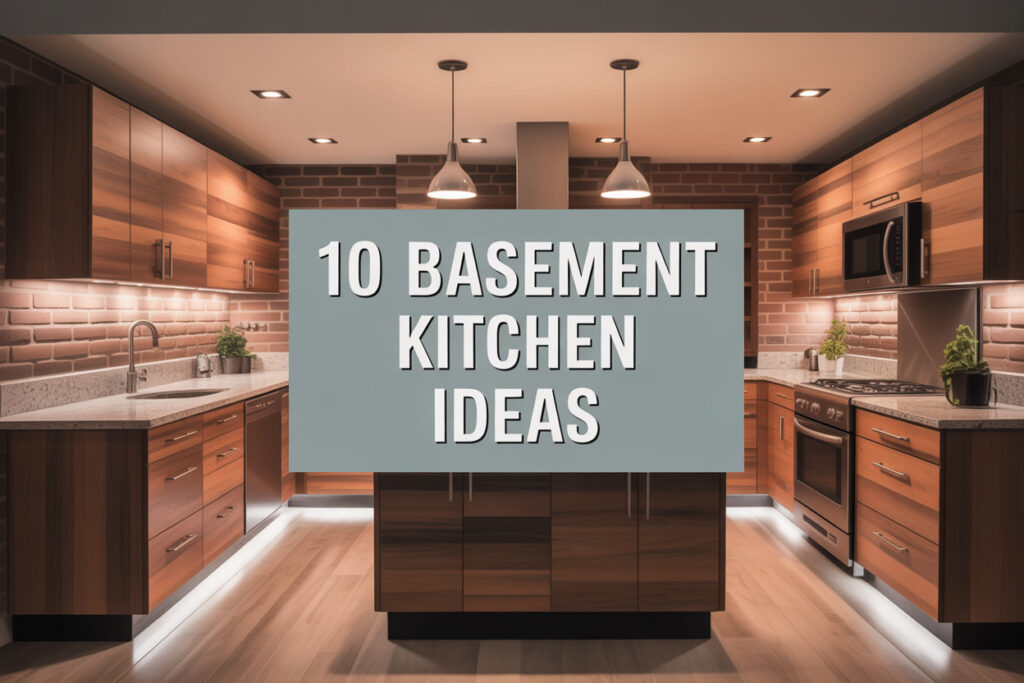
A few smart layout decisions make the difference between a basement kitchenette and a genuinely useful cooking space.
1. Compact Galley Basement Kitchen
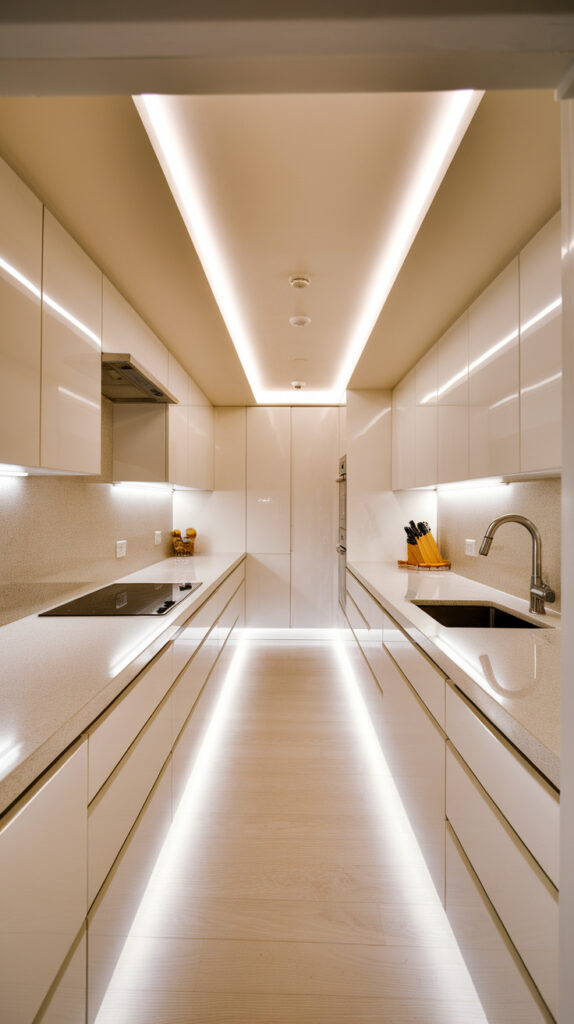
Basements rarely give you the luxury of sprawling layouts. Long narrow rooms show up more often, and a galley layout quietly solves that limitation better than most people expect.
Two parallel counters create a tight working triangle without wasting a single inch of space. I’ve seen homeowners struggle with awkward basement kitchens simply because they tried forcing a traditional layout into a narrow room.
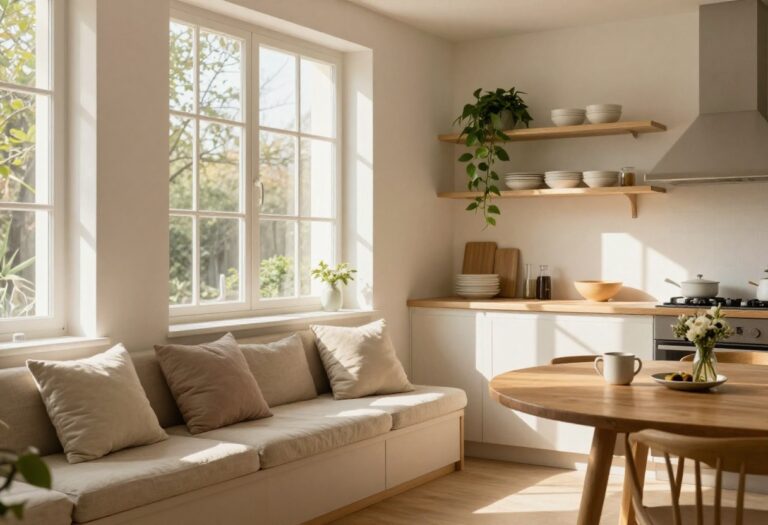
Why This Works
Galley kitchens focus on efficiency rather than showy design. Everything sits within arm’s reach, which makes cooking surprisingly comfortable even in a smaller basement footprint.
This layout also leaves a clear walkway through the center. That simple detail prevents the basement kitchen from feeling cramped or cluttered.
How to Do It
- Install two parallel countertops along opposite walls to maximize usable workspace.
- Place the sink on one side and the cooktop on the other to maintain a comfortable workflow.
- Use shallow base cabinets if the room feels tight to improve walking space.
- Add under-cabinet lighting to eliminate the cave-like basement feeling.
Style & Design Tips
Light cabinets work wonders in basement kitchens where natural light tends to be limited. Soft whites, pale gray, or warm beige cabinets brighten the space without making it look sterile.
Avoid bulky cabinet handles because they stick out into the walkway. Slim pulls or handleless cabinets keep the galley layout clean and easy to move through.
Pro Tip or Budget Hack
Skip upper cabinets on one wall if the space feels too narrow. Open shelves cost less and make the kitchen look wider instantly.
2. Basement Kitchen With an L-Shaped Layout
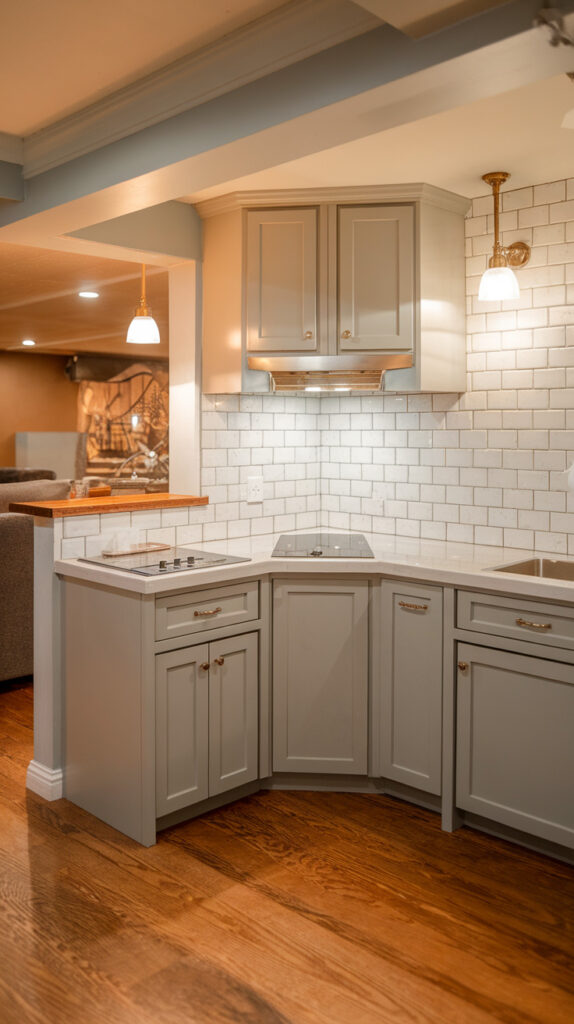
Corners often get wasted in basement spaces. An L-shaped kitchen turns those forgotten corners into productive cooking zones without needing a large footprint.
This layout works especially well when the basement kitchen connects to a family room or entertainment space. The open side keeps the room feeling connected instead of boxed in.
Why This Works
An L-shaped layout creates a natural workflow between sink, prep area, and cooking surface. The corner counter becomes a surprisingly useful prep zone once you start using it regularly.
It also leaves the center of the room open. That small detail makes the basement kitchen feel more relaxed and less like a tight utility area.
How to Do It
- Run cabinets and counters along two connecting walls to form the L shape.
- Place the sink near the corner so both sides remain useful prep areas.
- Install a small cooktop or induction burner to keep things compact.
- Leave at least one wall open if the kitchen connects to a lounge or bar area.
Style & Design Tips
Keep the cabinetry simple so the layout stays visually clean. Flat panel cabinets and minimal hardware usually work best in basement kitchens.
Backsplashes add personality without overwhelming the room. A subtle tile pattern or textured backsplash gives the kitchen character without crowding the design.
Pro Tip or Budget Hack
Corner cabinets can get expensive quickly. A simple open corner shelf works just as well and actually makes grabbing everyday items easier.
3. Basement Kitchen With a Prep Island
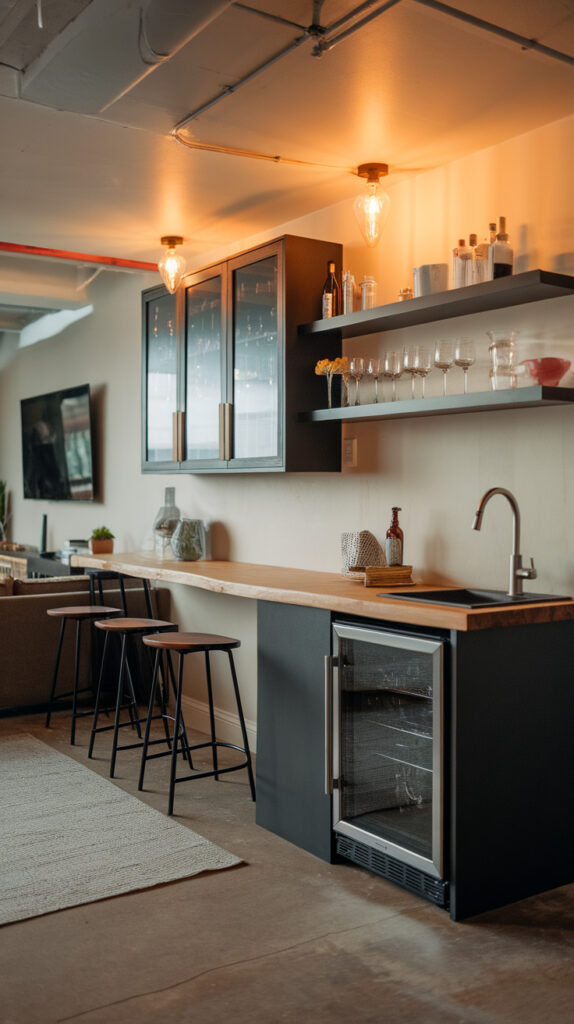
Extra counter space changes how people actually use a kitchen. A prep island in the basement adds that functionality without needing a huge layout.
Many homeowners underestimate how useful a small island can be until they start hosting gatherings. Suddenly you have a spot for snacks, drinks, or food prep without crowding the main counter.
Why This Works
Islands create a natural gathering point. Even in basement kitchens, people tend to stand around the island while food gets prepared.
The island also separates cooking from serving areas. That simple division keeps the kitchen from turning into a chaotic mess during busy moments.
How to Do It
- Use a compact island or movable cart if the room is small.
- Keep at least 36 inches of clearance around the island for movement.
- Add storage drawers or shelves inside the island base.
- Install a butcher block top if the island will be used heavily for prep.
Style & Design Tips
A contrasting island color adds personality without overwhelming the room. Navy blue, deep green, or charcoal islands look great against lighter cabinets.
Avoid oversized islands in basement kitchens. A slightly smaller island always feels better than squeezing in something too bulky.
Pro Tip or Budget Hack
Repurpose an old dresser or table as a kitchen island. With a fresh coat of paint and a new countertop, it can look surprisingly custom.
4. Bar-Style Basement Kitchenette
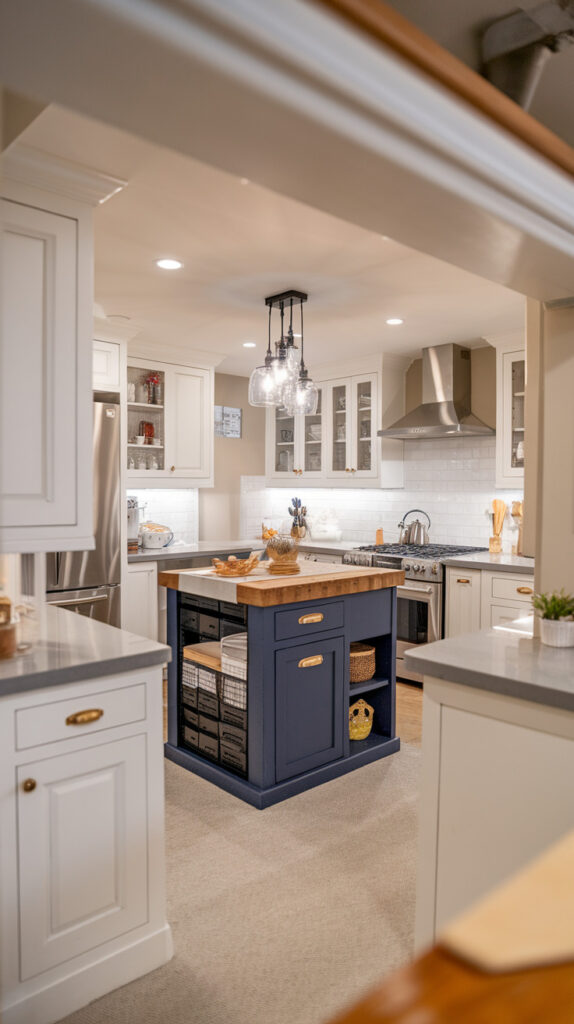
Some basement kitchens exist mainly for entertaining rather than everyday cooking. A bar-style kitchenette handles drinks, snacks, and light meals without requiring full kitchen appliances.
This setup works especially well in basements that double as game rooms or home theaters. Instead of running upstairs for drinks, everything stays conveniently nearby.
Why This Works
Bar kitchens keep the design compact while still offering real functionality. A small sink, mini fridge, and counter space cover most entertainment needs.
Guests also feel more comfortable grabbing drinks themselves. That casual flow keeps the host from constantly running back and forth.
How to Do It
- Install a long counter with bar seating along one side.
- Add a small sink and under-counter refrigerator.
- Use floating shelves for glassware and drink storage.
- Leave space under the counter for bar stools.
Style & Design Tips
Lighting matters more than people realize in bar-style kitchens. Warm pendant lights or soft LED strips create a relaxed atmosphere without making the space dark.
Avoid heavy upper cabinets if possible. Open shelving keeps the bar area visually lighter and easier to style.
Pro Tip or Budget Hack
A wine fridge can be pricey. A regular mini fridge works perfectly for drinks and costs a fraction of the price.
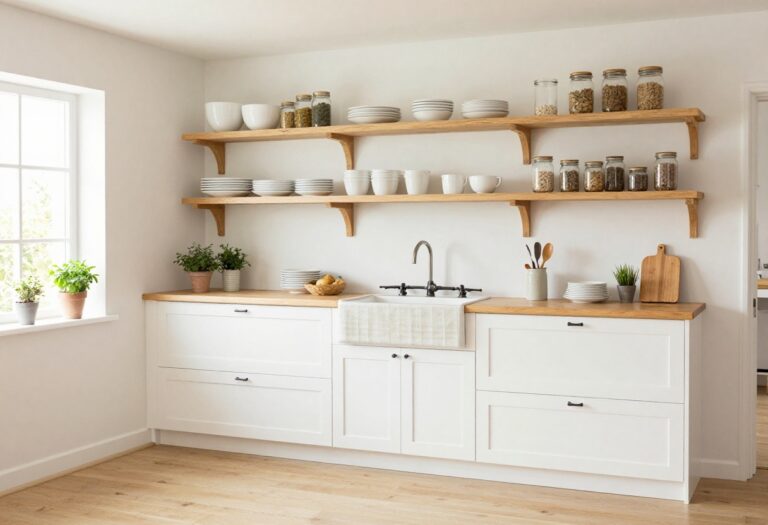
5. Rustic Basement Farmhouse Kitchen
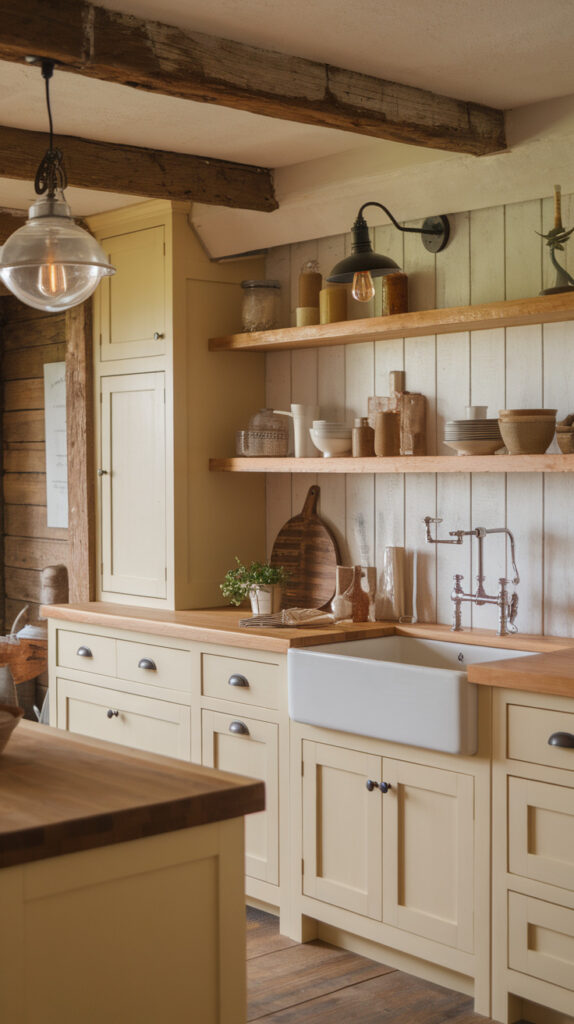
Basements sometimes feel too modern or sterile once renovations start. A rustic farmhouse kitchen adds warmth that makes the space feel like a natural part of the home.
Wood textures, simple cabinetry, and cozy details transform the basement from storage zone into a welcoming cooking space. I’ve seen basements completely change character with just a few rustic touches.
Why This Works
Farmhouse style focuses on natural materials and practical design. Those elements fit basement environments well because they add visual warmth.
Wood tones also soften the concrete or drywall surfaces common in basements. The room instantly feels less like a basement and more like a cozy extension of the house.
How to Do It
- Use butcher block or wood countertops for a natural feel.
- Install shaker-style cabinets painted in soft neutral tones.
- Add open wood shelving for dishes and cookware.
- Include a farmhouse-style sink if plumbing allows.
Style & Design Tips
Mixing textures keeps rustic kitchens interesting. Wood, matte metal, and ceramic accents work beautifully together.
Avoid going overboard with farmhouse decorations. A few thoughtful pieces look charming, while too many can feel forced.
Pro Tip or Budget Hack
Peel-and-stick wood panels create a rustic accent wall without expensive renovations. They add warmth quickly and install surprisingly easily.
6. Minimalist Basement Kitchen Design
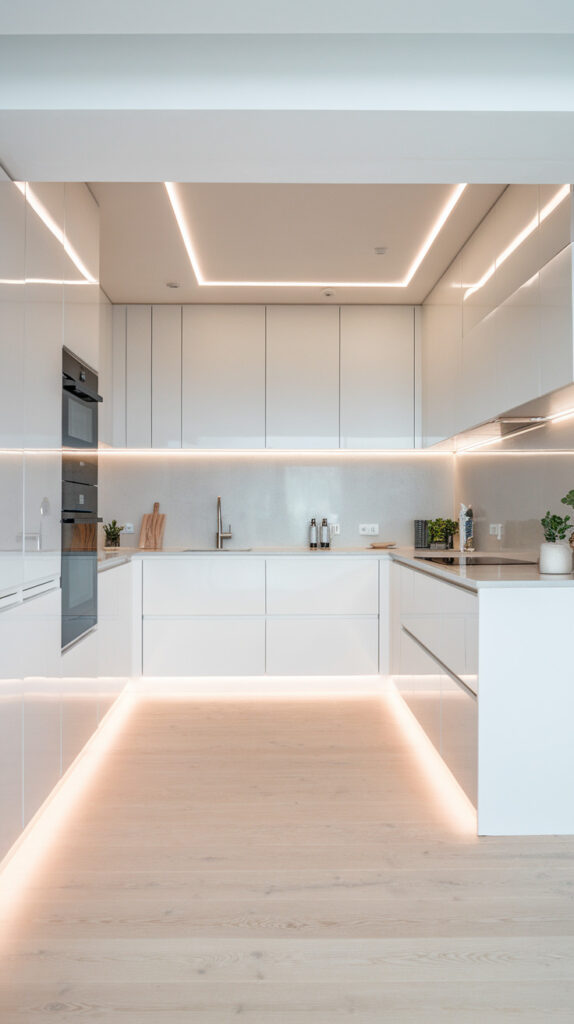
Basements often benefit from simplicity. A minimalist kitchen design keeps everything clean, uncluttered, and visually calm.
I’ve noticed that minimalist layouts make basement kitchens feel bigger than they actually are. Removing unnecessary visual noise gives the space breathing room.
Why This Works
Minimalist kitchens prioritize function and clarity. Clean lines reduce visual clutter, which helps basement spaces feel more open.
Fewer design elements also make maintenance easier. Cleaning a streamlined kitchen takes half the effort compared to busy layouts.
How to Do It
- Choose flat-panel cabinets with simple hardware.
- Keep countertops clear except for essential tools.
- Install built-in appliances where possible.
- Stick to a limited color palette for cohesion.
Style & Design Tips
Neutral colors work best for minimalist spaces. Soft whites, light gray, and pale wood tones keep the kitchen bright and relaxed.
Avoid mixing too many finishes. A few consistent materials create a polished and intentional look.
Pro Tip or Budget Hack
Instead of expensive built-in appliances, use compact countertop versions. They achieve the same minimalist look without the installation costs.
7. Basement Kitchen With Wall-to-Wall Storage
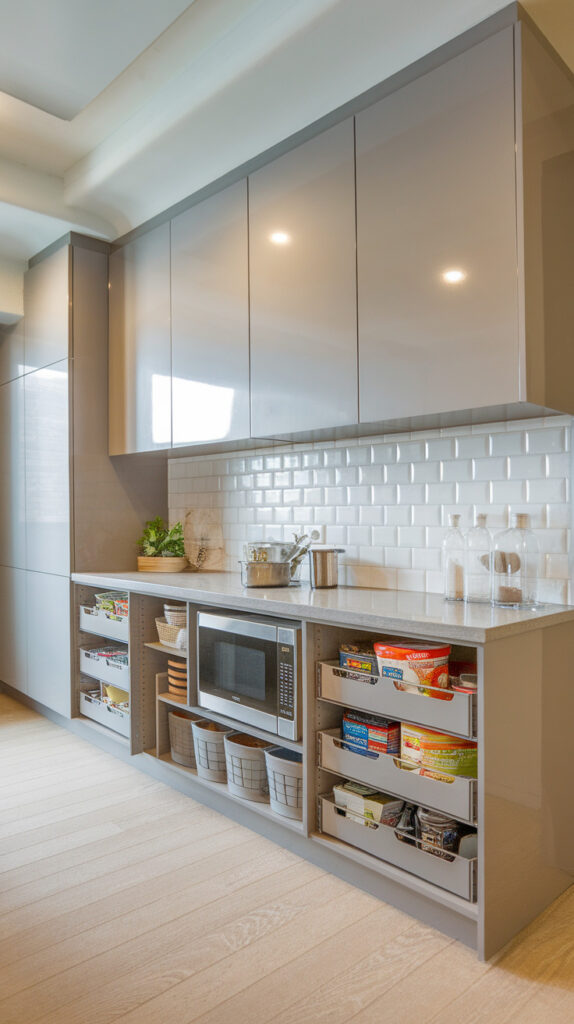
Storage becomes the main goal for many basement kitchens. Extra cabinets downstairs can relieve pressure from an overcrowded main kitchen.
Wall-to-wall storage turns the basement into a serious food prep and pantry zone. I’ve seen families completely reorganize their cooking routine once they added extra storage below.
Why This Works
Tall cabinets maximize vertical space, which basements often have plenty of. Instead of spreading cabinets horizontally, this approach builds upward.
The result is a kitchen that doubles as a pantry and prep station. Everything stays organized without cluttering the main kitchen upstairs.
How to Do It
- Install tall pantry cabinets along one full wall.
- Use pull-out shelves for easier access.
- Dedicate specific sections for pantry items, appliances, and cookware.
- Include a long prep counter beneath upper cabinets.
Style & Design Tips
Uniform cabinet colors keep wall storage from feeling overwhelming. Consistent cabinetry creates a calm visual rhythm even when the wall is fully covered.
Avoid mixing cabinet styles across the wall. Consistency keeps the storage wall looking intentional instead of chaotic.
Pro Tip or Budget Hack
IKEA-style modular cabinets often cost far less than custom cabinetry. They also allow you to adjust storage later if your needs change.
8. Basement Kitchen With a Breakfast Nook
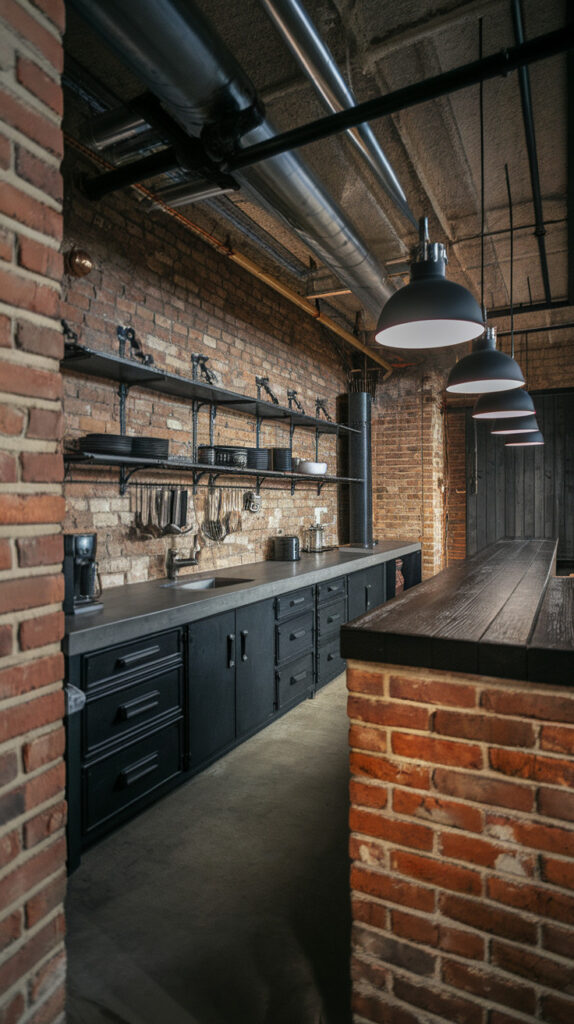
A small seating area transforms a basement kitchen from functional to genuinely enjoyable. A breakfast nook gives people a place to sit, snack, or chat while someone cooks.
Basements often have enough space for this feature, yet many homeowners skip it. That small seating corner can completely change how the room gets used.
Why This Works
Breakfast nooks create a natural gathering spot. Even a small bench and table make the kitchen feel welcoming instead of purely utilitarian.
The seating also helps the basement feel like a real living space. Suddenly it becomes a place to hang out rather than just cook.
How to Do It
- Place a small round table near the kitchen counter.
- Use built-in bench seating to save space.
- Add a few comfortable cushions for warmth.
- Keep the table size modest to avoid crowding the room.
Style & Design Tips
Soft textures make basement seating feel inviting. Fabric cushions, warm wood tones, and subtle lighting help balance the harder kitchen surfaces.
Avoid oversized dining furniture. Smaller pieces maintain comfortable walking space.
Pro Tip or Budget Hack
A storage bench doubles as seating and hidden storage. That simple trick keeps the nook functional without adding clutter.
9. Industrial-Style Basement Kitchen
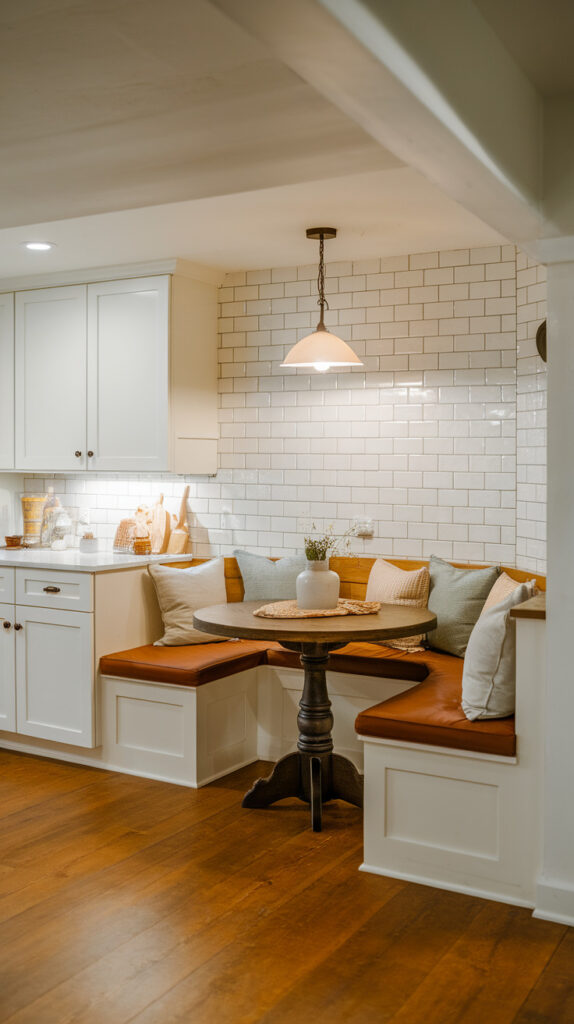
Basements naturally lend themselves to industrial design. Exposed pipes, concrete floors, and brick walls suddenly become design features instead of problems.
An industrial kitchen embraces those elements rather than hiding them. The result feels modern, stylish, and surprisingly intentional.
Why This Works
Industrial style works with the basement’s existing structure. Instead of covering everything, the design highlights raw materials.
This approach also reduces renovation costs. Many structural elements stay visible, which saves time and money.
How to Do It
- Use metal shelving instead of traditional cabinets.
- Install concrete or dark stone countertops.
- Add matte black fixtures for contrast.
- Leave brick or concrete walls exposed if possible.
Style & Design Tips
Balance industrial materials with warm touches. Wood stools or butcher block surfaces soften the harder elements.
Avoid making everything dark. A mix of light and dark finishes keeps the kitchen from feeling heavy.
Pro Tip or Budget Hack
Pipe-style shelving brackets are inexpensive and easy to install. They instantly create the industrial look without major renovations.
10. Basement Kitchen With Hidden Appliances
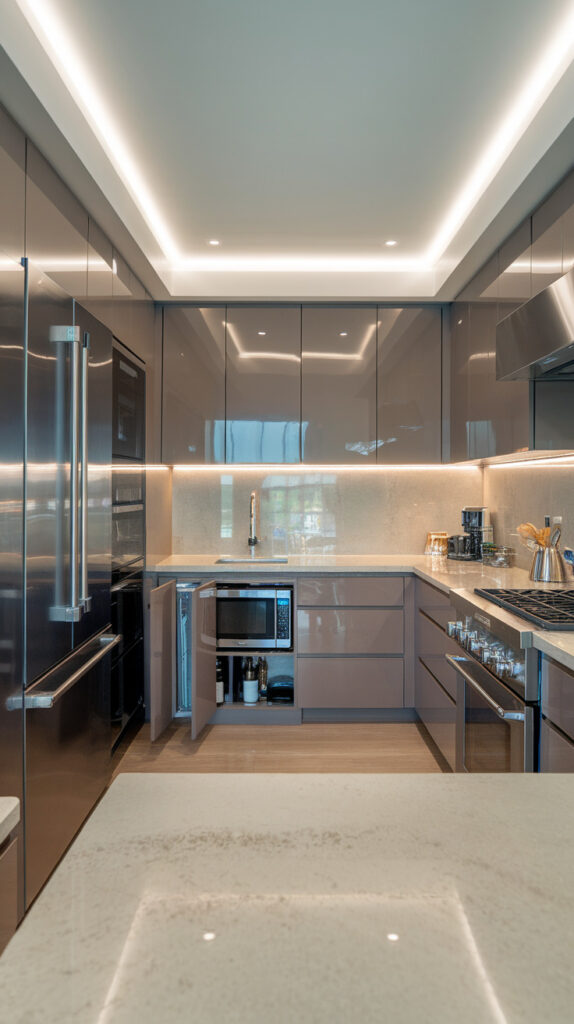
A cluttered kitchen can ruin the overall design. Hidden appliances keep the basement kitchen looking clean and intentional.
Panel-ready appliances blend into cabinetry so the kitchen appears streamlined. The result feels more like a stylish living space than a utility area.
Why This Works
Hidden appliances reduce visual noise. When the fridge and dishwasher disappear into cabinetry, the room looks calmer and more cohesive.
This approach also works well for open basement layouts. The kitchen blends naturally with surrounding entertainment areas.
How to Do It
- Choose panel-ready appliances when possible.
- Use cabinet fronts that match the rest of the kitchen.
- Hide microwaves inside appliance garages.
- Install integrated dishwashers for a seamless look.
Style & Design Tips
Consistency matters in hidden appliance designs. Matching cabinet finishes and hardware keep everything visually unified.
Avoid mixing too many cabinet colors. The goal is a smooth, uninterrupted appearance.
Pro Tip or Budget Hack
Appliance garages cost less than panel-ready appliances. They hide small appliances while keeping the kitchen looking organized.
Planning the Right Basement Kitchen Layout
Jumping into a basement kitchen project without a clear plan usually leads to awkward layouts and wasted money. A little strategy upfront prevents common problems like poor lighting, cramped walkways, and appliances that feel randomly placed.
Most basements were never designed to function as kitchens, so you need to think through layout, plumbing, storage, and electrical access before installing cabinets or appliances. Treat the space like a real kitchen project rather than a quick add-on.
Start With Purpose
Before choosing cabinets or colors, decide exactly how the basement kitchen will be used. Some people want a full cooking setup, while others only need a secondary prep area or entertainment bar.
A clear purpose determines the size of appliances, storage needs, and layout decisions. Skipping this step usually leads to a kitchen that looks nice but doesn’t function well.
Think About Plumbing Early
Plumbing access can completely change the design of a basement kitchen. Moving a sink across the room might require expensive pipe extensions or pump systems.
It’s usually smarter to position sinks and dishwashers close to existing plumbing lines. That simple decision can save thousands in renovation costs.
Prioritize Lighting
Basements rarely get strong natural light, so lighting becomes a core design element. A poorly lit basement kitchen instantly feels cramped and gloomy.
Layered lighting works best. Combine recessed ceiling lights, under-cabinet lighting, and a few decorative fixtures to keep the space bright and comfortable.
Plan for Ventilation
Cooking smells can linger in basement spaces if ventilation is weak. Even small kitchenettes benefit from a proper vent hood or strong exhaust fan.
Without ventilation, grease and moisture slowly build up in cabinets and walls. A good airflow system protects the kitchen and keeps the basement fresh.
Choose Space-Smart Appliances
Full-size appliances aren’t always necessary for basement kitchens. Compact refrigerators, drawer dishwashers, and induction cooktops often work better.
Smaller appliances free up valuable counter space. They also reduce energy consumption and installation complexity.
Safety, Electrical, and Code Considerations
Basement kitchens involve more technical planning than many homeowners expect. Electrical upgrades, moisture protection, and safety codes all play a role in creating a kitchen that functions properly long term.
Ignoring these factors early in the project can lead to expensive corrections later. A few simple precautions make the entire kitchen safer and more reliable.
Electrical Capacity
Many basements weren’t originally wired to handle kitchen appliances. Adding a cooktop, microwave, and refrigerator may require new electrical circuits.
A licensed electrician can evaluate the panel and ensure the system can safely support the added load. This step prevents overloaded breakers and power interruptions.
Moisture Control
Basements naturally hold more humidity than upper floors. Kitchens add even more moisture through cooking and dishwashing.
Proper ventilation and moisture-resistant materials help protect cabinets and flooring. Waterproof flooring, sealed countertops, and good airflow keep the kitchen in good condition.
Fire Safety
Cooking equipment always increases fire risk slightly. Installing smoke detectors and fire extinguishers near the basement kitchen adds an important layer of protection.
Many homeowners also choose induction cooktops in basement kitchens because they generate less heat and reduce open-flame hazards.
Egress and Accessibility
If the basement kitchen sits inside a finished living space, proper exits and clear walkways matter. Basement rooms should always have safe paths to exits in case of emergency.
Keeping walkways clear and avoiding overcrowded layouts ensures the kitchen remains safe and comfortable to use.
Common Mistakes to Avoid
Basement kitchens look simple on paper, but small design mistakes can quickly turn the space into a frustrating cooking area. Most issues come from ignoring layout, lighting, or storage during the planning phase.
Avoiding these mistakes saves money and makes the kitchen far more enjoyable to use.
Ignoring Ceiling Height
Low ceilings are common in basements. Tall cabinets or bulky lighting fixtures can make the kitchen feel cramped quickly.
Choose slimmer cabinets and low-profile lighting when ceiling height is limited. This keeps the space feeling open instead of compressed.
Overcrowding the Layout
Trying to squeeze too many features into a basement kitchen often backfires. Oversized islands, large appliances, or too many cabinets restrict movement.
A simpler layout usually works better. Leave comfortable walking space so the kitchen feels practical rather than cluttered.
Poor Lighting Placement
Many basement kitchens rely on a single ceiling light. That setup leaves shadows on counters and prep areas.
Under-cabinet lighting and layered ceiling fixtures make cooking much easier. Good lighting dramatically improves how the kitchen feels and functions.
Skipping Storage Planning
Basement kitchens often become overflow storage areas for small appliances and pantry items. Without proper cabinets or shelves, clutter builds up quickly.
Plan storage zones for appliances, cookware, and pantry items. Organized storage keeps the space efficient.
Choosing the Wrong Flooring
Basements sometimes experience minor moisture fluctuations. Hardwood floors can warp or degrade over time in these environments.
Water-resistant flooring like vinyl plank or tile holds up much better in basement kitchens.
Budget-Friendly Basement Kitchen Upgrades
Not every basement kitchen requires a massive renovation budget. Smart material choices and creative upgrades can transform the space without draining your savings.
Some of the most effective improvements cost surprisingly little but make a huge visual difference.
Paint for Instant Transformation
Cabinet paint changes the entire feel of a basement kitchen. Fresh paint on cabinets and walls brightens the room and gives older kitchens new life.
Light colors reflect available light better, which helps basement spaces feel less enclosed.
Upgrade Hardware and Fixtures
New cabinet handles and faucets are small details that significantly improve the kitchen’s appearance. These upgrades require minimal effort but create a noticeable improvement.
Matte black, brushed brass, or stainless steel hardware can modernize older cabinets instantly.
Improve Lighting First
Lighting upgrades often provide the biggest visual improvement in basement kitchens. Recessed lights, LED strips, or pendant lights brighten the room and make cooking easier.
Even simple lighting changes can dramatically transform the atmosphere.
Add Open Shelving
Open shelves cost far less than full cabinets. They also make basement kitchens feel lighter and less crowded.
Use them to store dishes, spices, or decorative items that add personality to the space.
Basement Kitchen Maintenance Tips
A basement kitchen needs slightly different maintenance than kitchens on upper floors. Paying attention to moisture control, ventilation, and regular cleaning keeps the space comfortable and functional.
Simple habits can prevent many long-term problems.
Keep Ventilation Running
Ventilation systems help remove cooking odors and moisture. Running the fan during and after cooking helps maintain good air circulation.
This practice also protects cabinets and walls from long-term humidity buildup.
Clean Grease and Moisture Quickly
Cooking in basement spaces can allow grease and moisture to settle faster on surfaces. Wiping counters, backsplashes, and appliances regularly keeps the kitchen looking clean.
Regular cleaning also prevents odors from developing.
Monitor Humidity Levels
Basements naturally hold more moisture. A small dehumidifier can protect cabinets, flooring, and food storage areas.
Maintaining balanced humidity keeps the kitchen environment healthier and more comfortable.
Frequently Asked Questions
Do basement kitchens add value to a home?
Yes, a well-designed basement kitchen can increase home value, especially if the basement functions as a living or entertainment space. Buyers often see it as an added convenience for hosting or multi-generational living.
What appliances work best in basement kitchens?
Compact appliances usually work best in basement kitchens. Small refrigerators, induction cooktops, and microwave drawers provide functionality without taking up too much space.
Do basement kitchens require special ventilation?
Yes, proper ventilation is important because basements naturally hold more moisture. A vent hood or strong exhaust fan helps remove cooking smells and humidity.
How much space is needed for a basement kitchen?
Even a small basement kitchen can function well in 50–80 square feet. Efficient layouts like galley or L-shaped designs make the most of limited space.
Is a permit required for building a basement kitchen?
Many areas require permits for plumbing, electrical, or structural changes. It’s always best to check local building regulations before starting a renovation.
What flooring works best for basement kitchens?
Water-resistant flooring such as luxury vinyl plank, tile, or sealed concrete works well in basement environments. These materials handle moisture better than hardwood.
Can a basement kitchen function as a full kitchen?
Yes, a basement kitchen can function as a full cooking space if it includes proper appliances, plumbing, and ventilation. Many homeowners create fully functional kitchens downstairs for entertaining or extended family use.
Final Thoughts
Extra cooking space often solves problems you didn’t realize your home had. A thoughtfully designed basement kitchen reduces congestion upstairs and creates a surprisingly useful gathering spot.
The key is focusing on layouts and features that actually match how the space will be used. Once that part is clear, the design decisions become a lot easier.
A basement kitchen doesn’t need to be massive or expensive to feel valuable. Sometimes the smartest upgrades come from simply using the space that was already sitting there.