13 Functional Living Room Separator Ideas for Homes
My living room used to feel loud even when nobody talked. Furniture floated with no purpose, sightlines felt messy, and the whole space confused everyone who walked in.
I wanted separation without walls, structure without stress, and style without turning my home into a renovation zone.
I learned the hard way that dividers don’t need drama to work. Small shifts create big clarity when you choose the right separator and place it with intention.

Let me walk you through the ideas that actually helped me fix that awkward, everything-happens-here room.
1. Open Shelving Units That Define Without Blocking
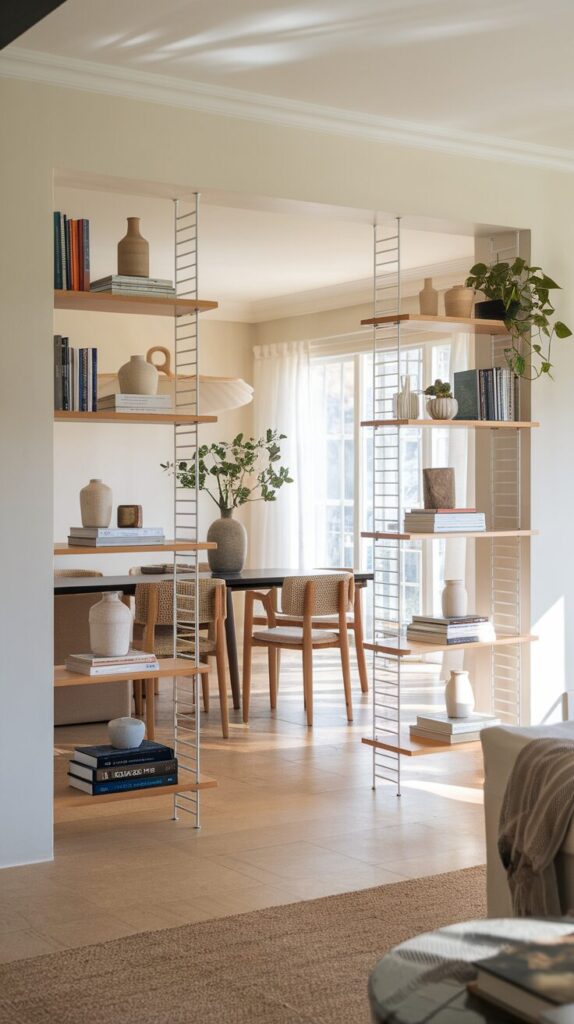
You probably love open layouts until your sofa stares directly into your dining chaos. I wanted separation without killing light, so I leaned into open shelving as a soft divider. This idea works when you crave structure but still want the room to breathe.
Open shelves draw an invisible line while keeping things social and airy. They give you storage, display space, and a sense of order without feeling bossy. IMO, this option feels like the most balanced solution for shared living areas.
Why This Works
Open shelving creates visual separation while keeping natural light flowing through the room. The open backs stop the space from feeling boxed in or heavy. You get zones without walls telling you what to do.
How to Do It
- Place the unit perpendicular to your main seating area to guide foot traffic.
- Anchor it with heavier items on the bottom for stability.
- Style both sides so it looks intentional from every angle.
Style & Design Tips
Stick to consistent materials so the shelf feels calm instead of cluttered. Mix books with decor, not just storage bins. Avoid overfilling every shelf or the divider will feel like visual noise.
Pro Tip or Budget Hack
IKEA-style cube shelves work shockingly well here. Add baskets on the lower shelves to hide mess fast when guests show up unannounced.
2. Floor-to-Ceiling Curtains for Flexible Separation

Some days you want openness, and other days you want boundaries. Curtains gave me that on-demand separation without committing to anything permanent. This idea shines in rentals or multipurpose rooms.
Curtains soften the room instantly and add texture while dividing space. They also absorb sound, which helped my living room feel calmer. I avoided heavy drama and kept the fabric light and flowy.
Why This Works
Curtains create a visual pause without changing the room’s structure. You control how open or closed the space feels in seconds. The flexibility makes this option incredibly forgiving.
How to Do It
- Install a ceiling-mounted curtain track for a clean look.
- Choose floor-length panels to elongate the room visually.
- Pull them open during the day and close them when needed.
Style & Design Tips
Choose neutral fabrics if your room already feels busy. Avoid shiny or stiff materials that look theatrical. Soft linen or cotton blends always feel relaxed and lived-in.
Pro Tip or Budget Hack
Use shower curtains as liners for thicker drapes. Nobody will notice, and your wallet will thank you.
3. Half-Wall Dividers That Feel Intentional
I used to think half walls felt dated until I saw one done right. This option creates real separation while keeping the space connected. It works best when you want permanence without full enclosure.
A half wall gives you structure while still allowing conversation and light. It also doubles as a surface for decor or lighting. This one surprised me in the best way.
Why This Works
Half walls establish zones without closing off sightlines. They ground furniture layouts and make rooms feel thoughtfully planned. You get definition without isolation.
How to Do It
- Build the wall to waist or chest height for balance.
- Cap it with wood or stone for a finished look.
- Use it to anchor a sofa or console table.
Style & Design Tips
Match the wall finish to existing trim for cohesion. Avoid chunky proportions that overpower the room. Clean lines always win here.
Pro Tip or Budget Hack
Fake the look with a tall console table bolted to the floor. It gives the same effect without construction stress.
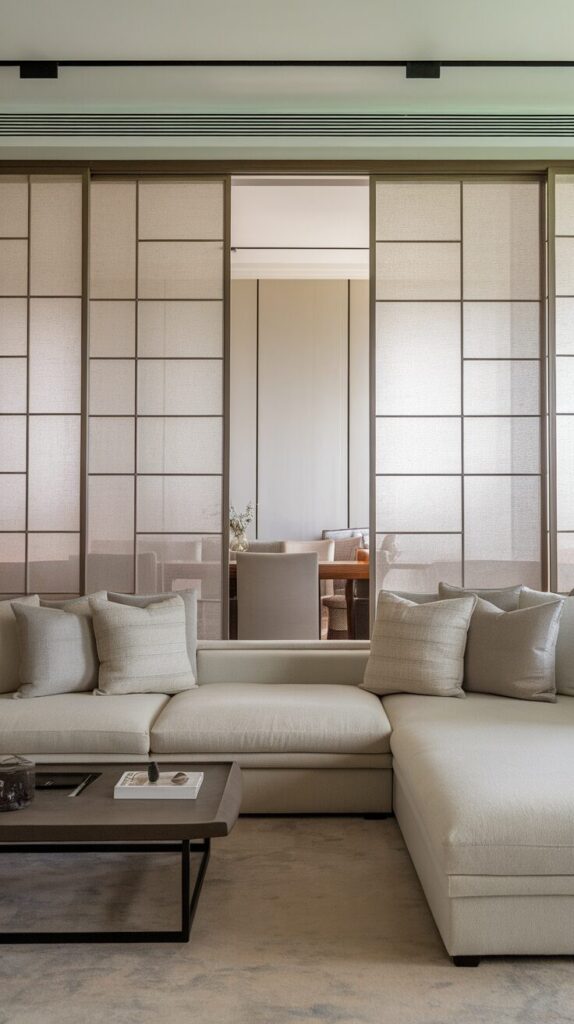
4. Sliding Panel Screens That Add Drama Lightly

I wanted something bold without committing to heavy walls. Sliding panels gave me that architectural moment without overwhelming the room. They feel modern and surprisingly practical.
Panels slide when you need privacy and disappear when you don’t. They also add vertical interest, which helps low-ceiling rooms. This option feels intentional and design-forward.
Why This Works
Sliding panels allow separation only when necessary. They preserve flexibility while adding visual rhythm. You control the mood instantly.
How to Do It
- Install ceiling tracks rated for panel weight.
- Choose panels with texture or subtle pattern.
- Stack panels to one side when open.
Style & Design Tips
Stick to light colors to avoid a heavy look. Avoid ornate patterns that date quickly. Simple designs age better over time.
Pro Tip or Budget Hack
Use lightweight MDF panels with veneer instead of solid wood. They look luxe without the price tag.
5. Large Area Rugs That Define Zones Clearly
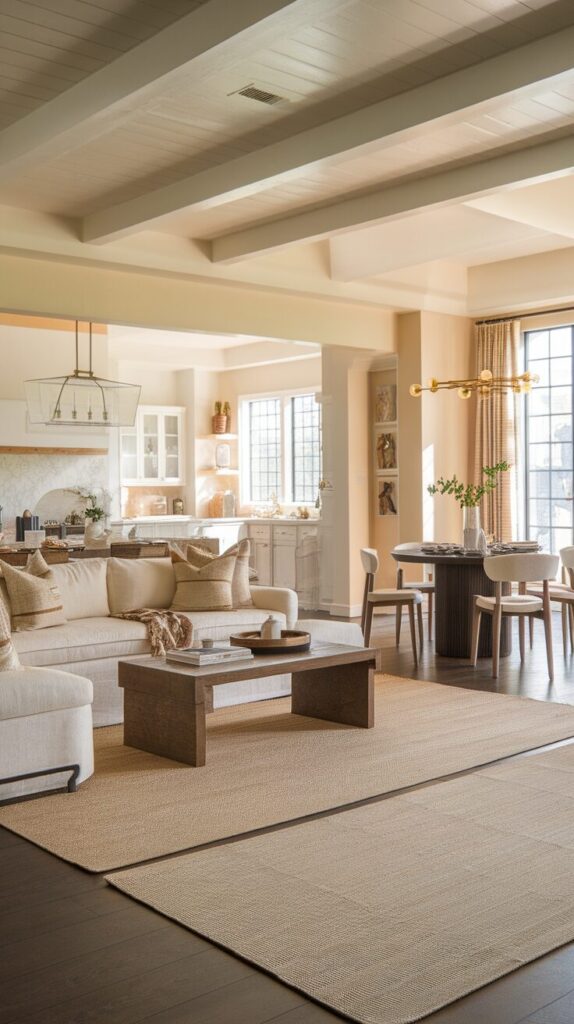
This idea sounds obvious, but people still mess it up. Rugs can separate spaces visually without adding any physical barrier. I fixed my layout by choosing the right size and placement.
A rug anchors furniture and tells your eye where one zone ends. It also adds warmth and texture instantly. This option works especially well in open-plan homes.
Why This Works
Rugs create invisible boundaries through contrast. They guide movement and ground furniture groupings. The room feels organized without added bulk.
How to Do It
- Choose a rug large enough for all front furniture legs.
- Use different rugs for adjacent zones.
- Align rugs with furniture, not walls.
Style & Design Tips
Avoid tiny rugs that float awkwardly. Scale matters more than pattern here. Neutral rugs feel timeless and flexible.
Pro Tip or Budget Hack
Layer a smaller patterned rug over a large neutral one. You get style without buying oversized statement rugs.
6. Glass Partitions That Keep Light Alive
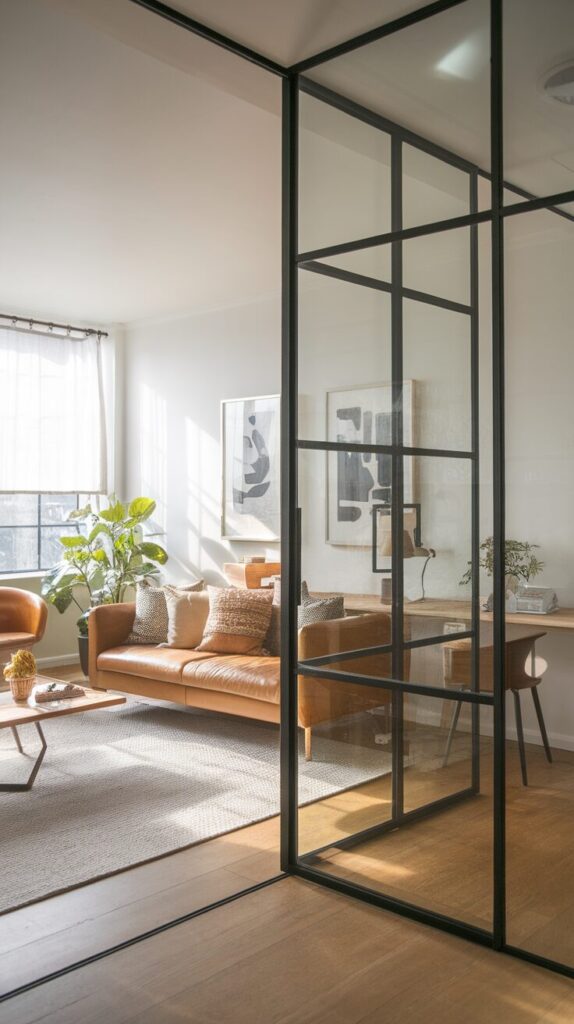
I worried glass would feel cold, but it surprised me. Glass dividers separate without stealing brightness. They work beautifully in modern or minimalist homes.
These partitions give you structure while keeping everything visually connected. They also elevate the room instantly. This option feels polished without shouting for attention.
Why This Works
Glass maintains sightlines and natural light. It separates sound slightly while keeping openness. The room feels bigger, not smaller.
How to Do It
- Choose framed glass for definition.
- Use frosted panels for partial privacy.
- Anchor frames securely to floor and ceiling.
Style & Design Tips
Black or bronze frames add contrast. Avoid overly decorative glass. Clean geometry keeps it timeless.
Pro Tip or Budget Hack
Repurpose old glass doors as panels. Salvage yards hide real gems if you look patiently.
7. Console Tables as Subtle Boundaries
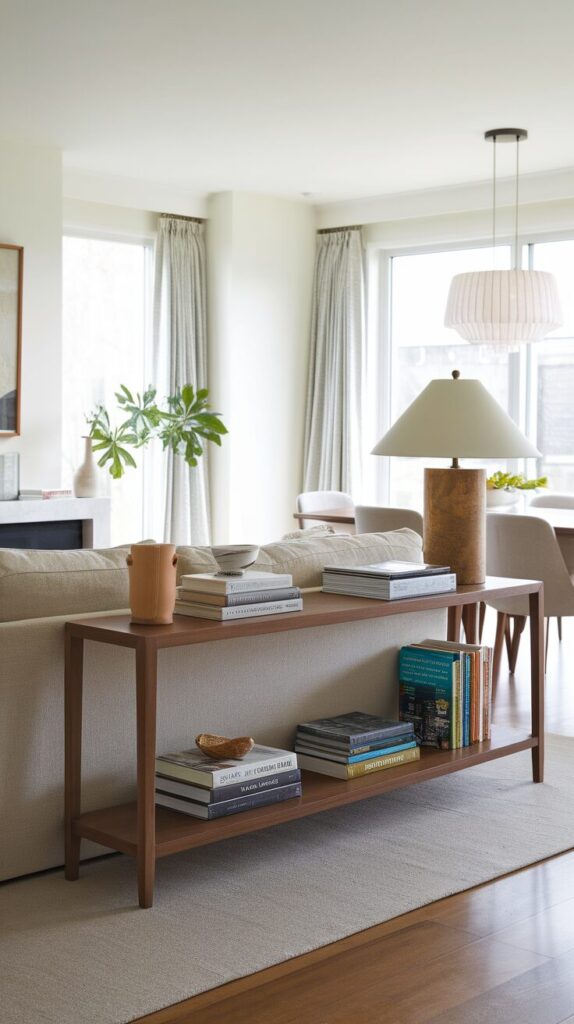
I underestimated console tables for years. Then I used one behind my sofa, and everything clicked. This idea works when you want separation without visual interruption.
A console defines space while adding function. It gives you storage, styling surface, and a clean break between zones. This one feels effortless.
Why This Works
Console tables create a physical pause without blocking views. They guide furniture placement naturally. The room feels intentional instead of accidental.
How to Do It
- Place it directly behind the sofa.
- Choose a table close to sofa height.
- Style lightly to avoid clutter.
Style & Design Tips
Use low-profile decor to keep sightlines open. Avoid bulky tables that crowd walkways. Slim designs shine here.
Pro Tip or Budget Hack
Use a narrow desk instead of a console. It offers the same footprint with extra function.
8. Vertical Slat Dividers for Texture Lovers
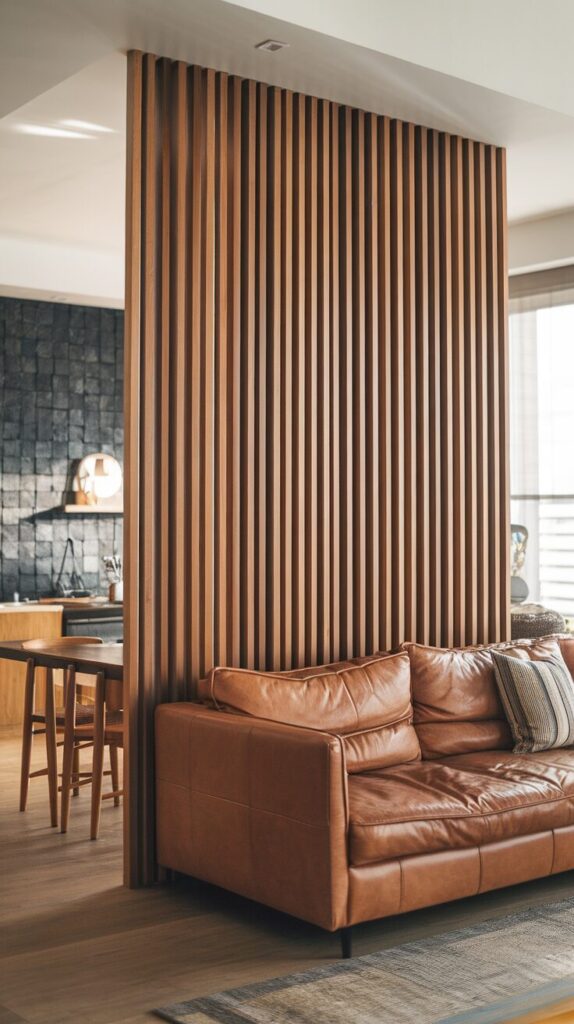
I love texture, and vertical slats scratched that itch perfectly. They separate space while adding rhythm and warmth. This idea feels modern yet cozy.
Slats create partial separation without blocking airflow or light. They also add architectural interest instantly. I wish I tried this sooner.
Why This Works
Vertical lines draw the eye upward and define zones subtly. They add structure without heaviness. The room feels designed, not divided.
How to Do It
- Install evenly spaced wooden slats.
- Secure them to floor and ceiling.
- Keep spacing consistent for balance.
Style & Design Tips
Natural wood tones feel warm and inviting. Avoid dark stains in small rooms. Consistency keeps it calm.
Pro Tip or Budget Hack
Use MDF strips painted wood-tone. They cost less and look surprisingly convincing.
9. Bookcases Turned Sideways as Dividers

Bookshelves don’t belong only against walls. Turning one sideways changed my layout completely. This idea works when you want storage and separation together.
A bookcase divider offers function on both sides. It also adds personality through books and decor. This option feels practical and personal.
Why This Works
Bookcases create visual mass that defines zones clearly. They offer storage without wasted space. The room feels purposeful.
How to Do It
- Secure the unit to prevent tipping.
- Style both sides evenly.
- Leave some negative space.
Style & Design Tips
Avoid stuffing every shelf. Breathing room matters for visual calm. Mix vertical and horizontal items.
Pro Tip or Budget Hack
Use two shorter bookcases back-to-back. You get height without custom builds.
10. Plants as Living Room Separators
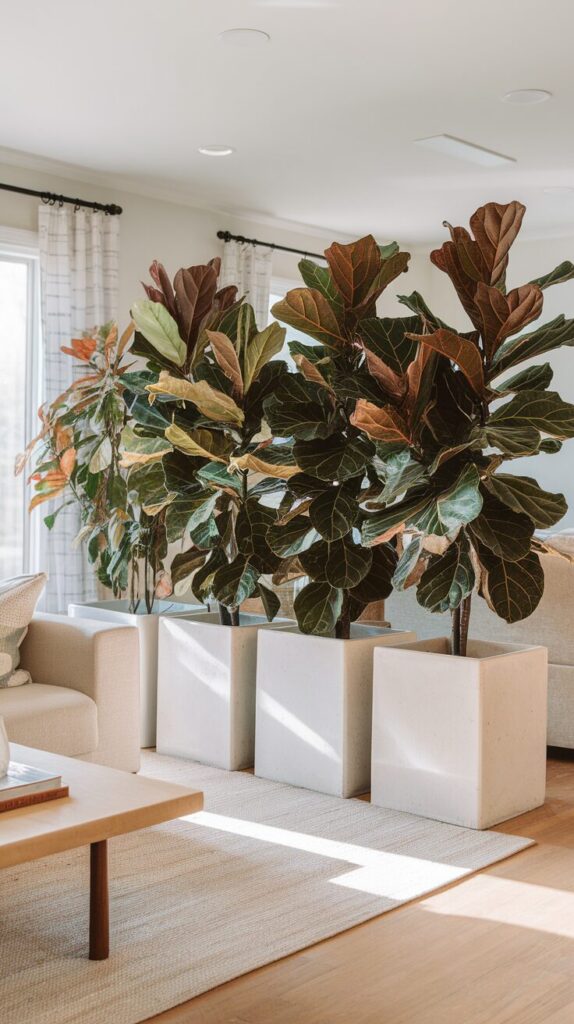
Plants fixed my space and my mood. Tall plants create separation while adding life and softness. This idea feels fresh and forgiving.
Greenery divides space without rigidity. It also improves air quality and mood. This option works for plant lovers and beginners alike.
Why This Works
Plants create organic boundaries that feel natural. They soften transitions between zones. The room feels alive.
How to Do It
- Choose tall plants like fiddle leaf figs.
- Group plants for stronger separation.
- Use consistent planters.
Style & Design Tips
Stick to neutral planters for cohesion. Avoid mixing too many plant types. Repetition feels intentional.
Pro Tip or Budget Hack
Use faux plants if maintenance scares you. Good fakes look real from five feet away.
11. Folding Screens for Instant Flexibility
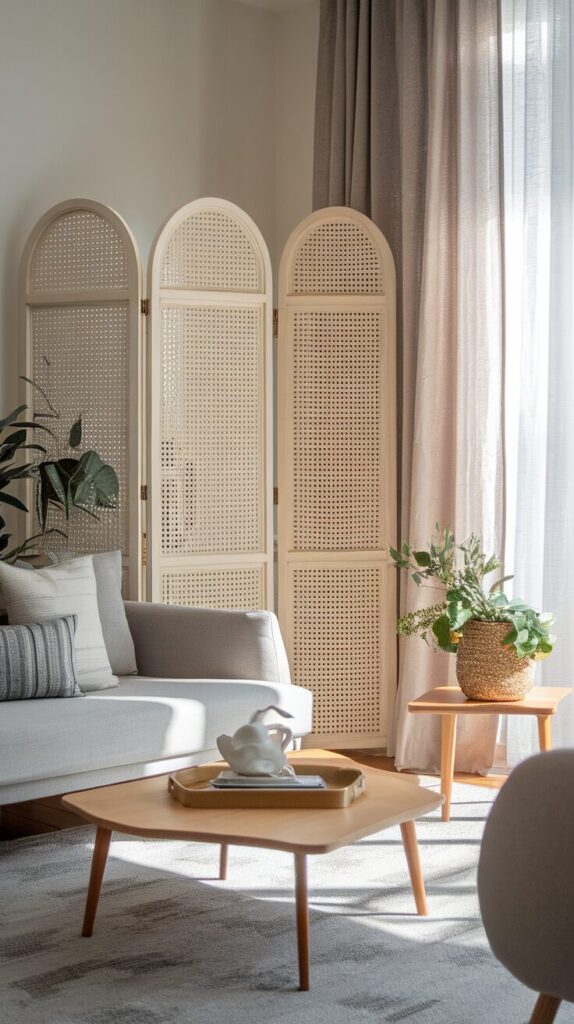
Folding screens saved me during work-from-home days. They offer instant separation without commitment. This idea works when needs change daily.
Screens fold away when not needed. They also add pattern and texture. This option feels playful and practical.
Why This Works
Screens create quick visual boundaries. They adapt to changing routines. You stay flexible without redesigning.
How to Do It
- Place screens where sightlines need breaking.
- Fold partially for softer separation.
- Store easily when unused.
Style & Design Tips
Choose lightweight materials for easy movement. Avoid busy patterns in small rooms. Simplicity lasts longer.
Pro Tip or Budget Hack
Thrift stores hide amazing screens. A coat of paint refreshes dated finds instantly.
12. Low Storage Units That Guide Flow
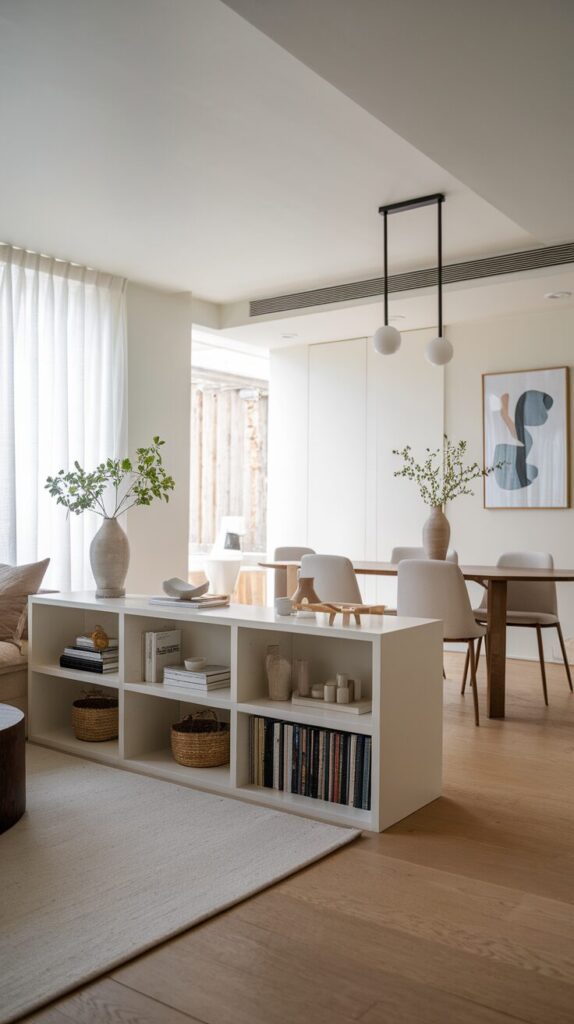
Low units guide movement without blocking views. I used one to separate my living and dining zones. It worked quietly and effectively.
These units offer storage while shaping layout. They keep the room open and functional. This option feels understated but smart.
Why This Works
Low units define zones horizontally. They preserve openness and light. The room feels balanced.
How to Do It
- Choose units below sofa height.
- Align with furniture edges.
- Use tops for subtle decor.
Style & Design Tips
Avoid tall accessories that block sightlines. Low and long works best here. Keep styling minimal.
Pro Tip or Budget Hack
TV stands work great for this purpose. Just ignore their original job.
13. Statement Lighting to Visually Separate Zones
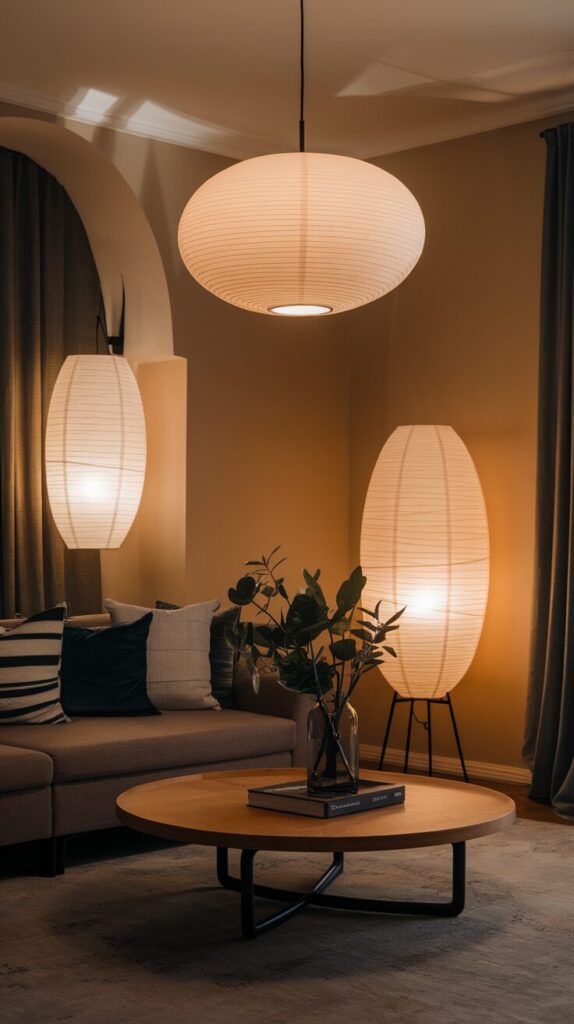
Lighting changed everything for me. Different lights told my brain where each zone lived. This idea works when physical dividers feel too much.
Lighting creates invisible boundaries through focus. It adds mood while defining function. This option feels subtle and powerful.
Why This Works
Lighting directs attention and anchors zones. It shapes how spaces feel emotionally. The room gains depth.
How to Do It
- Use pendant lights over specific areas.
- Layer floor and table lamps.
- Vary light temperature slightly.
Style & Design Tips
Avoid matching every fixture. Intentional contrast adds interest. Keep finishes consistent for cohesion.
Pro Tip or Budget Hack
Plug-in pendants save money and wiring headaches. They install easily and look custom.
Living Room Separation Strategy: Plan Before You Divide
Before you move a single shelf or buy another plant, step back and look at how you actually use your living room. I always map out daily movement first because flow matters more than furniture trends. You want separation that supports real life, not something that just looks good in a photo.
Start by identifying your zones clearly. Define where conversation happens, where work happens, and where people walk through most often. When you design around function first, every divider feels intentional instead of random.
Pay attention to light sources next. Windows, overhead lighting, and even lamp placement should guide where you place separators. If you block natural light carelessly, the room will feel smaller instantly.
Finally, commit to one primary divider and let everything else support it. Too many separators create visual chaos and defeat the purpose. Strong design always favors clarity over excess.
Layout Foundations That Make Any Divider Work Better
You can install the best room separator in the world and still feel disappointed if your layout fights it. Furniture placement controls success more than the divider itself. I always anchor large pieces first before adding separation elements.
Keep walkways at least 30–36 inches wide. People should move comfortably without squeezing between tables and shelves. When circulation flows naturally, your divider feels helpful instead of intrusive.
Balance visual weight on both sides of the separator. If one side looks heavy and cluttered while the other feels empty, the room feels awkward. Symmetry isn’t mandatory, but balance absolutely matters.
Think vertically as well as horizontally. Rugs define floor space, lighting defines air space, and dividers sit somewhere in between. When all three layers align, the room feels cohesive and polished.
Common Mistakes to Avoid
Many people choose a divider before defining the purpose of the space. That decision creates separation that solves nothing and adds clutter. Always clarify your goal first.
People also underestimate scale. Tiny rugs, narrow shelves, or low plants rarely create real visual separation. If the divider looks accidental, it won’t function effectively.
Over-decorating the divider causes another common issue. When you overload shelves or surfaces, you lose the clean break you wanted. Edit ruthlessly and keep styling intentional.
Blocking natural light creates the biggest mistake I see. Heavy partitions in small rooms shrink the space instantly. Protect brightness at all costs.
Finally, people ignore safety. Unsecured bookcases or unstable screens pose real risks in homes with kids or pets. Anchor large pieces properly and prioritize stability.
How to Choose the Right Separator for Your Home Type
Different homes demand different divider strategies. Open-concept houses can handle larger architectural features like slats or half walls. Small apartments usually benefit from flexible options like curtains or low storage units.
Rental spaces require removable solutions. Freestanding shelves, folding screens, and furniture-based dividers work beautifully without drilling into walls. Always check lease restrictions before committing to built-ins.
Family homes need durability. Choose sturdy materials and secure tall units properly. In high-traffic homes, stability matters more than aesthetic drama.
Minimalist spaces benefit from subtle dividers. Rugs, lighting shifts, and slim consoles maintain openness while defining zones quietly. Heavy dividers can overwhelm a pared-back aesthetic quickly.
Budget Planning: Smart Spending for Smart Separation
You don’t need a renovation budget to create functional separation. Start with layout adjustments before purchasing anything new. Often, repositioning existing furniture delivers surprising results.
Prioritize investment pieces carefully. If you spend money, choose something that adds storage or multi-functionality. A divider that serves two purposes always justifies its cost.
Look for secondhand options for larger pieces. Bookcases, screens, and consoles often show up in excellent condition at resale shops. A little sanding or paint refreshes most finds instantly.
Avoid impulse purchases driven by trends. Timeless materials and neutral finishes last longer and adapt better over time. Smart budgeting focuses on longevity, not hype.
Frequently Asked Questions
What is the easiest way to separate a living room without construction?
Rugs, console tables, and open shelving provide the simplest solutions. These options require no structural changes and work immediately. They also allow flexibility if your needs shift later.
How do I separate a living room and dining area in a small space?
Use a large area rug under the living zone and keep dining furniture aligned cleanly. Add a low storage unit or console behind the sofa for subtle division. Keep sightlines open to prevent the room from shrinking visually.
Can I use more than one type of separator in the same room?
Yes, but you must coordinate them carefully. Choose one primary divider and let secondary elements support it quietly. Too many competing separators create visual confusion.
How do I keep my space from feeling closed off?
Protect natural light and avoid bulky partitions. Use open designs like slats, glass, or shelving with negative space. Light colors and slim profiles also maintain openness.
Are room dividers good for noise control?
Soft dividers like curtains and upholstered furniture absorb sound moderately. Hard partitions offer minimal soundproofing unless you build solid walls. For better acoustics, combine soft materials strategically.
What height works best for a room separator?
The ideal height depends on your goal. Low units guide flow without blocking views, while taller options create stronger separation. Always measure ceiling height and overall room proportions before deciding.
Final Thoughts
You don’t need to fix your entire living room in one weekend. Try one separator idea and see how it changes the flow. Small shifts create big clarity when you choose thoughtfully.
I learned that separation feels best when it supports how you actually live. Pick what feels natural, not trendy, and let your space work with you instead of against you.