13 Shower Floor Ideas for a More Polished Bathroom
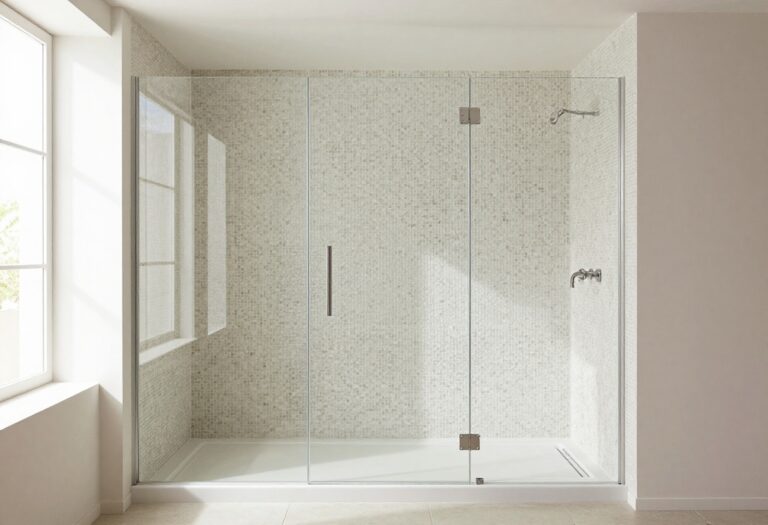
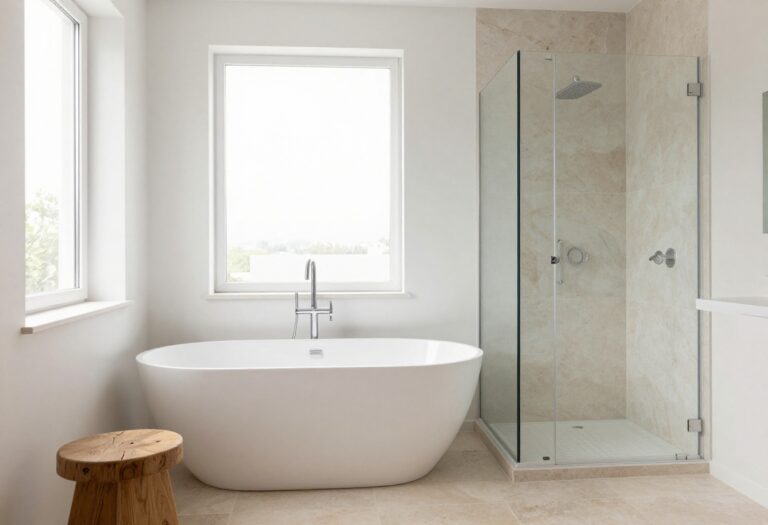
A polished shower floor does more than just handle water—it sets the whole bathroom's mood. Soft grays and warm beiges can make a small space feel larger, while rich charcoal or deep navy adds unexpected drama. The material you choose affects both looks and function, so it pays to think through your options.
Texture plays a huge role too. Smooth porcelain feels sleek underfoot, while natural stone brings an organic, spa-like quality.
Even the pattern of your tiles can change how the room feels—geometric shapes add energy, while large-format slabs create calm continuity. From classic marble mosaics to heated floors that add luxury, these 13 shower floor ideas balance style with everyday practicality.
1. Classic Marble Mosaic
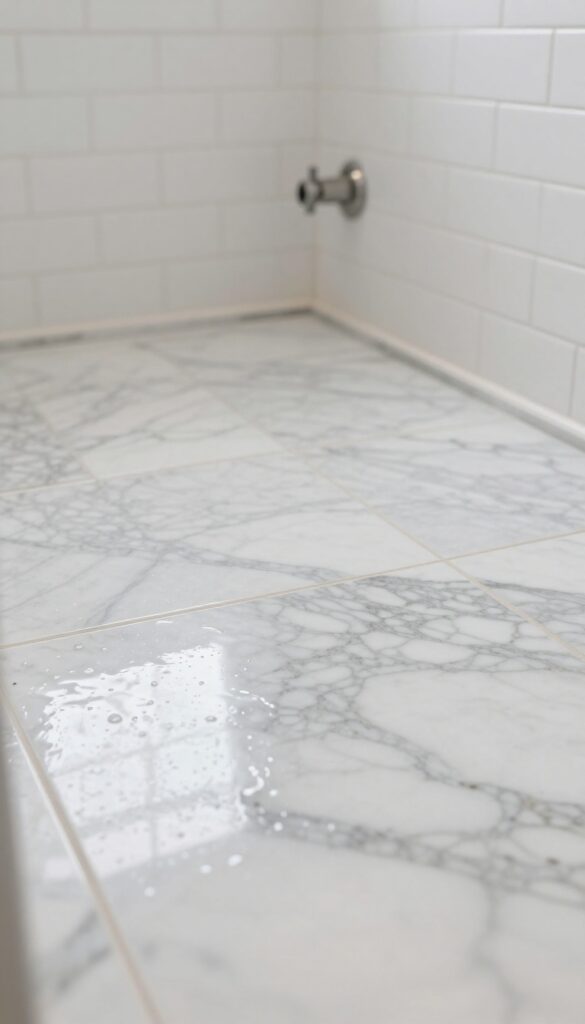
Marble mosaic tiles bring a timeless elegance that instantly makes your shower feel like a high-end spa. The small tile format is incredibly versatile, allowing it to conform to curved shower pans or tight corners without awkward cuts. Plus, the natural veining in each piece adds subtle visual texture that keeps the floor interesting without being overwhelming.
Why It Works
Marble is naturally cool underfoot, which feels refreshing in a steamy shower, and its light-reflecting surface brightens the space. The mosaic pattern also provides excellent slip resistance because of the many grout lines, making it both beautiful and practical.
Best For
This option shines in master bathrooms or guest baths where you want a polished, cohesive look. It pairs beautifully with white subway tile walls and brushed nickel fixtures for a classic combination that never dates.
Styling Tip
Stick with Carrara or Calacatta marble for a clean, bright aesthetic, or choose Nero Marquina for dramatic contrast. Seal the tiles every 6 to 12 months to keep them stain-free and looking fresh.
Budget-Friendly Swap
If real marble feels out of reach, porcelain mosaic tiles that mimic marble offer the same look with better durability and lower maintenance. They're also easier to clean and less prone to etching from harsh shampoos.
2. Large-Format Porcelain Slabs
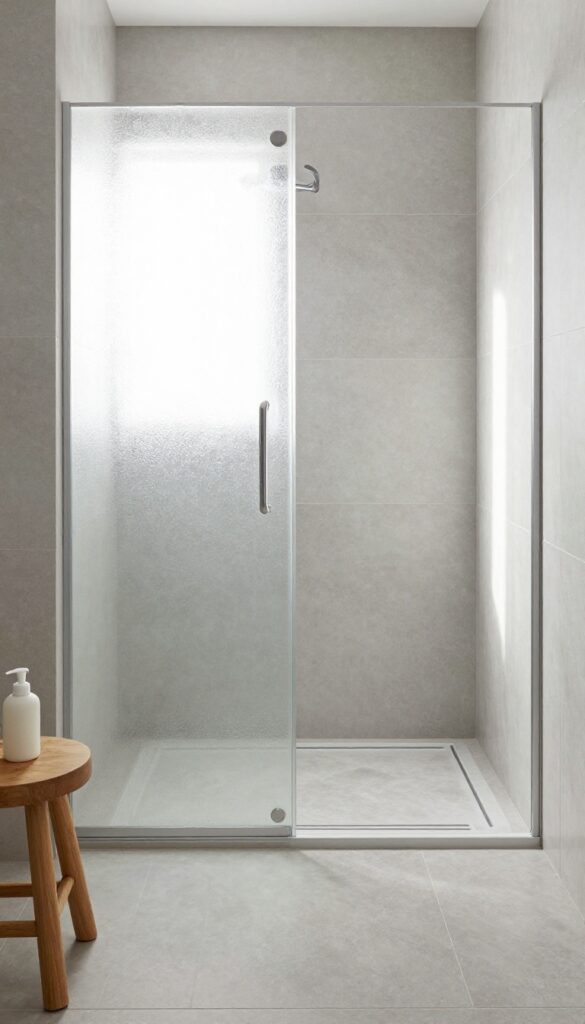
If you love a clean, modern look with minimal upkeep, large-format porcelain slabs are a top contender. These oversized tiles—often 2×4 feet or larger—cover your shower floor with very few grout lines, which means less scrubbing and a smoother visual flow. The result is a sleek, almost monolithic surface that feels both luxurious and practical.
Why It Works
Fewer grout lines mean fewer places for soap scum and mildew to hide. Porcelain is also dense and non-porous, so it resists stains and moisture better than natural stone. A matte finish adds slip resistance, making it a safe choice for wet areas without sacrificing style.
Best For
Large-format slabs shine in contemporary or minimalist bathrooms where clean lines and uncluttered surfaces are key. They're also great for small showers because the continuous look makes the space feel bigger.
Styling Tip
Pair the slabs with a matching wall tile in a lighter shade to keep the room airy, or go tonal with charcoal gray for a moody, spa-like vibe. Add a linear drain that blends into the pattern for an even more seamless finish.
3. Pebble Tile for a Massage Effect
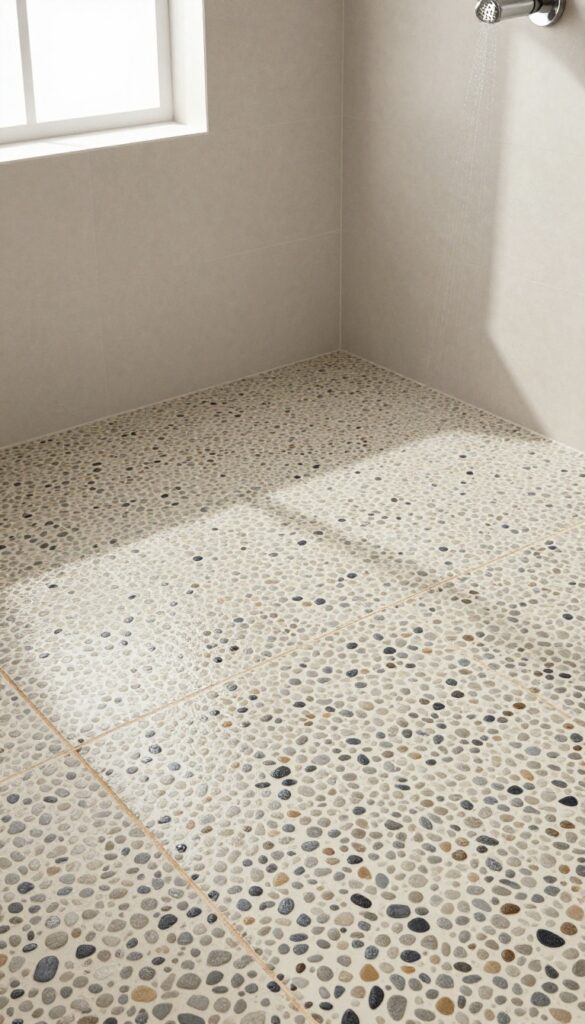
Smooth river stones aren't just nice to look at—they turn your shower floor into a mini reflexology session. The gentle texture underfoot feels like a natural foot massage, making every rinse refreshing. Plus, the organic look brings a calming, spa-like vibe that pairs beautifully with earthy tones.
Why It Works
The rounded pebbles create a textured surface that stimulates pressure points while being comfortable to stand on. Their natural variation in color—from soft beige to charcoal—hides dirt and soap scum well, so the floor stays looking clean with minimal effort.
Best For
This works especially well in nature-inspired bathrooms, rustic designs, or any space where you want to evoke a zen or coastal feel. It's also great for master ensuites where you want a touch of luxury without going overboard.
Styling Tip
Stick with uniform-sized pebbles for a more consistent texture and easier cleaning. Pair them with neutral wall tiles like large-format porcelain or subway tile to keep the focus on the floor. A warm-toned grout helps blend the stones together seamlessly.
Budget-Friendly Swap
If real stone pebbles are out of budget, look for porcelain or ceramic pebble-look tiles. They mimic the texture and color variation but cost less and are easier to maintain.
4. Hexagonal Mosaic Pattern
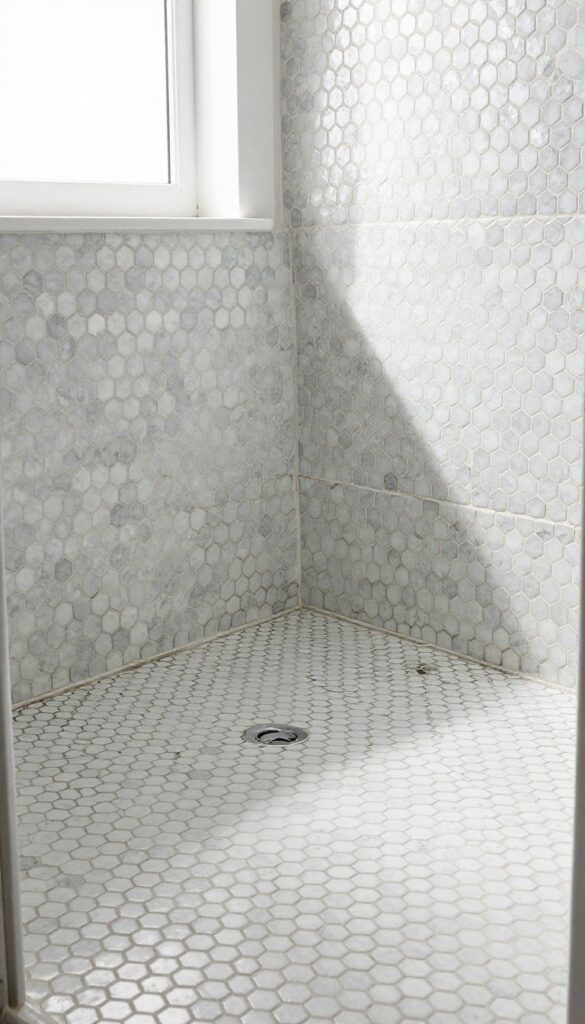
Hexagon tiles bring a playful geometry that feels both modern and timeless. The small scale of these tiles creates a dense pattern that adds visual texture without overwhelming the space. White hex tiles with dark grout give a crisp, graphic look, while soft gray or beige keeps things subtle.
Why It Works
The hexagonal shape naturally directs the eye across the floor, making a small shower feel larger. Contrasting grout emphasizes each tile, turning the floor into a decorative focal point. The mosaic format also conforms well to curved shower bases or around drains.
Best For
Hexagonal mosaics are ideal for contemporary bathrooms, especially those with minimalist fixtures or neutral color palettes. They work well in both small corner showers and larger walk-in designs.
Styling Tip
Pair white hex tiles with black or charcoal grout for a bold, high-contrast look. If you prefer a softer feel, match the grout to the tile color for a seamless, almost continuous surface.
Budget-Friendly Swap
Ceramic or porcelain hex mosaics are more affordable than natural stone and easier to maintain. You can also find peel-and-stick hex tile sheets for a temporary rental-friendly option.
5. Wood-Look Porcelain Planks
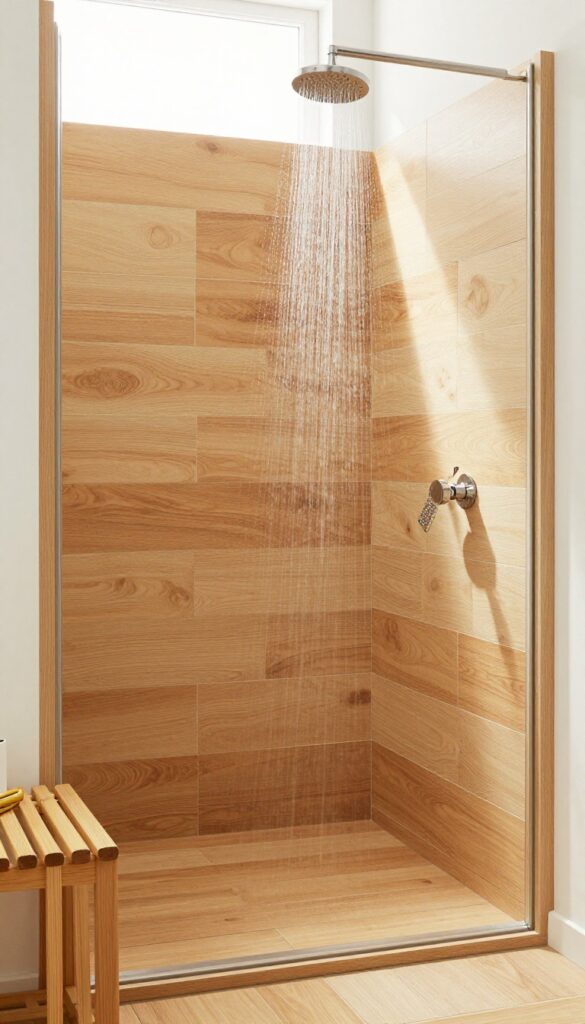
Porcelain planks that mimic hardwood bring the cozy, organic feel of wood into your shower without the risk of warping or mold. The textured finishes not only look realistic but also provide slip resistance, making them a smart choice for wet areas. With options ranging from light oak to rich walnut, you can match almost any bathroom style.
Why It Works
Wood-look porcelain combines the best of both worlds—the warmth and character of real wood plus the waterproof, low-maintenance nature of tile. It’s durable, easy to clean, and won’t absorb moisture or warp over time. Plus, the variety of grain patterns and colors means you can achieve a natural look without sacrificing practicality.
Best For
This option is ideal for bathrooms where you want a spa-like, earthy vibe but don’t want to deal with sealing or water damage. It works beautifully in master bathrooms, guest bathrooms, and even small powder rooms where you want to add a touch of warmth without overwhelming the space.
Styling Tip
For a seamless look, use large-format planks (at least 6×24 inches) and install them in a staggered pattern. Pair with white or soft gray grout to keep the focus on the wood grain. Add a teak bench or bamboo accessories to reinforce the natural aesthetic.
Budget-Friendly Swap
If porcelain planks are out of budget, consider luxury vinyl planks (LVP) designed for bathrooms—they offer a similar wood look at a lower cost and are also waterproof.
6. Slate Tiles for Natural Texture
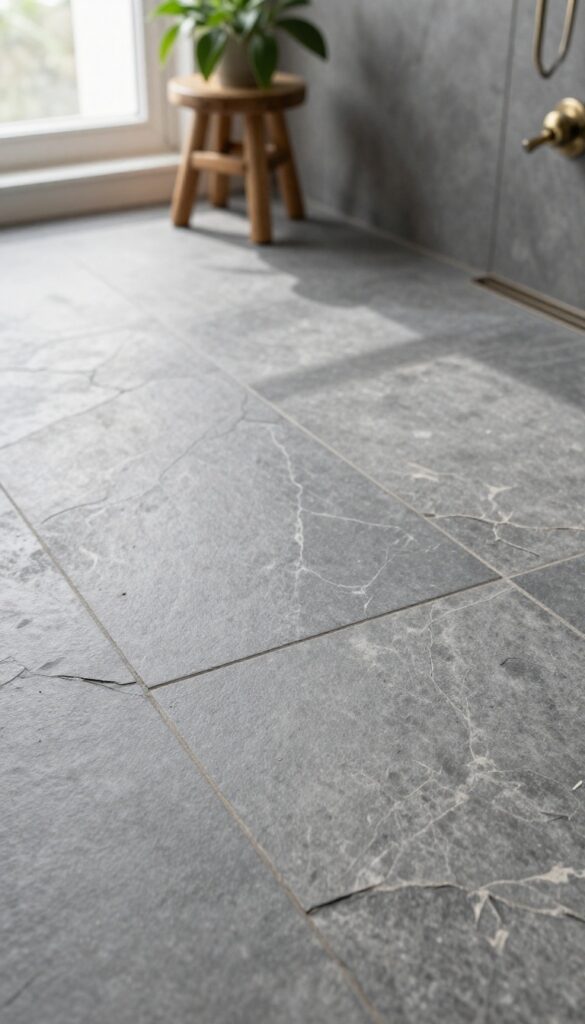
Slate brings the raw beauty of the outdoors right into your shower. Its cleft surface—full of natural fissures and ridges—gives each tile a one-of-a-kind look that feels rugged and grounded. Darker shades like charcoal or midnight blue hide soap scum and hard water stains surprisingly well, making maintenance easier than you might expect from natural stone.
Why It Works
The cleft texture creates excellent slip resistance, which is a top priority for any shower floor. Slate also absorbs sound, so water hitting the floor feels softer and quieter than on ceramic or porcelain. Plus, the earthy color palette ties in beautifully with wood accents, plants, or warm metals like brass.
Best For
Slate shines in rustic, farmhouse, or modern organic bathrooms where you want a connection to nature. It also works well in dark, moody spaces—think deep grays and blacks paired with matte black fixtures. If your bathroom gets heavy use, slate's durability holds up over time.
Styling Tip
Seal your slate tiles right after installation and reseal every year or two to prevent water absorption and staining. Use a large-format slate tile with minimal grout lines for a cleaner look, or mix small mosaic slate sheets with pebbled accents for extra texture underfoot.
7. Checkerboard Pattern with Contrasting Grout
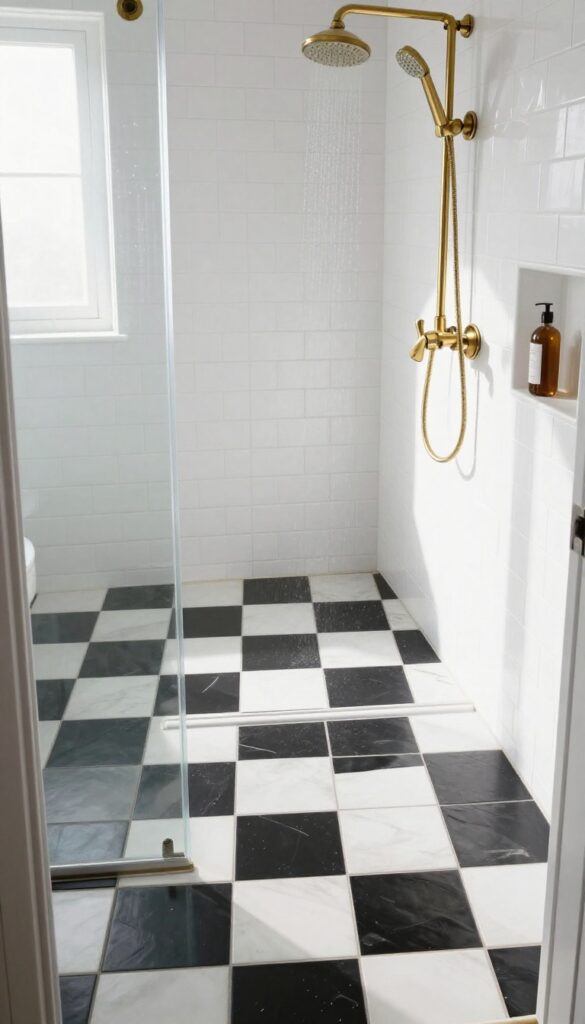
Black and white checkerboard floors bring a timeless vintage charm that feels both dramatic and refined. The high-contrast look adds instant personality to your shower, making it a focal point rather than an afterthought. Whether you lean toward classic diner vibes or upscale Art Deco, this pattern adapts beautifully.
Why It Works
The alternating squares create visual rhythm that draws the eye, making even a small shower feel intentionally designed. Contrasting grout—like black tiles with white grout or vice versa—sharpens the pattern and hides dirt better than matching grout. It’s a practical choice that doesn’t sacrifice style.
Best For
This pattern shines in bathrooms with neutral or monochrome palettes, where it can stand out without clashing. It works especially well in powder rooms, guest baths, or primary suites where you want a bold but classic statement. Pair it with white walls and brass fixtures for a polished look.
Styling Tip
Use large-format checkerboard tiles (like 12×12 inches) for a cleaner, more modern feel, or go with small mosaic squares (2×2 inches) for a traditional penny-tile vibe. To keep the space from feeling busy, limit other patterns in the room and let the floor be the hero.
Budget-Friendly Swap
If natural stone or ceramic checkerboard is out of budget, try peel-and-stick vinyl tiles in a black-and-white pattern. They’re waterproof, easy to install, and still deliver that graphic punch for a fraction of the cost.
8. Geometric Cement Tiles
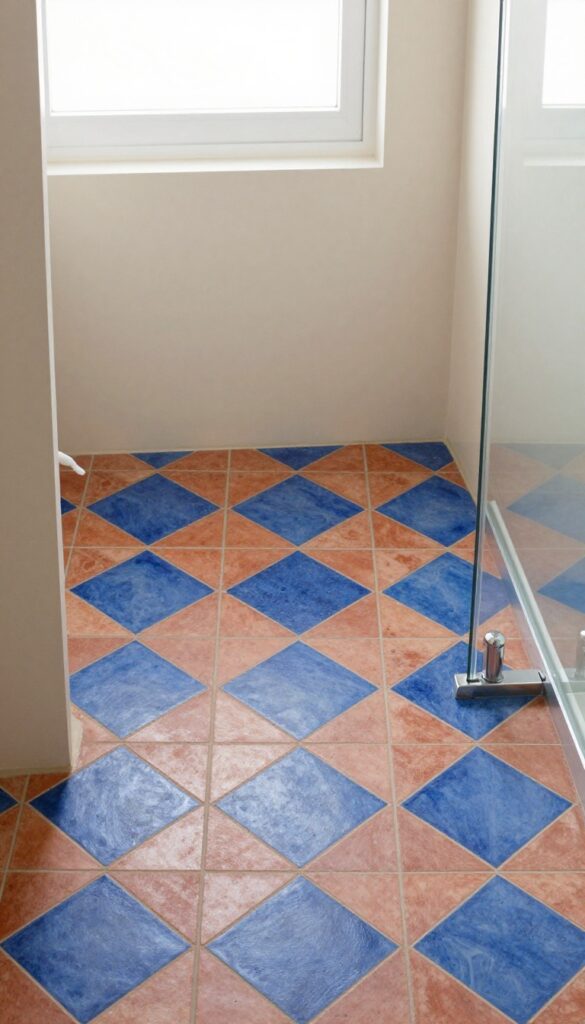
Cement tiles bring an artisan feel that instantly upgrades a shower floor. Their bold geometric patterns and rich colors add personality without overwhelming the space. Because they're handmade, each tile has slight variations that give the floor a unique, lived-in character.
Why It Works
Cement tiles are incredibly durable and develop a beautiful patina over time. They're slip-resistant when textured, making them practical for wet areas. Plus, the endless pattern possibilities let you create a custom look that's distinctly yours.
Best For
These tiles shine in bohemian or Mediterranean-style bathrooms where color and pattern take center stage. They also work well in powder rooms or guest baths where you want a memorable design moment.
Styling Tip
Pair colorful cement tiles with neutral walls and simple fixtures to keep the floor as the focal point. A frameless glass shower door lets the pattern take center stage. Add warm brass or matte black hardware to complement the earthy tones.
Budget-Friendly Swap
If cement tiles stretch your budget, try porcelain tiles that mimic their look. They're more affordable and require less maintenance, while still offering similar visual impact.
9. Subway Tile Herringbone Layout
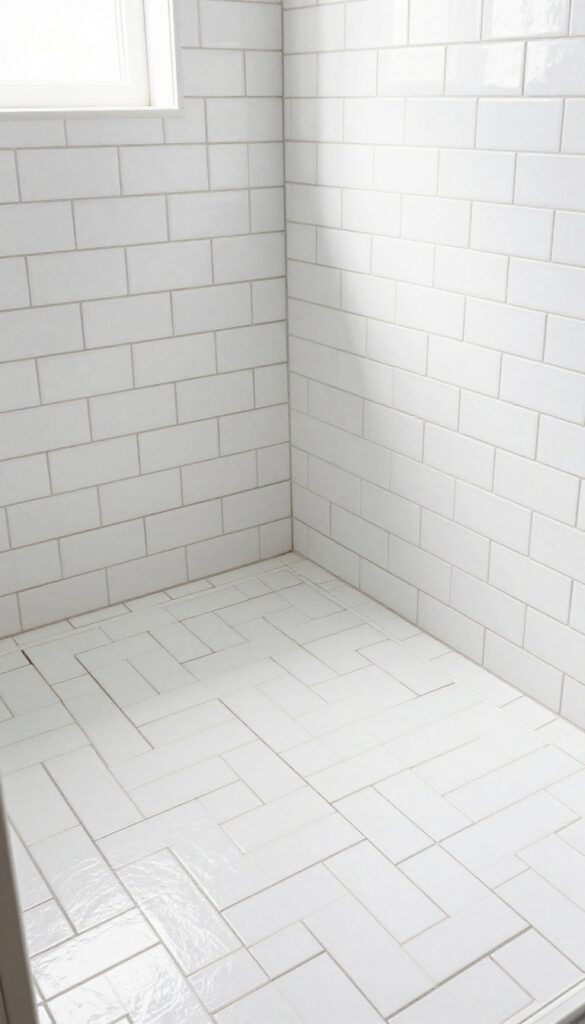
Subway tiles arranged in a herringbone pattern create a dynamic, eye-catching floor that feels anything but basic. The classic rectangle gets a fresh twist when laid at angles, forming zigzag lines that draw the eye across the space. It is a simple way to add movement and texture without going bold or trendy.
Why It Works
The herringbone layout breaks up the monotony of straight-set subway tile, adding visual depth and a handcrafted feel. The angled lines also make the floor look wider, which is a nice trick for smaller showers. Plus, subway tile is widely available and easy to work with, so this look is achievable for most budgets.
Best For
This pattern shines in bathrooms that lean modern or transitional, especially those with clean lines and neutral color palettes. It works well in both master baths and guest showers, adding personality without overwhelming the space.
Styling Tip
Choose a matte finish subway tile in white or soft gray to keep the focus on the pattern. Pair it with dark grout to make each tile pop, or go with matching grout for a more subtle, seamless effect.
10. Terrazzo for Speckled Charm
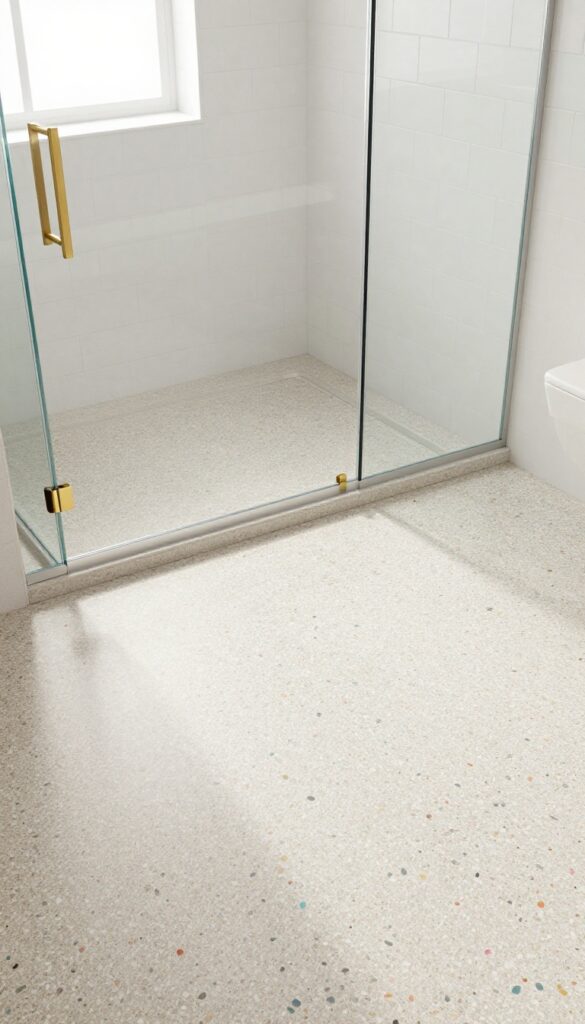
Terrazzo floors are having a serious moment in bathrooms, and for good reason. The speckled surface brings a playful yet refined look that feels custom and curated. Plus, those tiny chips do double duty—they hide daily dirt and water spots like a dream.
A neutral base with colorful flecks gives you personality without overwhelming the space. It’s a durable, low-maintenance choice that still feels fresh and modern.
Why It Works
The composite material is incredibly strong and resists moisture well, making it ideal for wet areas. The random pattern means no two floors look exactly alike, adding unique character to your shower.
Best For
This works beautifully in contemporary or eclectic bathrooms where you want a subtle pop of color. It also suits family bathrooms because the speckles disguise messes between cleanings.
Styling Tip
Pair terrazzo with simple white wall tiles and brushed gold fixtures to let the floor shine. Keep accessories minimal—a clear glass shower door keeps the focus on the pattern.
Budget-Friendly Swap
If real terrazzo is out of reach, look for porcelain tiles that mimic the look. They offer the same speckled charm at a fraction of the cost and are easier to install.
11. Heated Floors for Luxury Comfort
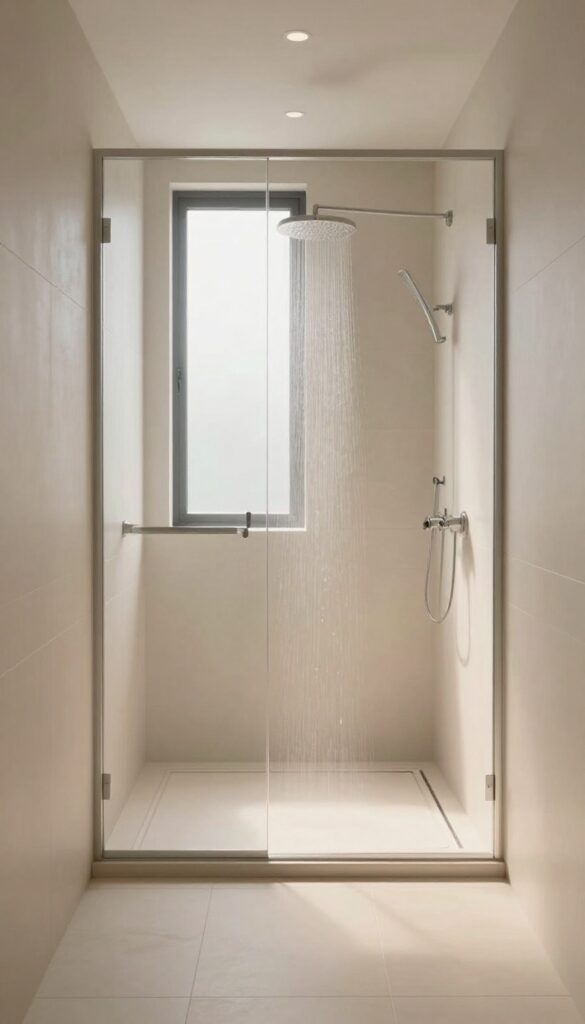
There's nothing quite like stepping out of a warm shower onto a toasty floor. Radiant heating transforms your shower floor into a cozy surface that banishes the shock of cold tiles, especially on chilly mornings. It's a splurge that pays off in daily comfort and adds serious resale value.
Why It Works
Radiant heating works by circulating warm water or electric cables beneath your tile or stone, warming the floor evenly from below. This not only feels amazing but also helps dry the floor faster, reducing moisture and mildew buildup. It pairs perfectly with natural materials that hold heat well, like slate or porcelain.
Best For
This upgrade is ideal for master bathrooms in colder climates or any home where you want a spa-like experience year-round. It's also great for bathrooms with large windows or poor insulation, where floors tend to stay cold.
Styling Tip
Pair heated floors with large-format neutral tiles for a seamless look that maximizes warmth distribution. Add a matching heated towel rack nearby to complete the luxury feel—your towels will be warm and ready when you step out.
12. Linear Drain with Trench Grate
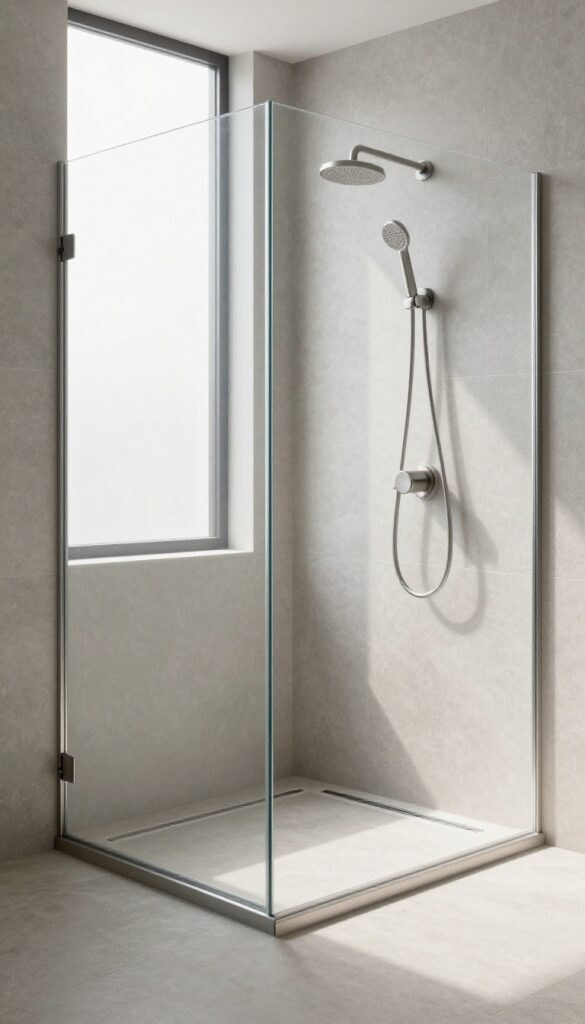
Linear drains are a sleek alternative to traditional center drains. They sit flush along one wall or the shower edge, allowing for a single-slope floor and larger tile slabs. The trench grate itself becomes a design feature, available in brushed nickel, matte black, or even brass.
Why It Works
Because the drain is positioned at the edge, the floor can be pitched in one direction instead of four. This makes it possible to use large-format tiles or continuous stone without awkward cuts. The linear channel also handles high water flow efficiently.
Best For
Luxury master bathrooms and curbless walk-in showers where you want a clean, minimalist look. It's also ideal for wet rooms where the entire bathroom floor slopes to a single drain.
Styling Tip
Choose a grate finish that matches your faucets and shower trim for a cohesive look. For extra style points, opt for a tile-insert grate that lets the floor material continue right over the drain.
Budget-Friendly Swap
Skip custom metal grates and go with a standard stainless steel linear drain kit from brands like Schluter or Oatey. They're affordable and still give you that sleek profile.
13. Basketweave Pattern with Marble or Stone
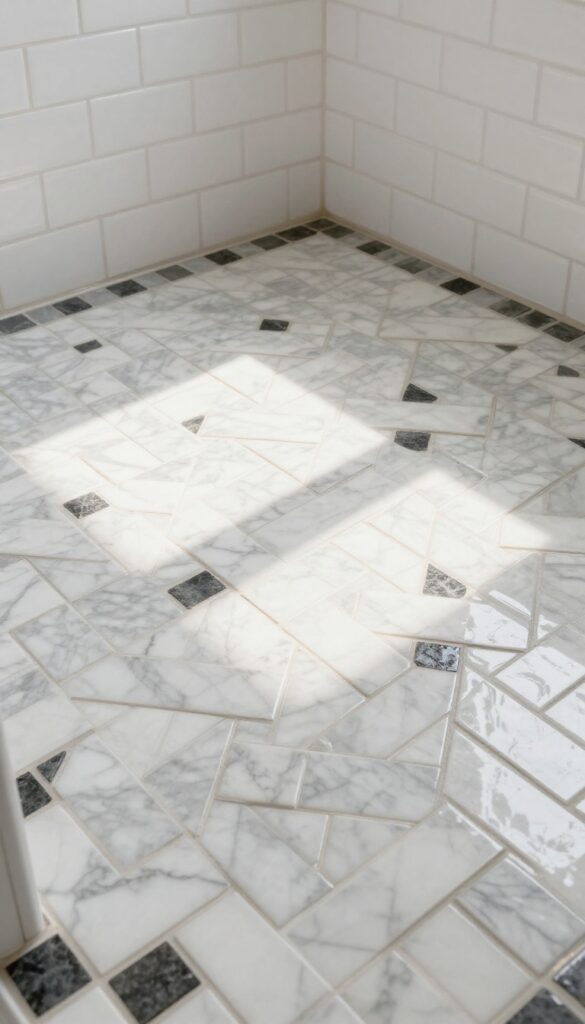
A basketweave layout brings a timeless, woven texture to your shower floor. The interlocking rectangular tiles create visual interest without overwhelming the space. Using marble or natural stone elevates the look, while contrasting colors—like white and charcoal—make the pattern pop.
Why It Works
The basketweave pattern adds depth and a handcrafted feel that plain tiles can't match. It's also practical: the small tiles grip feet well and conform to sloped floors for proper drainage.
Best For
This style shines in traditional, transitional, or classic bathrooms. It works especially well in medium to large showers where the pattern has room to be appreciated.
Styling Tip
Pair a basketweave floor with simple wall tiles in a solid color to keep the focus on the floor. A warm white or soft gray subway tile on the walls balances the busy floor pattern.
Budget-Friendly Swap
If marble is out of budget, opt for porcelain tiles that mimic marble or stone. They offer the same look with easier maintenance and lower cost.
FAQ
What is the best material for a shower floor?
Porcelain or ceramic tile is most popular due to durability, low maintenance, and slip resistance. Natural stone like marble or slate offers beauty but requires more sealing.
How do I make a shower floor less slippery?
Choose tiles with a textured finish, such as matte, tumbled, or pebble. Smaller tiles with more grout lines also improve traction.
Can I use large tiles on a shower floor?
Yes, but ensure proper slope for drainage. Large tiles require a linear drain or careful layout to avoid standing water.
How often should I seal natural stone shower floors?
Seal annually or as recommended by the manufacturer. Some stones like marble may need more frequent sealing to prevent stains.
What grout color is best for shower floors?
Medium to dark grout hides dirt and staining better than white. Contrasting grout can also highlight tile patterns.
Conclusion
A polished shower floor is the foundation of a bathroom that feels both fresh and intentional. Whether you're drawn to classic subway tile, dramatic hexagon patterns, or the warmth of pebble stone, each choice sets a distinct mood. Start with the one that speaks to your daily routine—maybe a subtle linear drain or a bold mosaic.
Small details like grout color and tile layout make all the difference. Your bathroom should feel like a calm, personal space, not a catalog page.