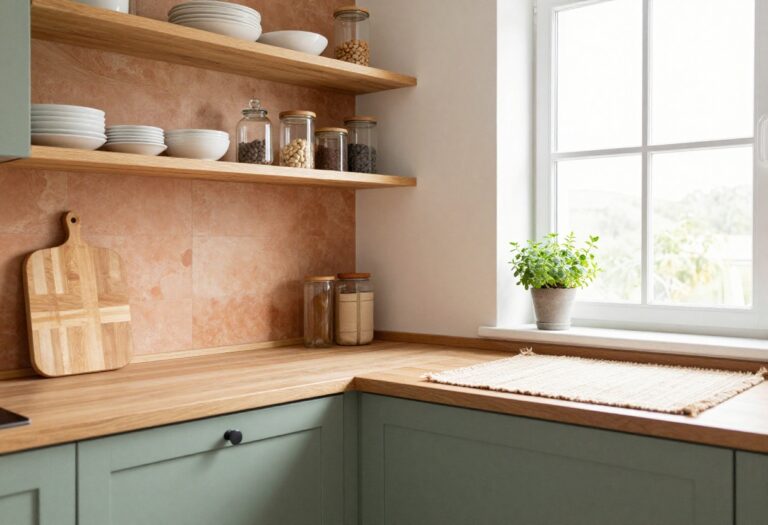
11 Space-Saving Kitchen Nook Small Corner Ideas That Save Space Without Looking Plain
That awkward corner in your kitchen might be the most underutilized real estate in your home. Instead of letting it collect dust or clutter, why not turn it into a cozy nook that adds both function and personality?
The best part? You don't need a full renovation or a big budget to make it happen.
With a little creativity and a weekend's worth of effort, you can transform that empty corner into a charming breakfast spot, a coffee station, or even a mini workspace. These 11 ideas are designed to save space while keeping your kitchen looking intentional and stylish.
1. Built-In Banquette with Hidden Storage
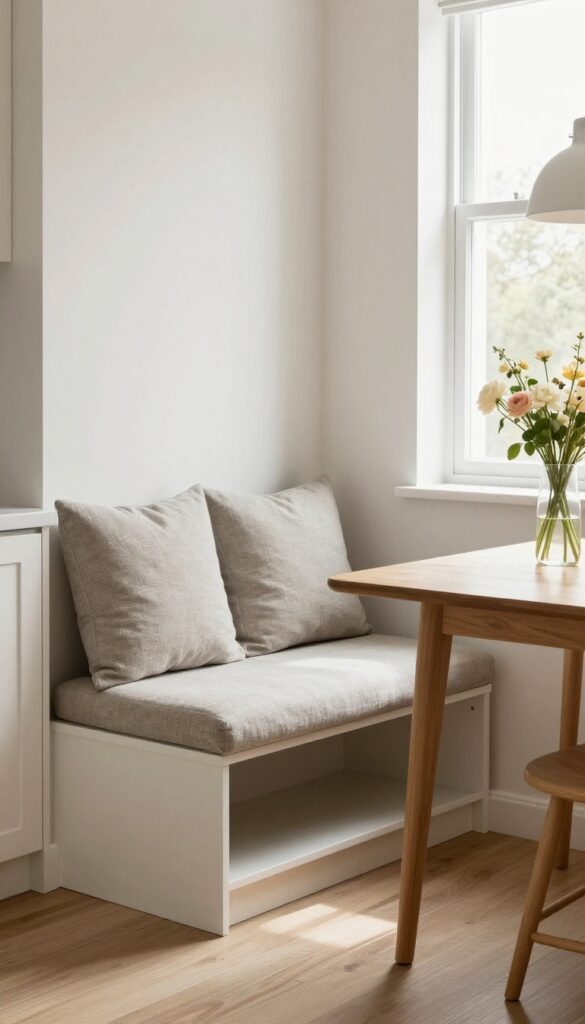
A banquette tucked into a corner does more than just create a cozy breakfast spot—it turns dead space into a hardworking hub. When you add hinged seats, that same nook becomes a stash spot for table linens, small appliances, or even that extra bag of rice. The trick is choosing a slim table and cushions in a washable fabric so the whole setup feels both polished and practical, especially for a weekend refresh.
Why It Works
Built-in seating maximizes every square inch by fitting flush against walls, and hidden storage keeps clutter out of sight without needing extra furniture. The result is a clean, intentional look that makes a small kitchen feel larger and more organized.
Best For
Tight kitchen corners or awkward alcoves where a standard table and chairs would feel cramped. It’s also ideal for families who need extra storage for bulky items like serving dishes or pantry overflow.
Styling Tip
Choose cushions in a performance fabric like outdoor-grade polyester or Crypton—they resist stains and wipe clean easily. Add a few toss pillows in a contrasting texture (like linen or velvet) to soften the look without sacrificing practicality.
2. Floating Shelf Desk Combo
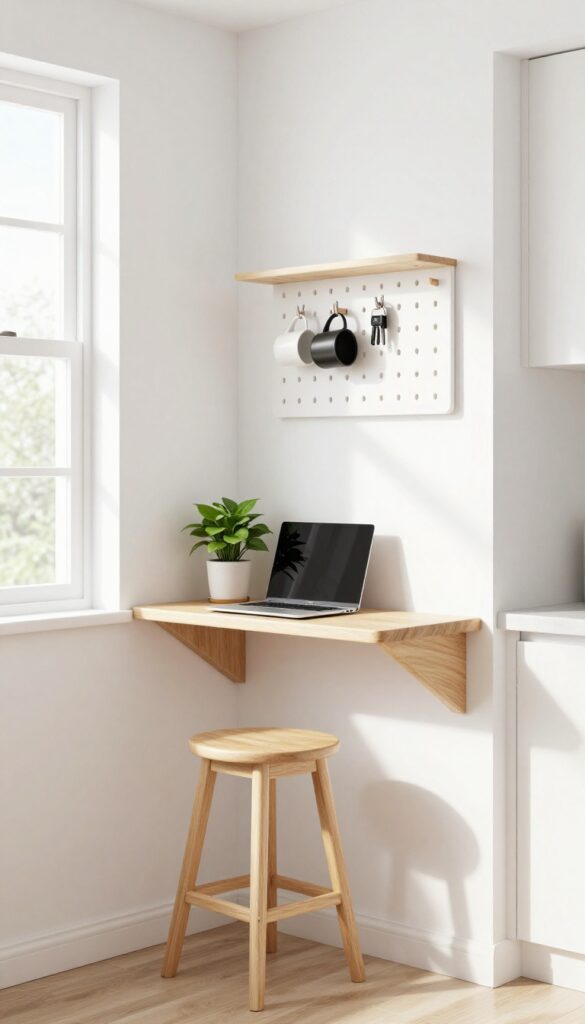
Picture this: a slim wooden shelf mounted at just the right height, paired with a tiny stool that tucks away when not in use. Above it, a few hooks and a small pegboard keep your coffee mug, keys, and notepad within arm's reach. It's like a secret workspace that appears only when you need it, then disappears back into the wall.
This setup feels intentional and curated, not like an afterthought—and it takes up almost zero floor space.
Why It Works
By using vertical wall space instead of precious floor area, you create a functional desk nook without sacrificing your kitchen's flow. The floating shelf is sturdy enough for a laptop or a notebook, and the stool can be swapped for a small chair if you prefer. Hooks and pegboards keep clutter off the surface, so the nook stays tidy even during busy mornings.
Best For
This idea shines in ultra-small kitchens where every square inch counts, or in breakfast nooks that double as a work station. It's also great for renters who can't install permanent furniture—just patch the holes when you move out.
Styling Tip
Choose a shelf that matches your kitchen's existing wood tones or go with a contrasting color for a pop of personality. Add a small plant or a framed photo on the shelf to soften the look. Keep the stool simple—a wooden or metal design with clean lines works best.
3. Corner Coffee Station with Open Shelving
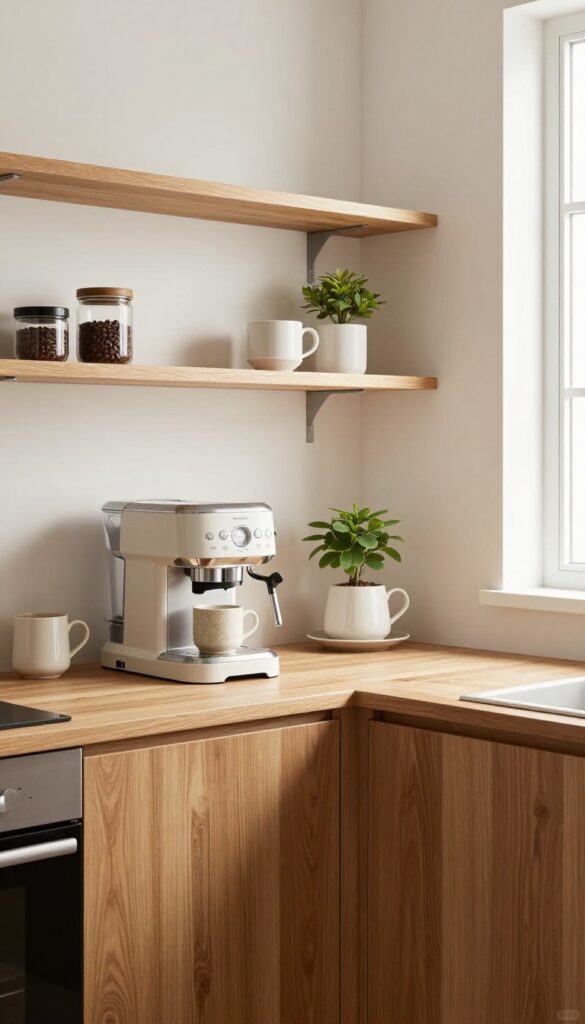
That awkward corner near the window or beside the fridge is prime real estate for your morning caffeine ritual. By setting up a narrow console table or a set of floating shelves, you create a dedicated spot that feels intentional rather than squeezed in. A small espresso machine, a few favorite mugs, and a jar of beans turn the area into a functional little hub that actually adds character to your kitchen.
Why It Works
Open shelving keeps everything visible and within reach, so you’re not digging through cabinets half asleep. The vertical storage makes use of wall space without eating into your counter area, and the compact footprint means it fits even the tightest corners. Plus, having a designated coffee zone streamlines your morning routine and reduces counter clutter.
Best For
This setup is ideal for kitchens where counter space is scarce but you still want a proper coffee station. It works especially well in L-shaped or galley kitchens with an unused corner, and it’s perfect for renters because floating shelves and a console table are easy to install and remove.
Styling Tip
Stick to a cohesive color palette—like warm wood tones with white ceramics or matte black with brass accents—to keep the station looking curated. Add a small tray for creamer and sugar, use hooks under the shelf for hanging mugs, and tuck a tiny plant or canister of stir sticks on the top shelf for a polished finish.
4. Window Seat Breakfast Nook
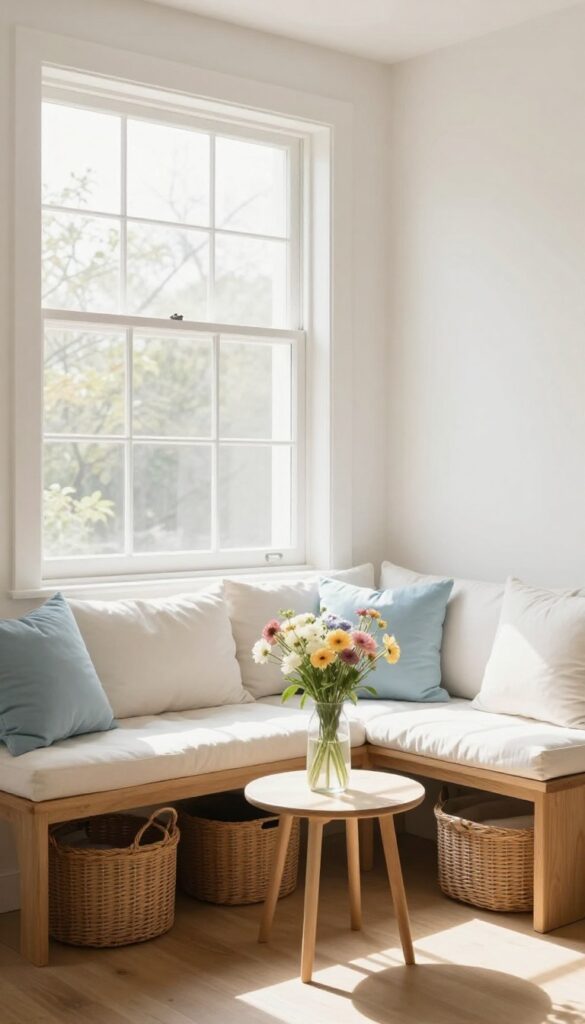
Picture this: a sunny corner with a low bench wrapped in soft cushions, where you can sip coffee and watch the morning unfold. A window seat breakfast nook turns an underused spot into your favorite place to linger. It’s cozy, practical, and instantly makes a small kitchen feel more inviting—no major renovation required.
Why It Works
Building a bench that spans the window width maximizes seating without taking up floor space. The cushions add comfort, while pull-out bins or baskets underneath keep clutter hidden. This setup creates a dedicated dining zone without needing a bulky table and chairs.
Best For
This idea shines in kitchens with a window in an unused corner or alcove. It’s ideal for small spaces where every inch counts, and it works especially well for households that want a casual spot for breakfast or quick meals.
Styling Tip
Choose cushions in a durable, stain-resistant fabric like outdoor-grade polyester or performance velvet. Add a mix of throw pillows for texture—think linen, knit, or patterned options. Keep the color palette light to maintain an airy feel; soft whites, warm beiges, or pale blues complement the natural light.
5. Fold-Down Table with Wall-Mounted Seats
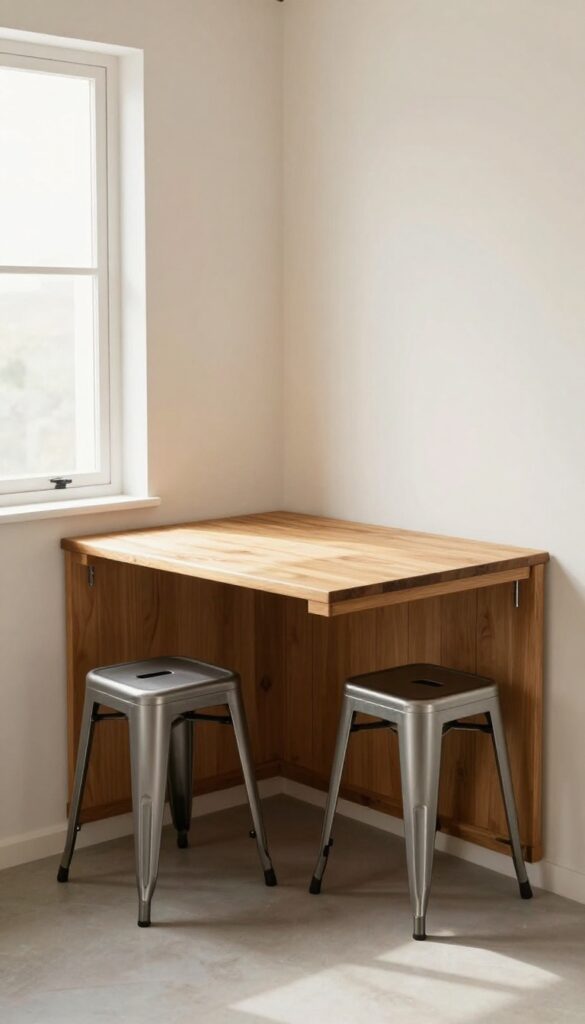
Picture a tiny kitchen corner that transforms from a blank wall into a cozy breakfast spot in seconds. That’s the magic of a fold-down table paired with wall-mounted stools or folding chairs. When not in use, the drop-leaf table folds flat against the wall, and the seats tuck away completely—freeing up precious floor space.
It’s a weekend-friendly project that instantly adds function without sacrificing style.
Why It Works
This setup maximizes every square inch by using vertical space and eliminating bulky furniture. The table and seats disappear when you need room to cook or move around, yet they’re ready to serve as a dining or work surface at a moment’s notice. It’s one of the smartest ways to carve out a nook in an already tight kitchen.
Best For
Tiny kitchens, galley layouts, or any corner where a permanent table would block traffic. Perfect for households that don’t need a full dining setup but want a spot for quick meals or morning coffee.
Styling Tip
Choose a warm wood finish for the tabletop to soften the look, and mount stools with slim metal legs to keep things airy. Add a small pendant light above for a focal point, and keep the wall color light to make the nook feel open.
6. Corner Pantry with Open Baskets
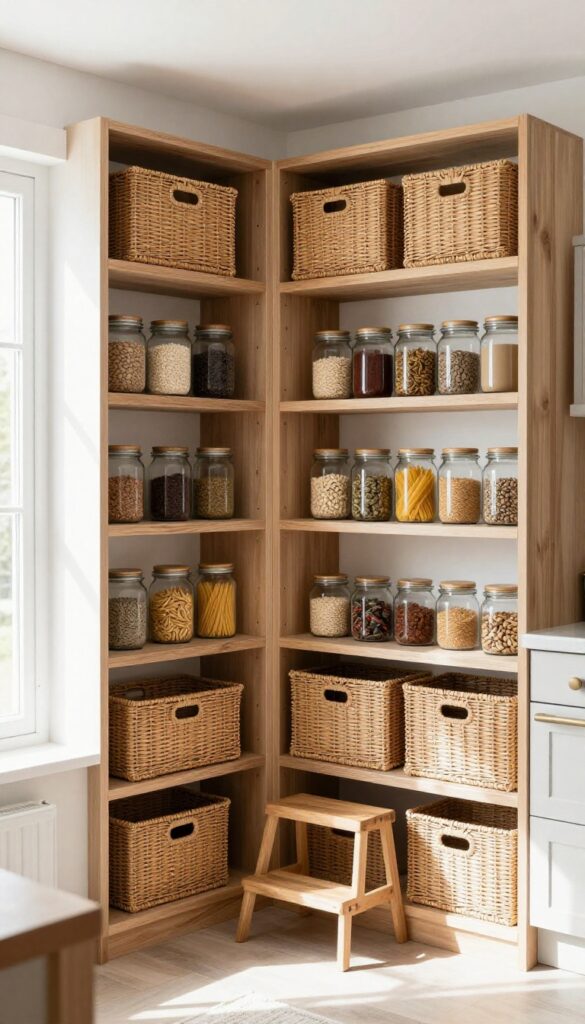
That awkward corner next to the fridge or stove can become the most functional spot in your kitchen. Floor-to-ceiling open shelving turns it into a mini pantry where everything is within arm's reach. Woven baskets and clear jars keep dry goods organized and add natural texture, so the corner feels intentional and warm, not cluttered.
Why It Works
Open shelves make the most of vertical space without taking up floor area. Baskets hide mismatched packaging while keeping items easy to grab. The mix of materials—wood, wicker, glass—adds visual interest without overwhelming a small kitchen.
Best For
Tiny kitchens with limited cabinet space, especially if you have a collection of dry goods or canned items. Also great for renters who can't add permanent built-ins.
Styling Tip
Stick to a neutral basket color like natural seagrass or black wire to keep the look cohesive. Use labels on jars for a clean, uniform appearance. Place a small step stool nearby so top shelves stay accessible.
7. L-Shaped Bench with Cushions
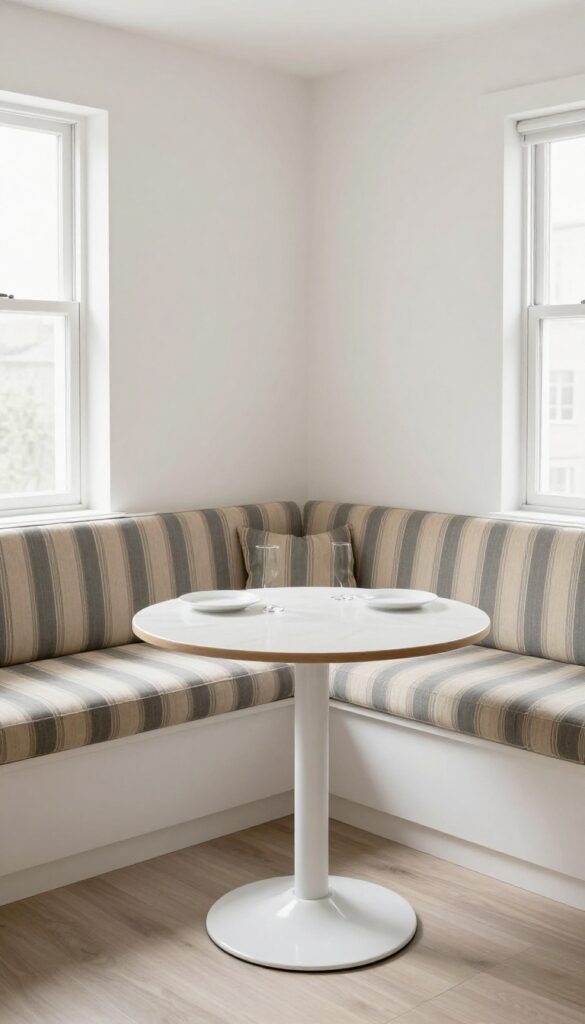
That awkward corner where two walls meet is prime real estate for an L-shaped bench. Instead of forcing a bulky table and chairs into a tight spot, let the bench hug both walls for a built-in look that feels intentional. Add thick, plush cushions in a fabric that can handle spills, and top it off with a round pedestal table—no sharp corners to bump into, just cozy seating for family breakfasts or quick weekday dinners.
Why It Works
An L-shaped bench maximizes every inch of corner space by tucking seating right into the walls. The continuous bench eliminates the need for multiple chairs, freeing up floor area and making the nook feel open rather than cramped. The round table keeps traffic flowing smoothly and softens the room's geometry.
Best For
This setup is ideal for kitchens with an unused corner or an eat-in area that feels too tight for a standard table. It works especially well in homes where morning routines are busy—everyone can slide in without rearranging furniture.
Styling Tip
Choose bench cushions in a stain-resistant performance fabric like polyester or treated cotton. For a weekend refresh, swap out solid cushions for ones with subtle stripes or a textured weave to add visual interest without overwhelming the small space.
8. Hanging Herb Garden with Prep Station
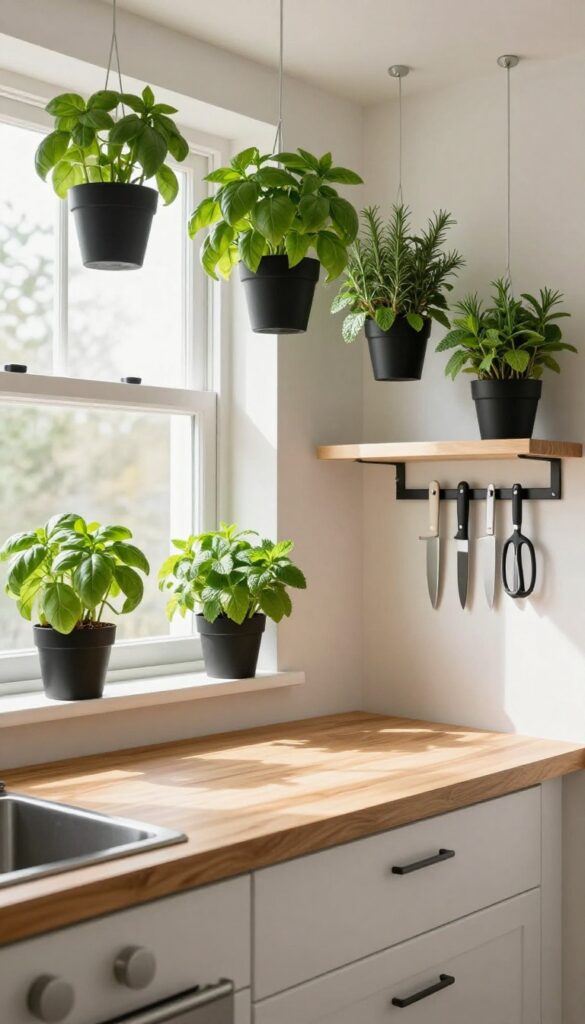
That empty corner between the counter and the window? Turn it into a mini herb garden with a built-in prep station. Hang a few planters from the ceiling or a wall-mounted rack, then add a slim butcher block or counter below.
It’s like having a tiny farmers market right in your kitchen—fresh basil, mint, or rosemary within arm’s reach. The setup feels intentional and alive, not cluttered.
Why It Works
By going vertical, you free up counter space while keeping your most-used ingredients close. The narrow prep surface below doubles as extra workspace for chopping or assembling simple meals. It’s a weekend-refresh project that instantly makes cooking feel more enjoyable.
Best For
This idea shines in galley kitchens or any small nook with a window that gets decent light. It’s perfect for cooks who use fresh herbs regularly and want a stylish, functional focal point without sacrificing square footage.
Styling Tip
Choose matte black or brass hanging planters for a modern touch, and pair them with a light wood butcher block to keep things warm. Add a small magnetic strip on the wall behind the prep station to hold your favorite knives or kitchen shears—everything stays tidy and within reach.
9. Corner Bar Cart with Stools
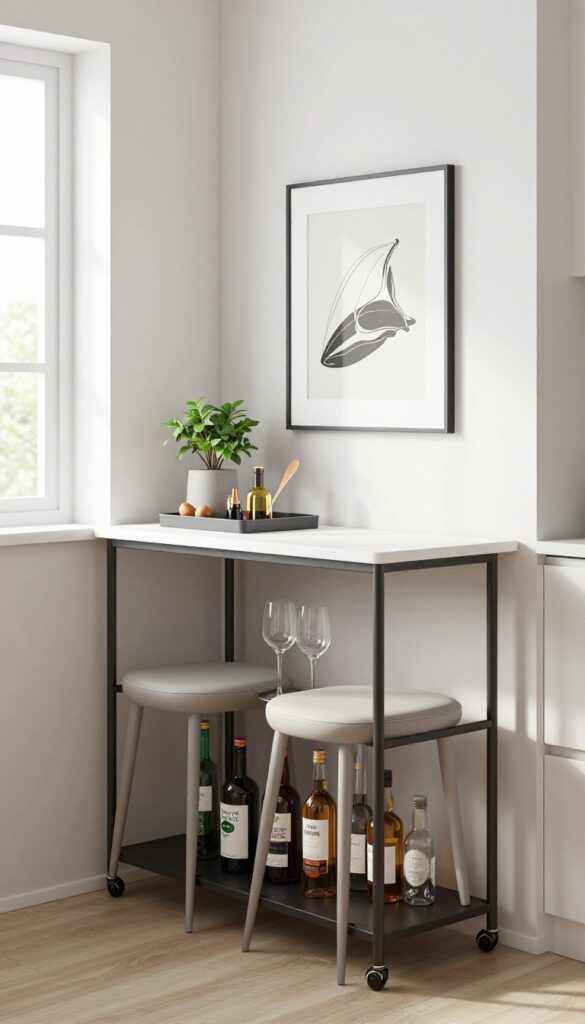
Roll in a slim bar cart stocked with glassware, a few bottles, and bar tools. Add two counter stools that tuck underneath when not in use. Perfect for entertaining in small spaces.
Why It Works
A bar cart on wheels uses vertical space and can be moved out of the way when you need the floor clear. The stools slide under, so the footprint stays minimal. It turns an empty corner into a functional entertaining spot without permanent installation.
Best For
Kitchen corners near the dining area or living room, especially if you host often but lack counter space for drink prep. Also great for apartment dwellers who want a dedicated beverage station without sacrificing square footage.
Styling Tip
Choose a bar cart with shelves or a wine rack to maximize storage. Keep the top tidy with a tray for bottles and glasses, and use lower shelves for mixers or extra barware. Add a small plant or framed art nearby to soften the look.
10. Reading Nook with Built-In Bookshelves
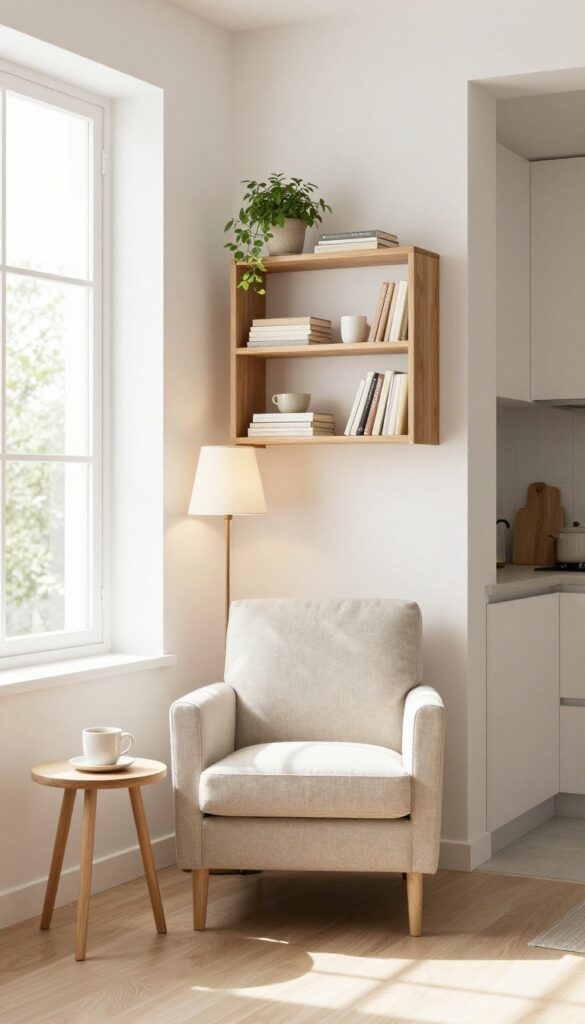
A sunny kitchen corner can become one of the coziest spots in your home. Instead of letting that empty nook collect dust or random clutter, turn it into a mini reading retreat. A small armchair or a plush floor cushion paired with floating shelves above creates an instant escape for morning coffee or evening page-turning.
The key is keeping it simple and intentional so it feels like a natural extension of your kitchen, not an afterthought.
Why It Works
This idea transforms dead space into a functional zone without sacrificing square footage. The built-in look (even with DIY floating shelves) adds architectural interest and visual weight, making the corner feel designed rather than leftover. Plus, having cookbooks or decor within arm's reach keeps the area practical and personal.
Best For
Kitchen corners that get natural light and aren't needed for dining prep or storage. It's especially great for L-shaped kitchens with an awkward alcove or a window nook that's too small for a table but perfect for a cozy chair.
Styling Tip
Stick to a slim-profile chair or a floor cushion to keep the footprint minimal. Use floating shelves in a wood tone that matches your cabinets or countertops for cohesion. Add a small side table or a stack of books as a surface for your mug, and finish with a warm-toned floor lamp to soften the space in the evening.
11. Pegboard Wall with Folding Table
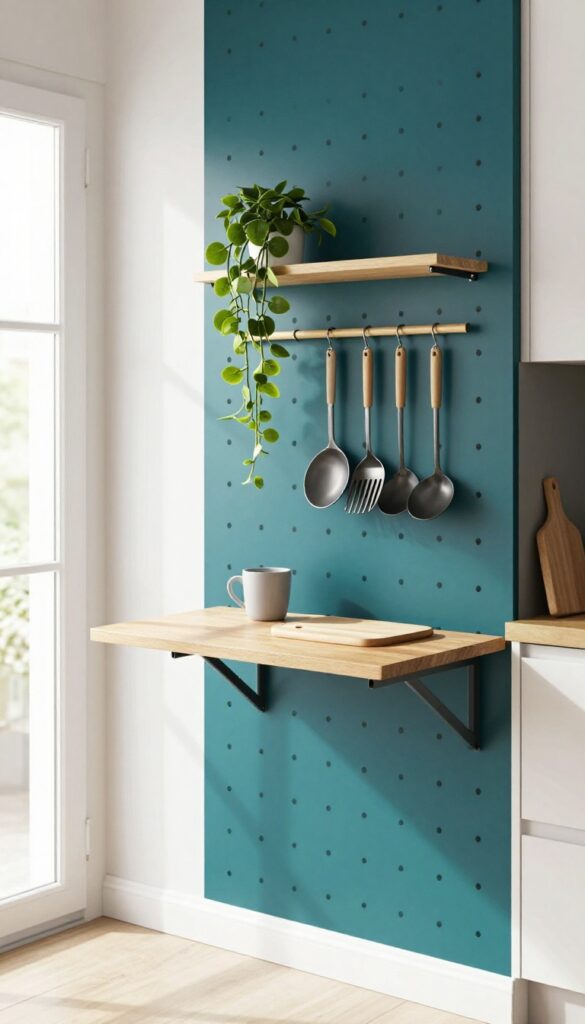
That awkward corner where nothing seems to fit? Turn it into a mini workstation with a pegboard and fold-down table. The pegboard keeps your most-used tools and accessories visible and within reach, while the folding table provides a sturdy surface for meal prep or morning coffee.
When you're done, just flip the table up and reclaim the floor space. It's a weekend project that instantly adds function and personality without eating into your square footage.
Why It Works
The pegboard eliminates the need for bulky cabinets or drawers, so you can store items vertically and free up counter space. The folding table disappears when not in use, keeping the corner open and airy. Together, they create a flexible area that adapts to your daily needs—whether that's extra prep space, a breakfast bar, or a spot to sort mail.
Best For
This setup is ideal for ultra-small kitchens where every inch counts, especially corners that are too narrow for a standard table or cart. It also works well in rental apartments because the pegboard is easy to install and remove without damaging walls.
Styling Tip
Paint the pegboard the same color as your wall to make it blend in, or go bold with a contrasting hue like deep teal or mustard yellow. Hang matching hooks and small shelves for a cohesive look. Add a wooden cutting board on the folding table and a trailing plant in a wall pocket to soften the industrial feel.
FAQ
How do I choose the right size table for a small corner nook?
Measure the corner's depth and width first. For a banquette, allow at least 24 inches of table depth and 18 inches per seat. A round or pedestal table often fits better in tight corners than rectangular ones.
Can I create a kitchen nook without building anything?
Absolutely. Use freestanding furniture like a slim console table, a small bistro set, or a bar cart. Add a rug and wall art to define the zone without permanent changes.
What's the best lighting for a corner nook?
A pendant light hung low over the table creates a focal point. If wiring isn't possible, use a plug-in swing arm lamp or battery-operated puck lights under shelves.
How do I make a small nook feel cozy without cluttering?
Stick to a neutral color palette with one accent color. Use textures like linen cushions, a wool throw, or a jute rug. Limit decor to two or three pieces, like a small plant and a framed print.
Are there any space-saving seating options besides benches?
Yes. Consider backless stools that slide under the table, folding chairs stored on wall hooks, or poufs that double as footrests. Stackable stools are another great option for occasional use.
Conclusion
A small kitchen corner doesn't have to be an afterthought. With a bit of planning and some weekend-friendly effort, you can turn it into one of the most functional and charming spots in your home.
Whether you choose a built-in banquette or a simple bar cart, the key is to match the nook to your daily needs. Remember, the best decor ideas are the ones that make your life easier while still making you smile.