12 Creative Indian Kitchen Decor Ideas That Add Personality Without Clutter
Indian kitchens have a natural warmth that comes from bold spices, rich textures, and a love for hospitality. But sometimes that personality gets buried under too many things on the counter or mismatched storage. The trick is to layer in character without letting it feel busy.
These 12 ideas focus on practical, stylish touches that bring out the soul of an Indian kitchen. Think handcrafted details, warm metals, and clever ways to show off your spices and cookware.
Each one is designed to feel intentional, not cluttered. Whether you cook daily or just want a space that feels more like you, these decor ideas are easy to try.
1. Brass and Copper Accents That Warm Up the Space
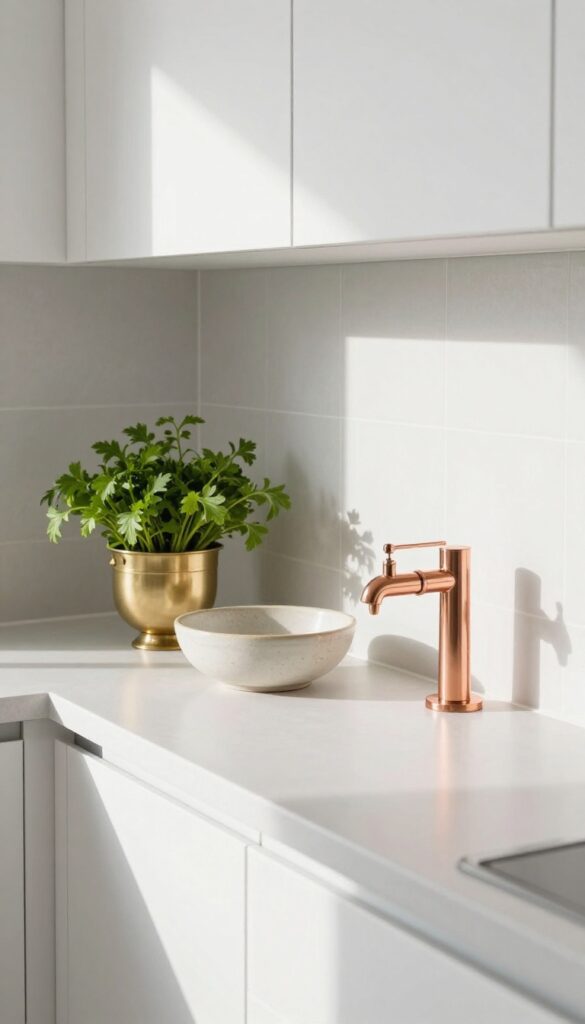
There's a reason brass and copper have been staples in Indian kitchens for generations—they bring a warmth that stainless steel just can't match. Instead of overhauling your entire cookware collection, try swapping in a few small pieces like a single lota on the windowsill or a copper water dispenser on the counter. These metals catch the morning light beautifully and add a subtle glow without taking up any extra space.
Why It Works
Brass and copper have natural warm undertones that make a kitchen feel instantly cozier, especially when paired with cool tiles or white cabinets. They also patina over time, adding character and a lived-in feel that fits perfectly with a layered, collected look.
Best For
This idea works well in kitchens with neutral or monochrome palettes where a little metallic warmth can go a long way. It's also great for rental kitchens since you're not making permanent changes—just styling with accessories.
Styling Tip
Stick to one or two statement pieces to avoid visual clutter. A single brass lota filled with fresh herbs on the sill, or a copper glass by the sink, can be enough. Let them breathe rather than grouping too many metals together.
2. A Spice Shelf That Doubles as Wall Art
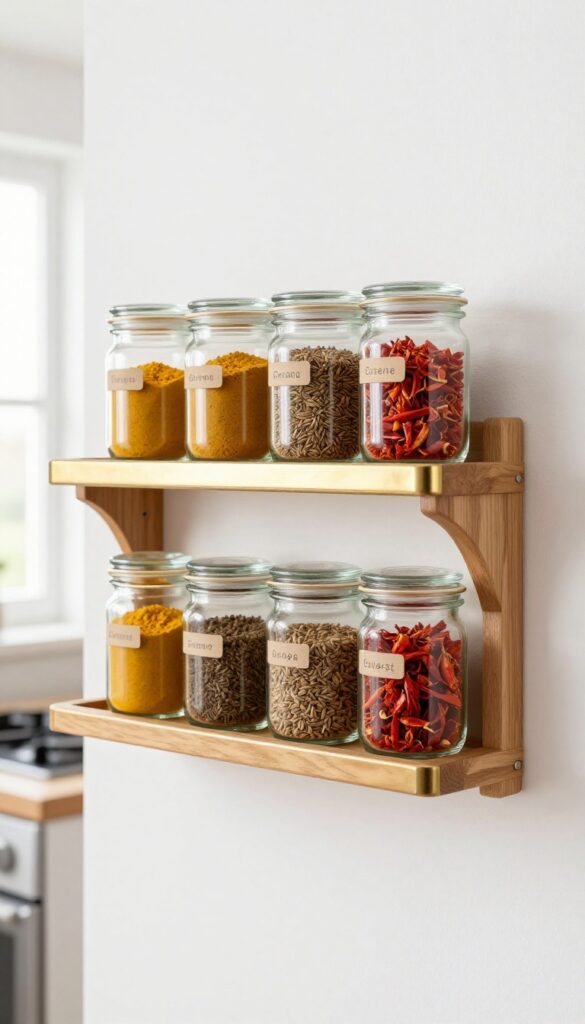
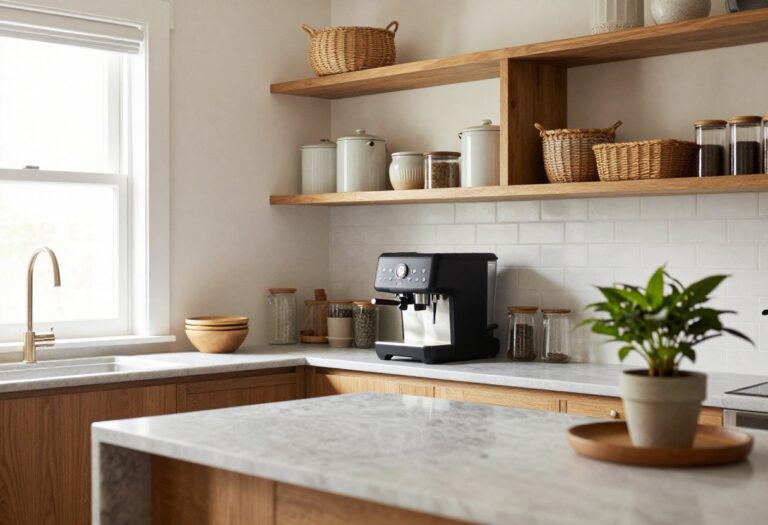
Your spice collection is probably one of the most colorful things in your kitchen—so why hide it behind cabinet doors? Mounting a slim wooden shelf near the stove lets you keep everyday spices within arm's reach while turning them into a living palette of warm yellows, reds, and earthy browns. It’s a small change that makes cooking feel more intentional and your kitchen look instantly more layered.
Why It Works
Uniform glass jars create a cohesive look, while the natural hues of spices like turmeric, cumin, and chili add warmth without any extra decor. The shelf itself becomes a functional art piece that changes as you cook and restock.
Best For
Renters or anyone who wants to add personality without drilling into tile or committing to a full backsplash. It also works beautifully in small kitchens where counter space is limited.
Styling Tip
Choose jars with airtight lids and label them neatly for easy identification. Keep the shelf narrow—about 4 to 6 inches deep—so it doesn’t protrude too far. For extra charm, line the shelf with a strip of brass or copper tape.
3. Handwoven Textiles for Softness
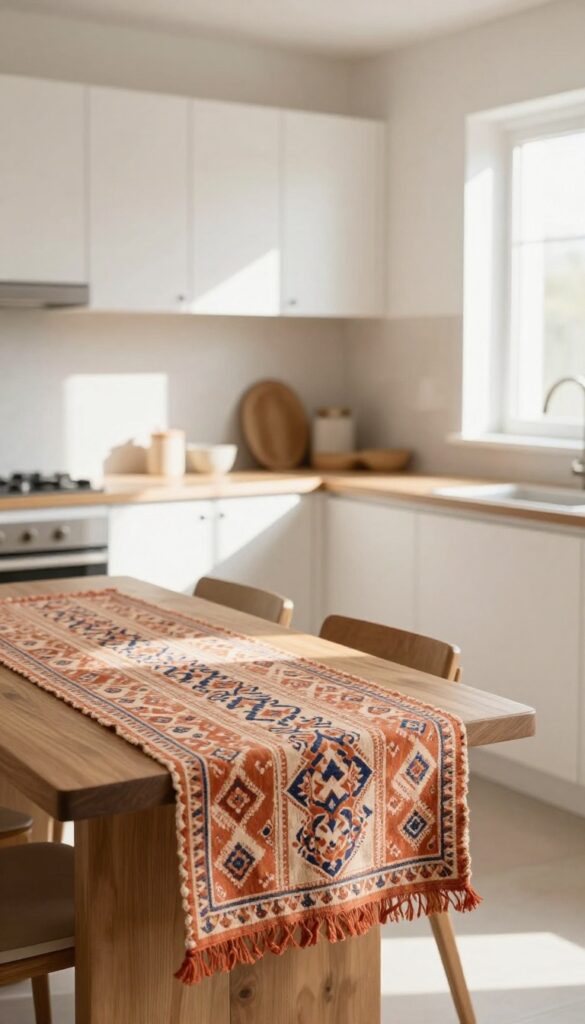
A kitchen doesn't have to feel cold or utilitarian. Introducing handwoven textiles like a cotton dhurrie or a block-print runner instantly softens the space and adds a layer of warmth. These pieces bring in texture, color, and that unmistakable handmade charm—without taking up any counter or cabinet space.
The best part? You can swap them out with the seasons for an effortless refresh.
Why It Works
Textiles absorb sound, soften hard surfaces, and create visual contrast against tile or wood. A dhurrie underfoot anchors the cooking zone, while a runner on the table adds a cozy, lived-in feel. Both are easy to clean and store, making them practical additions that don't clutter.
Best For
This idea is perfect for kitchens with neutral cabinets or monochrome finishes that need a pop of pattern. It also works well in open-plan layouts where the kitchen flows into the dining area—the textile helps define zones without walls.
Styling Tip
Choose a dhurrie with low pile so it lies flat and doesn't catch chair legs. For the runner, go for a block-print or ikat design that complements your existing palette. Layer it over a plain tablecloth or directly on wood for an effortless boho look.
4. Open Shelving with a Curated Edit
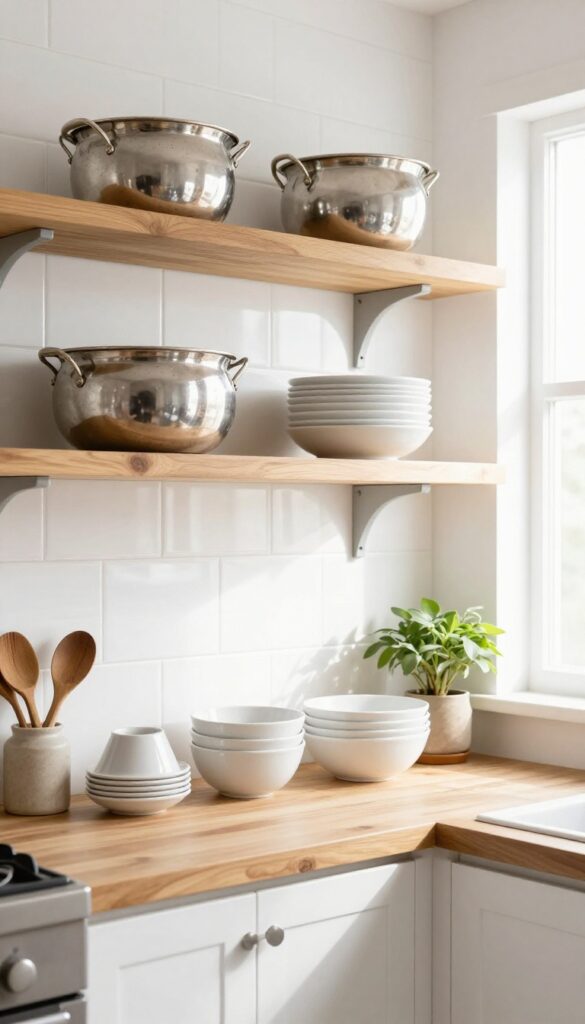
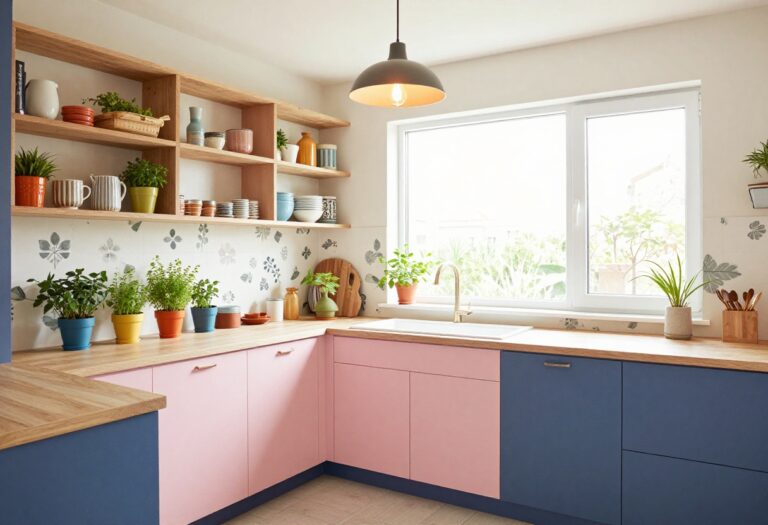
Imagine swapping one upper cabinet door for a set of open shelves. Suddenly your kitchen has a display moment—a chance to show off the pieces you actually love using. The trick is editing ruthlessly: a few steel thalis, a matka or two, maybe a stack of ceramic bowls.
Leave breathing room between each item so the shelf feels intentional, not cluttered. This isn't about stuffing every inch; it's about letting your everyday tools become the decor.
Why It Works
Open shelving forces you to keep only what earns its spot. That edit alone makes your kitchen feel calmer and more spacious. Plus, seeing your favorite pieces within arm's reach makes cooking feel more connected to the space.
Best For
This works beautifully in Indian kitchens where beautiful cookware often hides behind closed doors. It's especially good for small kitchens where you want to add personality without sacrificing function.
Styling Tip
Stick to a tight color palette—copper, brass, and warm whites keep the look cohesive. Add one small plant or a wooden spoon jar for texture, but resist the urge to fill every gap.
5. A Statement Rangoli or Floor Tile Accent
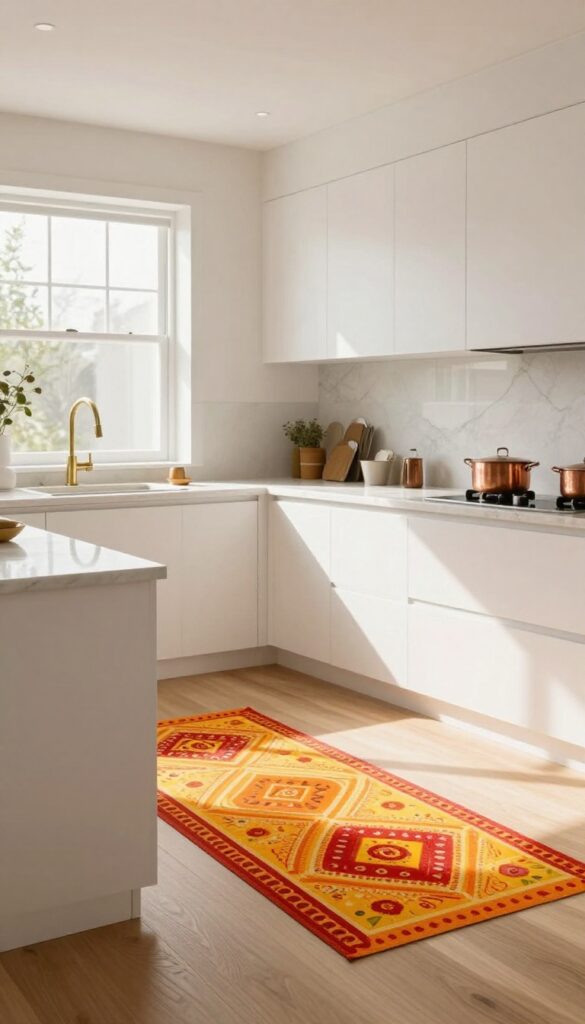
Floors often get overlooked in kitchen decor, but they’re a huge surface area just waiting for a little personality. If you’re renting or not ready to commit to new tiles, a removable rangoli sticker near the sink or entrance adds instant color and tradition without any permanence. For a softer approach, a patterned tile mat that mimics traditional kolam designs gives the same visual pop while being easy to clean and swap out when you want a change.
Why It Works
This idea layers in pattern and color at ground level, which balances out all the activity happening on counters and walls. It draws the eye down and makes the kitchen feel more intentional and cozy without adding clutter. The removable options mean you can experiment with different motifs or update them seasonally.
Best For
Renters who can’t change flooring, anyone wanting a low-commitment way to introduce traditional Indian patterns, or kitchens with neutral cabinets that need a playful anchor point.
Styling Tip
Place the rangoli sticker or mat in front of the sink or stove where you stand most—it becomes a subtle focal point. Pair with warm brass or copper accents nearby to echo the earthy tones in the design.
6. Clay Pottery as Functional Decor
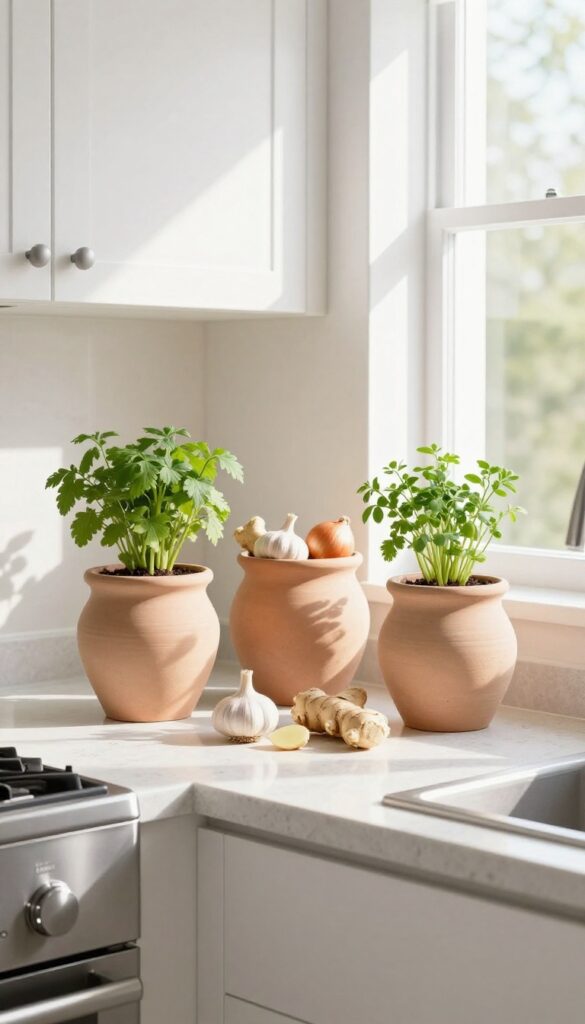
There's something quietly beautiful about unglazed clay pots sitting on a counter. They bring an earthy, grounded feel that softens the hard edges of modern cabinets and stainless steel appliances. Beyond their looks, they serve a real purpose—keeping onions, garlic, and ginger fresh longer while adding a warm, layered texture to your kitchen.
Why It Works
Clay is naturally porous, which helps regulate moisture and air flow around produce. This simple storage method reduces spoilage and keeps your ingredients within easy reach for cooking. The matte, organic finish also breaks up glossy surfaces, creating a cozy contrast that feels both intentional and lived-in.
Best For
This idea works especially well in kitchens with neutral or monochrome color schemes where a touch of natural texture can add depth. It's also perfect for small spaces because it consolidates produce storage into attractive, stackable containers without taking up much counter room.
Styling Tip
Group two or three clay pots of varying heights on a corner of the counter or near the stove. Leave them unglazed to maintain breathability, and tuck a small sprig of fresh herbs or a bay leaf into one for a subtle pop of green. Keep the area around them clear so the earthy tones stand out.
7. A Chai Corner with Vintage Charm
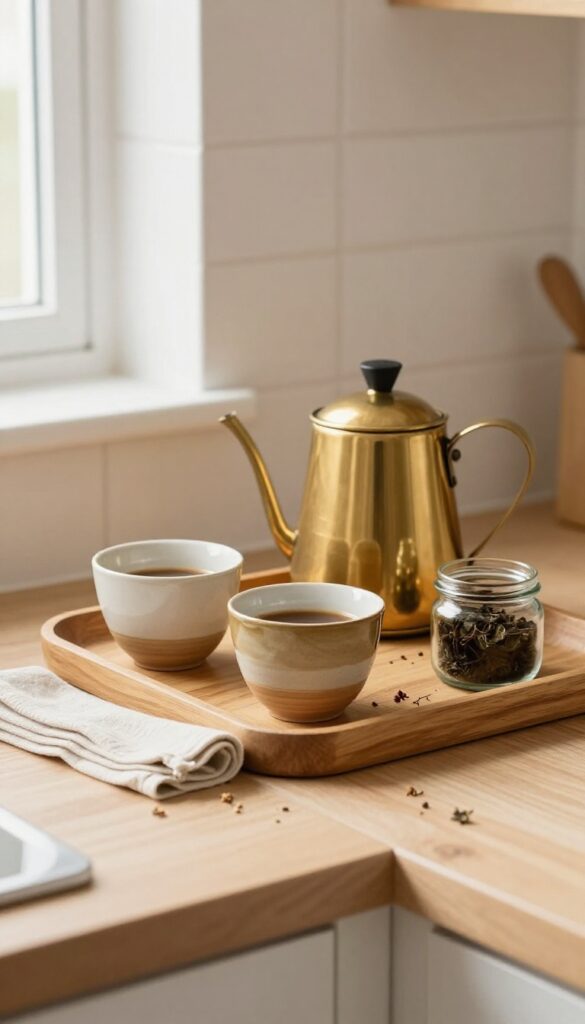
There’s something quietly special about having a dedicated spot for your daily chai ritual. Instead of letting your tea supplies get lost in a crowded cabinet, carve out a small tray or corner on your counter where a brass kettle, a few mismatched cups, and a jar of loose leaves can live out in the open. It turns a simple habit into a moment of intention—and it looks beautiful doing it.
The key is to keep it compact and curated so it feels like decor, not clutter.
Why It Works
This idea works because it transforms an everyday necessity into a visual anchor. The warm glow of brass against ceramic or clay adds instant coziness, while the arrangement invites you to slow down. It also solves the practical problem of rummaging through drawers for your chai gear—everything is right there, ready to use.
Best For
Best for kitchens with a small stretch of empty counter space near the stove or sink. It’s especially charming in homes that lean traditional or eclectic, but can work in modern spaces if you choose streamlined vessels. Ideal for anyone who wants to celebrate their tea culture without adding visual noise.
Styling Tip
Use a low wooden or metal tray to corral the items and define the zone. Layer textures: pair a glossy brass kettle with matte clay cups and a linen tea towel underneath. Add one small plant or a dried flower sprig for softness, but resist overcrowding—three to five pieces is plenty.
8. Wooden Spice Boxes as Centerpieces
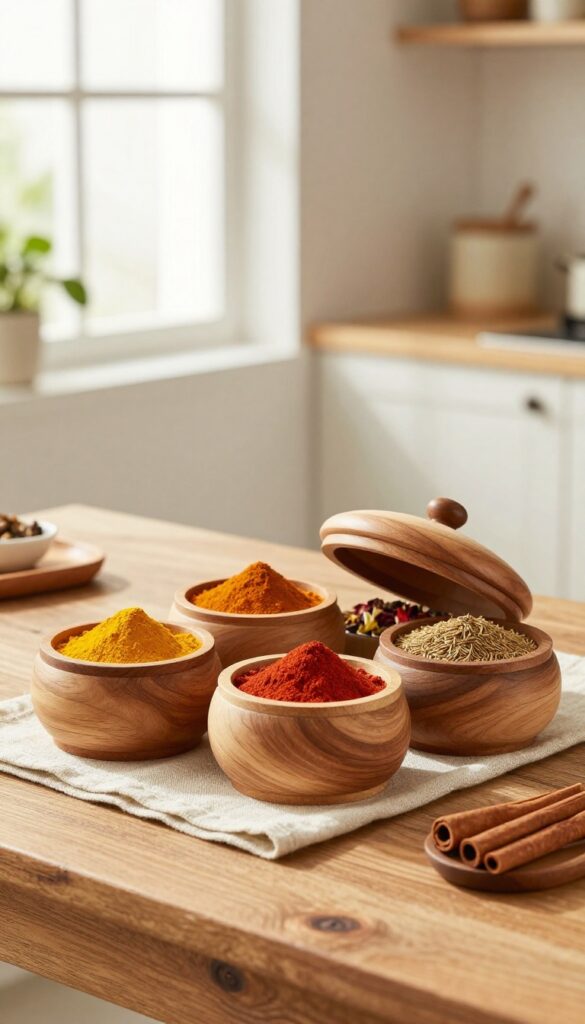
A traditional masala dabba is one of those objects that feels both nostalgic and completely fresh. Placed on a dining table or kitchen counter, its round compartments and carved wood create a sculptural presence that draws the eye without adding visual noise. Even when empty, it holds its own as a conversation starter—proof that the most meaningful decor often comes from everyday life.
Why It Works
Wooden spice boxes bring warmth and texture to a kitchen or dining area, grounding the space with natural material. Their compact size makes them easy to place anywhere, and the multiple compartments add visual interest without clutter. The handcrafted look pairs beautifully with modern or traditional settings, making it a versatile piece that feels intentional.
Best For
This works especially well on kitchen islands, dining tables, or open shelving where you want a focal point that isn't too bulky. It's ideal for anyone who loves rustic, bohemian, or Indian-inspired decor but wants to keep things minimal and layered.
Styling Tip
Leave the lid slightly ajar to reveal the compartments, or fill each section with small items like dried flowers, cinnamon sticks, or colorful spices for extra texture. Pair it with a simple wooden tray or a linen runner to anchor the display without competing for attention.
9. Hanging Dried Herbs and Chillies
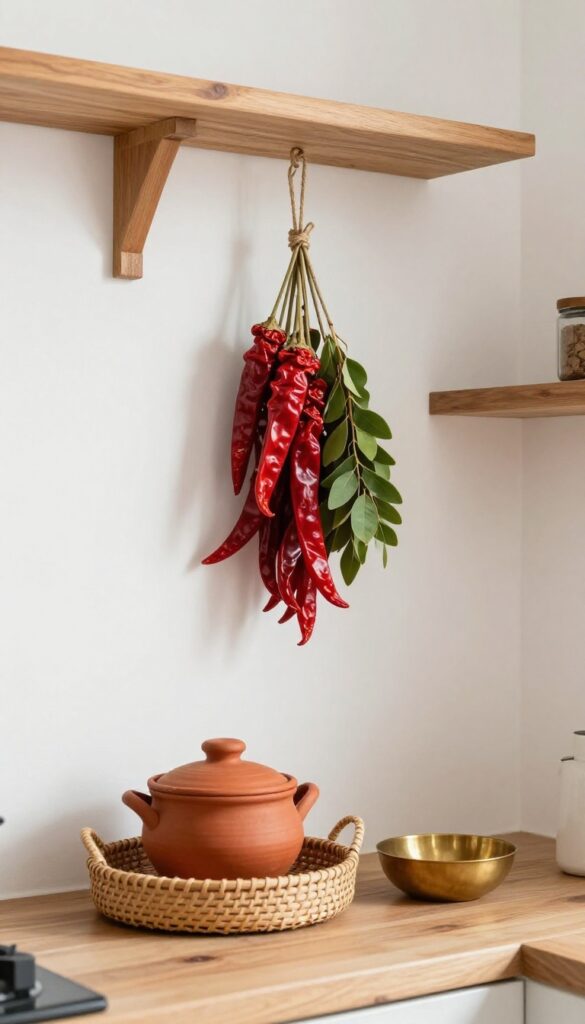
There's something quietly beautiful about a bundle of dried red chillies or curry leaves hanging in your kitchen. It's functional decor at its best—always within arm's reach for cooking, yet adding a rustic, farmhouse warmth that no store-bought print can match. The deep reds and earthy greens bring a natural pop of color that feels cozy and layered, especially against white or wooden walls.
This isn't just decoration; it's a living, breathing part of your cooking routine.
Why It Works
Dried herbs and chillies are inherently practical—they're ingredients you use regularly, so having them out saves cabinet space and keeps them fresh longer. Visually, the clusters add texture and organic color that soften modern kitchens. The rustic look pairs perfectly with terracotta pots, brass utensils, or woven baskets, creating a cohesive, lived-in feel.
Best For
This idea shines in kitchens with a farmhouse, bohemian, or traditional Indian aesthetic. It works especially well near a window where sunlight can dry the herbs naturally and highlight their colors. If you have open shelving or empty wall space near your stove or prep area, this is an easy way to fill it meaningfully.
Styling Tip
- Bundle herbs like coriander stems or curry leaves with kitchen twine and hang them from a small hook or wooden dowel. For visual balance, mix in a few dried red chillies or bay leaves. Keep the bundles modest—three to five stems each—and swap them out every couple of weeks as they dry completely.
- Avoid hanging directly above the stove where steam can cause mold.
10. A Pooja Shelf That Blends In
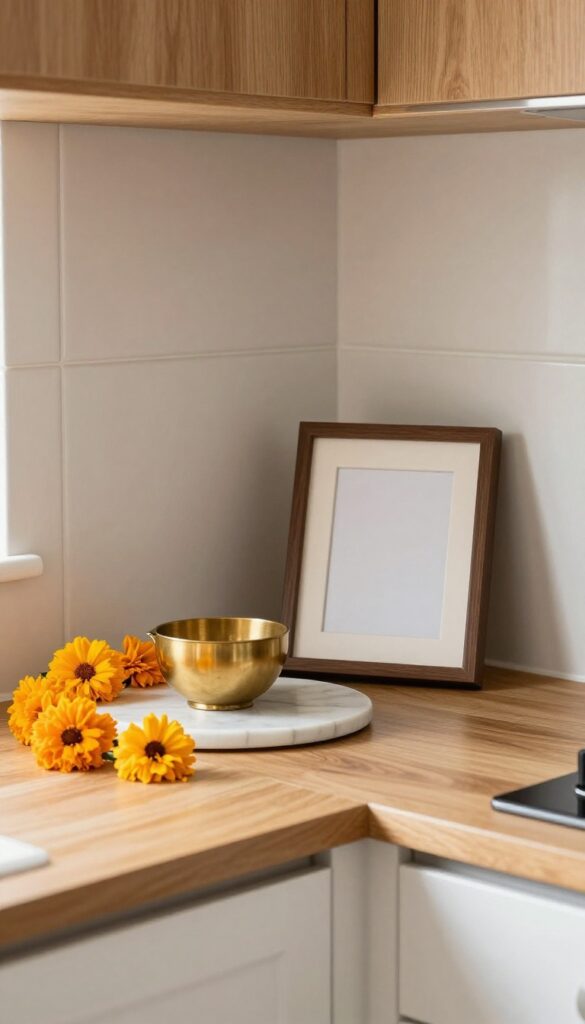
In many Indian kitchens, a small pooja nook is a given. But it doesn't have to stick out like a sore thumb or add visual clutter. The trick is to treat it like a tiny vignette—just a few meaningful pieces arranged with restraint.
A single brass diya, a fresh flower garland (real or good faux), and one framed image create a calm focal point that feels intentional, not crowded. The rest of the shelf stays bare, letting the prayer area breathe and blend into the kitchen's overall layered look.
Why It Works
By keeping the pooja shelf minimal, you avoid the common problem of it becoming a catch-all for random religious items and trinkets. The simplicity makes it easy to clean and maintain, while the brass and flowers add warmth and texture that complement a cozy kitchen without competing with other decor elements.
Best For
This idea is perfect for kitchens where counter or shelf space is limited, or for anyone who wants a prayer corner that feels serene rather than busy. It works especially well in modern Indian homes that mix traditional elements with clean lines.
Styling Tip
Choose a brass diya with a simple shape—no heavy engraving—and place it on a small wooden or marble tray to define the space. Change the flower garland weekly to keep the nook feeling fresh; marigolds or jasmine add color without overwhelming.
11. Utensil Storage That Shows Off Craftsmanship
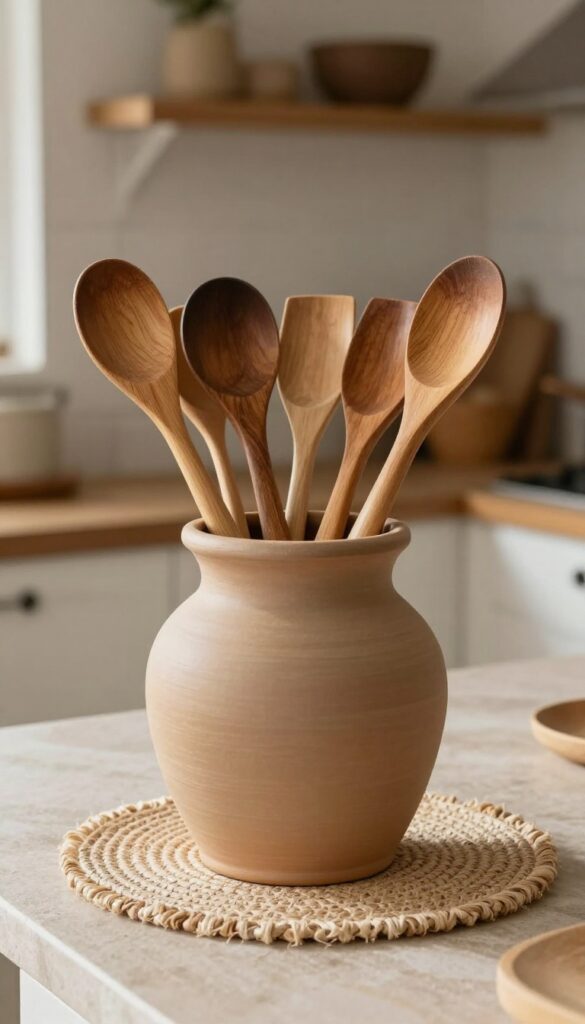
Your wooden spoons and ladles don’t have to live in a drawer. Tucked into a tall earthen pot or a hand-carved wooden holder, they become a textural centerpiece that feels both grounded and artful. The mix of warm wood tones against matte clay or dark grain adds an earthy, layered look that fits right into a cozy kitchen.
It’s practical storage that doubles as decor—no extra clutter needed.
Why It Works
It turns everyday tools into visual interest without buying anything new. The varied heights and handle shapes create natural rhythm, while the container itself adds warmth and craftsmanship. Plus, having them within arm’s reach makes cooking more efficient.
Best For
Kitchens with open counter space near the stove or prep area. Works especially well in rustic, bohemian, or farmhouse-style kitchens where natural materials are already part of the palette.
Styling Tip
Choose a pot with a narrow mouth so utensils stand upright without splaying. If using a wooden holder, go for one with a slightly darker stain than your utensils to create contrast. Group by height for a more intentional look.
12. A Mirror to Reflect Light and Space
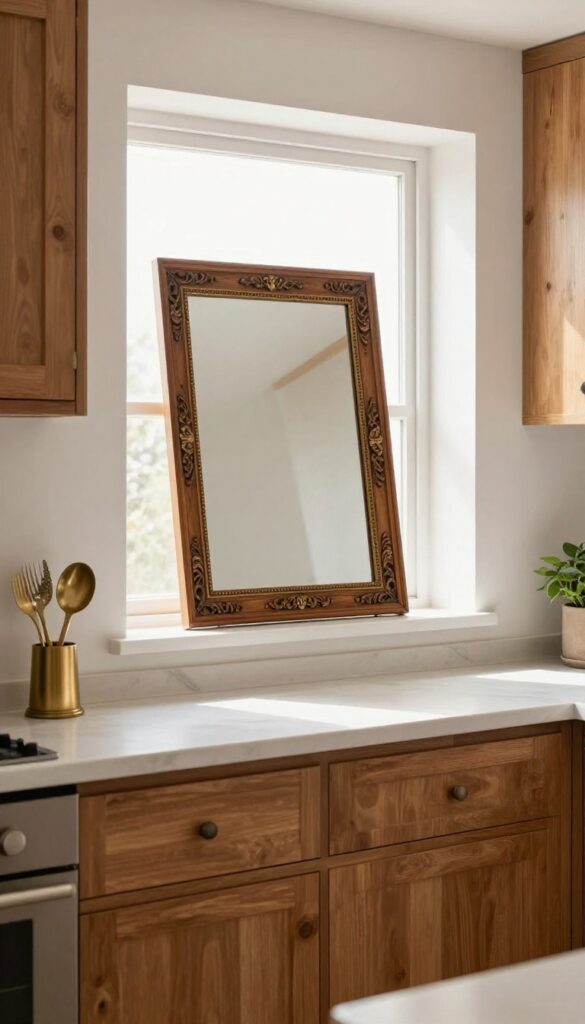
Mirrors aren’t just for the hallway or bathroom—they can work wonders in a kitchen too. A small framed mirror placed opposite a window catches daylight and sends it bouncing around the room, making even a compact Indian kitchen feel brighter and more open. The reflective surface also adds a subtle layer of old-world charm, especially when you choose a frame with carved wood or antique brass detailing.
Why It Works
Mirrors trick the eye into seeing more depth and amplify natural light without adding any physical clutter. In a kitchen where counter space is already busy, this is an effortless way to create airiness. The frame itself becomes a decorative element that ties into your overall style.
Best For
This works beautifully in smaller kitchens or galley layouts that lack direct sunlight. It’s also ideal if your kitchen has a single window and you want to maximize its effect without renovating.
Styling Tip
Hang the mirror at eye level, angled slightly downward toward the counter so it reflects the workspace rather than an empty wall. Pair it with warm brass or wooden accents for a cohesive, layered look.
FAQ
How can I decorate my Indian kitchen without making it look cluttered?
Focus on a few intentional pieces—like one brass accent, a small spice display, or a handwoven runner. Keep counters clear by storing everyday items in closed cabinets and only displaying items that are both beautiful and functional.
What are some budget-friendly Indian kitchen decor ideas?
Use items you already own: arrange spices in uniform jars, display a wooden masala dabba, or hang dried herbs. Thrift clay pots or brass pieces from local markets for an affordable update.
Can I mix modern and traditional Indian decor in my kitchen?
Absolutely. Pair sleek cabinets with warm brass handles, or place a traditional rangoli mat under a modern dining table. The contrast creates a layered, lived-in look that feels current but rooted.
How do I add color to my Indian kitchen without overwhelming it?
Stick to one or two accent colors—like deep turmeric yellow or earthy terracotta—and use them in small doses: a single painted shelf, a set of ceramic jars, or a patterned tea towel.
What are the best materials for Indian kitchen decor?
Brass, copper, clay, wood, and cotton are timeless choices. They age beautifully, add warmth, and connect to Indian craftsmanship without feeling trendy or disposable.
Conclusion
A kitchen full of personality doesn't need to be crowded. By choosing pieces that earn their place—whether through function, beauty, or both—you create a space that feels warm and intentional.
Start with one or two ideas that resonate with your cooking style. Over time, these small touches will layer into a kitchen that feels unmistakably yours, without ever losing its calm.