9 Stylish Brown Kitchen Ideas for a Fresh, Pulled-Together Look
Brown kitchens used to feel heavy or dated, but that's changed. Today, designers are using brown in ways that feel fresh, modern, and totally intentional. Think warm wood cabinets paired with crisp white counters, or deep chocolate islands that anchor the room without overwhelming it.
The key is balance. Brown works beautifully when you mix in lighter elements, natural textures, and a few unexpected details. It's a color that brings warmth and depth, making a kitchen feel inviting without sacrificing style.
Ready to see how brown can transform your space? These nine ideas will help you create a kitchen that feels both current and cozy, with a clean, pulled-together look you'll love coming home to.
1. Warm Wood Cabinets with Matte Black Hardware
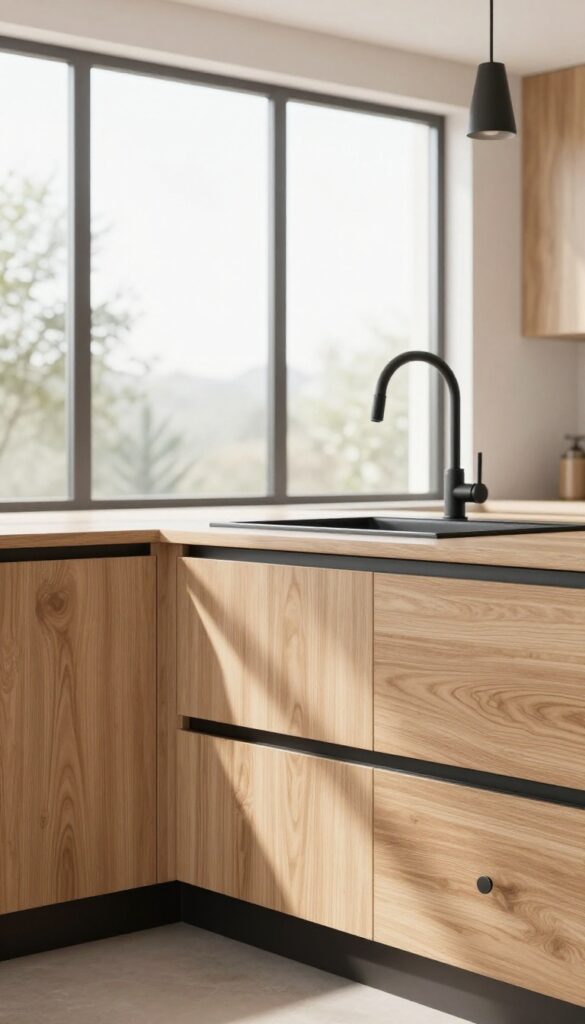
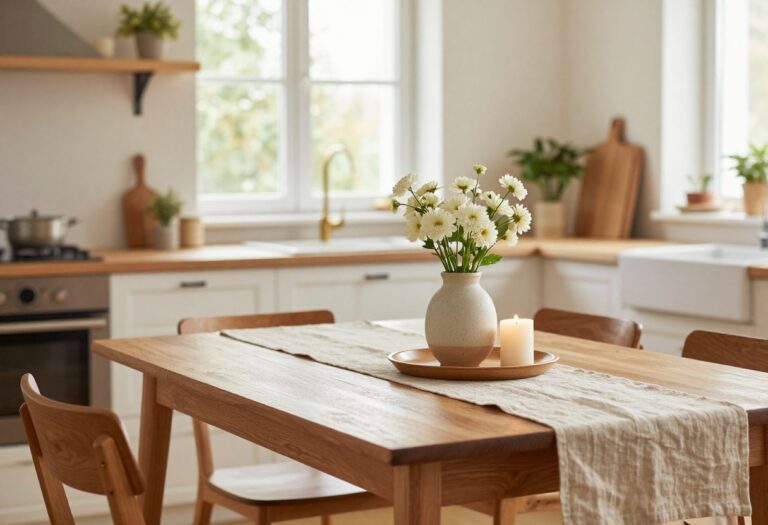
There's a reason warm wood cabinets keep showing up in the most stylish kitchens—they bring instant coziness and timeless appeal. Pairing them with matte black hardware takes that warmth and gives it a crisp, modern edge. The contrast feels intentional and fresh, like you've thought through every detail without trying too hard.
It's a look that works whether your kitchen leans farmhouse, mid-century, or minimalist.
Why It Works
The dark hardware grounds the lightness of natural wood grain, creating visual balance. Matte black doesn't compete with the wood; it quietly highlights its richness. Plus, it hides fingerprints and smudges way better than shiny brass or chrome.
Best For
This combo is ideal for kitchens with plenty of natural light, where the wood can really glow. It also suits open-concept spaces where you want the kitchen to feel connected to living areas but still distinct.
Styling Tip
Stick with simple, clean-lined hardware—like flat bar pulls or round knobs—to keep the look streamlined. For extra impact, carry the matte black finish to your faucet and light fixtures for a cohesive, designer feel.
2. Two-Tone Brown and White Kitchen Island
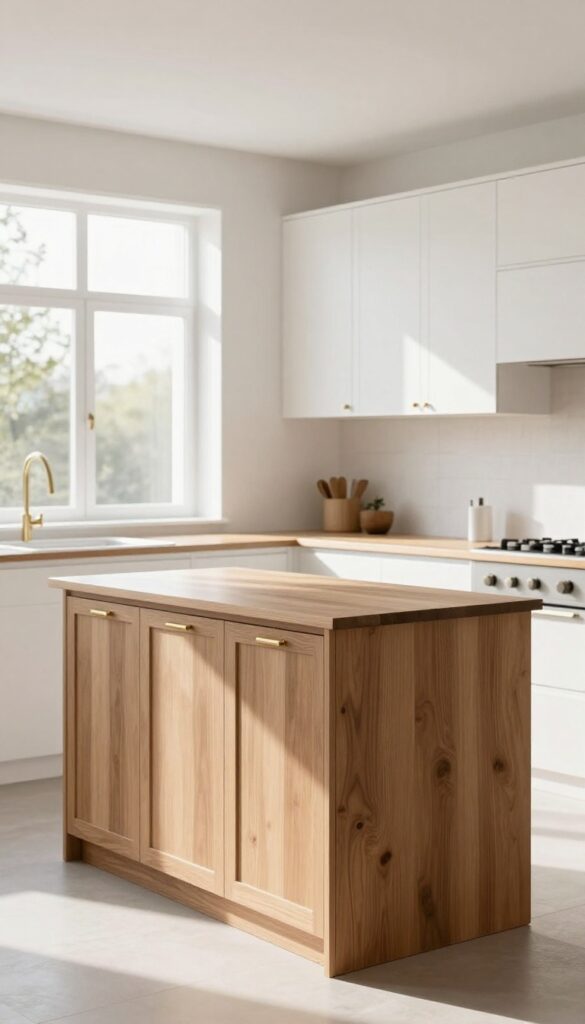
A white kitchen with a brown island is one of those combinations that feels both classic and fresh at the same time. The contrast gives the space an instant focal point without needing any bold colors or complicated patterns. It’s a simple way to add warmth and depth while keeping the overall look clean and modern.
Why It Works
The two-tone approach breaks up what could otherwise feel like a sea of white, adding visual interest and a sense of purpose. The island becomes the anchor of the room, grounding the lighter perimeter cabinets and making the kitchen feel more layered and intentional.
Best For
This works especially well in open-concept kitchens where the island is visible from other living areas. It also suits kitchens with plenty of natural light, as the white cabinets can bounce light around while the darker island adds a cozy counterpoint.
Styling Tip
Choose a wood stain with warm undertones if your floors are cool-toned, or go for a dark espresso paint if you have warmer wood floors. Add brass or black hardware on both the island and perimeter cabinets to tie the two tones together seamlessly.
3. Brown Backsplash Tiles in a Herringbone Pattern
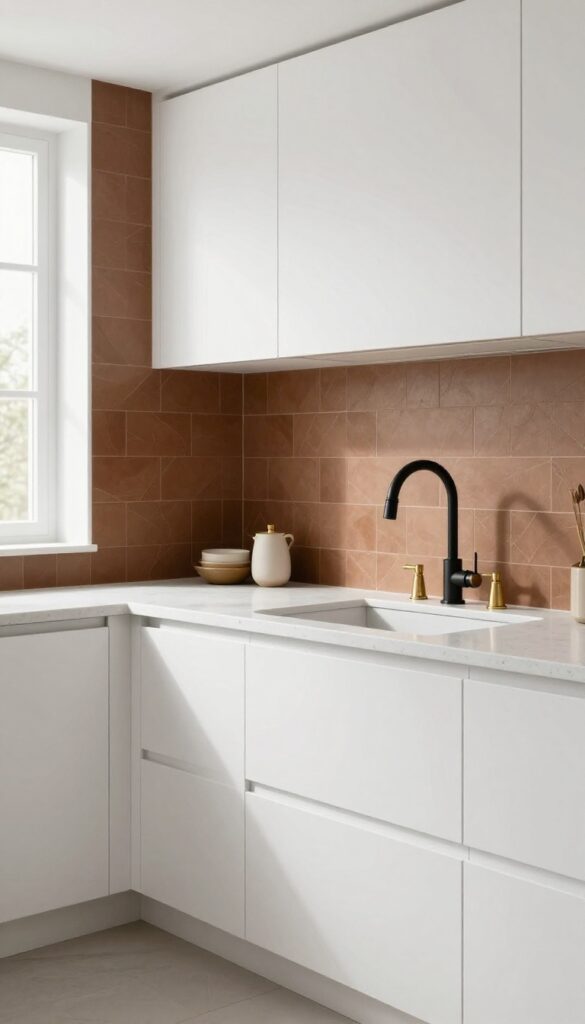
A brown tile backsplash brings warmth and character to a kitchen without stealing the spotlight. The herringbone layout adds a subtle geometric twist that feels fresh but not busy, especially when you choose a matte finish. It’s a look that balances modern edge with everyday livability.
Why It Works
The herringbone pattern creates visual movement, drawing the eye across the wall and making the space feel larger. Matte brown tiles hide smudges and water spots better than glossy ones, so your backsplash stays looking clean with minimal effort.
Best For
This works beautifully in kitchens with white or light gray cabinetry, where the brown tiles become an anchor. It also suits open-concept layouts where you want a warm transition between cooking and living areas.
Styling Tip
Pair the backsplash with brass or matte black fixtures to play up the modern feel. Keep countertops simple—a white quartz or light wood surface lets the tile pattern shine without competing.
4. Open Shelving in Natural Wood Tones
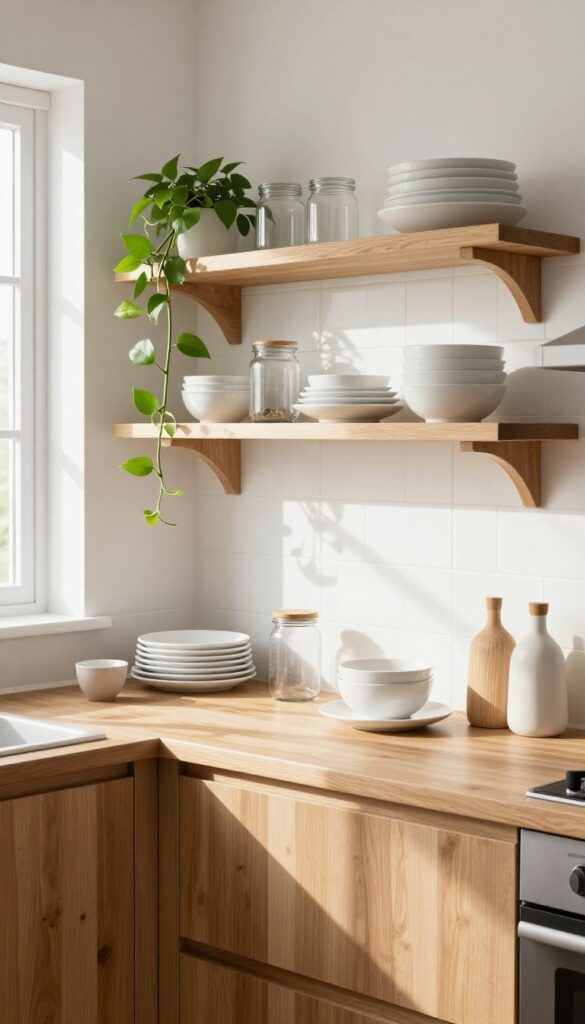
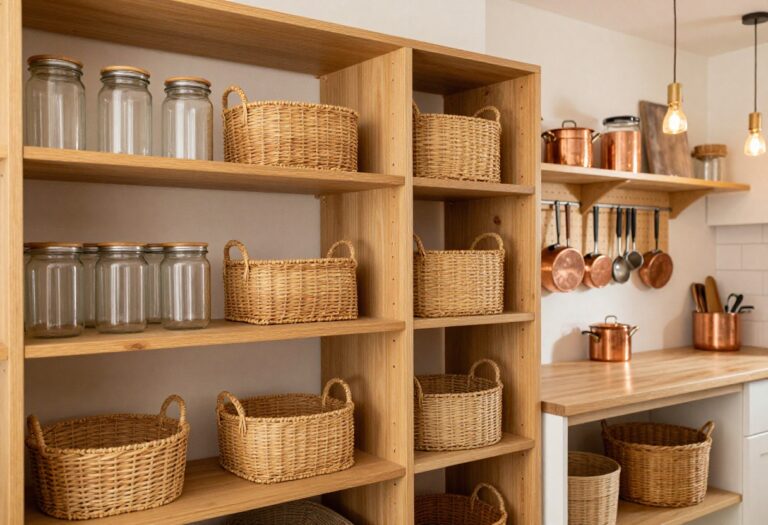
Swapping bulky upper cabinets for open shelving instantly opens up a kitchen, making it feel larger and more inviting. When those shelves are crafted from warm brown wood, they bring a natural, grounded element that keeps the space from feeling too stark or cold. It's a look that balances modern minimalism with organic warmth—perfect for a kitchen that feels both current and lived-in.
Why It Works
Open shelving forces you to curate what's on display, which naturally reduces clutter. The warm wood tones add depth and texture against white walls or tile, creating visual interest without overwhelming the room. Plus, having everyday dishes within easy reach makes cooking and entertaining feel more fluid.
Best For
This idea shines in smaller kitchens where upper cabinets can feel oppressive, or in galley layouts where every inch of visual breathing room counts. It also works beautifully in open-plan spaces where the kitchen is visible from the living area—the shelves become part of the decor.
Styling Tip
Stick to a neutral palette on the shelves: white dinnerware, clear glass jars, and a few trailing plants like pothos or ivy. Add small ceramic vases or wooden cutting boards for texture. Keep the arrangement balanced but not overly symmetrical—group items in odd numbers for a relaxed, collected look.
5. Chocolate Brown Lower Cabinets with Light Uppers
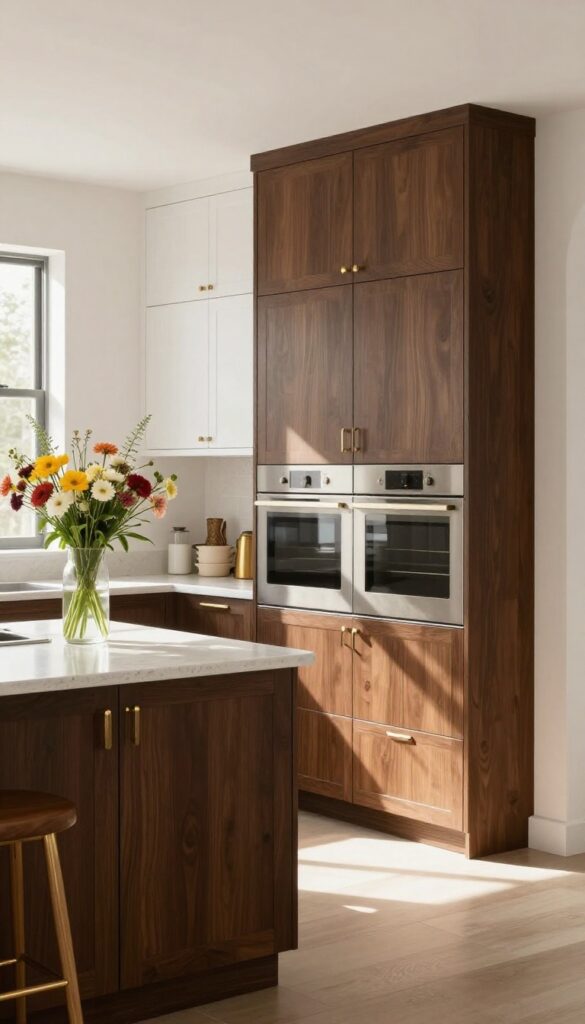
There’s something undeniably grounding about pairing deep chocolate brown cabinets on the bottom with crisp white or soft beige uppers. This two-tone approach instantly adds depth and makes your kitchen feel wider, since the lighter upper cabinets visually recede while the darker lowers anchor the room. It’s a look that feels both modern and timeless—clean enough for a minimalist space, but warm enough to keep things cozy.
Why It Works
By concentrating the darker color below eye level, you draw the eye outward rather than upward, which makes a narrow kitchen feel more expansive. The contrast also creates a natural focal point along the countertops, making everyday tasks feel more intentional. Plus, dark lowers hide scuffs and crumbs way better than light ones—practical win.
Best For
This idea shines in kitchens with limited natural light or smaller footprints, because the light uppers bounce daylight around while the dark base adds richness without overwhelming. It’s also perfect for open-concept homes where you want the kitchen to feel connected to the living area but still distinct.
Styling Tip
Choose a chocolate brown with warm undertones (think espresso or mocha) to keep the space inviting. Pair with brushed brass or matte black hardware for a subtle pop, and add open shelving in a matching light tone to break up the cabinetry. A light quartz or marble countertop will tie both halves together seamlessly.
6. Brown Quartz Countertops with Subtle Veining
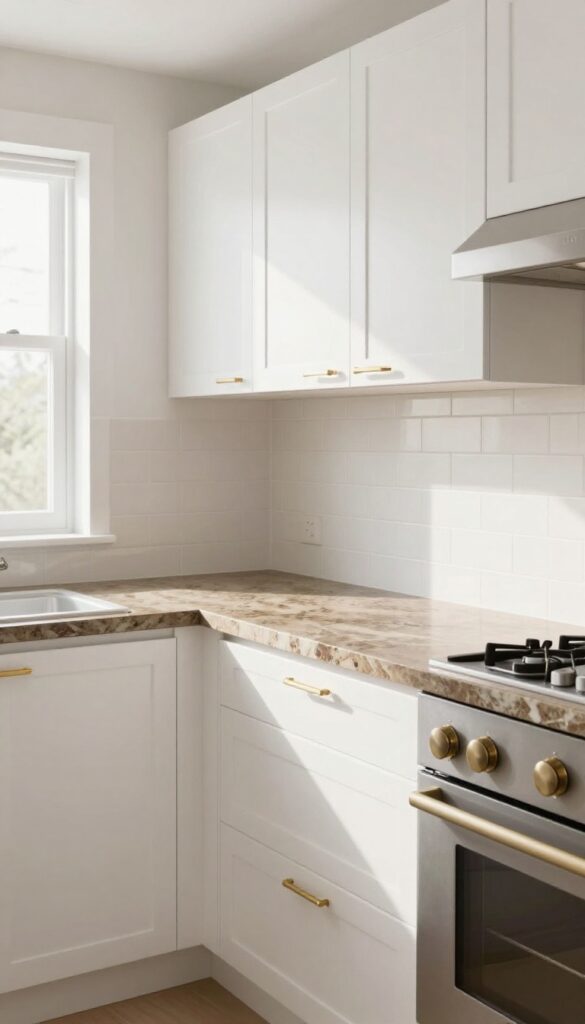
Countertops often set the tone for the whole kitchen, and brown quartz with soft veining brings a grounded, organic feel without sacrificing durability. The subtle cream or white veins add just enough movement to keep the surface interesting, while the rich brown base anchors both light and dark cabinetry. It’s a look that feels modern but not cold—perfect for a kitchen that needs to work hard and still look pulled together.
Why It Works
Quartz is non-porous and resists stains, scratches, and heat, making it ideal for busy kitchens. The veining mimics natural stone but requires none of the sealing or upkeep, so you get that high-end look with everyday practicality.
Best For
This works especially well in kitchens with white or cream cabinetry where the brown countertop becomes a warm focal point. It also complements dark wood cabinets by adding contrast and preventing the space from feeling too heavy.
Styling Tip
Pair these countertops with brushed brass or matte black hardware for a subtle industrial edge. Keep the backsplash simple—a classic subway tile in off-white or a soft beige zellige tile lets the veining take center stage without competing.
7. Brown Leather Bar Stools for a Touch of Texture
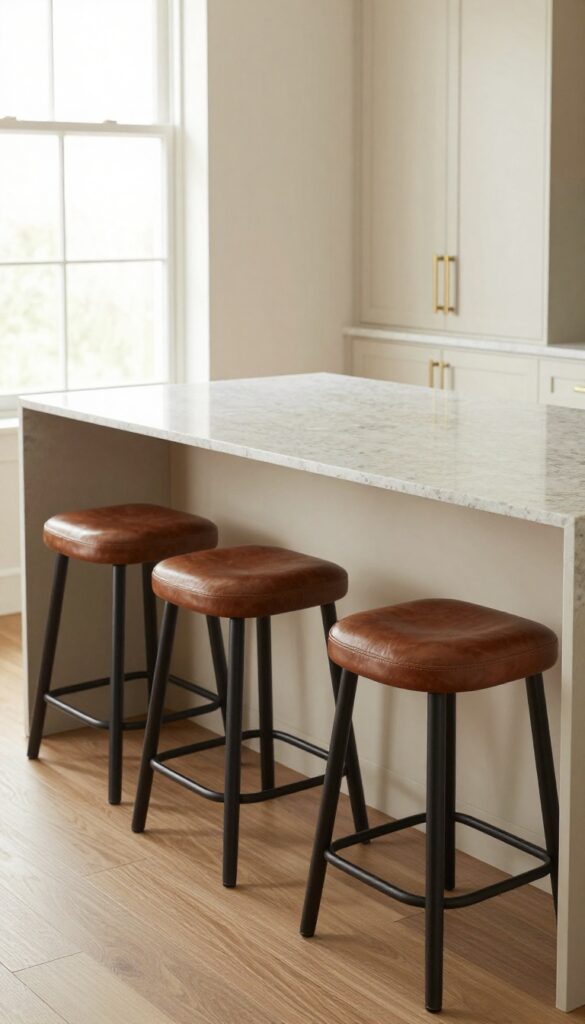
Hard surfaces dominate most kitchens—countertops, backsplashes, cabinets, and flooring. Adding something soft and organic instantly makes the space feel more inviting. Brown leather bar stools are an easy way to introduce warmth without sacrificing the clean, modern look you're after.
They bring in a natural texture that contrasts beautifully with sleek materials like quartz, stainless steel, or matte black fixtures.
Why It Works
Leather develops a rich patina over time, so your stools will actually look better with age. The warm brown tone ties in with wood accents or earthy neutrals, creating a cohesive palette that feels grounded but not heavy. Plus, the texture breaks up all the hard edges and smooth surfaces typical of modern kitchens.
Best For
These stools shine in kitchens with an island or peninsula where seating is part of the daily routine. They work especially well if your kitchen has warm wood tones, brass hardware, or cream-colored cabinetry. Avoid them if your kitchen leans very cool (think gray and chrome) unless you're intentionally mixing warm and cool for contrast.
Styling Tip
Choose a saddle-style or slightly curved seat for comfort and visual interest. Stick to a medium brown with subtle grain rather than a flat shade—it'll look more natural. Pair the stools with a simple metal base in black or brass to keep the silhouette modern and airy.
8. Brown and Green Color Palette with Plants
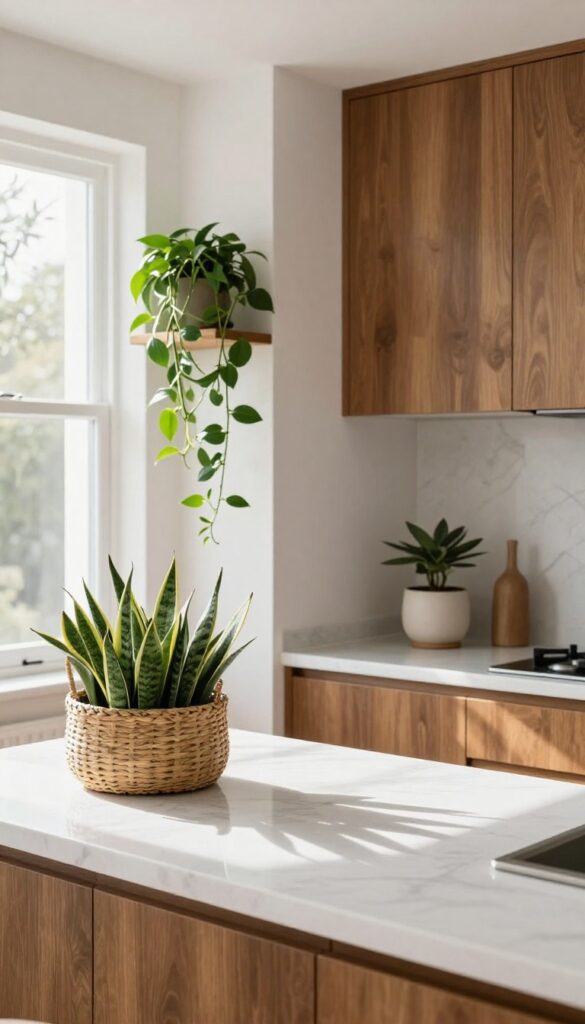
Pairing brown cabinets or accents with greenery is one of the easiest ways to make your kitchen feel fresh and alive. Think olive trees, snake plants, or trailing pothos perched on open shelves or countertops. The natural green cuts through the warmth of brown, creating a clean, modern contrast that keeps the space from feeling heavy.
Why It Works
Plants add life and texture while softening the solid presence of brown cabinetry. The green tones bring out the earthy undertones in brown, making the whole palette feel intentional and vibrant rather than dull.
Best For
This idea works beautifully in kitchens with medium to dark wood cabinets or brown lower cabinets paired with light uppers. It's also great for kitchens that get decent natural light, though many houseplants tolerate lower light if you choose wisely.
Styling Tip
Use a mix of hanging planters, countertop pots, and a tall floor plant like an olive tree to create visual layers. Stick to simple ceramic or woven baskets in neutral tones so the plants remain the focal point.
9. Brown Range Hood as a Statement Piece
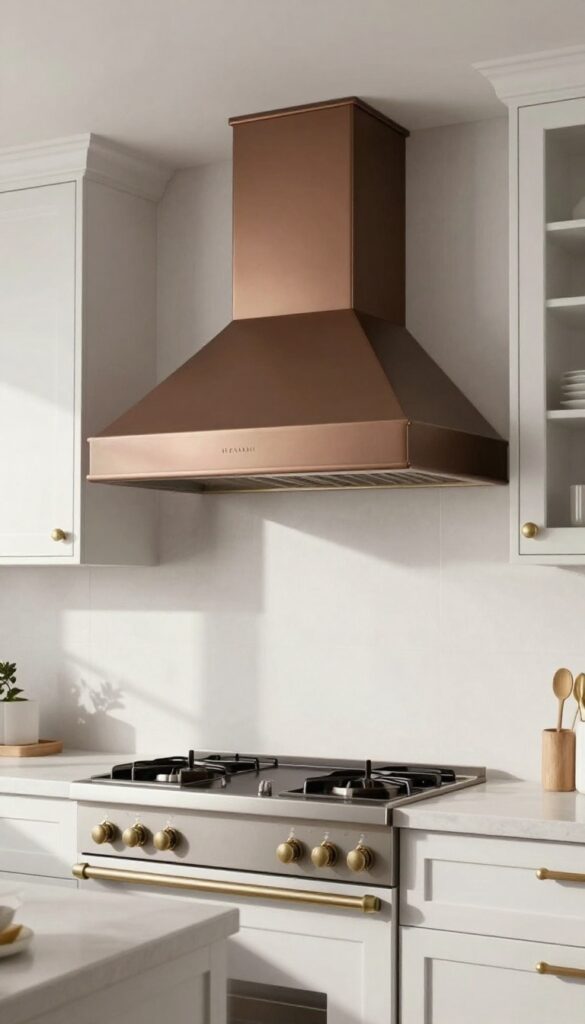
Your range hood doesn't have to be just a functional appliance—it can be the focal point of your kitchen. Choosing a brown metal or wood-clad design draws the eye upward and adds architectural interest without needing extra decor. It's a practical way to introduce warmth and texture while keeping the overall look clean and modern.
Why It Works
A brown range hood creates a natural anchor for the cooking zone, especially in kitchens with neutral cabinetry. The vertical presence breaks up horizontal lines and adds depth, making the space feel more intentional and pulled together.
Best For
This works beautifully in open-concept kitchens where the hood is visible from living areas. It's also ideal for kitchens with high ceilings or islands, as it balances proportions and adds a touch of drama without clutter.
Styling Tip
Keep surrounding surfaces simple—white or light gray backsplash and countertops let the hood stand out. Pair it with brass or black hardware for a cohesive look, and consider under-cabinet lighting to highlight its texture.
FAQ
Is brown going out of style in kitchens?
Not at all—brown is actually trending again, but in more modern ways. Think warm wood tones, matte finishes, and balanced two-tone designs rather than all-over dark cabinets.
What colors go best with brown kitchen cabinets?
White, cream, soft gray, sage green, and black all pair beautifully with brown. These colors keep the look fresh and prevent it from feeling too heavy.
How do I make a small brown kitchen feel bigger?
Use lighter browns on upper cabinets or walls, add plenty of lighting, and incorporate reflective surfaces like glossy tiles or metallic hardware. Open shelving also helps.
Can I mix different shades of brown in one kitchen?
Yes, but stick to a consistent undertone—warm or cool—and vary the textures. For example, pair honey oak cabinets with a chocolate island and tan leather stools.
What type of countertop works with brown cabinets?
White quartz or marble-look surfaces are classic choices. For a more cohesive look, try a warm beige or brown-toned countertop with subtle veining.
Conclusion
Brown kitchens don't have to feel dark or dated. With the right mix of textures, colors, and finishes, they can be some of the most inviting and stylish spaces in your home. Whether you go all-in with chocolate cabinetry or just add a few warm touches, these ideas show how versatile brown can be.
The best part? You can start small—swap out your bar stools or add a brown backsplash—and see how the warmth transforms the room. A fresh, pulled-together kitchen is totally within reach.