9 Stylish Beige Kitchen Ideas for a Fresh, Pulled-Together Look
Beige kitchens have a reputation for being safe, but that doesn't mean they have to be boring. When you layer in the right textures, tones, and touches, beige becomes anything but bland. It turns warm, inviting, and surprisingly fresh.
The key is to think beyond one flat shade. Beige works best when you play with depth—pairing creamy cabinets with sandy countertops or adding natural wood for contrast. It's a neutral that actually asks to be layered.
Ready to give your kitchen a cozy, pulled-together feel? These nine ideas will show you how to make beige feel fresh, stylish, and totally you.
1. Layer Warm Wood Accents for Instant Depth
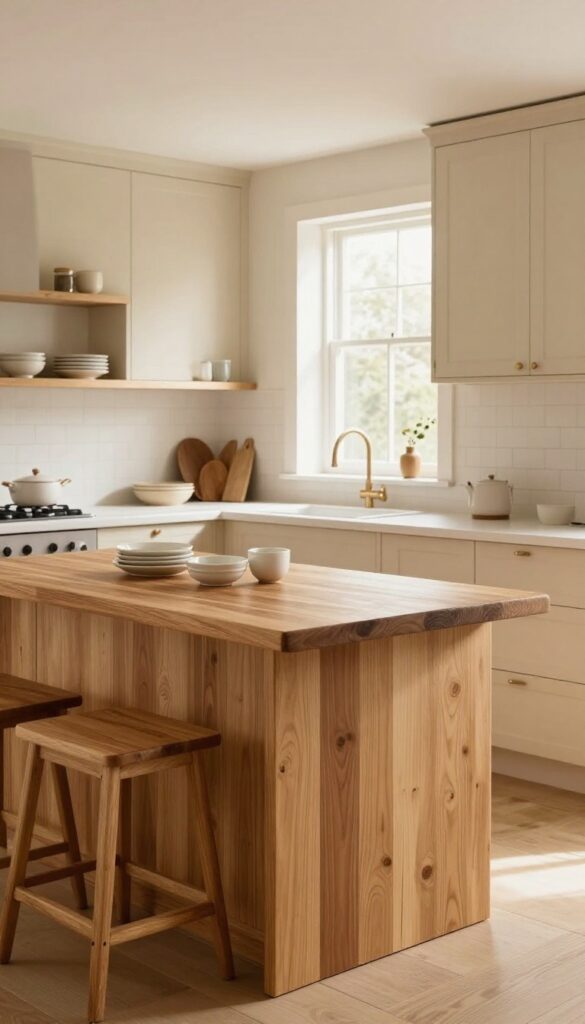
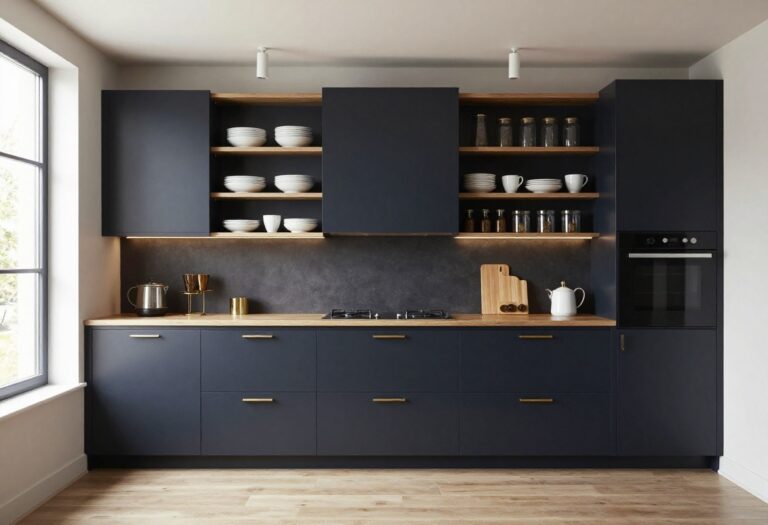
Beige kitchens can sometimes feel flat if everything stays in the same tonal family. The trick is to bring in natural materials that add contrast without clashing. Wood is the easiest way to do that—it warms up the space, introduces texture, and makes the whole room feel more collected.
Think open shelving in oak, a butcher block countertop on an island, or even a wood base on a kitchen cart. These pieces break up expanses of beige cabinetry or backsplash and give your eye something interesting to land on.
Why It Works
Wood grain is naturally imperfect, which means it adds visual complexity without looking busy. In a beige kitchen, where everything is soft and neutral, wood acts like a gentle anchor—it grounds the room and keeps it from feeling washed out. The contrast is subtle enough to feel cohesive, but noticeable enough to add depth.
Best For
This idea works especially well in kitchens with lots of upper cabinets or large wall surfaces that could use some visual relief. It's also great for open-concept spaces where the kitchen flows into a living area—the wood helps connect the two zones naturally.
Styling Tip
Stick with one wood species throughout the kitchen to keep things intentional. White oak or ash are popular choices because they have a light, warm tone that complements beige without going too yellow or orange. If you already have wood floors, match your new accents to that undertone for a seamless look.
2. Mix Creamy and Sandy Beige Tones
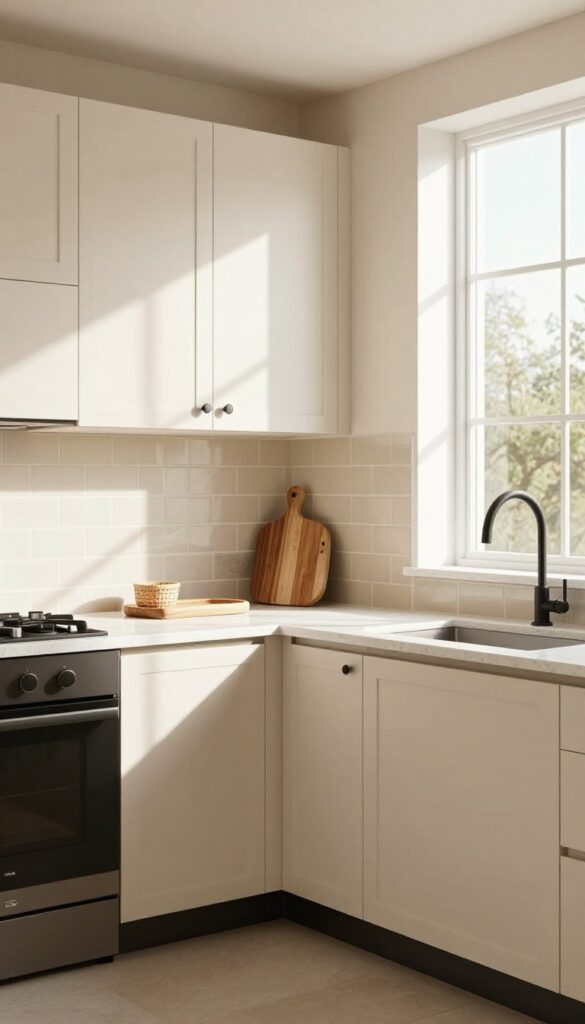
Beige doesn’t have to mean one-note. Layering different shades of beige—like creamy cabinet fronts against sandier wall tones or a taupe backsplash—adds quiet depth without introducing a new color family. The trick is choosing hues that share the same undertone, so the contrast feels intentional and warm rather than muddy.
In a real kitchen, this creates a space that feels both cohesive and dimensional, like it was designed to be lived in.
Why It Works
Using two or three beige tones tricks the eye into seeing more texture and richness. The subtle shift between shades keeps the palette from feeling flat while still maintaining that calm, neutral backdrop. It’s an easy way to add visual interest without cluttering the space with bold colors or busy patterns.
Best For
This idea shines in kitchens with lots of natural light, where the different beige tones can catch the sun and shift throughout the day. It’s also perfect for open-concept homes where you want the kitchen to blend seamlessly with adjoining living areas without feeling washed out.
Styling Tip
Anchor your layered beiges with one darker accent, like matte black cabinet pulls or a charcoal faucet. This gives the eye a place to rest and prevents the scheme from feeling too sugary. Add natural wood cutting boards or woven baskets for extra warmth.
3. Add a Textured Backsplash in Natural Stone
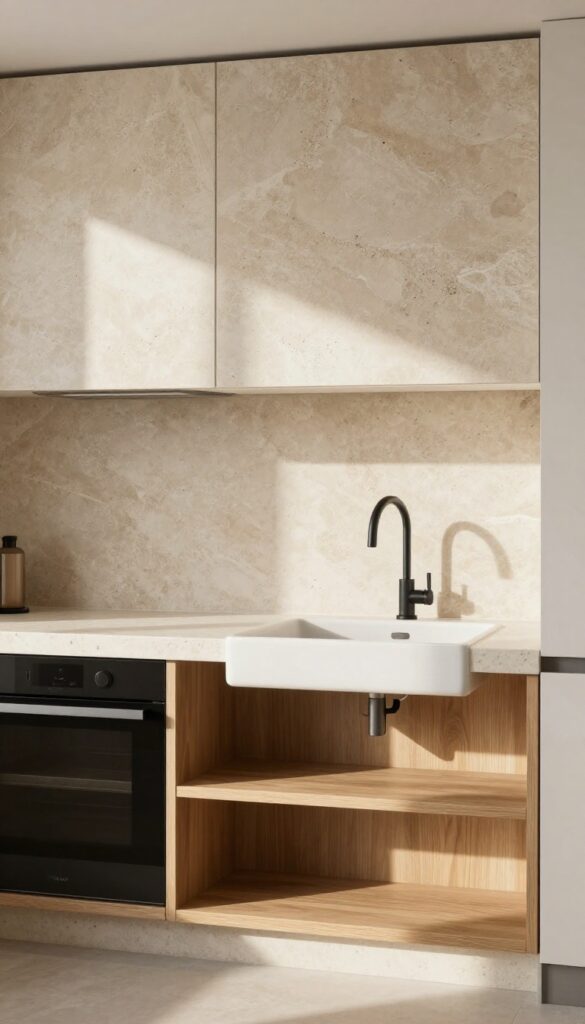
A flat, smooth backsplash can feel safe, but it doesn't do much for a beige kitchen. Swap it for something with texture—stacked stone, marble mosaic, or travertine—and suddenly the whole space feels richer. The uneven surface catches light at different angles, creating subtle shadows that make the beige tones feel layered and intentional rather than flat.
Why It Works
Natural stone brings organic variation that prevents beige from looking monotonous. The texture adds visual weight without overwhelming the room, and it pairs beautifully with warm wood accents or matte black fixtures.
Best For
Kitchens that need a dose of character without going bold. It's especially effective in open-plan spaces where the backsplash can tie into other natural materials like stone countertops or wooden shelving.
Styling Tip
Keep surrounding surfaces simple—let the stone be the star. Use under-cabinet lighting to highlight the texture, and choose a grout color that blends with the stone rather than contrasting sharply.
4. Incorporate Black or Dark Bronze Hardware
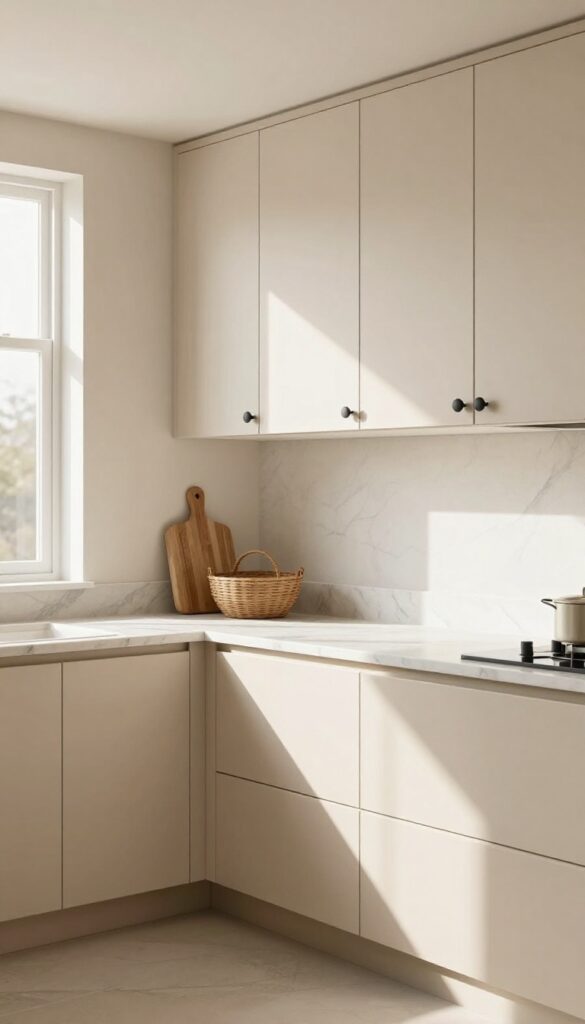
There’s something quietly satisfying about a beige kitchen with dark hardware. Matte black or dark bronze cabinet pulls, faucets, and even light fixtures create a subtle contrast that keeps the space from feeling too washed out. It’s an easy swap—no renovation required—that instantly adds depth and a touch of modern edge.
Why It Works
Dark hardware grounds the softness of beige, giving the kitchen a more structured, intentional look. The contrast draws the eye to details like cabinetry lines and countertops, making the whole room feel more polished without being fussy.
Best For
This idea works beautifully in kitchens with light beige cabinets or warm beige walls. It’s especially great for spaces that lean too traditional or flat—the dark accents add just enough weight to feel current.
Styling Tip
Stick to one metal finish throughout the kitchen for a cohesive look. Pair matte black pulls with a matching faucet and gooseneck pot filler if you have one. For extra warmth, mix in natural wood cutting boards or woven baskets.
5. Use Warm Lighting with Dimmers
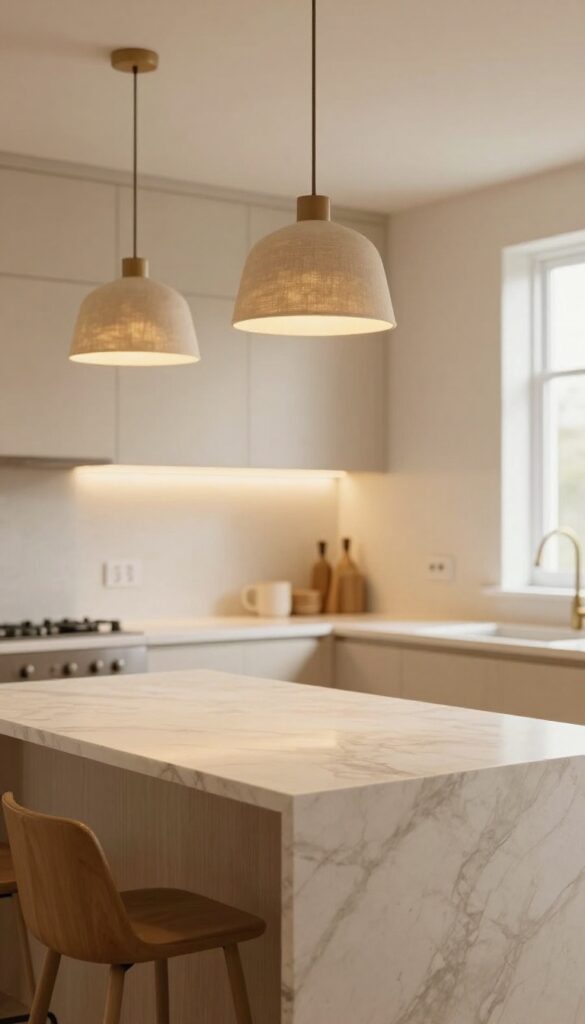
Lighting can make or break a beige kitchen. Without careful planning, all those soft tones can fall flat and feel a little lifeless. The fix is simple: swap in warm bulbs and install dimmers so you can dial the brightness up or down depending on the time of day or mood you want.
It's one of those small changes that instantly makes the space feel cozier and more intentional.
Why It Works
Warm lighting brings out the golden undertones in beige, making the room feel inviting rather than sterile. Dimmers give you control over the intensity, so you can go from bright task lighting for meal prep to a softer glow for dinner or winding down. This flexibility keeps the kitchen from feeling like a harsh, all-purpose room and turns it into a true living space.
Best For
This idea works well in any beige kitchen, but it's especially effective in open-plan layouts where the kitchen flows into a dining or living area. The ability to adjust lighting helps define zones and creates a seamless transition from cooking to relaxing.
Styling Tip
Choose pendant lights with fabric shades or frosted glass to diffuse the light evenly. Place them over an island or dining table at different heights for visual interest, and add under-cabinet strips with warm LEDs to eliminate shadows on countertops without overpowering the room.
6. Bring in Natural Fiber Textiles
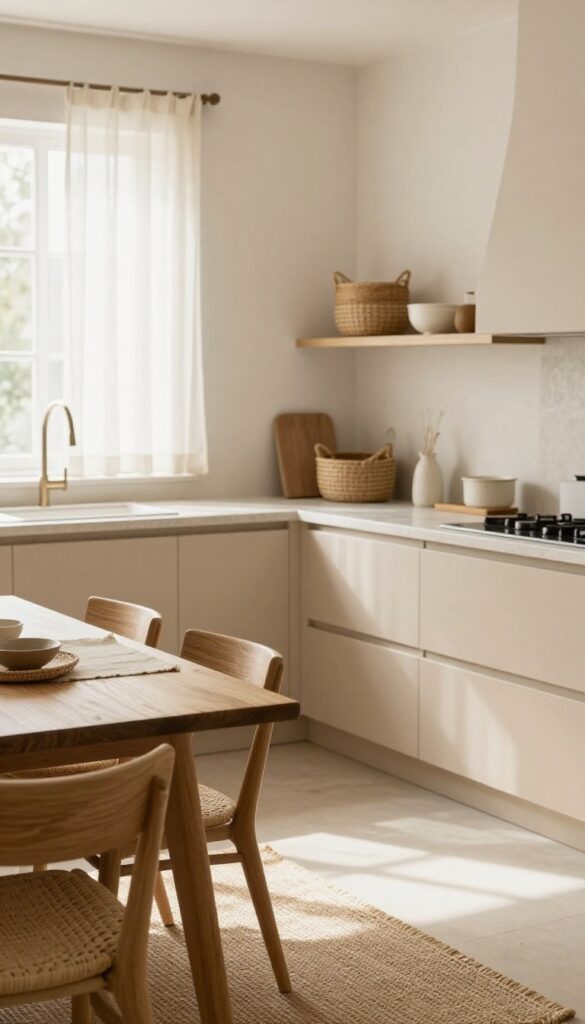
Nothing softens a beige kitchen quite like natural fibers. Jute rugs, linen curtains, and woven placemats introduce an organic texture that makes the space feel warm and lived-in. These materials add visual interest without competing with your neutral palette—they just quietly make everything cozier.
Why It Works
Natural fibers bring a tactile softness that balances the harder surfaces of countertops and cabinets. The subtle variation in color and weave keeps beige from feeling flat, adding depth and a relaxed, earthy vibe.
Best For
This idea shines in kitchens that lean modern or minimalist but need a touch of warmth. It's also perfect for open-plan spaces where you want the kitchen to feel connected to adjacent living areas.
Styling Tip
Layer a jute runner over a larger sisal rug for extra texture, or hang linen curtains that just graze the windowsill. Mix in a few woven baskets on open shelves to tie the look together.
7. Add Greenery for a Fresh Pop
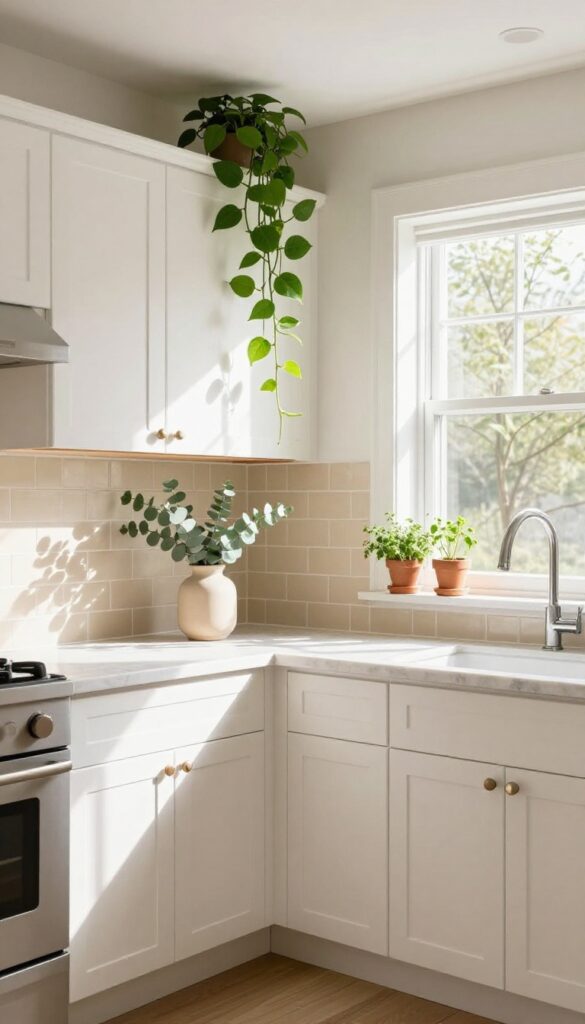
Beige kitchens can sometimes lean a little flat if everything stays in the same warm neutral zone. The easiest way to break that up without painting or remodeling is to bring in living plants. A few pots of herbs on the windowsill, a trailing pothos draped from a cabinet top, or a simple vase of eucalyptus on the counter instantly adds contrast and life.
Green against beige feels natural and effortless, like the room can breathe again.
Why It Works
Plants introduce organic shapes and vibrant color that cut through all that beige without clashing. The green tones complement warm neutrals beautifully, creating visual interest while keeping the overall look calm and grounded. Plus, they soften hard surfaces like stone countertops and glossy tiles, making the kitchen feel more inviting.
Best For
This idea works in any kitchen size or style, but it's especially effective in all-beige kitchens that lack other accent colors. If your cabinets, backsplash, and counters are all in the beige family, greenery becomes the main focal point and keeps the space from feeling monotonous.
Styling Tip
Mix heights and textures for maximum impact. Place a tall fiddle leaf fig in a corner, cluster small succulents near the sink, and hang a macrame planter with a cascading vine near a window. Use ceramic pots in earthy tones like terracotta or matte white to tie back to the warm palette.
8. Choose a Statement Range Hood in a Neutral Tone
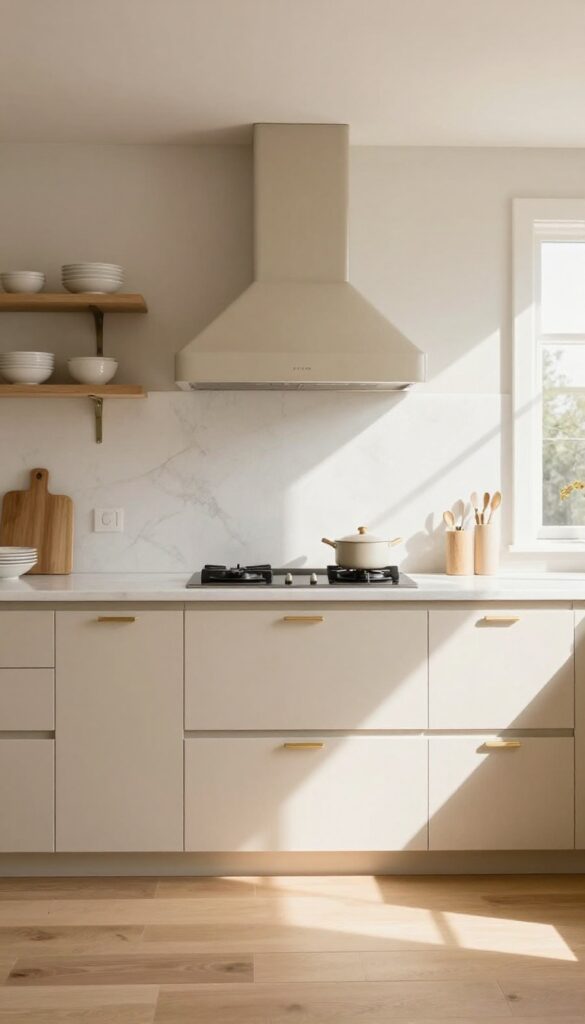
Range hoods are often treated as purely functional, but they can actually become a beautiful focal point in your kitchen. Instead of blending in with white or stainless steel, try one in a slightly darker beige or warm gray. It adds architectural interest and draws the eye upward, making the whole space feel more intentional and cozy.
Why It Works
A neutral-toned hood stands out just enough to catch attention without clashing with your cabinets or countertops. It creates a subtle contrast that adds depth, while staying within the warm, layered palette you've built. Plus, it's an easy way to upgrade the look of your kitchen without a full renovation.
Best For
This works especially well in kitchens with light beige or cream cabinetry, where a darker hood can anchor the cooking zone. It's also great for open-concept layouts where the hood becomes part of the visual flow from room to room.
Styling Tip
Match the hood's finish to other metal accents in the space—like cabinet pulls or light fixtures—for a cohesive look. If you have open shelving nearby, keep those shelves simple so the hood remains the star.
9. Style Open Shelving with Layered Ceramics
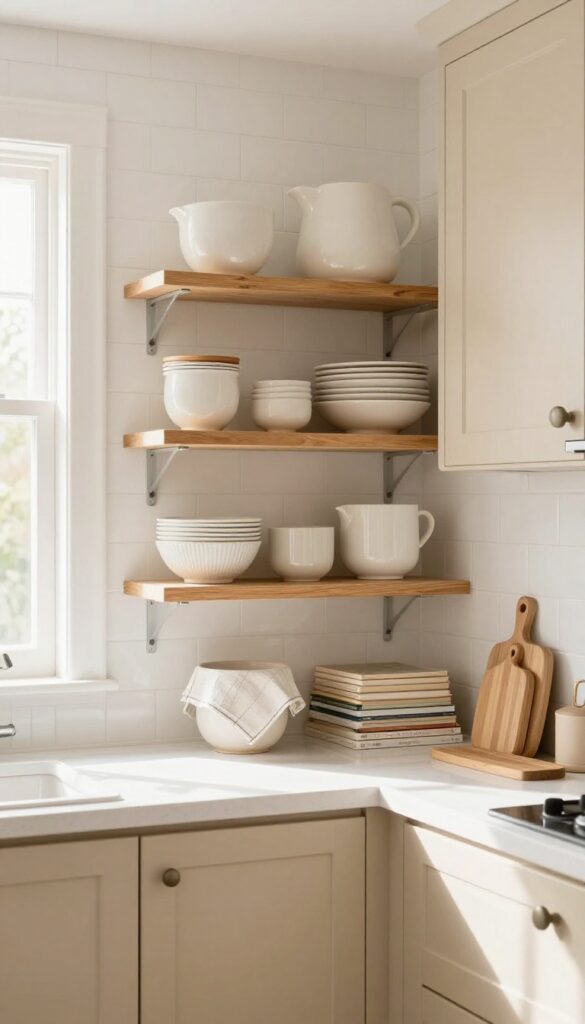
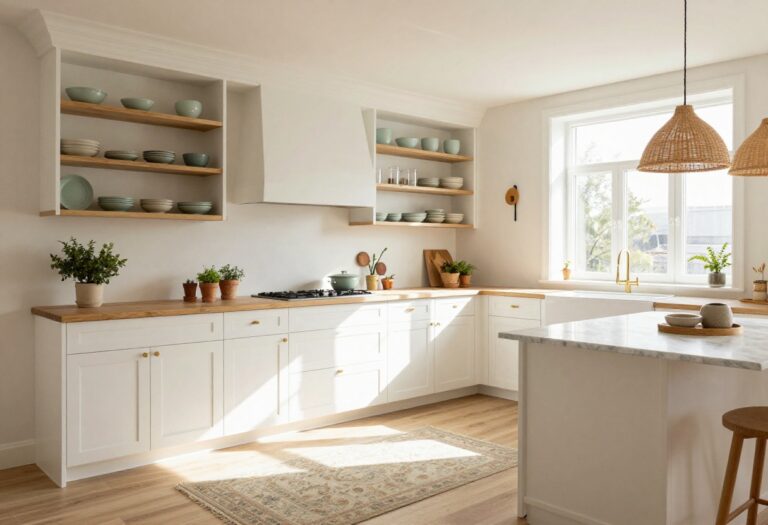
Open shelving can feel stark if you just line things up like a store display. The secret to making it feel warm and lived-in is layering—mixing materials, heights, and textures so the eye has something to explore. Think creamy ceramic pitchers next to a stack of linen napkins, a wooden cutting board propped behind a small vase, and a few favorite cookbooks laid flat rather than standing upright.
Why It Works
The combination of matte ceramics, warm wood, and soft paper tones adds depth without clutter. Because all the pieces share a neutral palette, the shelf reads as cohesive even though nothing matches exactly. That curated-but-collected look is exactly what makes a beige kitchen feel intentional rather than bland.
Best For
This idea shines in kitchens that already have open shelving (or where you're considering adding it) and want to avoid a cold, minimalist vibe. It's especially effective in kitchens with warm beige cabinets or white subway tile backsplashes, since the earthy tones will echo the cabinetry.
Styling Tip
Start with one large anchor piece—like a wide ceramic bowl or a chunky wooden board—then build around it with smaller items in odd numbers. Vary the heights by using a small book stack as a riser for a cup or vase. And don't forget negative space: leave about 30% of each shelf bare so the eye can rest.
FAQ
Is beige going out of style in kitchens?
Not at all—beige is making a strong comeback, especially when layered with texture and warm accents. It's a timeless neutral that feels fresh when styled thoughtfully.
What colors go best with beige kitchen cabinets?
Warm whites, soft greens, black or bronze hardware, and natural wood tones all pair beautifully with beige. They add contrast while keeping the space cohesive.
How can I make my beige kitchen look modern?
Mix in sleek black fixtures, geometric tile, and clean-lined hardware. Avoid too many matching beige surfaces—vary shades and add metal or wood for a contemporary edge.
What countertop works well with beige cabinets?
White marble or quartz with subtle veining keeps things light. For more warmth, try butcher block or a warm gray soapstone. Both complement beige without competing.
How do I keep a beige kitchen from feeling dull?
Layer different textures—stone, wood, linen, and ceramic. Add plants, use varied lighting, and incorporate darker accents like black or bronze to create depth.
Conclusion
Beige kitchens don't have to feel safe or forgettable. With the right mix of textures, tones, and personal touches, they become warm, layered spaces that feel both fresh and timeless.
Start with one or two of these ideas—maybe swapping hardware or adding a textured backsplash—and build from there. Small changes can make your beige kitchen feel completely pulled together.