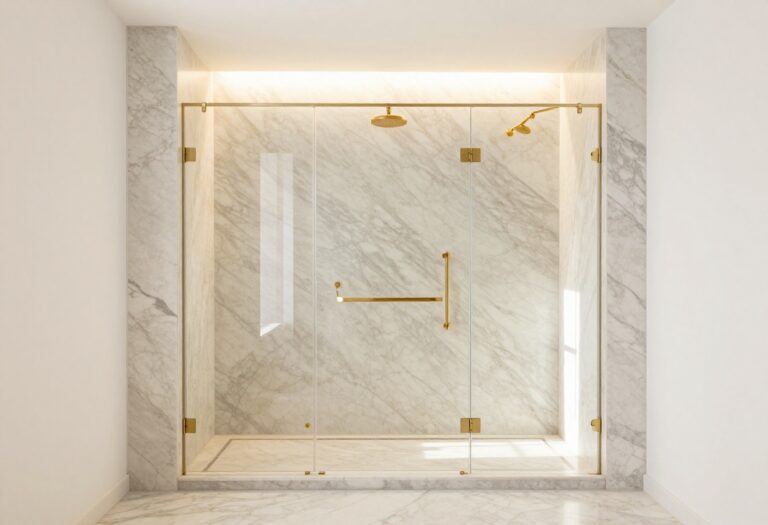
13 Bath Tub and Shower Combo Ideas for a More Polished Bathroom
There’s something special about stepping into a bathroom that feels both functional and soothing. A tub-shower combo can be the centerpiece of that experience, offering the best of both worlds without sacrificing square footage.
Whether you’re remodeling or just refreshing, these 13 ideas will help you create a space that feels polished and personal. From sleek modern designs to cozy traditional touches, each idea focuses on comfort and mood first.
After all, a beautiful bathroom should also feel like a retreat. Let’s explore how to make your tub-shower combo shine.
1. Freestanding Tub with a Walk-In Shower
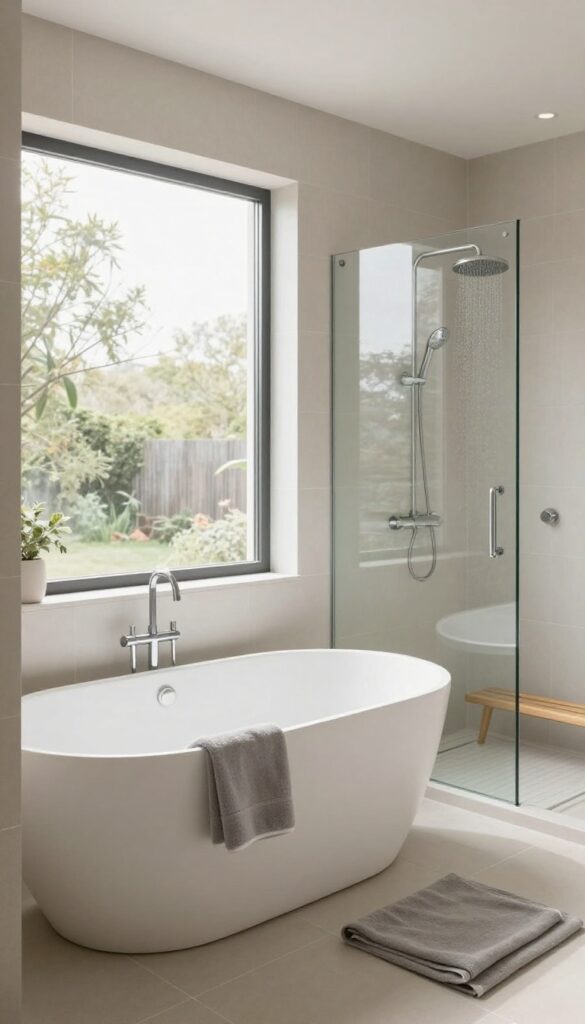
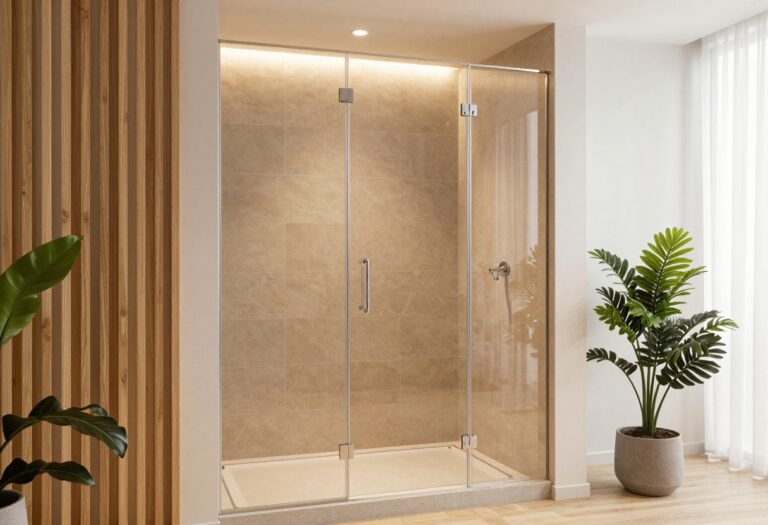
A freestanding tub paired with a glass-enclosed walk-in shower creates a spa-like atmosphere without needing separate rooms. The open layout makes the bathroom feel larger and more luxurious. It’s a favorite for homeowners who want both soaking luxury and daily convenience.
Why It Works
The combination uses visual separation (glass) instead of walls, keeping the space airy while defining wet zones. A clawfoot or modern tub becomes the focal point, and the shower feels like an extension of the room rather than an afterthought.
Best For
Master bathrooms with at least 60 square feet where you can place the tub near a window or against a feature wall. Works especially well in spaces with high ceilings or natural light.
Styling Tip
Use large-format neutral tiles (like soft gray or beige) on floors and shower walls to unify the area. Add a rainfall showerhead and a slim bench for function—keep decor minimal so the tub stands out.
Budget-Friendly Swap
Skip the custom glass enclosure and use a ready-made frameless sliding door instead. Choose a modern acrylic freestanding tub over stone or copper to cut costs significantly.
2. Corner Tub-Shower with a Built-In Bench
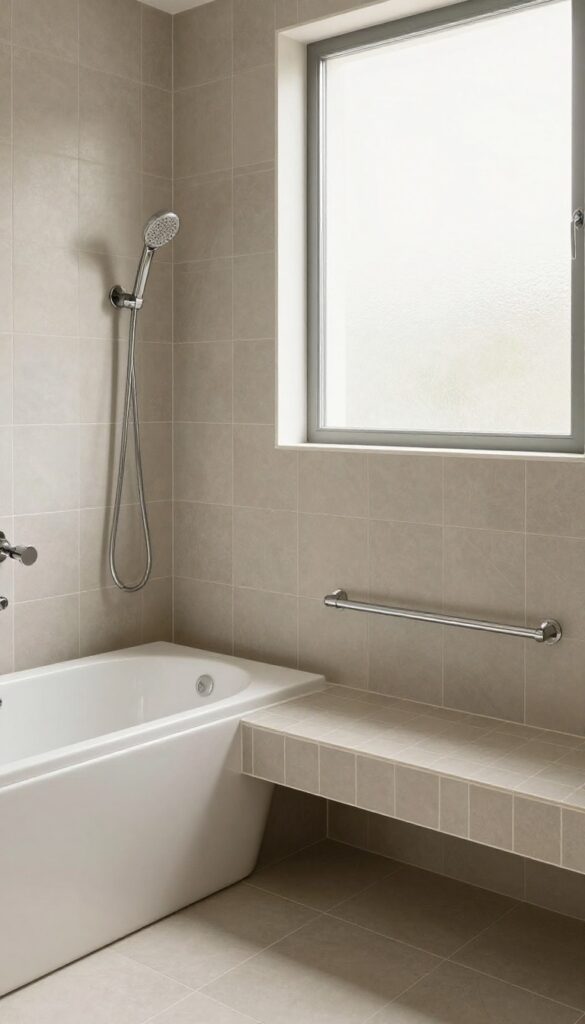
Tucking a tub-shower combo into a corner is a smart way to open up floor space, especially in tighter bathrooms. Adding a built-in tiled bench takes it from purely practical to genuinely relaxing—you get a spot to sit while showering or a ledge for bath essentials. The corner layout also lets you play with lighting and tile placement to create a cozy, enclosed feel.
Why It Works
A corner unit maximizes every inch of square footage, making a small bathroom feel larger and more intentional. The built-in bench adds function without cluttering the floor, and it gives the space a custom, spa-like look that feels high-end but is totally achievable.
Best For
This idea shines in compact master baths, guest bathrooms, or any room where you need to squeeze in both a tub and shower without feeling cramped. It’s also great for homes where you want a dedicated shower seat for safety or convenience.
Styling Tip
Keep the tile consistent on the walls, bench, and floor—using the same large-format tile in a soft neutral (like warm gray or beige) creates visual continuity. Add a handheld showerhead mounted on a slide bar so it can reach the bench easily, and install dimmable recessed lights or a small pendant above the bench for soft, flattering light.
Budget-Friendly Swap
If custom tiling isn’t in the budget, look for pre-fabricated corner tub-shower units with an integrated seat. Many come in sleek acrylic or fiberglass that mimics the look of tile at a fraction of the cost.
3. Alcove Combo with Subway Tile and a Curved Rod
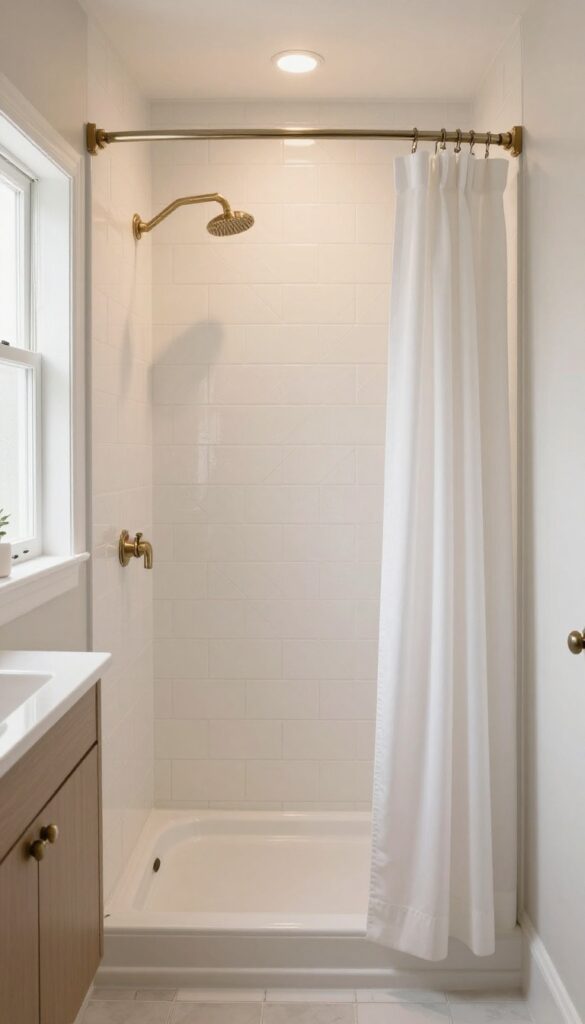
Alcove combos are the classic space-saver, but they don’t have to be boring. By swapping standard straight tile for a herringbone subway pattern, you add instant visual texture without overwhelming the room. A curved shower rod completes the look by giving you extra shoulder room and a more open feel.
Why It Works
The herringbone pattern draws the eye upward, making the alcove feel taller and more spacious. Subway tile is timeless and easy to clean, while the curved rod prevents that claustrophobic shower curtain hug. Together, they create a polished, custom look on a standard layout.
Best For
This setup shines in medium to large bathrooms where you want a classic foundation with a twist. It’s especially great for family bathrooms because the tile is durable and the curved rod keeps water inside better than a straight one.
Styling Tip
Use warm white grout to soften the contrast if your tile is bright white. Add a matte black or brushed nickel showerhead and faucet for a subtle modern edge that complements the traditional tile.
Budget-Friendly Swap
If herringbone installation costs too much, stick with standard brick-lay subway tile but use a contrasting grout color (like charcoal) to still get visual interest. You can also paint an old curtain rod with spray paint made for metal to mimic a curved one on a budget.
4. Japandi-Inspired Tub-Shower with Natural Stone
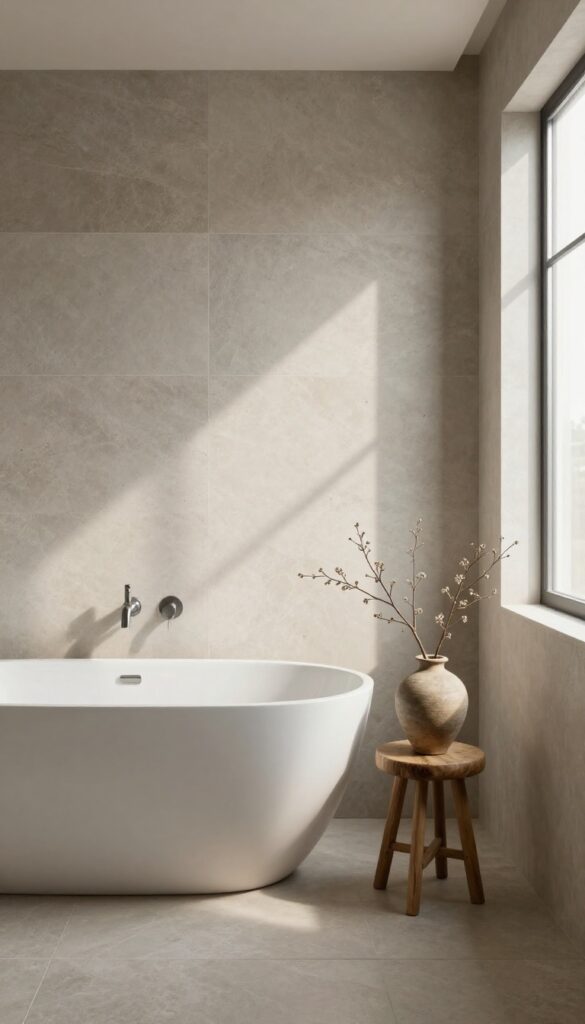
Japandi style blends Japanese minimalism with Scandinavian warmth, and it translates beautifully into a tub-shower combo. Picture a deep soaking tub tucked into an open shower area lined with natural stone—think slate or limestone in soft grays and warm taupes. The look is calm, grounded, and effortlessly elegant.
A wooden stool sits nearby for resting a towel or a cup of tea, while earthenware vessels hold shampoo or decorative branches. This setup turns your daily rinse into a mindful ritual without feeling precious or fussy.
It’s the kind of space that feels like a breath of fresh air every time you step in.
Why It Works
Natural stone creates a cohesive, spa-like backdrop that’s both durable and visually soothing. The open layout makes the bathroom feel larger, while the wood and ceramic accents add just enough warmth to keep it from feeling cold or sterile.
Best For
Primary bathrooms where you have enough square footage for an open wet area—think at least 60 inches for the tub length plus shower space. It also works well in bathrooms with good natural light or ventilation to keep the stone looking its best.
Styling Tip
Keep accessories minimal: a single earthenware soap dispenser, a bamboo bath mat, and maybe a small potted fern. Stick to a neutral palette of stone, wood, and black or brushed nickel fixtures so the texture does all the talking.
Budget-Friendly Swap
If natural stone is out of reach, large-format porcelain tiles that mimic slate or limestone give you the same look for less. Pair them with a solid-surface tub instead of stone resin to save further without losing the aesthetic.
5. Black Fixtures and Marble-Look Tile
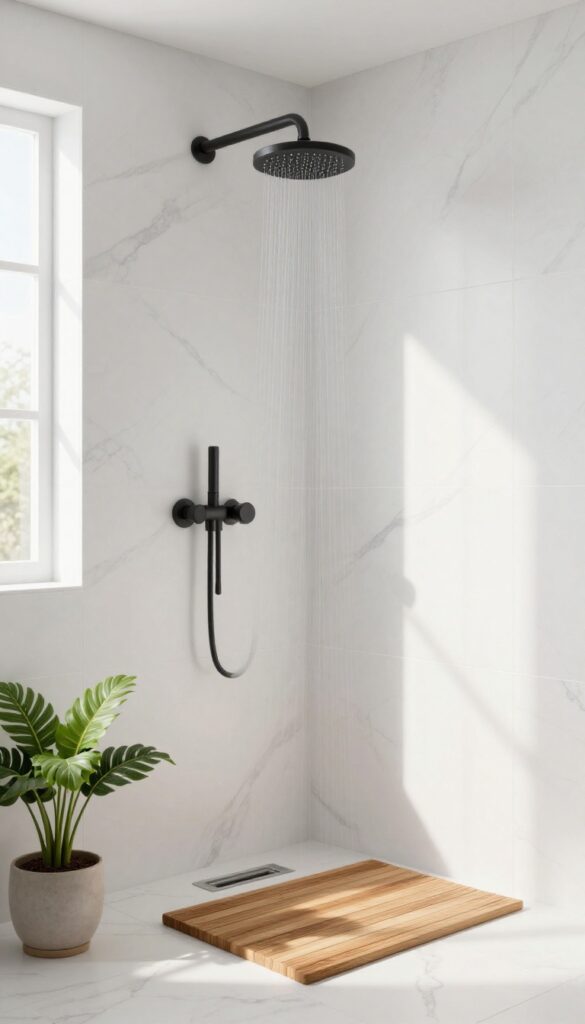
Matte black faucets and showerheads stand out beautifully against white marble-look porcelain tile. This pairing brings a modern, dramatic feel to the bathroom without going over the top. The high contrast keeps the space crisp and intentional.
Why It Works
The dark fixtures ground the bright tile, creating a balanced focal point. Marble-look tile adds timeless elegance while being more durable and affordable than natural stone. Black metal details also hide water spots better than chrome.
Best For
This look works well in bathrooms that get good natural light, as the contrast can feel too stark in dim spaces. It’s ideal for contemporary or transitional homes where you want a touch of luxury without being cold.
Styling Tip
Warm things up with wood accents like a teak bath mat or a small stool. Add greenery with an eucalyptus bundle or a low-maintenance plant to soften the black-and-white palette.
Budget-Friendly Swap
If you’re not ready to replace all fixtures, swap just the showerhead and faucet for matte black spray-paint versions (use high-heat spray paint). Or install black trim kits on existing hardware.
6. Tub-Shower with a Glass Block Wall
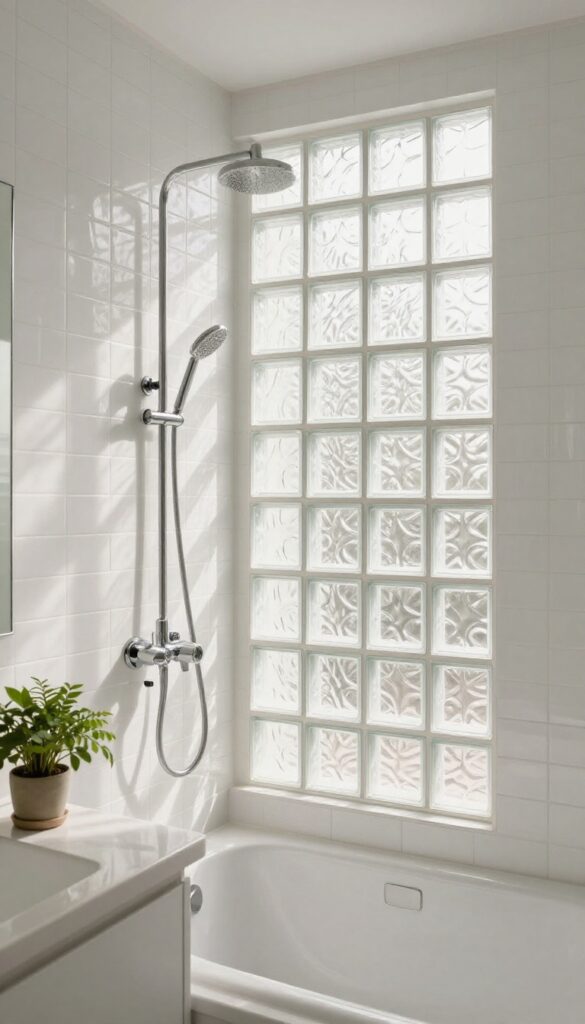
A glass block wall is one of those design moves that solves two problems at once: letting in loads of natural light while keeping your privacy intact. It has a distinctly retro-modern feel, especially when paired with clean white surfaces and chrome fixtures.
The way light filters through the textured glass creates a soft, ever-changing glow that makes the whole bathroom feel airier. Plus, it’s a durable, low-maintenance option that stands up well to moisture.
Why It Works
Glass blocks diffuse light beautifully, so you get brightness without the exposure of a clear window. They also add architectural interest and a sense of depth to what might otherwise be a plain wall. The result is a bathroom that feels open and private at the same time.
Best For
This idea is perfect for bathrooms that share an exterior wall or are adjacent to a hallway where you want light but not visibility. It works especially well in mid-century modern or transitional spaces, but can fit into any style with the right finishes.
Styling Tip
Keep the rest of the bathroom clean and simple so the glass block wall remains the focal point. Use large-format white subway tile or matte finish tiles on the other walls, and let chrome or brushed nickel fixtures catch the light. Add a single plant or a piece of art on an adjacent wall for a soft contrast.
Budget-Friendly Swap
If real glass blocks are out of your budget, consider acrylic or polycarbonate block panels that mimic the look at a fraction of the cost. They’re lighter and easier to install too.
7. Farmhouse Style with a Apron-Front Tub and Shower Curtain
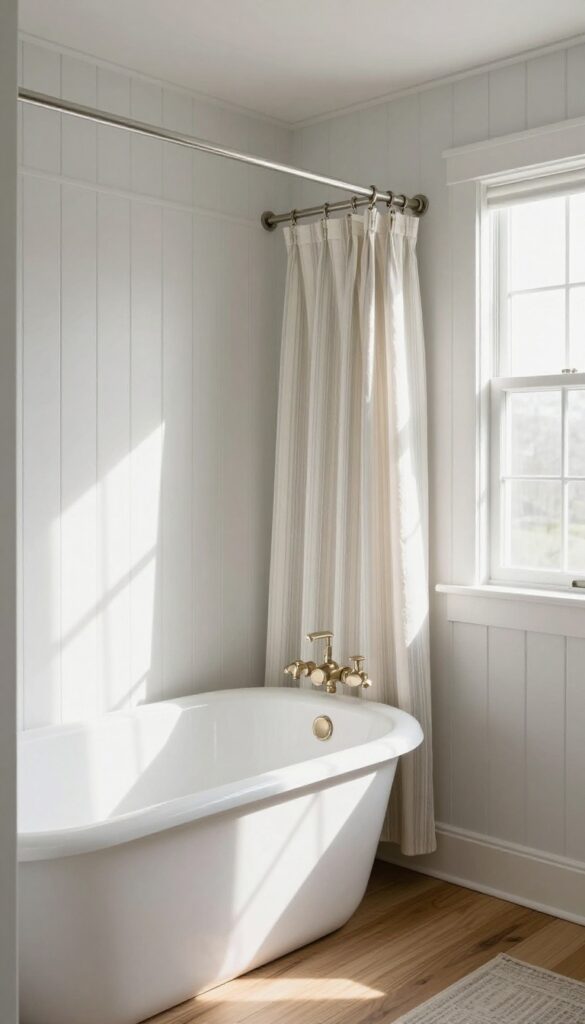
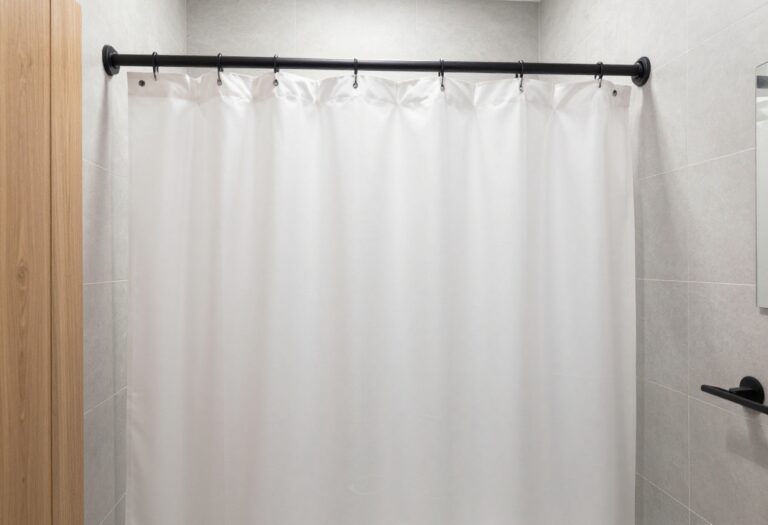
An apron-front tub instantly brings that cozy, farmhouse feel to any bathroom. Pair it with a rustic shower curtain and brushed nickel fixtures, and you’ve got a look that’s both charming and practical. The deep soaking tub invites relaxation, while the shower curtain keeps things simple and budget-friendly.
Why It Works
The apron-front design adds architectural interest without taking up extra space. Brushed nickel finishes resist water spots and complement the warm, natural tones of farmhouse decor. Together, they create a timeless aesthetic that feels welcoming and polished.
Best For
This style is perfect for primary bathrooms or guest baths where you want a cozy, lived-in feel. It works especially well in homes with cottage, rustic, or traditional decor themes.
Styling Tip
Add beadboard wainscoting around the tub area for extra texture and charm. Use a neutral-toned shower curtain with subtle patterns like stripes or florals to keep the look light and airy.
Budget-Friendly Swap
If an apron-front tub is out of reach, try a regular alcove tub with a farmhouse-style shower curtain and beadboard paneling on the walls. You’ll still capture the vibe without the major expense.
8. Compact Combo with a Sliding Barn Door
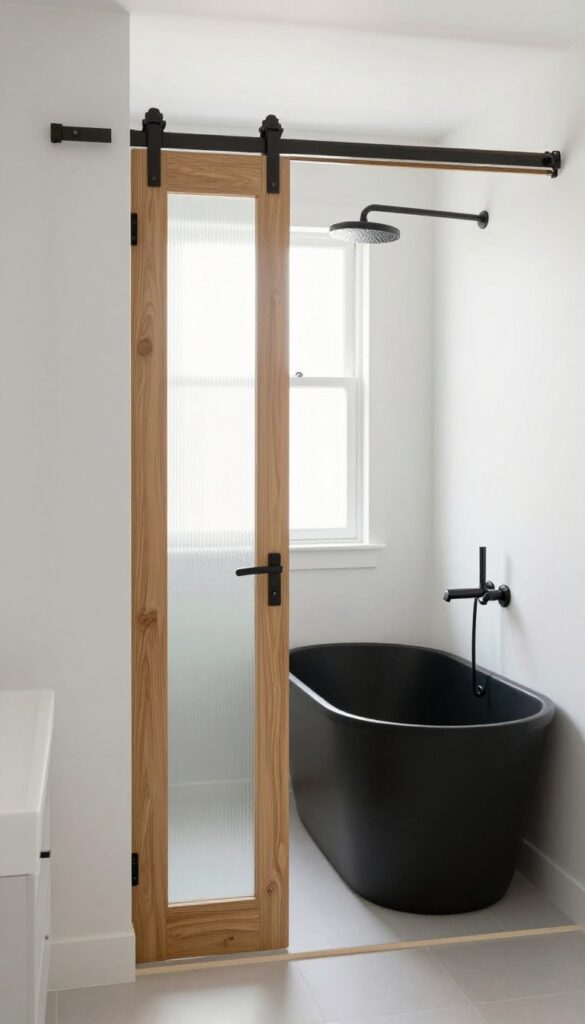
Swapping a traditional swinging door for a sliding barn door can completely change how a small bathroom feels. It frees up floor space that would otherwise be taken by the door’s swing arc, making the room feel bigger and more open. Pair that with a pedestal tub and a simple overhead shower, and you have a setup that feels airy and intentional.
Why It Works
A sliding barn door eliminates the need to step back to close or open the door, which is a game-changer in tight bathrooms. The pedestal tub keeps the visual weight low, so the room doesn’t feel cramped, while the shower kit adds functionality without clutter.
Best For
This setup is ideal for small bathrooms or powder rooms where every inch counts. It also works well in guest baths where you want to maximize openness and make the space feel larger than it actually is.
Styling Tip
Choose a barn door with a light wood tone or a frosted glass insert to keep the room bright. Add a matte black shower kit and tub fixtures for a modern contrast that ties the look together.
Budget-Friendly Swap
If a custom barn door is out of budget, look for ready-made sliding door kits at home improvement stores. You can also repurpose an old door by adding wheels and a track.
9. Two-Tone Tile with a Floating Shelf
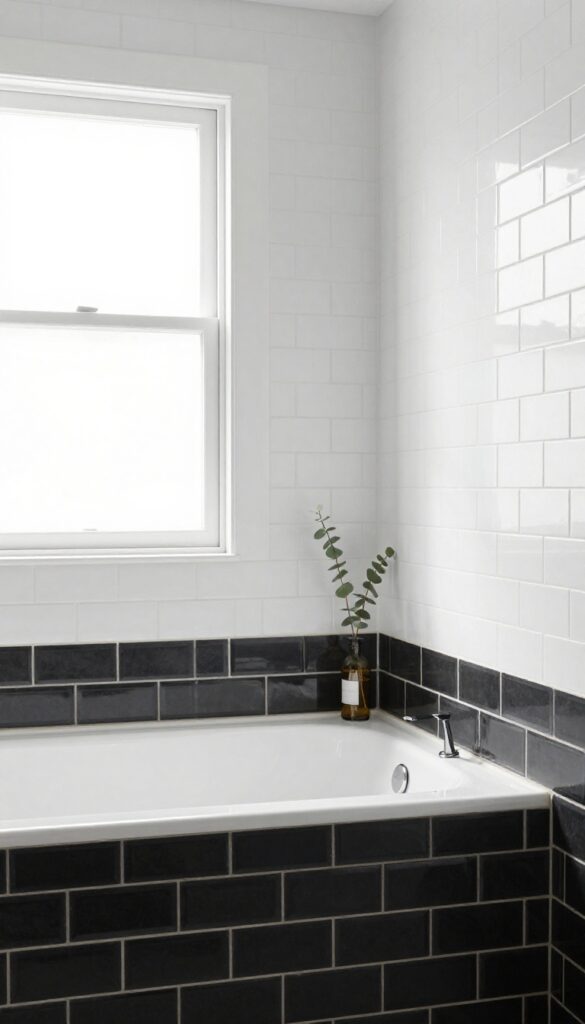
A two-tone tile wall instantly adds depth and personality to your tub-shower combo. By using dark tiles on the bottom half and lighter ones above, you create a visual break that makes the space feel taller and more intentional. A floating teak shelf completes the look, offering a warm natural contrast and a handy spot for bath essentials.
Why It Works
The dark lower tiles hide soap scum and water spots better than all-light tile, so your shower stays cleaner looking longer. The lighter upper tiles reflect light, keeping the space bright without feeling cold. The teak shelf bridges both tones and adds warmth, plus it’s naturally water-resistant.
Best For
This idea is perfect for transitional or modern bathrooms where you want a subtle nod to wainscoting without going full traditional. It also works well in medium to large combos where the wall has enough surface area to show off the contrast.
Styling Tip
Keep the shelf simple—just a small glass bottle of eucalyptus or a single candle. Let the tile be the star. Choose teak over bamboo for longevity in wet areas, and seal it annually to maintain its honey color.
Budget-Friendly Swap
If you’re on a tight budget, use peel-and-stick tile sheets for the dark lower section and paint the upper wall with semi-gloss bathroom paint. Then add a tension pole shelf instead of a floating one.
10. Wet Room Concept with a Central Tub
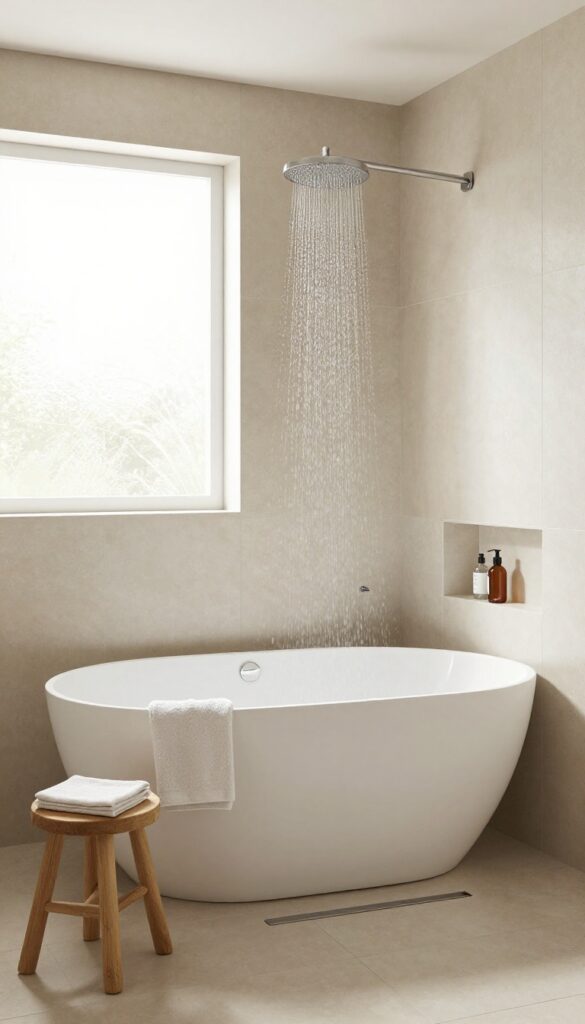
Imagine a bathroom where the entire floor is waterproof and the shower flows freely without boundaries. That’s the wet room concept—a fully open space with a central freestanding tub and an integrated shower area. It feels luxurious, spa-like, and incredibly spacious, even in modest square footage.
The key is careful planning to keep water where it belongs while maximizing openness.
Why It Works
A wet room eliminates visual clutter and makes cleaning a breeze—no shower doors or curtains to scrub. The seamless tile floor and linear drain create a sleek, continuous surface that visually expands the room. Plus, having the tub as a centerpiece adds a sculptural focal point.
Best For
This works best for primary bathrooms where you want a resort-like feel. It’s ideal for those who love open layouts and don’t mind a bit of steam spreading through the space. Also great for small bathrooms because the lack of partitions tricks the eye into seeing more space.
Styling Tip
Use large-format porcelain tiles (like 24×48 inches) on both floors and walls to minimize grout lines and enhance the seamless look. Choose a matte finish for safety under wet feet. Add a built-in niche for toiletries and consider heated flooring for comfort.
Budget-Friendly Swap
If budget is tight, skip the custom tiling and use large luxury vinyl planks that are waterproof—they mimic tile at a fraction of the cost. You can also install a prefab shower pan instead of custom sloping.
11. Vintage Clawfoot Tub with a Modern Shower Kit
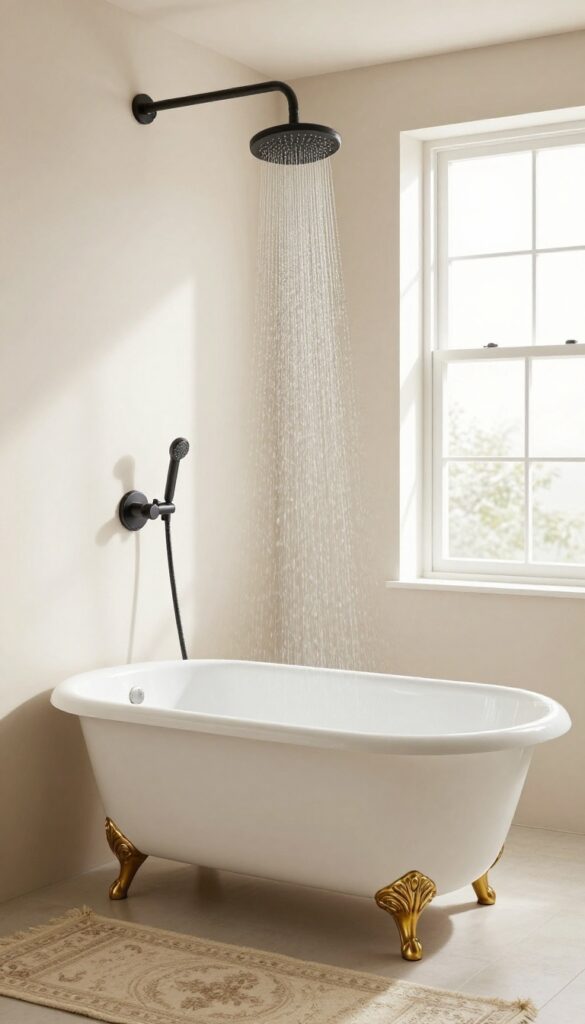
A clawfoot tub instantly brings old-world charm, but pairing it with a sleek modern shower kit makes it feel fresh and intentional. The contrast between the ornate tub and minimalist fixtures creates a look that’s both nostalgic and current. It’s an easy way to add personality without a full gut renovation.
Why It Works
The combination balances classic elegance with contemporary convenience. You get the deep soaking experience of a clawfoot tub plus the functionality of a handheld or overhead shower. The visual tension between vintage and modern keeps the bathroom from feeling dated or too trendy.
Best For
This idea shines in larger bathrooms where the tub can be a standalone focal point, like in primary suites or guest baths. It also works well in period homes where you want to preserve original character while upgrading amenities.
Styling Tip
Choose a matte black or brushed brass shower kit to bridge old and new. Add a soft rug underneath, like a Turkish kilim or cotton bathmat, to warm up the space. Keep walls neutral so the tub remains the star.
Budget-Friendly Swap
Find a vintage clawfoot tub at salvage yards or online marketplaces for under $500. Refinish it yourself with a DIY kit (around $100) instead of buying new.
12. Niche Storage with a Built-In Tub Deck
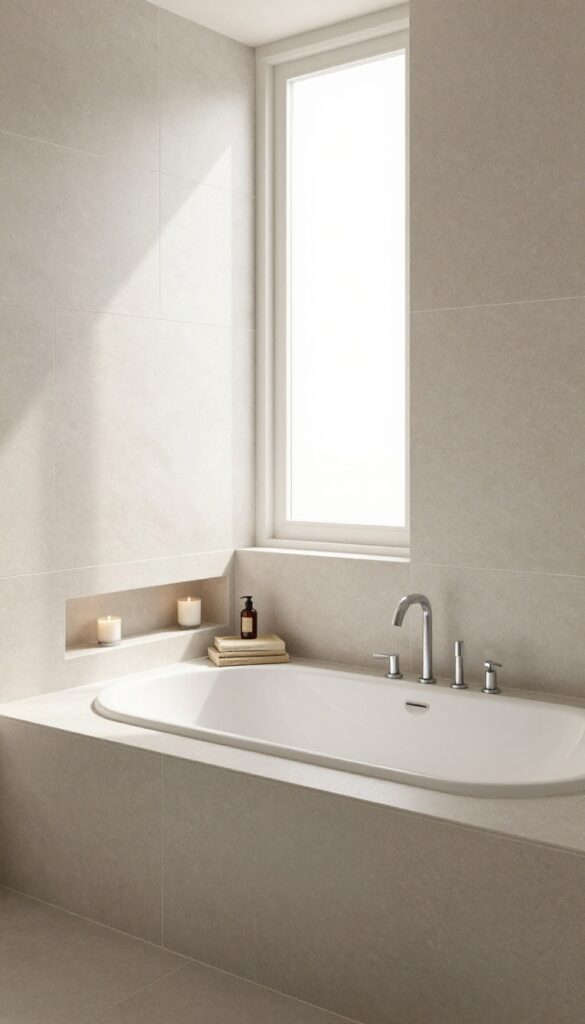
A tiled deck wrapping around your tub does more than just look sleek—it creates a dedicated stage for your bath routine. Recessed niches carved into the deck keep shampoo bottles, a good book, or a candle within arm’s reach but out of sight, so the space stays tidy and serene.
The built-in look feels custom and intentional, turning an ordinary tub-shower combo into a spa-like focal point. It’s all about blending storage with clean lines, so you get function without visual clutter.
Why It Works
Recessed niches eliminate the need for caddies or shelves that can rust, tip over, or break the visual flow. By integrating storage into the deck itself, you keep the surface clear and the silhouette sharp—perfect for maintaining that polished bathroom aesthetic.
Best For
This idea shines in master bathrooms where you want a luxurious, hotel-like feel. It also works well in family bathrooms because it keeps kid-safe bath products contained and out of the way.
Styling Tip
Use large-format tiles on the deck and inside the niches to minimize grout lines and create a seamless look. Add a dimmable LED strip under the deck lip for soft ambient lighting that highlights the textures.
Budget-Friendly Swap
Skip real tile and use waterproof wall panels with pre-formed niche inserts instead. Many come in stone or marble looks at a fraction of the cost and are much easier to install.
13. Bold Patterned Floor with a Neutral Combo
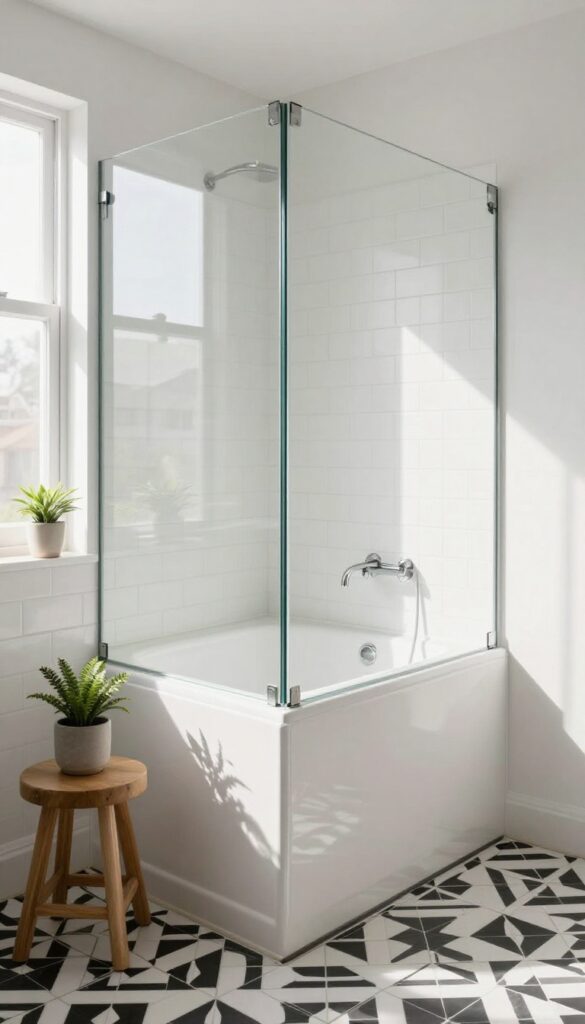
A dramatic floor tile can completely transform a bathroom, and pairing it with a neutral tub-shower combo keeps the look grounded. Geometric or floral patterns add energy and visual interest without competing with the fixtures. This approach lets the floor do the talking while everything else stays calm and cohesive.
Why It Works
Bold floors draw the eye downward, making the room feel larger and more intentional. Since the tub and shower are neutral, they fade into the background, allowing the pattern to become the focal point. The contrast creates a balanced, polished look that feels custom and curated.
Best For
This idea shines in bathrooms with limited wall space or simple layouts where you want to add personality without overwhelming the room. It’s also great for powder rooms or guest baths where you can take a design risk.
Styling Tip
Stick with matte or satin-finish tiles in high-contrast colors like black and white or navy and cream. Keep walls, vanity, and fixtures in soft whites or warm grays so the floor remains the star. Add a matching patterned shower curtain or simple organic accents like a wooden stool to tie it together.
Budget-Friendly Swap
If real tile is out of budget, try peel-and-stick vinyl floor tiles in a bold pattern. Look for brands that offer geometric or Moroccan-inspired designs—they install easily and can be swapped out later.
FAQ
What is the best material for a tub-shower combo?
Acrylic and fiberglass are lightweight and affordable, while cast iron or stone resin offer durability and heat retention. Choose based on your budget and style.
How can I make a small tub-shower combo feel larger?
Use large-format tiles, a glass enclosure, and light colors. A curved shower rod and good lighting also help open up the space.
Can I add a shower to an existing tub?
Yes, with a shower conversion kit that includes a faucet, showerhead, and rod. Ensure proper waterproofing and drainage.
What is the ideal size for a tub-shower combo?
A standard alcove is 60×30 inches, but compact combos can work in 48×36 inches. Measure your space and consider a corner unit for tight spots.
How do I clean a tub-shower combo?
Use a non-abrasive cleaner and a soft sponge. For glass doors, a squeegee after each use prevents water spots. Regular grout sealing helps maintain tiles.
Conclusion
A well-chosen tub and shower combo can make your bathroom feel both polished and practical. Start with one idea that fits your space—whether it’s a bold tile pattern or a sleek glass panel—and build from there.
Small touches like a rainfall showerhead or a wooden bath caddy can tie everything together. Your bathroom should feel like a personal retreat, not a showroom.