23 Elegant Brown Sofa Living Room Ideas for Modern Homes
Warm light hits a brown sofa differently than almost any other piece of furniture. The color absorbs the glow, softens the room, and instantly makes everything feel calmer and more put together.
I always notice how a brown sofa makes a space feel lived-in but still intentional.
That balance feels rare, and honestly, it feels addictive once you get it right.
I’ve styled brown sofas that felt dull at first glance and watched them turn into the best-looking piece in the room.
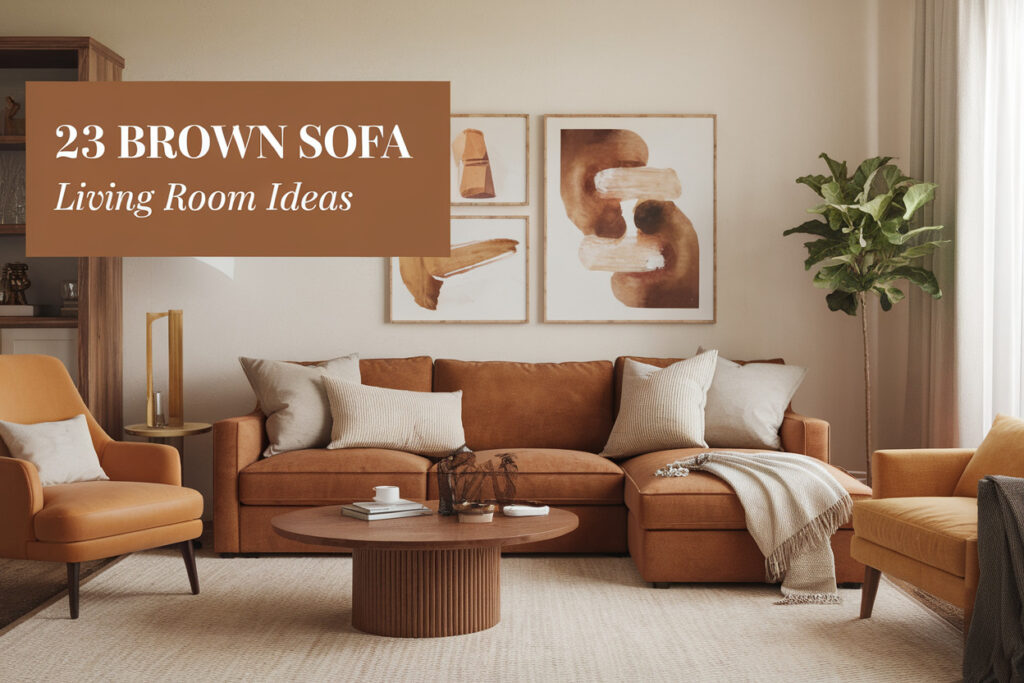
The trick never involves replacing the sofa or spending wildly. It always comes down to how you build the room around it.
1. Layer Neutral Throw Pillows for Instant Depth
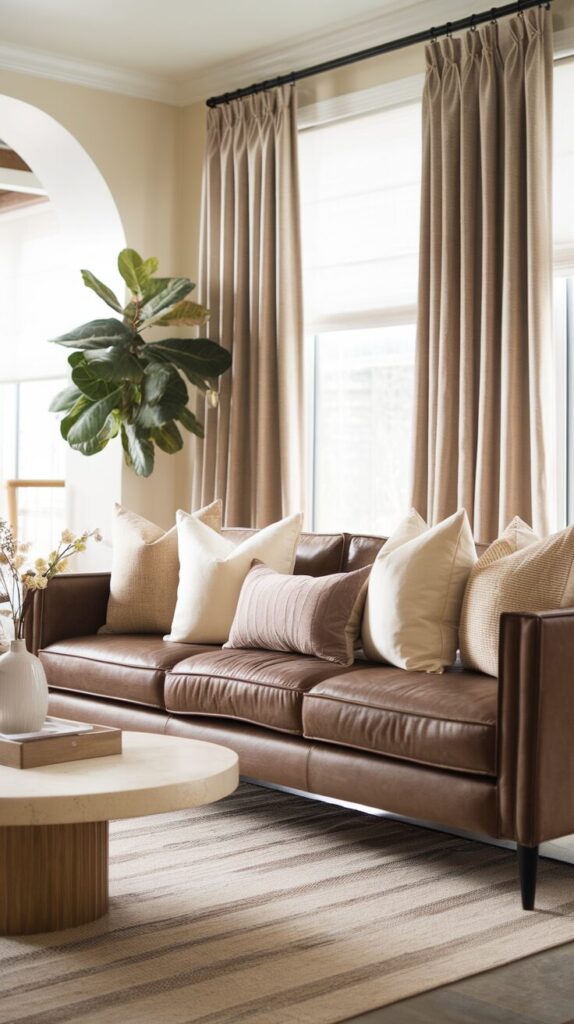
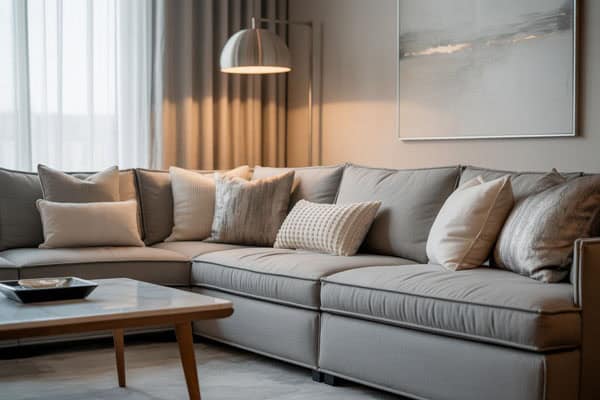
A brown sofa can feel flat when it sits alone with nothing breaking up the color. I always start with throw pillows because they fix that problem fast without locking you into a permanent look. Neutral pillows soften the sofa, add contrast, and make the seating feel styled instead of forgotten.
I like mixing cream, beige, and soft taupe because those shades lift brown instead of fighting it. Textures matter more than patterns here, so I reach for linen, chunky knits, or subtle weaves. The sofa keeps its elegance, and the room gains warmth without looking busy.
Why This Works
Brown acts like a grounding color, and neutrals naturally play well with it. The contrast creates visual layers, which makes the sofa feel intentional instead of heavy. Your eye moves across the seating instead of stopping at one solid block of color.
How to Do It
- Choose 3–5 pillows in slightly different neutral shades
- Mix at least two textures to avoid a flat look
- Place larger pillows on the ends and smaller ones toward the center
Style & Design Tips
Stick with warm-toned neutrals rather than icy whites. Avoid matching every pillow exactly because perfect symmetry kills character. Let the pillows feel collected, not purchased as a set.
Pro Tip or Budget Hack
I often swap pillow covers instead of buying new inserts. You can store covers flat, rotate them seasonally, and refresh the sofa without clutter.
2. Add a Light Area Rug to Balance the Weight
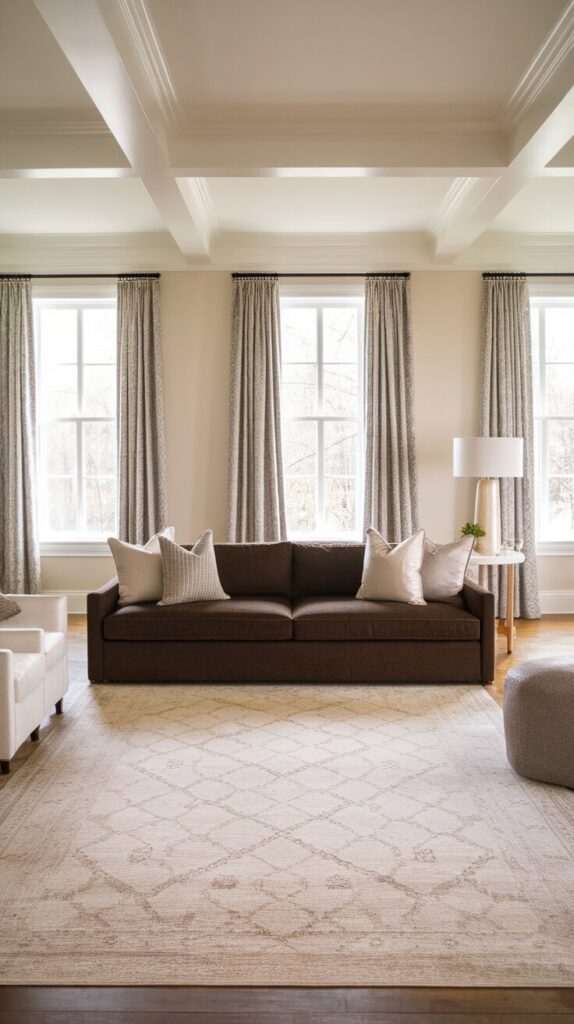
Brown sofas carry visual weight whether you want them to or not. A light area rug pulls that weight downward and spreads it across the floor. The room instantly feels larger and calmer.
I’ve seen brown sofas drown in dark rugs, and the space always feels cramped. Light rugs give the sofa room to breathe and make the seating area feel intentional. You don’t need stark white, just something that contrasts gently.
Why This Works
The eye reads contrast as balance. A lighter rug creates separation between the sofa and the floor, which prevents the room from feeling heavy. That contrast also highlights the sofa instead of hiding it.
How to Do It
- Choose a rug at least large enough to fit the sofa’s front legs
- Stick to beige, ivory, or soft patterned neutrals
- Keep patterns subtle to avoid visual noise
Style & Design Tips
Avoid rugs with cool gray undertones because they clash with brown. Low-contrast patterns add interest without stealing attention. Make sure the rug anchors the seating area fully.
Pro Tip or Budget Hack
Flat-weave rugs often cost less and layer beautifully. I’ve layered a smaller patterned rug over a basic jute one for texture on a budget.
3. Style the Sofa with Warm Wood Accents
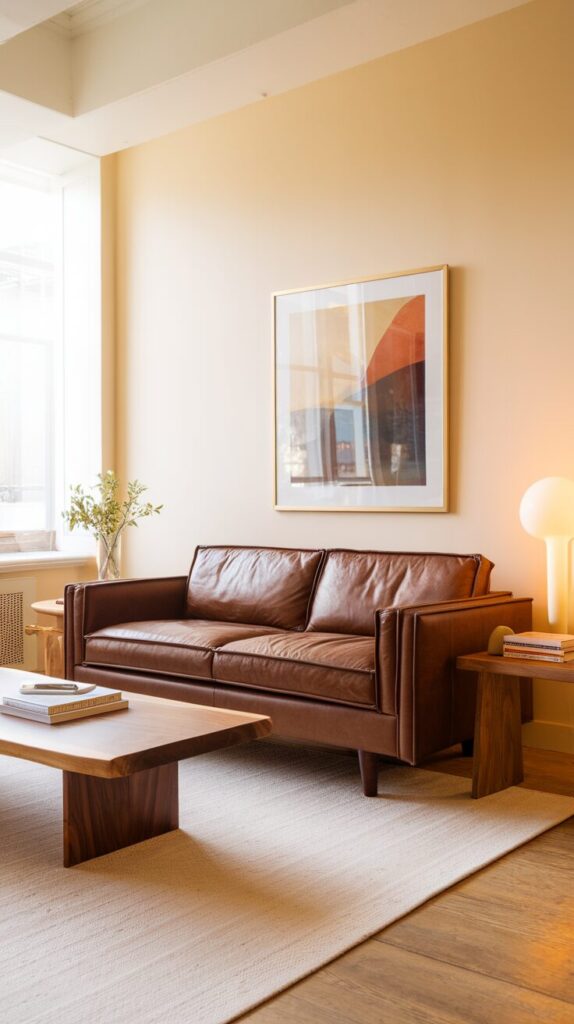
Brown loves company, especially from wood. When I place wood accents near a brown sofa, the room instantly feels cohesive. The trick involves mixing tones instead of matching them exactly.
Light oak, walnut, or even reclaimed wood all work when used intentionally. A coffee table, side table, or shelving nearby ties everything together without making the room look dated. The sofa feels like part of a story instead of a random piece.
Why This Works
Brown and wood share warmth, so they naturally complement each other. Mixed wood tones create depth instead of monotony. The room feels layered, not matchy.
How to Do It
- Place at least one wood element within arm’s reach of the sofa
- Mix lighter and darker woods for contrast
- Keep finishes matte or satin for a modern look
Style & Design Tips
Avoid shiny orange-toned wood because it cheapens the look. Consistency matters more than matching, so repeat wood tones across the room. Let the sofa anchor the palette.
Pro Tip or Budget Hack
Thrift stores often carry solid wood side tables for cheap. A quick sanding and stain refresh can make them look custom.
4. Use Soft Green Plants to Freshen the Space
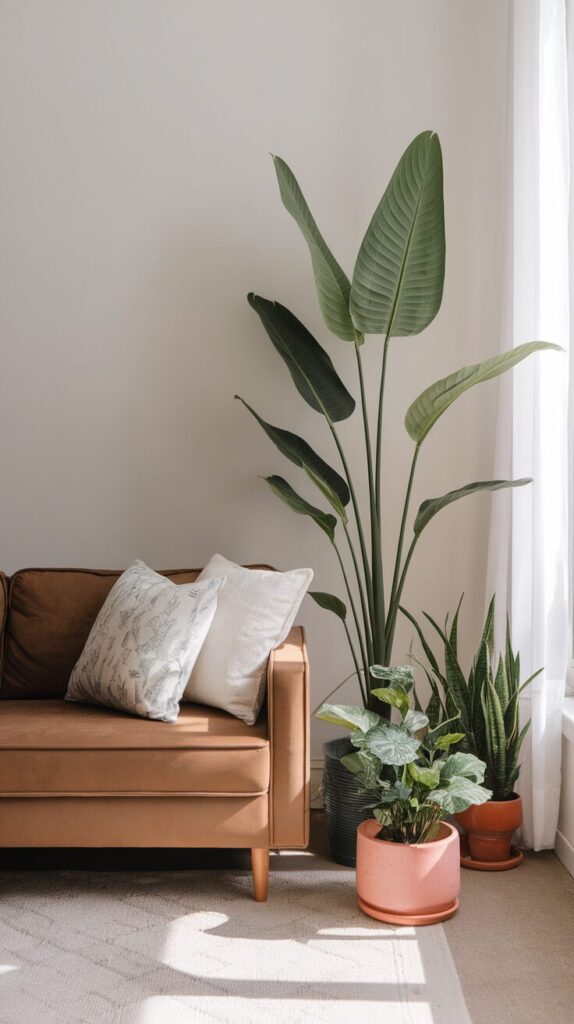
Brown sofas can feel earthy, and plants amplify that in the best way. I add greenery when a room feels flat or too serious. Plants bring life without changing the color palette.
Tall plants work beautifully beside brown sofas, especially in corners. Smaller plants on side tables or shelves add rhythm. The green breaks up the brown and keeps the space from feeling dull.
Why This Works
Green sits opposite brown’s heaviness with freshness. The contrast feels natural rather than forced. Plants also soften straight lines and heavy upholstery.
How to Do It
- Place one tall plant near the sofa’s edge
- Add one smaller plant within the seating area
- Choose planters in neutral or warm finishes
Style & Design Tips
Stick with realistic faux plants if maintenance stresses you out. Avoid tiny plants that get visually lost next to a large sofa. Scale matters more than quantity.
Pro Tip or Budget Hack
I buy basic nursery plants and upgrade the pots later. Neutral ceramic planters instantly elevate even the simplest greenery.
5. Contrast with Crisp White Walls
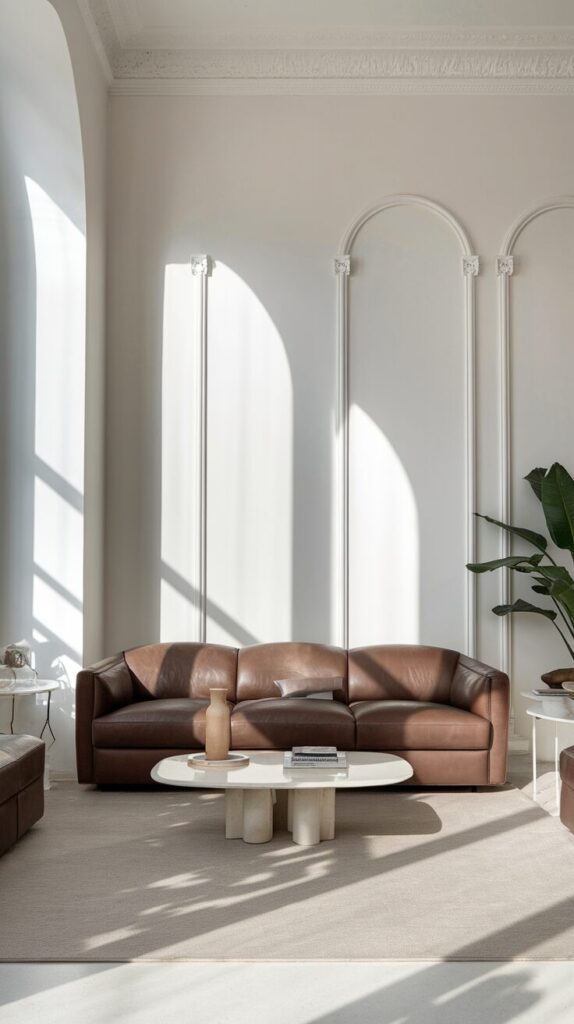
White walls make a brown sofa look intentional instead of dated. I’ve tested this combo repeatedly, and it never fails. The contrast feels clean, modern, and surprisingly cozy.
The key involves choosing the right white. Warm whites work best and keep the room from feeling stark. The sofa becomes the star instead of blending into the background.
Why This Works
White reflects light while brown absorbs it. That contrast defines the space clearly. The sofa stands out without overpowering the room.
How to Do It
- Choose a warm white with subtle cream undertones
- Keep trim and walls consistent for a clean look
- Let the sofa anchor the room visually
Style & Design Tips
Avoid bright, cool whites that clash with brown. Soft contrast beats harsh contrast every time. Add minimal wall décor to keep the look clean.
Pro Tip or Budget Hack
Paint offers the biggest impact for the least money. Even refreshing the same white shade can make the sofa feel brand new.
6. Add Metallic Accents for Subtle Elegance
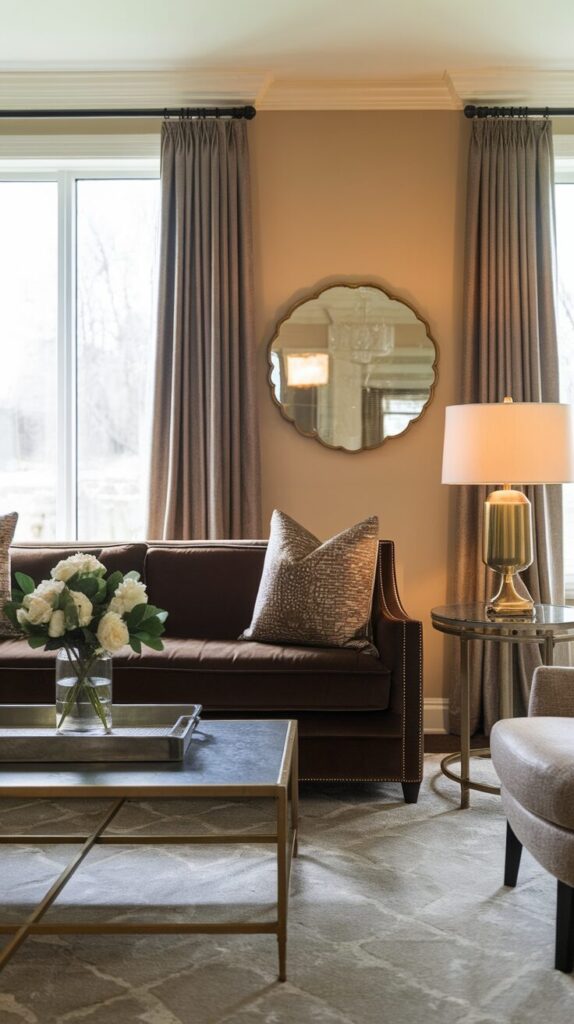
Brown sofas pair beautifully with metal when done carefully. I lean toward brass, antique gold, or matte black. Those finishes elevate the sofa instead of overpowering it.
Metal shows up best in small doses. Lamps, trays, or picture frames add polish without making the room feel cold. The sofa keeps its warmth while the space gains refinement.
Why This Works
Metal reflects light and adds contrast. That contrast sharpens the softness of brown upholstery. The room feels intentional and styled.
How to Do It
- Choose one metal finish and repeat it twice
- Add metal through lighting or small décor
- Keep finishes muted rather than shiny
Style & Design Tips
Skip chrome because it clashes with brown’s warmth. Consistency beats variety with metals. Let the sofa remain the dominant texture.
Pro Tip or Budget Hack
Spray paint works wonders on thrifted décor. Matte black or brushed gold instantly modernize old pieces.
7. Ground the Sofa with Dark Accent Pieces
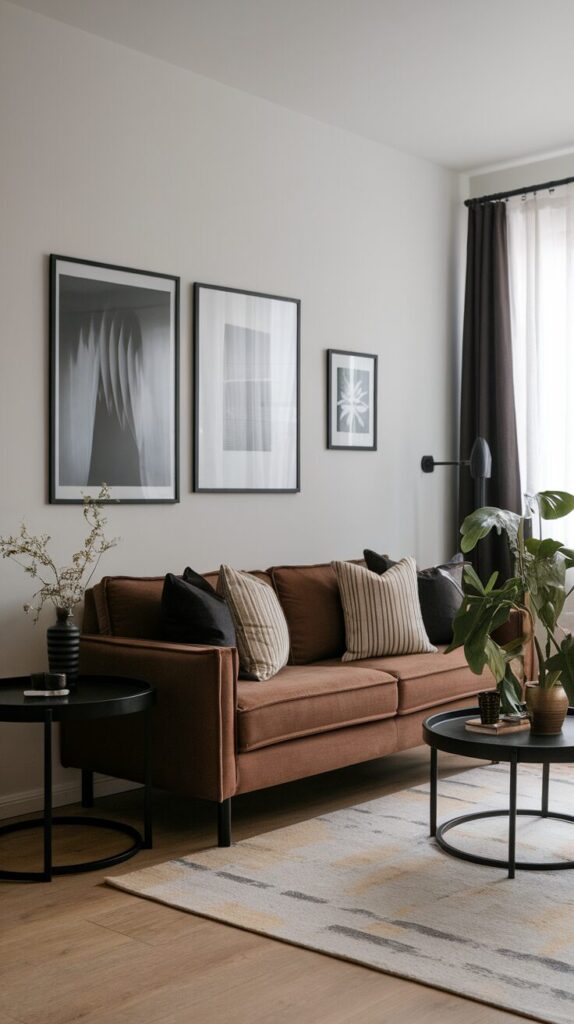
A brown sofa doesn’t need everything around it to feel light. I like adding one or two darker accents to ground the space. That contrast keeps the room from feeling washed out.
Think dark frames, charcoal throws, or a black side table. The sofa feels richer when darker tones support it. Balance matters more than brightness.
Why This Works
Dark accents create visual anchors. They keep the sofa from floating visually. The room gains structure and depth.
How to Do It
- Add one dark accent near the sofa
- Keep other elements lighter for balance
- Repeat the dark tone once elsewhere
Style & Design Tips
Avoid clustering all dark items together. Spacing creates harmony, not matching. Let contrast guide your placement.
Pro Tip or Budget Hack
Black picture frames cost very little and add instant polish. I use them constantly for easy grounding.
8. Style a Coffee Table with Soft Contrast
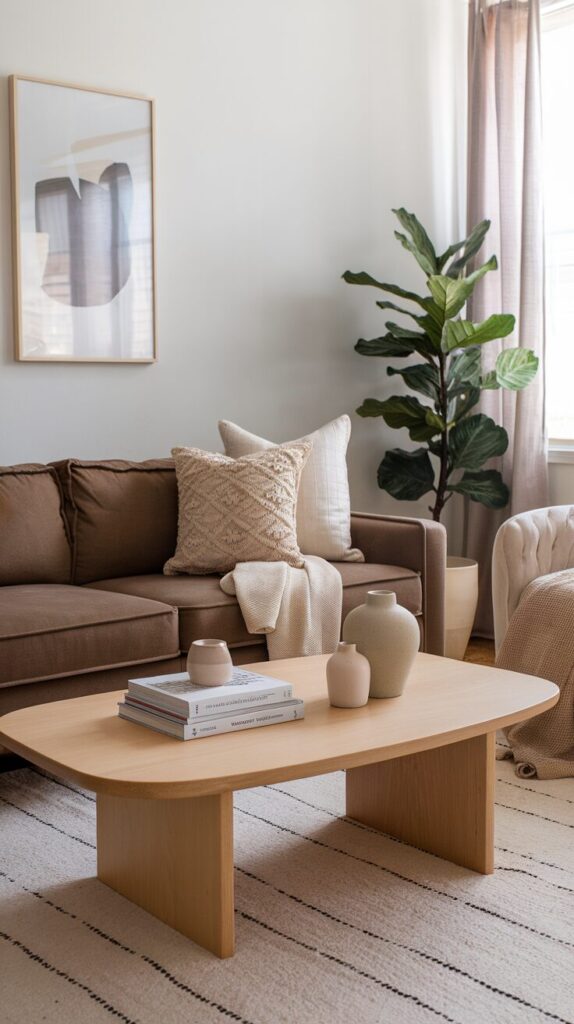
The coffee table sits directly in front of the sofa, so it matters. I style it lightly to complement brown without stealing attention. Soft contrast always wins here.
Light wood, glass, or stone tables work best. A few intentional décor pieces keep the look clean. The sofa feels elevated instead of crowded.
Why This Works
The table creates a visual pause between seating and floor. Contrast keeps the area from feeling heavy. Simplicity lets the sofa shine.
How to Do It
- Choose a table lighter than the sofa
- Style with 2–3 objects only
- Leave negative space visible
Style & Design Tips
Avoid clutter at all costs. Less styling looks more expensive every time. Keep shapes simple and organic.
Pro Tip or Budget Hack
Books stacked horizontally add height and structure. I rotate covers seasonally for a fresh look.
9. Use Wall Art to Echo the Sofa’s Warmth
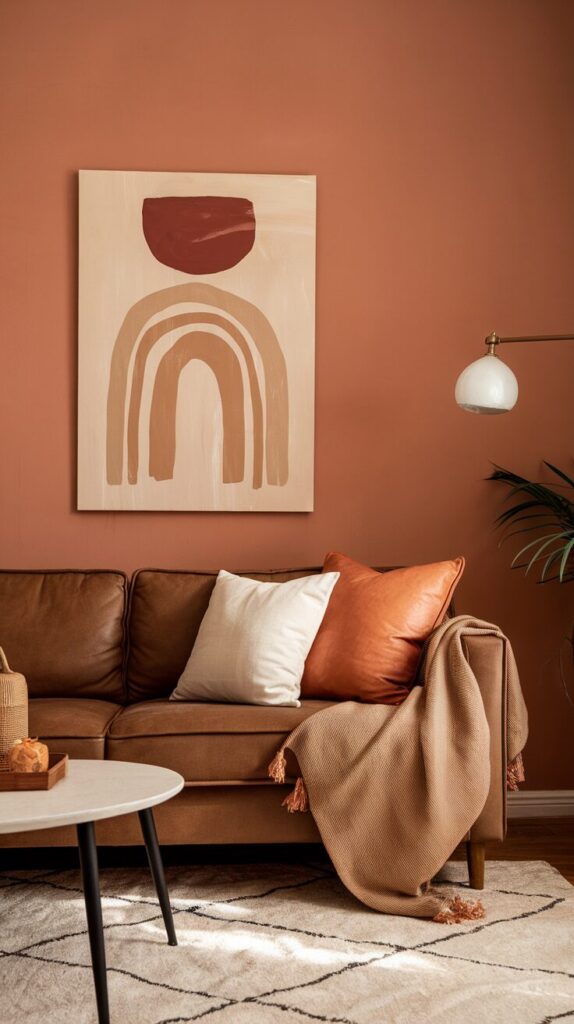
Blank walls make a brown sofa feel lonely. I hang art that pulls warmth from the sofa and spreads it upward. The room instantly feels complete.
Abstract art, landscapes, or neutral prints work beautifully. The goal involves echoing brown tones subtly, not matching them exactly. The sofa feels intentional within the space.
Why This Works
Color repetition creates flow. The eye connects the sofa to the walls naturally. The room feels cohesive instead of disconnected.
How to Do It
- Choose art with warm undertones
- Hang pieces at eye level above the sofa
- Keep frames simple and consistent
Style & Design Tips
Avoid overly busy artwork. Soft repetition feels calmer than bold statements. Let the sofa remain the anchor.
Pro Tip or Budget Hack
Printable art in high-quality paper looks surprisingly expensive. I swap prints instead of buying new frames.
10. Layer Cozy Throws for Lived-In Comfort
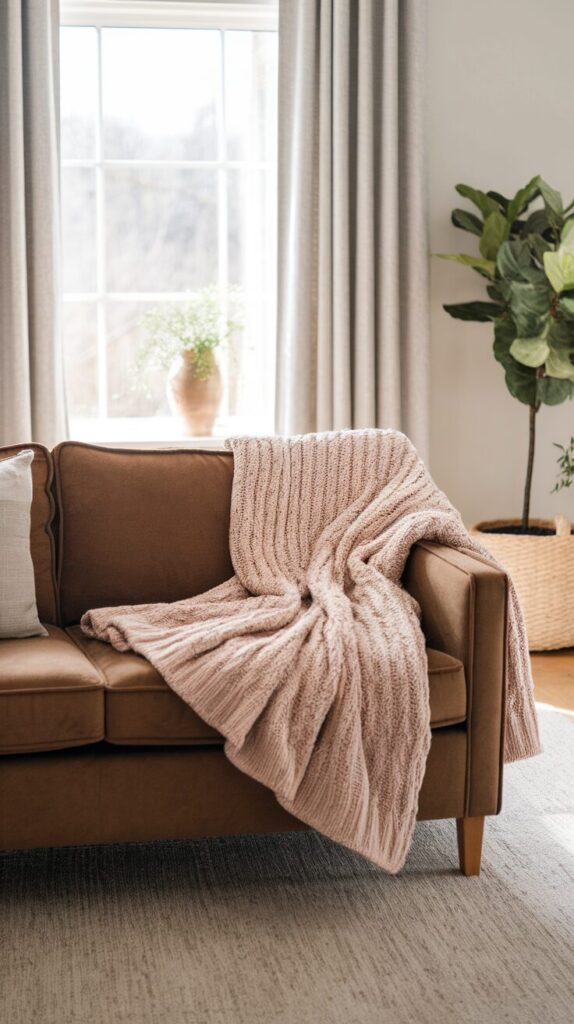
A brown sofa shines when it looks inviting. I toss a throw over one arm or corner for instant comfort. The room feels welcoming without trying too hard.
Texture matters more than color here. Knits, wool, or soft cotton add depth. The sofa looks styled but still livable.
Why This Works
Throws soften structured furniture. They signal comfort and ease. The sofa feels approachable instead of stiff.
How to Do It
- Choose one throw with visible texture
- Drape it casually instead of folding perfectly
- Keep colors within the warm neutral range
Style & Design Tips
Avoid tiny throws that look decorative only. Function should guide style here. Let the throw feel usable.
Pro Tip or Budget Hack
I keep one neutral throw year-round and swap seasonal ones. Storage stays simple, and the look always feels fresh.
11. Mix Soft Gray Accents for a Modern Edge
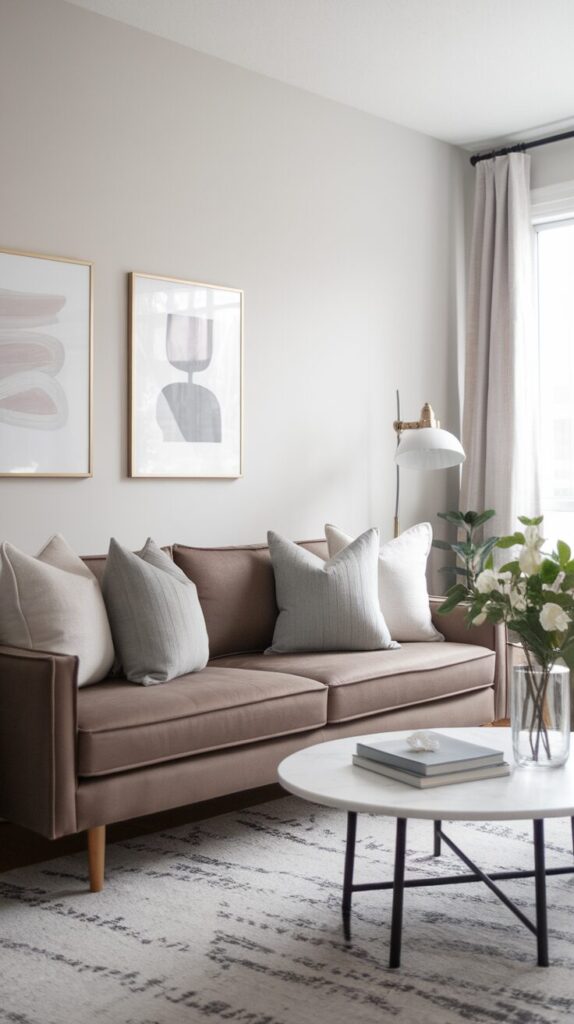
Brown sofas don’t need to live in warm-only spaces. I like adding soft gray accents when a room starts feeling too cozy and needs structure. Gray sharpens the look without turning the room cold.
I usually introduce gray through pillows, art, or a side chair. The brown stays dominant, but the gray adds contrast that feels modern and intentional. The room feels updated without losing warmth.
Why This Works
Gray balances brown’s warmth with visual clarity. The contrast keeps the room from feeling dated. The space reads calm, polished, and current.
How to Do It
- Choose light or medium gray rather than charcoal
- Add gray in small doses near the sofa
- Repeat the gray tone at least twice
Style & Design Tips
Avoid cool bluish grays because they fight brown. Soft gray beats stark gray every time. Keep textures cozy to maintain warmth.
Pro Tip or Budget Hack
Gray pillow covers cost very little and change the vibe instantly. I rotate them when I want a cleaner look.
12. Anchor the Sofa with a Statement Floor Lamp
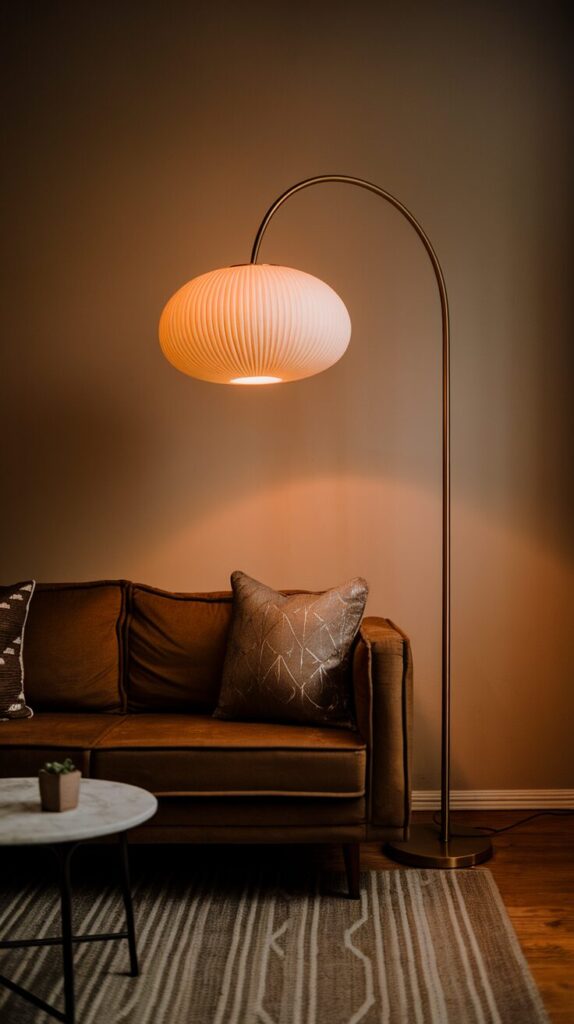
Overhead lighting rarely flatters a living room. I always add a floor lamp near a brown sofa to create mood and balance. The light makes the seating area feel intentional.
Arched lamps or slim metal styles work best. They frame the sofa without crowding it. The room feels layered instead of flat.
Why This Works
Lighting creates zones. A floor lamp visually anchors the sofa and adds height. The room feels styled and functional.
How to Do It
- Place the lamp just behind or beside the sofa
- Choose warm bulbs for cozy light
- Keep the base slim to avoid bulk
Style & Design Tips
Avoid lamps that feel too traditional. Modern shapes elevate brown sofas instantly. Let the lamp complement, not dominate.
Pro Tip or Budget Hack
Plug-in floor lamps work just as well as hardwired ones. I hide cords under rugs or behind furniture.
13. Pair the Sofa with Soft Beige Curtains
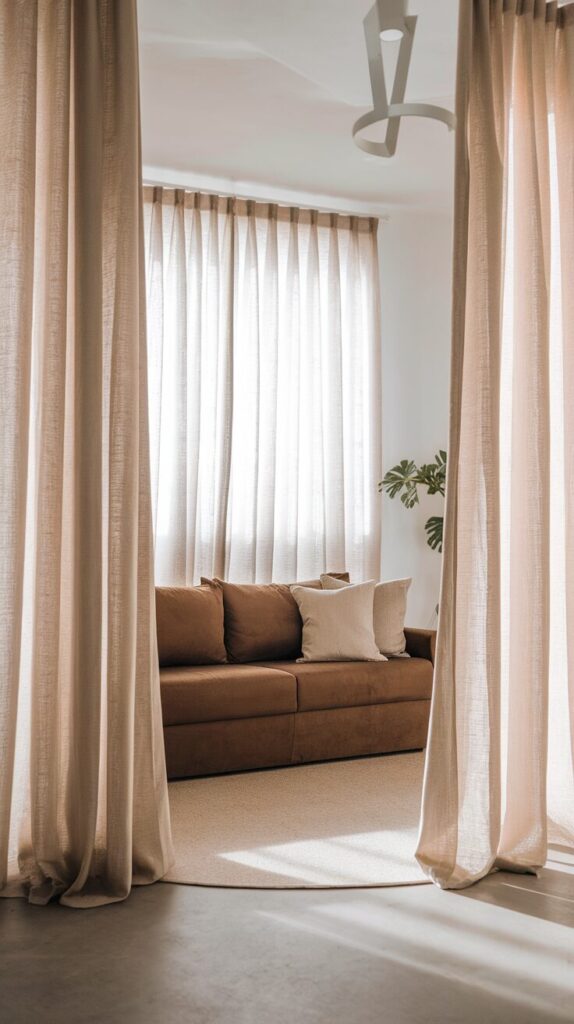
Curtains influence a room more than people realize. I hang beige or linen curtains near brown sofas to soften the walls. The space feels taller and calmer.
Heavy dark curtains overwhelm brown seating. Light fabrics keep things airy while still warm. The sofa looks intentional instead of heavy.
Why This Works
Vertical fabric draws the eye upward. Beige complements brown without competing. The room feels open and balanced.
How to Do It
- Hang curtains higher than the window frame
- Choose light-filtering fabrics
- Keep hardware simple
Style & Design Tips
Avoid short curtains that cut the wall visually. Length creates elegance every time. Stick to warm neutrals.
Pro Tip or Budget Hack
Ikea-style curtain panels often cost less and look great. Doubling panels adds fullness without custom pricing.
14. Add Texture Through Woven Baskets
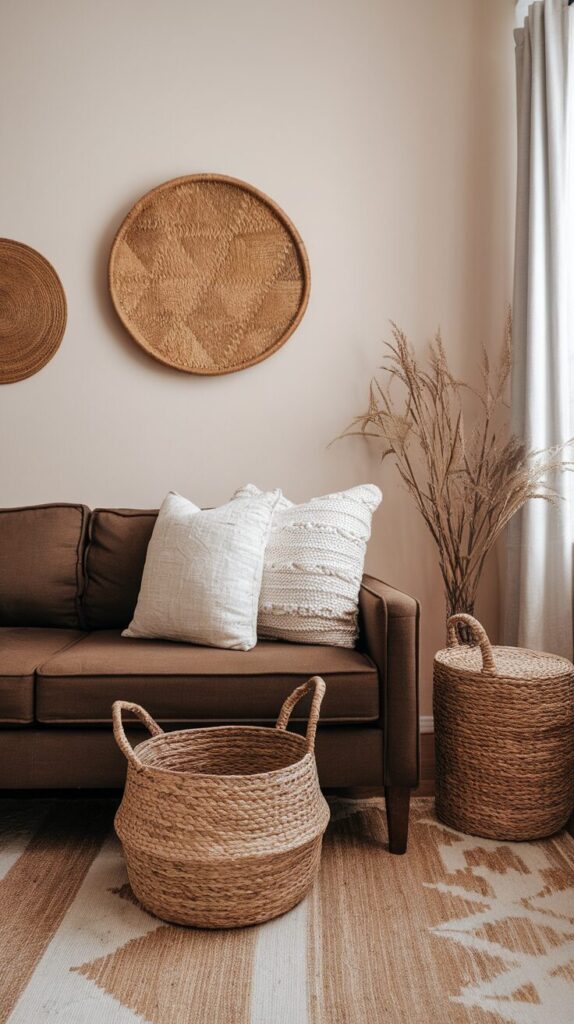
Brown sofas pair beautifully with woven textures. I use baskets for storage and style at the same time. The room feels cozy and practical.
Baskets work beside the sofa or under side tables. They add texture without clutter. The space feels lived-in but organized.
Why This Works
Texture keeps brown from feeling flat. Natural fibers add warmth and depth. The room gains character without extra color.
How to Do It
- Place one basket near the sofa
- Use it for throws or magazines
- Choose neutral woven tones
Style & Design Tips
Avoid shiny finishes near woven pieces. Natural textures shine best together. Keep shapes simple.
Pro Tip or Budget Hack
Laundry baskets double as stylish storage. I’ve used them more times than I can count.
15. Balance the Sofa with a Light Accent Chair
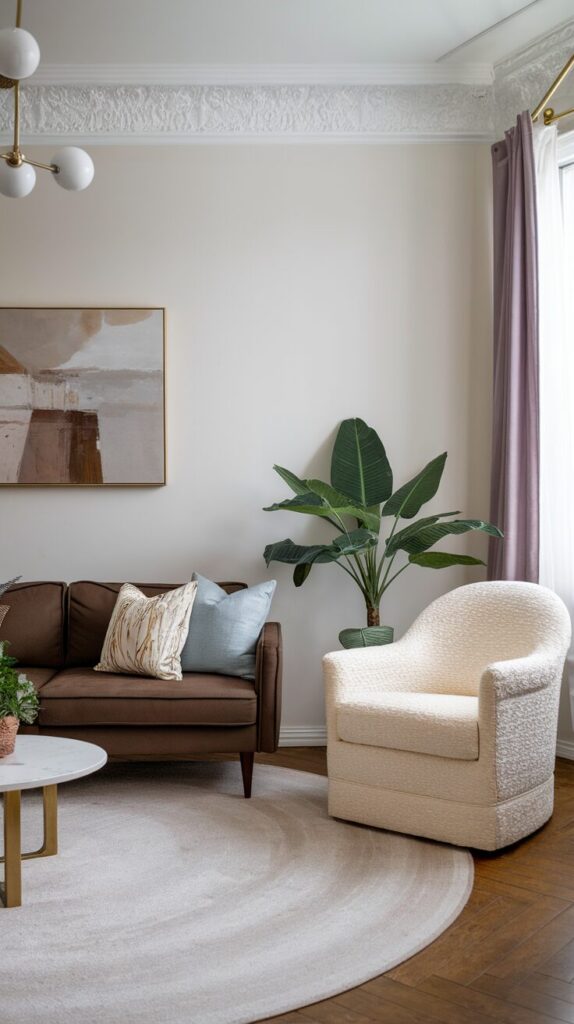
Brown sofas look better when they don’t stand alone. I add a light accent chair to balance the seating visually. The contrast feels intentional and airy.
Cream, beige, or soft gray chairs work well. They break up the brown and add dimension. The room feels designed, not accidental.
Why This Works
Opposing tones create balance. The eye moves naturally between pieces. The seating area feels complete.
How to Do It
- Choose a chair lighter than the sofa
- Place it diagonally or opposite the sofa
- Keep shapes complementary
Style & Design Tips
Avoid matching upholstery exactly. Contrast creates interest, not sameness. Let each piece breathe.
Pro Tip or Budget Hack
Slipcovers transform basic chairs easily. I use them when I want flexibility.
16. Use Neutral Wall Shelves for Subtle Styling
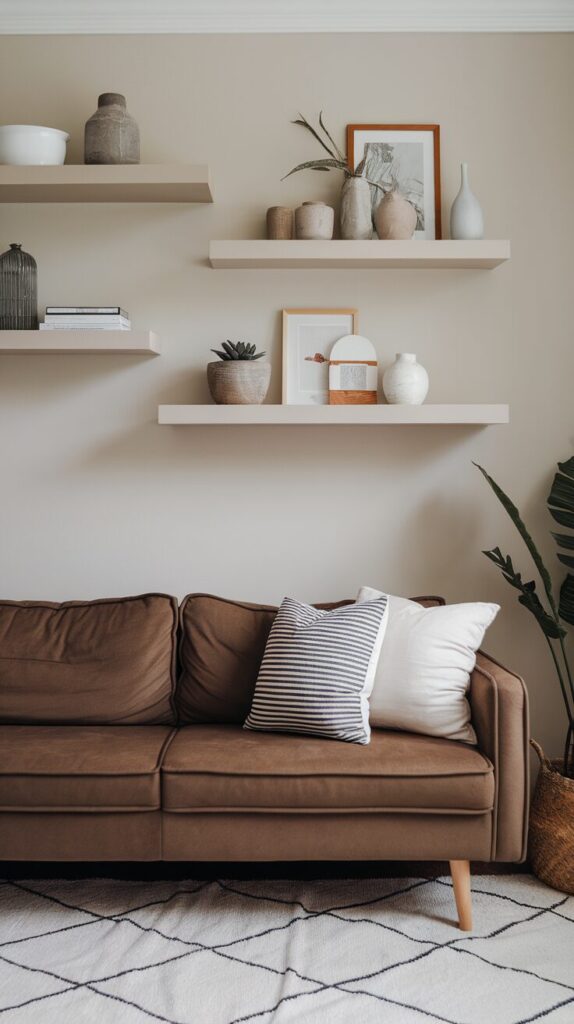
Shelves above or near a brown sofa add personality fast. I style them lightly to avoid clutter. The sofa feels framed instead of boxed in.
Neutral shelves keep the focus on texture and shape. A few intentional objects make the room feel curated. Less truly works better here.
Why This Works
Shelving draws the eye upward. Visual balance improves instantly. The sofa feels connected to the rest of the room.
How to Do It
- Install shelves evenly spaced
- Style with odd-number groupings
- Leave empty space visible
Style & Design Tips
Avoid overcrowding shelves. Negative space matters. Stick to warm-toned décor.
Pro Tip or Budget Hack
Floating shelves cost less and look modern. I install them myself to save money.
17. Ground the Space with a Dark Coffee Table Base
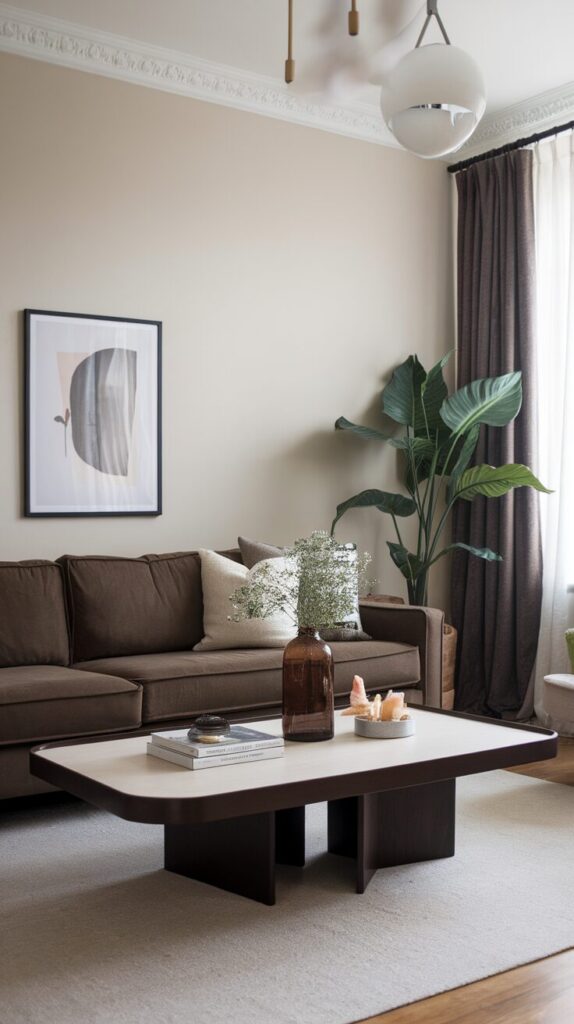
Light tops with dark bases work beautifully near brown sofas. I love the contrast and balance they create. The sofa feels anchored without heaviness.
Metal or dark wood bases keep things grounded. The tabletop stays light and fresh. The room feels layered and intentional.
Why This Works
Contrast defines space. The sofa connects visually to darker elements. The room gains structure.
How to Do It
- Choose tables with visible bases
- Balance with lighter décor on top
- Repeat dark tones elsewhere
Style & Design Tips
Avoid bulky designs. Slim profiles feel modern. Let contrast do the work.
Pro Tip or Budget Hack
DIY table bases with ready-made tops save money. I’ve done this more than once.
18. Add Subtle Pattern Through Rugs or Pillows
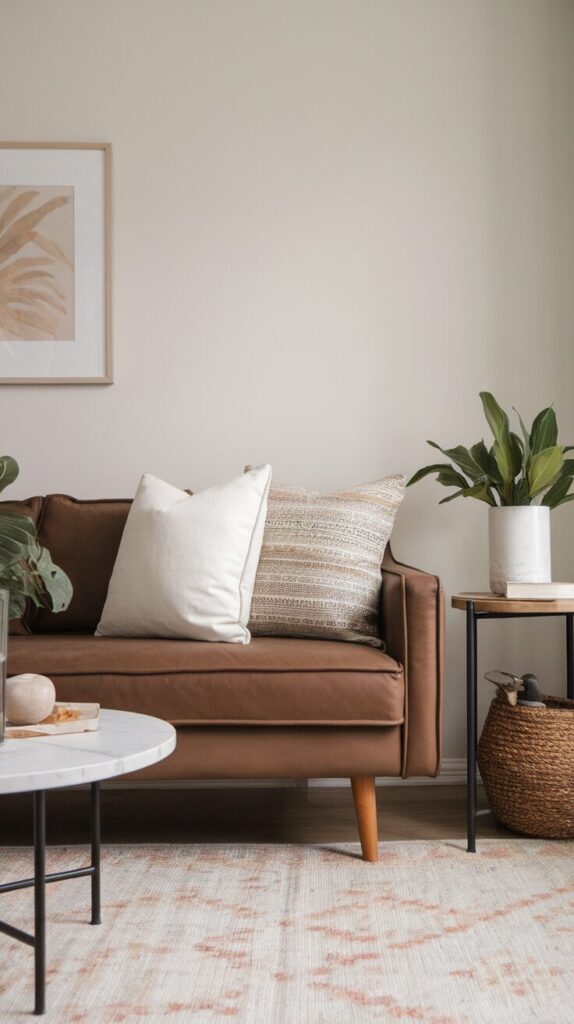
Pattern brings life to a brown sofa setup. I keep patterns subtle so the room stays calm. The sofa benefits from gentle movement.
Geometric or faded patterns work best. They add interest without chaos. The space feels intentional.
Why This Works
Patterns break visual monotony. Soft repetition feels balanced. The sofa gains dimension.
How to Do It
- Choose one patterned element
- Keep colors within the palette
- Avoid bold contrasts
Style & Design Tips
Too many patterns overwhelm brown. Subtle beats bold here. Let texture lead.
Pro Tip or Budget Hack
Vintage-style rugs cost less in smaller sizes. Layering helps stretch budgets.
19. Use Warm Lighting to Enhance the Sofa’s Tone
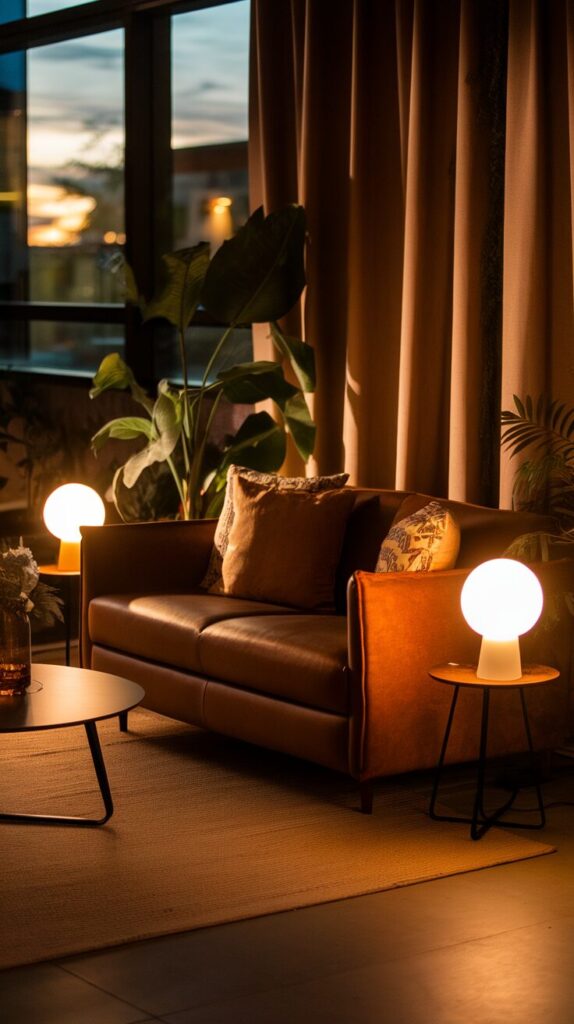
Lighting changes everything. I always choose warm bulbs near brown sofas. The color looks richer and more inviting.
Cool lighting drains warmth fast. Lamps and sconces help control mood. The sofa feels cozy instead of dull.
Why This Works
Warm light enhances brown’s undertones. The room feels welcoming. Comfort increases instantly.
How to Do It
- Use bulbs labeled soft or warm white
- Add multiple light sources
- Avoid harsh overhead lights
Style & Design Tips
Stick with consistent lighting temperatures. Mixed lighting feels messy. Warm wins every time.
Pro Tip or Budget Hack
Smart bulbs let you adjust warmth easily. I change mine seasonally.
20. Keep the Palette Tight and Intentional
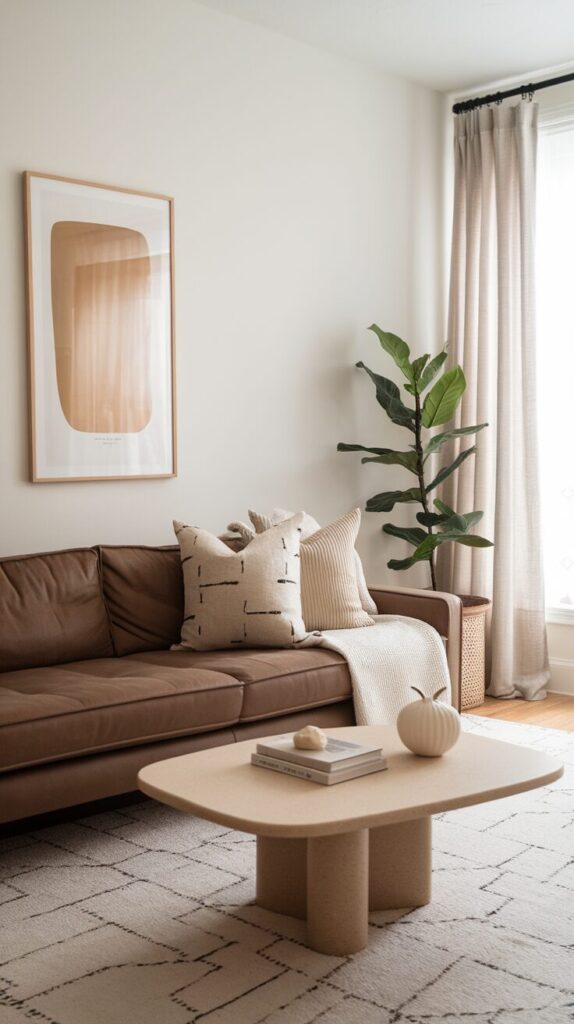
Brown sofas shine in controlled palettes. I limit colors to three or four total. The room feels calm and cohesive.
Too many colors distract from the sofa. Simplicity keeps elegance intact. The space feels intentional.
Why This Works
Limited palettes create harmony. The sofa anchors the room. Visual noise disappears.
How to Do It
- Choose brown as the anchor
- Add two supporting neutrals
- Repeat colors consistently
Style & Design Tips
Avoid trendy colors that age quickly. Timeless tones last longer. Trust restraint.
Pro Tip or Budget Hack
Paint samples help test palettes cheaply. I use them constantly.
21. Add a Soft Ottoman for Flexibility
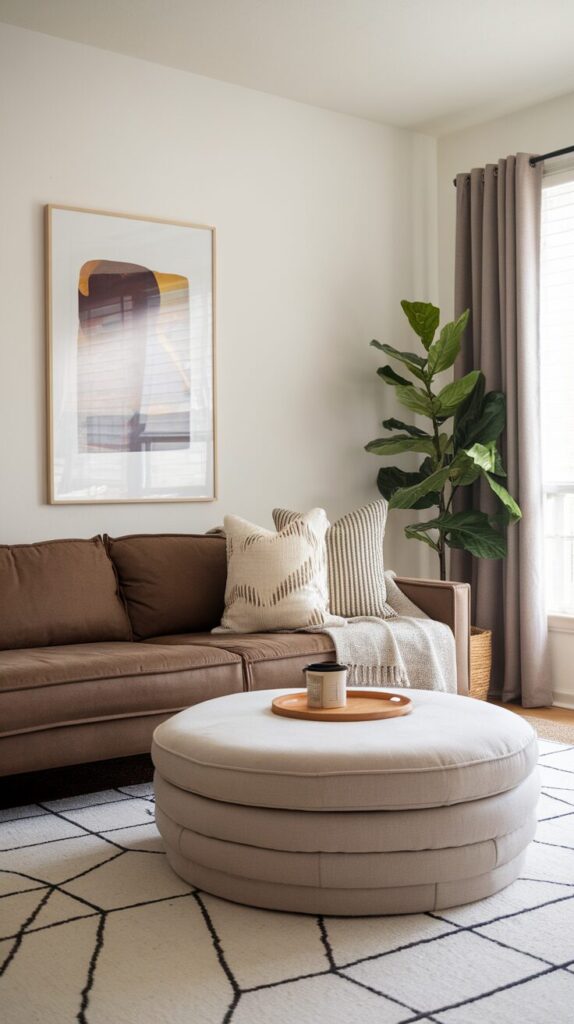
Ottomans pair beautifully with brown sofas. I love their versatility. They add comfort and function.
Use them as footrests or extra seating. Neutral upholstery keeps them flexible. The room feels adaptable.
Why This Works
Low pieces add balance. Flexibility improves flow. The sofa gains usability.
How to Do It
- Choose upholstery lighter than the sofa
- Keep shape simple
- Place within easy reach
Style & Design Tips
Avoid overly bulky ottomans. Scale matters. Keep proportions balanced.
Pro Tip or Budget Hack
Storage ottomans pull double duty. I use them everywhere.
22. Introduce Subtle Leather Accents
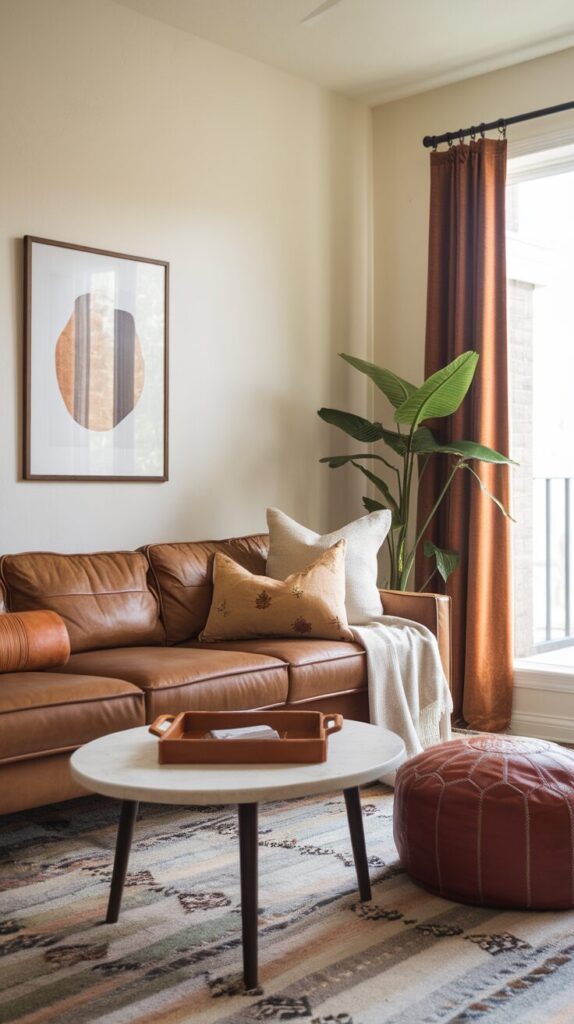
Leather near a brown sofa feels intentional. I add small leather accents for cohesion. The look feels elevated.
Think trays, poufs, or chair details. The repetition feels refined. The sofa looks part of a larger plan.
Why This Works
Material repetition creates unity. Leather echoes the sofa naturally. The room feels curated.
How to Do It
- Add one leather detail nearby
- Keep tones complementary
- Avoid exact matches
Style & Design Tips
Too much leather feels heavy. Subtlety wins. Let accents support.
Pro Tip or Budget Hack
Faux leather works beautifully for décor. I use it often.
23. Keep Styling Relaxed, Not Perfect
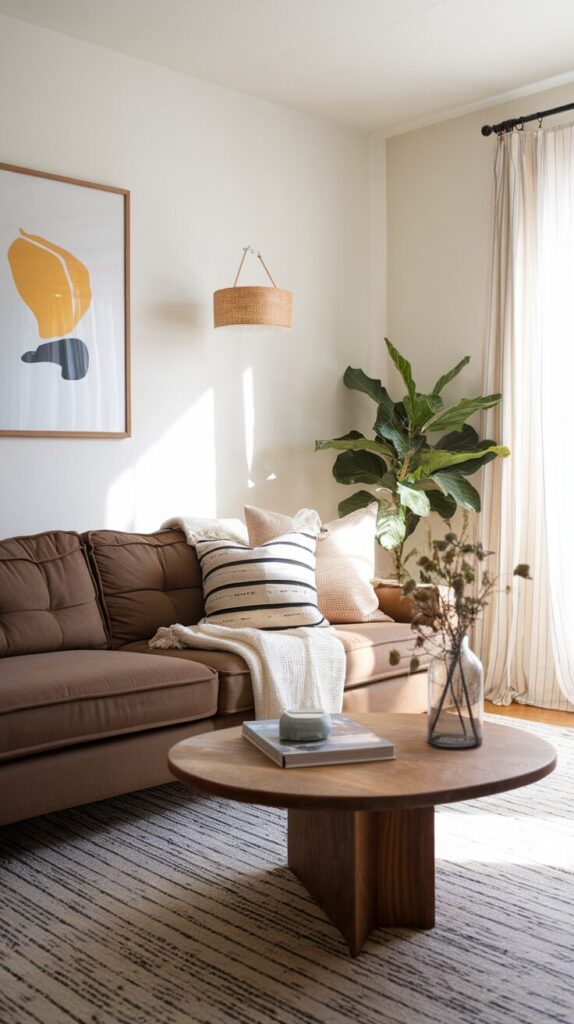
Perfection kills comfort. I let brown sofas look lived-in. The room feels welcoming and real.
A slightly undone look invites people in. Comfort always beats stiffness. The space feels like home.
Why This Works
Relaxed spaces feel human. Brown supports warmth naturally. The room stays approachable.
How to Do It
- Avoid perfect symmetry
- Let items overlap slightly
- Style for use, not photos
Style & Design Tips
Overstyling feels fake. Comfort shows confidence. Trust the process.
Pro Tip or Budget Hack
Live in the room before adjusting. I always tweak after a few days.
The Brown Sofa Design Strategy: How to Build a Cohesive Living Room Around It
A brown sofa works best when you treat it as the anchor, not the problem. I always start by defining the room’s overall direction before I add a single pillow or lamp. When you create a simple foundation plan, every styling choice feels intentional instead of random.
First, decide your core palette and stick to it. Brown already gives you warmth, so you only need two to three supporting tones to complete the look. When you limit color variation, the space instantly feels more elevated and professionally styled.
Next, balance visual weight across the room. Brown sofas carry depth and density, so lighter elements like rugs, walls, and curtains should offset that weight. When you spread contrast evenly, the room feels stable and calm instead of heavy on one side.
Finally, layer texture before you layer color. Texture adds richness without overwhelming the eye. When you focus on fabric, wood, metal, and greenery first, the design feels mature and timeless.
Common Mistakes to Avoid with a Brown Sofa
Many people treat a brown sofa like a dated piece that needs hiding. I’ve seen rooms overloaded with trendy colors just to distract from it, and that strategy never works. When you fight the sofa, the room always looks confused.
Another mistake involves going too dark everywhere. Dark rugs, dark walls, and dark tables stacked around brown upholstery create a cave effect. You need contrast and breathing room to keep elegance intact.
Some homeowners overmatch wood tones and leather finishes. Perfect matching kills depth and makes the space feel flat. Subtle variation creates richness and sophistication.
Clutter also ruins the look fast. Too many pillows, too much wall art, or overcrowded coffee tables make the sofa look bulky. Restraint always wins when you design around deep tones.
How to Choose the Right Brown Sofa Shade for Your Space
Not all brown sofas look the same, and shade selection changes everything. Light caramel feels airy and modern, while deep espresso reads bold and dramatic. When you understand undertones, you make smarter styling decisions.
Warm reddish browns pair beautifully with beige, brass, and creamy whites. Cooler chocolate tones work better with gray, black, and crisp contrast. When you align undertones properly, the room feels cohesive without effort.
Room size also influences shade choice. Smaller rooms benefit from lighter brown because it reflects more light. Larger rooms can handle deeper tones without feeling cramped.
Always test fabrics in your lighting before committing. Natural light and artificial light change brown dramatically. I always check samples at different times of day before finalizing a decision.
Creating a Balanced Layout Around a Brown Sofa
Layout impacts elegance more than décor. I always position the brown sofa where it naturally anchors the room instead of pushing it against a random wall. Proper placement makes everything else easier.
Leave enough breathing space around the sofa. Tight spacing makes dark upholstery feel heavier than it actually is. Even a few extra inches of clearance improves visual flow.
Use symmetry carefully but avoid perfection. Balanced lamps or chairs create structure, yet slight variation keeps the room human. When layout feels thoughtful but relaxed, elegance happens naturally.
Traffic flow matters more than decoration. Make sure people can move easily around the seating area. A functional layout always feels more luxurious than a crowded one.
Frequently Asked Questions About Brown Sofa Living Rooms
Does a brown sofa make a living room look outdated?
A brown sofa only looks outdated when the surrounding décor feels neglected. Modern lighting, fresh textiles, and balanced contrast instantly update it. Styling determines age, not color.
What wall color works best with a brown sofa?
Warm white, soft beige, and muted greige work beautifully. These tones create contrast without clashing. Avoid icy whites that strip warmth from the space.
Can I use bold colors with a brown sofa?
You can use bold colors in small doses. Deep green, navy, or rust accents complement brown when balanced properly. Keep the palette controlled to maintain elegance.
Is a brown leather sofa harder to style than fabric?
Brown leather actually simplifies styling because it already adds texture. You only need soft textiles and balanced contrast to complete the look. Fabric sofas require slightly more layering for depth.
How many pillows should I use on a brown sofa?
Three to five pillows usually look balanced on a standard sofa. Scale and proportion matter more than quantity. Avoid overcrowding because excess pillows create clutter.
Should I match my coffee table to my brown sofa?
Exact matching rarely looks intentional. Complementary tones work better than identical finishes. Contrast adds dimension and keeps the room visually interesting.
Final Thoughts
Brown sofas deserve more love than they get. They anchor rooms, hide wear, and bring warmth effortlessly. You don’t need to change everything at once to make them work.
Try one idea and see how the room responds. Small changes stack up faster than you expect. Trust your instincts and let the space evolve naturally.