10 Inviting Cream Kitchen Ideas for a Fresh, Pulled-Together Look
Cream kitchens have a way of feeling both timeless and welcoming. They don't shout for attention, but they quietly make a space feel brighter, softer, and more put together.
The trick is to keep them from looking flat or one-note. With the right layers of texture, warmth, and contrast, a cream kitchen can feel cozy and lived-in without losing its fresh appeal.
Whether you're starting from scratch or just tweaking a few details, these ten ideas will help you build a kitchen that feels inviting and effortlessly polished.
1. Layer in Warm Wood Accents
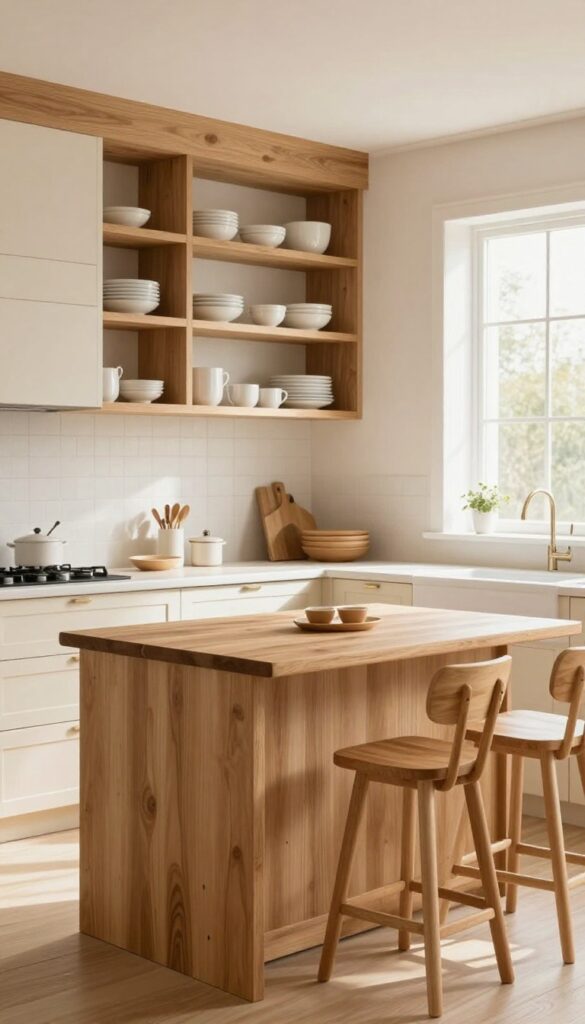
Cream kitchens can sometimes feel a little flat or clinical, but wood changes everything. The natural grain and warm tones of oak, walnut, or reclaimed timber add instant depth and a cozy, lived-in feel. Think open shelving that shows off your everyday dishes, a butcher block island that doubles as a prep station, or simple wooden bar stools that invite you to sit and stay awhile.
The contrast between soft cream cabinetry and rich wood creates a balanced, organic look that feels both fresh and grounded.
Why It Works
Wood brings texture and warmth that prevent cream from feeling sterile or one-dimensional. The natural variations in grain and color add visual interest without clutter, making the space feel layered and inviting rather than flat.
Best For
This idea works beautifully in kitchens with lots of natural light, where the wood tones can really glow. It's also great for open-concept spaces where you want the kitchen to feel connected to adjoining living areas.
Styling Tip
Stick to one or two wood finishes to keep the look cohesive—mixing too many different woods can get chaotic. Pair oak shelves with a matching butcher block counter, or go for walnut stools against white oak floors for subtle contrast.
2. Add Texture with a Patterned Tile Backsplash
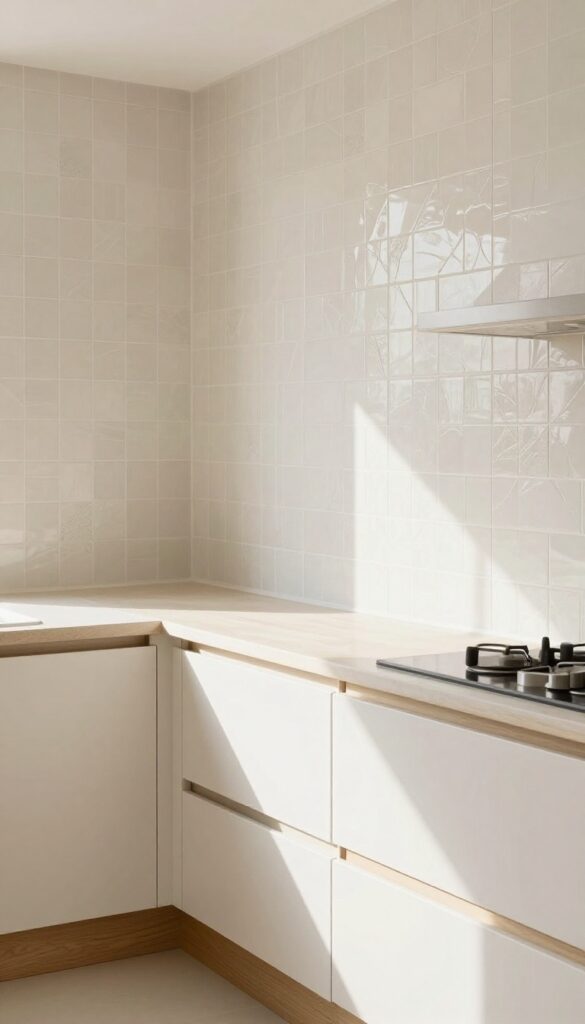
A cream kitchen can handle a playful backsplash without going overboard. Think zellige tiles with their handcrafted irregularities, herringbone subway tile, or a subtle geometric pattern. The texture catches light and adds visual interest, keeping the space from feeling flat.
Why It Works
The neutral cream backdrop lets the tile shine without competing. It adds depth and character, making the kitchen feel layered and curated rather than stark or monotonous.
Best For
This works well in kitchens with mostly solid cabinetry and minimal countertop clutter. It's especially effective in galley or L-shaped layouts where the backsplash is a focal point.
Styling Tip
Pair the patterned tile with simple white or cream countertops and warm wood accents to keep the look grounded. Avoid adding more patterns nearby—let the backsplash be the star.
3. Incorporate Soft Greenery for Life
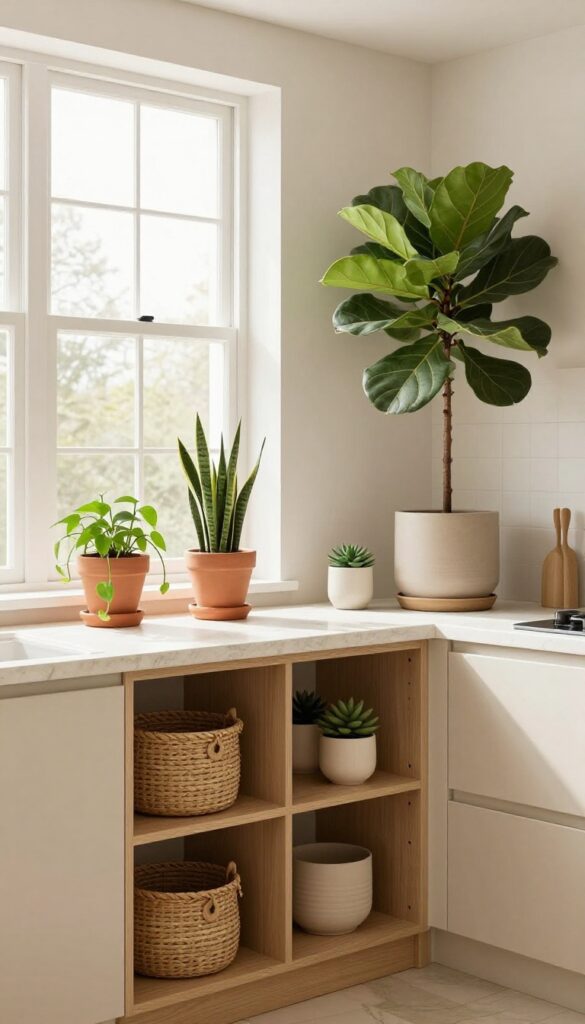
A cream kitchen can feel serene, but without a little life it risks falling flat. That’s where plants come in—they add that organic, breathing layer that makes the space feel lived-in and cozy. A few well-placed leaves soften all those neutral surfaces and bring a fresh pop of green that feels natural, not forced.
Why It Works
Plants break up the monotony of cream cabinets and countertops with texture and color. The contrast is gentle but noticeable, creating visual interest without overwhelming the calm palette. Plus, they improve air quality and add a sense of vitality that no decorative object can replicate.
Best For
This idea shines in kitchens with good natural light, especially near windows or on open shelving. It’s perfect for anyone who wants a soft, organic touch without committing to bold accent colors. Even a small windowsill herb garden can transform the whole room’s energy.
Styling Tip
Mix trailing plants like pothos with upright ones like snake plants to create height variation. Use woven baskets or matte ceramic pots in warm neutrals to keep the look cohesive. Place a tall fiddle leaf fig in a corner to anchor the space, and cluster smaller pots on shelves for a collected-over-time feel.
4. Use Mixed Metals for Subtle Contrast
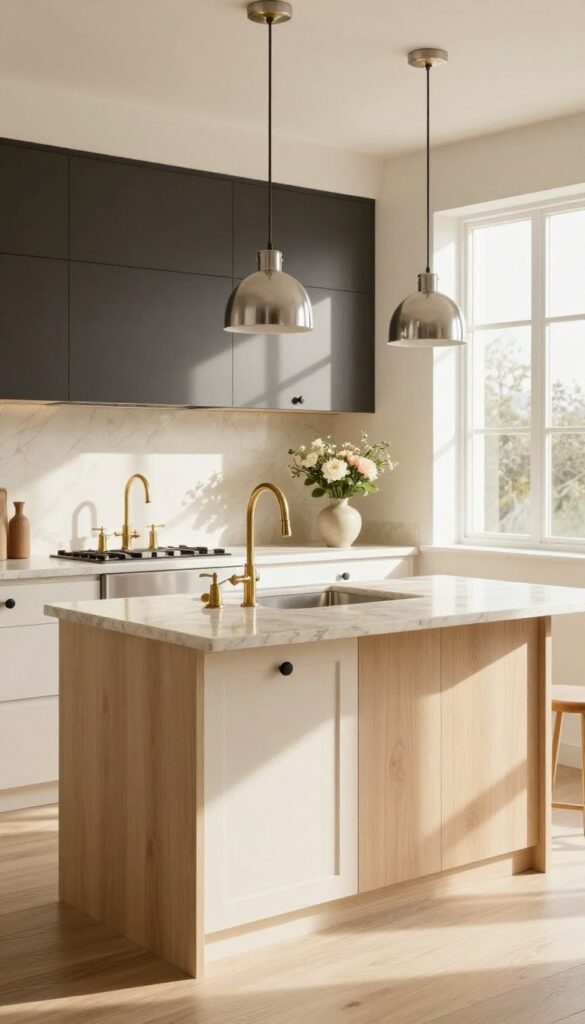
A cream kitchen can feel a little one-note if every finish matches perfectly. Mixing metals—like brass, chrome, and matte black—adds just enough contrast to wake up the space without making it feel busy. Think of it as layering jewelry on a neutral outfit: each piece stands out because the backdrop is calm.
A brass faucet paired with black cabinet pulls, or chrome pendant lights hanging above a nickel sink, creates visual interest that feels intentional. The trick is to keep the finishes complementary, not chaotic. Stick to two or three metals and repeat them in different spots so the look ties together naturally.
Why It Works
Mixed metals break up the softness of cream cabinets and countertops, adding depth and personality. The subtle shine from different finishes catches light at various angles, making the kitchen feel more dynamic and curated—like it was designed by someone with a confident eye.
Best For
This idea works beautifully in transitional kitchens where you want a touch of modern edge without losing warmth. It's also great for open-concept homes where the kitchen flows into a living area with its own metal finishes—mixing helps everything feel connected.
Styling Tip
- Start with your largest metal piece (like a faucet or range hood) and build around it. Repeat that finish in smaller details—cabinet knobs, light fixtures, or even a fruit bowl. Then add one contrasting metal for accents, like black drawer pulls or a chrome tea kettle.
- Keep the ratio about 70% dominant metal to 30% accent.
5. Bring in Natural Stone Countertops
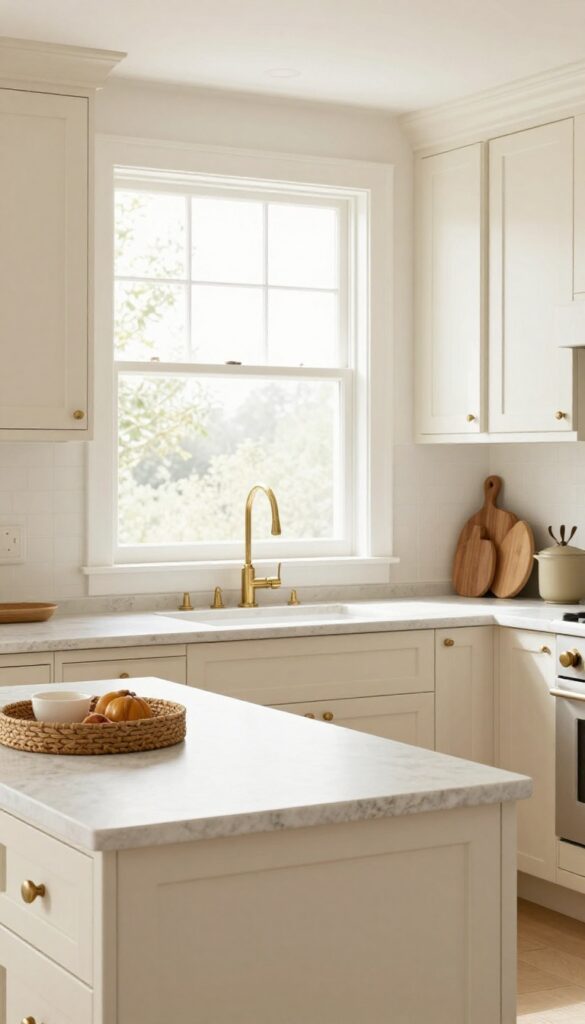
Marble, quartzite, or soapstone countertops bring a quiet elegance that cream cabinetry loves. The natural veining and subtle color variations break up large expanses of pale surfaces, adding visual texture without overwhelming the soft palette. Even a small island top or a stretch of counter along a window can anchor the room with a grounded, sophisticated feel.
Why It Works
Natural stone adds depth and contrast to an all-cream kitchen. The organic patterns in the stone create visual interest and prevent the space from feeling flat or one-dimensional. Plus, the coolness of stone balances the warmth of cream, making the kitchen feel both cozy and refined.
Best For
This idea works beautifully in kitchens with lots of natural light, where the stone's details can shine. It's also great for open-concept layouts where the countertop becomes a focal point visible from adjoining rooms. If you're worried about maintenance, sealed quartzite or engineered quartz offers durability with a similar look.
Styling Tip
Let the stone be the star by keeping surrounding surfaces simple. Pair it with brushed brass or matte black fixtures for a touch of contrast, and add warm wood cutting boards or woven baskets to soften the overall feel. A marble backsplash in a matching vein pattern can tie everything together seamlessly.
6. Layer Rugs for Warmth Underfoot
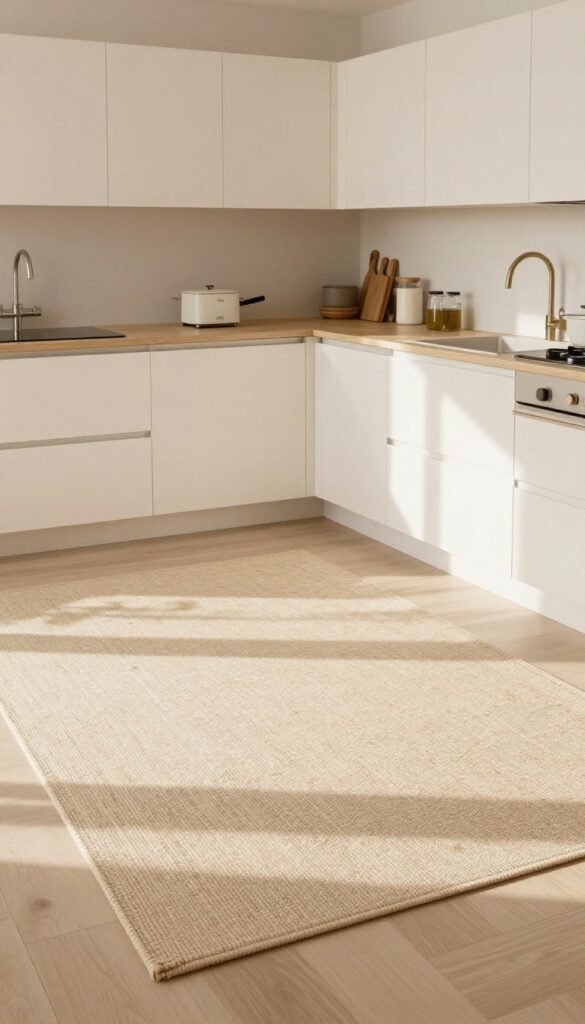
Nothing softens a cream kitchen quite like a well-placed rug. A runner in front of the sink or a washable mat near the island adds warmth, texture, and a gentle pop of color. Think patterns woven with cream, beige, or muted earth tones—they tie the whole room together without stealing the show.
In an open layout, rugs also quietly define zones, making the kitchen feel grounded and intentional.
Why It Works
Cream kitchens can sometimes feel stark or one-note. A layered rug introduces visual break and tactile softness, making the space feel lived-in and cozy. It also absorbs sound and cushions your feet during long cooking sessions.
Best For
This idea shines in open-concept homes where you want to separate the kitchen from the dining or living area without walls. It's also perfect for kitchens with hard flooring like tile or wood that could use a little comfort underfoot.
Styling Tip
Choose a rug with a low pile or flatweave so it doesn't trip up cabinet doors or stools. For high-traffic spots near the sink, go with a washable runner in a durable material like cotton or polypropylene. Layer two smaller rugs at different angles for an effortlessly collected look.
7. Install Open Shelving with Curated Displays
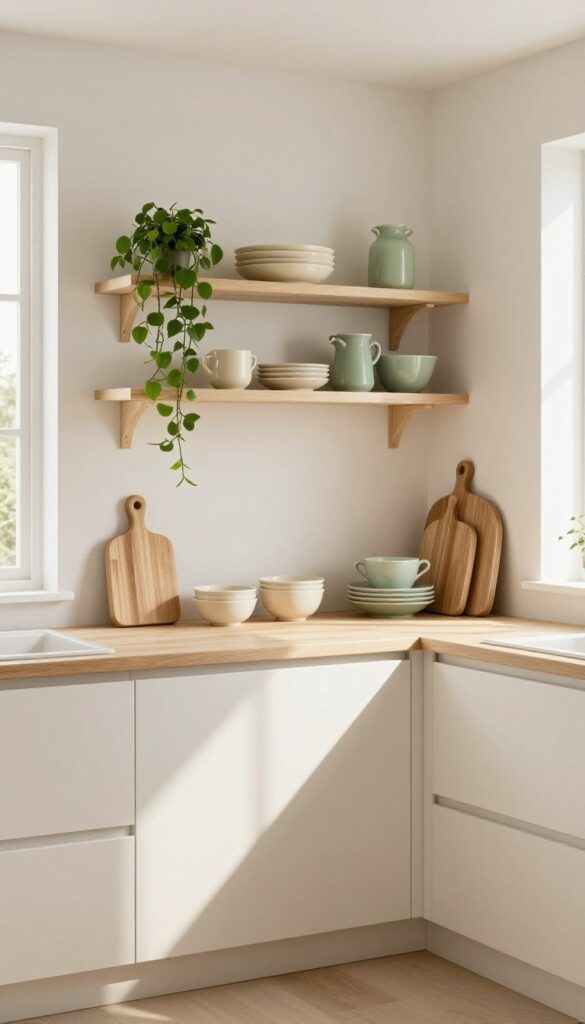
Open shelving can feel intimidating—until you see how effortlessly it blends into a cream kitchen. Instead of hiding everything behind cabinet doors, you get to display your favorite pieces like a mini gallery. The trick is to keep the palette tight: cream dishes, wooden cutting boards, and soft green ceramics create a calm, collected look that feels cozy rather than cluttered.
Why It Works
By limiting your color palette to cream, wood tones, and soft greens, the shelves feel intentional and curated. The visual lightness of cream helps the room breathe, making even a small kitchen feel more open. Plus, having everyday items within arm's reach adds a layer of practicality that busy cooks appreciate.
Best For
This idea shines in kitchens where you want to add character without overwhelming the space. It's especially great for renters who can't paint cabinets but can swap out hardware and add floating shelves. Also works beautifully in galley kitchens or any layout where upper cabinets might make the room feel boxed in.
Styling Tip
Mix heights and textures: stack a few dinner plates on a wooden stand, lean a cookbook against a ceramic pitcher, and tuck a small trailing plant at one end. Leave some breathing room between objects—negative space is your friend here. Stick to three or four items per shelf to keep the look airy.
8. Add Cozy Lighting with Warm Bulbs
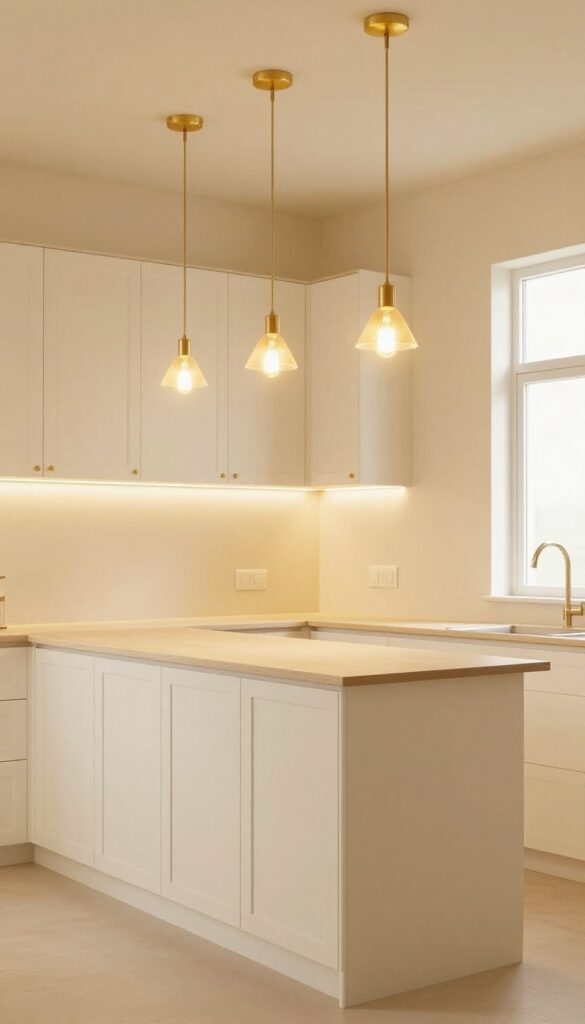
Lighting can make or break a cream kitchen. Without careful thought, those soft beige walls and white cabinets can feel flat or even clinical. The trick is to choose bulbs that cast a warm, golden glow rather than a harsh blue-white light.
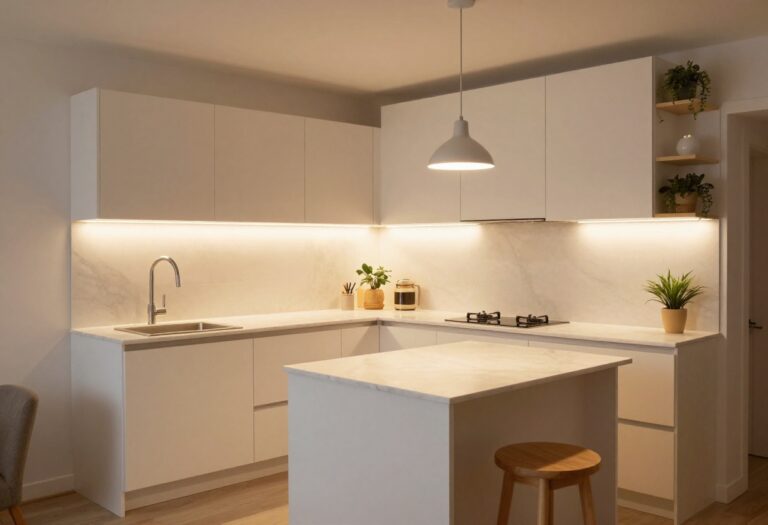
Warm-toned LEDs in the 2700K to 3000K range mimic the cozy ambiance of incandescent bulbs while being energy-efficient. Install them in pendant lights over an island, under-cabinet strips to banish shadows on countertops, and a dimmer switch so you can adjust the mood from bright prep mode to soft dinner-hour light. The result is a kitchen that feels naturally inviting, not stark.
Why It Works
Cream surfaces reflect light, so the color temperature of your bulbs directly affects how warm or cold the room feels. Warm bulbs enhance the buttery undertones in cream paint and cabinetry, making the space feel sunlit even on gray days. The soft glow also reduces glare off white countertops and backsplashes, creating a more comfortable environment for cooking and lingering.
Best For
This idea shines in kitchens that get limited natural light or have mostly white or cream finishes. It’s also perfect for open-concept layouts where the kitchen flows into a living area—consistent warm lighting ties the spaces together without harsh transitions.
Styling Tip
Layer your lighting: use pendant lights for task areas, under-cabinet strips for countertop illumination, and a dimmer on overhead fixtures for versatility. Add a small table lamp with a linen shade on a countertop or shelf for an extra touch of warmth that feels residential rather than commercial.
9. Incorporate Textured Fabrics Like Linen and Cotton
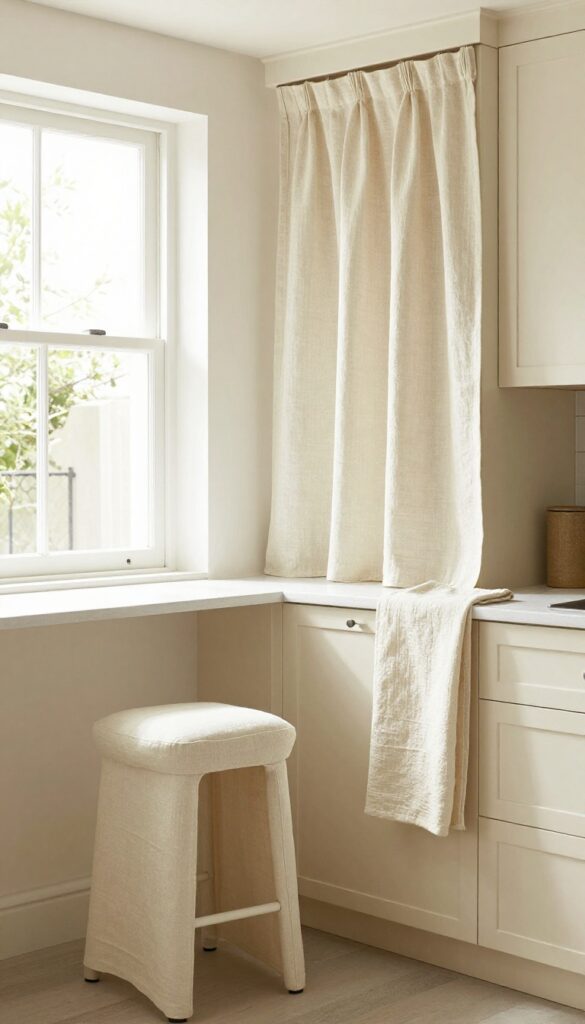
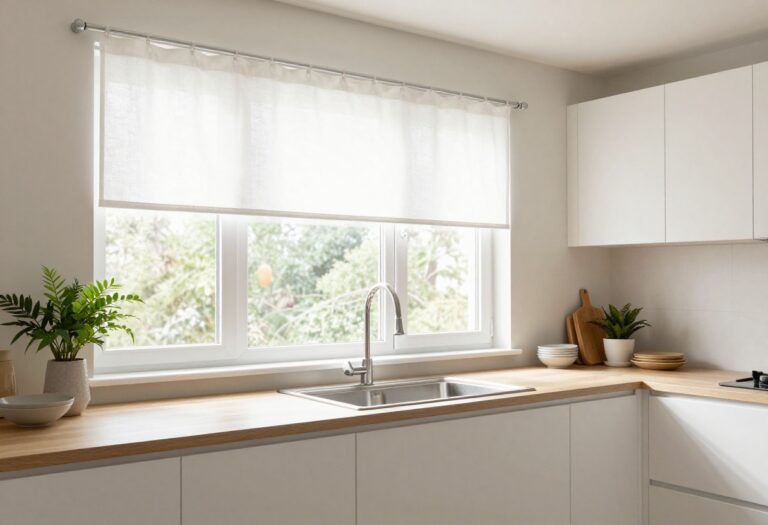
A kitchen filled with hard surfaces—countertops, cabinets, tile—can feel cold no matter how warm the paint color is. That's where fabric steps in. Soft textiles like linen curtains, cotton dish towels, or a slipcovered chair at the breakfast nook instantly add a layer of comfort.
The trick is to stick with natural fibers in cream or light beige so the look stays cohesive and calm.
Why It Works
Textiles break up the hard edges and reflective surfaces that dominate most kitchens. Linen has a relaxed drape that softens windows, while cotton brings a casual, lived-in feel. These materials also absorb sound slightly, making the space quieter and more inviting.
Best For
This idea works especially well in kitchens with lots of white or cream cabinetry, where the fabric adds visual texture without competing. It's also great for open-plan kitchens that flow into living areas, because the softness helps transition from cooking zone to lounge zone.
Styling Tip
Hang linen curtains high and wide to make windows appear larger, and choose a rod in matte black or brushed brass for contrast. For the breakfast nook, look for a slipcovered chair with removable covers—easy to wash when flour or spaghetti sauce strikes.
10. Add a Touch of Dark Contrast with Cabinetry or Island
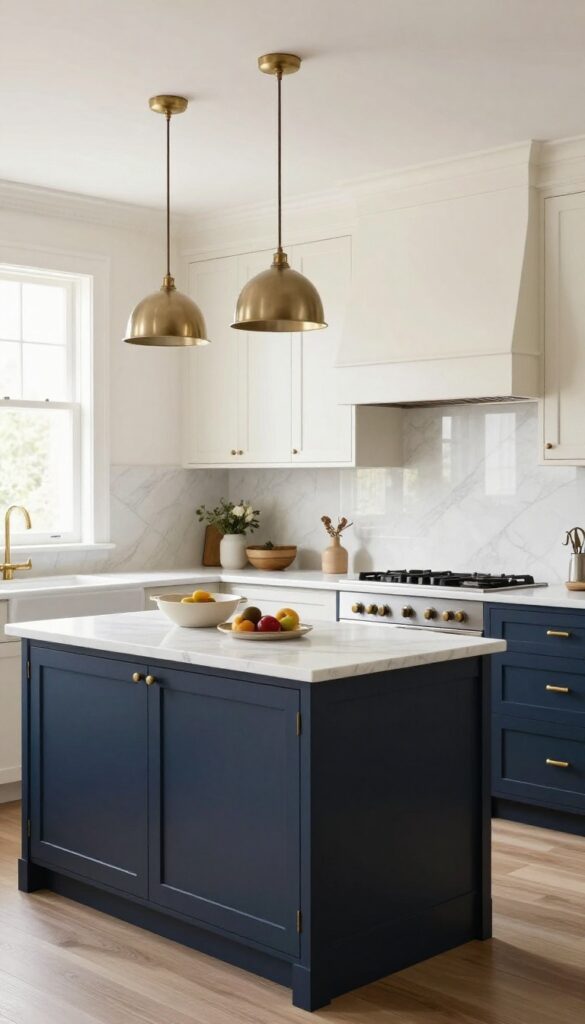
A cream kitchen can sometimes feel a little one-note if every surface stays light. Introducing a darker shade on the lower cabinets or kitchen island instantly adds depth and makes the room feel more grounded. Think deep charcoal, navy blue, or even a rich forest green—these hues create a beautiful contrast that keeps the space from looking flat while still letting the cream walls and upper cabinets shine.
Why It Works
Dark cabinetry anchors the room visually, giving it a sense of structure and intentionality. The contrast draws the eye and creates a natural focal point, which makes the kitchen feel more dynamic and less monotonous. Plus, darker colors hide everyday wear and tear better than light ones, so high-traffic areas stay looking fresh longer.
Best For
This idea works especially well in open-concept kitchens where you want to define the cooking zone without building walls. It’s also great for kitchens with plenty of natural light, as the dark tones won’t make the space feel cramped—instead, they’ll add richness and character.
Styling Tip
Balance the look by keeping your countertops and backsplash light—white marble or warm quartz are perfect partners. Add brass or matte black hardware on the dark cabinets for an extra layer of contrast. If you go with a dark island, consider pendant lights in a soft metallic finish above it to tie everything together.
FAQ
How do I keep a cream kitchen from looking boring?
Layer in texture through materials like wood, stone, tile, and fabric. Add contrast with darker accents or mixed metals, and include greenery for freshness. The goal is visual depth without clutter.
What colors go best with cream kitchen cabinets?
Soft whites, warm beiges, sage green, navy, charcoal, and wood tones all pair beautifully with cream. For a cohesive look, stick to muted or earthy shades that complement rather than compete.
Can I use cream in a small kitchen?
Absolutely. Cream reflects light and makes small spaces feel larger and airier. Pair it with open shelving, good lighting, and minimal clutter to maximize the sense of space.
What type of backsplash works with cream cabinets?
Subway tile in white or off-white is classic, but don't shy away from patterned or textured tiles like zellige, herringbone, or Moroccan fish scale. They add personality while keeping the look light.
How do I add warmth to an all-cream kitchen?
Incorporate natural wood elements—butcher block counters, wood shelves, or a wooden island top. Warm lighting (2700K–3000K) and soft textiles like linen curtains or a wool rug also help.
Conclusion
A cream kitchen doesn't have to feel plain or sterile. By layering in texture, warmth, and thoughtful contrasts, you can create a space that feels both fresh and deeply inviting.
Each of these ideas is meant to be mixed and matched to suit your style and home. Start with one or two changes that speak to you, and let your kitchen evolve naturally into a room that feels pulled together and truly yours.