17 Unique Wall Mirror Ideas to Brighten Living Rooms
The living room felt fine, but fine never excited me. The light hit the walls wrong, the corners felt dull, and everything looked flatter than it should have. I realized mirrors fix problems you don’t even know you have.
I learned this the hard way after rearranging furniture five times for no real reason. Mirrors changed the room without changing the room, which honestly felt like cheating in the best way.
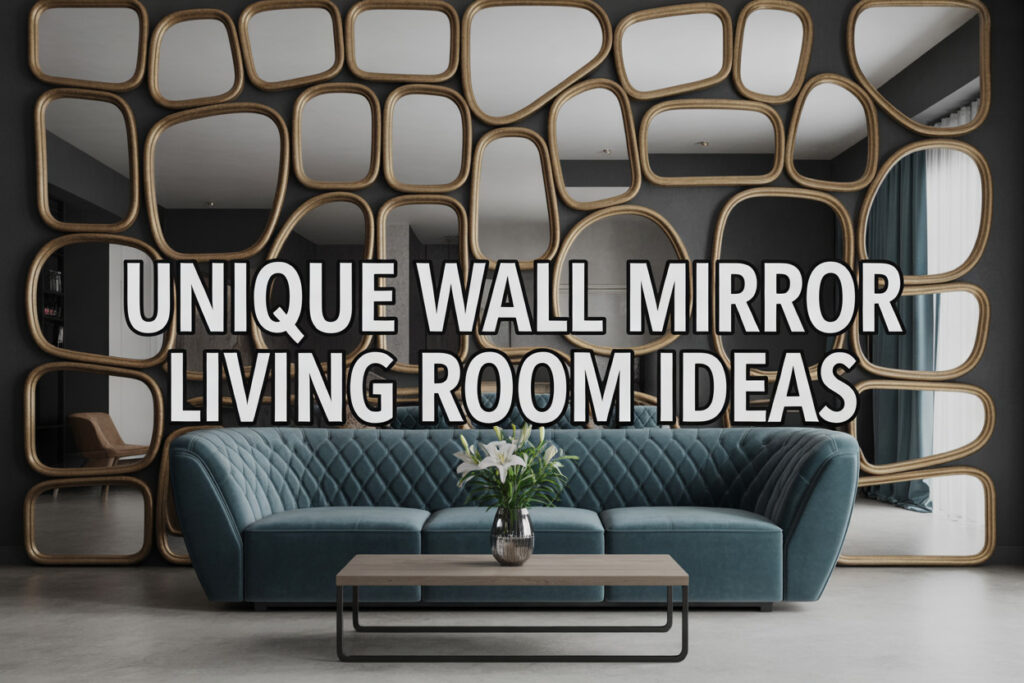
Let me walk you through the ideas that actually work.
1. Oversized Floor Mirror Leaned Casually Against the Wall
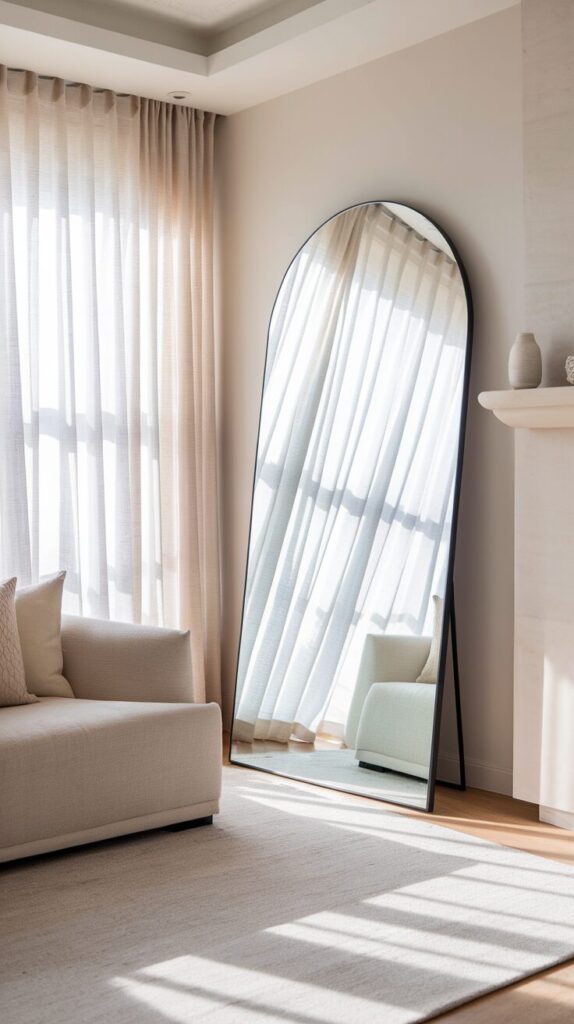
Most living rooms feel smaller than they need to feel, and nothing messes with your head like that. A big floor mirror leaned instead of mounted instantly adds depth without drilling a single hole. I love how it looks intentional while secretly doing all the heavy lifting.
This idea works because it reflects light and creates a false sense of extra square footage. The mirror pulls the eye upward and outward, which makes ceilings feel taller and walls feel farther apart. You get drama without committing to permanent changes.
How to Do It
- Choose a mirror that reaches at least two-thirds of your wall height
- Lean it slightly instead of pressing it flat
- Place it near a window or lamp for maximum reflection
Style & Design Tips
Stick with thin frames for modern spaces and chunky wood for cozy rooms. Avoid mirrors that are too narrow because they look awkward and cheap. Bigger always reads more intentional here.
Pro Tip or Budget Hack
Check local marketplaces for used floor mirrors from dressing rooms or studios. A quick frame paint job can make a $40 mirror look custom.
2. Gallery Wall of Mixed-Shape Mirrors
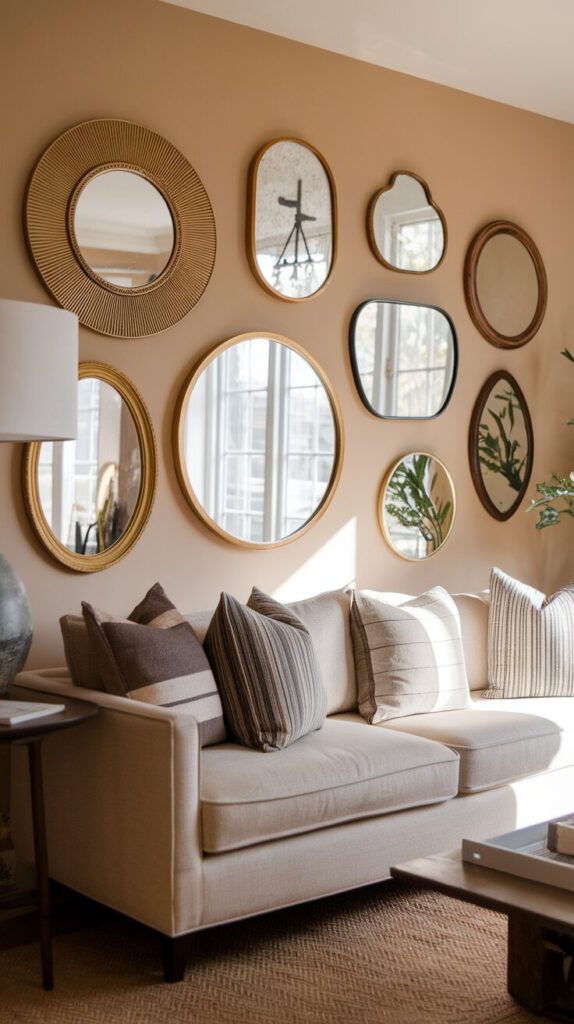
Flat walls get boring fast, especially when everything lines up too perfectly. A mirror gallery wall adds texture, movement, and sparkle without needing art. I tried this once out of curiosity and ended up obsessed.
This works because different shapes break visual monotony while bouncing light around the room. The reflections overlap and soften harsh lines. It feels layered instead of busy when done right.
How to Do It
- Collect mirrors in circles, ovals, and soft arches
- Lay them on the floor first to plan spacing
- Hang them closer together than you think
Style & Design Tips
Mix frames but keep one common element like color or finish. Avoid identical mirrors because symmetry kills the charm. Imperfect layouts feel warmer and more lived-in.
Pro Tip or Budget Hack
Buy mismatched thrifted mirrors and spray-paint all frames the same color. You get cohesion without paying gallery prices.
3. Antique Mirror Above the Sofa
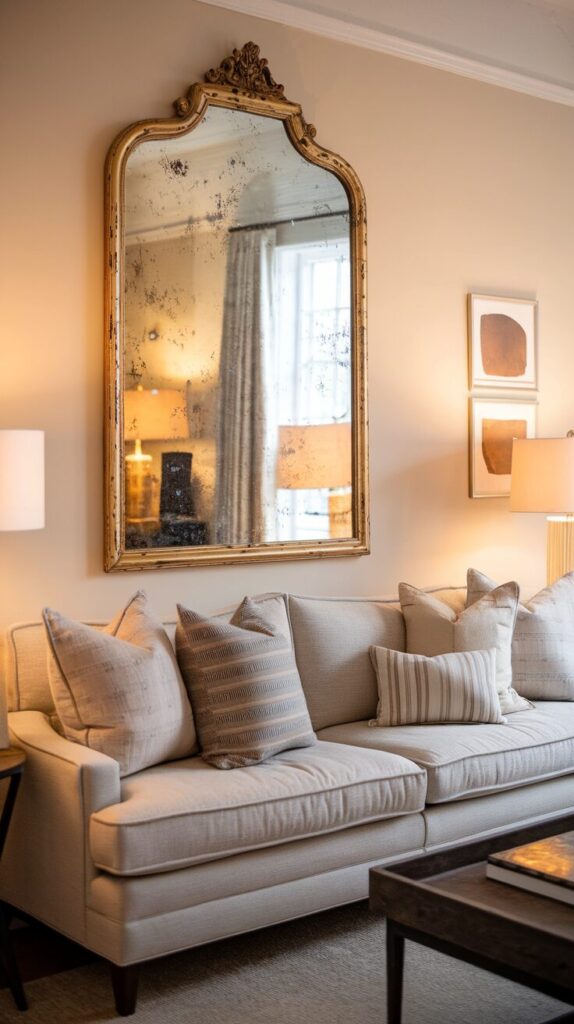
Your sofa wall usually carries the visual weight of the room. Hanging an antique-style mirror there adds character without shouting for attention. I prefer slightly distressed glass because it feels collected, not staged.
This works because antique mirrors soften reflections and add depth without harsh glare. They bring warmth and history to modern spaces. The contrast balances clean furniture beautifully.
How to Do It
- Center the mirror with the sofa, not the wall
- Hang it 6–8 inches above the sofa back
- Anchor the area with throw pillows or a rug
Style & Design Tips
Gold and bronze frames add warmth, while black frames keep things grounded. Skip super shiny finishes if your room already feels bright. Muted reflections feel more intentional.
Pro Tip or Budget Hack
Use mirror film on old glass panels to fake an antique look. It costs way less and looks surprisingly legit.
4. Full Wall Mirror Panels for Maximum Light
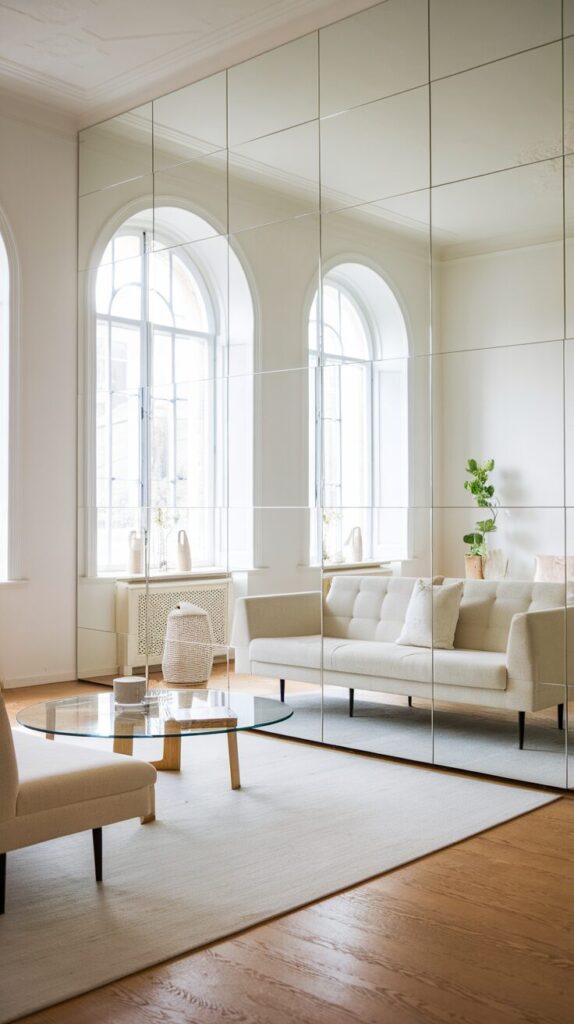
Some living rooms feel dark no matter what you do. A mirrored wall sounds bold, but it solves lighting issues instantly. I resisted this idea until I saw it done right.
This works because large reflective surfaces double both light and visual space. The room feels brighter without adding lamps. It feels dramatic without adding clutter.
How to Do It
- Use panel mirrors instead of one giant slab
- Align seams carefully for a clean look
- Pair with minimal furniture
Style & Design Tips
Keep surrounding décor simple to avoid visual overload. Avoid mirrors directly facing the TV because reflections get annoying. Balance matters more than boldness.
Pro Tip or Budget Hack
Use mirrored wardrobe panels instead of custom glass. They install easily and cost significantly less.
5. Window-Style Mirror for Architectural Interest
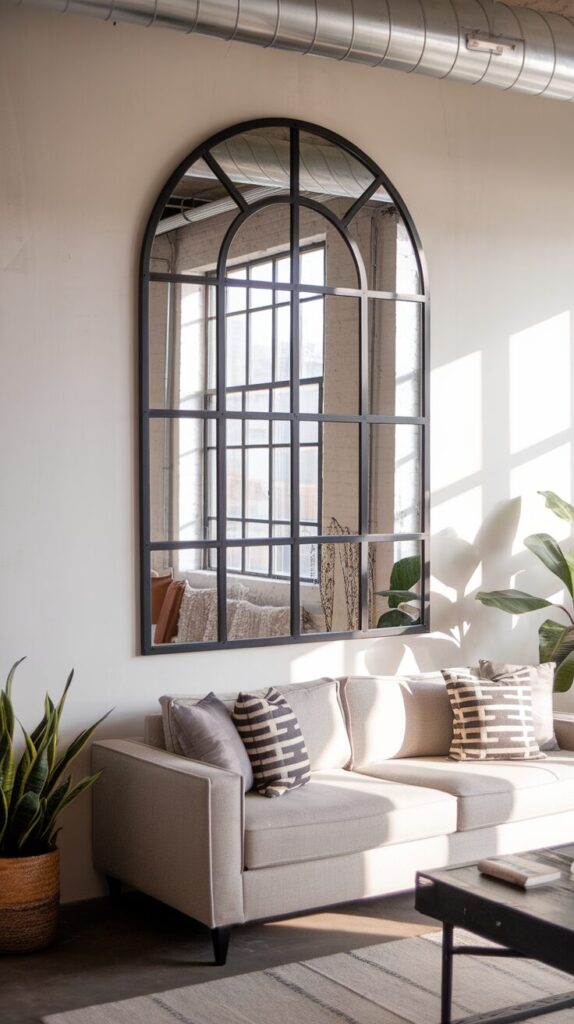
Not every living room has great windows. A window-style mirror fakes the look and boosts light at the same time. I love how it adds structure without renovations.
This works because the grid design adds architectural rhythm. The mirror mimics natural light patterns. It tricks the eye into seeing extra windows.
How to Do It
- Choose a grid mirror proportional to the wall
- Mount it where light naturally hits
- Keep nearby décor minimal
Style & Design Tips
Black grids feel industrial, while white grids feel coastal. Avoid placing it next to actual windows to prevent redundancy. Contrast sells the illusion.
Pro Tip or Budget Hack
DIY the grid using trim over a flat mirror. Paint everything one color for a custom look.
6. Round Mirror Above a Console Table
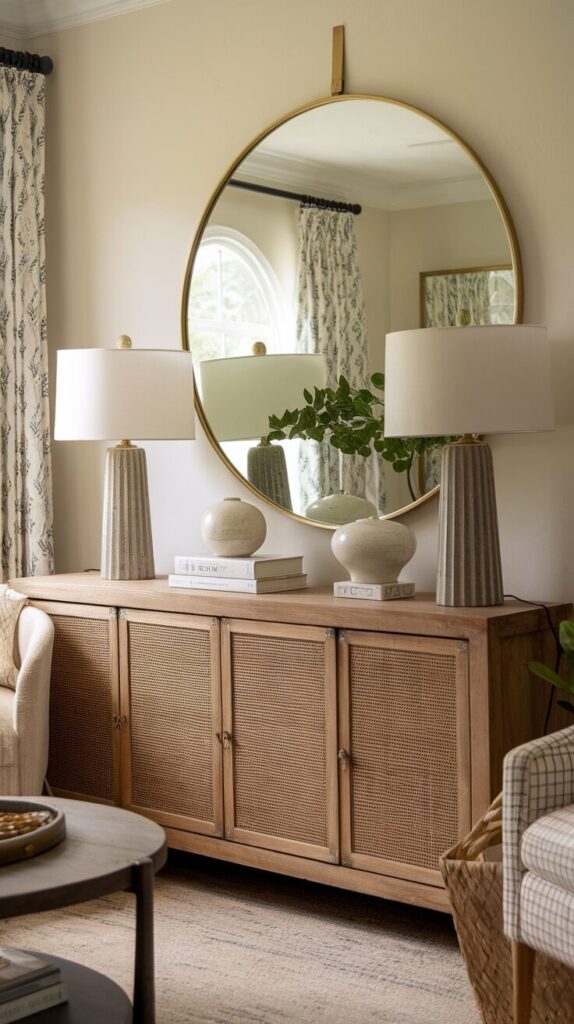
Hard lines dominate most living rooms. A round mirror softens everything instantly. I use this when a room feels too boxy or rigid.
This works because curves break straight lines and create visual flow. The reflection pulls light toward eye level. It feels calm and balanced.
How to Do It
- Hang the mirror centered above the console
- Leave 6 inches between mirror and furniture
- Add lamps or décor underneath
Style & Design Tips
Thin frames feel modern, while thick frames feel cozy. Avoid mirrors that are too small because they look lost. Scale matters more than shape.
Pro Tip or Budget Hack
Use a round bathroom mirror for a fraction of the cost. Nobody knows once it’s styled right.
7. Asymmetrical Mirror Arrangement for a Modern Edge
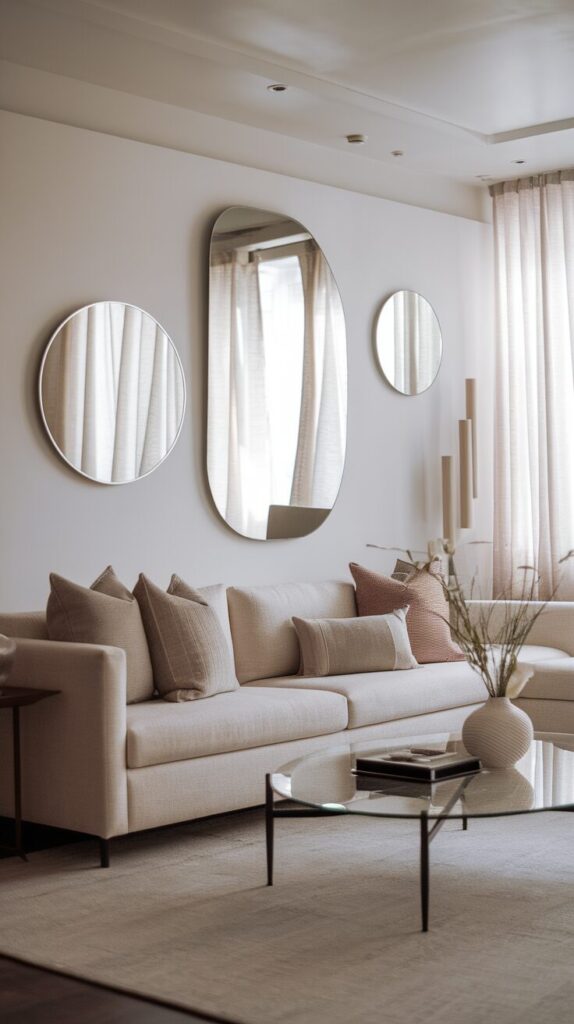
Perfect symmetry feels safe but boring sometimes. Asymmetrical mirror layouts add movement and personality. I like this approach for modern or eclectic homes.
This works because uneven placement keeps the eye moving. The room feels dynamic instead of static. Light reflects unpredictably in a good way.
How to Do It
- Choose mirrors of different sizes
- Anchor the layout with one larger piece
- Balance visually without matching
Style & Design Tips
Keep frames similar to avoid chaos. Avoid placing mirrors too high because reflections lose impact. Visual balance beats symmetry.
Pro Tip or Budget Hack
Sketch your layout on paper before hanging. Fewer holes save both money and sanity.
8. Mirror Behind Shelving for Depth
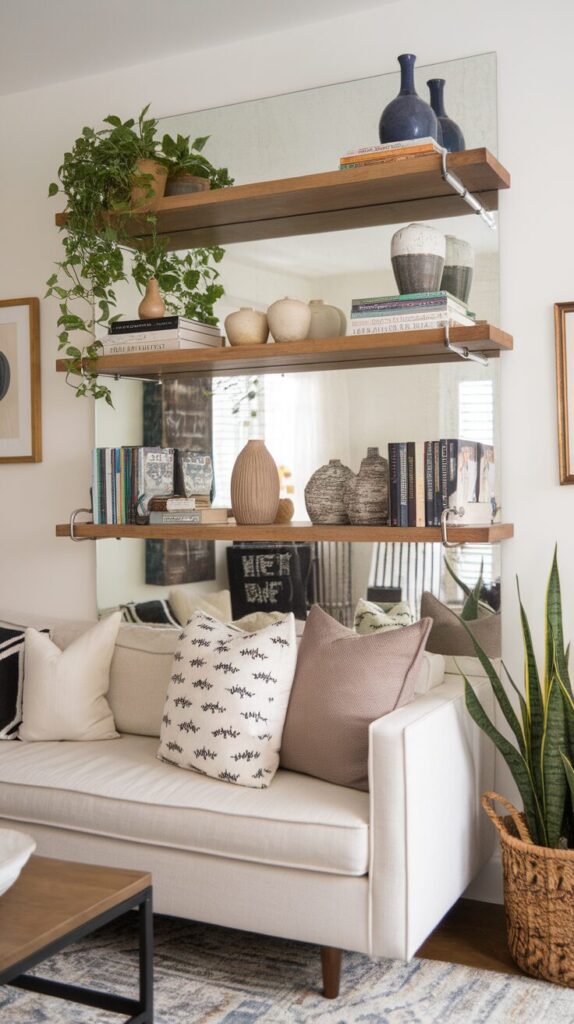
Shelves often look flat or cluttered. Adding a mirror behind them changes everything. I use this trick in small living rooms constantly.
This works because reflections add depth behind objects. Light bounces through the shelves instead of stopping. Everything looks lighter and intentional.
How to Do It
- Install mirror panels before shelves
- Use minimal décor items
- Space objects evenly
Style & Design Tips
Glass or light wood shelves work best. Avoid overcrowding because reflections amplify clutter. Less décor always wins here.
Pro Tip or Budget Hack
Use mirrored contact paper on the back panel. It works shockingly well for rentals.
9. Tall Vertical Mirror to Stretch the Room
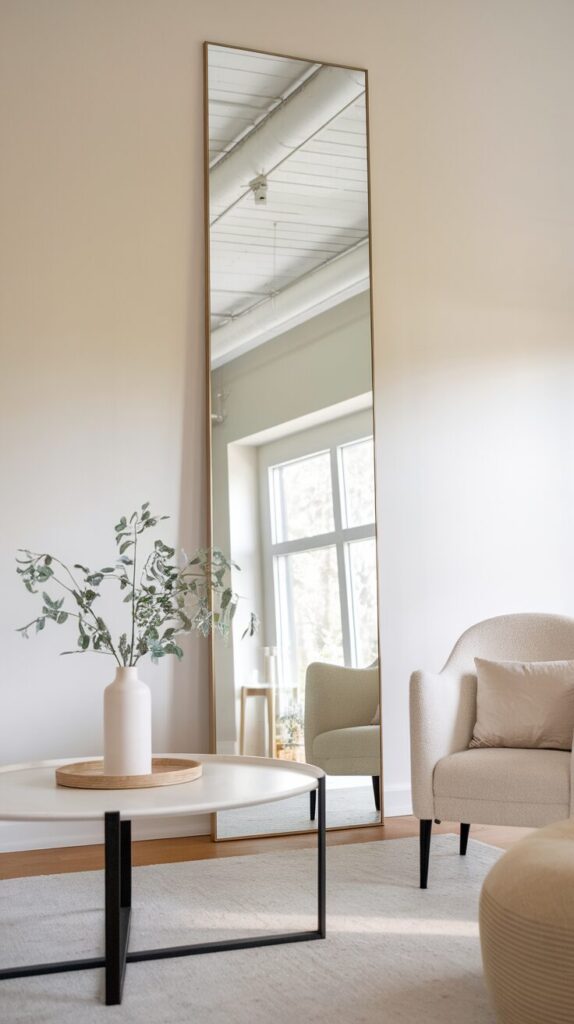
Low ceilings kill the vibe fast. A tall vertical mirror visually lifts the space. I use this when rooms feel squat or compressed.
This works because vertical lines draw the eye upward. Reflections emphasize height instead of width. The room feels airier instantly.
How to Do It
- Choose a narrow, tall mirror
- Place it near seating or corners
- Pair with vertical décor
Style & Design Tips
Frames with subtle detailing work best. Avoid horizontal décor nearby. Let the mirror own the vertical space.
Pro Tip or Budget Hack
Repurpose a wardrobe door mirror. Mount it securely for instant impact.
10. Statement Sunburst Mirror as a Focal Point
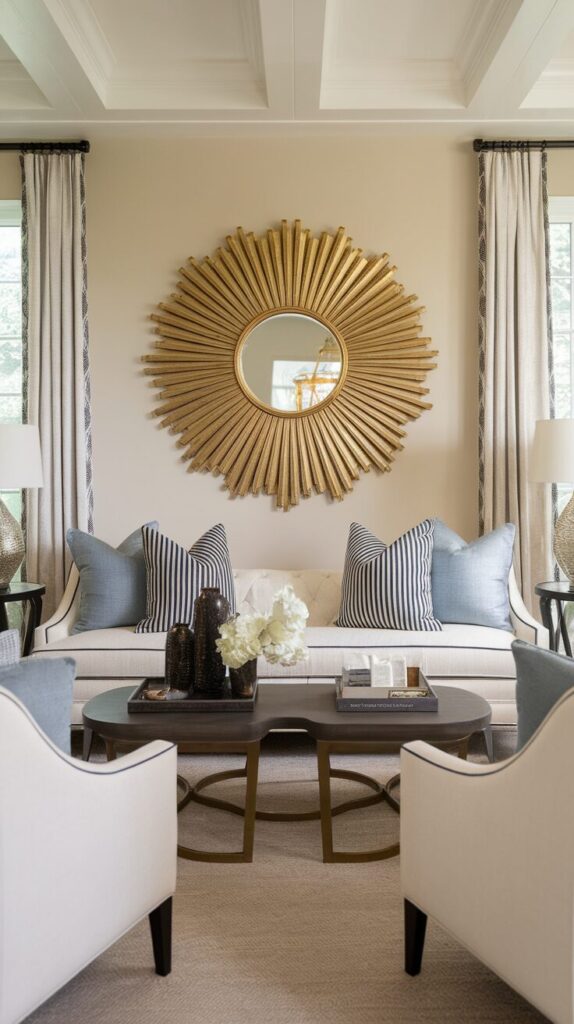
Sometimes a room needs drama. A sunburst mirror delivers without trying too hard. I love it when walls feel empty but art feels wrong.
This works because the shape radiates energy outward. Light reflects in multiple directions. It becomes instant visual jewelry.
How to Do It
- Center it on a main wall
- Keep surrounding décor minimal
- Match metal tones with accents
Style & Design Tips
Gold feels warm, black feels bold. Avoid oversized versions in small rooms. Balance sparkle with restraint.
Pro Tip or Budget Hack
DIY using wood dowels and a small mirror. Paint everything metallic for a high-end look.
11. Mirror Cluster Above a Fireplace
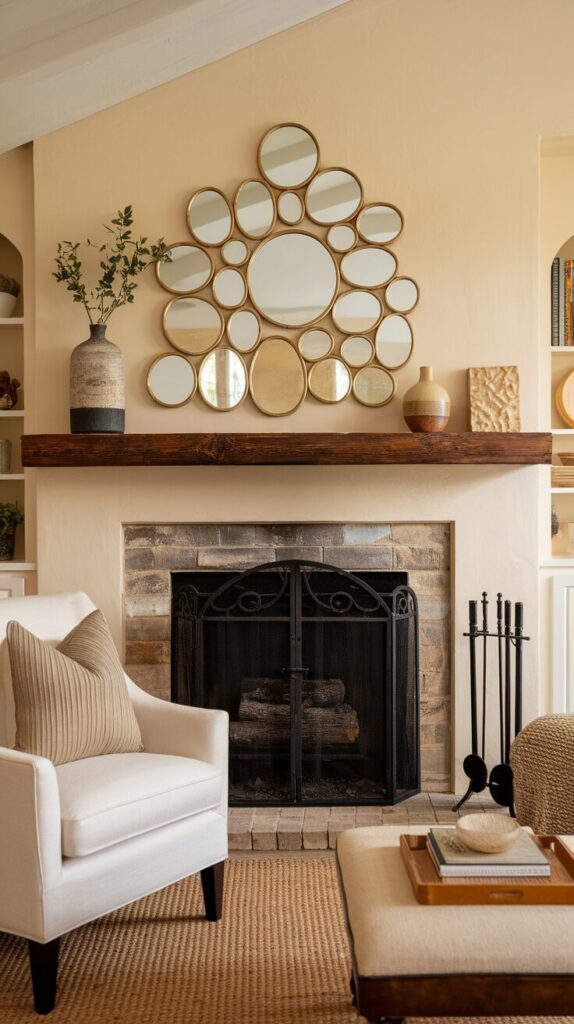
Fireplaces anchor living rooms naturally. Adding mirrors above them enhances that focal point. I prefer clusters over single mirrors here.
This works because multiple reflections add depth above a heavy feature. The fireplace feels taller and lighter. The room feels balanced.
How to Do It
- Use 3–5 smaller mirrors
- Keep spacing consistent
- Align with fireplace width
Style & Design Tips
Stick to similar frames for cohesion. Avoid mirrors with heavy glare. Soft reflections feel warmer.
Pro Tip or Budget Hack
Use identical mirrors from discount stores. Grouping makes them look custom.
12. Arched Mirror for Soft Elegance
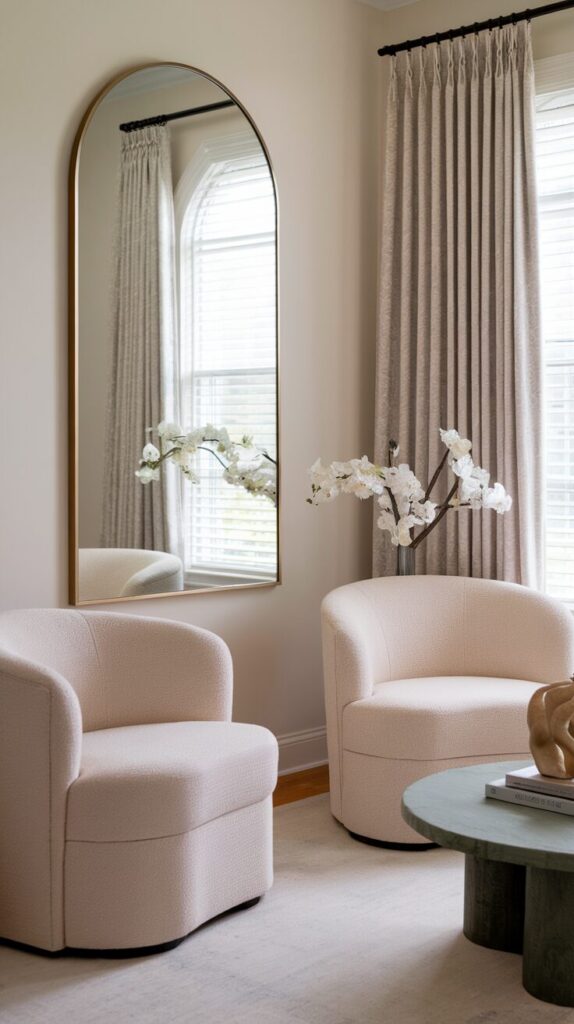
Straight edges dominate furniture. An arched mirror adds softness instantly. I love how it calms visually busy rooms.
This works because arches guide the eye gently upward. Reflections feel less harsh. The space feels relaxed and curated.
How to Do It
- Mount at eye level
- Pair with curved furniture
- Keep wall color light
Style & Design Tips
Thin frames feel modern, while wood frames feel classic. Avoid placing near sharp corners. Let curves lead the design.
Pro Tip or Budget Hack
Use arch-shaped acrylic mirrors for budget projects. They weigh less and install easily.
13. Mirrored Panels on Cabinet Doors
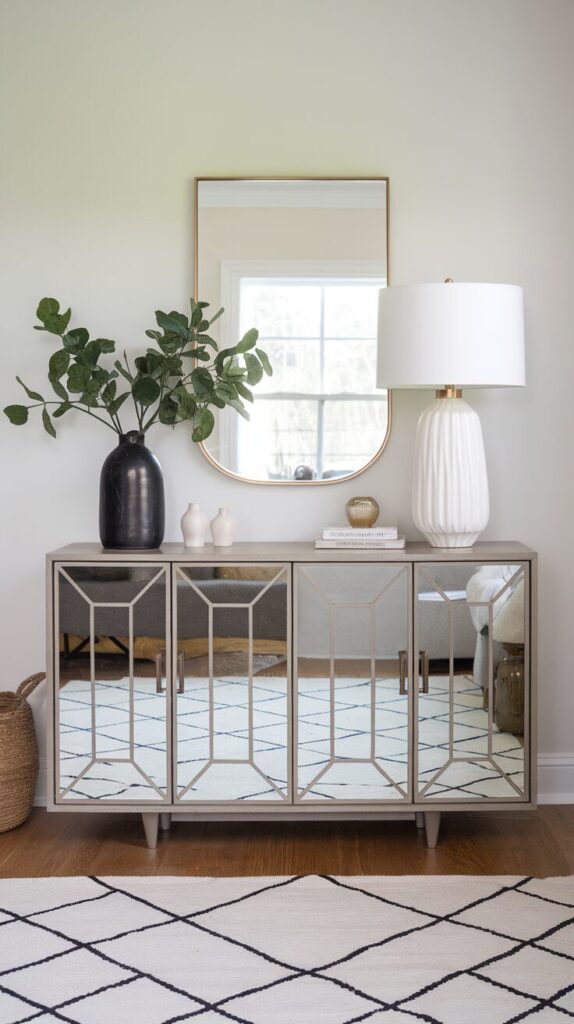
Storage pieces often feel bulky. Mirrored doors lighten them visually. I use this trick in compact living rooms.
This works because reflections reduce visual weight. Furniture feels integrated instead of dominant. Light moves freely around the room.
How to Do It
- Replace existing door panels
- Use adhesive mirror sheets
- Align seams carefully
Style & Design Tips
Keep cabinet frames simple. Avoid ornate detailing. Clean lines keep it modern.
Pro Tip or Budget Hack
Mirror film works for temporary updates. It removes cleanly later.
14. Corner Mirror to Open Tight Spaces
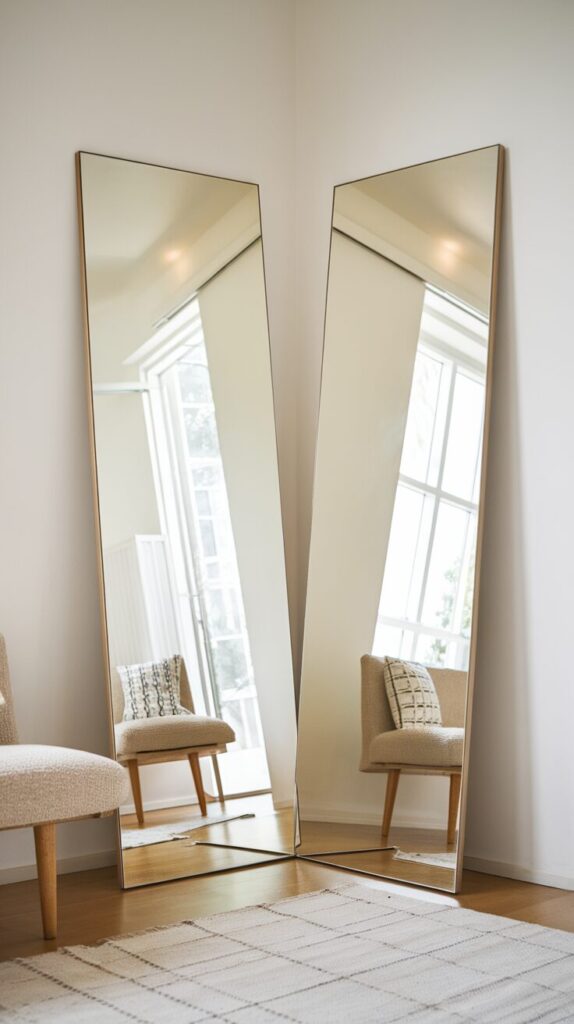
Corners often feel dead. A corner mirror activates unused space. I love how subtle yet effective it feels.
This works because angled reflections expand tight areas. Light reaches neglected corners. The room feels complete.
How to Do It
- Use two narrow mirrors
- Install flush to each wall
- Keep frames minimal
Style & Design Tips
Avoid heavy frames in corners. Keep nearby décor low-profile. Corners should feel open.
Pro Tip or Budget Hack
Use frameless mirror tiles. They fit corners perfectly and cost less.
15. Mirror Paired with Wall Lighting
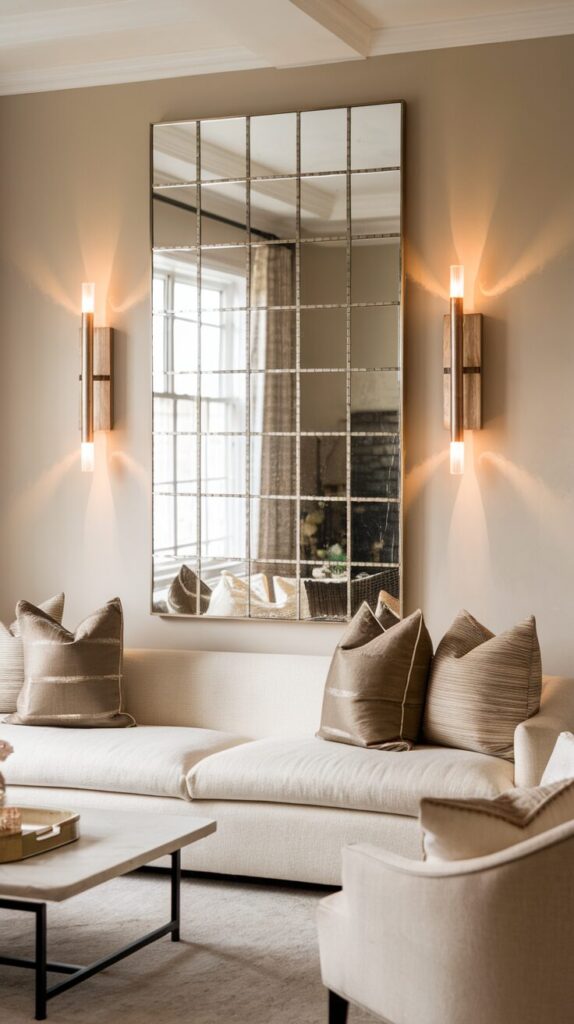
Mirrors alone help, but lighting amplifies the effect. Pairing the two feels intentional. I use this combo in darker living rooms.
This works because light reflects directly outward. The room feels layered and warm. Shadows disappear fast.
How to Do It
- Install sconces beside mirrors
- Use warm bulbs
- Align heights carefully
Style & Design Tips
Avoid harsh white light. Match metal finishes for cohesion. Lighting should flatter, not glare.
Pro Tip or Budget Hack
Plug-in sconces save wiring costs. They work just as well.
16. Organic-Shaped Mirror for a Casual Feel
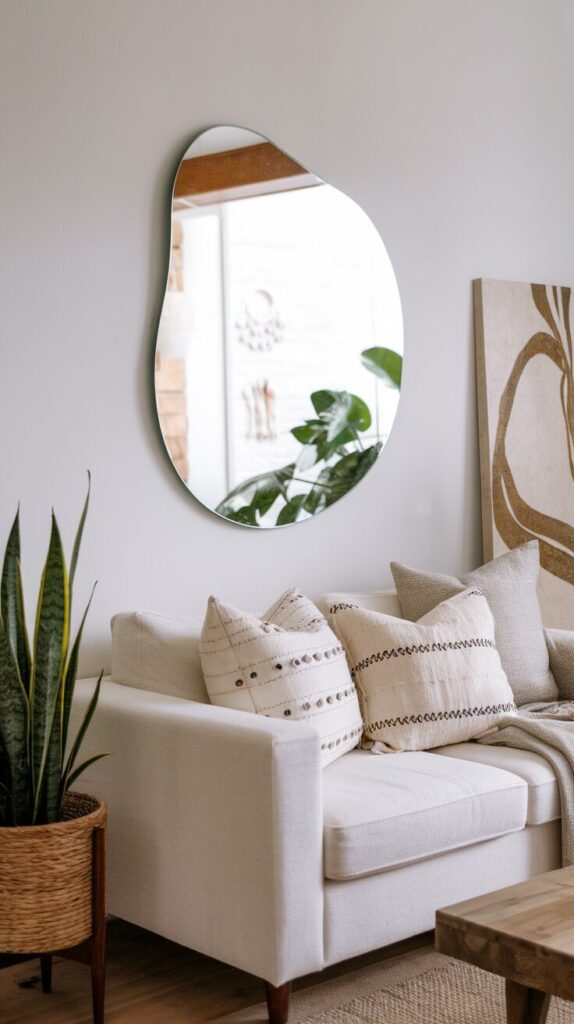
Perfect shapes feel stiff sometimes. Organic mirrors add personality. I love them in relaxed, modern spaces.
This works because irregular shapes feel natural. Reflections soften instead of rigidly repeating lines. The room feels approachable.
How to Do It
- Center it visually, not mathematically
- Pair with natural textures
- Keep surroundings simple
Style & Design Tips
Avoid mixing with too many patterns. Let the mirror stand out. Organic shapes need breathing room.
Pro Tip or Budget Hack
Acrylic organic mirrors cost less and install easily. They still look great.
17. Layered Mirror Behind Artwork
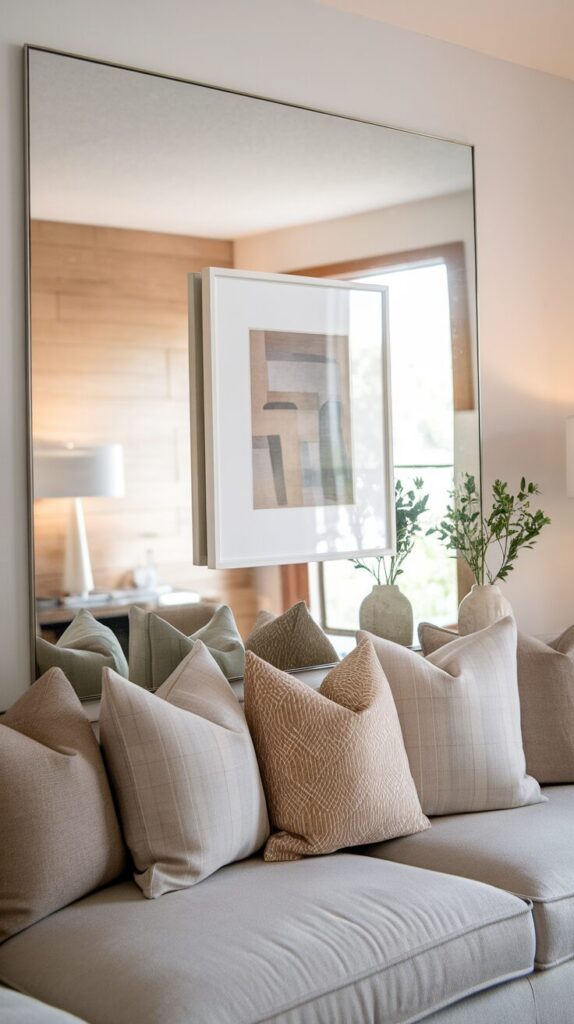
Art walls sometimes lack depth. Layering a mirror behind art adds dimension. I stumbled into this accidentally and never stopped.
This works because reflections frame artwork subtly. Light enhances colors. The wall feels dynamic without clutter.
How to Do It
- Use a thin mirror panel
- Mount art slightly forward
- Align carefully
Style & Design Tips
Choose simple frames for art. Avoid reflective glare on the artwork. Subtlety makes this work.
Pro Tip or Budget Hack
Use mirrored acrylic sheets behind lightweight frames. It saves weight and cost.
Mirror Placement Strategy: How to Use Reflection with Intention
Most people hang mirrors wherever empty wall space feels available, and that habit creates random results. I always start with a clear purpose before I even pick a frame. You need to decide whether you want more light, more depth, or a stronger focal point.
I treat mirrors like lighting tools instead of décor accessories. When you place a mirror across from a window, you double natural light without raising your electricity bill. When you position a mirror near a dark corner, you reduce shadow buildup instantly.
I also look at what the mirror will reflect before I commit to placement. A mirror should reflect something attractive like a window, greenery, or layered furniture. If it reflects clutter or a blank wall, it wastes its potential.
I measure the wall height and seating arrangement before hanging anything. Mirrors should align with furniture lines, not float randomly above them. Proportion always determines whether a room feels polished or awkward.
Finally, I step back and evaluate the room from multiple angles. Reflections change depending on where you stand, so I walk around before tightening the final screw. That extra five minutes prevents a lot of regret later.
Choosing the Right Mirror Size, Shape, and Frame
Size controls impact more than style ever will. I always tell people to go bigger than they feel comfortable with because small mirrors often look accidental. Large mirrors anchor walls, while tiny ones disappear.
Shape influences mood instantly. Round and arched mirrors soften sharp layouts, while rectangular mirrors reinforce clean lines. I match shape to the overall vibe instead of chasing trends.
Frame material sets the tone. Wood frames warm up cool rooms, metal frames sharpen modern spaces, and frameless mirrors keep things minimal. I avoid mixing too many finishes unless I intentionally want contrast.
I also consider wall color before choosing a frame. Dark walls pair well with lighter or metallic frames, while light walls handle darker frames better. Contrast creates clarity.
Weight and installation matter just as much as aesthetics. I always check wall anchors and studs before hanging heavier mirrors. Secure installation protects both the wall and the investment.
Lighting and Reflection Science: Why Mirrors Change Everything
Light determines how a living room feels at every hour of the day. Mirrors amplify both natural and artificial light by redirecting it instead of absorbing it. That simple shift changes the entire mood of a space.
Natural daylight bounces differently than warm lamp light. When I place a mirror near a window, it spreads soft daylight deeper into the room. When I place one near a lamp, it enhances evening warmth.
Reflection also affects visual weight. Dark furniture feels lighter when reflected, while heavy décor appears more balanced. Mirrors distribute visual energy instead of letting it collect in one corner.
I always test lighting at night before finalizing placement. Daytime reflections look different from evening reflections, so I evaluate both. Balanced lighting creates comfort that you can actually feel.
Strategic reflection reduces the need for excessive décor. When light and depth improve naturally, the room requires fewer decorative fillers. That approach keeps the space intentional instead of crowded.
Common Mistakes to Avoid
Many people hang mirrors too high because they fear furniture overlap. I always align mirrors closer to eye level so reflections stay functional and flattering. Height placement determines usability.
Tiny mirrors on large walls create imbalance. I see this mistake constantly, and it makes rooms look unfinished. Scale should always match the wall’s visual weight.
Placing mirrors directly across from clutter multiplies the problem instantly. I remove or reorganize what sits opposite the mirror before installation. Reflection magnifies both beauty and mess.
Overusing decorative mirrors creates visual chaos. I prefer one strong statement mirror instead of five competing pieces. Intentional placement always beats excess.
Ignoring glare from televisions or overhead lights causes daily annoyance. I test reflections from multiple seating positions before committing. Comfort should guide design decisions.
Maintenance and Long-Term Care
Clean mirrors maintain clarity and brightness. I wipe them weekly with a microfiber cloth to prevent streaks. Dust and smudges dull reflection quickly.
I avoid harsh chemical cleaners that damage frames or edges. Mild glass cleaner and soft cloths protect both finish and clarity. Gentle care extends mirror lifespan.
Humidity affects mirror backing over time. If your living room connects to a kitchen or humid area, you should ensure proper ventilation. Moisture causes black edge spotting when left unchecked.
I also check mounting hardware annually. Screws loosen over time due to temperature changes and minor wall shifts. A quick inspection keeps everything secure and safe.
Protecting frames from direct sunlight prevents fading or warping. I adjust placement slightly if harsh light hits one area consistently. Small adjustments prevent long-term damage.
Frequently Asked Questions
How high should I hang a mirror above a sofa?
I usually hang the bottom edge 6–8 inches above the sofa back. That spacing keeps the mirror visually connected without feeling cramped. Proportion creates balance.
Can I use multiple mirrors in a small living room?
Yes, but you need intentional spacing and variation. I keep frames cohesive and avoid cluttered arrangements. Strategic placement prevents visual overload.
Do mirrors make a living room look bigger?
Mirrors create the illusion of extra depth and space when placed correctly. I position them to reflect light and open areas instead of tight corners. Smart placement produces noticeable expansion.
Should a mirror match other metal finishes in the room?
I prefer coordinating rather than perfectly matching. Mixing metals works when tones feel balanced and intentional. Consistency in undertones keeps everything cohesive.
What mirror shape works best for modern living rooms?
Rectangular, frameless, or organic-shaped mirrors usually fit modern spaces well. I match the mirror shape to the room’s overall lines. Clean shapes maintain simplicity.
How do I prevent glare from mirrors?
I test mirror placement from every seating angle before mounting permanently. Avoid placing mirrors directly opposite strong light sources or screens. Thoughtful positioning eliminates most glare issues.
Final Thoughts
Mirrors fix lighting, space, and mood faster than almost anything else. You don’t need all seventeen ideas, and honestly, that would feel chaotic anyway. Pick one that fits your room’s biggest problem and start there.
I always tell people to try one mirror before buying three. You’ll feel the difference immediately, and that confidence makes the next change easier.