10 Narrow Kitchen Ideas for Maximizing Small Widths
Narrow kitchens can feel like a design challenge, but they're actually an opportunity to get creative. With the right approach, a slim layout becomes incredibly efficient and visually appealing. The key is to work with the width, not against it.
Modern, clean lines help a narrow kitchen feel open and uncluttered. By choosing streamlined elements and smart storage, you can avoid that cramped, closed-in feeling. Every choice—from cabinet fronts to lighting—plays a role in making the space feel larger.
Let's walk through ten practical ideas that turn a narrow kitchen into a favorite room. These aren't just theories; they're real-world solutions you can adapt to your own home.
1. Stick to One Wall for a Streamlined Layout
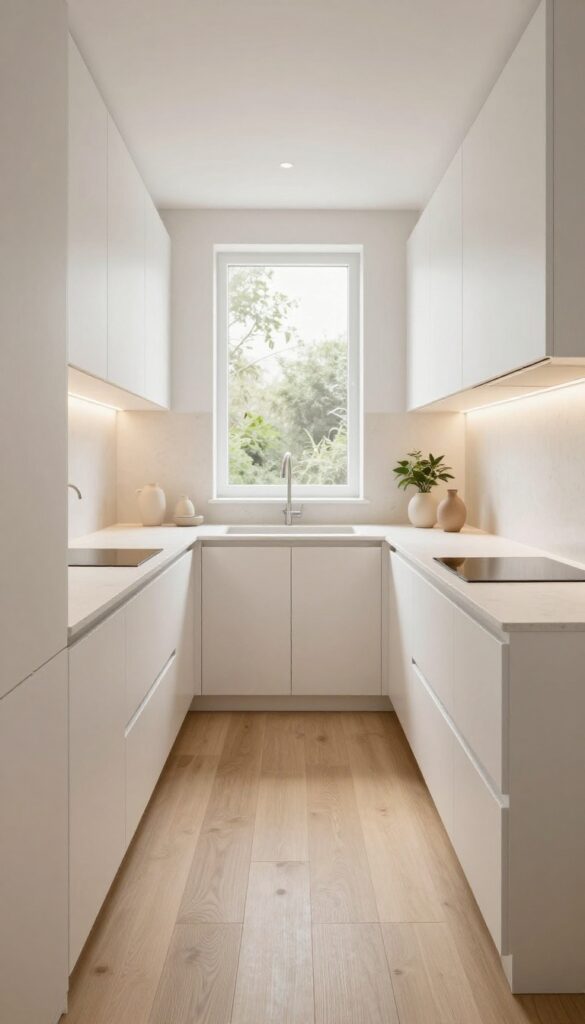
Sometimes the best way to make a narrow kitchen feel bigger is to stop fighting the width and work with it. A single-wall layout keeps everything in a straight line, which means no bumping into counters or squeezing past an island. The result is a clean, almost gallery-like space that feels open and intentional.
Continuous countertops and handleless cabinets reinforce that seamless look, helping the room read as longer and more spacious than it actually is.
Why It Works
By consolidating all functions along one wall, you free up valuable floor space and create an unobstructed path through the kitchen. This layout minimizes visual clutter and makes the room feel less cramped because there are no protruding elements breaking up the sightline. The uninterrupted horizontal line draws the eye from one end to the other, enhancing the sense of length.
Best For
This idea is ideal for galley kitchens, studio apartments, or any narrow space where every inch of width counts. It also works well for open-plan layouts where you want the kitchen to blend into the living area without dominating it.
Styling Tip
Choose light-colored cabinets and a matching backsplash to keep the wall feeling cohesive. Add open shelving at one end for a few decorative pieces—this breaks up the monotony without adding bulk. Under-cabinet lighting will highlight the countertop and make the whole run feel polished.
2. Go Galley for Maximum Efficiency
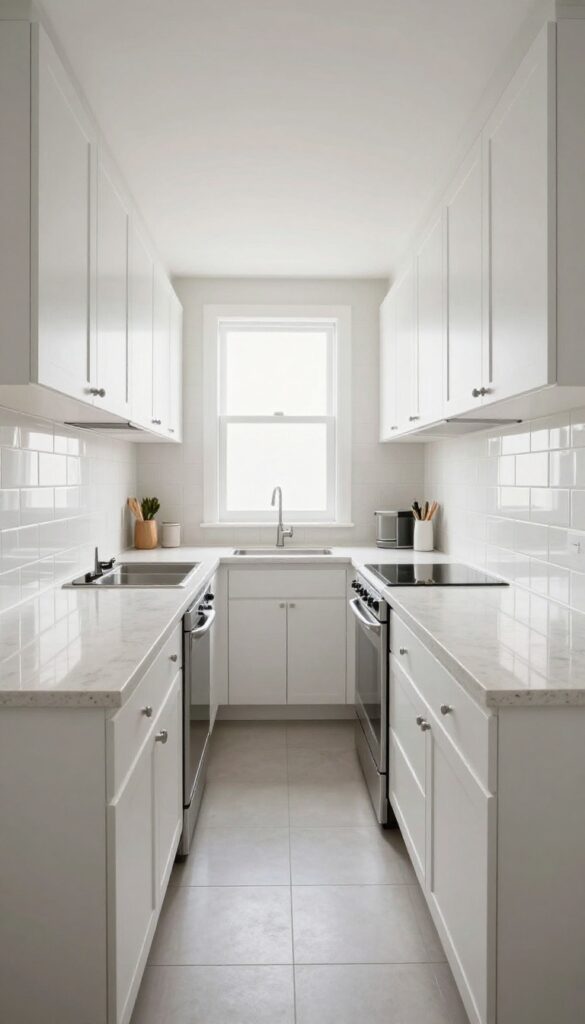
A galley layout is basically the gold standard for narrow kitchens. By placing countertops and cabinets along two parallel walls, you create a streamlined workflow that feels purposeful rather than cramped. The key is keeping the walkway wide enough—aim for at least 36 inches—so two people can move past each other without bumping elbows.
Shallow countertops (18 to 20 inches deep) help the space feel more open and less like a tunnel, especially when you opt for light-colored materials that bounce light around.
Why It Works
This layout minimizes wasted steps by clustering the sink, stove, and fridge along one or both runs. Everything is within arm's reach, which makes cooking feel efficient and organized. The clean lines of a galley kitchen also lend themselves to a modern, uncluttered look that visually expands the room.
Best For
Galley kitchens are ideal for long, narrow spaces where a U-shape or L-shape would pinch the room. They work well in apartments, condos, and small homes where every square inch counts. If you have a pass-through to a dining area, consider opening one end to keep the space feeling connected.
Styling Tip
To prevent a galley kitchen from feeling closed in, use reflective surfaces like glossy subway tile backsplashes or mirrored splashbacks. Add under-cabinet lighting to brighten countertops and avoid dark shadows. Keep upper cabinets flush with the ceiling to draw the eye upward and make the room feel taller.
3. Choose Open Shelving Over Upper Cabinets
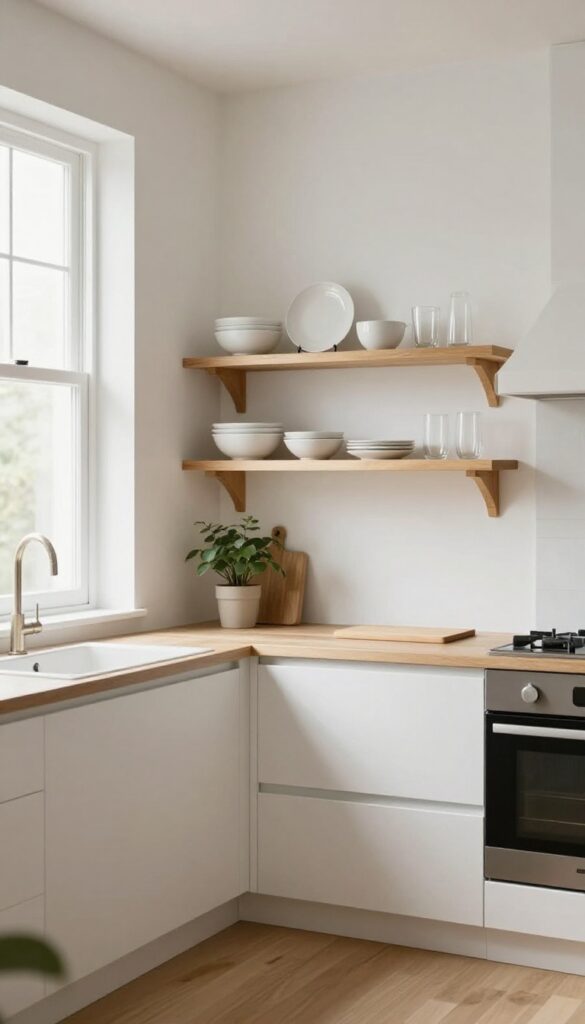
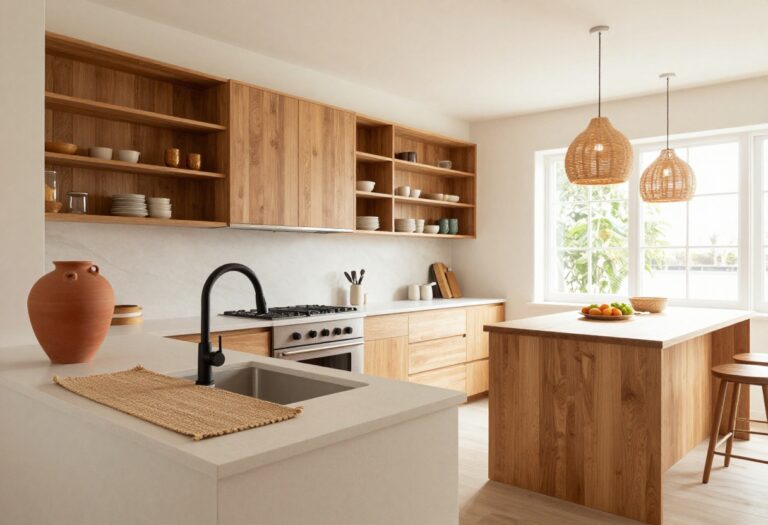
Upper cabinets can feel like a wall of heavy visual weight, especially in a narrow kitchen. Swapping them out for open shelving creates an instant sense of openness. The shelves let your wall color flow uninterrupted, making the room feel bigger and more connected.
Plus, they force you to be intentional about what’s on display—everyday dishes and glassware become part of the decor.
Why It Works
Open shelving eliminates the bulk of cabinet doors and frames, which can make a small kitchen feel closed in. By keeping items sparse and organized, you avoid visual clutter while still having essentials within reach. The airy look lets light travel freely, brightening the entire space.
Best For
This idea works best for kitchens where you have a consistent dish set or love displaying curated pieces. It’s ideal if you’re willing to keep things tidy—open shelves show everything, so they reward minimalism and regular editing.
Styling Tip
Stick to a neutral or monochrome palette for dishes and glassware to keep the look clean. Add a few natural elements like a small wooden cutting board or a simple plant for warmth without clutter. Leave some empty space between items to maintain that breathable feel.
4. Install a Slim Island on Casters
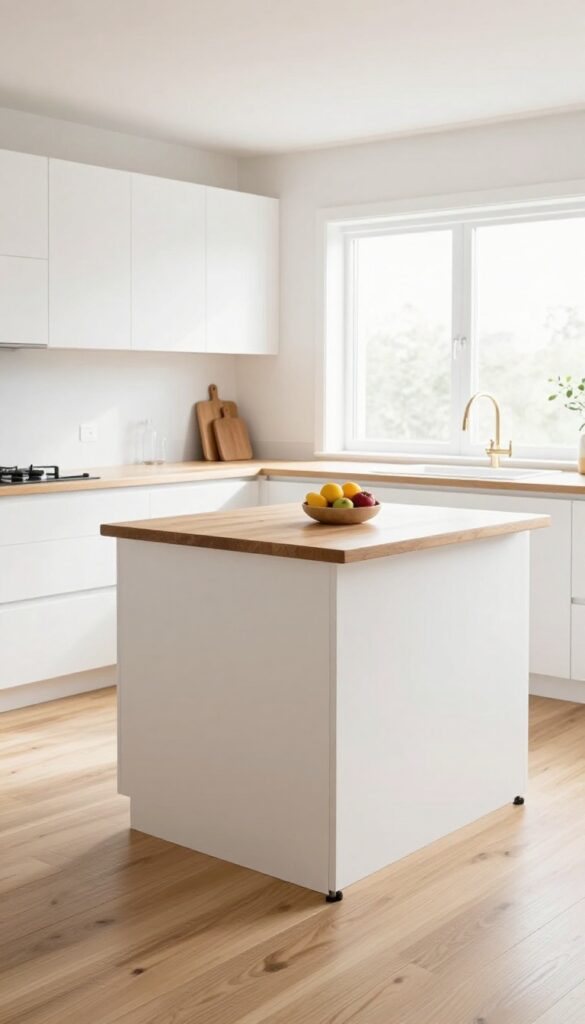
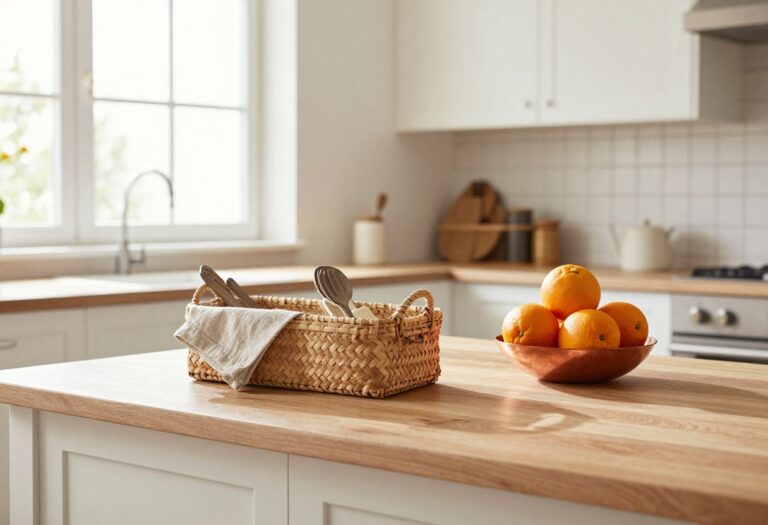
A rolling island is the ultimate multitasker for a narrow kitchen. At just 12 to 18 inches wide, it slides right into tight spots without blocking the flow. When you need extra counter space, just wheel it out; when you don't, tuck it against a wall or between cabinets.
The butcher-block top adds warmth and a natural texture that softens all the hard surfaces in a modern kitchen.
Why It Works
Because it gives you flexible prep space and storage exactly where you need it, without committing to a permanent fixture. The slim profile means you can still open cabinets and walk past comfortably, while the casters let you adapt the layout on the fly—great for small kitchens that double as dining or passage areas.
Best For
Galley kitchens or L-shaped layouts where every inch of floor space matters. It's also perfect for renters who can't install built-in islands but want that extra surface for chopping, serving, or just setting down groceries.
Styling Tip
Keep the island clean and uncluttered to maintain that modern feel. Top it with a small cutting board or a single bowl of fruit, and hang a few hooks on one end for lightweight pots or utensils. Choose butcher block in a light oak or walnut to complement your countertops without competing.
5. Use Vertical Storage Everywhere
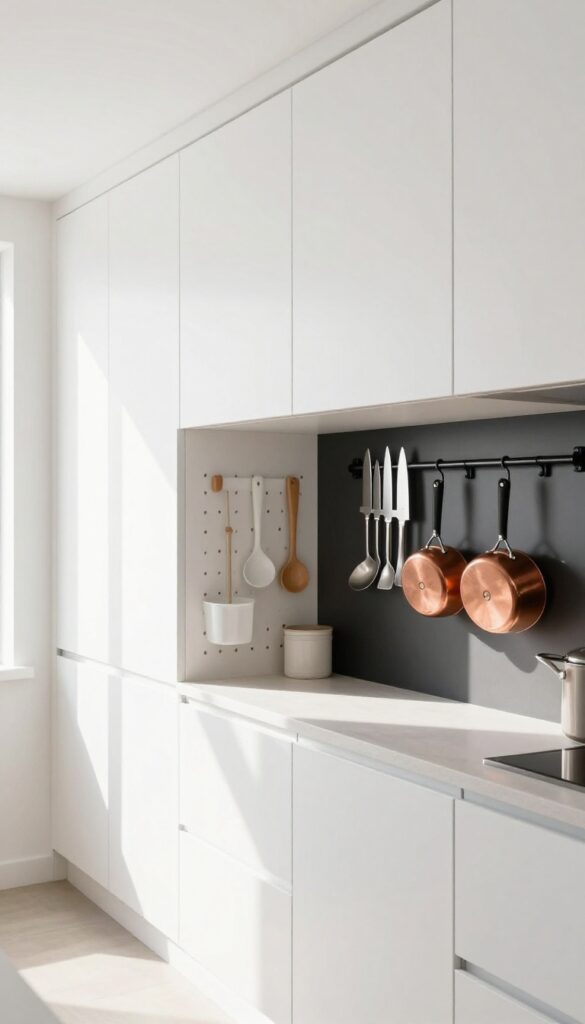
When your counter space is limited, the walls become your best friend. Going vertical isn't just practical—it creates a clean, modern look that makes the kitchen feel taller and more open. Tall cabinets, magnetic strips, and hanging racks turn bare walls into functional storage without taking up any floor space.
Why It Works
Vertical storage maximizes every inch of wall space, freeing up counters and drawers for prep work. It also draws the eye upward, making low ceilings feel higher and the room more spacious.
Best For
Narrow kitchens where every inch of horizontal space is precious. Also great for renters who can't install permanent shelving—magnetic and adhesive options work wonders.
Styling Tip
Stick to a cohesive color palette for your vertical storage: white or light wood cabinets keep things airy, while black metal racks add a sleek contrast. Group similar items together on pegboards for a curated look.
6. Pick Light Colors and Reflective Surfaces
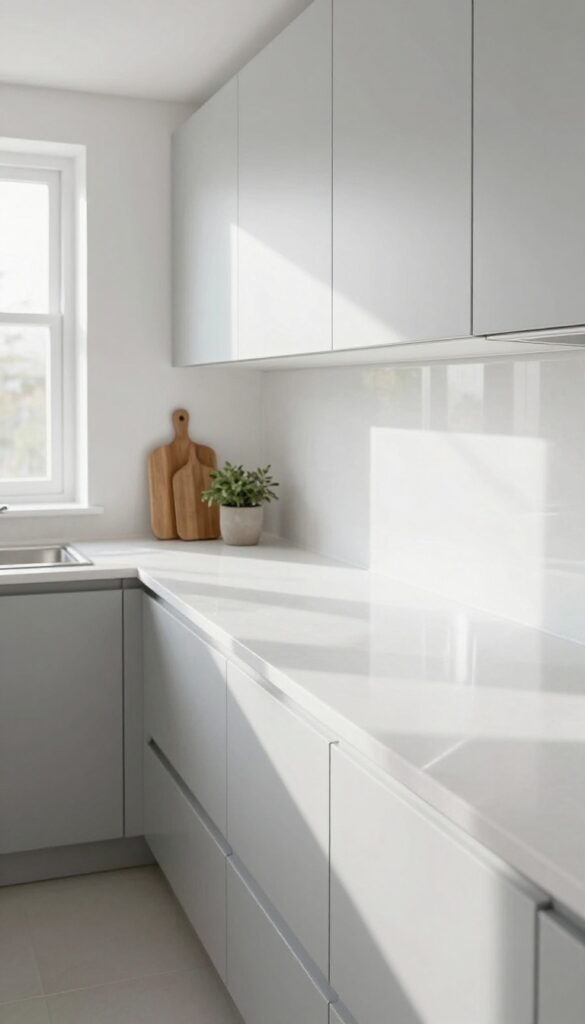
Light colors are a no-brainer for small spaces, but in a narrow kitchen, they do more than just brighten things up. White, pale gray, or soft beige walls paired with glossy backsplashes and quartz countertops bounce light around the room, making it feel airy and open. A mirrored backsplash or high-gloss lacquer cabinets can double the sense of depth, tricking the eye into seeing more space than there actually is.
Why It Works
Reflective surfaces amplify natural and artificial light, reducing shadows that can make a narrow room feel cramped. Light colors visually recede, so walls seem farther apart. Together, they create an expansive, clean look that feels modern and serene.
Best For
Kitchens with limited natural light or those that feel closed in. It's also ideal if you want a minimalist, contemporary vibe without sacrificing warmth.
Styling Tip
Add warmth with natural wood accents like a butcher block cutting board or wooden stools. Keep countertops clutter-free to let reflections do their job. Use matte finishes on floors or textiles to balance all the shine.
7. Opt for Sliding or Pocket Doors
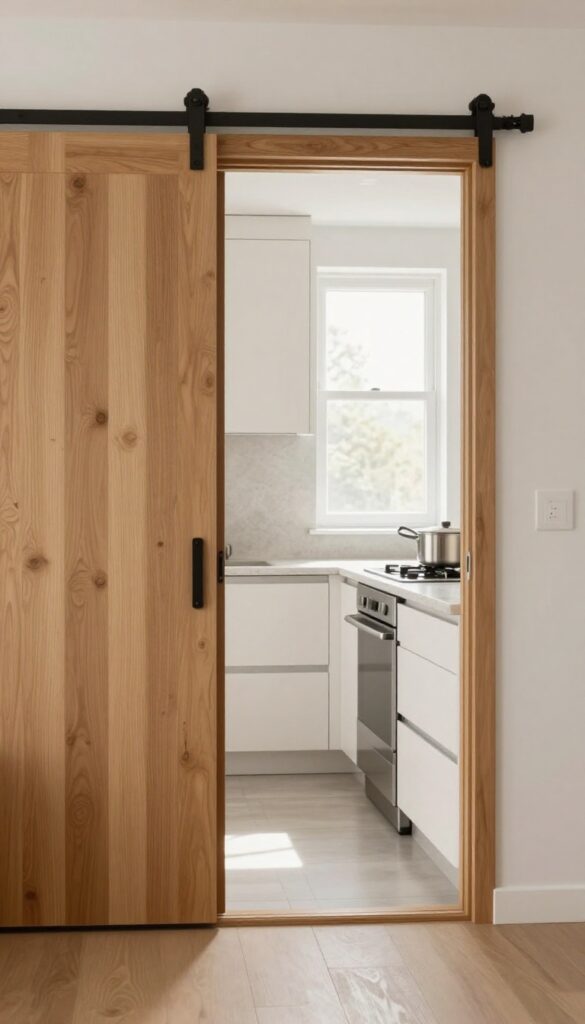
Standard swinging doors can feel like a luxury you simply don't have room for in a narrow kitchen. Every time that door swings open, it eats into precious floor space and disrupts the flow. Sliding barn doors or pocket doors that disappear into the wall offer a sleek, space-saving solution that instantly opens up the entire entry area and makes the kitchen feel more connected to the rest of your home.
Why It Works
By eliminating the door swing radius, you reclaim valuable square footage that can be used for cabinetry, counter space, or simply easier movement. The clean, streamlined look of sliding doors also reinforces a modern aesthetic and keeps sightlines open.
Best For
This swap is ideal for galley kitchens or any narrow layout where a swinging door would block traffic or bump into appliances. It's also great for connecting a kitchen to a pantry, laundry room, or mudroom without sacrificing flow.
Styling Tip
Choose a sliding door in a material that complements your kitchen finishes—like a warm wood tone to add texture against crisp white cabinets, or a sleek black metal frame for an industrial touch. If going with a pocket door, make sure the wall is non-load-bearing and plan for easy access to the track mechanism.
8. Add Under-Cabinet Lighting for Depth
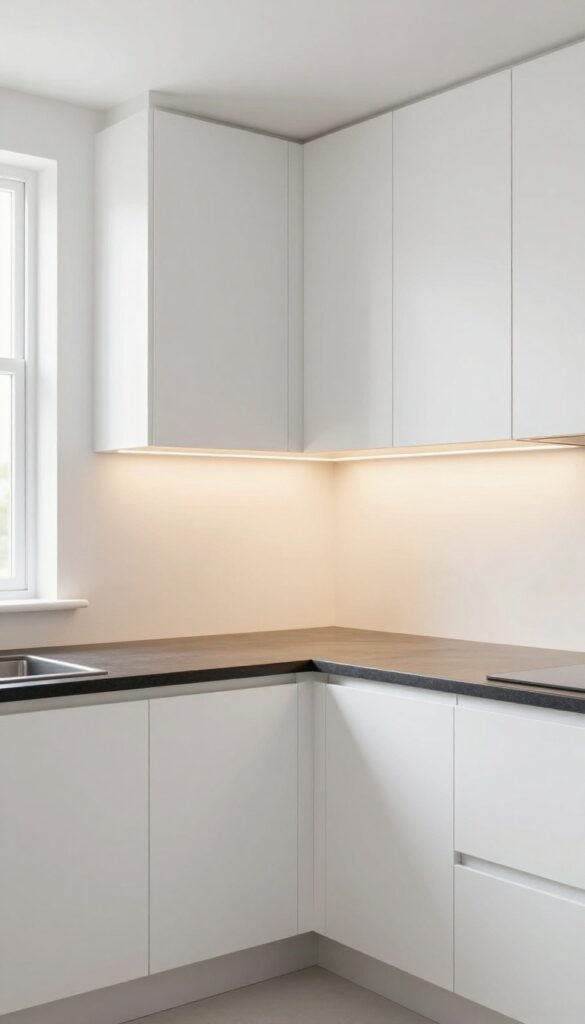
Lighting can make or break a narrow kitchen. Without it, shadows from upper cabinets darken your countertops and make the whole space feel cramped. Under-cabinet lighting changes that instantly.
It’s not just functional—it adds a layer of visual depth that tricks the eye into seeing more width. A warm, even glow along the countertop creates a clear separation between work surfaces and cabinets, giving your kitchen a modern, layered look.
Why It Works
Task lighting eliminates harsh shadows on your prep area, making counters feel larger and more inviting. The soft glow also draws attention horizontally across the room, which visually widens the space. LED strips are energy-efficient and slim enough to fit even the tightest gaps.
Best For
This idea shines in galley kitchens or any layout where upper cabinets loom close to the counter. It’s especially effective if you have dark countertops or deep cabinets that tend to cast shadows.
Styling Tip
Choose warm white LEDs (2700K–3000K) for a cozy, natural feel—cool white can look clinical. Install strips slightly recessed under the cabinet lip so the light diffuses evenly without glaring in your eyes.
9. Use Large-Format Tiles on the Floor
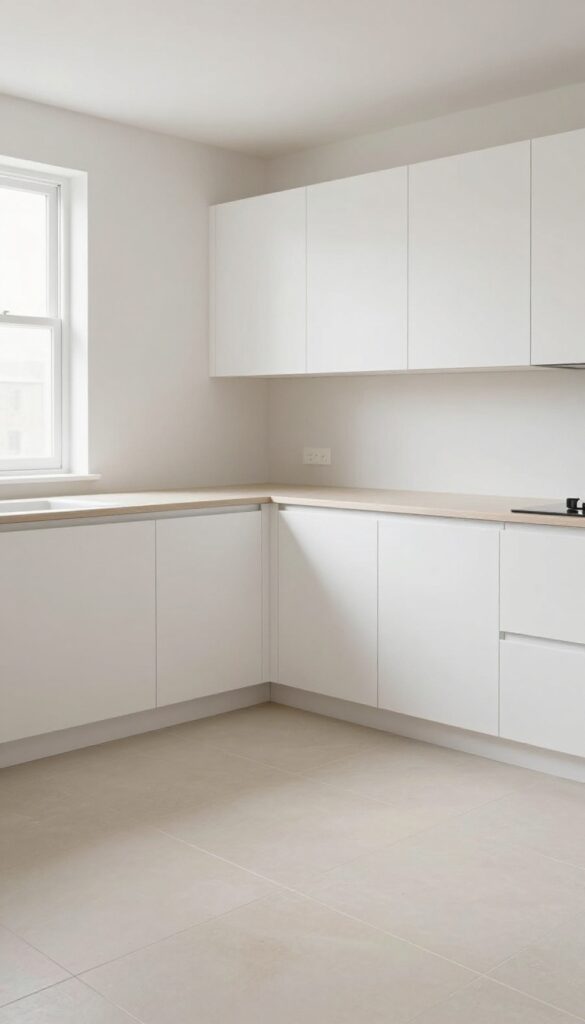
Flooring might not be the first thing you think of when trying to make a narrow kitchen feel bigger, but it can actually do a lot of the heavy lifting. Large-format tiles—think 12×24 inches or even bigger—cut down on grout lines, which means less visual clutter underfoot. That cleaner surface tricks your eye into seeing a wider, more open space, especially when you lay the tiles parallel to your longest wall.
It's a simple swap that instantly modernizes the room without any major renovation.
Why It Works
Fewer grout lines create a seamless floor surface that doesn't break up the visual flow. When your eye can travel across the room without interruption, the space naturally feels larger. Plus, long rectangular tiles laid lengthwise draw attention down the kitchen, emphasizing depth over width.
Best For
This trick works wonders in galley kitchens or any narrow layout where every inch of visual expansion counts. It's also great if you want a clean, modern look without busy patterns competing for attention.
Styling Tip
Stick with light neutral tones like soft gray, beige, or warm white to keep things airy. For a subtle twist, choose tiles with a slight texture or matte finish—they hide footprints better and add a touch of organic warmth to an otherwise sleek floor.
10. Incorporate a Single Bold Accent
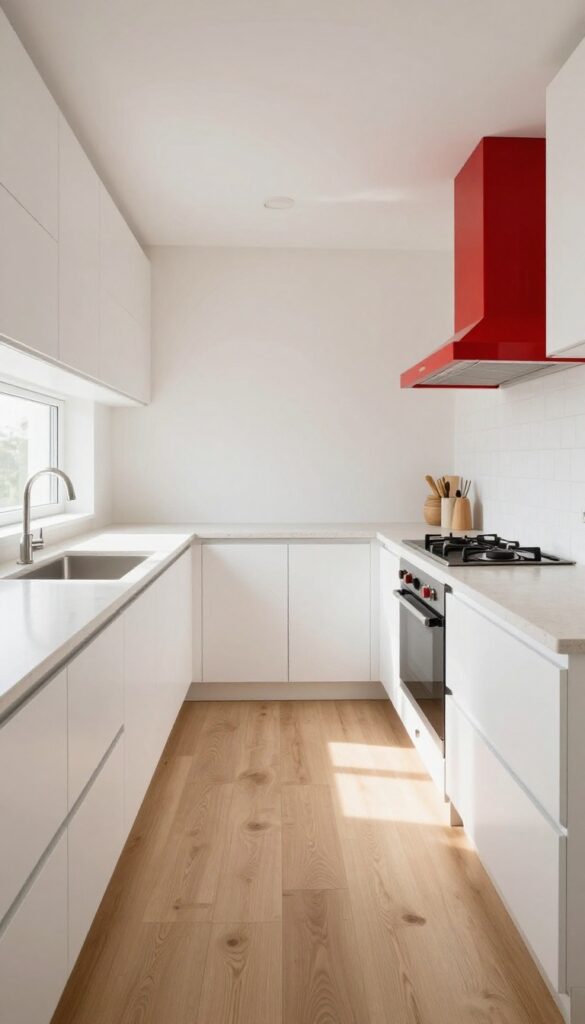
A narrow kitchen doesn’t have to play it safe with all neutrals. Dropping in one daring element—like a vivid red range hood, a geometric tile backsplash, or bright yellow bar stools—creates an instant focal point that pulls the eye and distracts from the tight width. The trick is to keep everything else clean and minimal so that single accent really pops without overwhelming the space.
Why It Works
One bold piece acts like a visual anchor. In a slim kitchen, your eye naturally searches for something interesting, and that accent becomes the star. The contrast between the quiet backdrop and the vibrant detail adds energy and personality without making the room feel busy or cramped.
Best For
This idea works especially well in galley kitchens or L-shaped layouts where you can position the accent at the far end or on a wall that faces you as you walk in. It’s also great if you’re renting and can’t do major renovations—just swap in colorful accessories or a standout appliance.
Styling Tip
Choose one element only: paint the island base a deep teal, install a patterned backsplash behind the stove, or buy three matching bar stools in a saturated hue. Keep countertops, cabinets, and walls light and simple so nothing competes. Repeat the accent color in small doses—like a dish towel or vase—to tie it together.
FAQ
What is the best layout for a narrow kitchen?
A galley layout (two parallel counters) or a single-wall layout works best. Galley kitchens maximize efficiency with a clear work triangle, while single-wall layouts keep the space open and uncluttered.
How wide should a narrow kitchen be?
For a functional galley kitchen, aim for at least 7 feet wide (2.1 meters) to allow comfortable movement between counters. Single-wall kitchens can be as narrow as 5 feet if designed carefully.
Can I fit an island in a narrow kitchen?
Yes, but choose a slim island (12-18 inches deep) on casters so you can move it as needed. Leave at least 36 inches of clearance around it for easy traffic flow.
What colors make a narrow kitchen look bigger?
Light colors like white, cream, pale gray, and soft pastels reflect light and make the space feel larger. Glossy finishes and mirrors also help by bouncing light around.
How do I add storage without making the kitchen feel cramped?
Use vertical storage like tall cabinets, open shelving, and wall-mounted racks. Avoid bulky upper cabinets; instead, opt for shallow shelves or glass-front doors to maintain an open feel.
Conclusion
A narrow kitchen doesn't have to feel like a compromise. With smart layouts, vertical storage, and light-reflecting finishes, you can create a space that's both functional and inviting. The key is to embrace the proportions and make deliberate choices that enhance flow.
Start with one or two ideas that resonate most with your space, then build from there. Even small changes—like swapping cabinet doors or adding under-cabinet lighting—can transform how your kitchen feels every day.