13 Paver Patio Ideas to Upgrade Your Outdoor Living Area
You know that feeling when you step outside, look at your yard, and think it could be so much better. I get that itch every summer, especially when coffee tastes better outdoors and sunsets deserve a proper seat.
A paver patio can completely change how your outdoor space feels without turning your life into a never-ending renovation show.
Think of this as me chatting with you about ideas I’ve seen, tried, or seriously considered while dreaming up better outdoor hangouts.
I’ll keep it real, practical, and opinionated where it matters. Let’s turn that plain yard into a place you actually want to use.
1. Classic Square Paver Patio With Clean Lines
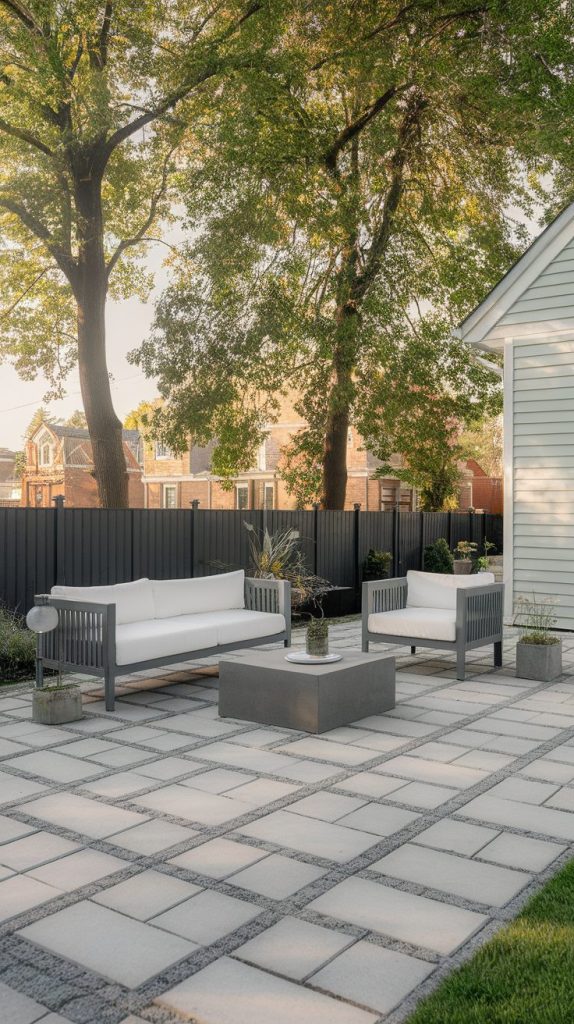
I always say this style feels like the little black dress of outdoor spaces because it never looks dated. Square pavers in a simple grid create a clean, calm foundation that works with almost any house style. You get structure without shouting for attention, which I personally love.
This design works especially well if you enjoy rearranging furniture or changing decor often. The straight lines make it easy to swap seating layouts, add a dining set, or throw down an outdoor rug without things feeling awkward. I’ve noticed it also makes small patios look more organized and intentional.
Color choice matters more than people think here. Neutral shades like gray, beige, or soft tan keep the patio feeling timeless and easy to accessorize. If you ever plan to sell your home, this style usually feels like a safe win.
From a maintenance perspective, square pavers keep life simple. You can replace individual pieces easily if one cracks or stains. IMO, this idea suits anyone who wants a polished look without constant second-guessing design choices.
2. Mixed-Size Paver Layout for a Natural Flow
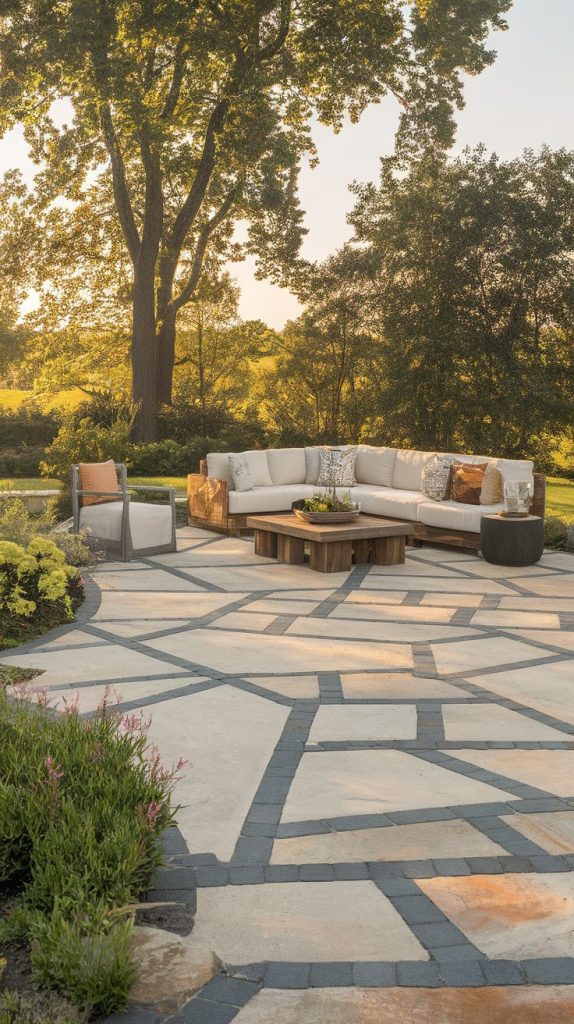
If perfect symmetry feels too stiff for you, a mixed-size paver layout might hit the sweet spot. Different paver sizes arranged in a repeating pattern create movement without chaos. I love how this style feels relaxed but still put together.
This layout works beautifully in larger yards where you want the patio to blend into the landscape. It almost feels like the space grew naturally instead of being dropped in all at once. Friends always comment that it feels cozy and inviting rather than formal.
You can play with color variation here too. Subtle shifts within the same color family add depth without making the space look busy. I usually suggest avoiding high-contrast mixes unless you love bold visuals.
One underrated benefit is how forgiving this pattern can be during installation. Minor measurement issues don’t stand out as much as they do in strict grids. That alone can save stress if you’re working with an older or uneven yard.
3. Circular Paver Patio for a Cozy Gathering Spot
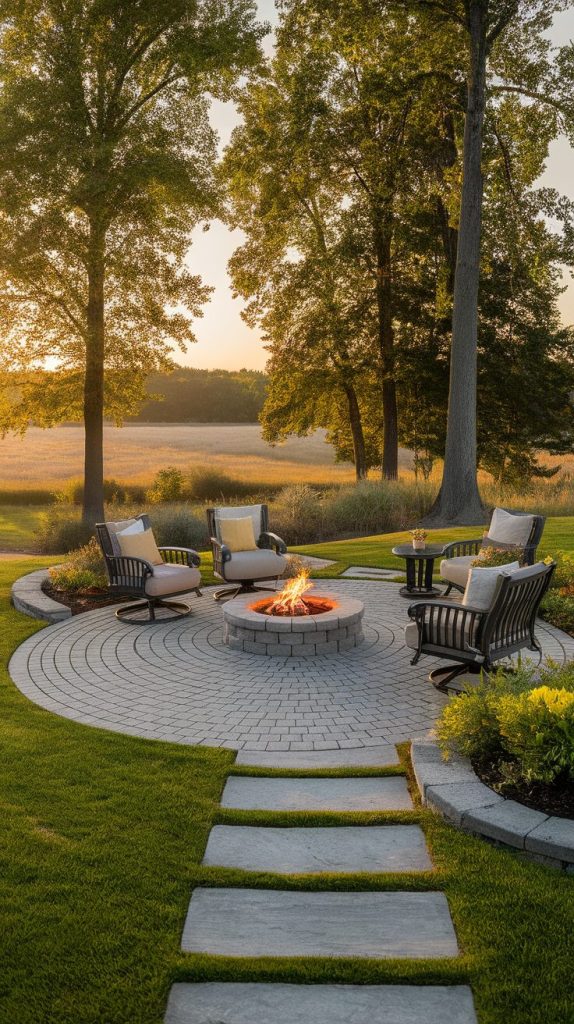
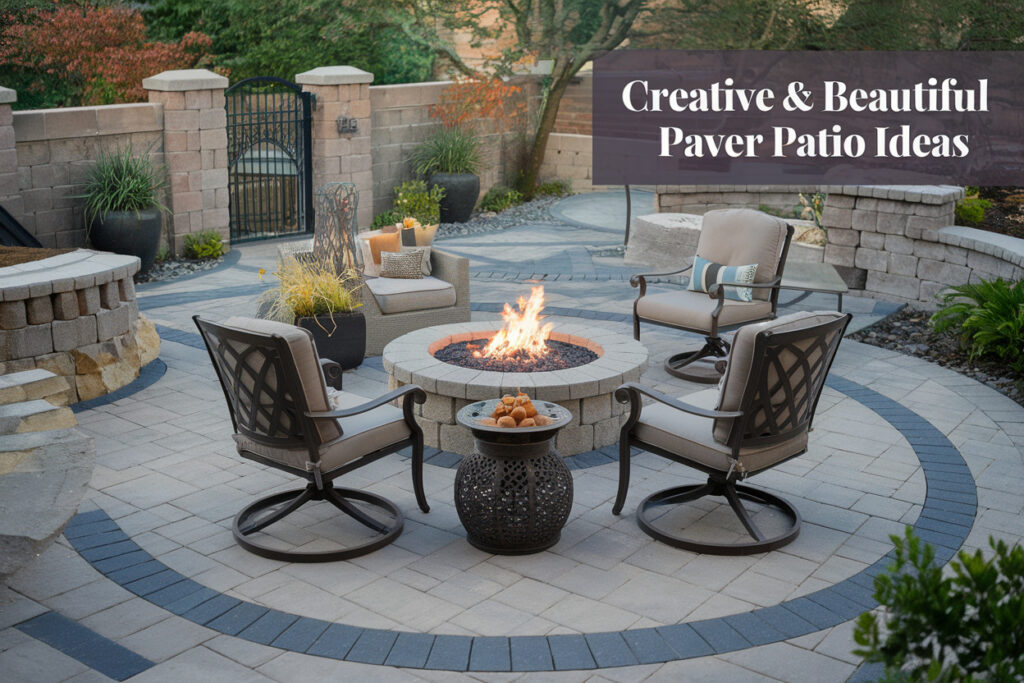
A circular paver patio instantly signals that this space is about connection. The shape naturally pulls people inward, which makes it perfect for fire pits or intimate seating areas. I’ve always felt more relaxed sitting in a round layout.
This design shines when you want the patio to feel like a destination. Even a smaller circle can feel special when surrounded by grass or garden beds. It encourages conversation because everyone faces each other without effort.
Choosing the right paver size is key here. Smaller pavers handle curves better and keep the circle looking smooth and intentional. Large pavers can work, but they need careful cutting to avoid awkward gaps.
Maintenance stays manageable as long as the base gets done properly. Once installed, circular patios age beautifully and often become the emotional center of the yard. If you love hosting or late-night chats, this idea feels like a natural fit.
4. Paver Patio With a Built-In Fire Pit
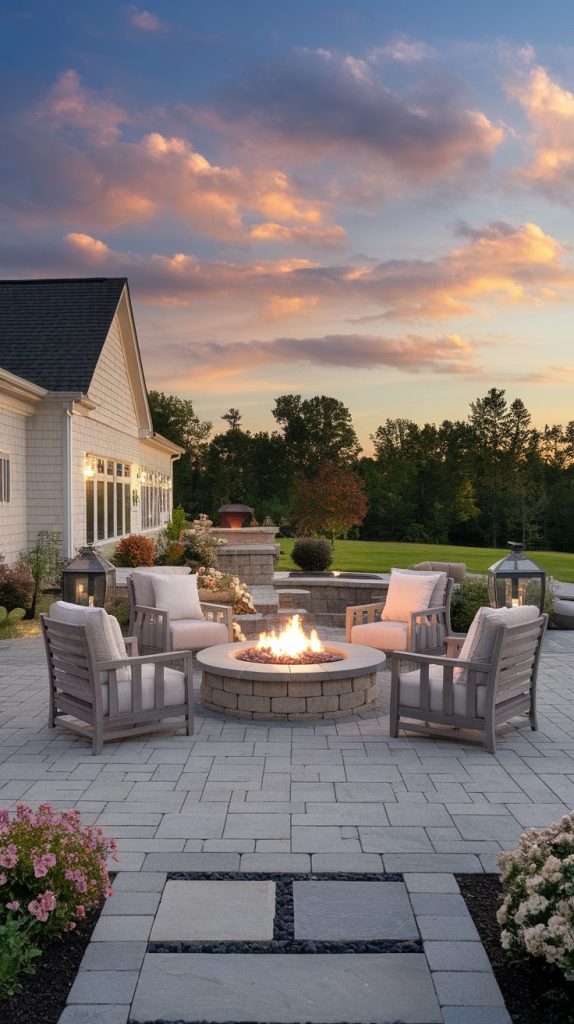
This idea feels almost unfair because it instantly upgrades your outdoor living game. A built-in fire pit turns a simple patio into a year-round hangout zone. I’ve spent countless evenings outside just because the fire made it irresistible.
Design-wise, matching the fire pit materials with your pavers keeps everything cohesive. It looks intentional instead of like an afterthought. I always recommend keeping seating distances comfortable so no one feels roasted.
This setup encourages longer conversations and slower evenings. People linger when there’s a fire, even if the weather cools down. That alone makes the investment worth it.
Safety and placement matter more than aesthetics here. Make sure the pit sits far enough from structures and overhanging trees. When done right, this patio idea becomes the heart of your outdoor space.
5. Modern Large-Format Pavers for a Sleek Look
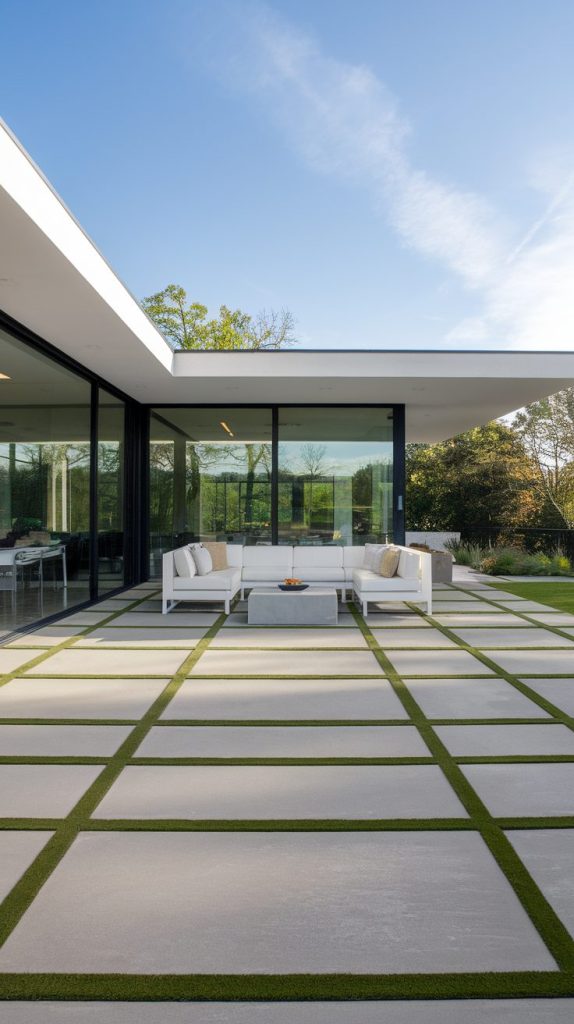
Large-format pavers scream modern without trying too hard. They create clean sightlines and make spaces feel bigger, which I appreciate in compact yards. Fewer grout lines mean less visual clutter.
This style pairs beautifully with minimalist furniture and simple landscaping. I’ve noticed it works especially well with contemporary homes or renovated exteriors. Everything feels intentional and uncluttered.
You do need a solid base for these pavers. Any shifting shows more with larger slabs, so proper prep matters. That said, the payoff looks high-end and polished.
Maintenance feels easier too because there are fewer joints to clean. If you like modern design and low fuss, this option deserves serious consideration.
6. Rustic Cobblestone-Inspired Paver Patio
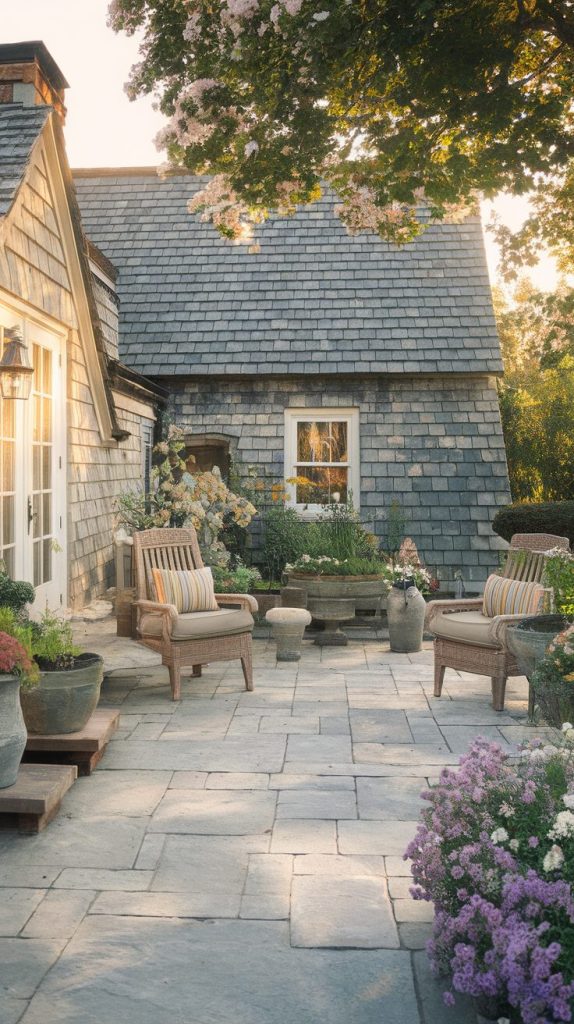
Sometimes you want your patio to feel like it has a story. Cobblestone-inspired pavers bring old-world charm without the headache of actual stone. I love how they add texture and warmth instantly.
This style fits cottages, traditional homes, and garden-focused yards beautifully. Slight color variations make the space feel lived-in rather than perfect. It’s charming in a way that doesn’t feel staged.
Walking on textured pavers also feels more grounded and natural. That sensory detail matters more than people realize. It slows you down, which feels nice outdoors.
Maintenance stays reasonable because modern versions resist wear better than true cobblestone. If you want character without fragility, this idea balances both.
7. Paver Patio With Defined Seating Zones
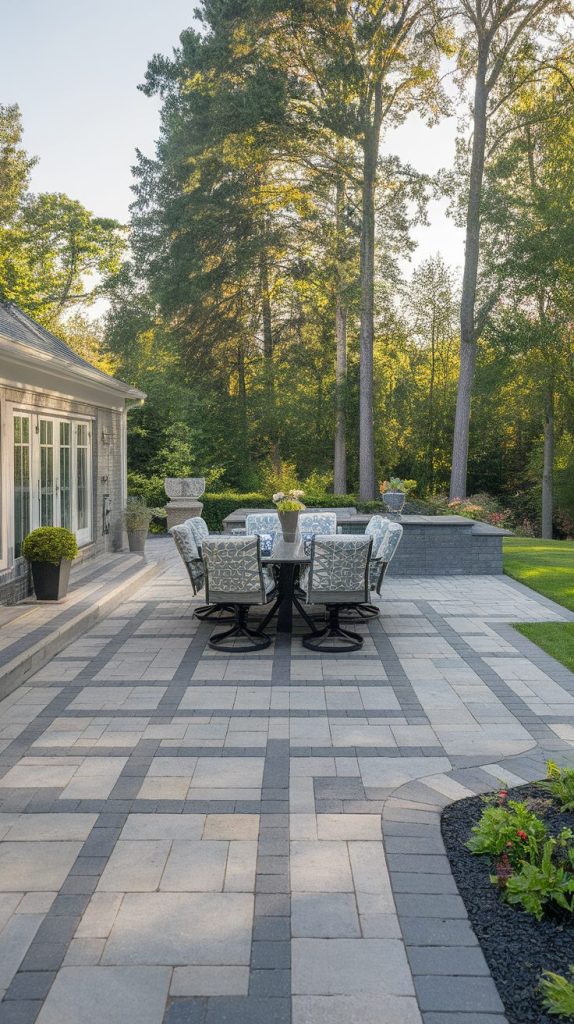
I’m a big fan of patios that know what they want to be. Dividing your paver patio into zones helps each area feel purposeful. One section can host dining while another handles lounging.
You can define zones through pattern changes or subtle color shifts. Even rotating pavers in different directions works surprisingly well. It creates structure without adding walls.
This approach makes entertaining smoother. Guests naturally gravitate to areas that match their mood. You won’t have everyone awkwardly hovering near the same table.
From a design standpoint, zoning also keeps larger patios from feeling empty. Everything feels intentional and balanced, which I always aim for.
8. Paver Patio With Outdoor Kitchen Space
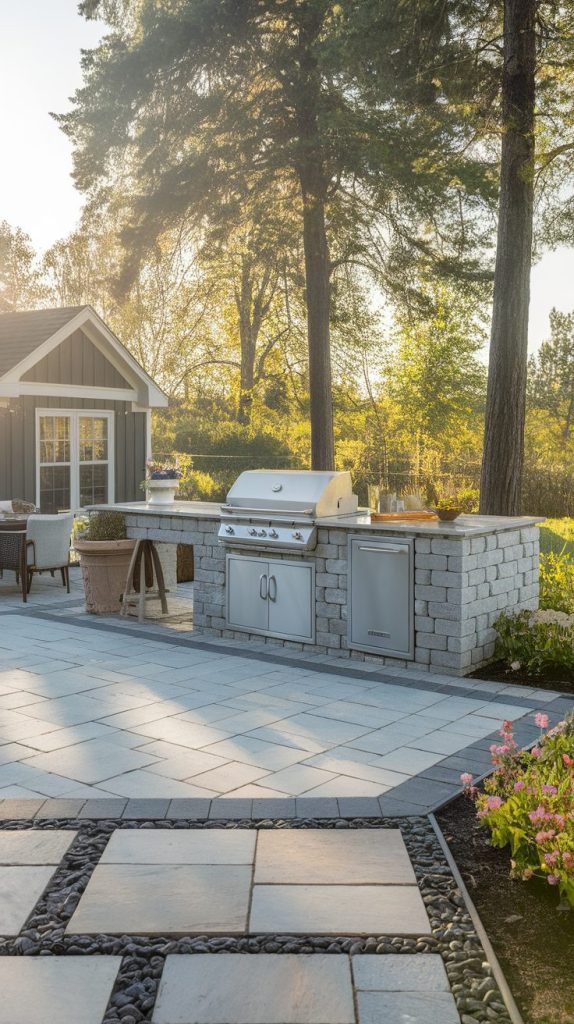
An outdoor kitchen turns your patio into a lifestyle upgrade. Cooking outside changes how gatherings feel, and I’m always amazed how often it gets used. Even simple setups feel luxurious.
Pavers provide a durable base for grills and counters. They handle heat well and clean up easily. I recommend choosing darker shades near cooking areas to hide stains.
Layout planning matters here. Keep prep space close to seating so you stay part of the conversation. That small detail makes a big difference.
This idea works best if you already enjoy hosting. If you do, the patio quickly becomes your favorite room.
9. Border-Accented Paver Patio Design
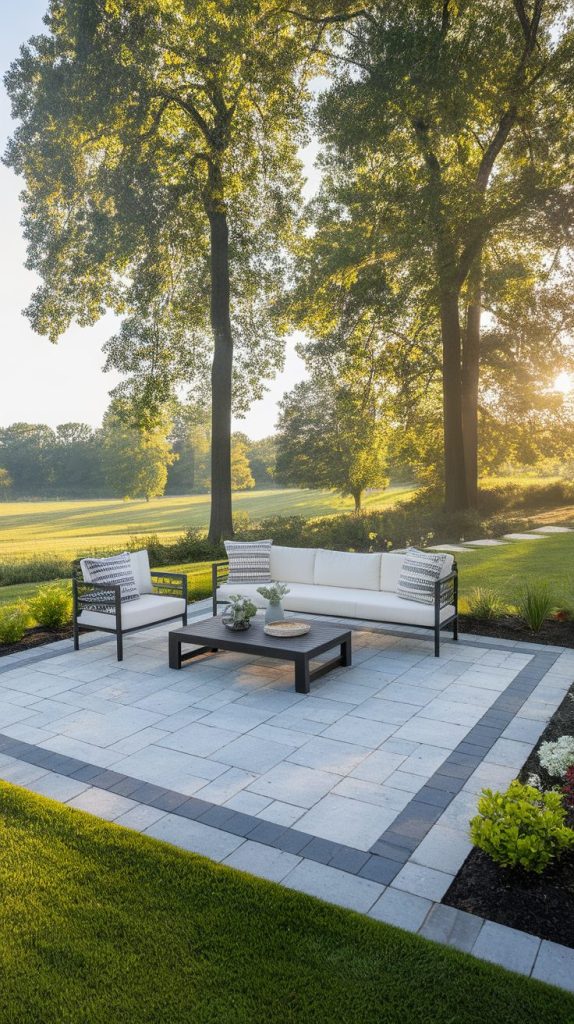
Adding a border around your paver patio sounds small, but it changes everything. Borders frame the space and give it a finished look. I always notice patios with borders first.
You can use a contrasting color or a different paver shape. Even subtle contrast adds polish. It feels intentional rather than basic.
Borders also help with edge stability. They lock everything in place and reduce shifting over time. That practical benefit often gets overlooked.
If you want a simple upgrade without redesigning everything, this idea delivers strong results.
10. Paver Patio Integrated With Garden Beds
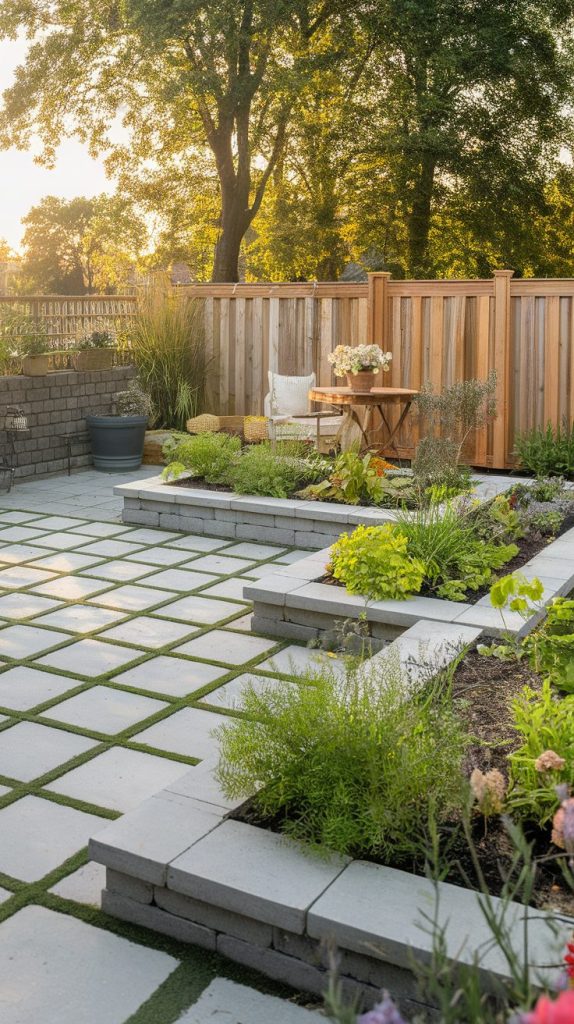
This idea blends hardscape and landscape beautifully. Letting garden beds flow into your patio softens the overall look. I love how it feels alive and seasonal.
Plants add color, fragrance, and movement to the space. Even low-maintenance greenery makes a big impact. It turns the patio into part of the yard instead of a separate slab.
Planning drainage and spacing matters here. Give plants room to grow without overtaking seating areas. Balance keeps everything comfortable.
If you enjoy gardening or want a softer vibe, this patio style feels incredibly rewarding.
11. Multi-Level Paver Patio for Visual Interest

Multi-level patios add drama in the best way. Even a single step creates dimension and separates activities naturally. I find it especially helpful on sloped yards.
Different levels make spaces feel intentional without walls. Dining above and lounging below creates flow and interest. Guests instinctively understand where to go.
Safety matters here, so clear step edges help. Consistent paver colors keep the design cohesive.
This idea suits homeowners who want a custom look that feels architectural.
12. Paver Patio With Pergola Structure
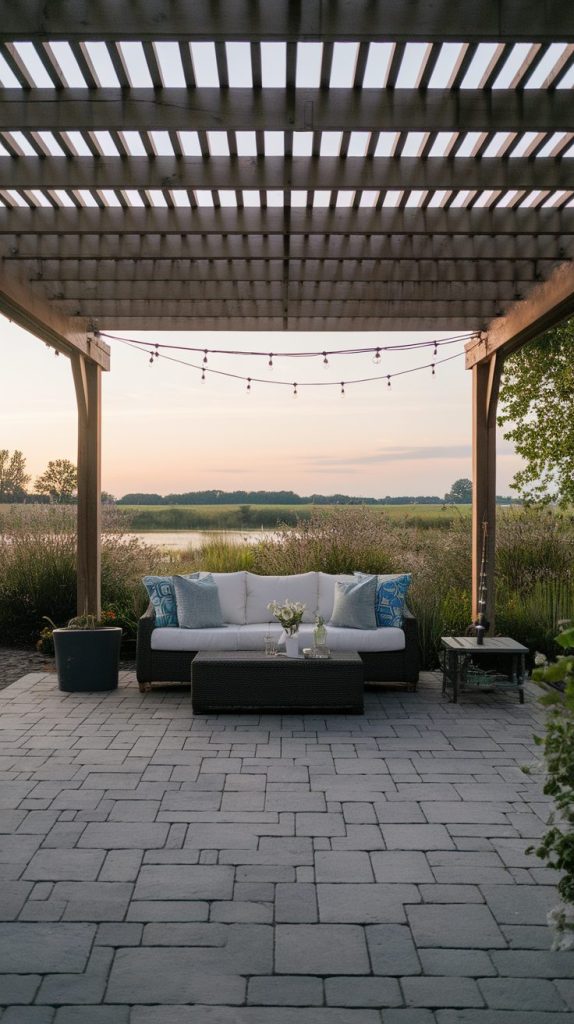
Adding a pergola transforms how a patio feels throughout the day. Shade changes everything, especially in summer. I can’t overstate how much more usable the space becomes.
Pergolas also create a sense of enclosure. The patio feels like an outdoor room rather than open ground. That psychological shift matters.
You can dress it up with lights, fabric, or plants. Each option adds personality without permanent changes.
This setup works beautifully for lounging, dining, or quiet afternoons.
13. Minimalist Paver Patio With Open Space Focus

Sometimes less really is more. A minimalist paver patio focuses on openness and breathing room. I appreciate how calming it feels.
This design relies on quality materials and thoughtful spacing. Clean lines and neutral tones carry the look. Everything feels intentional.
Furniture stays minimal too. Each piece earns its place. That restraint makes the patio feel peaceful.
If you crave simplicity and clarity outdoors, this idea delivers exactly that.
Paver Patio Planning Strategy: Build It Right From Day One
Before you choose patterns or colors, you need a clear strategy for your paver patio. I always start by defining how I plan to use the space because function should lead design. When you align layout, size, and materials with real lifestyle needs, the patio feels intentional instead of random.
Start by asking yourself what you actually do outdoors. Do you host dinners, relax with a book, or gather around a fire pit on weekends? Your answer should directly influence patio size, layout zones, and traffic flow.
Next, measure your yard carefully and map out furniture placement before installation. I recommend laying out chairs and tables on the lawn to visualize spacing. This simple step prevents you from building a patio that looks good but feels cramped.
Finally, invest in proper base preparation and drainage. A strong compacted base prevents shifting, sinking, and uneven surfaces over time. If you cut corners here, the design won’t matter because problems will show up fast.
Material Selection Guide: Choosing the Right Pavers for Longevity
Not all pavers perform the same, and smart material selection protects your investment. Concrete pavers offer affordability and design flexibility. Natural stone provides character and durability but often costs more.
Climate should influence your decision. Freeze-thaw cycles require pavers rated for cold resistance, while hot climates demand heat-tolerant materials. I always check product specifications instead of guessing.
Thickness also plays a major role in durability. Driveway-rated pavers differ from standard patio pavers, and using the wrong type can cause cracking. Choose materials based on expected weight and traffic.
Surface texture matters for safety. Slightly textured finishes improve slip resistance, especially near pools or outdoor kitchens. That small detail improves both comfort and long-term usability.
Maintenance and Long-Term Care Plan
A paver patio lasts longer when you commit to simple maintenance habits. I sweep debris regularly to prevent staining and moss growth. That small effort keeps the surface looking sharp year-round.
Sealing pavers protects color and prevents moisture damage. I suggest resealing every few years depending on exposure. Proper sealing also simplifies cleaning and reduces weed growth between joints.
Joint sand requires attention over time. Heavy rain or pressure washing can displace sand, so I refill gaps when needed. Keeping joints stable prevents shifting and uneven surfaces.
Address stains quickly instead of ignoring them. Oil, food, and rust marks respond better to early treatment. A proactive approach protects both appearance and structural integrity.
Common Mistakes to Avoid
Many homeowners underestimate base preparation, and that mistake costs them later. Skipping proper excavation or compaction leads to sinking and uneven pavers. I always treat the foundation as the most important step.
Another mistake involves poor drainage planning. Water should flow away from the house, not toward it. A slight slope prevents long-term damage and keeps surfaces dry.
People often choose pavers based only on looks. Ignoring durability ratings can result in cracking under heavy furniture or grills. I recommend balancing aesthetics with performance.
Overcrowding the patio with furniture creates clutter. Leave enough open space for comfortable movement. A breathable layout always feels more inviting.
Budget Planning and Cost Transparency
A clear budget protects you from mid-project surprises. I break costs into categories like materials, labor, base preparation, and finishing touches. That method keeps everything realistic from the start.
DIY installation reduces labor costs but increases time commitment. Professional installation costs more upfront but often ensures better longevity. Weigh your skills honestly before deciding.
Unexpected expenses often come from site preparation. Tree roots, uneven grading, or drainage adjustments can increase costs. Planning for contingencies reduces stress later.
Long-term value should influence spending decisions. A well-built paver patio increases usable space and improves property appeal. When you view it as an investment, smarter decisions follow.
Safety and Building Code Considerations
Local building codes sometimes regulate patio size, drainage, or structural additions like pergolas. I always check regulations before starting. Compliance prevents costly corrections later.
Utility lines also require attention. Mark underground utilities before digging to avoid serious problems. Safety should guide every step of installation.
Fire pits and outdoor kitchens may require clearance distances. Proper spacing protects both structures and people. I prioritize safety even when design temptations arise.
Lighting improves nighttime visibility and reduces accident risks. Path lights and step lights enhance both safety and atmosphere. That dual benefit makes lighting a smart addition.
Frequently Asked Questions
How long does a paver patio typically last?
A properly installed paver patio can last 25 years or more. Longevity depends on base preparation, material quality, and maintenance. I’ve seen well-built patios look great decades later.
Do paver patios require sealing?
Sealing is optional but highly recommended. Sealers enhance color, reduce staining, and protect against moisture damage. I usually reseal every few years for best results.
Are pavers better than poured concrete?
Pavers offer easier repairs and better flexibility over time. Concrete can crack in large sections, while individual pavers allow targeted replacements. I prefer pavers for long-term durability.
Can I install a paver patio myself?
You can install one if you have time, tools, and patience. Proper excavation and compaction require careful attention. I suggest starting small if you attempt DIY installation.
How do I prevent weeds between pavers?
Polymeric sand helps reduce weed growth between joints. Regular sweeping and maintenance also limit debris buildup. Consistent upkeep keeps the surface clean and stable.
What is the average cost of a paver patio?
Costs vary by size, material, and labor rates. Smaller patios may cost a few thousand dollars, while larger custom designs can cost significantly more. Planning and material choice strongly influence total expense.
Conclusion
A paver patio can completely change how you use and enjoy your outdoor space. From cozy fire pit setups to sleek modern layouts, the right idea depends on how you actually live and relax.
I always suggest choosing a design that feels good to you, not just one that looks great in photos.
At the end of the day, the best patio is the one that pulls you outside more often. If it makes you linger longer with a drink or a good conversation, you nailed it.