20 Shared Bedroom Ideas for Stylish and Functional Spaces
A shared bedroom always feels like a negotiation, not a design project. I’ve watched siblings argue over wall space, adults debate lighting, and kids claim imaginary borders like tiny landlords.
The good news sounds simple and true. You can design a shared bedroom that feels calm, stylish, and fair without losing your mind or your budget.
The trick comes from smart layout choices and honest compromises. You don’t need matching personalities or identical furniture to make a room work.
You just need a plan that respects how people actually live.
1. Symmetrical Bed Layouts That Keep the Peace
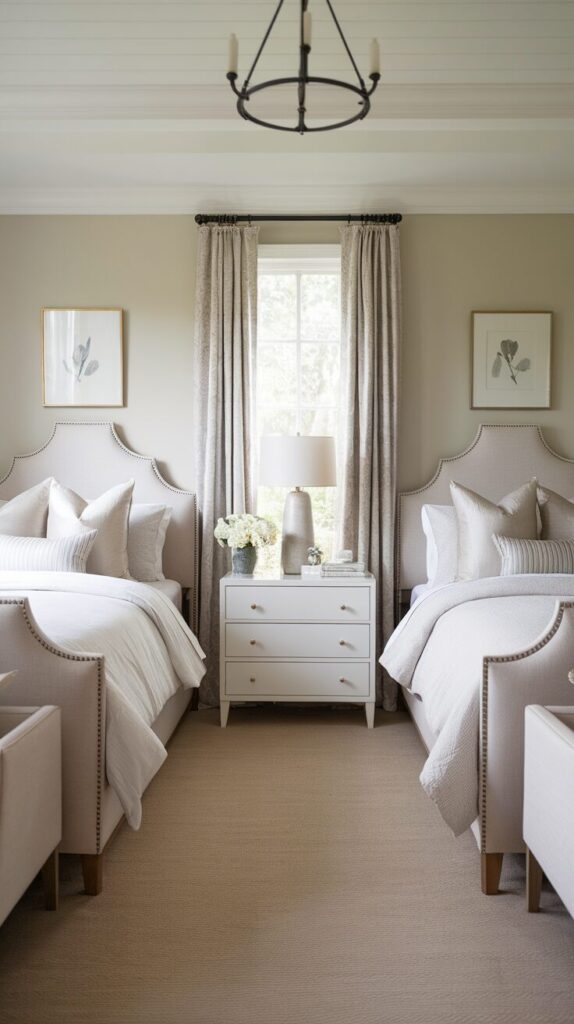
Shared bedrooms spark tension fast when one side feels better than the other. I learned this the hard way after watching one person always get the “good wall” and pretend it didn’t matter. A symmetrical bed layout removes that silent competition instantly. The room feels balanced, intentional, and oddly calmer from day one.
Symmetry works because both sleepers get equal visual weight and equal function. Matching bed sizes, headboards, and spacing stop comparisons before they start. The room looks polished without feeling stiff or staged. I always notice how quickly people relax once no one feels shortchanged.
Why This Works
Symmetry creates visual order, and the brain loves order in shared spaces. Equal spacing improves flow and prevents one side from dominating the room. People sleep better when the layout feels fair, even if they never admit it.
How to Do It
- Place identical beds parallel or mirrored against one wall.
- Keep the same distance from nightstands and windows on both sides.
- Use matching rugs under each bed to define equal zones.
Style & Design Tips
Stick to neutral bed frames if tastes differ. Add personality through bedding instead of furniture. Avoid oversized headboards that crowd the center of the room.
Pro Tip or Budget Hack
Buy one quality bed frame and source a second used or refurbished. Matching finishes matter more than brand names.
2. Color-Zoned Walls That Define Personal Space
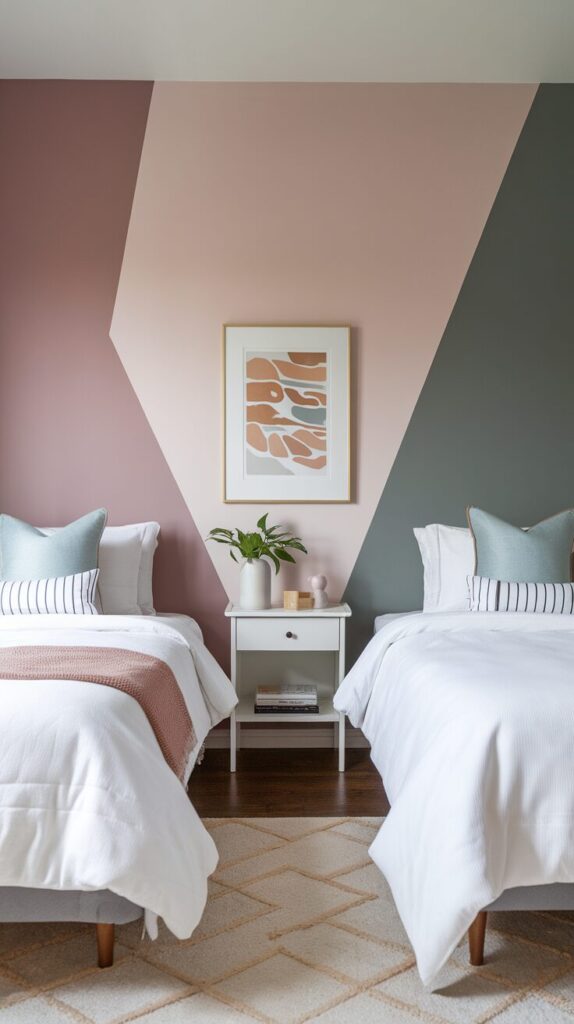
People say shared rooms force compromise, but color zoning proves you can honor individuality too. I love this approach when roommates or siblings share a small room and crave identity.
Color zones give everyone ownership without adding clutter. The room feels playful yet surprisingly organized.
Each person gets a defined wall or section painted in a shade they love. You still keep a shared palette so nothing feels chaotic. The result feels custom, not childish, when done right.
Why This Works
Color zones create invisible boundaries that reduce territorial tension. The brain reads each section as intentional space. People respect boundaries more when they can see them.
How to Do It
- Choose two or three colors that work together.
- Assign each person a wall, alcove, or half-wall area.
- Keep trim and ceilings neutral to balance the look.
Style & Design Tips
Muted tones work better than bold neons. Avoid painting every wall, which overwhelms the room fast. Use similar saturation levels for harmony.
Pro Tip or Budget Hack
Use removable wallpaper instead of paint for renters. You get impact without commitment.
3. Built-In Storage Beds That Save Serious Space
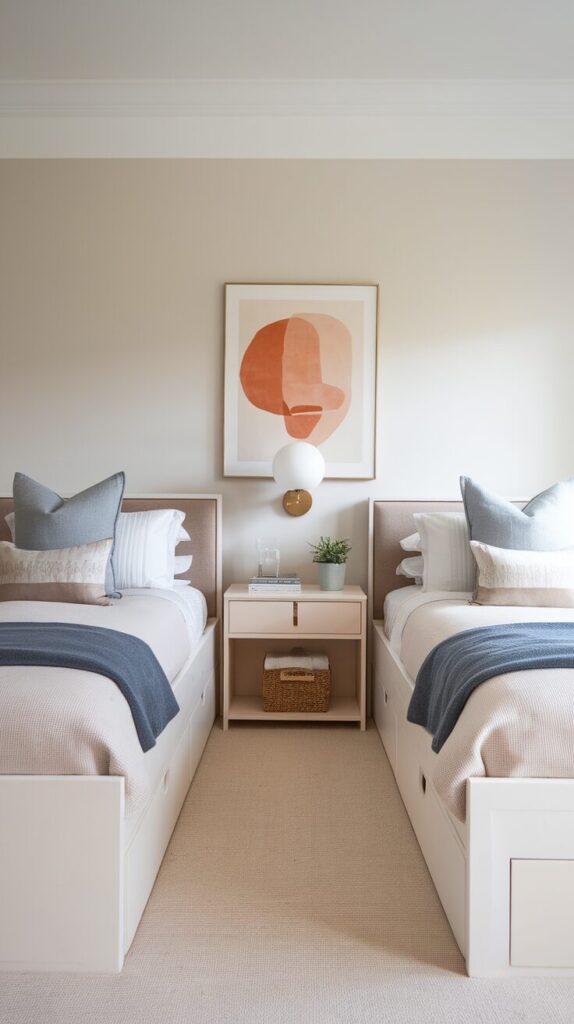
Floor space disappears quickly in shared bedrooms, and loose storage never stays neat. I learned to love storage beds after stepping on one too many stray shoes. Built-in drawers turn dead space into hardworking storage. The room instantly feels bigger and calmer.
These beds hide clutter while keeping essentials within reach. You eliminate extra dressers and regain walking space. Everyone knows where their stuff goes, which cuts down daily friction.
Why This Works
Storage beds use vertical volume efficiently. Less furniture improves flow and visual openness. Clean floors make shared rooms easier to maintain.
How to Do It
- Choose beds with deep drawers or lift-up platforms.
- Assign specific drawers to each person.
- Label sections discreetly if needed.
Style & Design Tips
Stick with low-profile frames to avoid bulk. Avoid flimsy drawer hardware, which fails fast with daily use.
Pro Tip or Budget Hack
DIY drawer inserts using plywood if you already own basic beds. You save money and customize depth.
4. Matching Nightstands With Individual Styling
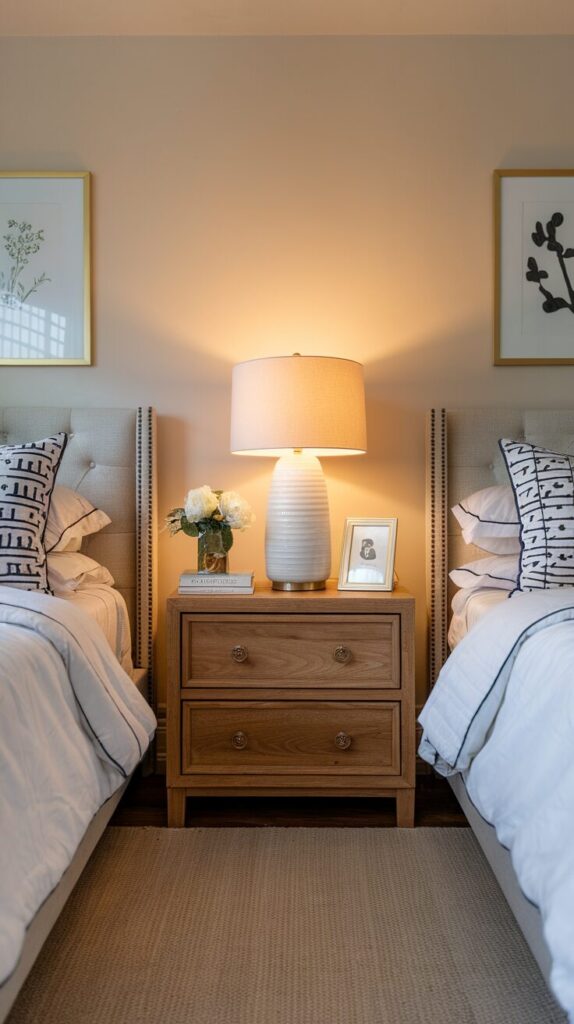
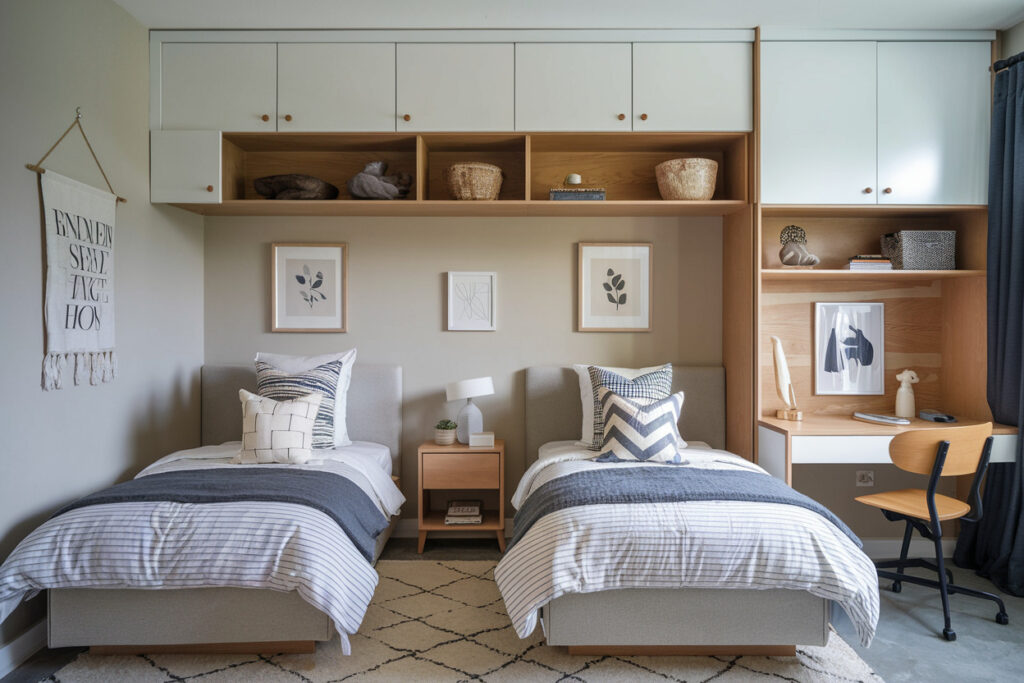
Shared bedrooms feel chaotic when surfaces look mismatched. Matching nightstands anchor the room visually. Personal styling on top adds character without cluttering the layout. I always recommend this balance for adults and teens.
The furniture stays uniform while decor reflects personality. Everyone wins without visual noise. The room feels cohesive but not boring.
Why This Works
Uniform furniture calms the eye. Personal decor satisfies emotional ownership. The mix supports harmony and self-expression.
How to Do It
- Choose identical nightstands with drawers.
- Allow each person full control of styling their surface.
- Limit decor to functional items plus one accent.
Style & Design Tips
Keep lamps similar in size. Avoid overcrowding surfaces, which kills the clean look.
Pro Tip or Budget Hack
Buy unfinished nightstands and stain them yourself. You control cost and color.
5. Loft Beds That Open Up Floor Space
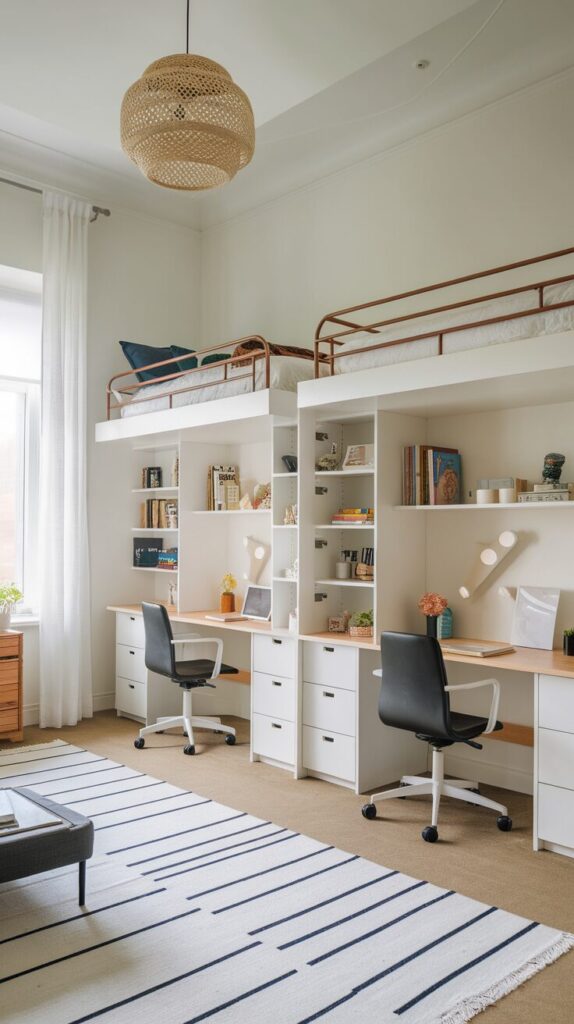
Shared bedrooms struggle most with limited square footage. Loft beds solve that problem fast. I used to think they felt childish until I saw how practical they can look. Floor space suddenly appears for desks, seating, or storage.
These beds work especially well for kids, teens, or students. They create vertical separation that feels private and functional. The room gains purpose beyond sleeping.
Why This Works
Loft beds maximize vertical space. You create zones without adding walls. People appreciate defined areas even in small rooms.
How to Do It
- Choose sturdy loft frames with safety rails.
- Place desks or seating underneath.
- Anchor furniture to avoid wobble.
Style & Design Tips
Neutral frames age better than bright colors. Avoid low ceilings, which make lofts feel cramped.
Pro Tip or Budget Hack
Use IKEA-style modular systems for flexibility. You can reconfigure later as needs change.
6. Shared Desk Stations With Clear Dividers
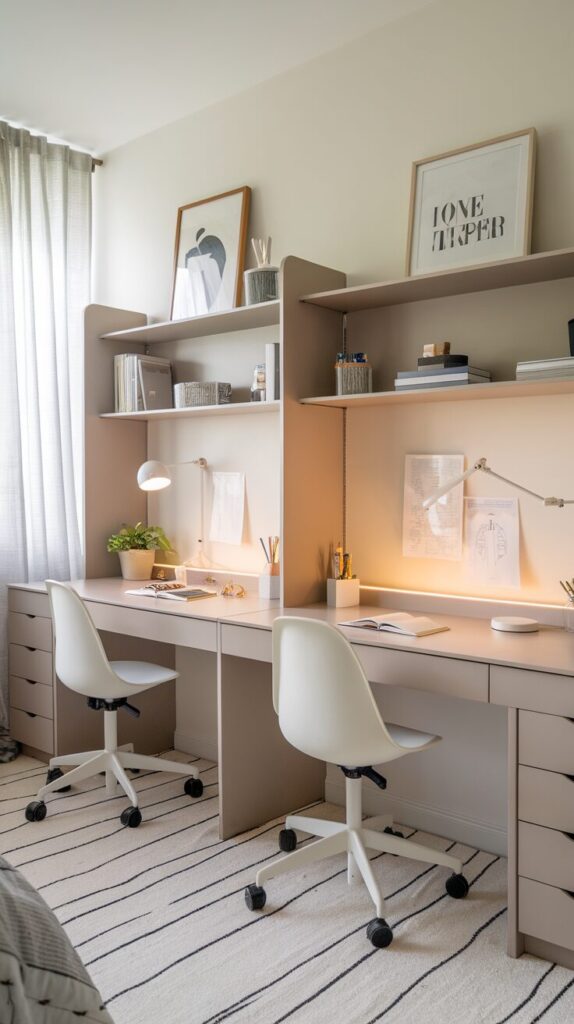
Homework, work, or hobbies need space even in shared bedrooms. A shared desk station works when you add clear boundaries. I’ve seen friendships survive thanks to a simple divider. The setup feels fair and focused.
Each person gets equal workspace without crowding. Dividers reduce distractions and protect personal supplies. The room supports productivity instead of conflict.
Why This Works
Defined work zones improve focus. Shared furniture saves space. Visual separation reduces tension.
How to Do It
- Install a long desk along one wall.
- Add slim dividers or shelving between sections.
- Provide separate task lighting.
Style & Design Tips
Keep desk surfaces clean. Avoid bulky partitions that block light.
Pro Tip or Budget Hack
Use bookcases as dividers for storage and privacy in one move.
7. Coordinated Bedding With Different Textures
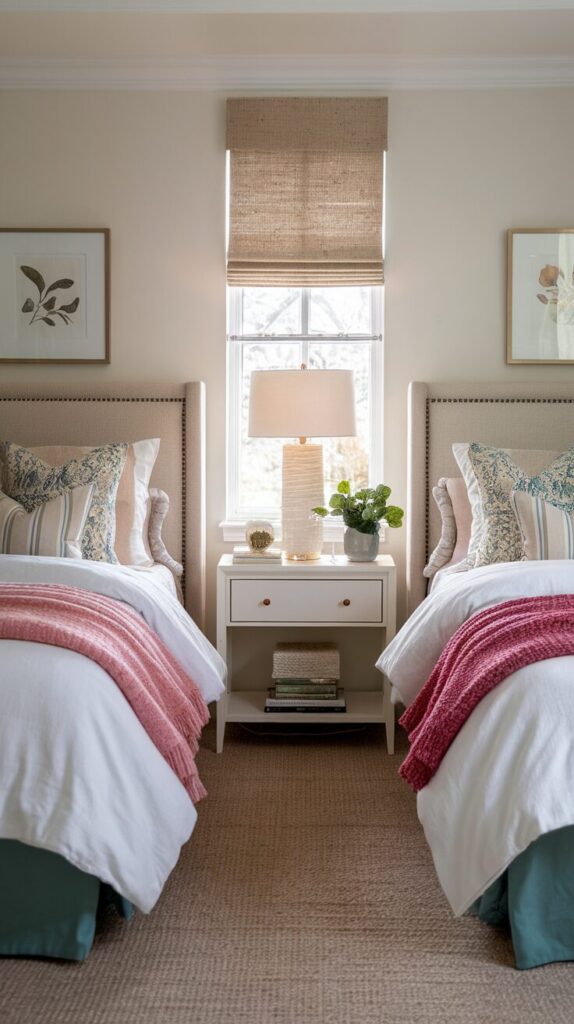
Matching bedding feels boring, but clashing sets feel messy. Coordinated bedding solves that middle ground perfectly. I love mixing textures while keeping colors consistent. The room feels styled without looking staged.
Each bed shows personality through fabric choice. The color palette keeps everything cohesive. This approach works for any age.
Why This Works
Color unity creates calm. Texture adds interest. People feel represented without visual chaos.
How to Do It
- Choose one color palette.
- Mix quilts, duvets, or knits.
- Keep sheet colors consistent.
Style & Design Tips
Limit patterns to one bed. Avoid loud prints on both sides, which compete visually.
Pro Tip or Budget Hack
Shop clearance bins for throws. Texture matters more than price.
8. Vertical Shelving for Personal Displays
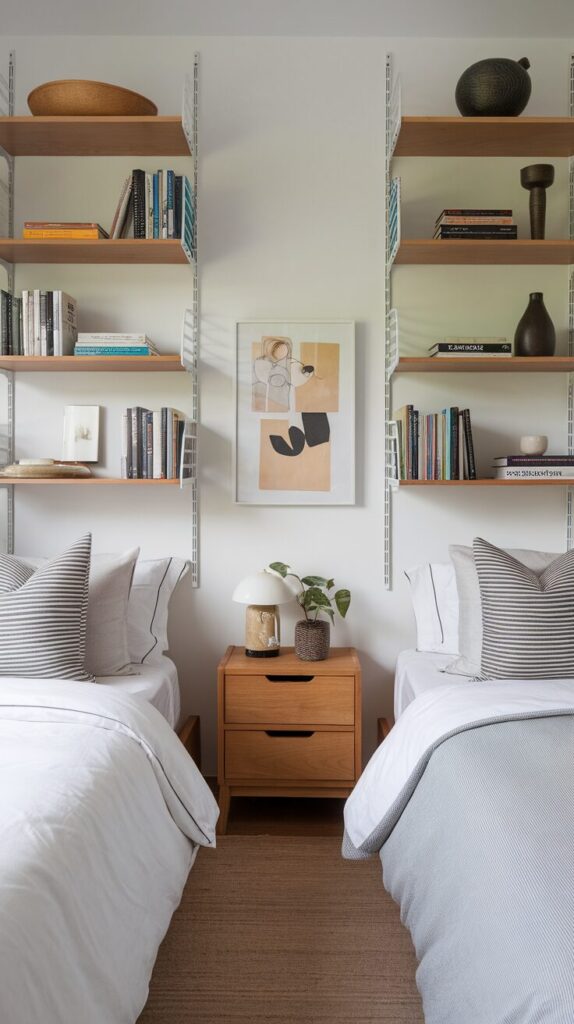
Shared rooms often lack display space. Vertical shelving fixes that fast. I like how it keeps surfaces clear while showing personality. Walls finally work harder.
Each person gets shelves for books, photos, or décor. The room feels personal without clutter. Vertical storage always wins in tight spaces.
Why This Works
Vertical storage saves floor space. Personal displays build ownership. Clear surfaces reduce mess.
How to Do It
- Install shelves above beds or desks.
- Assign shelf sections clearly.
- Use brackets rated for weight.
Style & Design Tips
Keep shelf depth shallow. Avoid overloading shelves, which looks messy.
Pro Tip or Budget Hack
Use floating shelves from hardware stores instead of specialty decor shops.
9. Curtains or Canopies for Visual Privacy
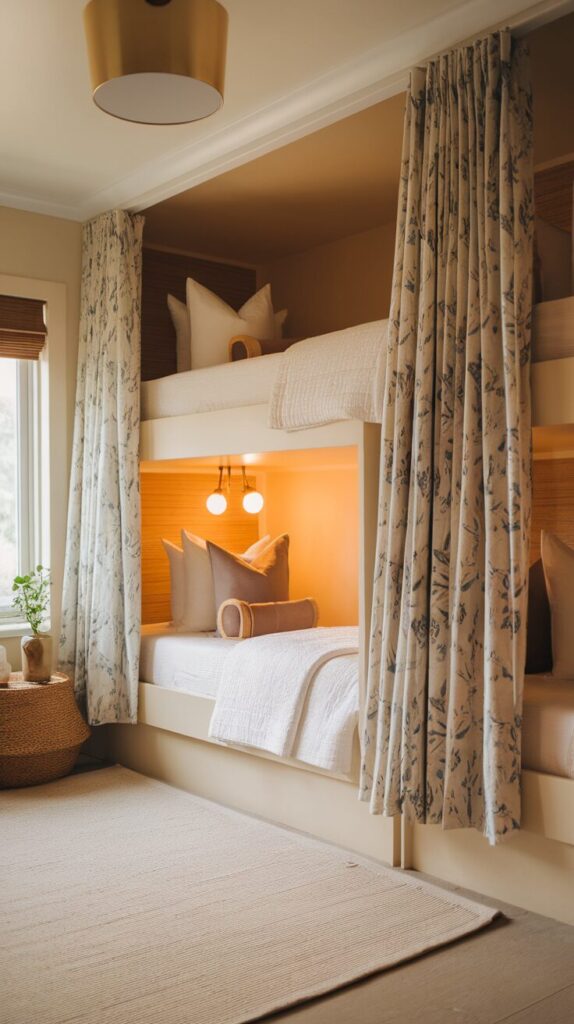
Privacy matters more than people admit. Curtains offer instant separation without walls. I’ve seen moods improve overnight with this simple addition. The room feels softer and calmer.
Curtains work for bunk beds or shared layouts. You create personal retreat zones easily. The space adapts as needs change.
Why This Works
Soft dividers reduce visual stress. Privacy supports comfort and rest. Curtains add texture and warmth.
How to Do It
- Mount ceiling tracks or rods.
- Choose breathable fabrics.
- Keep lengths consistent.
Style & Design Tips
Neutral fabrics age better. Avoid heavy materials, which block light.
Pro Tip or Budget Hack
Use tension rods for renter-friendly installs.
10. Neutral Base With Personalized Accent Zones
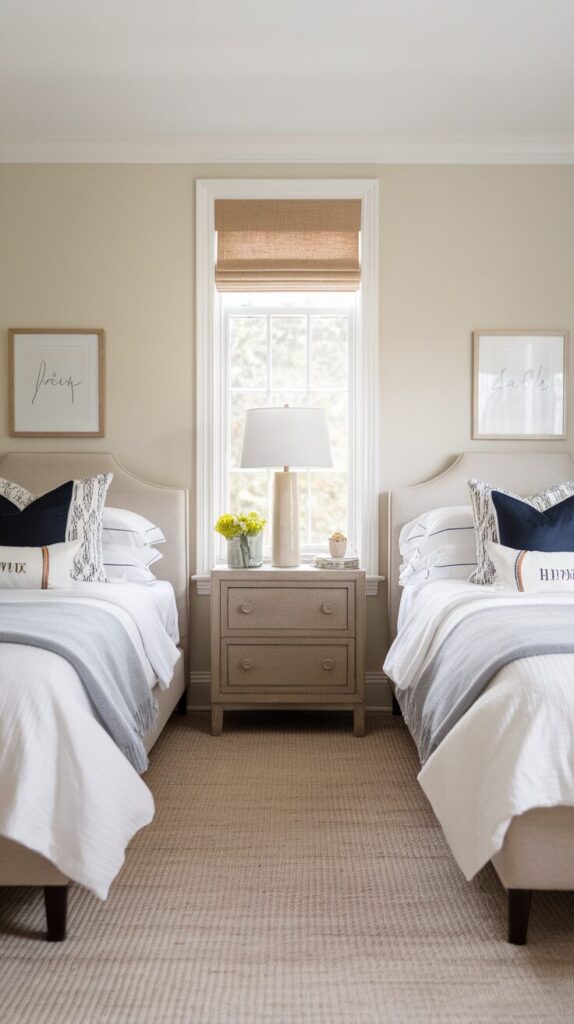
A neutral base prevents design arguments. Accent zones add personality. I use this approach when tastes clash hard. Everyone gets something without dominating the room.
Walls, floors, and furniture stay calm. Accents bring life. The balance feels grown-up and flexible.
Why This Works
Neutrals unify the space. Accents express individuality. The room evolves easily over time.
How to Do It
- Choose neutral paint and furniture.
- Assign accent colors through decor.
- Limit accent areas per person.
Style & Design Tips
Stick to two accent colors max. Avoid over-accessorizing, which ruins simplicity.
Pro Tip or Budget Hack
Swap accents seasonally instead of redecorating fully.
11. Bunk Beds With Built-In Storage
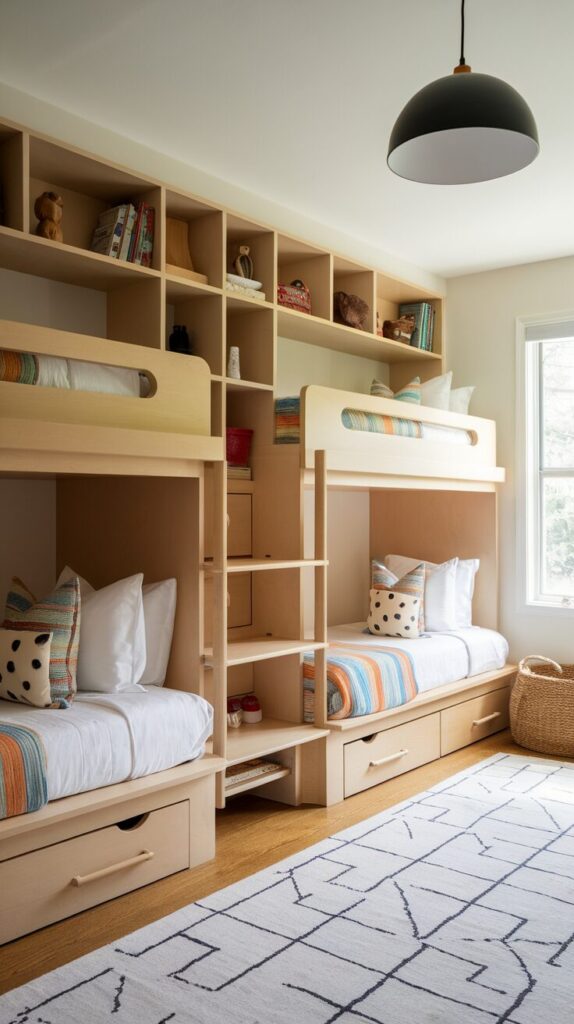
Bunks feel classic for a reason. Modern versions include drawers and shelves that actually work. I prefer these over basic frames every time. Storage makes all the difference.
These beds save space and reduce furniture needs. Kids love them, and parents love the organization. Everyone wins.
Why This Works
Vertical stacking saves square footage. Built-ins reduce clutter. Clear storage assignments prevent arguments.
How to Do It
- Choose sturdy frames with drawers.
- Assign storage clearly.
- Secure ladders properly.
Style & Design Tips
Wood finishes feel warmer. Avoid cheap metal frames, which feel cold.
Pro Tip or Budget Hack
Refinish older bunk beds instead of buying new.
12. Area Rugs to Define Individual Zones
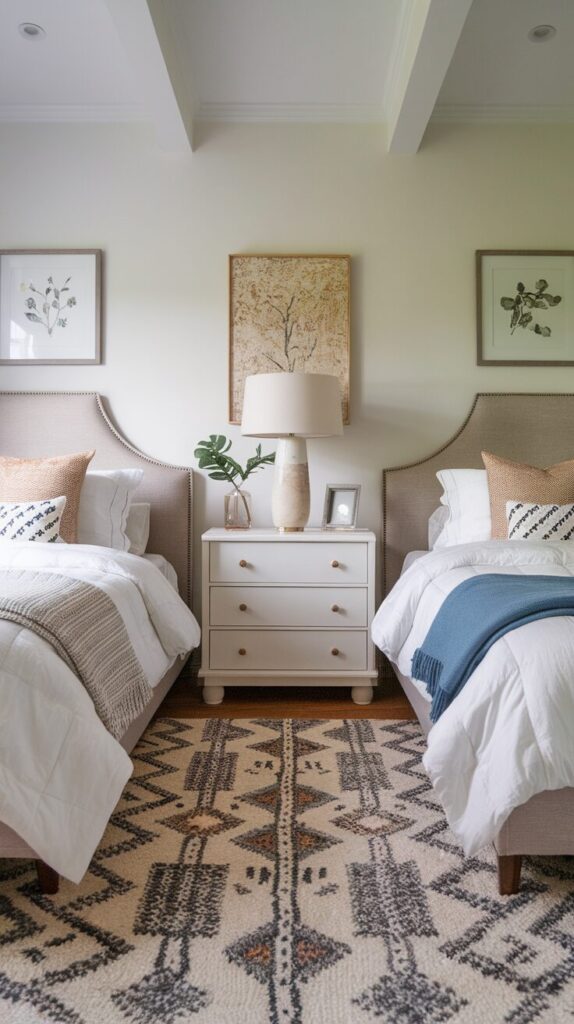
Rugs do more than warm floors. They define territory in shared rooms. I always recommend rugs when layouts feel undefined. The effect feels instant.
Each bed or zone gets its own rug. The room feels structured and cozy. People respect boundaries more clearly.
Why This Works
Visual zones guide behavior. Rugs absorb sound. Comfort increases immediately.
How to Do It
- Place rugs partially under beds.
- Use similar sizes for balance.
- Choose low-pile options.
Style & Design Tips
Stick to complementary patterns. Avoid tiny rugs, which look awkward.
Pro Tip or Budget Hack
Layer inexpensive rugs over neutral bases.
13. Wall-Mounted Lighting for Equal Function
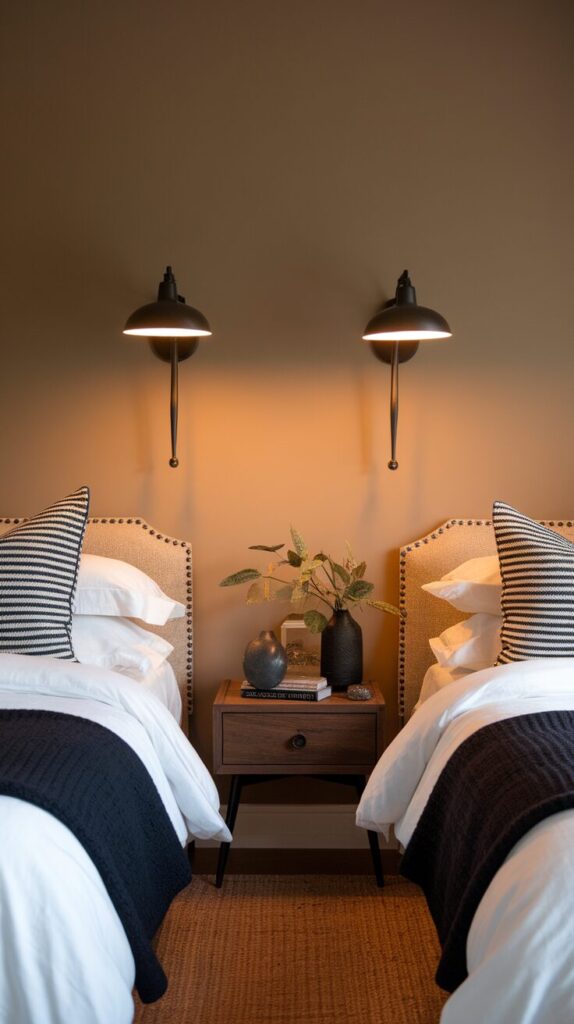
Lighting fights cause more drama than decor. Wall-mounted lights solve that fast. Everyone controls their own light. Peace returns.
These lights free nightstand space. The room looks intentional and modern. Function improves instantly.
Why This Works
Personal lighting supports routines. Wall mounts save space. Visual symmetry improves calm.
How to Do It
- Install adjustable sconces.
- Align heights evenly.
- Choose warm bulbs.
Style & Design Tips
Simple designs age better. Avoid mismatched fixtures, which distract.
Pro Tip or Budget Hack
Use plug-in sconces to avoid wiring costs.
14. Shared Closet With Labeled Sections
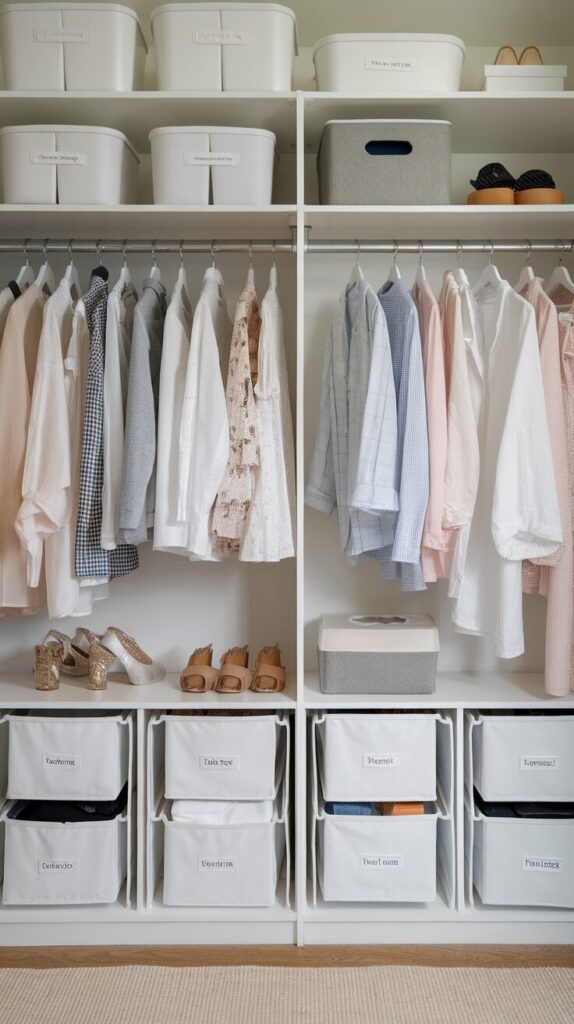
Closets cause tension fast. Clear sections prevent that drama. I swear by labels even for adults. Everyone stays accountable.
Divide rods and shelves clearly. Storage stays fair. Morning routines improve immediately.
Why This Works
Defined storage reduces conflict. Visual clarity saves time. Organization supports habits.
How to Do It
- Split rods evenly.
- Use shelf dividers.
- Label discreetly.
Style & Design Tips
Neutral organizers blend better. Avoid overstuffing, which defeats the system.
Pro Tip or Budget Hack
Use tension rods to add hanging space cheaply.
15. Floating Desks for Minimalist Rooms
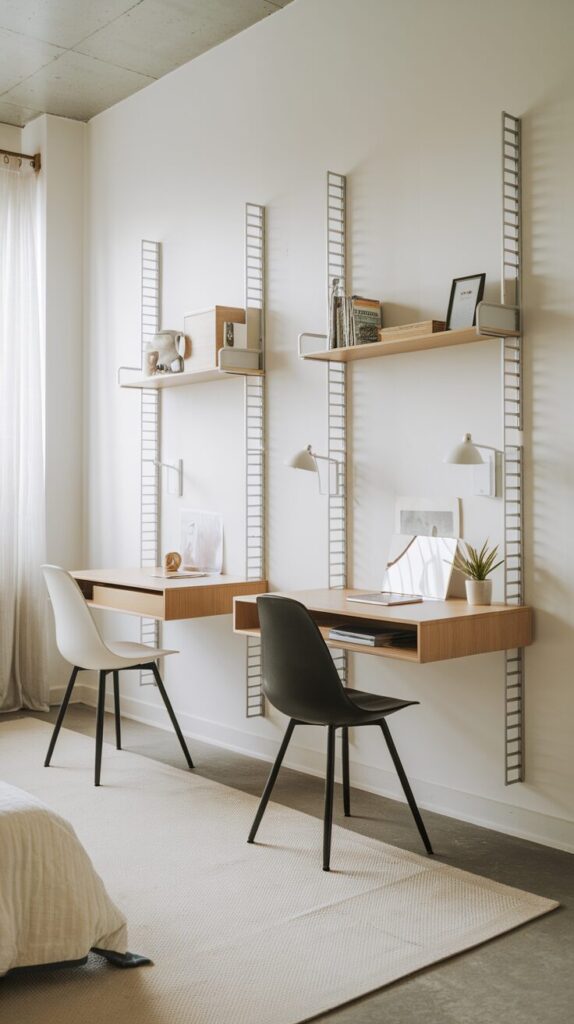
Floating desks feel sleek and efficient. I love them in tight shared bedrooms. They disappear visually while working hard.
Each person gets workspace without bulky furniture. The room stays open. Cleaning gets easier too.
Why This Works
Floating designs reduce visual weight. Wall mounting saves floor space. Minimalism improves calm.
How to Do It
- Mount desks securely.
- Add wall shelves above.
- Keep cords managed.
Style & Design Tips
Match desk finishes. Avoid shallow depths, which limit function.
Pro Tip or Budget Hack
DIY floating desks from butcher block.
16. Storage Ottomans for Shared Seating
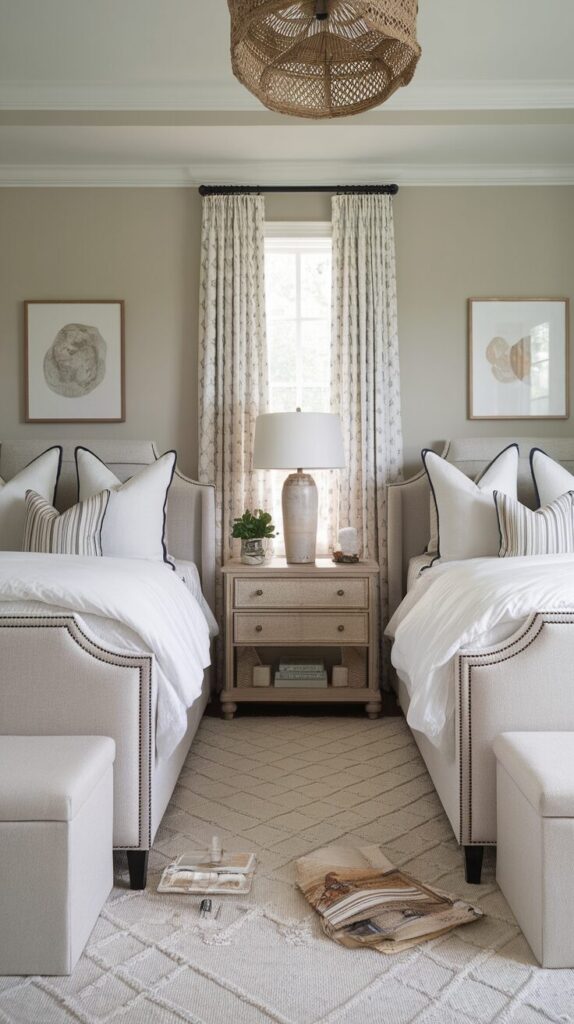
Seating always helps shared rooms. Storage ottomans do double duty. I use them everywhere. They hide clutter and add comfort.
Place them at bed ends or corners. Everyone uses them. Storage stays accessible.
Why This Works
Dual-purpose furniture saves space. Seating improves usability. Hidden storage reduces mess.
How to Do It
- Choose sturdy frames.
- Assign storage zones.
- Use neutral upholstery.
Style & Design Tips
Textures add interest. Avoid flimsy lids, which break fast.
Pro Tip or Budget Hack
Check thrift stores for solid frames to reupholster.
17. Pegboards for Flexible Organization
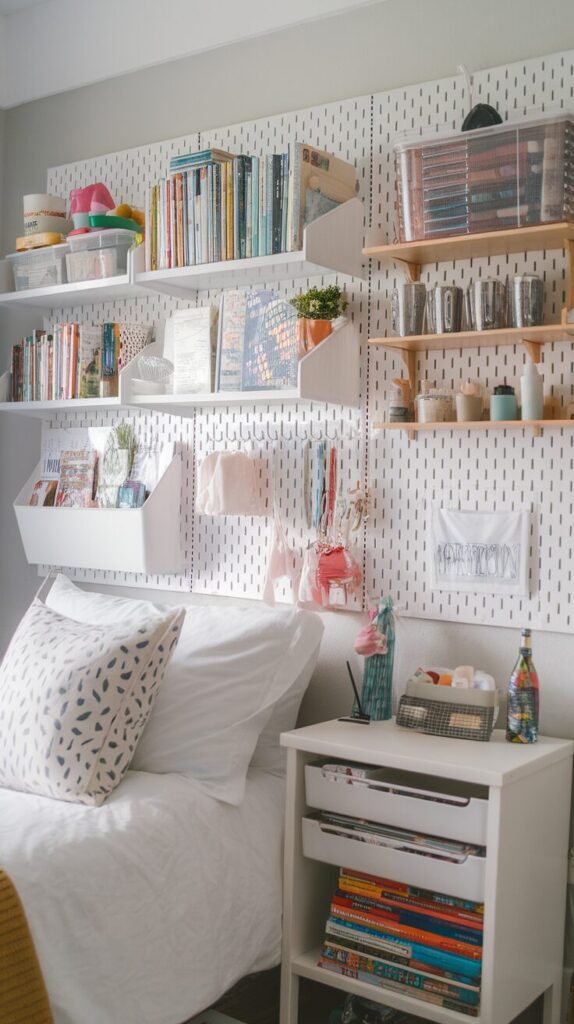
Pegboards adapt to changing needs. I love their flexibility. They work for kids, teens, or adults. Organization stays visible and adjustable.
Each person customizes their section. Supplies stay accessible. Walls finally work harder.
Why This Works
Modular systems adapt easily. Visibility improves habits. Vertical storage saves space.
How to Do It
- Mount pegboards securely.
- Assign sections clearly.
- Rearrange hooks as needed.
Style & Design Tips
Paint pegboards to match walls. Avoid overcrowding, which looks messy.
Pro Tip or Budget Hack
Buy hardware store pegboards instead of craft versions.
18. Matching Curtains With Personal Accessories
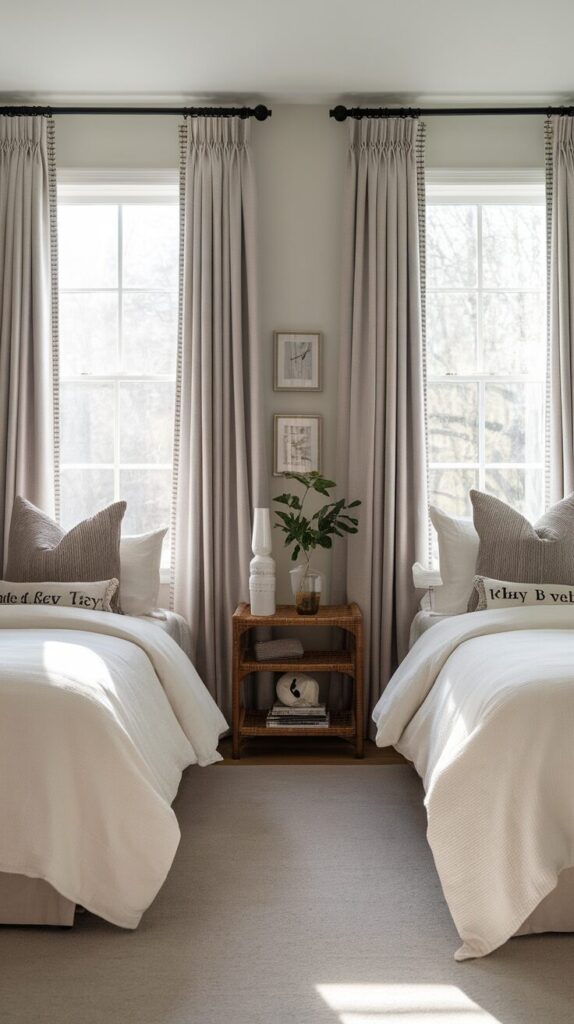
Windows anchor shared rooms visually. Matching curtains keep things cohesive. Personal accessories add individuality. Balance matters.
Curtains frame the space evenly. Decor expresses taste. The room feels styled, not chaotic.
Why This Works
Uniform window treatments unify rooms. Accessories personalize without dominance. Balance supports calm.
How to Do It
- Choose neutral curtains.
- Allow personal window decor nearby.
- Keep lengths consistent.
Style & Design Tips
Hang curtains high. Avoid bold patterns, which overpower.
Pro Tip or Budget Hack
Hem inexpensive curtains yourself for custom length.
19. Headboard Shelves for Extra Storage
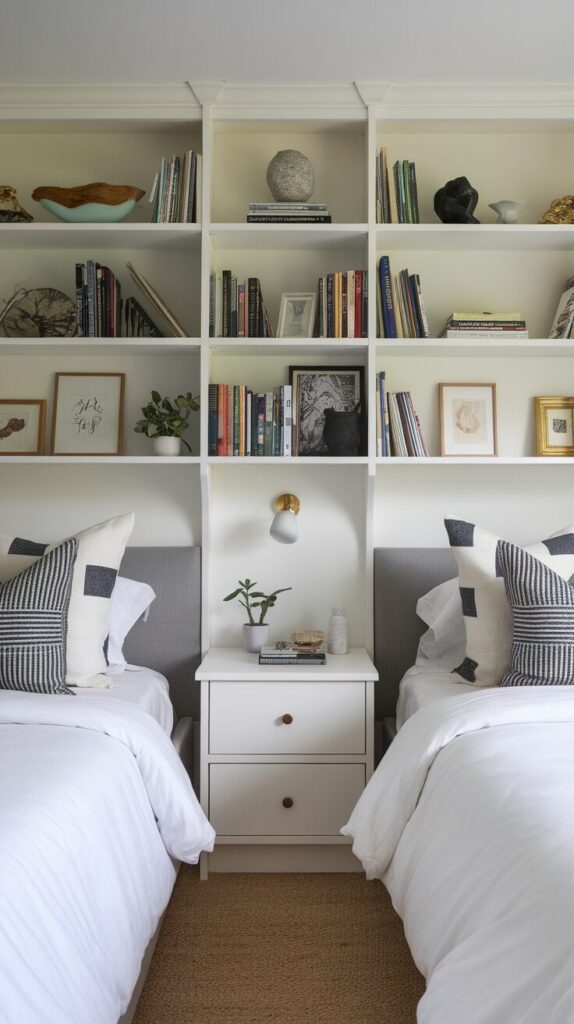
Headboard shelves replace nightstands in tight rooms. I love this solution. Storage stays within reach. Floors stay clear.
Each bed gains function without extra furniture. The room feels streamlined. Organization improves instantly.
Why This Works
Vertical storage saves space. Integrated design reduces clutter. Function improves flow.
How to Do It
- Choose sturdy headboard shelves.
- Assign shelf sections.
- Secure properly.
Style & Design Tips
Keep shelf decor minimal. Avoid deep shelves, which intrude.
Pro Tip or Budget Hack
DIY shelves mounted behind beds.
20. Shared Art Walls With Equal Sections
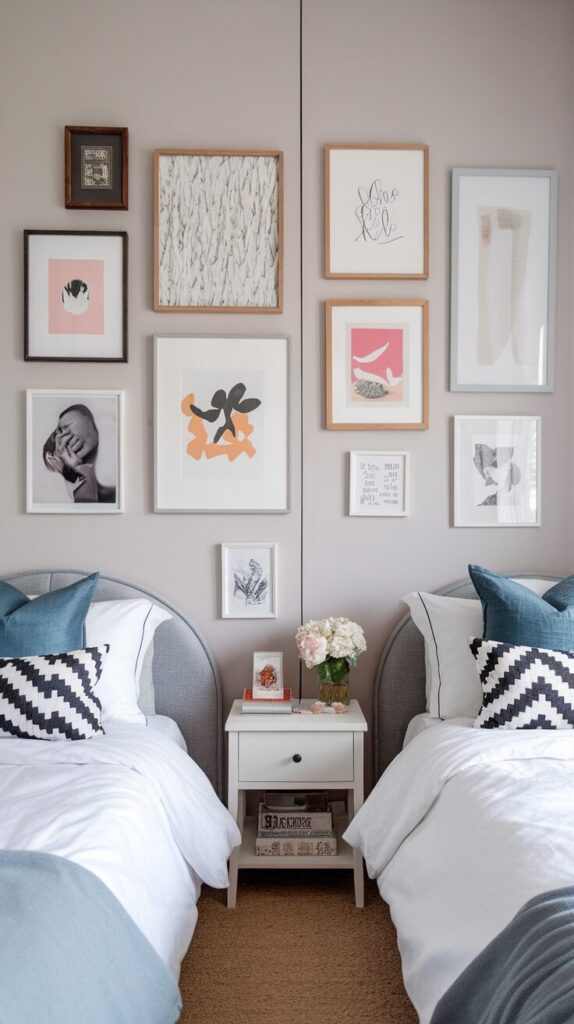
Art walls bring personality to shared rooms. Equal sections keep things fair. I always suggest planning first. Chaos creeps in fast without structure.
Each person curates their section. The wall feels dynamic yet organized. Expression feels respected.
Why This Works
Visual balance reduces tension. Personal expression builds ownership. Shared walls feel intentional.
How to Do It
- Divide wall space evenly.
- Use similar frame sizes.
- Align spacing carefully.
Style & Design Tips
Stick to one frame color. Avoid random placement, which looks messy.
Pro Tip or Budget Hack
Print digital art at home to save money.
Shared Bedroom Design Strategy: Function First, Style Second
Most shared bedrooms fail because people chase aesthetics before solving function. You need to start with how the room actually works day to day. Sleep schedules, storage needs, study habits, and privacy expectations matter more than throw pillows.
I always tell clients to map routines before buying anything. One person may wake up earlier, need brighter lighting, or require more closet space. When you plan around real habits, the room supports life instead of fighting it.
Measure the room carefully and sketch a basic layout before moving furniture. Identify traffic flow, window placement, and door clearance so nothing blocks movement. Good flow prevents daily frustration.
Prioritize storage before décor. Shared rooms collect double the stuff, so hidden storage solutions protect visual calm. When clutter stays controlled, style looks intentional instead of accidental.
Finally, create visual fairness. Equal lighting, equal access to outlets, and balanced furniture placement prevent silent resentment. A shared bedroom works best when both people feel respected from the start.
Smart Space Planning Checklist Before You Start
Before implementing any idea from the list, run through a quick planning checklist. This step saves money and avoids layout regrets.
Start by measuring wall lengths, ceiling height, and window placement. Accurate measurements prevent oversized furniture mistakes.
Count outlets and note lighting sources. Shared bedrooms need more charging and task lighting than most people expect.
List essential furniture only. Beds, storage, and desks come first, while accent chairs and decorative pieces come later.
Set a realistic budget for each zone. Allocate more money to beds and storage, and save on decorative accessories.
Common Mistakes to Avoid in Shared Bedrooms
Many people overcrowd shared bedrooms without realizing it. Too much furniture shrinks usable floor space and increases stress.
Avoid mismatched bed sizes unless the layout truly supports it. Unequal proportions create visual imbalance and emotional tension.
Do not ignore vertical storage. Empty walls waste valuable square footage in smaller shared rooms.
Skip heavy, dark furniture in tight spaces. Large, bulky pieces make the room feel smaller than it actually is.
Never forget personal storage boundaries. When drawers and shelves overlap without clear ownership, conflict follows quickly.
Budget Planning for Shared Bedroom Upgrades
You do not need a massive budget to create a functional shared bedroom. Smart prioritization makes a bigger impact than expensive décor.
Invest in quality mattresses first because sleep affects everything else. Durable frames and storage solutions deserve the next chunk of the budget.
Save money on accessories and decorative accents. Swapping textiles and wall art refreshes the room without replacing core furniture.
Consider phased upgrades. Implement storage and layout changes first, then layer in styling elements gradually.
Frequently Asked Questions
How do I divide a small shared bedroom without adding walls?
Use rugs, shelving units, curtains, or color zoning to define personal areas. Visual boundaries work surprisingly well without permanent construction.
What is the best bed setup for two kids in one room?
Bunk beds or symmetrical twin beds usually work best. Choose based on ceiling height and floor space availability.
How can adults share a bedroom comfortably?
Prioritize equal lighting, balanced storage, and neutral base décor. Adults value privacy and functional organization more than themed styling.
Should shared bedrooms match completely?
No, they should coordinate instead of match exactly. A unified color palette with personal accents keeps harmony without feeling rigid.
How do I reduce clutter in a shared room?
Add under-bed storage, vertical shelving, and labeled closet sections. Clear ownership and hidden storage prevent buildup.
What colors work best in shared bedrooms?
Soft neutrals with personalized accent tones work best. Muted palettes reduce visual stress and support better sleep.
Final Thoughts
Shared bedrooms don’t fail because of space. They fail because of unclear boundaries and rushed choices. Start with one idea that solves your biggest pain point.
Try it, adjust it, and build from there, because small wins always feel better than perfect plans.