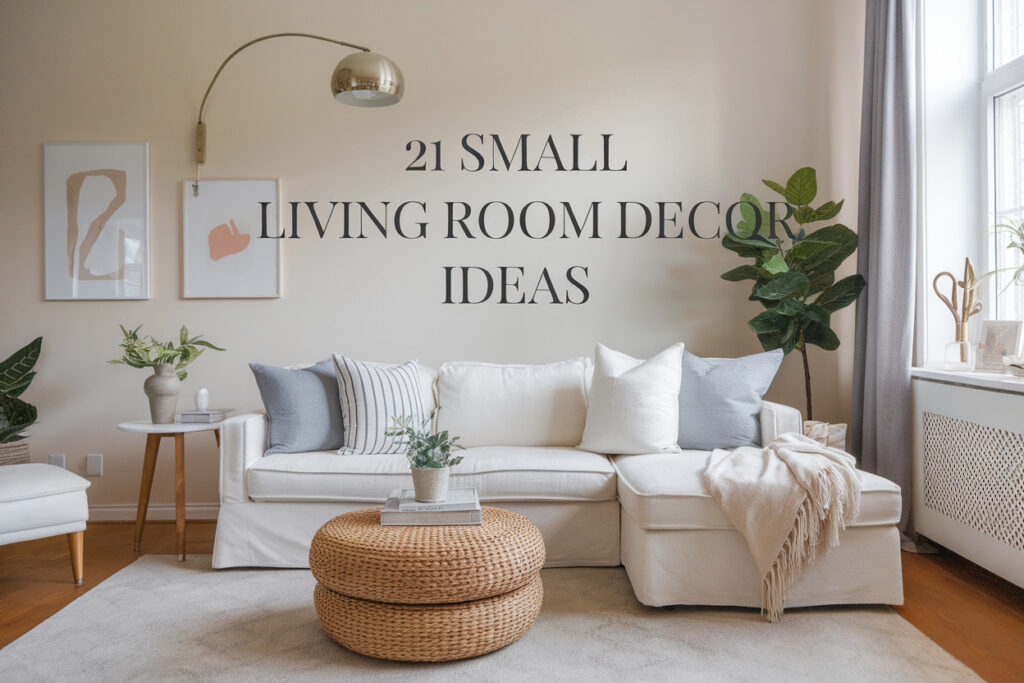
21 Small Living Room Decor Ideas for Cozy, Chic Spaces
You don’t need a mansion to have major style—tiny living rooms can be the coziest (and most Instagrammable) spaces around. In fact, small spaces force you to get creative… and let’s be honest, that’s half the fun!
Whether you’re working with a shoebox-sized studio or just a slightly snug corner of your home, there are plenty of ways to stretch style without stretching square footage.
From clever furniture picks to color tricks that fool the eye, I’ve rounded up 21 small living room decor ideas that’ll make your space look chic, not cramped.
Ready to decorate like a pro (on a non-palace budget)? Let’s go!
1. Choose Light, Airy Color Palettes
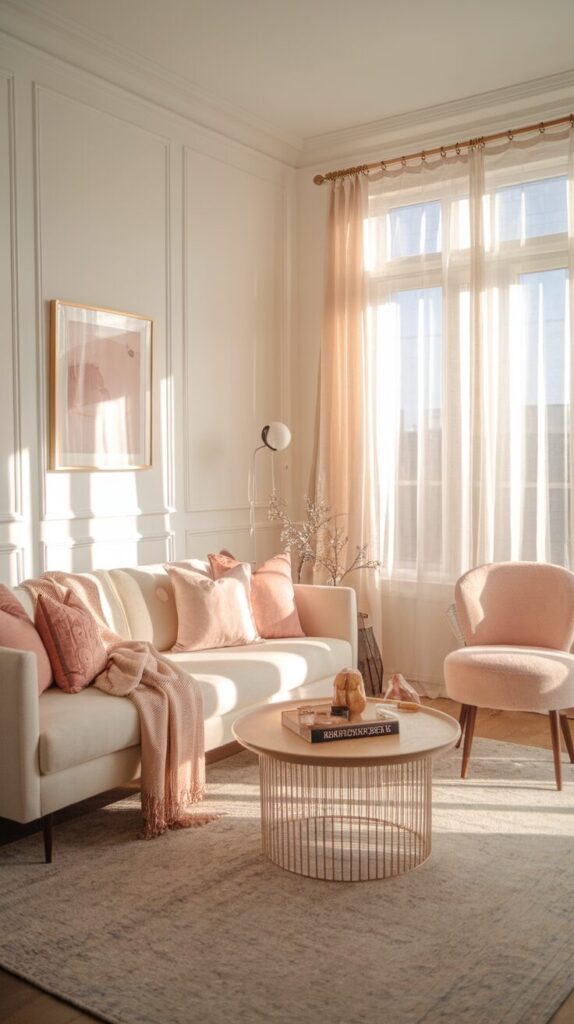
One fun way to visually expand a small living room is by leaning into lighter shades. Whites, creams, and pale greys instantly make the walls feel like they’re pushing back, giving your space more breathing room. Even soft blush or pastel tones can bring warmth without closing things in.
Think of your walls as the backdrop for everything else—lighter hues bounce light around and open things up. Pairing these shades with sheer curtains or reflective surfaces creates a layered glow that feels fresh and inviting.
The best part? A light, airy palette works with just about any style. From minimalist chic to cozy boho, it’s a flexible foundation that keeps your living room feeling spacious and calm.
2. Use Mirrors to Reflect Light and Space

This one’s perfect for doubling the look of your square footage without any actual construction. Mirrors bounce natural and artificial light around, instantly brightening even the darkest corner. A single oversized mirror can create a dramatic statement, or you can go eclectic with a gallery wall of smaller ones.
Placement matters! Put a mirror across from a window to maximize the effect, or behind a light source to magnify its glow. It’s a trick that designers have sworn by forever—and for good reason.
Plus, mirrors add personality. Whether you opt for sleek, frameless panels or ornate vintage finds, they pull double duty as décor and optical illusion.
3. Opt for Multi-Functional Furniture
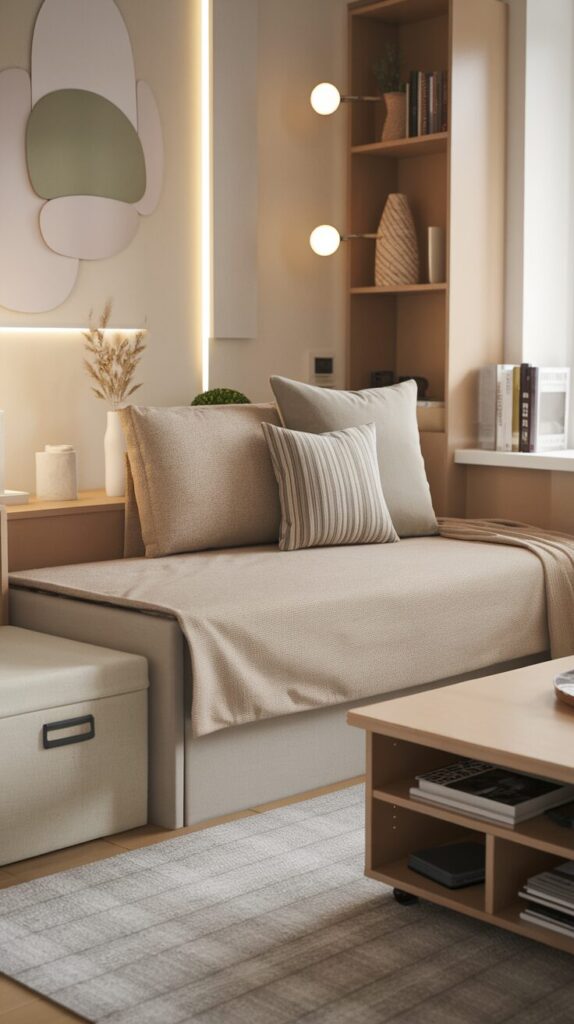
Why not try pieces that do more than one job? In a small living room, every square inch counts, so furniture with hidden talents is a lifesaver. Think ottomans that store blankets, coffee tables with shelves underneath, or even a sofa bed for when guests drop by.
These pieces keep your space stylish while cutting down on clutter. You won’t need five different storage bins when your furniture does the work for you.
And don’t worry—multi-functional doesn’t mean boring. Modern designs are sleek, smart, and made to blend with your décor without screaming “I’m practical!”
4. Go Vertical with Shelving
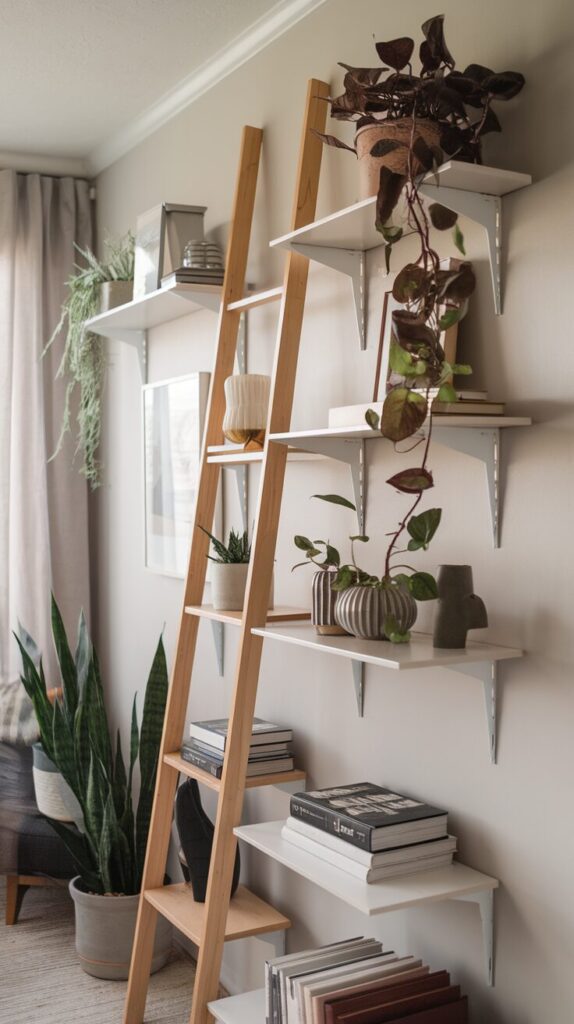
Here’s a unique twist for maximizing small rooms: look up! Vertical storage is your best friend when floor space is at a premium. Floating shelves, tall ladder-style units, or built-ins can draw the eye upward and give the illusion of higher ceilings.
Use them to showcase plants, books, or curated décor pieces. It keeps your essentials accessible while freeing up valuable floor space for seating or open walking areas.
Plus, vertical shelving adds dimension. Instead of cluttering your living room with random furniture, it stacks style neatly in a way that feels intentional and balanced.
5. Pick Furniture with Exposed Legs
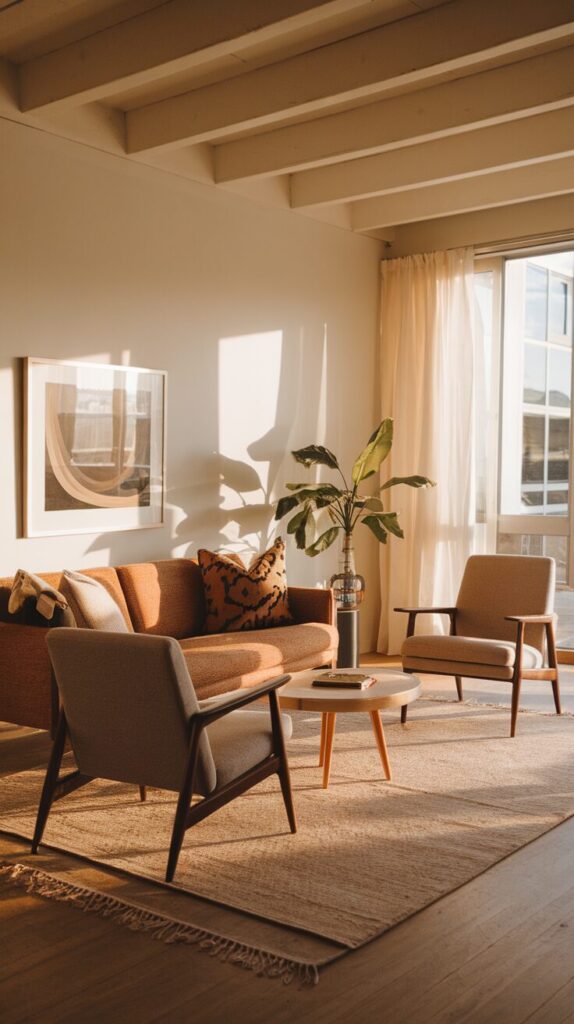
Kick off your makeover with furniture that doesn’t weigh the room down. Sofas and chairs with slim, exposed legs create a sense of openness that blocky bases just can’t compete with. The extra space underneath lets the eye travel through, giving the illusion of more square footage.
Mid-century modern designs excel at this trick. Their clean lines and airy frames bring sophistication without bulk. Pair them with a low-profile coffee table, and you’ve got a room that feels chic and breathable.
And bonus: those exposed legs make cleaning under furniture a breeze. Practicality meets style—what’s not to love?
6. Stick to a Tight Color Palette
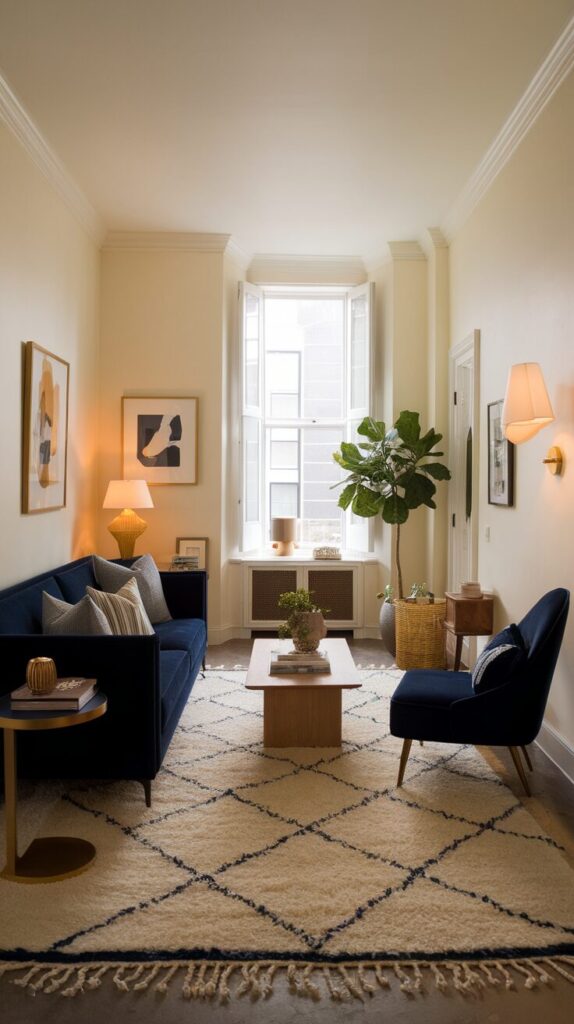
Too many bold colors in a small living room can make it feel chaotic. Instead, stick to two or three tones that complement each other for a cohesive, calming vibe. Neutrals mixed with one accent shade often work best.
This doesn’t mean boring. A navy throw pillow or emerald green rug against a cream backdrop can still pack plenty of punch. It just feels more curated and less cluttered.
When the colors flow together, the room feels more put-together—like a thoughtfully designed space rather than a patchwork of random choices.
7. Hang Curtains High and Wide
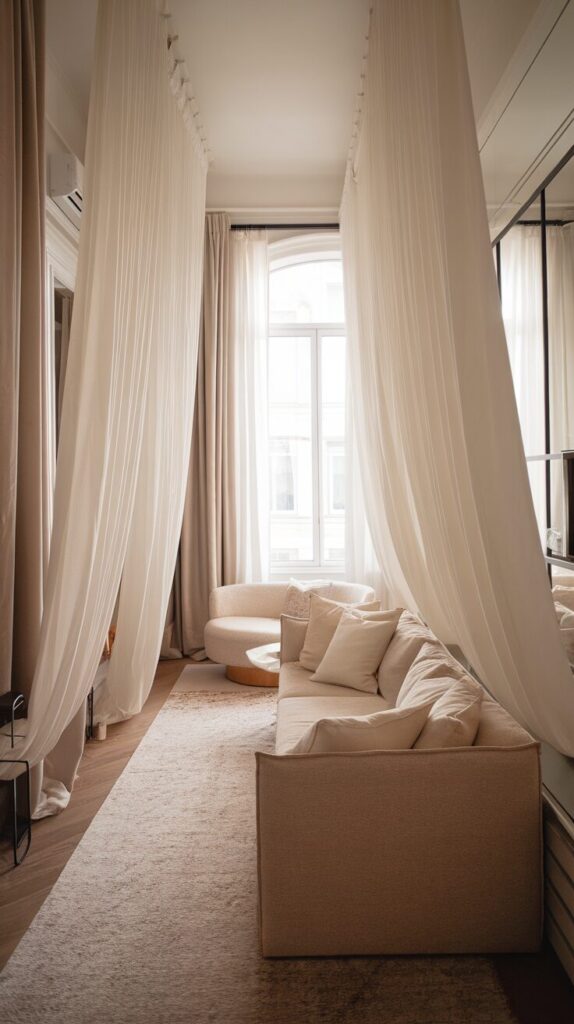
One fun way to fake a bigger living room is through your curtains. Instead of mounting rods right above the window, hang them close to the ceiling and extend them wider than the frame. This little hack makes the windows look grander and tricks the eye into seeing taller ceilings.
Choose light, airy fabrics like linen or cotton blends. They add softness without overwhelming the walls, and they allow more natural light to filter in.
Even in tiny apartments, this trick adds elegance and a sense of scale. It’s like giving your room a mini architectural facelift.
8. Use Rugs to Define Zones
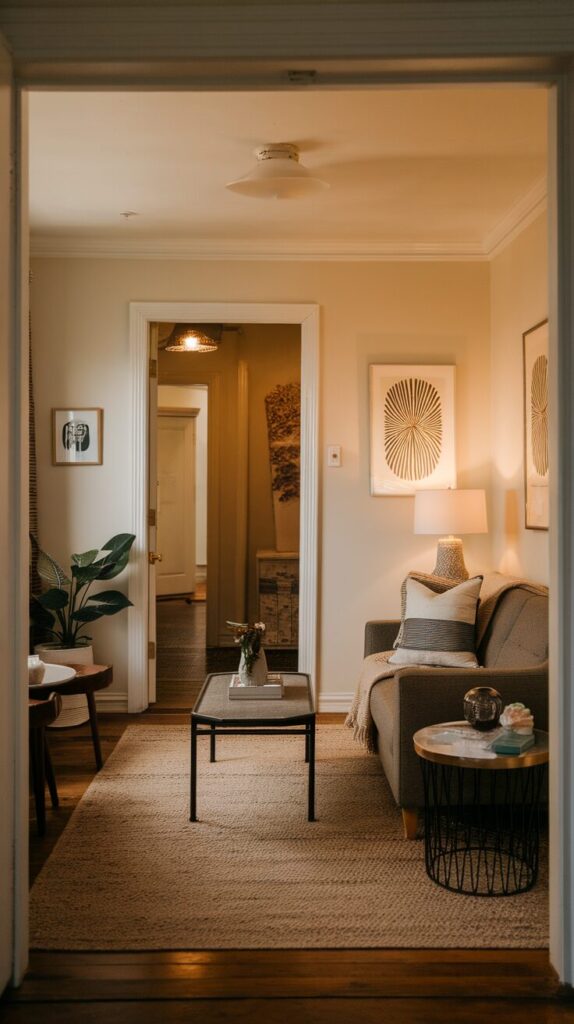
Small spaces can feel jumbled if there’s no sense of structure. Rugs are your secret weapon here—they anchor furniture and create distinct “zones,” even in open layouts.
A soft area rug under your sofa and coffee table defines the seating area, making the room feel more intentional. It also adds warmth and coziness underfoot.
Pick a rug that complements your palette but also adds texture. Layering rugs is another fun way to create depth without taking up extra square footage.
9. Layer Lighting (Don’t Rely on the Overhead Light!)

Here’s a lighting truth bomb: overhead fixtures alone rarely cut it in a cozy space. To add warmth and dimension, mix in floor lamps, table lamps, and wall sconces. This layered approach eliminates harsh shadows and makes your living room glow.
It also gives you flexibility. Bright task lighting for reading, softer lighting for movie nights—it’s all about setting the right mood.
Don’t be afraid to mix styles, either. A sleek floor lamp paired with a vintage table lamp can give your space more personality without adding clutter.
10. Incorporate Acrylic or Glass Furniture
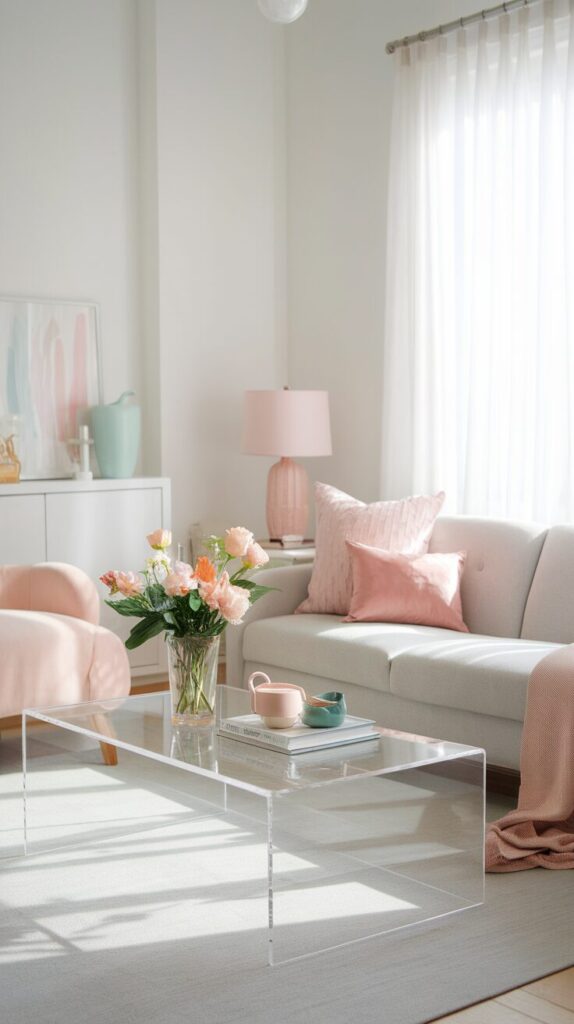
Clear furniture is like a magician’s trick for small spaces—it practically disappears. Acrylic or glass coffee tables and side tables let the eye travel through them, which means your room feels less crowded.
These pieces still serve their function while adding a light, modern vibe. They’re especially useful in rooms that already have a lot of visual texture from textiles, wall art, or patterned flooring.
Pair a glass coffee table with a cozy rug and fabric sofa, and you’ll strike the perfect balance of airy and inviting.
11. Declutter Ruthlessly (Less is More!)
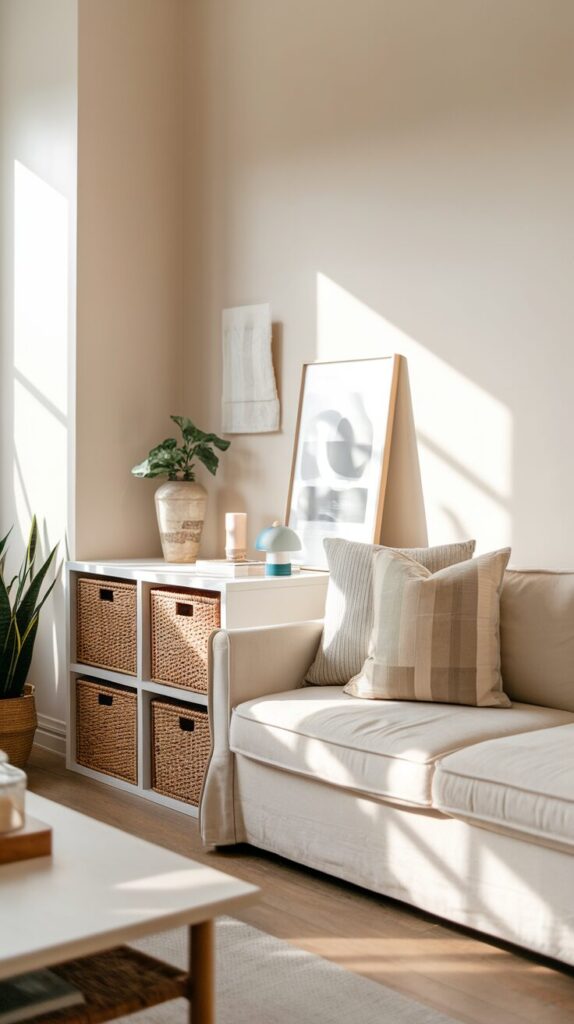
In a small living room, clutter builds up faster than you’d think. Hidden storage—like baskets under the coffee table or drawers in side tables—keeps the mess out of sight but still easy to reach. The less you see, the bigger the room feels.
Think about what you actually use and love. Donate or tuck away the rest. Minimal doesn’t mean cold; it means giving your favorite pieces the spotlight they deserve.
When every item has a place, your space feels calmer and more inviting. Less truly is more here.
12. Add a Statement Wall
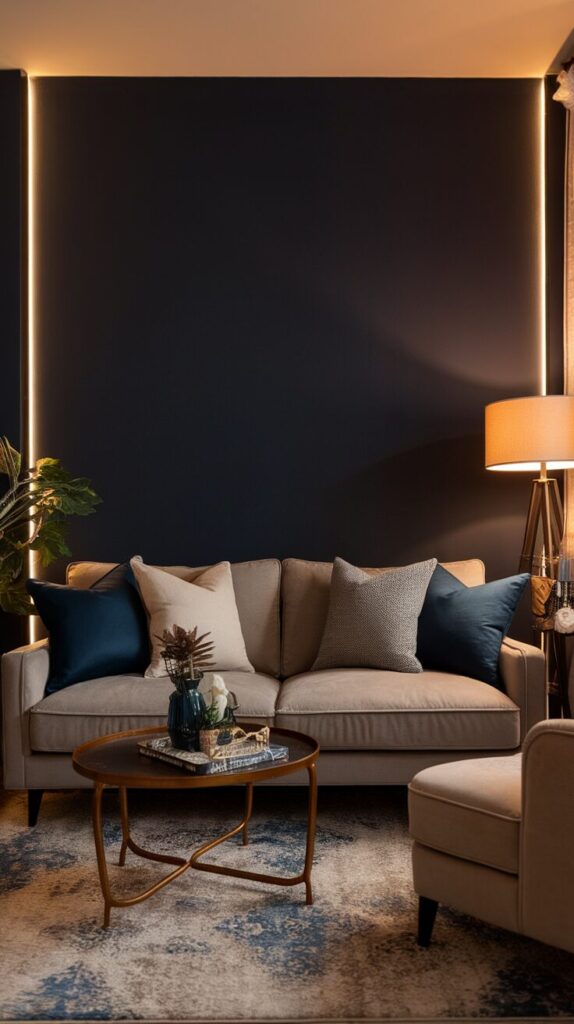
One fun way to keep a small living room from feeling bland is by going bold on just one wall. A pop of peel-and-stick wallpaper, wood paneling, or even a rich paint color can create drama without overwhelming the whole room.
A statement wall works like magic to draw focus. Your eye goes straight there, which means you’re not noticing how compact the space is.
Plus, it’s a great opportunity to show off your personality—whether that’s a geometric mural, botanical prints, or a deep navy backdrop.
13. Use Compact Accent Chairs Instead of Bulky Ones
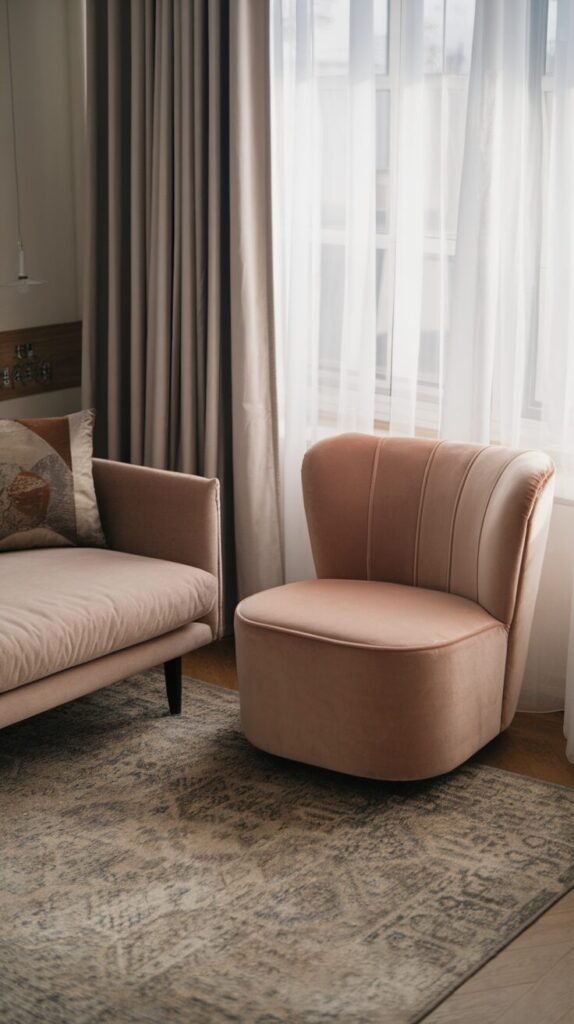
Here’s a smart seating trick: swap oversized armchairs for petite accent chairs. They take up less room, but still add comfort and style. Bonus—smaller chairs can often be rearranged more easily depending on the occasion.
Mix textures and colors to keep things interesting. A velvet slipper chair next to a sleek leather sofa? Yes, please.
Compact doesn’t mean boring. It means thoughtful design that makes the most of every inch.
14. Decorate with Plants (But Keep It Scaled!)
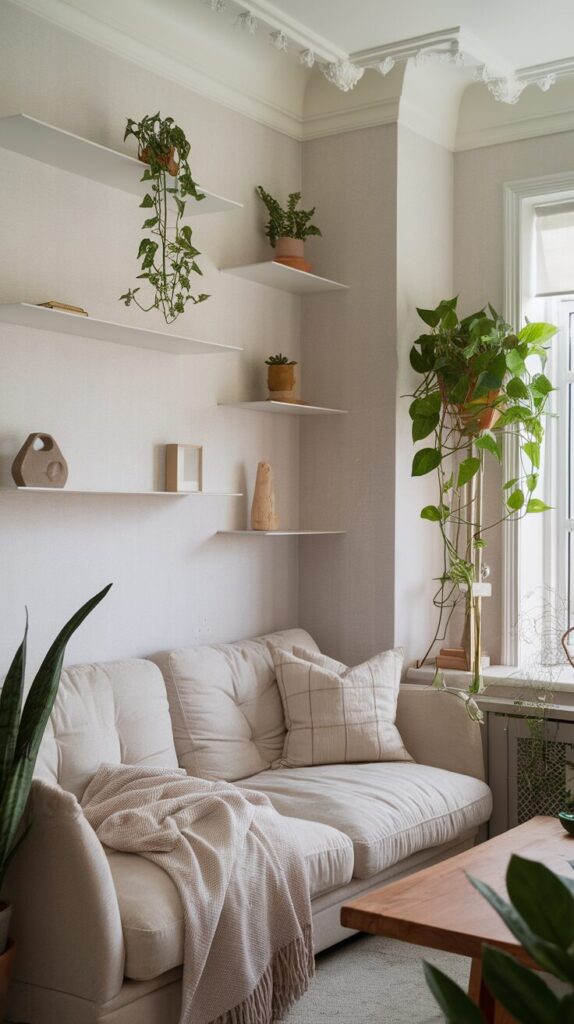
Plants bring life and freshness into a small living room, but scale is key. Oversized fiddle-leaf figs can overwhelm tight quarters, while smaller potted plants or trailing vines fit beautifully.
Hanging planters or wall-mounted greenery also free up floor space. It’s nature’s décor that doesn’t eat up your square footage.
Even a few well-placed succulents on a shelf can add texture and color without making things feel crowded.
15. Go Minimalist with Wall Art
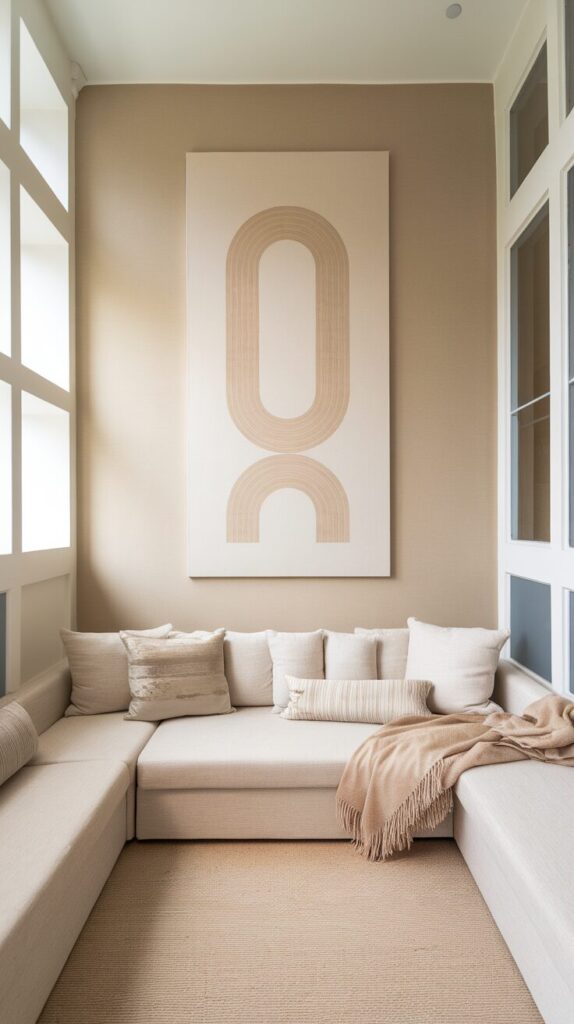
Why not try going big with just one impactful piece of art instead of cramming the wall with dozens of frames? A single large canvas or print looks modern and keeps the vibe uncluttered.
Another option is leaning art against a wall or placing it on a floating shelf. It feels casual and stylish without requiring nails in every corner.
Minimal art choices help your small space breathe while still adding personality and flair.
16. Use Nesting Tables
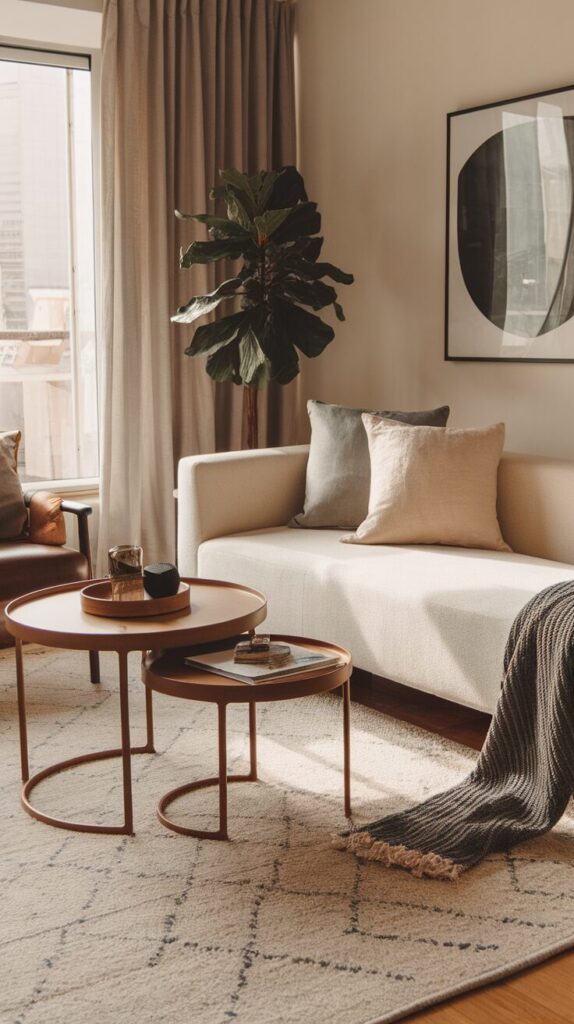
Nesting tables are like the Swiss Army knife of small-space living. Pull them apart when guests come over for drinks or snacks, then slide them back together when you want more floor space.
They’re lightweight, easy to move, and come in tons of chic styles—from modern glass sets to rustic wood finishes.
This flexibility means your living room can adapt quickly to whatever you need without permanent bulk.
17. Create a Focal Point
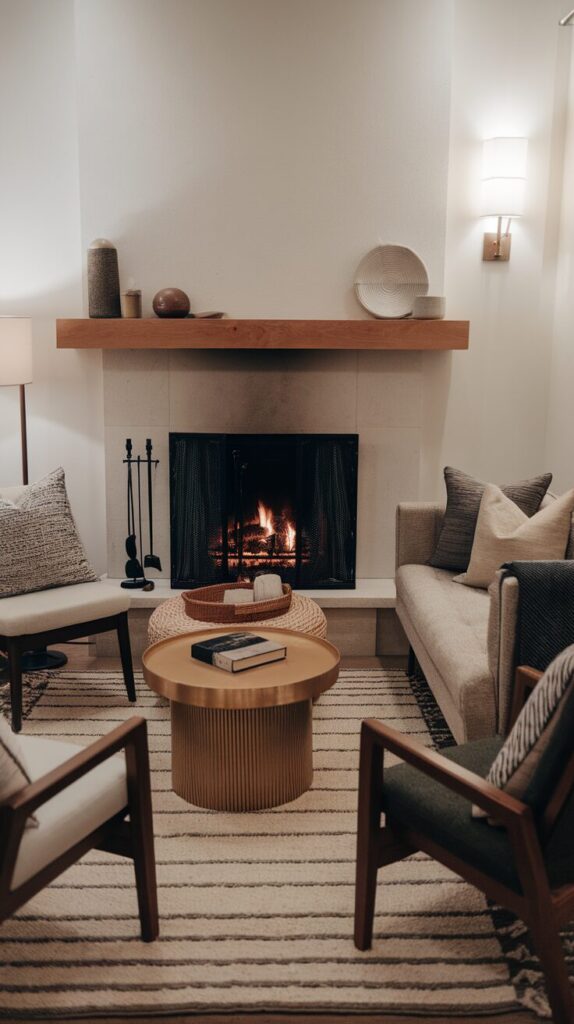
Every room needs a star of the show, even small ones. Choose one focal point—like a fireplace, a stylish TV wall, or even a bold gallery of art—and let the rest of the décor support it.
A strong focal point gives structure and intention to the room. Instead of feeling scattered, the design has a clear direction.
It also helps you avoid over-decorating every corner. Let one spot shine and keep the rest balanced.
18. Mount Your TV to Save Floor Space
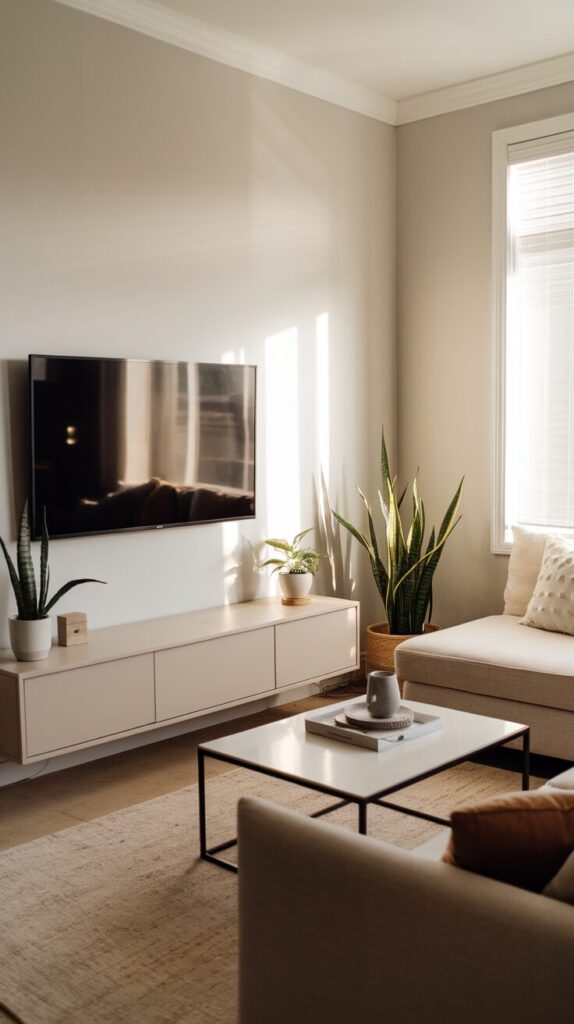
This one’s both practical and sleek. By wall-mounting your TV, you free up an entire console surface for storage baskets, books, or even decorative accents.
Wall-mounting also gives the room a clean, modern look. You can even angle it for better viewing without moving furniture around.
It’s a simple upgrade that saves space and makes your setup feel intentional.
19. Play with Textures Instead of Patterns
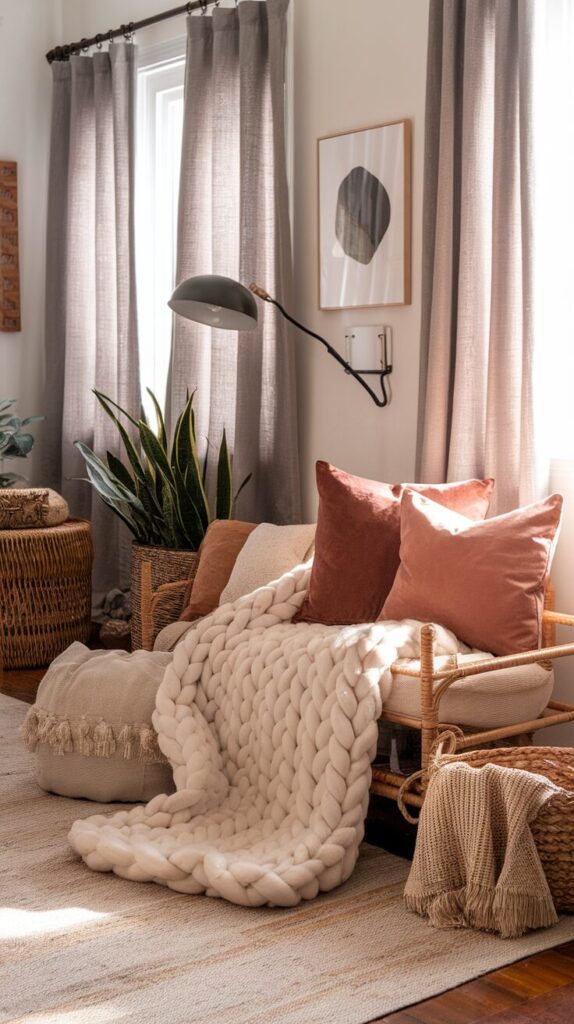
If you’re worried about overwhelming your small space, focus on mixing textures instead of bold patterns. Chunky knit throws, velvet cushions, and woven baskets create richness without visual chaos.
Textures add depth and warmth, making your living room feel cozy and layered. You can change them out seasonally for an instant refresh.
It’s a subtle way to bring personality to the room while keeping the overall design calm and balanced.
20. Use Corners Creatively
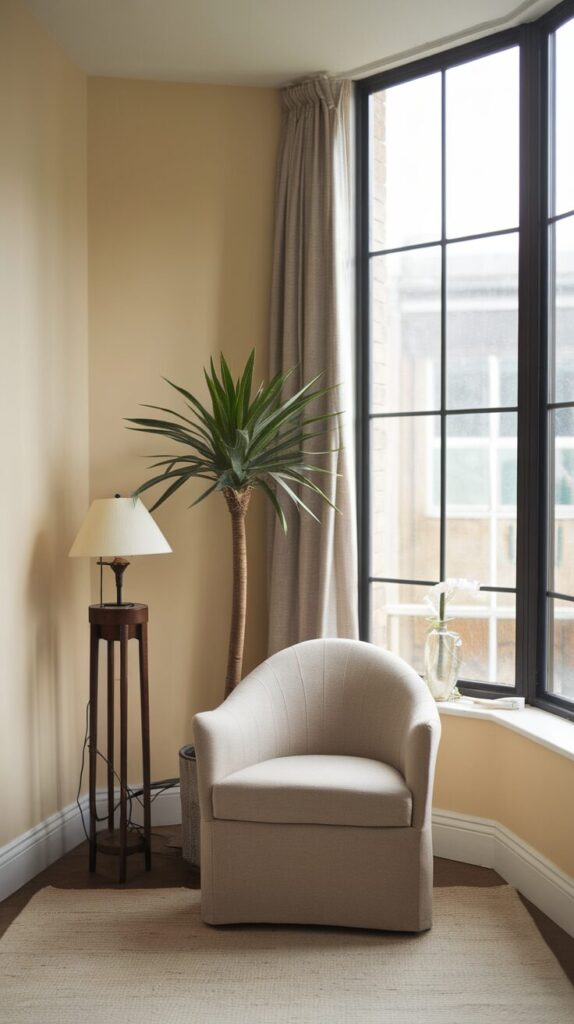
Corners often get ignored, but in a small living room, they’re prime real estate. Add floating corner shelves, a cozy reading nook with a chair, or a tall plant stand to bring life to those spots.
Corners can also house lighting—like a slim floor lamp—that adds function without hogging space.
When every inch is used smartly, the room feels bigger and more purposeful.
21. Keep It Personal (But Edited)
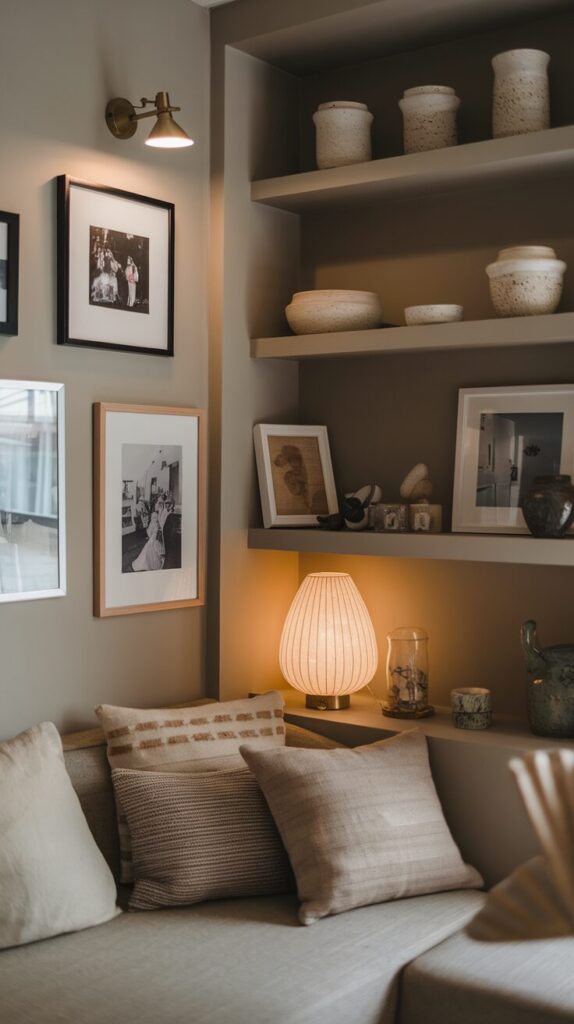
At the end of the day, your living room should feel like you. Display a few curated items that reflect your style—like family photos, travel souvenirs, or handmade art pieces.
The key is editing. Showcase just enough to give the room soul, but not so much that it feels crowded.
This balance of personality and restraint makes your small space feel warm, welcoming, and uniquely yours.
Small Living Room Design Strategy: The Smart Space Foundation
Before buying anything new, start with a clear plan. Measure your living room carefully and sketch a simple layout so you know exactly how much space you’re working with. Even a rough floor plan helps you avoid oversized furniture and awkward walkways.
Next, define the purpose of the room. Is it mainly for relaxing and watching TV, hosting friends, working from home, or a mix of everything? When you’re clear on how you’ll use the space, it becomes much easier to choose the right furniture, lighting, and storage solutions.
Finally, build your design around three pillars: functionality, flow, and feeling. Functionality ensures every piece earns its place. Flow keeps pathways open and furniture arranged logically. Feeling ties it all together with color, texture, and personal touches that make the room warm and inviting.
Layout Planning Tips for Compact Living Rooms
Smart layout choices can make or break a small living room. Start by anchoring the space with your largest piece—usually the sofa—then arrange other furniture around it in a way that maintains clear walking paths. Aim for at least 24 to 30 inches of walking space where possible.
Avoid pushing every piece against the wall. Sometimes floating a sofa slightly forward with a slim console behind it can create depth and better balance. Small adjustments like angling a chair or centering a rug under key furniture can dramatically improve how the room feels.
Also, think vertically and diagonally. Using wall space for storage and drawing the eye upward with shelves or curtains helps the room feel taller and more expansive.
Budget-Friendly Small Living Room Upgrade Ideas
You don’t need a huge budget to create a stylish small space. Swapping out throw pillow covers, adding a new rug, or updating lighting can refresh the entire room without major spending.
Rearranging existing furniture is another free but powerful upgrade. Sometimes simply rotating the layout or removing one unnecessary piece opens up the space more than buying something new ever could.
DIY touches—like painting a statement wall, styling open shelves, or refinishing a thrifted side table—can also add personality while keeping costs low. Thoughtful changes often have the biggest impact.
Common Mistakes to Avoid in a Small Living Room
One of the biggest mistakes is choosing furniture that’s too large. Oversized sofas and bulky coffee tables can overwhelm a small space, making it feel cramped and unbalanced. Always check dimensions before purchasing.
Another common error is over-decorating. Too many accessories, patterns, or colors can create visual clutter. Editing your décor and sticking to a cohesive palette helps the room feel calm and intentional.
Poor lighting is also a frequent issue. Relying only on a single overhead fixture can make the room look flat and smaller than it actually is. Layered lighting instantly improves depth and atmosphere.
Finally, ignoring storage leads to visible clutter. Without smart storage solutions, everyday items pile up quickly and shrink your usable space. Hidden storage is essential in compact rooms.
How to Maintain a Clutter-Free, Stylish Small Space
Once you’ve styled your living room, maintaining it matters just as much as decorating it. Create simple habits like weekly resets—putting items back in their designated spots and clearing surfaces.
Rotate seasonal décor instead of displaying everything at once. This keeps the room feeling fresh while preventing overcrowding.
Most importantly, be intentional about what enters your space. Before adding new décor or furniture, ask whether it truly serves a purpose or enhances the overall design.
Frequently Asked Questions
How do I make a small living room look bigger?
Use light colors, mirrors, layered lighting, and furniture with exposed legs. Keeping clutter minimal and maintaining clear walkways also makes the room feel more open.
What type of sofa is best for a small living room?
Look for a compact, low-profile sofa with slim arms and raised legs. Sectionals can work too, as long as they are scaled appropriately for the room.
Can I use dark colors in a small living room?
Yes, but use them strategically. A dark accent wall or darker accessories paired with lighter furniture can create contrast without shrinking the space visually.
How do I add storage without making the room feel crowded?
Choose multi-functional furniture like storage ottomans, nesting tables, and wall-mounted shelves. Vertical storage helps maximize space without adding floor bulk.
Should the rug be large or small in a tiny living room?
Surprisingly, a properly sized rug that fits under key furniture pieces can make the room feel larger. Rugs that are too small often make the space look disjointed.
How can I decorate a rental small living room?
Use removable solutions like peel-and-stick wallpaper, temporary wall hooks, and freestanding shelves. Focus on textiles, lighting, and furniture to personalize the space without permanent changes.
Conclusion
Just because your living room is short on square footage doesn’t mean it can’t be long on style! With these 21 small living room decor ideas, you can totally transform your tiny space into a cozy, chic hangout zone that feels intentional and inviting.
Remember, it’s all about smart choices—multi-use furniture, clever layouts, and visual tricks that make your room feel bigger than it really is.
Don’t feel pressured to try them all; instead, pick the ones that fit your lifestyle and mix a few together for a custom look.
Even the smallest tweaks—like moving a chair, hanging curtains higher, or swapping in a lighter rug—can change the whole energy of the room.
Start small, experiment, and watch how your space grows in style and comfort. Your dream living room isn’t about size—it’s about how it makes you feel.