13 Stylish Eat in Kitchen Ideas That Look Thoughtful, Not Overdone
An eat-in kitchen should feel like the heart of your home—a place where morning coffee lingers and dinner conversations flow. But striking that balance between cozy and cluttered can be tricky.
The key is choosing pieces that feel intentional, not crowded. Whether you're working with a tiny corner or a generous open plan, these 13 ideas will help you create a dining spot that's both stylish and serene.
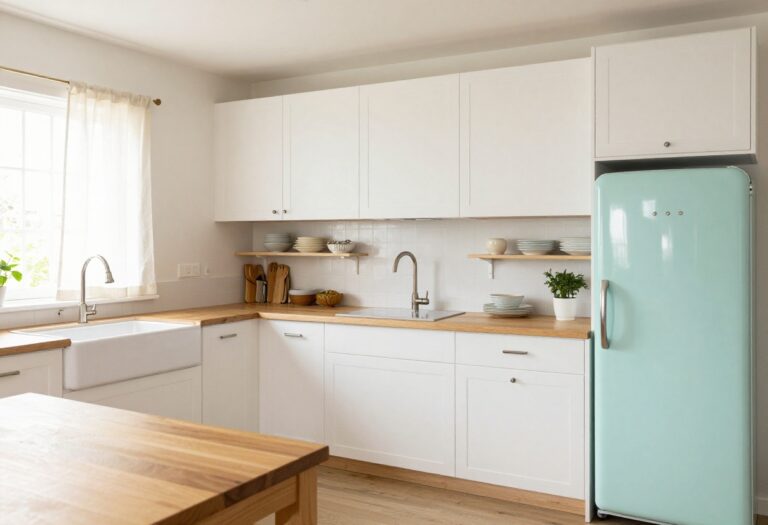
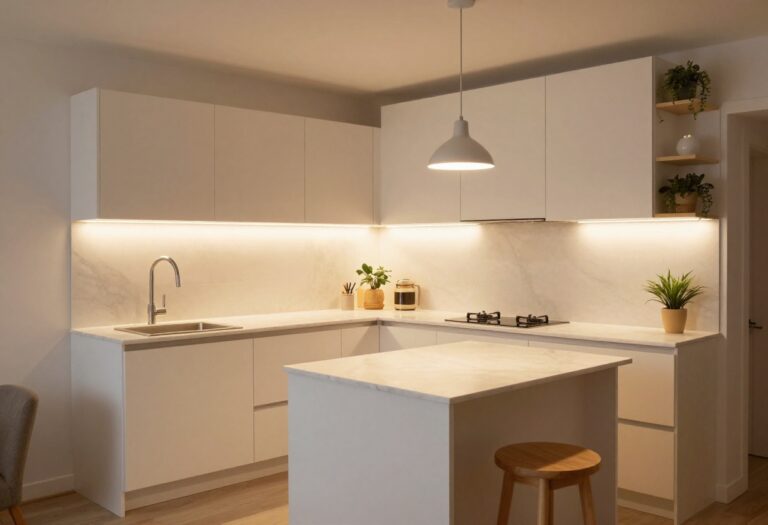
Think light colors, smart storage, and furniture that earns its place without overwhelming the room.
1. A Slim Console Table That Doubles as a Breakfast Bar
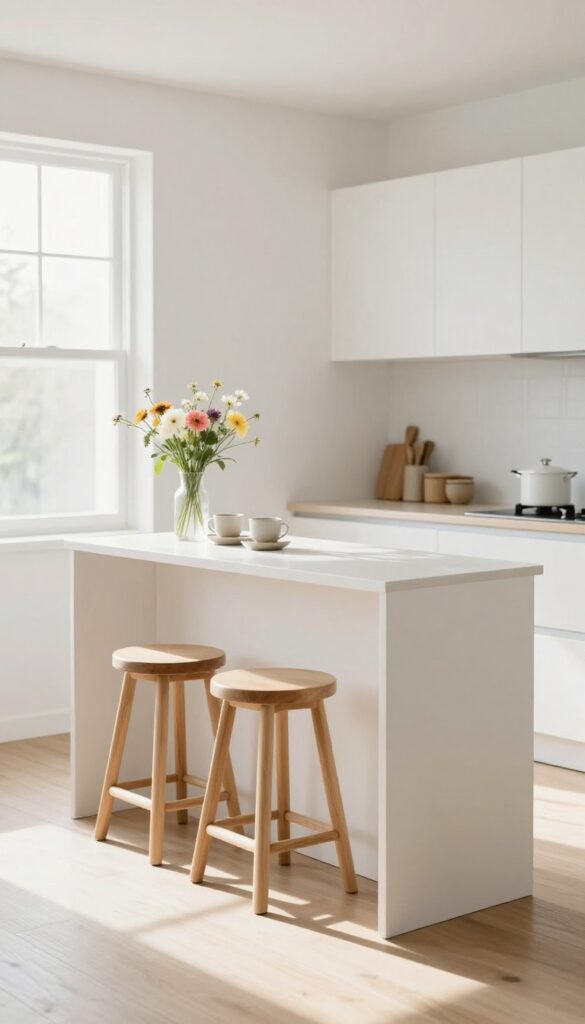
Not every kitchen has room for a full island or a sprawling farmhouse table. That’s where a slim console table comes in—it tucks against a wall or the back of a peninsula and instantly becomes a spot for morning coffee or a quick lunch. The beauty is in the proportions: narrow enough to keep the floor plan open, but deep enough for two stools and a couple of plates.
In a light-and-airy kitchen, a white or pale wood console keeps things feeling breezy, while backless stools slide completely underneath when you need the floor space back.
Why It Works
A console table adds counter space and seating without the visual weight of a full dining set. Because it’s slim, it doesn’t block sightlines or make a small kitchen feel cramped. The stools tuck away, so the room stays open and uncluttered—exactly what a smart, space-aware layout needs.
Best For
Tight eat-in kitchens, galley layouts, or any kitchen where you want a casual dining spot but can’t spare the square footage. Also great for renters who can’t install permanent fixtures.
Styling Tip
Choose a console with a lower shelf or drawer to store placemats, napkins, or a few cookbooks. Hang a small pendant light directly above to define the zone without taking up counter space. Stick to two stools max to keep the look intentional.
2. Round Pedestal Table for Tight Corners
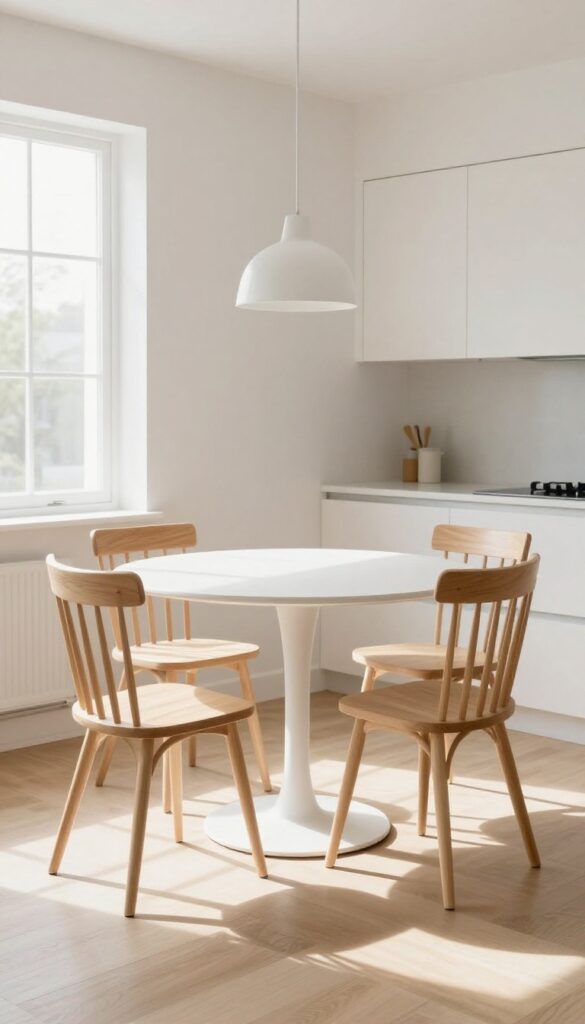
A round pedestal table brings a soft, sculptural quality to a kitchen without eating up valuable floor space. Its single central leg leaves legs free to move around, making it surprisingly easy to tuck into a corner or a small alcove. The rounded shape naturally softens the room's geometry, which is especially welcome in a kitchen full of straight lines and hard edges.
Why It Works
The pedestal base eliminates the need for four legs, so chairs can slide in from any angle without bumping into table supports. This makes the table feel more open and accessible, even when it's placed in a tight spot. Plus, the round top encourages conversation because everyone faces the center.
Best For
Small eat-in kitchens where a rectangular table would feel cramped or block traffic flow. It's also ideal for awkward nooks or bay windows where you want to create a cozy dining spot without forcing a square peg into a round hole.
Styling Tip
Keep the look airy by choosing a table with a slim, tapered pedestal in a light wood or white finish. Pair it with two or three spindle-back chairs in a similar tone. Add a small pendant light directly above to define the zone without overwhelming the space.
3. Banquette Seating with Hidden Storage
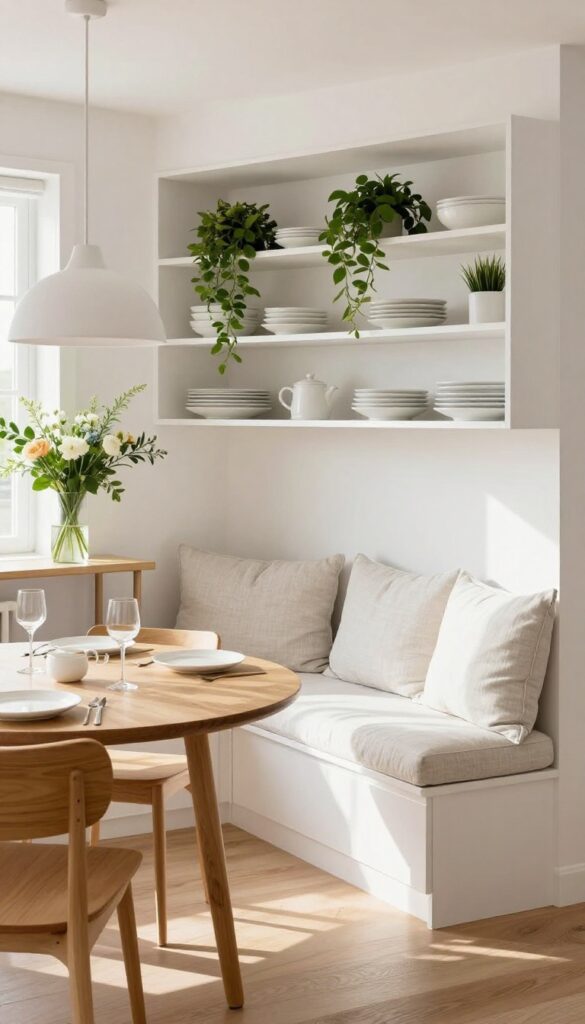
A built-in banquette turns a corner of your kitchen into a cozy dining nook while quietly solving storage woes. Lift-up seats or deep drawers hide everything from extra linens to small appliances, keeping countertops clutter-free. The light, airy feel comes from choosing pale upholstery and open shelving above, so the space breathes rather than feels boxed in.
Why It Works
Banquettes maximize every inch by using wall space that would otherwise sit empty. The hidden storage is a game-changer for small kitchens, tucking away rarely used items without sacrificing style. Plus, the continuous seating feels more intimate than separate chairs, encouraging lingering over coffee.
Best For
This idea shines in narrow kitchens or breakfast areas where a traditional table and chairs would block traffic. It's also perfect for families who need extra storage for bulk pantry items or seasonal dishes. If you have a blank wall or an unused corner, a banquette instantly adds function and charm.
Styling Tip
Keep the banquette light by using a pale linen or cotton-blend fabric for cushions, and add a slim console table behind for extra surface space. Hang a simple pendant light low over the table to define the nook, and tuck a few woven baskets under the bench for even more out-of-sight storage.
4. Floating Shelf Desk for Solo Meals
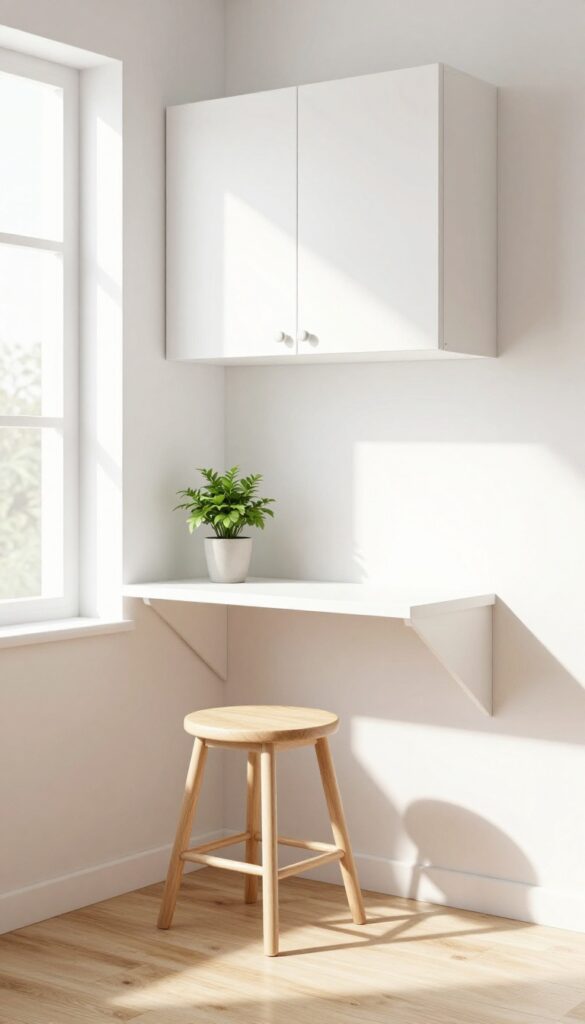
When your kitchen is tight on square footage, every surface has to earn its keep. A wall-mounted floating shelf that doubles as a tiny desk gives you a dedicated spot for solo meals without stealing floor space. The key is keeping it minimal—a slim shelf, a stool that tucks away, and nothing else.
It feels like a secret nook that appears only when you need it.
Why It Works
This setup uses vertical real estate that would otherwise go unused, turning a blank wall into a functional zone. Because the shelf is shallow and the stool slides completely underneath, the room stays open and airy. It’s a smart solution that adds purpose without clutter.
Best For
Tiny kitchens, studio apartments, or any eat-in area where a full table feels too bulky. It’s also great for households where one person eats while others cook—keeping the main counters clear.
Styling Tip
Choose a shelf in a light wood or white to keep the look floating and unobtrusive. Pair it with a simple, slim stool in a matching finish. Add a small plant or a single piece of art above the shelf to give it personality without crowding the surface.
5. Glass-Top Table to Keep the Room Airy
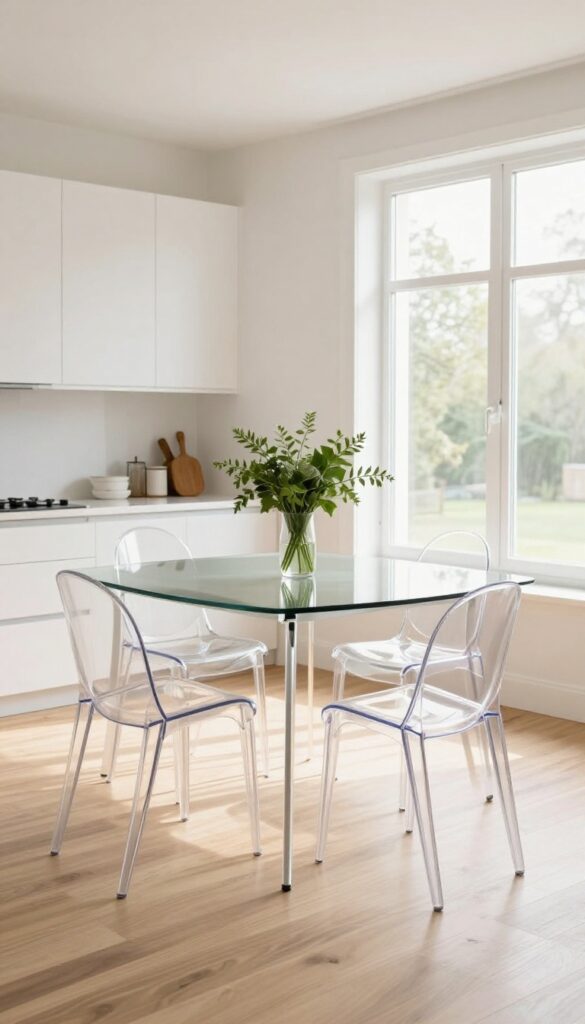
A glass tabletop does something magical in a small eat-in kitchen: it lets light pass right through. Instead of a bulky surface that blocks sightlines, the glass practically disappears, making the whole room feel less crowded. Pair it with transparent acrylic chairs, and you've got an almost invisible dining set that keeps the focus on your kitchen's best features.
Why It Works
Glass reflects light from windows and fixtures, bouncing brightness around the room. This tricks the eye into seeing more space than there actually is. Plus, the see-through surface doesn't break up the visual flow, so your kitchen feels open and connected.
Best For
Tiny eat-in kitchens where every square inch counts, or any space that feels a bit dark and needs a lightness boost. It's also a smart choice for kitchens with beautiful flooring you don't want to hide.
Styling Tip
Keep the tabletop clean and clutter-free to maintain that airy effect. Use a simple centerpiece like a single vase with fresh greenery or a small candle. For chairs, go with clear acrylic or slim metal frames in a light finish to keep the look consistent.
6. Window-Ledge Breakfast Bar
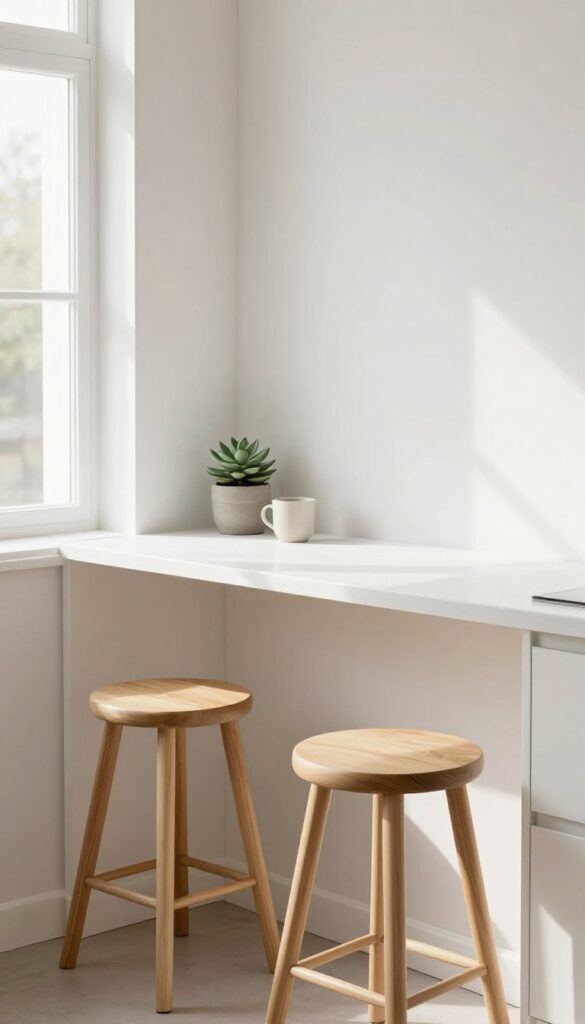
Turn a wide windowsill or the space beneath a large window into a slim breakfast bar that feels like a natural extension of the room. By adding a countertop and a couple of stools, you create a sunny spot for morning coffee without sacrificing floor space. The light streaming in keeps the whole kitchen feeling open and airy, while the perch itself adds casual charm.
Why It Works
This setup makes use of often-overlooked square footage, turning a window ledge into a functional dining area. It keeps the floor plan open because there's no bulky table or island blocking the flow, and the natural light makes the space feel larger and more inviting.
Best For
Small to medium kitchens where every inch counts, especially those with a large window that gets good light. It's also great for eat-in kitchens that need a compact spot for quick meals without closing off the room.
Styling Tip
Choose slim, backless stools that tuck completely under the counter when not in use. Keep the countertop clutter-free—just a small plant or a ceramic mug for visual interest—so the window remains the focal point.
7. Compact Drop-Leaf Table for Flexibility
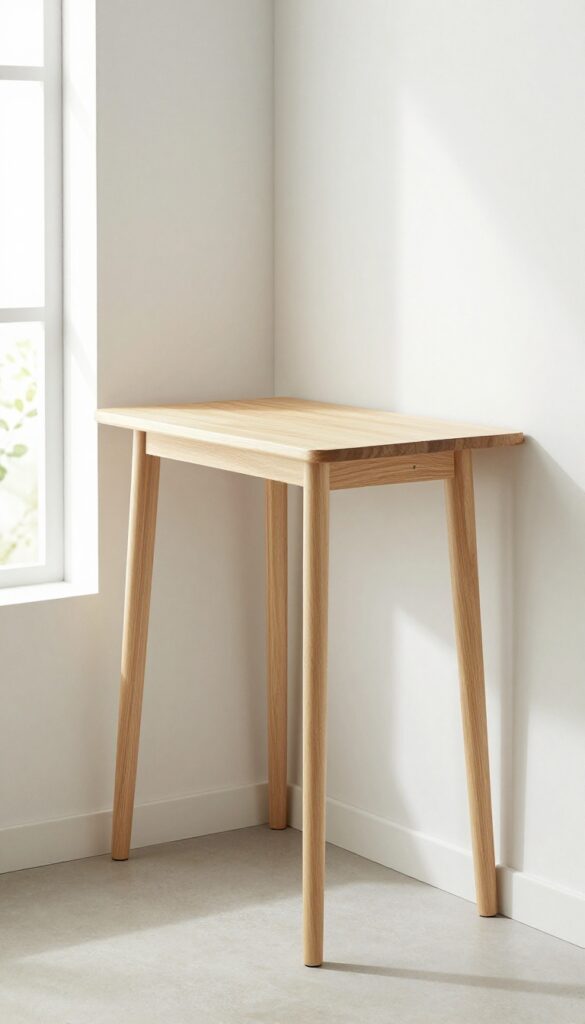
A drop-leaf table is one of those smart little solutions that makes a small kitchen feel bigger without sacrificing function. When the leaves are down, it tucks neatly against a wall or into a corner, leaving plenty of room to move. Pop them up, and suddenly you have a proper dining spot for two or four.
The beauty is in the simplicity—no heavy visual bulk, just clean lines that keep the room feeling open and airy.
Why It Works
- Drop-leaf tables are brilliant because they adapt to your real life. On busy mornings, you keep it folded and enjoy extra floor space. When friends come over or you need a surface for prep, the leaves lift in seconds.
- It's furniture that works with you, not against you, making a small kitchen feel flexible and intentional.
Best For
Tiny kitchens, galley layouts, or any eat-in area where every square inch counts. Also great for apartment dwellers who want a dining spot but can't spare a full table full-time. If your kitchen doubles as a pass-through or you frequently need to clear the floor, this is your best bet.
Styling Tip
Mount a wall-mounted drop-leaf table at bar height for a casual breakfast counter vibe. Pair it with backless stools that slide completely underneath when not in use. Keep the wall above light—a small floating shelf or a single piece of art—so the table feels grounded, not cramped.
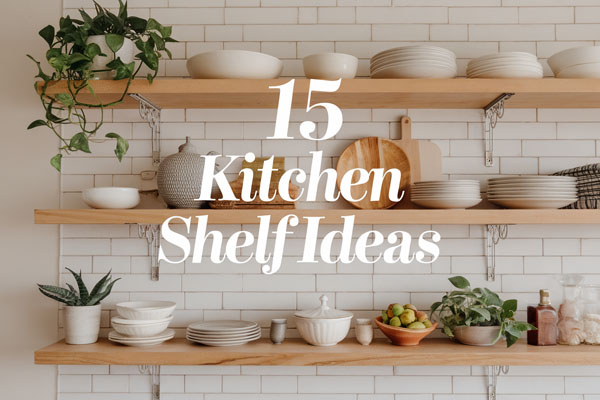
8. Open Shelving as a Dining Backdrop
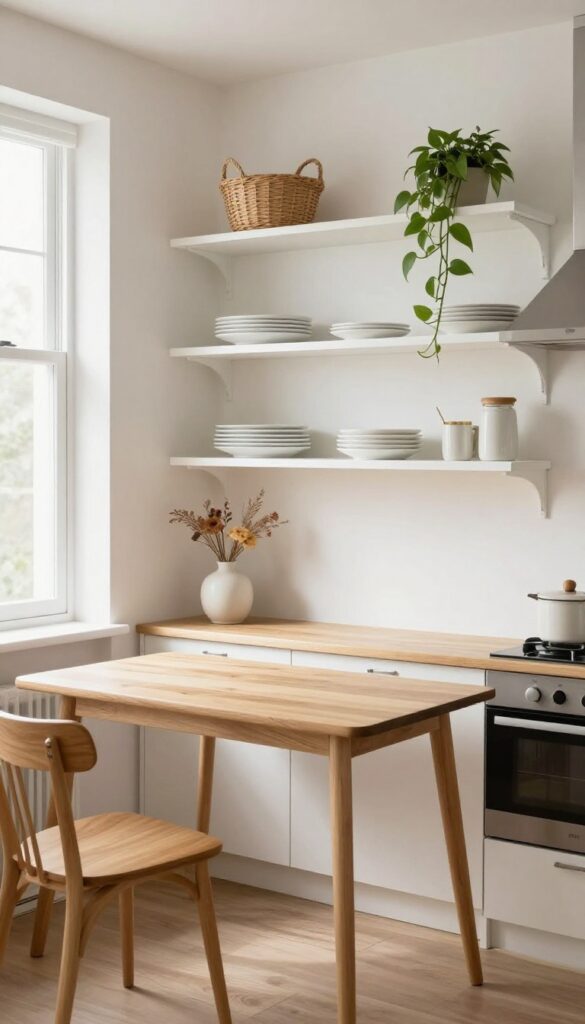
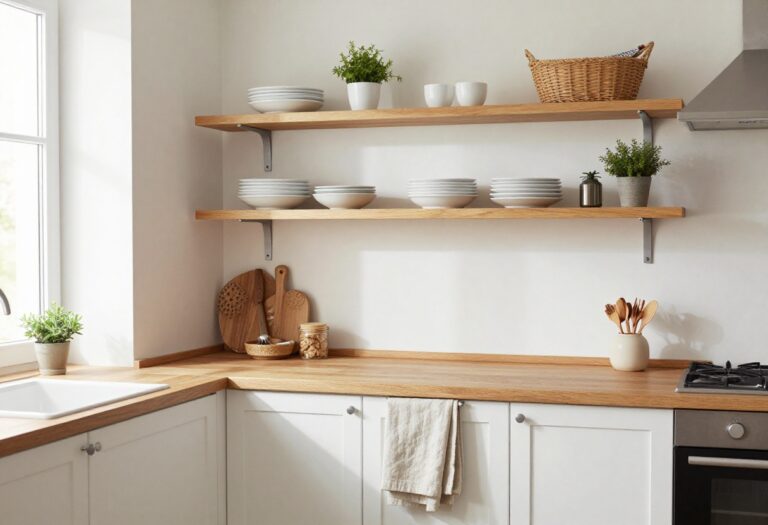
Picture a cozy eat-in kitchen where a small table sits against a wall lined with open shelves. Instead of a bulky hutch or closed cabinets, the shelves keep the space feeling open and breezy. You can see everything at a glance—pretty plates, a favorite cookbook, a trailing plant—and it all adds up to a backdrop that feels personal but not cluttered.
The trick is to edit what you display, leaving plenty of breathing room between items so the whole setup feels light and intentional.
Why It Works
Open shelving above a dining table makes the most of vertical space without eating into your floor plan. It turns a blank wall into a functional, decorative feature that keeps everyday items within arm's reach. Because the shelves are open, they encourage you to curate only what you love, which naturally keeps the look streamlined and airy.
Best For
This idea shines in small eat-in kitchens or breakfast nooks where every inch counts. It's also great for renters who can't install permanent built-ins—floating shelves are easy to mount and remove. If your dining area doubles as a workspace, the shelves can hold both dinnerware and a few office supplies without looking messy.
Styling Tip
Stick to a limited color palette for items on display—think whites, woods, and soft neutrals—to keep the shelves from feeling chaotic. Mix in a few natural textures like a ceramic vase or a woven basket for warmth. Leave about a third of each shelf empty to create visual pauses that make the arrangement feel curated, not crammed.
9. Mixing Bench Seating with Chairs
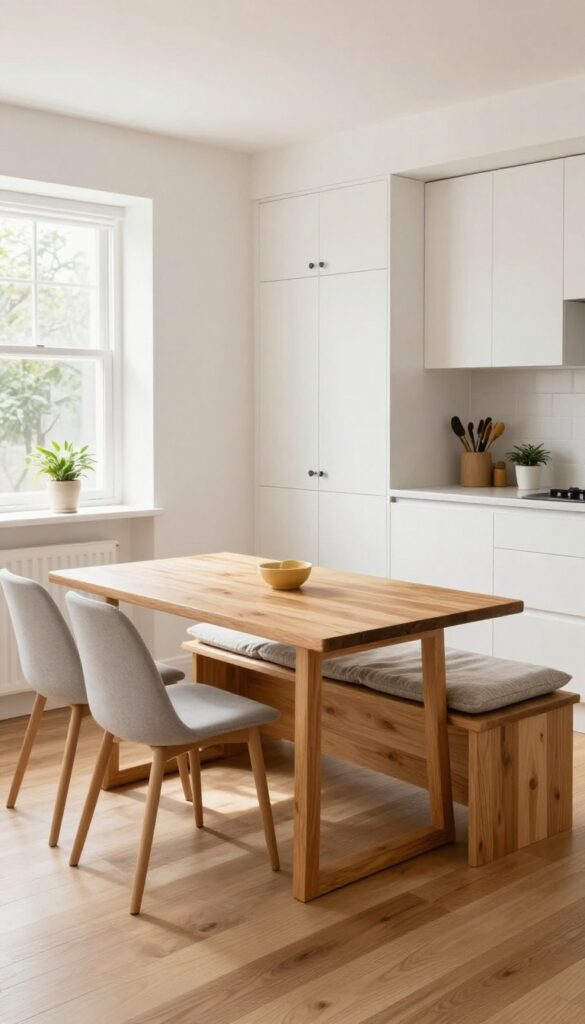
Not every eat-in kitchen needs a full set of matching chairs. Swapping one side of the table for a wooden bench instantly shifts the mood—it feels more casual, more open, and a little bit farmhouse without going full rustic. The bench slides neatly under the table when not in use, which is a huge plus if you're working with a tighter footprint.
It also makes the whole setup feel less formal, like a place where you'd actually sit down for a quick breakfast or a midweek dinner.
Why It Works
The combination of bench and chairs breaks up the visual monotony of a uniform seating set. The bench adds a linear, grounding element that contrasts nicely with the vertical lines of chair backs. Because the bench tucks away, it keeps the floor space clear and makes the room feel larger than it is.
Best For
This idea works especially well in narrow eat-in kitchens or breakfast nooks where you need to maximize seating without crowding the room. It's also a great choice for families—kids love sliding in and out of a bench, and it's easier to squeeze in an extra person when needed.
Styling Tip
Keep the bench in a natural wood tone that picks up the warmth in your flooring or cabinetry. Pair it with two simple chairs in a light neutral—white, beige, or soft gray—to maintain an airy feel. Add a couple of textured cushions on the bench for comfort without losing the clean line.
10. Pendant Lighting to Define the Zone
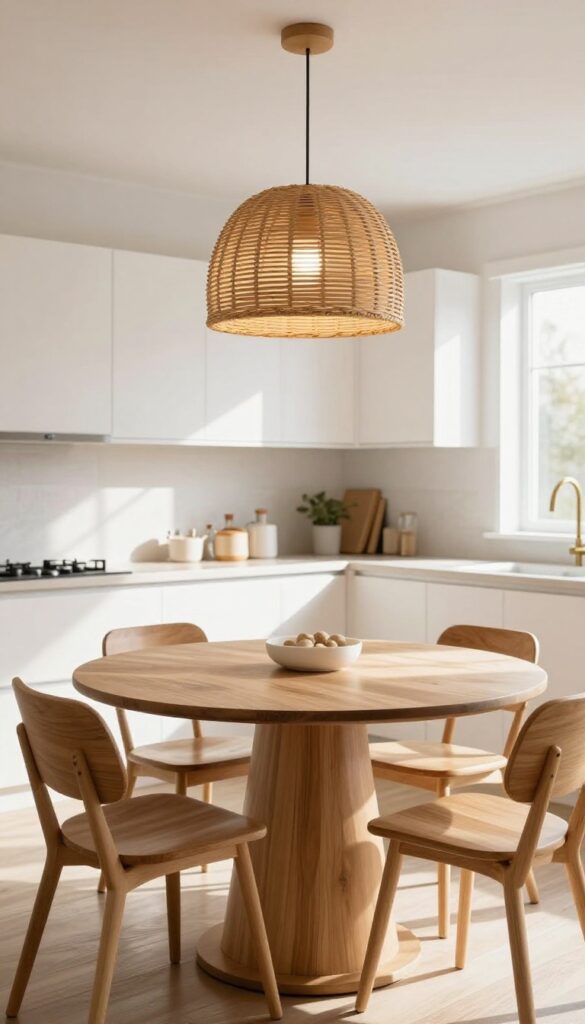
A single pendant or a low-hanging cluster over the dining area visually separates it from the cooking zone. Choose a light, airy shade like rattan or frosted glass to keep the look soft and breezy. This trick carves out a cozy dining nook without needing walls or a major renovation.
Why It Works
By hanging a fixture directly above the table, your eye naturally treats that spot as a distinct destination. The contrast in height and material between the cooking and dining areas adds structure to an open layout, making the kitchen feel intentional and thoughtfully planned.
Best For
Open-plan kitchens where the dining area blends into the cooking zone. It's especially effective in smaller spaces where you want to define zones without closing things off.
Styling Tip
Hang the pendant so the bottom is 30 to 36 inches above the tabletop. For a round or square table, one statement pendant centered works beautifully; for a rectangular table, try two or three smaller shades spaced evenly.
11. Fold-Down Wall Table with Art Above
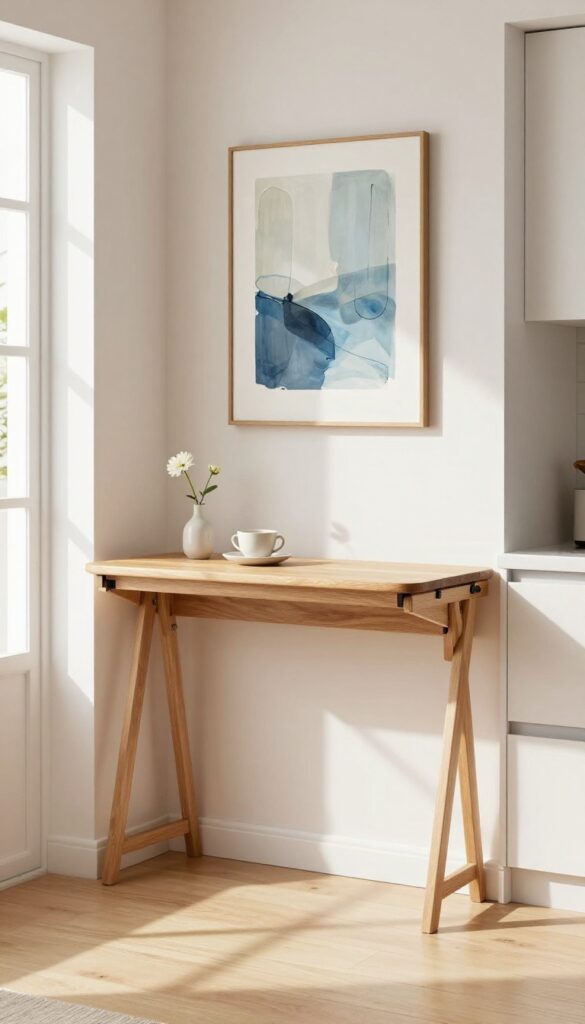
When every square inch counts, a fold-down wall table is a game-changer. It gives you a functional surface for quick meals or morning coffee, then disappears when you need the floor space back. The trick to keeping it from feeling like a dorm room hack is to treat the wall above it as a permanent decor moment—hang a piece of art or a mirror there so the area feels intentional, not makeshift.
Why It Works
This setup maximizes utility without sacrificing style. The table is only present when you need it, so it never crowds the room. Meanwhile, the art or mirror above ensures the wall remains a focal point even when the table is folded up, blending practicality with visual interest.
Best For
Tiny kitchens, breakfast nooks, or any eat-in area where floor space is limited. It's especially great for apartments or homes where a full dining table would feel too bulky.
Styling Tip
Choose a table that matches your cabinetry or trim for a built-in look. Above it, hang a framed print or a round mirror that contrasts nicely with the table's shape. Keep the surface clutter-free—maybe just a small vase or a single candle—to maintain that light, airy feel.
12. Using a Cart as a Mobile Dining Station
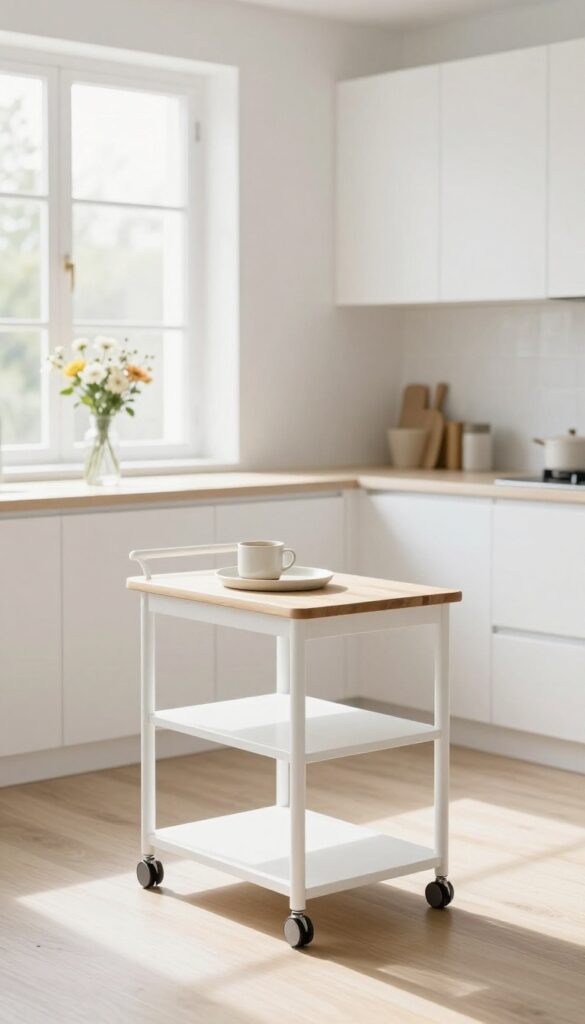
A kitchen cart on wheels might sound like a temporary fix, but it can be one of the most intentional pieces in your space. In a light and airy kitchen, a slim white or pale wood cart with open shelving adds function without closing off the room. It’s a smart, space-aware choice that lets you adapt your layout on the fly—pull it out for casual meals or extra counter space, then roll it back when you need the floor clear.
Why It Works
A mobile cart gives you the flexibility to change your kitchen’s flow instantly. It creates a dedicated dining spot without a permanent table, making it ideal for tight floor plans. The wheels let you move it to wherever you need it—by the window for morning coffee or against the wall during cooking prep.
Best For
This idea is perfect for tiny kitchens, studio apartments, or any home where a full dining set would overwhelm the space. It also works well in open-plan layouts where you want a movable island that can double as a breakfast bar.
Styling Tip
Choose a cart with a butcher-block top for extra prep space and a lower shelf for storing baskets or cookbooks. Keep the top clear except for a small vase or a tray with your daily essentials to maintain that airy feel. A slim rolling cart in white or light oak blends seamlessly into a bright kitchen.
13. Neutral Palette with One Pop of Color
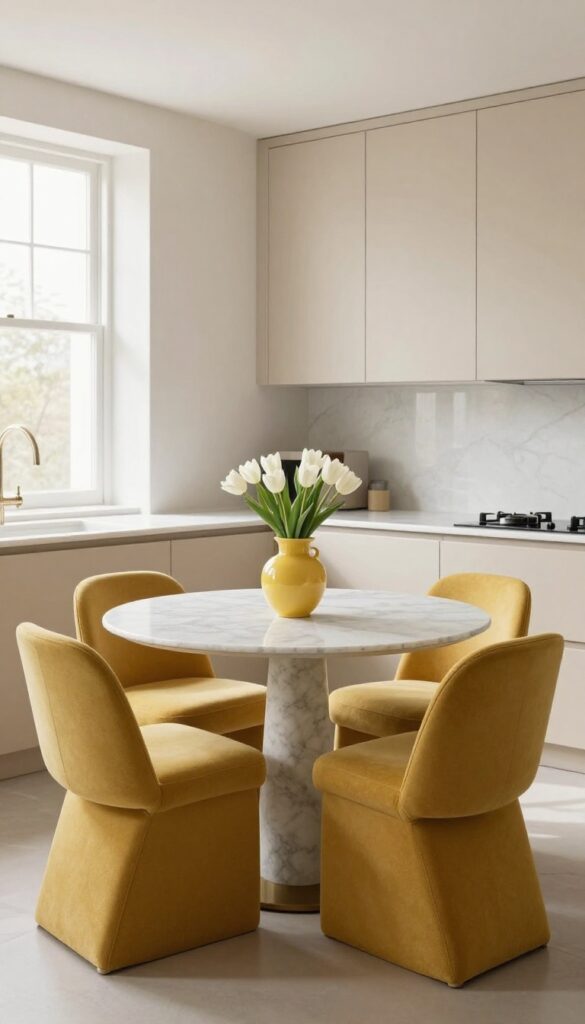
A neutral kitchen feels calm and timeless, but it can sometimes lean a little flat. The trick to keeping it lively without going overboard is to introduce a single, intentional pop of color. Think mustard yellow chairs against soft beige cabinetry, or a deep blue table runner on a white marble island.
That one vibrant accent becomes the focal point, drawing the eye and adding personality without disrupting the airy, uncluttered vibe.
Why It Works
This approach gives you the best of both worlds: the serenity of a neutral base and the energy of a bold accent. Because the color is isolated, it reads as a deliberate design choice rather than clutter. It also makes it easy to switch up the look seasonally or whenever you crave a change—just swap out the accent pieces.
Best For
Open-plan kitchens where you want the cooking zone to feel connected to the living area without competing for attention. It's also ideal for smaller kitchens, since the neutral backdrop keeps the space feeling larger while the pop of color adds character without overwhelming the square footage.
Styling Tip
Choose a color that appears elsewhere in your home to create a sense of flow. For example, if your living room has a navy sofa, bring navy bar stools into the kitchen. Repeat the accent in small doses—a vase, a tea towel, or a fruit bowl—to tie the look together without making it feel forced.
FAQ
What is the best table shape for a small eat-in kitchen?
Round or oval tables work best because they eliminate sharp corners and allow for flexible seating. A pedestal base also makes it easier to pull chairs in from any direction.
How can I make my eat-in kitchen feel less cluttered?
Stick to a light color palette, choose furniture with slim profiles, and incorporate hidden storage like banquettes or benches with lift-up seats. Keep countertops clear and use open shelving sparingly.
What type of lighting works best over an eat-in kitchen table?
A single pendant light or a small chandelier hung 30–36 inches above the table creates a focal point. Choose fixtures with translucent or open designs to maintain an airy feel.
Can I have an eat-in kitchen in a very narrow space?
Absolutely. Consider a wall-mounted drop-leaf table, a slim console with stools, or a fold-down table that disappears when not in use. Even a 2-foot-wide counter can work with backless stools.
How many seats should I plan for in a small eat-in kitchen?
Two to four seats is usually ideal for a compact kitchen. A banquette can fit more people in a smaller footprint, while a round table with two chairs keeps things intimate.
Conclusion
Creating an eat-in kitchen that feels thoughtful and airy comes down to choosing pieces that serve multiple purposes without hogging space. Whether you opt for a fold-down table, a cozy banquette, or a simple cart, the goal is to make every square inch count.
Let natural light and neutral tones lead the way, and your kitchen will become a place where meals feel special—without ever feeling overdone.