13 Stylish Kitchen and Dining Room Ideas That Add Function and Personality
Your kitchen and dining room are where life happens—morning coffee, weeknight dinners, and lazy weekend brunches. They deserve to feel as good as they look, with a cozy, lived-in warmth that welcomes everyone.
The trick is balancing style with everyday practicality, so your space works hard without feeling cold or staged.
These 13 ideas will help you add character and function, turning your kitchen and dining area into the heart of your home.
1. Open Shelving with Everyday Essentials
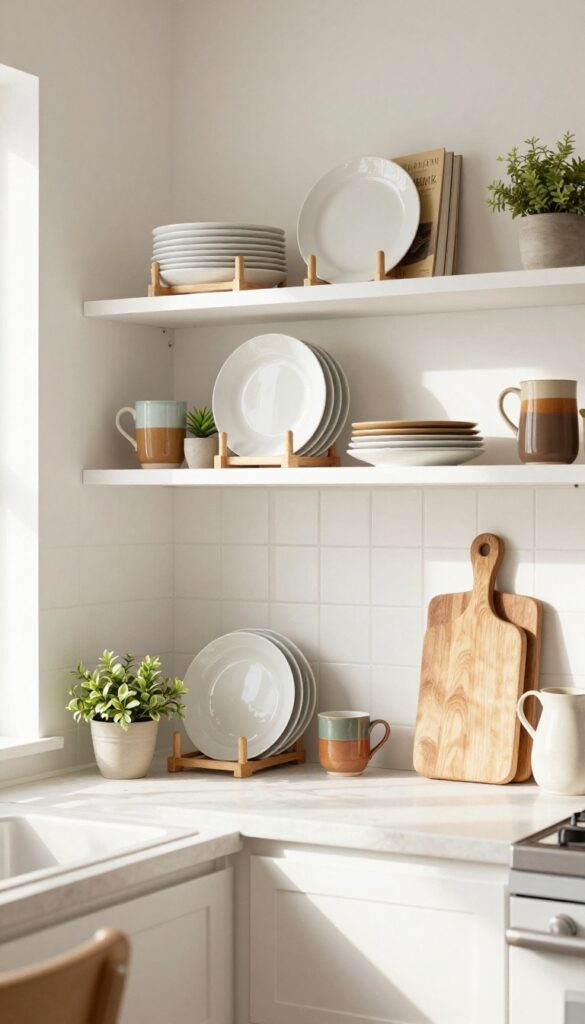
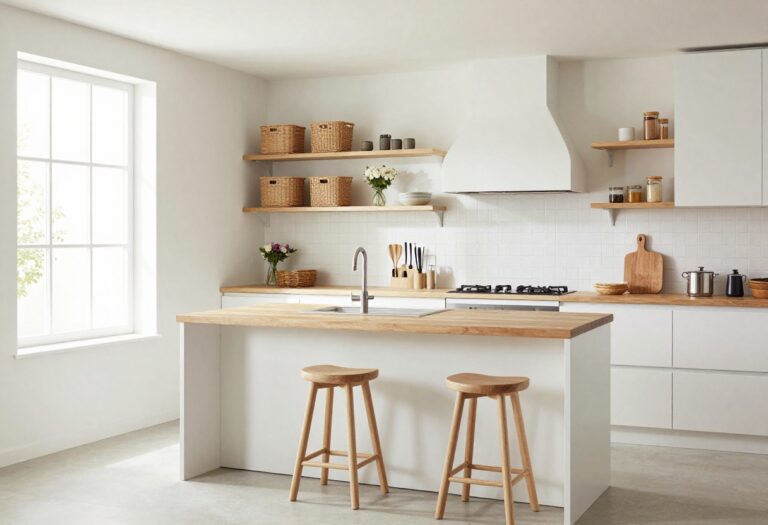
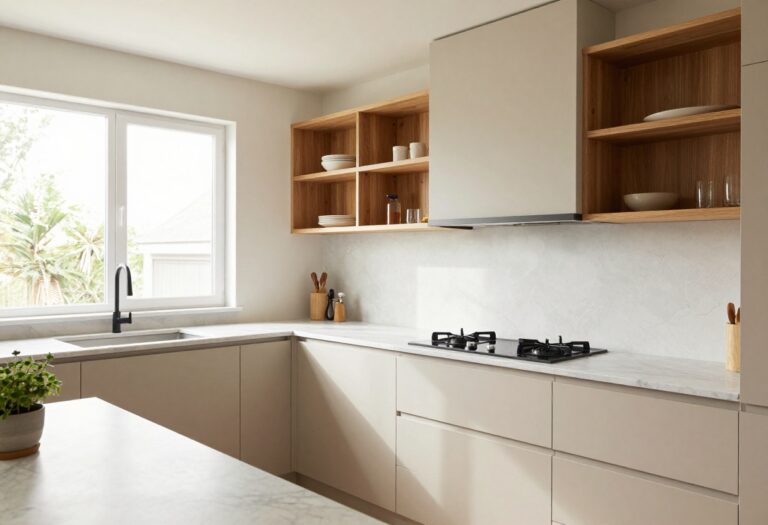
Open shelving gets a bad rap for being impractical, but when you style it with items you actually use every day, it becomes one of the most functional and personality-packed features in a kitchen. Instead of hiding your favorite mug collection or go-to cookbooks behind cabinet doors, put them on display where they're easy to grab and add warmth to the room. The key is to keep it curated but not precious—think everyday essentials arranged in a relaxed, accessible way that feels lived-in rather than staged.
Why It Works
Open shelving forces you to edit down to what you truly love and use, which naturally reduces clutter and makes your daily routine smoother. Having dishes and glassware within arm's reach speeds up meal prep and cleanup, while the visual mix of textures—ceramic, glass, wood—adds depth and coziness that closed cabinets just can't match.
Best For
This idea shines in smaller kitchens where every inch counts, or in open-plan spaces where the kitchen flows into the dining area and you want a cohesive, welcoming look. It also works beautifully for anyone who loves to cook and entertain, because your prettiest pieces double as decor.
Styling Tip
Layer items by height and material: stack dinner plates on a wooden riser, lean a couple of cookbooks against the wall, and tuck in a small plant or a ceramic pitcher. Stick to a neutral palette with one or two accent colors so the shelf feels intentional without looking busy.
2. A Statement Range Hood as the Focal Point
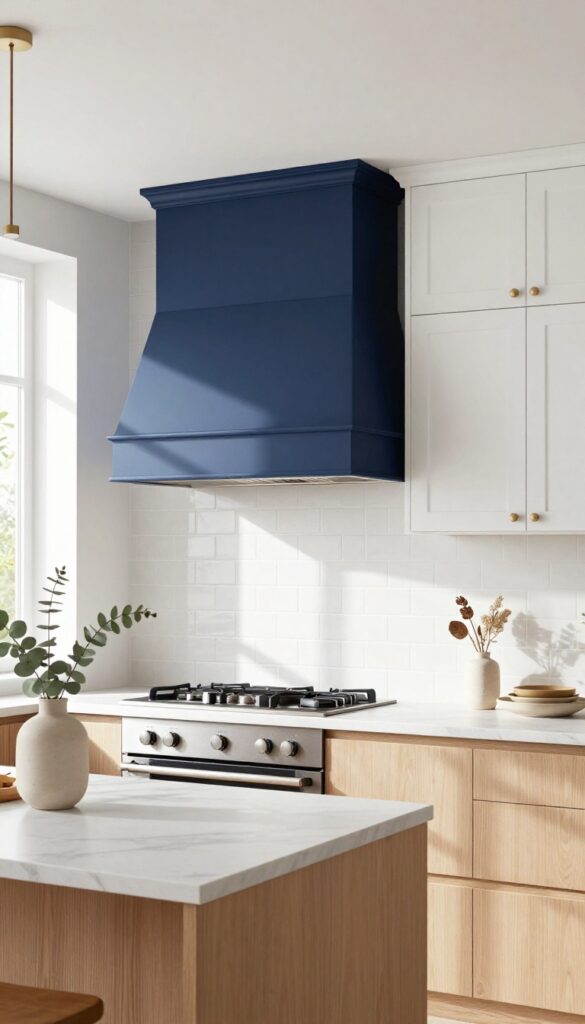
Range hoods often get treated like a necessary appliance you hide away, but they can actually become the star of your kitchen. Imagine a bold color that pops against neutral cabinets, or a textured tile surround that adds depth and character. Custom wood paneling brings warmth and a built-in feel, making the whole space feel more intentional and cozy.
Why It Works
A statement range hood draws the eye upward, making your kitchen feel taller and more spacious without taking up extra floor space. It instantly adds personality and becomes a conversation piece, especially in open-concept homes where the kitchen flows into the dining area.
Best For
This idea works beautifully in kitchens with high ceilings or those that need a visual anchor. It's also great for renter-friendly updates if you can swap out just the hood or add removable tile.
Styling Tip
Keep surrounding elements simple so the hood stays the hero. Pair it with understated cabinet hardware and minimal backsplash patterns. If you choose a bold color, repeat it in small accents like dish towels or a vase to tie the room together.
3. Mixed Seating for an Inviting Dining Nook
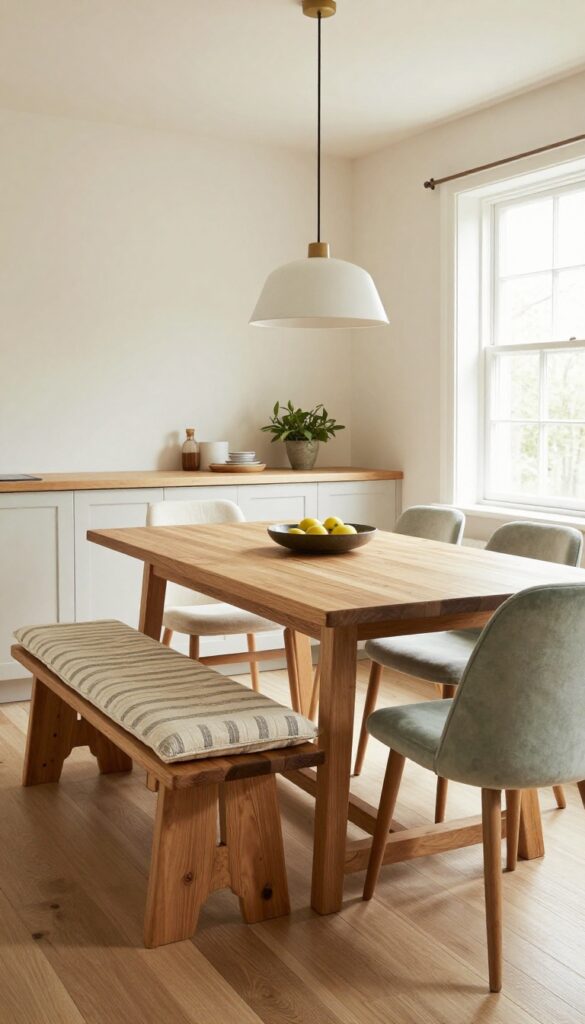
A dining nook should feel like the heart of the home—a spot where coffee lingers and conversations stretch past dessert. Mixing seating styles instantly adds that relaxed, collected vibe. Pair a sturdy bench on one side with mismatched chairs or add a couple of upholstered seats to your table setup.
The blend of textures and shapes makes the space feel curated over time, not bought in one go.
Why It Works
Mixed seating breaks the formality of a matching set, making the dining area feel more approachable and lived-in. It also lets you play with comfort: a bench can squeeze in extra guests, while cushioned chairs invite people to stay seated longer. The visual variety keeps the eye moving and adds warmth without clutter.
Best For
This idea shines in eat-in kitchens or breakfast nooks where you want a casual, everyday feel. It's also perfect for long rectangular tables that can accommodate a bench on one side and chairs on the other. If you have a corner nook with built-in banquettes, mixing in a few standalone chairs at the ends creates a similar effect.
Styling Tip
- Stick to a cohesive color palette to keep the mix from feeling chaotic. For example, pair a wooden bench with chairs in warm neutrals like cream, tan, or soft sage. Add cushions or seat pads in complementary fabrics—linen, velvet, or even a subtle pattern—to tie everything together.
- A pendant light centered above the table anchors the arrangement.
4. Warm Wood Accents Throughout
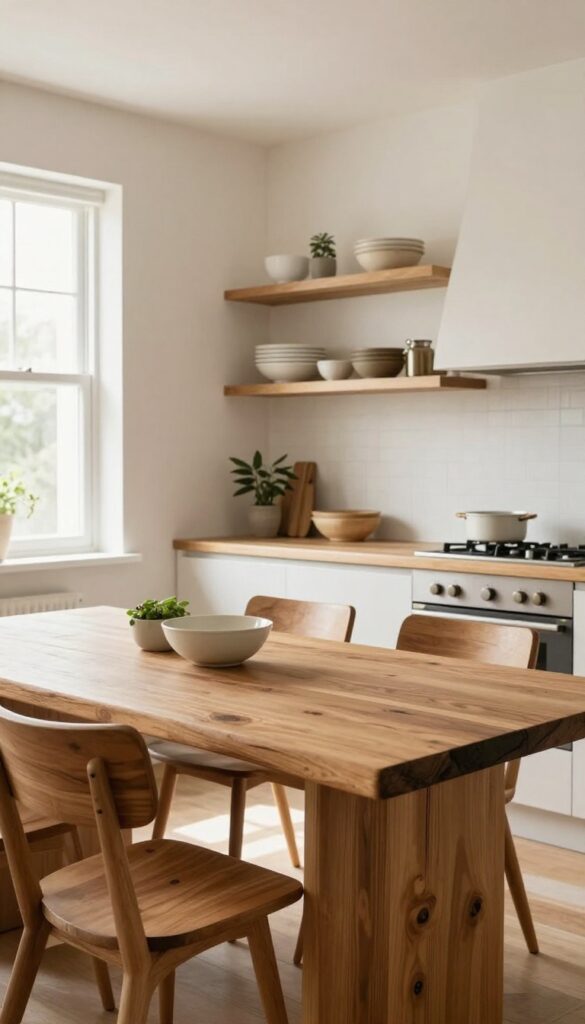
Wood has a way of making a kitchen or dining room feel instantly more inviting. It’s not about going full log cabin—just a few warm wood accents can soften the edges of stone countertops, metal fixtures, and glossy tile. Think butcher-block countertops that develop character over time, floating shelves that display your favorite dishes, or a reclaimed wood dining table that becomes the heart of the room.
The natural grain brings in texture and warmth, creating a space that feels lived-in and welcoming.
Why It Works
Wood adds visual warmth and organic texture, balancing out the coolness of materials like stainless steel or marble. It also introduces a natural color palette that pairs easily with neutral walls, greenery, and soft textiles.
Best For
This idea works well in kitchens and dining rooms that lean rustic, Scandinavian, or modern farmhouse. It's especially great for open-concept spaces where you want to create a cozy connection between cooking and eating areas.
Styling Tip
Mix wood tones intentionally: pair lighter oak shelves with a walnut table for contrast. Repeat the same wood finish on trim or cutting boards to tie the look together without matching everything exactly.
5. Layered Lighting for Ambiance and Task
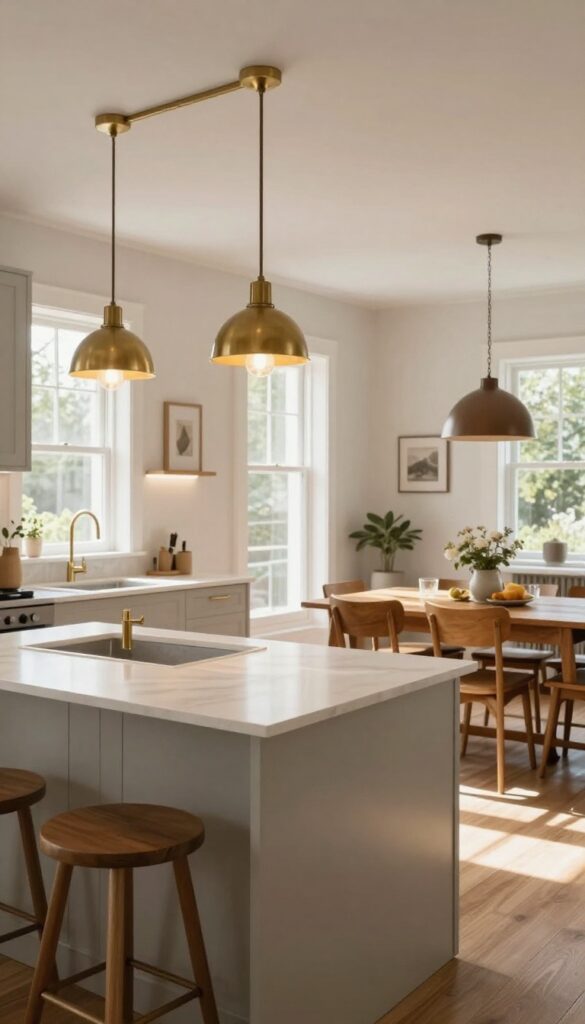
A kitchen can have the most beautiful finishes in the world, but if the lighting is flat, the whole room falls short. Layered lighting changes that completely. By combining pendant lights over an island, under-cabinet strips for prep areas, and a dimmable chandelier above the dining table, you create a space that adapts to your day—bright and focused when you're cooking, soft and intimate when you're lingering over a meal.
It's not just practical; it makes the room feel warm and lived-in, like a home where every moment is considered.
Why It Works
Lighting layers solve two problems at once: they eliminate shadows on countertops where you need clarity, and they let you set a mood without flipping a single switch. A dimmer on the chandelier is key—it pulls double duty as task light for homework or bills and ambient light for dinner parties. The mix of sources also adds visual depth, drawing your eye around the room naturally.
Best For
Open-concept kitchens that flow into dining or living areas benefit most from layered lighting because it defines zones without walls. It's also ideal for anyone who loves to cook but also entertains—you get the precision of task lighting when you need it and a cozy glow when guests arrive.
Styling Tip
Choose pendants with warm metal finishes like brass or bronze to reinforce the cozy feel. Keep under-cabinet lights warm white (2700K–3000K) so they don't clash with your chandelier's glow. For extra warmth, add a small table lamp on a buffet or sideboard—it softens the edges of an otherwise functional space.
6. A Cozy Rug Under the Dining Table
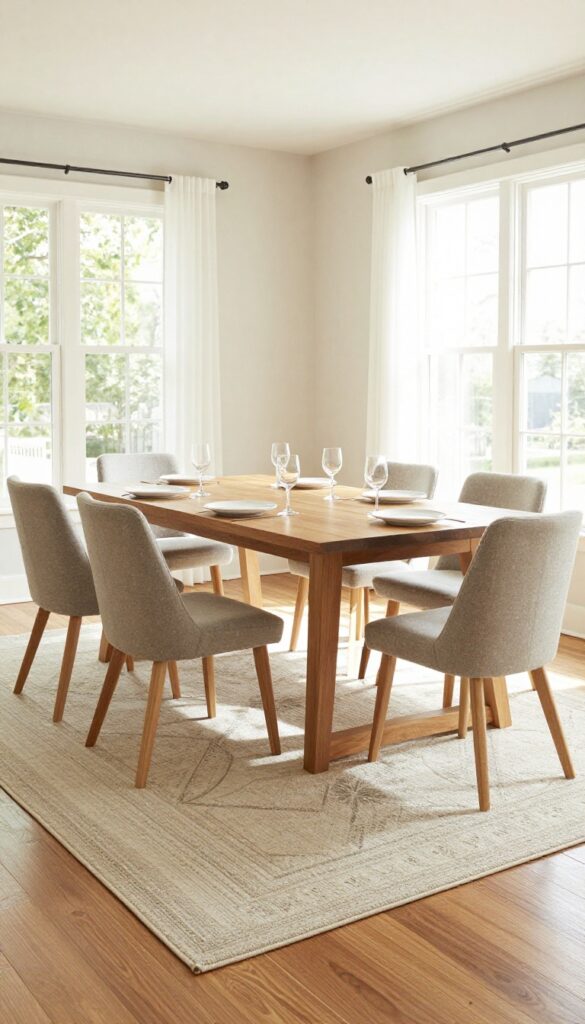
There's something about a rug under a dining table that instantly makes the space feel more grounded. It softens the hard edges of chairs and tables, adds warmth underfoot, and helps define the dining area—especially in open-concept homes. A low-pile wool or flatweave rug in a warm neutral or subtle pattern brings texture without trapping crumbs, making it both practical and inviting.
Why It Works
Rugs anchor furniture and absorb sound, making meals feel cozier and less echoey. A durable, low-pile material stands up to chair movement and spills while still adding visual softness. The right pattern hides minor stains and adds personality without overwhelming the room.
Best For
This works well in any dining area where you want to create a distinct zone—especially in open floor plans or eat-in kitchens. It's also great for homes with hardwood or tile floors that need a little warmth and sound dampening.
Styling Tip
Choose a rug that extends at least 24 inches beyond the table on all sides so chairs stay on the rug when pulled out. Stick to low-pile wool, cotton flatweave, or indoor-outdoor rugs for easy cleaning. A subtle geometric or faded floral pattern adds interest without competing with your table setting.
7. Open Baskets for Stylish Storage
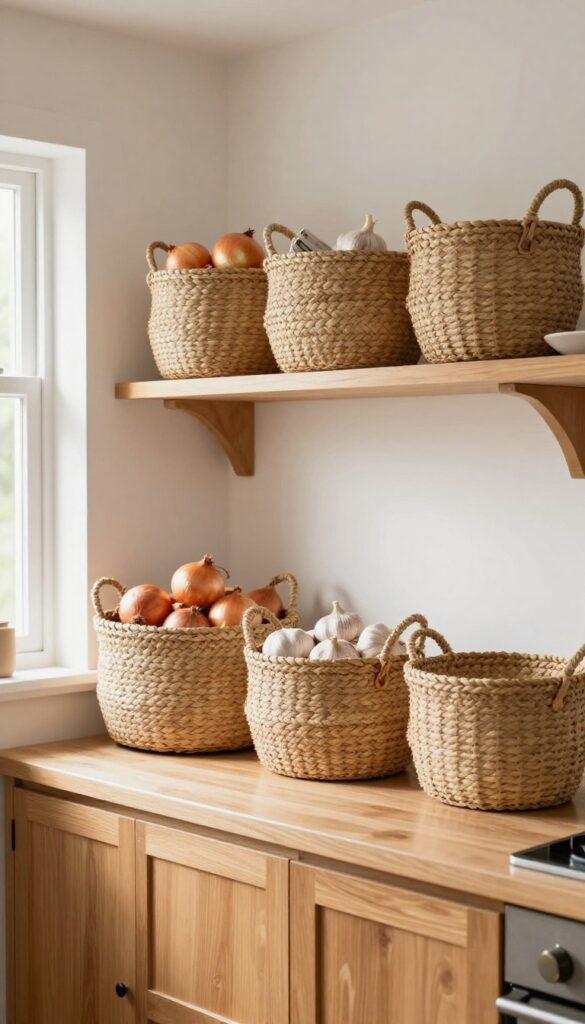
Woven baskets are the unsung heroes of a cozy, lived-in kitchen. They soften hard edges, add natural texture, and make grabbing a potato or a napkin feel effortless. Tucked on open shelves or lined up on a sideboard, they keep everyday essentials close without looking cluttered.
The key is choosing baskets in warm tones—seagrass, rattan, or woven palm—that blend with your cabinet color and countertop material.
Why It Works
Baskets hide visual chaos while keeping items accessible. Their organic shapes break up straight lines and hard surfaces, instantly warming up the room. Plus, they’re easy to move and swap out as your needs change.
Best For
This idea shines in kitchens with open shelving or a sideboard that needs both function and charm. It’s also perfect for renters who can’t install permanent storage solutions.
Styling Tip
Mix basket sizes and weaves for depth—place a tall oval basket next to a round shallow one. Use them for produce you use daily (like onions or garlic) so they feel intentional, not like junk catchers.
8. A Built-In Banquette for Casual Dining
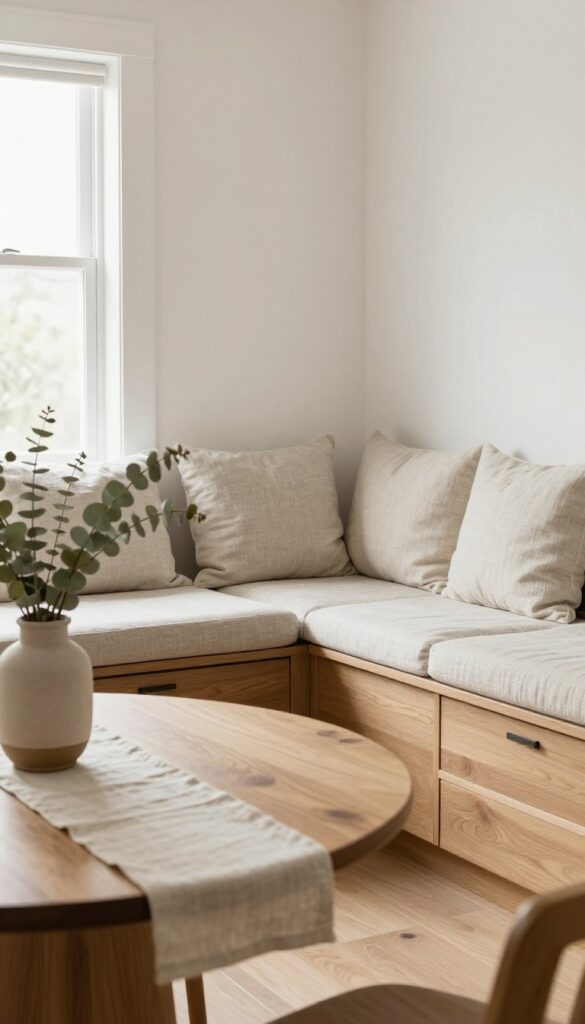
Nothing says cozy like a built-in banquette tucked into a kitchen corner. It turns an ordinary eating area into a spot where you actually want to linger over coffee or homework. The key is choosing a washable, textured fabric for the cushions—something like a durable cotton-linen blend in a warm neutral or soft blush.
Underneath, deep drawers or lift-up lids hide everything from extra placemats to bulk snacks, keeping the room tidy without sacrificing style.
Why It Works
A banquette maximizes every inch of floor space, often seating more people than a standard table and chairs setup. The built-in storage eliminates visual clutter, while the upholstered seating adds softness that balances hard kitchen surfaces like tile and countertops.
Best For
This idea shines in narrow eat-in kitchens, breakfast nooks, or any awkward corner that doesn't fit a traditional dining set. It's also perfect for busy families because the bench can slide in and out easily and the fabric can be wiped clean.
Styling Tip
Keep the look warm and layered by adding a round or oval table instead of a rectangle—it softens the lines and makes conversation easier. Top with a simple linen runner and a low ceramic vase filled with dried eucalyptus or seasonal branches.
9. Warm Metallics in Fixtures and Hardware
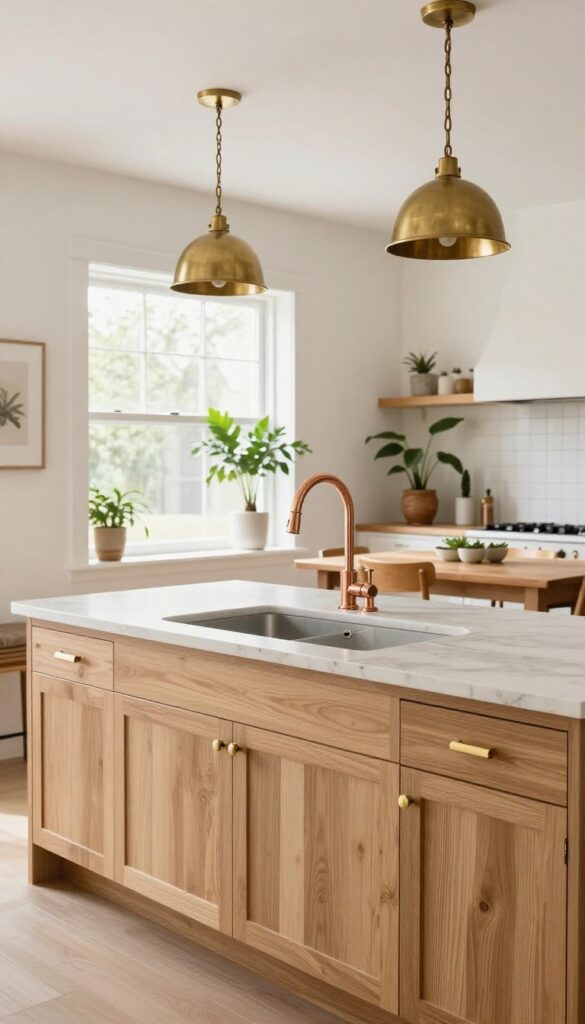
Brass, copper, and brushed gold bring a soft radiance that instantly warms up a kitchen or dining room. Unlike chrome or stainless steel, these metals catch the light gently and play nicely with wood tones, creamy whites, and earthy greens. The result is a space that feels polished but not precious—lived-in rather than showroom-perfect.
Why It Works
Warm metallics add visual warmth without adding color. They reflect light in a flattering way, making the room feel cozier and more inviting. Because they patina over time, they develop character that fits perfectly with a warm, lived-in aesthetic.
Best For
This idea works especially well in kitchens with natural wood cabinetry or butcher-block countertops. It also shines in dining rooms with wooden tables and warm neutral walls, where metallic accents can tie the whole look together.
Styling Tip
Mix finishes thoughtfully: pair brushed brass cabinet pulls with a copper faucet for subtle contrast. Keep other metals in the same warm family to avoid a disjointed look. A single statement light fixture in aged brass can anchor the entire room.
10. A Gallery Wall of Personal Art
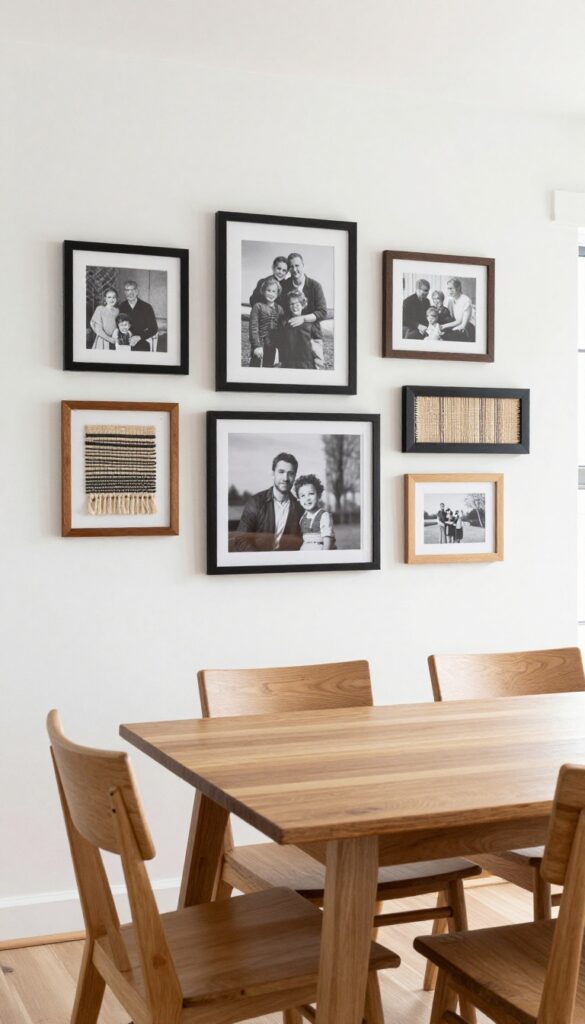
Blank walls can feel cold, but covering them with a gallery wall of personal art instantly warms up the room. The key is mixing framed prints, family photos, and small textiles in a way that feels curated, not cluttered. When the frames share a similar finish—like all black or all natural wood—the collection stays cohesive while the content tells your story.
Why It Works
A gallery wall adds visual interest and personality without requiring expensive artwork. It draws the eye and makes the space feel lived-in and loved. Plus, you can swap pieces out seasonally or as your style evolves.
Best For
This idea works especially well in dining rooms, breakfast nooks, or along a kitchen pass-through wall. It’s perfect for renters because you can arrange lightweight frames with removable adhesive strips.
Styling Tip
Lay out your arrangement on the floor first to find a layout you like. Mix in a small textile, like a woven wall hanging or a vintage hanky in a frame, to add texture. Keep frames within two or three colors for a pulled-together look.
11. A Stylish Butcher Block Island
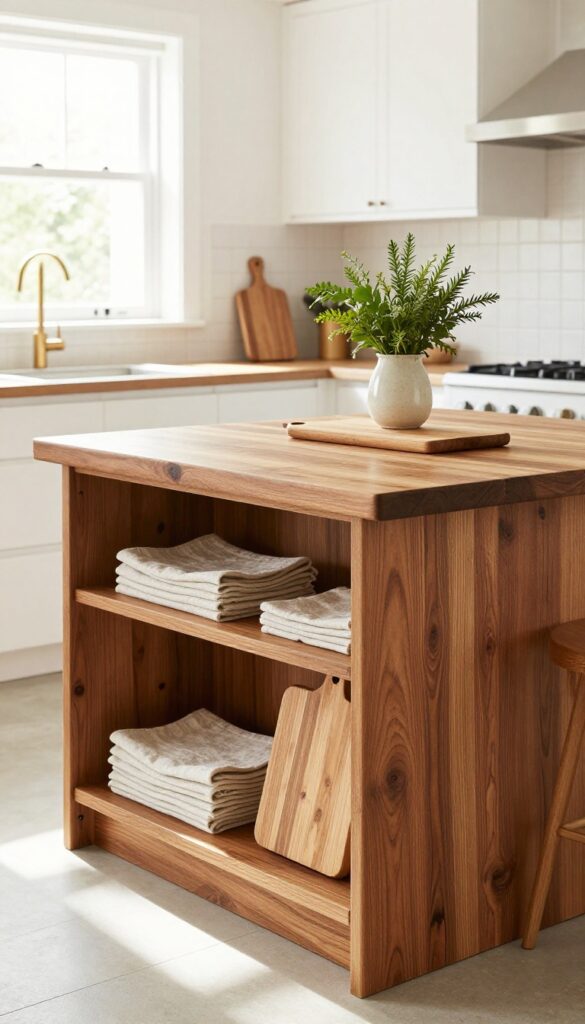
A movable butcher block island brings warmth and practicality to any kitchen. The rich wood grain adds a cozy, lived-in feel that softens harder surfaces like tile or stone. It's the kind of piece that makes you want to linger—whether you're chopping vegetables or sharing a quick coffee.
Why It Works
Butcher block is naturally durable and forgiving on knives, making it perfect for prep work. The mobility means you can reposition it as needed, and the extra storage underneath keeps essentials close at hand without cluttering your counters.
Best For
This idea shines in smaller kitchens or open layouts where permanent islands aren't feasible. It also works well in rental spaces because it's freestanding and easy to take with you when you move.
Styling Tip
Choose a butcher block island with a lower shelf or drawers for storing cutting boards, linens, or cookbooks. Top it with a small vase of fresh herbs or a wooden fruit bowl to keep the look warm and inviting.
12. Soft Textiles at the Windows
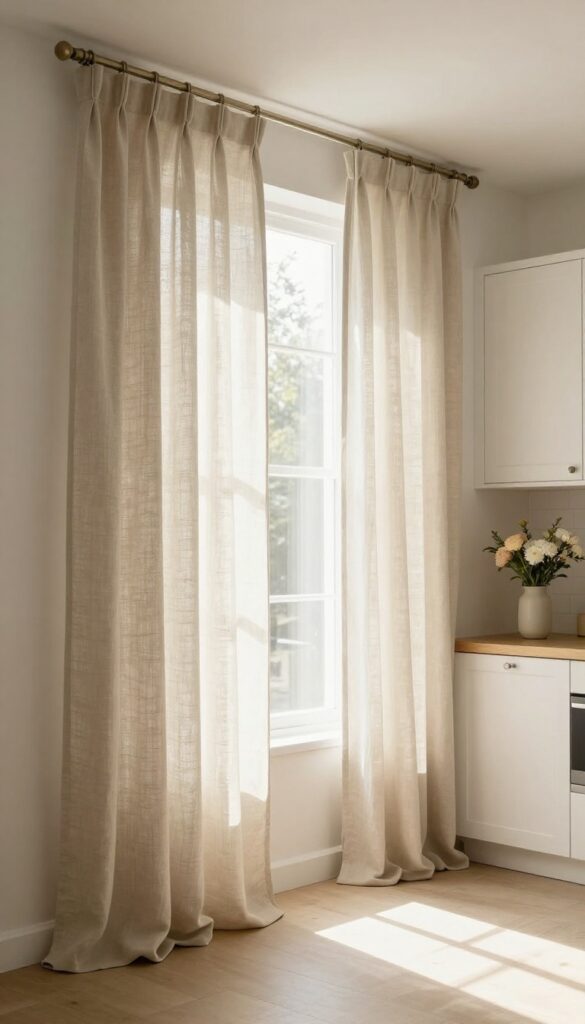
Windows often get overlooked when decorating a kitchen or dining room, but they're prime real estate for adding warmth. Linen or cotton curtains in a warm neutral or subtle pattern instantly soften all those hard edges from cabinets, countertops, and tables. The light filters through beautifully, casting a gentle glow that makes the whole space feel more inviting.
It's an easy swap that brings instant coziness without a major renovation.
Why It Works
- Hard surfaces dominate kitchens and dining rooms—tile, wood, stone, metal. Soft textiles balance that by adding texture and warmth. They also absorb sound, making the room feel quieter and more intimate.
- Plus, curtains frame the windows nicely, drawing the eye upward and making the ceiling feel higher.
Best For
Any kitchen or dining room that feels too stark or echoey. It's especially effective in open-plan spaces where you want to define the dining area or soften a large expanse of glass. Also great for rooms with lots of natural light that needs a little diffusing.
Styling Tip
- Hang the rod as high as possible—close to the ceiling—and let the curtains just kiss the floor. Choose a fabric with a bit of weight so they drape nicely. For a cohesive look, pick up a color from your backsplash or rug.
- A subtle stripe or check adds interest without competing with other patterns.
13. A Corner Coffee or Tea Station
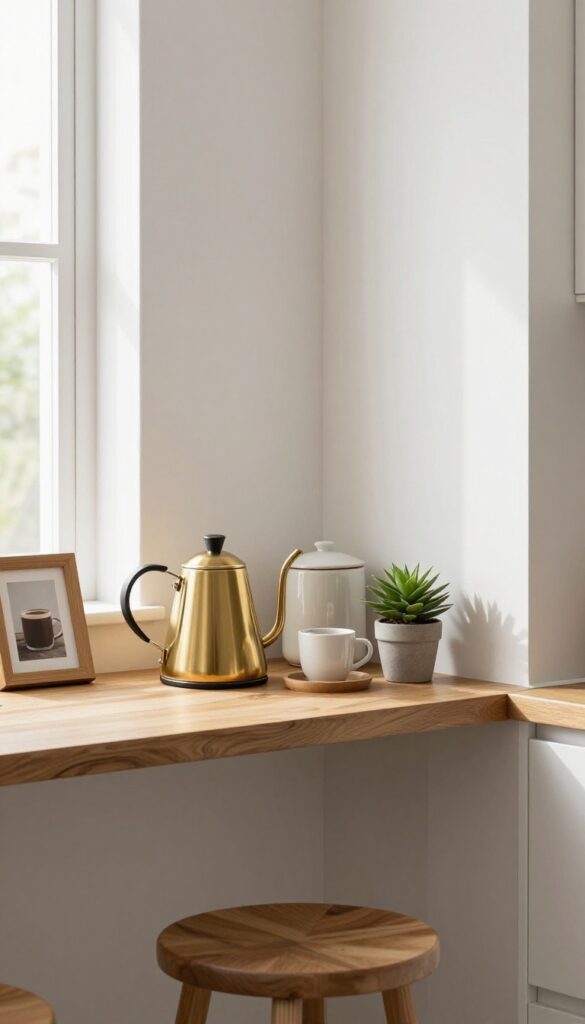
You don't need a full pantry to carve out a spot for your morning routine. A small corner, a slim cart, or even a few feet of counter space can become a dedicated coffee or tea station. It's one of those little additions that makes the kitchen feel more personal and welcoming, like the room is ready for you before you've even poured your first cup.
Why It Works
This idea works because it turns a daily habit into a ritual. Instead of hunting for mugs and filters in different cabinets, everything lives in one place. It saves time, reduces clutter on main counters, and adds a warm, lived-in focal point that guests naturally gravitate toward.
Best For
Best for kitchens with an unused corner, a narrow stretch of counter, or an empty wall where you can place a console table or rolling cart. It's also great for renters who can't do permanent built-ins but want to add personality without major changes.
Styling Tip
Layer textures to keep it cozy: a wooden tray for the kettle, ceramic canisters for sugar and coffee, and a small plant or framed photo nearby. Use warm metals like brass or copper for the kettle and accessories to tie into the cozy style profile.
FAQ
How can I make my kitchen feel warm without renovating?
Focus on easy swaps like adding warm-toned accessories (wood cutting boards, brass hardware), layering textiles (rugs, curtains), and using soft lighting. Even open shelving with everyday dishes can instantly cozy up the space.
What's the best way to mix seating in a dining room?
Start with a consistent element like color or material to tie mismatched chairs together. For example, paint all chairs the same shade or choose wooden seats in similar tones. A bench on one side adds casual contrast.
How do I choose a rug for under the dining table?
Pick a low-pile or flatweave rug that's easy to clean—wool or synthetic blends work well. Make sure it extends at least 24 inches beyond the table on all sides so chairs stay on the rug when pulled out.
Can open shelving work in a small kitchen?
Absolutely. Open shelves can make a small kitchen feel larger by opening up wall space. Stick to a few essential items and keep them organized to avoid visual clutter.
Use baskets for less attractive items.
What lighting is best for a cozy dining area?
A dimmable pendant or chandelier hung 30-36 inches above the table creates a warm focal point. Add candles or a small table lamp on a sideboard for extra softness. Avoid harsh overhead lights.
Conclusion
Bringing warmth and personality into your kitchen and dining room doesn't require a full overhaul. Small, intentional touches—like a cozy rug, mixed seating, or open shelving with your favorite dishes—can transform how the space feels and functions.
Start with one or two ideas that resonate with your style, and let your home evolve naturally into a place that's both beautiful and lived-in.