12 Cozy Vintage Kitchen Ideas to Refresh Your Cooking Space
There's something special about a kitchen that feels like it has a story. Vintage decor brings that lived-in warmth without sacrificing function.
Whether you're drawn to farmhouse simplicity or mid-century charm, these 12 ideas will help you create a cozy, light-filled space that's both practical and inviting.
From open shelving to retro touches, each suggestion is designed to feel achievable and full of personality.
1. Open Shelving with a Vintage Twist
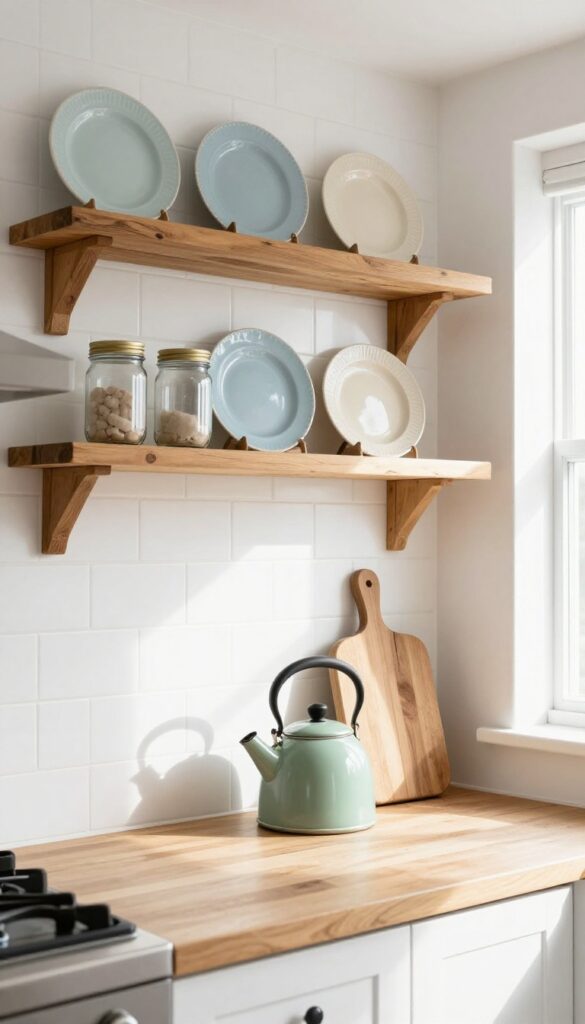
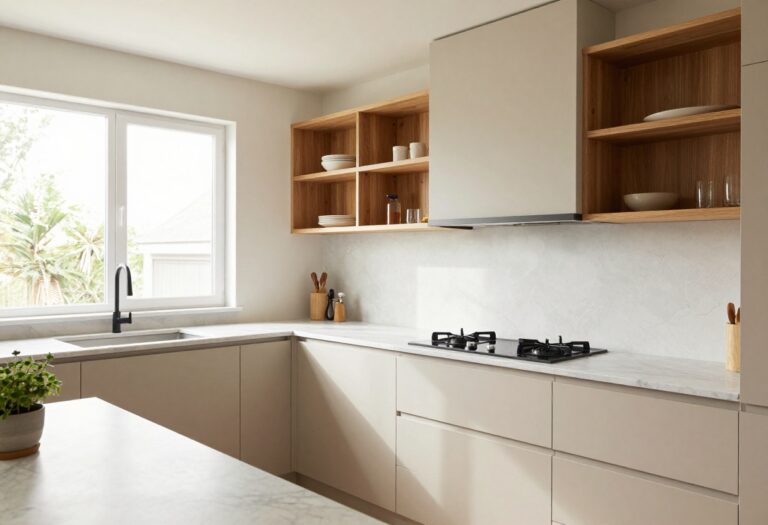
Ditching upper cabinets for open shelving instantly makes a kitchen feel bigger and breezier. The trick is to choose shelves with character—reclaimed wood planks or brackets painted in soft pastels like sage green or buttery yellow. This swap not only opens up the room visually but also invites you to style your everyday dishes like a curated collection.
Why It Works
Open shelving eliminates the visual weight of bulky cabinets, making the kitchen feel more spacious and airy. Displaying mismatched vintage plates, mason jars, and ceramic pitchers adds warmth and personality without looking cluttered. It's a practical way to keep frequently used items within easy reach while showing off pieces you love.
Best For
This idea works beautifully in small to medium kitchens where cabinet doors can feel overwhelming. It's also great for renters who can't replace cabinetry but can install a few floating shelves. If you have a collection of colorful dishware or inherited pieces, this is your chance to let them shine.
Styling Tip
Stick to a cohesive color palette for your displayed items—think whites, creams, soft blues, and muted greens—to keep the look calm and collected. Vary heights by stacking plates on stands or leaning cutting boards against the backsplash. Leave some breathing room between groups so the shelf doesn't feel stuffed.
2. Butcher Block Countertops for Warmth
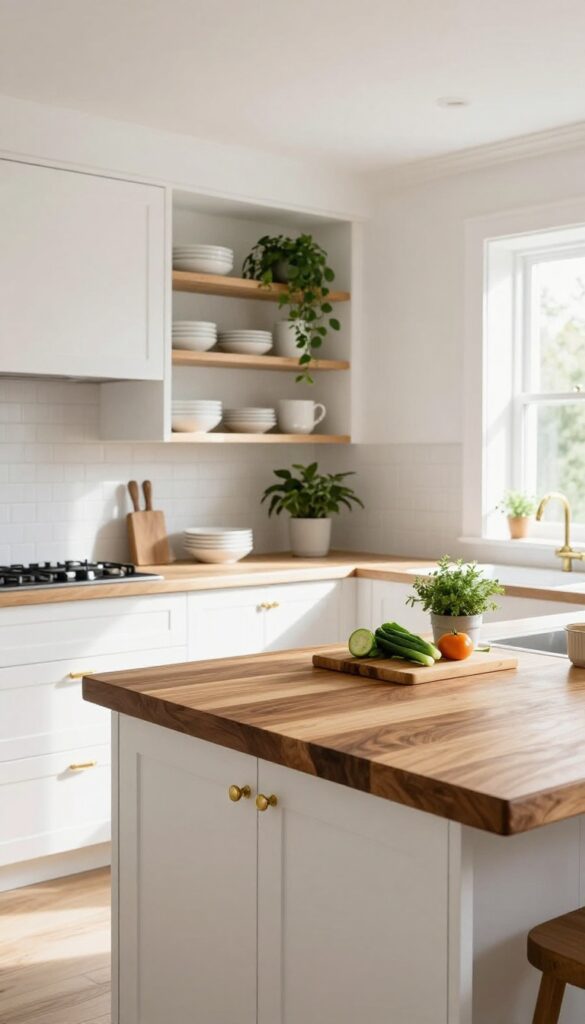
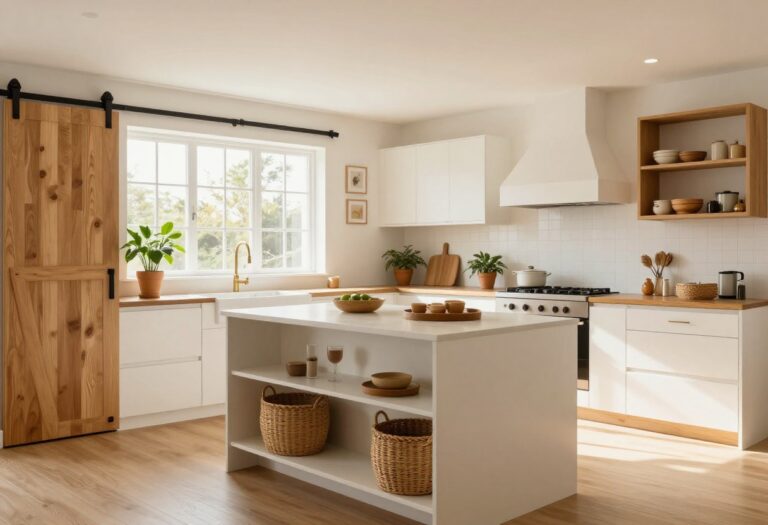
Nothing softens a kitchen quite like butcher block. The natural wood grain brings warmth that stone or laminate just can't match, and it instantly makes the space feel lived-in and inviting. In a light and airy kitchen, butcher block countertops balance out crisp white cabinets and shiny hardware with their organic texture.
They're not just pretty—they're also incredibly practical for anyone who loves to cook.
Why It Works
Butcher block adds natural texture and warmth without overwhelming the room. Paired with white cabinets and brass hardware, it creates a classic vintage feel that's both durable and easy to maintain. The wood surface is gentle on knives and perfect for food prep, so you get style and function in one move.
Best For
Kitchens where you want a cozy, farmhouse-inspired look but still need a hardworking surface. It's especially great for islands or peninsula counters where you do most of your chopping and mixing.
Styling Tip
Keep the rest of the kitchen light to let the wood stand out. Use open shelving with white dishes and a few green plants to enhance the airy vibe. Seal the butcher block with food-safe mineral oil every few months to keep it looking fresh.
3. Retro Appliances in Soft Pastels
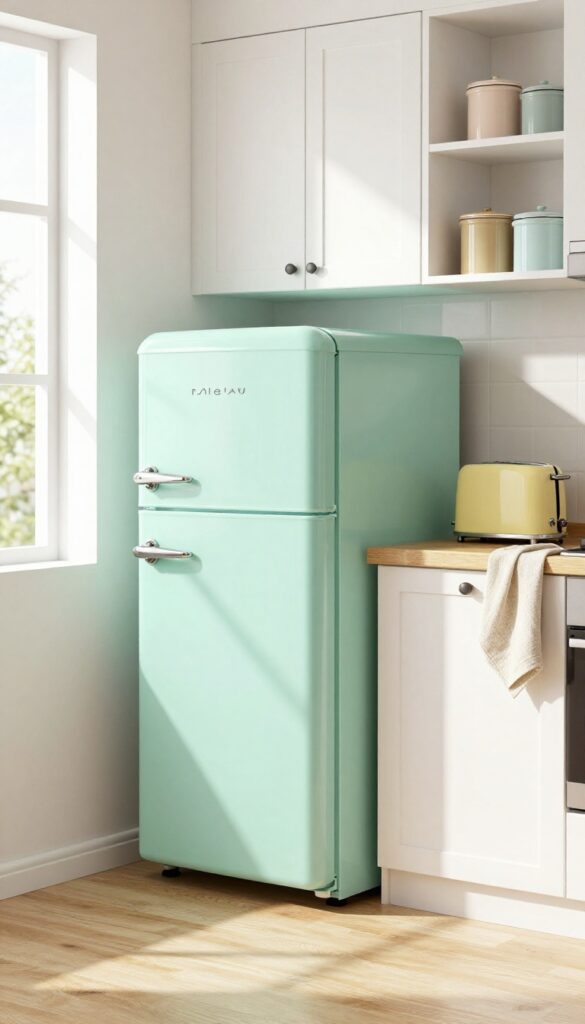
A mint green refrigerator or a pale yellow toaster can instantly lift the mood of your kitchen. These modern retro-style appliances blend vintage charm with today's efficiency, giving you a nostalgic pop of color without sacrificing performance. The soft pastel hues keep the space feeling light and airy, making them perfect for brightening up even the coziest cooking nook.
Why It Works
Pastel appliances act as cheerful focal points that draw the eye without overwhelming the room. Their gentle colors reflect light, which helps small kitchens feel more open and inviting. Plus, they're surprisingly versatile—pairing well with neutral cabinets, wood accents, or even bold backsplashes.
Best For
This idea shines in kitchens that need a playful yet polished centerpiece. It's especially effective in galley kitchens or eat-in spaces where one standout piece can define the whole vibe. If your kitchen leans neutral or all-white, a pastel appliance adds just the right amount of personality.
Styling Tip
Balance the retro look with modern touches like sleek hardware, simple open shelving, and clean-lined countertops. Keep surrounding decor minimal—let the appliance be the star. A few ceramic canisters in matching pastels or a linen tea towel can tie the look together without cluttering the space.
4. Farmhouse Sink with Apron Front
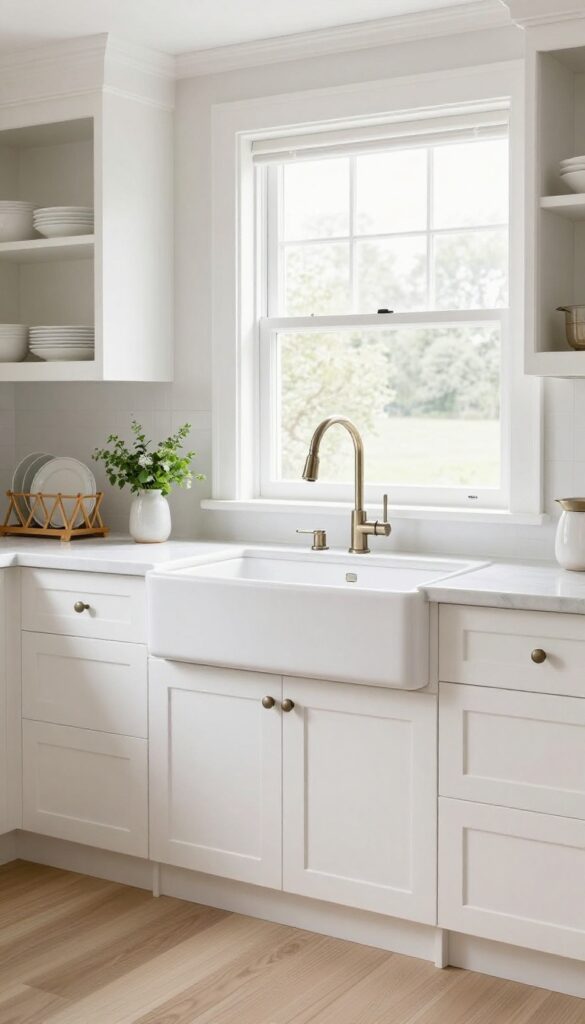
A deep, apron-front sink instantly adds vintage character. Choose a fireclay or cast iron model in white or cream, and pair with a gooseneck faucet for a timeless look. In a light and airy kitchen, this sink becomes a soft focal point that feels both practical and charming.
Why It Works
The exposed front panel eliminates the countertop seam, creating a clean line that visually expands the space. Its generous depth handles large pots with ease, and the matte finish hides water spots better than stainless steel.
Best For
Homes with an existing farmhouse or transitional style, especially in kitchens where you do a lot of cooking and need a sink that can take a beating without losing its charm.
Styling Tip
Keep the surrounding countertops clear of clutter to let the sink shine. Add a wooden drying rack on one side and a small vase of fresh herbs on the other for an effortless, lived-in look.
5. Glass-Front Cabinets for Display
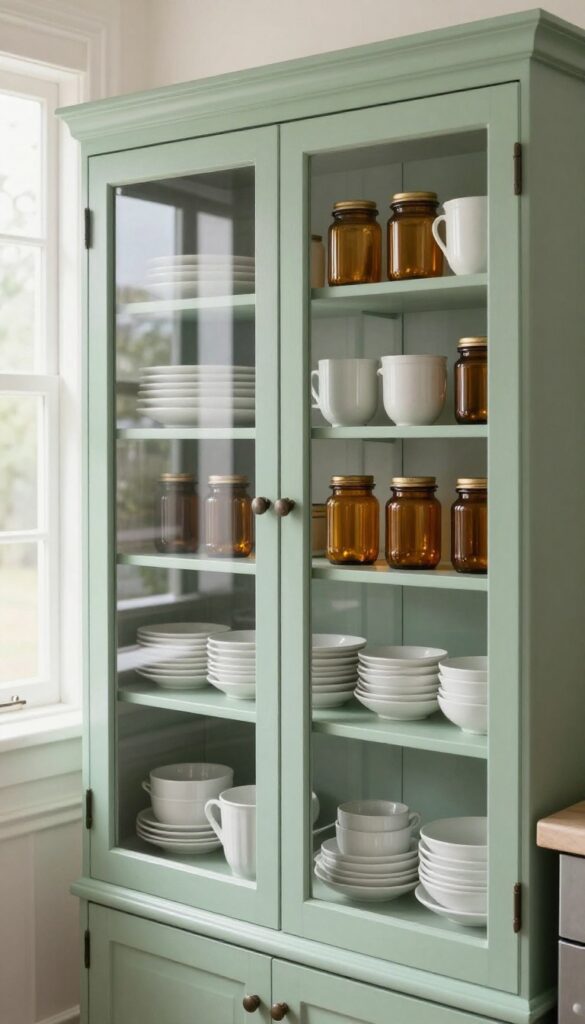
Swapping out a few solid cabinet doors for glass fronts instantly opens up your kitchen and gives it a lighter, more breathable feel. It’s like turning part of your storage into a little gallery for your favorite dishes or glassware. The key is to keep the display curated—think matching white plates or a collection of amber glass jars—so it looks intentional, not cluttered.
Painting the inside of the cabinet a soft sage or blush adds a subtle pop of color that shows through the glass without overwhelming the room.
Why It Works
Glass-front cabinets break up heavy cabinetry and reflect light around the kitchen, making the space feel bigger and brighter. They also encourage you to keep things organized, which naturally reduces visual clutter.
Best For
This upgrade works well in smaller kitchens where you want to avoid dark, closed-off storage. It’s also great for anyone who has a collection of pretty dishware they’d like to enjoy every day instead of hiding behind solid doors.
Styling Tip
Stick to a simple color palette inside the cabinet—like cream dishes on sage green shelves—to keep the look calm and cohesive. Use stackable plates or uniform glassware rather than mixing too many patterns.
6. Vintage-Inspired Lighting Fixtures
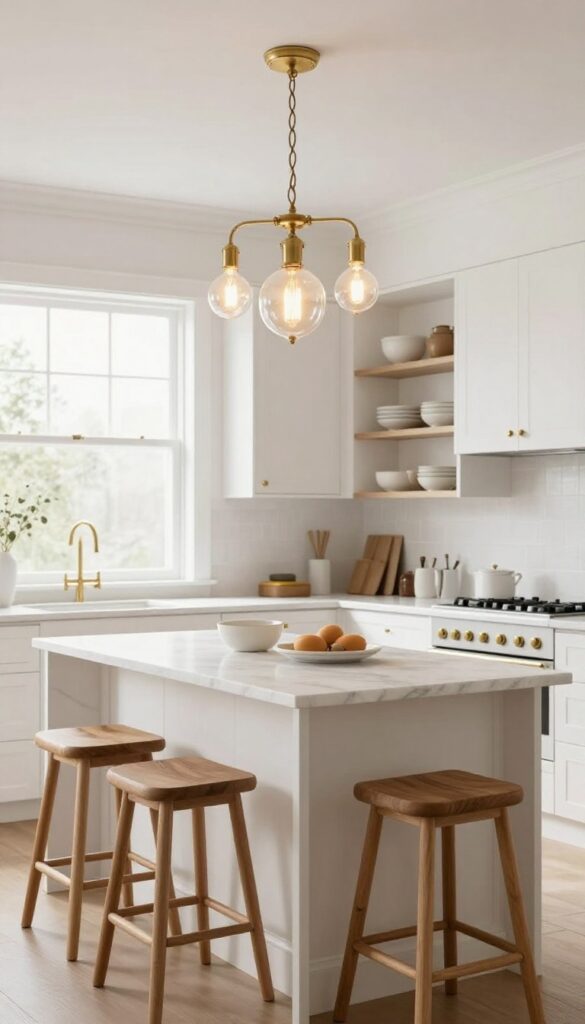
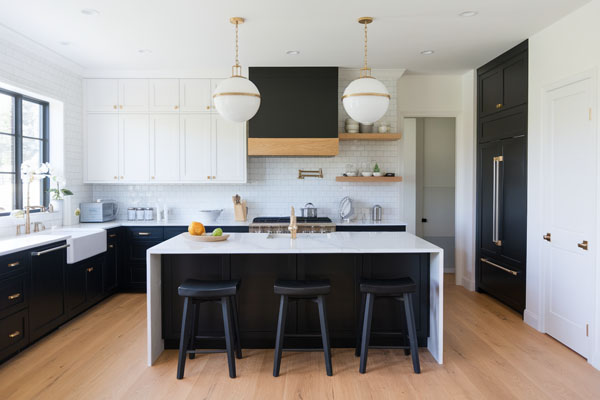
Lighting sets the mood more than almost anything else in a kitchen. Swapping out a basic flush mount for a vintage-inspired fixture instantly warms up the space without requiring a full renovation. Think schoolhouse pendants with their classic glass shades or a milk glass chandelier that feels both delicate and substantial.
Paired with warm Edison bulbs, these fixtures cast a soft, nostalgic glow that makes your kitchen feel like the heart of the home.
Why It Works
Vintage lighting adds character and a sense of history to modern kitchens. The soft, warm light from Edison bulbs creates an inviting atmosphere that flatters everyone and everything in the room. Plus, these fixtures act as sculptural elements that draw the eye upward, making the ceiling feel higher and the space more intentional.
Best For
This idea works beautifully in kitchens with an island or a dedicated dining area where a pendant or chandelier can hang as a focal point. It's especially effective in open-concept layouts where the lighting helps define zones without walls.
Styling Tip
Hang your pendant or chandelier 30 to 36 inches above the counter or table surface for optimal illumination and visual balance. Choose milk glass for a softer, diffused light or clear seeded glass if you want to show off the filament bulbs. Stick to one or two fixtures over an island rather than clustering too many—keeping it simple maintains that light and airy feel.
7. Open Rack for Pots and Pans
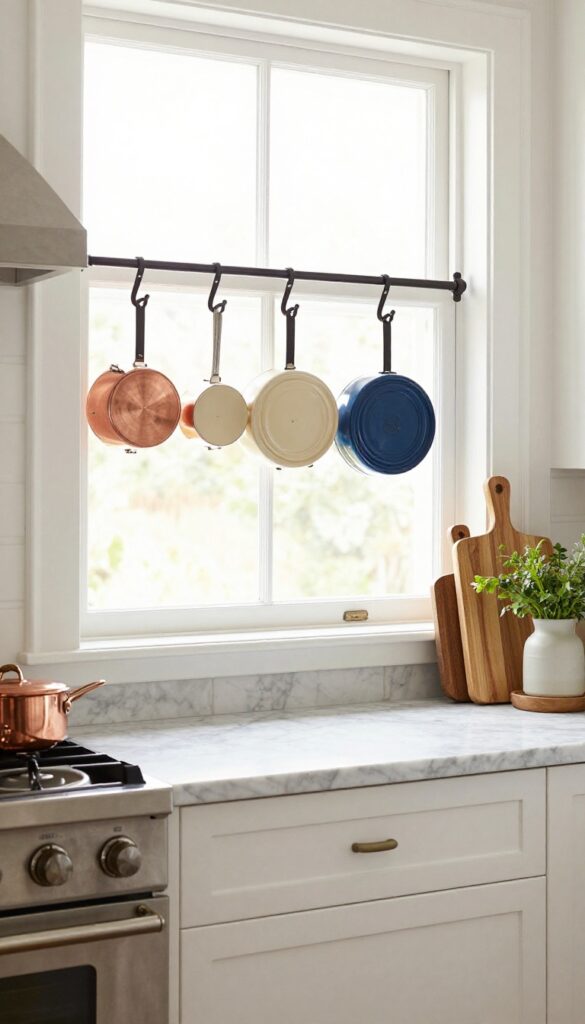
Wall-mounted pot racks are making a comeback, and for good reason. They free up cabinet space while turning your cookware into a visual feature. In a light and airy kitchen, wrought iron or aged brass racks keep the look grounded without feeling heavy.
Hanging copper pots or enameled Dutch ovens adds warmth and texture, making the kitchen feel both practical and curated.
Why It Works
An open rack puts your most-used pots within arm's reach, so you stop digging through cabinets mid-recipe. It also creates vertical interest on an otherwise blank wall, drawing the eye upward and making the ceiling feel higher.
Best For
This idea shines in kitchens with limited cabinet space or a blank wall near the stove. It's also perfect if you have a collection of beautiful cookware that deserves to be seen rather than hidden away.
Styling Tip
Stick to one metal finish for the rack—wrought iron or aged brass—and let your pots provide the color. Arrange them by size with the largest at the ends for a balanced silhouette, and leave a few hooks empty to avoid a cluttered look.
8. Mismatched Dining Chairs
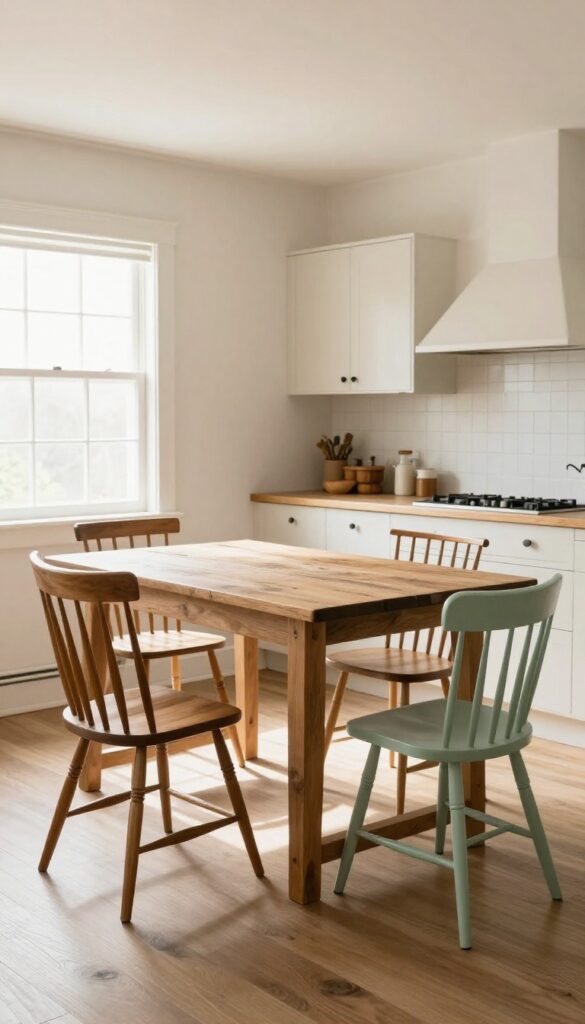
There's something effortlessly charming about a dining table surrounded by chairs that don't match. In a light and airy vintage kitchen, this look feels curated rather than chaotic—especially when you stick to a cohesive color palette. Mixing a classic Windsor chair with a slender spindle-back around a farmhouse table adds texture and visual interest without feeling cluttered.
The key is to let each piece have its own personality while still belonging to the same family of tones.
Why It Works
Mismatched chairs break up the monotony of a uniform set, making the dining area feel more collected over time. In a practical kitchen, this approach also means you can replace individual chairs as needed without worrying about finding an exact match. The variety keeps the eye moving and adds a layer of warmth that's hard to achieve with a matching set.
Best For
This idea shines in eat-in kitchens or breakfast nooks where the table is the focal point. It's especially effective in homes with an open layout, as the mix of chairs can help define the dining zone without closing it off. If your kitchen leans more traditional or cottage-style, mismatched chairs will feel right at home.
Styling Tip
To keep the look intentional, choose chairs that share at least one common element—like wood tone, seat height, or silhouette. Paint two or three of them in soft hues like sage green or buttermilk yellow to tie them together while preserving their individual character. Leave the rest in natural wood for contrast.
9. Vintage Textiles for Softness
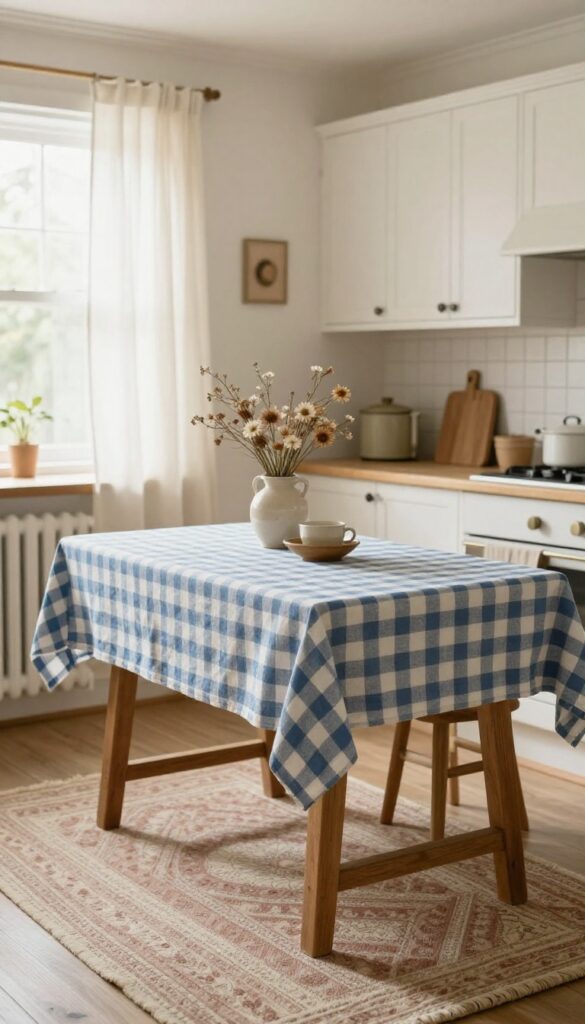
Nothing softens a kitchen quite like fabric. In a light and airy vintage kitchen, textiles are your secret weapon for adding warmth without weighing things down. Think linen curtains that filter sunlight into a gentle glow, a gingham tablecloth that whispers farmhouse charm, or a braided rug underfoot that makes the space feel instantly more lived-in.
These pieces bring pattern and texture in the most effortless way.
Why It Works
Textiles absorb sound and add layers of visual interest, making a kitchen feel cozy rather than cold. Vintage-inspired fabrics like floral or toile in muted tones tie the whole room together without competing with other elements. They're also easy to swap out seasonally, so you can refresh the look whenever you want.
Best For
This idea shines in kitchens that feel a bit stark or lack personality—especially if you have neutral cabinets and white walls. It's also perfect for renters who can't paint or tile but want to inject character with soft furnishings.
Styling Tip
Stick to two or three patterns max and keep the color palette cohesive—think soft blues, faded roses, or creamy whites. Hang linen curtains high and wide to make windows look bigger, and layer a small braided rug in front of the sink for a practical pop of pattern.
10. Open Corner Shelf with Greenery
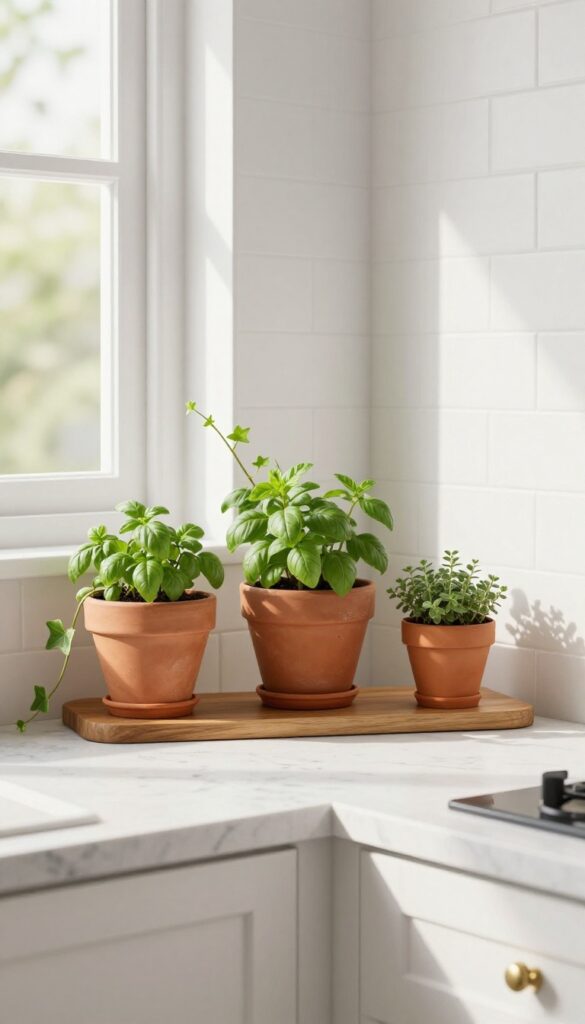
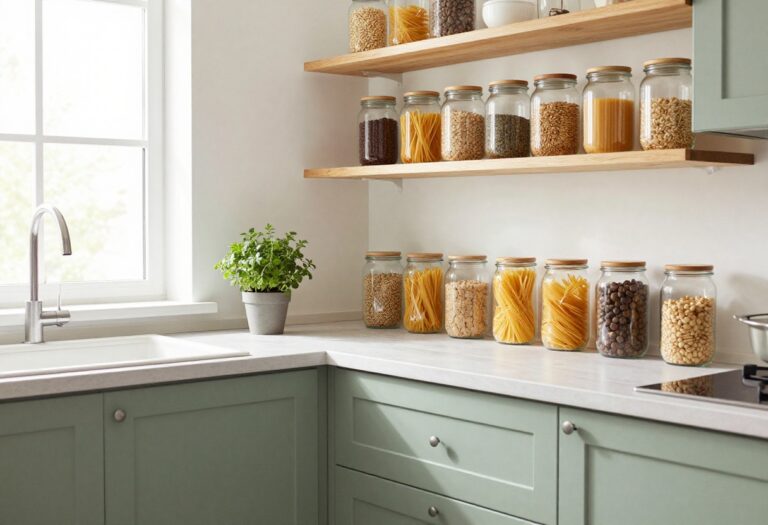
That awkward corner between cabinets and countertop often becomes a dead zone. Instead of letting it collect dust, tuck in a small open shelf and let trailing ivy or potted herbs spill over the edge. The greenery softens hard surfaces and brings a fresh, airy feel to your kitchen without crowding your workspace.
It's an easy way to layer in life and color while keeping your counters clear for chopping and prepping.
Why It Works
An open corner shelf uses vertical space that would otherwise go to waste. By adding trailing plants, you create a soft, organic focal point that draws the eye upward and makes the kitchen feel larger. The vintage pots add character, while the greenery improves air quality and keeps the room feeling light.
Best For
Small kitchens where counter space is precious, or any kitchen with an unused corner near a window or sink. It's also perfect for renters who can't make permanent changes—a simple mounted shelf is easy to install and remove.
Styling Tip
Choose a slim, floating shelf in warm wood or matte black to contrast with light walls. Group two or three vintage terra-cotta pots or ceramic planters at different heights. Ivy, pothos, or small herb plants like basil and mint work beautifully—they trail naturally and stay compact.
11. Antique Cutting Boards as Decor
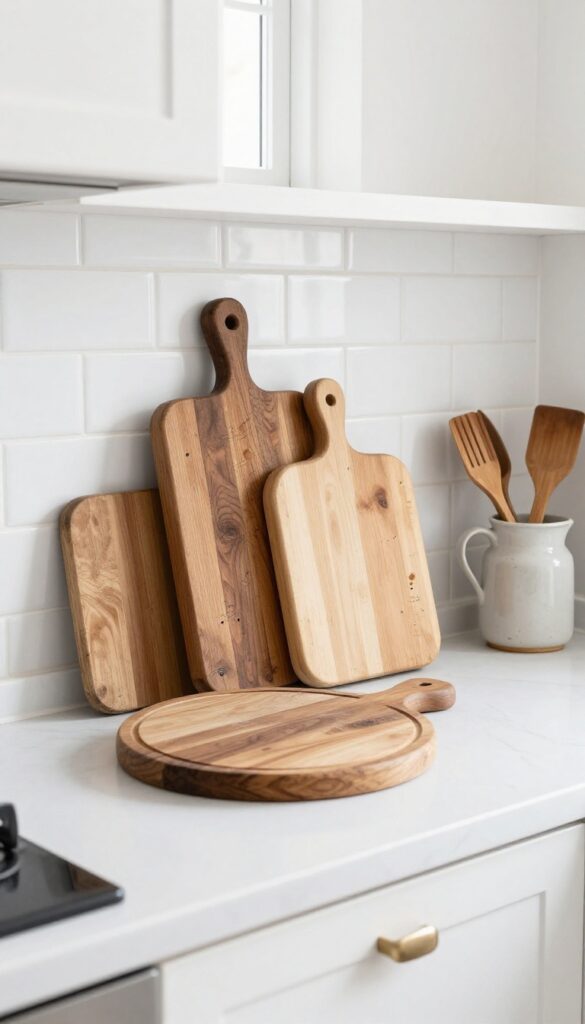
A stack of worn wooden cutting boards leaning against the backsplash adds instant warmth and character to a light, airy kitchen. These humble pieces carry the patina of years of use—scratches, stains, and all—which makes them feel like part of the home's story. Propped on the counter or tucked beside the stove, they're both functional and decorative, bringing texture without adding clutter.
Why It Works
Wooden cutting boards soften the hard surfaces common in kitchens—tile, stone, metal—and introduce organic warmth. Their varied sizes and tones create visual rhythm, while the aged look fits perfectly with a cozy vintage aesthetic. Plus, they're endlessly practical: grab one for a quick chop, then lean it back in place.
Best For
This idea shines in kitchens that already lean rustic or farmhouse, but it can work in any space that needs a touch of lived-in charm. It's especially effective on open shelving, against a white subway tile backsplash, or near a window where natural light highlights the wood grain.
Styling Tip
Choose boards in different shapes and wood tones—round, rectangular, dark walnut next to pale maple. Lean them at slight angles rather than perfectly aligned for an effortless look. Pair with a small jar of wooden utensils or a simple ceramic pitcher to complete the vignette without overcrowding.
12. Vintage Scale or Canisters on Counter
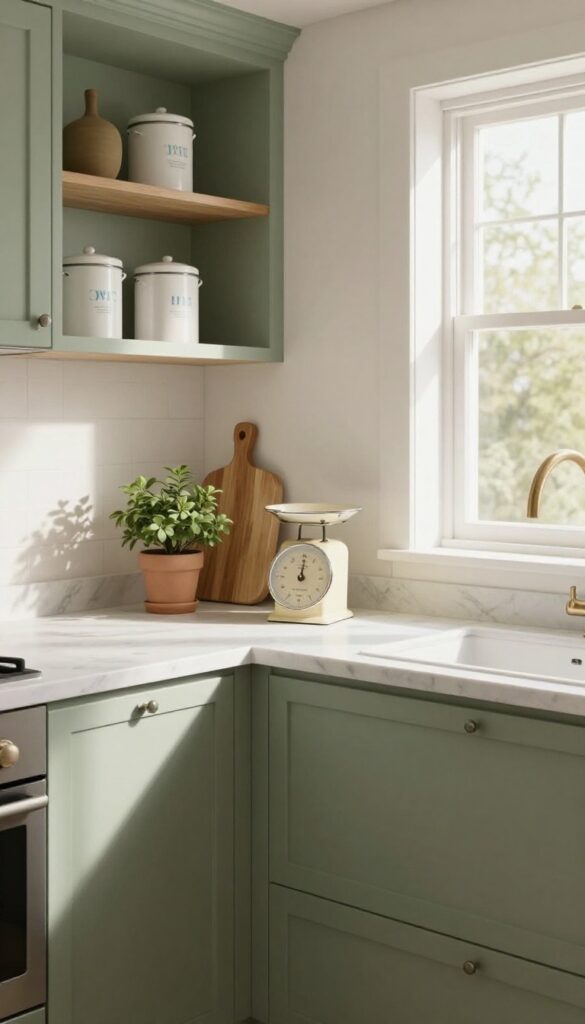
A vintage scale or a set of ceramic canisters brings a dose of nostalgia without feeling dusty. These pieces add instant character and a sense of history, making your kitchen feel collected over time rather than decorated all at once. In a light and airy kitchen, they stand out beautifully against pale countertops and open shelving, offering a gentle contrast that feels both charming and intentional.
Why It Works
Vintage accessories have a warmth that modern decor often lacks. A retro scale or ceramic canisters create a focal point on your counter, drawing the eye and sparking conversation. They also serve a practical purpose—store flour, sugar, or coffee inside, so they earn their keep while making your space feel more lived-in and personal.
Best For
This idea shines in kitchens with neutral or pastel color schemes where a pop of vintage charm won't clash. It's especially effective on open countertops near the stove or coffee station, where you'll use the contents daily. Works well in both small and large kitchens, as long as you keep the rest of the counter clutter-free.
Styling Tip
Choose one or two vintage pieces rather than a whole collection to avoid a cluttered look. A cream enamel scale pairs beautifully with soft sage green cabinets, while white canisters with blue lettering pop against marble counters. Keep the area around them minimal—maybe a small plant or a wooden cutting board—to let the vintage items breathe.
FAQ
How can I make my kitchen look vintage without spending a lot?
Start with small swaps: add vintage textiles like a gingham towel or a braided rug, display antique cutting boards, or paint existing cabinets in a soft pastel. Thrift stores are great for finding unique canisters, scales, and glassware.
What colors work best for a vintage kitchen?
Soft pastels like mint green, pale yellow, blush, and sage green pair beautifully with white or cream. Warm wood tones and brass accents enhance the cozy, nostalgic feel.
Can I mix vintage with modern appliances?
Absolutely. Modern appliances in stainless steel can be balanced with vintage touches like open shelving, a farmhouse sink, or retro lighting. The contrast often looks intentional and fresh.
How do I keep a vintage kitchen from feeling cluttered?
Focus on a few statement pieces rather than overcrowding surfaces. Use open shelving sparingly and keep countertops clear except for a few curated items like a scale or canisters.
What flooring suits a vintage kitchen?
Checkerboard linoleum or tile in black and white is classic. For a softer look, wide-plank wood floors in a warm stain or painted wood floors work well.
Conclusion
Bringing vintage charm into your kitchen doesn't mean sacrificing modern convenience. With these 12 ideas, you can create a space that feels warm, personal, and effortlessly stylish—perfect for everyday cooking and gathering.
Start with one or two changes and let your kitchen's personality grow over time.