9 Fresh Kitchen Table Centerpiece Ideas That Feel Practical and Pretty
Your kitchen table is more than just a spot for meals—it's a gathering place for morning coffee, homework sessions, and casual conversations. A centerpiece can make it feel intentional and inviting, but it shouldn't get in the way of daily life. The trick is finding something that looks good and still leaves room for plates, laptops, or a stack of mail.
These nine ideas are designed for a weekend refresh. They're easy to put together, budget-friendly, and full of cozy charm.
Whether you prefer fresh greenery, simple ceramics, or a mix of textures, there's a centerpiece here that will make your kitchen table feel complete without feeling crowded. Think of these as starting points.
1. A Low Wooden Tray with Everyday Essentials
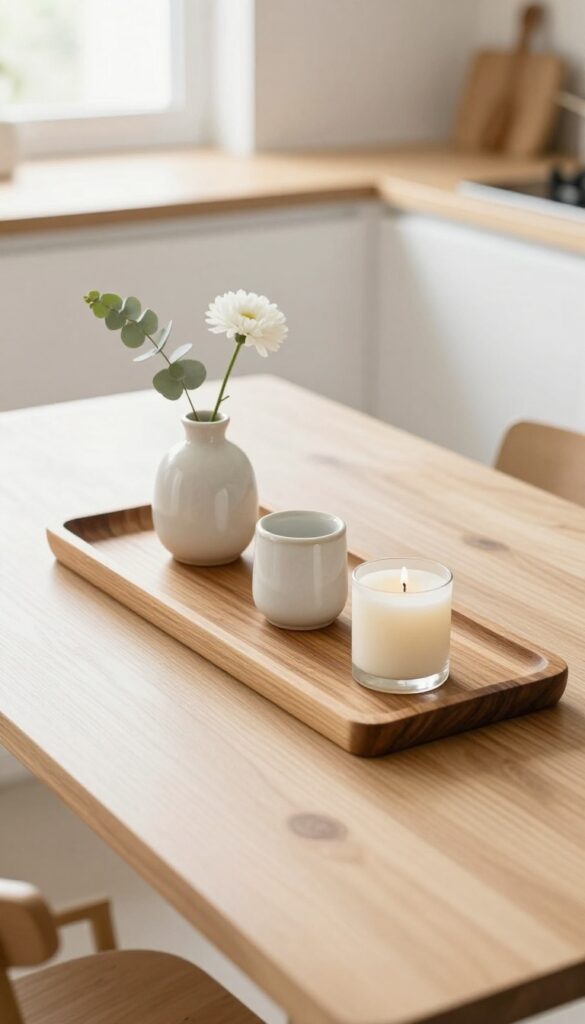
A long, low wooden tray sitting in the middle of your kitchen table does more than just look good—it gives you a designated spot for the things you actually use every day. Instead of letting salt, pepper, and a candle clutter the surface, this setup corrals them into one intentional arrangement. The natural wood adds warmth without trying too hard, and because it’s practical, it won’t feel like a museum display that needs to be cleared before meals.
Why It Works
This idea works because it balances function and style effortlessly. The tray creates a contained zone that keeps the table tidy while still feeling lived-in. Everyday items become part of the decor, so there’s no extra effort to maintain the look—just use what’s there and it stays pretty.
Best For
Best for busy households that want a table that looks put-together without constant styling. It’s also great for small tables where a full centerpiece would take up too much room—the slim profile keeps things open and airy.
Styling Tip
Stick to three or four items in neutral tones—think a ceramic salt cellar, a small bud vase with a single stem, and an unscented taper candle. Keep the tray itself simple; reclaimed oak or walnut works beautifully against white or light wood tables.
2. A Single Statement Pitcher with Seasonal Stems
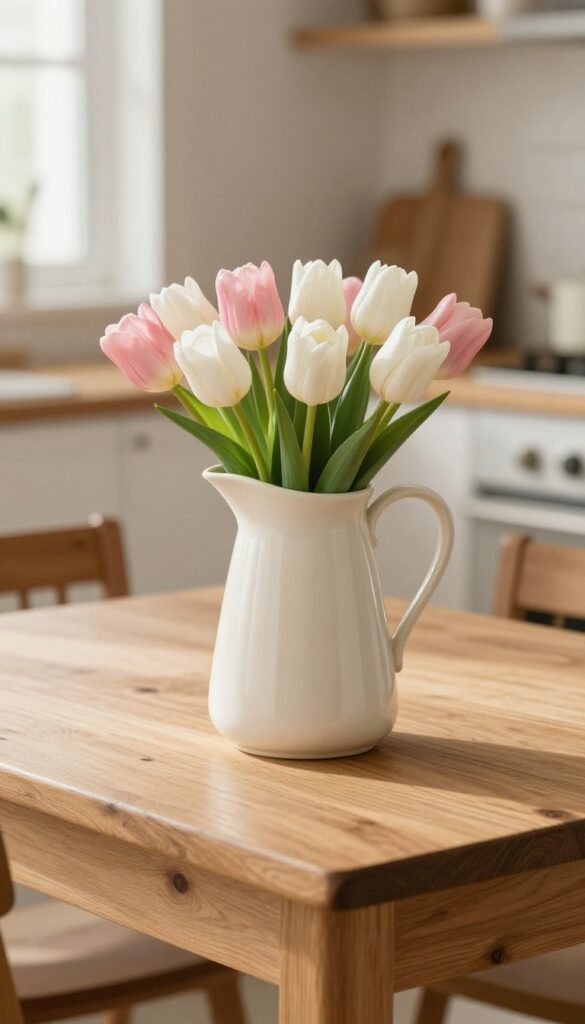
Sometimes the most striking centerpieces are the simplest. A single ceramic or glass pitcher, placed slightly off-center, holds just one type of flower or branch—think tulips in spring, eucalyptus in summer, dried wheat in fall, or bare twigs in winter. The asymmetry feels intentional and sculptural, not bare.
It’s a look that’s easy to pull together on a weekend afternoon and just as easy to swap out when the seasons shift, keeping your kitchen table feeling fresh without a full redesign.
Why It Works
This approach works because it doesn’t compete with the rest of your decor. One pitcher with one type of stem creates a clear focal point without clutter. The off-center placement adds visual interest and makes the arrangement feel more casual and lived-in—perfect for a kitchen where meals happen daily.
Best For
Best for small tables where a large arrangement would overwhelm the space, or for anyone who wants a centerpiece that can transition through the year with minimal effort. It’s also ideal if you like to bring home market flowers on a whim but don’t want to fuss with multiple vases.
Styling Tip
Choose a pitcher in a warm neutral like cream, sage, or terracotta to echo the cozy style profile. Keep stems trimmed so they sit just above the rim—too tall can feel top-heavy. Place it near one end of the table rather than dead center, and let it sit alone without extra candles or objects around it.
3. A Cluster of Small Candles on a Linen Runner
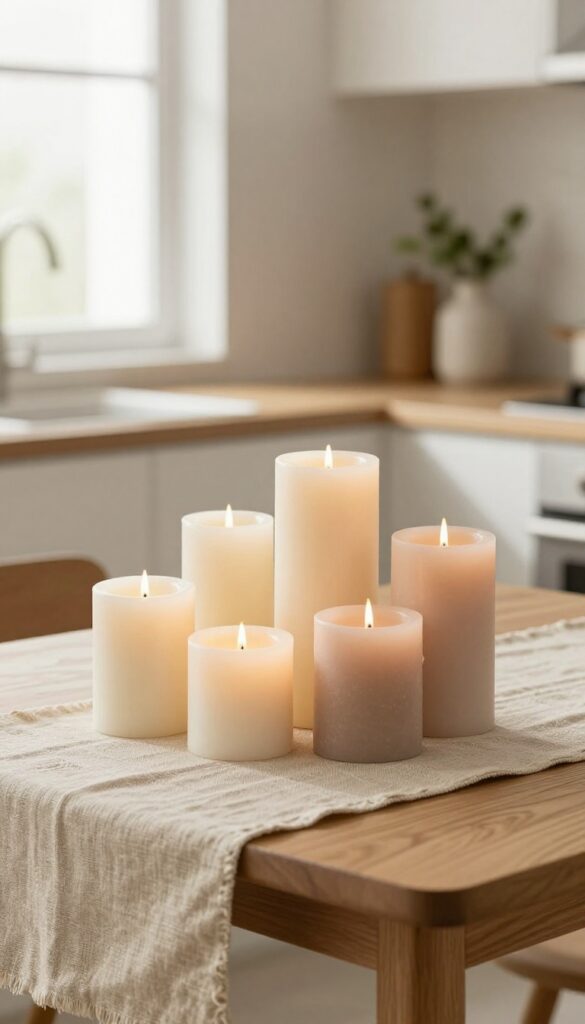
Candles are one of the quickest ways to make a kitchen table feel inviting, but a single candle can look a little lonely. Grouping three to five pillar candles of different heights on a linen runner creates a soft, layered glow that instantly warms up the room. The runner not only anchors the arrangement but also catches any wax drips, so you don't have to worry about damaging your table.
It's a low-lift centerpiece that feels intentional without being fussy.
Why It Works
The varying heights draw the eye naturally across the table, creating visual interest without clutter. The linen runner adds texture and protects your table surface, making this idea as practical as it is pretty. Plus, the warm flicker of multiple candles sets a cozy mood that's hard to beat.
Best For
This idea works well for everyday dinners, casual gatherings, or even a quiet breakfast nook. It's especially great if you want to add warmth to a neutral or minimalist kitchen without committing to a large floral arrangement or permanent decor.
Styling Tip
Stick with unscented or lightly scented candles so they don't compete with food aromas. Choose candles in earthy tones like ivory, taupe, or soft blush to keep the look cohesive. Place them slightly off-center for a more relaxed, lived-in feel.
4. A Fruit Bowl with Unexpected Color
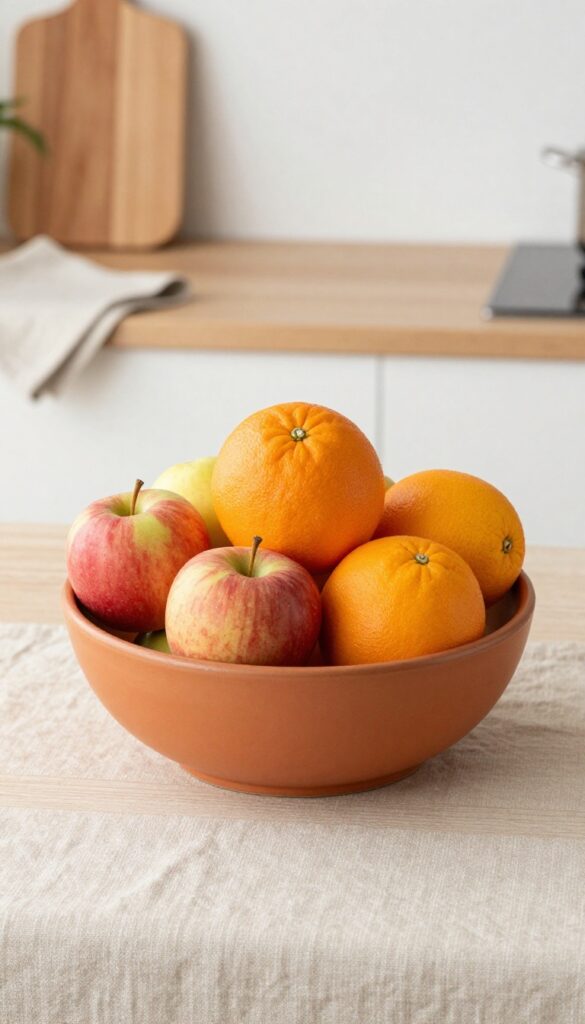
Forget the basic clear glass bowl. A fruit bowl in a warm terracotta or amber tone does double duty: it holds your daily apples and oranges while adding a sculptural pop of color to your table. The rich, earthy hue feels grounded and inviting, especially against a neutral tablecloth or wood surface.
It's one of those small swaps that makes your kitchen feel intentionally styled without any extra effort.
Why It Works
A colorful bowl turns everyday fruit into a deliberate design element. The warm ceramic or glass catches the light and adds depth, while the fruit itself brings in natural, ever-changing color. It's practical—you can grab a snack easily—but it also gives your table a finished, lived-in look that feels both cozy and curated.
Best For
This idea works well on kitchen tables, breakfast nooks, or even a kitchen island if you have the counter space. It's especially great for weekend refreshes because you can swap out the fruit seasonally and change the bowl whenever you want a new vibe.
Styling Tip
Keep the bowl centered or slightly off-center on a wooden board or trivet for extra texture. Pair with simple linen napkins or a neutral runner so the bowl stays the star. For variety, fill it with lemons in summer, pears in fall, or clementines in winter.
5. A Stack of Vintage Books with a Small Plant
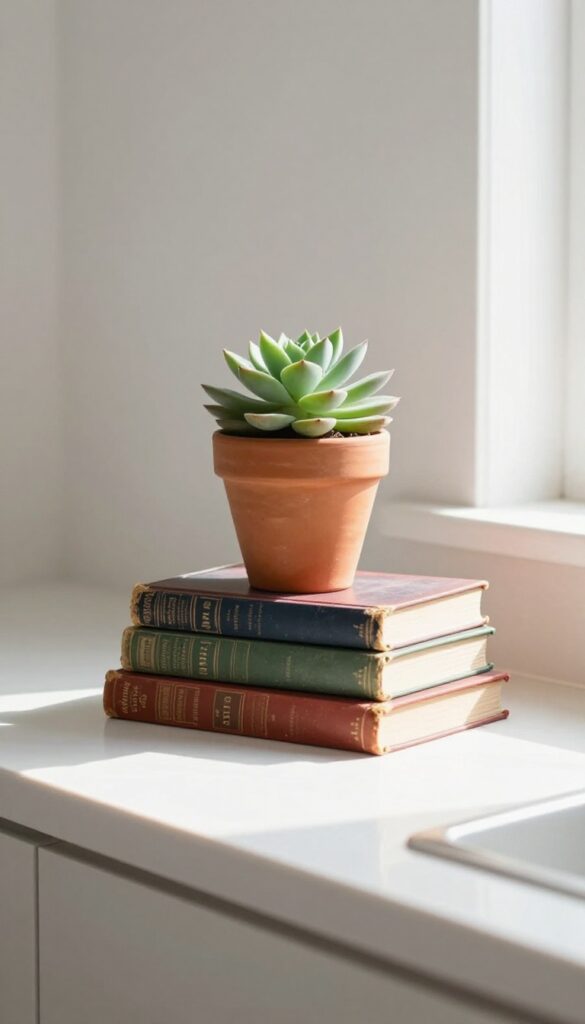
Sometimes the simplest objects create the most character. A small stack of vintage-looking books topped with a potted succulent or trailing ivy brings instant warmth to your kitchen table. It feels collected, not staged—like something you put together on a lazy weekend afternoon.
The mix of paper, worn covers, and fresh green leaves adds texture and a quiet sense of personality without taking over the whole table.
Why It Works
The vertical height from the books draws the eye upward, breaking up flat surfaces and making the table feel more dynamic. The plant adds life and softness, while the books introduce a subtle color accent that can tie into your existing decor. It's an easy way to layer in personality without clutter.
Best For
This idea is perfect for farmhouse, rustic, or eclectic kitchens where a bit of character is welcome. It also works well in small spaces because the footprint is minimal—just a few inches of table space. If you love thrifting or have a stack of old books lying around, this is your quickest win.
Styling Tip
Choose books with warm-toned spines—think faded reds, olive greens, or navy blues—to complement a cozy palette. Top them with a small terracotta pot or a ceramic planter in an earthy glaze. For extra charm, tilt one book slightly or add a tiny bookmark peeking out from between pages.
6. A Ceramic Bread Baker with Fresh Herbs
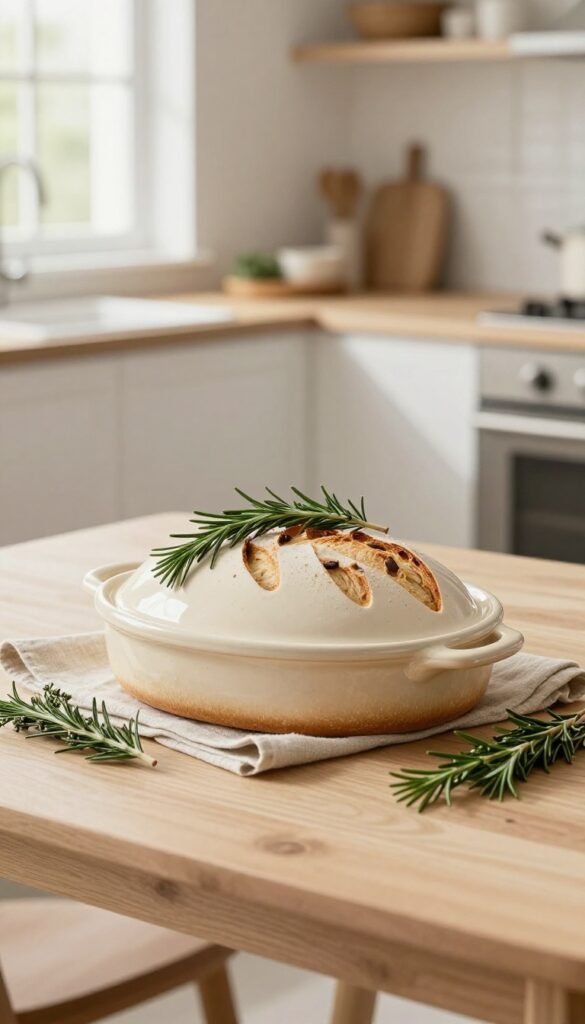
There's something quietly satisfying about a bread baker sitting on the table, even when there's no bread inside. A round ceramic cloche or baker doubles as a sculptural centerpiece, and when you tuck in a few sprigs of rosemary or thyme, it becomes both beautiful and fragrant. This setup feels effortlessly rustic—like you just pulled a loaf from the oven—but it takes about ten seconds to arrange.
It's one of those ideas that makes your kitchen feel lived-in and loved without trying too hard.
Why It Works
The ceramic piece adds warmth and texture to the table, while the herbs bring in a fresh, natural scent that makes the whole room feel inviting. Unlike cut flowers that need water and replacing every few days, herbs last for over a week and can be used in cooking before they wilt. The combination is visually grounded and practical—exactly what a weekend refresh needs.
Best For
This idea is perfect for farmhouse, rustic, or warm modern kitchens where natural materials already play a role. It also works well on smaller tables because the cloche takes up minimal space but makes a strong visual statement. If you love cooking with fresh herbs, this keeps them within arm's reach during meal prep.
Styling Tip
Choose a bread baker in a neutral glaze like cream, sage green, or terracotta so it blends easily with your existing dishes and linens. Tuck the herbs so they spill slightly over the rim for a relaxed look. Pair it with a simple linen napkin underneath to catch any stray leaves and add another layer of softness.
7. A Layered Collection of Textured Textiles
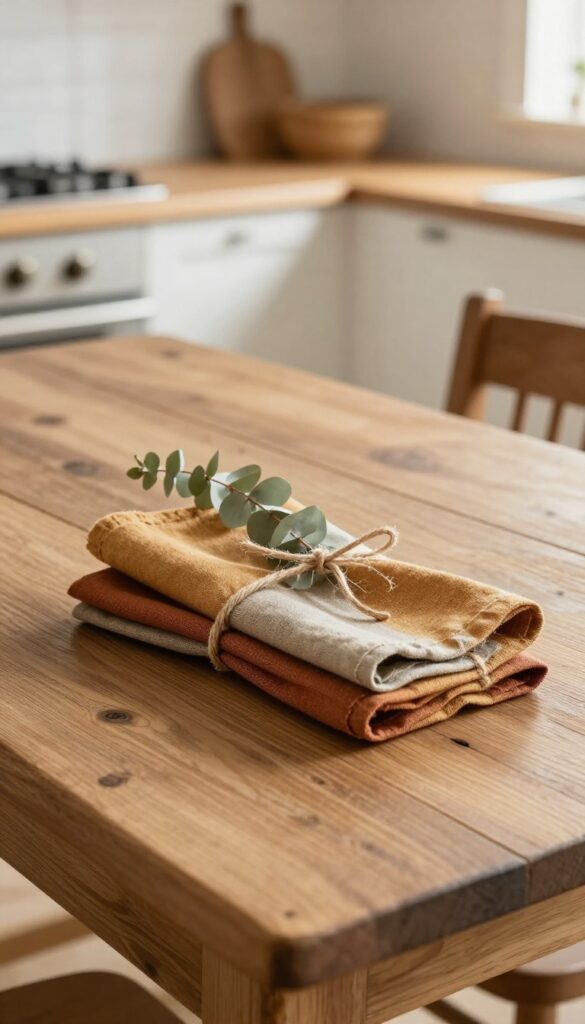
Sometimes the coziest centerpieces don’t involve flowers or candles at all. A small stack of linen napkins in warm, earthy tones—think ochre, rust, or sage—sits on a wooden board, tied with a simple twine or leather ring. It feels intentional without trying too hard, and it’s something you can put together in under a minute.
For a weekend refresh, this is as low-lift as it gets.
Why It Works
Linen adds softness and warmth to the kitchen table without cluttering it. The layering creates visual depth, while the neutral colors keep things calm and inviting. It’s a centerpiece that actually makes the table feel more usable—you can grab a napkin for dinner and the arrangement still looks good.
Best For
This works perfectly on farmhouse tables, rustic wooden surfaces, or any kitchen where you want to bring in texture without adding bulk. It’s also great for small tables where a large floral arrangement would feel overwhelming.
Styling Tip
Mix two or three napkin colors that share the same undertone—like warm cream, dusty rose, and caramel. Stack them slightly off-center on a reclaimed wood board, then add a single dried eucalyptus sprig tucked into the twine for an extra organic touch.
8. A Minimalist Glass Cloche with Natural Elements
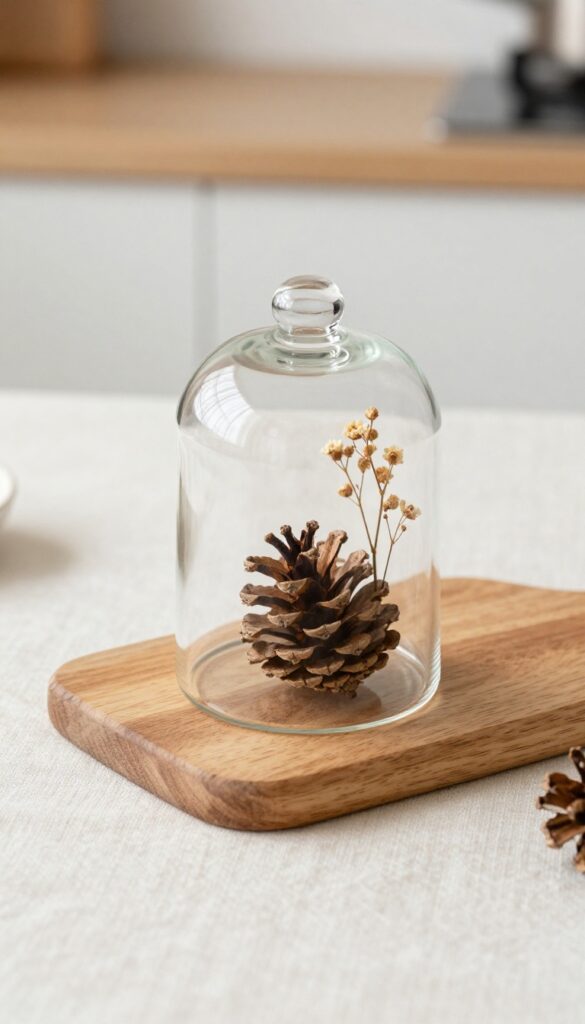
Glass cloches aren't just for fancy museums or Victorian curiosities. When you place one over a simple natural object—a single pinecone, a dried flower cluster, or a piece of driftwood—it instantly becomes a tiny, curated display that feels intentional and special. The clear dome draws the eye without overwhelming the table, making it perfect for kitchens where you want a touch of nature without the clutter.
Why It Works
The glass cloche creates a focal point that feels both precious and practical. It protects delicate items from dust while adding a layer of visual interest through its reflective surface. The contrast between the transparent dome and the organic texture underneath brings warmth and depth to your tabletop.
Best For
This idea shines on small kitchen tables or breakfast nooks where space is limited. It's also wonderful for renters who want to add personality without permanent changes. If you love seasonal decor but don't want to redecorate every month, swap out the object inside to match the time of year.
Styling Tip
Place the cloche on a wooden cutting board or a linen placemat to anchor it and add texture. For a cohesive look, choose natural elements that echo other materials in your kitchen—like driftwood near wooden countertops or dried lavender near herbal accents. Keep the base simple so the cloche remains the star.
9. A Small Tiered Stand with Everyday Snacks
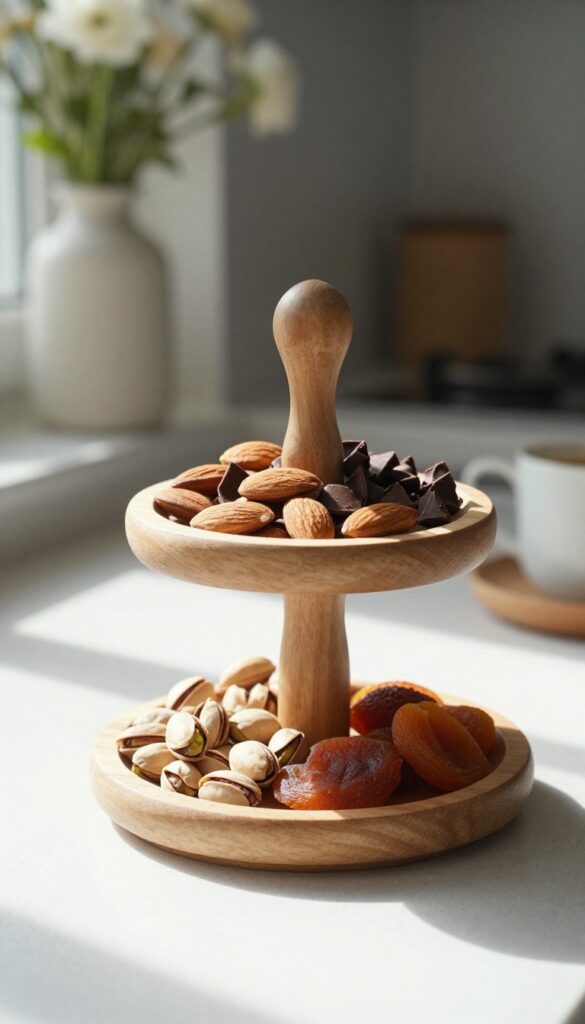
Imagine a centerpiece that actually gets used. A small two-tiered stand filled with nuts, dried fruit, or bite-sized cookies does exactly that. It brings a casual, inviting feel to the table while making it easy for family or guests to grab a quick snack.
The best part? When you're not snacking, it still looks like a purposeful decor piece—especially when you choose a stand in warm wood or matte ceramic.
Why It Works
This idea merges function and decoration seamlessly. Instead of something purely ornamental, you get a practical item that encourages lingering at the table. The tiers add visual height and interest without taking up much space, and the everyday snacks keep the display feeling fresh and approachable.
Best For
Perfect for kitchen tables that double as homework stations or casual dining spots. It also works well on a kitchen island or breakfast nook where people tend to gather. If you love hosting impromptu coffee dates or after-school hangs, this centerpiece fits right in.
Styling Tip
Stick with a neutral-toned stand—think light oak or cream ceramic—so it blends easily with your existing decor. Fill each tier with snacks that share a color palette, like roasted almonds, dried apricots, and dark chocolate chips. Swap out the snacks weekly to keep things interesting and avoid staleness.
FAQ
How do I keep my kitchen table centerpiece from feeling cluttered?
Stick to one or two elements and use a tray or runner to define the space. Keep the height low so it doesn't block sightlines across the table.
What's the best way to style a centerpiece for a small kitchen table?
Go compact and vertical. A single small vase with a few stems or a stack of books with a tiny plant adds interest without taking up too much surface area.
Can I use artificial flowers in my centerpiece?
Absolutely. Choose high-quality faux stems that look realistic, and mix them with natural elements like wood or stone to keep the arrangement grounded.
How often should I change my kitchen table centerpiece?
Seasonally is a good rule of thumb, but you can refresh it whenever you feel like a change. Swapping out flowers or fruit weekly keeps it feeling fresh.
What if I need the table for meals or work most of the time?
Opt for a centerpiece that's easy to move, like a small tray or a single vase. You can slide it to the side when you need the space and put it back when you're done.
Conclusion
A kitchen table centerpiece doesn't have to be complicated or expensive. With just a few thoughtful pieces, you can create a focal point that feels warm and welcoming without sacrificing practicality. The best part is that these ideas are easy to switch up whenever you want a new look.
Pick one that fits your style and give it a try this weekend. You might be surprised how much a small change can make your kitchen feel more like home. Happy decorating!