10 Practical Small Kitchen Cabinets Ideas That Save Space Without Looking Plain
Small kitchens come with their own set of challenges, especially when it comes to cabinets. You need storage, but you also want the space to feel open and inviting.
The good news? You don't have to sacrifice style for function.
With a few clever choices, your cabinets can work harder and look better than ever. Whether you're renovating or just looking for a refresh, these 10 ideas will help you make the most of every inch without making your kitchen feel cramped or boring.
1. Open Shelving with a Warm Touch
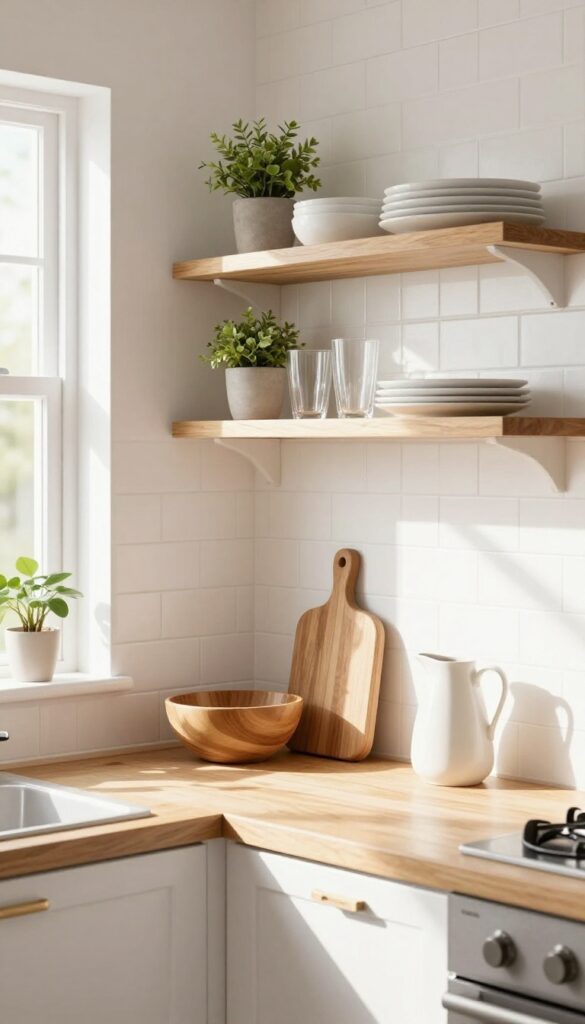
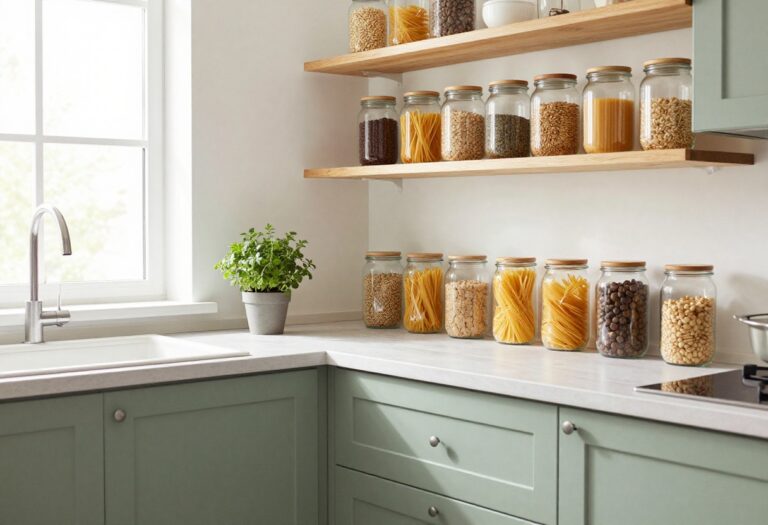
Swapping bulky upper cabinets for open shelving instantly opens up a small kitchen, making it feel larger and more inviting. But going fully open can feel stark if you don't add warmth. That's where natural wood tones come in—they soften the look and bring a cozy, lived-in feel that keeps the space from feeling cold or unfinished.
Why It Works
Open shelves eliminate visual weight at eye level, which is crucial in a compact kitchen. The warm wood adds texture and color, preventing the room from looking too bare or minimalist. It also puts your everyday items within easy reach, cutting down on cabinet door opening and closing.
Best For
This idea works especially well in galley kitchens or L-shaped layouts where upper cabinets can feel oppressive. It's also great for renters who can't install permanent cabinetry—floating shelves are easy to mount and remove.
Styling Tip
Mix functional pieces like white dinner plates and glassware with a few decorative items—a small plant, a wooden cutting board, or a ceramic pitcher. Keep the arrangement balanced but not too symmetrical; aim for about 70% useful items and 30% decor to maintain that lived-in warmth.
2. Pull-Out Pantry in a Slim Gap
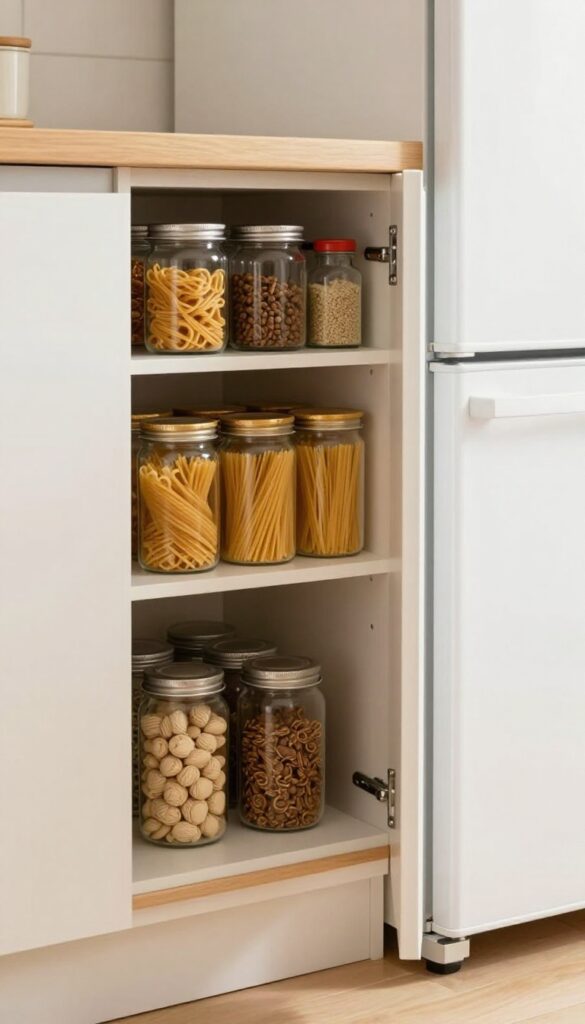
That awkward gap between the fridge and the wall, or the narrow space next to a cabinet—usually it collects dust or becomes a graveyard for lost measuring cups. But with a pull-out pantry, you can turn that forgotten sliver into a surprisingly spacious storage hero. It feels like a secret discovery every time you slide it open: jars of pasta, cans of tomatoes, and spice bottles all lined up and easy to grab.
The best part? When closed, it disappears completely, keeping your kitchen looking clean and uncluttered.
Why It Works
Pull-out pantries maximize every inch of vertical space in gaps as slim as 6 to 12 inches wide. Instead of stacking items deep inside a cabinet where things get lost, this design brings everything forward on smooth glides. You can see all your dry goods at once, which reduces food waste and makes meal prep faster.
Best For
This idea is perfect for small kitchens with awkward dead spaces—between appliances, beside a refrigerator, or next to a base cabinet. It's also great for renters because many pull-out units are freestanding or require minimal installation.
Styling Tip
Keep the contents visually tidy by decanting staples into uniform glass jars or clear containers with matching lids. Add small baskets for packets and foil-wrapped items. If the pantry is visible when open, stick to a cohesive color palette—like warm whites and wood tones—to maintain that cozy feel.
3. Glass-Front Cabinets for Depth
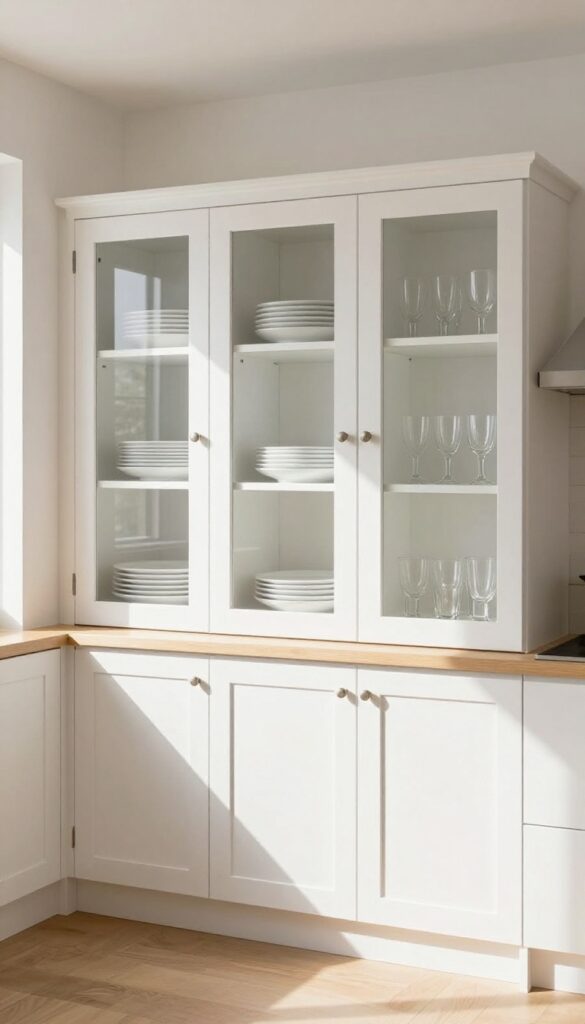
Swapping a few solid upper cabinet doors for glass fronts can completely change how your kitchen feels. Instead of a wall of closed cabinetry, you get a glimpse of what's inside, which tricks the eye into seeing more space. The warm glow of dishes or glassware behind the glass adds a lived-in, cozy layer that makes the whole room feel inviting.
Why It Works
Glass fronts break up the visual mass of upper cabinets, making the kitchen feel less boxed in. The transparency creates a sense of depth, so the wall doesn't look like a solid barrier. In a small kitchen, this illusion of openness is a game-changer.
Best For
This works best if you have a collection of matching dishware or pretty glasses you don't mind displaying. It's also ideal for kitchens that lack natural light, since the glass helps reflect whatever light is available around the room.
Styling Tip
Stick to clear glass rather than frosted or textured options to maximize the airy effect. Keep what you store simple and cohesive—think white plates, clear glasses, or neutral ceramics—so the view stays calm and uncluttered.
4. Corner Drawers Instead of Lazy Susans
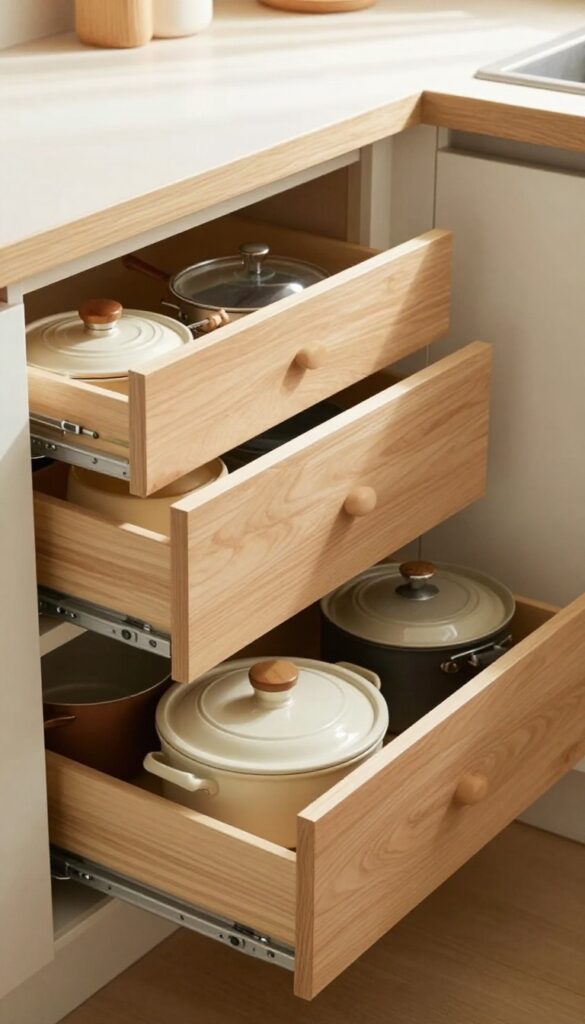
Corner cabinets have a reputation for being black holes where kitchen tools go to disappear. Lazy Susans help, but they still leave awkward gaps and require you to spin through layers of clutter. Full-extension corner drawers solve that by turning dead space into deep, accessible storage.
They pull out completely, so you can see every pot lid and mixing bowl at a glance. The warm wood or soft white fronts keep the kitchen feeling cozy and intentional, not like a construction compromise.
Why It Works
Full-extension drawers use every inch of the corner cabinet without the wasted space behind a lazy Susan. They slide out smoothly on heavy-duty glides, making heavy pots and pans easy to reach. No more kneeling down to spin a tray or digging for the lid that slipped behind everything else.
Best For
This setup is ideal for small kitchens where every square inch counts and you frequently cook with bulky items like stockpots, Dutch ovens, or baking sheets. It also works well in galley kitchens where corner access is tight.
Styling Tip
Line the drawer bottoms with soft-grip liner in a warm tan or cork texture to keep pans from sliding and add a natural touch. Use adjustable dividers to keep lids upright and nested pots separate. For a cohesive look, match the drawer fronts to your existing cabinet style—shaker doors in creamy white or matte sage green feel especially homey.
5. Under-Cabinet Wine Rack
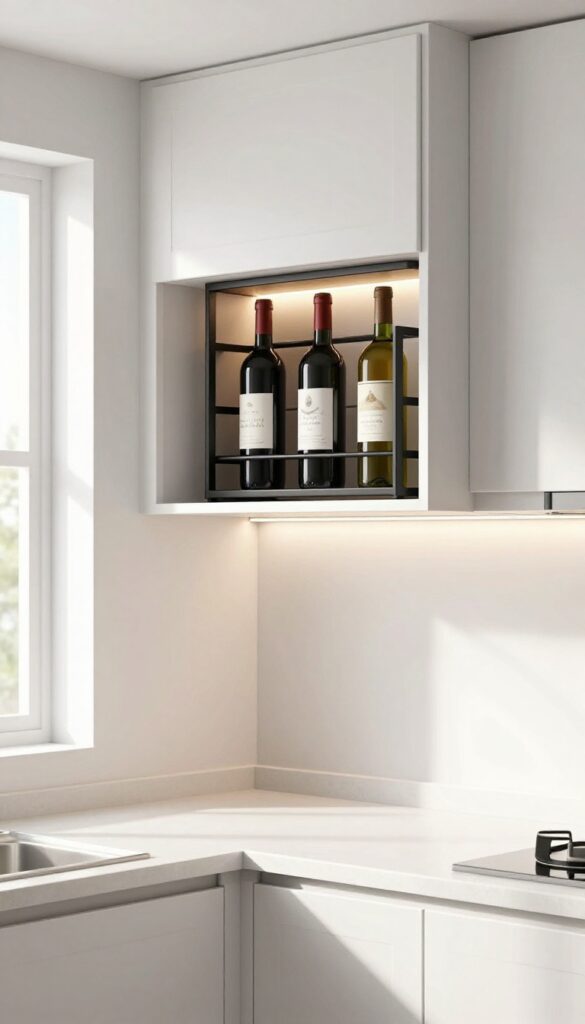
Wine bottles tend to roll around or get shoved into odd corners, but a slim rack mounted beneath upper cabinets turns them into a display feature. The warm glow of a small LED strip above the bottles makes the glass gleam, adding a cozy, lived-in feel without taking up any counter space. It’s one of those small kitchen cabinet ideas that feels both indulgent and completely practical.
Why It Works
By using the underside of cabinets, you reclaim valuable counter and floor space while keeping wine within easy reach. The rack keeps bottles organized and visible, so you can grab one without rummaging through a pantry or cabinet.
Best For
This idea works well in small kitchens where every inch counts, especially if you enjoy cooking with wine or hosting casual dinners. It’s also great for narrow galley kitchens where counter space is at a premium.
Styling Tip
Choose a rack with warm wood or black metal to match your cabinet hardware. Add a dimmable LED strip underneath to create a soft glow that highlights the labels and adds ambiance during evening gatherings.
6. Toe-Kick Drawers for Extra Storage
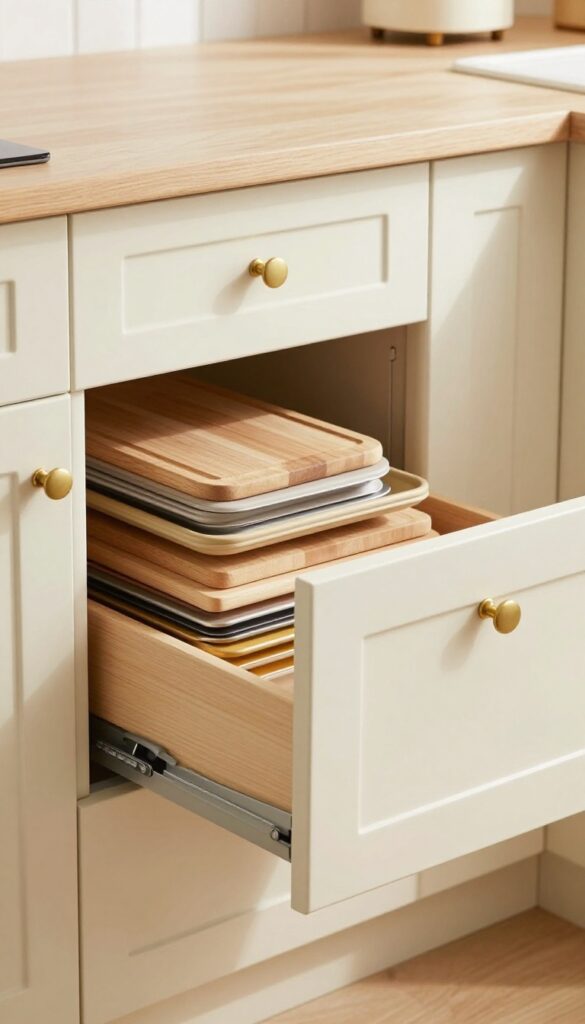
That narrow gap under your base cabinets—the toe-kick—is often wasted space. But with a simple retrofit, it becomes a hidden storage zone for flat items you use all the time. Shallow pull-out drawers slide out just a few inches, making baking sheets, cutting boards, or even table linens easy to grab without bending too far.
It’s one of those smart small kitchen ideas that feels like a secret bonus.
Why It Works
Toe-kick drawers add storage without taking up any floor space or changing your kitchen’s footprint. They keep rarely-used-but-bulky items out of sight but still accessible, reducing clutter in your main cabinets and drawers.
Best For
This idea is perfect for small kitchens where every inch counts, especially if you have lower cabinets with standard toe-kicks (usually 3–4 inches high). It works well in galley kitchens or L-shaped layouts where counter space is tight.
Styling Tip
Paint the drawer fronts to match your cabinet color so they blend in seamlessly. For a warm, cozy look, choose a soft cream or sage green and add small brass pulls that echo other hardware in the room.
7. Vertical Dividers for Baking Sheets
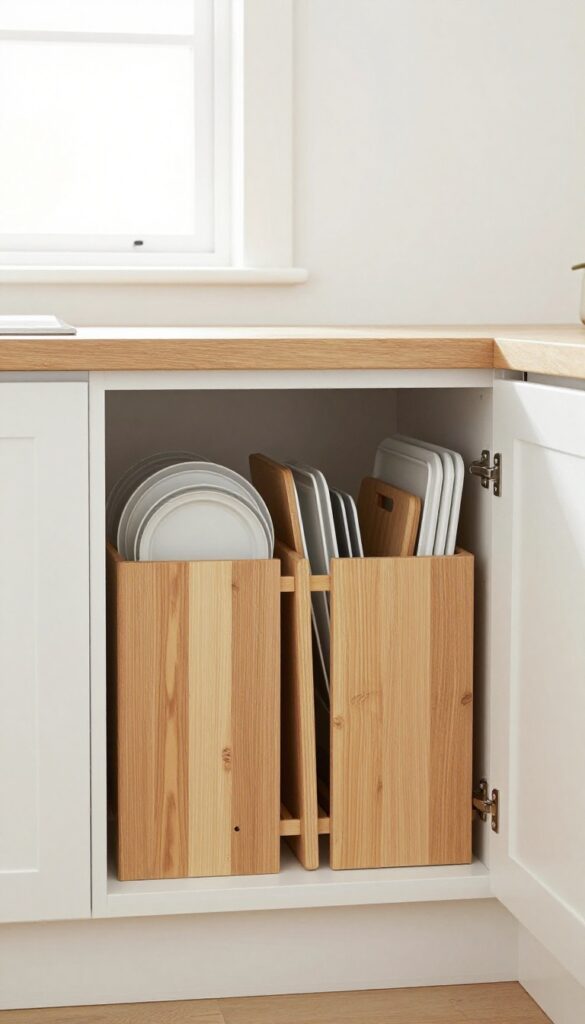
Baking sheets, cutting boards, and trays are some of the most awkward items to store in a small kitchen. They slide around, lean on each other, and often end up buried under pots and pans. Adding vertical dividers inside a base cabinet turns that chaos into instant order.
The moment you slide a baking sheet upright into its own slot, you'll wonder why you didn't do this sooner.
Why It Works
Vertical dividers make use of the often-wasted vertical space inside cabinets. Instead of stacking heavy items horizontally—which makes them hard to grab without pulling everything out—this system keeps each piece separate and easy to access. It also prevents scratching and bending of delicate sheets.
Best For
This solution is perfect for small kitchens where cabinet space is at a premium. It works especially well in base cabinets near the oven or stove, so you can grab a baking sheet right when you need it. If you have deep lower cabinets that feel like black holes, vertical dividers are a game-changer.
Styling Tip
For a warm, cozy feel, choose wooden dividers with a natural finish or opt for bamboo inserts. They add texture and warmth against white or neutral cabinetry. Keep your most-used sheets at the front and store seasonal or oversized trays toward the back for easy rotation.
8. Magnetic Knife Strip on Cabinet Side
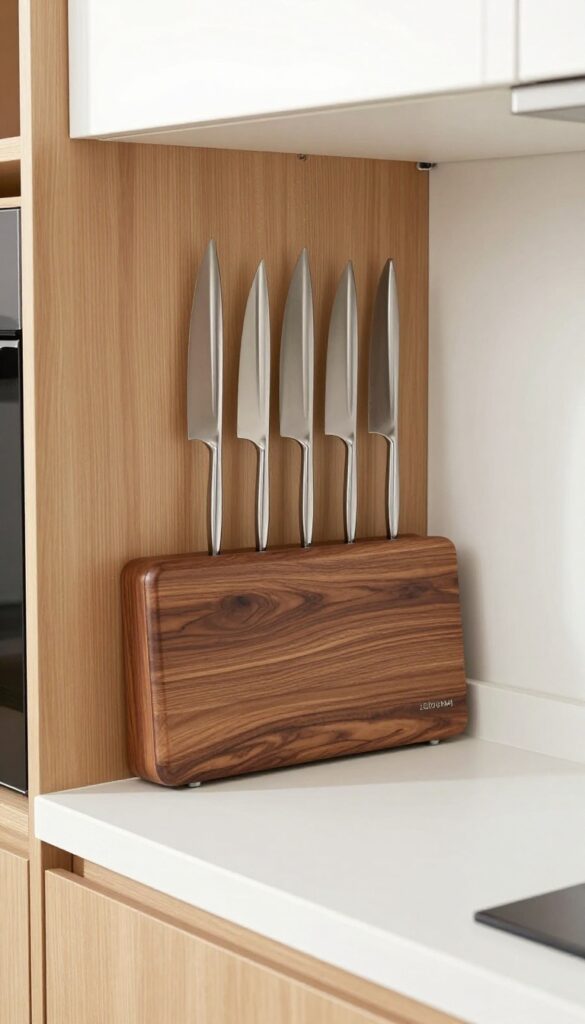
A magnetic knife strip mounted on the side of a cabinet is one of those clever space-saving tricks that feels both practical and polished. It keeps your most-used knives right where you need them—within arm's reach while you're prepping—without taking up any drawer or counter space. The warm, cozy vibe comes from choosing a wooden strip or one with a brass finish that blends into your kitchen's natural tones.
Why It Works
By using vertical real estate that's often ignored, this idea frees up drawer space for other utensils and keeps knives safely stored yet instantly accessible. The magnetic hold is strong enough for heavy chef's knives, and the strip itself adds a subtle design element to an otherwise blank cabinet side.
Best For
Small kitchens where every inch of counter and drawer space counts, especially in galley or L-shaped layouts where cabinet sides are easily reachable from the prep zone.
Styling Tip
Choose a wooden magnetic strip with a warm walnut or oak finish to echo your cabinetry, or go with a slim black metal one for a modern contrast. Mount it at a height that feels natural when you reach for a knife, and leave a few inches of clearance below so knives don't bump into the counter.
9. Cabinet-Front Drying Rack
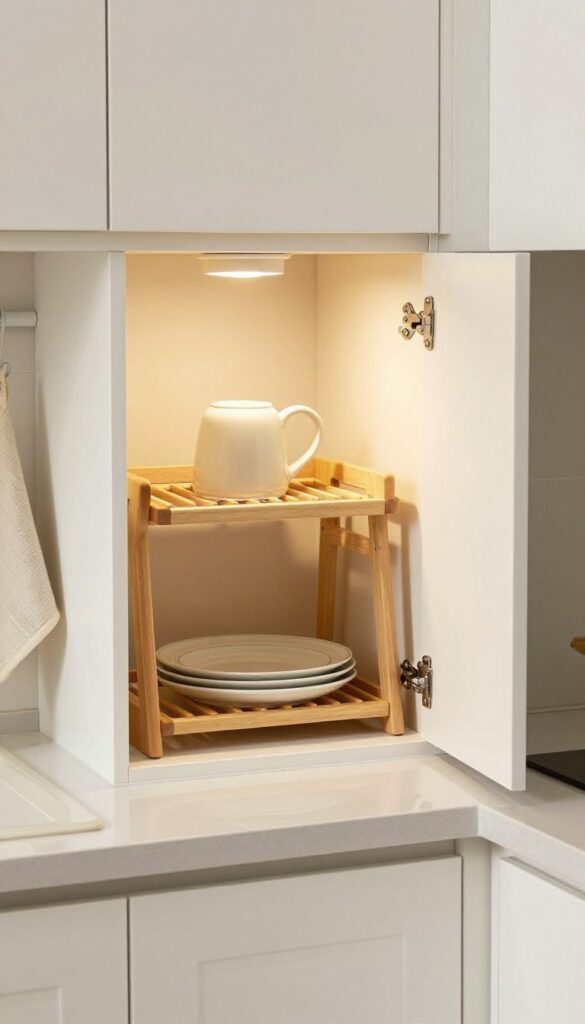
There's a certain magic in hiding the mess while keeping function front and center. A foldable drying rack mounted inside the cabinet door above the sink lets dishes drip-dry behind closed doors, so your counters stay clear and your kitchen feels instantly more spacious. The warm glow of a nearby pendant light catches the matte finish of a ceramic mug, and suddenly that small detail makes the whole room feel cozier.
Why It Works
It reclaims valuable counter space by moving the drying zone into an otherwise unused area—the inside of a cabinet door. When not in use, it folds flat and disappears, maintaining a clean, uncluttered look that small kitchens desperately need.
Best For
This is perfect for tiny kitchens where every inch of countertop is precious, especially if you hand-wash dishes often. It's also great for renters who can't install permanent fixtures but want an easy, no-drill solution.
Styling Tip
Choose a rack with slim wooden slats or a warm bronze finish to echo the cozy vibe. Pair it with a soft cotton dish towel hung on a nearby hook, and keep your most-used mugs or plates within arm's reach on open shelving above.
10. Two-Tone Cabinets for Visual Interest
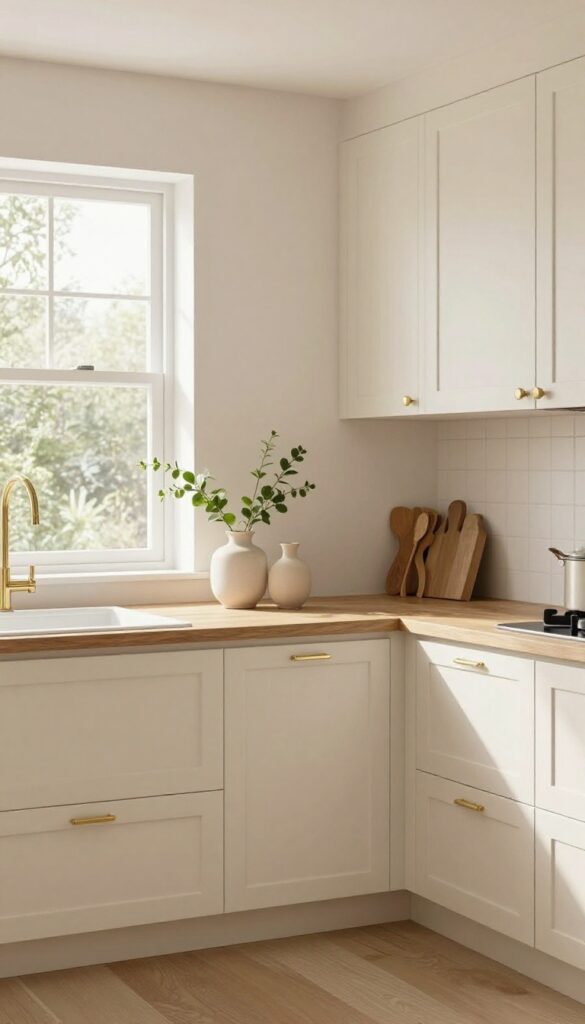
Painting your upper cabinets a light, warm color and the lowers a darker shade is a clever way to break up monotony and make a small kitchen feel larger. The contrast draws the eye upward, creating an illusion of height, while the darker base grounds the space and hides everyday wear. It’s a subtle trick that adds personality without overwhelming a compact layout.
Why It Works
Light uppers reflect natural and artificial light, making the room feel airy and open. Darker lowers anchor the design and add depth, so the kitchen doesn’t look flat or one-dimensional. This balance keeps the space visually interesting yet still cohesive.
Best For
Small kitchens that lack architectural detail or feel boxed in. It’s especially effective in galley or L-shaped layouts where you want to avoid a tunnel-like effect. Works well with both modern and traditional styles.
Styling Tip
Choose a warm off-white or soft cream for uppers and a deep navy, charcoal, or warm taupe for lowers. Keep hardware consistent—brass or matte black knobs tie the two tones together seamlessly.
FAQ
What is the best cabinet color for a small kitchen?
Light, warm colors like off-white, soft beige, or pale wood tones help reflect light and make the space feel larger. Two-tone schemes with darker lowers can add depth without overwhelming.
How can I add storage without upper cabinets?
Open shelving, wall-mounted racks, and pegboards are great alternatives. You can also use tall pantry cabinets or rolling carts for extra storage.
Are glass-front cabinets practical for small kitchens?
Yes, they create an illusion of more space and let you display attractive items. Just keep them organized, as everything is visible.
What is the most efficient use of corner cabinets?
Pull-out drawers or swing-out shelves maximize accessibility. Lazy Susans are also effective but can waste space if not sized correctly.
How do I make my small kitchen feel cozy?
Use warm wood tones, soft lighting, and textured accessories like woven baskets or ceramic canisters. Adding plants and warm metals like brass also helps.
Conclusion
Small kitchens can be both functional and beautiful with the right cabinet choices. These ideas prove that you don't need a lot of square footage to create a space that feels warm, organized, and uniquely yours.
Pick a few that fit your layout and style, and watch your kitchen transform into a cozy hub you'll love spending time in. Remember, every inch counts—so make them work for you.