12 Murphy Bed Office Guest Bedroom Ideas That Save Space and Feel Cozy
A room that pulls double duty as a home office and guest bedroom can feel like a puzzle. You need a workspace that keeps you focused during the day, but also a cozy spot where visitors can unwind at night.
The trick is choosing a Murphy bed setup that blends into your decor instead of shouting "I'm a bed." These 12 ideas focus on making that transition feel seamless and warm. Think layered textiles, smart storage, and finishes that soften the utilitarian edge of a fold-down bed.
Whether you're working with a tiny nook or a full-sized room, there's a solution here that keeps your space looking put-together and feeling genuinely inviting.
1. Warm Wood Paneling Behind the Bed
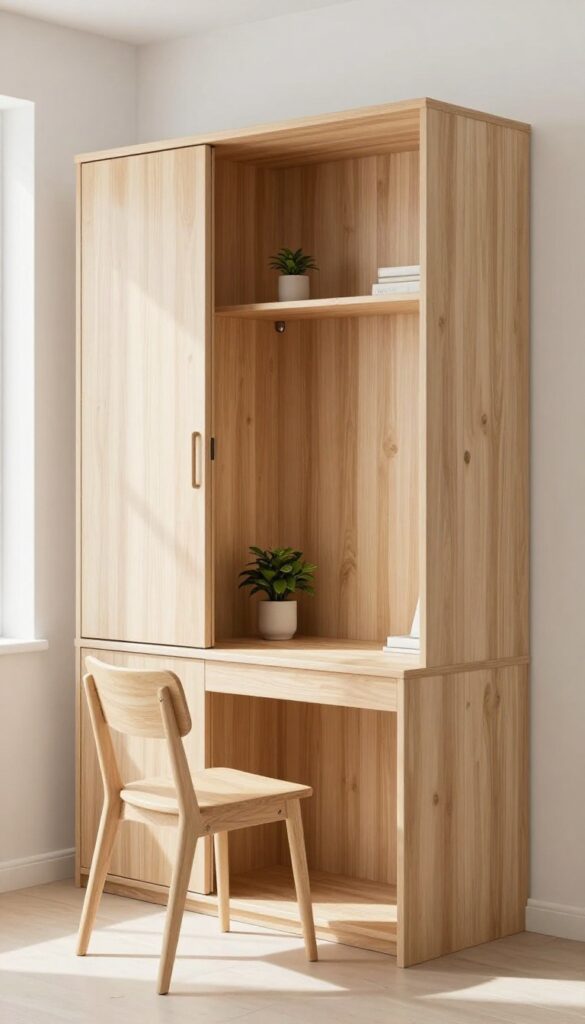
Vertical wood slats or shiplap behind the Murphy bed instantly add warmth and texture. When the bed is folded up, the paneling becomes a feature wall that makes your office feel grounded and cozy. It’s a simple way to bring in natural materials without overwhelming the room.
Why It Works
Wood paneling creates visual interest and a sense of depth, making the wall feel intentional rather than just a blank surface. The vertical lines also draw the eye upward, which can make the room feel taller and more spacious.
Best For
This idea is perfect for small home offices that double as guest bedrooms, especially if you want a warm, cabin-like feel. It works well in rooms with neutral color palettes where the wood can stand out as a natural accent.
Styling Tip
Choose a light wood tone like oak or ash to keep the space airy, or go with walnut for a richer look. Pair the paneling with a simple floating shelf and a small plant to soften the transition between the bed and the desk area.
2. Built-In Bookshelves on Either Side
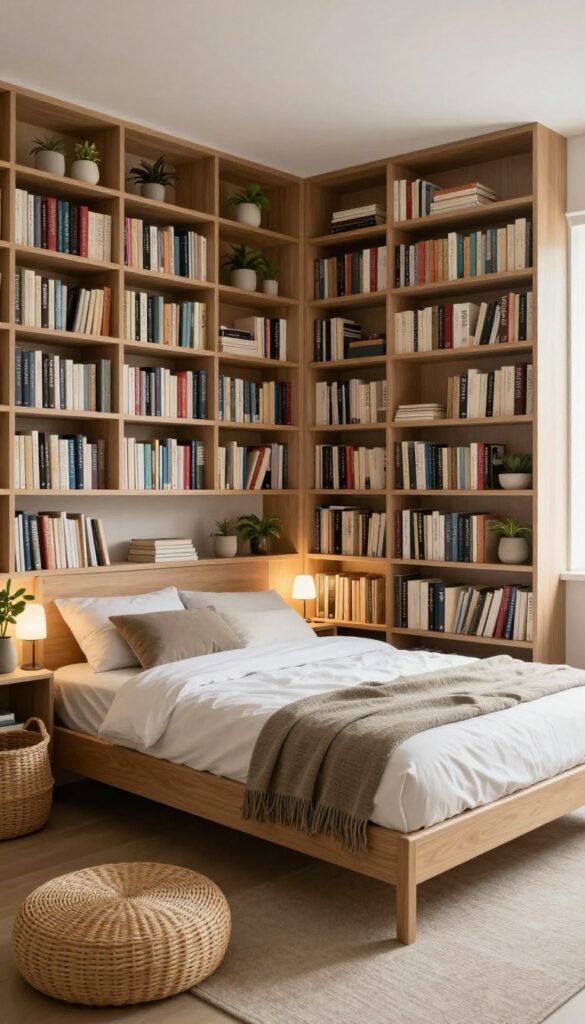
Framing a Murphy bed with floor-to-ceiling bookshelves turns a functional piece into a design feature. The vertical lines draw the eye upward, making the room feel taller and more spacious. It’s a look that feels intentional and cozy, with plenty of room to display your favorite books, plants, and personal touches.
Why It Works
The bookshelves serve double duty: they store office supplies and decor when the bed is up, and act as nightstands when it’s down. This eliminates the need for extra furniture, keeping the room uncluttered and efficient.
Best For
This setup is ideal for small home offices or guest rooms where every inch counts. It works especially well in rooms with high ceilings, as the tall shelves emphasize vertical space.
Styling Tip
Layer the shelves with a mix of books, small plants in neutral pots, and woven baskets for texture. Keep a few items at the same height on both sides to create symmetry, and add a small lamp or candle on each side for a warm, inviting glow when the bed is down.
3. A Deep Window Seat That Doubles as Storage
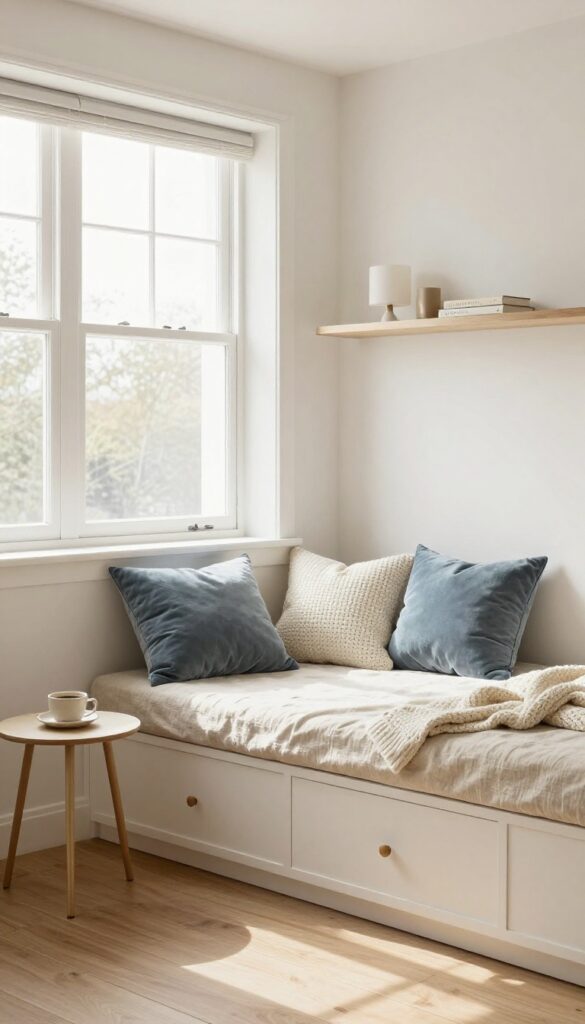
There’s something about a window seat that makes a room feel instantly more inviting. In a Murphy bed office guest bedroom, it’s not just a pretty addition—it’s a smart use of space. Placing a deep window seat opposite the bed creates a cozy nook for reading during the day and a practical luggage bench when guests arrive.
The key is to make it feel intentional: a plush cushion in a soft neutral, a few toss pillows, and maybe a small side table for a cup of coffee. It turns an empty wall into a multifunctional spot that adds warmth without clutter.
Why It Works
A window seat gives you bonus seating without taking up floor space, which is crucial in a room that already has a Murphy bed. By adding storage underneath—either built-in drawers or baskets—you gain a place to stash extra blankets, pillows, or office supplies. It also balances the room visually, making the Murphy bed feel less dominant and more like part of a layered, lived-in design.
Best For
This idea works best in rooms with a window that’s not directly behind the Murphy bed, so you have an opposite wall to work with. It’s ideal for narrow or square rooms where you want to maximize every inch, and it’s especially useful if you frequently host overnight guests who need a spot to set down their bags.
Styling Tip
Choose a cushion color that ties into your overall palette—think warm beige, dusty blue, or soft gray. Add two or three pillows in varying textures (linen, velvet, knit) for a cozy, layered look. If the seat is deep enough, tuck a small tray on one end for a lamp or a book, or install a floating shelf above for extra display space.
4. Layered Lighting with a Swing-Arm Sconce
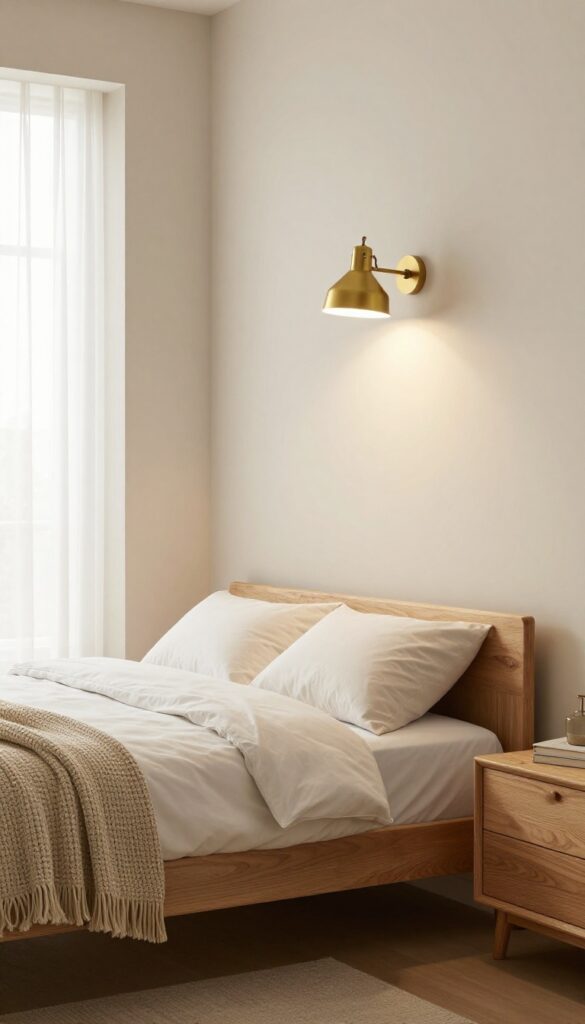
Lighting can make or break a small space, and in a Murphy bed room, every inch counts. A swing-arm sconce mounted beside the bed adds both function and warmth without taking up precious surface area. The adjustable arm lets you direct light exactly where you need it—perfect for late-night reading or a soft glow while working at the desk.
Choose a warm brass or matte black finish to complement the room's layered, cozy aesthetic.
Why It Works
This lighting solution is a space-saving hero. By mounting the sconce on the wall, you free up the nightstand or desk for other essentials like a phone, book, or coffee mug. The swing arm also allows you to pivot the light away when the bed is folded up, keeping the area clutter-free and versatile.
Best For
Murphy bed rooms that double as a home office or guest space. It's ideal for anyone who needs task lighting for reading or working but doesn't want to sacrifice surface area. The sconce also adds a stylish, intentional touch that elevates the room's design.
Styling Tip
Position the sconce about 30 inches above the mattress or desk surface for optimal light distribution. Pair it with a warm-toned bulb (2700K-3000K) to enhance the cozy feel. If you have two sconces, mount them symmetrically on either side of the bed for a balanced, hotel-like look.
5. A Rolling Desk That Tucks Away
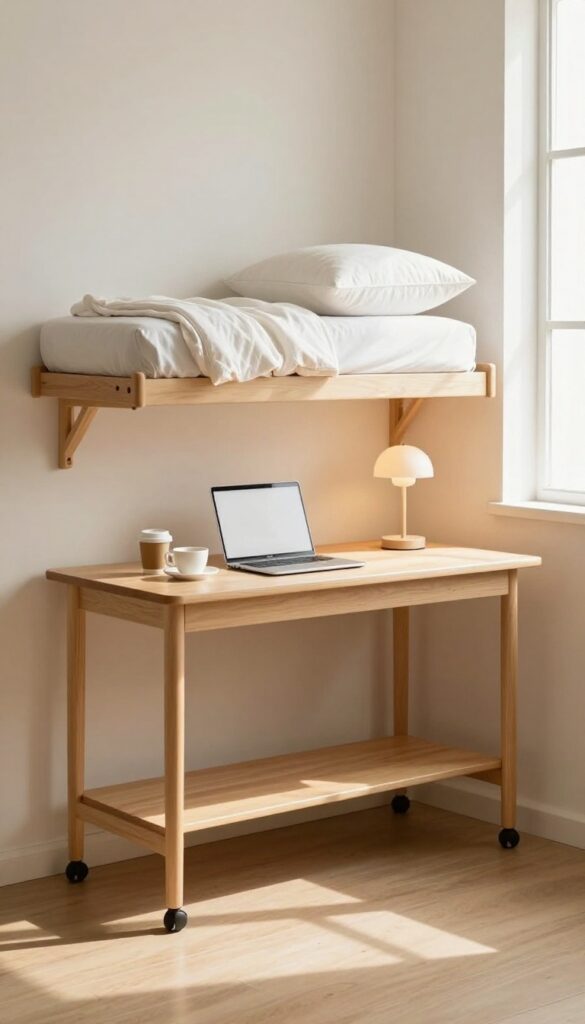
In a room that needs to switch between work and sleep, furniture on wheels is a game-changer. A slim rolling desk keeps your laptop and coffee within reach during the day, then glides out of the way when the Murphy bed comes down. It feels like having a secret workstation that disappears on command, which is exactly the kind of smart flexibility a small space craves.
Why It Works
Rolling desks eliminate the need to clear a surface every night. You simply move the desk to the side or tuck it under a shelf, and the bed drops down without obstacles. This keeps your workflow uninterrupted and your guest ready in seconds.
Best For
Anyone who needs a dedicated work spot but can't spare permanent floor space. It's also ideal for guest rooms that double as a home office or craft area.
Styling Tip
Choose a desk with a slim profile and casters that lock. Top it with a small lamp and a tray for pens and a coaster. When not in use, roll it under a floating shelf or into a closet to keep the room feeling open.
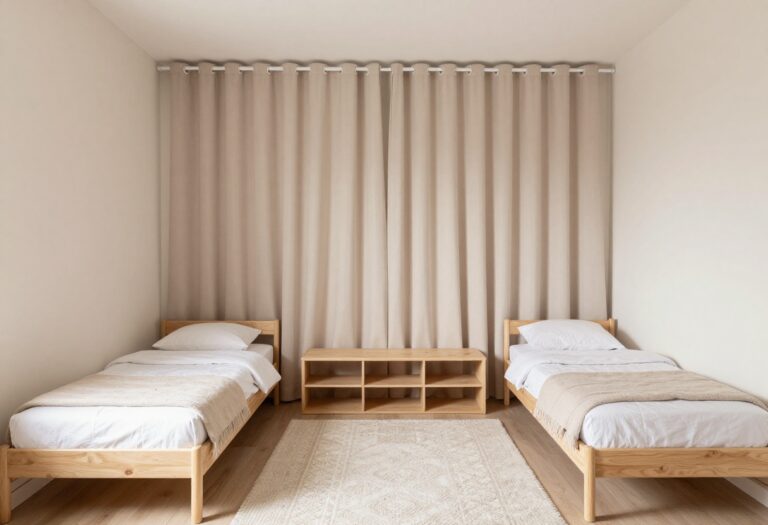
6. Floor-to-Ceiling Curtains for Softness
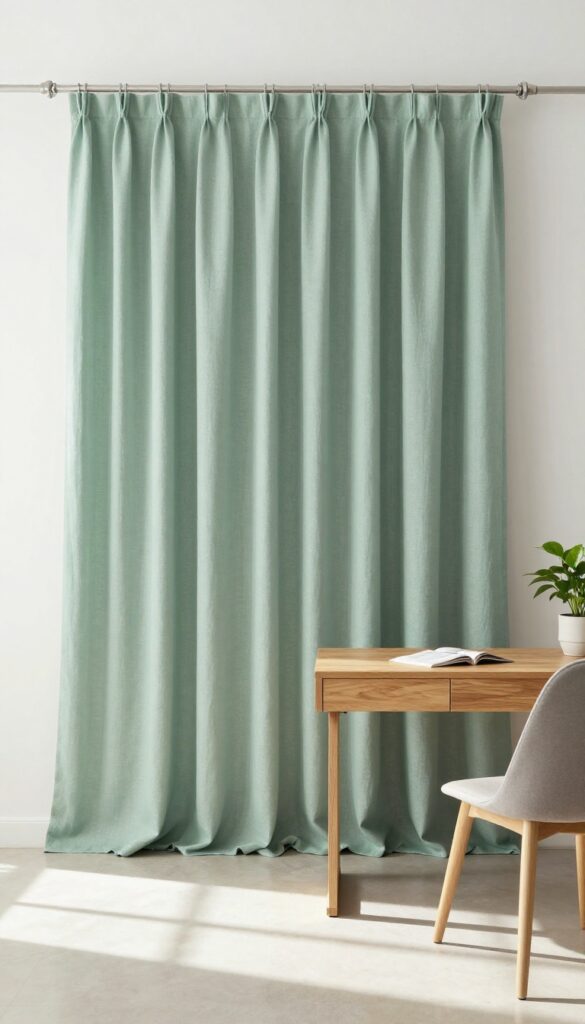
A Murphy bed wall can feel stark, especially when it's closed and you're working at your desk. Floor-to-ceiling curtains solve that instantly. They add height, soften the room acoustically, and create a cozy backdrop that makes the whole space feel more like a room and less like a closet.
Choose a soft linen or velvet in a color that complements your office palette—sage green or dusty blue work beautifully.
Why It Works
The vertical lines draw the eye upward, making the room feel taller and more spacious. The fabric absorbs sound, so video calls feel less echoey, and when the bed is down, the curtains frame it like a luxurious canopy.
Best For
This idea is ideal for rooms where the Murphy bed is the focal point and you want to tone down the mechanical look. It's also great for spaces with less-than-perfect walls or windows you'd rather downplay.
Styling Tip
Mount the curtain rod as close to the ceiling as possible and let the fabric pool slightly on the floor for a relaxed, elegant feel. If the bed folds down in front of a window, choose a sheer linen to let light filter through during the day.
7. A Fold-Down Desk That Becomes a Headboard
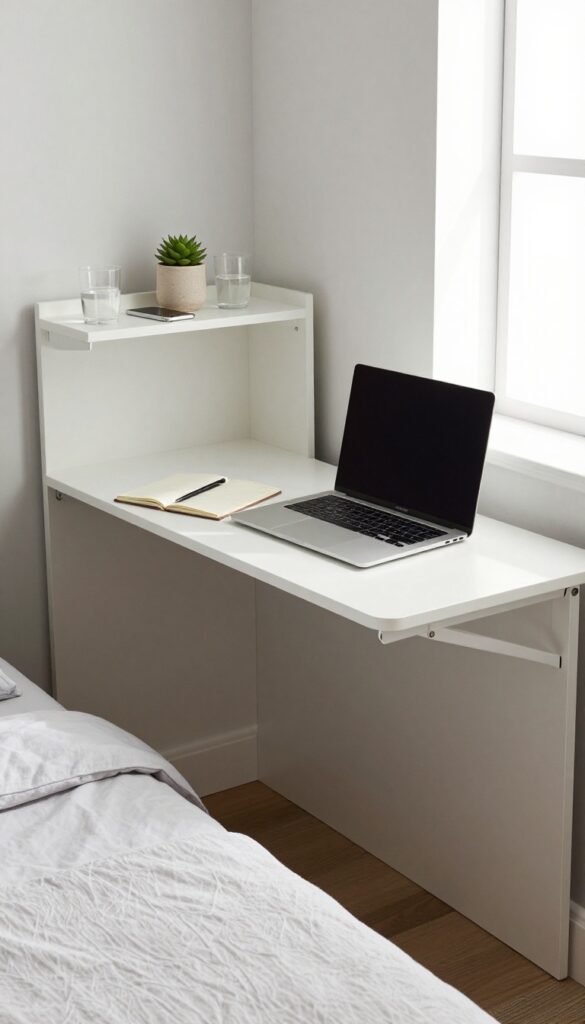
In a Murphy bed room, every surface has to pull double duty. That’s where a fold-down desk mounted above the bed comes in. When the bed is tucked away, you get a full workspace.
When it’s time to sleep, the desk flips up and becomes a slim headboard shelf—just deep enough for a phone, a glass of water, or a tiny succulent. It’s one of those ideas that feels clever without trying too hard.
Why It Works
It turns dead wall space into two functional zones without taking up any floor area. The desk is there when you need it and disappears when you don’t, so the room never feels cluttered. Plus, having a dedicated spot for bedtime essentials keeps the bed itself clear and calm.
Best For
Anyone who works from home occasionally but still wants a proper guest room. It’s also great for small apartments where a separate office isn’t possible, or for kids’ rooms that double as a study space.
Styling Tip
Paint the desk the same color as the wall to make it blend in when folded. Add a small cord clip underneath to keep chargers tidy. On the shelf side, stick to one or two small objects—a ceramic dish for keys and a mini plant—so it doesn’t look busy when the bed is down.
8. Hidden Storage in the Bed Base
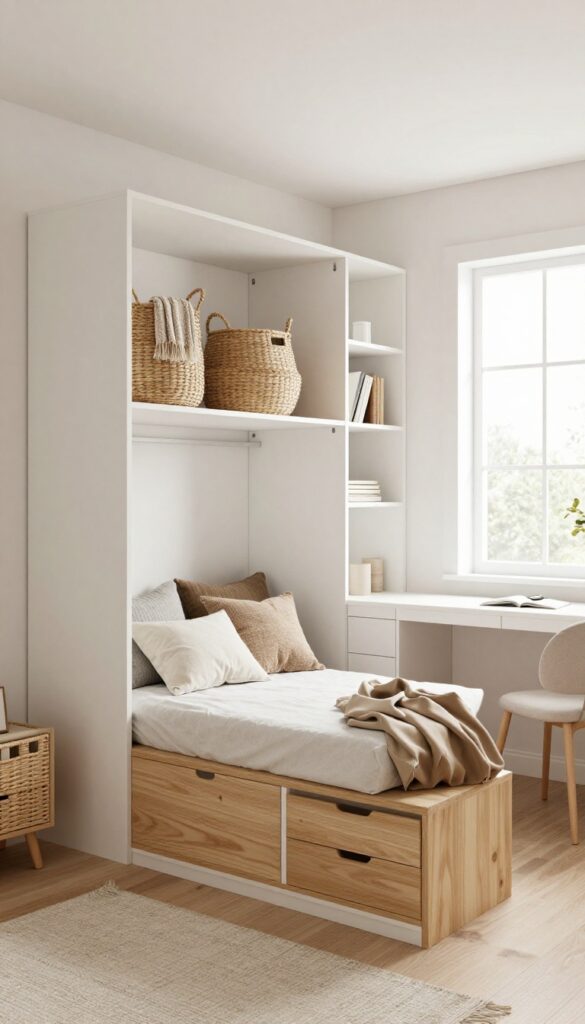
When your Murphy bed folds up, the base becomes an unused block of space—unless you turn it into storage. Built-in drawers or cabinets in the bed base are a game-changer for small rooms. They stash everything from extra blankets to printer paper, keeping the room looking neat and intentionally cozy.
The layered look comes from mixing practical storage with soft textures, so the bed feels like furniture, not just a hiding trick.
Why It Works
This idea eliminates the need for a separate dresser or storage cabinet, freeing up floor space and visual clutter. The drawers are hidden when the bed is down, so the room stays streamlined whether you're sleeping or working. It’s a smart, space-aware solution that makes the room feel larger and more organized.
Best For
Perfect for home offices that double as guest rooms, especially in small apartments or spare bedrooms under 120 square feet. Also great for anyone who wants a clutter-free workspace without sacrificing guest comfort.
Styling Tip
Paint the drawer fronts the same color as the wall or the bed frame to make them blend in. Add soft, woven baskets on top of the bed base for extra texture and easy-access storage for pillows or throws.
9. A Gallery Wall That Works Both Ways
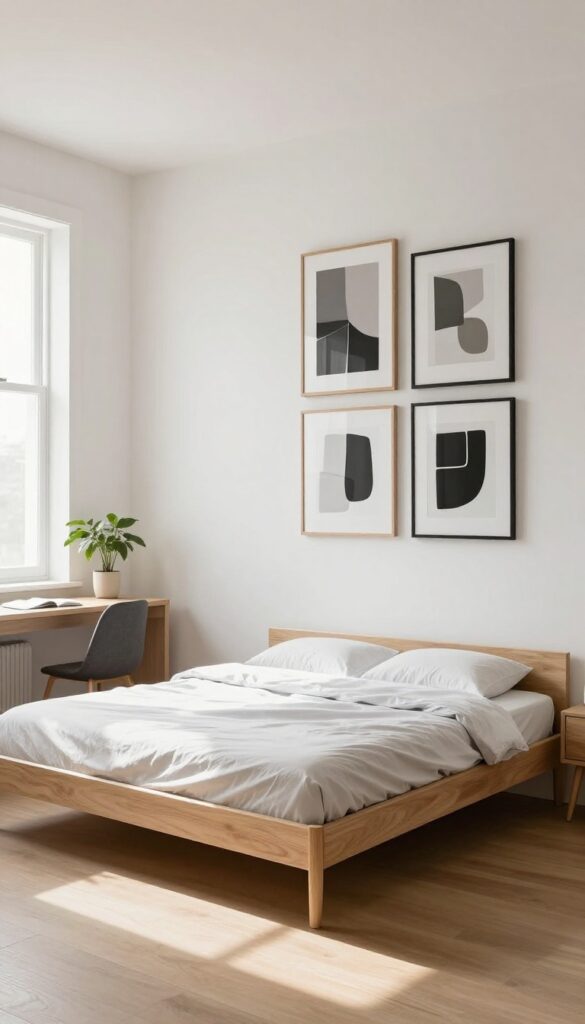
A gallery wall is one of those design moves that instantly makes a room feel collected and personal. But in a Murphy bed room, you have to think about what happens when the bed comes down. The trick is to arrange lightweight frames so they sit above the folded bed and stay visible even when it’s open.
That way, you get a curated wall that works in both modes—no awkward gaps or covered art.
Why It Works
This approach keeps the room feeling intentional and layered, not like a temporary sleeping space. The art stays front and center whether the bed is up or down, so the room always looks finished. It also draws the eye upward, making the ceiling feel higher and the room more spacious.
Best For
Murphy bed rooms that double as a home office or creative space, where you want the walls to feel inspiring and personal. It’s especially great for small rooms where every surface needs to multitask.
Styling Tip
Stick with lightweight frames—wood or metal with paper prints—so there’s no risk of anything falling when the bed is moved. Mix black-and-white photos with a few muted abstract pieces for a cohesive look. Leave a few inches of breathing room between frames and the bed’s edge.
10. A Cozy Rug That Anchors the Room
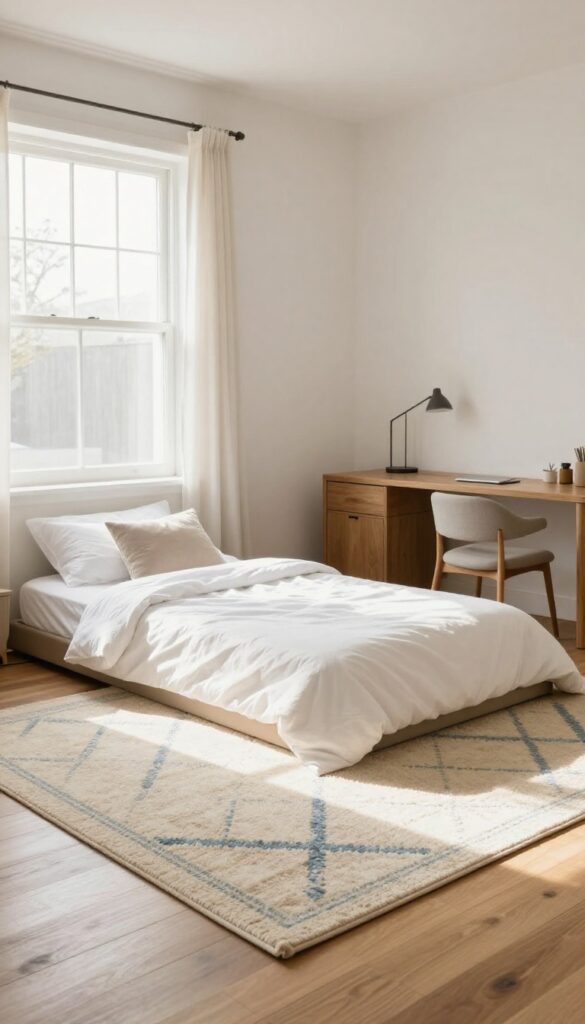
Nothing makes a Murphy bed feel like a real bedroom quite like a soft rug underfoot. When the bed is down, the rug defines the sleeping zone and adds warmth that hard floors can't offer. In a space that doubles as an office, a well-chosen rug also brings a layer of comfort that makes the room feel intentional and inviting.
Why It Works
A rug visually separates the sleeping area from the workspace, giving the room two distinct zones without needing walls. It also absorbs sound, making the room feel quieter and more restful for guests.
Best For
Rooms with hardwood, tile, or laminate flooring where you want to add warmth and soften the space. It's especially effective in narrow rooms where the bed sits against one wall and the desk is opposite.
Styling Tip
Choose a rug that extends at least 12 inches beyond the sides and foot of the Murphy bed when it's down. A low-pile wool or flatweave works best so the bed legs don't sink in. For a cohesive look, pick a pattern that includes colors from both the office decor and the bedding.
11. A Compact Sofa That Converts to Seating
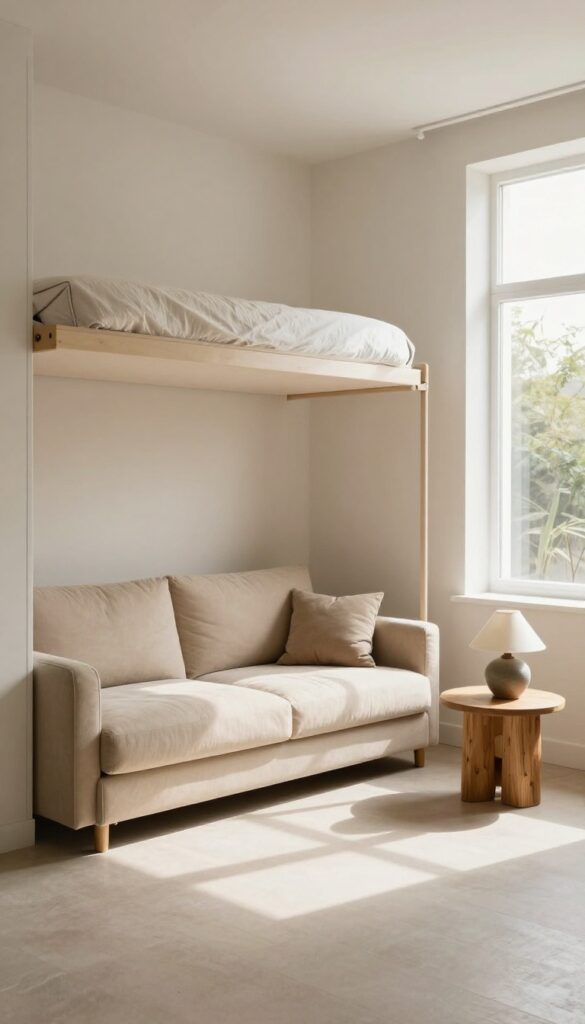
Opposite the Murphy bed, a small loveseat or armchair pulls double duty. By day, it’s a cozy spot to sit while you work or read. At night, it becomes extra seating for guests—perfect for chatting or putting on shoes.
Upholster it in a durable performance fabric so it stays fresh even with frequent use.
Why It Works
This setup makes the room feel like a proper living area, not just a bed in a box. The seating anchors the space and gives guests a place to relax without climbing onto the mattress. Plus, it visually balances the room when the bed is folded away.
Best For
Rooms where the Murphy bed is tucked into a wall unit or cabinet, leaving the opposite wall free. It works especially well in narrow home offices or small guest rooms where every square foot counts.
Styling Tip
Choose a loveseat with clean lines and slim arms to keep the silhouette light. Add a small side table and a floor lamp to create a defined conversation zone. Stick to neutral or earthy tones to maintain a calm, layered look.
12. A Neutral Palette with Pops of Color
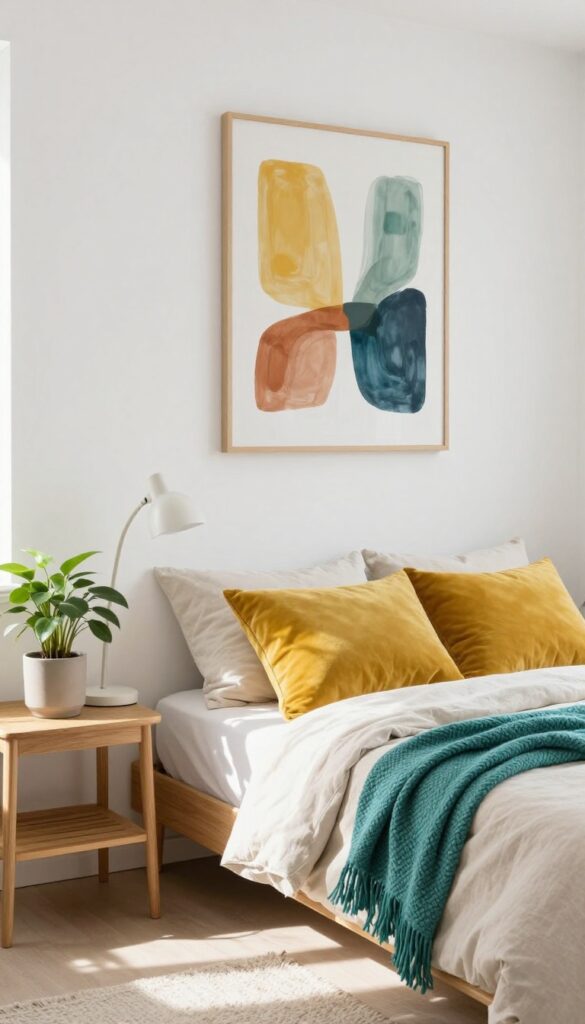
Think of this room as a calm, collected backdrop that lets a few bold accents do the talking. Start with warm whites, soft beiges, and gentle grays on the walls and larger furniture pieces. Then layer in color through a few carefully chosen items—a mustard yellow throw pillow, a teal blanket, or a vibrant abstract print.
The result is a space that feels both serene and lively, never cold or boring.
Why It Works
Neutrals create a sense of openness and calm, which is essential in a small room that pulls double duty. The pops of color add personality and visual interest without overwhelming the space, making it easy to switch up the look later with just a few swaps.
Best For
This approach works well in any small home office or guest bedroom, especially if you prefer a clean, uncluttered look but still want a touch of warmth and character.
Styling Tip
Stick to one or two accent colors and repeat them in different textures—like a velvet pillow and a woven throw—to create a cohesive, layered feel without adding clutter.
FAQ
How much space do I need for a Murphy bed office guest room?
You'll need at least 7 feet of wall space for a standard twin or full Murphy bed. For a queen, plan for about 8 feet. The room should be at least 8 feet deep so the bed can fold down comfortably without blocking doorways or furniture.
Can I use a regular mattress on a Murphy bed?
Yes, but check the bed's weight limit and mattress thickness. Most Murphy beds work best with mattresses 8 to 10 inches thick. Thicker mattresses may not fold up properly or could strain the mechanism.
How do I make a Murphy bed feel cozy for guests?
Layer the bed with soft sheets, a quilt, and a few pillows. Add a throw blanket at the foot and a small rug beside the bed. Warm lighting and a bedside shelf or caddy also help create a hotel-like feel.
What's the best way to transition the room from office to guest room quickly?
Keep a basket or bin nearby with extra bedding, towels, and a few toiletries. Use a rolling desk or a fold-down desk that clears the floor fast. A quick tidy of papers and a spritz of linen spray can make the space feel fresh.
Are Murphy beds safe for daily use?
Yes, modern Murphy beds are designed for frequent use. Look for models with a spring or piston mechanism, which makes lowering and raising the bed easier and safer. Always follow the manufacturer's weight and usage guidelines.
Conclusion
A Murphy bed office guest room doesn't have to feel like a compromise. With the right layout and a few thoughtful touches, you can create a space that works hard during the day and welcomes guests warmly at night. Focus on layers, storage, and lighting to make both functions feel intentional.
Start with one or two ideas from this list and build from there. Even small changes—like adding a cozy rug or a swing-arm sconce—can transform how the room feels.