10 Open Kitchen Ideas for Airy Connected Living Spaces
I know exactly why you clicked this. You love the idea of an open kitchen, but you also worry it might turn into a noisy, messy spotlight on your cooking disasters.
I felt the same way when I first knocked down a wall in my own place and realized my kitchen suddenly had an audience.
Let me walk you through what actually works, what feels amazing to live with, and how you can create an airy, connected kitchen without regretting it later.
Why Open Kitchens Feel So Good to Live With
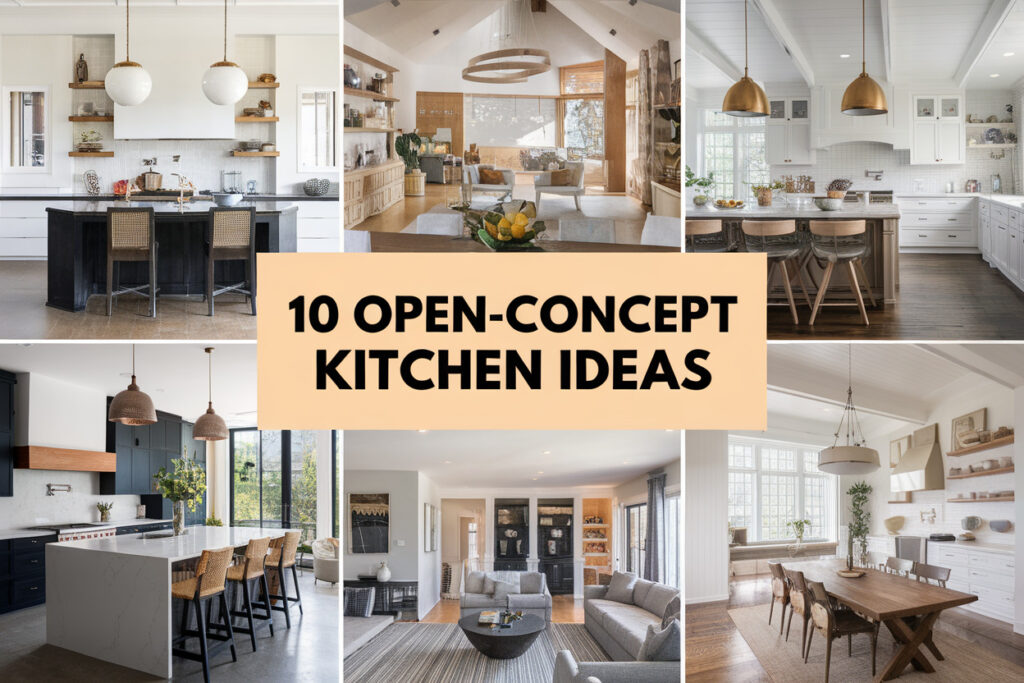
Open kitchens change how a home feels the moment you walk in. They remove visual barriers, let light travel freely, and make everyday life feel less boxed in. Ever noticed how conversations flow better when nobody feels shut away?
I love how an open kitchen turns cooking into a shared experience instead of a solo chore. You chat, snack, and laugh while stirring a pot, and suddenly dinner prep feels less like work. That emotional connection matters just as much as the layout itself.
The Psychology Behind Open Spaces
Open kitchens tap into our natural love for openness and visibility. Your brain relaxes when it sees fewer walls and more light, and that calm feeling spreads through the whole home. Who does not want their house to feel instantly welcoming?
From my experience, open layouts also reduce that “kitchen anxiety” where you rush to hide before guests arrive. You stop obsessing over perfection and start focusing on comfort, which feels liberating.
1. Seamless Kitchen and Living Room Integration
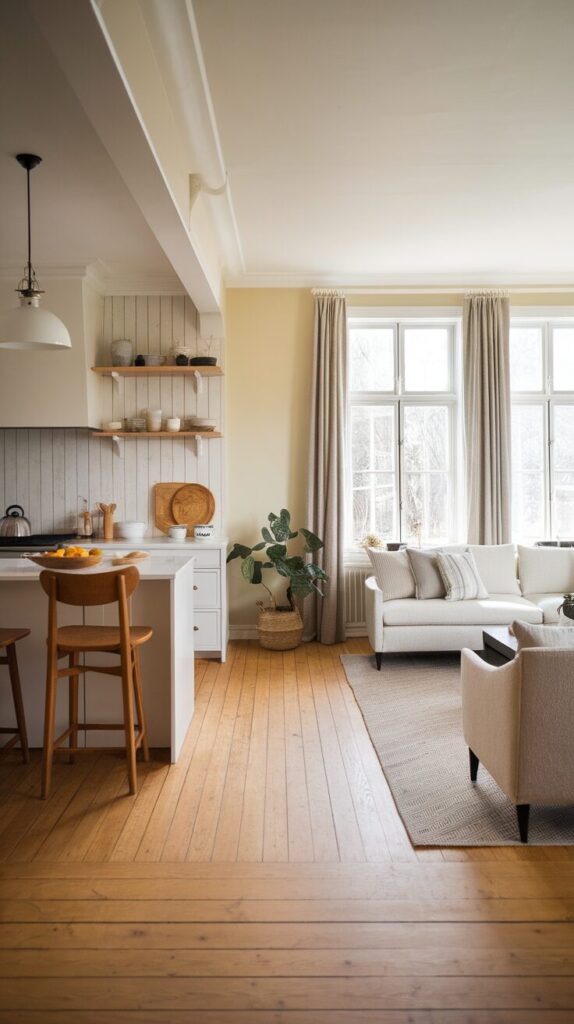
This idea sits at the heart of airy connected living spaces. You design the kitchen and living room as one visual story instead of two separate zones fighting each other.
I recommend matching flooring, color palettes, and design styles across both areas. When everything flows visually, the space feels bigger without adding a single square foot.
How to Make It Work Without Chaos
You might worry about cooking smells or visual clutter, and I get that. I felt the same panic the first time I fried onions with guests on the couch.
Use these smart strategies to keep things balanced:
- Choose a strong range hood that actually pulls air, not just noise.
- Limit upper cabinets so the kitchen feels lighter and less boxy.
- Stick to a cohesive color scheme across furniture and cabinetry.
When you plan intentionally, the space feels curated, not chaotic.
2. Large Kitchen Islands That Anchor the Space
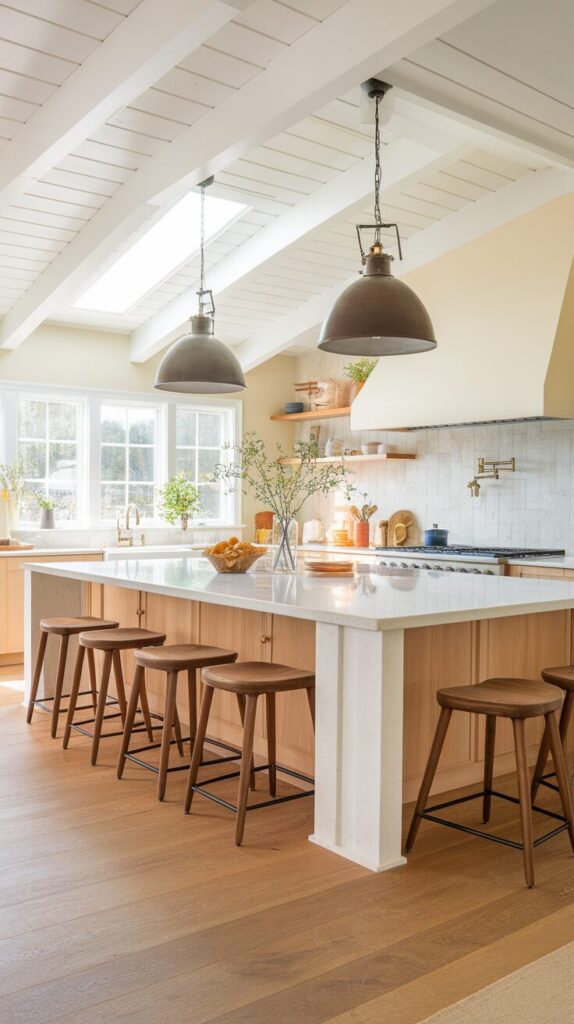
A kitchen island acts like the social glue of an open layout. People naturally gather around it, whether they plan to help or just steal snacks.
I love islands because they define the kitchen zone without walls. They create structure while keeping the openness intact, which feels like the best of both worlds.
Island Design Tips That Actually Matter
Not all islands work equally well, and size matters more than people admit. I once saw an island so big it blocked traffic and killed the vibe.
Focus on these essentials:
- Leave at least 36 to 42 inches of clearance around all sides.
- Add seating on one side to encourage casual interaction.
- Use storage wisely with drawers instead of deep cabinets.
A well sized island makes the kitchen feel intentional instead of crowded.
3. Open Shelving for Light and Personality
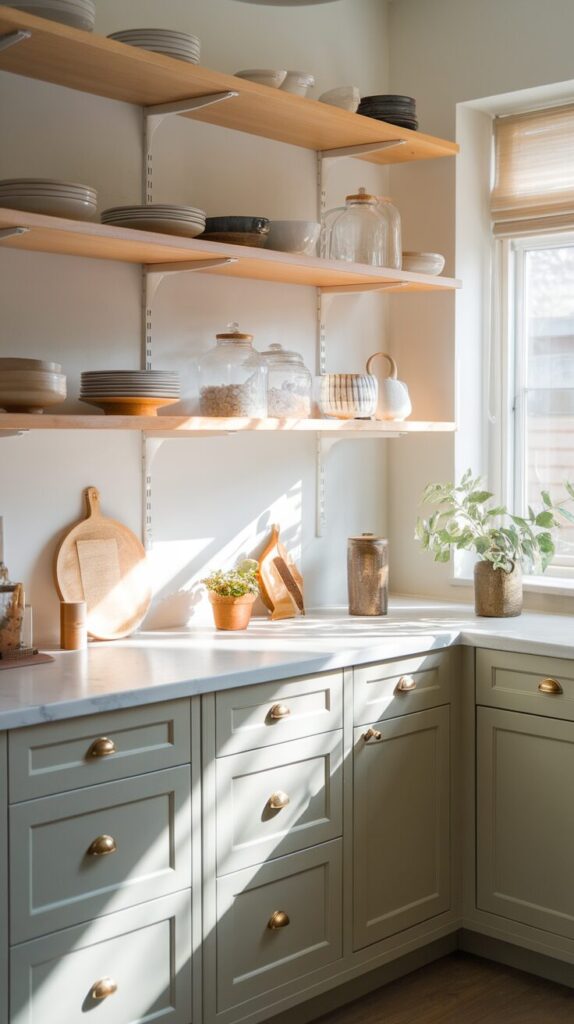
Open shelves instantly make a kitchen feel lighter and more personal. They remove bulky visual weight and let walls breathe.
I love how shelves show off dishes you actually use instead of hiding everything behind doors. Ever noticed how a few pretty bowls can feel more welcoming than a wall of cabinets?
Keeping Open Shelves From Looking Messy
Let us be honest for a second. Open shelves can look awful if you treat them like storage dumps.
Here is what keeps them stylish:
- Limit items to daily essentials and a few decorative pieces.
- Stick to a color theme so nothing looks random.
- Leave negative space instead of filling every inch.
IMO, shelves work best when you curate them like a mini gallery.
4. Unified Color Palettes Across Spaces
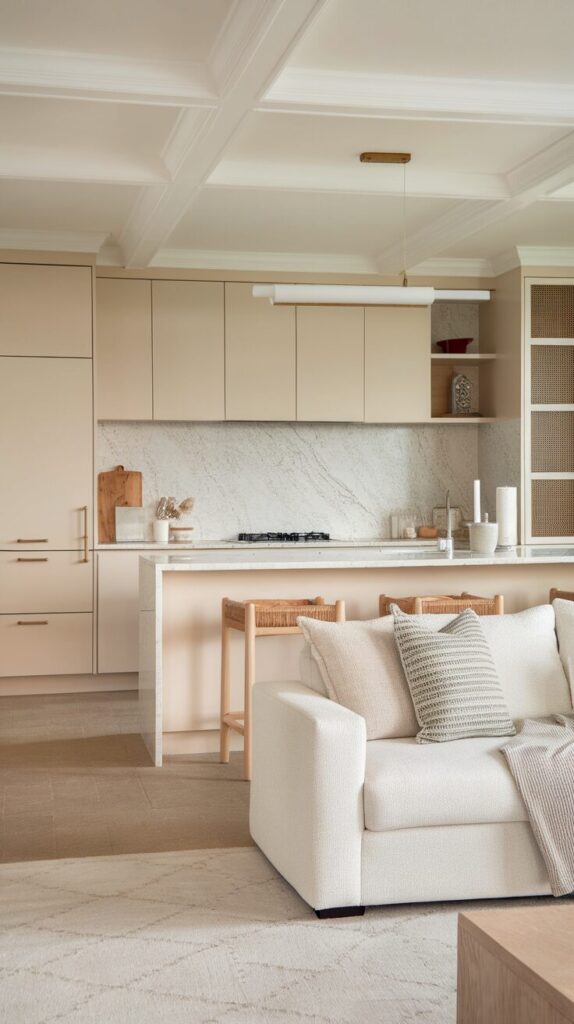
Color connects open kitchens more than any other design choice. When hues flow smoothly, the space feels calm and cohesive.
I once experimented with bold contrast between my kitchen and living area, and it felt jarring fast. Once I unified the palette, the whole place relaxed visually.
Choosing Colors That Expand the Space
Light neutrals work beautifully, but you do not need to play it safe. You just need consistency.
Great options include:
- Soft whites and warm beiges for timeless openness.
- Muted greens or blues for calm, nature inspired vibes.
- Wood tones repeated throughout for warmth and continuity.
Consistency creates harmony without killing personality.
5. Smart Lighting That Defines Zones
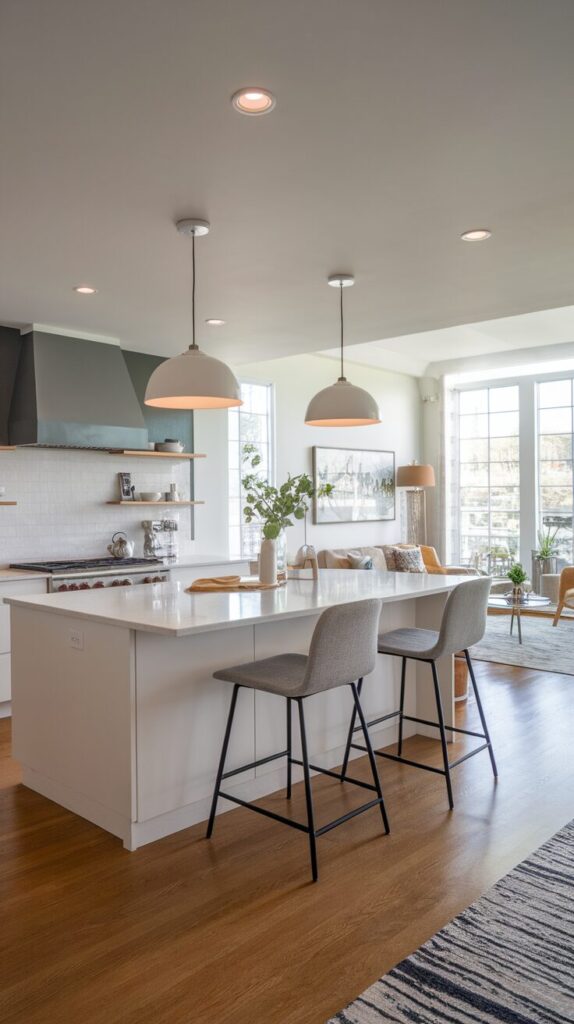
Lighting does more than brighten a room. It tells your eyes where one area ends and another begins.
In open kitchens, I always layer lighting to create subtle separation. Ever wondered why some open spaces feel cozy while others feel flat?
Lighting Layers That Actually Work
Use a mix of lighting types instead of relying on ceiling lights alone:
- Pendant lights over the island to anchor the kitchen visually.
- Recessed lighting for overall brightness.
- Accent lamps in the living area for warmth and contrast.
Lighting zones give structure without walls, and that balance feels powerful.
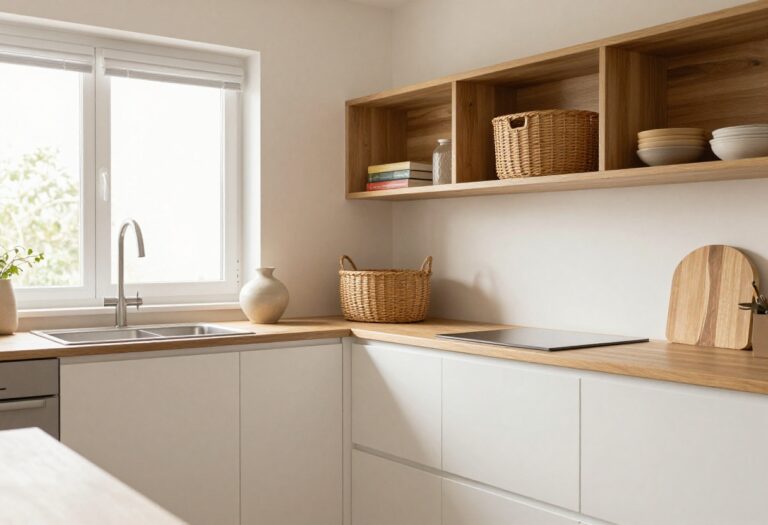
6. Minimalist Cabinetry for a Cleaner Look
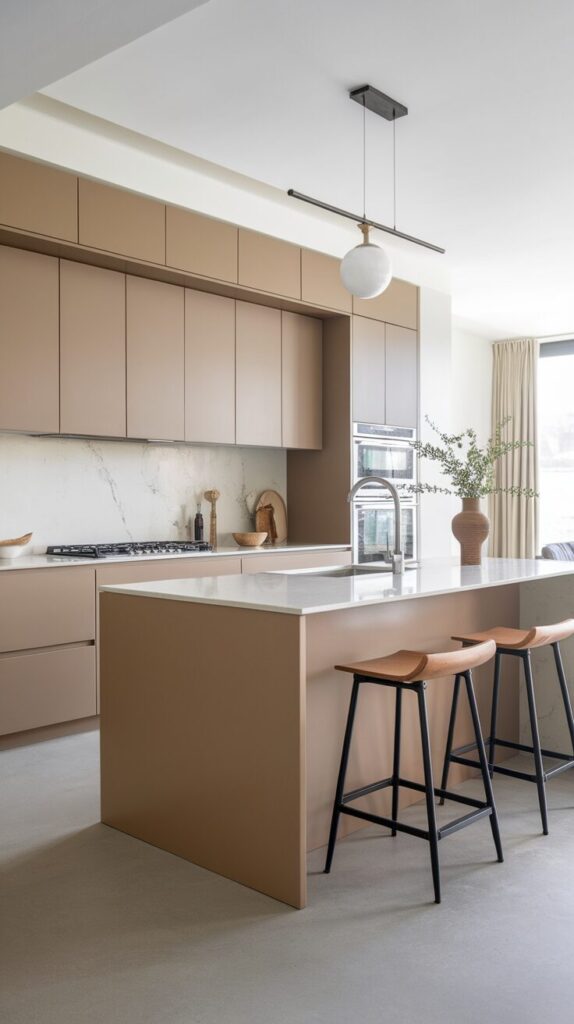
Bulky cabinets can crush the airy vibe of an open kitchen. Sleek, minimalist cabinetry keeps things visually calm.
I switched to flat panel cabinets once, and the difference shocked me. The kitchen suddenly felt modern, spacious, and easier on the eyes.
Cabinet Features That Enhance Openness
Look for designs that fade into the background:
- Handle less or integrated pulls for clean lines.
- Matte finishes that reduce glare and visual noise.
- Tall cabinets limited to one wall to avoid crowding.
Minimalist cabinets let the space breathe while staying functional.
7. Natural Materials That Warm the Space
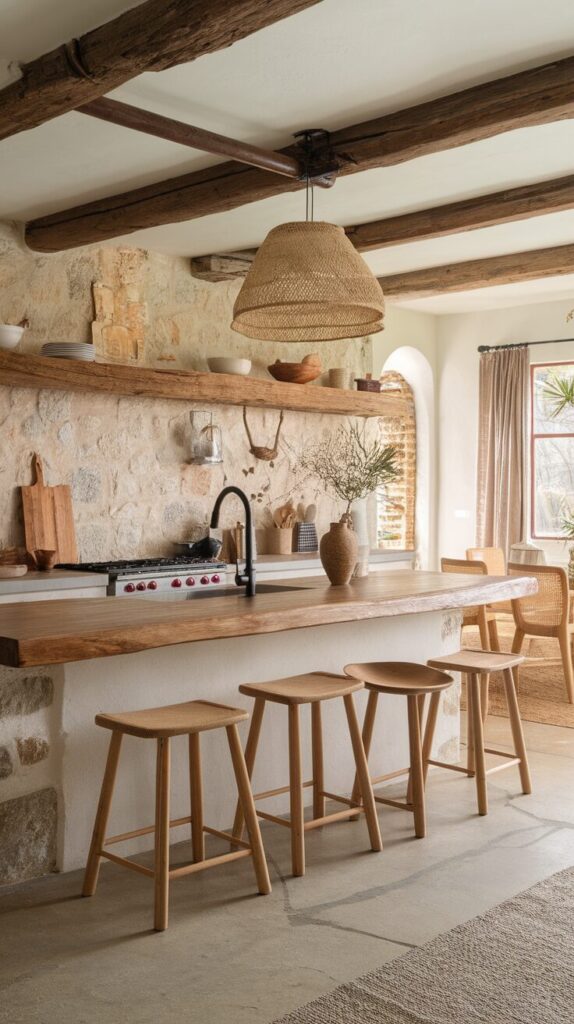
Open kitchens can feel cold if you lean too modern. Natural materials fix that problem instantly.
I always recommend wood, stone, or textured finishes to soften the openness. Who wants a space that looks great but feels sterile?
Best Materials for Balanced Warmth
These materials add depth without heaviness:
- Wood beams or accents for organic warmth.
- Stone countertops with subtle veining.
- Woven textures in stools or lighting fixtures.
Natural elements make open kitchens feel lived in and inviting.
8. Glass Elements That Boost Light Flow
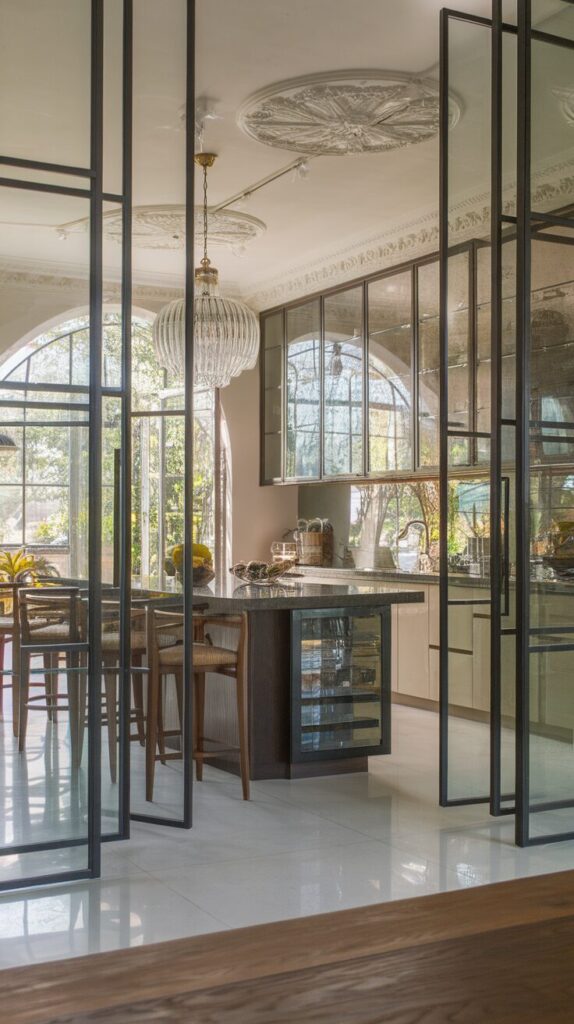
Glass works like magic in open layouts. It keeps visual connection while controlling sound or smells when needed.
I love glass partitions because they feel almost invisible. You keep openness while gaining flexibility, which feels like a design cheat code.
Where Glass Makes the Biggest Impact
Try glass in strategic spots:
- Glass backsplashes that reflect light.
- Partial glass walls for subtle separation.
- Glass cabinet doors to lighten storage areas.
Glass keeps the space airy without sacrificing practicality.
9. Hidden Storage to Reduce Visual Clutter
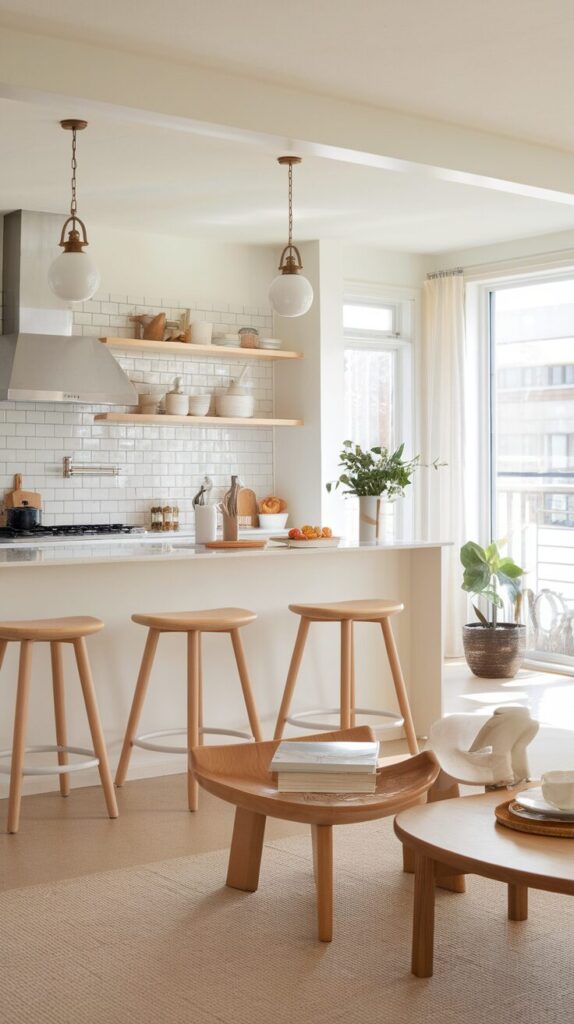
Clutter kills open kitchens faster than anything else. Hidden storage keeps surfaces calm and clean.
I learned this the hard way when my counters turned into chaos magnets. Once I added smarter storage, the whole space felt calmer.
Storage Solutions That Actually Help
Focus on function first:
- Deep drawers for pots and pans instead of cabinets.
- Pull out pantry units for easy access.
- Appliance garages to hide everyday tools.
Less clutter equals more breathing room, both visually and mentally.
10. Flexible Furniture for Evolving Spaces
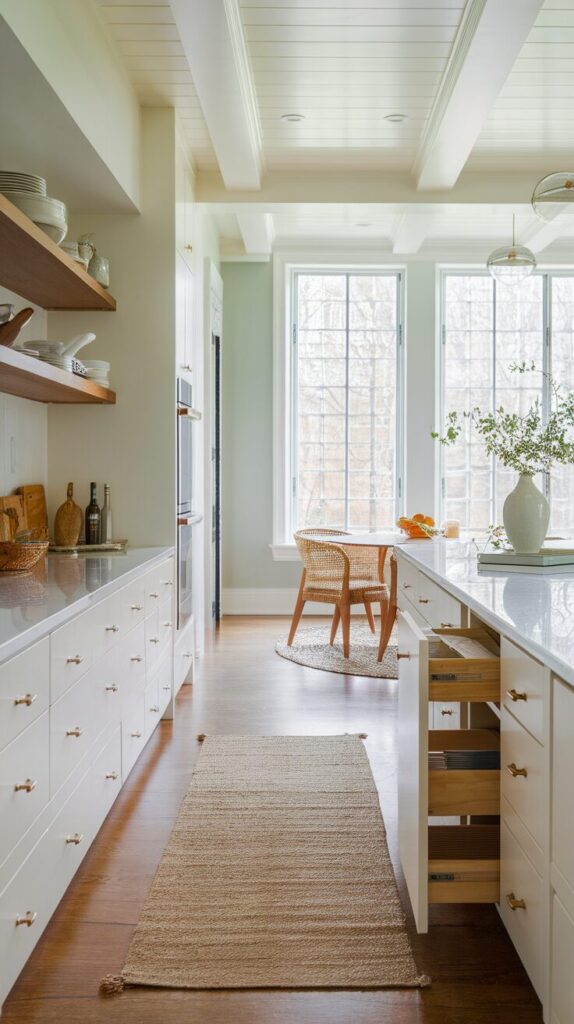
Open kitchens thrive on flexibility. Furniture that adapts keeps the space useful for years.
I love movable stools, extendable tables, and modular seating. Ever hosted guests and wished the layout could shift instantly?
Furniture Choices That Keep Things Dynamic
Look for pieces that multitask:
- Backless stools that tuck away easily.
- Extendable dining tables for gatherings.
- Lightweight chairs that move without effort.
Flexible furniture keeps your open kitchen feeling fresh and functional.
Common Mistakes to Avoid With Open Kitchens
Open kitchens look amazing, but mistakes can ruin the experience fast. I want you to skip the regret phase entirely.
Here are pitfalls I see all the time:
- Ignoring ventilation, which traps odors everywhere.
- Over decorating, which clutters the openness.
- Poor acoustics, which amplify noise.
Plan thoughtfully, and you avoid turning a dream layout into a daily annoyance.
How Open Kitchens Improve Everyday Living
Open kitchens change daily routines in subtle but powerful ways. You feel more connected, relaxed, and engaged at home.
I noticed I cooked more, entertained more, and stressed less once my kitchen opened up. FYI, that lifestyle shift surprised me more than the design itself.
Open spaces encourage togetherness without forcing it, and that balance feels just right.
Budget Friendly Tips for Creating an Open Kitchen
You do not need a massive renovation budget to achieve an airy, connected feel. Small changes can deliver big results.
I started with paint, lighting, and layout tweaks before touching walls. Those early wins kept motivation high.
Affordable Changes That Make a Difference
Try these budget conscious moves:
- Repaint cabinets in lighter tones.
- Swap bulky light fixtures for sleek pendants.
- Remove unnecessary upper cabinets on one wall.
Small steps still create noticeable openness.
Is an Open Kitchen Right for You?
Open kitchens shine for social households, families, and anyone who loves visual flow. They might frustrate people who crave total separation.
Ask yourself this honestly. Do you enjoy shared spaces, or do you need quiet cooking zones?
I always suggest living in your space mentally before renovating. Picture your daily habits, not just the Instagram photos.
Frequently Asked Questions
Do open kitchens increase home value?
Yes, many buyers prefer open layouts because they create spacious, connected living environments. A well designed open kitchen often enhances resale appeal.
How do I reduce cooking smells in an open kitchen?
Install a high quality range hood with proper ventilation. Regular cleaning and good airflow significantly reduce lingering odors.
Are open kitchens good for small homes?
Absolutely. Open kitchens can make small homes feel larger when you use light colors, smart storage, and minimal visual clutter.
How can I create separation without walls?
Use islands, lighting, rugs, and ceiling design changes to define zones. These elements provide structure without sacrificing openness.
What flooring works best in open kitchen layouts?
Durable materials like engineered hardwood, luxury vinyl, or tile perform well and maintain visual continuity across connected spaces.
Do open kitchens require more cleaning?
They require consistent organization because everything stays visible. With proper storage solutions, maintenance becomes simple and manageable.
Final Thoughts
Open kitchens bring light, connection, and energy into a home when you design them with intention. I shared these ideas because I lived with the wins and learned from the mistakes, and I want you to skip the painful parts.
If you crave a space that feels social, airy, and alive, an open kitchen might just become your favorite place to be.