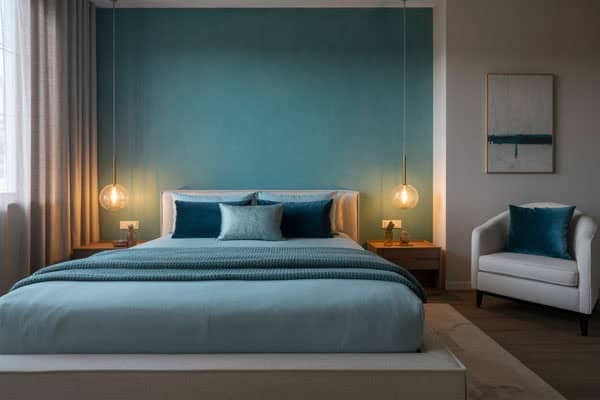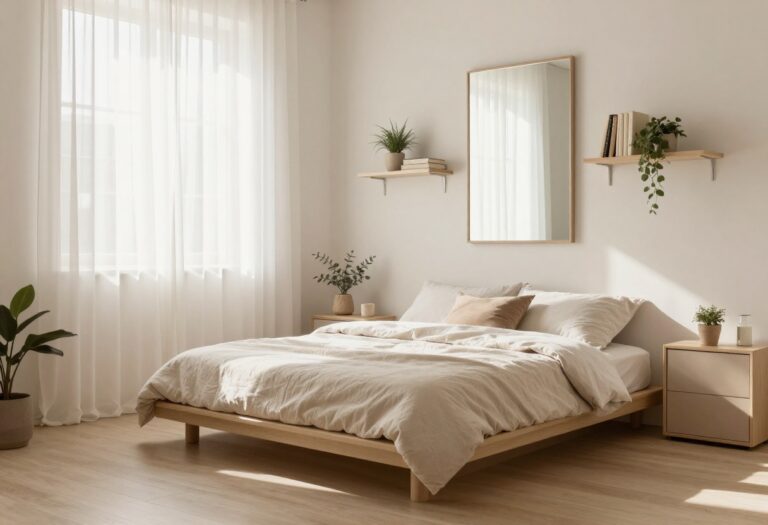
21 Relaxing Bedroom Ideas for a Peaceful Sleep Space
I know how it feels when your bedroom looks fine but never quite feels calming enough. You lie down, your body wants rest, but your mind stays wide awake and annoyingly busy.
I want to share ideas that actually work because I use many of them myself and I care way too much about good sleep.
I treat my bedroom like a recharge zone, not just a place to crash at night. Small design choices change how your brain reacts the moment you walk in.
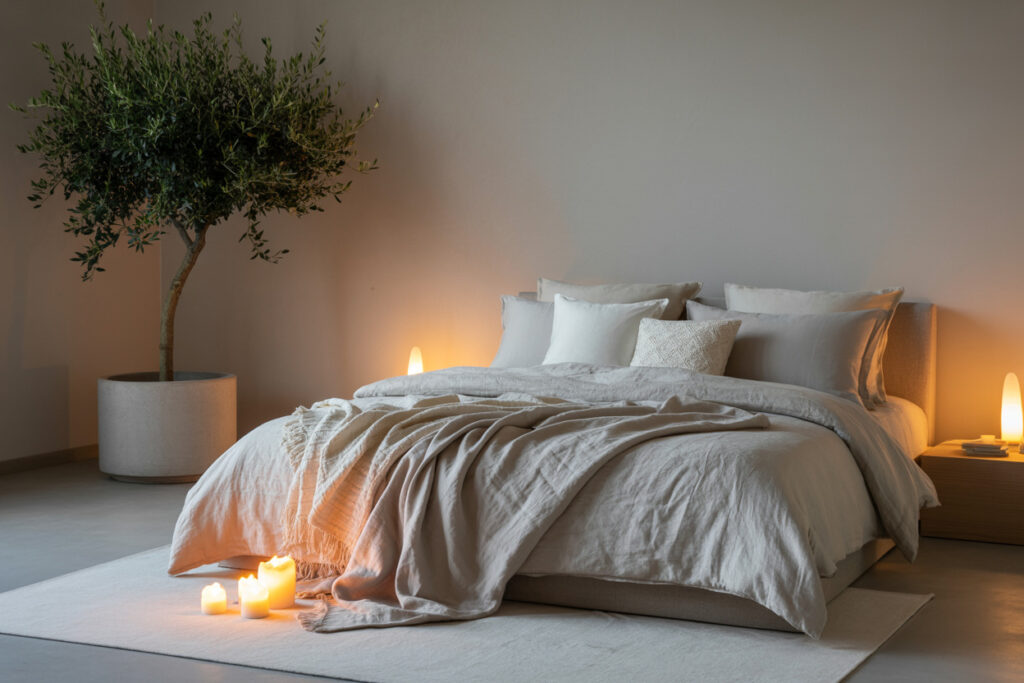
If you want deeper sleep and calmer mornings, these ideas will genuinely help.
1. Soft Neutral Color Palettes That Instantly Calm the Mind
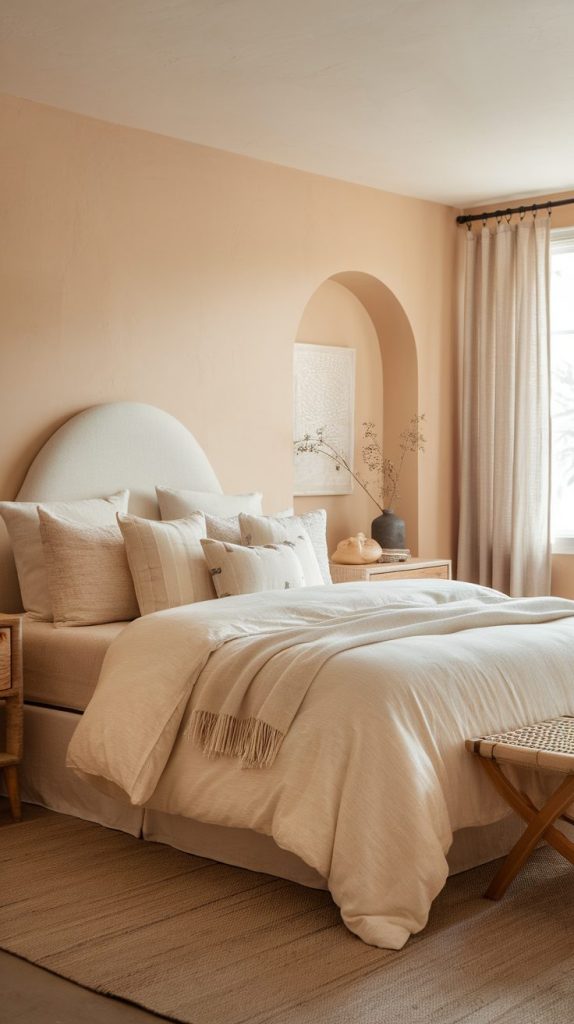
I always start with wall color because it sets the emotional tone of the entire room. Soft neutrals like warm beige, creamy off white, greige, and muted taupe relax the eyes instead of demanding attention.
Bright whites or bold colors might look trendy, but they keep your brain alert when it should slow down.
When I switched from cool gray to a warmer neutral, I noticed the difference within days. The room felt quieter even when nothing else changed. Your nervous system reacts to color faster than you realize, so choosing calming shades gives you a head start on better sleep.
Neutral colors also make everything else feel lighter and less cluttered. Your furniture blends in instead of shouting for attention. That visual calm reduces mental noise, which matters more at night than fancy décor.
If you worry that neutrals feel boring, trust me on this one. Texture, lighting, and fabric bring the personality back without ruining the calm vibe. IMO, boring walls beat restless nights every single time.
2. Layered Lighting That Supports Your Natural Sleep Cycle
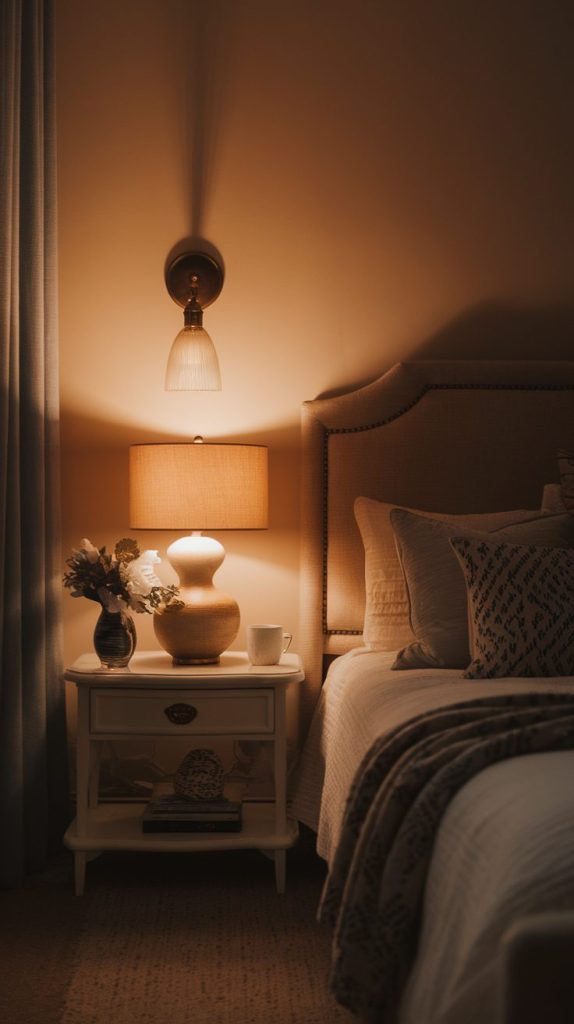
I feel strongly about lighting because overhead lights ruin sleep faster than people admit. A single harsh ceiling light keeps your brain in daytime mode. Layered lighting gives you control and lets your body ease into rest.
I use three main light sources in my bedroom every night. Table lamps create soft pools of light, wall sconces add gentle glow, and a dim overhead light stays off unless I clean. This setup feels cozy without feeling dark or depressing.
Warm bulbs matter more than fancy fixtures. Look for soft white or amber tones instead of bright white LEDs. Your eyes relax instantly, and your brain stops thinking it needs to stay alert.
I also avoid lights near eye level when I lie down. Light that hits your face directly tricks your brain into staying awake. Once I adjusted lamp heights, falling asleep felt easier and faster.
3. Cozy Bedding Layers That Make You Want to Stay Put
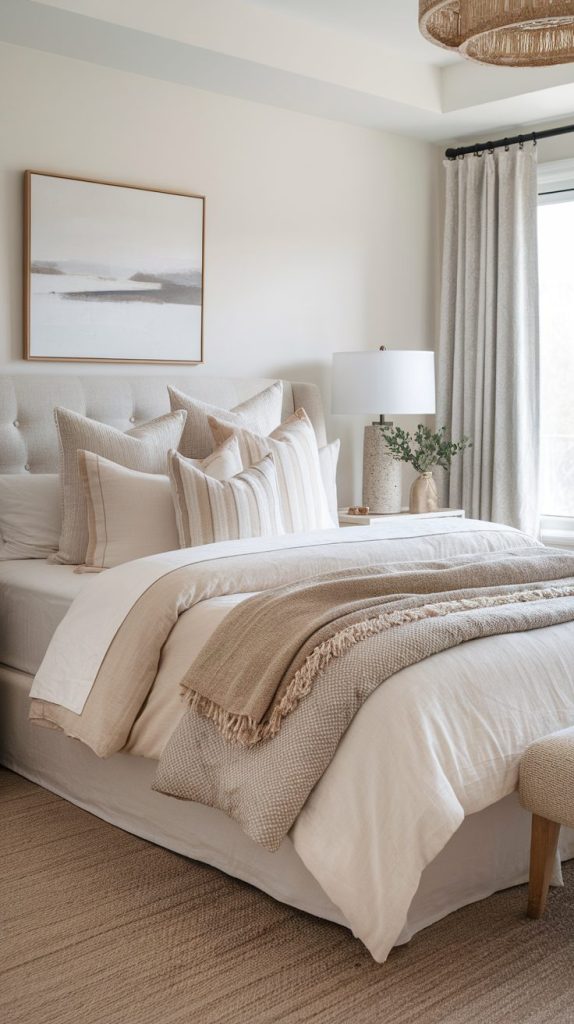
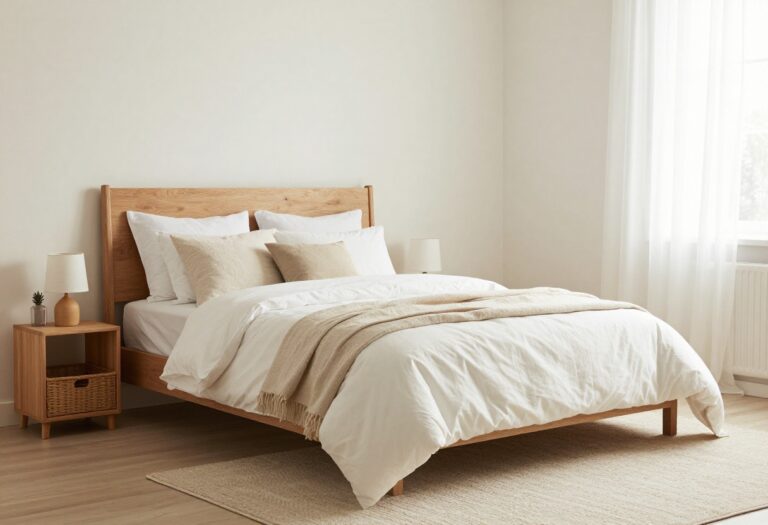
Bedding decides whether your bed feels inviting or forgettable. I treat my bed like the main event, not an afterthought. Layers create comfort, warmth, and that hotel feeling everyone secretly wants at home.
I always start with breathable sheets because sweaty sleep kills relaxation. Cotton percale or linen feels cool and soft without trapping heat. When sheets breathe well, your body temperature stays balanced all night.
Next comes a medium weight comforter or duvet that feels fluffy but not heavy. I avoid overly thick comforters because they restrict movement. A relaxed body sleeps better than a trapped one.
I finish with a throw blanket at the foot of the bed for flexibility. On cooler nights, I pull it up without overheating. This simple layering trick keeps sleep comfortable year round.
4. Minimal Furniture Layouts That Let the Room Breathe
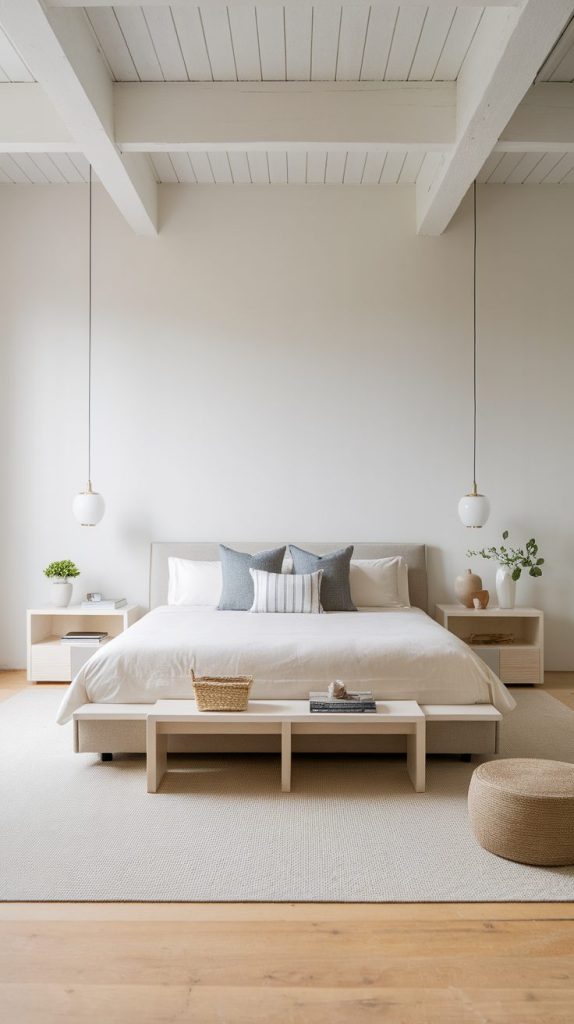
Too much furniture stresses the brain even when you don’t notice it consciously. I learned this after removing one unnecessary chair from my bedroom. The space instantly felt lighter and calmer.
I keep only what I actually use daily. A bed, nightstands, a dresser, and maybe one accent piece create balance without clutter. Every extra item steals visual space and mental calm.
I also leave clear walking paths around the bed. Bumping into furniture first thing in the morning annoys me more than it should. Clear space makes the room feel intentional instead of cramped.
If your room feels tight, try removing one piece before buying anything new. You might not miss it at all. Less furniture gives your eyes a place to rest, which helps your mind follow suit.
5. Natural Materials That Add Quiet Comfort
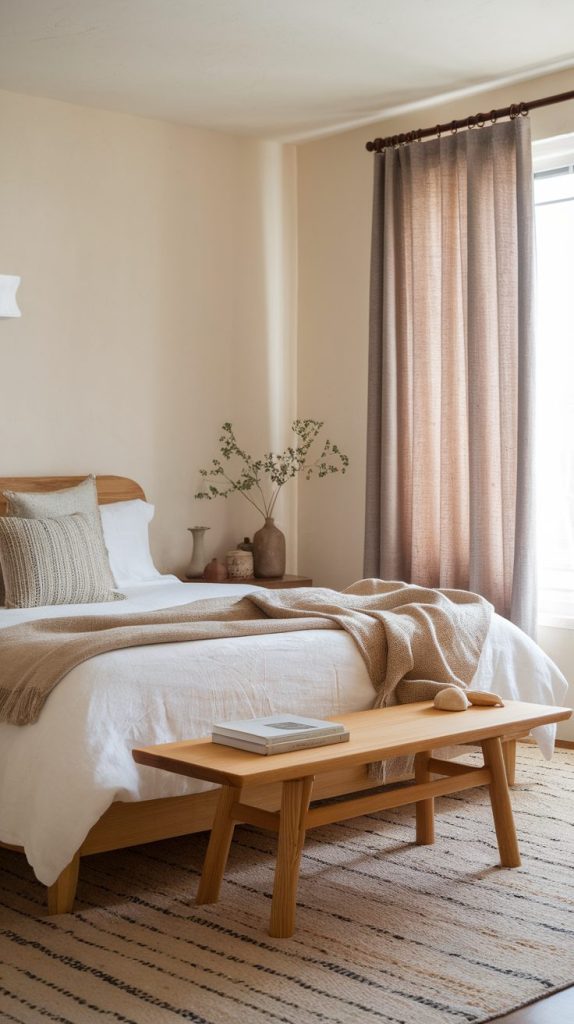
Natural materials bring warmth without visual chaos. Wood, cotton, linen, wool, and rattan all feel grounding. My brain relaxes faster in rooms that include these textures.
I prefer wood furniture with visible grain because it feels organic and calming. Glossy finishes and glass surfaces look sleek but feel cold at night. Warm materials support relaxation without effort.
Fabric choices matter just as much. Linen curtains soften light and add movement without drama. Wool rugs feel cozy under bare feet, which makes bedtime routines feel comforting.
Plants also count as natural elements, but I keep them simple. One or two easy plants add life without maintenance stress. A peaceful bedroom should never feel like another chore.
6. Decluttered Surfaces That Reduce Mental Noise
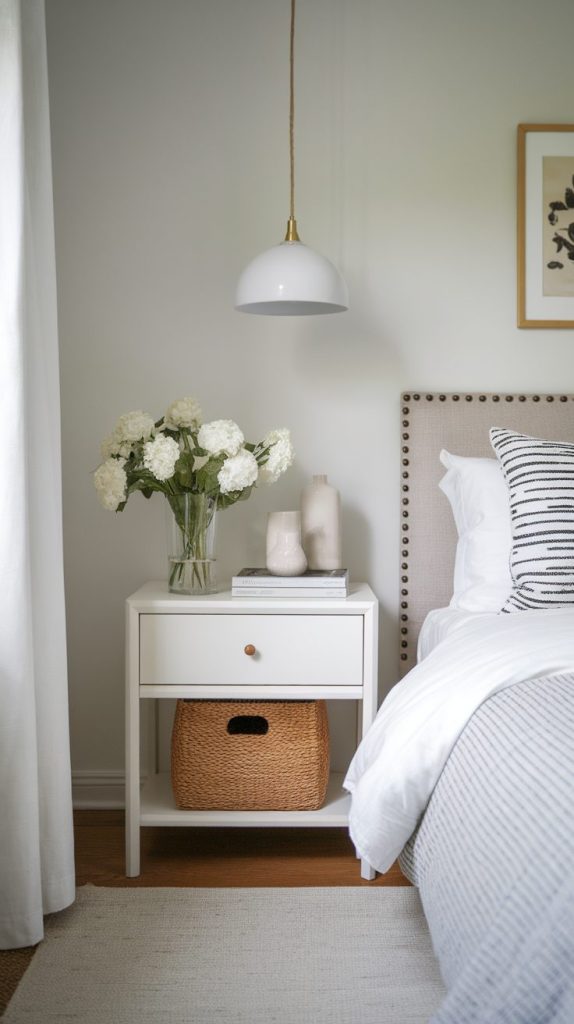
Clutter keeps your brain working even when you lie down. I learned this the hard way after trying to sleep next to stacks of books and random chargers. Once I cleared my nightstand, my sleep improved noticeably.
I keep only essentials on surfaces. A lamp, a book, and maybe a glass of water feel enough. Everything else lives inside drawers or baskets.
Hidden storage saves both space and sanity. Under bed drawers, closed nightstands, and storage benches keep clutter out of sight. When your eyes see less, your mind follows along.
I do a quick reset every evening. Two minutes of putting things away sets the tone for rest. This habit feels small but pays off every single night.
7. Soft Window Treatments That Control Light and Privacy
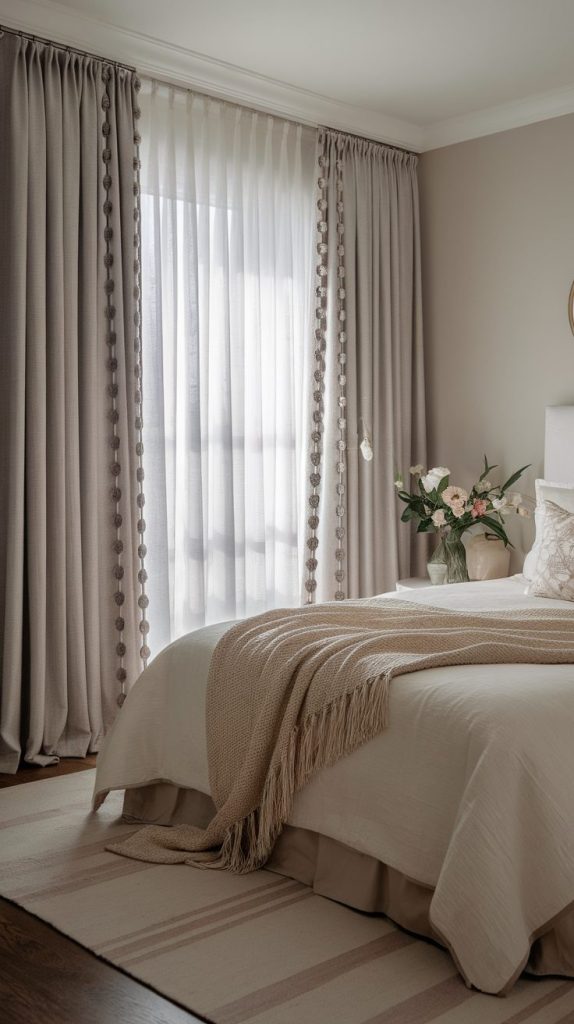
Light control matters more than people think. Early morning sun or streetlights can wreck deep sleep. I use layered window treatments to manage both light and privacy.
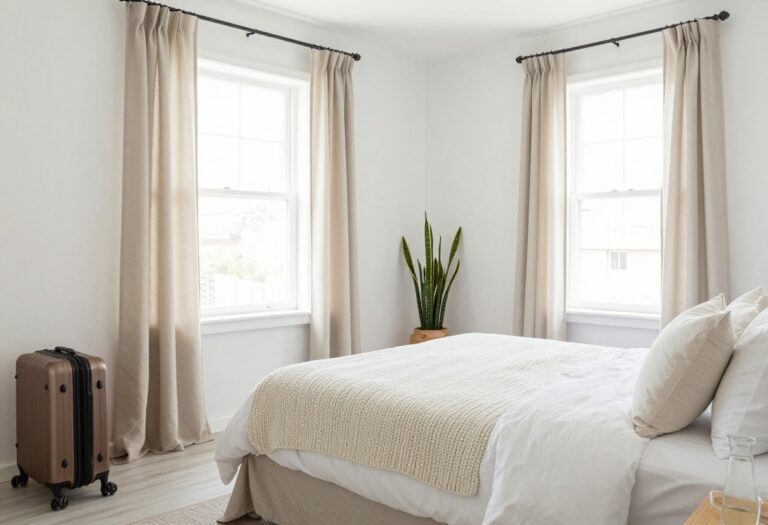
Sheer curtains filter daylight without blocking it completely. They keep the room bright during the day while still feeling soft. At night, blackout curtains handle the real work.
I avoid stiff blinds because they feel harsh and noisy. Fabric curtains move gently and soften the entire room. That softness helps the space feel more relaxing.
Good window treatments also help with temperature control. They block drafts and excess heat, which keeps sleep more consistent. Better sleep often starts with better windows.
8. Calm Artwork That Doesn’t Demand Attention

Artwork sets emotional tone just like color does. I avoid loud art in bedrooms because it keeps my mind active. Calm visuals help my thoughts slow down naturally.
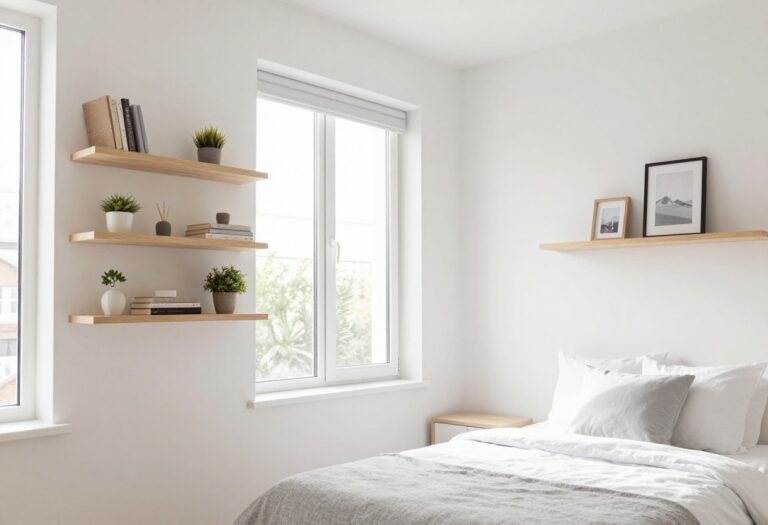
Abstract landscapes, soft photography, or simple line art work best. These pieces create mood without telling a story your brain wants to finish. Visual quiet supports mental rest.
I also limit how many pieces hang on the wall. One or two thoughtful pieces beat a gallery wall in a sleep space. Too many visuals create subtle stress.
If you feel unsure, choose art that makes you breathe deeper. Your body usually knows what calms it. Trust that reaction over trends.
9. Comfortable Rugs That Warm Up the Space
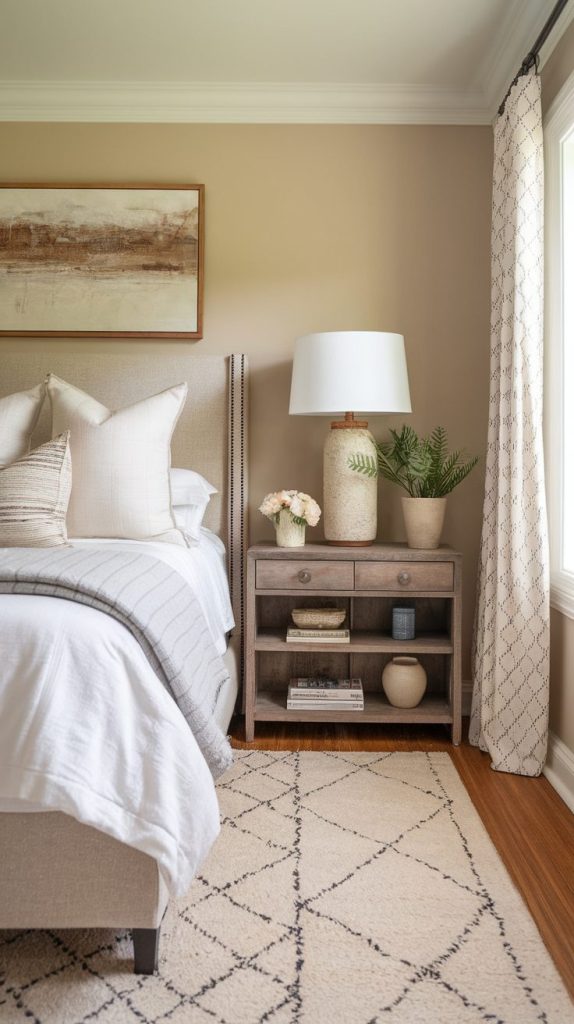
Cold floors shock me awake in the morning, and I hate that feeling. A soft rug beside the bed fixes that instantly. Rugs also soften sound and improve overall comfort.
I prefer medium pile rugs because they feel plush without trapping dust. Natural fibers like wool last longer and feel better underfoot. Texture adds comfort without clutter.
Rugs also help define the sleeping area visually. This grounding effect makes the bed feel like a cozy zone instead of floating in space. Visual boundaries promote calm.
Choose neutral or muted patterns to keep things relaxing. Busy patterns add unnecessary stimulation. Your bedroom should whisper, not shout.
10. A Dedicated Nighttime Routine Corner
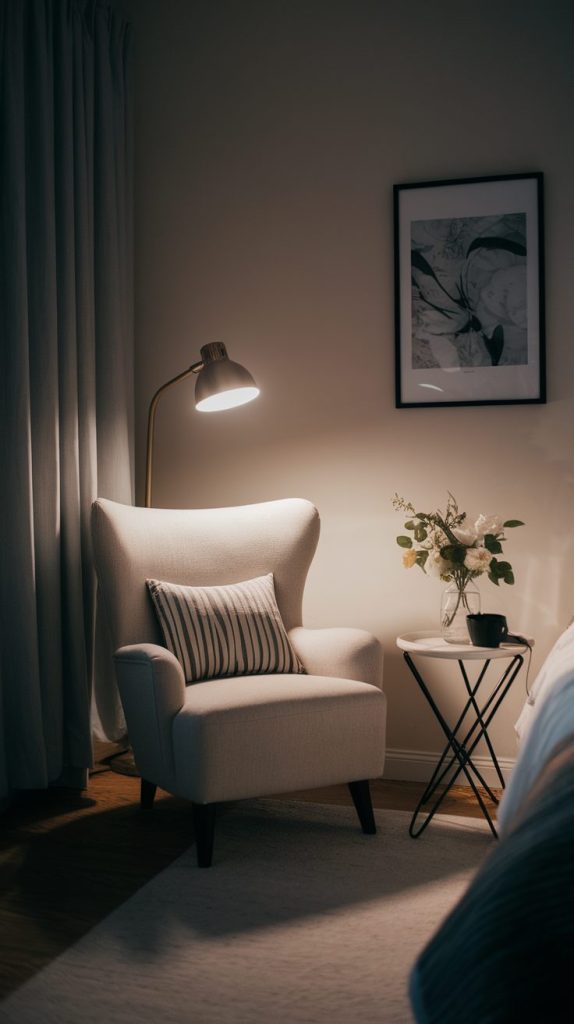
I like having a small area that signals bedtime to my brain. This might sound dramatic, but it works. A chair, lamp, and book create a clear wind down zone.
I use this corner for reading or light stretching before bed. My brain starts associating that spot with relaxation. This mental cue makes falling asleep easier later.
Keeping screens out of this space matters. Phones ruin the calm instantly. This corner exists only for slowing down.
Even small rooms can support this idea. A single chair and lamp can change how the entire room feels at night.
11. Scent Choices That Encourage Relaxation

Smell affects sleep more than people admit. Certain scents calm the nervous system naturally. I use this trick often.
Lavender, chamomile, and sandalwood work best for me. I use them lightly through candles or essential oil diffusers. Strong scents overwhelm instead of relax.
I always stop scents at least thirty minutes before sleep. This gives my brain time to settle without stimulation. Balance matters here.
Your nose knows what works for you. Test gently and adjust slowly. The right scent turns bedtime into a ritual instead of a struggle.
12. Sound Control for Deeper Rest
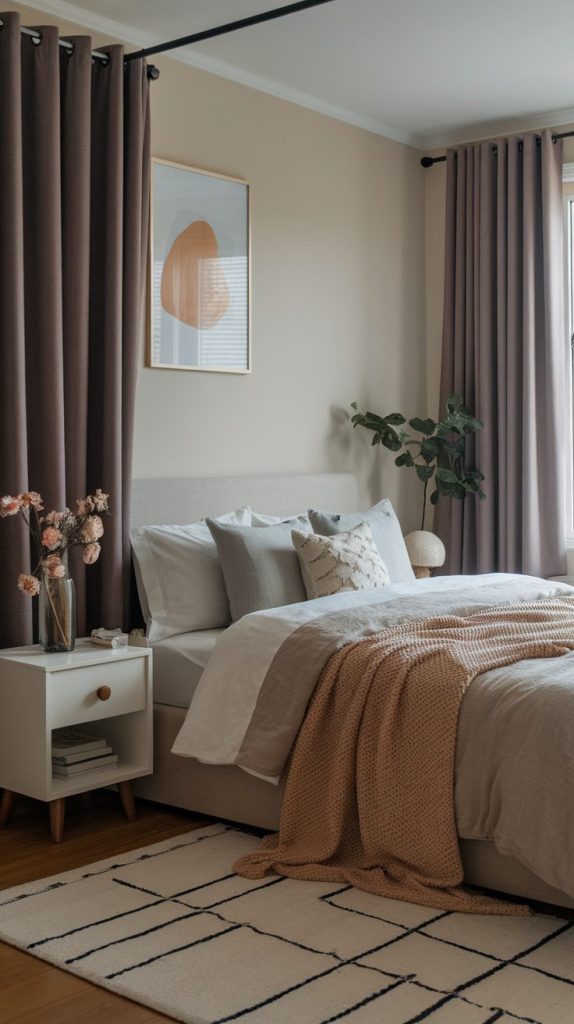
Noise disrupts sleep even when you think you ignore it. I use soft sound control to protect my sleep quality. Silence feels great, but consistency works better.
White noise or soft nature sounds block sudden noises. I keep volume low so it blends into the background. This steady sound helps my brain relax.
Soft furnishings also absorb sound naturally. Rugs, curtains, and upholstered furniture reduce echo. This quiet warmth improves sleep quality.
If noise bothers you, address it intentionally. Sleep deserves that effort.
13. Comfortable Mattress and Pillow Choices
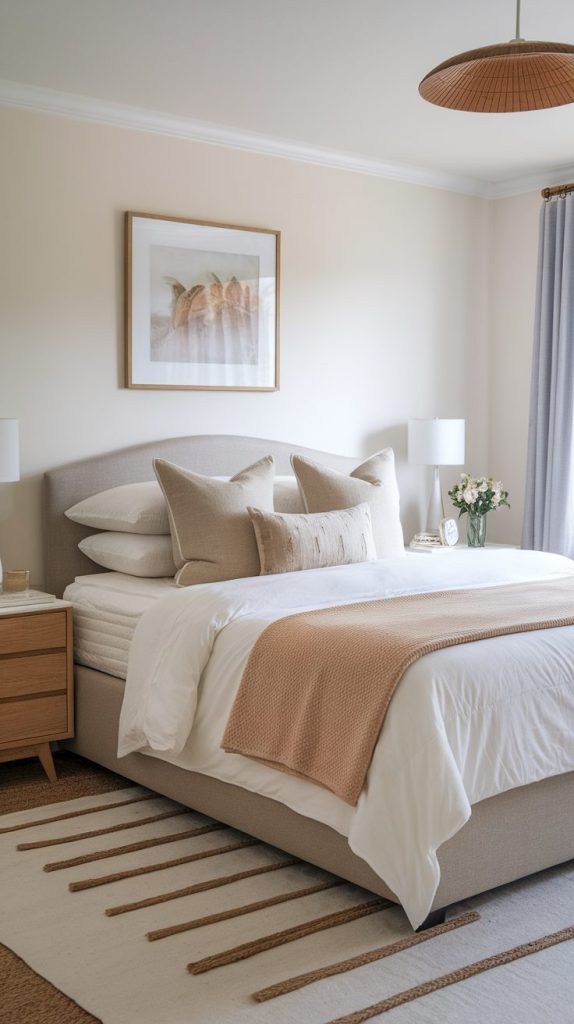
No décor fixes a bad mattress. I learned that lesson the expensive way. Comfort always beats looks when it comes to sleep.
I choose medium firmness mattresses because they support without stiffness. Pillow height matters just as much. Neck comfort decides sleep quality quickly.
I test pillows carefully and replace them regularly. Old pillows sabotage alignment and comfort. Fresh support improves sleep instantly.
Listen to your body, not marketing claims. Your sleep tells the truth.
14. Temperature Control That Keeps Sleep Consistent

Temperature affects sleep more than most people realize, and I learned that after too many sweaty, restless nights. I keep my bedroom slightly cool because my body relaxes faster in cooler air. When the room feels stuffy, I toss and turn without even knowing why.
I aim for a comfortable cool range instead of freezing the space. Breathable sheets, lightweight blankets, and good airflow help maintain balance without overworking the AC. Heavy fabrics trap heat and ruin deep sleep.
I also switch bedding seasonally instead of stubbornly using the same setup all year. Linen and cotton work beautifully in warmer months, while layered duvets help during cooler seasons. This small adjustment keeps sleep steady and comfortable.
Even a simple ceiling fan makes a difference. Moving air prevents that stagnant feeling that disrupts rest. Consistent temperature equals consistent sleep, and that consistency matters more than most design choices.
15. Balanced Symmetry for Visual Calm
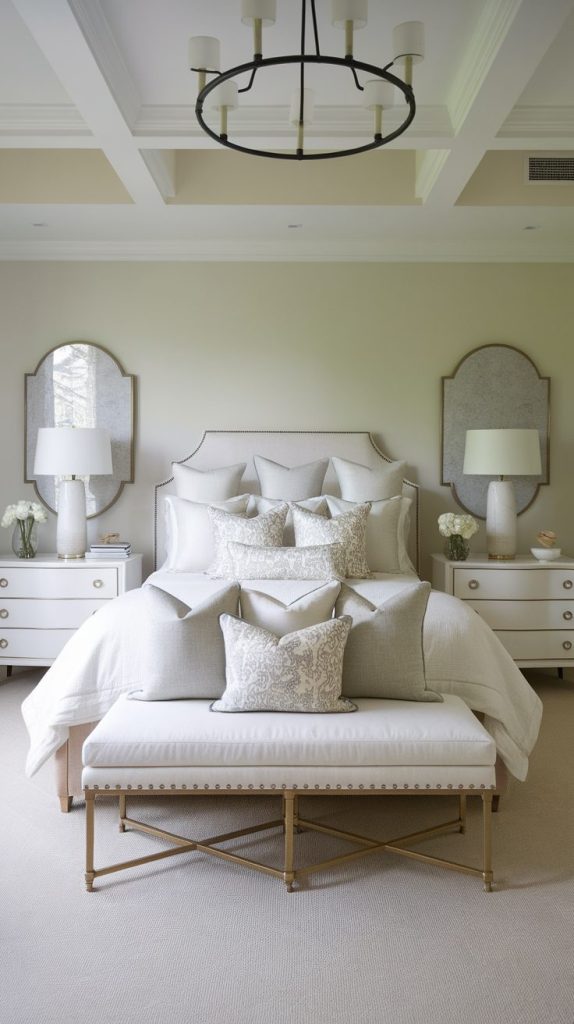
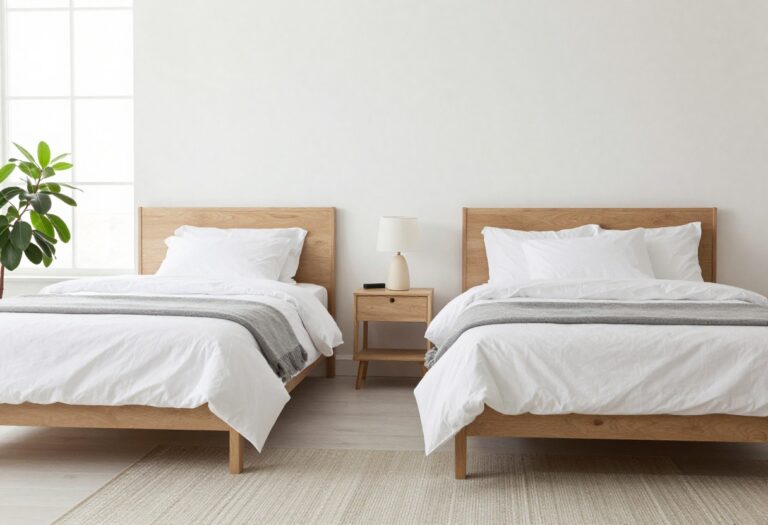
Symmetry calms the brain faster than people expect, and I use it intentionally in every bedroom setup. Matching nightstands and lamps instantly create a sense of order. That visual balance reduces subtle stress that cluttered layouts create.
When both sides of the bed mirror each other, the room feels stable and grounded. I avoid uneven arrangements that make one side look heavier or busier. Balance creates quiet harmony without extra effort.
You do not need identical furniture to achieve symmetry. Similar shapes, heights, and colors work just as well. The goal involves visual stability, not strict perfection.
Even simple symmetry like matching pillows or wall art helps. Your brain appreciates order at the end of a long day. Calm design often feels almost invisible, and that subtlety works beautifully in a sleep space.
16. Thoughtful Technology Placement
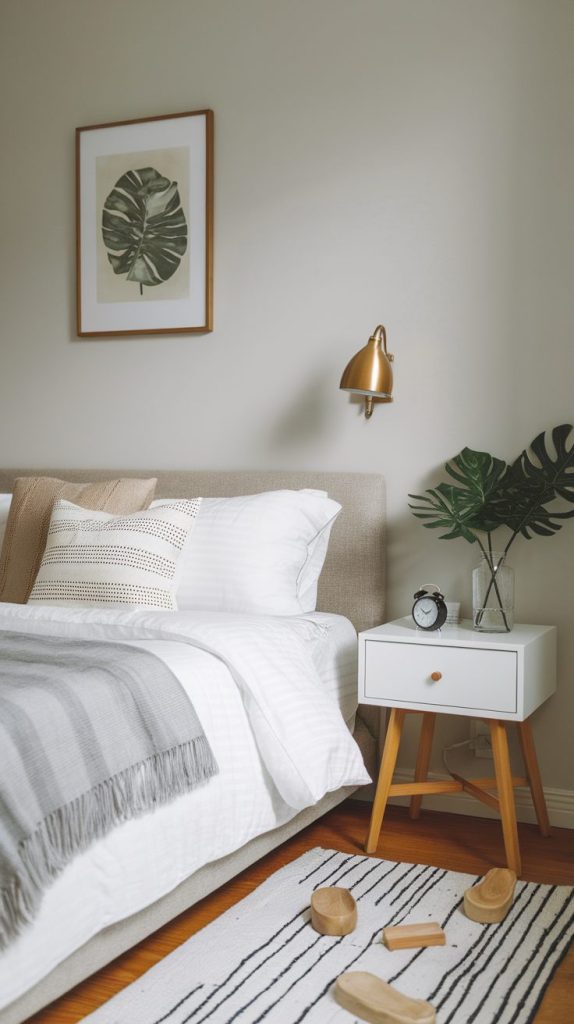
I limit technology in the bedroom aggressively because screens stimulate the brain more than we admit. I charge my phone across the room so I cannot mindlessly scroll at midnight. That small boundary protects my sleep better than any fancy gadget.
I replace my phone alarm with a simple clock. This removes temptation and keeps the bedroom focused on rest. Notifications have no place in a peaceful sleep space.
If you must keep devices nearby, dim them and silence alerts. Blue light delays sleep and disrupts your natural rhythm. Protecting your rest requires intentional choices.
I also avoid placing a TV directly in front of the bed. Bedrooms should signal relaxation, not entertainment marathons. Clear boundaries between tech and rest improve sleep quality dramatically.
17. Personalized Comfort Details
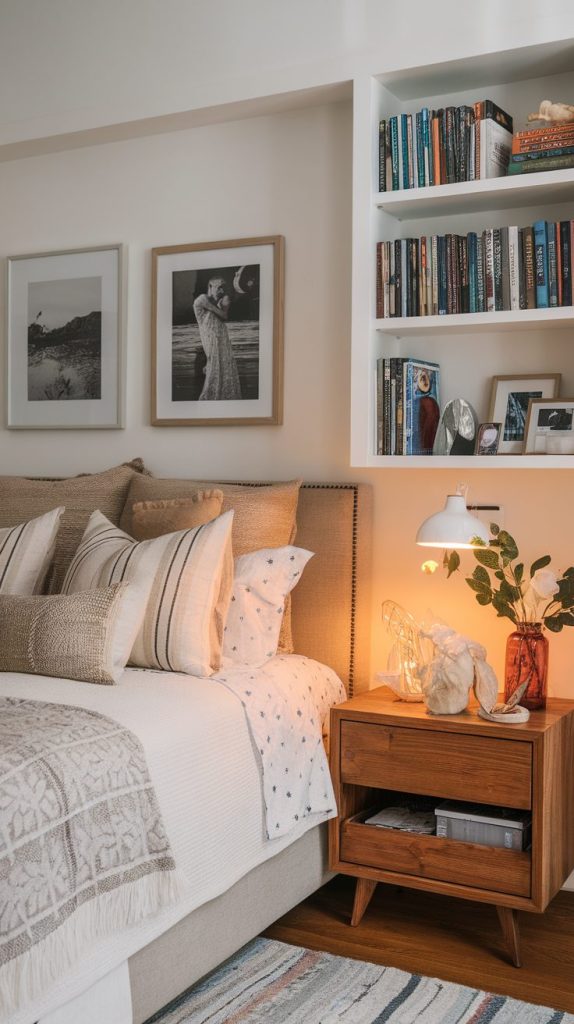
Personal comfort beats strict design rules every single time. I keep items in my bedroom that make me feel grounded and safe. A favorite throw, a meaningful book, or a small framed photo adds emotional warmth.
These personal touches create connection without cluttering the space. I choose a few meaningful items instead of displaying everything I own. Intentional décor feels calm while random items feel chaotic.
I also consider textures that comfort me personally. Soft knit blankets or smooth cotton pillowcases bring quiet joy. Your body reacts to textures faster than your mind does.
Choose pieces that make you exhale deeply when you see them. That subtle physical reaction tells you the space supports you. A peaceful bedroom should feel personal, not staged.
18. Clean Air and Proper Ventilation
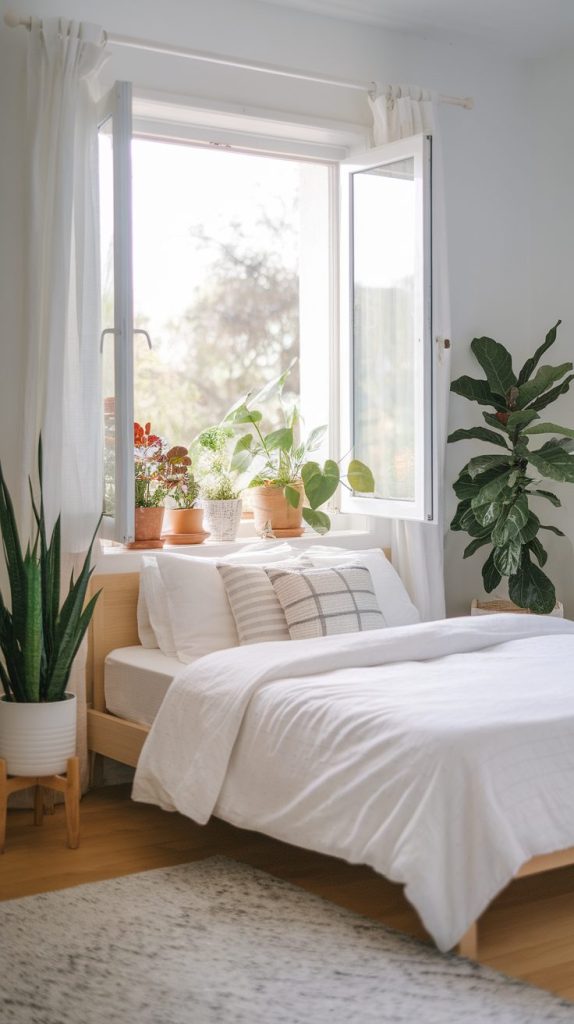
Fresh air transforms a bedroom instantly, and I notice the difference every time I open a window. Stale air makes a room feel heavy and uncomfortable. Clean airflow supports deeper, more refreshing sleep.
I open windows daily whenever weather allows. Even fifteen minutes of circulation improves the atmosphere. Fresh oxygen feels energizing during the day and calming at night.
If outdoor air quality concerns you, use an air purifier. A good purifier reduces dust and allergens that disrupt breathing. Better breathing equals better rest.
I also wash bedding regularly to maintain air freshness. Clean fabrics reduce allergens and improve overall comfort. Sleep thrives in clean, breathable environments.
19. Consistent Bedroom Color Story
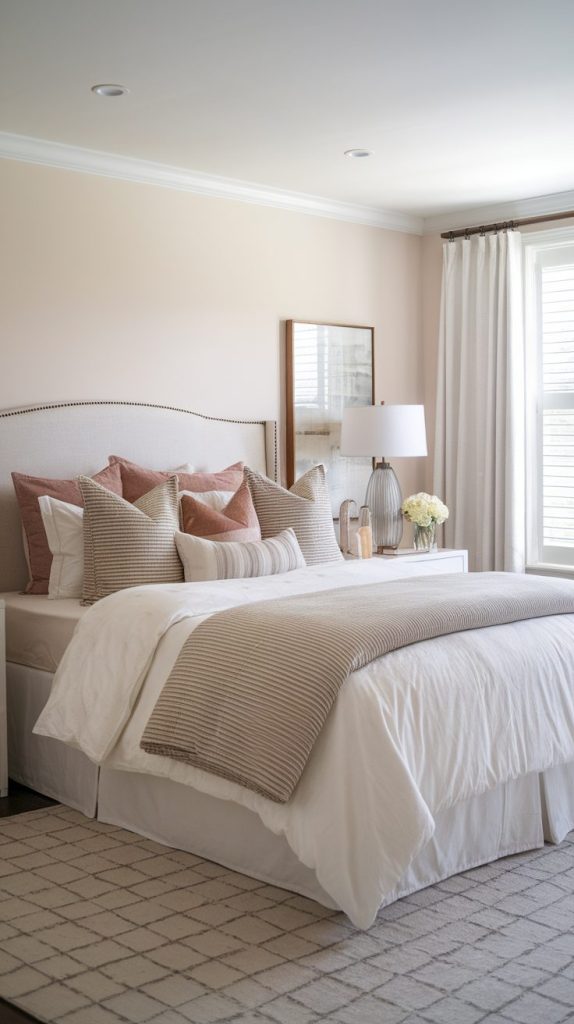
Color consistency keeps the room visually calm and cohesive. I avoid mixing too many contrasting shades because they compete for attention. Harmony supports relaxation without effort.
I repeat tones across bedding, curtains, and décor for subtle flow. When colors connect naturally, the room feels intentional. This quiet coordination helps the mind settle.
Accent colors work best when used sparingly. I stick to one or two secondary tones at most. Overcomplicating color schemes often creates subtle tension.
When in doubt, simplify. A restrained palette always feels more peaceful than a busy one. Calm design depends on consistency more than creativity.
20. Simple Morning Light Access
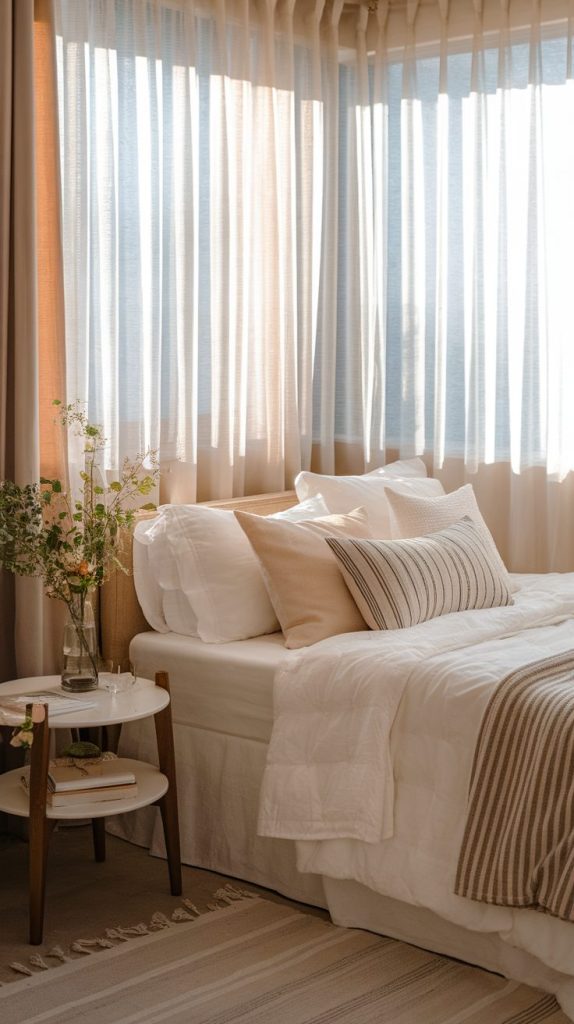
Morning light plays a huge role in sleep quality, and I design my bedroom with that in mind. I allow natural light to enter easily in the morning. This exposure resets my internal clock.
I use blackout curtains at night but open them fully after waking. Sunlight signals the body to start the day naturally. This rhythm supports deeper sleep the following night.
Positioning the bed where soft morning light reaches it helps gently wake the body. Harsh light feels jarring, so I prefer filtered sunlight. Balance matters here.
Design that supports biology always wins. When your bedroom aligns with natural light cycles, sleep improves without extra effort. Your body appreciates that consistency.
21. A Bedroom That Feels Like You
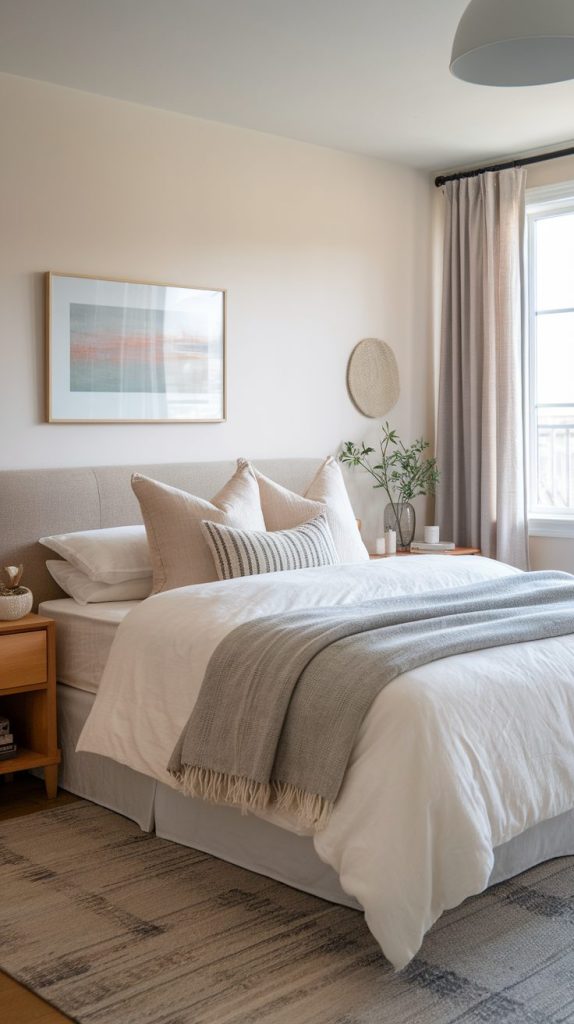
At the end of the day, your bedroom must reflect your comfort, not someone else’s Pinterest board. I design mine for rest first and aesthetics second. Sleep quality always takes priority.
I avoid chasing trends that feel disconnected from my personality. When a room feels authentic, relaxation follows naturally. Forced design choices rarely feel calming.
Ask yourself whether the space makes you feel safe and relaxed. If it does, you succeeded. If not, adjust until it does.
A peaceful sleep space supports who you are, not who you think you should be. Comfort and authenticity create rest more effectively than perfection ever could.
The Peaceful Sleep Design Strategy: A Simple Foundation That Actually Works
You can’t create a relaxing bedroom by randomly buying soft blankets and hoping for the best. I follow a simple strategy that focuses on sleep first and aesthetics second. When you design with intention, every choice supports deeper rest instead of just looking pretty.
I use a three layer foundation whenever I refresh a bedroom. This structure keeps the space calm, functional, and aligned with how the body actually sleeps. You can apply it to any room size or budget.
Step 1: Support the Body First
Start with the non-negotiables that directly affect sleep quality. Focus on mattress comfort, pillow support, temperature control, and breathable bedding before you touch décor. If your body feels uncomfortable, no paint color will save your night.
I always test comfort before styling. When your body feels supported, everything else becomes an upgrade instead of a distraction.
Step 2: Calm the Senses Second
Next, control what your senses experience inside the room. Reduce harsh lighting, manage noise, soften textures, and limit visual clutter. This step transforms the bedroom from functional to truly restorative.
Your brain reacts instantly to sensory input. When you lower stimulation levels, you signal safety and relaxation without saying a word.
Step 3: Personalize Without Overstimulating
Finally, add personality carefully. Choose meaningful décor, calming artwork, and subtle color accents that feel like you. Keep personalization intentional instead of overwhelming.
I follow one simple rule here: if it energizes me, I move it to another room. Bedrooms should calm you, not inspire productivity.
Common Mistakes to Avoid When Designing a Relaxing Bedroom
People often sabotage their own sleep space without realizing it. I’ve made some of these mistakes myself, so I know how easy they sneak in. Avoiding them makes your peaceful bedroom ideas actually work long term.
1. Overdecorating the Space
Too many pillows, patterns, and decorative objects create visual noise. A bedroom filled with styling trends rarely feels restful. Simplicity always wins in sleep spaces.
You don’t need ten throw pillows to feel cozy. You need comfort and breathing room.
2. Using Cool or Harsh Lighting
Bright white bulbs feel clean during the day but aggressive at night. Cool lighting keeps your brain alert. Warm, dimmable lighting supports natural melatonin production.
I replaced bright bulbs once and felt the difference immediately. That small switch changed my entire nighttime mood.
3. Ignoring Clutter Hotspots
Nightstands, dressers, and corners attract clutter fast. When surfaces stay messy, your brain stays busy. Hidden storage solves this quickly.
A two-minute evening reset prevents chaos from building up. Small habits protect long-term calm.
4. Treating the Bedroom Like a Multi-Purpose Office
Working, eating, and scrolling in bed confuses your brain. Your mind needs clear boundaries. When you mix productivity with rest, sleep quality drops.
I keep my bedroom focused on rest only. That boundary protects my sleep every single night.
5. Following Trends Instead of Comfort
Trends look great online but don’t always feel good in real life. Oversized headboards, bold walls, and dramatic décor sometimes sacrifice comfort. Prioritize how the room feels over how it photographs.
Design should serve your sleep, not your social feed.
Why Bedroom Design Directly Impacts Sleep Quality
Most people underestimate how environment affects sleep cycles. Your bedroom constantly sends signals to your nervous system. Those signals either calm you down or keep you alert.
Light exposure controls melatonin production. Noise levels affect deep sleep phases. Temperature influences how often you wake during the night.
When you design intentionally, you support your body’s natural rhythms. This alignment improves not only sleep but also mood, focus, and energy the next day.
I always remind myself that the bedroom functions as a recovery space. Recovery deserves the same attention as productivity.
Budget-Friendly Ways to Create a Relaxing Bedroom
You don’t need a full renovation to improve your sleep space. Small upgrades often create the biggest impact. I prefer simple changes that feel intentional without draining your wallet.
Start with lighting adjustments. Swap cool bulbs for warm ones and add one soft lamp. That single upgrade instantly softens the mood.
Next, declutter surfaces and simplify bedding. Remove excess décor and keep only what feels calming. A cleaner space feels more luxurious even without new purchases.
Finally, rearrange furniture before buying anything. Better flow often solves discomfort issues. Sometimes a new layout creates more peace than new furniture.
Frequently Asked Questions
1. What is the most important element in a relaxing bedroom?
Comfort always comes first. A supportive mattress, breathable bedding, and proper temperature control affect sleep more than décor choices. Design should enhance comfort, not replace it.
2. What colors work best for a peaceful sleep space?
Soft neutrals, muted blues, gentle greens, and warm earth tones promote calm. Avoid overly bright or high-contrast colors near the bed. Subtle shades help the mind unwind naturally.
3. Should I remove all technology from my bedroom?
You don’t need to remove everything, but you should reduce stimulation. Keep screens away from the bed and avoid scrolling before sleep. Clear boundaries improve sleep quality significantly.
4. How do I make a small bedroom feel more relaxing?
Focus on decluttering and minimizing furniture. Use light, cohesive colors and layered lighting to create warmth. Small spaces feel peaceful when they stay simple and intentional.
5. Do blackout curtains really improve sleep?
Yes, they help regulate light exposure and prevent early wakeups. Darkness supports deeper sleep cycles and better melatonin production. Light control makes a noticeable difference.
6. How often should I refresh my bedroom setup?
Review your bedroom every season. Adjust bedding, lighting, and layout if sleep feels disrupted. Small seasonal updates maintain comfort year round.
Conclusion
Creating a peaceful bedroom doesn’t require perfection or expensive upgrades. Small thoughtful choices add up to better sleep and calmer nights. I focus on comfort, simplicity, and personal peace because sleep deserves respect.
If your bedroom feels restless, start with one change tonight. Your body will notice, and your mornings will thank you. Sleep well and enjoy the calm you create.