15 Dark Living Room Ideas for a Bold, Sophisticated Style
I know dark living rooms scare a lot of people, but I honestly think they get a bad rap. Dark doesn’t mean depressing, cave-like, or gloomy if you style it right. It actually feels cozy, confident, and a little bit dramatic in the best way.
If you love rooms that feel rich, layered, and intentional, dark living room ideas hit different. I’ve tried a few of these looks myself, and trust me, once you go dark, bright white walls start feeling a little boring.
Bold color choices often create more personality than safe, neutral spaces ever will.
A well-designed dark living room also feels incredibly relaxing after a long day. The deeper tones soften harsh lighting and create an atmosphere that feels warm and grounded. Instead of bouncing light everywhere, darker palettes pull the room together and make the entire space feel more intentional.
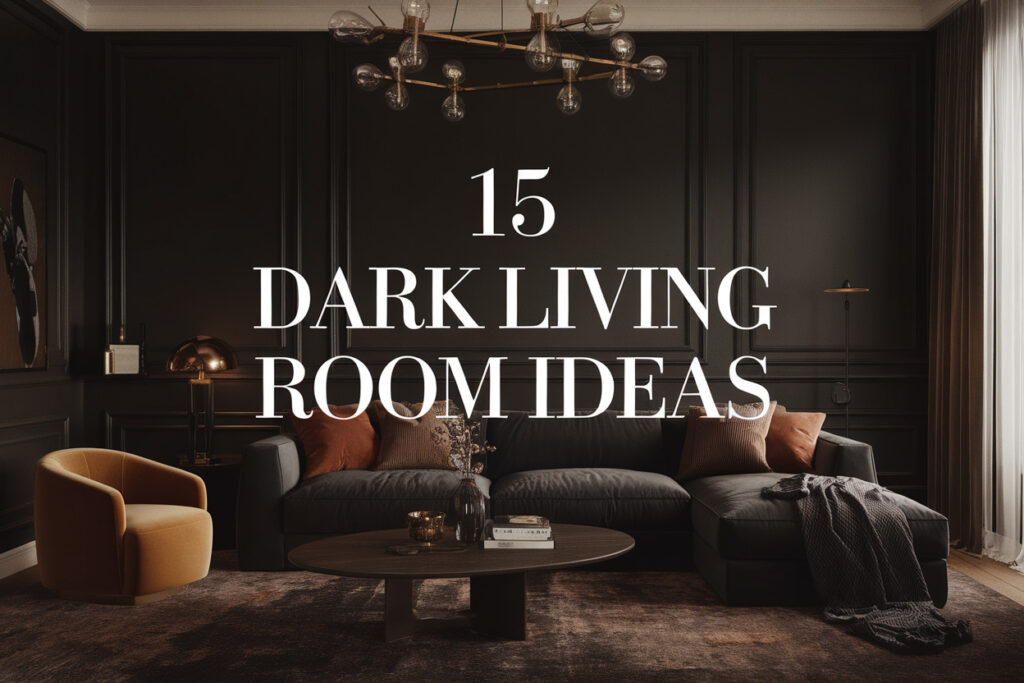
The truth is, most people avoid dark interiors because they think the room will feel smaller or heavy. In reality, the right balance of color, lighting, and texture can make dark spaces look elegant and inviting.
When done well, a dark living room feels less like a risk and more like a confident design statement.
1. Charcoal Gray Walls That Feel Cozy, Not Cold
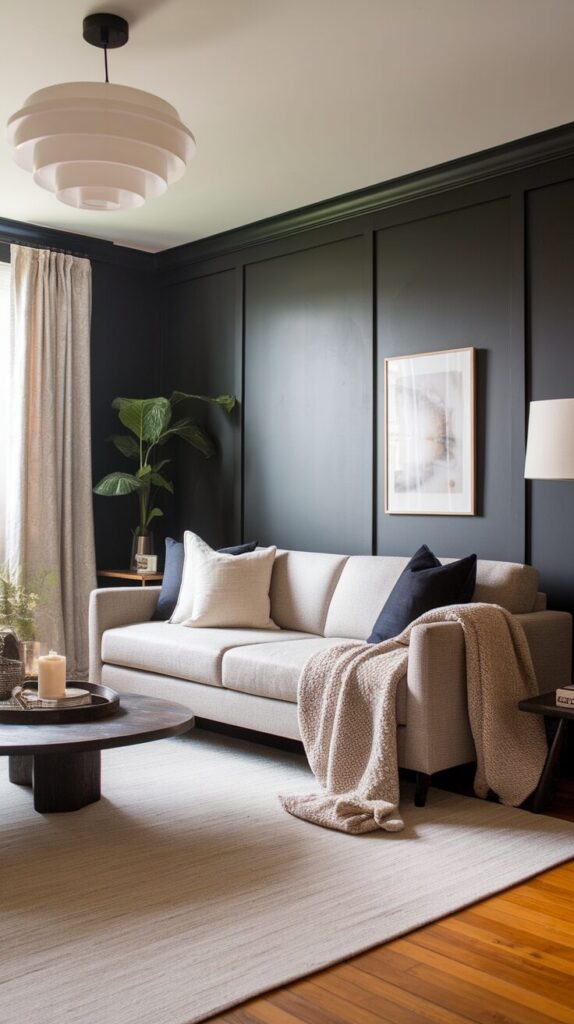
Charcoal gray walls bring depth without feeling as harsh as pure black. I love how this color instantly makes a living room feel grounded and calm. It works especially well if you want drama without committing to full darkness.
I usually pair charcoal walls with warm textures like wood, leather, or soft woven fabrics. The contrast keeps the room from feeling flat or cold. Natural light bouncing off gray walls also looks surprisingly soft and flattering.
Lighting matters a lot with charcoal walls, so I always layer it carefully. Floor lamps, table lamps, and warm bulbs make the space feel inviting instead of moody in a sad way. Think cozy evening vibes, not basement energy.
2. Deep Navy Blue for a Timeless, Elegant Look
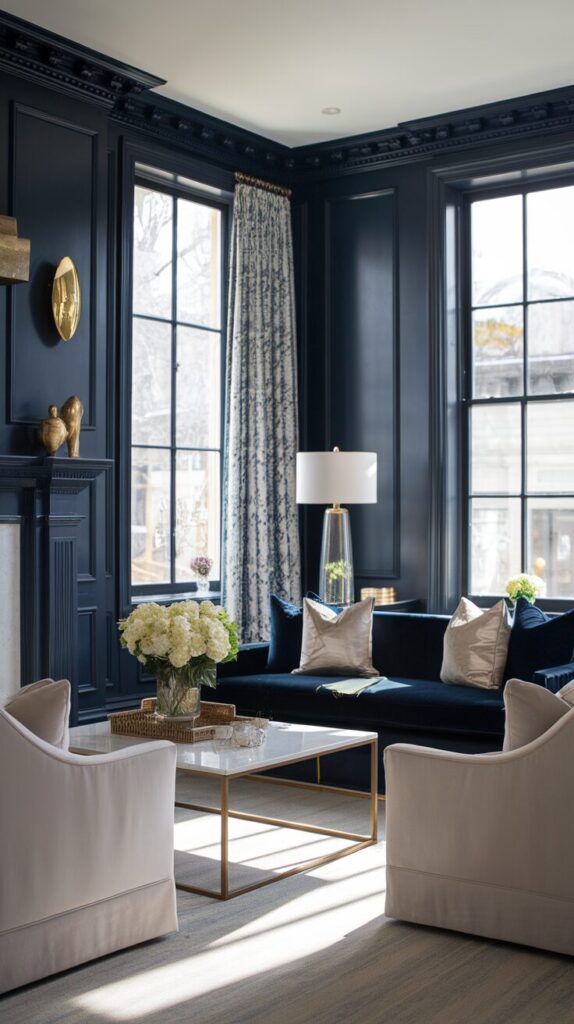
Navy blue feels classic, grown-up, and a little luxurious. It gives dark living rooms a polished look without screaming for attention. IMO, navy works in almost any home style, from modern to traditional.
I like navy walls with crisp white trim because it sharpens the look instantly. Gold or brass accents also pop beautifully against deep blue. Even simple decor feels elevated when the walls carry this color.
If full navy walls feel intense, you can start with one accent wall. That still gives you depth and drama without overwhelming the space. Navy also hides scuffs better than lighter shades, which feels like a win.
3. Matte Black Accent Walls That Make a Statement
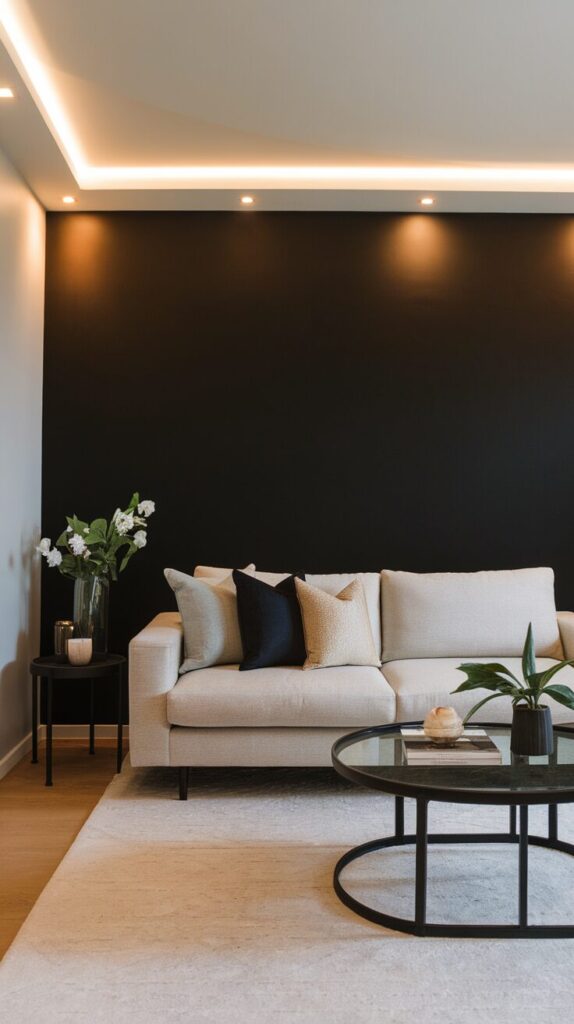
A matte black accent wall feels bold, confident, and undeniably cool. I know black scares people, but used intentionally, it looks incredible. It turns your living room into a design moment instead of just a space.
I usually recommend keeping the black wall behind a sofa or media unit. That placement anchors the room and keeps the darkness controlled. Matte finishes work best because they absorb light instead of reflecting it harshly.
You need contrast to balance black walls properly. Light furniture, textured rugs, and metallic decor keep the space dynamic. When styled right, black walls feel chic, not intimidating.
4. Dark Green Walls for a Rich, Earthy Vibe
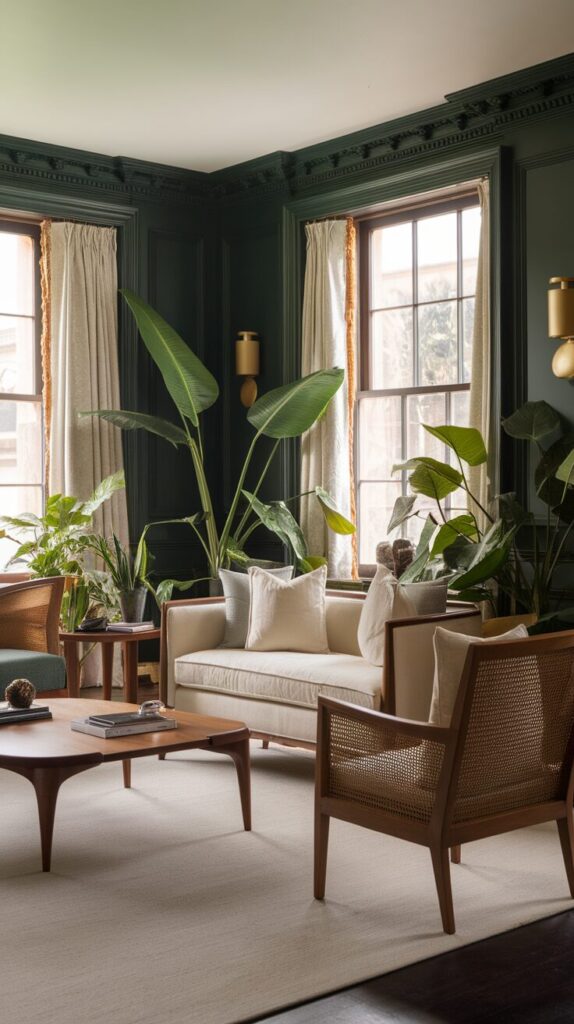
Dark green walls feel luxurious but also soothing. This color reminds me of old libraries, boutique hotels, and cozy evening lounges. It brings nature indoors without feeling rustic or overly themed.
I love pairing dark green with warm wood furniture and neutral upholstery. The combination feels grounded and timeless. Even simple plants look extra lush against deep green walls.
Dark green also works beautifully in rooms with lower natural light. Instead of fighting the darkness, it embraces it. The result feels intentional and calming rather than dim.
5. Moody Wallpaper That Adds Depth and Personality
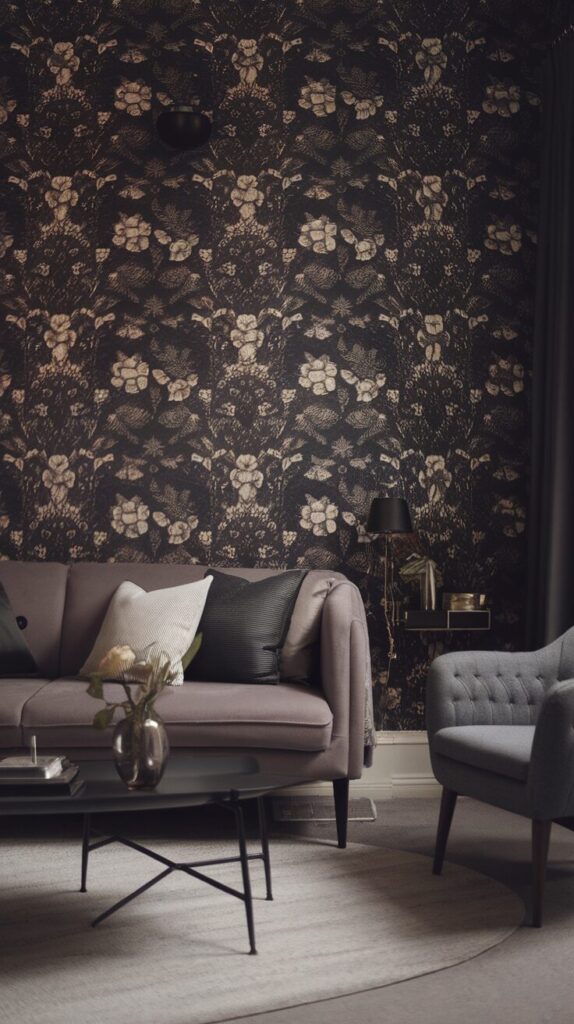
Moody wallpaper instantly adds personality to a dark living room. I’m talking about subtle florals, abstract patterns, or textured designs in dark tones. Wallpaper makes the space feel layered and thoughtful.
I usually suggest using wallpaper on one main wall. That keeps the room visually interesting without overwhelming it. Dark wallpaper also hides imperfections better than flat paint.
Patterns in darker shades feel sophisticated instead of busy. They draw you in slowly and reveal detail up close. This works great if you love design that rewards attention.
6. Dark Ceilings That Create an Intimate Atmosphere
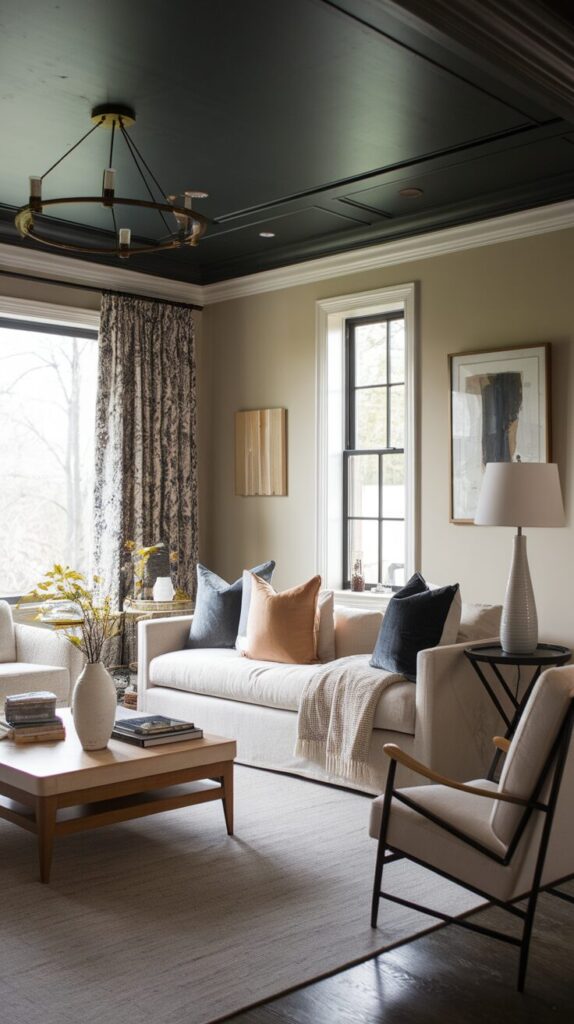
Dark ceilings sound risky, but they actually feel cozy and dramatic. Painting the ceiling a dark color lowers the visual height and creates intimacy. It works especially well in rooms with high ceilings.
I prefer deep gray, navy, or charcoal instead of pure black for ceilings. These shades soften the effect while still adding depth. The ceiling starts to feel like part of the design instead of an afterthought.
Balance matters when you go dark overhead. Light walls, good lighting, and reflective accents keep the room from feeling heavy. The result feels intentional and stylish.
7. Leather Furniture That Adds Warmth and Texture
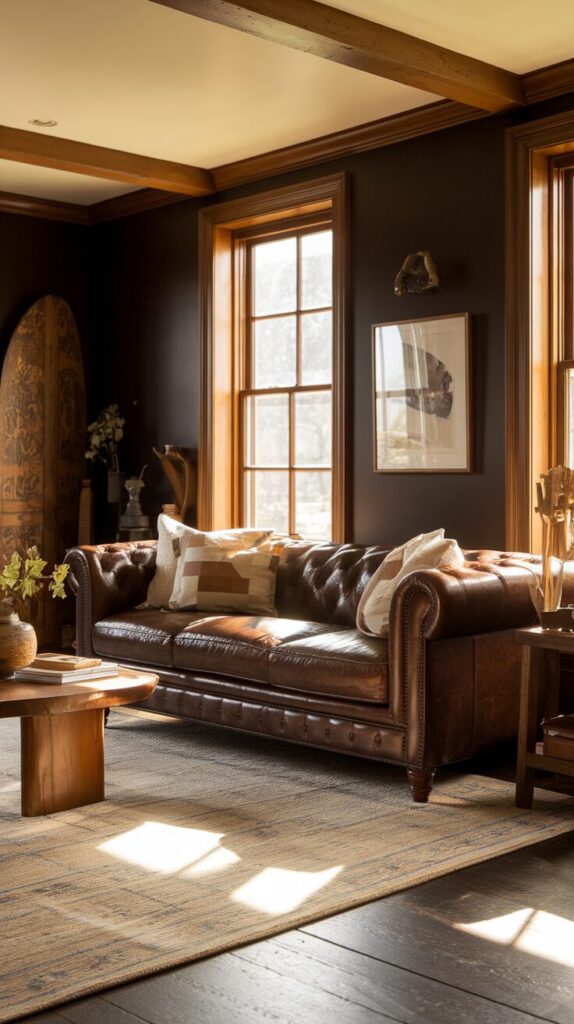
Leather furniture pairs beautifully with dark living room ideas. It adds warmth, texture, and a touch of masculinity that feels balanced and cozy. I personally love brown or cognac leather against dark walls.
Leather ages well and looks better over time. Scratches and wear add character instead of looking messy. That makes it perfect for living rooms that actually get used.
I usually keep the rest of the furniture softer to balance leather. Plush rugs and throw pillows prevent the space from feeling too stiff. The contrast feels inviting and relaxed.
8. Velvet Sofas for a Luxe, Dramatic Touch
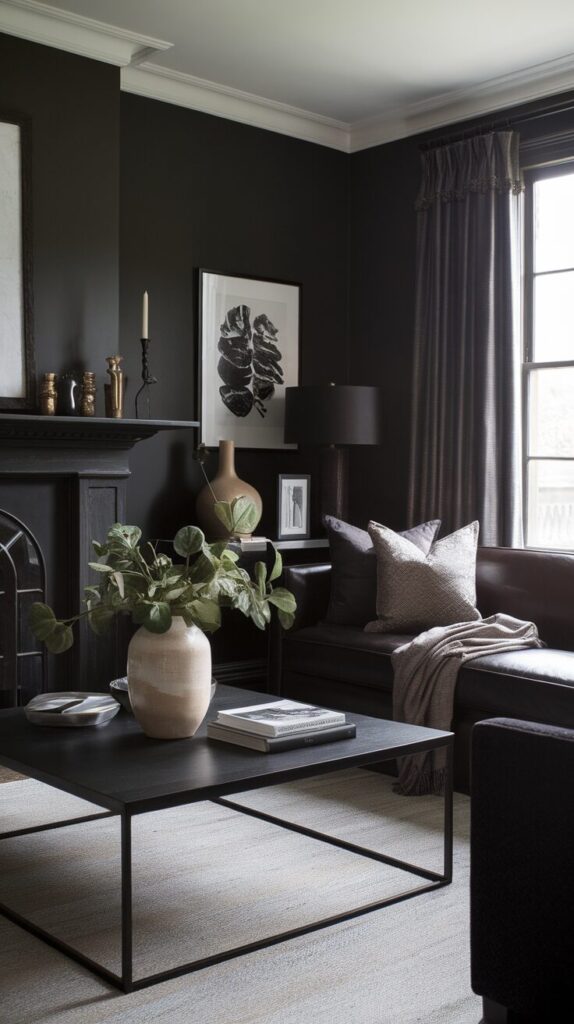
Velvet instantly elevates a dark living room. The way it reflects light adds richness and depth. A velvet sofa feels fancy without being uncomfortable or untouchable.
Dark jewel tones like emerald, navy, or plum work especially well. They blend into dark rooms while still standing out. Even neutral velvet feels richer than standard fabric.
I like to keep accessories simple when using velvet. Let the texture do the talking. Too much shine or pattern can compete with the sofa’s natural drama.
9. Dark Wood Furniture for a Grounded Look
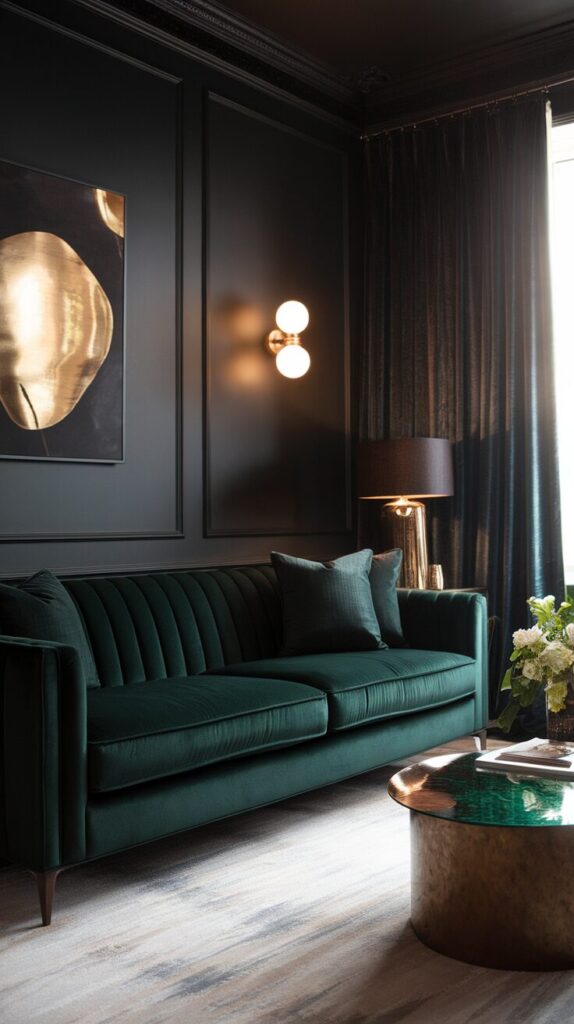
Dark wood furniture anchors a dark living room beautifully. It adds warmth and prevents the space from feeling cold or flat. I always lean toward walnut, espresso, or stained oak.
Matching wood tones helps the room feel cohesive. Mixing too many finishes can look messy in darker spaces. A consistent palette feels calmer and more intentional.
Dark wood also pairs well with metals and soft textiles. The contrast keeps the room visually interesting. It feels classic and modern at the same time.
10. Metallic Accents That Break Up the Darkness
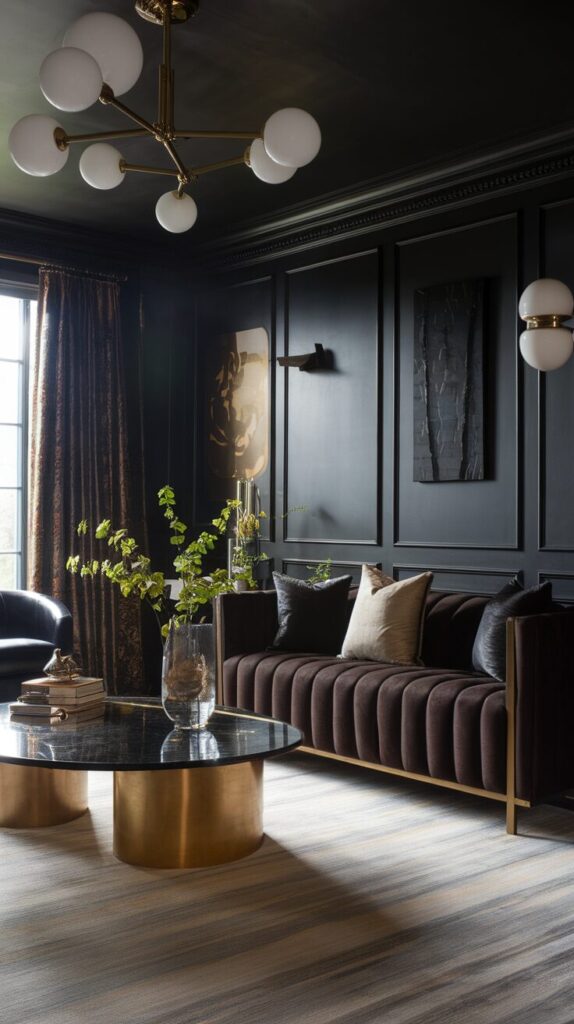
Metallic accents shine in dark living rooms. Gold, brass, and bronze add warmth and catch the light beautifully. Even small metallic details make a big difference.
I like using metals in lamps, trays, frames, or table legs. These small touches reflect light and prevent the room from feeling heavy. They also add a hint of glamour.
Too much metal can feel flashy, so I keep it subtle. A few well-placed pieces feel refined and balanced. The goal feels elegant, not overdone.
11. Statement Lighting That Becomes the Focal Point
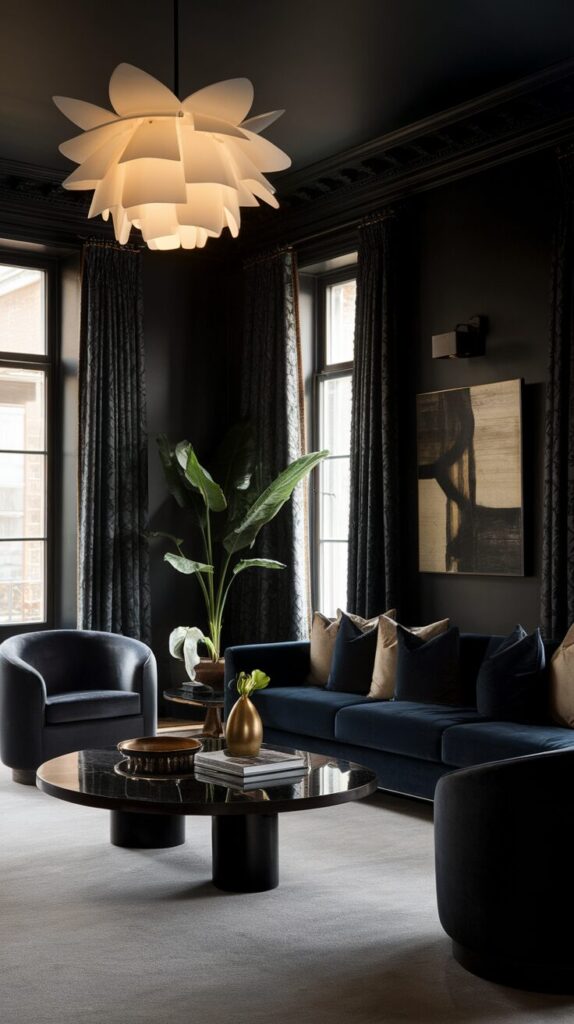
Lighting plays a huge role in dark living room design. Statement lighting adds function and style at the same time. It turns darkness into a feature instead of a problem.
I love oversized floor lamps or sculptural ceiling lights. They create visual interest even when turned off. Warm light works best to soften dark surroundings.
Layered lighting matters here. Combine overhead lights, lamps, and accent lighting for depth. The room feels cozy, flexible, and well-designed.
12. Dark Curtains That Frame the Room Beautifully
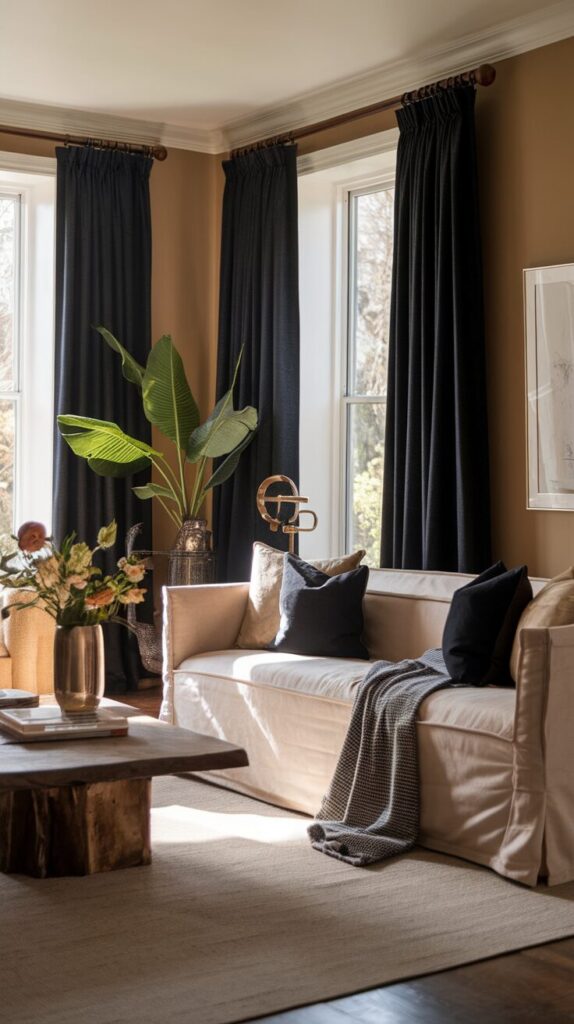
Dark curtains add softness and elegance to a living room. They frame windows and make the space feel finished. I prefer heavy fabrics that drape nicely.
Matching curtain color to wall color creates a seamless look. It makes the room feel taller and more cohesive. This trick works especially well in smaller spaces.
Sheer curtains under dark drapes give flexibility. You can control light without losing style. That balance feels practical and polished.
13. Layered Rugs to Add Comfort and Contrast
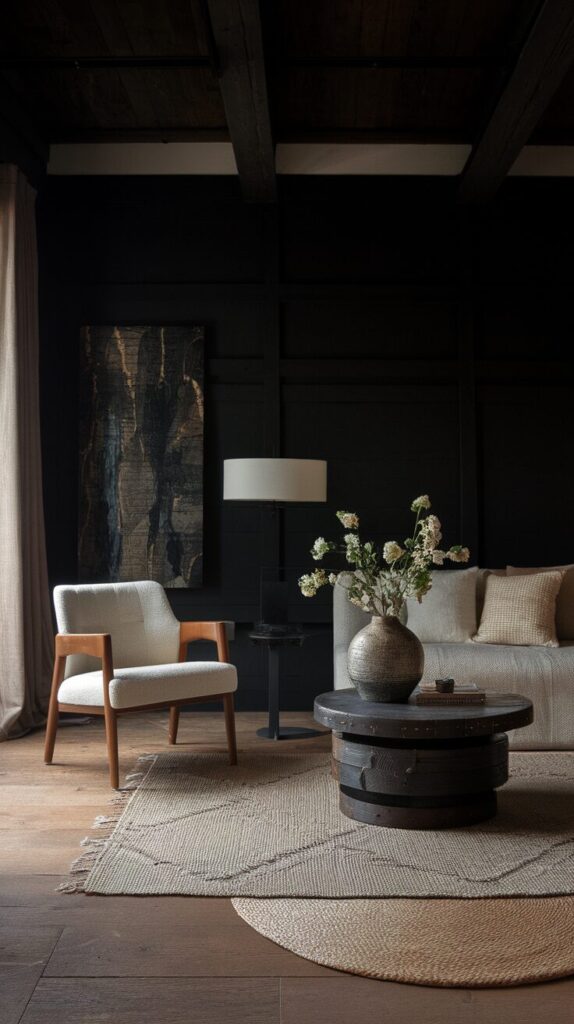
Layered rugs add warmth and texture to dark living rooms. They prevent the space from feeling too serious or flat. I like mixing neutral rugs with subtle patterns.
A lighter rug on dark floors creates contrast. It helps define seating areas and adds visual balance. Texture matters more than bold patterns here.
Rugs also soften sound and make the room feel inviting. Dark rooms feel best when they feel lived-in, not staged. Rugs help achieve that easily.
14. Minimal Decor That Lets the Colors Shine
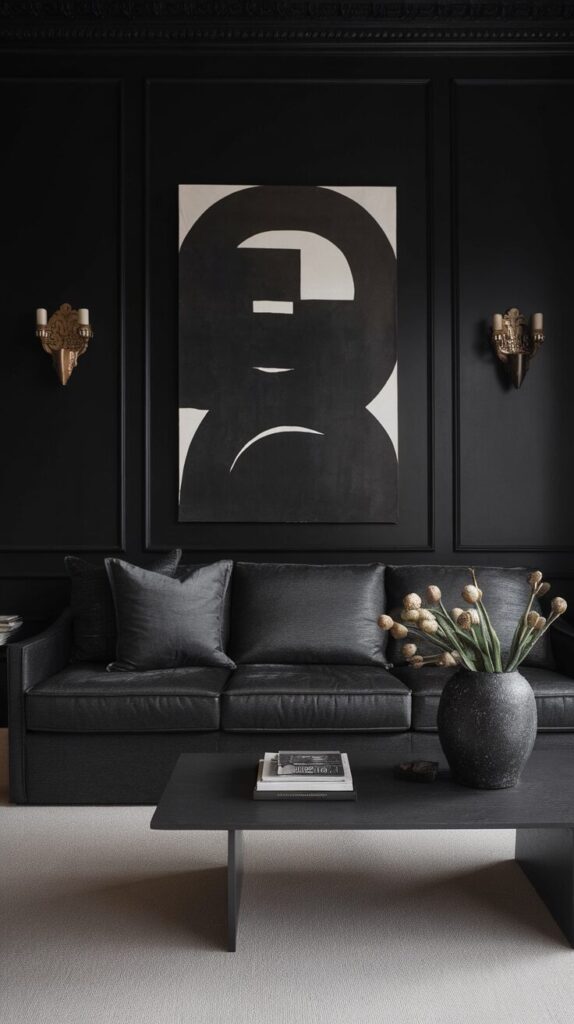
Dark living rooms don’t need clutter. Minimal decor lets the colors and textures speak for themselves. I always edit decor more aggressively in dark spaces.
A few intentional pieces feel stronger than many small ones. Large art, sculptural decor, or bold plants work best. The room feels curated instead of crowded.
Negative space matters here. Darkness already creates visual weight. Giving the eye room to rest keeps the space balanced.
15. Balanced Contrast to Keep the Room Inviting
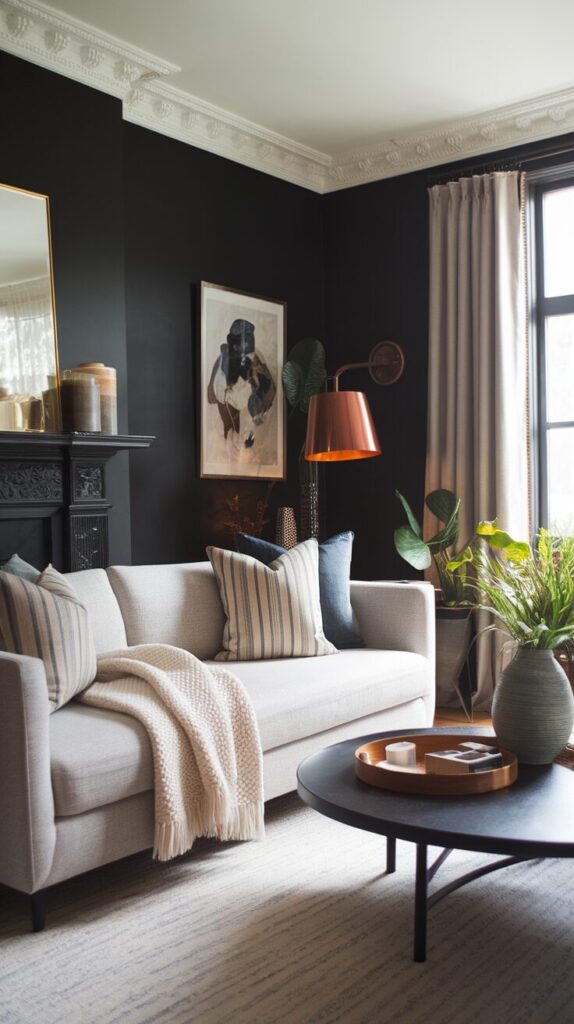
Contrast keeps dark living rooms from feeling overwhelming. Light elements break up darkness and add energy. I always look for balance between dark and light.
This can include light pillows, neutral throws, or pale artwork. Even small touches make a difference. The goal feels cozy, not closed-off.
When contrast feels intentional, the room feels confident. Dark living rooms work best when they feel designed, not accidental. That mindset changes everything.
Dark Living Room Design Foundation: How to Get the Base Right Before You Decorate
Before you buy paint or order that velvet sofa, you need a solid strategy. Dark living room ideas only look sophisticated when the foundation feels intentional. I always start with structure, not accessories.
Understand Your Natural Light First
Walk into your living room at three different times of day and actually observe it. Notice where sunlight hits and where shadows naturally fall. This simple habit prevents 80% of dark room regrets.
Rooms with strong natural light handle deep colors beautifully. Rooms with low light need smarter layering and warmer tones. You design with the room, not against it.
Choose One Dominant Dark Element
You don’t need dark walls, dark floors, and dark furniture all at once. Pick one dominant feature and build around it. That approach keeps the room bold but balanced.
For example:
- Dark walls + light sofa
- Dark sofa + neutral walls
- Dark accent wall + warm wood furniture
This structure gives your design direction. Without it, the space starts to feel random.
Plan Your Lighting Before Finalizing Color
Lighting makes or breaks dark interiors. I always choose lighting placement before committing to a paint shade. Warm, layered lighting transforms deep colors from flat to luxurious.
Focus on:
- Overhead statement lighting
- Floor or table lamps for softness
- Accent lighting to highlight art or texture
If you ignore lighting, dark walls look dull. If you plan lighting well, dark walls look expensive.
Commit to Texture, Not Just Color
Dark rooms need dimension. Smooth, flat surfaces everywhere make the room feel heavy.
Mix materials like:
- Velvet
- Leather
- Linen
- Wood
- Metal
Texture adds life. When I layer textures intentionally, the room feels curated instead of dark for the sake of being dark.
Common Mistakes to Avoid When Designing a Dark Living Room
Dark living rooms look stunning when done right, but small mistakes show up fast. I’ve made a few of these myself, so trust me, I speak from experience. Let’s avoid the obvious traps.
1. Using Cool-Toned Lighting
Cool white bulbs kill the mood instantly. They make deep colors look harsh and clinical.
Always choose warm light bulbs for dark interiors. Warm lighting adds depth and softness.
2. Going Too Dark Everywhere
Painting everything dark without contrast overwhelms the space. The room starts to feel boxed in.
You need balance through:
- Lighter rugs
- Metallic accents
- Neutral cushions
- Artwork with brightness
Contrast keeps the room breathable.
3. Ignoring Scale and Proportion
Small furniture in a dark room looks awkward and lost. Dark spaces need confident, well-scaled pieces.
Choose furniture that matches the visual weight of the walls. Larger silhouettes feel intentional.
4. Overdecorating the Space
Clutter looks worse in dark rooms. Too many small accessories create visual noise.
Edit your decor aggressively. Let statement pieces stand alone.
5. Forgetting About Ceiling and Trim
People focus only on walls and ignore ceilings and trim. That disconnect makes the room feel incomplete.
You can:
- Paint trim crisp white for contrast
- Match trim to wall color for seamless depth
- Add subtle ceiling color for cohesion
Details separate amateur styling from sophisticated design.
How to Make a Dark Living Room Feel Bigger and Brighter
A lot of people assume dark equals small. That idea isn’t always true. Strategic design makes dark spaces feel expansive.
Use Reflective Surfaces Intentionally
Mirrors, glass tables, and metallic finishes bounce light around. They prevent the room from absorbing too much darkness.
Place mirrors across from windows when possible. That simple trick doubles natural light.
Create Visual Flow with Consistent Color
Too many color breaks chop up a room visually. Keeping walls, curtains, and large furniture in a similar tone elongates the space.
This approach creates cohesion. The eye moves smoothly instead of stopping abruptly.
Keep the Floor Slightly Lighter
If your walls go dark, consider medium or lighter flooring. That subtle contrast grounds the room without shrinking it.
A lighter rug also helps define the seating area. It creates breathing space inside darker surroundings.
Declutter Ruthlessly
Dark rooms amplify clutter visually. Clean lines make the space feel intentional and spacious.
I always remove at least one decor item more than I think I should. The room instantly feels calmer.
Color Pairing Guide for Dark Living Room Ideas
Choosing the right companion colors prevents a dark living room from feeling flat. Pairing matters more than the dark shade itself. I treat color combinations like outfits.
Dark Gray + Warm Wood + Cream
This trio feels timeless and cozy. The cream softens gray while wood adds warmth.
It works beautifully in modern and transitional homes.
Navy + Brass + White
Navy creates elegance. Brass adds glow and white sharpens the contrast.
This pairing feels upscale without trying too hard.
Dark Green + Tan Leather + Black Accents
Green feels earthy. Leather warms it up instantly.
Black accents add modern structure.
Black + Beige + Natural Textures
Black walls look bold. Beige and woven textures soften the intensity.
This combination feels dramatic but still inviting.
When you choose pairings intentionally, the room feels styled instead of experimental.
FAQ: Dark Living Room Ideas for a Bold, Sophisticated Style
1. Will dark paint make my living room look smaller?
Dark paint can make a room feel cozy, but smart lighting and contrast prevent it from feeling small. Balance matters more than color depth.
2. What is the best dark color for a living room?
Charcoal, navy, and deep green work best for most homes. These shades feel rich without looking flat or harsh.
3. How do I keep a dark living room from feeling depressing?
Layer warm lighting, add texture, and include contrasting elements. Darkness feels sophisticated when styled intentionally.
4. Should I paint the ceiling dark too?
You can paint the ceiling dark in rooms with good height. Dark ceilings create intimacy and drama when balanced properly.
5. Do dark living rooms go out of style?
Deep, rich colors rarely feel trendy. When you style them with timeless materials, they stay relevant for years.
6. Can I try dark decor without painting my walls?
Absolutely. Start with dark sofas, curtains, or accent walls. Testing smaller elements builds confidence before committing fully.
Conlcusion
Dark living room ideas bring drama, warmth, and personality when you use them intentionally. They create spaces that feel cozy at night and stylish during the day. I genuinely think dark rooms feel more inviting than overly bright ones when done right.
If you love bold design and rich textures, don’t hold back. Try one dark element and build from there. You might end up loving the mood more than you expected.