10 Small Rustic Kitchen Ideas for Cozy Homes
Practical kitchens tend to feel warmer and more welcoming when materials age naturally and layouts prioritize usefulness over perfection.
Rustic design works especially well in small kitchens because it favors texture, character, and simplicity instead of shiny showpieces that overwhelm tight spaces.
A lot of people assume rustic kitchens require large farmhouses or massive islands, but that’s honestly not true.
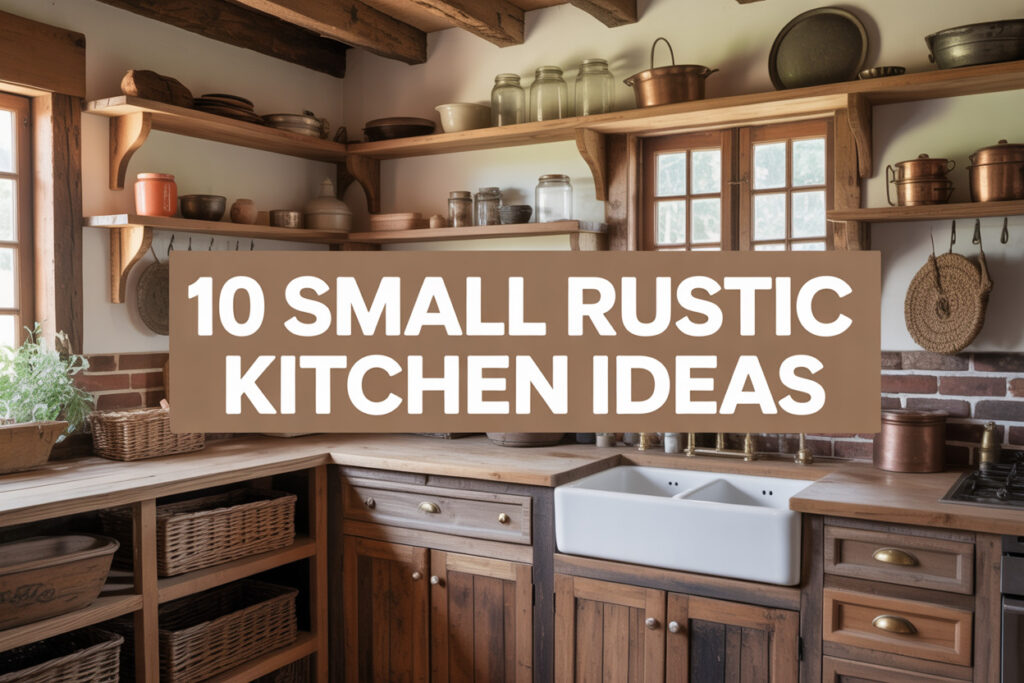
Small kitchens can look even better with rustic touches because the style thrives on charm, personality, and a little bit of imperfection.
1. Open Wooden Shelving Instead of Upper Cabinets
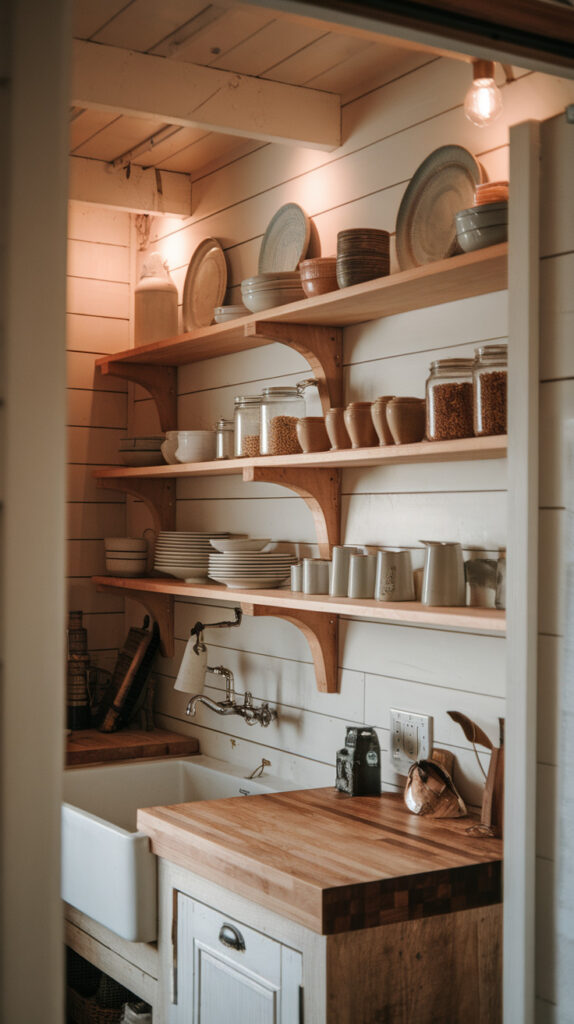
Bulky upper cabinets often make a small kitchen feel boxed in and slightly claustrophobic. Swapping them for open wooden shelves instantly creates breathing room while giving you a chance to show off everyday items like dishes, jars, and cookware.
I’ve seen this trick completely transform tight kitchens. The room suddenly feels wider, lighter, and more relaxed instead of looking like a wall of heavy cabinets.
Why This Works
Open shelving reduces visual weight on the upper half of the kitchen walls. Your eyes naturally travel across the space instead of stopping at large cabinet doors.
Rustic wood also introduces warmth and texture, which prevents the kitchen from feeling cold or sterile. That natural grain adds character that painted cabinets usually can’t match.
How to Do It
- Remove existing upper cabinets carefully and patch the wall if needed.
- Install thick reclaimed wood shelves using sturdy metal brackets.
- Mount shelves into wall studs so they can hold heavy dishes safely.
- Arrange everyday items neatly so the shelves feel styled instead of cluttered.
Style & Design Tips
Stick with natural wood tones rather than heavily stained wood. Lighter woods often make small kitchens feel bigger while still maintaining rustic charm.
Avoid overcrowding the shelves. Rustic style works best when items feel intentional rather than stacked like a storage closet.
Pro Tip or Budget Hack
Check local salvage yards or Facebook Marketplace for reclaimed wood. Old barn boards or vintage planks often cost far less than new hardwood shelves and look way more authentic.
2. Butcher Block Countertops for Warmth and Texture
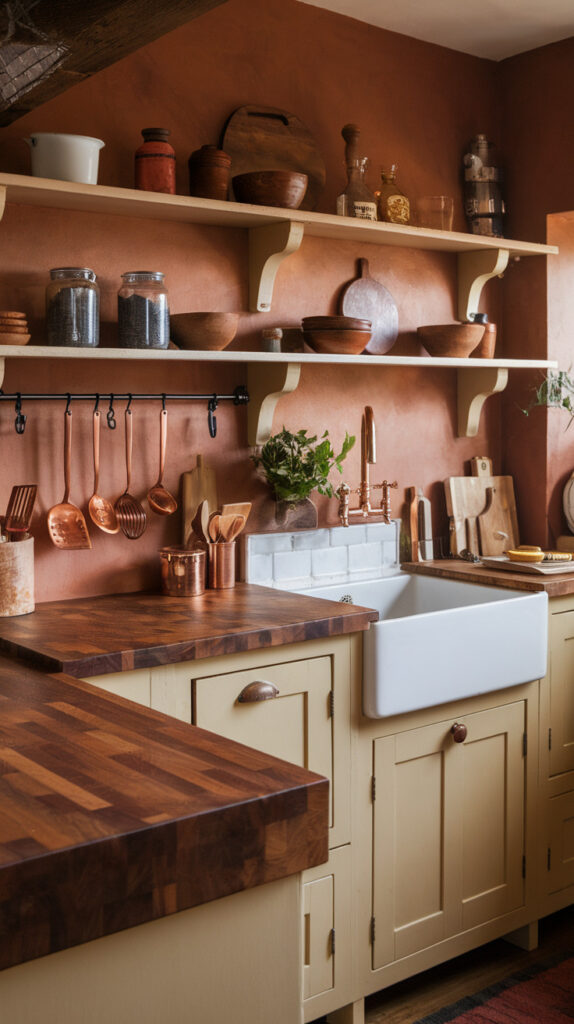
Cold stone countertops sometimes feel a little harsh in smaller kitchens. Butcher block instantly softens the space while introducing the warm, handcrafted look that rustic kitchens thrive on.
I installed butcher block in a tiny rental kitchen years ago, and the difference was ridiculous. The whole room suddenly felt like a cozy cooking space instead of a temporary apartment setup.
Why This Works
Wood counters visually connect with other rustic elements like shelving, beams, or wood flooring. That continuity creates a balanced design instead of a random mix of materials.
Butcher block also reflects light softly, which helps small kitchens avoid that dark, heavy feeling some stone surfaces create.
How to Do It
- Measure countertops carefully before ordering butcher block slabs.
- Seal the wood with food-safe mineral oil or butcher block conditioner.
- Secure the slabs to cabinets using brackets or mounting clips.
- Reapply oil regularly to protect the wood and maintain its color.
Style & Design Tips
Pair butcher block with white or cream cabinetry for contrast. That mix keeps the kitchen feeling bright while still leaning into rustic warmth.
Avoid ultra-dark stains on the wood. Dark surfaces can shrink the visual space in smaller kitchens.
Pro Tip or Budget Hack
Some people buy unfinished butcher block from home improvement stores and cut it themselves. That DIY approach can save hundreds of dollars if you’re comfortable using basic tools.
3. A Farmhouse Sink That Becomes the Focal Point
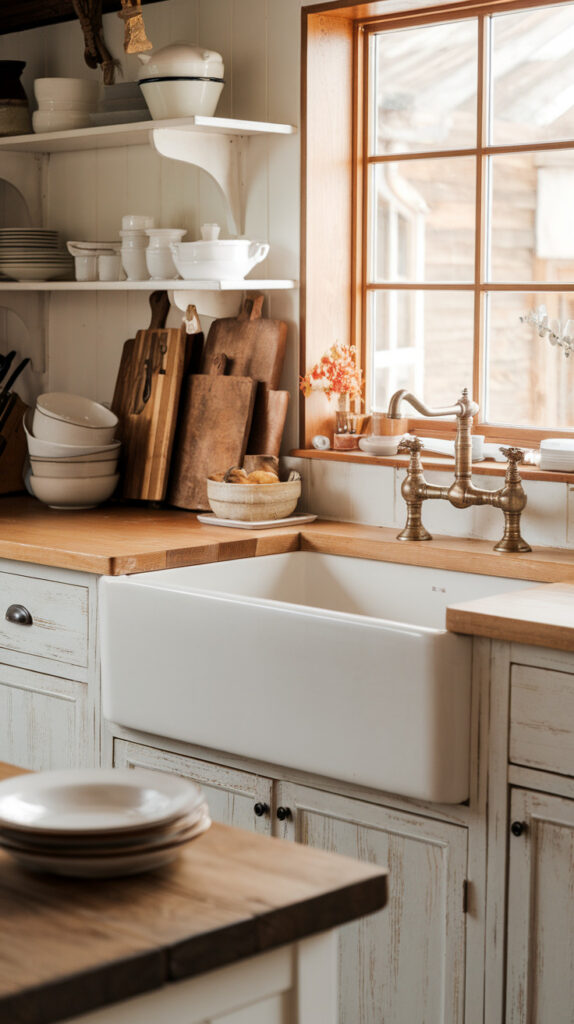
Small kitchens benefit from having one standout feature instead of lots of competing details. A farmhouse sink naturally becomes that anchor point while adding serious rustic personality.
There’s something satisfying about a deep apron sink. Washing dishes suddenly feels slightly less annoying, which is honestly a win in my book.
Why This Works
Farmhouse sinks introduce visual depth and a classic country aesthetic. Their exposed front panel becomes a design feature instead of something hidden inside cabinetry.
The larger basin also makes everyday tasks easier, especially in kitchens with limited counter space.
How to Do It
- Choose a fireclay or porcelain farmhouse sink for a classic rustic look.
- Adjust the cabinet opening if necessary to accommodate the apron front.
- Install the sink securely before placing countertops.
- Use a simple bridge faucet or vintage-style faucet to complete the look.
Style & Design Tips
Stick with neutral sink colors like white, cream, or soft gray. These shades keep the space feeling open while still looking timeless.
Avoid overly modern faucet designs. Rustic kitchens benefit from fixtures with a slightly vintage feel.
Pro Tip or Budget Hack
If a full farmhouse sink feels too expensive, look for apron-front sink covers or retrofit options that mimic the look without replacing your entire cabinet setup.
4. Rustic Pendant Lighting Over Key Areas
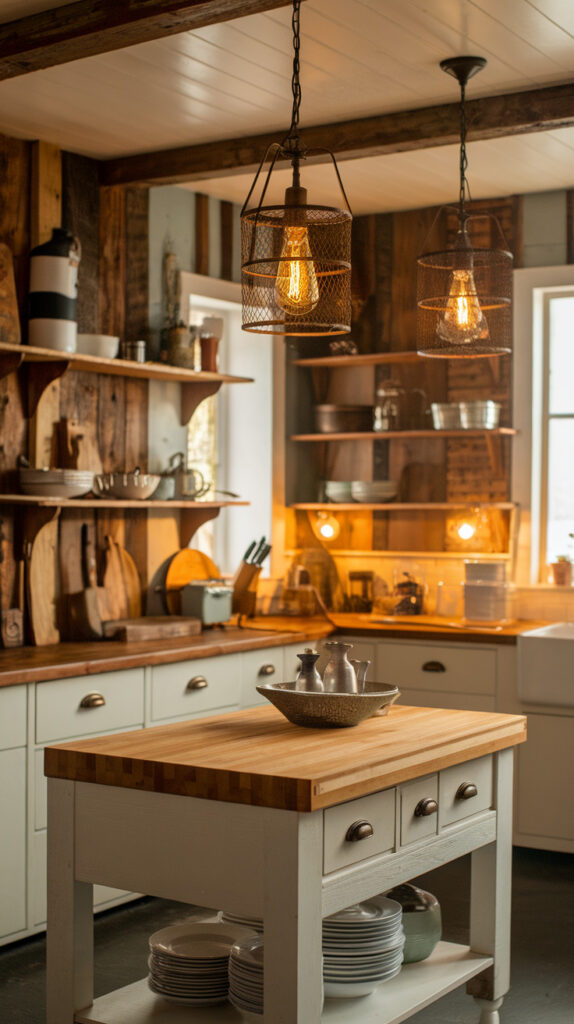
Lighting shapes how a kitchen feels just as much as the cabinets or countertops do. Rustic pendant lights instantly add warmth and personality while focusing light exactly where you need it.
I’ve noticed that kitchens with layered lighting always feel more inviting than ones relying on a single ceiling fixture. It’s one of those small upgrades that makes a big difference.
Why This Works
Pendant lights break up the vertical space in a kitchen without overwhelming it. They draw attention to key areas like islands, sinks, or prep counters.
Rustic materials like metal, wood, or glass shades also reinforce the cozy farmhouse aesthetic.
How to Do It
- Choose metal cage pendants, mason jar lights, or wood-accent fixtures.
- Hang lights about 30–36 inches above the counter surface.
- Use warm LED bulbs to create a softer glow.
- Install a dimmer switch for flexible lighting levels.
Style & Design Tips
Stick with two or three matching pendants rather than one oversized fixture. Smaller lights maintain balance in compact kitchens.
Avoid super glossy finishes. Matte black, aged brass, or weathered metal feel far more rustic.
Pro Tip or Budget Hack
Vintage shops often carry old barn lights or factory-style fixtures. Cleaning and rewiring one of those can give your kitchen a completely unique light source.
5. Reclaimed Wood Accent Walls
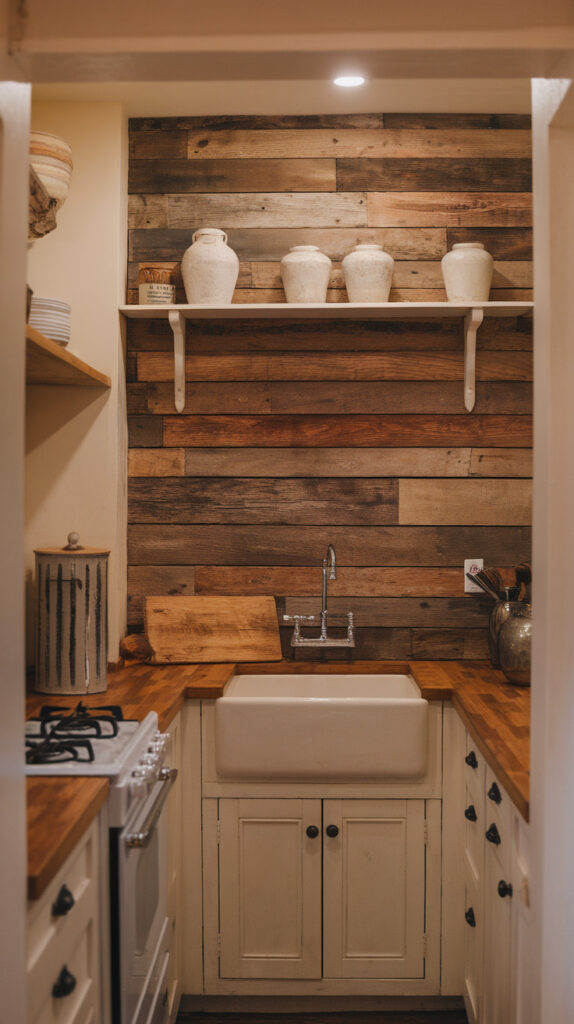
Plain drywall sometimes feels too flat for a rustic kitchen. Adding a reclaimed wood accent wall instantly introduces texture, warmth, and a handcrafted vibe.
This works especially well in small kitchens because the wood creates visual interest without needing additional décor.
Why This Works
Wood planks add depth and character that painted walls often lack. Each board carries natural grain patterns, knots, and color variations that make the space feel authentic.
The wall also acts as a backdrop for shelves, cookware, or decorative pieces.
How to Do It
- Source reclaimed wood or purchase pre-finished plank panels.
- Cut boards to fit the wall area carefully.
- Attach planks using construction adhesive and finishing nails.
- Seal the wood lightly if you want extra durability.
Style & Design Tips
Use horizontal boards if the kitchen feels narrow. That orientation visually widens the room.
Avoid mixing too many wood tones. Consistency keeps the design cohesive instead of chaotic.
Pro Tip or Budget Hack
Peel-and-stick wood panels have improved a lot in recent years. They offer the same rustic look with far less installation effort.
6. Vintage Hardware for Cabinets and Drawers
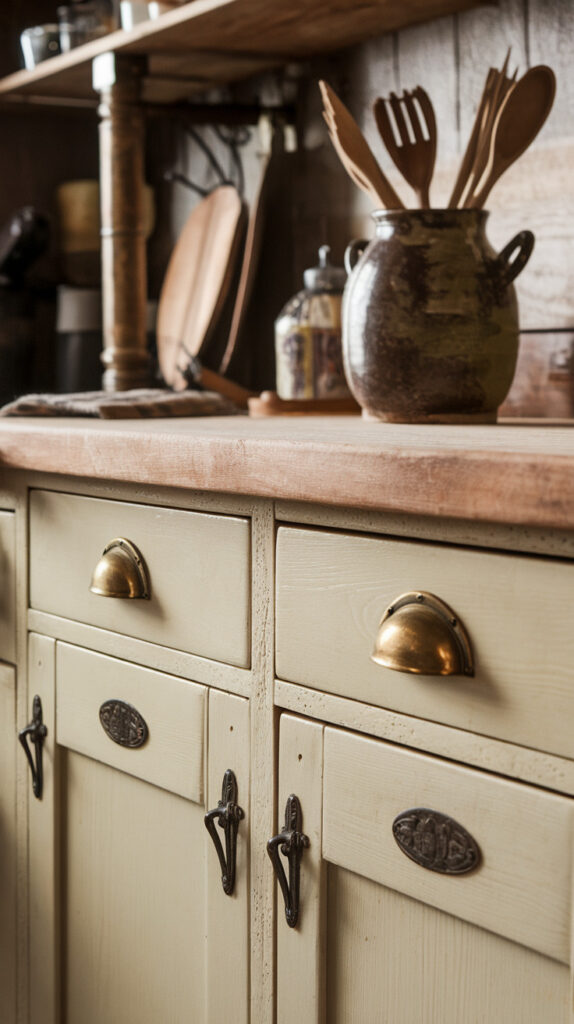
Sometimes the smallest upgrades make the biggest difference. Replacing modern cabinet hardware with rustic or vintage-style handles can completely shift the kitchen’s personality.
It’s one of those projects that takes an afternoon but instantly makes cabinets feel custom.
Why This Works
Hardware acts like jewelry for your kitchen cabinets. Small details such as aged brass pulls or wrought iron handles reinforce the rustic aesthetic.
The contrast between simple cabinets and detailed hardware also adds visual depth.
How to Do It
- Remove existing cabinet knobs and drawer pulls.
- Measure hole spacing before buying replacements.
- Install antique brass, iron, or bronze hardware.
- Tighten everything securely to avoid loose handles.
Style & Design Tips
Choose hardware with slightly imperfect textures instead of polished finishes. Rustic design celebrates materials that look lived-in.
Avoid mixing too many hardware styles. Consistency keeps the kitchen from feeling messy.
Pro Tip or Budget Hack
Check antique markets or thrift stores. You can often find vintage cabinet pulls for a fraction of retail prices.
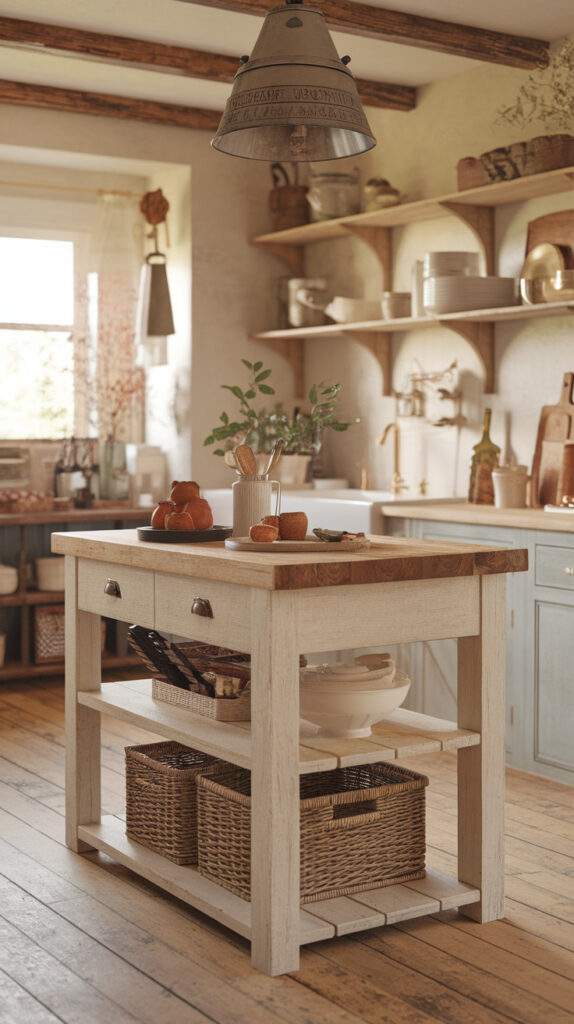
7. A Compact Kitchen Island with Rustic Character
Even small kitchens can benefit from an island if the size and design stay practical. A narrow rustic island adds prep space, storage, and visual balance without crowding the room.
Some of the best ones I’ve seen started life as old worktables or repurposed furniture.
Why This Works
Islands create a central workspace that improves kitchen flow. Instead of bouncing between counters, you get one convenient spot for prepping meals.
Rustic islands also introduce another layer of wood texture that reinforces the overall design.
How to Do It
- Measure the available floor space carefully first.
- Choose a narrow island or repurpose a vintage table.
- Add locking wheels if flexibility matters.
- Use baskets or shelves underneath for extra storage.
Style & Design Tips
Stick with distressed or reclaimed wood finishes. Perfectly polished islands often look too modern for rustic kitchens.
Avoid oversized islands that block walking paths. Flow matters more than size.
Pro Tip or Budget Hack
Thrift stores sometimes sell sturdy old tables for cheap. A little sanding and wood stain can turn one into a beautiful kitchen island.
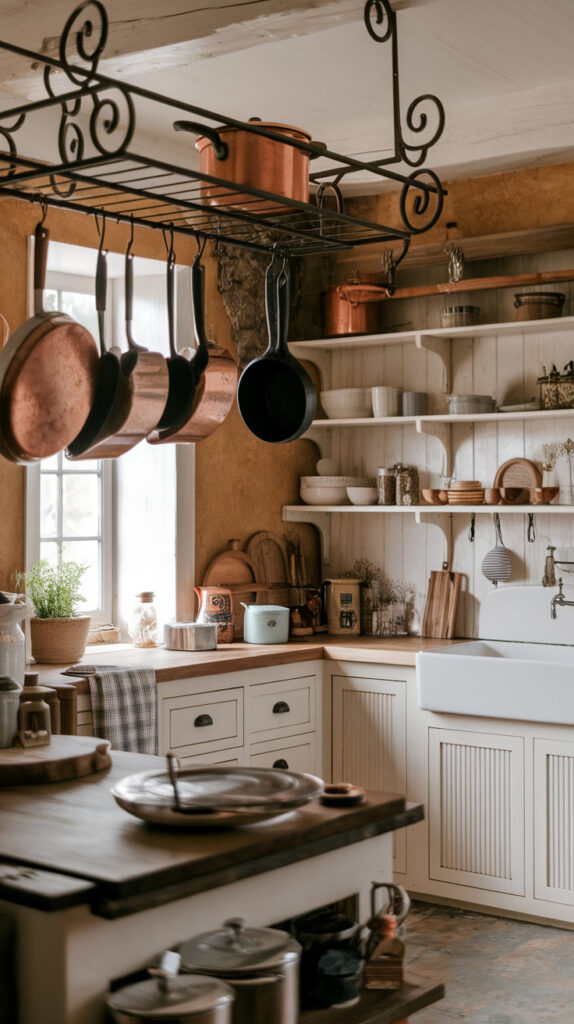
8. Rustic Pot Racks for Practical Storage
Cabinet space disappears quickly in small kitchens. Hanging a pot rack frees up storage while turning everyday cookware into part of the décor.
This setup works especially well if you actually cook often and use your pots regularly.
Why This Works
Pot racks keep frequently used cookware within reach. That convenience matters more than people realize until they try it.
The metal shapes of hanging pots also create a visually interesting focal point.
How to Do It
- Install a ceiling-mounted or wall-mounted pot rack.
- Secure the rack into studs or ceiling joists.
- Hang pots using sturdy metal hooks.
- Keep the arrangement balanced and tidy.
Style & Design Tips
Copper or cast iron cookware looks especially beautiful on rustic pot racks. Those materials age well and develop a natural patina over time.
Avoid overcrowding the rack with too many items.
Pro Tip or Budget Hack
An old ladder mounted horizontally can become a fantastic rustic pot rack. It sounds odd at first, but the result looks surprisingly stylish.
9. Natural Stone or Brick Backsplashes
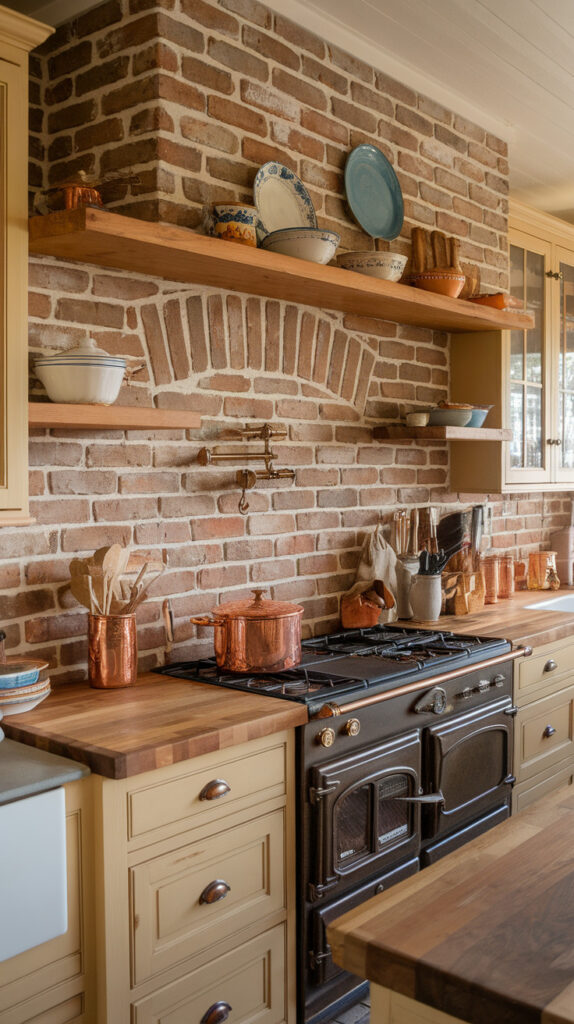
Backsplashes often get overlooked, but they play a huge role in defining a kitchen’s personality. Natural stone or brick backsplashes bring rugged texture that fits perfectly with rustic kitchens.
Even a small backsplash section behind the stove can change the entire vibe.
Why This Works
Stone and brick surfaces introduce natural variation in color and texture. That imperfection feels authentic and grounded.
These materials also complement wood elements beautifully, creating a balanced rustic palette.
How to Do It
- Choose stone veneer, brick tile, or natural stacked stone.
- Prep the wall with adhesive or mortar.
- Install pieces carefully while maintaining consistent spacing.
- Seal the surface to protect against grease and moisture.
Style & Design Tips
Use light or neutral stone shades if the kitchen lacks natural light. Dark brick can make tight spaces feel smaller.
Avoid mixing multiple backsplash materials in small kitchens.
Pro Tip or Budget Hack
Faux brick panels or thin brick tiles can mimic real brick while keeping installation simple and affordable.
10. Rustic Decor That Feels Intentional
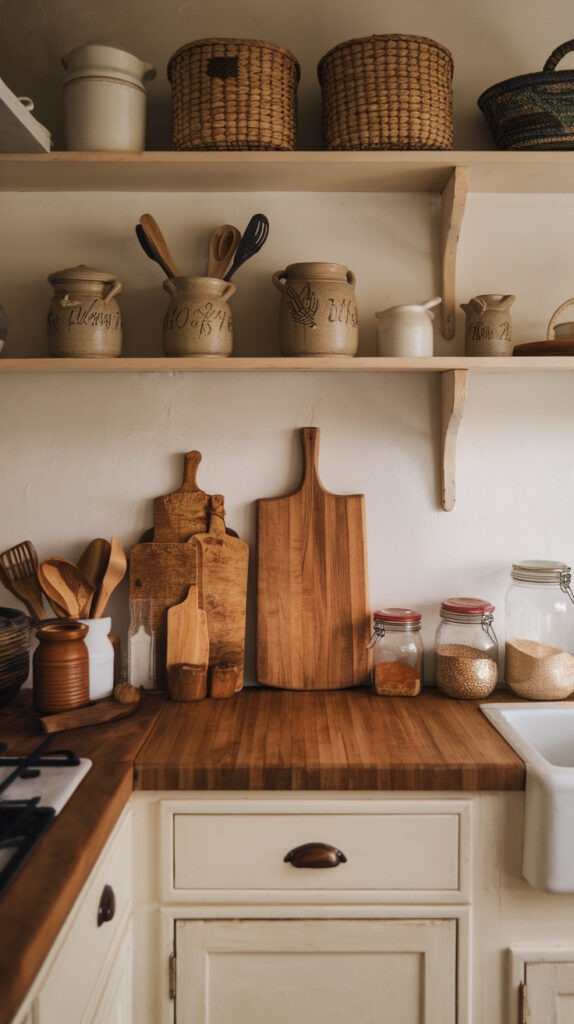
Rustic kitchens should feel collected rather than decorated. A few thoughtful accessories often look better than filling every corner with farmhouse signs and trinkets.
I’ve seen kitchens where a couple of wooden cutting boards and a vintage bread box did more for the atmosphere than ten decorative items.
Why This Works
Intentional décor prevents visual clutter. Small kitchens especially benefit from restraint because every item competes for attention.
Rustic pieces also gain charm when they feel useful rather than purely decorative.
How to Do It
- Display wooden cutting boards, ceramic crocks, or woven baskets.
- Keep countertops mostly clear for functionality.
- Rotate seasonal décor instead of stacking everything at once.
- Use wall hooks or small shelves to organize items neatly.
Style & Design Tips
Stick with natural materials like wood, linen, and ceramic. Plastic or glossy décor rarely fits the rustic aesthetic.
Avoid mass-produced farmhouse signs everywhere.
Pro Tip or Budget Hack
Visit flea markets or thrift shops for vintage kitchen tools. Older items often have more character than new decorative pieces.
The Foundation of a Cozy Rustic Kitchen
Rustic kitchens work best when the design focuses on materials and practicality rather than decoration. Instead of chasing trends, the goal is to create a space that feels durable, comfortable, and naturally welcoming.
Small kitchens especially benefit from this mindset. When every element serves a purpose and materials feel authentic, the entire space feels intentional instead of crowded.
Start With Natural Materials
Rustic kitchens rely heavily on materials that age gracefully. Wood, stone, brick, and metal develop character over time, which makes the kitchen feel lived-in rather than newly staged.
Even small touches matter. Wooden cutting boards, ceramic bowls, and woven baskets introduce warmth without requiring a full renovation.
Focus on Function First
A cozy rustic kitchen should always prioritize usability. Cooking, cleaning, and daily movement should feel smooth and effortless before worrying about decorative details.
This is especially important in small kitchens. If the layout works well, the space automatically feels calmer and more enjoyable to use.
Keep the Color Palette Grounded
Rustic kitchens tend to look best with soft, earthy tones. Whites, creams, warm woods, and muted greens create a relaxed atmosphere that doesn’t overwhelm the space.
Loud or overly bright colors can disrupt that cozy feeling. Subtle color shifts usually work much better in small kitchens.
Balance Texture Carefully
Texture is what makes rustic kitchens interesting. Wood grain, stone surfaces, woven baskets, and metal fixtures create visual layers that prevent the room from feeling flat.
The key is balance. Too many textures competing at once can make a small kitchen feel chaotic instead of cozy.
How to Plan a Rustic Kitchen in a Small Space
Small kitchens require a bit more planning than larger ones. Every cabinet, shelf, and countertop needs to earn its place.
The good news is that rustic design naturally supports efficient layouts. Simpler materials and flexible furniture pieces make it easier to work with limited square footage.
Prioritize Storage That Feels Natural
Rustic kitchens work best when storage blends into the design. Open shelving, hanging racks, and baskets often look better than bulky cabinetry.
These solutions keep items visible and accessible. They also prevent the kitchen from feeling boxed in.
Choose Multi-Purpose Pieces
Furniture and fixtures that serve multiple roles help maximize space. A compact island can offer prep space, storage, and even casual seating.
This approach keeps the kitchen functional without adding unnecessary clutter.
Use Vertical Space
Wall space often gets ignored in small kitchens. Rustic shelving, hanging racks, and wall-mounted storage make excellent use of vertical space.
This strategy keeps countertops clear while still providing plenty of room for kitchen essentials.
Let Imperfection Add Character
Rustic kitchens do not require perfect finishes. Small scratches, worn edges, and natural wood variations often enhance the overall look.
Trying to make everything flawless can actually remove the charm that makes rustic spaces appealing.
Common Mistakes to Avoid
Rustic kitchens are meant to feel relaxed and natural. When the design becomes overly themed or crowded, the charm disappears quickly.
Avoiding a few common mistakes can help keep the kitchen looking authentic and comfortable.
Overloading the Space With Decor
Too many decorative pieces can make a small kitchen feel chaotic. Rustic style works best when decor feels purposeful rather than excessive.
A few well-chosen items often look better than filling every shelf and wall.
Choosing Artificial Materials
Cheap faux finishes can undermine the entire rustic aesthetic. Plastic wood textures or overly glossy surfaces rarely capture the warmth of real materials.
Whenever possible, prioritize genuine wood, stone, or metal elements.
Ignoring Lighting
Lighting plays a huge role in how cozy a kitchen feels. Harsh overhead lighting can make rustic materials look dull or cold.
Layered lighting with warm bulbs creates a far more inviting environment.
Using Too Many Wood Tones
Wood is a major part of rustic design, but mixing too many tones can create visual confusion. A few complementary shades usually work better than several competing colors.
Keeping wood tones consistent helps maintain visual balance.
Sacrificing Function for Style
Rustic kitchens should still function as hardworking cooking spaces. Installing features that look great but make cooking harder defeats the purpose.
Always prioritize practical layouts before decorative upgrades.
Budget-Friendly Ways to Achieve a Rustic Kitchen
Creating a rustic kitchen does not require a full renovation or expensive materials. Many of the best rustic spaces come together through small upgrades and creative repurposing.
With a little planning, it’s possible to achieve the look without spending a fortune.
Repurpose Vintage Furniture
Old tables, cabinets, or workbenches can become unique kitchen features. These pieces often have more character than brand-new furniture.
With basic sanding and refinishing, they can easily transform into islands or storage units.
Use Salvaged Materials
Salvaged wood and reclaimed materials often cost less than new building supplies. They also bring authentic texture that new materials sometimes lack.
Local salvage yards and secondhand marketplaces are excellent places to search.
Update Hardware Instead of Cabinets
Replacing cabinet handles and drawer pulls can dramatically change the look of a kitchen. This simple update often costs far less than replacing cabinets entirely.
Vintage or antique-style hardware works especially well in rustic kitchens.
Add Texture With Small Decor
Rustic character often comes from simple details. Wooden bowls, ceramic containers, linen towels, and woven baskets can subtly reinforce the aesthetic.
These pieces are usually inexpensive but make a noticeable impact.
Maintaining a Rustic Kitchen Over Time
Rustic kitchens age beautifully when maintained properly. Natural materials develop richer color and texture as they are used daily.
Simple care routines help keep the kitchen looking warm and welcoming for years.
Care for Wooden Surfaces
Butcher block counters and wooden shelves benefit from occasional oil treatments. This protects the wood and keeps it from drying out.
Regular maintenance also preserves the natural color and grain.
Protect Natural Stone
Stone backsplashes and countertops should be sealed periodically. Sealing prevents stains and moisture damage while preserving the natural texture.
A simple sealant application once or twice a year is usually enough.
Embrace Natural Wear
Rustic kitchens are meant to show signs of life. Minor scratches, worn edges, and patina on metal surfaces often enhance the overall charm.
Trying to keep everything pristine can actually make the space feel less authentic.
Frequently Asked Questions
Is rustic design suitable for very small kitchens?
Yes, rustic design often works extremely well in small kitchens. The focus on natural materials and simple layouts can make compact spaces feel warm and inviting rather than cramped.
Open shelving and lighter wood tones can also help visually expand the room.
What colors work best in a rustic kitchen?
Neutral and earthy colors usually work best. Whites, creams, warm browns, muted greens, and soft grays create a calm foundation that complements natural materials.
These tones also help keep small kitchens feeling open.
Do rustic kitchens always require wood?
Wood is common in rustic kitchens, but it does not have to dominate the entire space. Stone, brick, metal, and ceramic materials also play important roles.
A balanced combination of materials often produces the best results.
Can modern appliances work in a rustic kitchen?
Yes, modern appliances can blend nicely with rustic design. Choosing appliances in neutral colors or stainless steel helps them integrate with the rest of the kitchen.
Surrounding them with natural materials helps soften the modern look.
How can I make my kitchen look rustic without renovating?
Small upgrades can make a big difference. Adding open shelving, vintage hardware, wooden accessories, and warm lighting can shift the entire atmosphere.
These changes require far less effort than a full remodel.
Is a rustic kitchen expensive to create?
Rustic kitchens can actually be very budget-friendly. Repurposed furniture, reclaimed materials, and thrifted decor pieces often cost less than brand-new items.
The style naturally encourages creativity and DIY solutions.
What is the difference between farmhouse and rustic kitchens?
Farmhouse kitchens typically feel cleaner and brighter, often featuring white cabinetry and organized layouts. Rustic kitchens lean more heavily into natural textures and slightly weathered materials.
Both styles overlap frequently, but rustic design usually embraces a bit more imperfection.
Final Thoughts
Rustic kitchens succeed when materials feel honest and layouts prioritize real daily use instead of perfect showroom styling. Small spaces actually benefit from rustic design because the warmth and texture make the kitchen feel welcoming rather than cramped.
You don’t need a full renovation to pull this off either. A few smart upgrades like wood shelving, vintage hardware, or better lighting can shift the entire personality of a kitchen without draining your wallet.