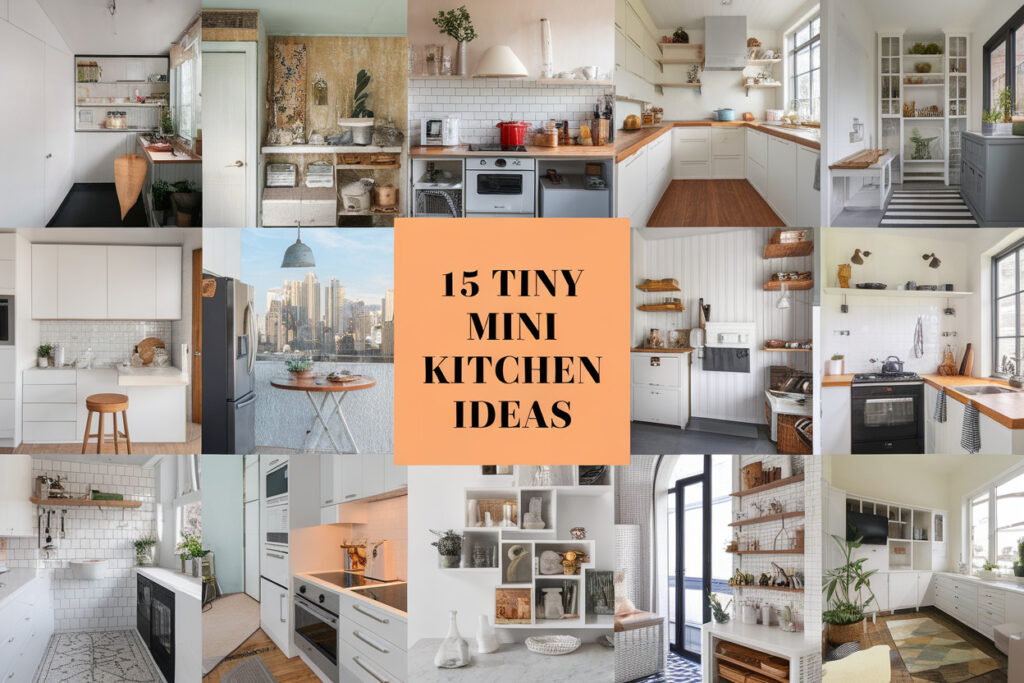
15 Mini Kitchen Ideas for Small Spaces Done Right
My kitchen used to feel tight, loud, and weirdly stressful every morning. I bumped elbows with cabinet doors, hunted for mugs, and questioned my life choices before coffee.
I finally stopped blaming the size and started fixing the layout. Small kitchens can feel calm, stylish, and functional when you make smarter moves.
I learned this the hard way after trying trendy ideas that looked cute online and failed in real life. I ditched clutter, rethought storage, and focused on flow.
The result surprised me, and honestly, it changed how I cook and hang out. Let’s talk about what actually works.
1. Slim Pull-Out Pantry That Saves Your Sanity
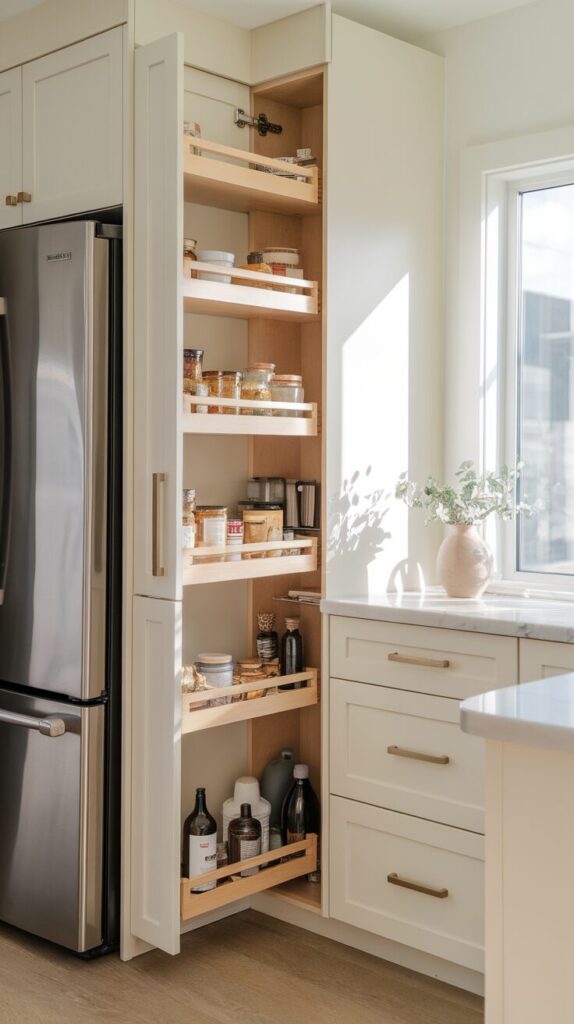
Small kitchens punish bulky cabinets, and that reality annoyed me for years. I wanted storage without sacrificing walking space or door clearance. A slim pull-out pantry solved that problem fast while keeping everything visible and reachable. This idea works especially well when groceries keep piling up.
You slide the pantry out, grab what you need, and slide it back like nothing happened. You gain vertical storage without blocking light or traffic. I love how it feels custom even when you use basic hardware. The kitchen suddenly feels organized instead of cramped.
Why This Works
Narrow spaces often sit unused between appliances and walls. A pull-out pantry turns that dead zone into functional storage without widening the footprint. The vertical lines also make the room feel taller and more intentional.
How to Do It
- Measure the gap beside your fridge or oven carefully before buying anything.
- Choose full-extension slides so every shelf comes out completely.
- Install adjustable shelves to fit tall bottles and short jars.
- Anchor the unit securely to avoid wobbling during use.
Style & Design Tips
Stick with light finishes to keep the area from feeling boxed in. Clear containers help you see contents quickly and reduce visual clutter. Avoid dark wood in ultra-small kitchens because it shrinks the vibe fast.
Pro Tip or Budget Hack
Repurpose a rolling utility cart and add cabinet fronts for a DIY version. You save money and get the same function with a little creativity.
2. Open Shelving That You Actually Use
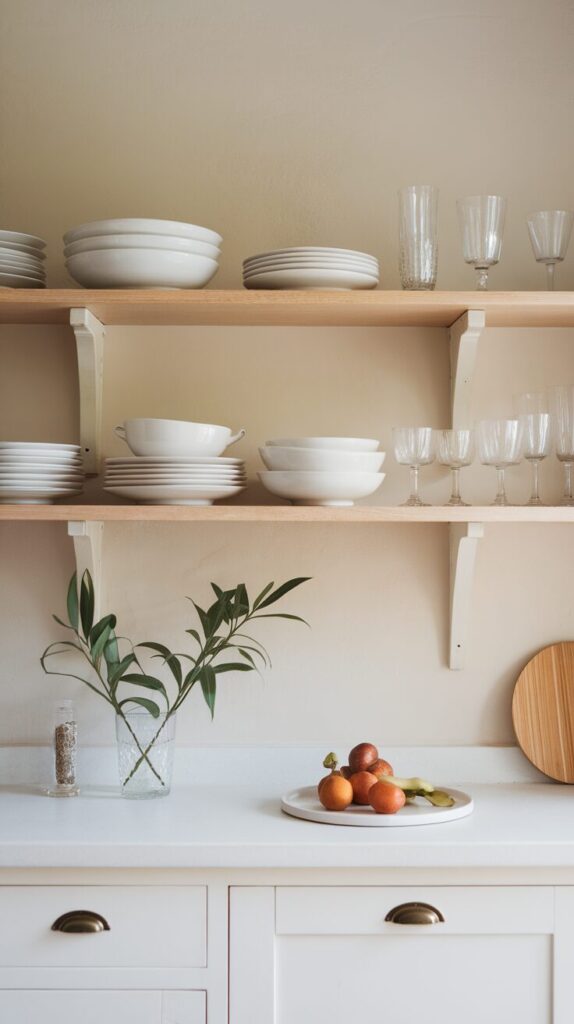
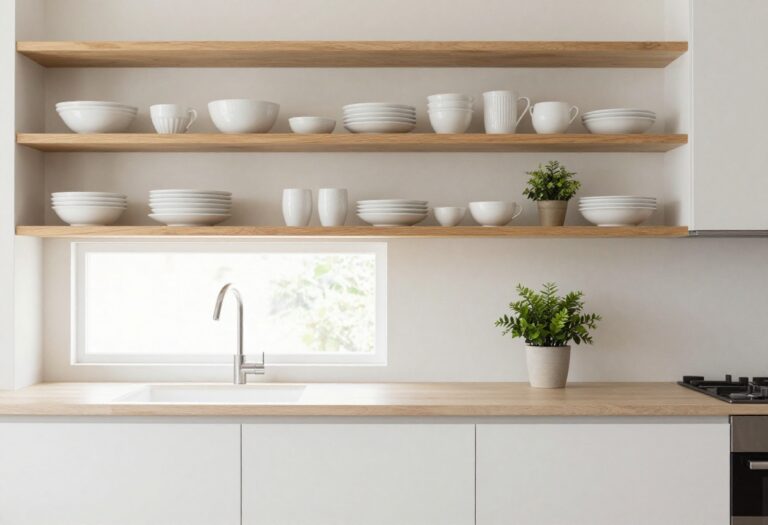
Open shelving gets a bad reputation, and I get why. People overload shelves with random stuff and call it décor. When you curate them with intention, open shelves make small kitchens feel lighter and friendlier. I resisted this idea until I tried it properly.
You remove a few upper cabinets and replace them with shelves that hold daily items. You see everything at a glance, and the kitchen feels less boxed in. The space breathes better, and cooking feels easier.
Why This Works
Upper cabinets create visual weight in tight spaces. Open shelves break that heaviness and let light travel across the room. You also force yourself to keep only what you use, which helps long-term organization.
How to Do It
- Remove one or two cabinets instead of all of them.
- Mount shelves into studs for safety and durability.
- Keep frequently used items within arm’s reach.
- Limit shelf depth to avoid head bumps.
Style & Design Tips
Use matching dishes to reduce visual noise. Neutral tones keep the shelves calm and cohesive. Avoid cluttering shelves with décor that steals space from functional items.
Pro Tip or Budget Hack
Use sturdy brackets from hardware stores instead of pricey designer ones. Paint them to match the wall for a seamless look.
3. Fold-Down Counter for Extra Prep Space
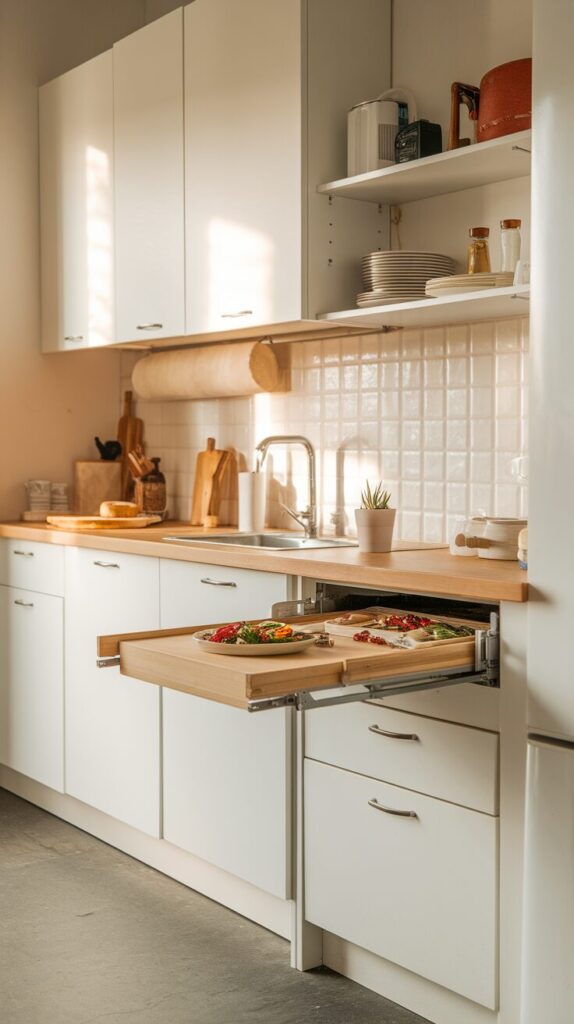
Counter space disappears fast in small kitchens, and that drives everyone crazy. I needed room to chop veggies without juggling plates. A fold-down counter gave me extra workspace only when I needed it. This idea feels like a secret weapon.
You mount a hinged surface against the wall or cabinet side. You flip it up for prep and fold it down when finished. The kitchen stays open and flexible.
Why This Works
Small kitchens benefit from surfaces that appear and disappear. A fold-down counter adds function without permanently taking up space. You control when and how you use it.
How to Do It
- Choose a sturdy hinge rated for weight.
- Mount the counter at standard counter height.
- Add a fold-down bracket for support.
- Seal the surface to protect against spills.
Style & Design Tips
Match the counter material to existing surfaces for cohesion. Rounded edges prevent painful bumps in tight quarters. Avoid glossy finishes that show every smudge.
Pro Tip or Budget Hack
Use a solid wood shelf instead of custom stone. You save money and gain a warm, natural look.
4. Magnetic Wall Storage for Tools and Spices
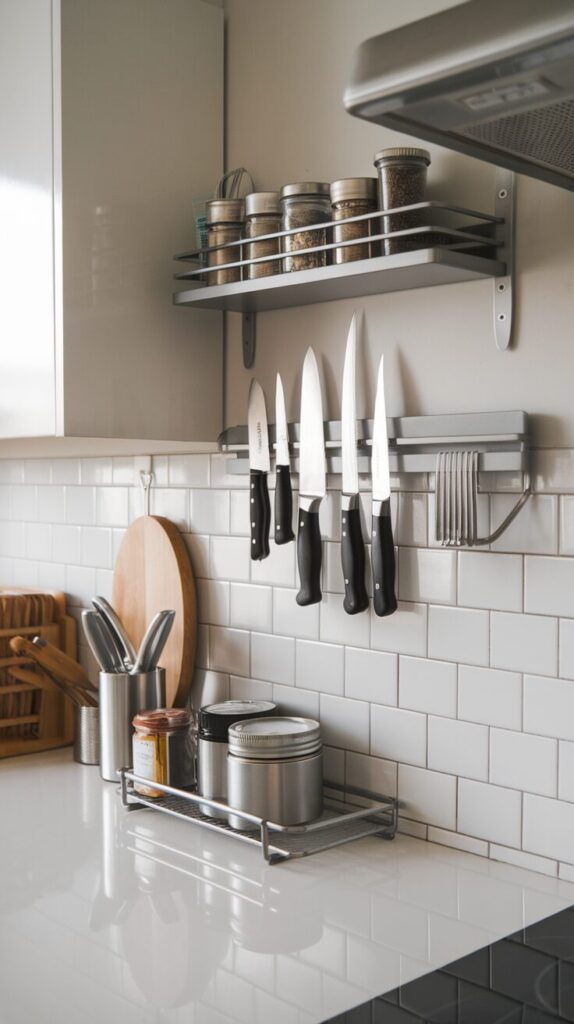
Drawer clutter drives me nuts, especially when utensils tangle together. I freed up drawer space by moving tools onto the wall. Magnetic storage keeps things visible, clean, and easy to grab. It also looks surprisingly cool.
You mount magnetic strips for knives, spice jars, or metal tools. Everything stays organized without crowding counters. Cooking feels smoother and faster.
Why This Works
Walls often go unused in small kitchens. Magnetic storage uses vertical space efficiently while keeping tools accessible. You reduce drawer overload and improve workflow.
How to Do It
- Install strong magnetic strips into studs or anchors.
- Use metal containers for spices if needed.
- Space items evenly for balance.
- Keep sharp tools out of kid reach.
Style & Design Tips
Choose sleek black or stainless strips for a modern feel. Align everything neatly to avoid visual chaos. Avoid mixing too many materials in one area.
Pro Tip or Budget Hack
Use magnetic spice tins from budget stores and label them clearly. You get a custom look for less.
5. Light Color Palette That Expands the Room
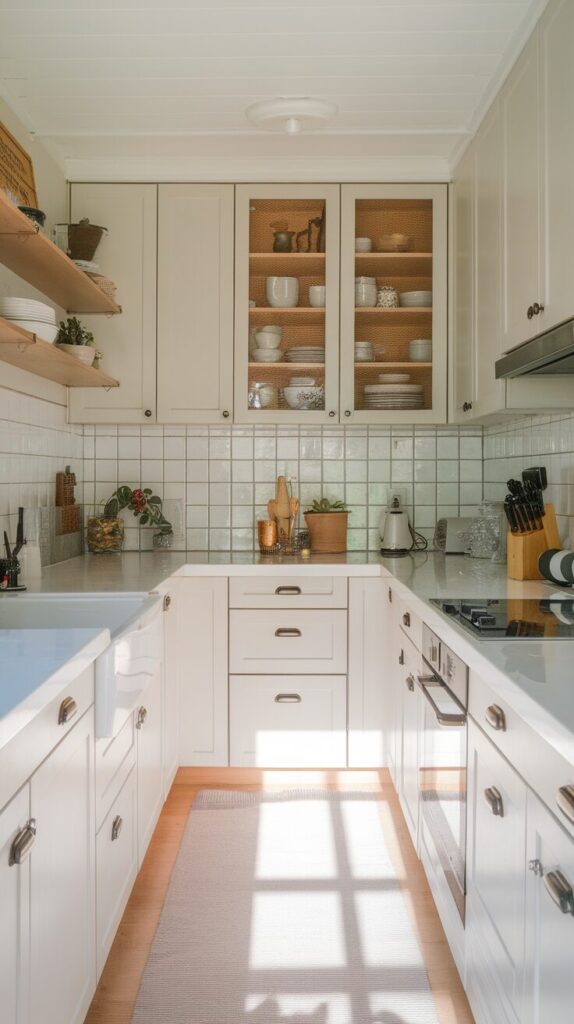
Dark kitchens feel cozy, but they shrink small spaces fast. I switched to a lighter palette and noticed the difference immediately. The room felt bigger, calmer, and easier to work in. Light colors work like magic here.
White, cream, soft gray, or pale wood reflect light. The kitchen feels open even when square footage stays the same. You also highlight textures better.
Why This Works
Light colors bounce natural and artificial light around the room. The eye reads the space as larger and more open. You reduce visual breaks that chop up the layout.
How to Do It
- Paint walls and cabinets in similar light tones.
- Choose light countertops with subtle pattern.
- Add contrast through hardware or accessories.
- Keep finishes consistent.
Style & Design Tips
Use matte finishes to avoid glare. Add warmth with wood accents or woven textures. Avoid stark white everywhere because it can feel cold.
Pro Tip or Budget Hack
Paint existing cabinets instead of replacing them. A fresh coat costs less and transforms the room.
6. Tall Cabinets That Maximize Vertical Space
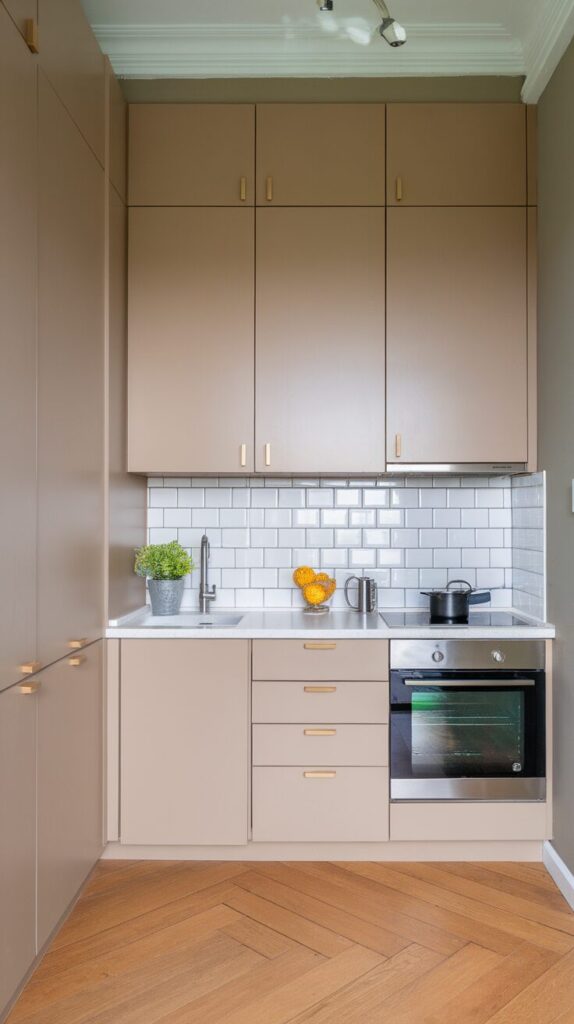
Short cabinets waste precious storage, and I learned that late. Tall cabinets pull the eye upward and store more stuff. They also make the kitchen feel custom and intentional. This upgrade changed everything for me.
You extend cabinets closer to the ceiling. You store rarely used items up top and daily items below. The kitchen looks cleaner and less cluttered.
Why This Works
Vertical storage uses space that often goes ignored. Tall cabinets reduce dust collection on tops and create a streamlined look. You gain storage without expanding the footprint.
How to Do It
- Measure ceiling height accurately.
- Choose cabinets that fit or add a topper.
- Install secure mounting brackets.
- Use step stools for upper access.
Style & Design Tips
Keep cabinet colors consistent from top to bottom. Minimal hardware maintains a sleek appearance. Avoid ornate details that crowd the space.
Pro Tip or Budget Hack
Add a simple soffit above existing cabinets and paint it to match. You fake the tall cabinet look affordably.
7. Glass Cabinet Doors for Visual Depth
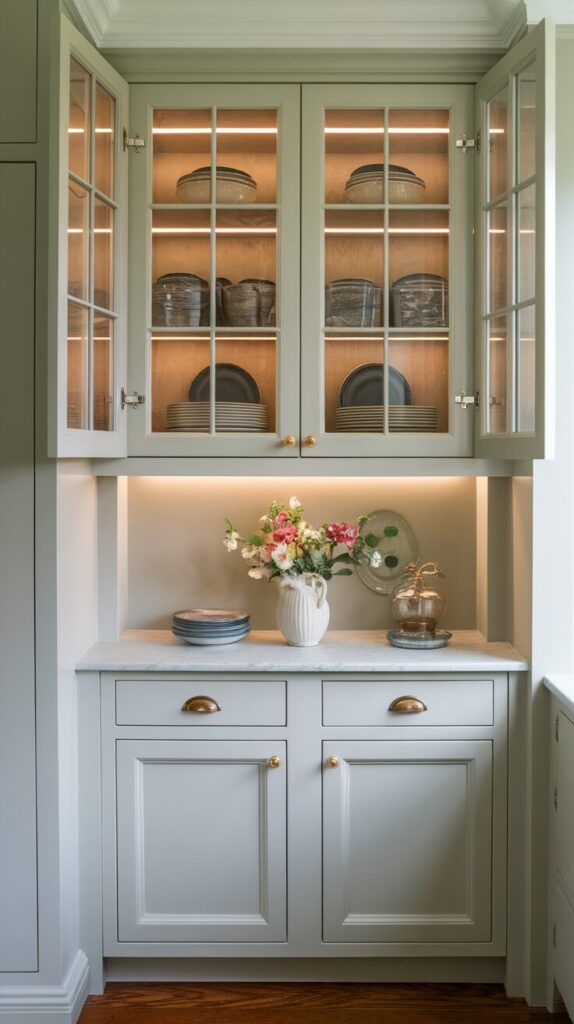
Solid cabinet doors can feel heavy in small kitchens. I swapped a few for glass fronts and loved the result. The space felt deeper and more open instantly. This trick works without major renovation.
Glass doors let you see through cabinets. You showcase nice dishes while reducing visual bulk. The kitchen feels lighter.
Why This Works
Transparency adds depth and openness. Glass breaks up solid surfaces that can overwhelm small spaces. You maintain storage while improving aesthetics.
How to Do It
- Replace select cabinet doors with glass versions.
- Use tempered glass for safety.
- Keep contents organized and tidy.
- Add interior lighting if possible.
Style & Design Tips
Frosted glass hides clutter better than clear. Soft interior lighting adds warmth and elegance. Avoid overloading shelves behind glass.
Pro Tip or Budget Hack
Install acrylic panels instead of real glass. You save money and reduce breakage risk.
8. Compact Appliances That Fit Your Life
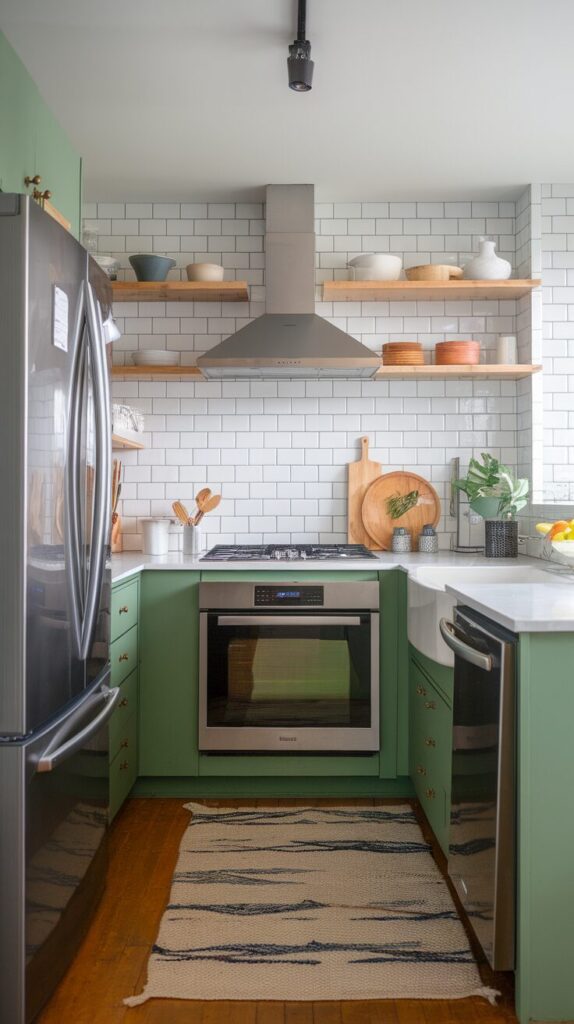
Oversized appliances swallow space in small kitchens. I downsized and never looked back. Compact appliances handle daily needs without dominating the room. The kitchen feels balanced again.
Smaller fridges, slim dishwashers, and narrow ranges exist for a reason. They perform well and fit tighter layouts. You gain breathing room instantly.
Why This Works
Appliances define kitchen flow. Right-sized appliances improve movement and reduce visual clutter. You align function with actual usage.
How to Do It
- Measure appliance openings carefully.
- Choose models designed for apartments.
- Prioritize energy efficiency.
- Match finishes for cohesion.
Style & Design Tips
Panel-ready appliances blend seamlessly with cabinetry. Consistent finishes create a unified look. Avoid mixing too many colors.
Pro Tip or Budget Hack
Buy scratch-and-dent models from appliance outlets. You get discounts with minimal cosmetic flaws.
9. Corner Solutions That Stop Wasted Space
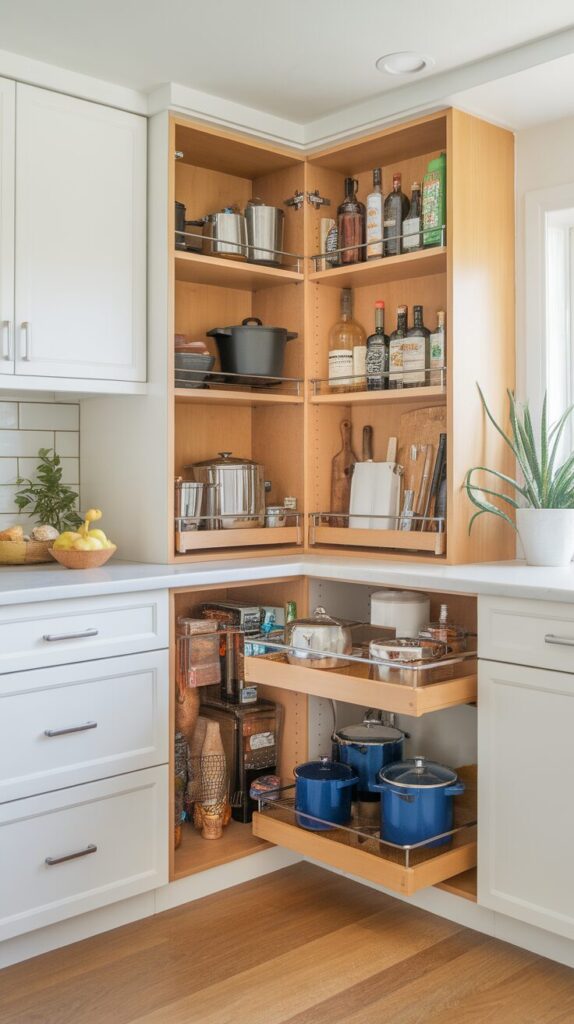
Corners frustrate everyone, especially in small kitchens. I hated losing items in dark cabinet corners. Smart corner solutions fixed that problem. Now I use every inch.
Lazy Susans, pull-out shelves, or corner drawers transform awkward spaces. You access everything without crawling inside cabinets. Storage finally makes sense.
Why This Works
Corners often trap unusable space. Specialized hardware brings items forward and into view. You eliminate frustration and maximize storage.
How to Do It
- Install a lazy Susan or pull-out system.
- Choose hardware rated for weight.
- Organize items by frequency of use.
- Keep heavier items lower.
Style & Design Tips
Match interior hardware finishes for consistency. Smooth-glide systems feel high-end. Avoid overcrowding the shelves.
Pro Tip or Budget Hack
Use turntables inside existing cabinets for a quick fix. You improve access without renovation.
10. Floating Shelves Above Windows or Doors
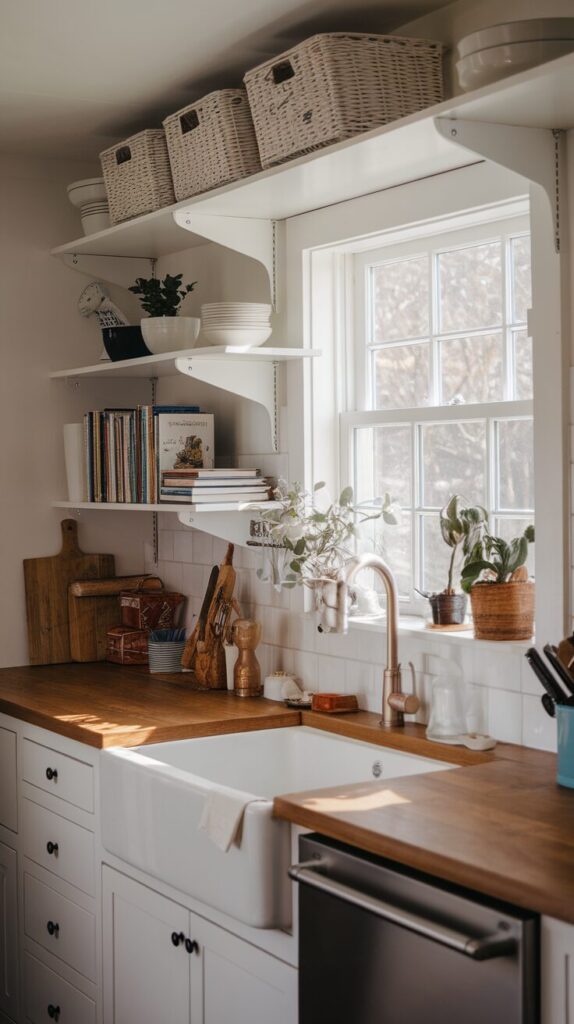
Unused space above windows or doors bugs me every time. I added floating shelves there and gained bonus storage. This spot works perfectly for rarely used items. It feels clever and intentional.
You mount shelves high enough to avoid blocking light. You store baskets, cookbooks, or décor. The kitchen gains personality.
Why This Works
High spaces often go unnoticed. Shelves there add storage without affecting movement. You draw the eye upward and expand the room visually.
How to Do It
- Measure clearance above windows or doors.
- Use sturdy anchors or studs.
- Keep items lightweight.
- Maintain visual balance.
Style & Design Tips
Use matching baskets to keep things tidy. Keep colors light to avoid heaviness. Avoid cluttering these shelves.
Pro Tip or Budget Hack
Repurpose wood planks and brackets for DIY shelves. You customize size and save money.
11. Integrated Lighting That Brightens Everything
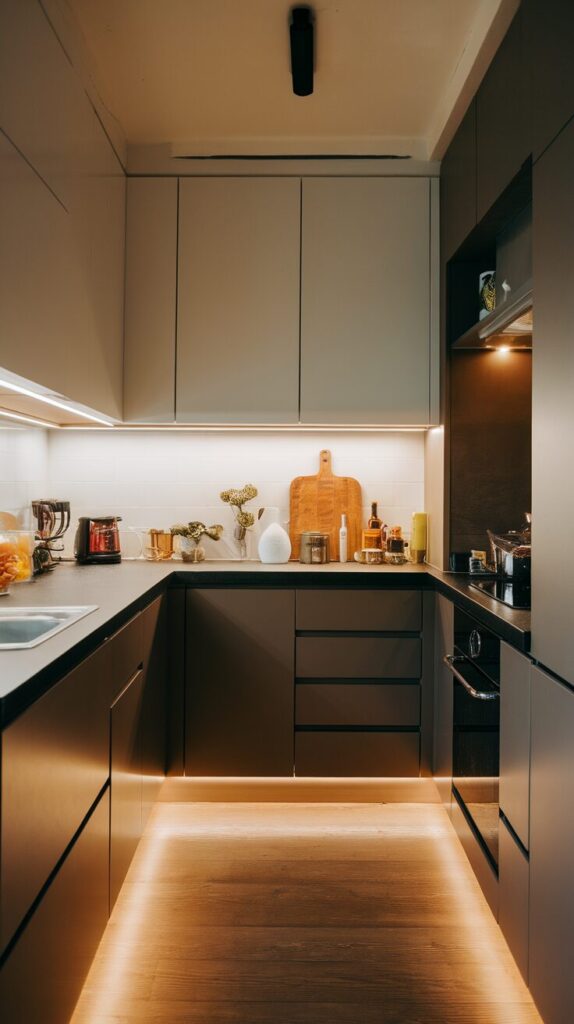
Poor lighting kills small kitchens fast. I upgraded lighting and felt the difference immediately. Good lighting makes cooking easier and spaces feel bigger. This change matters more than you think.
Under-cabinet lights, toe-kick lights, and layered fixtures improve visibility. The kitchen feels warm and functional. Shadows disappear.
Why This Works
Light affects mood and perception. Layered lighting eliminates dark corners and highlights work zones. The room feels open and welcoming.
How to Do It
- Install LED strips under cabinets.
- Add task lighting over prep areas.
- Use warm color temperatures.
- Include dimmers for flexibility.
Style & Design Tips
Hide fixtures for a clean look. Warm white lighting feels cozy and flattering. Avoid harsh overhead-only lighting.
Pro Tip or Budget Hack
Use plug-in LED strips instead of hardwired options. You install them easily and save on labor.
12. Minimal Hardware That Keeps Things Clean
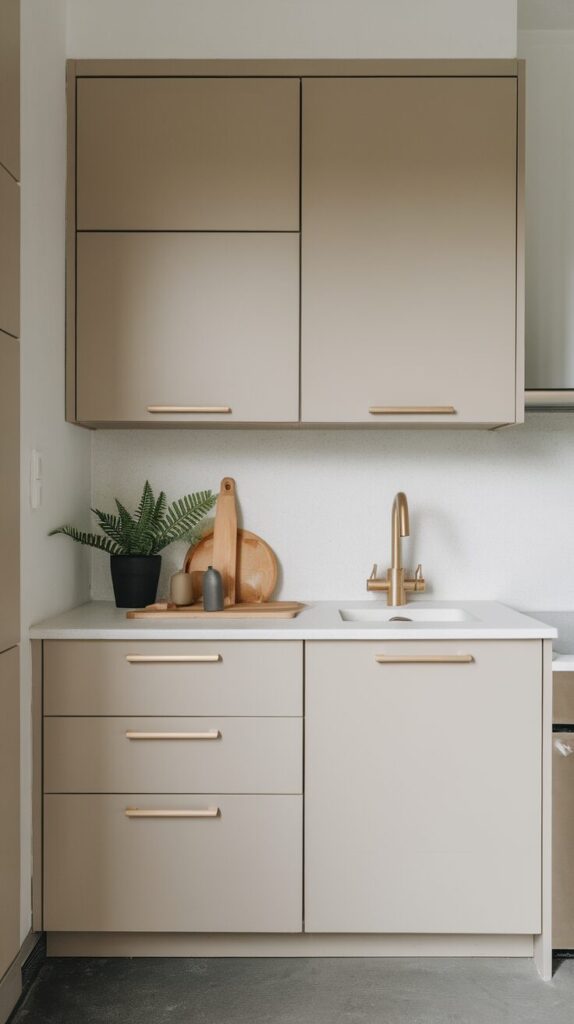
Chunky hardware clutters small kitchens visually. I switched to minimal pulls and loved the simplicity. The kitchen looked calmer instantly. Small details matter here.
Slim handles or integrated pulls keep lines clean. You reduce visual noise and improve flow. The space feels modern and intentional.
Why This Works
Hardware creates visual breaks across cabinetry. Minimal designs reduce clutter and maintain continuity. You keep focus on layout and light.
How to Do It
- Choose slim bar pulls or recessed handles.
- Keep finishes consistent.
- Align hardware placement carefully.
- Test grip comfort before committing.
Style & Design Tips
Matte finishes hide fingerprints better. Linear designs suit modern small kitchens. Avoid ornate shapes that steal attention.
Pro Tip or Budget Hack
Use touch-latch systems to eliminate hardware entirely. You get a sleek look for a reasonable cost.
13. Rolling Carts for Flexible Storage
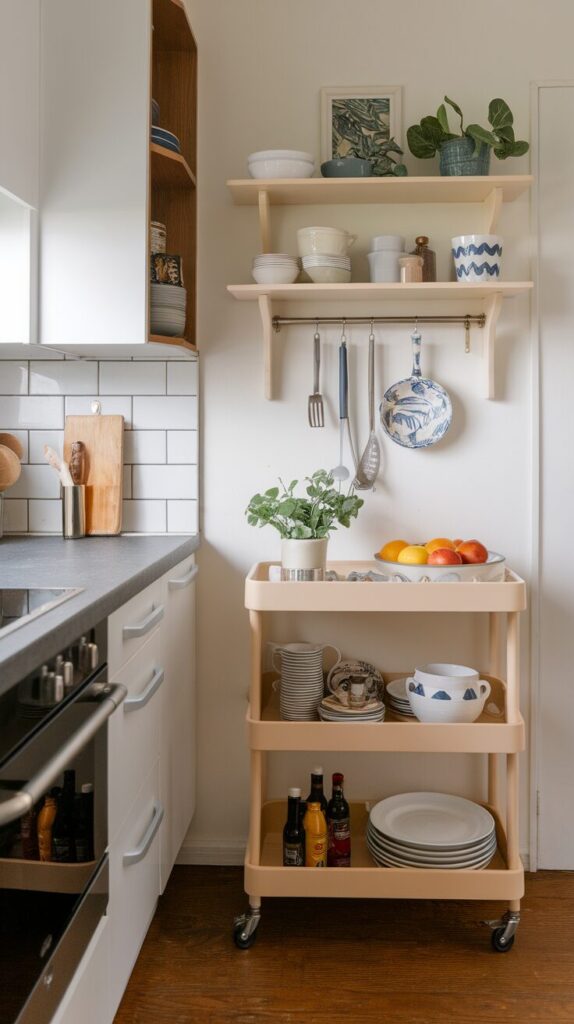
I love furniture that moves with me. Rolling carts add storage without commitment. You roll them where needed and tuck them away later. Flexibility wins in small kitchens.
Carts hold appliances, produce, or bar supplies. They adapt to your routine easily. The kitchen stays versatile.
Why This Works
Movable storage adjusts to changing needs. Carts add function without permanent installation. You control placement and use.
How to Do It
- Choose a narrow cart with locking wheels.
- Assign a clear purpose for the cart.
- Keep height below counters if possible.
- Store items neatly.
Style & Design Tips
Match cart material to kitchen finishes. Open shelving on carts keeps items accessible. Avoid overcrowding.
Pro Tip or Budget Hack
Use a repurposed bar cart for kitchen storage. You save money and add charm.
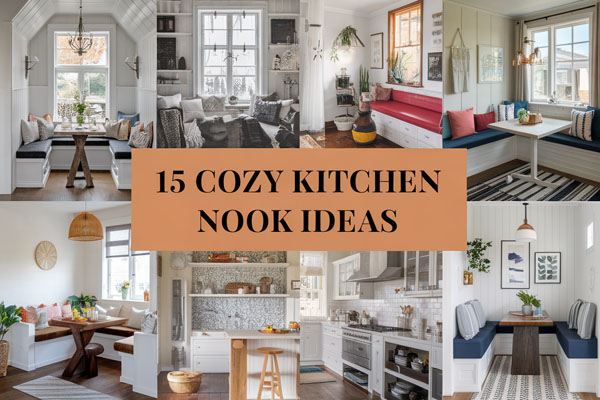
14. Built-In Seating with Hidden Storage
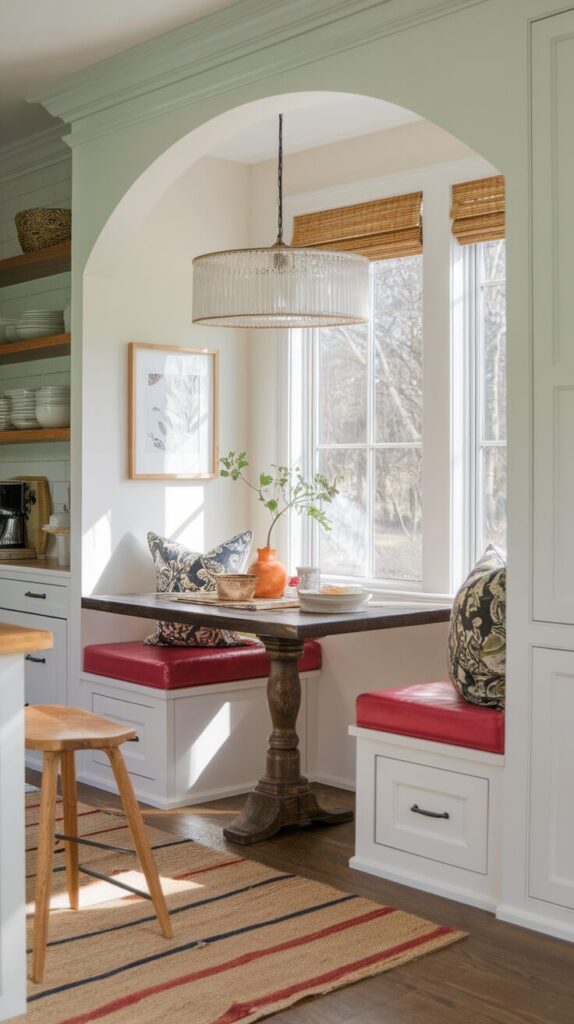
Eating in a small kitchen feels tricky sometimes. Built-in seating solved that issue for me. It created a cozy nook with hidden storage underneath. This idea feels smart and inviting.
You build a bench along a wall or window. You store items inside and enjoy extra seating. The kitchen gains personality.
Why This Works
Built-ins maximize awkward spaces. Seating doubles as storage and saves floor space. You create a multi-functional zone.
How to Do It
- Measure available wall space.
- Build or buy a storage bench.
- Add comfortable cushions.
- Ensure easy lid access.
Style & Design Tips
Use durable fabrics for cushions. Match bench color to cabinetry for cohesion. Avoid bulky designs.
Pro Tip or Budget Hack
Convert old cabinets into a bench base. You reuse materials and cut costs.
15. Consistent Organization That Stays Realistic
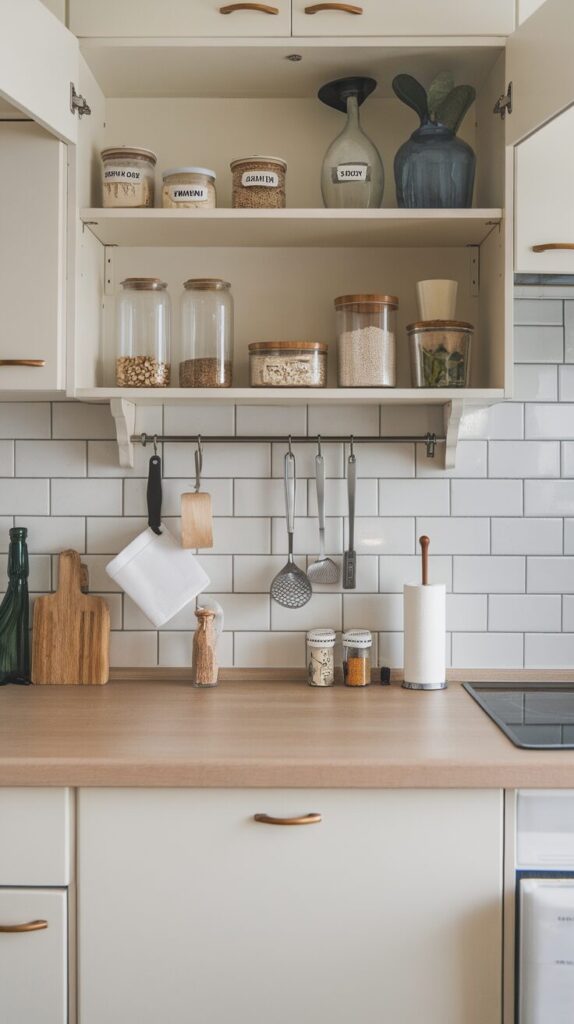
Organization systems fail when they feel too strict. I learned to keep things simple and flexible. Realistic organization keeps small kitchens functional long-term. This idea ties everything together.
You group items by use and frequency. You avoid overcomplicating storage. The kitchen stays tidy without constant effort.
Why This Works
Consistency beats perfection. Simple systems encourage daily upkeep. You reduce stress and save time.
How to Do It
- Group items by task or zone.
- Use clear containers where helpful.
- Label sparingly.
- Reassess monthly.
Style & Design Tips
Use neutral organizers to reduce visual clutter. Keep counters mostly clear. Avoid buying organizers without a plan.
Pro Tip or Budget Hack
Reuse jars and containers you already own. You save money and reduce waste.
The Rustic Shower Design Foundation: How to Plan Before You Build
Most bathroom regrets start with rushing the build. I’ve seen people buy tile first and think about layout later, which almost always backfires. A rustic walk-in shower needs a clear material plan before you swing a hammer.
Start with three core decisions: layout, moisture protection, and material balance. Choose your walk-in configuration based on real bathroom dimensions, not Pinterest dreams. Then prioritize proper waterproofing membranes, sloped pans, and ventilation because rustic materials like wood and stone demand serious moisture control.
Finally, decide your dominant texture before adding accents. If stone leads, let wood support it. If wood dominates, keep tile simple so the space feels intentional instead of chaotic.
Moisture & Ventilation: The Non-Negotiable Layer
Rustic showers look effortless, but they require smart planning behind the walls. Warm materials like wood and handmade tile perform beautifully when you manage humidity correctly. Skip this step and you’ll regret it fast.
Install a properly sized exhaust fan rated for your bathroom’s square footage. Run the fan during and after showers to reduce trapped moisture. Seal every porous surface with the correct waterproof products instead of assuming rustic equals rugged.
When you respect moisture management, your shower ages gracefully instead of deteriorating. That difference separates a cozy retreat from a future renovation bill.
Budget Planning Without Sacrificing Style
You don’t need a luxury contractor to build a rustic walk-in shower. You need a smart budget breakdown and discipline. I always divide spending into structure, surfaces, and style.
Invest most of your budget into waterproofing, plumbing quality, and flooring installation. Save on aesthetic upgrades like reclaimed wood accents or specialty tile by limiting them to focal areas. That strategy keeps the shower durable while still delivering visual impact.
Track material costs before committing to custom features. Small upgrades look amazing when placed strategically, but overspending everywhere rarely improves the final result.
Common Mistakes to Avoid
People often confuse rustic with unfinished. Rustic design still requires clean lines, thoughtful proportions, and deliberate choices. Sloppy installation ruins even the best materials.
Avoid mixing too many textures at once. Stone, wood, handmade tile, matte black fixtures, and patterned flooring all competing together create visual chaos. Choose two main textures and let everything else support them quietly.
Never ignore drainage slope in open walk-in showers. Poor water flow causes puddling, long-term moisture damage, and frustration. Always test water direction before finalizing tile installation.
Skip trendy gray-washed finishes if you want long-term warmth. Cool-toned rustic spaces age poorly compared to earth-based palettes.
Material Pairing Guide for a Cohesive Look
Great rustic showers rely on balance. Every material needs a partner that either contrasts softly or blends naturally. I like to think in layers instead of individual pieces.
Pair warm wood with matte stone for grounded harmony. Combine textured handmade tile with smooth neutral flooring to avoid overload. Use black or oil-rubbed bronze fixtures as visual anchors when natural tones dominate.
Keep grout color slightly darker than your lightest tile. That small decision adds depth and hides maintenance wear over time.
Long-Term Maintenance Tips for Rustic Showers
Rustic showers reward consistency. Natural materials need occasional care, but they also age beautifully when maintained properly. I prefer low-effort routines that protect investment without feeling like a chore.
Reseal natural stone annually or as recommended by the manufacturer. Wipe down wood accents after heavy steam sessions to prevent excess moisture buildup. Use pH-neutral cleaners to preserve finishes instead of harsh chemical sprays.
Keep ventilation running and leave the shower door open when possible. Good airflow protects materials more effectively than constant scrubbing.
Frequently Asked Questions
Is a rustic walk-in shower harder to maintain than a modern one?
Rustic showers require proper sealing and ventilation, but they don’t demand constant upkeep. Natural textures often hide water spots better than glossy finishes.
Can I use real wood inside a walk-in shower?
You can use real wood if you seal it correctly and keep it out of direct water spray. Always choose moisture-resistant species and apply waterproof finishes.
What flooring works best for a rustic walk-in shower?
Pebble, slate, textured porcelain, and tumbled stone perform well. Choose slip-resistant finishes to maintain both safety and style.
Do open walk-in showers cause water to splash everywhere?
Proper layout and slope prevent excessive splash. Position the showerhead away from the entrance and test water flow before finishing.
How do I keep a rustic bathroom from looking outdated?
Stick to earth tones and natural textures instead of overly themed farmhouse elements. Focus on simplicity and balance.
Can I achieve a rustic look on a tight budget?
Yes, you can prioritize one standout material like stone flooring or a wood accent wall. Strategic placement creates impact without overspending.
Final Thoughts
Small kitchens demand smarter choices, not bigger budgets. You don’t need to tackle everything at once to see change. Try one idea and build momentum from there.
I started with one upgrade and kept going as confidence grew. Small wins add up fast, and your kitchen will thank you. Trust me, your morning coffee routine will feel way better.