13 Spa Shower Ideas That Bring Style Without the Clutter
Function always beats decoration when it comes to showers that actually feel good to use. Most people overload the space with products, textures, and random upgrades, then wonder why it feels cramped instead of calming. A spa-like shower isn’t about adding more—it’s about removing what doesn’t belong.
I’ve noticed that the best-looking showers usually follow one simple rule: everything has a purpose. When that clicks, the whole space starts to feel lighter, cleaner, and honestly a lot more expensive.
So if you’ve been trying to get that spa vibe without turning your bathroom into a cluttered Pinterest experiment, these ideas will get you there the smart way.
1. Minimalist Floating Bench
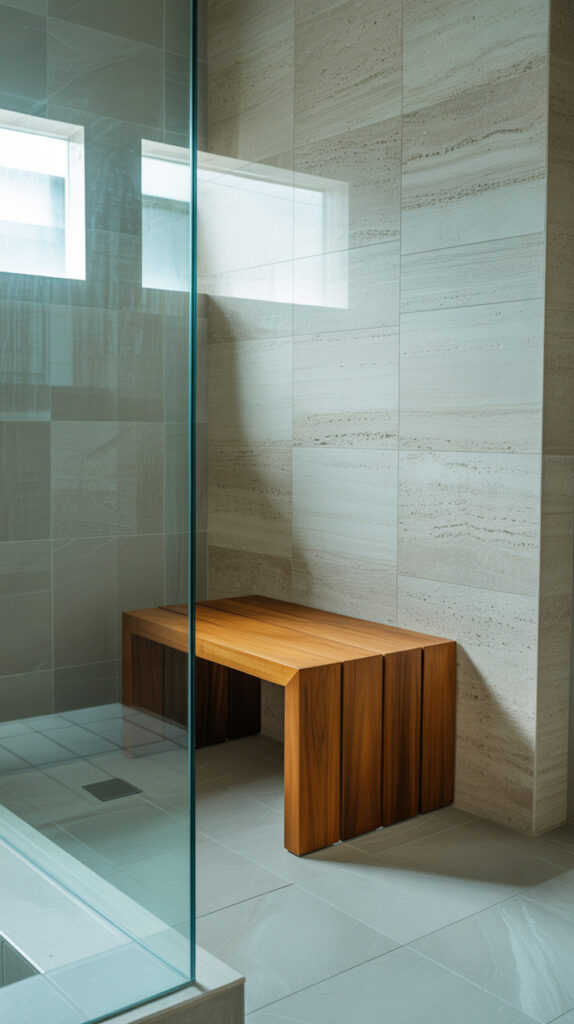
Most showers feel awkward when there’s nowhere comfortable to sit or rest products without crowding the floor. A bulky stool solves the problem but instantly kills the clean look. That’s where a floating bench quietly fixes everything.
I tried this in a smaller bathroom once, and it completely changed how the space felt. It added function without taking up visual weight, which is honestly the whole point of spa design.
Why This Works
Floating elements create visual space underneath, which tricks your brain into seeing the area as larger and more open. It also keeps the layout structured instead of chaotic.
How to Do It
- Choose a waterproof material like teak, quartz, or sealed stone
- Mount the bench securely into wall studs
- Keep the depth around 12–16 inches for comfort without bulk
- Position it slightly off-center for better flow
Style & Design Tips
Stick with natural tones or matte finishes to keep it spa-like instead of flashy. Avoid overly thick slabs that make it feel heavy.
Pro Tip or Budget Hack
If built-in isn’t possible, use a slim teak bench with open legs—it mimics the floating look without construction work.
2. Recessed Wall Niches
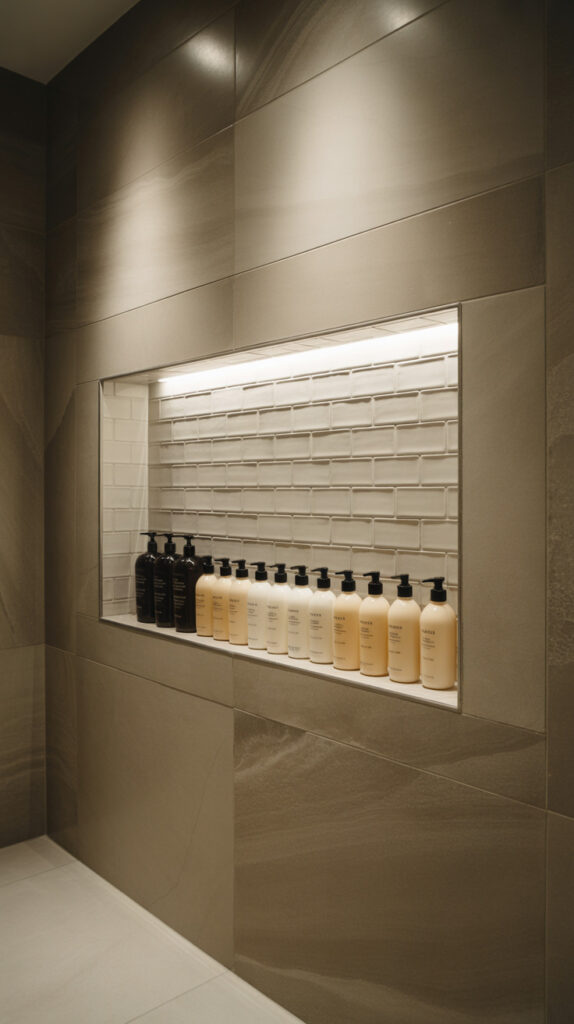
Shampoo bottles scattered across the floor or hanging racks never look good, no matter how expensive they are. They instantly make the shower feel messy and unplanned. A recessed niche fixes that in the cleanest way possible.
Once you switch to this, you’ll never go back to those hanging organizers. It’s one of those upgrades that feels small but makes a huge difference.
Why This Works
Recessed niches use wall depth instead of floor space, which keeps everything organized without adding visual clutter.
How to Do It
- Plan niche placement between studs before tiling
- Add proper waterproofing and slope the base slightly
- Use a single wide niche or two stacked smaller ones
- Align it with tile lines for a seamless look
Style & Design Tips
Use a contrasting tile inside the niche for subtle interest without overdoing it. Avoid busy patterns that draw too much attention.
Pro Tip or Budget Hack
If remodeling isn’t an option, install a slim wall-mounted shelf that sits flush—it’s not perfect, but it gets close.
3. Frameless Glass Enclosure
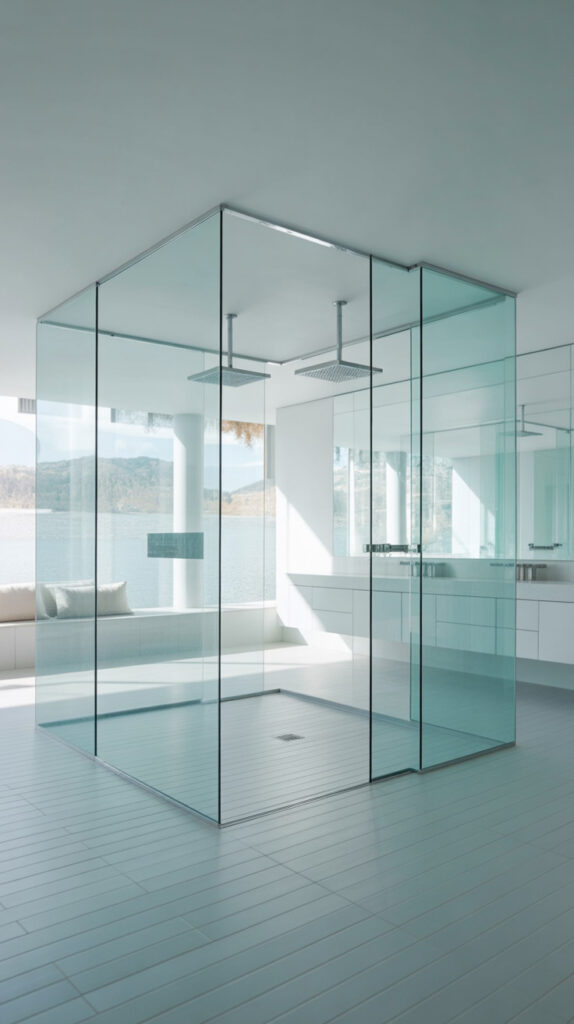
Shower curtains and bulky frames break up the space visually and make everything feel smaller. Even in a decent-sized bathroom, they can make things look boxed in. A frameless glass enclosure changes that instantly.
The first time I switched to one, the bathroom suddenly looked twice as polished without changing anything else. That’s the kind of upgrade I like.
Why This Works
Clear glass keeps sightlines open, which creates a continuous flow across the room. That openness is what gives spa showers their signature calm feel.
How to Do It
- Choose tempered safety glass for durability
- Go for minimal hardware in brushed or matte finishes
- Keep door hinges simple and low-profile
- Ensure proper sealing to prevent leaks
Style & Design Tips
Avoid tinted or frosted glass unless privacy is absolutely needed. Clean lines always look more high-end here.
Pro Tip or Budget Hack
A fixed glass panel instead of a full enclosure saves money and still delivers that open look.
4. Neutral Stone Tile Palette
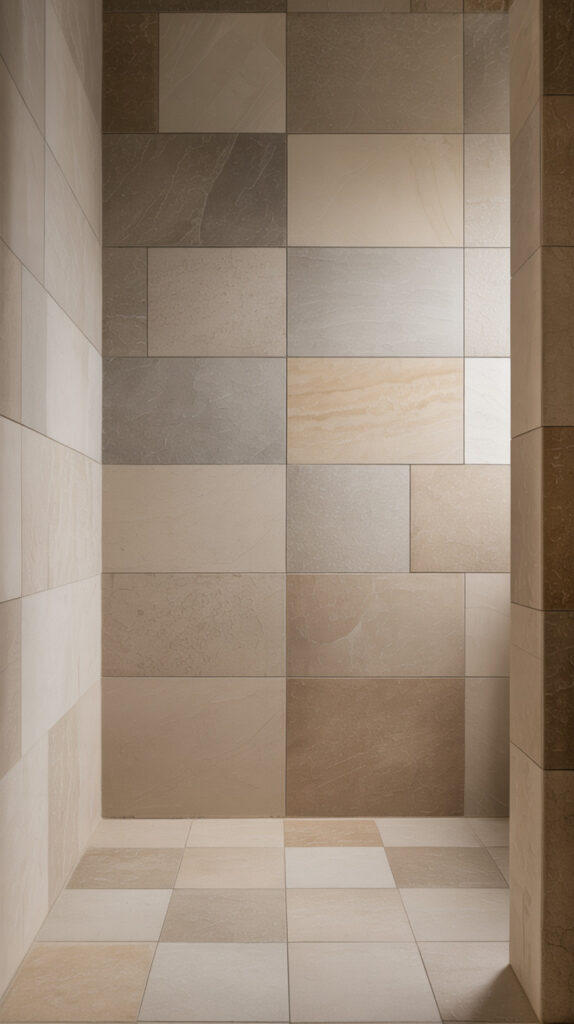
Too many colors and patterns can make a shower feel chaotic instead of relaxing. Neutral stone tones keep things grounded and cohesive. It’s one of the easiest ways to get that spa vibe without overthinking it.
I’ve seen people try bold tiles here and regret it later—it looks exciting at first but gets tiring fast.
Why This Works
Neutral palettes create visual calm, which helps the space feel more relaxing and less overwhelming.
How to Do It
- Stick to beige, grey, or soft white tones
- Use large-format tiles to reduce grout lines
- Keep variations subtle instead of high contrast
- Match floor and wall tones for continuity
Style & Design Tips
Mix textures instead of colors—like matte walls with slightly textured flooring.
Pro Tip or Budget Hack
Porcelain tiles that mimic stone give you the same look without the high cost or maintenance.
5. Ceiling-Mounted Rain Showerhead
Standard wall-mounted showerheads feel functional but not particularly relaxing. A ceiling-mounted rain shower instantly upgrades the experience. It’s one of those changes you actually feel every single day.
I didn’t expect it to make such a difference, but it genuinely slows you down in a good way.
Why This Works
Water falling directly from above mimics natural rainfall, which feels more immersive and calming.
How to Do It
- Install plumbing in the ceiling during renovation
- Choose a large diameter showerhead for full coverage
- Ensure proper water pressure support
- Position it centrally over the standing area
Style & Design Tips
Go for brushed metal finishes instead of shiny chrome for a softer look.
Pro Tip or Budget Hack
A wall-mounted rainfall-style head angled downward gives a similar feel without ceiling work.
6. Built-In LED Lighting
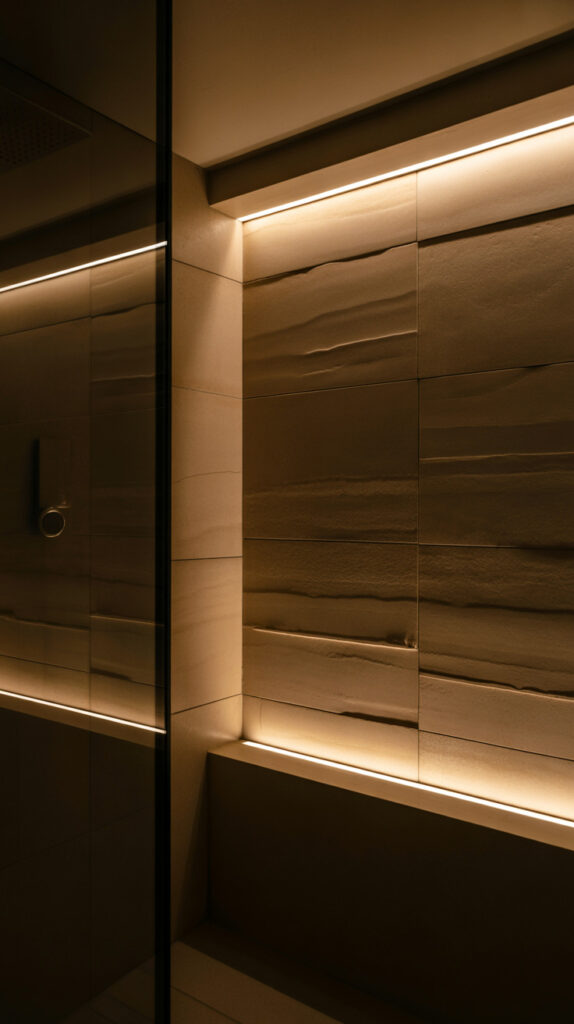
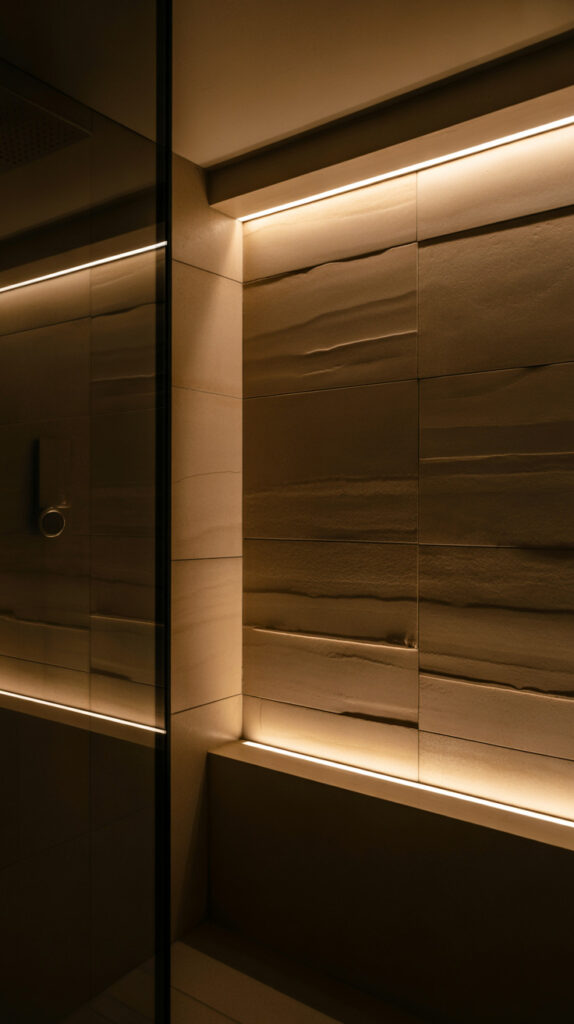
Overhead bathroom lights can feel harsh and clinical. That’s the opposite of what you want in a spa-like shower. Built-in LED lighting adds softness without clutter.
I’ve seen this done badly with overly bright strips, so restraint matters here.
Why This Works
Layered lighting creates depth and warmth, making the space feel more relaxing and less flat.
How to Do It
- Install waterproof LED strips in niches or ceiling edges
- Use warm white tones instead of cool blue
- Hide light sources behind edges for indirect glow
- Connect to dimmers if possible
Style & Design Tips
Avoid colorful lighting—it quickly turns into a gimmick instead of a spa feature.
Pro Tip or Budget Hack
Battery-powered waterproof LED strips can work for smaller upgrades without wiring.
7. Wall-Mounted Fixtures
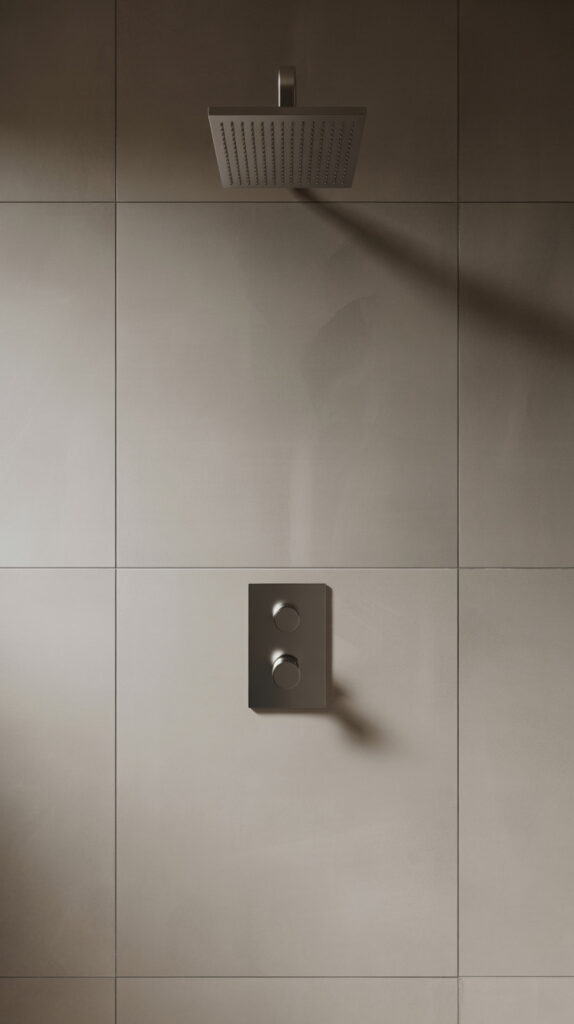
Bulky fixtures sticking out everywhere disrupt the clean look of a spa shower. Wall-mounted controls keep everything sleek and organized. It’s a subtle change that makes a big visual impact.
Once you notice the difference, exposed fixtures start to look messy.
Why This Works
Flush-mounted elements reduce visual interruptions, keeping lines clean and consistent.
How to Do It
- Choose a concealed valve system
- Keep controls aligned horizontally
- Match finishes across all hardware
- Install at comfortable reach height
Style & Design Tips
Stick to one finish throughout—mixing metals can get messy fast.
Pro Tip or Budget Hack
If full installation isn’t possible, upgrade to slimmer modern fixtures for a cleaner look.
8. Open Walk-In Layout
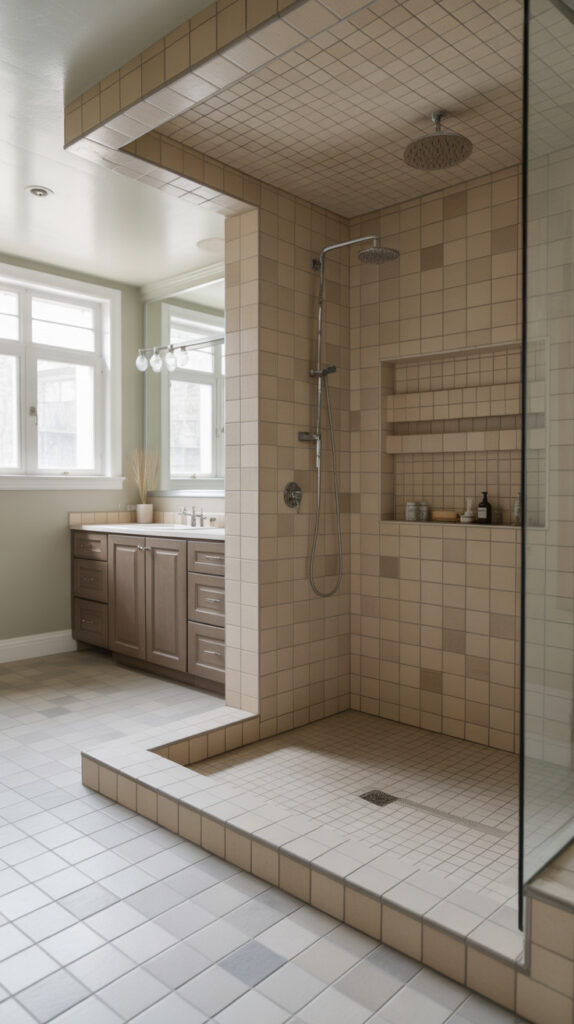
Traditional enclosed showers can feel boxed in, especially in smaller bathrooms. An open walk-in layout removes that restriction. It makes the entire bathroom feel more connected.
I like this setup because it feels effortless—you’re not stepping in and out of a separate space.
Why This Works
Open layouts improve movement and make the room feel larger by removing barriers.
How to Do It
- Use a slight floor slope for drainage
- Add a linear drain for a sleek finish
- Include a partial glass panel for splash control
- Keep entry wide and unobstructed
Style & Design Tips
Maintain consistent flooring across the bathroom for a seamless transition.
Pro Tip or Budget Hack
A curbless shower pan can help achieve this look without major structural changes.
9. Wooden Accents for Warmth
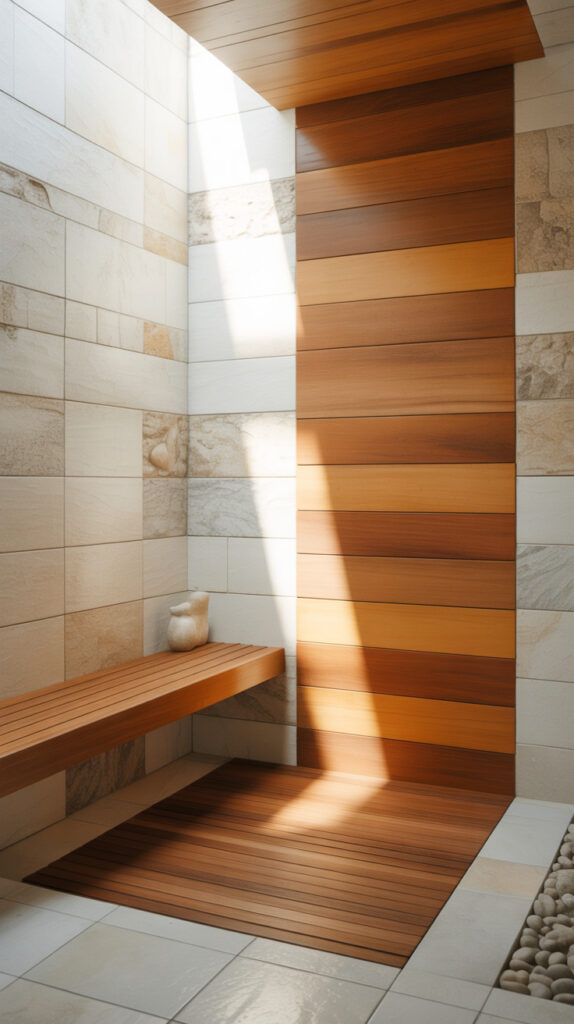
All-tile showers can sometimes feel cold or sterile. Adding wood brings warmth without clutter. It balances the clean look with a bit of softness.
I’ve used teak accents before, and they instantly made the space feel more inviting.
Why This Works
Natural materials create contrast against hard surfaces, adding depth and comfort.
How to Do It
- Use teak or bamboo for moisture resistance
- Add a small bench, mat, or shelf
- Keep wood tones light or medium
- Seal properly to prevent damage
Style & Design Tips
Avoid dark, heavy wood that makes the space feel smaller.
Pro Tip or Budget Hack
Wood-look tiles give a similar effect with zero maintenance.
10. Hidden Storage Cabinets
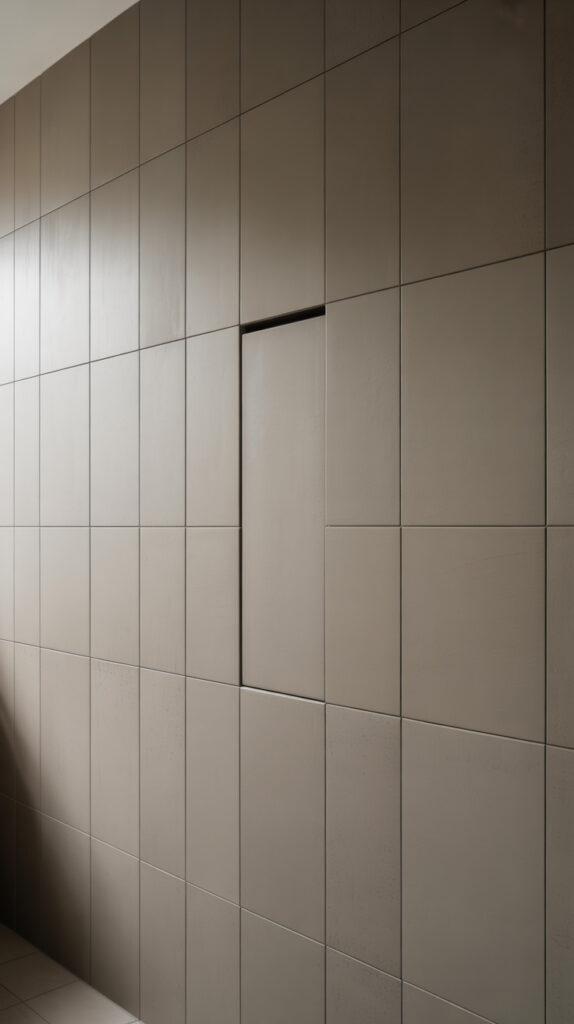
Visible clutter ruins even the most expensive shower design. Hidden storage keeps everything clean without sacrificing function. It’s one of those behind-the-scenes upgrades that pays off daily.
You don’t realize how much visual noise products create until they’re gone.
Why This Works
Concealed storage removes distractions, keeping the space calm and organized.
How to Do It
- Build flush cabinets into walls
- Use waterproof doors or panels
- Keep handles minimal or push-to-open
- Position at easy reach height
Style & Design Tips
Match cabinet fronts to wall finishes for a seamless look.
Pro Tip or Budget Hack
Use mirrored cabinets to combine storage and functionality.
11. Matte Black or Brushed Fixtures
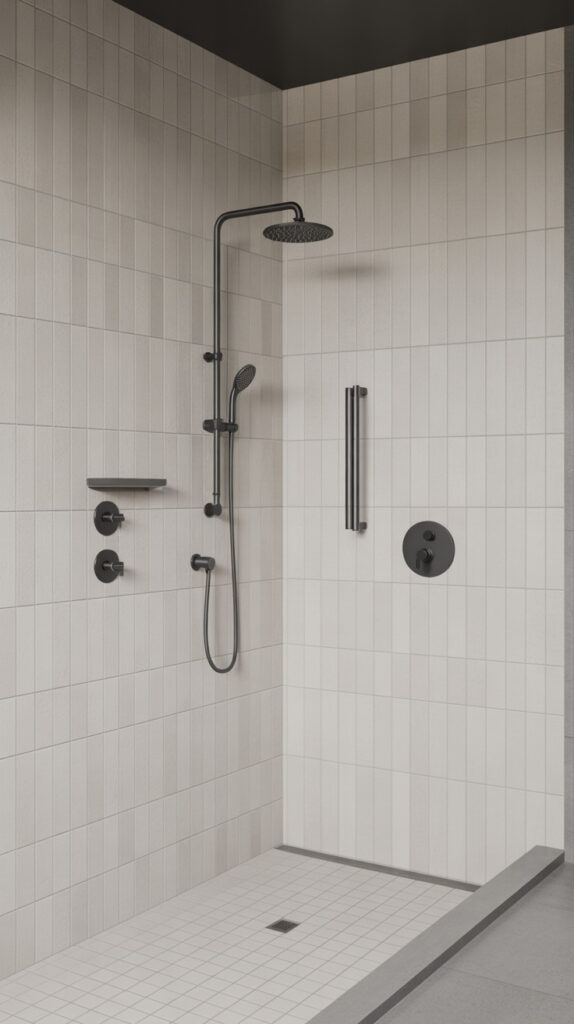
Shiny chrome can feel outdated or too flashy for a spa setting. Matte finishes tone everything down. They add contrast without being loud.
I used to default to chrome, but once you switch, it’s hard to go back.
Why This Works
Matte finishes absorb light instead of reflecting it, creating a softer, more refined look.
How to Do It
- Choose matte black or brushed nickel
- Match all hardware finishes
- Keep designs simple and modern
- Avoid mixing too many textures
Style & Design Tips
Use matte finishes as accents, not overwhelming features.
Pro Tip or Budget Hack
Swap out smaller hardware first for a quick visual upgrade.
12. Textured Shower Floor
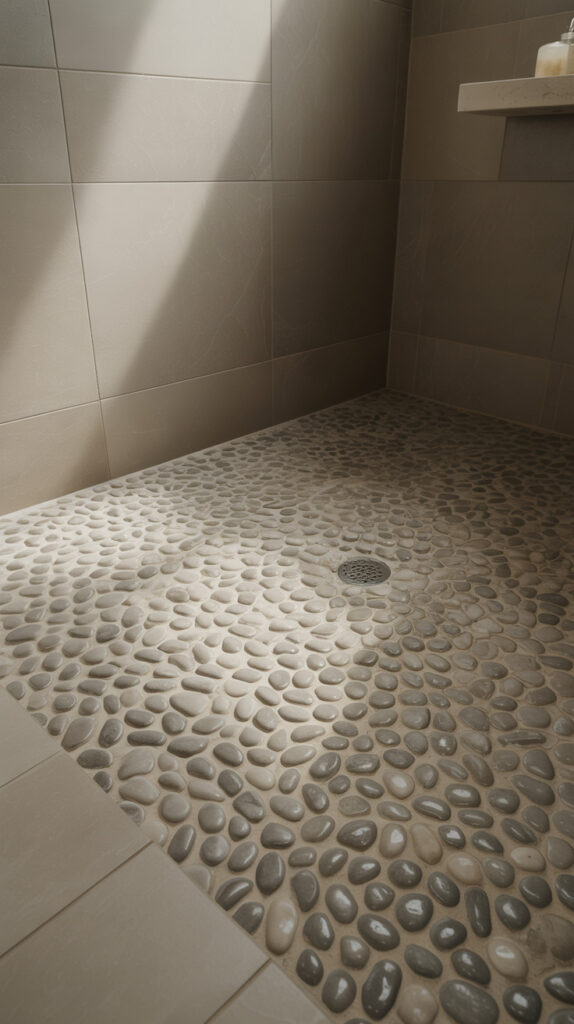
Flat, smooth floors can feel slippery and visually plain. Adding texture improves both safety and design. It’s a practical upgrade that also looks great.
This is one detail people skip, but it makes a big difference in everyday use.
Why This Works
Texture adds grip and subtle visual interest without overwhelming the space.
How to Do It
- Use small mosaic tiles for better traction
- Choose natural stone or textured porcelain
- Keep grout lines tight and consistent
- Match tones with wall tiles
Style & Design Tips
Avoid overly rough textures that feel uncomfortable underfoot.
Pro Tip or Budget Hack
Pebble tiles offer grip and a spa-like feel at a reasonable cost.
13. Soft Neutral Color Palette
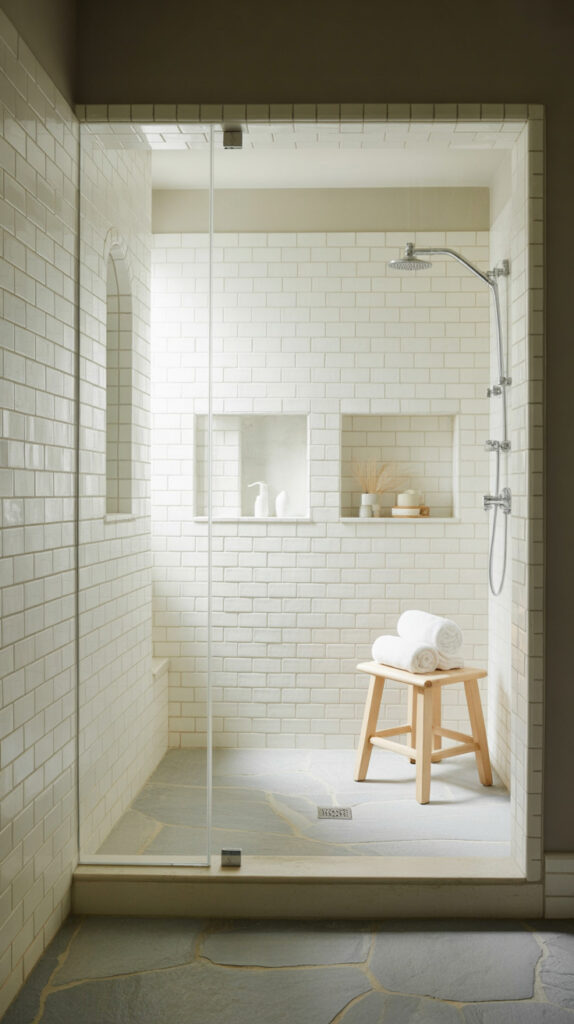
Too much contrast or bold color can break the calm feel of a spa shower. Soft neutrals keep everything balanced. It’s the easiest way to maintain consistency.
Whenever I see overly dramatic color choices, they usually age badly.
Why This Works
Soft tones create harmony, making the space feel cohesive and relaxing.
How to Do It
- Stick to whites, creams, and light greys
- Limit accent colors to small details
- Keep transitions between shades subtle
- Use consistent undertones throughout
Style & Design Tips
Layer similar shades instead of introducing new colors.
Pro Tip or Budget Hack
Paint surrounding bathroom walls in matching tones to extend the effect.
Spa Shower Design Foundation: How to Keep It Clean, Calm, and Functional
A spa shower works best when every decision connects back to function instead of decoration. Most people start with looks first and then try to fix usability later, which usually leads to clutter creeping back in. If the layout doesn’t support daily habits, no amount of design upgrades will save it.
Start by thinking about how the shower is actually used. Where you reach for products, how you move, and where water naturally flows all matter more than finishes.
Keep the visual language consistent across the entire shower. Mixing too many styles, tones, or materials breaks the calm feeling you’re trying to build.
Key Principles to Follow
- Less but better: Limit visible items and focus on quality materials
- Everything has a place: Plan storage before adding features
- Consistency wins: Stick to one color palette and one hardware finish
- Flow matters: Make movement inside the shower feel natural and easy
- Maintenance-friendly design: Choose materials that are easy to clean and durable
Layout Planning Basics
Think in zones instead of random placement. A shower should have a clear standing area, a storage area, and optional seating without overlap.
Keep controls within easy reach from the entrance so you don’t get blasted with cold water. Align niches, fixtures, and benches so nothing feels scattered.
Material Selection Strategy
Choose materials that balance durability and aesthetics. Natural stone looks great but needs maintenance, while porcelain gives a similar look with less effort.
Avoid mixing too many textures in one small space. Two to three materials are usually enough to create depth without making it busy.
Common Mistakes to Avoid
Overdesign is the fastest way to ruin a spa shower. Adding too many features or styles creates visual noise and makes the space feel smaller instead of calmer.
Ignoring practical use leads to frustration later. A beautiful shower that doesn’t function well quickly becomes annoying.
Mistakes That Break the Spa Look
- Too many products visible: Even luxury bottles create clutter when overdone
- Mixing multiple finishes: Combining chrome, black, and gold rarely looks intentional
- Overly bold tiles: Loud patterns can feel overwhelming in a small space
- Poor lighting choices: Harsh white lighting kills the relaxing vibe
- Incorrect niche placement: Too high or too low makes daily use awkward
Functional Mistakes to Watch
Bad drainage planning can ruin everything. Water pooling or slow drainage makes even a premium shower feel cheap.
Skipping ventilation leads to long-term problems. Moisture buildup affects both comfort and durability.
Smart Upgrades That Increase Value
Not every upgrade needs to be expensive to feel premium. Some changes give a big visual and functional return without blowing your budget.
Focus on upgrades that improve daily experience, not just appearance.
High-Impact Upgrades
- Frameless glass panels instantly open up the space
- Large-format tiles reduce grout lines and look cleaner
- Upgraded showerheads improve comfort every day
- Matte fixtures modernize the entire look quickly
Budget-Friendly Improvements
Swapping out old hardware can refresh the entire shower. Even something simple like changing the showerhead or handles makes a noticeable difference.
Reorganizing storage and reducing visible clutter often delivers better results than adding new elements.
Maintenance Tips for a Long-Lasting Spa Look
A clean design only works if it stays clean over time. Without a simple maintenance routine, even the best shower starts to look worn out.
The goal is to keep things easy so it doesn’t feel like a chore.
Daily and Weekly Habits
- Wipe down glass and tiles after use to prevent water spots
- Keep only essential products inside the shower
- Use mild cleaners to avoid damaging finishes
- Check drains regularly to prevent buildup
Long-Term Care
Reseal natural stone when needed to maintain its appearance. Keep an eye on grout lines and refresh them before they start to discolor.
Replace worn-out fixtures early so the overall look stays consistent.
Spa Shower Ideas FAQ
What makes a shower feel like a spa?
A spa shower focuses on simplicity, comfort, and clean design. Neutral colors, minimal clutter, and thoughtful features like rainfall showerheads or soft lighting create that relaxing feel.
How do I make a small shower look bigger?
Use light colors, large tiles, and frameless glass to open up the space. Keeping the design simple and clutter-free also helps the area feel more spacious.
Are spa-style showers expensive to create?
They can be, but they don’t have to be. Small upgrades like better lighting, improved storage, and cleaner layouts can achieve a similar effect on a budget.
What is the best material for a spa shower?
Porcelain tiles are a great option because they are durable, low maintenance, and available in natural stone looks. Teak wood is also popular for adding warmth.
How do I keep my shower looking minimal?
Limit the number of products inside and use built-in storage solutions. Stick to a consistent color palette and avoid unnecessary decorative items.
Is a walk-in shower better than a closed one?
Walk-in showers usually feel more open and modern. They improve flow and make the bathroom look larger, but they require proper drainage planning.
Final Thoughts
A spa-like shower doesn’t come from adding expensive features—it comes from making smarter choices. When everything has a purpose, the space naturally starts to feel calmer and more put together.
Start small if needed and build from there. I’ve found that even one or two of these changes can completely shift how a bathroom feels, and honestly, that’s all you really need.