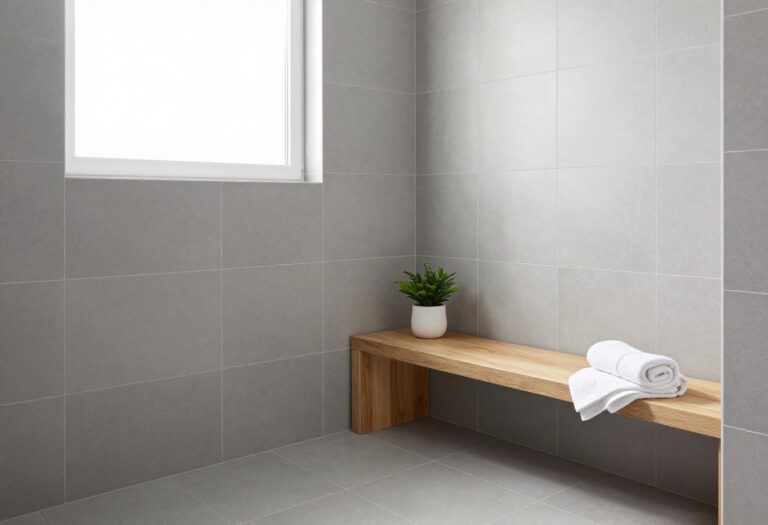
15 Bathroom Window Ideas for Light and Privacy
The bathroom always tells you how it feels before you even touch anything. Morning light hits the mirror, steam hangs in the air, and you either feel calm or slightly annoyed for no clear reason.
I used to think that feeling came from clutter or bad lighting, but the window caused most of the drama. Once I fixed how light and privacy worked together, the whole room stopped fighting me.
I learned this the hard way after living with a window that either blinded me or made me feel like I needed to duck.

Bathrooms demand balance, and windows sit right at the center of that balance. Let’s fix that without turning your bathroom into a cave or a fishbowl.
1. Frosted Glass Panels That Feel Clean, Not Cold
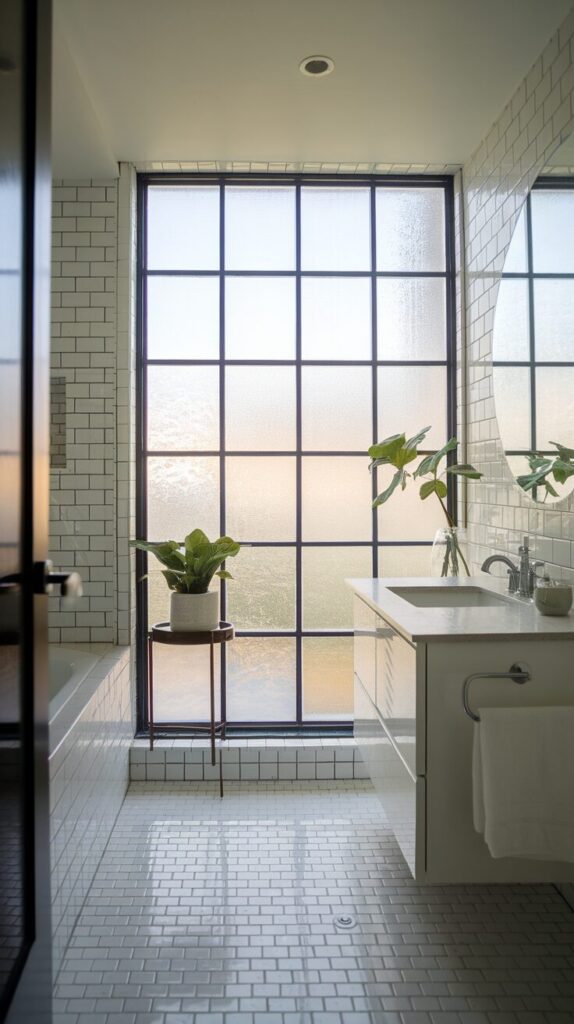
Everyone says you need curtains for privacy, but you really don’t. Frosted glass handles privacy without adding fabric, bulk, or visual noise. I used this idea in a tiny guest bath, and the room instantly felt calmer and brighter.
Frosted glass softens harsh daylight while blocking direct visibility from outside. The light still spreads evenly across the room, which makes mirrors kinder and mornings less aggressive. I love how it keeps the space feeling modern without screaming for attention.
Why This Works
Frosted glass diffuses light instead of chopping it up. The surface scatters brightness evenly, so you avoid glare and shadows around the sink and vanity. The window stays functional without becoming a focal point that distracts from the rest of the room.
Bathrooms benefit from clean surfaces because moisture and dust love fabric. Frosted glass removes one more thing you need to wash or replace.
How to Do It
- Replace existing clear glass with frosted glass panels for a permanent solution
- Apply adhesive frosted window film for a renter-friendly option
- Cut film slightly oversized, then trim after smoothing it on
- Clean the glass thoroughly before application for a bubble-free finish
Style & Design Tips
Choose a soft matte frost instead of heavy patterns if you want a timeless look. Bold etched designs date quickly and fight with tile patterns. Simple frosting works with any bathroom style, from farmhouse to ultra-modern.
Avoid glossy frosted finishes because they reflect light unevenly. That reflection can create weird glare near mirrors.
Pro Tip or Budget Hack
Use static-cling frosted film instead of adhesive versions. You can remove it easily when trends change or when you move out.
2. Top-Down Bottom-Up Shades for Full Control
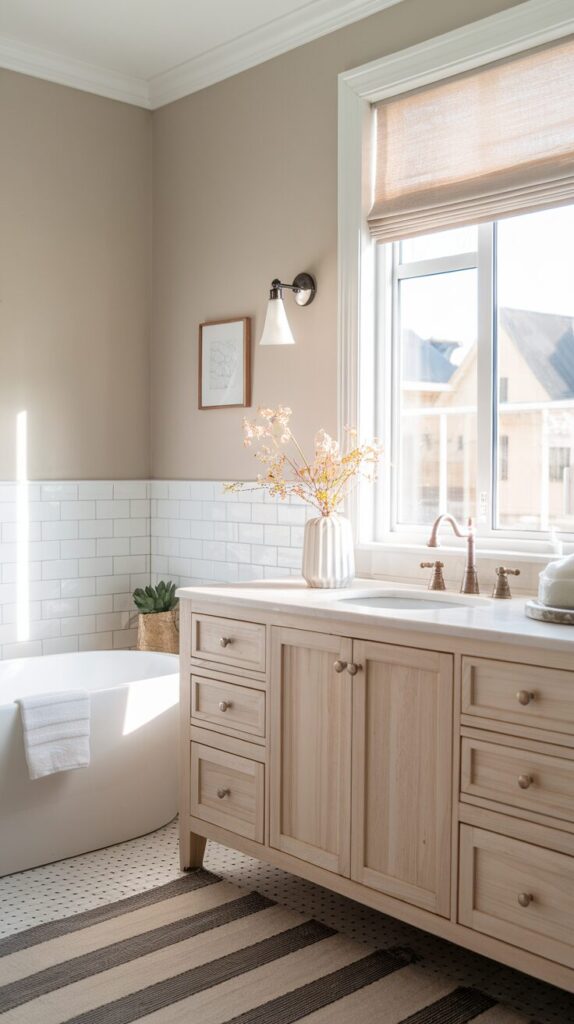
My bathroom window used to feel useless because I either covered it completely or left it wide open. Top-down bottom-up shades changed that situation instantly. I finally controlled where light entered without exposing anything awkward.
These shades let you lower the top portion while keeping the bottom covered. You get daylight where you want it and privacy where you need it most. That flexibility makes mornings feel calmer and more intentional.
Why This Works
Light usually looks best when it enters from above. Top-down shades pull daylight in without blasting eye-level views. The room feels taller, brighter, and more open without sacrificing privacy.
This setup also adapts throughout the day. You can adjust the shade as the sun shifts without touching curtains or rods.
How to Do It
- Measure your window carefully, including depth
- Choose moisture-resistant materials designed for bathrooms
- Install inside the window frame for a cleaner look
- Test movement before final tightening
Style & Design Tips
Stick with neutral tones like white, sand, or soft gray for longevity. Busy patterns distract in small bathrooms and clash with tile grout. Clean shades keep the focus on light, not fabric.
Avoid heavy woven textures in steamy bathrooms. Those materials trap moisture and start to sag.
Pro Tip or Budget Hack
Cellular shades often cost less than custom options and still provide insulation. They help regulate temperature while handling humidity better than expected.
3. Sheer Curtains That Feel Soft, Not Fussy
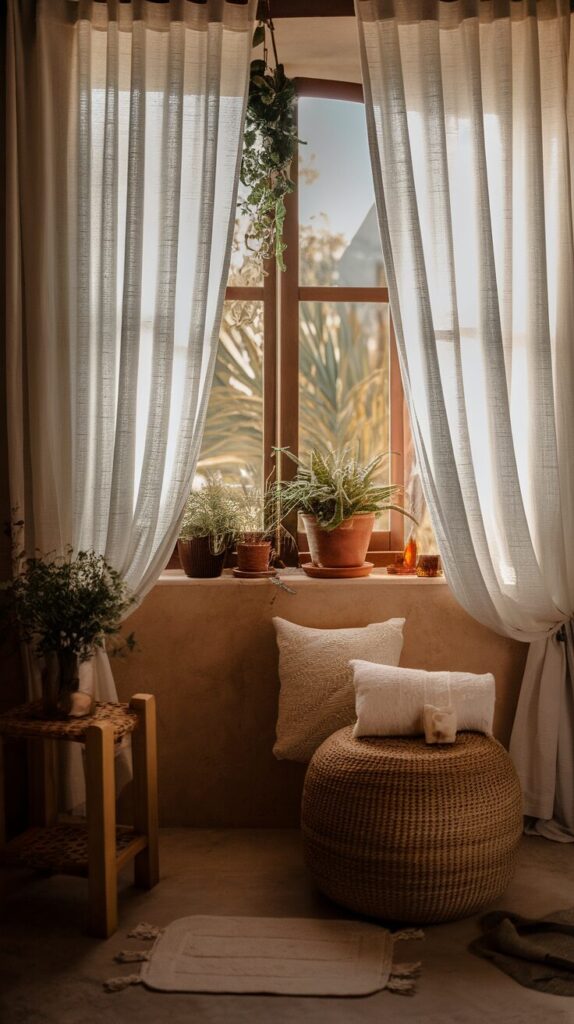
I avoided sheer curtains for years because I assumed they looked outdated. One lazy weekend convinced me otherwise when I tried them in a sun-soaked bathroom. The space instantly felt warmer and more relaxed.
Sheer curtains soften incoming light without blocking it. They give privacy during the day while keeping the room airy. I love how they move slightly with airflow and make the space feel alive.
Why This Works
Sheers filter light instead of stopping it. That filtration reduces glare and creates a gentle glow across walls and tile. Bathrooms benefit from that softness because hard surfaces dominate the room.
Curtains also add texture where bathrooms usually lack it. That balance prevents the space from feeling sterile.
How to Do It
- Choose moisture-resistant sheer fabric
- Hang the rod slightly wider than the window
- Keep the curtain length just above the sill
- Use simple rings or clips for easy removal
Style & Design Tips
White or off-white works best for maximum brightness. Dark sheers defeat the purpose and shrink the space visually. Light fabrics make small bathrooms feel bigger without renovations.
Skip layered curtains in bathrooms. Extra fabric collects dust and steam.
Pro Tip or Budget Hack
Use washable voile panels from big-box stores. They cost little and handle frequent cleaning without falling apart.
4. Stained Glass Accents That Feel Subtle, Not Churchy
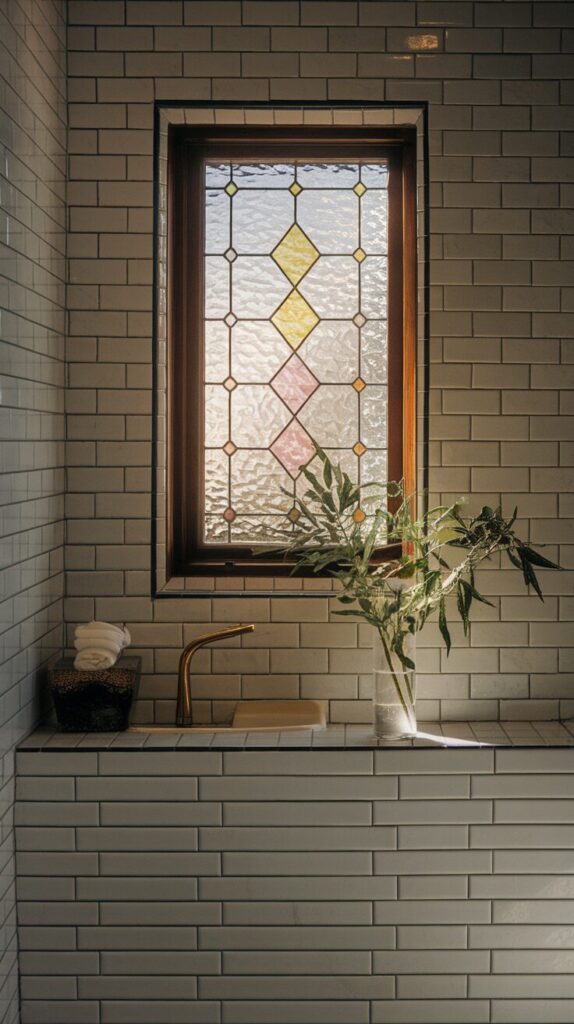
Stained glass gets a bad reputation because people overdo it. I added a small stained panel to an otherwise plain window, and it felt surprisingly modern. The key lies in restraint.
Light passes through colored glass in a softer, more playful way. You gain privacy without blocking brightness. Every morning feels slightly different depending on how the light hits.
Why This Works
Stained glass distorts direct sightlines naturally. The texture and color break visibility without closing off the window. The bathroom keeps its brightness while gaining character.
Small doses of color prevent boredom in neutral bathrooms. The glass adds interest without clutter.
How to Do It
- Install a stained glass insert in the upper window section
- Use removable hanging panels for flexibility
- Choose simple geometric designs
- Secure panels properly to avoid rattling
Style & Design Tips
Stick to muted colors or frosted accents for longevity. Loud jewel tones overwhelm small bathrooms. Minimal patterns age better than detailed scenes.
Avoid matching stained glass to trendy tile colors. Trends fade faster than windows.
Pro Tip or Budget Hack
Check local salvage shops for old stained panels. You can score unique pieces at a fraction of custom prices.
5. Roman Shades That Add Warmth Without Bulk
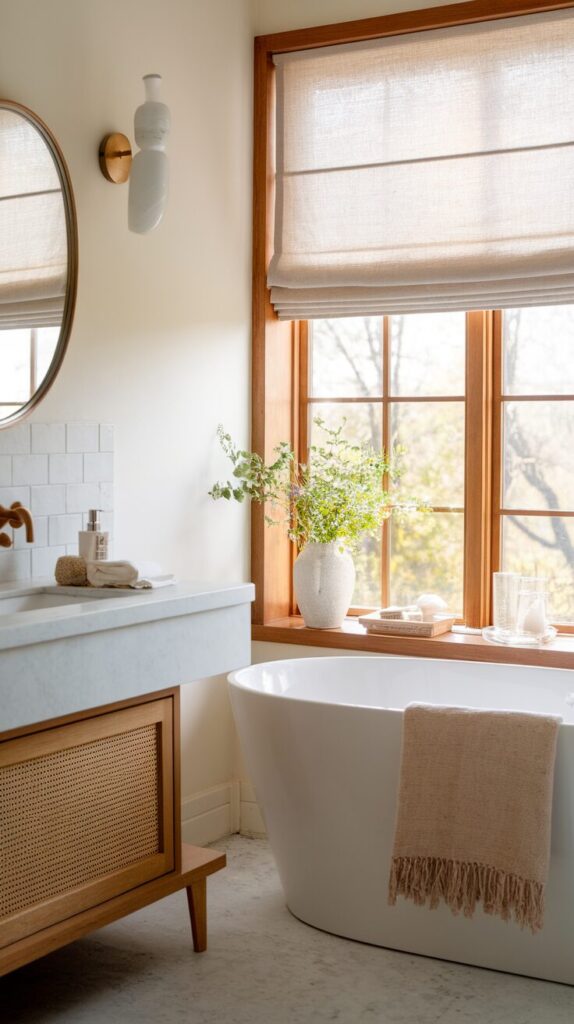
Roman shades surprised me in bathrooms. I expected them to feel heavy, but the right fabric changed everything. The space gained warmth without losing light.
These shades fold neatly when raised, which keeps the window feeling open. You control privacy easily while adding softness to hard surfaces.
Why This Works
Roman shades stack upward instead of bunching sideways. That movement keeps sightlines clean and uncluttered. Bathrooms benefit from vertical flow.
Fabric also helps absorb sound slightly. That subtle change makes small bathrooms feel less echoey.
How to Do It
- Choose moisture-resistant fabric
- Mount inside the window frame
- Keep folds shallow for a lighter look
- Test lifting mechanism before daily use
Style & Design Tips
Solid colors beat patterns in tight spaces. Patterned shades fight tile and grout lines. Texture works better than print in bathrooms.
Avoid heavy blackout linings. Bathrooms need light, not darkness.
Pro Tip or Budget Hack
Use kitchen-rated Roman shades. They handle humidity well and cost less than custom bathroom options.
6. Window Privacy Film With Decorative Patterns
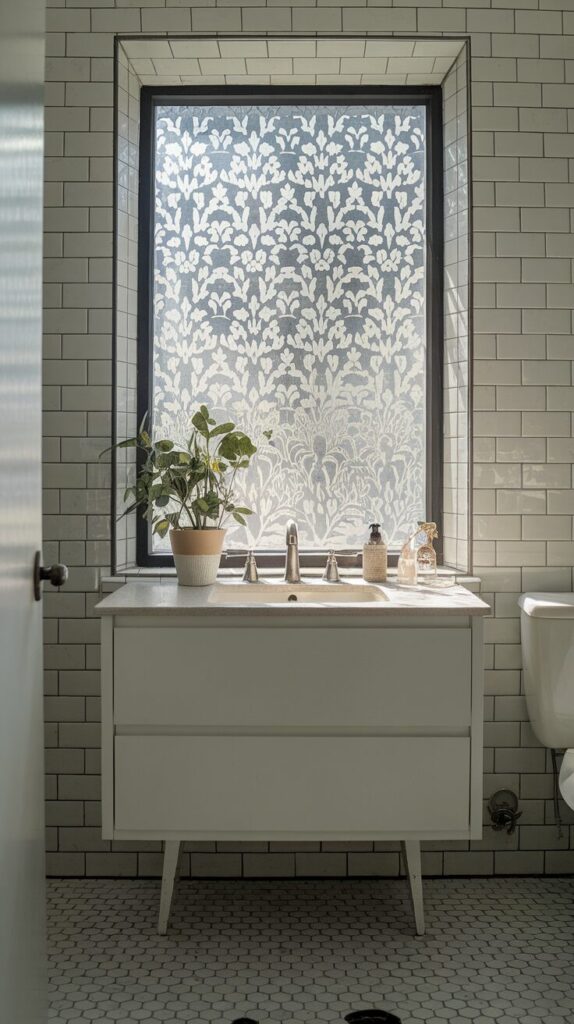
I hesitated on patterned privacy film because I feared it would look cheap. One subtle design proved me wrong. The bathroom gained privacy and visual interest instantly.
Decorative film comes in endless styles. You can mimic etched glass, linen textures, or soft geometrics without permanent changes.
Why This Works
Film blocks direct views while letting light through. Patterns diffuse light further, which reduces harsh shadows. The bathroom feels calmer and more balanced.
This option also suits renters perfectly. You avoid drilling or permanent alterations.
How to Do It
- Clean the glass thoroughly
- Measure and cut film precisely
- Apply with water spray for adjustment
- Smooth out bubbles slowly
Style & Design Tips
Choose small-scale patterns for small windows. Large motifs overwhelm quickly. Subtle designs feel intentional, not distracting.
Avoid overly shiny finishes. Matte films age better visually.
Pro Tip or Budget Hack
Buy sample rolls before committing. Testing patterns in your actual light saves regret.
7. Café Curtains That Hit Just the Right Height
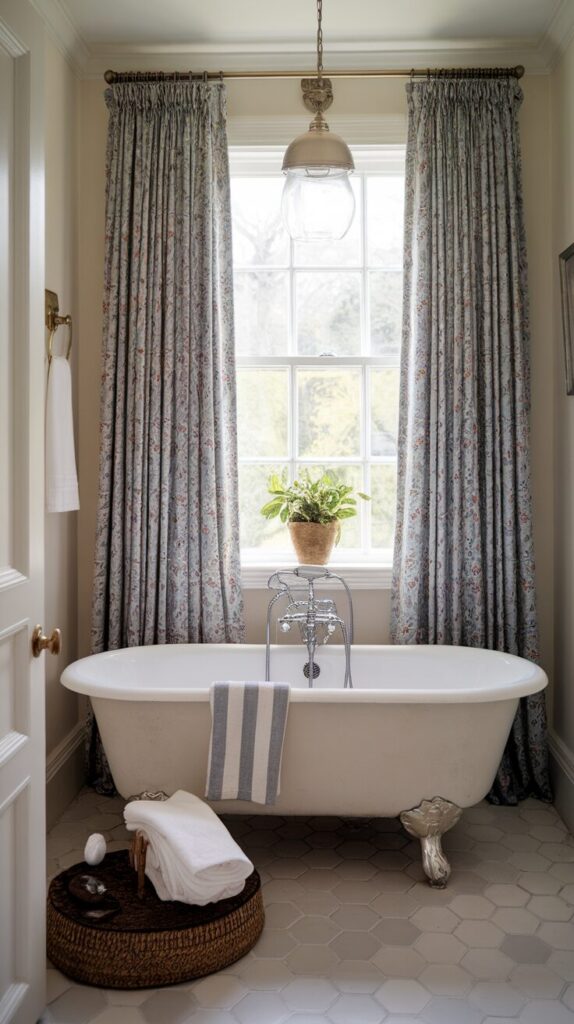
Café curtains feel charming when done right. I used them in a lower window, and they solved privacy without killing daylight. The room stayed bright and friendly.
These curtains cover the lower half of the window only. You block direct sightlines while keeping upper light free.
Why This Works
Most privacy concerns sit at eye level. Café curtains target that zone specifically. Light still enters freely from above.
This approach also keeps windows visually open. The bathroom avoids that boxed-in feeling.
How to Do It
- Measure half the window height
- Install a slim tension rod
- Choose lightweight washable fabric
- Keep hems clean and straight
Style & Design Tips
Stick with solids or tiny patterns. Busy prints overwhelm fast. Simple café curtains feel timeless, not trendy.
Avoid heavy rods or brackets. They ruin the lightness.
Pro Tip or Budget Hack
Use kitchen café panels. They often cost less and fit standard bathroom windows.
8. Frosted Lower Pane With Clear Upper Pane
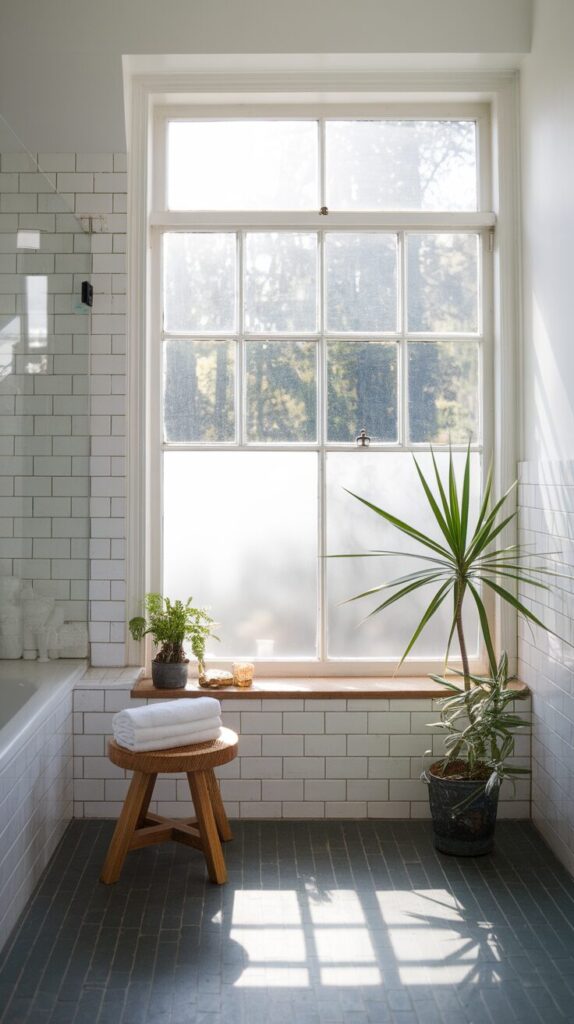
I love mixing clear and frosted glass in one window. That combination gives the best of both worlds. The bathroom feels private yet open.
Frosting the lower section blocks views while leaving the top clear. Light pours in naturally without exposure.
Why This Works
This setup mirrors how privacy actually works. You rarely need full coverage above head height. Light enters where it matters most.
The clear upper pane also connects the bathroom visually to the outdoors. That connection reduces that boxed-in feeling.
How to Do It
- Apply frosted film only to the lower section
- Use painter’s tape for clean edges
- Align frosting with sightline height
- Smooth film carefully
Style & Design Tips
Keep the dividing line straight and subtle. Wavy edges look messy. Clean lines always look intentional.
Avoid patterned frosting here. Simple frost works best.
Pro Tip or Budget Hack
You can frost only what you need. Partial coverage saves money and looks smarter.
9. Wooden Slat Screens for Natural Texture
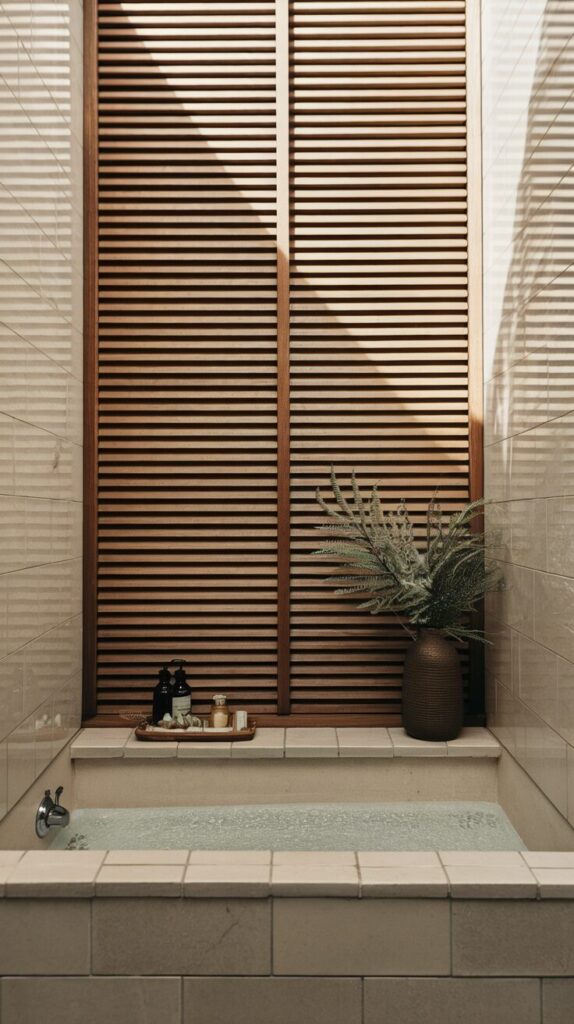
Wood in bathrooms scares people, but treated wood works beautifully. I added a slim slat screen outside a bathroom window, and it changed everything. The light stayed soft and private.
Slat screens filter light naturally. They block direct views while letting air and brightness through.
Why This Works
Slats create rhythm and shadow. That movement adds depth without clutter. The bathroom feels grounded and spa-like.
Exterior screens also protect interior treatments from moisture. That longevity matters.
How to Do It
- Use treated or composite wood
- Space slats evenly
- Secure screen firmly outside
- Seal wood properly
Style & Design Tips
Keep slats slim and evenly spaced. Thick boards feel heavy. Natural finishes work better than dark stains.
Avoid untreated wood indoors. Moisture ruins it fast.
Pro Tip or Budget Hack
Use composite decking slats. They resist moisture and cost less long-term.
10. Textured Glass Blocks for Soft Light
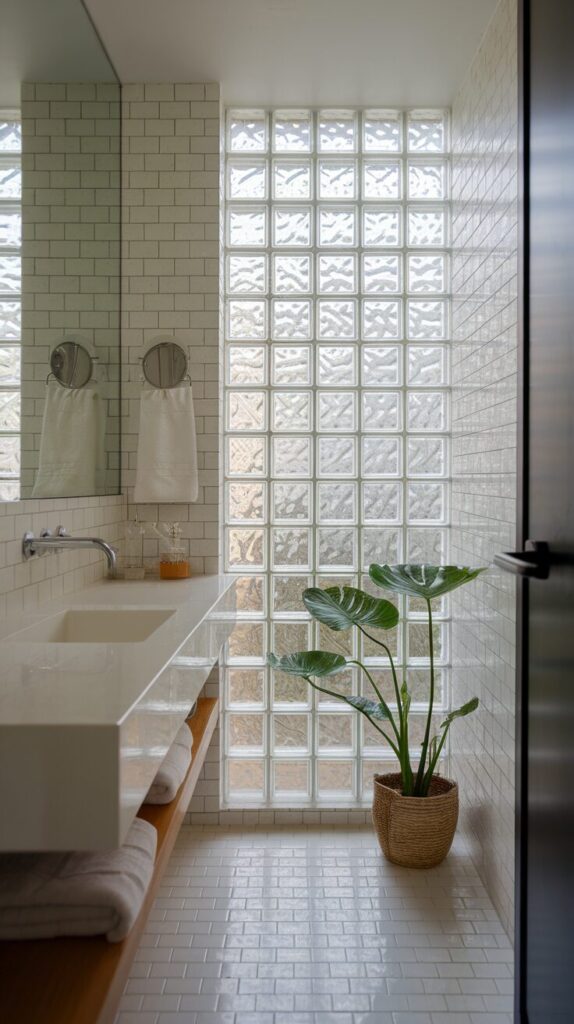
Glass blocks scream retro to some people, but modern versions feel sleek. I saw them used vertically in a narrow bathroom, and the effect felt surprisingly fresh. Light filled the space evenly.
Blocks obscure views completely while transmitting brightness. They also add architectural interest.
Why This Works
Glass blocks scatter light in all directions. That diffusion eliminates harsh shadows. The bathroom stays bright all day.
They also insulate well. That bonus helps with temperature control.
How to Do It
- Use blocks in narrow or vertical windows
- Pair with simple tile
- Keep grout lines clean
- Seal properly
Style & Design Tips
Stick with clear or lightly frosted blocks. Colored versions date quickly. Simple blocks age better.
Avoid mixing block styles. Consistency matters.
Pro Tip or Budget Hack
Use blocks only where needed. Partial installations reduce cost.
11. Exterior Window Shutters for Privacy Control
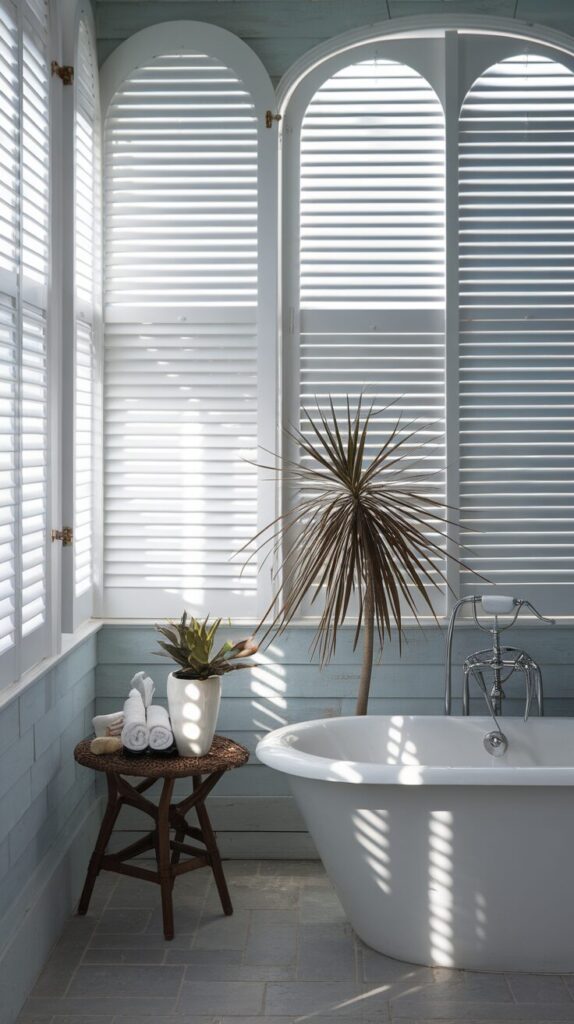
Exterior shutters surprised me when I tried them. They added privacy without touching the inside of the bathroom. Light still entered beautifully.
Shutters block views from outside while allowing airflow. You control openness easily.
Why This Works
Exterior solutions handle privacy before light enters. The interior stays clean and uncluttered. Bathrooms benefit from fewer interior treatments.
Shutters also add curb appeal. That bonus never hurts.
How to Do It
- Install adjustable louvers
- Use weather-resistant materials
- Mount securely
- Test movement regularly
Style & Design Tips
Match shutter color to exterior trim. Contrast looks intentional. Neutral shutters stay timeless.
Avoid flimsy hardware. It fails quickly.
Pro Tip or Budget Hack
PVC shutters cost less and resist moisture better than wood.
12. Frosted Sliding Panels for Modern Bathrooms
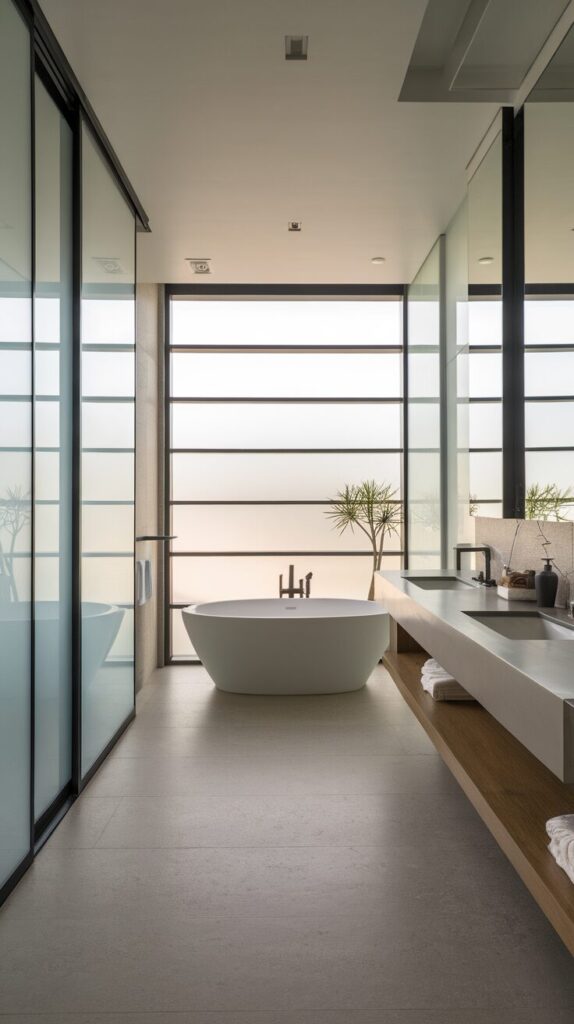
Sliding panels feel sleek and intentional. I used one in a modern bathroom, and it instantly elevated the space. The window felt designed, not ignored.
Panels slide easily to adjust privacy. You control light without fabric.
Why This Works
Panels move horizontally, which suits wide windows. The bathroom keeps clean lines and visual order.
They also avoid clutter around sinks and tubs.
How to Do It
- Install a slim track
- Use frosted acrylic or glass
- Test sliding motion
- Secure stops properly
Style & Design Tips
Choose matte finishes. Glossy panels glare. Soft surfaces feel calmer.
Avoid oversized hardware.
Pro Tip or Budget Hack
Acrylic panels cost less than glass and weigh less.
13. Patterned Roller Shades That Stay Simple
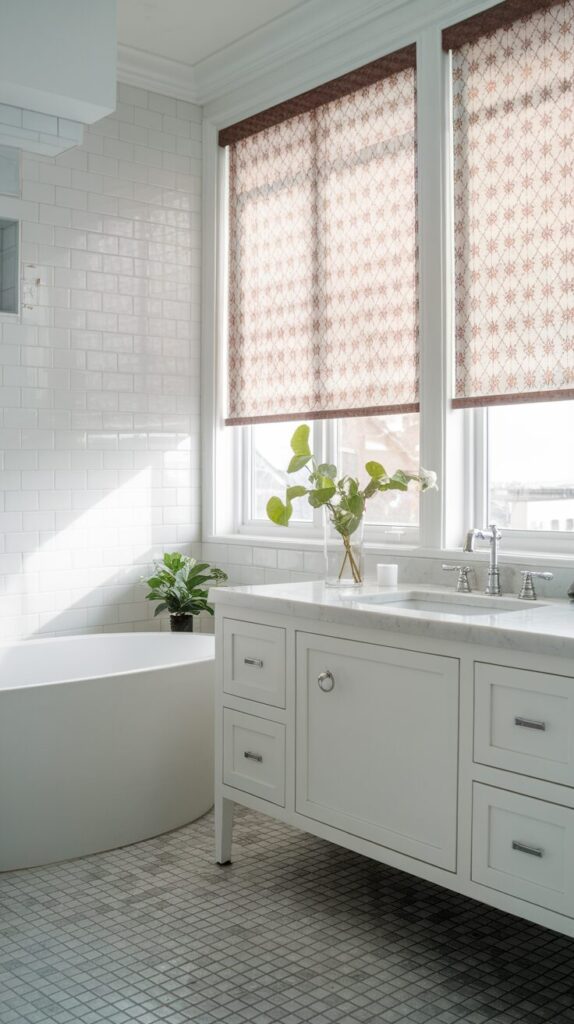
Roller shades feel underrated. I added one with a subtle pattern, and the bathroom felt instantly finished. Light control became effortless.
Modern roller shades resist moisture and clean easily. They stay out of the way when raised.
Why This Works
Roller shades disappear visually when open. The window regains its openness. Light enters freely.
Patterns add interest without bulk. That balance works well in bathrooms.
How to Do It
- Choose moisture-rated materials
- Mount inside frame
- Keep patterns subtle
- Test rolling tension
Style & Design Tips
Avoid bold prints. They overpower small spaces. Subtle texture wins.
Stick to light colors.
Pro Tip or Budget Hack
Look for discontinued patterns online. You can score high-quality shades cheaply.
14. High Transom Windows for Natural Privacy
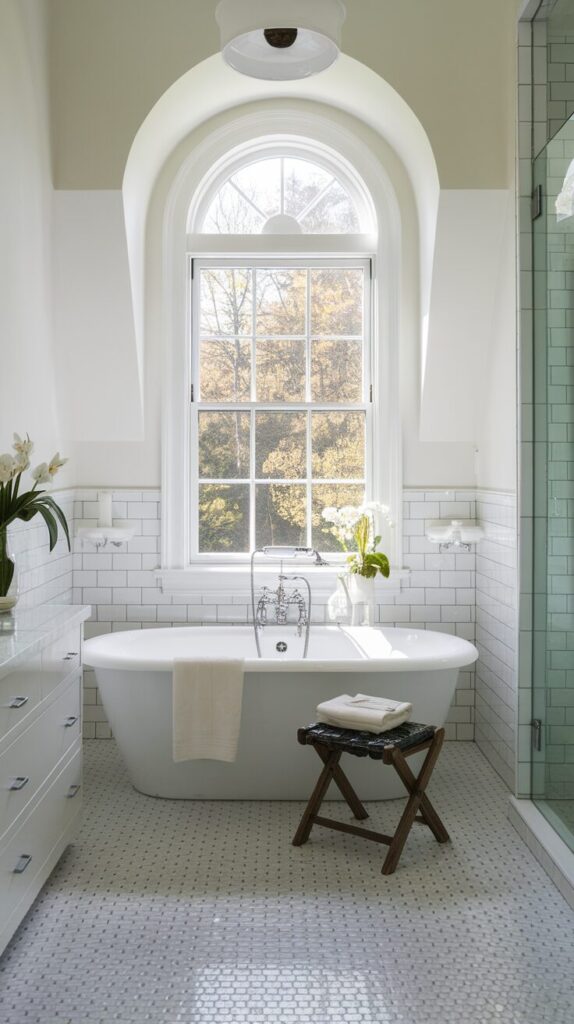
Transom windows feel smart and intentional. I love how they bring light without any privacy stress. The bathroom stays bright all day.
These windows sit high on the wall. They eliminate sightline issues completely.
Why This Works
Height equals privacy. Light enters without exposure. Bathrooms benefit from daylight without treatments.
Transoms also make ceilings feel taller. That illusion helps small spaces.
How to Do It
- Install during renovations
- Keep frames minimal
- Pair with overhead lighting
- Seal properly
Style & Design Tips
Clear glass works best here. Frosting feels unnecessary. Let light do the work.
Avoid heavy trim.
Pro Tip or Budget Hack
Use fixed transoms. They cost less and need no hardware.
15. Layered Solutions for Tricky Windows
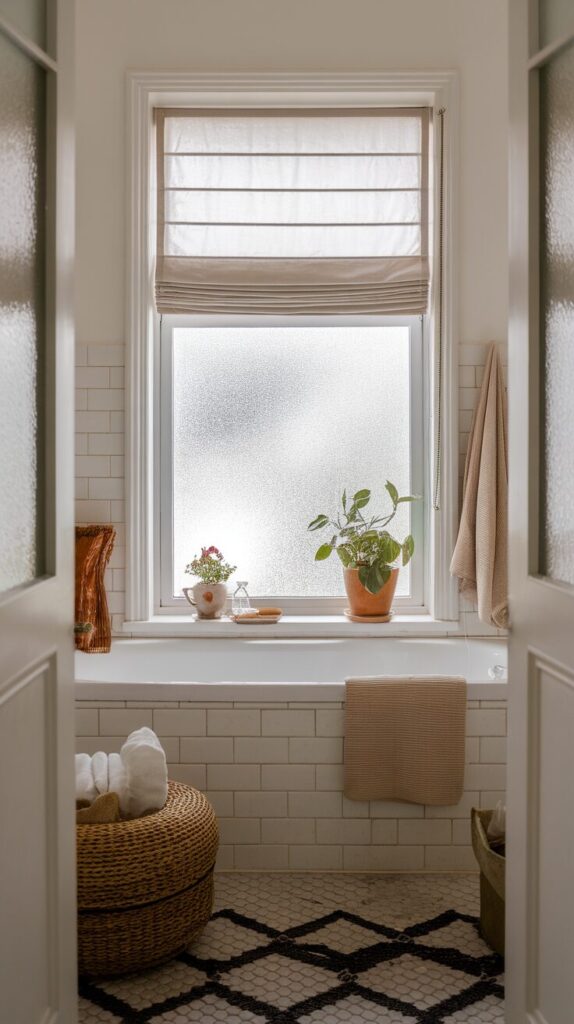
Some windows refuse to cooperate. I layered film and shades in one awkward bathroom, and the result finally worked. Light stayed soft, and privacy felt solid.
Layering lets you customize solutions. You adjust based on time and need.
Why This Works
No single solution fits every situation. Layers add flexibility. Bathrooms benefit from adaptable light control.
You also avoid extremes. Light and privacy stay balanced.
How to Do It
- Combine frosted film with a shade
- Keep layers light
- Test combinations
- Adjust seasonally
Style & Design Tips
Limit layers to two. More feels messy. Balance matters more than coverage.
Keep colors consistent.
Pro Tip or Budget Hack
Start with film first. Add shades only if needed.
Bathroom Window Planning Strategy: Light First, Privacy Second, Style Always
Before you change anything, step back and evaluate how your bathroom actually functions during the day. Notice when natural light feels strongest, where shadows fall, and which angles create privacy concerns. I always tell people to observe the room for a full day before buying anything.
Start with light because bathrooms depend on it for grooming, cleaning, and overall mood. Once you understand how light enters, you can choose treatments that enhance it instead of blocking it. Style should support those two priorities, not compete with them.
Measure everything twice and think about moisture levels before committing to materials. Steam changes how fabrics behave and how adhesives hold over time. A smart plan saves you money, frustration, and that annoying mid-project regret.
Create a simple checklist before purchasing: privacy level needed, window size, ventilation impact, cleaning requirements, and long-term durability. That checklist keeps you focused and prevents impulse buys. I follow this system in every bathroom project, and it never fails me.
Material & Moisture Guide for Bathroom Windows
Bathrooms create humidity daily, and humidity tests every material you install. Wood swells, cheap fabric sags, and low-quality film peels. You need materials that respect moisture instead of fighting it.
Choose PVC, composite, treated wood, acrylic, or moisture-rated fabrics whenever possible. These materials hold their shape and resist mold growth better than standard interior products. I learned this after replacing a warped shade within six months.
Ventilation matters just as much as material. Open windows when possible and use exhaust fans consistently. Even the best window treatment performs poorly in a damp, poorly ventilated room.
Cleaning should stay simple and realistic. If you cannot wipe it down easily, it probably does not belong in a bathroom. Low-maintenance solutions win long term.
Safety & Installation Considerations
Bathrooms combine water, electricity, and glass, which means safety deserves attention. Install treatments securely and avoid loose hardware that can fall near sinks or tubs. Tight installation prevents accidents and long-term wear.
Tempered or safety glass works best in bathroom windows. If you replace glass panels, confirm that they meet local building codes. Safety always outweighs style.
Use proper anchors when mounting rods or tracks. Drywall alone rarely supports long-term tension in humid spaces. Secure installations protect both your investment and your peace of mind.
Avoid placing cords or dangling mechanisms near tubs. Cordless designs reduce risk and create a cleaner look. I always choose cordless options when possible.
Common Mistakes to Avoid
Many people block too much light in the name of privacy. They install blackout materials and then wonder why the bathroom feels smaller and darker. Balance always works better than extremes.
Others ignore sightlines completely. Stand outside at different angles before choosing a solution. Privacy concerns often sit lower than people expect.
People also choose trendy patterns that clash with tile and fixtures. Bathrooms contain strong visual elements already, so loud window treatments overwhelm quickly. Simple choices age better.
Cheap adhesive films peel when steam builds up. Invest in quality products designed specifically for humid spaces. Replacing poor materials costs more in the long run.
Installing treatments without measuring depth creates awkward overhangs. Always measure window recess depth before purchasing inside-mount options. That small detail changes everything.
Frequently Asked Questions
Do bathroom windows always need coverings?
Not every bathroom needs heavy coverings, especially if the window sits high or faces a private yard. Assess your actual sightlines before adding anything unnecessary.
What is the most budget-friendly privacy solution?
Adhesive frosted window film usually costs the least and installs easily. It provides privacy without hardware or major renovation.
Can I use regular curtains in a bathroom?
You can use them, but moisture-resistant fabric performs better. Choose washable, lightweight materials to prevent mildew buildup.
How do I prevent mold around window treatments?
Run your exhaust fan consistently and wipe down condensation. Good airflow protects both your window and any treatment you install.
Are glass blocks outdated?
Modern glass blocks look clean and architectural when used thoughtfully. Stick with simple styles and avoid colored options for a timeless look.
Should I combine multiple privacy solutions?
Layering works well for tricky windows, but keep it simple. Two light layers usually provide enough control without visual clutter.
Final Thoughts
Bathroom windows don’t need drama or overthinking. One smart change can shift how the entire room feels every single day. I always suggest trying one idea first instead of tackling everything at once.
Light and privacy should work together, not compete. Pick the solution that fits your habits, your light, and your patience level, then enjoy the upgrade without second-guessing it.