10 Patio Roof Ideas for Shade and Outdoor Style
Strong opinion time: a patio without proper shade feels unfinished, no matter how cute the furniture looks. I learned that the hard way after sitting outside with a cold drink that turned warm in five minutes flat. Shade changes everything, and once you fix the roof situation, the whole patio suddenly makes sense.
I also think patio roofs scare people more than they should. Most homeowners treat them like complicated architectural projects instead of simple comfort upgrades. When you break the options down, you realize many solutions fit different budgets, skill levels, and design styles.
The truth is, outdoor spaces only work when they solve real problems. Harsh sunlight fades cushions, overheats seating, and limits how long you actually stay outside. A smart patio roof doesn’t just block the sun; it protects your investment and makes your backyard usable year-round.
I’ve tested a few setups over the years, and I’ve made mistakes that taught me what actually matters. I once focused too much on aesthetics and ignored airflow, and I regretted it during peak summer heat. Now I prioritize function first and style second, and that shift completely improved how I design patios.
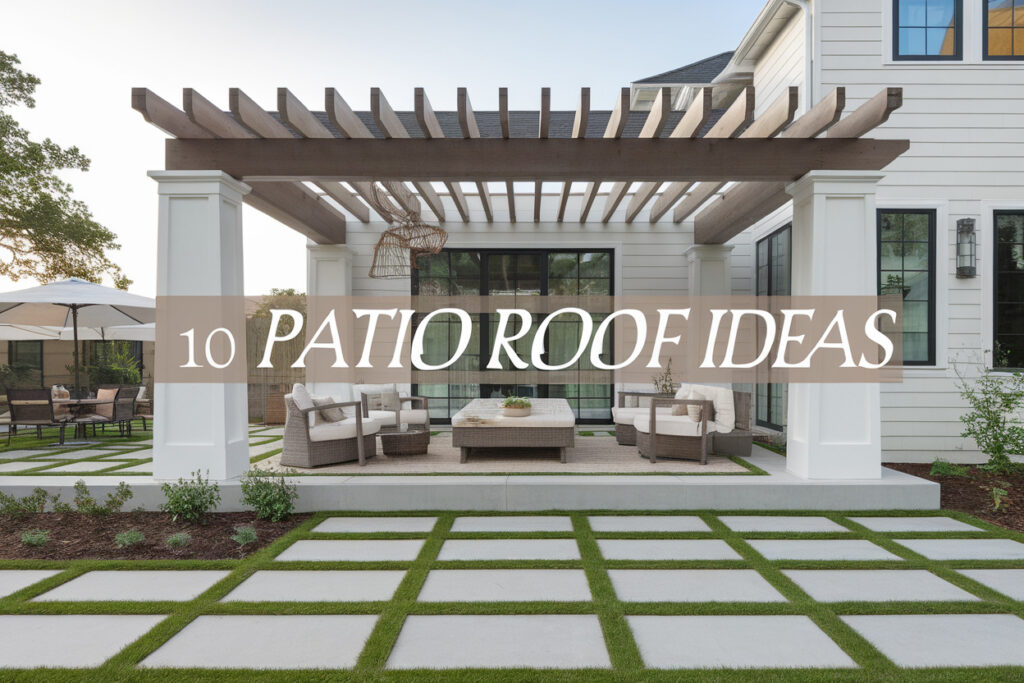
You also need to think beyond looks. A patio roof affects temperature control, furniture lifespan, home resale value, and even how often you entertain. When you approach it strategically instead of impulsively, the upgrade feels intentional instead of decorative.
That’s why this guide focuses on practical shade solutions that still look great. You don’t need the most expensive system to get results. You just need the right structure for your climate, layout, and lifestyle.
1. Wooden Pergola with Retractable Fabric Canopy
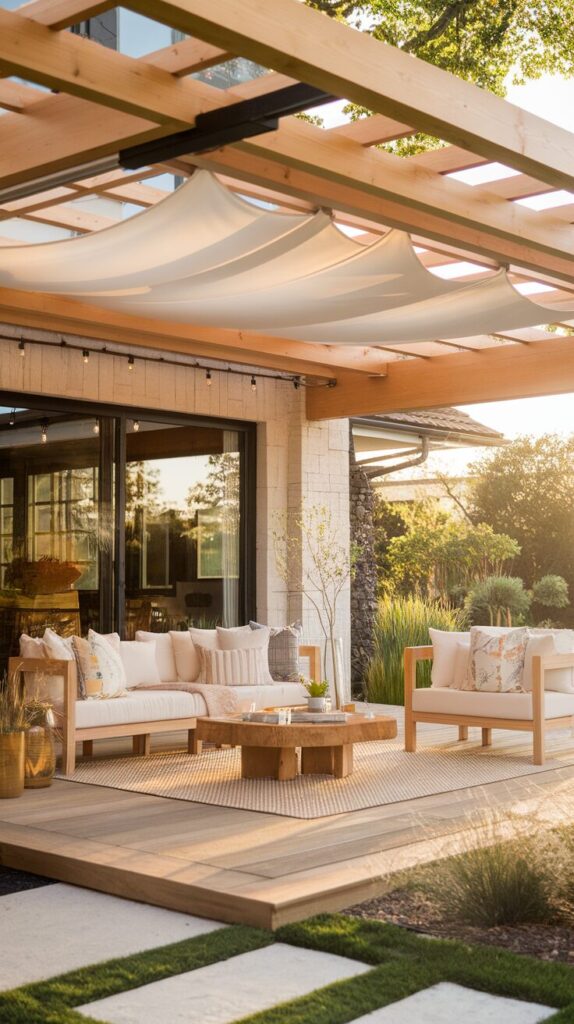
I always recommend this idea to friends who want shade without losing that open-air feeling. A bare pergola looks nice, but the sun still roasts you like a marshmallow. Adding a retractable fabric canopy turns it into something you actually use.
The canopy slides open when you want sunlight and closes when the heat gets rude. You control the vibe instead of letting the weather boss you around. I love how it feels casual but still intentional.
Why This Works
Wooden pergolas create structure without closing the space completely. The fabric softens harsh sunlight and makes the patio usable during peak heat. You get flexibility instead of committing to full shade forever.
This setup also keeps air flowing, which matters more than people admit. Trapped heat ruins outdoor spaces fast.
How to Do It
- Install or buy a standard wooden pergola sized to your patio.
- Choose outdoor fabric rated for UV resistance and water repellence.
- Attach curtain rods, wires, or track systems across the beams.
- Slide the fabric back and forth depending on sun exposure.
Style & Design Tips
Choose neutral fabric if your furniture already brings color. Stick to off-white, sand, or light gray for a timeless look. Avoid super thin fabric that sags or flaps aggressively in the wind.
Pro Tip or Budget Hack
Skip custom canopies and use outdoor curtain panels instead. You save money and replace panels easily when they fade.
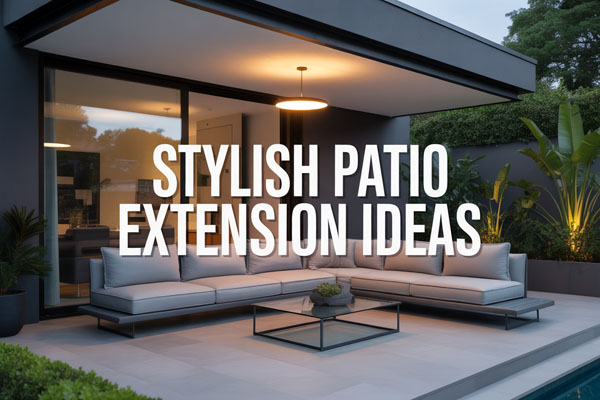
2. Solid Wood Patio Roof Extension
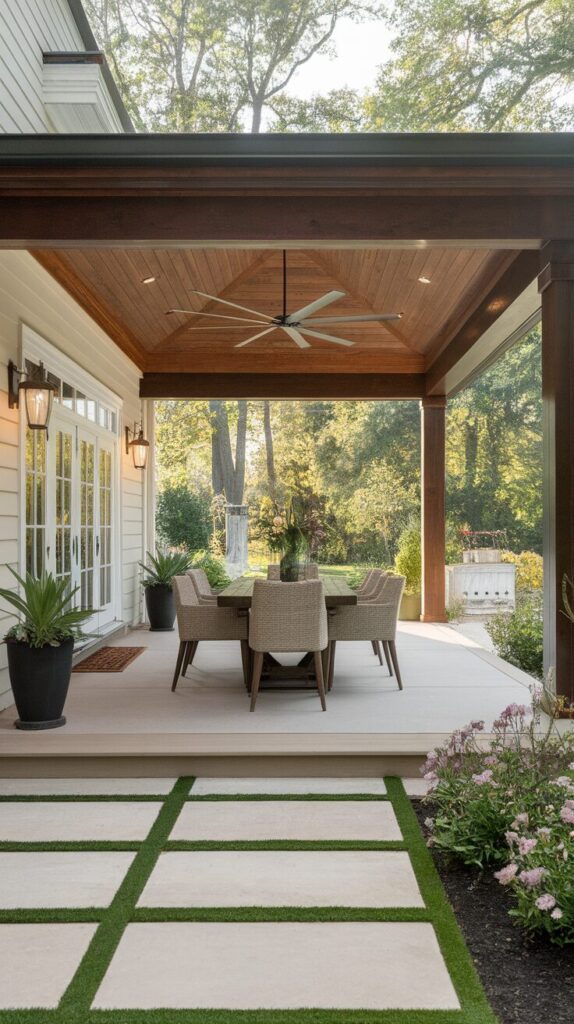
This option feels bold, permanent, and very “adult,” which I appreciate more every year. A solid wood roof turns your patio into a real outdoor room. You stop checking the weather forecast every five minutes.
I like this for people who host often or work outside. The shade stays consistent, and rain no longer cancels plans.
Why This Works
A solid roof blocks direct sunlight completely. It also protects furniture from sun damage and surprise rain. The structure visually connects the patio to the house.
This setup boosts resale value too, which never hurts. Buyers love usable outdoor space.
How to Do It
- Match roof pitch to your home for a seamless look.
- Use treated lumber or cedar for durability.
- Install proper flashing where the roof meets the house.
- Add gutters to control runoff.
Style & Design Tips
Paint or stain the wood to match your home’s trim. Avoid mismatched colors that feel tacked on. Ceiling fans or recessed lights elevate the space instantly.
Pro Tip or Budget Hack
Use corrugated metal underneath wood beams for savings. You still get the wood look without full wood pricing.
3. Polycarbonate Panel Patio Roof
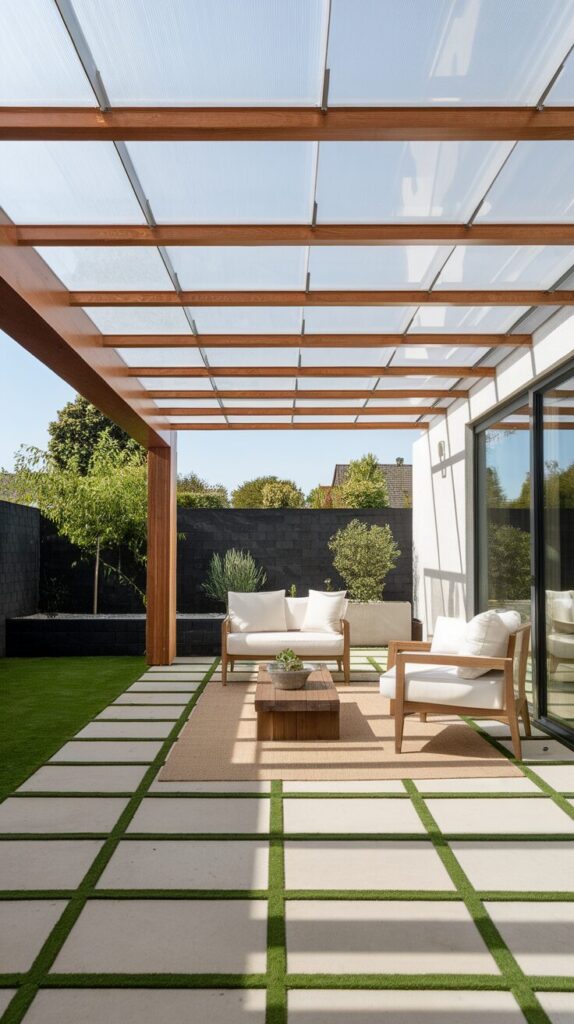
This idea surprises people because it looks modern but stays very practical. Polycarbonate panels let light through while blocking harsh UV rays. You get brightness without the burn.
I’ve seen this work beautifully in smaller patios that feel dark under solid roofs. Light matters more than you think.
Why This Works
Polycarbonate diffuses sunlight instead of blocking it completely. The space feels open even during full shade. These panels also resist impact and weather damage.
Maintenance stays minimal, which wins points with me.
How to Do It
- Build a simple wood or metal frame.
- Secure polycarbonate panels with recommended fasteners.
- Seal edges to prevent leaks.
- Angle panels slightly for rain runoff.
Style & Design Tips
Choose bronze or frosted panels instead of clear. Clear panels glare like crazy at noon. Keep the frame clean and minimal for a modern finish.
Pro Tip or Budget Hack
Buy panels in standard sizes to avoid cutting fees. Local suppliers often discount bulk purchases.
4. Outdoor Fabric Sail Shade Roof
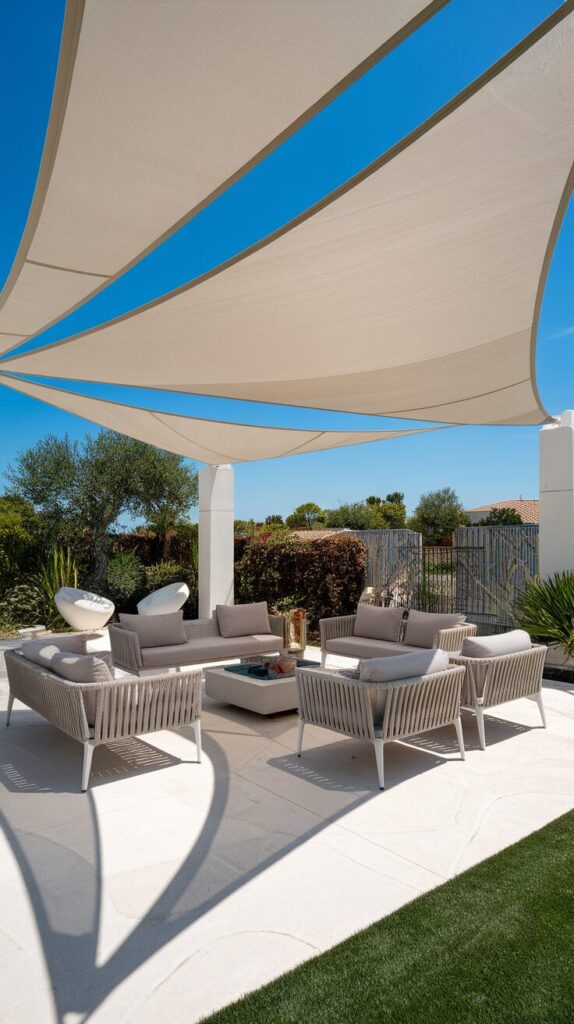
This option feels playful and stylish without screaming for attention. Shade sails stretch across your patio like modern art. They work especially well in irregular spaces.
I love this for renters or commitment-phobes. You get shade without permanent construction.
Why This Works
Shade sails block sun from specific angles. They also create airflow, which keeps things cooler. The look feels intentional instead of temporary.
You can reposition or remove them anytime.
How to Do It
- Measure sun direction during peak hours.
- Install anchor points on walls, posts, or poles.
- Stretch the sail tight to avoid sagging.
- Adjust angles for maximum coverage.
Style & Design Tips
Stick to neutral or muted colors for longevity. Loud colors date fast outdoors. Avoid loose tension because wrinkles kill the look.
Pro Tip or Budget Hack
Use multiple smaller sails instead of one giant piece. You save money and adjust coverage more easily.
5. Louvered Patio Roof System
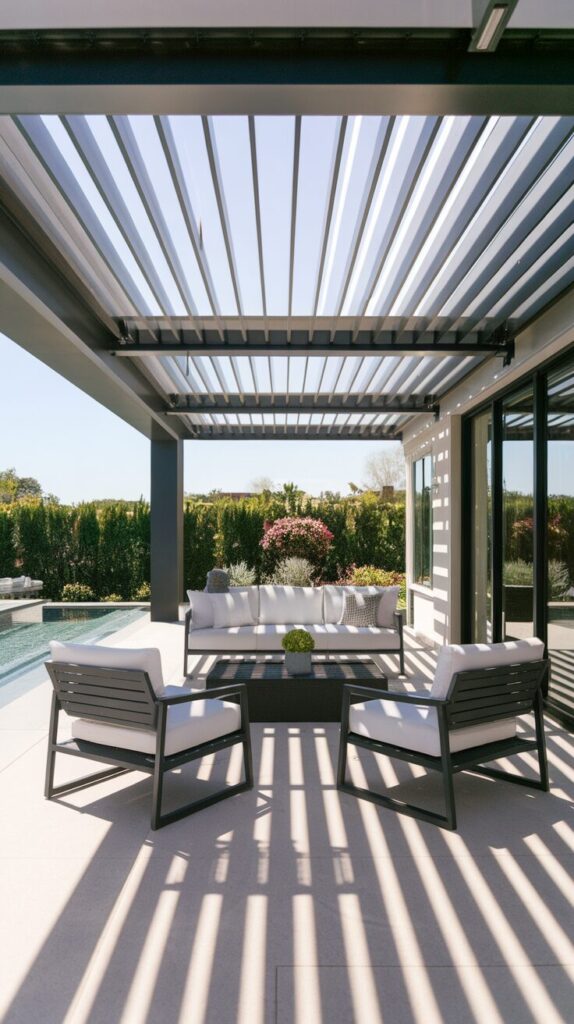
This one feels fancy, and yes, it costs more. A louvered roof lets you tilt slats open or closed. You control sunlight, shade, and airflow with precision.
I didn’t get the hype until I used one. Now I get it completely.
Why This Works
Adjustable louvers adapt to changing weather instantly. You block sun, let light in, or close everything during rain. The structure feels sleek and intentional.
It turns patios into year-round spaces.
How to Do It
- Choose manual or motorized louver systems.
- Install on a solid frame or freestanding structure.
- Ensure proper drainage channels.
- Test tilt angles before finalizing.
Style & Design Tips
Black or dark bronze frames look sharp and modern. Avoid mixing metals nearby. Keep furniture clean-lined to match the vibe.
Pro Tip or Budget Hack
Manual systems cost far less than motorized versions. You still get flexibility without the tech price tag.
6. Bamboo or Reed Roof Covering
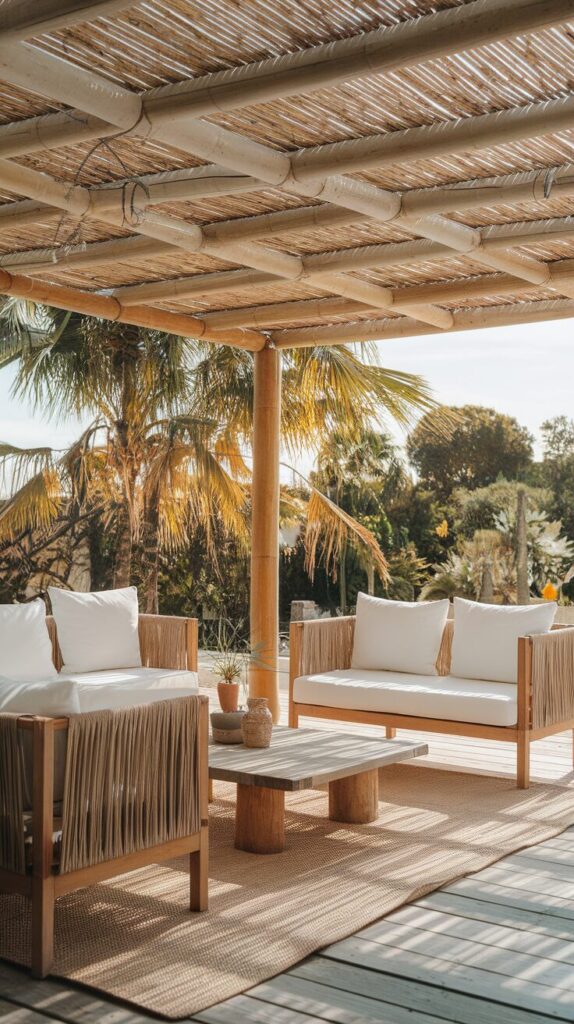
This idea feels relaxed and vacation-ready. Bamboo or reed roofing filters sunlight beautifully. It creates dappled shade that feels soft and inviting.
I love this look for coastal or boho patios. It instantly changes the mood.
Why This Works
Natural materials diffuse light instead of blocking it. Air flows freely through the gaps. The roof stays lightweight and breathable.
The texture adds visual interest without clutter.
How to Do It
- Install bamboo panels over a pergola.
- Secure panels tightly with outdoor ties or screws.
- Overlap edges for better coverage.
- Replace panels as they weather.
Style & Design Tips
Pair with white cushions and natural wood furniture. Avoid heavy, dark furniture that fights the vibe. Accept some weathering as part of the charm.
Pro Tip or Budget Hack
Buy bamboo fencing rolls instead of specialty panels. They cost less and install easily.
7. Metal Patio Roof with Open Beams
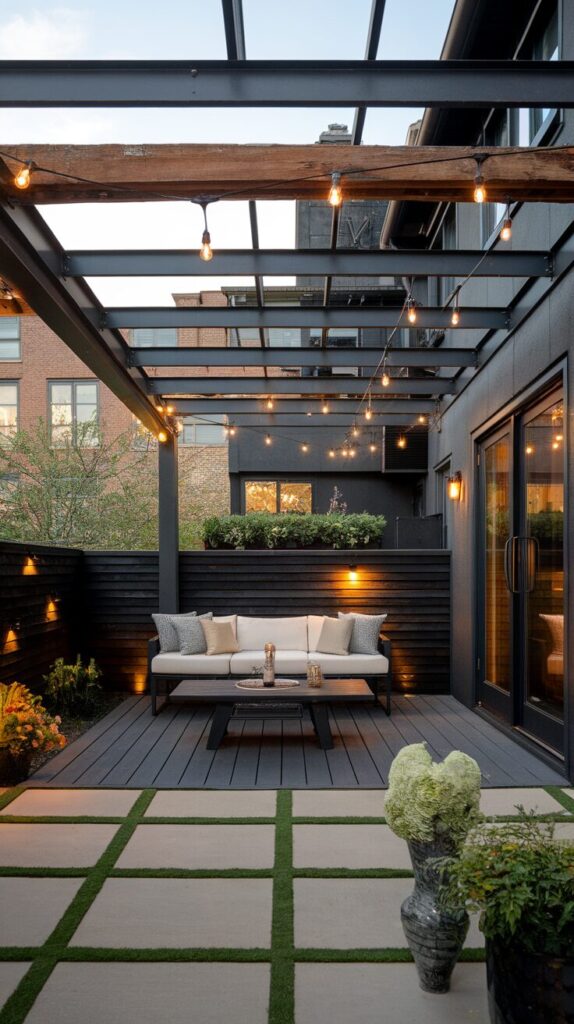
This look feels bold and architectural. Metal roofing paired with exposed beams balances industrial and cozy. It works great for modern homes.
I like how durable this option feels. Once installed, it just works.
Why This Works
Metal blocks sun completely and handles weather like a champ. Open beams prevent the space from feeling heavy. The contrast adds character.
This roof lasts for decades with minimal care.
How to Do It
- Install metal panels over wood or steel beams.
- Use insulation panels underneath to reduce heat.
- Seal seams properly.
- Add lighting between beams.
Style & Design Tips
Choose matte finishes over shiny metal. Shine reflects heat and glare. Keep décor warm with wood and textiles.
Pro Tip or Budget Hack
Use corrugated panels for a cheaper industrial look. They install fast and age well.
8. Glass Patio Roof with UV Protection
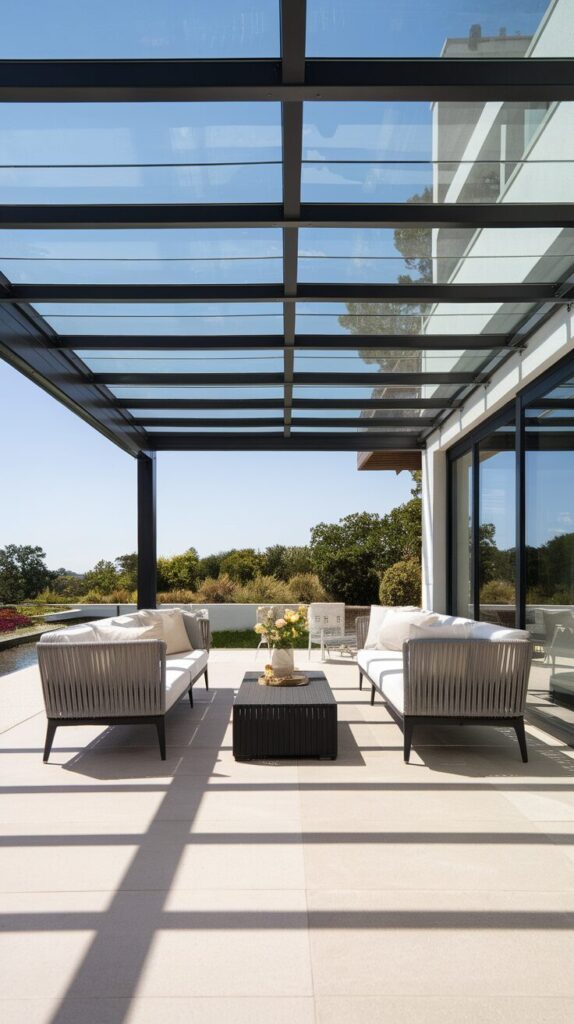
This option scares people, but it shouldn’t. UV-treated glass blocks harmful rays while keeping full visibility. You enjoy sky views without sunburn.
I love this for patios that connect directly to indoor living spaces.
Why This Works
Glass roofs maintain brightness year-round. UV coatings reduce heat and fading. The patio feels open even during shade.
It visually expands smaller spaces.
How to Do It
- Use tempered or laminated safety glass.
- Install on a sturdy metal or wood frame.
- Include proper drainage channels.
- Clean regularly for clarity.
Style & Design Tips
Keep furniture simple and low-profile. Avoid clutter that distracts from the view. Black frames create clean contrast.
Pro Tip or Budget Hack
Use glass panels only in key sections. Combine with solid roofing to reduce costs.
9. Thatched-Style Synthetic Roof
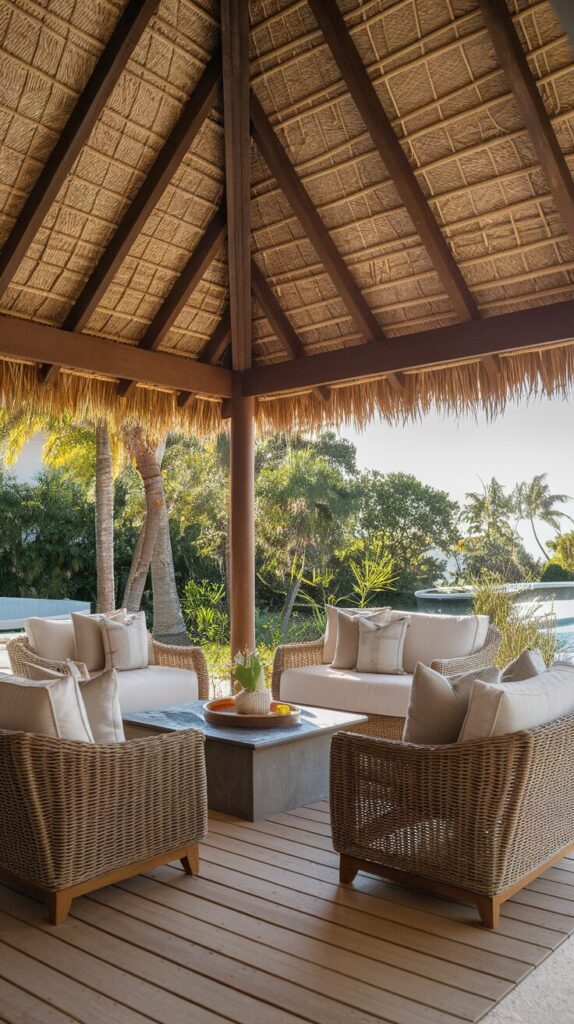
This look brings resort vibes without maintenance nightmares. Synthetic thatch mimics natural straw but lasts far longer. It works great for poolside patios.
I underestimated how cozy this feels until I sat under one.
Why This Works
Synthetic thatch blocks sun while allowing airflow. It resists rot, bugs, and fire better than real thatch. The texture softens outdoor spaces.
The shade feels cooler than solid roofs.
How to Do It
- Install panels over a wood frame.
- Secure tightly to prevent wind lift.
- Layer panels for density.
- Trim edges cleanly.
Style & Design Tips
Stick with neutral furniture and warm lighting. Avoid overly modern pieces that clash. Lean into the relaxed feel.
Pro Tip or Budget Hack
Use synthetic thatch only on the outer layer. Combine with cheaper backing materials underneath.
10. Combination Roof with Partial Solid and Open Sections
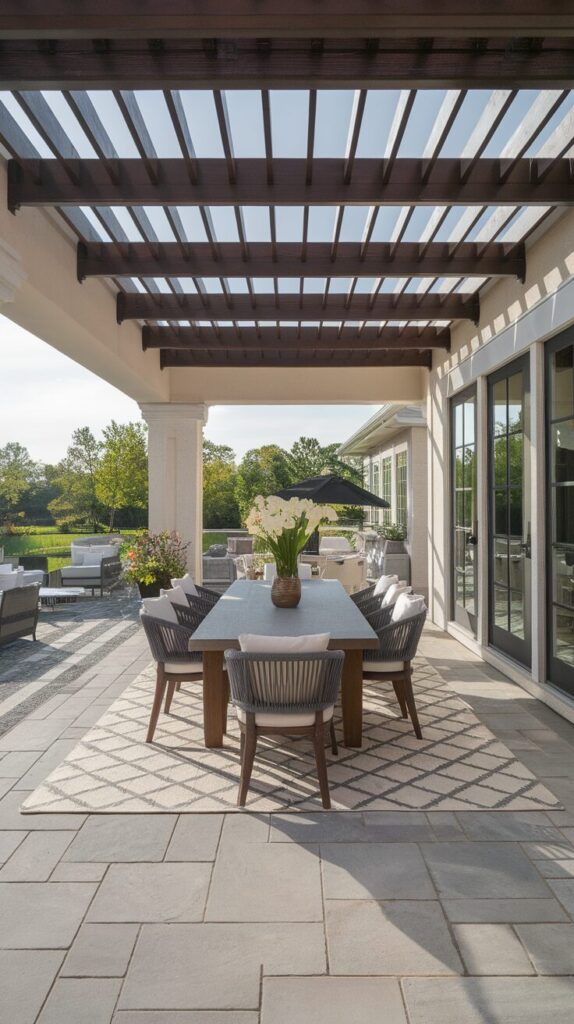
This idea suits people who want flexibility without overthinking it. Mixing solid roofing with pergola or slats gives balanced shade. You design coverage where you need it most.
I see this work best in long or oddly shaped patios.
Why This Works
Partial coverage adapts to different activities. Dining areas stay shaded while lounging areas stay open. The patio feels dynamic instead of flat.
You avoid over-shading the entire space.
How to Do It
- Identify zones for full shade.
- Use solid roofing over seating or dining.
- Add slats or pergola sections nearby.
- Blend materials intentionally.
Style & Design Tips
Repeat materials for cohesion. Avoid mixing too many textures. Consistent color palettes keep everything grounded.
Pro Tip or Budget Hack
Phase the build over time. Start with solid sections and add open areas later.
Patio Roof Planning Strategy: Build Smart Before You Build Big
Before you choose a patio roof style, you need a clear plan that matches your lifestyle, climate, and budget. I always tell friends to think about how they actually use their patio instead of copying a Pinterest photo. A solid strategy saves money, prevents regret, and keeps the project focused.
Start by identifying your main goal for the space. Do you want full sun protection for dining, filtered light for lounging, or year-round weather coverage? Once you define that purpose, every material and design choice becomes easier.
Next, evaluate sun direction and seasonal changes. Watch where sunlight hits during peak afternoon hours because that’s when shade matters most. Sketch a simple layout and mark high-heat zones before committing to a structure.
Budget planning also deserves real attention. Break costs into structure, roofing material, installation, lighting, and long-term maintenance. When you account for everything upfront, you avoid that awkward mid-project pause when funds run tight.
Finally, think about permits and structural support. Some patio roofs require local approval or specific load requirements. A quick call to your local authority or contractor prevents expensive corrections later.
Choosing the Right Materials for Long-Term Durability
Material choice decides how your patio roof ages over time. I’ve seen gorgeous builds look tired within two years because people ignored climate realities. Heat, humidity, wind, and rain all demand different solutions.
Wood offers warmth and classic style, but it requires sealing and maintenance. Metal provides durability and minimal upkeep, especially in harsh weather zones. Polycarbonate and glass work well for light control but need proper installation to prevent leaks.
Always choose outdoor-rated hardware and fasteners. Cheap screws rust fast and stain surrounding materials. Spending slightly more on corrosion-resistant components saves major headaches.
Consider insulation and ventilation early. Solid roofs trap heat without airflow planning. Smart ventilation or ceiling fans keep the patio comfortable during peak summer months.
Maintenance & Longevity: Protecting Your Investment
Every patio roof needs maintenance, even the “low-maintenance” ones. I suggest creating a simple seasonal checklist so you stay ahead of small problems. Consistent care keeps the structure looking intentional instead of neglected.
Clean debris from roof panels and beams regularly. Leaves and dirt trap moisture and encourage rot or staining. A quick rinse every few weeks prevents buildup.
Inspect fasteners, joints, and seals at least twice a year. Tighten loose hardware and reseal any minor gaps immediately. Small cracks grow quickly under constant weather exposure.
Reapply protective finishes to wood when you notice fading or dryness. Don’t wait until peeling starts because restoration becomes harder. Proactive care always costs less than full replacement.
Common Mistakes to Avoid
Many homeowners rush into patio roof projects without considering scale. Oversized roofs overwhelm small patios and block natural light inside the home. Always measure carefully and visualize proportions before building.
People often ignore drainage planning. Water needs a clear path away from the structure. Without proper slope and gutters, pooling water causes leaks and foundation damage.
Another mistake involves mismatching design styles. A hyper-modern roof on a rustic home looks disconnected. Keep materials and finishes cohesive with your house architecture.
Some homeowners skip structural reinforcement. Patio roofs add weight and wind resistance to exterior walls. Proper support prevents sagging, shifting, and long-term structural issues.
Lastly, many underestimate installation complexity. Certain systems require professional expertise for safe attachment and waterproofing. Hiring help when necessary protects your investment.
Patio Roof Lighting & Comfort Upgrades
Lighting transforms a basic patio roof into a usable evening retreat. I always recommend planning lighting during the roof installation phase instead of adding it later. Integrated wiring looks cleaner and functions better.
Recessed lights work beautifully under solid roofs. String lights suit pergolas and open beam designs. Choose warm-toned bulbs for a relaxed atmosphere instead of harsh white lighting.
Ceiling fans increase comfort significantly under covered patios. Moving air prevents that heavy, stagnant heat feeling. Even a simple outdoor-rated fan improves usability during summer months.
Consider adding outdoor heaters for cooler evenings. A comfortable patio extends seasonal use dramatically. Smart comfort upgrades turn your patio roof into a true outdoor room.
FAQs
Do I need a permit to build a patio roof?
Permit requirements vary by location. Many attached structures require approval because they affect your home’s exterior. Always check with local authorities before starting construction.
Which patio roof option works best in very hot climates?
Solid roofs with insulation or louvered systems perform well in extreme heat. They block direct sunlight and allow airflow control. Reflective materials also reduce heat absorption.
How much does a typical patio roof cost?
Costs depend on size, materials, and labor. Simple shade sails cost a few hundred dollars, while solid or motorized systems can reach several thousand. Planning your budget early prevents surprises.
Can I install a patio roof myself?
DIY installation works for shade sails and simple pergolas. Complex solid roofs, glass panels, or louver systems usually require professional installation. Safety and waterproofing matter too much to guess.
How do I prevent my patio roof from leaking?
Install proper flashing where the roof meets the house. Maintain correct slope for water runoff. Inspect seals regularly to catch small issues early.
Will a patio roof increase home value?
A well-designed, permanent patio roof often increases usable living space and buyer appeal. Clean integration with the home’s architecture improves resale potential. Quality materials and proper installation make the biggest difference.
Final Thoughts
You don’t need the fanciest patio roof to enjoy your outdoor space. You just need the right kind of shade for how you actually live. Pick one idea, start small, and build from there.
I always tell friends to fix shade before buying more décor. Once the roof works, everything else suddenly feels easier.