10 Stone Patio Ideas for Timeless Outdoor Charm
My bathroom used to stress me out every single morning. I always bumped into bottles, knocked over skincare, and somehow never found a clean towel when I needed one. I finally realized the space wasn’t small, it just worked against me.
Once I stopped blaming the square footage, everything changed. I tested a few smart storage ideas, hated some, loved others, and slowly figured out what actually works in real life. Most bathrooms actually have plenty of hidden potential, but clutter hides it so well that you stop noticing the opportunities.
The real problem usually comes down to how the space functions day to day. Counters collect random items, drawers become tiny junk drawers, and cabinets turn into black holes where products disappear forever. When storage doesn’t match your routine, even a large bathroom can feel cramped and frustrating.
That realization pushed me to rethink how every inch of the room worked. Instead of cramming more containers into cabinets, I started using vertical space, awkward corners, cabinet doors, and even small wall gaps that normally get ignored. Small adjustments made a huge difference, and the room started to feel calmer almost immediately.

If your bathroom constantly feels cluttered, you’re definitely not alone. Most homes simply weren’t designed with modern routines in mind, especially with skincare, hair tools, and backup toiletries taking over. The good news is you don’t need a renovation to fix the problem.
Smart storage simply means using the space you already have more intentionally. With the right shelves, organizers, and a few clever tricks, even the smallest bathroom can feel organized, functional, and surprisingly spacious. Let’s walk through some storage ideas that actually make everyday life easier.
1. Natural Flagstone Patio with Organic Gaps

I’ll say it straight because someone needs to. Perfectly uniform patios look sterile, and they kill the charm faster than plastic furniture. Flagstone wins because it embraces irregular shapes and stops pretending nature loves symmetry.
The uneven edges create movement without effort, and the gaps soften the whole layout visually. I love how this style feels casual but still expensive when you place it right. You get texture, depth, and character without trying too hard.
Why This Works
Flagstone works because your eye craves variation when it scans outdoor spaces. The natural breaks reduce visual tension and make the patio feel larger than it really is. Your brain reads the layout as relaxed instead of rigid.
Those organic lines also blend better with grass, plants, and gravel. The stone doesn’t fight the landscape, and everything feels connected. That balance creates the timeless look people chase but rarely achieve.
How to Do It
- Choose irregular flagstone pieces with varied thickness.
- Dry-fit stones before setting them to control spacing.
- Fill gaps with gravel, moss, or creeping thyme.
- Compact the base thoroughly to prevent shifting.
Style & Design Tips
Stick with earth tones like gray, tan, or soft rust. Avoid ultra-polished finishes because they clash with the organic layout. Let uneven edges stay uneven because perfection ruins the vibe here.
Pro Tip or Budget Hack
Ask stone suppliers for leftover flagstone pallets. You often score mixed sizes at a lower price, and variety actually helps this design shine.
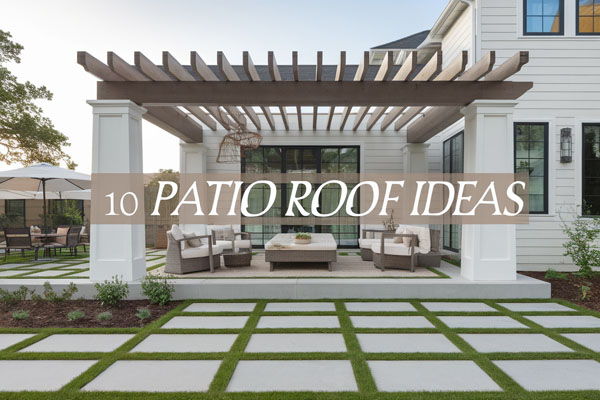
2. Large Square Stone Slabs for Modern Balance

Mornings feel calmer when straight lines guide your eyes. Square stone slabs bring order without killing warmth, and that balance matters outside. Clean geometry makes the space feel intentional and easy to use.
I love this style when you want something timeless but slightly modern. The slabs create visual rhythm, and furniture placement suddenly makes sense. You get structure without stiffness.
Why This Works
Large slabs reduce visual noise by limiting grout lines. Your eye travels smoothly across the surface instead of stopping at every seam. That flow makes patios feel bigger and more refined.
The uniform shape also supports symmetrical layouts. Seating zones, fire pits, and planters all align naturally. You get a patio that feels calm and controlled.
How to Do It
- Select slabs at least 24 inches wide.
- Keep joint spacing consistent across the patio.
- Use polymeric sand for clean, stable seams.
- Level every slab carefully to avoid wobble.
Style & Design Tips
Pair neutral slabs with textured furniture like woven chairs or wood tables. Avoid busy patterns nearby because the slab layout already sets a strong visual tone. Minimal accessories work best with this design.
Pro Tip or Budget Hack
Concrete pavers that mimic stone save serious money. Choose high-quality versions with color variation to avoid the fake look.
3. Cobblestone Patio for Old-World Charm
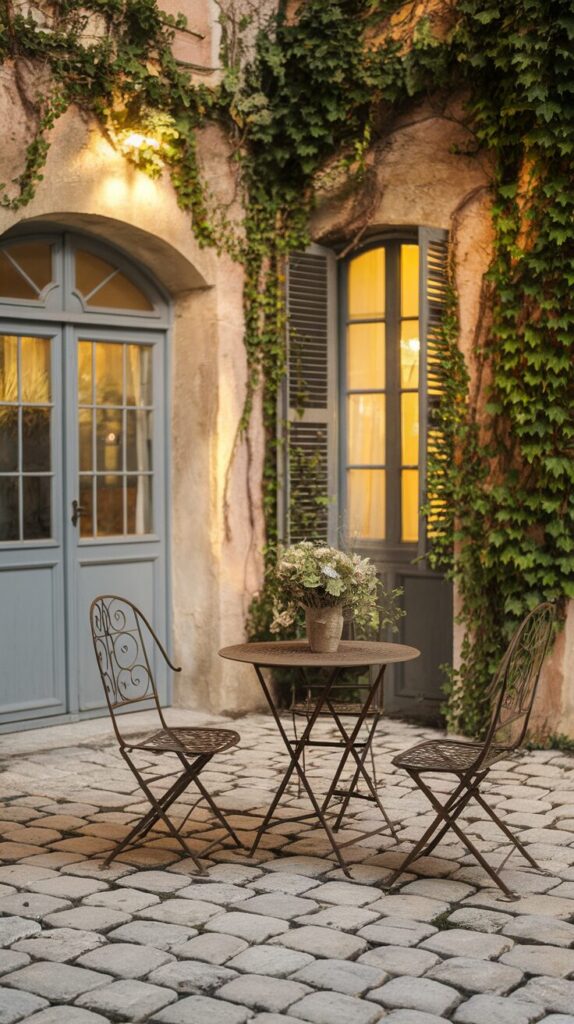
Some patios feel like they tell stories even when nobody speaks. Cobblestone does that effortlessly. The surface feels historic, romantic, and grounded in tradition.
I used this style once near a garden path, and the atmosphere shifted instantly. The patio stopped feeling like an add-on and started feeling like part of the landscape. That emotional pull matters more than trends.
Why This Works
Cobblestones create texture underfoot, which adds sensory interest. The uneven surface catches light differently throughout the day. Shadows and highlights keep the space visually alive.
The small scale of stones also creates flexibility. Curves, circles, and custom shapes feel natural. You avoid rigid layouts without sacrificing structure.
How to Do It
- Choose tumbled or reclaimed-style stones.
- Lay stones tightly to prevent shifting.
- Use sand or mortar depending on foot traffic.
- Seal the surface to reduce weed growth.
Style & Design Tips
Lean into the old-world feel with wrought iron or weathered wood. Skip sleek furniture because it clashes with the texture. Imperfection enhances this look, so stop overthinking alignment.
Pro Tip or Budget Hack
Mix real cobblestone borders with stone-look pavers inside. The visual effect stays strong while costs drop fast.
4. Mixed Stone Patio with Pattern Play
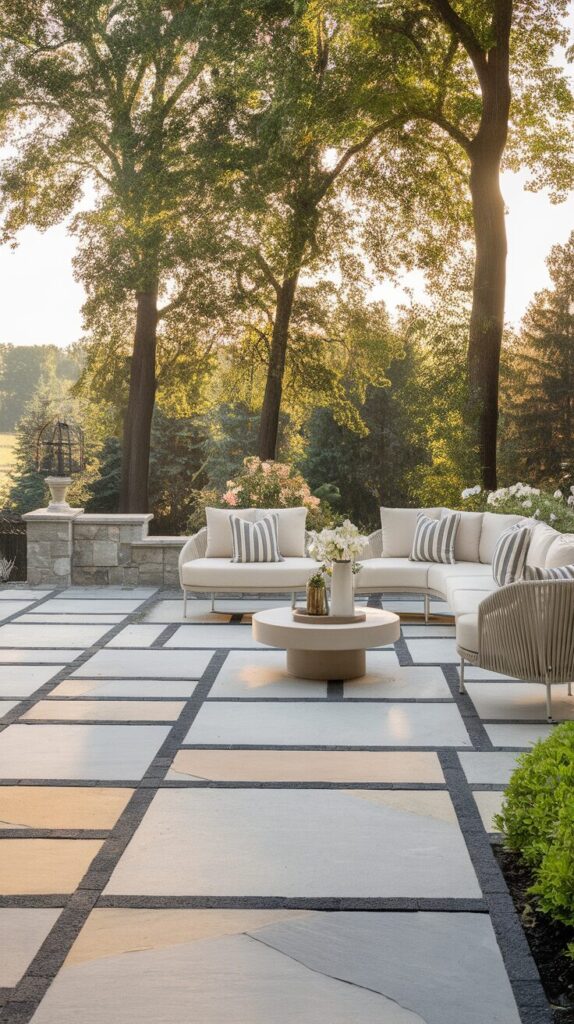
Daily life feels repetitive enough without boring patios. Mixing stone types adds energy and keeps the surface interesting. The trick lies in controlling contrast instead of letting chaos take over.
I like this idea when homeowners crave personality without loud colors. Stone patterns add quiet drama that ages well. You notice the detail without feeling overwhelmed.
Why This Works
Pattern variation gives the patio a focal rhythm. The eye moves intentionally across sections instead of drifting aimlessly. That movement makes the space feel designed.
Different stone sizes also help define zones. Dining areas, lounges, and walkways separate naturally. Function improves without adding walls or furniture clutter.
How to Do It
- Choose one dominant stone and one accent stone.
- Limit patterns to clear sections.
- Maintain consistent color tones.
- Test layouts before final placement.
Style & Design Tips
Stick to two stone types max. Avoid mixing too many colors because confusion kills elegance. Consistency beats complexity every time.
Pro Tip or Budget Hack
Use premium stone only where eyes land first. Fill secondary zones with simpler materials to save money.
5. Stone Patio with Built-In Fire Pit Centerpiece
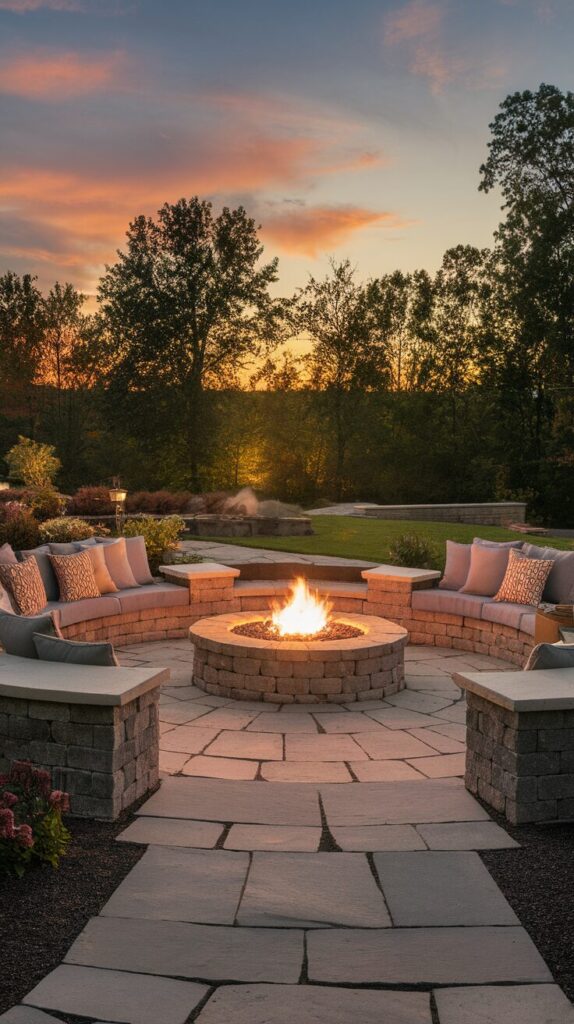
Evenings change when fire enters the picture. A stone patio with a fire pit instantly becomes the gathering spot. People linger longer without realizing why.
I’ve watched guests migrate toward fire pits like moths. Conversation flows easier, and nobody checks their phone as much. That social magnet effect never fails.
Why This Works
Fire creates a natural focal point. The stone patio grounds that energy and keeps it visually stable. Together, they anchor the entire outdoor space.
Stone also handles heat without damage. You avoid safety issues while keeping the look cohesive. That durability supports long-term use.
How to Do It
- Center the fire pit within the patio layout.
- Use heat-rated stone or masonry.
- Maintain safe clearance from furniture.
- Add seating in a circular arrangement.
Style & Design Tips
Match fire pit stone to patio material for cohesion. Avoid flashy designs that compete with the flames. Let fire stay the star.
Pro Tip or Budget Hack
Build a simple ring-style fire pit instead of a custom unit. You save money while keeping the same visual impact.
6. Raised Stone Patio with Retaining Walls

Elevation changes everything literally and visually. Raised patios add drama without adding square footage. The height creates separation and purpose.
I love how this idea works on sloped yards. Instead of fighting the terrain, the patio works with it. That harmony always looks intentional.
Why This Works
Retaining walls define boundaries clearly. The patio gains structure and stability. You also create built-in seating opportunities.
Raised designs also improve drainage. Water moves away from the surface naturally. That practical benefit protects the stone long term.
How to Do It
- Plan wall height carefully for comfort.
- Use interlocking stone systems.
- Compact the base thoroughly.
- Add steps for easy access.
Style & Design Tips
Keep wall stone slightly darker than patio stone. That contrast adds depth. Avoid overly tall walls because comfort matters.
Pro Tip or Budget Hack
Use capped retaining blocks that double as seating. You save money on furniture instantly.
7. Stone Patio with Gravel Inlays
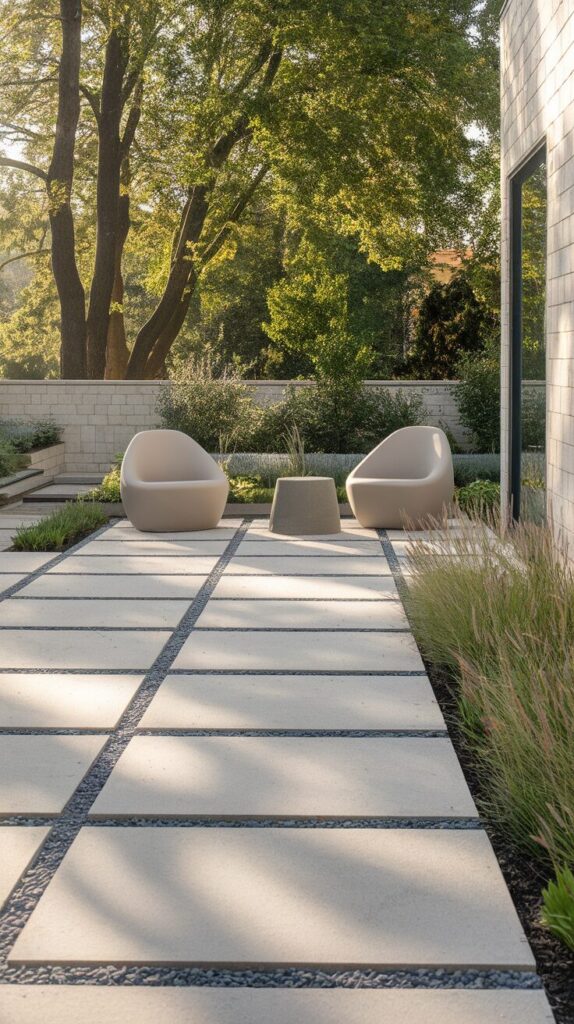
Soft crunch underfoot changes how a space feels. Gravel inlays break up stone and add texture without clutter. That contrast feels intentional and relaxed.
I use this idea when a patio feels too heavy visually. Gravel lightens the look without sacrificing structure. The balance works beautifully.
Why This Works
Gravel improves drainage and reduces cracking risk. The inlays absorb movement naturally. You get flexibility without visible damage.
The texture contrast also adds interest. Stone stays dominant while gravel supports it quietly. That restraint keeps things timeless.
How to Do It
- Choose fine gravel in neutral tones.
- Frame inlays with stone borders.
- Compact gravel thoroughly.
- Refresh gravel seasonally.
Style & Design Tips
Avoid bright gravel colors. Stick with gray, tan, or charcoal. Subtle contrast beats bold contrast outdoors.
Pro Tip or Budget Hack
Pea gravel costs far less than stone. Use it strategically to stretch your budget.
8. Circular Stone Patio for Soft Flow

Straight lines dominate most homes already. Circles introduce softness that feels refreshing. A round stone patio changes movement patterns naturally.
I love how this design encourages conversation. People face each other instead of lining up. That subtle shift improves social energy.
Why This Works
Circular layouts remove harsh edges. Movement feels fluid and inviting. The shape also creates a strong focal area.
Stone adapts well to curves when cut properly. The natural texture hides seams. That camouflage helps the design feel seamless.
How to Do It
- Mark the circle clearly before laying stone.
- Cut stones precisely for tight fits.
- Start from the center outward.
- Keep joints consistent.
Style & Design Tips
Center furniture carefully to match the curve. Avoid square rugs or tables. Let the circle guide everything.
Pro Tip or Budget Hack
Use smaller stones to reduce cutting waste. You save time and material costs.
9. Stone Patio Framed by Greenery

Hard surfaces need softness nearby. Framing stone patios with plants creates balance instantly. The greenery prevents the patio from feeling cold.
I always recommend this idea for small yards. Plants visually expand space and soften edges. That illusion matters.
Why This Works
Greenery adds color and movement. The stone gains contrast and warmth. That pairing feels natural and calming.
Plants also break straight lines visually. The patio blends into the yard instead of sitting on top of it. That integration feels intentional.
How to Do It
- Leave planting gaps along edges.
- Choose low-maintenance plants.
- Layer heights for depth.
- Add drip irrigation if possible.
Style & Design Tips
Use repeating plant types for cohesion. Avoid overcrowding edges. Negative space still matters.
Pro Tip or Budget Hack
Start with young plants. They cost less and fill in over time.
10. Stone Patio with Outdoor Dining Focus

Food brings people together faster than décor ever will. A stone patio designed for dining sets the stage for memories. That purpose gives the space direction.
I prioritize dining layouts when clients entertain often. Comfort, flow, and surface durability matter most here. Stone delivers all three.
Why This Works
Stone handles spills, heat, and traffic easily. The surface stays stable under furniture. You avoid constant maintenance stress.
Dining-focused layouts also guide circulation. Guests move naturally without bumping chairs. That ease improves hosting confidence.
How to Do It
- Choose flat stone for chair stability.
- Allow ample clearance around the table.
- Position near kitchen access.
- Add shade for comfort.
Style & Design Tips
Match table size to patio scale. Avoid oversized furniture. Comfort beats drama in dining spaces.
Pro Tip or Budget Hack
Use a pergola instead of umbrellas. You gain shade and structure without clutter.
Stone Patio Planning Foundation: Build It Right from Day One
You can love the look of stone all day long, but the foundation decides whether your patio lasts five years or twenty. I’ve seen beautiful patios fail because someone rushed the base prep. The surface always tells on you later.
Start with soil evaluation because not all ground behaves the same. Clay holds water, sand shifts easily, and both require different prep approaches. When you understand your soil, you control cracking, sinking, and drainage issues before they start.
Proper excavation depth protects everything above it. Most stone patios need 6–8 inches of compacted base material, sometimes more in colder climates. Skipping that depth almost guarantees uneven settling.
Drainage planning deserves real attention, not guesswork. Slope the patio slightly away from your home to prevent water pooling. Even a subtle grade makes a massive difference long term.
Choose edge restraints that match your layout. Edging keeps stones locked in place and prevents slow outward shifting. That small detail preserves clean lines for years.
Material Selection Guide: Choosing the Right Stone for Your Climate
Stone looks similar online, but performance varies wildly in real life. Some materials handle freeze-thaw cycles better than others. Climate should guide your choice more than color.
Granite and bluestone handle cold weather well because they resist moisture absorption. Softer stones like limestone work beautifully in milder regions. Matching stone to environment protects your investment.
Thickness also matters more than most people realize. Thicker stones tolerate heavy furniture and foot traffic better. Thin stone saves money upfront but often costs more in repairs.
Finish type affects safety and maintenance. Textured finishes reduce slipping, especially near pools. Smooth finishes look sleek but require more frequent cleaning.
Always ask suppliers about sealing recommendations. Some stones need regular sealing to resist stains. Knowing maintenance requirements upfront prevents surprises later.
Common Mistakes to Avoid
People rush patio projects because they want instant results. I get the excitement, but shortcuts show up fast in outdoor construction. Avoiding these mistakes saves money and stress.
Ignoring base compaction creates uneven surfaces. Stones shift when the ground underneath lacks stability. Proper compaction prevents wobbling and future repairs.
Overcomplicating the design often backfires. Mixing too many stone types or patterns overwhelms the eye. Simplicity usually delivers stronger, more timeless results.
Forgetting expansion space near structures causes cracking. Stone needs slight movement room as temperatures change. Leaving small gaps near walls protects both surfaces.
Skipping drainage planning leads to pooling and erosion. Water always finds a weak point. Smart grading and gravel layers prevent long-term damage.
Choosing style over function creates daily frustration. Slippery surfaces, unstable slabs, and poor layout decisions ruin usability. Always prioritize comfort and safety first.
Maintenance and Long-Term Care Plan
Stone patios stay beautiful when you treat them like permanent features instead of temporary décor. Regular care protects both appearance and structure. A simple routine goes a long way.
Sweep debris weekly to prevent staining and moss buildup. Organic matter traps moisture and speeds up discoloration. Consistent cleaning keeps stone looking fresh.
Wash the surface with mild soap and water seasonally. Avoid harsh chemicals that damage natural finishes. Gentle cleaning protects the stone’s character.
Inspect joints annually for erosion or weed growth. Refill sand or gravel where needed. Small touch-ups prevent larger repairs later.
Reseal stones if your material requires it. Follow manufacturer guidelines carefully. Proper sealing extends color life and stain resistance.
Frequently Asked Questions
How thick should stone be for a patio?
Most residential patios need stones at least 1.5 to 2 inches thick. Thicker options work better for high-traffic or heavy furniture areas. Always match thickness to usage level.
Do I need to seal a stone patio?
Some stones benefit from sealing, especially porous materials like limestone. Sealing reduces staining and moisture absorption. Check with your supplier for specific recommendations.
How long does a properly built stone patio last?
A well-installed stone patio can last 20–30 years or more. Proper base preparation and drainage significantly extend lifespan. Maintenance also plays a major role.
Can I install a stone patio myself?
DIY installation works for small patios with proper preparation. Larger or complex layouts often require professional expertise. Honest skill assessment prevents costly mistakes.
What is the best base material for stone patios?
Crushed stone or gravel works best for drainage and stability. A compacted base layer supports the stone and prevents shifting. Avoid using plain soil as a foundation.
How do I prevent weeds between stones?
Use polymeric sand or tightly packed gravel in joints. Regular maintenance and proper sealing reduce weed growth. Consistent upkeep keeps joints clean and stable.
Final Thoughts
Stone patios bring weight, texture, and permanence that cheap materials never match. You don’t need to tackle everything at once to see results. Pick one idea that fits your space and lifestyle, then build from there.