12 Beautiful Kitchen Ideas for a Home That Feels Easy to Use
A kitchen should feel like the heart of your home—warm, inviting, and effortlessly functional. But achieving that balance between cute and practical doesn't have to be complicated. With a few thoughtful touches, you can create a space that's both charming and a joy to cook in.
Think soft textures, warm lighting, and little details that make you smile every time you walk in. The key is layering: mixing materials, colors, and finishes that feel collected over time. It's about making your kitchen work for you without sacrificing style.
Ready to give your kitchen a cozy upgrade? These 12 ideas are designed to be achievable, attractive, and easy to picture in your own home.
1. Open Shelving with Layered Ceramics
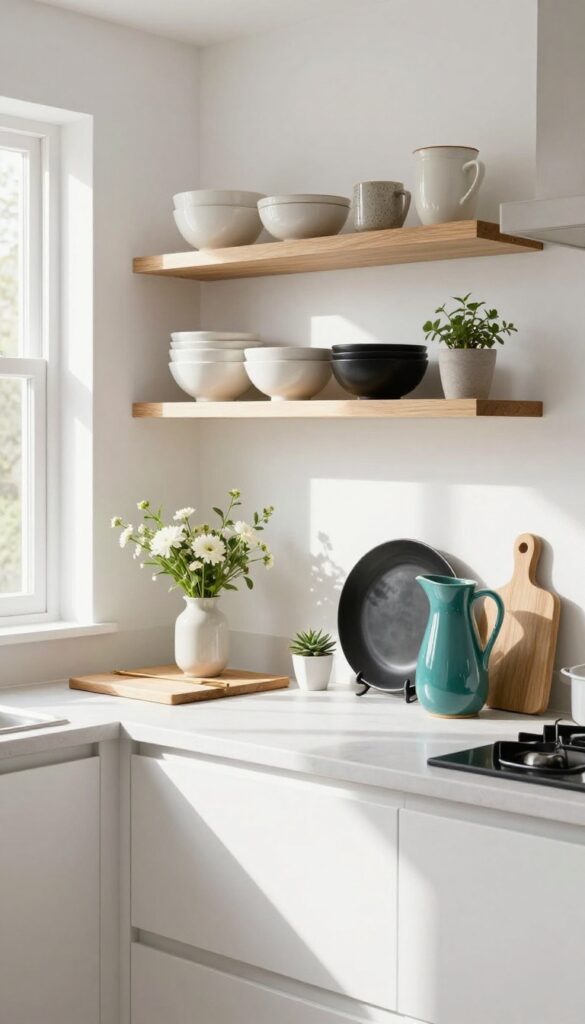
Upper cabinets can make a kitchen feel boxed in. Swapping them for open shelves instantly opens up the space and gives you a chance to show off pieces you love. The trick is to layer ceramics in different shapes, sizes, and glazes so the display feels collected rather than staged.
Think creamy white bowls next to speckled mugs, a matte black plate leaning against a glossy teal pitcher—each shelf becomes a little still life that adds warmth and personality.
Why It Works
Open shelving makes the kitchen feel larger and more inviting by removing visual bulk at eye level. The mix of ceramics introduces texture and subtle color without overwhelming the room, and because everything is out in the open, you're more likely to use your favorite pieces every day.
Best For
This idea shines in small to medium kitchens where cabinet space is tight but you have a collection of pottery or stoneware you want to highlight. It also works beautifully in rental kitchens where you can't change the layout but can swap out hardware and add shelves.
Styling Tip
Stick to a cohesive color palette—neutrals with one accent tone like sage or rust—so the shelves don't look chaotic. Vary heights by stacking plates on wooden stands or leaning larger pieces against the wall. Leave some breathing room between items; negative space helps each piece stand out.
2. A Cozy Window Nook with Cushions
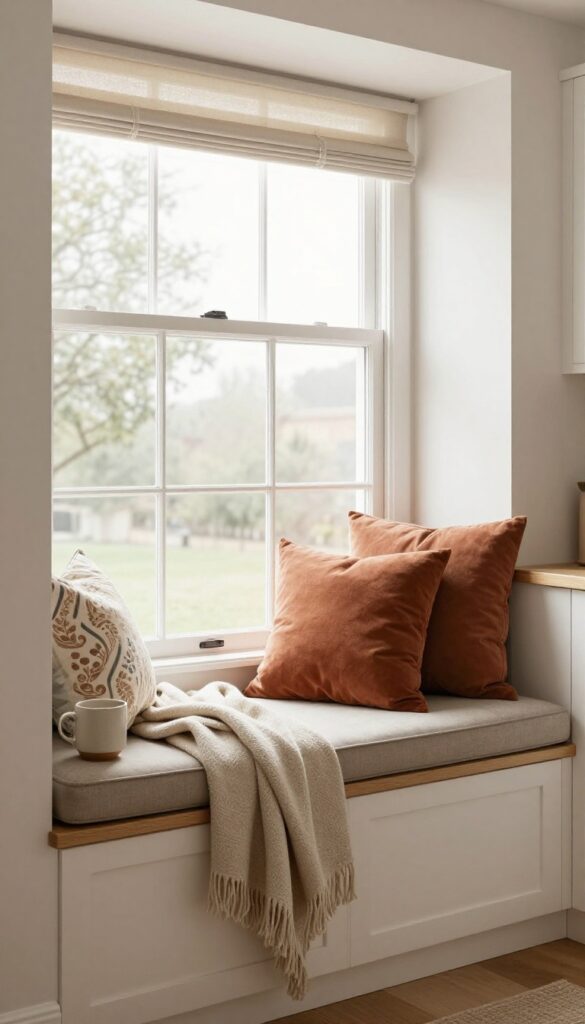
There’s something undeniably inviting about a kitchen window that doubles as a snug retreat. By adding a built-in bench or a small armchair beneath the sill, you create a spot that feels both intentional and effortless. Layer on plush cushions, a soft throw, and maybe a small side table for your mug, and suddenly your kitchen has a warm corner that begs you to linger.
Why It Works
This idea turns an often-underused area into a functional, cozy hub. The cushions add softness against hard kitchen surfaces, while the nook invites relaxation without taking up extra floor space. It makes the room feel lived-in and layered, not just efficient.
Best For
Kitchens with a window that isn’t above the sink—especially bay windows or large panes that let in natural light. It works well in both small and spacious layouts, as long as there’s enough depth for a seat.
Styling Tip
Choose cushions in warm, earthy tones like terracotta or oatmeal to keep the look grounded. Add one patterned throw pillow for contrast, and tuck a small plant or stack of cookbooks nearby to complete the vignette.
3. Warm Wood Accents on Countertops
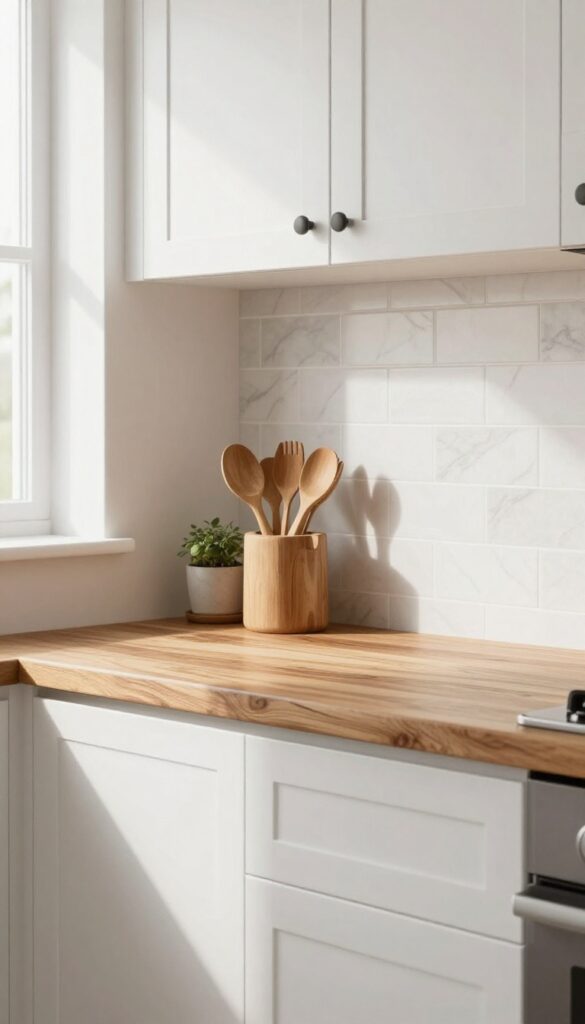
A kitchen can feel cold and sterile when every surface is stone or metal. That’s where wood steps in to soften the edges. A butcher block countertop, a chunky wooden cutting board left propped against the backsplash, or even a few wooden canisters on the counter instantly add texture and warmth.
The natural grain brings a cozy, grounded feel that balances crisp white cabinets or neutral tones without trying too hard.
Why It Works
Wood introduces organic texture and visual softness to an otherwise hardworking space. It absorbs light rather than reflecting it, making the room feel warmer and more inviting. Plus, it’s practical—butcher block is durable for food prep and develops character over time.
Best For
This idea shines in kitchens with lots of white, gray, or cool-toned cabinetry. It’s also perfect for galley kitchens or smaller spaces where you want to add warmth without cluttering counters with decor.
Styling Tip
Keep the wood finish consistent—choose one tone (like honey oak or walnut) and repeat it on a cutting board, utensil crock, and maybe open shelving. Pair with matte black or brass hardware for a layered look that feels intentional.
4. Soft Lighting with Pendant Shades
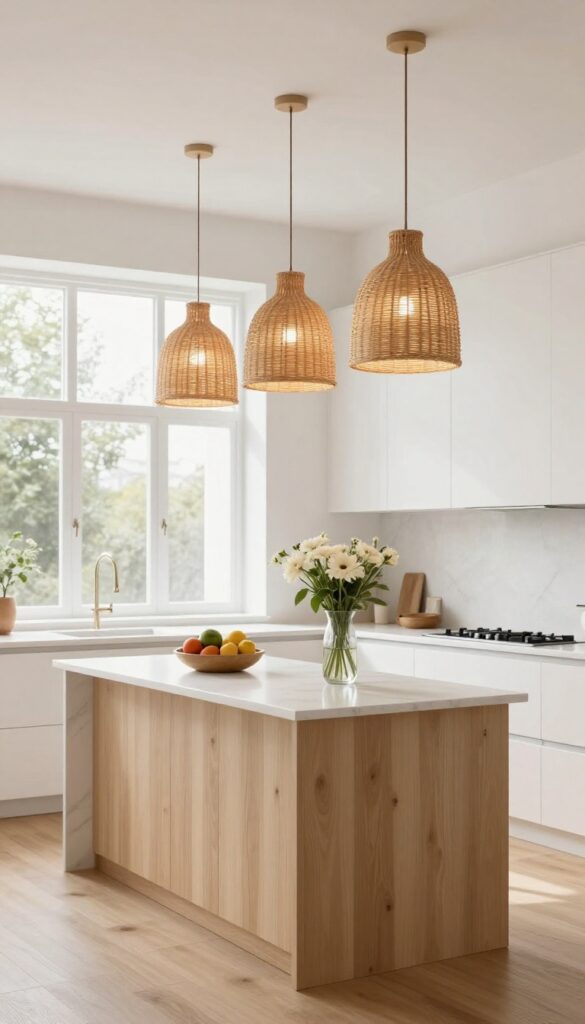
Overhead lighting can make or break the mood in a kitchen. Swap out harsh fixtures for fabric or woven pendant shades, and you instantly get a warm, diffused glow that softens the whole space. Hung above an island or dining table, these pendants add a cozy layer of texture while keeping the room feeling airy and approachable.
Why It Works
The soft fabric filters light gently, reducing glare and casting a flattering warmth across countertops and faces. Woven shades like rattan or linen also introduce natural texture, which balances sleek cabinets and hard surfaces for a more layered, lived-in feel.
Best For
This idea shines in kitchens with an island or breakfast bar where pendants can serve as a focal point. It's also perfect for open-plan layouts where you want to define the dining area without adding walls.
Styling Tip
Hang pendants at different heights for visual interest, but keep the bottom at least 30 inches above the counter. Pair with dimmable bulbs so you can adjust brightness from task lighting to evening ambiance.
5. A Tiny Herb Garden on the Windowsill
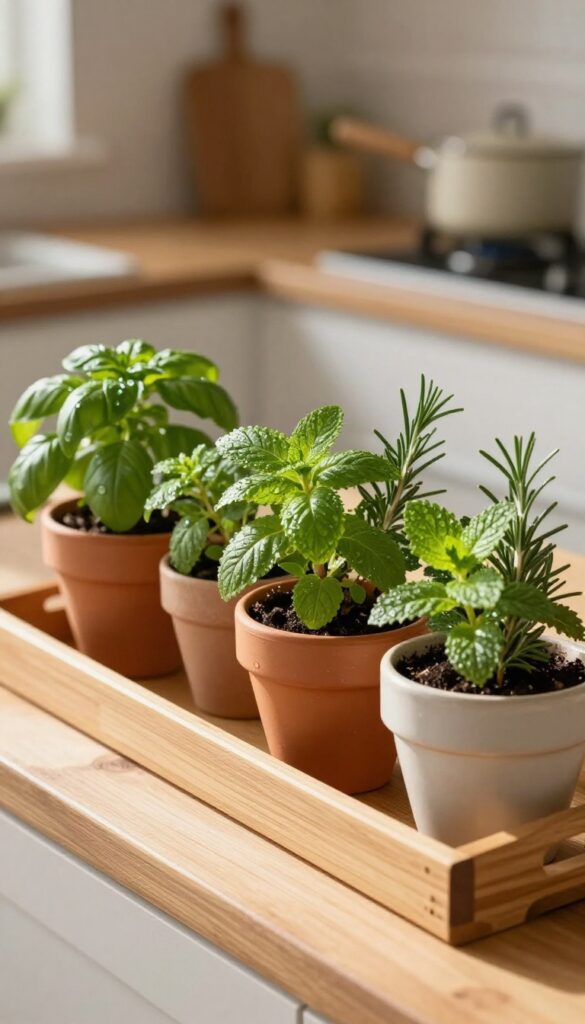
There’s something quietly satisfying about snipping fresh basil straight into your pasta sauce while dinner simmers. A row of small pots on a sunny windowsill turns an ordinary kitchen into a living, breathing space. The soft green leaves against the glass catch the morning light, and the gentle scent of mint or rosemary drifts through the room.
It feels cozy and layered, like the kitchen is actually being used and loved.
Why It Works
Herbs are naturally forgiving and don’t demand much—just sunlight and occasional water. They add instant color and texture without cluttering counters, and they keep your most-used ingredients within arm’s reach. Plus, watching something grow in your kitchen makes the whole space feel more alive and personal.
Best For
This idea shines in kitchens with at least one south- or west-facing window that gets several hours of direct light. It works beautifully in small apartments where every inch counts, but it’s equally charming in larger kitchens that need a soft, organic touch.
Styling Tip
Mix pot sizes and materials for visual interest—try a few terracotta pots alongside a small ceramic planter or a repurposed tin can. Keep the herbs trimmed so they stay bushy rather than leggy, and group them on a simple wooden tray to catch any drips.
6. Patterned Tile Backsplash with a Twist
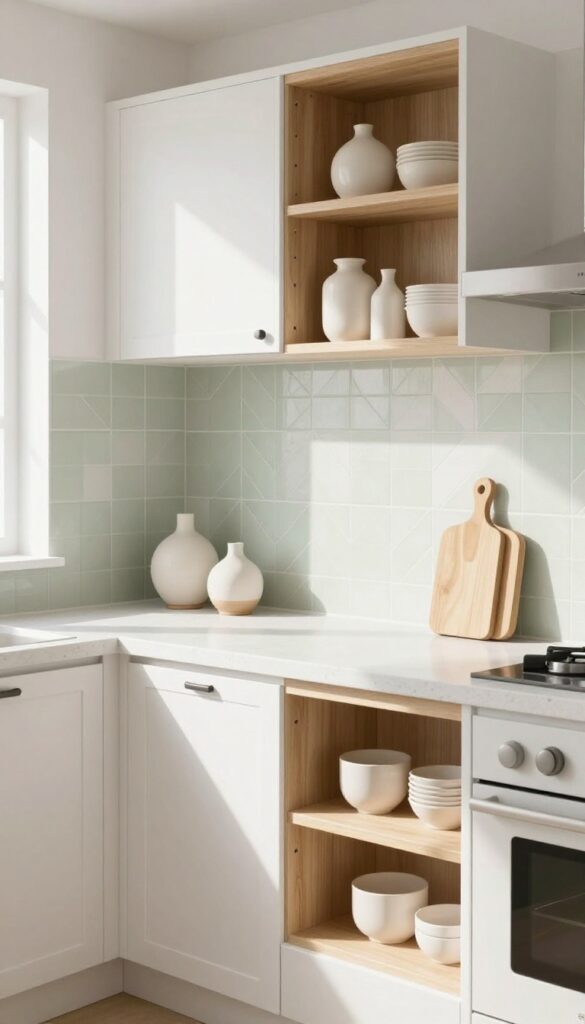
There's something about a backsplash that can transform the entire feel of a kitchen. Instead of the usual subway tile, try a playful pattern like herringbone or Moroccan fish scale. The key is letting the tile take center stage while everything else stays calm and simple.
This creates a cozy, layered look that feels both intentional and inviting.
Why It Works
A patterned backsplash adds visual texture and personality without overwhelming the space. By keeping countertops, cabinets, and walls neutral, the tile becomes a natural focal point that draws the eye and makes the kitchen feel curated rather than chaotic.
Best For
This idea shines in kitchens with mostly white or light wood cabinetry and minimal upper cabinet clutter. It's perfect for anyone who wants a statement feature without committing to bold paint colors or expensive countertops.
Styling Tip
Choose tiles in soft, earthy tones like sage green, dusty blue, or warm terracotta to keep the look grounded. Pair with open shelving in natural wood and a few ceramic pieces to echo the handmade feel of the tile.
7. Open Baskets for Fruit and Veggies
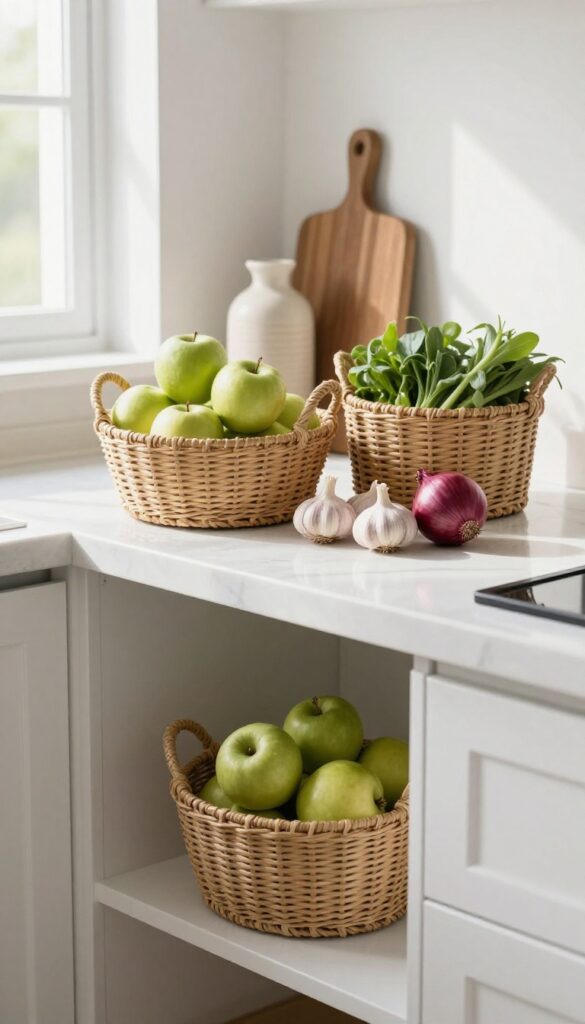
Woven baskets scattered across the counter or tucked onto a shelf bring an instant sense of warmth and lived-in charm. They turn everyday produce into a natural still life—think earthy browns, soft greens, and pops of orange against the basket's texture. This isn't just storage; it's a way to keep your kitchen feeling organized without losing that cozy, layered look.
Why It Works
Open baskets make produce easily accessible, so you're more likely to grab an apple or onion while cooking. The natural fibers add visual softness to hard countertops and blend seamlessly with wooden cutting boards or ceramic canisters. Plus, seeing your fruits and veggies out in the open reminds you to use them before they spoil.
Best For
This idea shines in kitchens with limited pantry space or open shelving where you want to avoid clutter. It also works beautifully in farmhouse, boho, or Scandinavian-style kitchens that celebrate natural materials and functionality.
Styling Tip
Choose baskets in warm neutrals like seagrass, rattan, or jute to keep the look cohesive. Group two or three different sizes on a counter corner or a floating shelf—fill one with potatoes, another with onions, and leave the third empty for quick-grab items like garlic. Avoid mixing too many colors of produce; stick to a palette of greens, reds, and earth tones.
8. A Vintage-Style Rug Underfoot
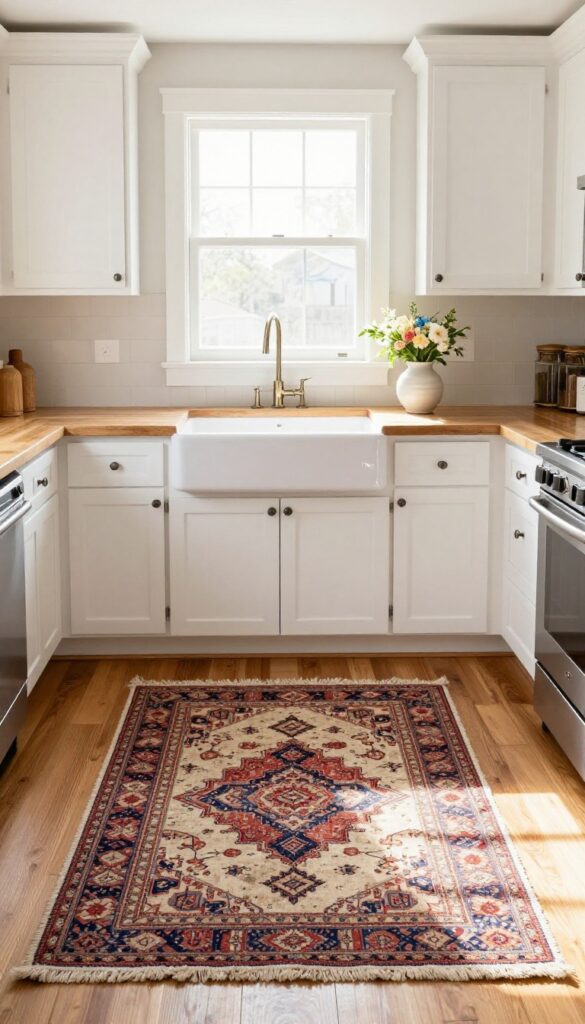
Hard kitchen floors are practical, but they can feel cold and noisy. Dropping a small vintage or Turkish rug in front of the sink or stove instantly warms up the space—both visually and underfoot. It’s an easy way to introduce pattern, color, and a soft, layered feel that makes the kitchen more inviting.
Why It Works
A rug breaks up large expanses of tile or hardwood, adding texture and visual interest. It also absorbs sound and provides a cushioned surface when you’re standing for long periods, making meal prep more comfortable.
Best For
This works especially well in kitchens with neutral cabinetry and countertops, where a rug can become the focal point. It’s also great for rental kitchens where you can’t change flooring but want to add personality.
Styling Tip
Choose a low-pile wool or cotton rug that’s easy to clean and won’t trap crumbs. Look for patterns with red, blue, or earthy tones to complement stainless steel appliances and butcher block counters.
9. Glass Jars for Pantry Staples
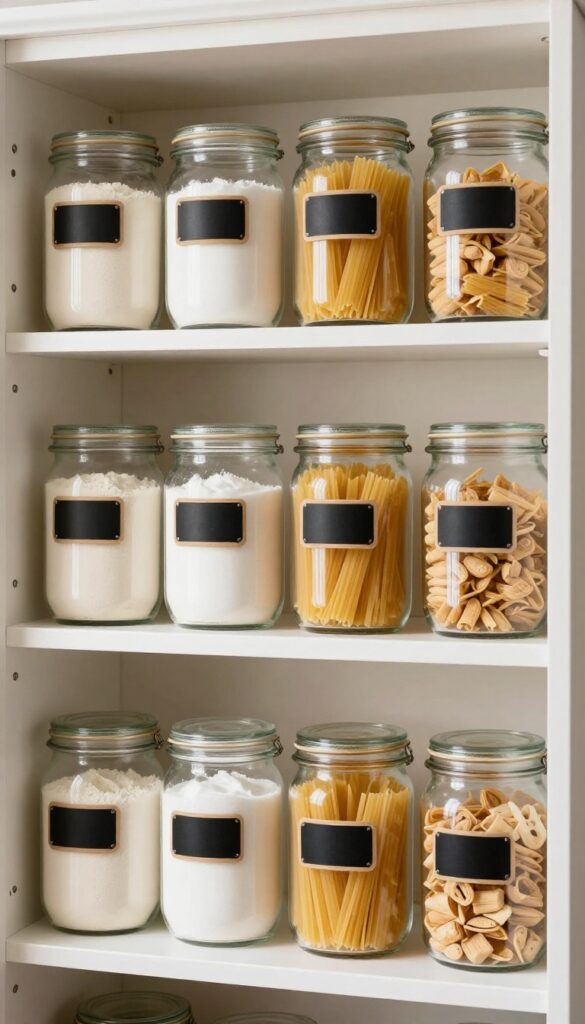
Open your pantry and see a wall of uniform glass jars filled with flour, sugar, pasta, and snacks. It’s a simple swap that instantly makes the space feel organized and intentional. The transparency lets you spot what you need at a glance, while airtight lids keep everything fresh.
This idea brings a calm, collected look to even the busiest kitchen.
Why It Works
Glass jars eliminate the visual clutter of mismatched boxes and bags. Their clean lines and uniform shape create a sense of order that feels both cozy and efficient. Plus, seeing your ingredients clearly means less rummaging and fewer forgotten items.
Best For
This works beautifully in open shelving or glass-front cabinets where the jars become part of the decor. It’s also ideal for small kitchens where every inch counts—vertical stacking and clear visibility maximize storage without feeling cramped.
Styling Tip
Stick to one jar style, like classic apothecary or square weck jars, for a cohesive look. Add small chalkboard labels or wooden tags for a warm touch. Group similar items together—baking staples on one shelf, grains on another—and leave a little breathing room between jars to avoid a crowded feel.
10. A Statement Cutting Board as Decor
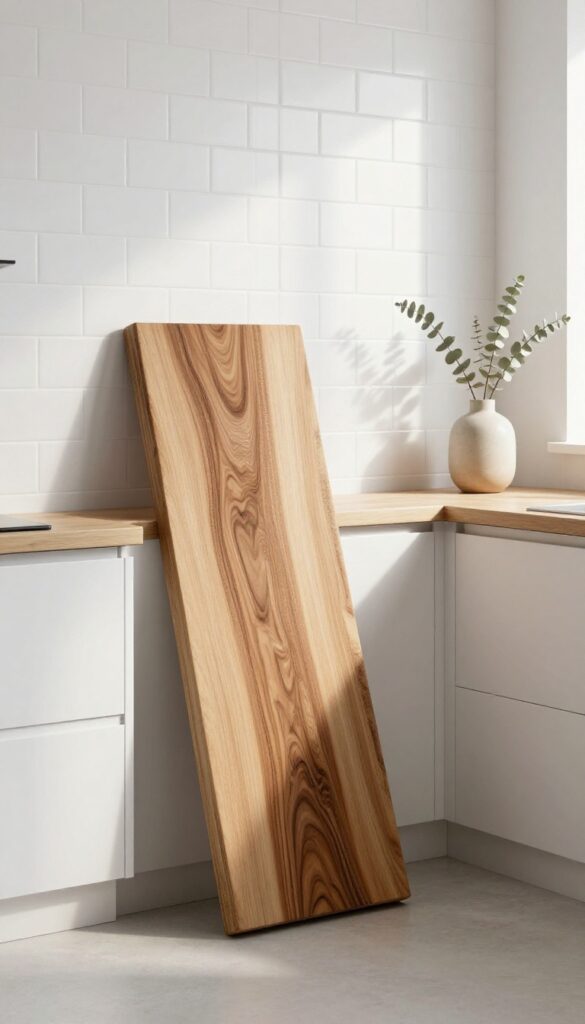
Your cutting board doesn't have to live in a drawer. Leaning a large wooden or marble board against the backsplash turns a practical tool into an organic, sculptural accent. The natural grain or cool stone texture adds warmth and depth, making your counter feel curated rather than cluttered.
It's one of those small swaps that instantly makes a kitchen feel more layered and intentional.
Why It Works
A statement cutting board brings texture and visual weight to an otherwise flat surface. Wood warms up sleek countertops, while marble echoes other stone elements for a cohesive look. Plus, it's always within reach for last-minute chopping or serving—form that truly follows function.
Best For
This idea shines in galley kitchens or on smaller countertops where every inch counts. It's also perfect for open shelving setups where you want to break up rows of dishes with something natural and grounded.
Styling Tip
Choose a board with an interesting shape—live edge, asymmetrical, or extra-long—and prop it at a slight angle against the backsplash. Pair it with a simple ceramic vase or a small stack of cookbooks nearby to create a vignette that feels effortless.
11. Curtains Instead of Cabinet Doors
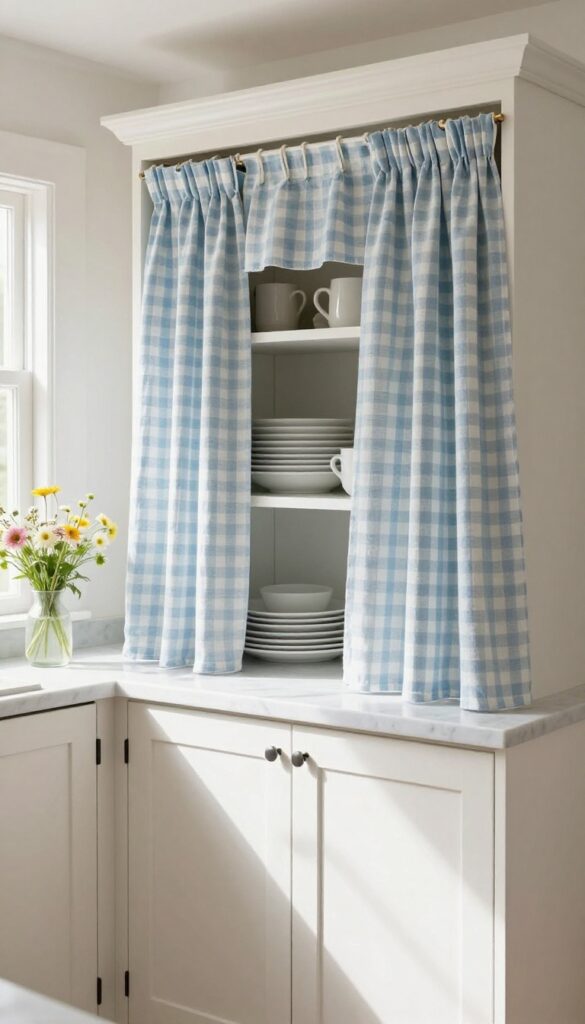
There’s something unexpectedly charming about swapping out solid upper cabinet doors for soft fabric curtains. This simple swap instantly softens the kitchen, making it feel more like a cozy cottage than a sterile workspace. The fabric adds texture and warmth, and because you can easily change the curtains, it’s a low-commitment way to refresh the whole room.
Why It Works
Fabric curtains introduce a layer of softness that balances all the hard surfaces in a kitchen—countertops, tile, and appliances. They also make cabinets feel less imposing, which is especially nice in smaller kitchens where bulky doors can feel heavy. Plus, they’re forgiving if you don’t stack dishes perfectly; a little clutter is hidden behind the drape.
Best For
This idea works beautifully in cottage-style, farmhouse, or eclectic kitchens where a relaxed, lived-in look is the goal. It’s also great for renters who can’t change cabinets but want to hide open shelving or awkward upper cabinets without permanent alterations.
Styling Tip
Choose linen or cotton in a subtle pattern—like small florals, stripes, or gingham—that picks up one of your accent colors. Mount a tension rod inside the cabinet frame so the curtain hangs just below the opening. Keep the fabric light and airy; heavy drapes will feel too formal and block light.
12. A Small Gallery Wall of Food Art
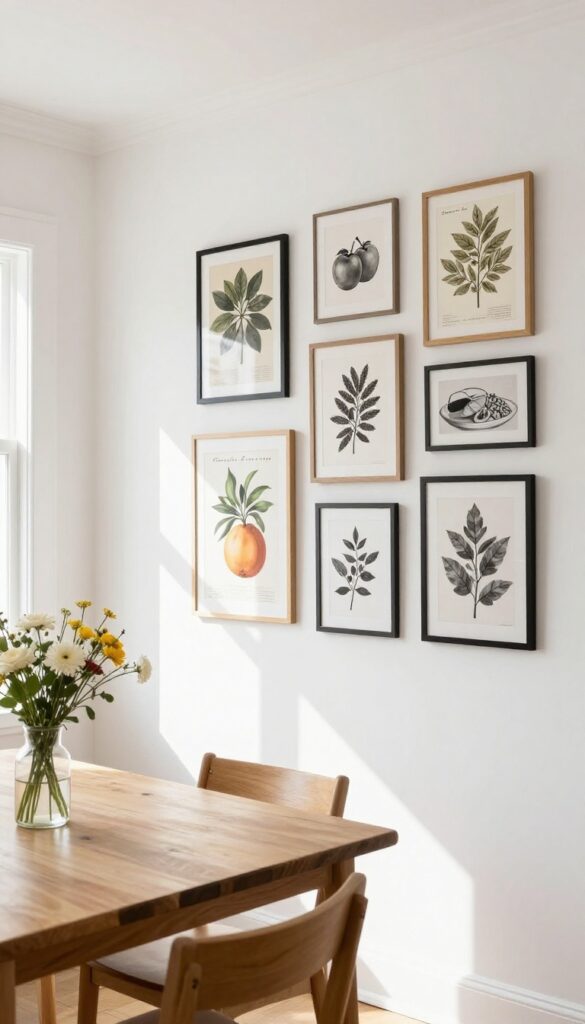
Blank kitchen walls can feel like a missed opportunity. Instead of leaving them bare, try clustering a few framed food-themed prints or vintage posters together. It’s an easy way to layer in personality without adding anything to your countertops.
The mix of frames and artwork creates a cozy, collected look that makes the whole room feel more intentional.
Why It Works
A gallery wall draws the eye upward, making the kitchen feel taller and more finished. The food theme keeps it relevant to the space, while the frames add texture and warmth. It’s a low-commitment way to test bold colors or patterns without painting cabinets.
Best For
This works well in kitchens with at least one empty wall—maybe above a breakfast nook, beside a window, or next to open shelving. It’s ideal for renters or anyone who wants to personalize their kitchen without permanent changes.
Styling Tip
Stick to a loose color palette that complements your kitchen’s existing tones—for example, warm ochre and olive if you have wood cabinets, or black and white for a modern look. Mix frame styles (wood, metal, thin, chunky) but keep them within two or three finishes for cohesion.
FAQ
How can I make my kitchen feel cozy without remodeling?
Focus on soft textiles like rugs and curtains, add warm lighting with dimmers or pendant shades, and incorporate natural materials like wood and woven baskets. Small changes in texture can transform the feel of the room.
What are some easy ways to add color to a neutral kitchen?
Introduce color through accessories like dish towels, ceramic canisters, or a patterned rug. A colorful backsplash or a few pieces of art on the wall also work well without overwhelming the space.
How do I keep open shelving looking tidy?
Stick to a cohesive color palette for displayed items, group similar pieces together, and leave some breathing room between objects. Use baskets or bins for smaller items to avoid visual clutter.
What type of lighting works best for a cozy kitchen?
Layer different light sources: overhead pendants for general light, under-cabinet lights for task areas, and a small lamp on the counter for ambiance. Warm white bulbs (2700-3000K) create a softer glow.
Can I mix wood tones in my kitchen?
Yes, mixing wood tones adds depth and interest. Keep the undertones similar (all warm or all cool) and vary the grain or finish. Use one dominant wood for large surfaces and smaller accents for contrast.
Conclusion
Creating a kitchen that feels both cute and easy to use is all about thoughtful layering. By mixing textures, adding personal touches, and prioritizing function, you can design a space that welcomes you every day. Start with one or two ideas that resonate most with your style, and build from there.
Small changes often make the biggest difference in how a room feels. Enjoy the process of making your kitchen truly yours.