11 Creative Sage Green Kitchen Ideas for a Fresh, Pulled-Together Look
Sage green has become a go-to choice for kitchens that feel calm, natural, and effortlessly stylish. It’s soft enough to keep things light, but has enough personality to make a statement.
Whether you’re planning a full renovation or just want to refresh a few details, these 11 ideas will help you bring sage green into your kitchen in ways that feel fresh and intentional. From painted cabinets to small decor swaps, sage green works with a wide range of styles—modern, farmhouse, or even eclectic.
The key is balancing it with the right textures and tones so the space doesn’t feel flat. Think warm woods, crisp whites, and natural materials that let the green shine without overwhelming the room.
1. Paint Lower Cabinets Sage Green for a Grounded Look
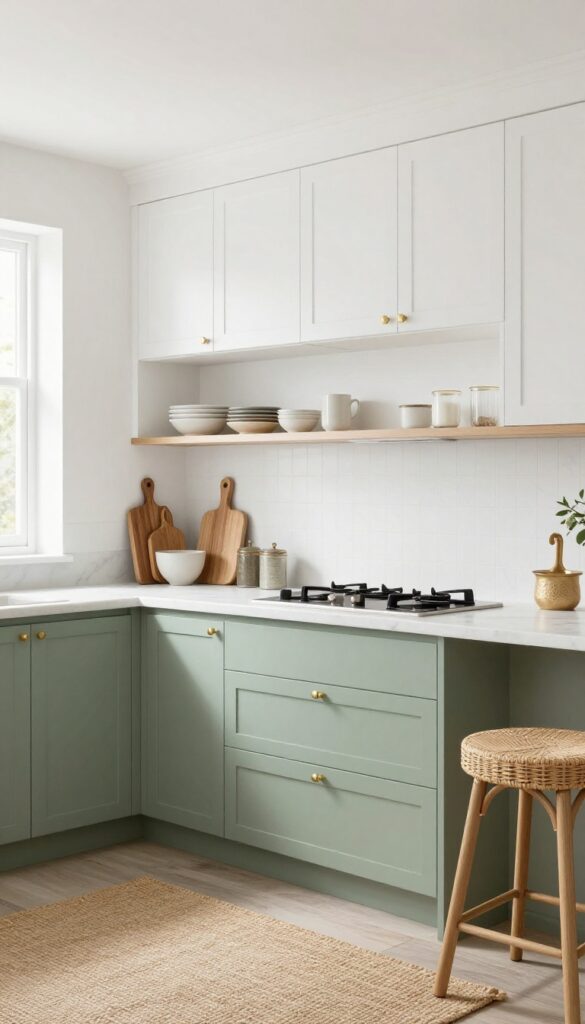
A two-tone kitchen is one of those tricks that instantly adds personality without a full renovation. By painting only the lower cabinets in a soft sage green, you create a visual anchor that feels intentional and calming. The upper cabinets stay light—white, cream, or even a pale wood—so the room keeps that open, airy feel.
It’s a balanced approach that gives your kitchen depth and character without overwhelming the space.
Why It Works
Sage green on the lower cabinets draws the eye downward, grounding the room and making it feel solid and composed. The lighter uppers reflect natural light, keeping the kitchen bright and spacious. This contrast also defines zones visually, which is especially helpful in open-plan layouts where the kitchen blends into living areas.
Best For
This idea shines in kitchens with good natural light or neutral surroundings. It works beautifully in galley kitchens, L-shaped layouts, or any space where you want to add color without committing to a full dark scheme. If your countertops are white, marble-look, or light wood, sage green will pop just enough.
Styling Tip
Balance the coolness of sage with warm hardware like unlacquered brass or brushed gold. Add open shelving above with a few ceramic dishes or wooden cutting boards to keep the look collected rather than matchy-matchy. A jute runner or woven bar stools can bring in texture that softens the painted cabinetry.
2. Add a Sage Green Backsplash for Subtle Texture
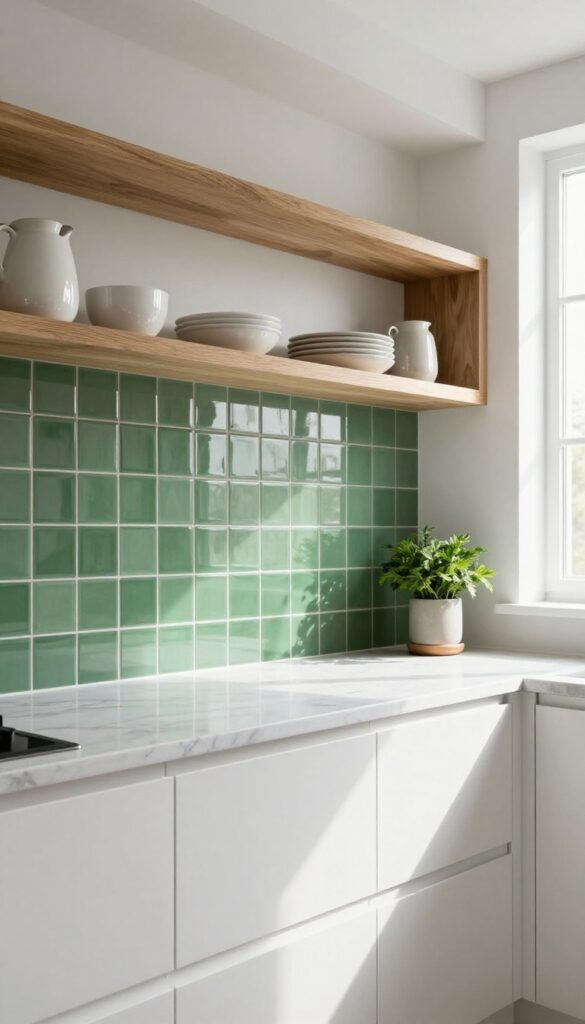
A backsplash is one of the easiest ways to introduce color without committing to a full cabinet makeover. Sage green, in particular, brings a soft, earthy quality that keeps the kitchen feeling open and calm. Whether you choose glossy subway tile or handcrafted zellige with natural variations, the effect is grounded yet fresh.
Why It Works
Sage green sits comfortably between neutral and colorful, so it adds visual interest without competing with other elements. The texture of the tile—whether smooth or slightly uneven—catches light differently throughout the day, giving the wall depth. Paired with white countertops and warm wood shelves, it creates a balanced, inviting backdrop.
Best For
This idea works well in kitchens that get good natural light, as the green will shift beautifully from morning to evening. It's also ideal for galley kitchens or smaller spaces where you want a hint of color without making the room feel closed in.
Styling Tip
To keep the look cohesive, pull a lighter shade from the tile for your wall paint or choose open shelving in a natural oak tone. Avoid adding too many competing patterns—let the backsplash be the star.
3. Incorporate Open Shelving in Sage Green
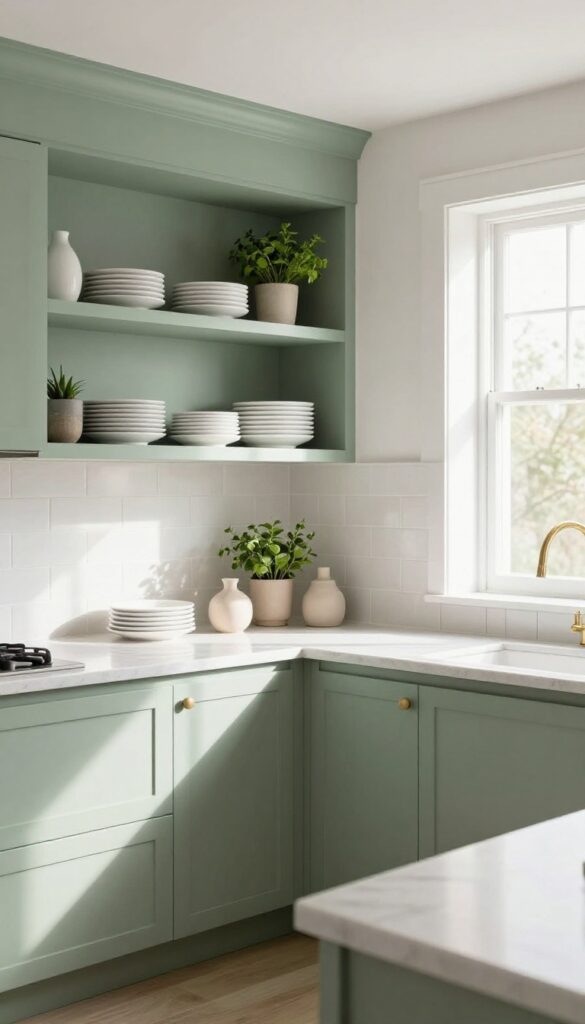
Upper cabinets can sometimes make a kitchen feel closed in, especially in smaller spaces. Swapping them for open shelving painted in a soft sage green keeps the room feeling light and open while adding a layer of warmth. The green tone ties into nature, making the space feel calm and collected without sacrificing storage.
Why It Works
Open shelving eliminates the visual weight of bulky upper cabinets, which instantly makes the kitchen feel larger and airier. The sage green color adds a subtle pop of color that feels fresh but not overwhelming, and it creates a cohesive look when paired with neutral backsplashes or countertops.
Best For
This idea works beautifully in small to medium kitchens where you want to maximize the sense of space. It's also great for renters who can install removable shelving or for anyone who loves to display beautiful dishware and plants as part of the decor.
Styling Tip
Mix functional items like white dinner plates with decorative pieces such as small potted herbs or ceramic vases. Keep the arrangement balanced by grouping similar colors and leaving some breathing room between items—this prevents the shelves from looking cluttered.
4. Use Sage Green Bar Stools for a Pop of Color
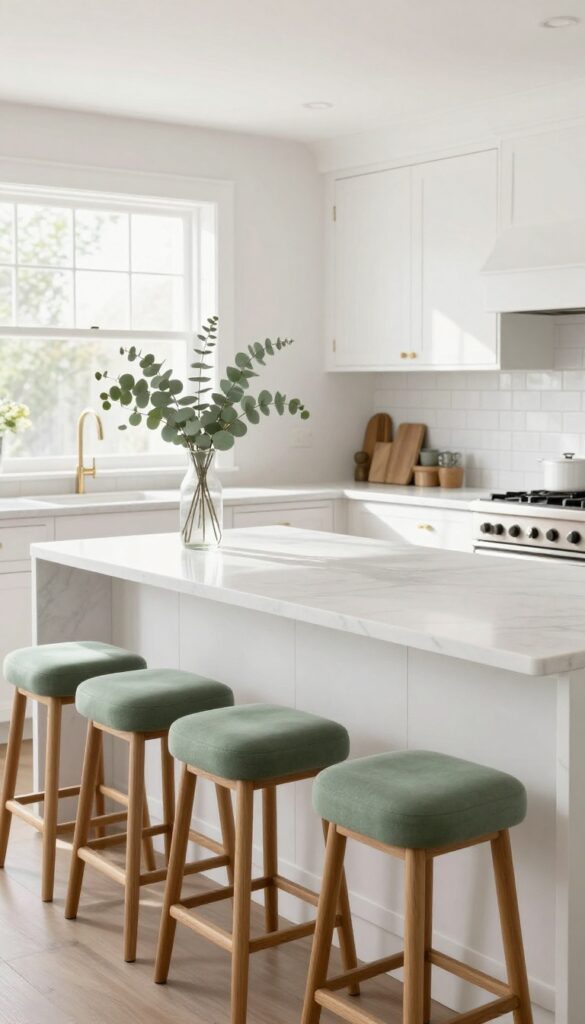
Bar stools are one of those pieces you can swap out without a full renovation, making them perfect for testing a color like sage green. At a kitchen island or peninsula, they become an instant focal point—bright but not loud, fresh but not flashy. The soft green tone keeps the space feeling light and airy, while the stools themselves add a practical seating solution that doesn't demand a huge commitment.
Why It Works
Sage green strikes a balance between neutral and colorful, so it blends with most cabinet finishes—white, wood, or even dark navy. The stools introduce visual interest at eye level without overwhelming the room. Upholstered versions also soften the hard surfaces common in kitchens, making the area feel more inviting.
Best For
This idea works especially well in kitchens with neutral cabinetry and countertops, where a single colorful element can define the seating zone. It's also great for open-plan layouts where the stools need to coordinate with adjacent living spaces.
Styling Tip
For a cohesive look, repeat the sage green elsewhere in small doses—like a tea towel, a vase on the counter, or even the backsplash grout. If your stools have wooden frames, choose a warm oak or walnut tone to keep the overall feel grounded and natural.
5. Install a Sage Green Tile Floor for Unexpected Charm
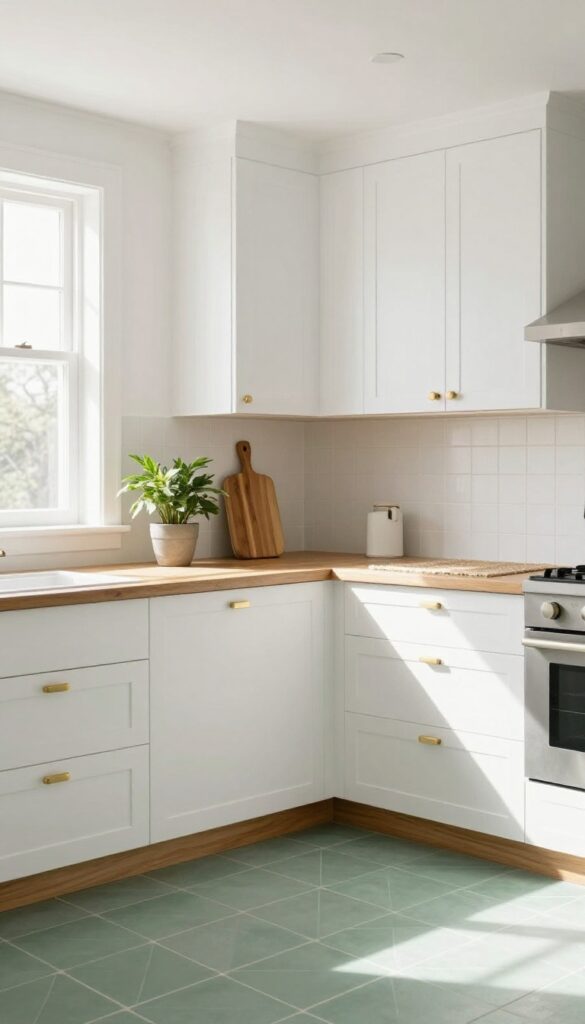
Floors often get treated as a background element, but they have just as much power to set the mood as your backsplash or cabinet color. A sage green tile floor brings an unexpected jolt of personality underfoot, turning an ordinary kitchen into something memorable. The soft green hue keeps things light and airy, while the tile pattern adds visual texture that feels deliberate, not overwhelming.
Why It Works
Sage green is muted enough to feel neutral, so it won't compete with your countertops or cabinets. The tile format adds durability and easy cleanup—perfect for a high-traffic kitchen. Plus, the color naturally ties in with plants and wooden accents, creating a cohesive look that feels both fresh and grounded.
Best For
This idea shines in kitchens with white or off-white cabinetry and warm wood elements like butcher-block counters or open shelving. It also works well in galley kitchens or smaller spaces where you want the floor to be a focal point without making the room feel busy.
Styling Tip
Keep the rest of the palette simple so the floor can shine. Stick with white upper cabinets, natural wood lower cabinets or open shelving, and brass or matte black hardware. Add a jute runner in the prep zone for comfort and a textural contrast that complements the tile.
6. Hang Sage Green Roman Shades for Softness
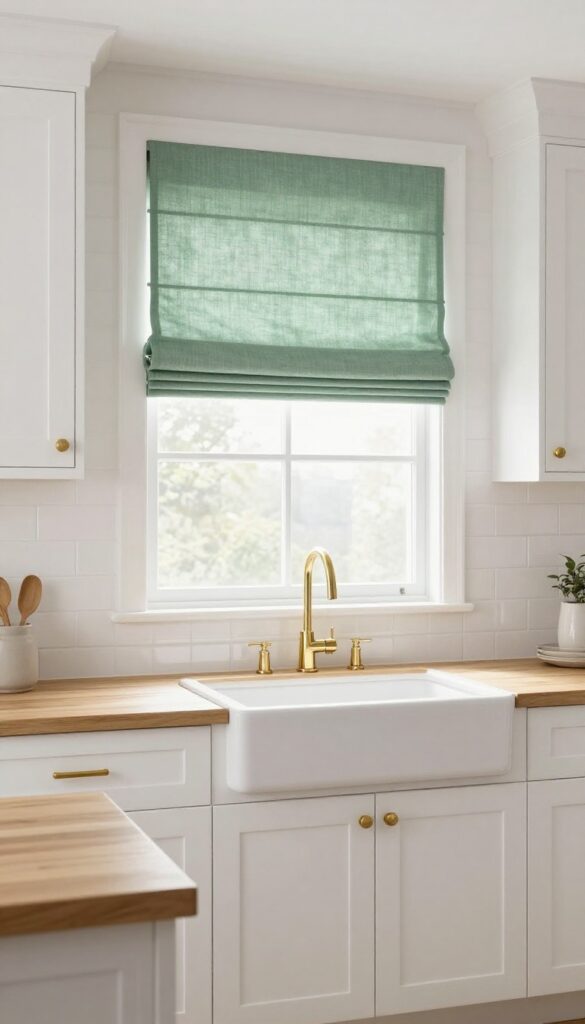
Windows in a kitchen often get overlooked when it comes to adding color and texture. Roman shades in a soft sage green bring a gentle, organic feel that balances all the hard surfaces like countertops, cabinets, and tile. They filter sunlight beautifully, creating a warm, diffused glow that makes the whole space feel more inviting.
Plus, they tuck away neatly when you want full light or an unobstructed view.
Why It Works
Sage green roman shades introduce a soft, matte texture that contrasts nicely with glossy tiles or sleek appliances. The fabric absorbs sound and softens the room’s acoustics, making the kitchen feel calmer. Because they mount inside or outside the window frame without taking up floor space, they keep the room feeling open and airy—perfect for smaller kitchens or breakfast nooks.
Best For
This idea is perfect for kitchens with lots of natural light where you want to control glare without blocking the view. It also works well in open-plan spaces where the kitchen flows into a living or dining area, since roman shades add a cozy, residential touch. If your kitchen has white or light wood cabinets, sage green shades will tie everything together without overwhelming the space.
Styling Tip
Choose a linen or cotton blend with a subtle weave for extra depth. Hang them high and wide—mount the rod a few inches above the window frame and extend it past the sides—to make the window appear larger and let in more light when the shades are fully raised. Pair with simple brass or matte black hardware for a polished finish.
7. Style Open Shelves with Sage Green Accessories
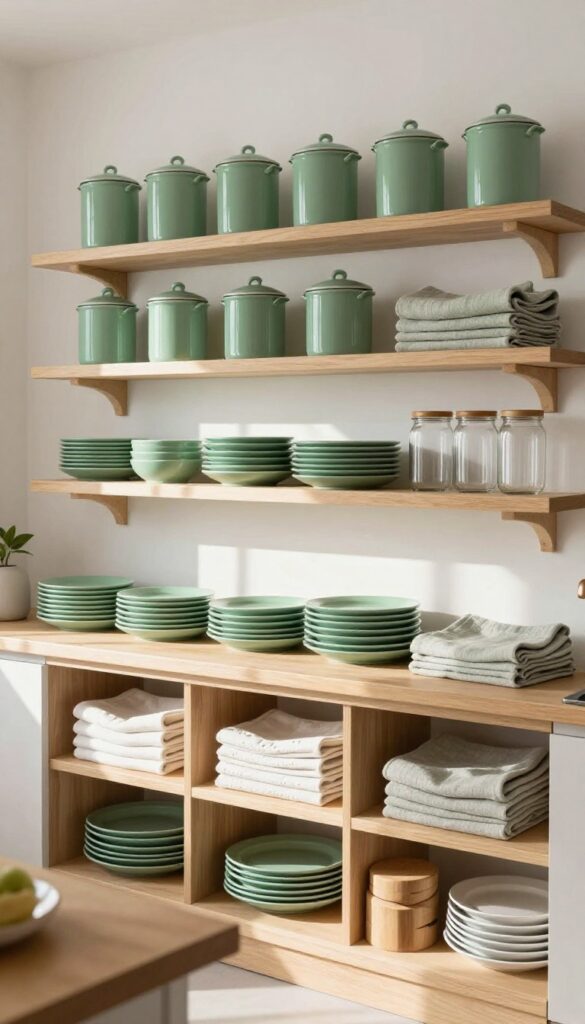
Open shelving is a kitchen staple for a reason—it keeps everyday items within arm's reach while adding personality. But if you're not ready to commit to painted cabinets or a full backsplash, sage green accessories offer a flexible way to bring in the color. Stacked dinner plates, ceramic canisters, and folded linen towels in soft green tones create a curated look that feels both intentional and easy to change.
The trick is to mix them with neutral pieces—white, cream, or natural wood—so the sage reads as a fresh accent rather than an overwhelming theme.
Why It Works
- Sage green accessories act as a low-commitment color test. You can swap out dishes or swap in new linens without repainting anything. The shade itself is forgiving: it pairs well with warm woods, cool grays, and even bold brass hardware.
- Plus, open shelves make these pieces visible throughout the day, so the color becomes a subtle but constant presence that brightens the space.
Best For
Renters who can't paint or homeowners who want to refresh their kitchen without a full renovation. It's also ideal for galley kitchens or smaller layouts where too much dark color could feel heavy—sage green accessories add depth without closing in the room.
Styling Tip
Anchor the shelves with larger neutral items like white dinner plates or clear glass jars. Then layer in smaller sage green pieces—a set of mugs, a small pitcher, or a linen dish towel draped over the edge. Keep the arrangement asymmetrical: group three green canisters on one end and let a single green vase stand alone on another shelf for visual balance.
8. Create a Sage Green Accent Wall Behind the Range
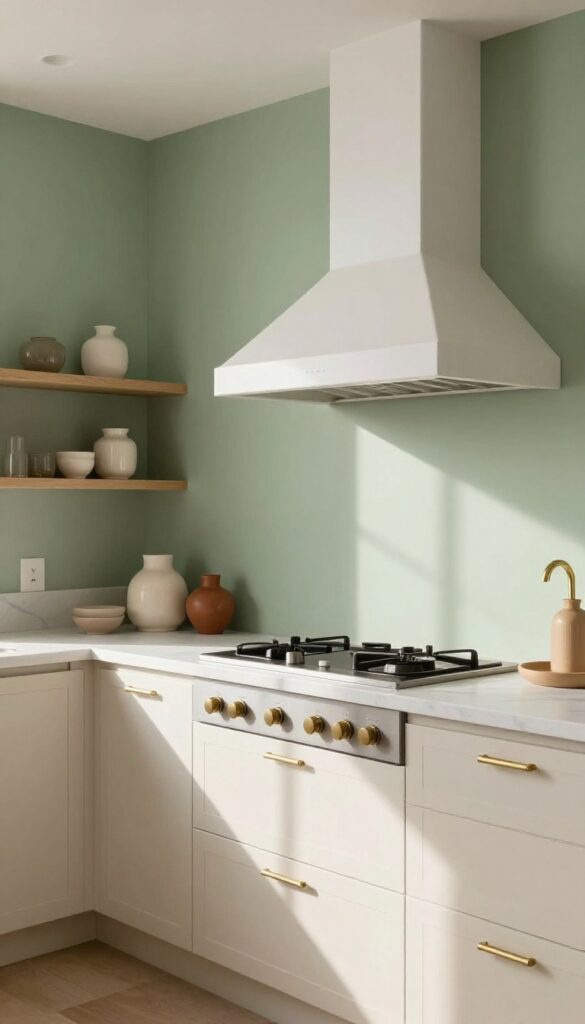
A sage green accent wall behind the stove or range hood instantly becomes the kitchen's focal point. It adds warmth without overwhelming the space, especially when you keep the rest of the room light and neutral. This simple paint project brings a fresh, pulled-together look that feels both intentional and inviting.
Why It Works
Sage green is soft enough to feel airy but rich enough to ground the cooking zone. It draws the eye naturally to the heart of the kitchen, making the area feel special without adding clutter or cost.
Best For
Open-plan kitchens where you want to define the cooking area without building walls. Also great for galley kitchens that need a pop of color without closing in the space.
Styling Tip
Pair with brass or black hardware on cabinets and fixtures to enhance the contrast. Keep countertops light—white marble or quartz—and add open shelving with a few ceramic pieces in cream or terracotta for texture.
9. Choose Sage Green Appliances for a Vintage Twist
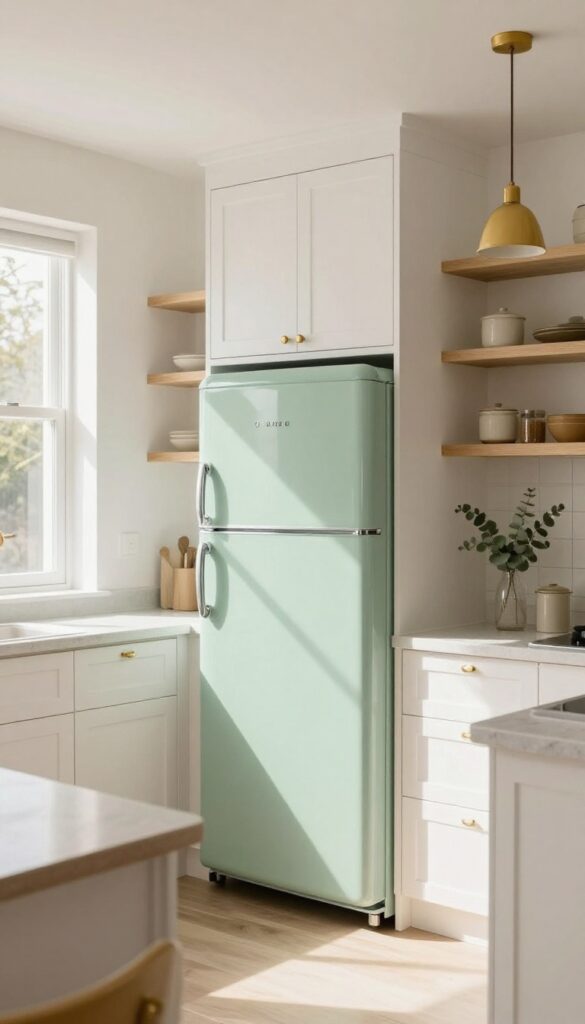
A sage green fridge or range instantly becomes the heart of the kitchen, bringing a playful nod to mid-century design without feeling kitschy. Brands like Smeg and Big Chill offer these retro-inspired appliances in soft, muted green that feels fresh rather than dated. Against crisp white or light wood cabinetry, the color pops gently and adds character without overwhelming the space.
Why It Works
Sage green is inherently calming and pairs beautifully with warm brass or chrome hardware. The vintage silhouette breaks up rows of standard cabinets, creating a focal point that draws the eye. It also allows you to keep surrounding finishes neutral, so the overall look stays light and airy.
Best For
This idea suits kitchens with a neutral backbone—think white shaker cabinets, pale quartz countertops, and open shelving. It works especially well in smaller kitchens where a single colorful element can define the room without clutter. If you love retro style but want it softened, sage is your shade.
Styling Tip
Let the appliance stand alone by keeping countertops clear around it. Add a small vase of eucalyptus or a ceramic canister in a complementary tone nearby. For extra cohesion, repeat the sage green in bar stools or a pendant light shade.
10. Add Sage Green Plants and Herbs for Natural Color
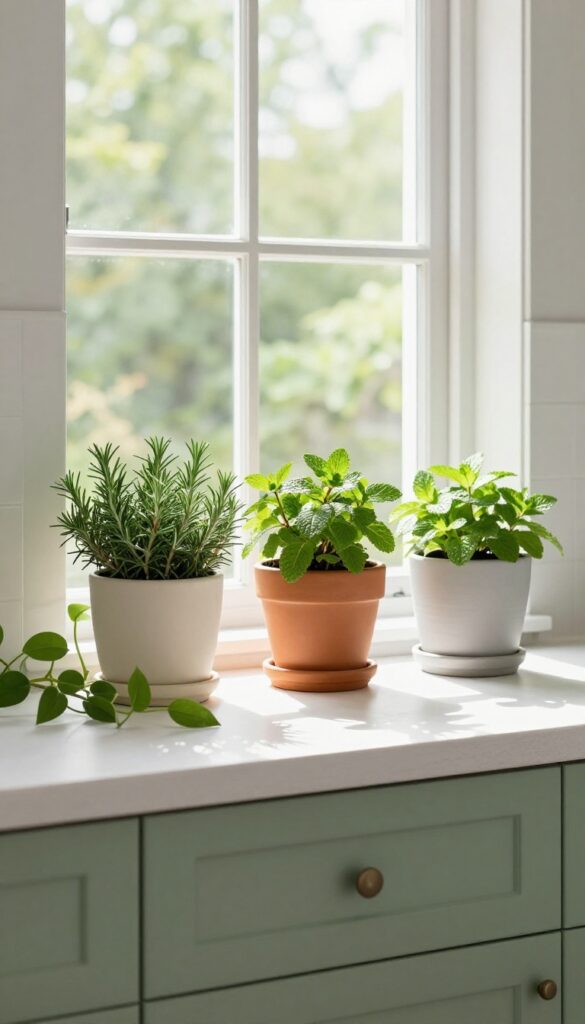
Bringing live plants into your kitchen does more than just purify the air—it weaves the sage green palette directly into your daily space. A cluster of herbs on the windowsill or a trailing pothos on the open shelf adds soft, organic color that shifts with the light. The green leaves echo your cabinetry or backsplash without trying too hard, creating a relaxed, lived-in feel that makes the whole room breathe easier.
Why It Works
Plants introduce true, living green that naturally complements sage tones without clashing. The varied leaf shapes and textures add depth to countertops and shelves, while herbs like rosemary or mint offer practical benefits for cooking. This approach keeps the color scheme feeling fresh and connected to nature rather than purely decorative.
Best For
Kitchens with good natural light where a windowsill or countertop can host a few pots. It works especially well in smaller kitchens where you want color without committing to paint or tile changes.
Styling Tip
Choose matte ceramic pots in soft neutrals like cream, terracotta, or pale gray to keep the focus on the foliage. Group three pots of varying heights on a tray near the sink or stove for an instant mini herb garden that’s both pretty and useful.
11. Paint the Kitchen Island Sage Green for Contrast
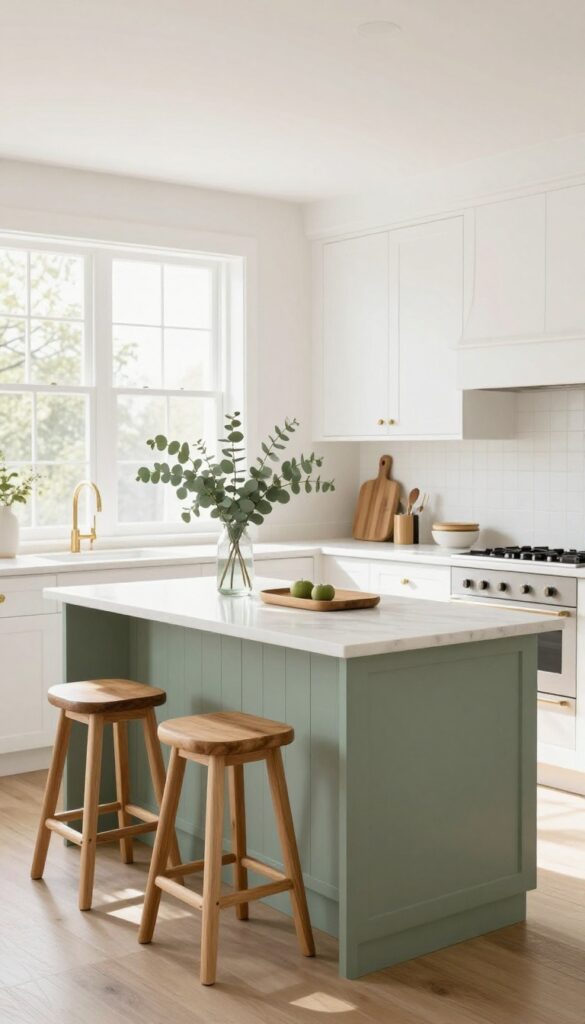
An all-white kitchen feels clean and bright, but it can also feel a little flat. Adding a sage green island instantly gives the room a focal point and a sense of depth. The soft green hue brings in a natural, calming element that keeps the space feeling light and airy rather than heavy or dark.
Why It Works
Sage green is muted enough to blend with white cabinets without competing, yet distinct enough to create visual contrast. It anchors the room and adds warmth, making the kitchen feel more inviting. Plus, it's a flexible color that pairs beautifully with wood tones, marble, and brass fixtures.
Best For
This works especially well in open-concept kitchens where the island is visible from other living areas. The sage color defines the cooking zone while keeping the overall palette cohesive. It's also great for kitchens with lots of natural light, as the green will shift subtly throughout the day.
Styling Tip
Top your sage island with a butcher block countertop for a rustic touch, or go with white marble for a more refined look. Add bar stools in natural wood or woven rattan to tie in the organic vibe. Keep decor minimal—maybe a small vase of eucalyptus or a wooden cutting board—to let the island stand out.
FAQ
What colors go best with sage green in a kitchen?
Sage green pairs well with white, cream, warm wood tones, brass, black, and soft blush. These colors keep the look light and balanced while letting sage green stand out.
Is sage green a good choice for small kitchens?
Yes, sage green works well in small kitchens because it’s a light, muted color that doesn’t close in the space. Use it on lower cabinets or as an accent to keep things airy.
How can I add sage green to my kitchen without painting?
You can add sage green through accessories like dish towels, rugs, canisters, bar stools, or small appliances. These items are easy to swap and let you test the color.
Does sage green go with stainless steel appliances?
Absolutely. Sage green softens the coolness of stainless steel and creates a nice contrast. Add warm wood or brass elements to tie the look together.
What type of lighting works with a sage green kitchen?
Warm white lighting (2700K–3000K) complements sage green best. Pendant lights with brass or black finishes add style, while under-cabinet lights keep the space functional.
Conclusion
Sage green is one of those colors that feels both timeless and fresh, making it a fantastic choice for any kitchen. Whether you go all-in with painted cabinets or start small with accessories, each idea here is designed to help you create a space that feels light, airy, and pulled together.
The beauty of sage green is its versatility—it adapts to your style and budget. So pick the ideas that resonate most with your kitchen’s layout and personality, and enjoy the process of making your space feel more like home.