10 Small Kitchen Upgrades That Bring Warmth and Personality
A small kitchen doesn't have to feel cramped or boring. With the right tweaks, even the tiniest cooking space can become a warm, inviting hub that works hard for you.
The key is choosing upgrades that pull double duty—boosting both style and storage without eating up precious square footage. Whether you're renting or own, these ten ideas are designed to fit snugly into your life, adding character and convenience without a full gut job.
Think of them as smart, cozy solutions that make your kitchen feel like the heart of your home, no matter its size.
1. Swap Upper Cabinets for Open Shelving
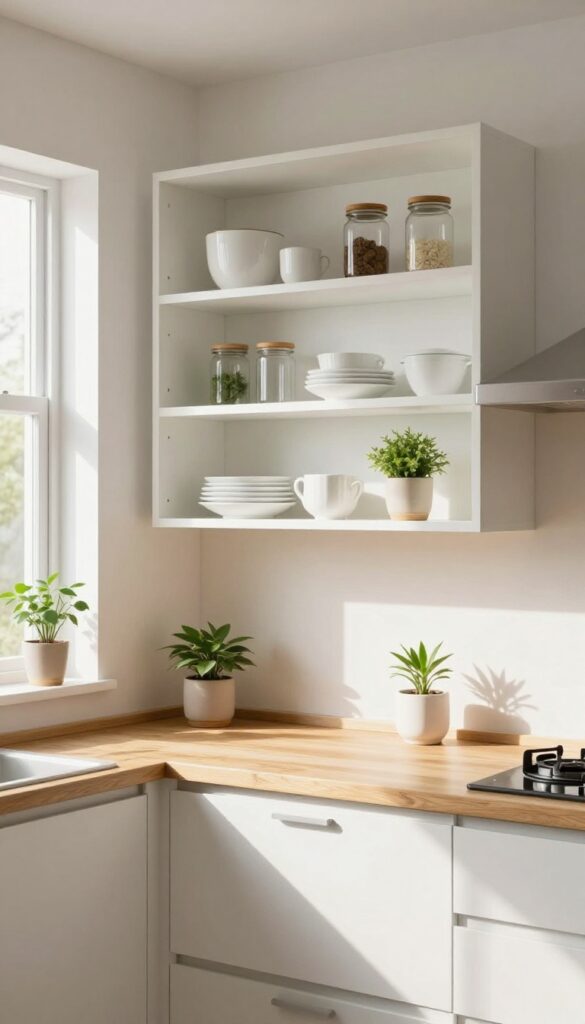
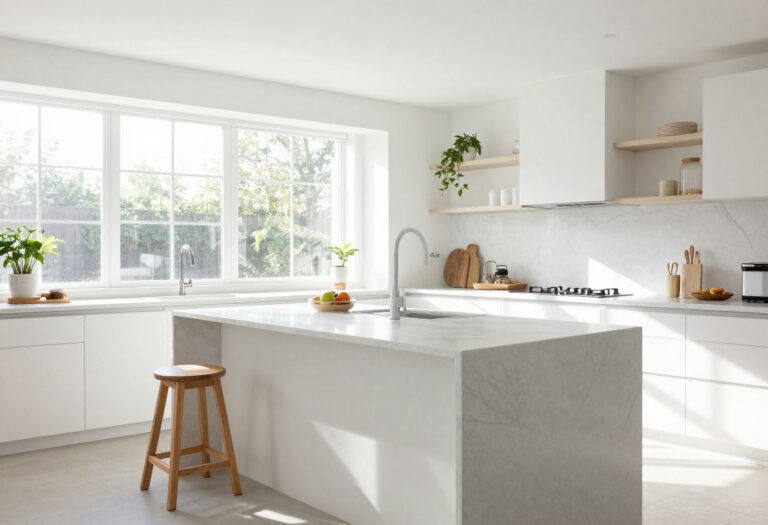
Removing a few upper cabinets and replacing them with open shelves instantly makes a kitchen feel larger and more inviting. In a small space, this swap eliminates visual bulk and creates an airy, open sightline. It also gives you a chance to display your favorite dishes and glass jars, turning everyday items into part of the decor.
Why It Works
Open shelving keeps essentials within easy reach while making the room feel less closed in. By freeing up wall space, it allows light to travel further, which is especially valuable in compact kitchens.
Best For
This idea works well in galley kitchens, L-shaped layouts, or any kitchen where counter space is limited. It’s also great for renters who can’t make major changes but want an instant update.
Styling Tip
Stick to a cohesive color palette for your dishes and jars—think whites, warm woods, and soft greens. Group similar items together and leave some breathing room between pieces to avoid a cluttered look.
2. Add a Warm Backsplash in Soft Tile
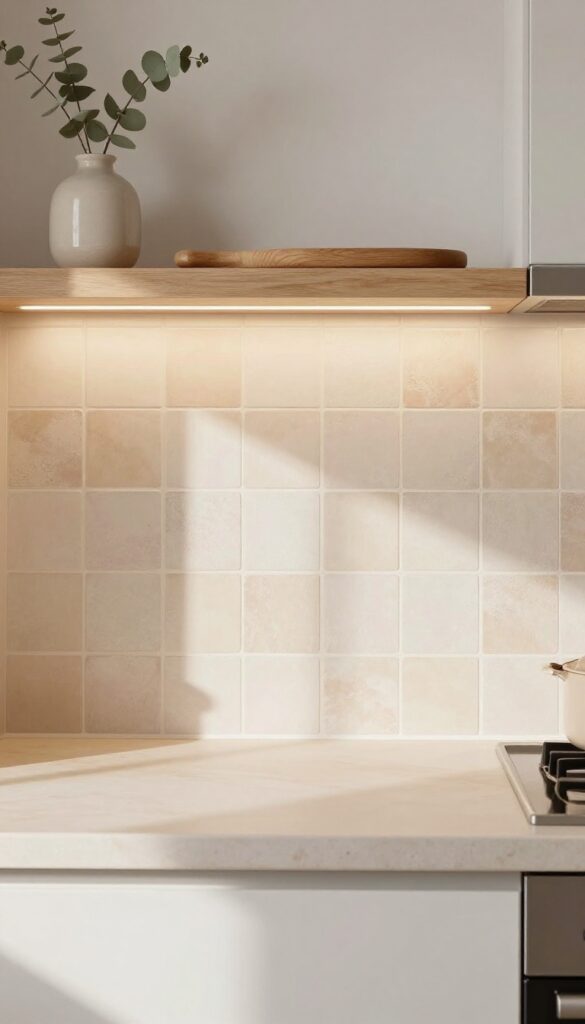
A backsplash does more than protect your walls from splatters—it can completely change the mood of your kitchen. Soft tiles in warm cream, blush, or terracotta bring a gentle, inviting glow that makes even a compact kitchen feel like a cozy retreat. The subtle texture of subway or zellige tile catches light as it shifts throughout the day, adding depth without overwhelming the space.
It's an easy swap that instantly makes your kitchen feel more personal and lived-in.
Why It Works
In a small kitchen, every surface matters. A warm-toned backsplash adds visual interest and softness, drawing the eye across the room and making the space feel larger. The textured finish reflects light differently than flat paint or glossy tile, creating a sense of movement that keeps the area from feeling flat or boxy.
Best For
This idea is perfect for anyone who wants their kitchen to feel welcoming without going bold or trendy. It works especially well in galley kitchens, L-shaped layouts, or any spot where you want to introduce warmth without sacrificing openness. If you lean toward neutral decor but crave a little texture, this is your move.
Styling Tip
Pair your new backsplash with open shelving in natural wood to echo the earthy tones. Keep countertops relatively clear—just a wooden cutting board and a small ceramic vase with dried eucalyptus will let the tile shine. For extra coziness, add under-cabinet lighting with a warm bulb temperature (around 2700K) to enhance the tile's glow.
3. Install Under-Cabinet Lighting
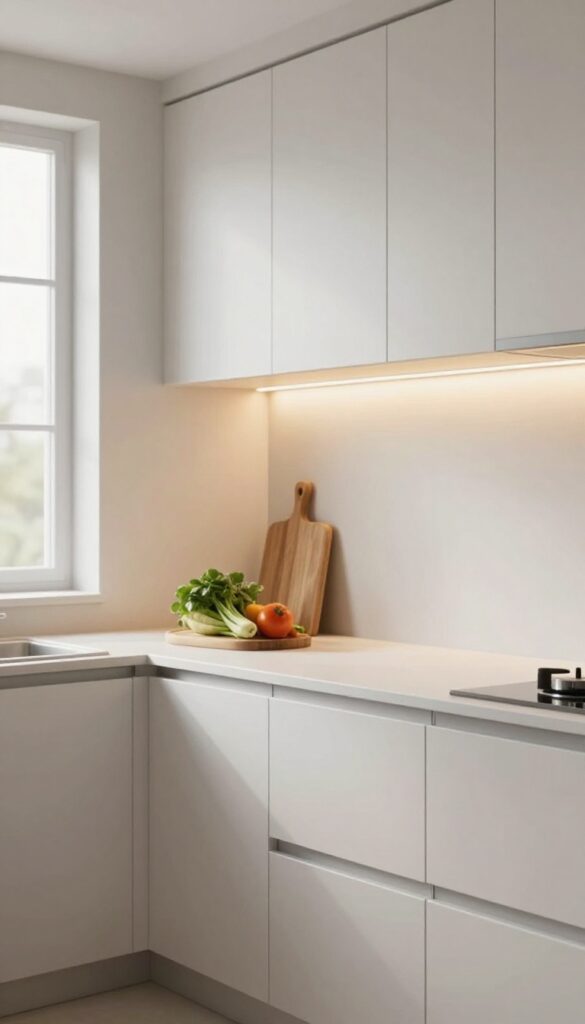
Good task lighting can make a small kitchen feel bigger and more functional. Under-cabinet LED strips are an easy upgrade that banishes shadows from your countertops, making meal prep safer and more enjoyable. The warm glow they cast also adds a layer of coziness that overhead lights just can't match.
Why It Works
- In a compact kitchen, every inch of counter space matters. Shadows from upper cabinets can make prepping food frustrating and even dangerous. Under-cabinet lighting eliminates those dark spots, giving you clear visibility exactly where you need it.
- Plus, the soft illumination creates depth and makes the room feel more spacious.
Best For
This idea is perfect for any small kitchen where counter space is at a premium. It's especially helpful in galley kitchens or L-shaped layouts where upper cabinets block overhead light. Renters will love that many options are peel-and-stick and require no hardwiring.
Styling Tip
Stick with warm white bulbs in the 2700K to 3000K range to keep the space feeling inviting rather than clinical. Install the strips close to the front edge of the cabinet so the light hits your work surface evenly. For a seamless look, choose strips that match your cabinet finish or tuck them behind a small valence.
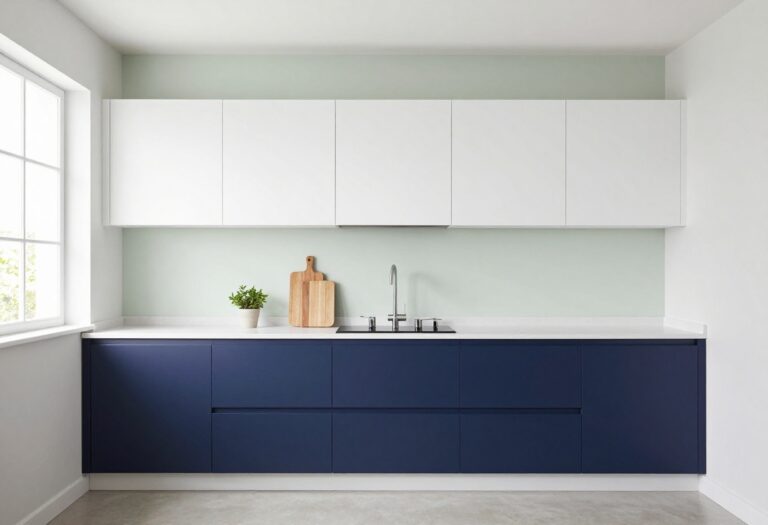
4. Paint Lower Cabinets a Deep, Cozy Hue
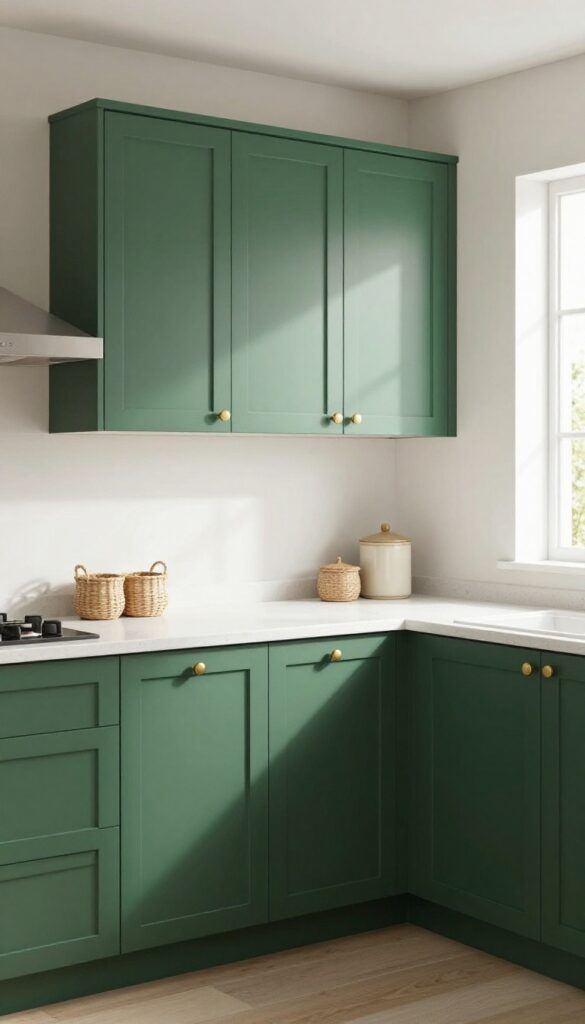
There’s a reason navy and forest green have become go-to colors in kitchen design—they bring instant warmth and depth without sacrificing an inch of floor space. By painting only the lower cabinets a rich, saturated shade and keeping the uppers light (think creamy white or soft beige), you create a grounded, anchored feel that makes the room cozier without closing it in. It’s a simple trick that adds personality and drama, especially in smaller kitchens where every design choice has to pull double duty.
Why It Works
Dark lowers visually anchor the room, making it feel stable and intentional, while light uppers reflect natural light and keep the space airy. This two-tone approach draws the eye upward, creating the illusion of higher ceilings and more square footage. The contrast also adds visual interest without needing extra decor or hardware changes.
Best For
This idea shines in galley kitchens, L-shaped layouts, and any small space where you want to introduce color without overwhelming the room. It’s also great for open-concept homes where the kitchen flows into a living area—the dark base cabinets define the zone without blocking sightlines.
Styling Tip
Pair deep navy or forest green with warm brass or matte black hardware for an instant style boost. Keep countertops light—white quartz or butcher block works beautifully—and add open shelving in the same light tone as your upper cabinets to tie everything together. A few woven baskets or ceramic canisters on the counter add texture without clutter.
5. Use a Rolling Cart for Extra Prep Space
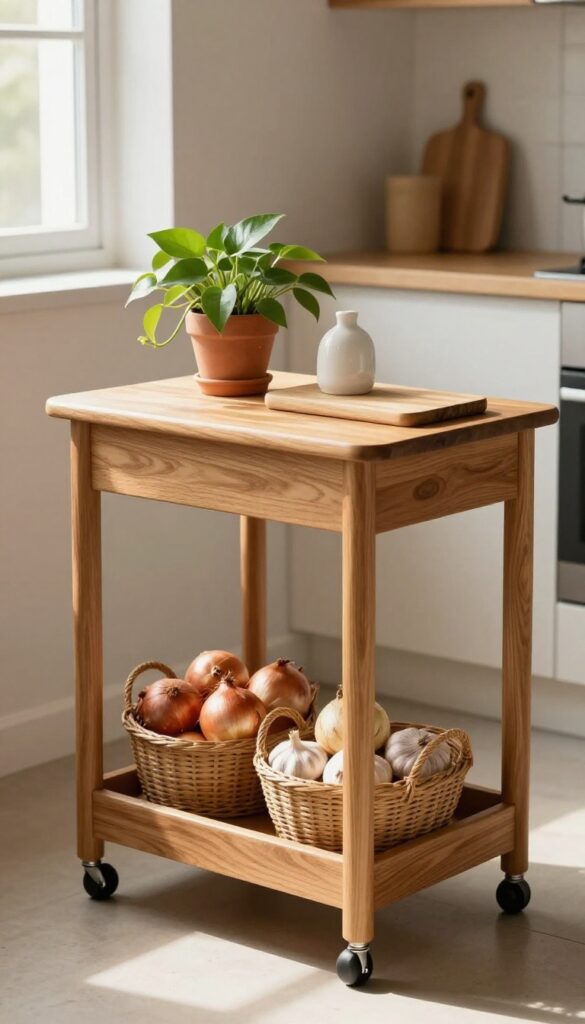
In a small kitchen, every inch counts. A slim butcher-block cart on wheels slides right into that awkward gap between the counter and the wall, or tucks neatly into an unused corner. It gives you a sturdy surface for chopping vegetables, rolling out dough, or setting up a coffee station—and when you need more floor space, it rolls away in seconds.
Why It Works
A rolling cart adds counter space without the commitment of built-in cabinetry. The butcher-block top is gentle on knives and doubles as a serving board for casual meals. Plus, the lower shelf or drawer hides cookbooks, linens, or small appliances, keeping clutter off your main counters.
Best For
This idea shines in galley kitchens, apartment kitchens with limited counter space, or any kitchen where you need a flexible work surface that can disappear when guests arrive. It's also great for renters who can't install permanent fixtures.
Styling Tip
Choose a cart with warm wood tones to match your cozy vibe—think honey oak or walnut. Top it with a small wooden cutting board, a ceramic utensil crock, and a trailing pothos plant in a terra-cotta pot. Keep the lower shelf tidy with woven baskets for onions and garlic.
6. Hang a Pot Rack to Free Up Cabinet Space
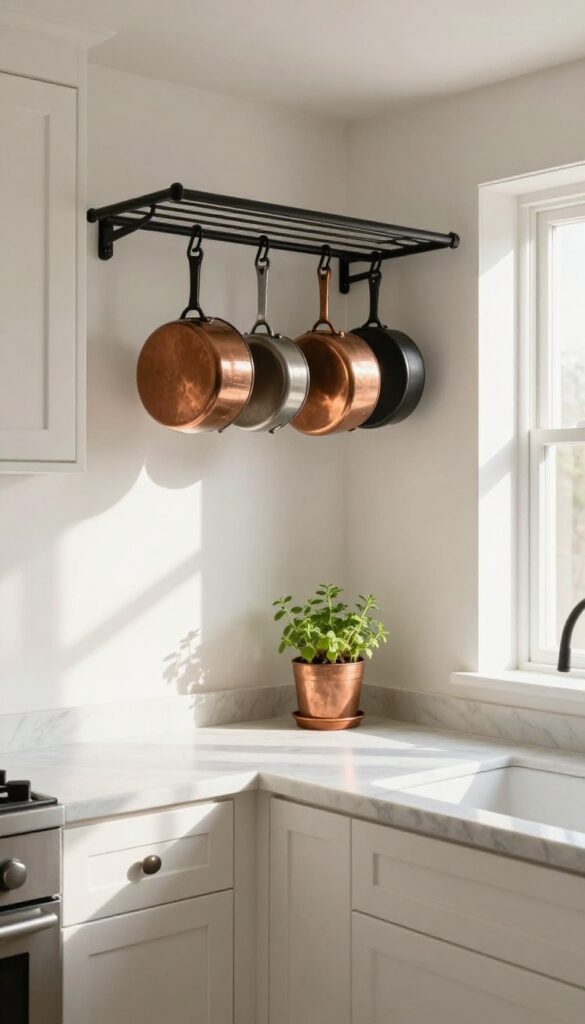
One of the simplest ways to reclaim cabinet space while adding instant character is installing a pot rack. Whether you go for a ceiling-mounted rack over an island or a wall-mounted rail near the stove, keeping your most-used pots and pans within arm's reach feels both practical and personal. In a small kitchen, this trick opens up bulky cabinets for dry goods, dishes, or gadgets you actually need hidden away.
Why It Works
A pot rack eliminates the need to stack heavy cookware in deep cabinets, making daily cooking smoother. It also turns your pots into decor—especially if you choose copper, cast iron, or enameled pieces that add warmth and texture to the room.
Best For
This idea shines in galley kitchens, L-shaped layouts, or any kitchen where cabinet real estate is tight. It also works beautifully in open-plan homes where the kitchen flows into living space, since the rack becomes part of the overall design.
Styling Tip
Stick with one metal finish—like matte black or brushed brass—for the rack and hooks to keep the look intentional. Hang only your most beautiful or frequently used pieces; leave plastic lids and scratched nonstick pans tucked away. Add a small herb pot or a string of dried chilies for a cozy, lived-in feel.
7. Swap Hardware for Warm Metal Finishes
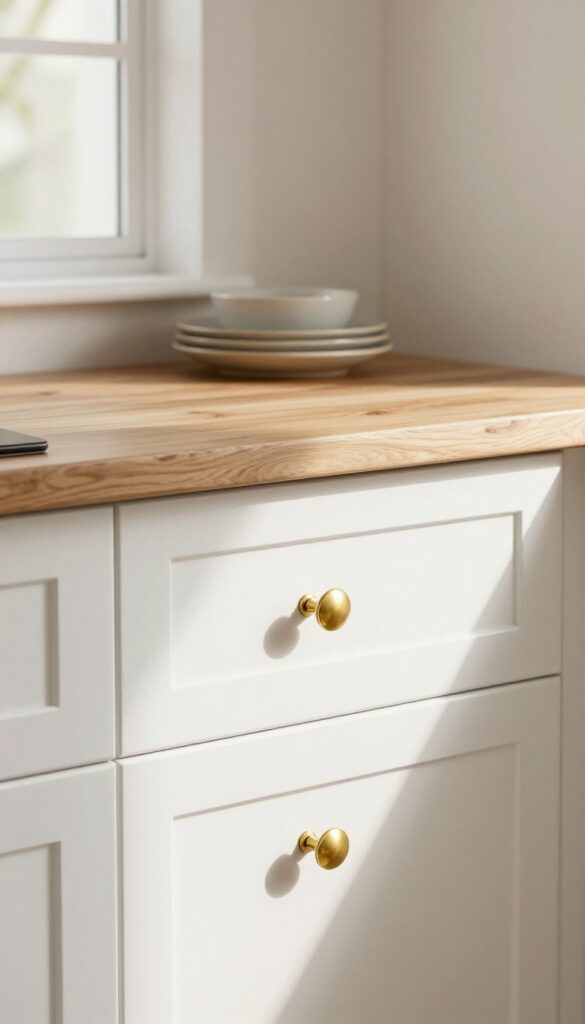
Brass, copper, and oil-rubbed bronze have a way of making a kitchen feel instantly more inviting. In a small space, those tiny metal details become focal points that draw the eye and add character without taking up any room. Replacing standard plastic or silver knobs with warm metal pulls is one of the quickest, most affordable upgrades you can make—and it completely transforms the look of your cabinets.
Why It Works
Warm metals reflect light in a soft, golden way that makes a compact kitchen feel cozier and more layered. They also add contrast against painted or wood cabinets, creating visual interest without clutter. The tactile quality of brass or copper feels substantial and intentional, which elevates the entire room's perceived value.
Best For
This swap works beautifully in galley kitchens, L-shaped layouts, and any small cooking space where cabinets are a dominant visual element. It's especially effective in kitchens with neutral color palettes—white, cream, light grey, or warm beige—where the hardware can stand out as a deliberate accent.
Styling Tip
Mix finishes slightly for an eclectic but curated look: use brass knobs on upper cabinets and oil-rubbed bronze pulls on lower drawers. Stick to one metal family (warm tones only) to keep the look cohesive. For extra warmth, choose unlacquered brass that will develop a natural patina over time.
8. Add a Slim Pegboard for Vertical Storage
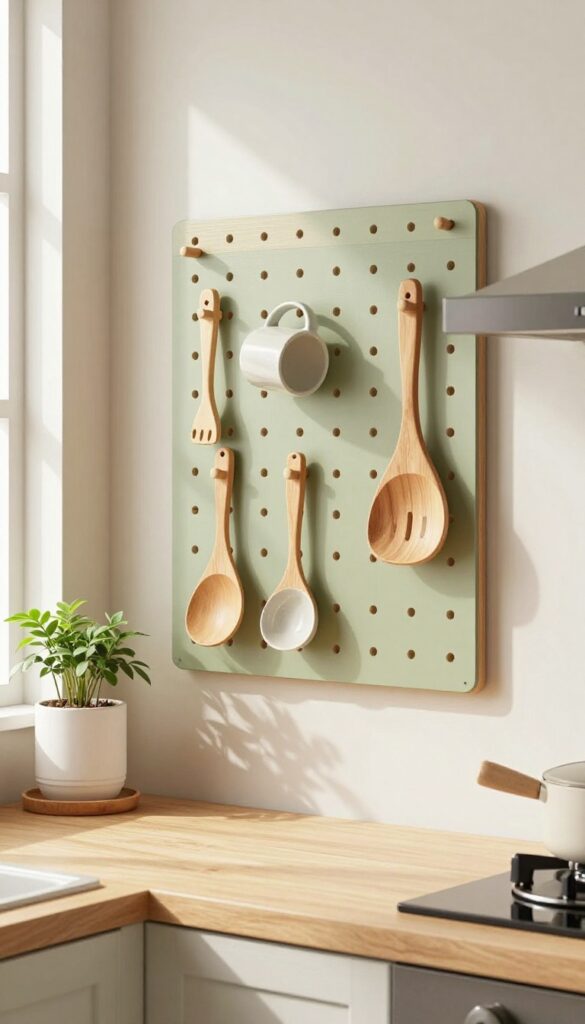
When your counter space is precious and cabinet real estate is tight, the walls are your best friend. A slim pegboard tucked into an unused gap or mounted beside the stove turns vertical inches into organized storage. In a small kitchen, this trick keeps tools within arm's reach without adding visual clutter—especially when you paint the board to blend in with the wall color.
For a warmer look, choose a pegboard in a soft wood tone or paint it a creamy off-white that echoes your cabinetry.
Why It Works
Pegboards are endlessly customizable—you can rearrange hooks, shelves, and bins as your needs change. They keep everyday items like spatulas, coffee mugs, or measuring spoons visible and accessible, cutting down on drawer rummaging. Plus, they make use of awkward narrow spaces that might otherwise stay empty.
Best For
This idea shines in galley kitchens, apartment kitchens with limited wall cabinets, or any cooking space where you need to free up drawer and counter space. It's especially useful for renters because pegboards are easy to install and remove without major damage.
Styling Tip
For a warm and cozy feel, stick with natural wood tones or paint the pegboard in a muted earth color like sage green or warm taupe. Hang a mix of wooden utensils, ceramic mugs, and a small trailing plant from the top hooks to soften the look. Keep metal items like tongs and ladles to a minimum so the display feels curated rather than cluttered.
9. Incorporate a Small Banquette or Breakfast Nook
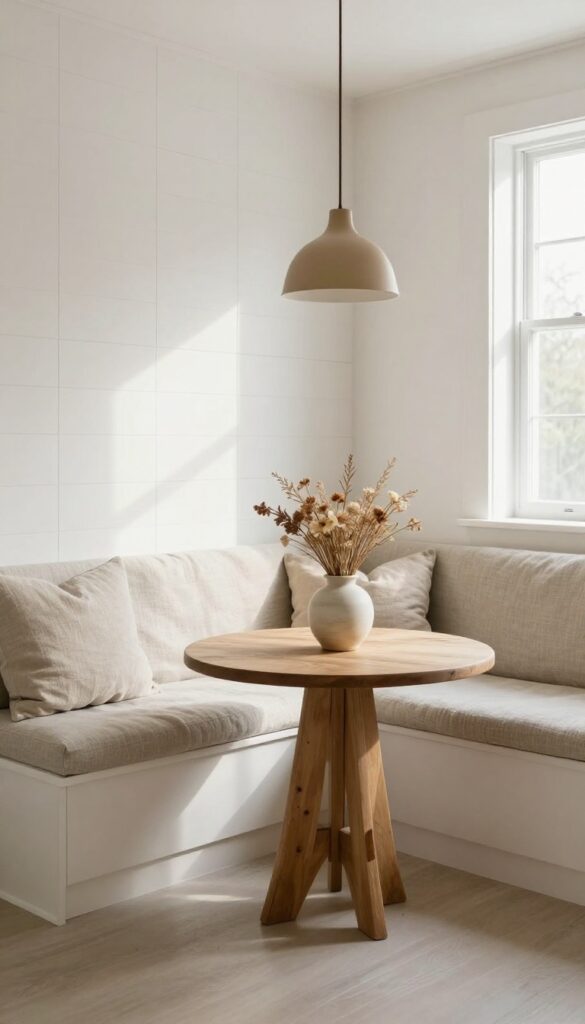
Corners in a kitchen often go unused, but they hold so much potential. A built-in banquette turns that awkward spot into the coziest seat in the house. Tuck a small round table beside it, and you have an instant breakfast nook that feels warm and intentional without eating up valuable floor space.
Why It Works
A banquette with storage underneath eliminates the need for bulky chairs and provides a home for extra linens or rarely used small appliances. The bench hugs the wall, so you gain seating without sacrificing walkway room—ideal for tight layouts.
Best For
This idea shines in galley kitchens, L-shaped layouts, or any kitchen with an unused corner. It's also a smart solution for open-concept spaces where you want a clear dining zone without building a full wall.
Styling Tip
Keep the banquette cushioned in a washable performance fabric—think textured linen or durable cotton velvet. Add a couple of toss pillows in warm earth tones to reinforce the cozy feel, and hang a small pendant light directly above the table to define the nook.
10. Layer Textiles for Softness
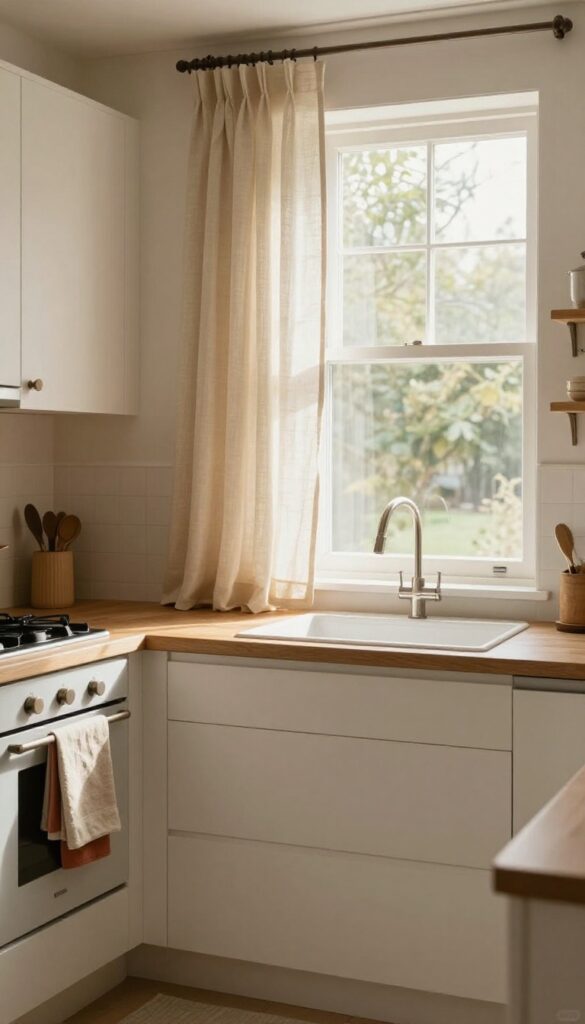
A kitchen full of hard surfaces can feel cold and echoey, but textiles change that instantly. A washable runner underfoot, linen curtains softening the window, and a few cotton dish towels in warm earthy tones add comfort without sacrificing practicality. In a small kitchen, these fabric touches absorb sound and bring a lived-in, welcoming feel that makes the room more inviting.
Why It Works
Textiles are an easy way to introduce warmth and texture without permanent changes. They soften the visual noise of cabinets and countertops, making a compact kitchen feel cozier. Plus, washable options mean you don't have to worry about spills or stains—style stays practical.
Best For
Small kitchens that feel too clinical or echoey, especially open-plan layouts where the kitchen blends into living spaces. It's also great for renters who can't paint or change fixtures but want to add personality through soft furnishings.
Styling Tip
Stick to two or three warm neutral tones like oatmeal, terracotta, and soft cream for a cohesive look. Choose a runner with low pile so it's easy to clean, and hang linen curtains just above the window frame to make the ceiling feel higher.
FAQ
What is the most impactful small kitchen renovation on a budget?
Painting cabinets and swapping hardware gives the biggest visual change for the least money. It transforms the entire feel of the kitchen without major construction.
How can I make my small kitchen feel warmer?
Use warm lighting (2700K-3000K bulbs), add wood or butcher-block elements, and incorporate soft textiles like rugs and curtains. Warm paint tones like cream or sage also help.
Is open shelving practical for small kitchens?
Yes, if you stick to everyday items and keep them organized. It forces you to declutter and makes the space feel larger. Use baskets for hidden storage on lower shelves.
What colors make a small kitchen look bigger?
Light neutrals like white, cream, pale gray, and soft pastels reflect light and expand the space visually. Adding a darker color on lower cabinets can add depth without closing it in.
How do I add storage without cabinets?
Use vertical space with pegboards, magnetic knife strips, and wall-mounted racks. Rolling carts, over-the-sink shelves, and tension rods inside cabinets also create extra storage.
Conclusion
A small kitchen can still pack plenty of personality and practicality. By focusing on warm materials, smart storage, and thoughtful lighting, you can create a space that feels both functional and inviting.
Start with one or two ideas that speak to you—small changes often lead to the biggest transformations.