11 Polished Cottage Core Kitchen Ideas That Make the Space Feel Finished
Cottage core kitchens are all about that lived-in, cozy charm—but getting the look just right can be tricky. You want it to feel polished, not cluttered, and finished, not fussy. The secret lies in layering textures, mixing old and new, and adding those little touches that make the space feel complete.
Think warm wood tones, soft linens, and a few vintage finds that tell a story. It's about creating a kitchen that feels both stylish and welcoming, where every detail has a purpose.
Ready to give your kitchen that cottage core finish? Here are 11 ideas that bring the look together beautifully.
1. Open Shelving with a Purpose
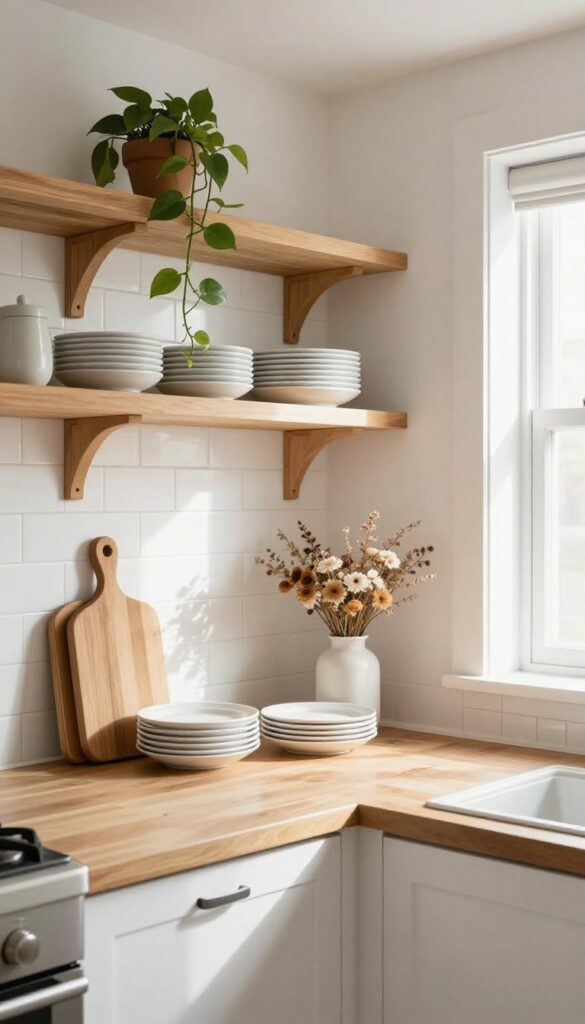
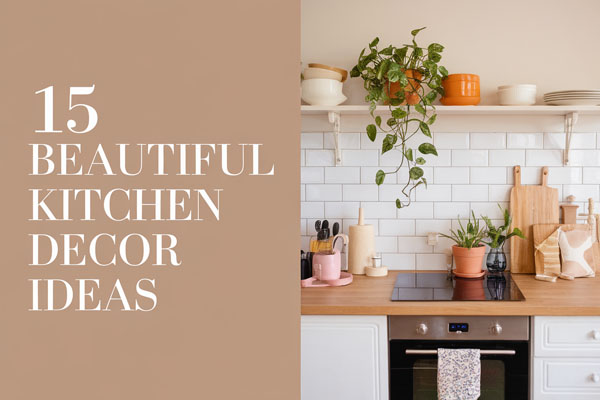
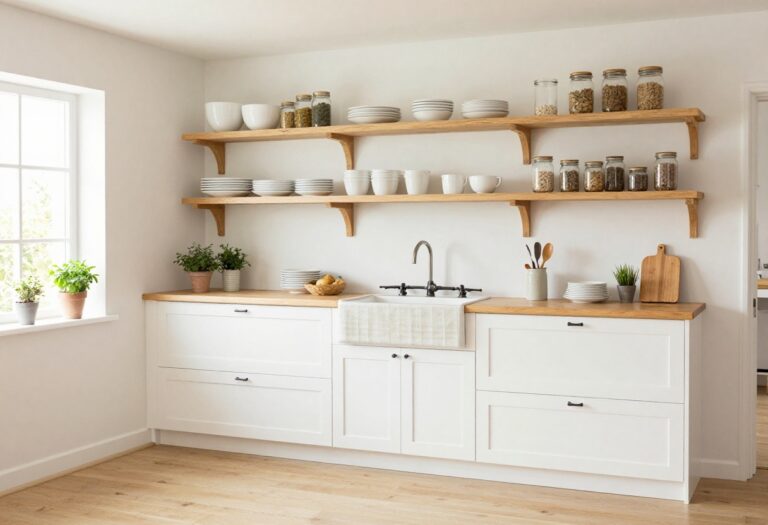
There’s something freeing about ditching bulky upper cabinets and letting your everyday dishes take center stage. Open shelving instantly makes a kitchen feel more spacious and inviting, especially when you style each shelf with intention. Think sturdy plates stacked neatly, wooden cutting boards leaned against the wall, and a trailing pothos adding a soft green accent.
The key is to keep it functional but curated—so it looks like you actually use what you display.
Why It Works
Open shelves break up heavy cabinetry and add visual breathing room, which is perfect for smaller kitchens or galley layouts. They also force you to edit your belongings, keeping only what’s beautiful or useful within reach.
Best For
This idea shines in cottages, farmhouses, or any kitchen where you want to highlight handmade ceramics, vintage finds, or everyday essentials that deserve a spotlight.
Styling Tip
Stick to a neutral palette for the shelves themselves—warm wood or matte black brackets—and group items in odd numbers. Mix heights by stacking plates on one side and placing a small vase or jar on the other for balance.
2. A Farmhouse Apron Sink as the Focal Point
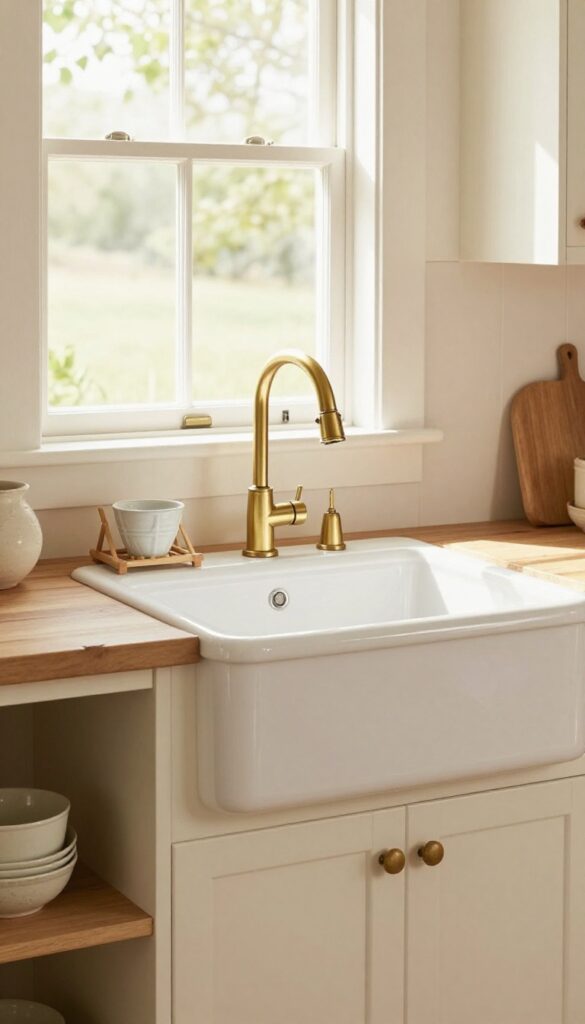
There’s something about a deep apron sink that instantly makes a kitchen feel grounded and lived-in. It’s not just a workhorse for washing dishes—it becomes the visual anchor of the room, especially when paired with warm wood tones and soft lighting. The front-facing basin draws your eye and adds that cozy, cottage-like charm without trying too hard.
Why It Works
An apron sink breaks up the monotony of standard countertops and cabinetry, creating a natural focal point that feels both functional and inviting. Its generous depth is perfect for stacking pots or soaking produce, which fits the cozy, layered look by blending everyday practicality with rustic appeal.
Best For
This idea shines in kitchens where you want to emphasize a warm, lived-in feel—especially in open layouts where the sink area is visible from adjacent living spaces. It’s also great for smaller kitchens because the single-basin design maximizes usable space without feeling cramped.
Styling Tip
Opt for a fireclay or cast iron sink in creamy white or soft off-white to keep it bright and airy. Pair it with a brushed brass gooseneck faucet and a wooden drying rack on one side to add texture and warmth without cluttering the counter.
3. Warm Wood Countertops for Texture
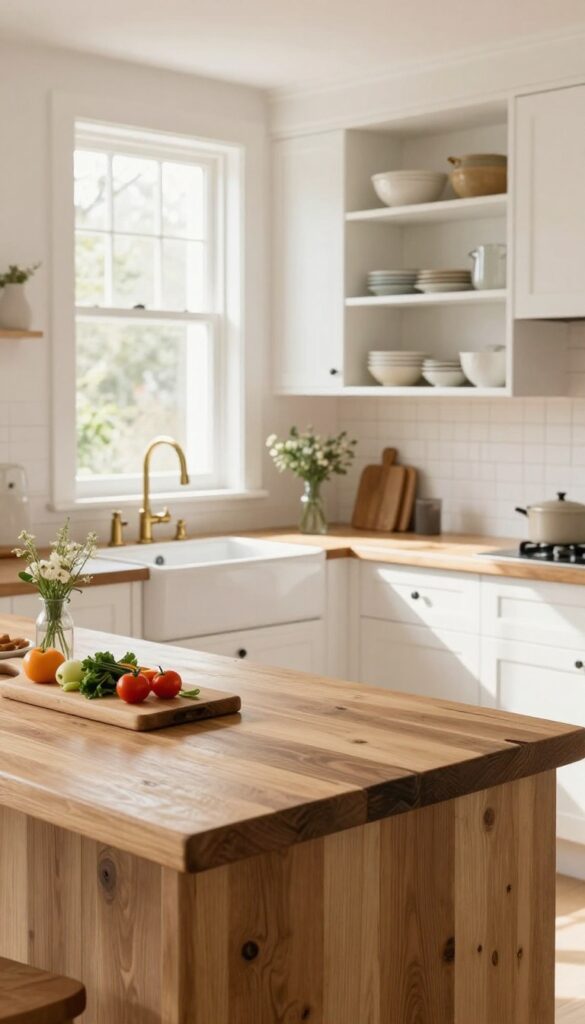
Butcher block and reclaimed wood countertops bring an instant cozy, lived-in feel to a cottage core kitchen. Unlike cold stone or sleek quartz, wood adds softness and a natural rhythm that makes the space feel warmer and more inviting. Over time, the surface develops a rich patina that only gets better with age—perfect for a kitchen that’s meant to be used and loved.
Why It Works
Wood countertops balance the harder finishes in a kitchen—like tile backsplashes or stainless steel appliances—by introducing organic texture. The grain and slight variations in tone keep the room from feeling too uniform or sterile. Plus, wood is naturally warm to the touch, which makes everyday tasks like rolling dough or chopping veggies feel more pleasant.
Best For
This idea shines in kitchens where you want to soften an all-white palette or add contrast to dark cabinetry. It’s also great for smaller kitchens because the warmth of the wood makes the space feel more intimate rather than cramped. If you love a rustic but polished look, wood countertops are a solid choice.
Styling Tip
Pair your wood countertops with matte black or brass fixtures and open shelving in a similar wood tone for a cohesive look. To protect the surface, use mineral oil regularly—it keeps the wood hydrated and prevents drying or cracking. Avoid placing hot pans directly on the wood; always use trivets.
4. Vintage-Inspired Lighting That Glows
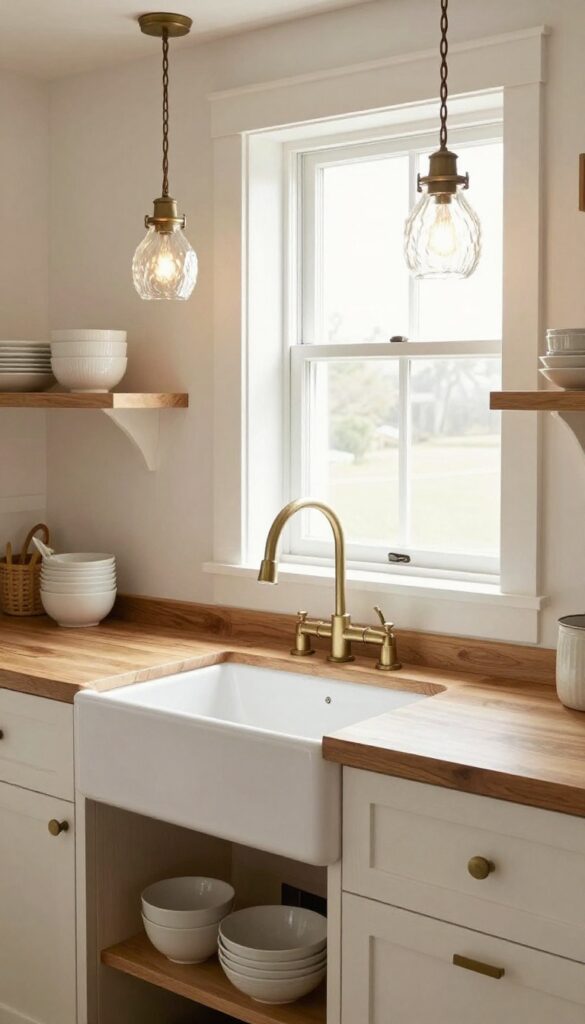
Lighting can make or break the cozy factor in a cottage core kitchen, and nothing delivers that nostalgic warmth quite like milk glass or seeded glass pendants. These fixtures cast a soft, diffused glow that instantly softens the room, making even a modern kitchen feel like it’s been plucked from a countryside farmhouse. The gentle light flatters every surface—from butcher block counters to open shelving—without being harsh or clinical.
Why It Works
The translucent glass diffuses light evenly, eliminating harsh shadows and creating that warm, enveloping ambiance you want in a cozy kitchen. It also adds a tactile layer of texture and a hint of vintage charm that feels collected over time.
Best For
Islands, breakfast nooks, or above a farmhouse sink where you want both task lighting and atmosphere. Also great for kitchens with neutral or pastel color schemes where the fixture can stand out as a subtle focal point.
Styling Tip
Hang pendants at different heights over an island for visual interest, or choose a single chandelier with multiple arms above a dining table. Pair with warm white bulbs (2700K) to enhance the glow and keep the look authentic.
5. Layered Rugs for Comfort and Color
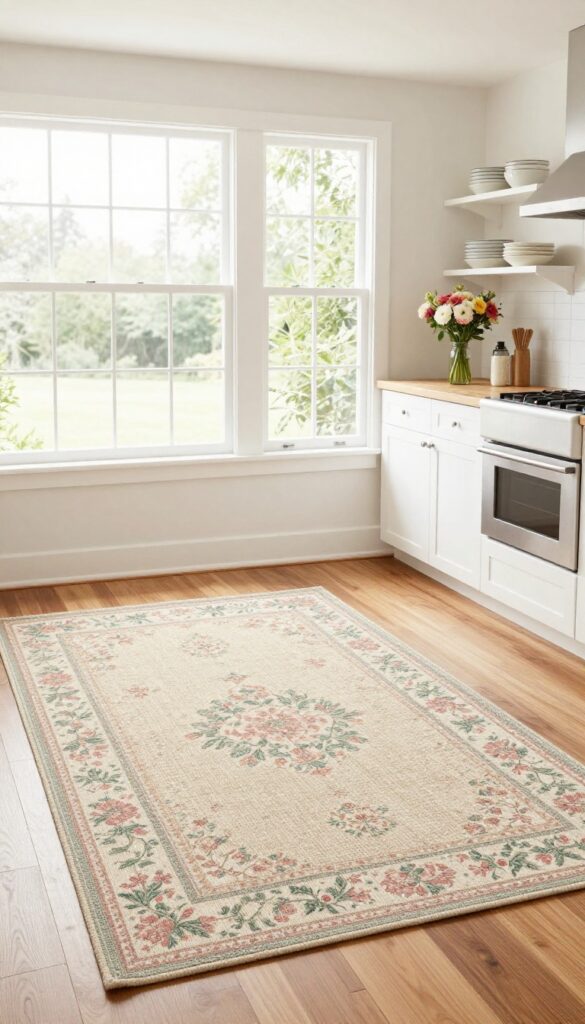
A single rug can do a lot, but two rugs layered together bring a whole new level of warmth and personality to a cottage kitchen. Start with a large, neutral natural-fiber rug like jute or sisal as your base, then top it with a smaller vintage-style runner in a soft floral or geometric pattern. The contrast in textures and colors makes the floor feel intentional and cozy, not cluttered.
It’s an easy trick that instantly makes the kitchen feel more collected and lived-in.
Why It Works
Layering rugs adds visual depth and softness underfoot, which is especially welcome in a kitchen where you stand while cooking. The top rug can be swapped out seasonally or when it needs cleaning, giving you flexibility without redoing the whole floor. Plus, the layered look naturally defines zones in an open layout, making the kitchen feel distinct from adjacent spaces.
Best For
This idea shines in larger kitchens with open floor plans or eat-in areas where you want to separate the cooking zone from the dining nook. It also works beautifully in galley kitchens with a long runner over a neutral base to draw the eye down the length of the room. Avoid layering in very small kitchens where multiple rugs might make the floor feel busy.
Styling Tip
Keep the base rug neutral and low-pile so it doesn’t compete with the top rug. Choose a top rug with a pattern that pulls out one of your accent colors—like dusty rose or sage green—to tie the whole room together. Make sure both rugs are slip-resistant; use a rug pad underneath to keep everything secure and prevent tripping.
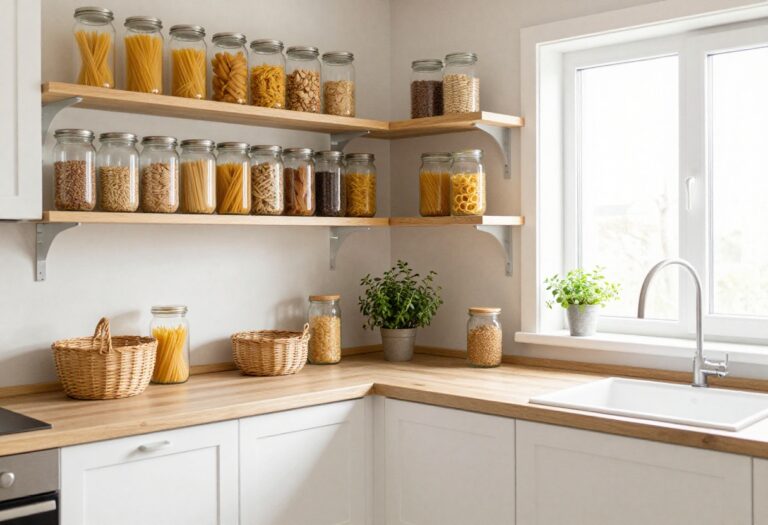
6. Open Pantry Shelving with Glass Jars
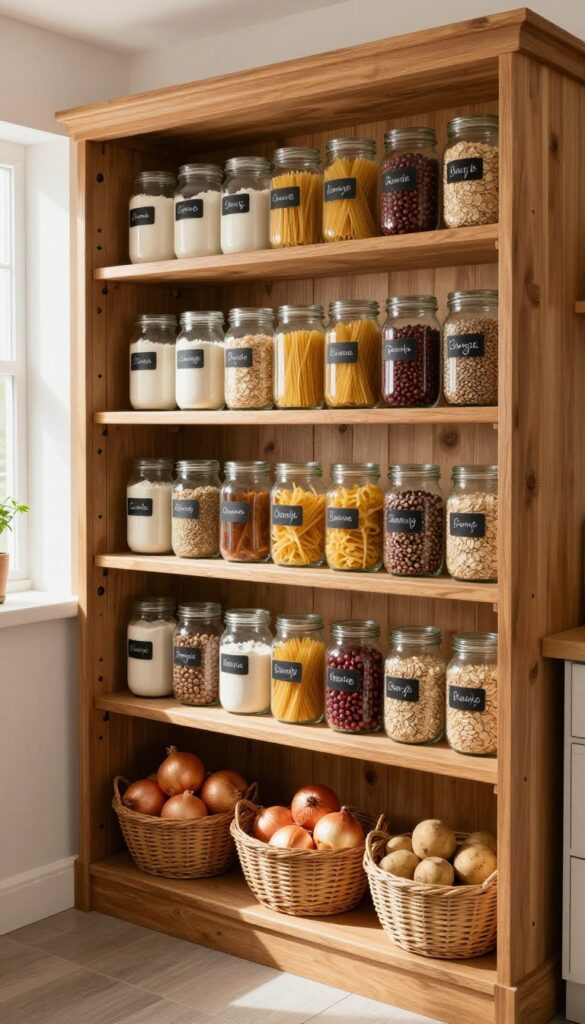
Turning a closet or a shallow wall niche into an open pantry is one of those moves that makes a kitchen feel both bigger and more intentional. The trick is to fill those shelves with glass jars full of everyday staples—flour, pasta, oats, beans—so the storage itself becomes part of the decor. The warm glow of pantry items behind glass adds a cozy, layered look that feels straight out of a countryside cottage, even in a city apartment.
Why It Works
Glass jars create visual uniformity while letting you see exactly what you have, so you're less likely to buy duplicates or let things go stale. The transparency also reflects light, making the pantry area feel brighter and more open. Plus, the mix of textures—smooth glass, woven baskets on lower shelves, wooden shelves—adds that cozy, lived-in warmth without feeling cluttered.
Best For
This idea works great in kitchens where counter space is tight but there's an unused closet or a recessed wall area. It's also perfect for anyone who loves to buy in bulk and wants their ingredients to double as decor. If you rent and can't build permanent shelving, a freestanding étagère or a simple shelf unit can achieve the same look.
Styling Tip
Stick to jars with airtight seals and uniform shapes—round apothecary jars or square Weck jars work beautifully. Label each jar with a simple tag or chalk label for that rustic touch. Mix in a few small woven baskets on lower shelves for onions or potatoes, and add a low-wattage LED strip under each shelf to softly illuminate the jars at night.
7. A Mix of Open and Closed Storage
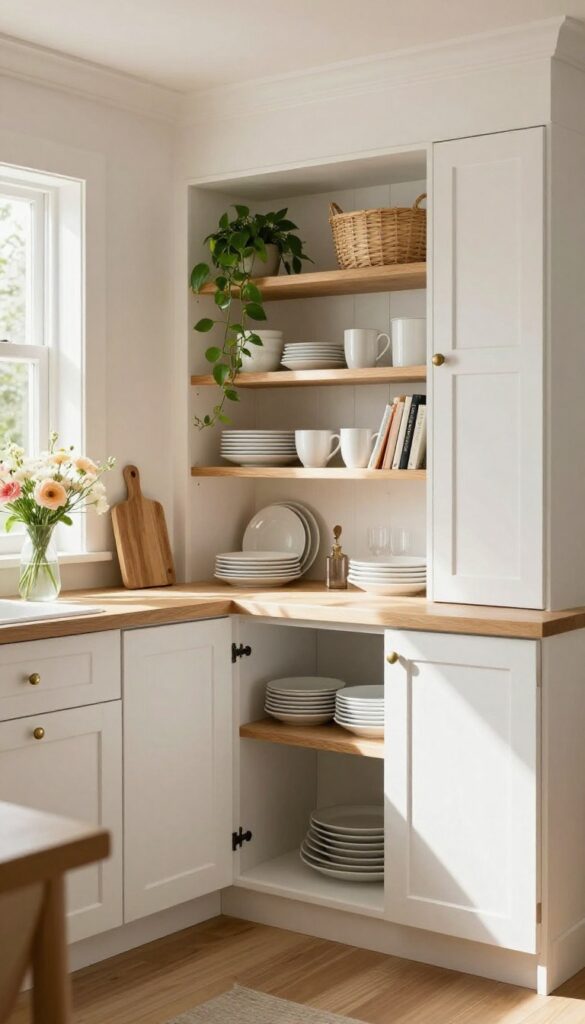
Striking the right balance between open shelving and closed cabinets can make your kitchen feel both curated and calm. Open shelves let you show off your favorite ceramic mugs, cookbooks, or a trailing plant, while closed storage hides the less photogenic items like Tupperware and bulk spices. The key is to keep the open shelves intentionally styled—think matching jars, a few stacked plates, and maybe a small vase—so they feel like part of the decor rather than cluttered ledges.
Why It Works
This approach gives you the best of both worlds: the airy, collected look of open storage without the constant pressure to keep everything Instagram-perfect. By tucking away everyday mess behind cabinet doors, you maintain a cozy yet tidy vibe that feels lived-in but not chaotic.
Best For
Kitchens where you want to display personality pieces—like heirloom dishes or handmade pottery—but still need practical storage for daily essentials. It works especially well in cottage-style kitchens where a mix of textures (wood, metal, ceramic) adds warmth.
Styling Tip
Use woven baskets or linen bins on upper shelves to store items you don't use often, like seasonal bakeware. The natural texture adds softness and keeps the look from feeling too rigid or minimal.
8. Soft, Muted Color Palette on Walls
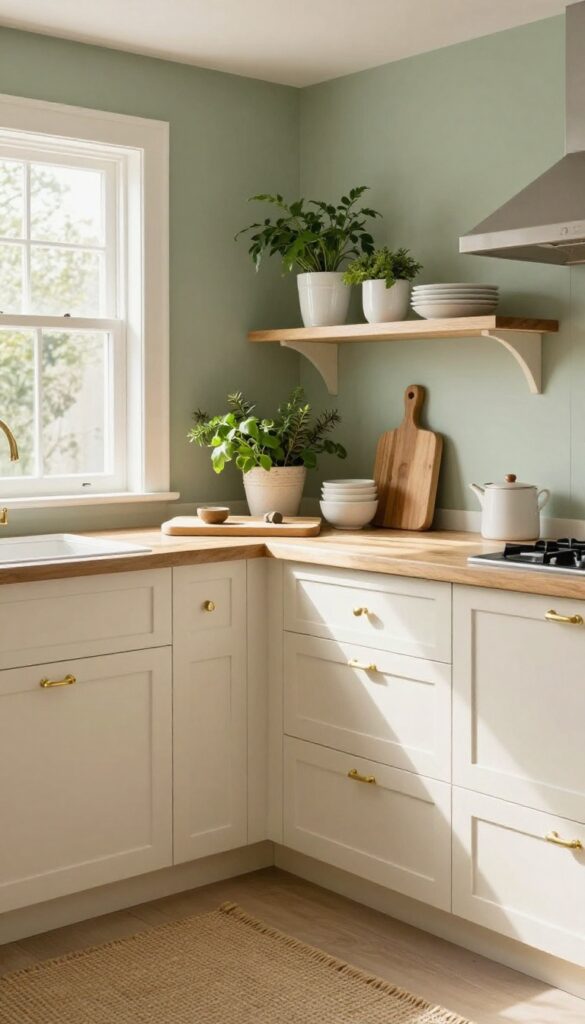
A kitchen painted in soft, muted tones feels like a breath of fresh air. Shades like sage green, dusty blue, and warm cream create a calm, inviting backdrop that makes the space feel both cozy and finished. These colors don’t shout—they whisper, letting your cabinetry, countertops, and decor take center stage while adding a layer of quiet sophistication.
Why It Works
Muted colors reflect light gently, making the kitchen feel airy without being stark. They also pair effortlessly with natural wood tones, stone, and woven textures, tying the whole room together in a harmonious, layered look.
Best For
This palette works beautifully in kitchens with plenty of natural light or in smaller spaces where you want to avoid visual clutter. It’s especially effective in open-concept layouts where the kitchen flows into living or dining areas.
Styling Tip
Balance the soft walls with warm wood open shelving or a butcher block countertop. Add touches of brass or matte black hardware for contrast, and finish with linen curtains or a jute rug to reinforce the cozy, layered feel.
9. Vintage Textiles as Functional Decor
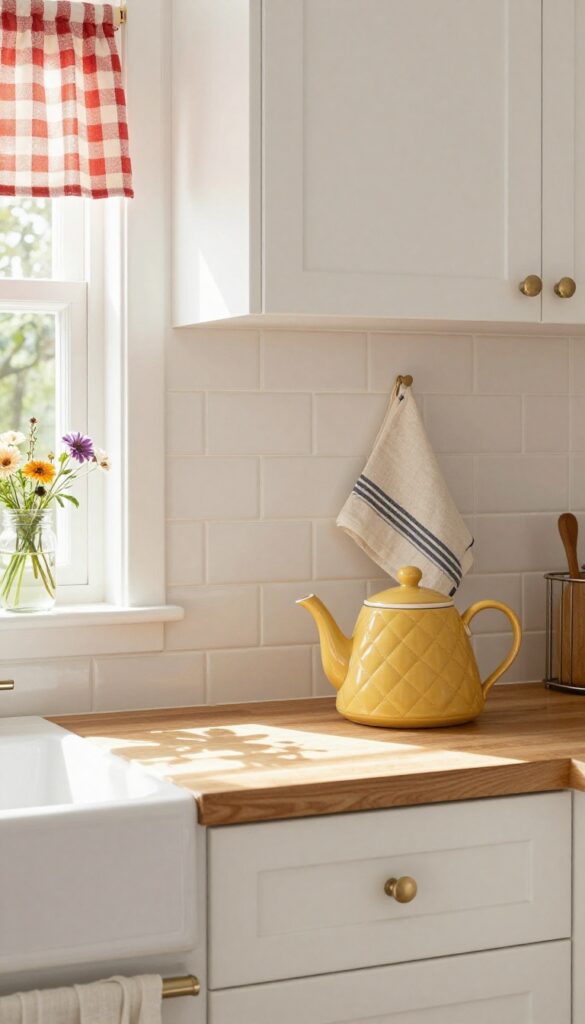
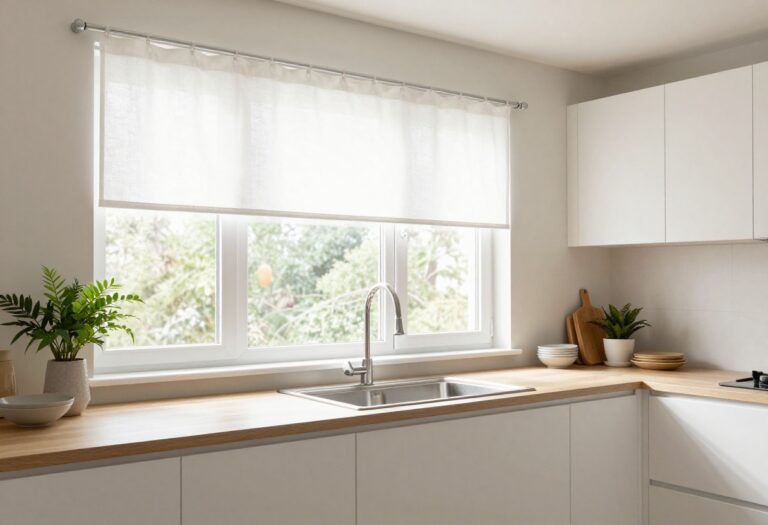
There’s something about a kitchen that feels instantly warmer when textiles are part of the mix. Linen dish towels draped over the oven handle, a gingham valance softening the window, or a quilted tea cozy resting on the counter—these small fabric touches add pattern, texture, and a sense of history. They also make the kitchen feel genuinely lived-in, not just styled for a photo.
Why It Works
Textiles break up all the hard surfaces in a kitchen—countertops, cabinets, tile—and introduce softness and color in an effortless way. Because they’re functional (you actually use those towels and that cozy), they never feel like clutter. The vintage or cottage-style patterns tie directly into the cozy layered look without requiring any permanent changes.
Best For
This idea works beautifully in kitchens that already have neutral cabinetry or simple backsplashes. It’s also perfect for renters who want to add personality without painting or tiling, since you can swap textiles anytime you want a refresh.
Styling Tip
Stick to two or three complementary patterns—like a stripe, a gingham, and a small floral—to keep things cohesive. Fold linen towels over cabinet handles or hang them from a simple wooden rod. A quilted tea cozy in a warm red or mustard yellow becomes both a useful item and a pop of color on an open shelf.
10. A Cozy Breakfast Nook with Built-In Seating
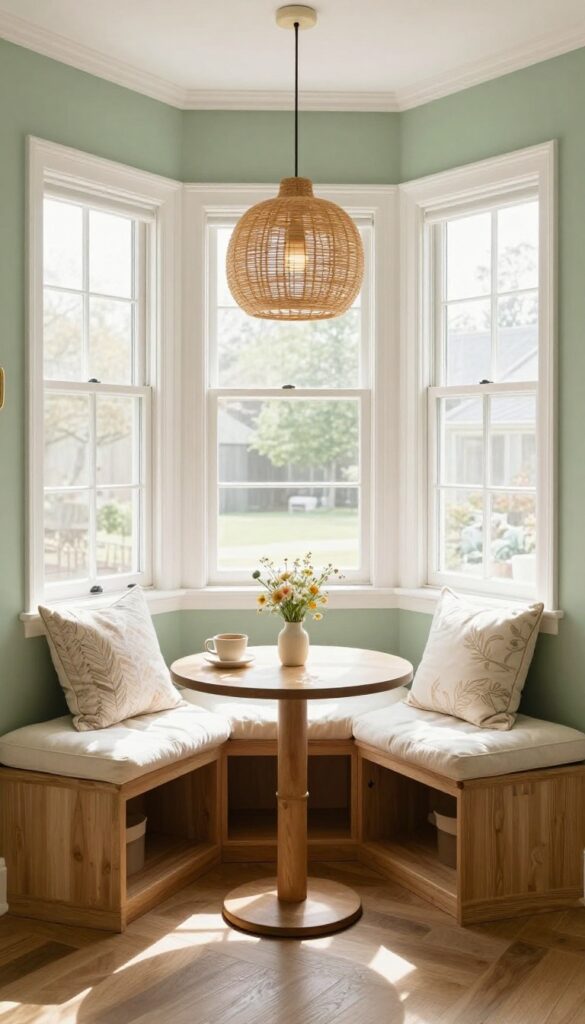
There’s something undeniably inviting about a dedicated breakfast nook, especially when it features built-in seating. This idea transforms an unused corner or bay window into a cozy, functional spot that feels like a permanent part of the kitchen. The combination of cushioned benches, a small table, and a warm pendant light creates a layered look that encourages lingering over morning coffee.
It’s the kind of setup that makes even quick breakfasts feel like a little ritual.
Why It Works
Built-in seating maximizes space by tucking storage underneath and eliminating the need for extra chairs. The cushions add softness and warmth, balancing the hard surfaces typical in kitchens. A pendant light above defines the zone and adds a focal point, making the nook feel intentional and finished.
Best For
This works well in kitchens with an unused corner, a wide hallway, or a bay window. It’s also great for open-plan layouts where you want to create a distinct dining area without closing off the room.
Styling Tip
Choose bench cushions in a durable fabric like outdoor-grade linen or cotton canvas for easy cleaning. Add throw pillows in complementary patterns for extra coziness. Hang the pendant light low enough to feel intimate but not obstructive—about 30–36 inches above the tabletop is ideal.
11. Fresh Herbs on the Windowsill
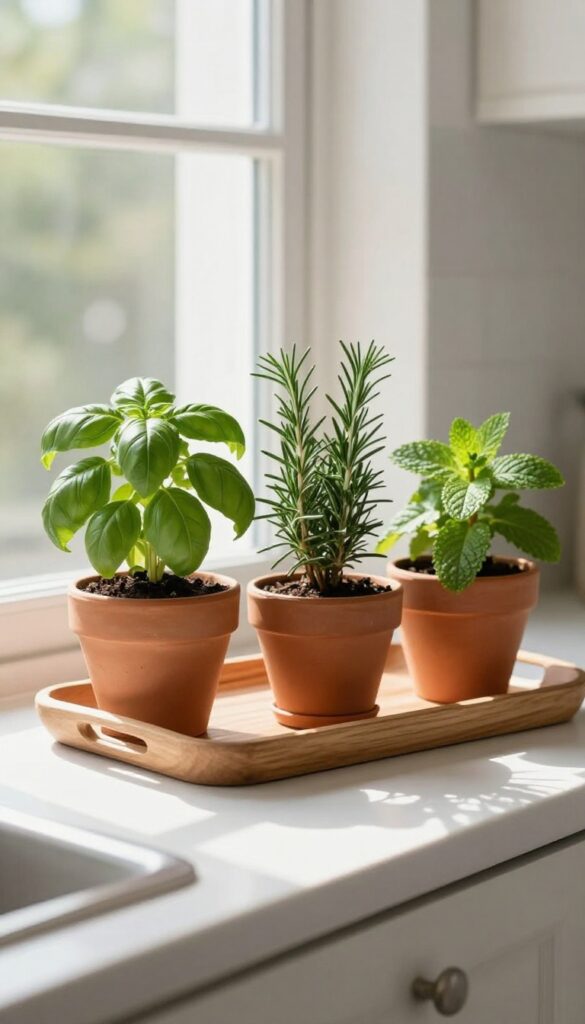
There’s something quietly satisfying about snipping a few leaves of basil straight from the plant while you’re stirring a pot on the stove. A row of herb pots along the kitchen windowsill adds living texture and a gentle fragrance that shifts with each brush of your hand. It’s one of those small touches that makes a kitchen feel genuinely lived in and loved, without any major renovation or expense.
Why It Works
Herbs bring a layer of organic green that softens hard countertops and cabinetry, creating that cozy, layered look. The scent released when you water or brush them adds an invisible layer of warmth—like a subtle aromatherapy boost every time you pass by.
Best For
This idea shines in kitchens with a sunny windowsill, especially if you cook often and want fresh ingredients within arm’s reach. It works beautifully in both compact galley kitchens and larger farmhouse-style spaces, adding life without taking up precious counter space.
Styling Tip
Choose three matching terra-cotta pots or simple white ceramic ones to keep the look tidy. Place them on a small wooden tray or a strip of marble to catch drips and tie them into your countertop palette. Basil, rosemary, and mint are easy to grow indoors and offer different leaf shapes for visual variety.
FAQ
What is cottage core kitchen style?
Cottage core kitchen style is a cozy, nostalgic look that emphasizes natural materials, soft colors, vintage accents, and a lived-in feel. It often includes open shelving, farmhouse sinks, and warm wood tones.
How do I make my kitchen look more cottage core on a budget?
Start with small changes like swapping hardware, adding open shelving, using vintage textiles, and painting walls in a muted hue. Thrift stores are great for finding unique pieces like jars, dishes, and linens.
Can cottage core work in a small kitchen?
Absolutely. Focus on light colors, open shelving to avoid bulk, and multi-functional items like a butcher block countertop. Use vertical space for storage and keep surfaces clutter-free.
What colors are best for a cottage core kitchen?
Soft, muted shades like sage green, dusty blue, warm cream, and pale yellow work well. These colors create a calm backdrop that complements wood tones and vintage accents.
How do I keep a cottage core kitchen from looking cluttered?
Edit your displays—choose a few key items per shelf and rotate seasonally. Use closed storage for less attractive items and keep countertops clear except for essentials like a utensil crock or a small plant.
Conclusion
Bringing a polished cottage core look to your kitchen doesn't have to be overwhelming. Start with one or two ideas that speak to you—maybe open shelving or a new rug—and build from there. The goal is to create a space that feels warm, layered, and truly yours.
Remember, the best cottage core kitchens are those that feel lived-in and loved. So take your time, mix in pieces that have meaning, and enjoy the process of making your kitchen a cozy heart of the home.