13 Smart Apartment Living Room Ideas for Small Spaces
Small living rooms get a bad rap. People act like limited square footage automatically kills style, comfort, and personality, which honestly feels lazy. I’ve lived with tiny living rooms, helped friends fix theirs, and learned that smart choices beat extra space every single time.
A small living room forces you to think, edit, and design with intention. That sounds serious, but it actually makes decorating more fun.
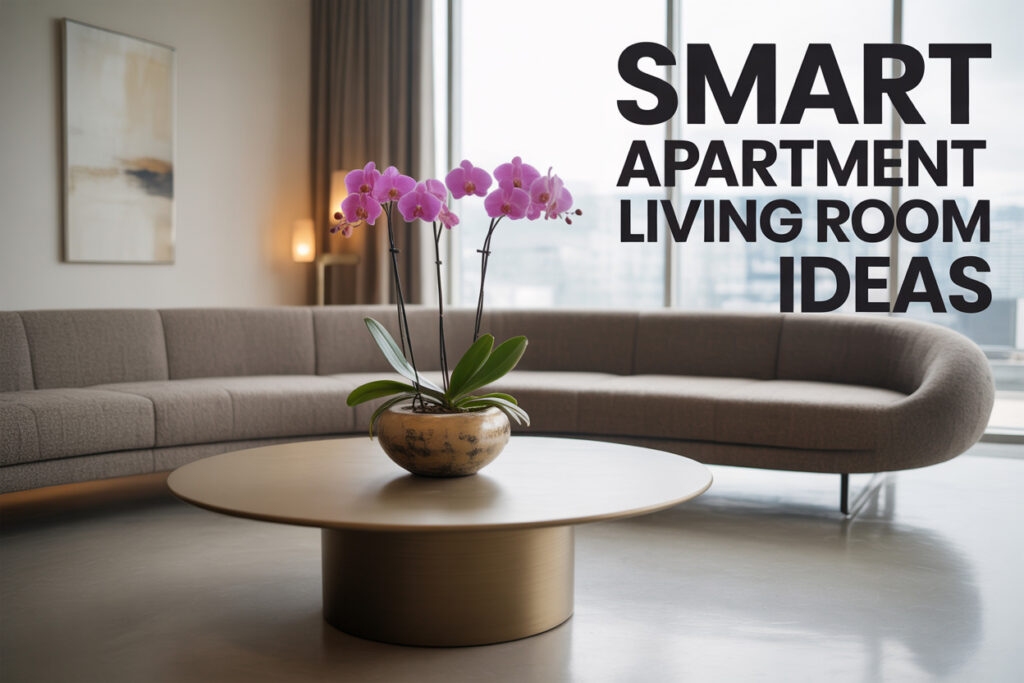
Let me walk you through ideas that actually work in real apartments, not just Pinterest-perfect fantasies.
1. Floating Furniture Away From the Walls
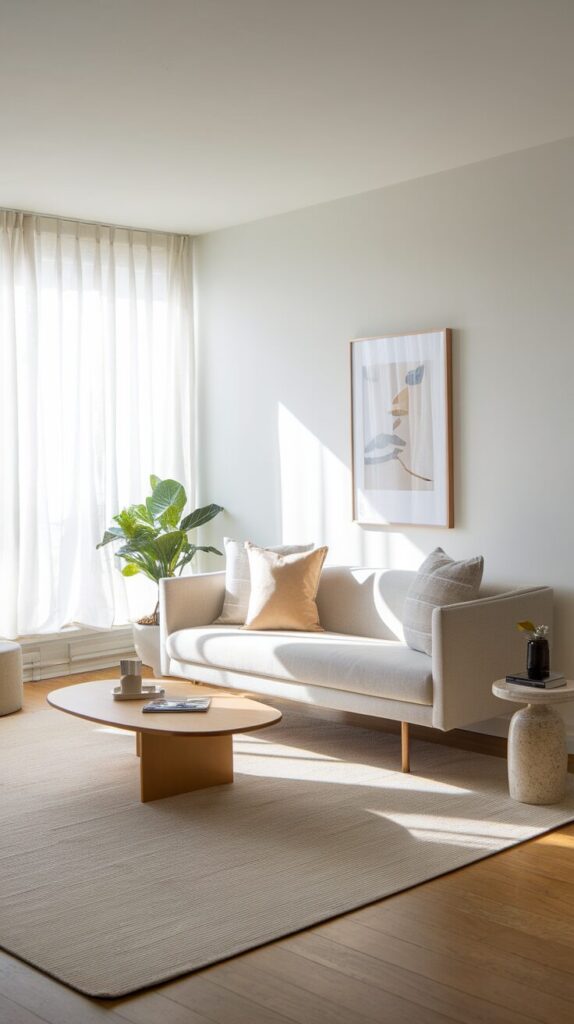
Most people shove every piece of furniture against the wall like they’re afraid of empty space. I used to do this too, and my living room still felt cramped and awkward. Pulling furniture slightly inward can completely change how the room flows.
This idea creates breathing room and helps define zones even in a small apartment. Your sofa stops looking like it’s trapped, and the space suddenly feels intentional instead of accidental. IMO, this trick alone fixes half of small living room problems.
Why This Works
Floating furniture creates visual balance and improves circulation. The room feels wider because the eye sees space behind furniture instead of a hard stop. You also avoid that “everything shoved to the edges” dorm-room look.
How to Do It
- Pull the sofa 4–8 inches away from the wall to start.
- Center a small rug under the front legs of seating.
- Anchor the layout with a coffee table or ottoman.
- Leave consistent walking paths on at least one side.
Style & Design Tips
Choose furniture with visible legs to keep the room feeling light. Avoid bulky arms and oversized cushions that eat visual space fast. Keep spacing consistent so nothing feels randomly placed.
Pro Tip or Budget Hack
If your sofa looks unfinished from the back, add a narrow console table behind it. You gain storage, a surface for decor, and a polished look without buying new furniture.
2. Wall-Mounted Shelving Instead of Floor Storage
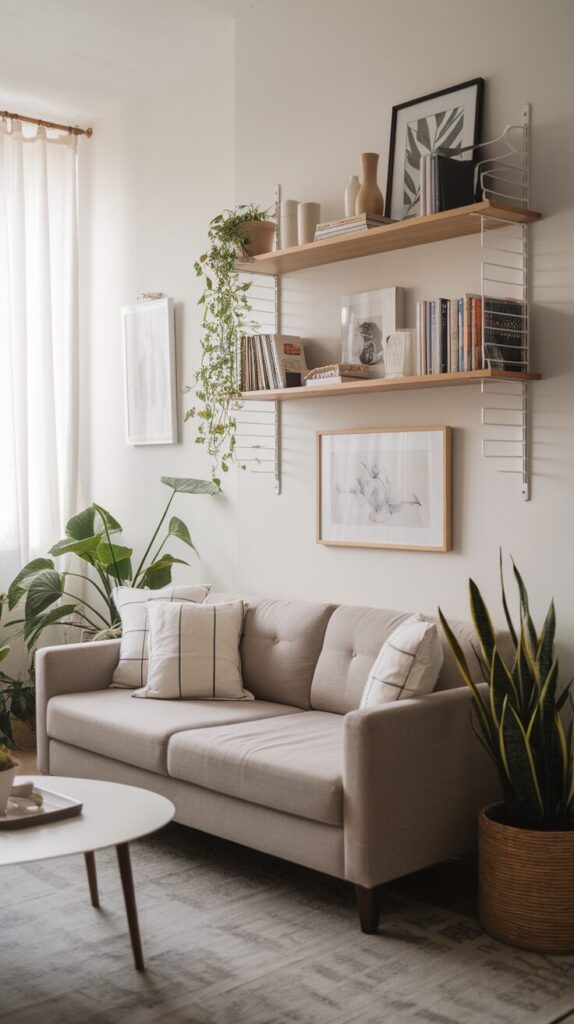
Floor storage feels logical until it starts eating your walking space. I learned this after tripping over baskets more times than I’d like to admit. Wall-mounted shelving fixes that problem instantly.
This idea lifts storage upward, keeps the floor clear, and adds personality at eye level. You store things without crowding the room or blocking light.
Why This Works
Vertical storage uses space that usually goes wasted. Your eye travels upward, which makes ceilings feel higher. Clear floors also create the illusion of more square footage.
How to Do It
- Install floating shelves above the sofa or TV.
- Keep shelves shallow to avoid visual heaviness.
- Space shelves evenly for a clean look.
- Mix functional items with decor pieces.
Style & Design Tips
Stick to one main color tone for shelf items to avoid cluttered visuals. Avoid overloading shelves with tiny objects. Leave some negative space so the shelves can breathe.
Pro Tip or Budget Hack
Use affordable laminate shelves and upgrade them with nicer brackets or wood veneer. You get a custom look without custom pricing.
3. A Rug That’s Bigger Than You Think
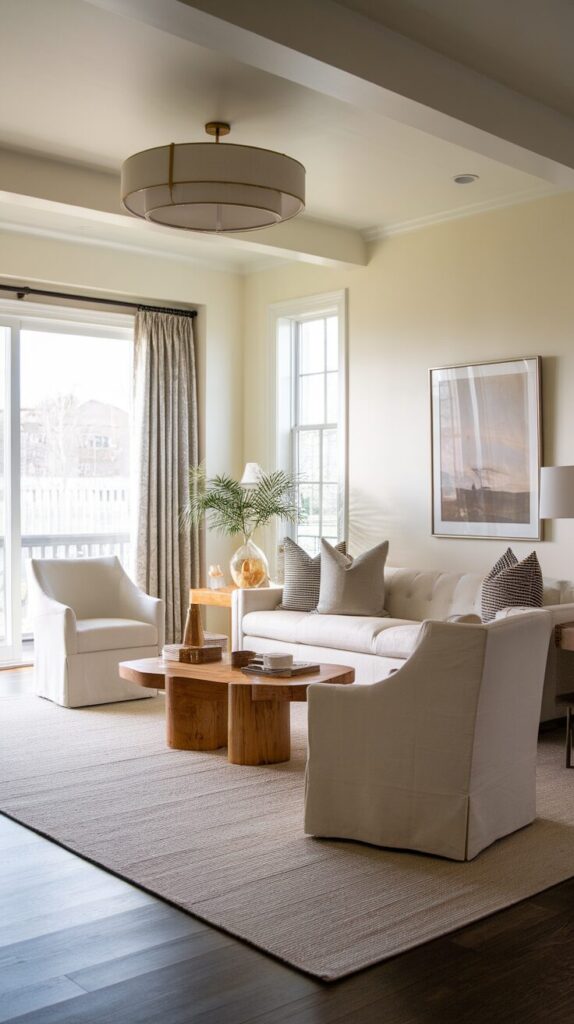
Tiny rugs make small rooms feel even smaller. I made this mistake once and wondered why my living room felt choppy and unfinished. A properly sized rug pulls everything together.
This idea anchors furniture and visually unifies the space. One large rug beats multiple small ones every time.
Why This Works
A larger rug connects furniture into one zone. The room feels cohesive instead of broken into pieces. Your eye reads the area as one space, not fragments.
How to Do It
- Choose a rug that fits under front legs of all seating.
- Keep at least 8 inches of floor visible at edges.
- Center the rug with the main seating area.
- Avoid rugs that stop mid-furniture.
Style & Design Tips
Go for low-pile rugs to avoid visual bulk. Simple patterns work better than busy designs in tight spaces. Light colors help, but medium neutrals hide wear better.
Pro Tip or Budget Hack
Layer a neutral jute rug with a smaller patterned one on top. You add texture and interest without committing to an expensive large statement rug.
4. Multipurpose Furniture That Pulls Its Weight
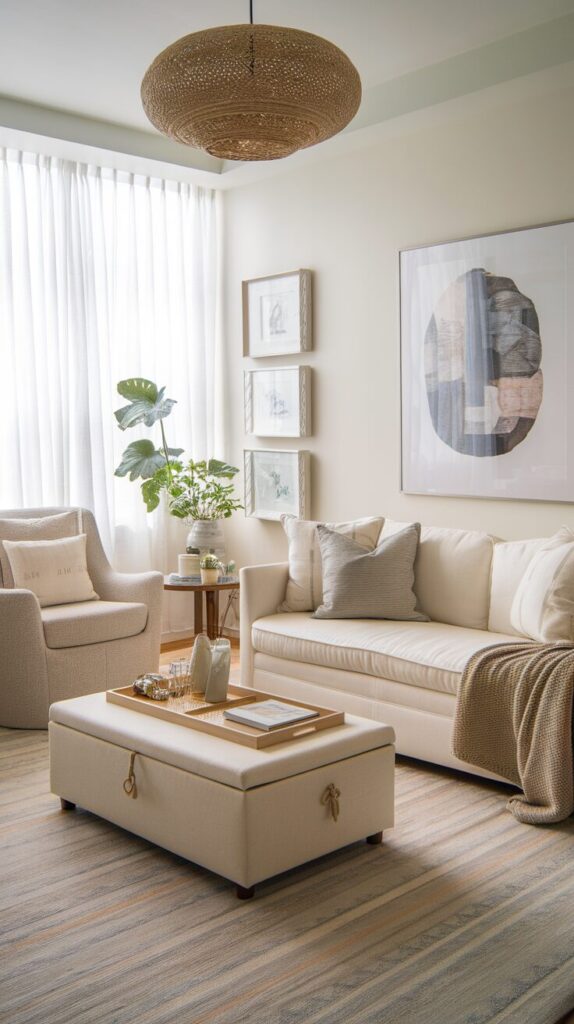
Every piece in a small living room needs to earn its keep. I stopped buying single-use furniture once I realized how much space it wasted. Multipurpose pieces save space and simplify life.
Think ottomans with storage, coffee tables with shelves, or sofas that convert. You get flexibility without clutter.
Why This Works
One piece doing two jobs reduces overall furniture count. Fewer items mean cleaner sightlines and easier movement. The room instantly feels calmer.
How to Do It
- Swap coffee tables for storage ottomans.
- Choose nesting tables instead of bulky side tables.
- Look for benches with hidden compartments.
- Use poufs that double as seating.
Style & Design Tips
Avoid pieces that look overly “functional.” Choose items that still feel soft and residential. Stick to clean shapes to avoid visual noise.
Pro Tip or Budget Hack
Check secondhand stores for solid wood pieces and add internal storage inserts. You get quality construction for less money.
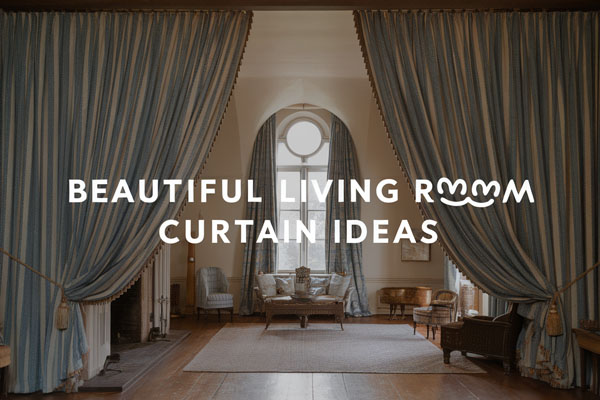
5. Light Curtains Hung High and Wide
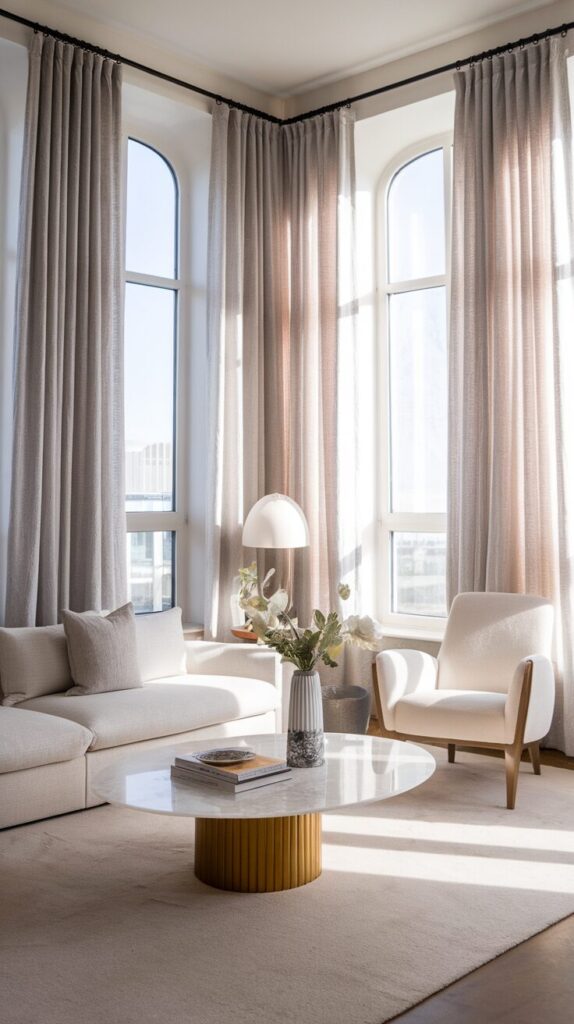
Short curtains kill the illusion of height. I ignored this for years and couldn’t figure out why my room felt squat. Hanging curtains higher instantly changes the vibe.
This idea stretches the room vertically and lets in more light. Even cheap curtains look better when hung correctly.
Why This Works
High curtain placement draws the eye upward. Wide placement makes windows look larger. More visible glass equals more perceived space.
How to Do It
- Mount curtain rods near the ceiling.
- Extend rods 6–10 inches past window edges.
- Use lightweight, flowing fabrics.
- Let curtains kiss the floor lightly.
Style & Design Tips
Stick with solid or subtle textures to keep things airy. Avoid heavy patterns in small rooms. Sheer layers work beautifully for daylight.
Pro Tip or Budget Hack
Buy extra-long curtains and hem them yourself. You get a custom fit without paying custom prices.
6. Mirrors That Reflect Light, Not Clutter
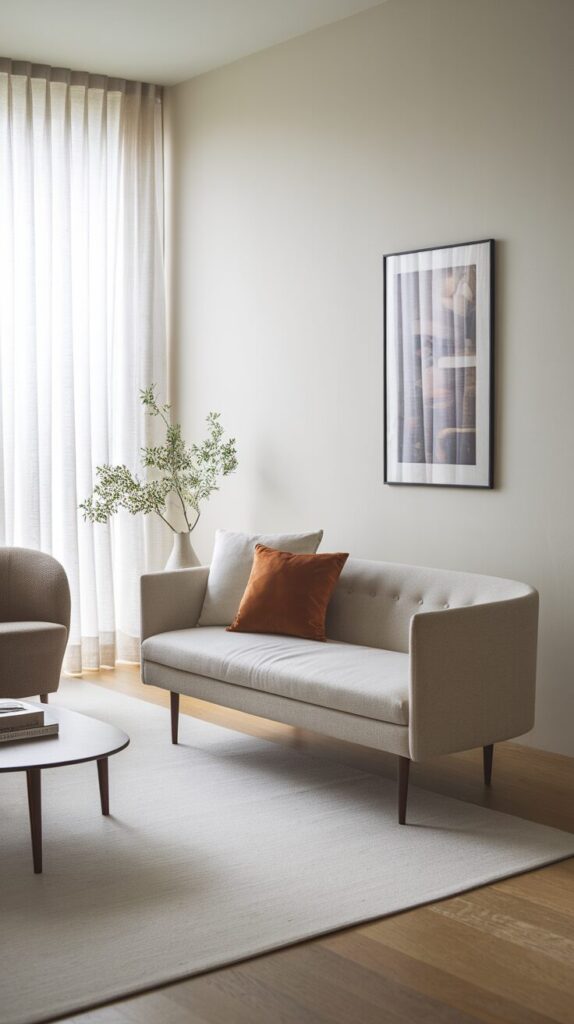
Mirrors work wonders when used thoughtfully. I’ve seen them make rooms feel double the size, and I’ve also seen them amplify chaos. Placement matters more than size.
This idea uses reflection to brighten and open the room. A good mirror placement feels intentional, not decorative filler.
Why This Works
Mirrors bounce light around the room. They visually extend walls and windows. Reflected space tricks the brain into seeing more depth.
How to Do It
- Place mirrors opposite windows or light sources.
- Choose simple frames for a clean look.
- Avoid reflecting messy areas.
- Keep mirror scale proportional to furniture.
Style & Design Tips
Thin frames or frameless mirrors keep things light and modern. Avoid overly ornate designs that overpower small spaces.
Pro Tip or Budget Hack
Lean a large mirror against the wall instead of mounting it. You save effort and get a relaxed, studio-style look.
7. Slim Profile Seating Over Chunky Sofas
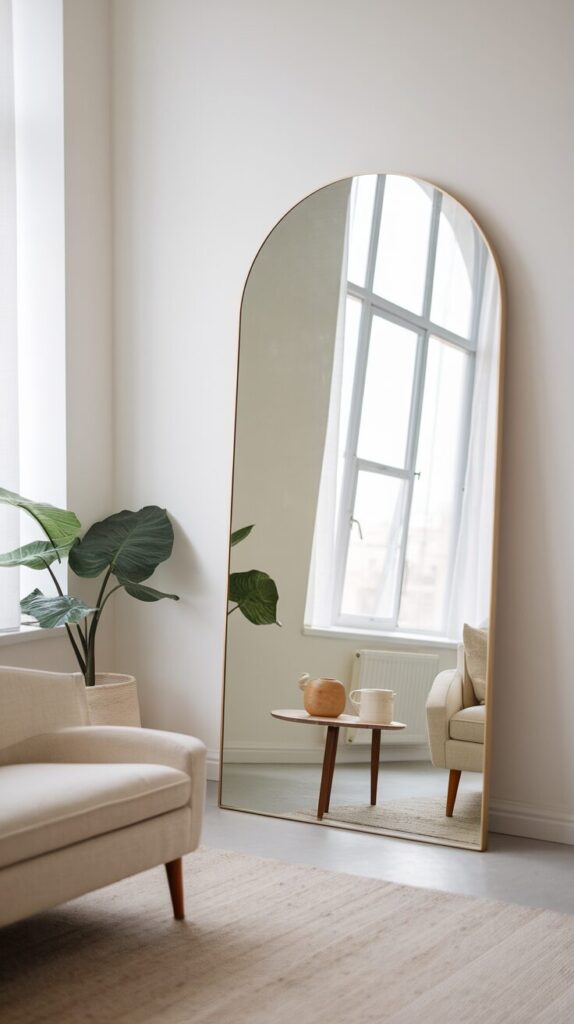
Oversized sofas feel cozy in showrooms and suffocating at home. I learned that lesson the hard way. Slim-profile seating keeps comfort without the bulk.
This idea focuses on scale and proportion. Furniture should fit the room, not fight it.
Why This Works
Slim furniture preserves floor space and visual openness. The room feels balanced instead of crowded. You also gain easier movement.
How to Do It
- Choose sofas with narrow arms.
- Look for raised legs.
- Skip oversized recliners.
- Add accent chairs instead of extra couches.
Style & Design Tips
Stick to neutral upholstery for larger pieces. Use pillows and throws for personality. Avoid deep, bulky silhouettes.
Pro Tip or Budget Hack
Swap out chunky sofa legs for taller ones. That small change lifts the piece and lightens the look instantly.
8. A Compact Coffee Table Alternative
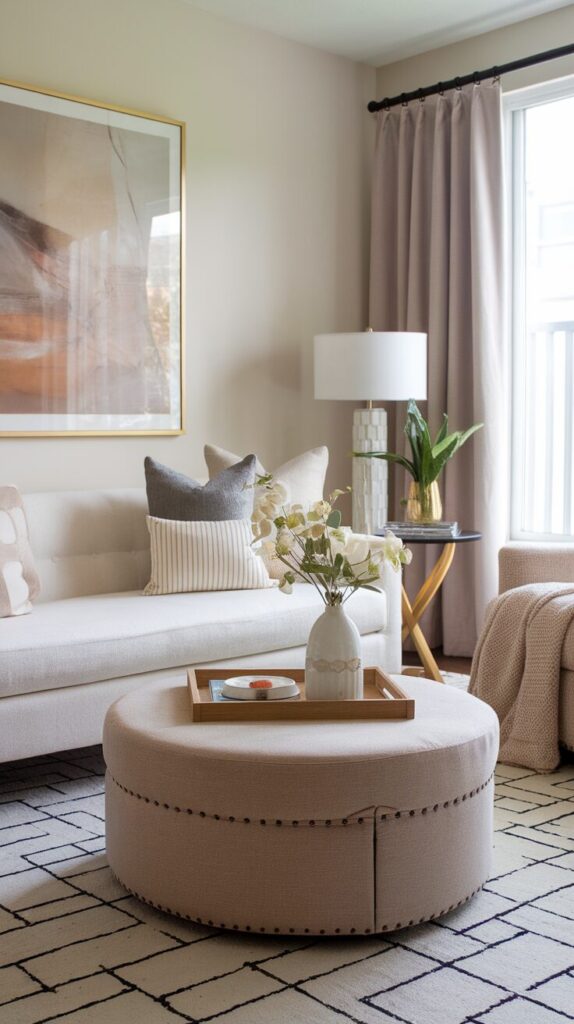
Traditional coffee tables often take up too much space. I replaced mine with a round ottoman and never looked back. Small swaps like this make a huge difference.
This idea keeps functionality without blocking movement. The room feels easier to navigate.
Why This Works
Smaller or flexible tables reduce visual clutter. Rounded edges improve flow. You avoid knee bruises in tight layouts.
How to Do It
- Use nesting tables for flexibility.
- Try a tray-top ottoman.
- Choose round or oval shapes.
- Keep height proportional to seating.
Style & Design Tips
Mix soft textures with hard surfaces for balance. Avoid sharp corners in tight walkways. Keep finishes cohesive.
Pro Tip or Budget Hack
Use a sturdy storage basket with a wood tray on top. You get a table and hidden storage in one move.
9. Neutral Base With One Bold Accent
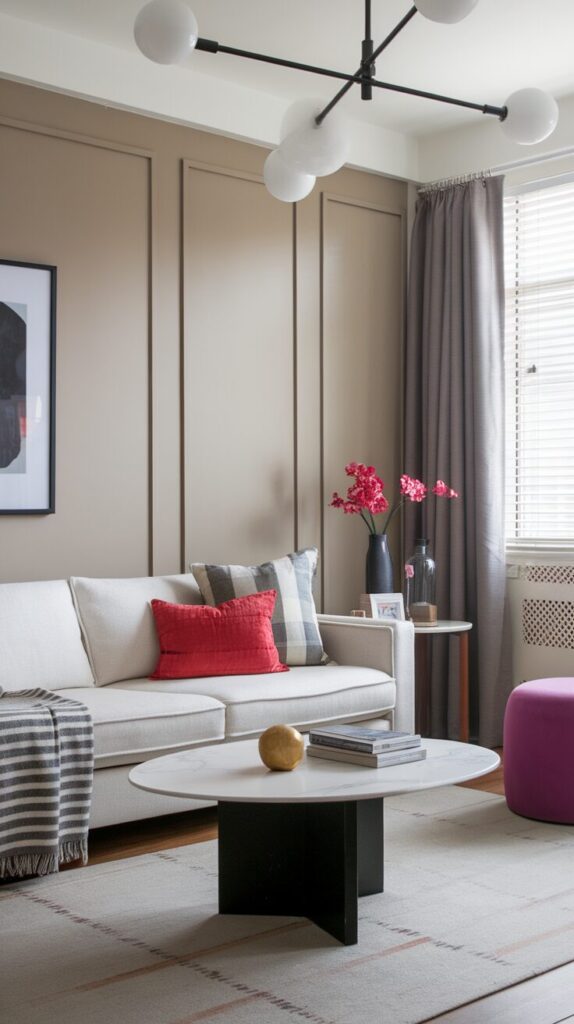
Too many colors overwhelm small rooms fast. I always start neutral and layer one strong accent. The room feels calm but not boring.
This idea controls visual noise while keeping personality. One bold choice stands out more than five competing ones.
Why This Works
A neutral base creates cohesion. A single accent adds focus. Your eye knows where to land.
How to Do It
- Choose neutral walls and large furniture.
- Pick one bold color or material.
- Repeat that accent 2–3 times.
- Keep everything else simple.
Style & Design Tips
Bold doesn’t mean loud everywhere. Use accent pillows, art, or a chair instead of walls. Let the space breathe.
Pro Tip or Budget Hack
Use removable decor like covers or throws. You can change the vibe without repainting or replacing furniture.
10. Hidden Storage Everywhere You Can Sneak It
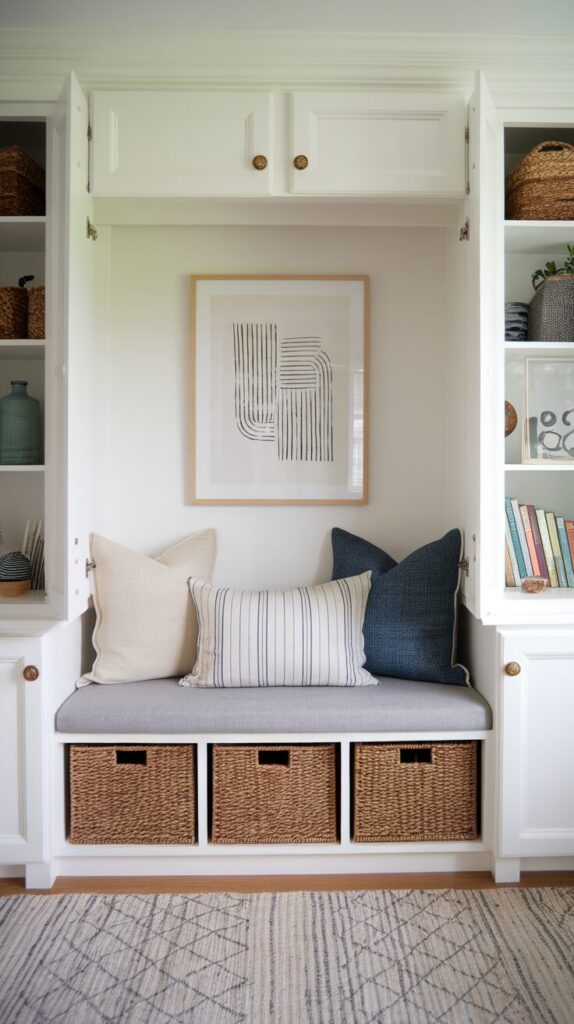
Small living rooms hide clutter surprisingly well when storage works smart. I love furniture that secretly holds things. It feels like cheating the system.
This idea reduces visible mess without adding bulk. Clean surfaces instantly make rooms feel larger.
Why This Works
Clutter shrinks space visually. Hidden storage removes distractions. The room feels calmer and more intentional.
How to Do It
- Use storage benches or ottomans.
- Add baskets under side tables.
- Use cabinets with doors.
- Store rarely used items up high.
Style & Design Tips
Match storage pieces to existing furniture finishes. Avoid open storage overload. Closed storage keeps visuals clean.
Pro Tip or Budget Hack
Add fabric bins inside open shelving. You get organization without buying new furniture.
11. Art That Scales With the Room

Tiny art floating on big walls feels awkward. I learned to either go bigger or group pieces intentionally. Scale matters more than quantity.
This idea makes walls feel finished without clutter. Art becomes a feature instead of background noise.
Why This Works
Properly scaled art anchors walls. The room feels balanced and confident. Empty walls feel intentional, not forgotten.
How to Do It
- Choose one large statement piece.
- Or create a tight gallery wall.
- Keep frames consistent.
- Center art at eye level.
Style & Design Tips
Stick to simple frames in small rooms. Avoid scattered placement. Keep spacing tight for cohesion.
Pro Tip or Budget Hack
Print oversized art at home and use affordable poster frames. You get impact without gallery pricing.
12. Lighting Layers Instead of One Harsh Fixture

Overhead lighting alone kills atmosphere. I always add layers, even in tiny rooms. Good lighting changes everything.
This idea creates depth, warmth, and flexibility. The room feels inviting instead of flat.
Why This Works
Multiple light sources add dimension. You control mood and function. Shadows soften the space.
How to Do It
- Add a floor lamp near seating.
- Use table lamps on surfaces.
- Include warm bulbs.
- Skip overly bright overhead lights.
Style & Design Tips
Choose slim lamp bases to save space. Match bulb temperatures for consistency. Avoid bulky shades.
Pro Tip or Budget Hack
Plug lamps into a single power strip with a switch. One click changes the entire mood.
13. Clear Pathways That Respect How You Move

Furniture placement should support real life, not block it. I always test walking paths before committing. Comfort beats symmetry every time.
This idea prioritizes movement and flow. The room feels intuitive and easy.
Why This Works
Clear pathways reduce friction. The room feels larger because nothing interrupts movement. Your body relaxes instantly.
How to Do It
- Leave at least 30 inches for walkways.
- Avoid furniture blocking door swings.
- Angle pieces when needed.
- Rearrange until movement feels natural.
Style & Design Tips
Don’t force layouts just to fit furniture. Let function lead design. Adjust until it feels right.
Pro Tip or Budget Hack
Use painter’s tape to map furniture placement before moving heavy pieces. You save time and energy.
Small Apartment Living Room Strategy: Design Before You Decorate
Most small living room problems start with impulse buying instead of actual planning. I used to grab furniture because it looked good online, then struggle to make it fit in real life. A clear strategy saves money, time, and frustration.
Start with layout before color, decor, or trends. Measure your room properly, including door swings, window placement, and walking paths. When you understand your space, you make smarter decisions automatically.
Define the main purpose of the room before you add anything. Decide whether you mostly relax, entertain, work, or stream movies there. That clarity helps you prioritize seating, storage, and lighting correctly.
Create a visual hierarchy instead of filling every corner. Choose one focal point like a sofa wall, a media unit, or a window view. Let that focal point lead the rest of the design so the room feels intentional.
Limit your furniture count on purpose. Every extra piece competes for attention and square footage. When you edit aggressively, the room feels bigger without actually growing.
Stick to a controlled color palette from the beginning. Choose two main neutrals and one accent tone and repeat them consistently. Consistency builds calm, and calm always makes small rooms feel larger.
Balance function and personality in equal parts. You want storage and practicality, but you also want warmth and character. A smart apartment living room strategy blends both without overloading either side.
Common Mistakes to Avoid in Small Apartment Living Rooms
Too many small decor pieces create visual chaos fast. I see people add dozens of tiny items, and the room instantly feels cluttered. Fewer, larger statement pieces usually look cleaner and more expensive.
Oversized furniture ruins scale immediately. That huge sectional might look cozy in a showroom, but it will swallow your apartment whole. Always measure before you commit to anything big.
Ignoring vertical space wastes valuable storage. People focus only on floor layouts and forget walls completely. Tall shelves and high curtain placement change everything.
Pushing all furniture against the walls feels safe but often looks awkward. That layout creates empty space in the center without improving flow. Pull pieces inward strategically instead of defaulting to wall-hugging.
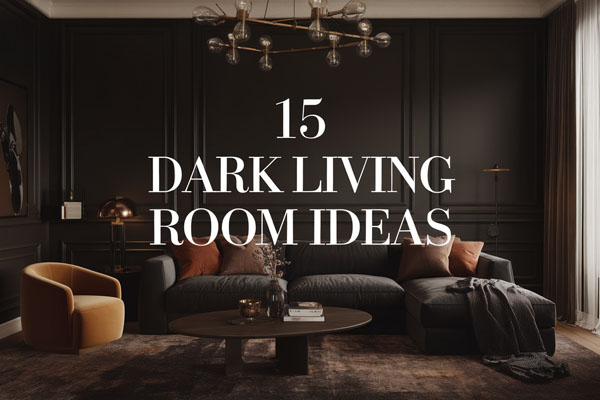
Choosing dark, heavy fabrics everywhere can shrink the room visually. Dark tones work beautifully as accents, but too much weight makes things feel boxed in. Balance deeper colors with lighter surroundings.
Using only overhead lighting flattens the entire space. Harsh light exposes every corner and kills atmosphere. Layered lighting creates depth and makes even small rooms feel inviting.
Buying storage without decluttering first creates hidden mess. Extra baskets and bins won’t solve over-accumulation. Edit your belongings before you add new containers.
Smart Budget Planning for Apartment Living Rooms
A smart design plan always respects your budget. You don’t need designer furniture to create a high-end feel. You need thoughtful choices and patience.
Prioritize foundational pieces first. Invest in a comfortable sofa, a good rug, and proper lighting before decorative accessories. Those core elements shape the entire room.
Set a realistic spending cap per category. Allocate more to seating and less to trendy decor. When you control categories, you avoid blowing the budget on impulse items.
Mix high and low intentionally. Pair an affordable coffee table with quality throw pillows, or combine a budget sofa with a statement lamp. Contrast often makes the room look curated.
Upgrade slowly instead of replacing everything at once. Live in the space, notice what feels off, and adjust gradually. Smart layering over time usually looks better than a rushed makeover.
Layout Planning Checklist Before You Buy Anything
Grab a tape measure before you even open a shopping app. Measure wall lengths, window widths, and ceiling height carefully. Write those numbers down and keep them accessible.
Map out your walking paths clearly. Leave at least 30 inches for main pathways. Comfort matters more than squeezing in one extra chair.
Sketch a rough layout on paper. You don’t need design software to plan effectively. Simple boxes representing furniture help you visualize spacing.
Consider traffic flow first, then aesthetics second. Your living room should feel easy to move through every day. Good design supports real life instead of fighting it.
Check furniture depth, not just width. Deep sofas eat space quickly in small apartments. Slimmer silhouettes often fit better without sacrificing comfort.
Plan for outlets and lighting placement early. You don’t want cords stretching across the room. Strategic layout prevents messy cable situations later.
Frequently Asked Questions About Small Apartment Living Rooms
How do I make my small living room look bigger without renovating?
Focus on layout, light, and scale first. Use larger rugs, hang curtains high, and keep furniture slightly away from walls. Clear visual clutter and choose slim-profile pieces for immediate impact.
What colors work best in small apartment living rooms?
Light neutrals create openness, but you don’t need to avoid color completely. Choose one strong accent and repeat it intentionally. Balanced contrast works better than all-white everything.
Can I use dark furniture in a small space?
Yes, but balance it with lighter surroundings. Pair dark sofas with light walls or rugs. Control contrast instead of letting dark tones dominate the entire room.
How much furniture is too much for a small living room?
If walking feels tight or surfaces look crowded, you probably added too much. Prioritize essential seating and one or two functional surfaces. Edit anything that doesn’t serve a purpose.
Should I choose open shelving or closed storage?
Closed storage hides clutter and keeps visuals calm. Open shelving works well for curated items but requires discipline. Mix both carefully for balance.
Do I need a coffee table in a tiny living room?
You don’t need a traditional one. Try nesting tables, a storage ottoman, or a slim bench instead. Flexibility often works better than rigid furniture rules.
Final Thoughts
Small living rooms reward smart decisions more than big budgets. You don’t need to try everything at once or chase perfection. Pick one idea, test it, and see how the room responds.
I always start with layout before buying anything new. Once the space flows, style choices fall into place naturally.