13 Basement Bedroom Ideas for Cozy and Stylish Spaces
Basement bedrooms either feel like a hidden cozy retreat… or like you’re sleeping inside a storage unit next to a lonely treadmill. That’s usually not a “basement problem,” though. It’s almost always a layout, lighting, and finishing problem.
The good news is you don’t need a huge renovation budget to make a basement bedroom feel warm, stylish, and honestly kind of impressive.
You just need the right design moves, and a few smart choices that hide the things basements love to do wrong.
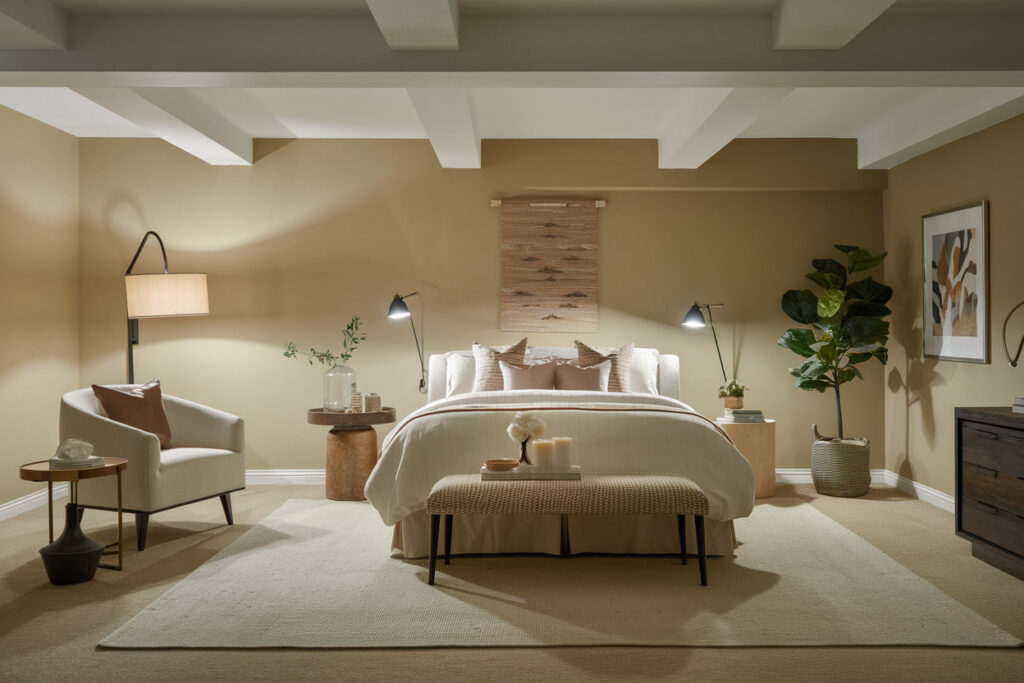
1. Use Warm Wall Colors Instead of Bright White
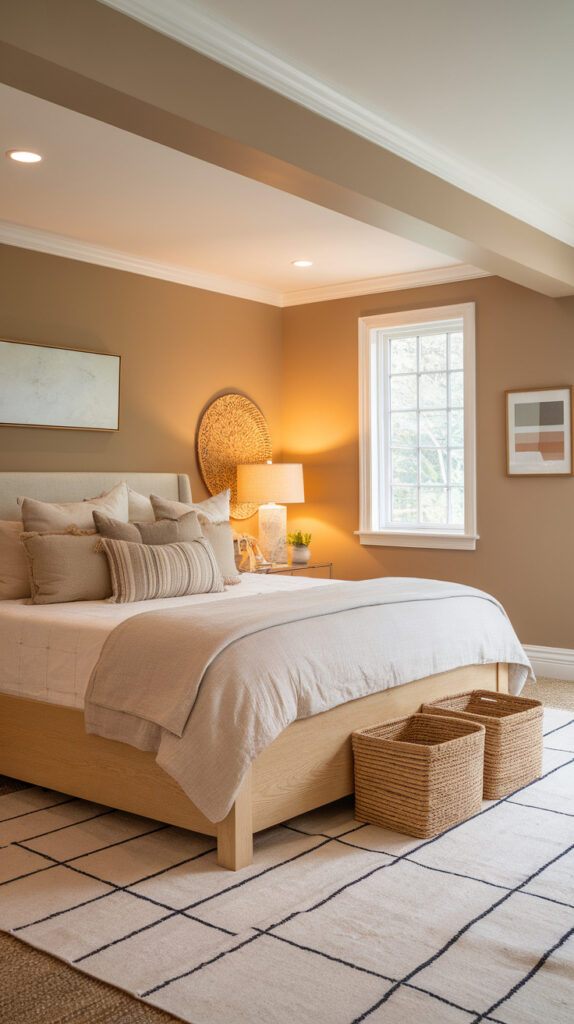
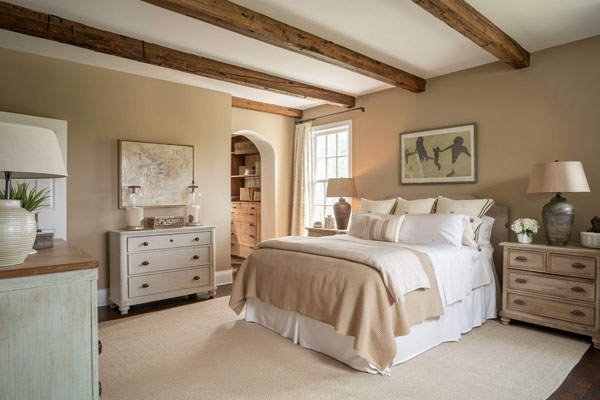
Basements have a weird habit of making bright white walls look cold and slightly depressing. Even if the room is clean and organized, stark white tends to amplify the underground vibe instead of fighting it. If you want a basement bedroom to feel cozy, you need color that adds warmth without making the space feel smaller.
I’ve seen basements completely transform just by switching from pure white to soft beige, warm greige, muted sage, or creamy taupe.
The room instantly looks more “intentional” and less like it’s waiting to become a laundry room. Warm tones also help the lighting look softer, which matters a lot when you’re working with low natural light.
Why This Works
Warm colors visually pull a space forward, which helps a basement feel less hollow and shadowy. They also reflect artificial light in a more flattering way, so your lamps don’t make the room look like a hospital hallway. Even a slightly creamy tone can make the room feel like a real bedroom instead of a spare area someone gave up on.
Another reason this works is because warm colors blend better with cozy décor materials like wood, linen, rattan, and brass. Basements need that natural warmth to balance out concrete floors, exposed pipes, or low ceilings. You’re basically tricking the room into looking above-ground.
How to Do It
- Choose a warm neutral paint like soft beige, warm gray, or muted tan.
- Test the color on at least two walls because basement lighting changes fast.
- Use a satin or eggshell finish so the walls reflect light without looking shiny.
- Paint trim in a softer white, not bright builder-grade white.
- Add warm lighting immediately after painting so the tone reads correctly.
Style & Design Tips
Go for colors that feel soft and earthy, not heavy and muddy. A basement can handle darker tones, but only if the room has enough lighting and light-colored furniture to balance it. Also avoid icy grays, because those tend to look like unfinished concrete once you put them underground.
A common mistake is picking a paint color from a bright upstairs room and expecting it to behave the same way in a basement. It won’t. Basements love to make colors look duller, so choose something slightly warmer than you think you need.
Pro Tip or Budget Hack
If you can’t repaint the whole room, paint just one accent wall in a warm tone behind the bed. It gives the space instant depth and makes the room feel designed on purpose. You’ll spend less on paint, and the impact still hits hard.
2. Create a Soft Layered Lighting Setup
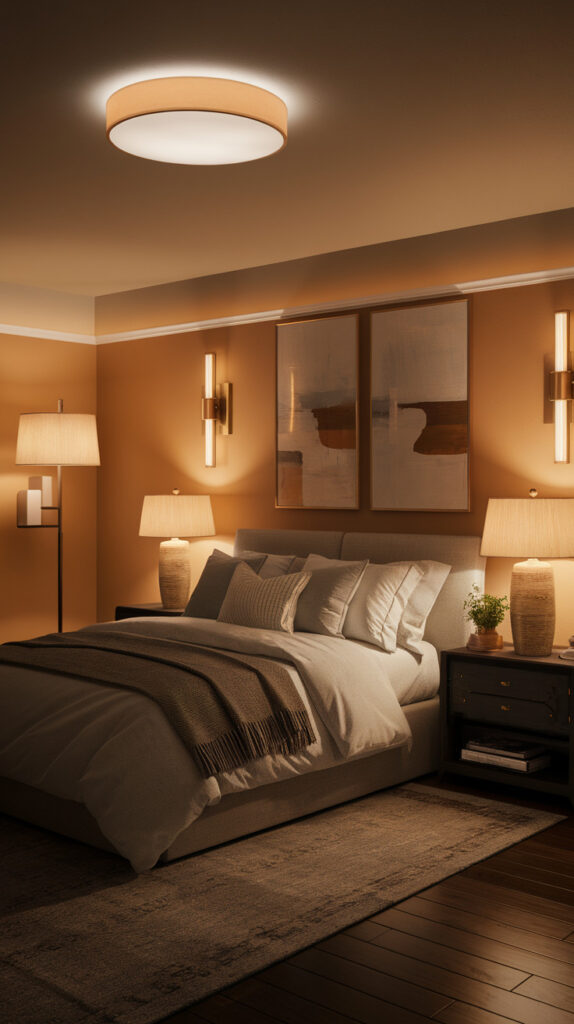
Basement bedrooms usually rely on one sad overhead light that makes everyone look tired and suspicious. The fix is not expensive, but it does require strategy. You want multiple light sources at different heights, not one harsh ceiling fixture doing all the work.
The goal is to make the room feel warm and relaxing, like a cozy Airbnb bedroom, not like a basement office where someone prints tax forms. When I walk into a basement room and it has lamps, wall sconces, and soft lighting, it immediately feels livable.
Why This Works
Layered lighting creates depth, and depth is what basements desperately need. Overhead lighting flattens the space and highlights everything you don’t want to notice, like low ceilings or awkward corners. When you use lamps and softer lighting, your eyes focus on cozy areas instead of shadows.
It also makes the bedroom more functional. You can have one lamp for reading, another for ambiance, and a dim light for nighttime. It’s not just design, it’s quality-of-life stuff.
How to Do It
- Start with one warm LED bulb (2700K) for the main ceiling light.
- Add two bedside lamps or wall-mounted sconces.
- Place a floor lamp in a corner that feels dark or empty.
- Add a small table lamp on a dresser or shelf.
- Use dimmable bulbs or smart plugs so you control the mood easily.
Style & Design Tips
Stick to warm lighting only, because cool white lighting will make your basement feel like a break room. Choose lamp shades in linen or cream tones to soften the glow. If your basement has low ceilings, avoid big hanging fixtures and use flush mounts instead.
Don’t forget that lighting fixtures are part of the décor. A black metal lamp adds modern style, while a brass lamp adds warmth and elegance. I personally love mixing a simple neutral lamp with one slightly dramatic piece for personality.
Pro Tip or Budget Hack
Use plug-in wall sconces instead of hardwired ones. They look expensive and custom, but you can install them in minutes without hiring an electrician. Just hide the cord with a cord cover and pretend you planned it all along.
3. Add an Upholstered Headboard for Instant Warmth
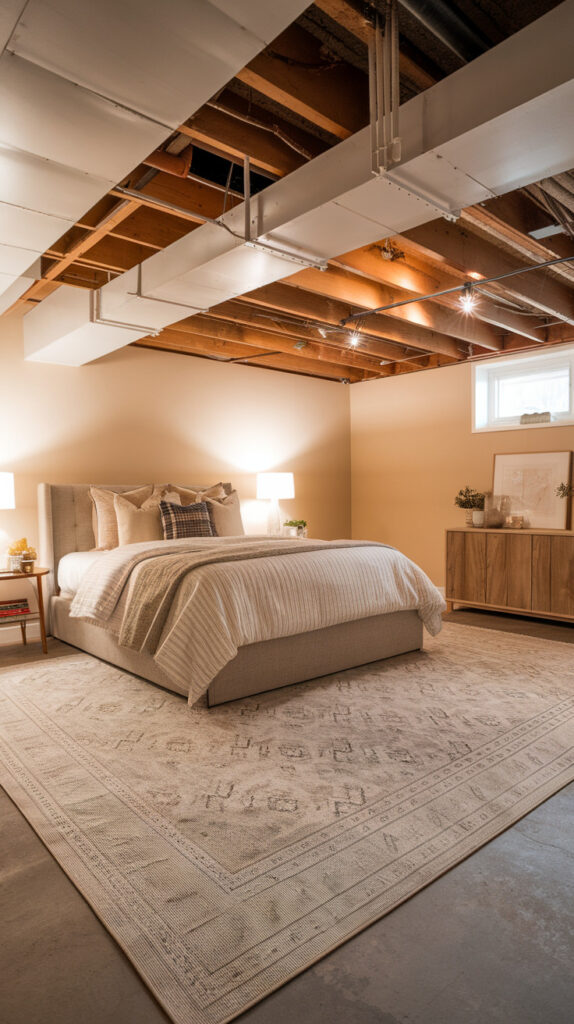
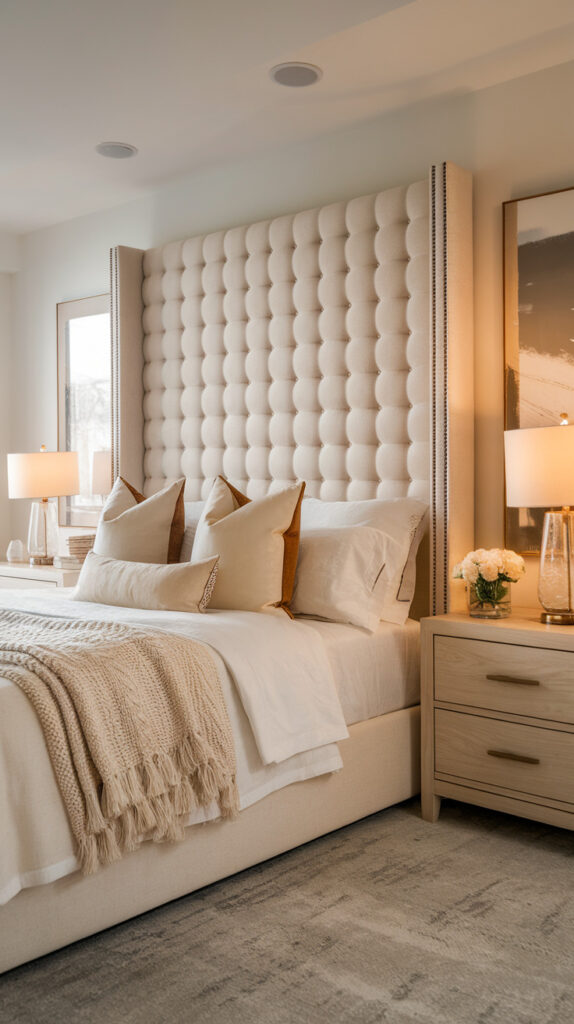
If your bed is sitting against a plain wall with no headboard, your basement bedroom will always feel unfinished. A headboard is one of those things that instantly makes a space feel like a real bedroom, even if everything else is still a work in progress. In basements especially, you want soft surfaces to counter all the hard materials.
An upholstered headboard is even better because it adds texture and comfort. I’ve tried wooden headboards in basement rooms and they can look great, but fabric just makes everything feel warmer. Plus, it’s way nicer to lean against when you’re reading or scrolling at night.
Why This Works
Basements tend to feel cold because they have fewer soft surfaces and more solid materials like drywall, concrete, and tile. Upholstery absorbs sound and adds softness, which makes the room feel calmer. It also gives your bed a focal point, which helps the room feel styled instead of temporary.
A headboard also adds vertical interest, which is important when you don’t have tall ceilings. It draws the eye upward without needing expensive wall décor.
How to Do It
- Choose a headboard in a light neutral fabric like beige, cream, or gray.
- If your room is small, go for a simple rectangular shape.
- Mount it securely or use a free-standing frame.
- Add matching pillows and throw blankets to build a layered look.
- Keep the wall behind it clean or add subtle art above.
Style & Design Tips
Avoid overly dark headboards unless your room has strong lighting. Dark fabric can make the bed look heavy in a basement. Also avoid headboards with super trendy shapes unless you truly love them, because basements already feel quirky enough.
A common mistake is buying a headboard that’s too small. You want it wide enough to feel balanced with the bed and nightstands. If it looks tiny, it’ll feel like a placeholder instead of a statement.
Pro Tip or Budget Hack
You can DIY a headboard with plywood, foam, batting, and fabric. It’s not hard, it just requires patience and a staple gun. If you want a “custom” look, use tufting buttons or a linen-look fabric for that expensive vibe.
Get the Weekend Home Reset Checklist Pack
A free printable pack to help you reset your home, clear the mess, and make your space feel calmer in a simple, doable way.
4. Use Large Area Rugs to Hide Basement Flooring
Basement floors are often the biggest mood killer. Even when they’re clean, they usually look like concrete, cheap laminate, or tile that belongs in a utility room. A large area rug instantly changes the entire feel of the room and makes it more comfortable to actually live in.
If you want your basement bedroom to feel cozy, the rug should be big enough to anchor the bed. I’m talking about a rug that extends at least 18–24 inches around the sides of the bed. A tiny rug at the foot of the bed doesn’t do much besides look confused.
Why This Works
Rugs add warmth visually and physically. They soften the sound in a basement, which matters because basements tend to echo. They also cover up whatever flooring situation you have going on, which is honestly half the battle.
A rug also defines the sleeping zone. In basements that have open layouts, rugs help create structure and make the room feel intentional.
How to Do It
- Measure your bed and choose a rug size that fits properly.
- For a queen bed, aim for at least an 8×10 rug.
- Place the rug under the bed so it extends past the sides.
- Add a rug pad underneath for comfort and safety.
- Choose a low-pile rug for easier cleaning and less moisture trapping.
Style & Design Tips
Go for rugs with warm patterns, subtle vintage designs, or neutral textures. Basements look amazing with Persian-style rugs, modern geometric patterns, or soft shag rugs if the basement stays dry. Avoid overly bright white rugs unless you enjoy anxiety every time someone walks in.
Also don’t choose rugs that are too dark if the room already lacks light. You want the rug to lift the room, not drag it down.
Pro Tip or Budget Hack
Layer rugs. Put a large inexpensive jute rug down first, then layer a smaller patterned rug on top. It looks high-end and cozy, and it lets you swap the top rug easily when you want a new look.
5. Build a Cozy “Bed Nook” With Curtains or Panels
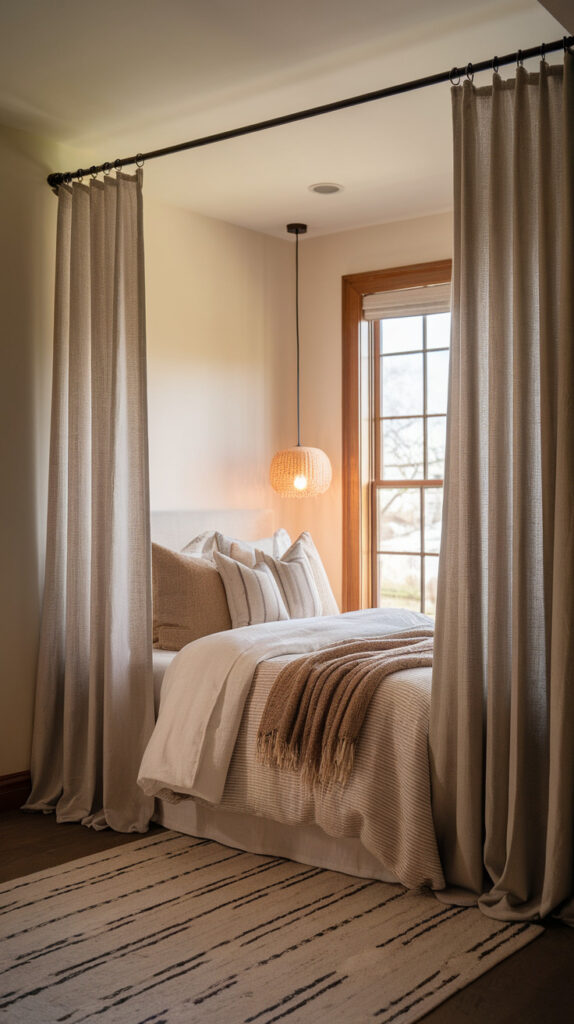
Basements often feel too open and unfinished, even when the room is technically enclosed. One of the easiest ways to make the bedroom feel more cozy is to create a bed nook. You can do this using curtains, wood slats, or simple wall panels behind the bed.
This works especially well if your basement bedroom shares space with a family room or storage area. The nook gives the sleeping area privacy and makes it feel like its own little retreat. It’s also one of those design tricks that makes people go, “Wait, this is a basement?”
Why This Works
A nook adds visual structure. It breaks up the space and gives your bed a sense of “place,” which makes the room feel designed. It also adds softness and layering, which basements usually lack.
Curtains also help with sound and can hide awkward basement walls or unfinished areas. If you have an odd bump-out or weird corner, curtains can make it disappear like magic.
How to Do It
- Install a curtain rod above the bed or along the ceiling.
- Use floor-length curtains for maximum cozy effect.
- Choose thick fabric like linen blends or velvet-style panels.
- Keep the curtain color neutral or warm-toned.
- Add lighting inside the nook to keep it from feeling closed off.
Style & Design Tips
Stick with soft, flowy fabric that adds movement. Avoid cheap shiny curtains because they’ll make the nook feel like a dressing room. If you want a modern look, try beige linen curtains with black curtain rods.
Also don’t cram the bed too tightly into the nook. Leave breathing room on the sides so it feels intentional, not like the bed got trapped behind fabric.
Pro Tip or Budget Hack
Use ceiling-mounted curtain tracks instead of rods. They look sleek and expensive, and they work perfectly in basements with low ceilings. You can also use tension rods if you’re renting or want a no-drill option.
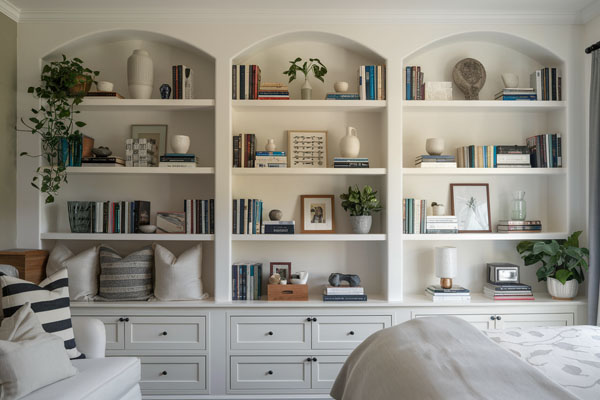
6. Add Built-In Storage With Simple DIY Shelving
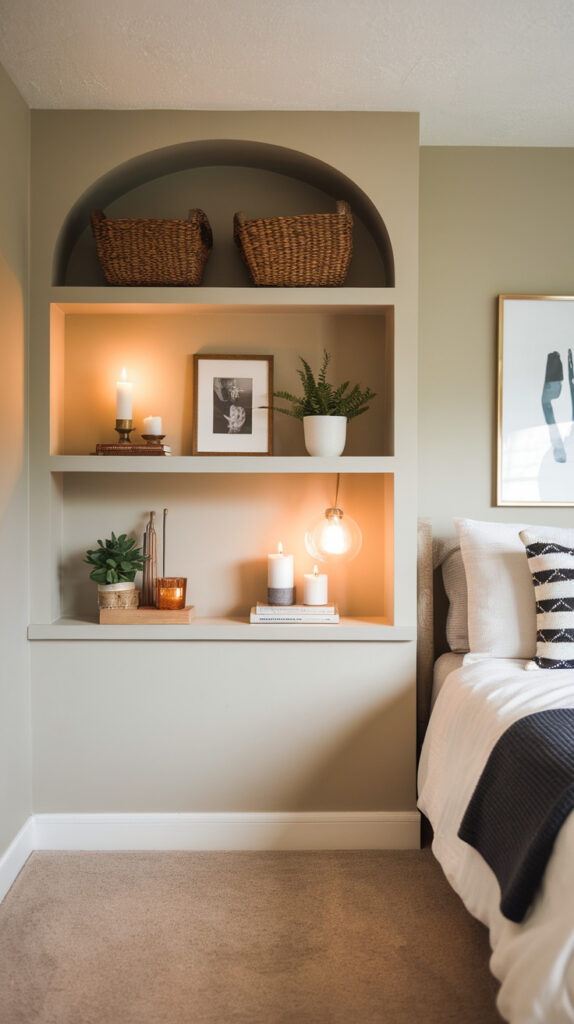
Basement bedrooms often turn into storage rooms because people don’t know where else to put stuff. That’s why you need storage that looks clean and intentional. DIY built-in shelving is one of the best ways to get storage without making the room feel cluttered.
Even a simple wall of shelves can make the room feel more finished. I’ve done this in small basement spaces and it instantly made the room feel more like a studio apartment and less like a “spare room.”
Why This Works
Built-ins use vertical space, which is crucial in basements where floor space feels limited. They also keep clutter off the floor, which makes the room feel bigger and cleaner. When storage looks intentional, the whole room feels more high-end.
Shelving also gives you a place to decorate. Basements need personality, and shelves are an easy way to add it.
How to Do It
- Choose one wall for shelving, preferably near a corner.
- Use sturdy wall brackets or build a simple frame.
- Install shelves evenly spaced with a level.
- Paint the shelves the same color as the wall for a built-in look.
- Style with baskets, books, and a few decorative items.
Style & Design Tips
Use baskets to hide clutter. That’s the secret sauce. Open shelves look amazing, but only if you don’t pile random stuff on them like you’re running a basement thrift store.
Also keep décor minimal. Choose a few items with texture like ceramic, wood, or woven pieces. Too many small items will look messy fast.
Pro Tip or Budget Hack
Use IKEA shelves and hack them into a built-in look by adding trim pieces and painting everything the same color. It’s surprisingly convincing, and it costs way less than custom cabinetry.
7. Create a Faux Window Wall With Mirrors and Curtains
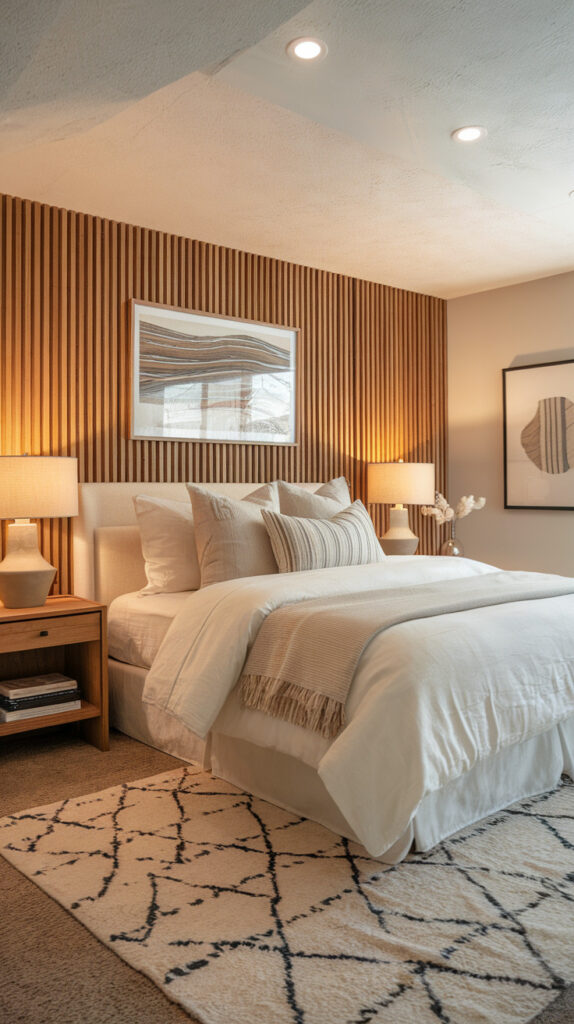
If your basement bedroom has tiny windows or none at all, it can feel closed in. One of my favorite tricks is creating a faux window effect using a large mirror paired with curtains. It sounds a little dramatic, but the results are honestly impressive.
A big mirror placed behind curtain panels looks like a window at first glance. It reflects light and visually opens the room, which is exactly what basements need. It’s basically design trickery, but in a good way.
Why This Works
Mirrors bounce light around the room, and basements need every bit of that. They also create depth, making the space feel less cramped. Curtains add softness and make the mirror look intentional rather than like you randomly leaned it against a wall.
This also gives you a focal point besides the bed. Basement bedrooms can feel flat, so adding a “window moment” makes the space more interesting.
How to Do It
- Choose a large mirror with a simple frame.
- Place it on the wall where a window would normally be.
- Hang curtain rods above the mirror, wider than the frame.
- Use floor-length curtains to create the illusion.
- Add a small bench or plant nearby for realism.
Style & Design Tips
Pick curtains in light neutral colors to keep the area bright. Avoid heavy dark curtains because they’ll defeat the whole purpose. Also choose a mirror with a frame that matches your style, like black for modern or wood for cozy.
Don’t hang the curtains too low. Mount them closer to the ceiling to make the room feel taller.
Pro Tip or Budget Hack
Use two tall mirrors side by side to create a “double window” effect. You can often find matching mirrors secondhand, and the result looks custom without costing much.
8. Install Peel-and-Stick Wall Panels for Texture
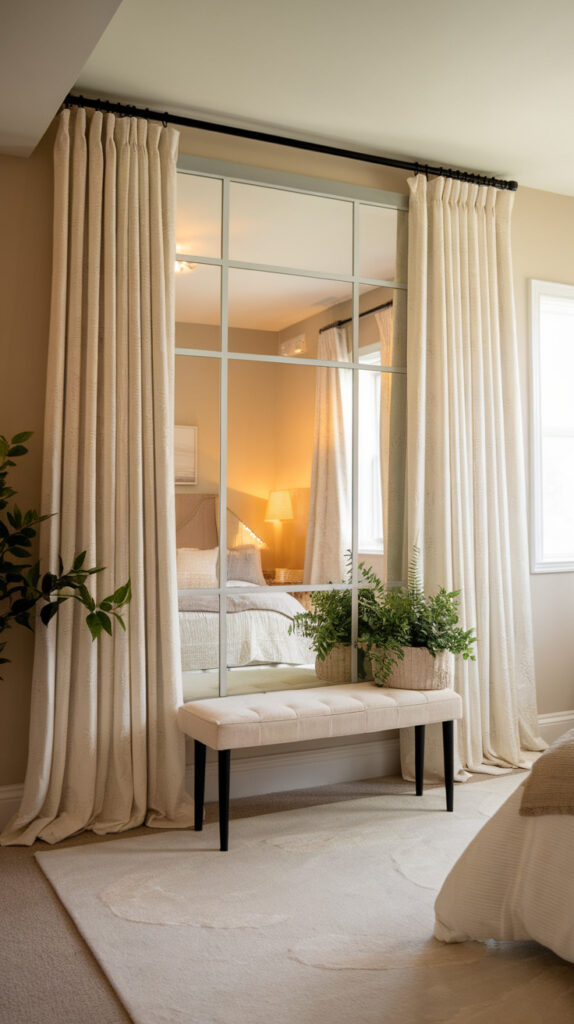
Basement bedrooms often look plain because the walls are usually flat drywall with nothing interesting going on. Peel-and-stick wall panels are a quick way to add texture without doing a full renovation. They come in faux wood, faux brick, modern slats, and even soft geometric designs.
I used peel-and-stick panels once in a basement guest room, and the transformation was ridiculous. It went from boring to boutique hotel in a weekend. You just have to choose the right pattern and not go overboard.
Why This Works
Texture makes a room feel layered and cozy. Basements tend to feel cold because they lack visual warmth, and textured walls fix that fast. Panels also cover imperfections, which basements tend to have plenty of.
The best part is that panels create an accent wall without needing paint skills. They give the room personality instantly.
How to Do It
- Choose one wall, usually behind the bed.
- Clean the wall thoroughly so the adhesive sticks.
- Measure and plan the layout before peeling anything.
- Apply panels slowly, pressing firmly to avoid bubbles.
- Trim edges neatly with a utility knife for a clean finish.
Style & Design Tips
Stick with subtle patterns if your room is small. Faux wood slats or soft brick textures work well without feeling busy. Avoid super shiny faux finishes because they can look cheap fast.
Also don’t panel every wall. One accent wall is enough to add style without overwhelming the room.
Pro Tip or Budget Hack
If peel-and-stick panels feel expensive, try peel-and-stick wallpaper with a textured look instead. It gives a similar vibe for less money, and it’s easier to remove later.
9. Add a Small Vanity or Getting-Ready Corner
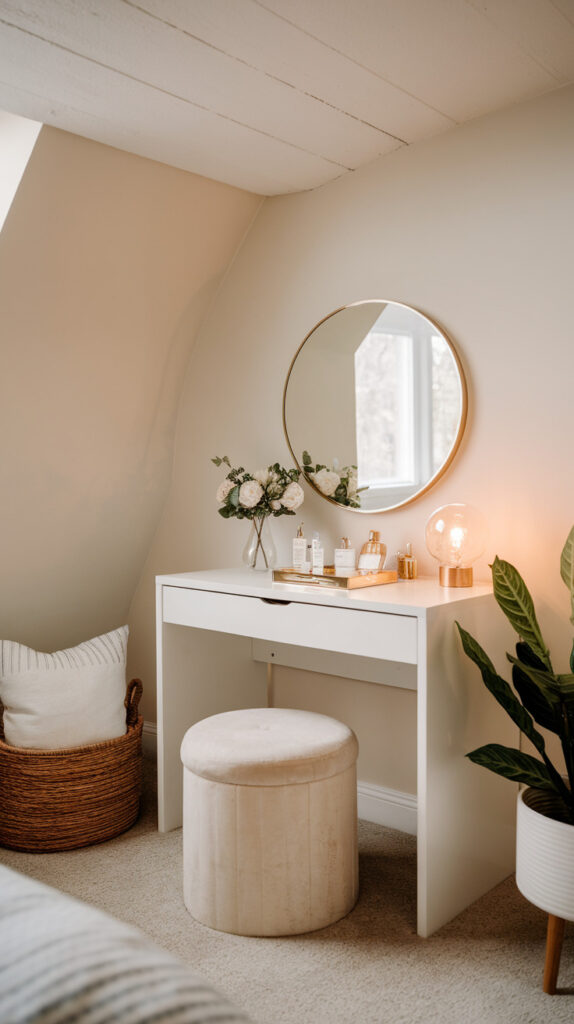
A basement bedroom can feel like a “sleep-only” space unless you add functional zones. One of the best additions is a small vanity corner. It makes the room feel more personal, more lived-in, and honestly more stylish.
Even if you don’t do makeup, a vanity works as a spot for skincare, hair styling, jewelry, or even journaling. I love the way a vanity area makes a basement bedroom feel like a proper suite instead of a temporary sleeping arrangement.
Why This Works
A vanity creates purpose. Basements can feel like multipurpose rooms with no clear identity, and adding a vanity makes the bedroom feel more intentional. It also adds a sense of luxury without needing a full renovation.
This setup also helps keep clutter off the bed and bathroom counter. That alone is worth it.
How to Do It
- Pick a small desk or console table that fits the space.
- Add a mirror, either wall-mounted or tabletop.
- Use a small stool or chair that can tuck underneath.
- Add a lamp or wall sconce for proper lighting.
- Organize with trays, drawers, or small baskets.
Style & Design Tips
Choose a vanity that matches your bedroom style. Light wood works great for cozy spaces, while black metal looks modern. Keep the surface mostly clear because clutter kills the vibe instantly.
Avoid using overhead lighting for this area. It will make the mirror feel harsh and unflattering.
Pro Tip or Budget Hack
Use a floating shelf as a mini vanity. Pair it with a mirror and a cute stool, and you’ve got a vanity setup that takes almost no floor space at all.
10. Use Low Furniture to Make the Ceiling Feel Higher
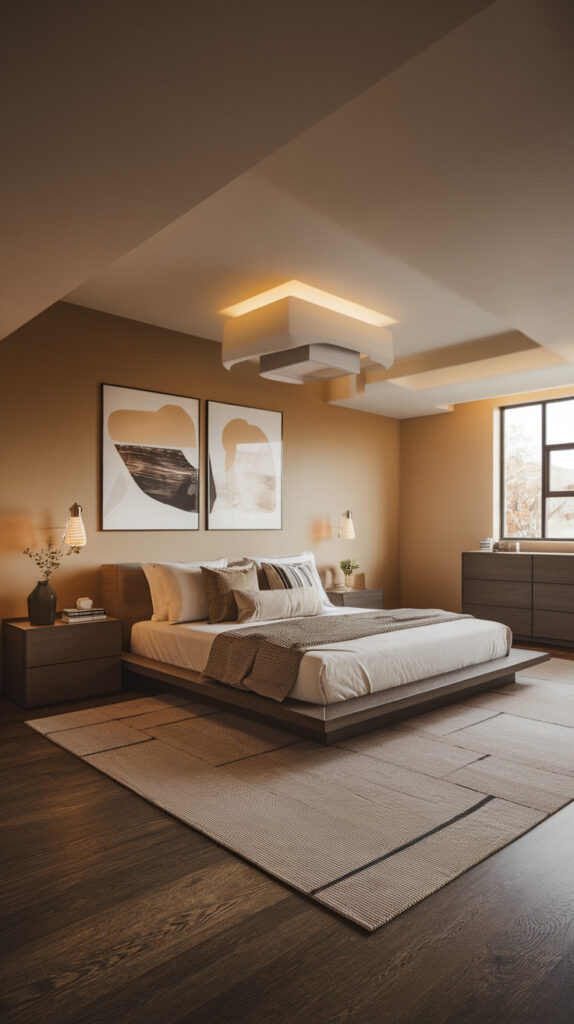
Basement ceilings often feel low, even when they technically aren’t. One simple trick is using low-profile furniture. Think platform beds, low dressers, and short nightstands. It makes the ceiling feel taller without changing anything structural.
I used to think furniture height didn’t matter much until I tried this in a basement room. Suddenly the space felt calmer and less cramped. It’s such an easy win.
Why This Works
Low furniture creates more visible wall space above it, which tricks your brain into feeling like the room has more height. It also keeps the room from feeling top-heavy, which is important in basements where ceilings can already feel close.
This approach also looks modern and clean. It gives the room a relaxed vibe that works really well for cozy basement bedrooms.
How to Do It
- Choose a platform bed or low bed frame.
- Pick nightstands that sit close to mattress height.
- Use a low dresser instead of a tall chest.
- Keep wall décor minimal and not too high.
- Use floor lamps instead of hanging pendant lights.
Style & Design Tips
Avoid bulky furniture pieces with heavy detailing. Basements need clean lines. If you love a farmhouse look, go for lighter finishes so the furniture doesn’t feel like it’s weighing the room down.
Also keep space under the bed clean. If you stuff storage bins everywhere, it ruins the airy effect.
Pro Tip or Budget Hack
If you already own tall furniture, swap the legs. Removing legs or replacing them with shorter ones can lower the overall height and instantly change how the room feels.
11. Add a Cozy Reading Chair and Small Side Table
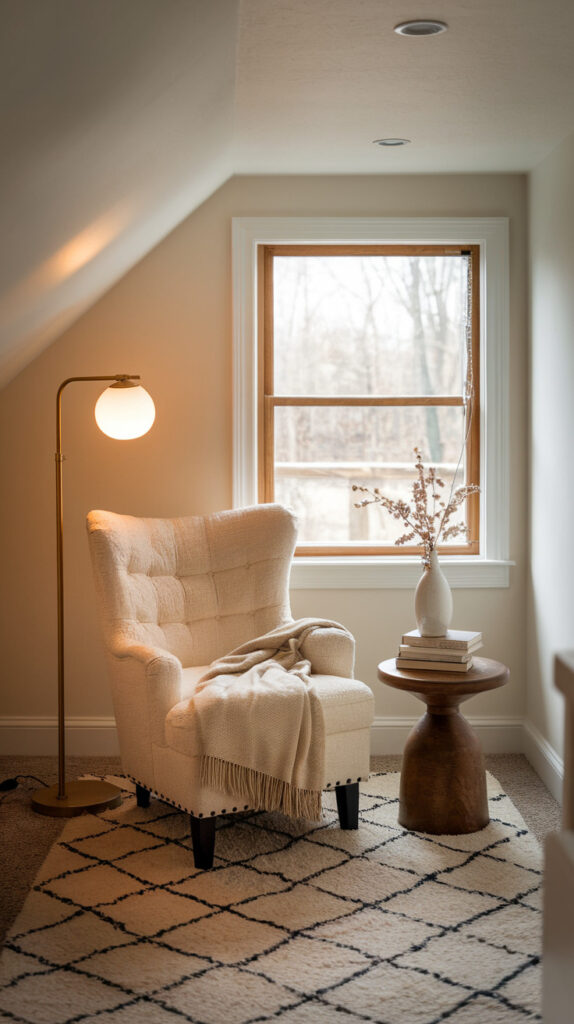
A basement bedroom feels way more luxurious when it has a little seating area. Even if it’s just one chair and a side table, it makes the space feel like a retreat instead of just a bed in a room. It also makes the room feel bigger because it creates another “zone.”
I’m a huge fan of adding a reading chair in basements because it makes the room feel warm and inviting. Plus, it’s a great excuse to buy a cute chair, and I support that kind of decision-making.
Why This Works
A chair adds functionality. It gives you a spot to read, relax, or toss clothes that are not dirty enough for the laundry basket but not clean enough for the closet. We all know that chair.
It also makes the room feel more balanced. Bedrooms that only have a bed can feel empty and awkward.
How to Do It
- Choose a corner that isn’t blocking walkways.
- Add a comfortable chair with a soft fabric texture.
- Place a small table beside it for drinks or books.
- Add a floor lamp or wall sconce for lighting.
- Finish with a throw blanket or pillow for warmth.
Style & Design Tips
Go for chairs in warm tones like cream, camel, or muted colors. Avoid stiff-looking chairs that don’t invite you to sit down. A basement bedroom should feel soft and comfortable, not like a showroom.
Also don’t cram oversized chairs into tiny rooms. A chair that fits the scale of the room will always look more expensive.
Pro Tip or Budget Hack
Use a small accent chair from Facebook Marketplace and re-cover the cushion or add a stylish throw blanket. Secondhand chairs often have great frames, they just need a little love.
12. Hide Utility Features With Decorative Screens or Curtains
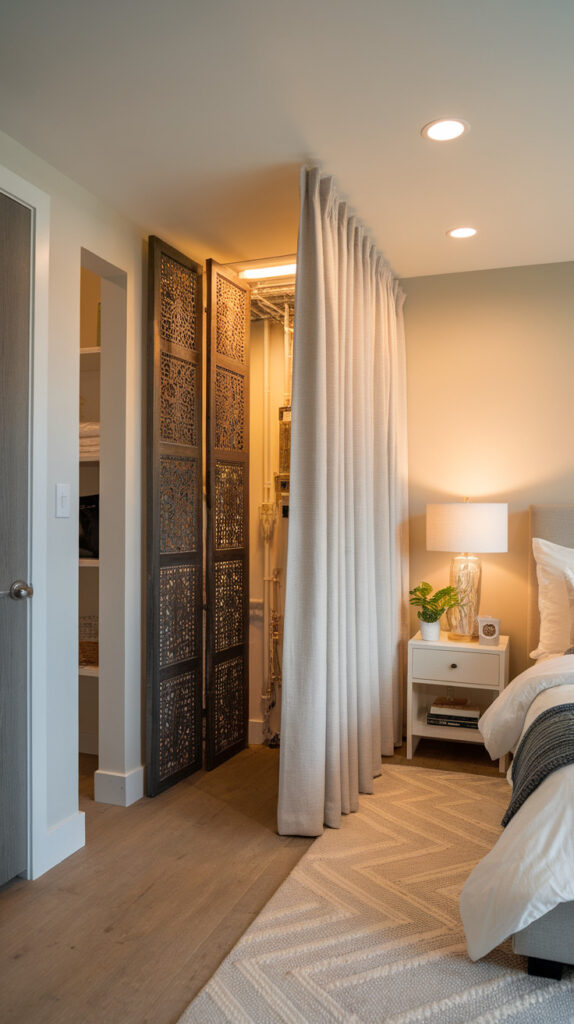
Basements often come with bonus features like electrical panels, water heaters, exposed pipes, or random storage areas. And while those things are necessary, they’re not exactly “bedroom décor.” The easiest fix is hiding them with decorative screens, curtains, or simple partition walls.
I’ve seen people try to ignore these things, but your eyes always go straight to them. Covering them makes the whole room feel more finished. It’s like cleaning your house before guests come over, but for your basement.
Why This Works
When you hide utility features, you reduce visual clutter. Basements already struggle with feeling unfinished, so anything you can do to create cleaner lines helps massively.
It also makes the room feel safer and calmer. Seeing a furnace next to your bed is not exactly relaxing, even if it’s totally normal.
How to Do It
- Identify what needs to be hidden: panel, pipes, storage, etc.
- Use a folding screen for quick coverage.
- Hang curtains on a ceiling track for a clean look.
- Build a simple frame wall if you want a more permanent fix.
- Make sure you leave access for maintenance and safety.
Style & Design Tips
Choose screens or curtains that match the room’s vibe. Neutral curtains look clean and cozy, while wood screens add texture. Avoid loud patterns unless the rest of the room is simple, because it can look chaotic fast.
Also don’t block airflow around heating equipment. This isn’t the place to get creative in a dangerous way.
Pro Tip or Budget Hack
Use a tension rod and curtains to hide awkward areas. It’s cheap, easy, and removable. If you want it to look custom, mount the curtain high and wide so it feels like part of the room design.
13. Add Soft Cozy Bedding Layers Like a Boutique Hotel
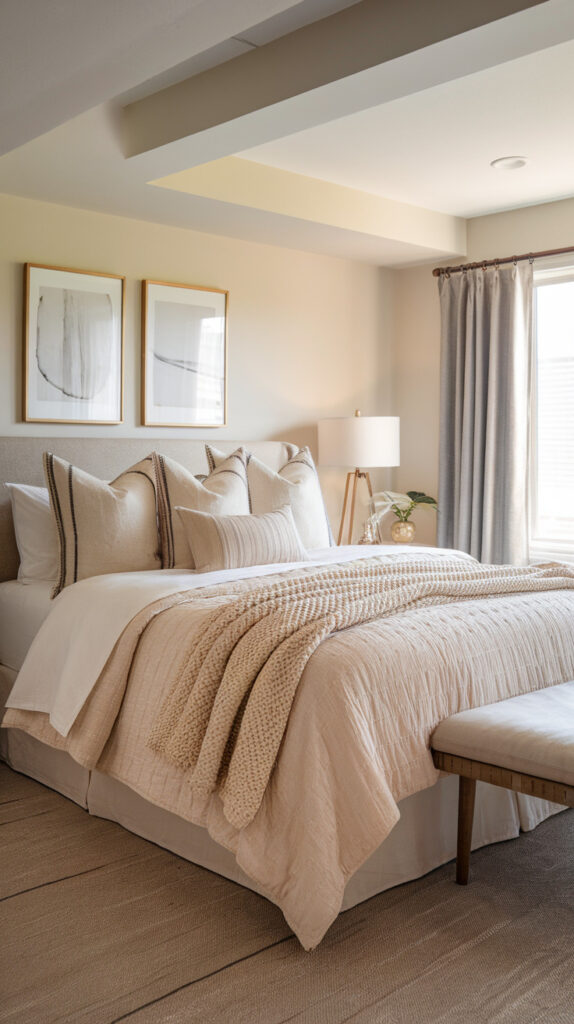
If there’s one thing that instantly makes a basement bedroom feel cozy, it’s layered bedding. A single comforter on a bed in a basement looks sad, no matter how nice the comforter is. Layers create depth, softness, and that “I want to climb into this bed immediately” vibe.
I’ve tried so many bedding setups over the years, and the best ones always include multiple textures. Think quilt plus duvet, throw blanket, mixed pillows, and maybe one decorative cushion that makes the bed look styled without looking like you’re trying too hard.
Why This Works
Layered bedding makes the bed look inviting, and the bed is the main focus of the room. In basements especially, you want the bed to look like a cozy centerpiece that distracts from low ceilings or limited natural light.
It also adds warmth physically. Basements can run cooler than the rest of the house, so extra bedding layers are practical and comfortable.
How to Do It
- Start with crisp sheets in cotton or microfiber.
- Add a quilt or blanket as the first layer.
- Add a duvet or comforter on top for volume.
- Layer 2–4 pillows in different sizes.
- Finish with a throw blanket folded at the foot of the bed.
Style & Design Tips
Mix textures like linen, knit, faux fur, or waffle weave. Texture is what makes the bed look expensive. Keep the color palette consistent so the bed looks calm, not chaotic.
Avoid using too many bold patterns at once. One patterned piece is fine, but basements look best when the bedding feels soft and coordinated.
Pro Tip or Budget Hack
Buy neutral bedding and change the look with cheap throw blankets and pillow covers. That way you can update the style seasonally without replacing the whole set. It’s a smart move, and it saves money without sacrificing the cozy vibe.
Basement Bedroom Design Strategy: Start With Structure, Not Décor
Basement bedrooms fail when people jump straight into buying décor without fixing the foundation. You cannot throw cute pillows at moisture issues, bad lighting, or awkward layouts and expect magic. The smartest approach starts with structure, safety, and function before anything decorative enters the room.
Think of this space as a long-term living area, not a temporary setup. That mindset changes your decisions immediately. When you treat the basement like a real bedroom suite, you naturally prioritize comfort, airflow, storage, and durability.
Step 1: Address Moisture and Airflow First
Basements naturally hold more moisture than upper floors. Before styling anything, check for leaks, condensation, or musty smells. Add a dehumidifier if needed and make sure vents are not blocked.
This step protects your furniture, rugs, and bedding. It also prevents mold issues that can damage both your health and your investment in the room.
Step 2: Improve Lighting Before Choosing Colors
Lighting should guide your paint and décor choices, not the other way around. Install layered lighting first so you understand how the room actually looks at night. Once lighting feels warm and balanced, then choose paint and textiles.
Good lighting increases usability and reduces eye strain. It also improves how the room photographs, which matters if you ever plan to rent or resell.
Step 3: Create Clear Zones for Function
Even a small basement bedroom benefits from clear zones. Define the sleeping area, storage area, and any bonus corner like a vanity or reading chair. Zoning prevents the space from feeling like a catch-all room.
Defined zones also improve traffic flow. When movement feels natural, the room feels intentional and comfortable.
Step 4: Choose Durable Materials
Basements require smarter material choices. Opt for moisture-resistant flooring, washable rugs, and performance fabrics when possible. Avoid overly delicate finishes that react poorly to temperature changes.
Durable materials reduce maintenance and long-term costs. They also keep the room looking fresh for years without constant updates.
Common Mistakes to Avoid in Basement Bedrooms
Basement design mistakes are usually predictable. Most come from copying upstairs bedroom trends without adapting them to basement conditions. Avoiding these mistakes protects both comfort and resale value.
Ignoring Moisture Control
Skipping moisture checks is the biggest error. Even if the room looks dry, humidity can damage wood furniture and fabric over time. Always confirm the environment is stable before decorating.
Moisture problems do not disappear with rugs and paint. They require prevention first.
Using Only Overhead Lighting
One ceiling light is never enough. It creates shadows and exaggerates low ceilings. Always layer lighting at multiple heights for balance.
Poor lighting reduces the cozy factor instantly. It also makes the room feel unfinished.
Choosing Dark Paint Without Adequate Lighting
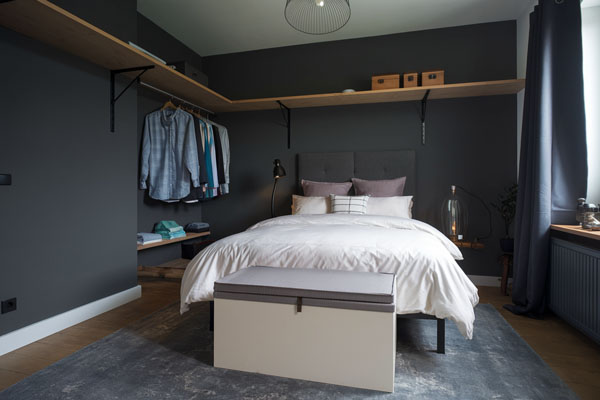
Dark walls can look dramatic and beautiful. However, without strong layered lighting, they make the basement feel smaller. Test paint colors with full lighting installed first.
Balance is key. Dark walls require lighter bedding and décor for contrast.
Overcrowding the Space
Basement bedrooms often double as storage areas. Overfilling the room with furniture destroys the cozy atmosphere. Keep layouts breathable and practical.
Function always beats squeezing in extra pieces. Clean space equals calm space.
Blocking Access to Utilities
Covering electrical panels or HVAC access without proper clearance is unsafe. Decorative screens should allow easy access. Never permanently seal off required maintenance areas.
Safety decisions always come before style choices. A beautiful room should also be practical.
Basement Bedroom Safety & Comfort Essentials
A basement bedroom must meet comfort and safety standards, especially if used regularly or for guests. Addressing these essentials increases livability and long-term value.
Proper Egress and Emergency Access
Ensure the bedroom has a legal egress window or proper emergency exit if required in your area. This is not just about code compliance. It is about safety and peace of mind.
If the room lacks proper egress, consult a professional before listing it as a bedroom. Safety upgrades improve both value and protection.
Soundproofing for Comfort
Basements can carry noise from upstairs floors. Add rugs, upholstered furniture, and insulated curtains to reduce echo and impact noise. Even small changes improve sleep quality significantly.
Soft materials absorb sound and enhance coziness at the same time. It is a functional and aesthetic win.
Temperature Control Solutions
Basements often run cooler than the rest of the home. Layer bedding appropriately and consider space heaters approved for bedroom use if needed. Make sure vents are clear and airflow is balanced.
Consistent temperature control improves comfort year-round. Guests especially notice temperature first.
Long-Term Value & Resale Considerations
A well-designed basement bedroom increases usable square footage in the eyes of buyers. However, only properly finished and safe bedrooms add real value. Design with durability and neutrality in mind if resale is a future goal.
Neutral color palettes appeal to a broader audience. Built-in storage and clean finishes make the space feel permanent rather than temporary.
Investing in moisture control, lighting, and flooring delivers higher returns than trendy décor. Focus on structure first, style second.
Frequently Asked Questions
Can a basement bedroom feel as cozy as an upstairs bedroom?
Yes, with proper lighting, layered textiles, and warm colors, a basement bedroom can feel just as cozy. The key difference is paying extra attention to moisture and light balance. When those are handled well, the space feels intentional and inviting.
What is the best flooring option for basement bedrooms?
Luxury vinyl plank, sealed concrete with rugs, or engineered flooring rated for below-grade use works best. These materials handle moisture changes better than solid hardwood. Always pair flooring with a moisture barrier if needed.
How do I make a small basement bedroom feel bigger?
Use light warm paint, low-profile furniture, and mirrors to reflect light. Keep storage vertical and avoid clutter. Good lighting makes the biggest difference in perceived size.
Is it safe to use rugs in basement bedrooms?
Yes, as long as the basement is dry and properly ventilated. Choose low-pile rugs and use rug pads to allow airflow underneath. Regular cleaning prevents moisture buildup.
Do I need a dehumidifier in a finished basement bedroom?
Many basements benefit from one, especially in humid climates. A small dehumidifier helps protect furniture and bedding. It also improves overall air quality.
How can I hide exposed pipes without major renovation?
Use decorative screens, ceiling treatments, or paint pipes the same color as the ceiling to blend them in. Always leave access points clear for maintenance. Simple concealment solutions often look more polished than fully boxing everything in.
Final Thoughts
A basement bedroom doesn’t need a massive remodel to feel warm and stylish, but it does need smarter design choices than an upstairs room would. Focus on warmth, lighting, texture, and hiding the awkward basement stuff that ruins the vibe. Once you get those right, everything else feels easy.
If you try even three of these ideas, the room will start feeling like a real cozy bedroom instead of a backup space. And honestly, that’s when basements finally become kind of awesome.
Get the Weekend Home Reset Checklist Pack
A free printable pack to help you reset your home, clear the mess, and make your space feel calmer in a simple, doable way.