15 Beautiful Blue Sofa Living Room Ideas for Fresh Looks
The room felt off the second I walked in, even though nothing looked technically wrong. I kept staring at the couch and realized the blue sofa carried the whole space while everything else just stood there doing nothing.
That moment flipped how I think about styling around a bold sofa color.
Blue sofas feel confident, but they also feel intimidating if you overthink them. I learned the hard way that the trick involves balance, not perfection or matching everything like a catalog page.
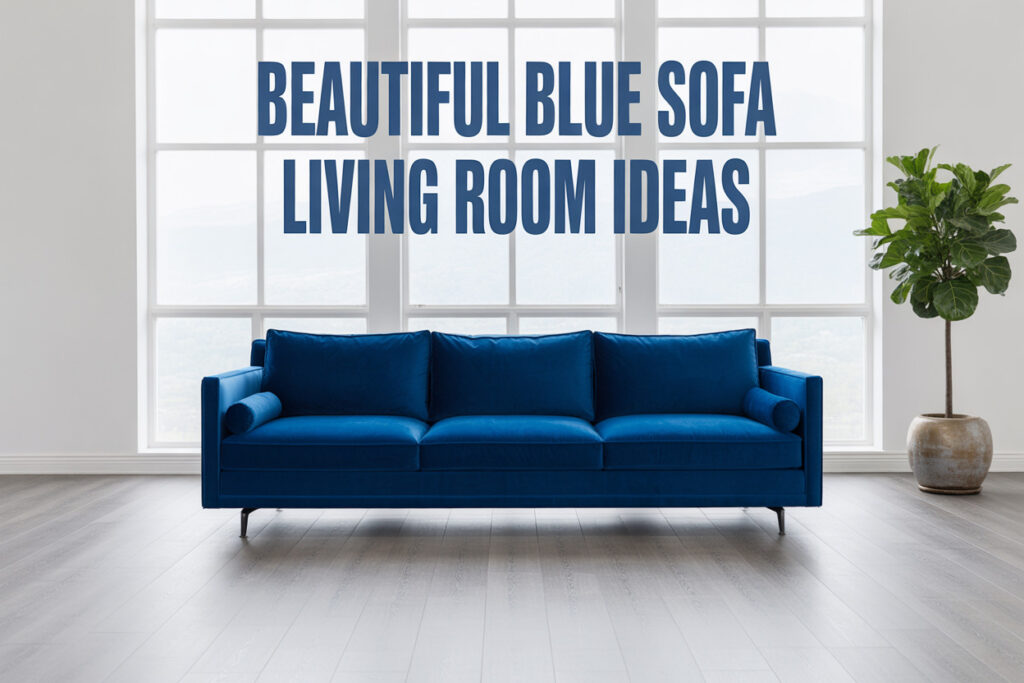
Let me show you what actually works in real living rooms.
1. Blue Sofa With Warm Neutral Walls That Calm Everything Down
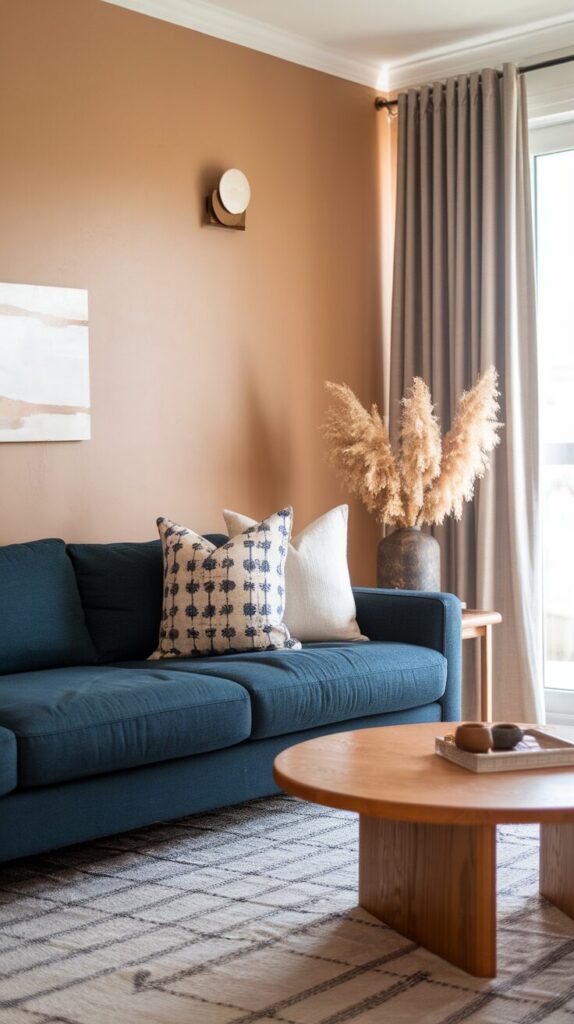
I once thought blue sofas demanded white walls or nothing at all. That belief died fast after I painted one living room a warm beige and watched the space instantly relax.
The blue sofa still popped, but the room finally felt welcoming instead of sharp.
This idea works because warm neutrals soften blue’s cool energy without muting it. Beige, greige, soft taupe, or creamy sand shades let the sofa stand out while keeping the room grounded. I always recommend this setup for people who want color without visual chaos.
Why This Works
Warm neutrals create contrast without competition. The walls calm the eye, which lets the blue sofa become a feature instead of a fight. This balance keeps the room cozy instead of cold.
How to Do It
- Choose a wall color with warm undertones, not gray-heavy shades.
- Test paint samples next to the sofa during daylight.
- Keep trim slightly warmer than pure white.
Style & Design Tips
Add textured elements like linen curtains or woven rugs to prevent flatness. Avoid icy whites because they clash with most blue fabrics. Stick to soft finishes for a relaxed look.
Pro Tip or Budget Hack
Use peel-and-stick wallpaper in warm neutral tones if paint feels risky. You get warmth without long-term commitment or big costs.
2. Blue Sofa Paired With Natural Wood for Instant Balance
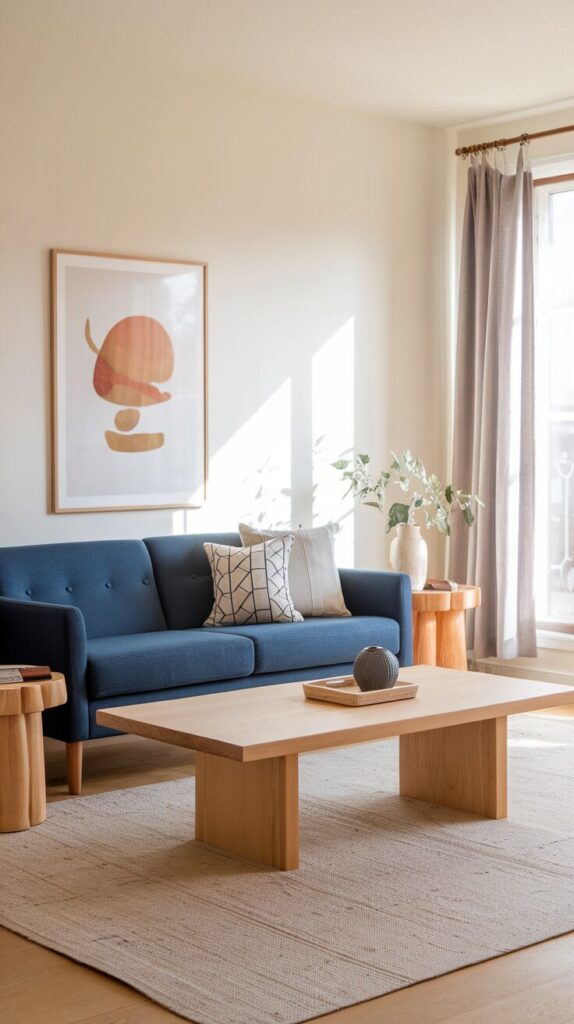
I used to ignore wood tones when styling blue sofas, and honestly, that mistake haunted me. The moment I added a light oak coffee table, the room finally made sense. Wood grounds blue in a way few materials can.
Natural wood adds warmth, texture, and visual weight. Blue sofas love organic finishes because they prevent the space from feeling overly modern or sterile. This combo works in both small apartments and open living rooms.
Why This Works
Wood introduces warmth that balances blue’s cool tone. The contrast feels natural instead of forced. The room gains depth without extra colors.
How to Do It
- Pick wood with visible grain for character.
- Match wood tones loosely, not perfectly.
- Mix light and medium wood for layering.
Style & Design Tips
Use rounded wood furniture to soften boxy sofas. Avoid red-toned wood with bright blues. Stick with oak, maple, or walnut.
Pro Tip or Budget Hack
Thrift stores hide solid wood gems that refinish easily. Sand lightly and seal for a custom look on a budget.
3. Blue Sofa With Crisp White Trim That Feels Fresh
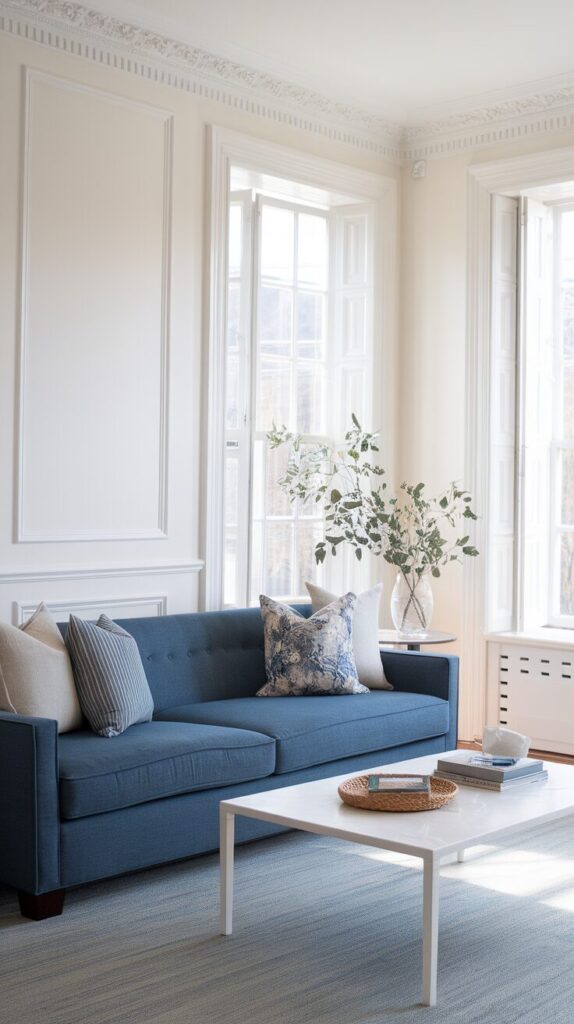
Everyone talks about white walls, but trim deserves more attention. I repainted my baseboards bright white once, and the blue sofa suddenly looked intentional. That small change lifted the entire room.
White trim frames the space and sharpens blue furniture. It adds structure without stealing attention. This setup works great for homes with older architectural details.
Why This Works
White trim creates clean lines that highlight color contrast. The blue sofa gains definition. The room feels polished without effort.
How to Do It
- Use semi-gloss paint for durability.
- Keep trim brighter than walls.
- Clean lines matter more than size.
Style & Design Tips
Pair classic molding with simple decor. Avoid mixing too many whites. Keep consistency across doors and windows.
Pro Tip or Budget Hack
Paint existing trim instead of replacing it. A fresh coat changes everything for very little money.
4. Blue Sofa Anchored by a Patterned Area Rug
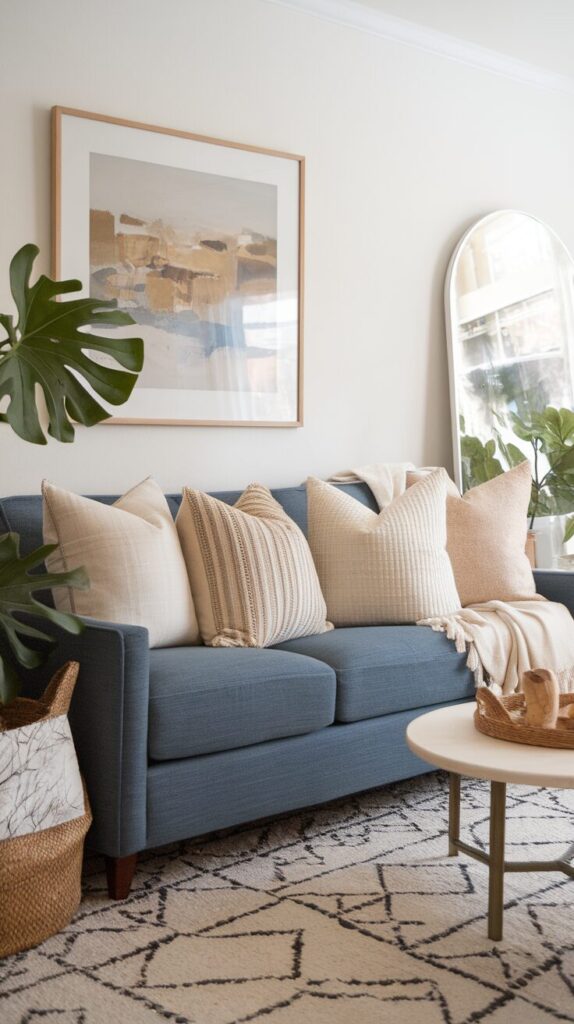
I resisted patterned rugs for years because I feared visual noise. Then I tried one under a blue sofa, and the room finally stopped floating. Rugs anchor furniture better than anything else.
A patterned rug pulls blue into the rest of the room. It introduces color echoes and texture. This approach feels especially helpful in open layouts.
Why This Works
Rugs define space and add cohesion. The pattern connects the sofa to the floor visually. Everything feels intentional.
How to Do It
- Choose patterns with hints of blue.
- Size the rug to fit under front legs.
- Keep furniture partially on the rug.
Style & Design Tips
Avoid tiny rugs that feel accidental. Use low-contrast patterns for calm spaces. Save bold designs for simple furniture.
Pro Tip or Budget Hack
Indoor-outdoor rugs cost less and clean easily. They work surprisingly well in living rooms.
5. Blue Sofa With Mixed Throw Pillows That Feel Collected
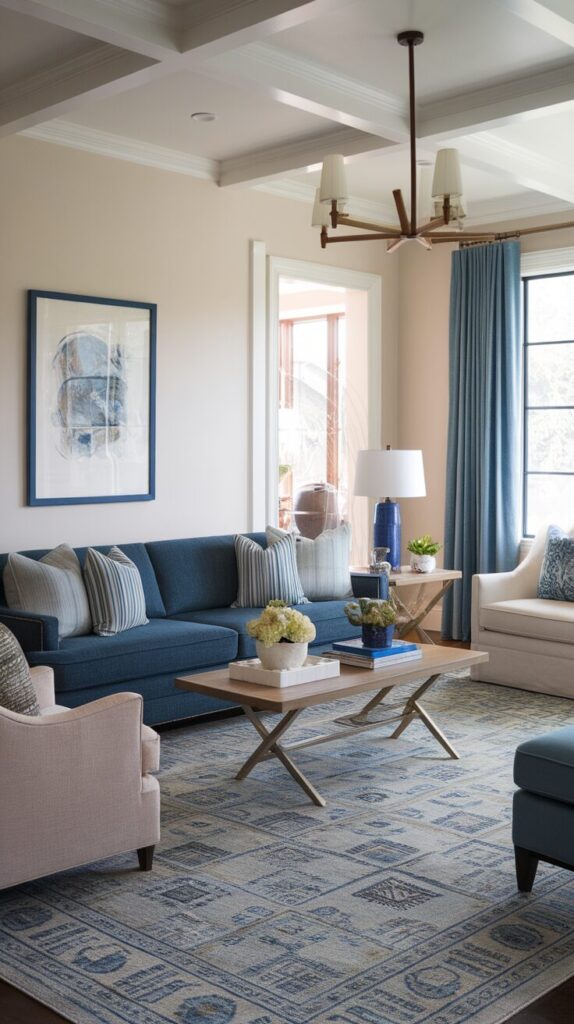
Matching pillows bored me fast. Once I mixed textures and patterns, the blue sofa finally felt lived-in. The trick involves variety without chaos.
Throw pillows let you experiment without commitment. They refresh the sofa seasonally. This idea works for renters and serial redecorators.
Why This Works
Pillows break up solid upholstery visually. They add depth and personality. The sofa looks styled, not staged.
How to Do It
- Mix solids, patterns, and textures.
- Use odd numbers for balance.
- Keep one color thread consistent.
Style & Design Tips
Use different fabric finishes like velvet and linen. Avoid matching sets. Let imperfection guide the look.
Pro Tip or Budget Hack
Swap pillow covers instead of inserts. Storage stays easy and costs drop fast.
6. Blue Sofa Framed by Layered Lighting
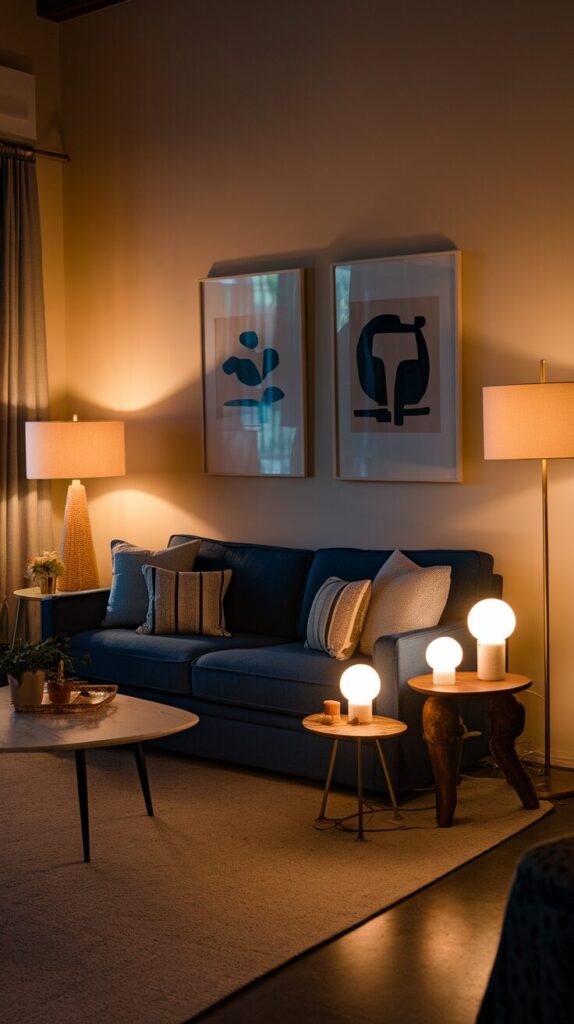
Overhead lights never flatter blue sofas. I learned that after one harsh evening glare ruined the vibe. Layered lighting saved the space completely.
Table lamps, floor lamps, and soft bulbs create mood. Blue furniture shines under warm light. This setup feels cozy and intentional.
Why This Works
Lighting changes color perception. Warm light softens blue tones. The room gains depth and comfort.
How to Do It
- Use lamps at different heights.
- Choose warm LED bulbs.
- Add dimmers when possible.
Style & Design Tips
Avoid cool white bulbs. Use fabric shades for softness. Balance light across the room.
Pro Tip or Budget Hack
Plug-in wall sconces mimic built-ins without wiring. They add style fast.
7. Blue Sofa With Metallic Accents for Subtle Glam
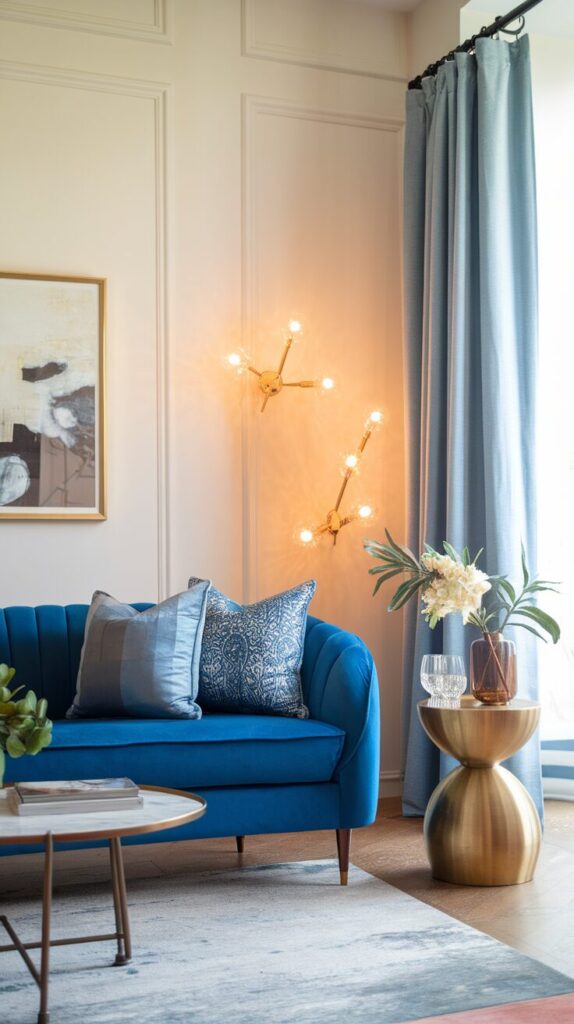
I avoided metallics because I feared tackiness. Then I added brass legs and everything clicked. Blue loves a hint of shine.
Metal accents elevate blue sofas without overwhelming them. Gold, brass, or black metals add contrast. This idea suits modern and transitional homes.
Why This Works
Metal reflects light and adds dimension. Blue absorbs color beautifully. The pairing feels intentional and rich.
How to Do It
- Choose one metal finish.
- Add accents through legs or trays.
- Keep shine controlled.
Style & Design Tips
Use brushed finishes for softness. Avoid mixing too many metals. Let blue stay dominant.
Pro Tip or Budget Hack
Spray paint outdated hardware for a refresh. The upgrade costs almost nothing.
8. Blue Sofa Styled With Art That Pulls the Color Up
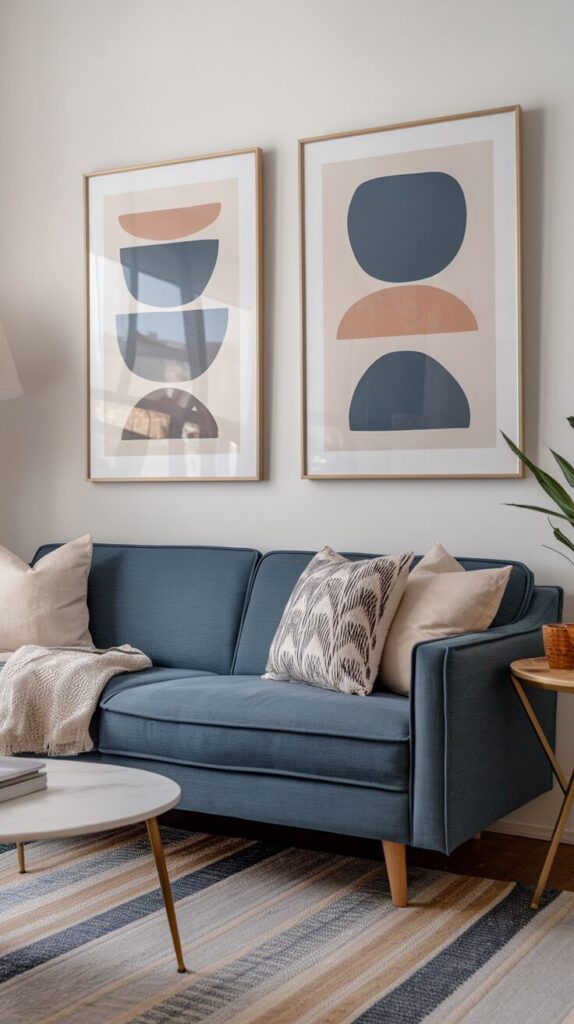
Bare walls flatten blue sofas. I noticed the room felt bottom-heavy until I hung art. Suddenly the space breathed.
Artwork connects the sofa to the rest of the room. It balances visual weight. Blue appears intentional instead of random.
Why This Works
Art distributes color vertically. The eye moves naturally. The room feels cohesive.
How to Do It
- Choose art with blue hints.
- Hang at eye level.
- Keep scale proportional.
Style & Design Tips
Avoid tiny frames above large sofas. Use simple frames for busy art. Balance colors evenly.
Pro Tip or Budget Hack
Frame fabric or wallpaper samples. Custom art doesn’t need big budgets.
9. Blue Sofa With Plants for Life and Contrast
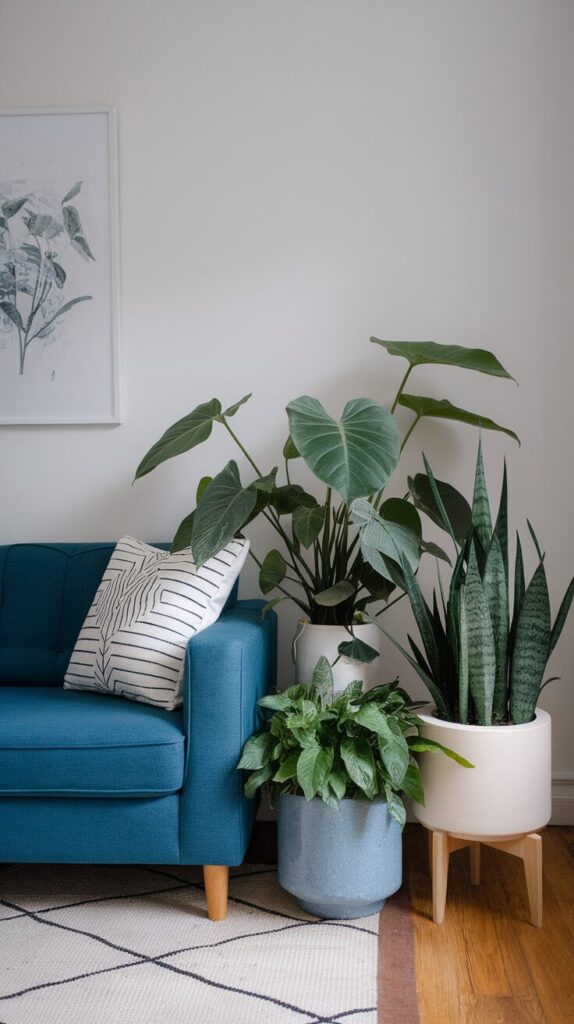
Plants saved my blue sofa setup. Green softened the color instantly. The room felt alive.
Plants add organic contrast and movement. Blue benefits from natural elements. Even faux options help.
Why This Works
Green complements blue naturally. Plants add texture and freshness. The space feels healthier.
How to Do It
- Place plants at different heights.
- Use varied leaf shapes.
- Avoid crowding.
Style & Design Tips
Choose neutral planters. Let greenery shine. Avoid overly bright pots.
Pro Tip or Budget Hack
Propagate plants from friends. Free decor always wins.
10. Blue Sofa Paired With Soft Curtains for Flow
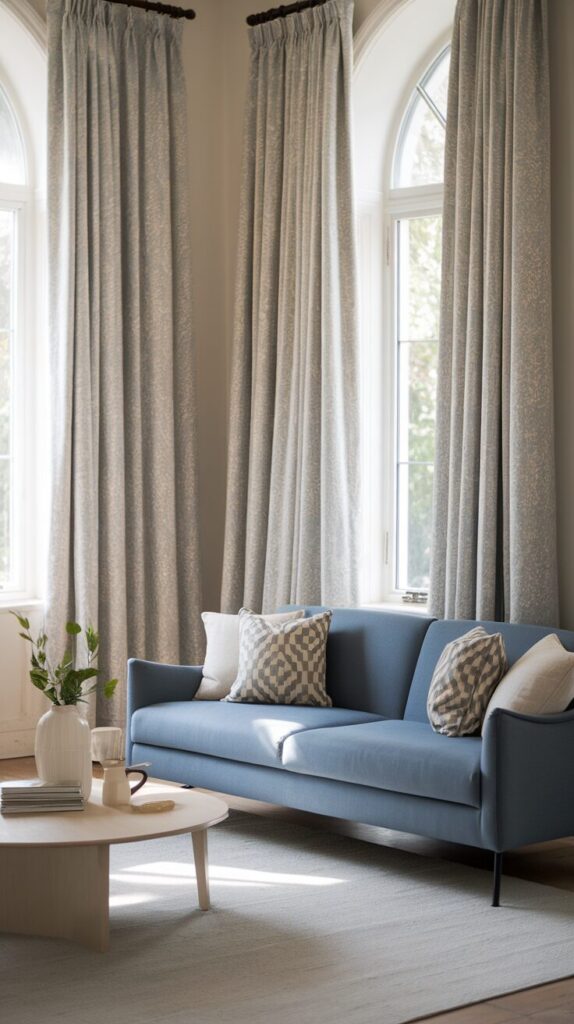
Heavy curtains overwhelmed my blue sofa once. Switching to light fabric fixed everything. The room finally flowed.
Soft curtains frame windows gently. They support blue without stealing attention. This idea suits small spaces.
Why This Works
Light fabrics balance visual weight. Blue stays grounded. The room feels airy.
How to Do It
- Hang curtains high.
- Choose light neutrals.
- Let fabric puddle slightly.
Style & Design Tips
Avoid stiff fabrics. Use linen blends for texture. Keep hardware simple.
Pro Tip or Budget Hack
Use drop cloths as curtains. They look great and cost less.
11. Blue Sofa With a Coffee Table That Grounds the Space
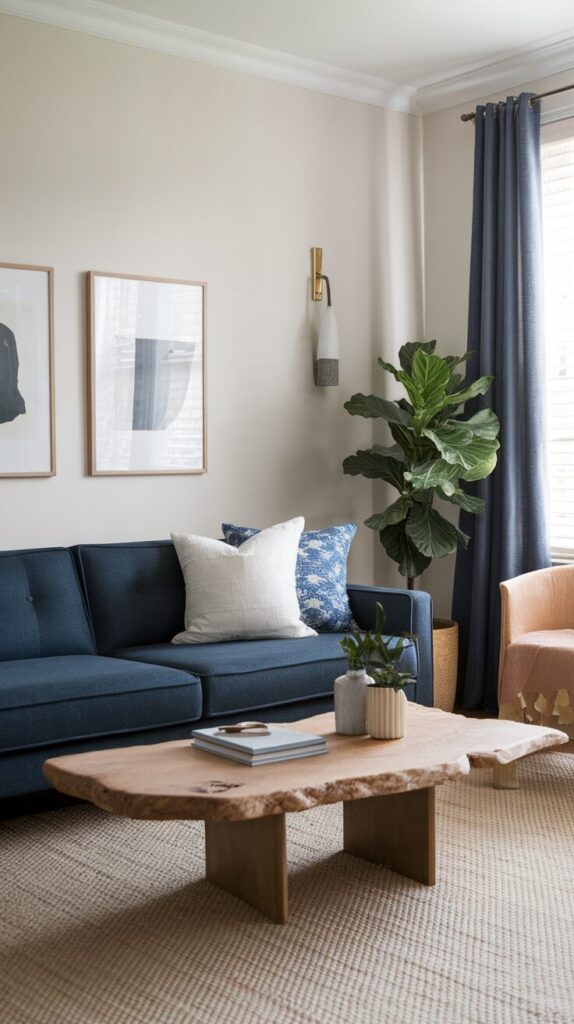
Wrong coffee tables ruin good sofas. I learned that lesson painfully. The right table anchors everything.
A grounded coffee table balances blue visually. It adds function and style. Shape matters here.
Why This Works
Tables provide visual weight. Blue needs grounding elements. The room feels complete.
How to Do It
- Choose sturdy materials.
- Match scale to sofa.
- Center carefully.
Style & Design Tips
Use rounded edges for softness. Avoid glass-only designs. Balance matters.
Pro Tip or Budget Hack
Stack books to add height. Styling hides cheap tables easily.
12. Blue Sofa Styled With Textured Blankets
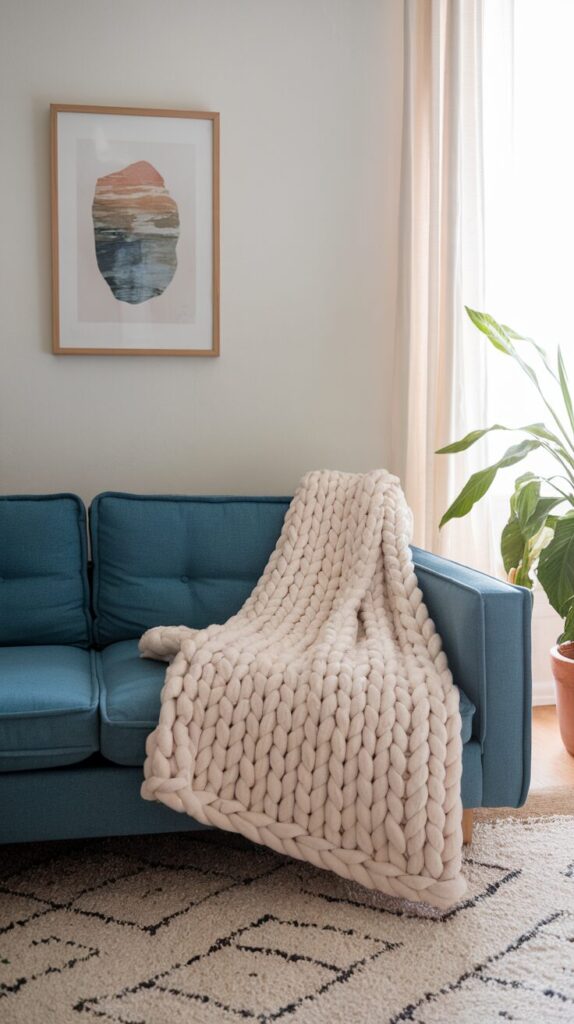
Flat sofas feel unfinished. I drape throws constantly. Texture changes everything.
Blankets soften blue visually. They invite comfort. This idea feels effortless.
Why This Works
Texture adds dimension. Blue gains warmth. The sofa feels lived-in.
How to Do It
- Drape casually.
- Mix textures.
- Rotate seasonally.
Style & Design Tips
Use chunky knits sparingly. Avoid perfect folds. Casual looks best.
Pro Tip or Budget Hack
Thrift wool blankets. Wash gently and enjoy instant texture.
13. Blue Sofa With Accent Chairs That Don’t Compete
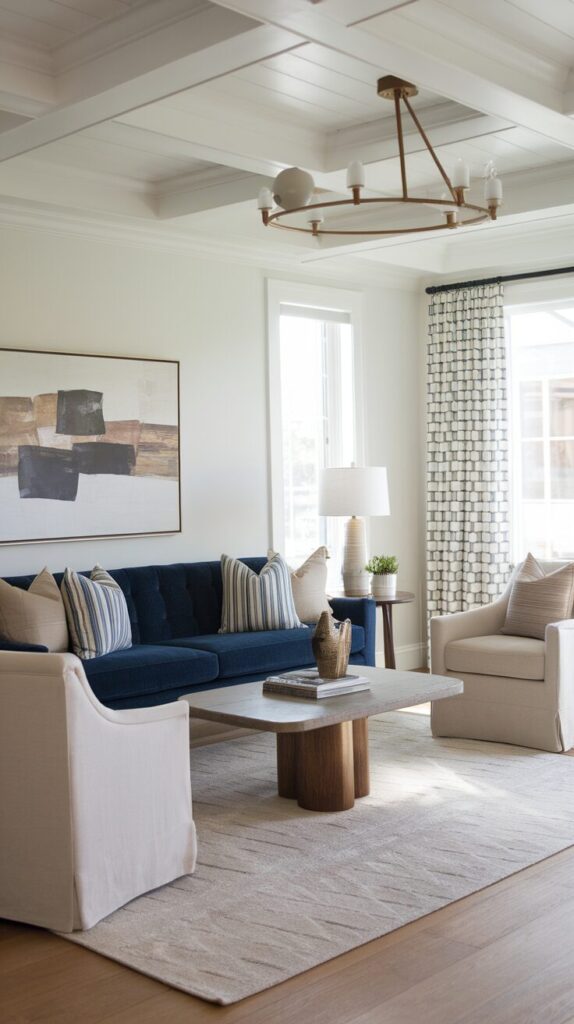
Matching sets feel boring. I prefer contrast. Accent chairs add interest without copying the sofa.
Neutral or textured chairs support blue sofas well. They break monotony. The room feels curated.
Why This Works
Contrast adds depth. Blue stays central. The layout feels balanced.
How to Do It
- Choose lighter tones.
- Keep scale consistent.
- Angle chairs slightly.
Style & Design Tips
Avoid matching upholstery. Use texture instead of color. Balance matters.
Pro Tip or Budget Hack
Reupholster thrifted chairs. Custom looks cost less than new.
14. Blue Sofa With Layered Decor on Side Tables
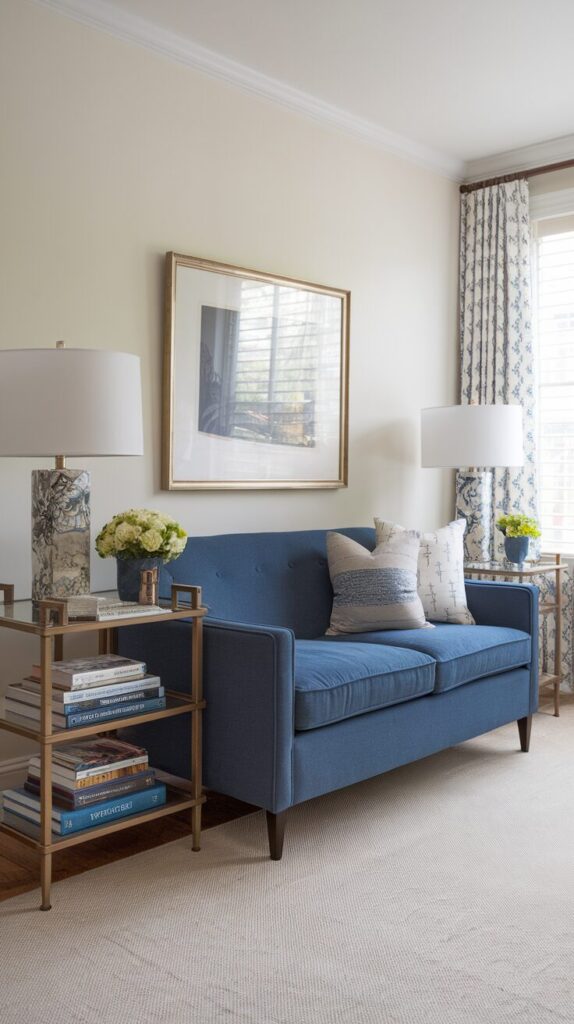
Empty side tables waste potential. I style mine lightly. The sofa benefits instantly.
Layered decor adds personality. It supports blue subtly. The room feels intentional.
Why This Works
Layers create depth. Blue feels supported. The space feels styled.
How to Do It
- Use odd numbers.
- Mix heights.
- Keep colors simple.
Style & Design Tips
Avoid clutter. Use functional decor. Less works better.
Pro Tip or Budget Hack
Shop your house first. Rearranging costs nothing.
15. Blue Sofa in a Room With Clear Negative Space
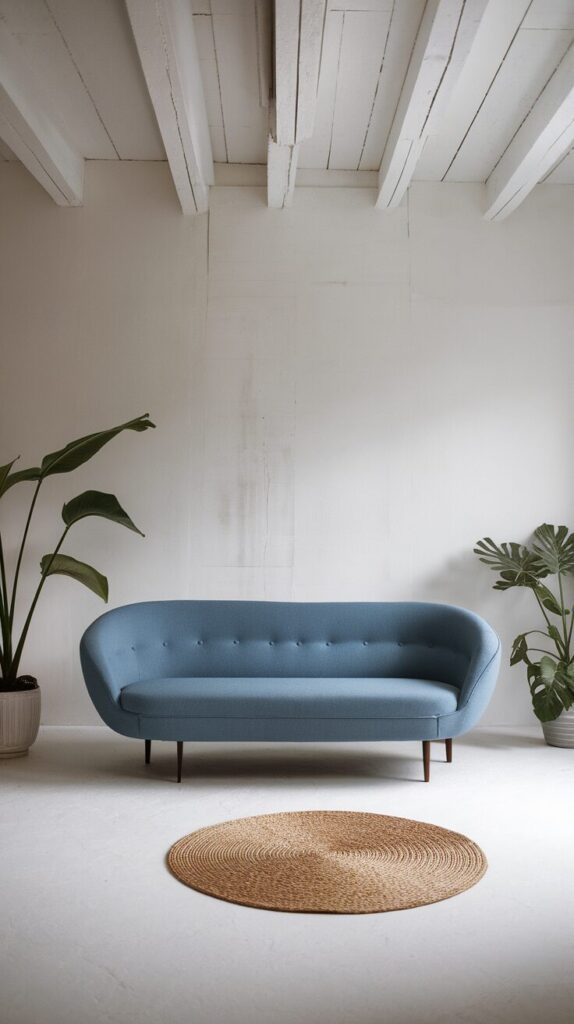
More decor doesn’t fix everything. I learned to stop adding. Space matters.
Negative space lets blue breathe. The sofa shines. The room feels calm.
Why This Works
Space creates focus. Blue stands out naturally. Balance improves.
How to Do It
- Remove extra items.
- Leave walking space.
- Edit regularly.
Style & Design Tips
Avoid filling every corner. Use intentional gaps. Calm wins.
Pro Tip or Budget Hack
Store decor seasonally. Rotating keeps rooms fresh for free.
Blue Sofa Styling Strategy: How to Build a Cohesive Living Room Around One Bold Piece
Before you rearrange furniture or start buying new decor, you need a simple strategy. A blue sofa acts as a dominant visual anchor, so every other element must support it instead of competing with it. I always treat the sofa as the foundation and build outward in layers.
Start by defining your mood before choosing accessories. Decide whether you want the room to feel cozy, modern, coastal, moody, or minimal, and let that decision guide color choices, materials, and lighting. When you lock in a direction early, you avoid random purchases that create clutter.
Next, balance temperature and texture intentionally. Blue carries cool undertones, so I add warmth through wood, brass, woven fabrics, or creamy neutrals to keep the space inviting. That contrast prevents the room from feeling sterile or overly bold.
Finally, control visual weight across the room. Spread color vertically with art, curtains, or shelving so the sofa does not feel heavy at the bottom of the space. When you distribute attention evenly, the room feels professionally styled instead of accidental.
Common Mistakes to Avoid When Styling a Blue Sofa
Many people overmatch everything to the sofa. I see rooms where every pillow, rug, and artwork screams the same shade of blue, and the space ends up flat instead of cohesive. You need variation, not duplication.
Another mistake involves ignoring undertones. Navy, teal, cobalt, and dusty blue all carry different personalities, so pairing the wrong wood or wall color can make the sofa look off even when you cannot explain why. Always test samples in real lighting before committing.
People also overcrowd the room because they fear emptiness. Too many side tables, baskets, plants, and decorative objects suffocate the visual impact of a bold sofa. Leave breathing room so the blue can shine without competition.
Finally, harsh lighting ruins everything faster than bad decor. Cool-toned bulbs make blue feel cold and uninviting, especially at night. Choose warm lighting and layer it thoughtfully to maintain comfort.
Choosing the Right Shade of Blue for Your Space
Not all blue sofas create the same mood. Navy feels grounded and sophisticated, while lighter blue tones feel airy and relaxed. You need to match the shade to your room’s natural light and size.
If your living room gets strong daylight, you can handle deeper shades without making the space feel heavy. In darker rooms, softer blues prevent the area from shrinking visually. I always test fabric swatches against walls during different times of the day before finalizing anything.
Consider how the shade interacts with flooring and trim. Cool gray floors pair better with navy or slate blues, while warmer wood floors complement teal or denim tones. That coordination keeps the room harmonious instead of disconnected.
Creating a Balanced Color Palette Around Blue
Blue should lead, but it should not dominate every inch of the room. I usually follow a simple 60-30-10 rule when styling bold furniture: 60 percent neutral base, 30 percent supporting tones, and 10 percent accent color. This approach keeps everything structured and intentional.
Neutral bases like beige, cream, greige, or soft white calm the space instantly. Supporting tones such as wood, muted greens, or soft blush add personality without stealing attention. Accent colors through pillows or art create interest without overwhelming the eye.
Avoid introducing too many strong colors at once. When you mix bold blue with bright yellow, red, and emerald, the room quickly loses cohesion. Limit your palette and repeat colors subtly for a polished look.
Maintenance & Longevity: Keeping Your Blue Sofa Looking Fresh
A blue sofa makes a statement, so you must protect that investment. Regular vacuuming prevents dust from dulling fabric, especially on velvet or textured upholstery. I vacuum cushions weekly and rotate them monthly to maintain shape.
Sunlight fades color faster than most people realize. Position the sofa away from direct sun exposure or use sheer curtains to filter light during peak hours. That small habit protects vibrancy for years.
Clean spills immediately using manufacturer-recommended methods. Blot instead of rubbing, and always test cleaners in hidden spots first. Proper care keeps your sofa looking intentional instead of worn out.
Frequently Asked Questions
Does a blue sofa work in small living rooms?
Yes, a blue sofa works beautifully in small spaces when you balance it with light walls and minimal clutter. Choose slimmer arms and raised legs to maintain visual openness. Keep surrounding decor simple to avoid crowding.
What wall color pairs best with a blue sofa?
Warm neutrals like beige, soft taupe, or creamy white pair consistently well with most blue shades. Light gray works when you match undertones carefully. Always test paint next to the sofa before committing.
Can I mix different shades of blue in the same room?
You can mix shades of blue if you vary texture and intensity. Combine a navy sofa with lighter blue accents to create depth. Avoid using identical tones everywhere because that flattens the design.
Do blue sofas go out of style?
Blue sofas remain timeless because blue functions almost like a neutral in home design. Navy especially carries long-term appeal across modern, classic, and coastal styles. Smart styling keeps the look fresh for years.
What rug color works best under a blue sofa?
Neutral rugs in cream, beige, or soft gray offer safe and versatile choices. Patterned rugs that include hints of blue create cohesion without overpowering the space. Avoid tiny rugs that make the sofa look oversized.
Should I choose leather or fabric for a blue sofa?
Fabric offers softness and color richness, especially in velvet or linen blends. Leather provides durability and easier cleaning in busy households. Choose based on lifestyle, not just appearance, to ensure long-term satisfaction.
Final Thoughts
Blue sofas deserve confidence, not fear or overthinking. You don’t need to try all fifteen ideas at once to get results. Pick one change, test it for a week, and see how the room feels before doing more.
I always tell friends to trust their gut over trends. Your living room should feel like you, not a showroom, and blue already gives you a strong starting point.