15 Concrete Kitchen Ideas for a Modern Look
Concrete scares people for no good reason. I love how it feels cool, calm, and a little rebellious compared to glossy showroom kitchens. Concrete adds weight and confidence to a space, and it somehow makes even a tiny kitchen feel grown-up. If sleek but not soulless sounds like your vibe, you will enjoy these ideas.
I learned the hard way that concrete works best when you balance it with warmth. Wood, plants, and soft lighting keep things from feeling cold or unfinished. Think modern, not parking garage, because nobody wants that energy at home.
Most people assume concrete belongs in warehouses, cafés, or ultra-industrial lofts. The truth looks very different once you start seeing how designers use it in real homes. Concrete can feel warm, calm, and incredibly stylish when you combine it with the right materials.
What makes concrete interesting in a kitchen comes down to texture and honesty. It doesn’t pretend to be marble or quartz, and it doesn’t try to hide its natural character. That subtle imperfection gives a kitchen personality that polished surfaces sometimes lack.
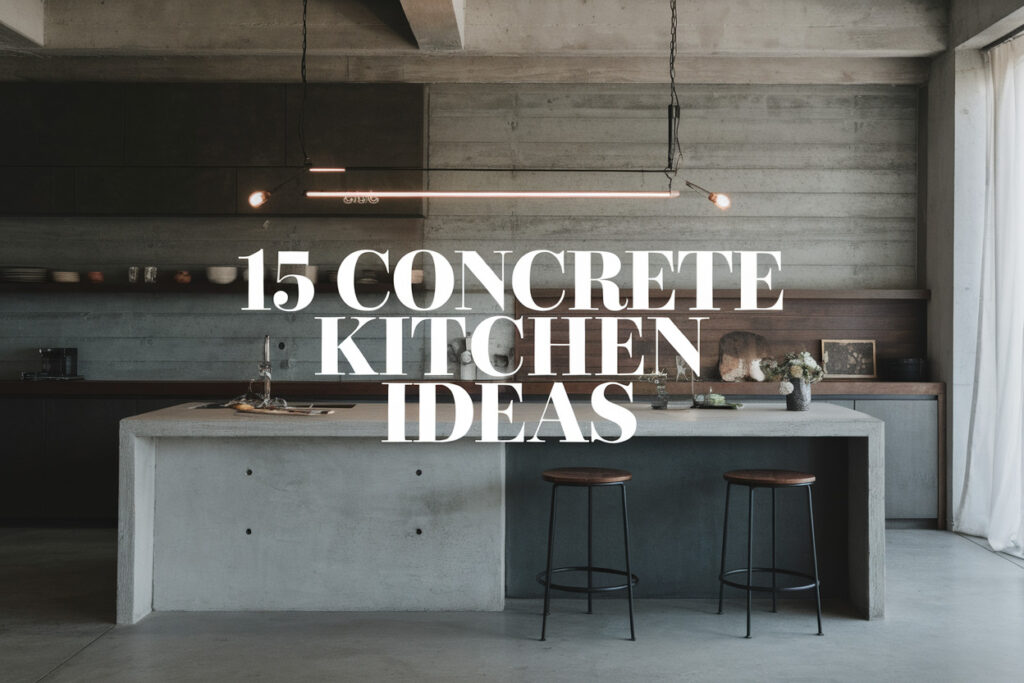
Another thing people rarely realize involves how flexible concrete can be in design. You can shape it, tint it, polish it, or keep it raw depending on the style you want. That level of customization allows homeowners to create kitchens that feel intentional instead of copied from a catalog.
Concrete also brings a practical advantage that busy kitchens appreciate. It handles heat, wear, and everyday messes surprisingly well when sealed correctly. Durability like that matters if your kitchen actually gets used instead of just photographed.
At the same time, concrete needs the right supporting cast to shine. Warm wood, matte metals, soft textiles, and natural light help balance the material beautifully. When those elements work together, the kitchen feels modern and grounded rather than cold or overly industrial.
The ideas in this guide focus on practical ways to introduce concrete into your kitchen without turning the space into a construction site. Some options involve major upgrades like islands or floors, while others work as small design tweaks. Even one thoughtful concrete feature can change the entire personality of a kitchen.
1. Concrete Countertops That Feel Custom, Not Cold
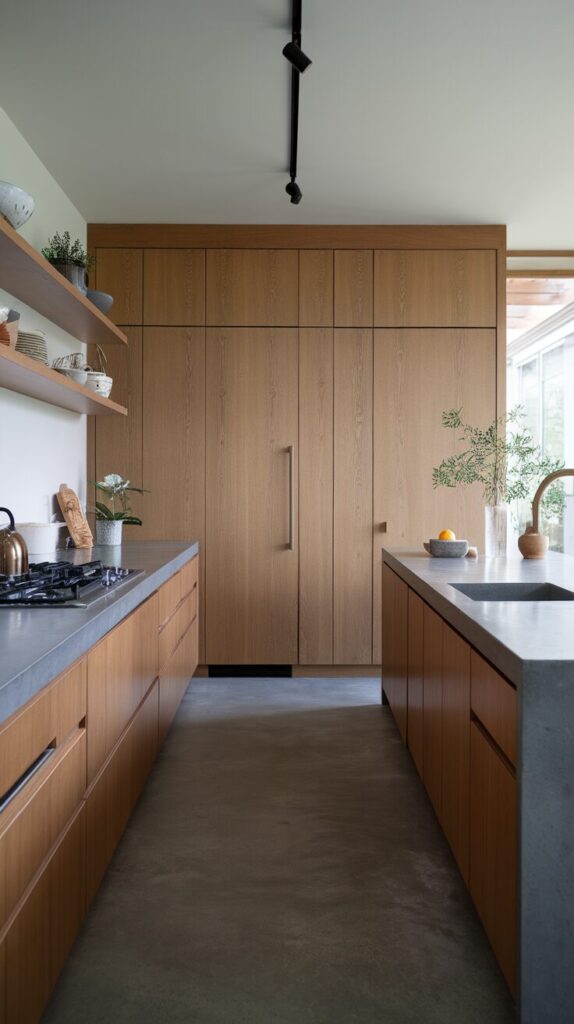
Most kitchens feel generic because the counters look exactly like everyone else’s. Concrete countertops fix that problem fast, and they bring a quiet confidence that laminate never pulls off.
I love how concrete shows subtle texture and variation, which makes the kitchen feel designed instead of purchased. If you want modern without screaming for attention, this idea delivers.
Concrete works because it acts like a neutral with personality. It grounds the room visually and lets cabinets, hardware, and lighting shine without fighting for attention.
The matte surface also hides crumbs and water spots better than glossy finishes, which saves your sanity on busy mornings. IMO, that alone makes it worth considering.
To do it right, focus on prep and sealing because those steps matter most.
- Choose poured-in-place or precast based on your timeline and budget
- Add subtle pigment for warmth instead of stark gray
- Seal properly to resist stains and moisture
- Pair with simple cabinetry for balance
For style, avoid pairing concrete with too many hard materials. Warm wood cabinets, brass pulls, or even soft white walls keep the space inviting. Never overload the kitchen with gray, because that drains all the life out of the room. Let concrete stay the star without turning everything else dull.
For a budget hack, use concrete overlay on existing counters instead of a full replacement. I tried this in a rental, and it shocked me how convincing it looked once sealed. You get the vibe without the full cost or commitment.
2. Concrete Backsplash With Subtle Texture
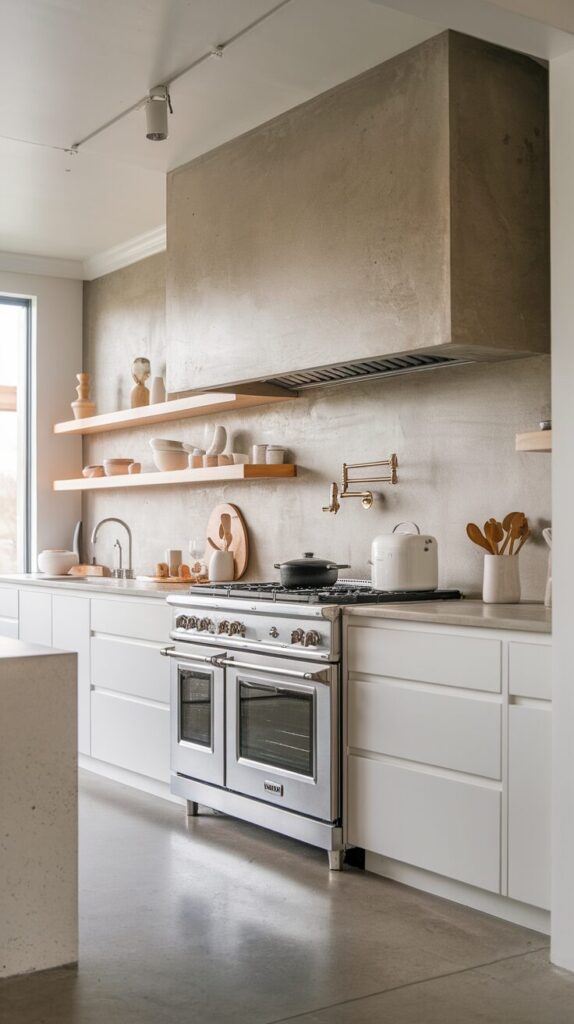
Most backsplashes feel predictable after a while. Subway tile works, but concrete adds depth without visual noise. I love a concrete backsplash because it feels continuous and calm behind busy cooking zones. The surface quietly ties the kitchen together.
This works because concrete reduces visual breaks. Fewer grout lines create a cleaner flow, which makes small kitchens feel bigger. Concrete also handles heat and splashes like a champ, so it stays practical as well as pretty. That balance matters more than people admit.
Installing a concrete backsplash does not need drama.
- Use thin concrete panels or microcement for easier application
- Seal thoroughly to protect from oil and stains
- Extend it slightly higher for a modern feel
- Keep outlets minimal and aligned
For design, keep the backsplash simple and let lighting do the talking. Under-cabinet lights create soft shadows that highlight the texture beautifully. Avoid busy veining or heavy patterns, because concrete shines when it stays understated. Clean lines win every time here.
If cost worries you, try concrete-look plaster instead of real concrete. I tested it behind my stove, and guests never guessed the difference. It gives the same smooth, modern effect with less labor.
3. Polished Concrete Floors That Anchor the Space
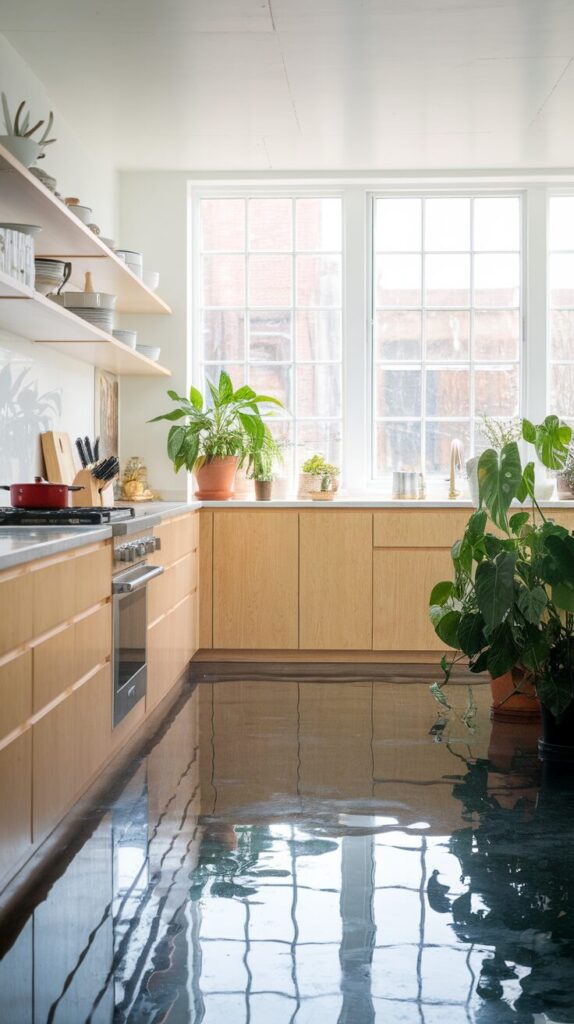
Kitchen floors take a beating, and most options show it fast. Polished concrete floors solve that problem while adding serious modern style. They feel solid underfoot and make the whole kitchen feel intentional. I love how they age instead of wearing out.
Concrete floors work because they create a seamless base. They reflect light subtly, which brightens the room without glare. The durability also means fewer repairs and less stress over spills. That peace of mind counts.
You can approach this in a few smart ways.
- Polish existing concrete if you have it
- Add radiant heating for comfort
- Choose a satin finish instead of high gloss
- Use rugs to soften key zones
Style matters with concrete floors, so layer thoughtfully. Wood stools, fabric runners, and plants keep things from feeling stark. Skip ultra-dark stains, because they show every speck of dust. Neutral tones stay forgiving and timeless.
For a budget-friendly option, consider concrete-look porcelain tiles. I used them in a previous place, and they fooled everyone. You get durability and style without structural work.
4. Concrete Kitchen Island That Feels Sculptural
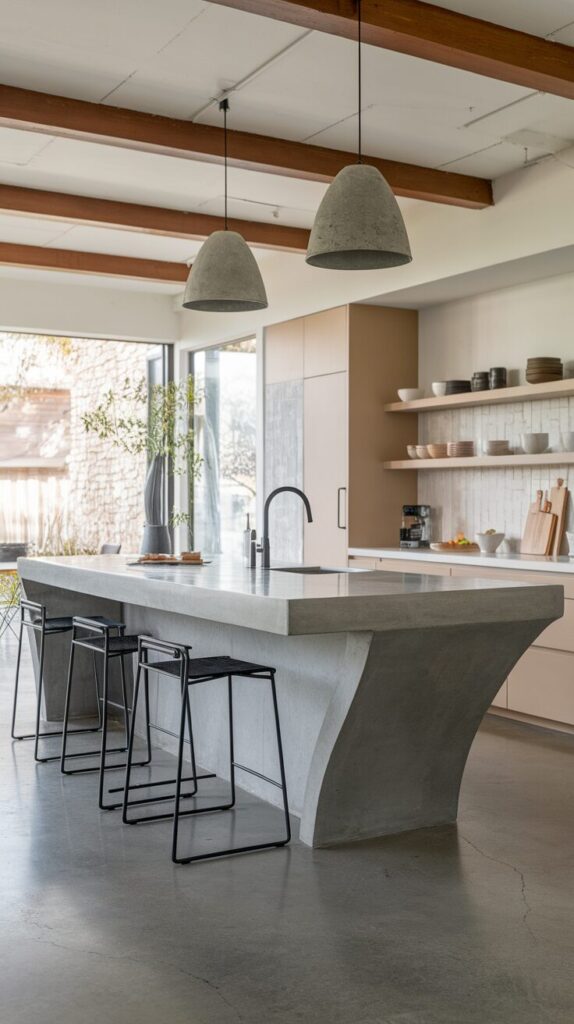
Kitchen islands often look bulky or boring. A concrete island flips that script and becomes a focal point instead. I love how it feels like furniture rather than cabinetry. It adds weight in a good way.
This works because concrete creates visual contrast. The island anchors the room while surrounding elements stay lighter. That balance improves flow and makes the layout feel deliberate. It also hides wear better than wood or paint.
Execution matters more than size here.
- Keep edges clean and minimal
- Pair with slim stools to avoid heaviness
- Use waterfall sides for drama
- Add storage underneath to stay practical
Design-wise, contrast saves the day. Light cabinets or open shelving prevent the island from overpowering the room. Avoid matching everything to the island, because contrast creates interest. Let the island stand confidently on its own.
For savings, build a wood island and finish it with a concrete skim coat. I helped a friend do this, and the result looked custom. The cost stayed manageable without sacrificing style.
5. Concrete Open Shelving With Industrial Charm
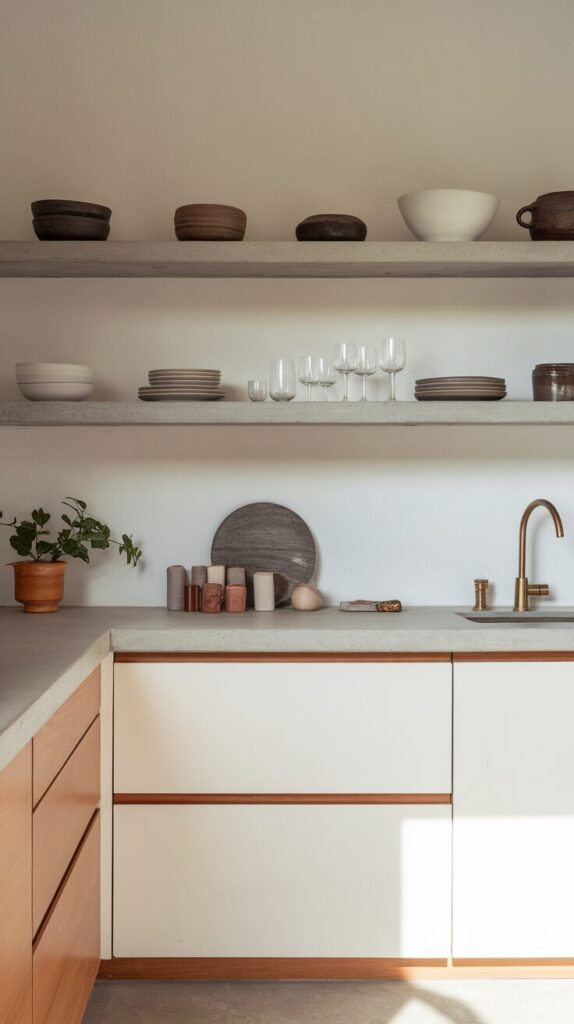
Upper cabinets can make kitchens feel boxed in. Concrete open shelves open things up while keeping a modern edge. I love how they feel strong yet minimal. They instantly change the mood of the room.
Concrete shelves work because they reduce visual clutter. They encourage intentional styling and discourage overstuffing. The material also supports weight without chunky brackets. That clean look feels satisfying.
Installation stays simple with the right plan.
- Use reinforced concrete or concrete-look slabs
- Anchor securely into studs
- Limit shelf length to prevent sagging
- Style with restraint
For design, mix textures on the shelves. Ceramics, wood, and glass soften the concrete beautifully. Do not overload shelves, because clutter kills the modern vibe fast. Leave breathing room.
If real concrete feels heavy, try fiber cement shelves. I used them once, and they held up surprisingly well. They offer the same look with less weight.
6. Concrete Sink for a Seamless Look
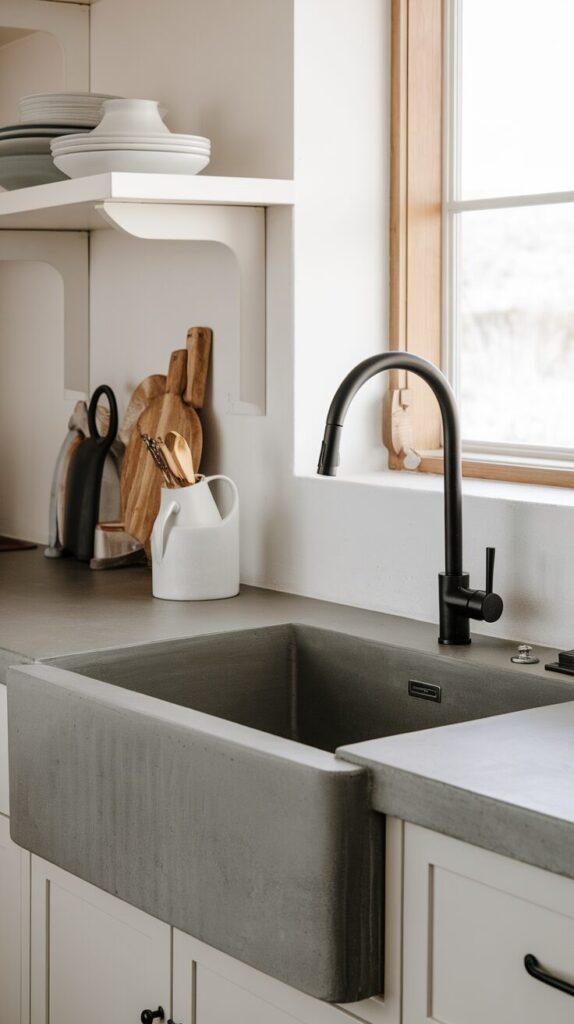
Most sinks interrupt the flow of a countertop. A concrete sink blends in and feels intentional. I love the monolithic look it creates. It feels custom without being flashy.
This works because continuity calms the eye. The sink feels like part of the surface instead of an add-on. Concrete also handles daily wear better than people expect. Proper sealing makes a big difference.
Getting this right takes planning.
- Choose integrated or drop-in styles
- Seal thoroughly and reseal yearly
- Pair with simple faucets
- Avoid harsh cleaners
For style, keep the faucet sleek and minimal. Brass or matte black pops nicely against concrete. Avoid ornate fixtures, because they clash with the sink’s simplicity. Clean lines always win.
For budget relief, consider a concrete-look composite sink. I installed one in a rental, and it held up beautifully. It gives the same vibe with less maintenance.
7. Concrete Accent Wall Behind the Stove
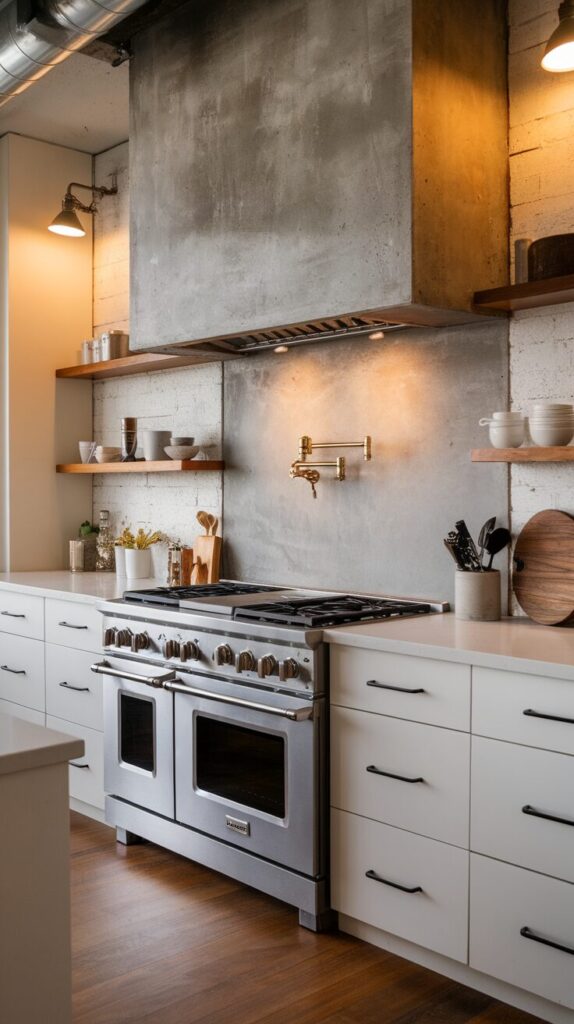
Stoves need a backdrop that handles heat and grease. Concrete does both while adding drama. I love how it frames the cooking zone. It instantly elevates the space.
Concrete works here because it feels intentional. The wall becomes a visual anchor without extra decoration. It also hides splatters better than glossy finishes. Practical wins again.
Execution stays manageable with planning.
- Use microcement or thin panels
- Seal for easy cleaning
- Extend slightly wider than the stove
- Keep edges clean
Design-wise, lighting makes or breaks this look. Warm lights soften the concrete and highlight texture. Avoid cluttering the wall, because the material already carries presence. Let it breathe.
For savings, apply concrete-effect paint designed for high heat. I tested it in a small kitchen, and it surprised me. It delivers impact without major renovation.
8. Concrete Cabinet Fronts for a Bold Move
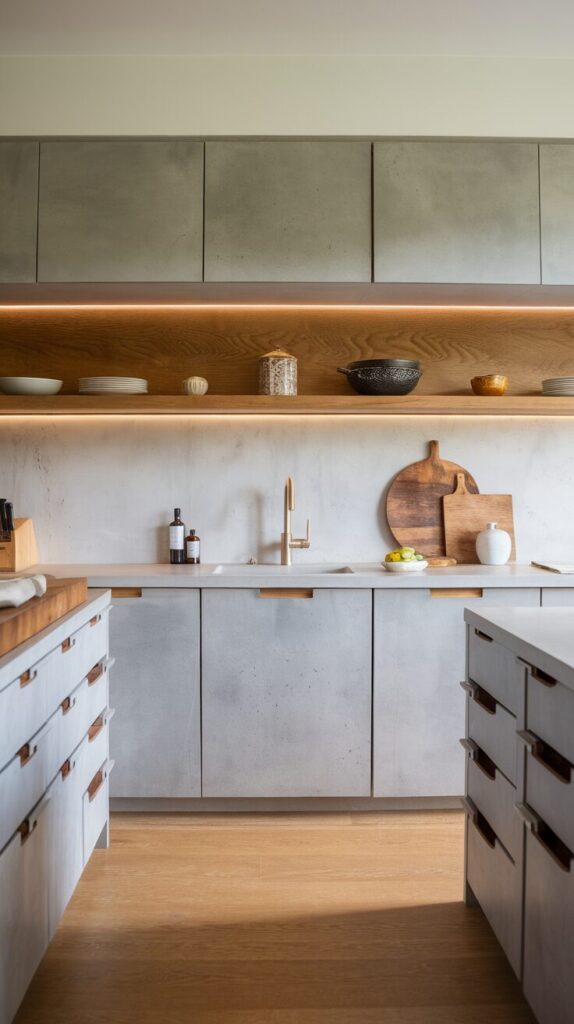
Cabinet fronts rarely get adventurous. Concrete changes that instantly. I love the bold, modern feel it brings. It feels unexpected yet grounded.
This works because concrete cabinets add texture without busy patterns. They create a calm, cohesive look across the kitchen. The durability also means fewer touch-ups. That saves time long-term.
Approach this with intention.
- Use concrete veneer panels
- Keep profiles flat and handle-free
- Balance with warm countertops
- Limit concrete to lower cabinets
For design, warmth matters more than ever. Wood uppers or open shelving prevent heaviness. Avoid all-concrete everything, because that overwhelms the room. Balance keeps it livable.
For a budget swap, try concrete-effect laminate fronts. I saw them in a showroom and did a double take. They look shockingly real.
9. Concrete Window Sills for Subtle Style
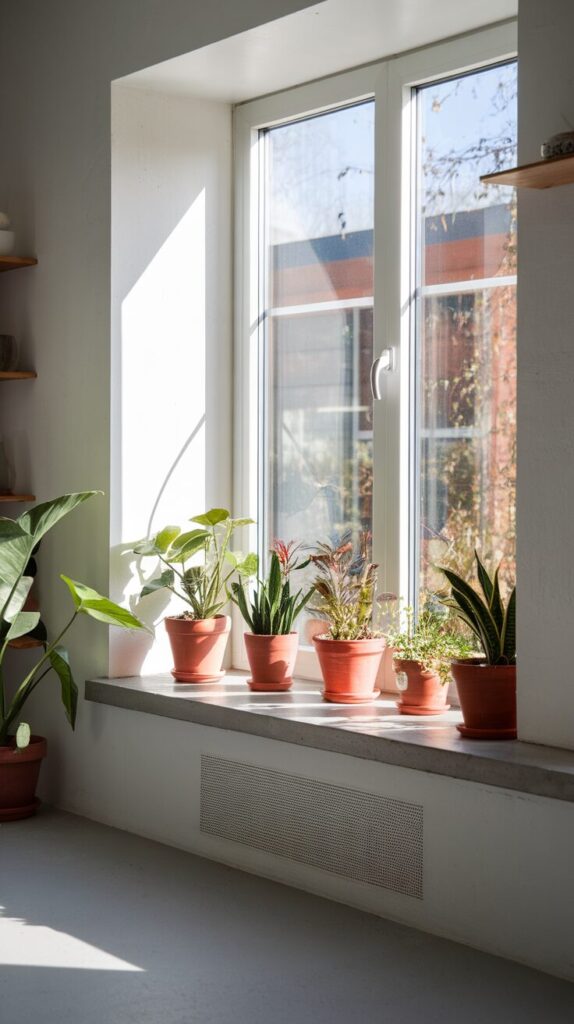
Window sills often feel forgotten. Concrete gives them purpose and polish. I love how it frames light beautifully. It feels thoughtful without effort.
This works because concrete adds weight where it counts. The sill feels substantial and intentional. It also resists moisture near sinks. Function meets style again.
Installation stays simple.
- Measure precisely
- Choose a warm gray tone
- Seal thoroughly
- Keep edges crisp
For style, add plants or ceramics sparingly. Greenery pops against concrete nicely. Avoid overcrowding, because simplicity sells the look. Let light do the rest.
For savings, use precast concrete slabs cut to size. I used this trick once, and it worked flawlessly. It keeps costs down and style up.
10. Concrete Range Hood for Statement Appeal
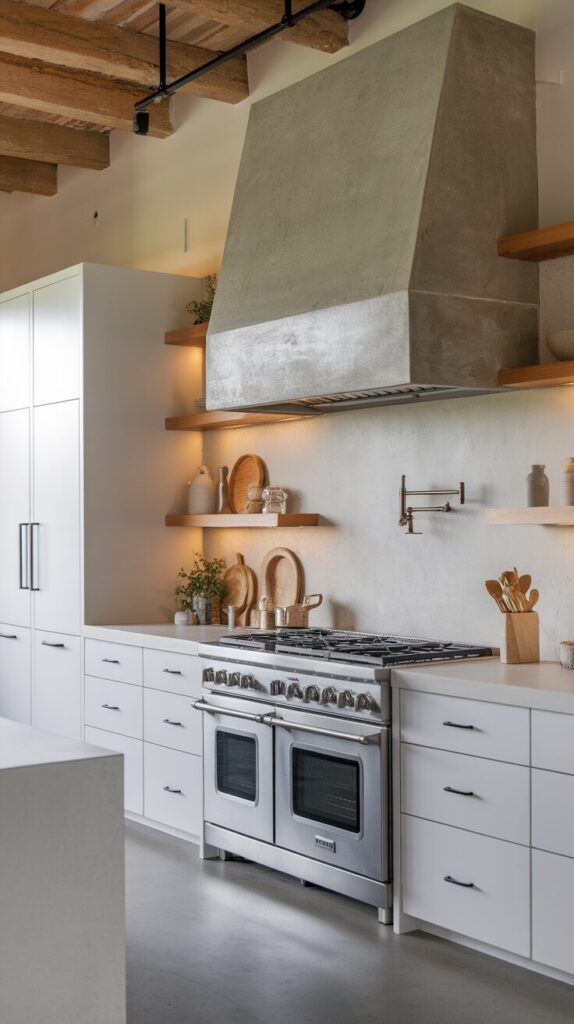
Range hoods often look clunky. A concrete hood feels sculptural instead. I love how it draws the eye upward. It turns function into art.
This works because concrete adds presence without ornament. The hood feels integrated rather than attached. It also pairs well with minimalist kitchens. Visual flow improves instantly.
Plan carefully before committing.
- Keep proportions balanced
- Use lightweight concrete materials
- Ensure proper ventilation
- Pair with simple cabinetry
Design-wise, contrast keeps it interesting. Light walls or cabinets prevent heaviness. Avoid over-texturing, because smooth finishes age better. Clean shapes stay timeless.
For budget relief, frame a hood and coat it with microcement. I watched a contractor do this, and the result looked custom. It saved serious money.
11. Concrete Bar Counter for Casual Dining
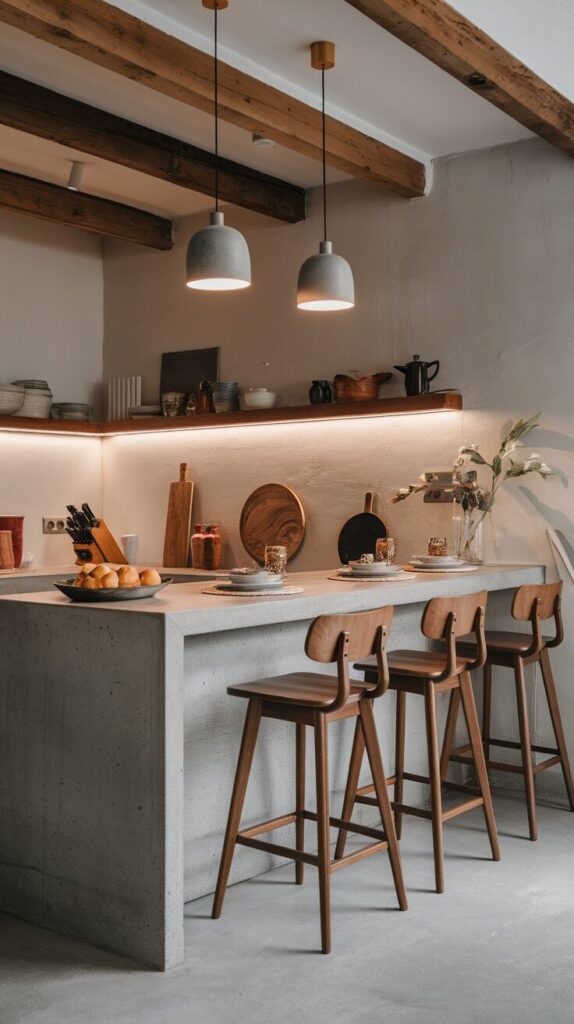
Breakfast bars often feel like afterthoughts. Concrete gives them presence. I love how it turns a casual spot into a design feature. It feels intentional and social.
This works because concrete handles daily wear effortlessly. Hot mugs, spills, and elbows do not scare it. The weight also anchors the seating area visually. Comfort improves too.
Execution stays straightforward.
- Keep thickness moderate
- Add subtle overhang
- Pair with warm stools
- Seal thoroughly
For style, mix materials wisely. Wood or leather stools soften the look. Avoid overly industrial seating, because that feels cold. Balance keeps it inviting.
For a budget option, pour a thin concrete slab over plywood. I tried this once with help, and it held up beautifully. The cost stayed reasonable.
12. Concrete Niche Shelves in Walls
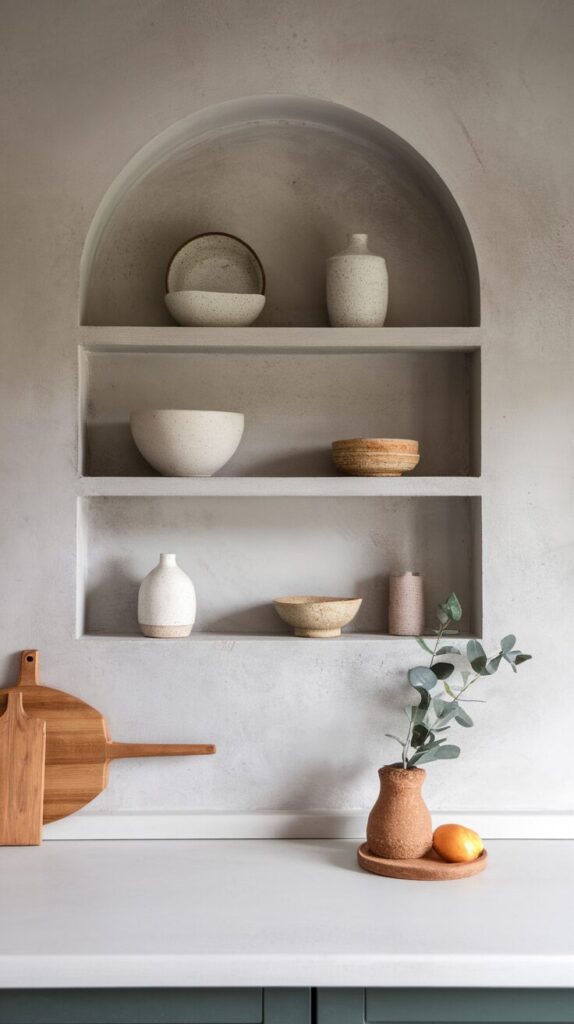
Walls often waste potential storage. Concrete niche shelves fix that. I love how they feel built-in and modern. They add function without clutter.
This works because niches stay flush. They maintain clean lines while adding storage. Concrete also resists moisture near sinks. Practical and pretty works.
Plan placement carefully.
- Install between studs
- Keep proportions clean
- Seal for durability
- Limit depth
For design, use niches for everyday items. Neutral ceramics look best here. Avoid using them as junk zones, because mess ruins the look. Intentional styling matters.
For savings, use prefabricated niche forms with concrete coating. I saw these used in a renovation, and they saved time. The finish still looked polished.
13. Concrete Dining Table Inside the Kitchen
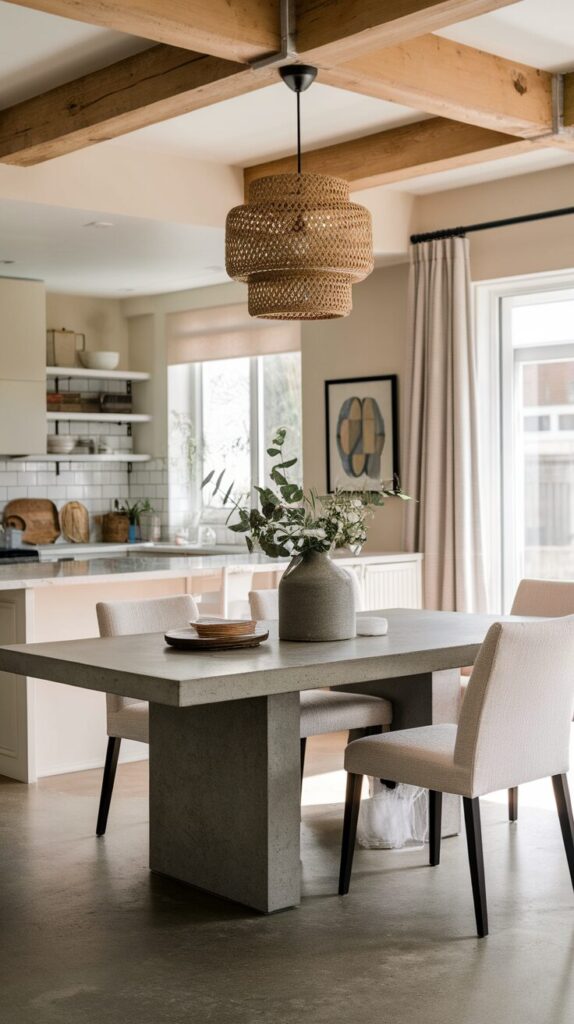
Kitchen tables take abuse. Concrete handles it gracefully. I love the grounded feel it brings. It anchors open-plan kitchens nicely.
This works because concrete tables feel permanent. They balance lighter cabinetry and floors. The durability also suits family life. Stress levels drop.
Approach this thoughtfully.
- Choose slim legs
- Keep surface sealed
- Add soft chairs
- Use rugs underneath
For style, contrast saves the day. Upholstered chairs soften the table’s weight. Avoid bulky bases, because they overwhelm the space. Lightness matters.
For budget relief, try a wood table with a concrete top. I helped build one, and it surprised everyone. The look felt high-end.
14. Concrete Drawer Pulls for Subtle Detail
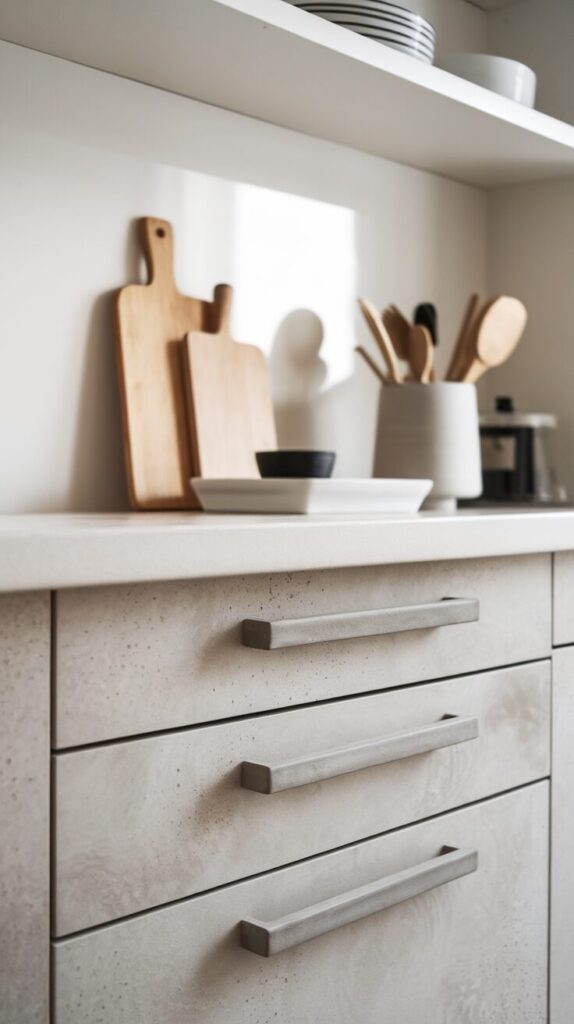
Hardware changes everything. Concrete pulls feel unexpected yet refined. I love the tactile quality they add. They feel modern without shouting.
This works because small details create cohesion. Concrete pulls echo larger surfaces subtly. They also wear well over time. Maintenance stays easy.
Installation stays simple.
- Choose comfortable shapes
- Keep finishes consistent
- Test grip before installing
- Limit to key areas
For design, restraint matters. Use concrete pulls selectively. Avoid mixing too many hardware styles, because chaos kills flow. Consistency wins.
For savings, DIY pulls using molds and quick-set concrete. I tried this as an experiment, and it worked. The result felt personal and unique.
15. Concrete Ceiling Panels for Bold Modern Drama
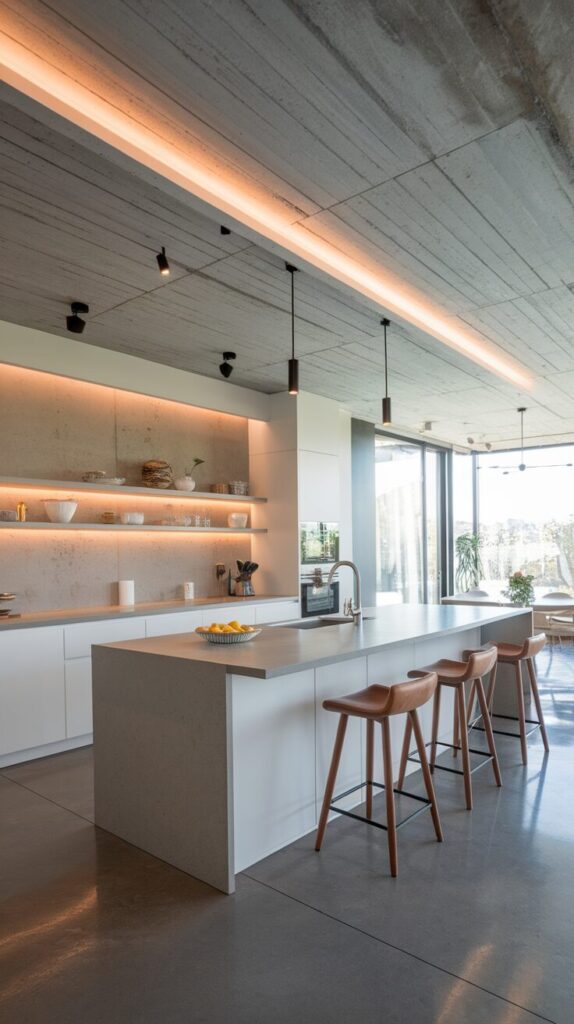
Ceilings rarely get attention. Concrete panels change that instantly. I love how they add architectural interest. They feel daring yet controlled.
This works because ceilings define mood. Concrete adds depth without clutter. It also pairs beautifully with warm lighting. Atmosphere improves fast.
Execution needs planning.
- Use lightweight panels
- Balance with lighter walls
- Add warm lighting
- Keep patterns simple
For style, warmth saves the space. Wood beams or warm lights soften the look. Avoid dark finishes, because they shrink the room visually. Light keeps it open.
For a budget option, try faux concrete ceiling paint with texture. I saw it done well once, and it impressed me. It delivered drama without heavy work.
Concrete Kitchen Design Strategy: Getting the Foundation Right
Concrete looks simple on the surface, but it rewards careful planning. You need a clear vision before you start mixing materials, because concrete amplifies whatever surrounds it. I always suggest defining your warmth sources first, whether that comes from wood tones, lighting, or textiles.
Start by choosing where concrete will make the most impact. One strong focal point often works better than scattering it everywhere. When you treat concrete like a design anchor instead of a filler material, the entire kitchen feels intentional.
Balance plays a huge role in long-term satisfaction. Concrete needs contrast, so pair it with organic textures, layered lighting, and at least one soft element. That combination prevents the space from feeling sterile or unfinished.
Function comes before aesthetics every time. Think about how you cook, clean, and move through the space. A concrete feature should improve durability and flow, not just look good in photos.
Budget planning matters as well. Concrete ranges widely in cost depending on fabrication, sealing, and installation. I recommend allocating funds to proper sealing and professional finishing, because that investment protects everything long term.
Common Mistakes to Avoid With Concrete Kitchens
The biggest mistake I see involves overusing gray. When every surface matches, the kitchen loses depth and feels flat. You need variation in tone and texture to keep the space alive.
Another issue comes from skipping proper sealing. Concrete stains easily without protection, especially around sinks and cooking zones. Always seal thoroughly and follow maintenance recommendations.
People also ignore lighting too often. Concrete absorbs light differently than glossy materials, so dark kitchens feel even darker. Layer ambient, task, and accent lighting to avoid a cave-like effect.
Poor proportion creates imbalance quickly. Oversized concrete islands or thick slabs can overwhelm smaller kitchens. Keep scale in mind and measure carefully before committing.
Finally, avoid copying showroom photos without adapting them to your lifestyle. A kitchen needs to work for real life, not just look impressive online. Design for daily habits first and trends second.
Maintenance & Longevity: Protecting Your Investment
Concrete rewards consistent care. You should wipe spills quickly and avoid harsh chemical cleaners. A simple pH-neutral cleaner works best for daily maintenance.
Resealing protects the surface from moisture and staining. Most sealed concrete surfaces need resealing every one to three years depending on use. High-traffic zones may require attention sooner.
Heat resistance gives concrete an advantage, but you should still use trivets for extremely hot cookware. Small protective habits prevent micro-cracks and surface wear. Long-term care keeps the kitchen looking refined instead of worn.
Scratches and small imperfections add character over time. Many homeowners grow to appreciate this natural patina. If damage occurs, professionals can often refinish or reseal without full replacement.
Concrete vs. Other Modern Materials: Making the Right Choice
Concrete competes with quartz, marble, and porcelain in modern kitchens. Each material offers benefits, but concrete stands out for customization and texture. You can control pigment, finish, and edge profiles more than most alternatives.
Quartz provides low maintenance and consistent appearance. Marble offers natural veining but demands more upkeep. Concrete sits comfortably between those extremes, offering uniqueness with manageable maintenance.
Budget often influences this decision. Precast concrete can cost more than standard quartz but less than premium marble. Concrete-look alternatives also provide flexibility if structural changes feel overwhelming.
Your lifestyle ultimately determines the best choice. Families who cook frequently often appreciate concrete’s durability. Design-focused homeowners enjoy its sculptural quality and flexibility.
Frequently Asked Questions About Concrete Kitchens
Is concrete suitable for small kitchens?
Yes, concrete works beautifully in small kitchens when used strategically. Limit it to one or two focal areas and balance it with lighter cabinetry and strong lighting.
Does concrete crack over time?
Hairline cracks can appear, especially in poured installations. Proper reinforcement and sealing minimize structural cracking and keep surfaces stable.
Is concrete difficult to maintain?
Concrete requires regular sealing and simple cleaning habits. With proper care, it stays durable and attractive for years.
Can I use concrete in a warm or farmhouse-style kitchen?
Absolutely. Pair concrete with wood beams, warm lighting, and textured fabrics to create a cozy atmosphere instead of an industrial one.
Does concrete increase home value?
Well-executed concrete features can increase perceived value by adding a custom, modern look. Quality installation and maintenance influence long-term appeal.
Are concrete-look alternatives worth considering?
Yes, concrete-look laminates, tiles, and microcement finishes provide similar aesthetics with lower cost and less structural work. They offer flexibility for renters or budget-conscious remodels.
Final Thoughts
Concrete kitchens feel bold, calm, and surprisingly livable when you balance them right. You do not need to commit to every idea to see a difference. Try one element and build from there.
Start small, trust your instincts, and adjust as you go. I promise concrete feels less scary once you live with it.