10 Covered Patio Ideas for Shade and Style Combined
You know that moment when you step outside with a coffee and the sun instantly attacks your face like it has a personal issue with you. I wanted a patio that felt inviting, shady, and stylish without turning my backyard into a construction zone.
I also wanted something that looked intentional, not like I threw a random umbrella out there and hoped for the best.
If you feel the same way, you are in the right place. Covered patios solve real problems while adding serious style points.
I have tried, researched, and obsessed over these ideas, and I am sharing them like I would with a friend over iced coffee.
1. Pergola with Adjustable Slats for Flexible Shade
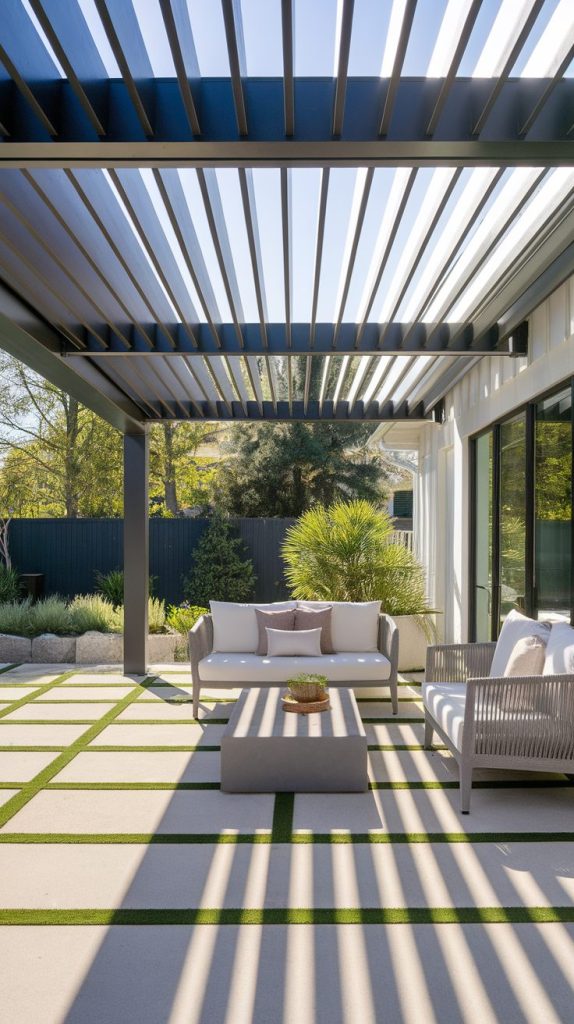
A pergola with adjustable slats gives you control, and I love anything that lets me decide how much sun I deal with. You can tilt the slats open on breezy mornings and close them when the afternoon sun turns aggressive. This setup feels smart and modern without screaming for attention.
I like this option because it balances structure and openness better than most patio covers. The slats let light filter through instead of blocking everything, which keeps the space feeling alive. When friends come over, everyone always comments on how intentional it looks.
You can choose wood for a warm, natural vibe or aluminum for a sleek, low-maintenance look. I lean toward aluminum because it survives weather drama without demanding constant care. Wood looks beautiful, but it expects commitment, and not everyone wants that relationship.
This style works especially well if you love versatility. You can host brunch, read outside, or enjoy evening drinks without feeling boxed in. IMO, adjustable pergolas make the patio feel like an extension of your living room instead of an afterthought.
2. Solid Roof Extension That Feels Like an Outdoor Room
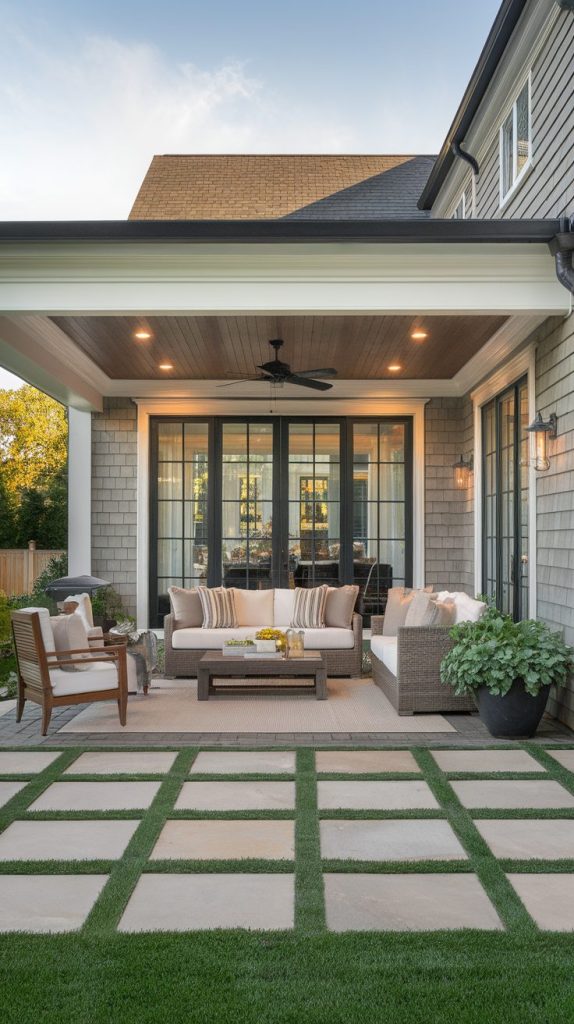
A solid roof extension turns your patio into a true outdoor room, and it changes how you use the space. Rain no longer ruins plans, and harsh sun loses its power over your mood. I see this as the most dependable option for year-round comfort.
This type of covered patio connects directly to the house, which makes everything feel seamless. You walk outside, and the space still feels protected and familiar. That continuity matters more than people realize.
You can add ceiling fans, recessed lighting, or even heaters to boost comfort. I love how these extras turn casual hangouts into long, relaxed evenings. The patio stops feeling seasonal and starts feeling essential.
Style-wise, you can match the roof with your home or add contrast for personality. I prefer matching materials because it keeps the look clean and intentional. If you want a patio that feels permanent and polished, this idea delivers every time.
3. Retractable Awning for Easy Shade on Demand
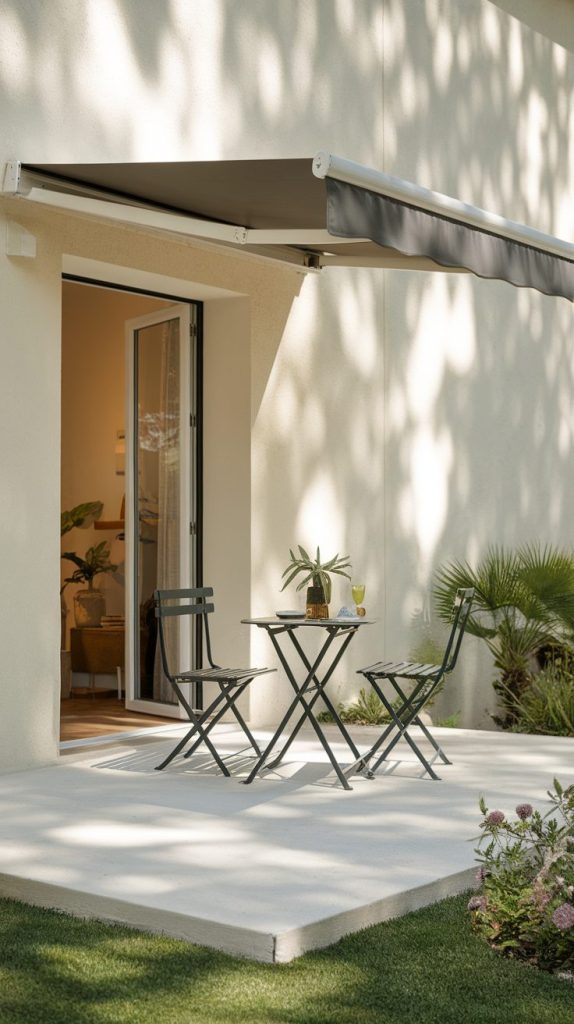
Retractable awnings feel practical in the best possible way. You extend them when the sun gets annoying and pull them back when you want open sky. That flexibility makes daily patio use feel effortless.
I appreciate how little commitment this option requires compared to full structures. Installation feels lighter, faster, and less disruptive. You still get shade without locking yourself into one look forever.
Fabric choices matter here, so pick something durable and fade-resistant. I always suggest neutral tones because they age better and match everything. Loud patterns sound fun until you see them every single day.
This idea works perfectly for smaller patios or rental-friendly setups. You get function without major construction or permanent changes. FYI, a quality awning can completely change how often you actually use your patio.
4. Covered Patio with Polycarbonate Panels for Bright Protection
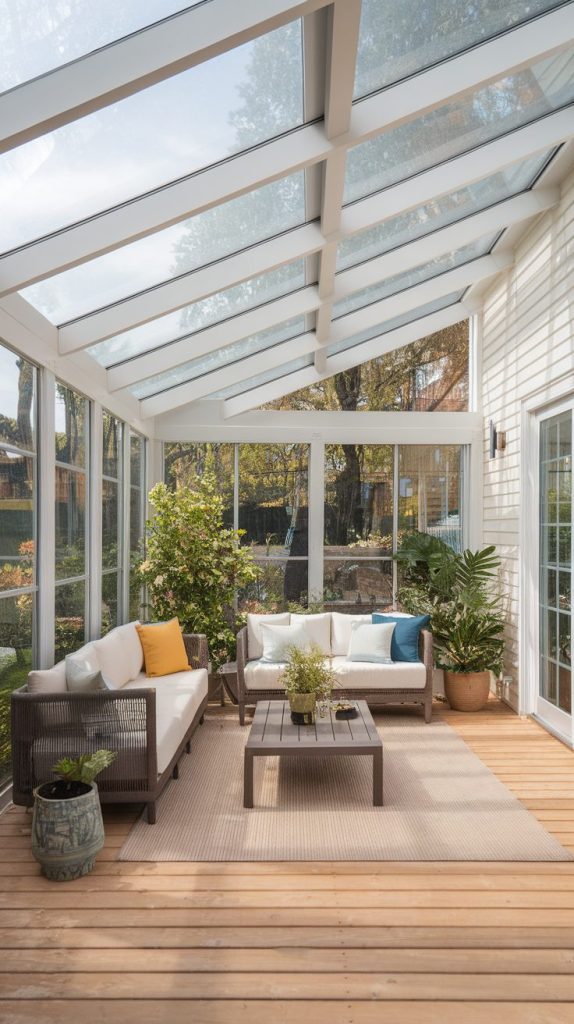
Polycarbonate panels block harsh UV rays while letting natural light shine through. I love this option when I want brightness without the burn. The patio stays airy instead of dark and cave-like.
These panels feel modern and surprisingly strong. They handle weather well and resist cracking better than traditional materials. That durability gives peace of mind during storms or heavy rain.
You can pair polycarbonate roofing with metal or wood frames for different styles. I like the contrast of warm wood with sleek panels because it feels balanced. The mix keeps the space from looking too industrial.
This idea suits people who love daylight but hate direct sun. You still see the sky, which keeps the mood light and open. If you enjoy plants on your patio, this option helps them thrive too.
5. Rustic Wood Pavilion for Cozy Outdoor Living
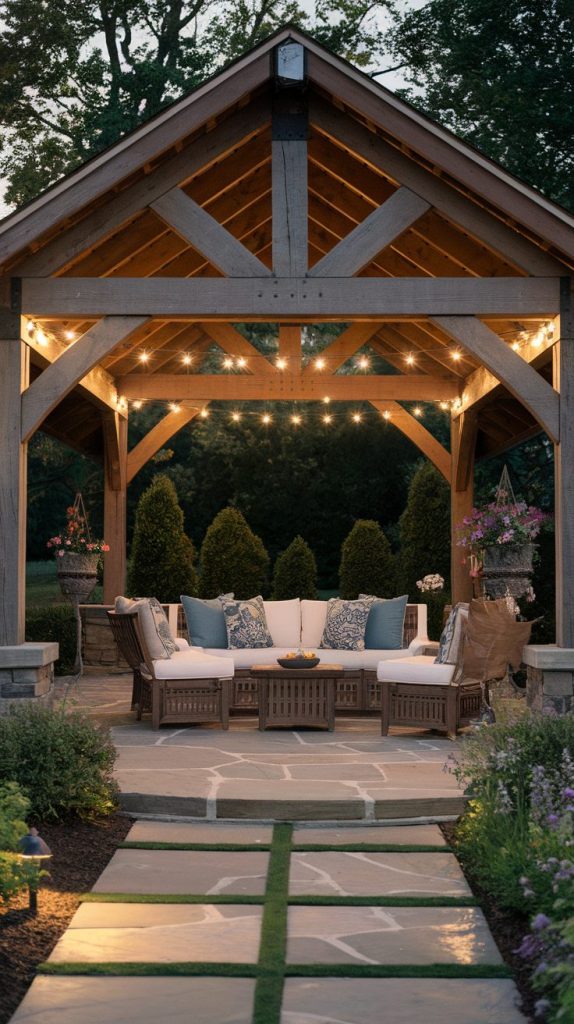
A wood pavilion creates instant warmth and character. I always feel relaxed under one because it feels grounded and cozy. The structure makes the patio feel like a destination, not just a space.
You can choose exposed beams for that rustic charm everyone secretly loves. The texture and depth add visual interest without needing extra decor. Wood naturally invites comfort and conversation.
I recommend sealing the wood properly to protect it from moisture and sun. Maintenance matters, but the payoff feels worth it if you love natural materials. The pavilion ages beautifully when you care for it.
This style pairs perfectly with string lights, outdoor sofas, and neutral cushions. Every gathering feels intentional and relaxed under a pavilion. If your goal involves cozy evenings and slow weekends, this idea fits like a glove.
6. Modern Metal Canopy with Clean Lines
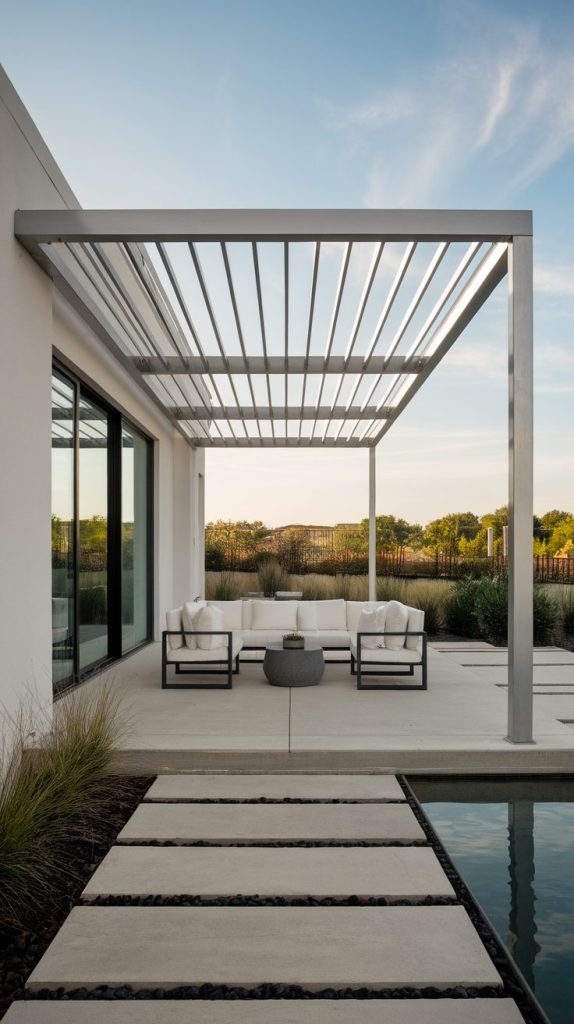
A metal canopy brings structure and modern flair to any patio. The clean lines feel sharp and intentional without overpowering the space. I like how this option instantly upgrades the backyard aesthetic.
Metal canopies handle weather like a champ, which makes them practical. You do not worry about rot, warping, or constant repairs. That reliability matters when life already feels busy.
You can choose minimalist designs or more decorative frames. I prefer simpler styles because they age better and stay versatile. Minimalism keeps the patio flexible for future decor changes.
This idea works great for contemporary homes or anyone craving a sleek vibe. Pair it with modern furniture and subtle lighting for a cohesive look. The patio starts feeling curated instead of cluttered.
7. Covered Patio with Outdoor Curtains for Soft Shade
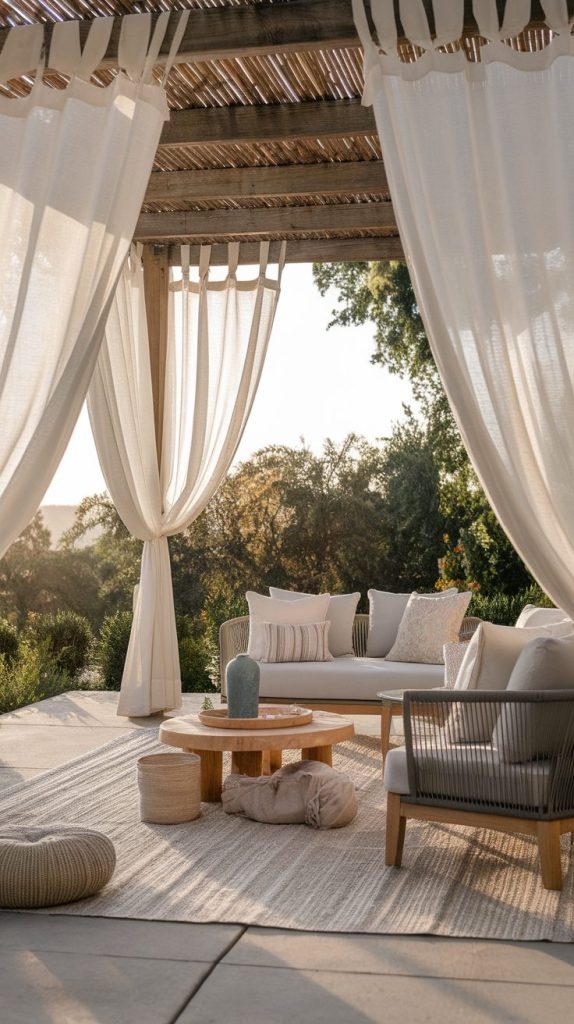
Outdoor curtains add softness and romance to a covered patio. I love how they move with the breeze and instantly change the mood. The space feels relaxed and inviting without trying too hard.
Curtains let you control privacy and shade with a simple pull. You close them during peak sun or nosy neighbor moments. That flexibility feels surprisingly luxurious.
Choose weather-resistant fabrics to avoid constant replacements. Neutral colors work best because they stay timeless and calm. I avoid heavy patterns because they can overwhelm small spaces.
This idea pairs well with pergolas or solid covers. The curtains add layers and texture that elevate the whole design. If you want shade with personality, this approach feels effortless and charming.
8. Glass Roof Patio Cover for an Elegant Look
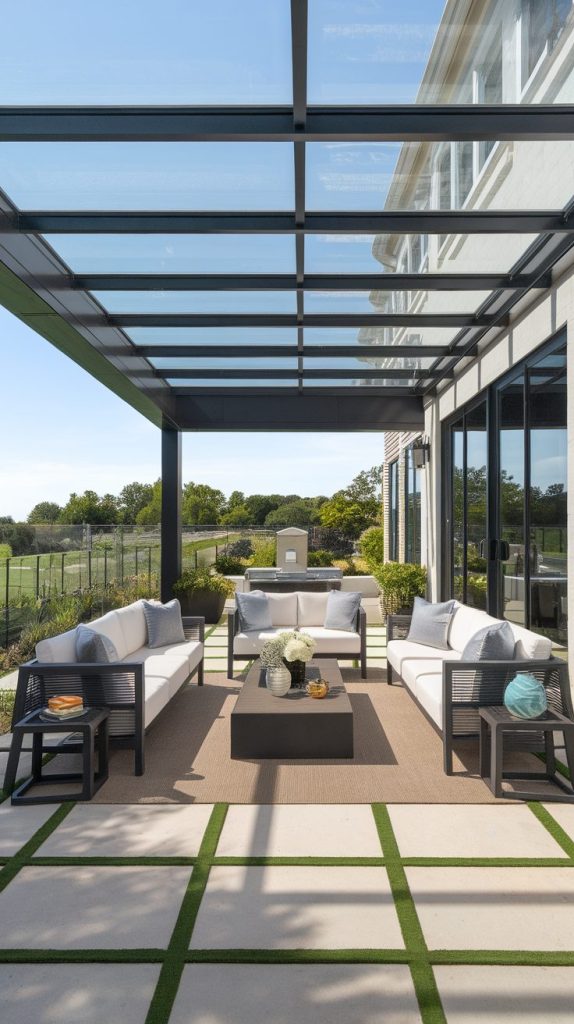
A glass roof patio cover feels elegant and bold. You get full light while staying protected from rain and wind. I find this option visually stunning when done right.
Tempered glass ensures safety and durability. It handles weather stress while maintaining clarity. That balance makes the patio feel upscale without feeling fragile.
You can add shading films or blinds for extra control. I like having options because some days demand full sun and others do not. Flexibility always wins.
This style works beautifully with modern or transitional homes. The patio feels open, airy, and connected to the outdoors. If you love a refined aesthetic, glass roofing delivers serious impact.
9. Thatched or Bamboo Cover for Tropical Vibes
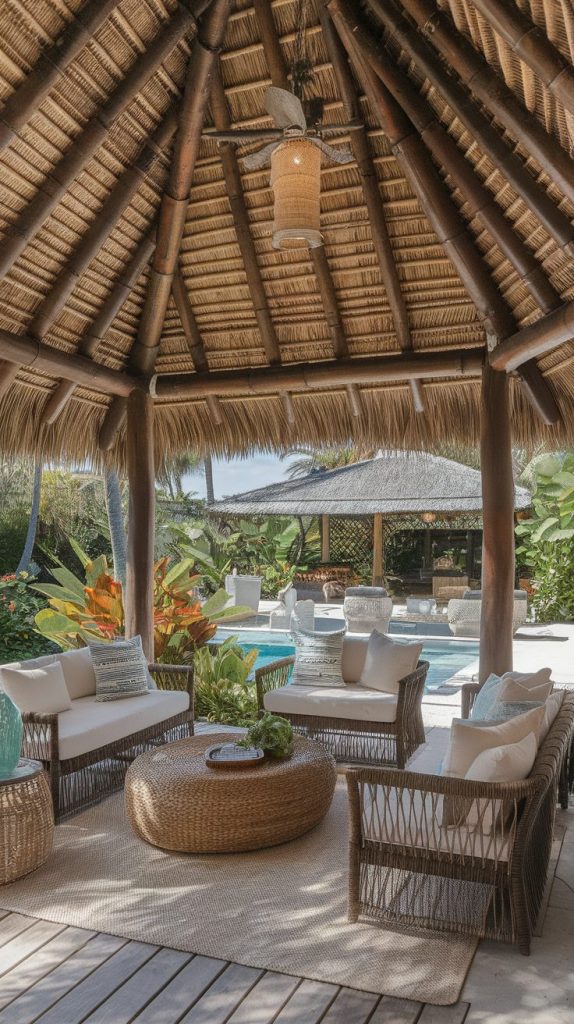
Thatched or bamboo covers bring vacation energy home. I smile every time I see one because it instantly changes the mood. The patio feels playful, relaxed, and a little escapist.
These materials provide natural shade while allowing airflow. The space stays cooler and breezier during hot days. Comfort improves without heavy structures.
You need to check durability and maintenance requirements. I recommend treated materials designed for outdoor use. That choice keeps the look intact longer.
This idea suits casual spaces and creative personalities. Pair it with plants and relaxed seating for full effect. If you crave laid-back vibes, this cover delivers them effortlessly.
10. Hybrid Covered Patio Mixing Materials for Unique Style
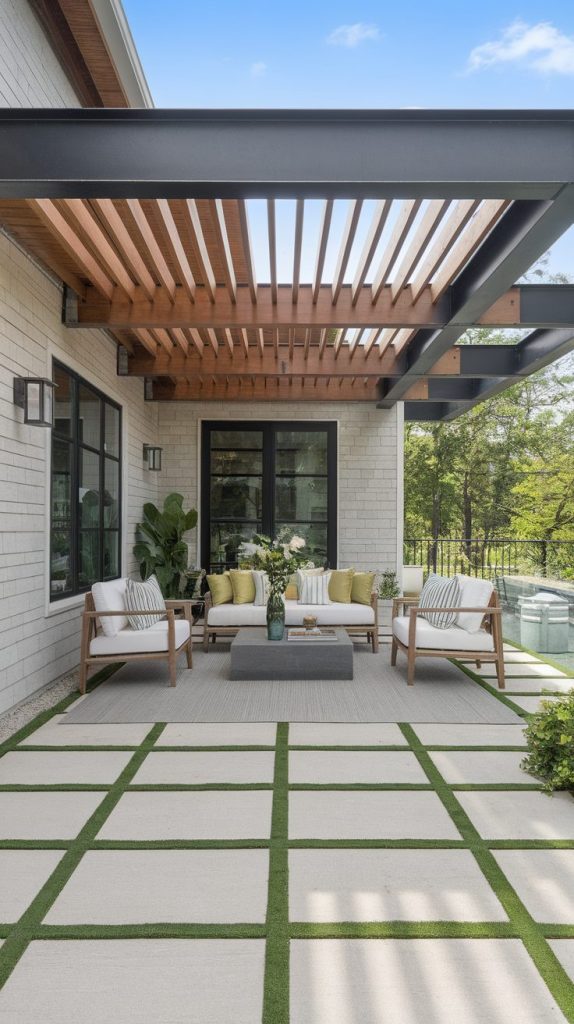
Hybrid patio covers mix materials like wood, metal, and fabric. I love this approach because it feels custom and personal. The design tells a story instead of following rules.
You can combine solid roofing with open sections for balance. That contrast creates visual interest and functional variety. The patio adapts to different moods and weather.
This option requires planning, but the results feel worth it. I suggest working with a clear vision to avoid chaos. Cohesion matters when you mix elements.
Hybrid designs suit people who want something different. The patio becomes a reflection of your taste and lifestyle. If you enjoy creative freedom, this idea gives you plenty of room to play.
How to Choose the Right Covered Patio Strategy for Your Home
Before you pick any covered patio design, you need a clear strategy. I always start by thinking about how I actually use the space instead of chasing whatever looks trendy online. Your daily habits should guide every decision.
First, define your primary purpose for the patio. Do you host dinners, relax with coffee, or need shade for kids to play safely? When you identify the main function, you avoid wasting money on features you will barely use.
Next, evaluate your climate honestly. If you deal with heavy rain or intense heat, you need stronger roofing materials and better ventilation. If you enjoy mild weather, you can lean toward lighter, more open structures.
You should also consider your home’s architecture. A sleek modern house pairs well with metal or glass covers, while traditional homes often suit wood or solid roof extensions. When the patio matches the house, everything feels cohesive and intentional.
Finally, set a realistic budget that includes installation and maintenance. Many people focus only on upfront cost and forget long-term care. A smart patio strategy balances style, durability, and ongoing upkeep without stretching your finances.
Budget Planning and Value Considerations
A covered patio should feel like an upgrade, not a financial regret. I always recommend breaking down costs into materials, labor, lighting, and finishing details. When you see the full picture, you make better decisions.
Higher upfront investment often reduces maintenance headaches later. For example, aluminum and polycarbonate require less care than untreated wood. Spending wisely at the beginning usually saves money over time.
Think about resale value as well. A well-designed covered patio can increase curb appeal and make your home more attractive to buyers. Buyers love functional outdoor spaces that feel like extra living areas.
Avoid overspending on trendy add-ons that lose appeal quickly. Focus on timeless design elements and quality materials. When the patio looks classic instead of overly themed, it holds value much longer.
Building Codes, Permits, and Safety Essentials
You should never skip local building regulations when adding a covered patio. I know paperwork feels boring, but ignoring permits can create expensive problems later. Local authorities set rules for safety, structure, and spacing.
Check height limits, setback rules, and structural requirements before construction begins. These details protect your home and ensure your patio remains compliant. A legal structure prevents stress if you decide to sell.
Always prioritize structural integrity. Strong support beams, secure anchoring, and weather-resistant materials protect both people and property. Safety should never feel optional.
Electrical additions like fans or lighting require proper wiring. Hire licensed professionals for installations instead of cutting corners. Safe electrical work prevents hazards and protects your investment.
Long-Term Maintenance and Care Tips
Every covered patio needs maintenance, even low-maintenance options. I prefer planning simple care routines instead of dealing with major repairs later. Small efforts now prevent big expenses later.
Clean roofing materials regularly to remove debris and buildup. Leaves, dust, and moisture can damage surfaces over time. A quick seasonal cleaning keeps everything looking sharp.
Inspect fasteners, joints, and support posts at least once a year. Tighten loose hardware and address minor cracks early. Preventive checks keep your structure stable and safe.
If you choose wood, reseal it as recommended. Metal and glass also need occasional inspection for corrosion or seal wear. Consistent maintenance extends the lifespan of your patio significantly.
Common Mistakes to Avoid
Many people choose a covered patio design based only on appearance. I understand the temptation, but ignoring function leads to disappointment. Style should support comfort, not replace it.
Another common mistake involves underestimating sun direction. If you fail to study how sunlight moves across your yard, you might still deal with glare or heat. Observe your space before finalizing placement.
People also forget about ventilation. A fully enclosed cover without airflow can trap heat and create discomfort. Add ceiling fans or open sections to keep air circulating.
Finally, avoid mixing too many materials without a clear vision. Hybrid designs work beautifully when planned carefully. Without cohesion, the patio can feel chaotic instead of creative.
Frequently Asked Questions
1. Do covered patios increase home value?
Yes, a well-designed covered patio can boost resale appeal. Buyers appreciate functional outdoor living spaces that feel like extensions of the home. Quality materials and cohesive design make the biggest impact.
2. What is the most durable material for patio covers?
Aluminum and polycarbonate offer excellent durability with low maintenance. They resist weather damage and require minimal upkeep. Wood looks beautiful but needs more consistent care.
3. Do I need a permit to build a covered patio?
Most areas require permits for permanent structures. Local building departments set rules regarding size, height, and attachment. Always check regulations before starting construction.
4. How do I keep my covered patio cool in summer?
Add ceiling fans, choose breathable materials, and position the cover strategically. Proper airflow prevents heat buildup. Shade alone helps, but ventilation makes a big difference.
5. Can I install a covered patio myself?
Some options like retractable awnings allow DIY installation. Larger structures often require professional help for safety and compliance. Complex builds benefit from expert support.
6. How much maintenance does a covered patio require?
Maintenance depends on materials used. Metal and polycarbonate require minimal care, while wood needs sealing and inspection. Regular cleaning and annual checks keep any structure in good shape.
Conclusion
Covered patios change how you experience your outdoor space, plain and simple. The right design adds comfort, style, and flexibility without overcomplicating life. Every option here solves shade issues while boosting the look of your home.
Think about how you actually use your patio before choosing a cover. Pick something that matches your habits, not just trends. When the design fits your life, you will use the space way more than you expect.