17 Cozy Bedroom Flooring Ideas You’ll Absolutely Love
I swear bedroom flooring changes the entire vibe of a room faster than new bedding ever could. You can fake pillows and throws, but your feet notice the floor immediately, especially on sleepy mornings.
If your bedroom feels a little cold, loud, or just “meh,” your flooring probably plays a bigger role than you think.
I’ve tested, hated, loved, and replaced more bedroom floors than I care to admit. Some looked great online but felt awful in real life, and others surprised me in the best way.

Let’s talk about cozy bedroom flooring ideas that actually feel good, not just photograph well.
1. Plush Wall-to-Wall Carpet for Maximum Comfort

I know carpet gets a bad rap these days, but plush wall-to-wall carpet still wins when cozy ranks as your top priority. Nothing beats stepping out of bed onto a soft, warm surface that feels forgiving and quiet.
I always recommend this option to anyone who hates cold floors or lives somewhere with chilly winters.
Plush carpet works especially well in bedrooms because the space stays low traffic compared to hallways or living rooms. You don’t deal with muddy shoes, spilled drinks, or constant movement, so carpet stays cleaner longer. That reality alone makes maintenance far less scary than people assume.
You can also control the comfort level by choosing pile height and padding thickness. Thicker padding underneath changes everything, IMO, and makes even mid-range carpet feel luxurious.
If allergies worry you, modern low-VOC carpets and frequent vacuuming handle that issue better than old-school myths suggest.
Why plush carpet feels so cozy
- Soft underfoot comfort that feels gentle every morning
- Excellent sound absorption for quieter nights
- Natural warmth without extra rugs or layers
2. Soft Berber Carpet for a Relaxed, Lived-In Feel
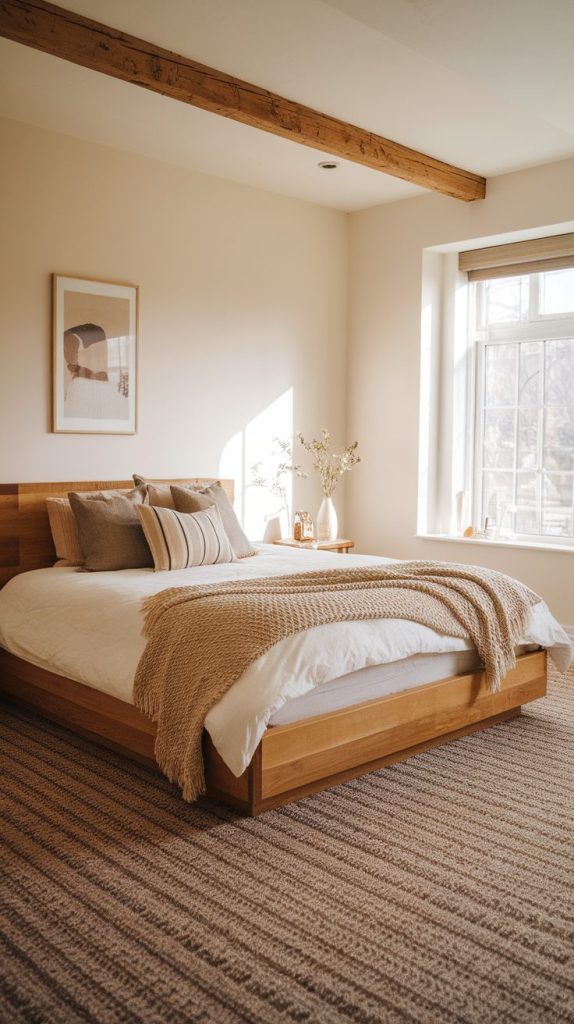
Berber carpet gives cozy energy without looking overly fluffy or dated. I like it when I want softness but still prefer a slightly structured, grounded look. The looped texture adds visual interest while staying comfortable under bare feet.
This flooring works great in bedrooms that lean casual or minimalist. Berber doesn’t scream luxury, but it whispers comfort, which feels more authentic to daily life. I’ve used it in guest bedrooms, and people always comment on how calm the space feels.
Durability also makes Berber a smart choice if you move around a lot at night or have pets. The loops resist flattening better than plush styles. Just avoid sharp claws or snag-prone furniture, because loops don’t forgive rough treatment.
Best uses for Berber carpet
- Casual or minimalist bedroom designs
- Homes with moderate foot traffic
- People who want softness without “fluffy” vibes
3. Hardwood Flooring Paired with Cozy Area Rugs
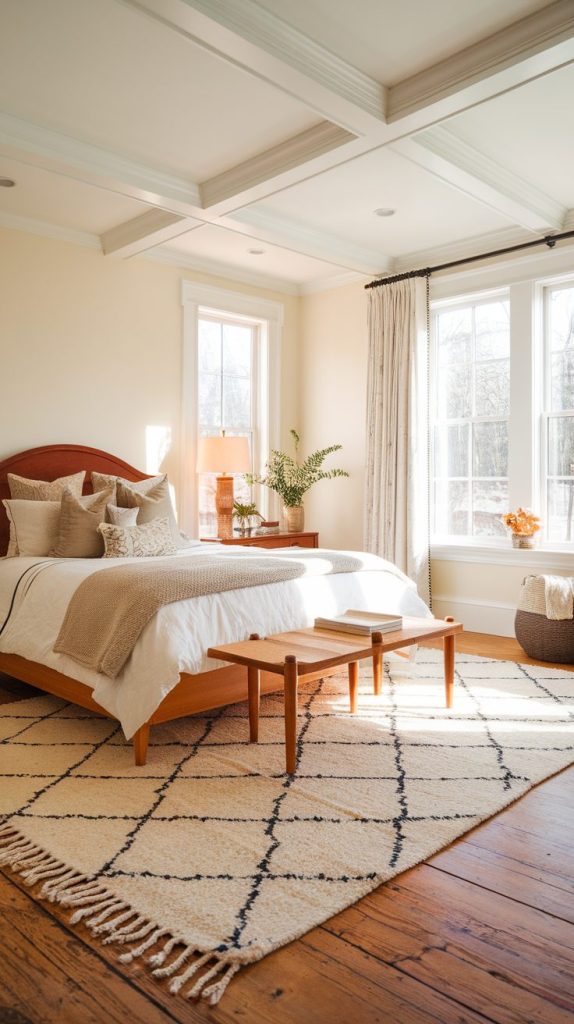
Hardwood flooring brings timeless charm, but let’s be honest, bare wood alone can feel cold in a bedroom. I always pair it with plush area rugs to strike the perfect balance. That combo delivers warmth, texture, and flexibility without committing to full carpet.
I love hardwood because it lets you change the look of your bedroom anytime. Swap rugs seasonally, experiment with textures, or layer rugs for extra coziness. The floor stays classic while your style evolves around it.
Hardwood also works well if you struggle with allergies or dust sensitivity. Rugs give comfort where you need it most, like beside the bed. You get warmth underfoot without trapping allergens across the entire room.
Tips for cozy hardwood bedrooms
- Use large rugs that extend beyond the bed
- Choose high-pile or wool rugs for warmth
- Add runners on both sides for morning comfort
4. Engineered Wood for Warmth Without the Hassle
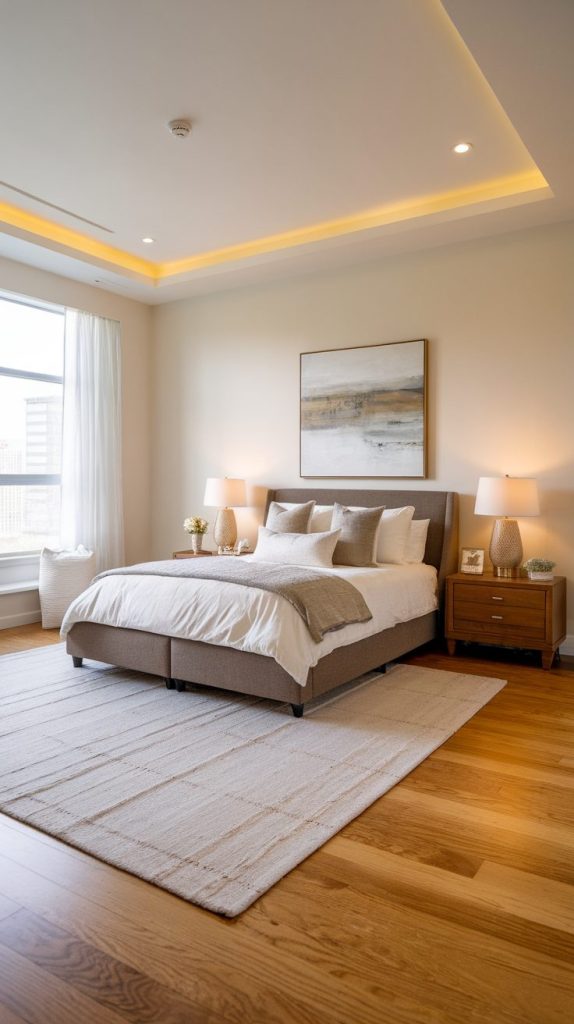
Engineered wood looks like hardwood but behaves better in real-life bedrooms. I recommend it when someone wants wood floors but worries about moisture, temperature shifts, or budget. It feels warmer underfoot than tile and more forgiving than solid wood.
This flooring resists warping and handles humidity changes well, which matters more than people realize. Bedrooms trap heat overnight, and engineered wood stays stable through those shifts. That reliability keeps floors looking good long term.
You can still add area rugs for softness, but engineered wood stands strong on its own. The layered construction reduces echo and adds subtle insulation. For cozy without high maintenance, this option checks a lot of boxes.
Why engineered wood works in bedrooms
- More temperature stable than solid hardwood
- Lower cost with a similar visual appeal
- Easy to pair with rugs for extra warmth
5. Luxury Vinyl Plank That Feels Surprisingly Warm
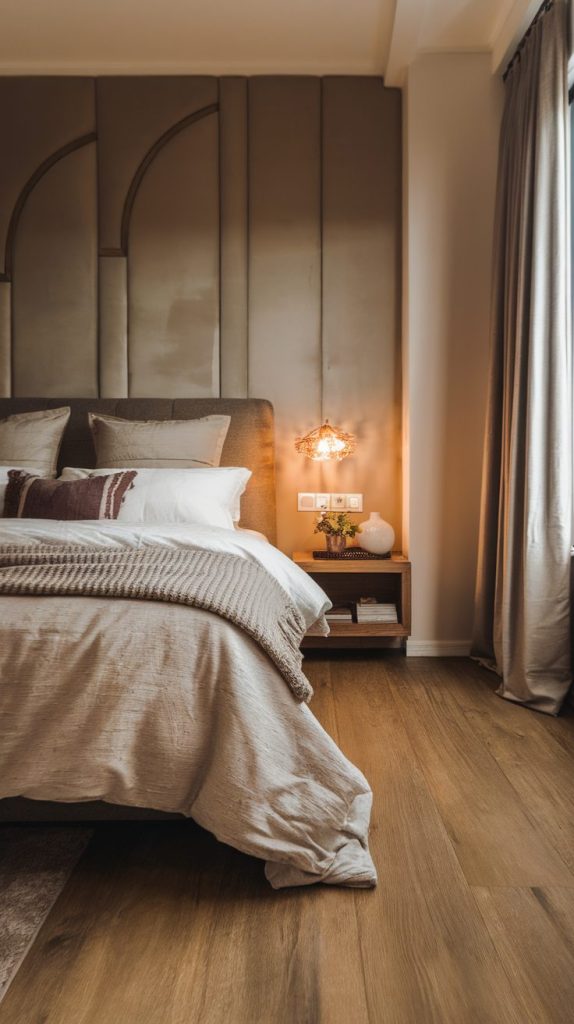
Luxury vinyl plank shocked me the first time I walked on it barefoot. It didn’t feel plasticky or cold like older vinyl options. Modern versions feel warm, slightly cushioned, and surprisingly cozy for bedrooms.
LVP works especially well if your bedroom sits over concrete or an unheated space. The built-in underlayment reduces that cold-floor feeling. You also get excellent durability without sacrificing comfort.
Design-wise, luxury vinyl mimics wood beautifully. I’ve seen bedrooms where guests swear the floor is hardwood until they touch it. If moisture resistance matters to you, LVP offers peace of mind with a cozy bonus.
Cozy advantages of luxury vinyl plank
- Warm feel compared to tile or laminate
- Quiet underfoot with proper underlayment
- Works well in basements or humid areas
6. Cork Flooring for Natural Warmth and Cushion
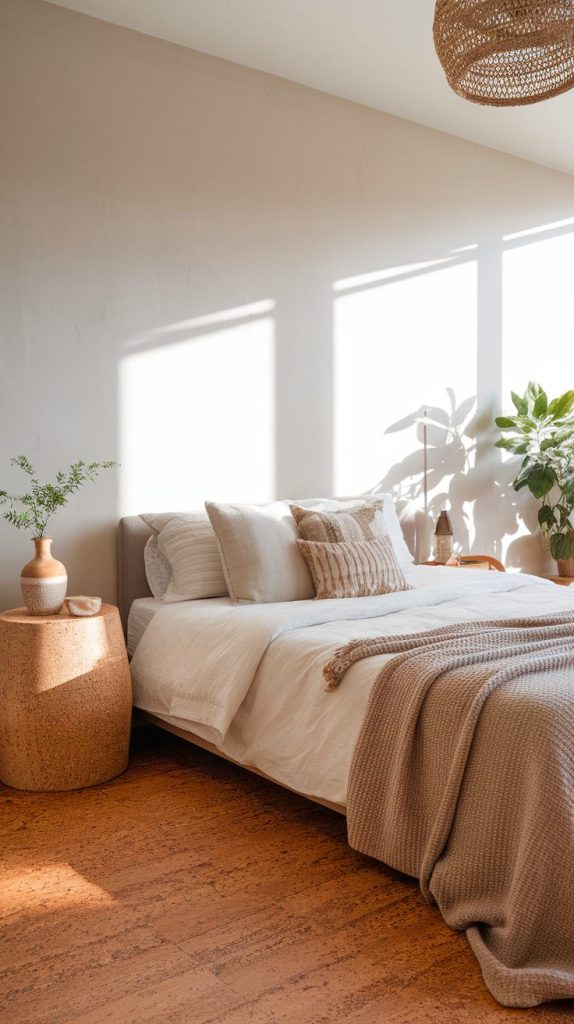
Cork flooring feels like a hidden gem in bedroom design. It offers natural softness and warmth that your feet immediately notice. I love how it compresses slightly when you walk, almost like gentle padding.
This flooring absorbs sound beautifully, which makes bedrooms feel calmer and more private. If you live in an apartment or shared house, cork reduces noise transfer significantly. That quiet factor alone makes it worth considering.
Cork also appeals to eco-conscious homeowners. It comes from renewable sources and feels naturally cozy without synthetic materials. Pair it with soft textiles, and your bedroom feels like a peaceful retreat.
Reasons cork flooring feels cozy
- Soft, springy texture underfoot
- Excellent noise reduction
- Naturally warm and eco-friendly
7. Bamboo Flooring with a Softer Finish
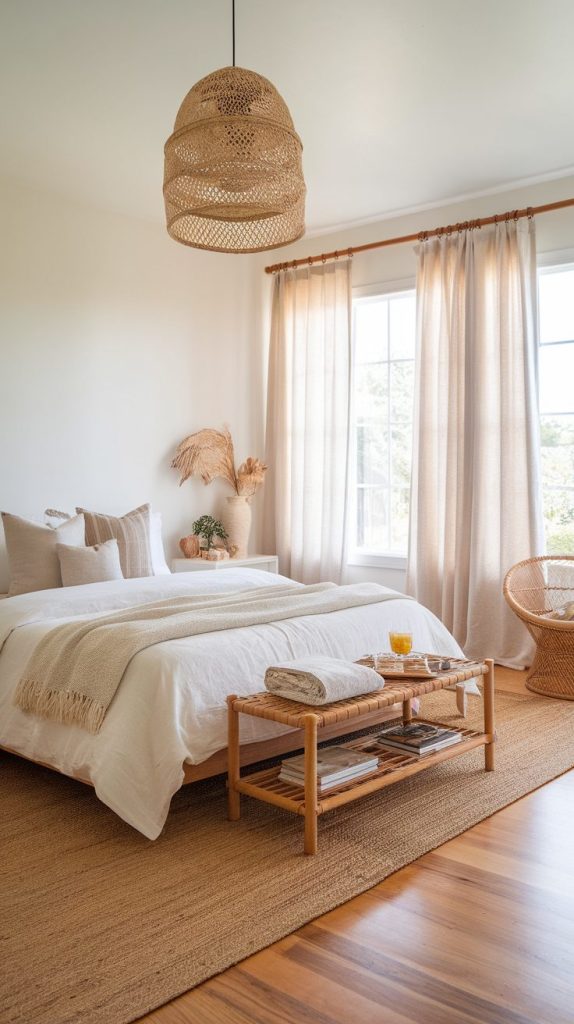
Bamboo flooring offers a clean, modern look while still delivering warmth. I prefer strand-woven bamboo for bedrooms because it feels denser and more comfortable than traditional options. The smoother finish adds a cozy visual flow.
Bamboo stays warmer than tile and handles daily wear well. It also resists scratches better than many hardwoods, which matters if you move furniture often. In bedrooms, that durability helps floors age gracefully.
You can soften bamboo even more with neutral rugs and layered textiles. The contrast between sleek flooring and cozy fabrics creates balance. That combo works great for modern or Scandinavian-inspired bedrooms.
When bamboo works best
- Modern or minimalist bedroom styles
- Homes needing durable flooring
- People who love natural materials
8. Laminate Flooring with Sound-Reducing Underlayment
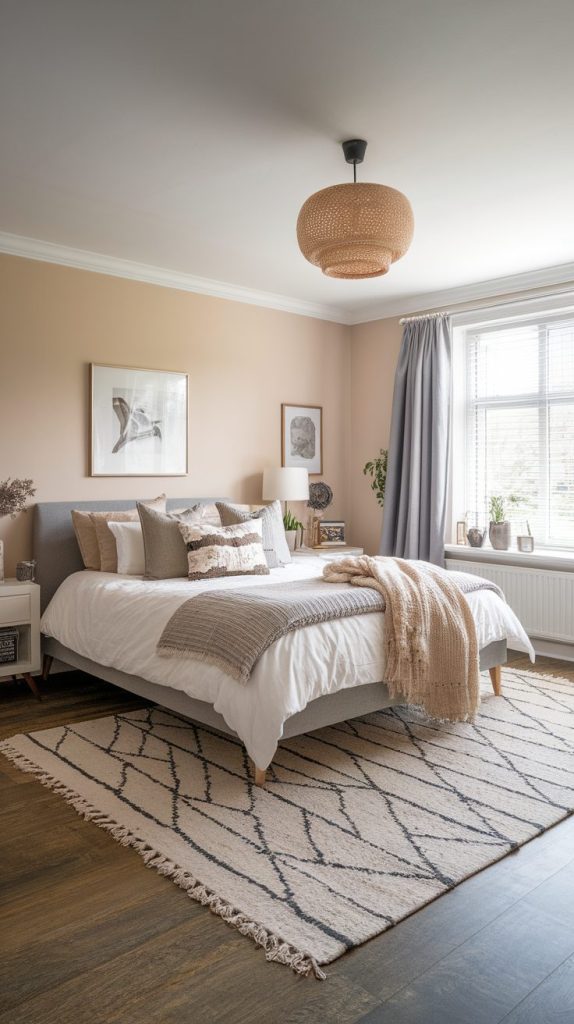
Laminate flooring used to feel loud and hollow, but newer versions changed that story. With proper underlayment, laminate feels warmer and quieter than expected. I’ve used it in bedrooms where budget mattered but comfort still ranked high.
The key lies in choosing thicker boards and quality padding. That combo reduces echo and adds insulation. Without good underlayment, laminate loses its cozy appeal fast.
Design options also improved massively. Wood-look laminates now feature realistic textures and warmer tones. Add a soft rug beside the bed, and most people won’t notice the difference.
Cozy laminate essentials
- Thick boards with high-density core
- Sound-reducing underlayment
- Warm wood-tone finishes
9. Wool Carpet for Natural Luxury
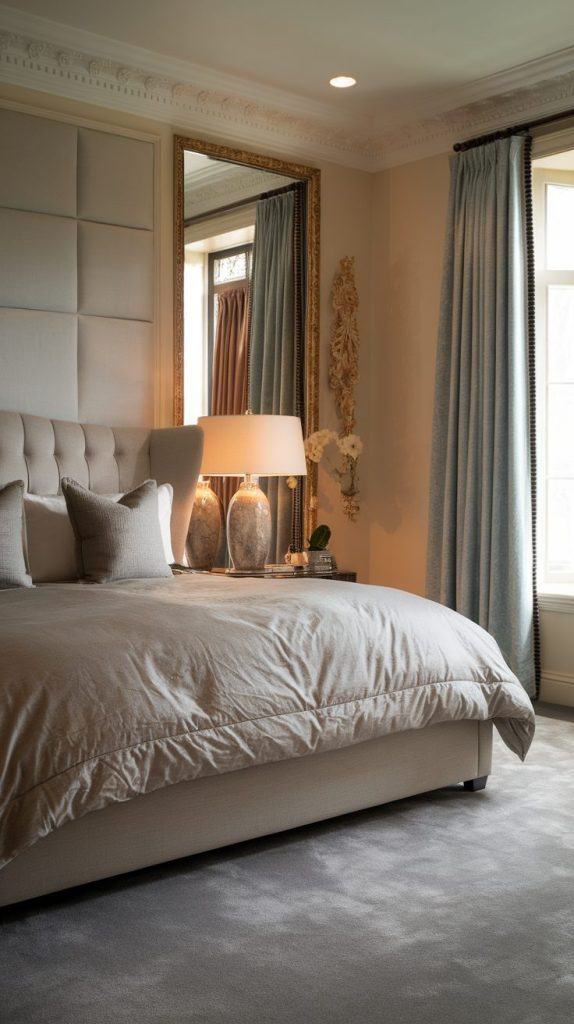
Wool carpet feels luxurious without feeling flashy. I love how it regulates temperature naturally, staying warm in winter and cool in summer. That balance makes bedrooms comfortable year-round.
Wool also resists dirt better than synthetic fibers. It sounds strange, but wool fibers naturally repel grime. That quality keeps bedrooms feeling fresh longer with less effort.
Yes, wool costs more upfront, but longevity justifies the price. A quality wool carpet lasts decades if you care for it properly. For long-term coziness, it’s hard to beat.
Benefits of wool carpet
- Natural temperature regulation
- Durable and resilient fibers
- Soft, breathable comfort
10. Carpet Tiles for Custom Cozy Zones
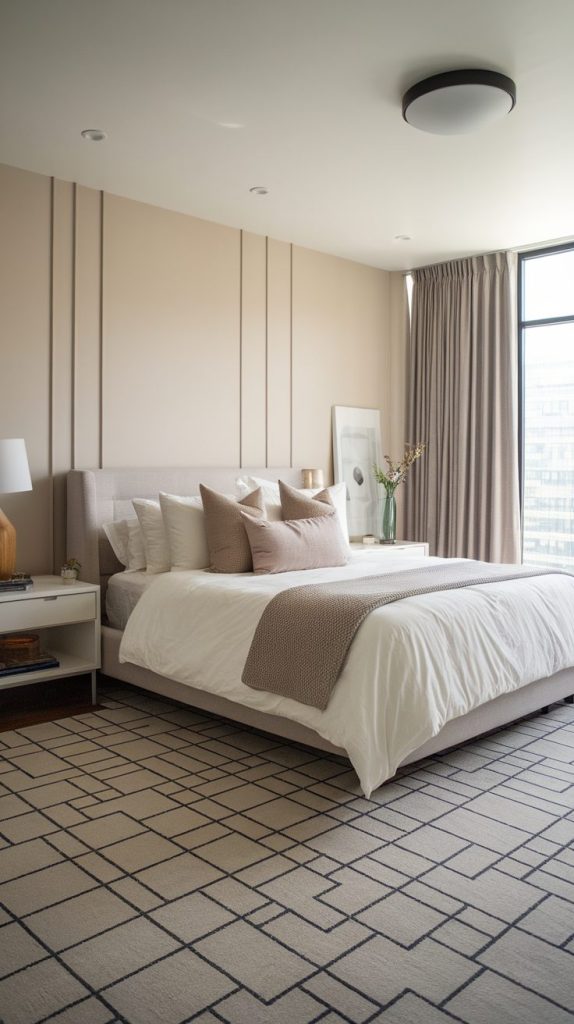
Carpet tiles let you design comfort exactly where you want it. I like them for creating soft zones around the bed without covering the entire floor. That flexibility feels practical and modern.
If one tile gets damaged, you replace it instead of the whole floor. That feature saves money and stress long term. For bedrooms with kids or pets, this option feels smart.
Design-wise, carpet tiles come in endless colors and textures. You can create patterns or keep it subtle. Cozy doesn’t have to mean boring.
Smart uses for carpet tiles
- Partial coverage near the bed
- Easy maintenance and replacement
- Custom layout flexibility
11. Heated Flooring Beneath Any Surface
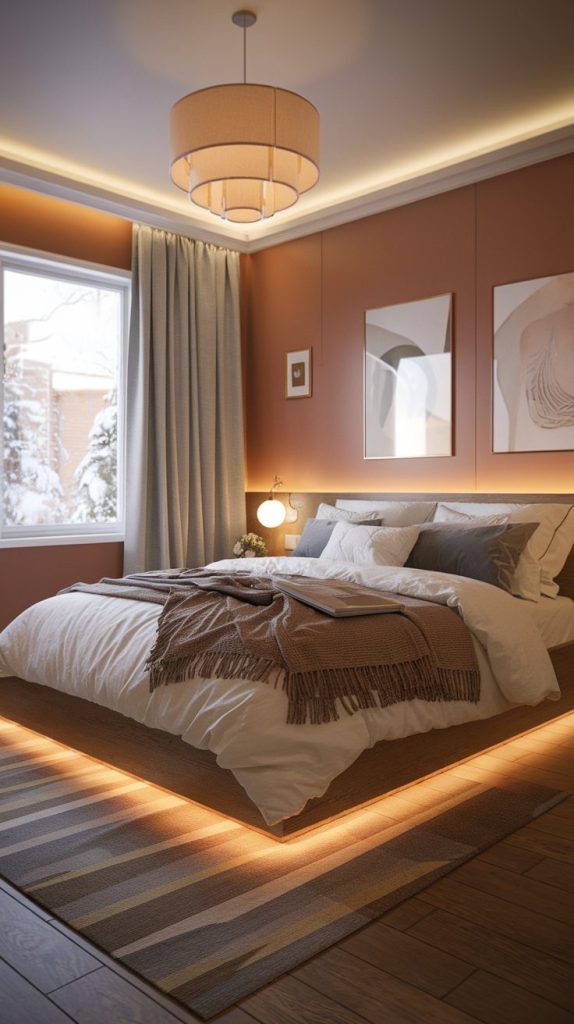
Radiant heating transforms almost any flooring into a cozy dream. I’ve tried it under tile and engineered wood, and the difference feels unreal. Warm floors change how a bedroom feels instantly.
Heated flooring works best if you renovate or build new. Installation costs more upfront, but comfort levels soar. Imagine winter mornings without cold shocks underfoot.
This option pairs beautifully with stone, tile, or vinyl. Those materials normally feel cold, but heating flips that downside completely. Cozy becomes effortless.
Why heated floors feel luxurious
- Consistent warmth across the room
- Ideal for cold climates
- Works under many flooring types
12. Natural Stone with Soft Textiles
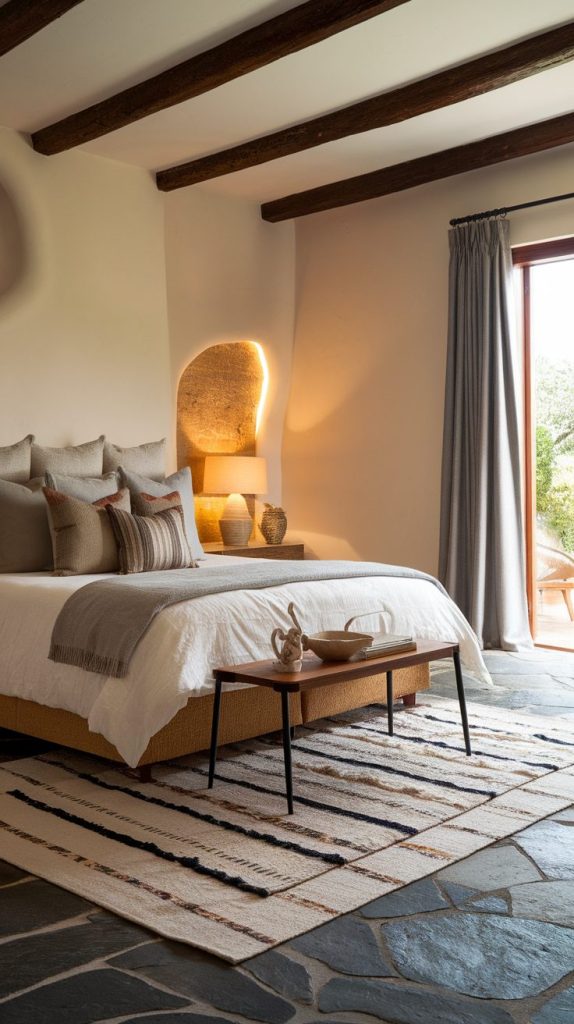
Stone flooring doesn’t sound cozy at first, but hear me out. When you pair stone with plush rugs and layered textiles, the contrast feels intentional and elegant. Heated stone floors feel especially inviting.
Stone stays cool naturally, which works well in warm climates. You can control softness with rugs exactly where you need it. That flexibility appeals to design lovers.
Visually, stone adds depth and texture. Cozy doesn’t always mean soft everywhere. Sometimes contrast creates comfort.
Best stone flooring tips
- Use large area rugs generously
- Add radiant heating if possible
- Choose honed finishes for softness
13. Reclaimed Wood for Warm Character
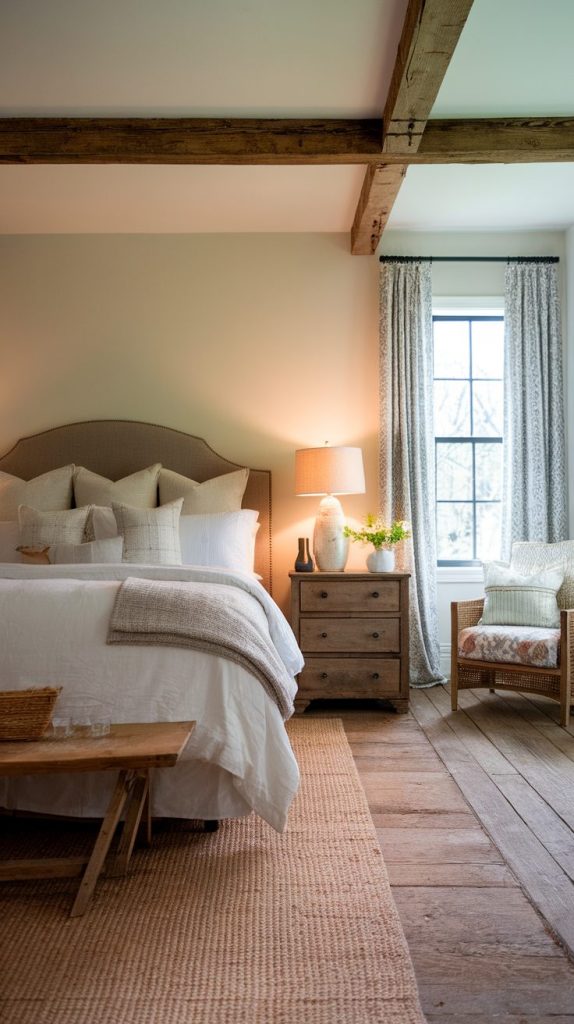
Reclaimed wood brings instant warmth and personality to a bedroom. Every plank tells a story, and that character adds emotional coziness. I love how it feels imperfect in the best way.
This flooring works beautifully in rustic or farmhouse bedrooms. The aged texture hides wear naturally. Scratches blend in instead of standing out.
Pair reclaimed wood with soft bedding and warm lighting. The result feels grounded and welcoming. Cozy becomes effortless with this material.
Why reclaimed wood feels inviting
- Natural texture and history
- Warm, lived-in appearance
- Durable and forgiving surface
14. Faux Fur Rugs Over Hard Flooring
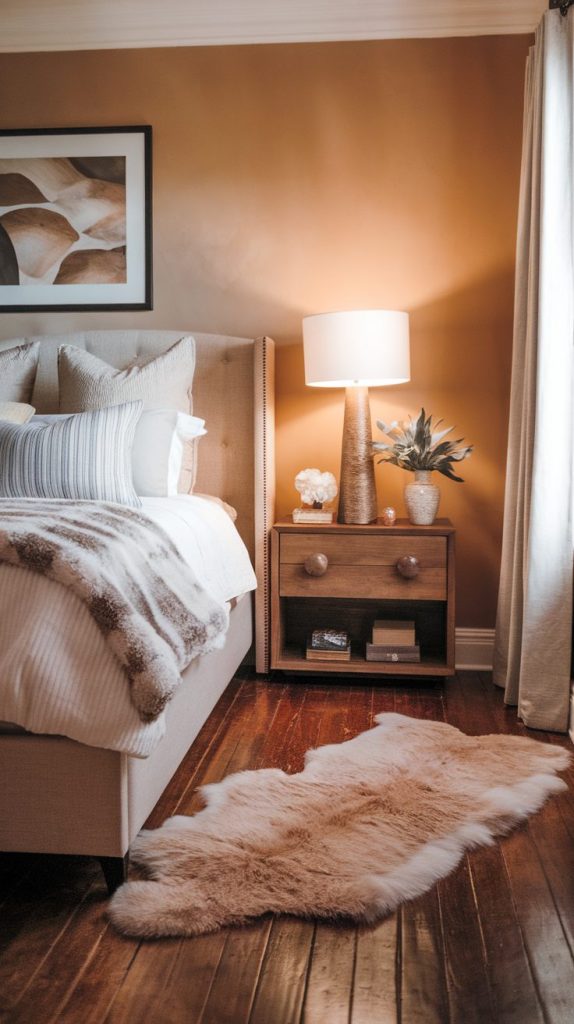
Faux fur rugs add instant softness without permanent commitment. I throw them beside the bed when I want quick coziness. They feel indulgent in a fun, low-effort way.
These rugs work best layered over wood or vinyl floors. You get softness exactly where you step. Cleaning stays easy because rugs move when needed.
Visually, faux fur adds warmth and texture. Just avoid overcrowding the room. One or two well-placed rugs feel better than chaos.
Styling faux fur rugs
- Place beside or at the foot of the bed
- Stick to neutral tones
- Keep the rest of the decor simple
15. Sisal or Jute with Soft Layering

Sisal and jute rugs feel rough alone, but layering changes everything. I use them as base rugs with softer pieces on top. That combo creates depth without sacrificing comfort.
These natural fibers ground the space visually. They work great in boho or coastal bedrooms. Add plush throws and pillows to balance texture.
While not traditionally cozy, layering transforms them. Texture matters just as much as softness. Balance creates comfort.
Layering tips
- Use sisal as the bottom layer
- Add a plush rug on top
- Stick to warm color palettes
16. Painted Wood Floors with Area Rugs
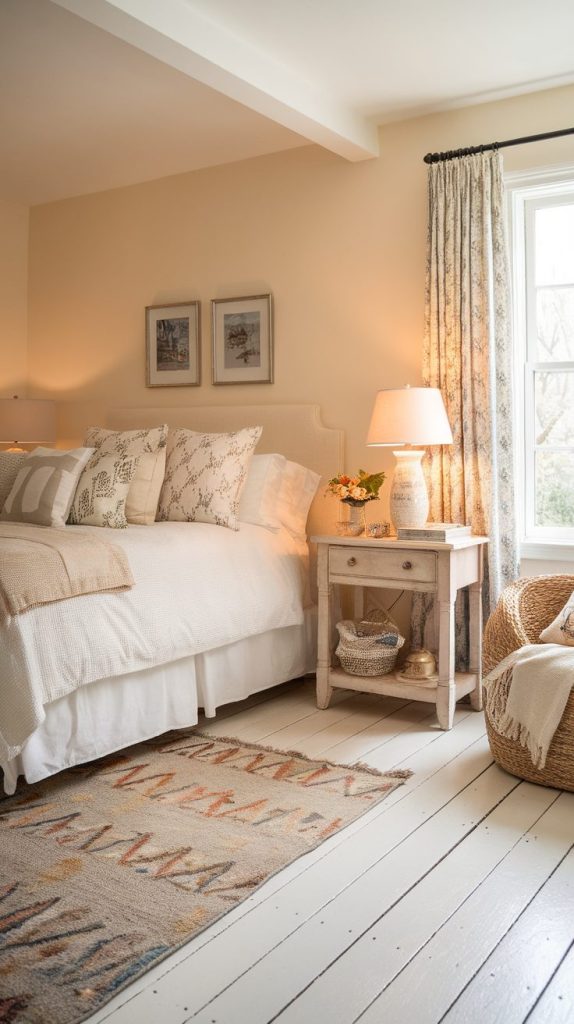
Painted wood floors feel charming and cozy when styled right. Soft neutral paints warm the room instantly. I love light gray, cream, or muted sage tones.
Paint refreshes old floors affordably. It also lets you customize the mood easily. Rugs add softness and prevent the floor from feeling too stark.
This option works best in relaxed, cottage-style bedrooms. It feels personal and intentional. Cozy lives in details like this.
Painted floor essentials
- Choose warm, muted paint colors
- Seal properly for durability
- Use rugs for softness and warmth
17. Layered Rugs for Ultimate Bedroom Comfort
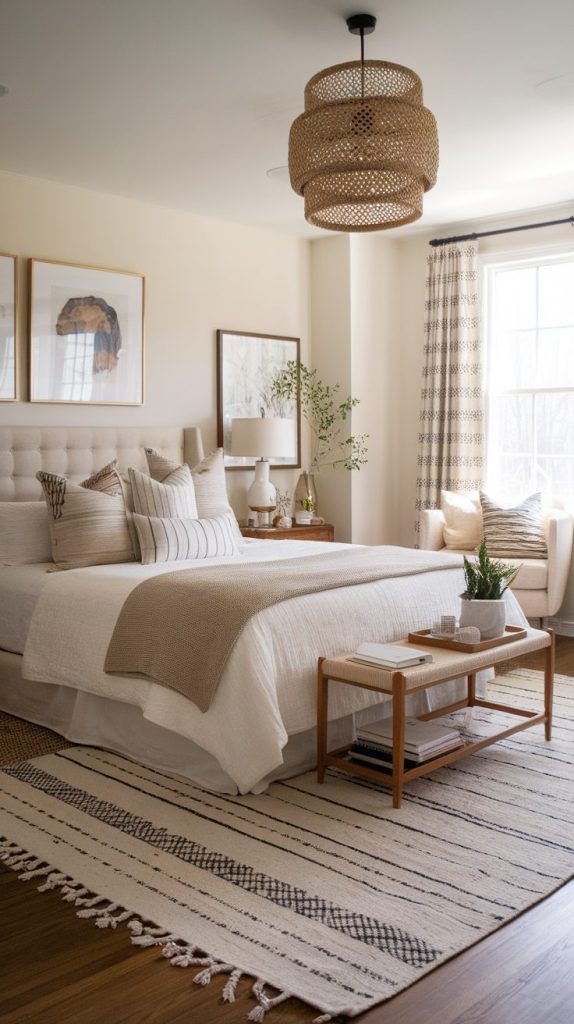
Layered rugs create instant coziness without replacing floors. I swear by this trick when rentals limit options. Multiple textures add warmth and personality fast.
Start with a large base rug and add smaller accent rugs. Mix materials like wool, cotton, or faux fur. The result feels curated and comfortable.
This approach lets you adjust comfort seasonally. Swap lighter rugs for heavier ones in winter. Cozy stays flexible.
How to layer rugs well
- Use a neutral base rug
- Add smaller textured rugs
- Keep colors within one palette
Cozy Bedroom Flooring Strategy: How to Choose the Right Foundation
Before you fall in love with a flooring style, you need a clear strategy. I always tell friends to start with comfort, climate, and lifestyle, not just Pinterest screenshots. A beautiful floor means nothing if it feels cold, loud, or high-maintenance in daily life.
First, consider your climate and subfloor. Bedrooms over concrete slabs feel colder than those over wood framing, so you may need thicker underlayment, rugs, or radiant heat. Climate directly affects how cozy your flooring actually feels.
Next, think about your morning routine and foot traffic. Do you walk barefoot? Do you move furniture often? Your daily habits should guide whether you choose plush carpet, layered rugs, or resilient surfaces like engineered wood or luxury vinyl.
Finally, balance long-term durability with comfort. High-quality flooring lasts longer, resists wear, and protects your investment. Cozy bedrooms start with smart foundations, not impulse decisions.
Key Decision Factors to Consider
- Subfloor type (concrete vs. wood framing)
- Room insulation and temperature patterns
- Noise levels in multi-story homes or apartments
- Maintenance preferences and cleaning habits
- Budget vs. long-term value
When you evaluate flooring through this lens, you create a bedroom that feels intentionally designed instead of randomly styled.
Common Mistakes to Avoid When Choosing Bedroom Flooring
Many people choose bedroom flooring based purely on appearance. I’ve seen stunning floors turn into daily annoyances because comfort took a back seat. You want your bedroom to feel good at 6 a.m., not just look good at 6 p.m.
Another common mistake involves ignoring underlayment. Cheap padding under laminate or vinyl makes floors sound hollow and feel cold. Quality underlayment dramatically improves comfort, warmth, and sound absorption.
People also underestimate rug sizing. Tiny rugs floating under a bed make the room feel disconnected. A properly sized rug should extend at least 18–24 inches beyond the bed for balanced visual weight and practical comfort.
Finally, homeowners often overlook maintenance realities. High-pile carpets trap dust without regular cleaning, and natural fibers require specific care. Choose flooring that fits your lifestyle, not your fantasy version of it.
Avoid These Flooring Errors
- Choosing style over comfort
- Skipping quality padding or underlayment
- Buying rugs that are too small
- Ignoring long-term cleaning needs
- Overlooking insulation and temperature control
When you avoid these mistakes, your bedroom feels thoughtfully designed instead of frustrating.
Bedroom Flooring and Indoor Air Quality Considerations
Flooring directly impacts indoor air quality more than most people realize. Bedrooms hold enclosed air for long hours overnight, so materials matter. I always recommend low-VOC options to reduce chemical exposure.
Look for certifications such as FloorScore or GREENGUARD when selecting carpets, vinyl, or engineered wood. These certifications confirm lower emissions and safer indoor performance. Cleaner air supports better sleep and overall comfort.
Natural materials like cork, wool, and solid wood often contain fewer synthetic additives. However, proper sealing and installation still matter. A well-installed floor prevents moisture buildup and mold risks.
Regular maintenance also supports air quality. Vacuum carpets weekly, clean hard surfaces consistently, and rotate rugs seasonally. Cozy should always feel fresh, not dusty.
Soundproofing and Noise Control for Better Sleep
Noise disrupts sleep more than most décor mistakes ever will. Flooring plays a huge role in how sound travels within a bedroom and throughout the house. Soft surfaces absorb noise, while hard surfaces reflect it.
Carpet and cork reduce impact sound significantly. If you prefer hard flooring, add thick area rugs with dense padding. That combination softens footsteps and minimizes echo.
In apartments or multi-level homes, consider acoustic underlayment. It reduces vibration and sound transfer between floors. Quiet floors create a calmer, more restful bedroom environment.
Practical Soundproofing Tips
- Install thick underlayment beneath laminate or vinyl
- Use area rugs with high-density rug pads
- Add upholstered furniture to absorb echo
- Seal floor gaps to prevent sound leakage
A quiet bedroom feels automatically cozier, even if the décor stays minimal.
Budget Planning and Long-Term Value
Bedroom flooring should feel like an investment, not an expense. I encourage smart budgeting that considers lifespan, comfort, and resale value. Cheap options often cost more over time due to replacement and repairs.
Higher-quality carpet, engineered wood, or cork flooring typically lasts longer and performs better. Spending slightly more upfront often reduces maintenance costs and future upgrades. Long-term value always outweighs short-term savings.
If you plan to sell your home eventually, neutral and durable flooring appeals to buyers. Warm wood tones and quality carpets create broader appeal. A cozy bedroom often increases perceived home value.
Budgeting Smartly
- Factor in installation and underlayment costs
- Consider maintenance expenses over 10–15 years
- Choose neutral tones for resale flexibility
- Prioritize durability in high-use areas
Thoughtful planning ensures your bedroom flooring feels rewarding, not regretful.
Frequently Asked Questions About Cozy Bedroom Flooring
1. What is the coziest type of bedroom flooring?
Plush wall-to-wall carpet and wool carpet usually feel the coziest underfoot. They provide warmth, softness, and sound absorption, which create immediate comfort.
2. Is hardwood flooring good for bedrooms?
Hardwood works beautifully in bedrooms when paired with large area rugs. It offers durability and timeless style while rugs add softness and warmth.
3. Does vinyl flooring feel cold in bedrooms?
Modern luxury vinyl plank feels warmer than older vinyl products. Proper underlayment improves insulation and comfort significantly.
4. How can I make hard flooring feel cozier?
Add thick area rugs with dense padding, layered textiles, and warm lighting. You can also install radiant heating beneath compatible flooring types.
5. Is carpet bad for indoor air quality?
Modern low-VOC carpets installed properly do not harm air quality when maintained well. Regular vacuuming and good ventilation keep carpet fresh.
6. What flooring works best in humid climates?
Engineered wood, luxury vinyl plank, and cork perform well in humid environments. These materials resist warping and moisture damage better than solid hardwood.
Conclusion
Bedroom flooring shapes how your space feels every single day, not just how it looks online. Cozy comes from warmth, softness, and thoughtful layering, not trendy materials alone. I always choose floors that feel good at 7 a.m., not just ones that impress guests.
If your bedroom feels off, start under your feet. Try one change, add a rug, or switch textures. Small flooring upgrades create big comfort fast, and your sleepy mornings will thank you.