10 Extended Patio Ideas for Stylish Outdoor Living
Open patios waste potential. I said it, and I stand by it. If you have outdoor space and you don’t stretch it to work harder and look better, you leave comfort and style on the table.
I learned this the annoying way after hosting friends and running out of seating fast. Everyone hovered inside while the patio sat there doing nothing. That moment flipped a switch for me.
This list breaks down extended patio ideas that actually improve how you live outside.
Think practical upgrades, cozy flow, and design choices that feel intentional instead of thrown together.
1. Extend the Patio with a Defined Lounge Zone

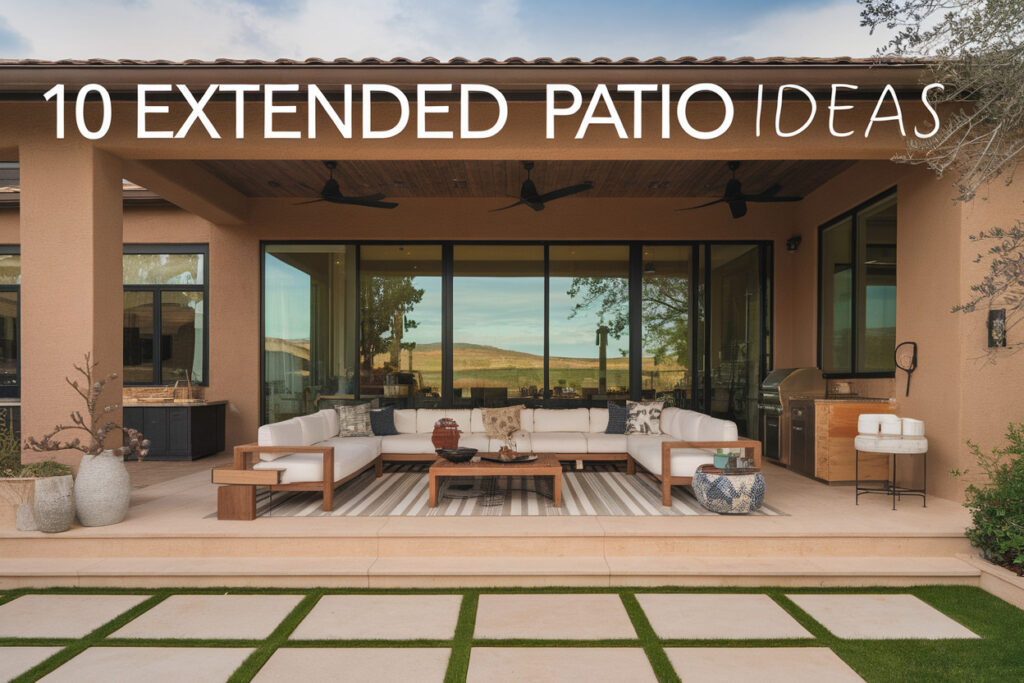
Warm air, soft cushions, and that quiet moment before sunset set the mood. I always notice how an outdoor space feels first, not how it measures. A defined lounge zone makes an extended patio feel like a real room instead of leftover concrete.
This idea expands your patio just enough to fit a full seating setup that invites people to stay longer. You create a spot for coffee, wine, or scrolling your phone without balancing on a dining chair. IMO, comfort always beats fancy furniture that no one uses.
Why This Works
A lounge zone gives your patio a clear purpose. People understand where to sit, how to relax, and why the space exists. The layout feels intentional, which instantly upgrades the entire backyard vibe.
How to Do It
- Extend the patio slab or pavers by a few feet where foot traffic already flows.
- Anchor the area with an outdoor rug to define the zone.
- Add a sofa, two chairs, and a low table to complete the setup.
Style & Design Tips
Choose low-profile furniture to keep sightlines open and relaxed. Neutral cushions age better outdoors and pair easily with seasonal accents. Avoid oversized sectionals unless you have serious space to spare.
Pro Tip or Budget Hack
Skip custom outdoor sofas and buy indoor-style frames with outdoor cushions. You save money and get more design options without sacrificing comfort.
2. Create a Covered Extension for Year-Round Use
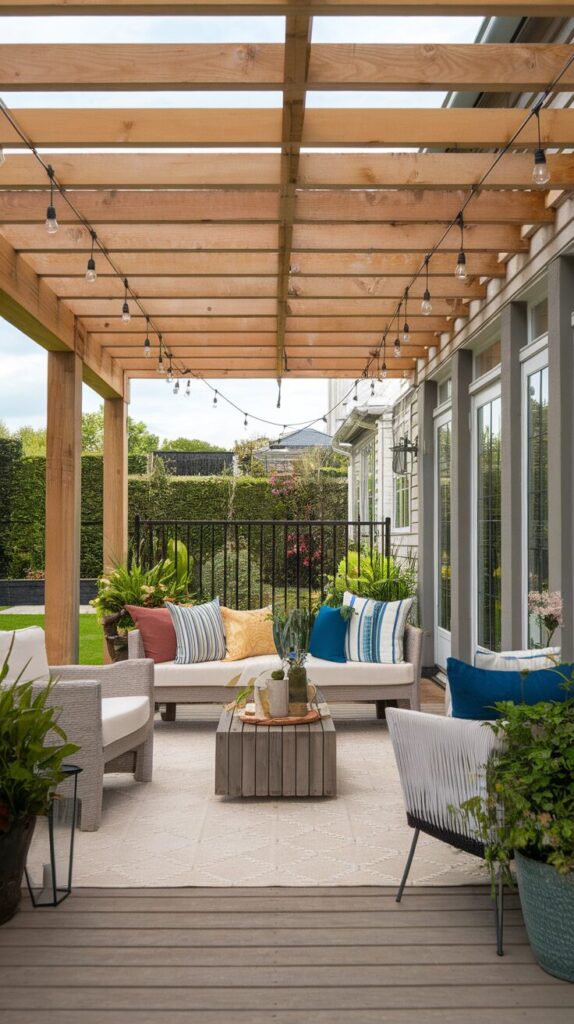
Rain ruins plans faster than anything else. I learned that lesson halfway through a backyard dinner that turned into a mad dash indoors. A covered patio extension fixes that problem permanently.
This idea adds a roofed section that protects seating or dining areas from sun and rain. You extend usable square footage without building walls. The space suddenly works in more seasons and more moods.
Why This Works
Coverage increases how often you use the patio. Shade cools the space, and protection keeps furniture in better shape. Function improves without making the yard feel boxed in.
How to Do It
- Extend the patio surface first so the roof feels intentional.
- Install a pergola, solid roof, or polycarbonate panels.
- Add outdoor-rated lighting to make evenings usable.
Style & Design Tips
Match the roof style to your home’s architecture for a seamless look. Wood feels warm, while metal reads modern and clean. Avoid mixing too many materials, which can feel chaotic fast.
Pro Tip or Budget Hack
Use shade sails before committing to a permanent roof. You test coverage placement and save money if plans change later.
3. Add a Dining Extension That Feels Like an Outdoor Room
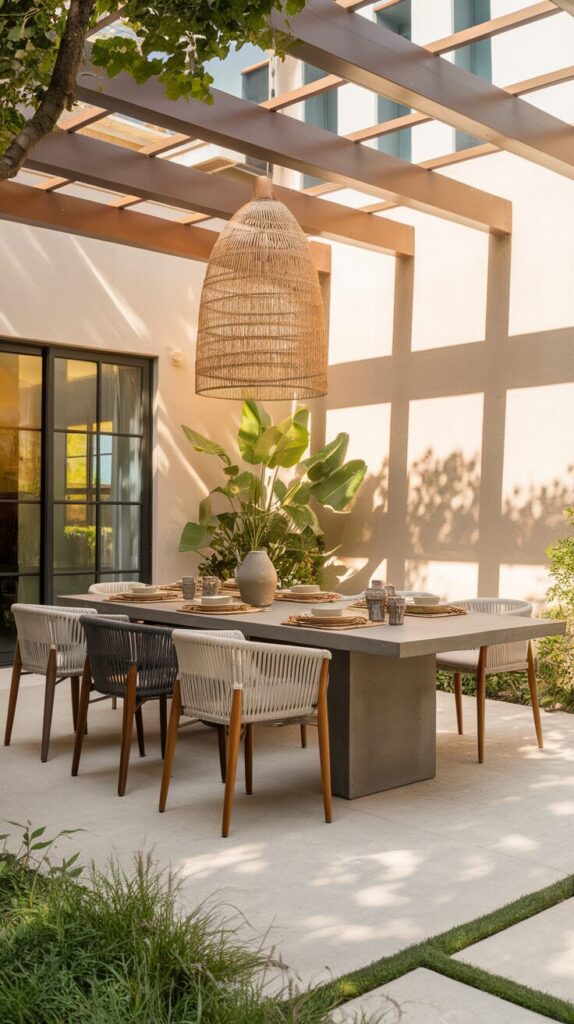
Strong opinion incoming: tiny patio dining sets frustrate me. People bump elbows, plates wobble, and no one relaxes. Extending your patio to fit a real dining setup changes everything.
This idea focuses on expanding space specifically for outdoor meals. You gain room for a proper table, chairs, and serving flow. Hosting suddenly feels easy instead of cramped.
Why This Works
Dining needs clearance, not just seating. Extra space allows movement without disrupting conversations. The patio starts functioning like an indoor dining room with fresh air.
How to Do It
- Extend the patio at least three feet beyond table edges.
- Center the table to allow equal walking space around it.
- Add a nearby sideboard or grill station for convenience.
Style & Design Tips
Rectangular tables maximize seating in extended spaces. Mix materials like wood tables with metal chairs for balance. Skip bulky chairs that eat up precious legroom.
Pro Tip or Budget Hack
Use benches on one side of the table. They seat more people and tuck in neatly when not needed.
4. Build a Multi-Level Patio for Visual Interest
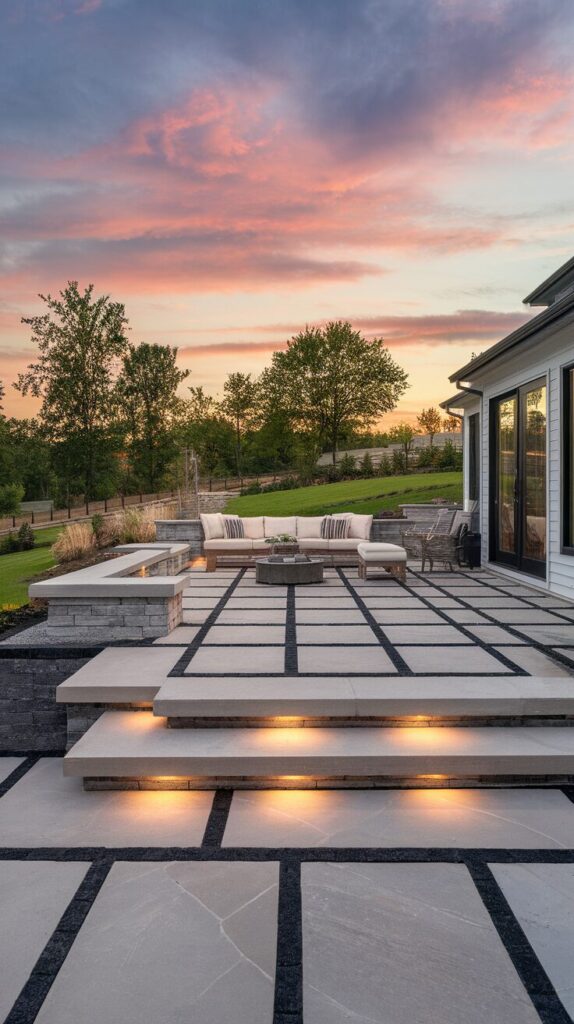
Flat patios feel boring after a while. I didn’t realize this until I stepped onto a friend’s tiered backyard and felt the difference immediately. Levels add drama without clutter.
This idea extends the patio vertically instead of outward. You create zones using subtle elevation changes. Each level feels purposeful and visually distinct.
Why This Works
Height changes separate functions naturally. Dining stays above while lounging sits lower, or vice versa. The space flows without walls or fences.
How to Do It
- Add one or two shallow steps between zones.
- Use consistent materials to keep cohesion.
- Highlight steps with built-in lighting for safety.
Style & Design Tips
Keep risers low to maintain comfort and accessibility. Match step materials to the main patio surface. Avoid steep drops, which break flow and feel unsafe.
Pro Tip or Budget Hack
Use gravel or decking for lower levels to save on concrete costs. The texture contrast looks intentional and stylish.
5. Extend the Patio with an Outdoor Kitchen Zone
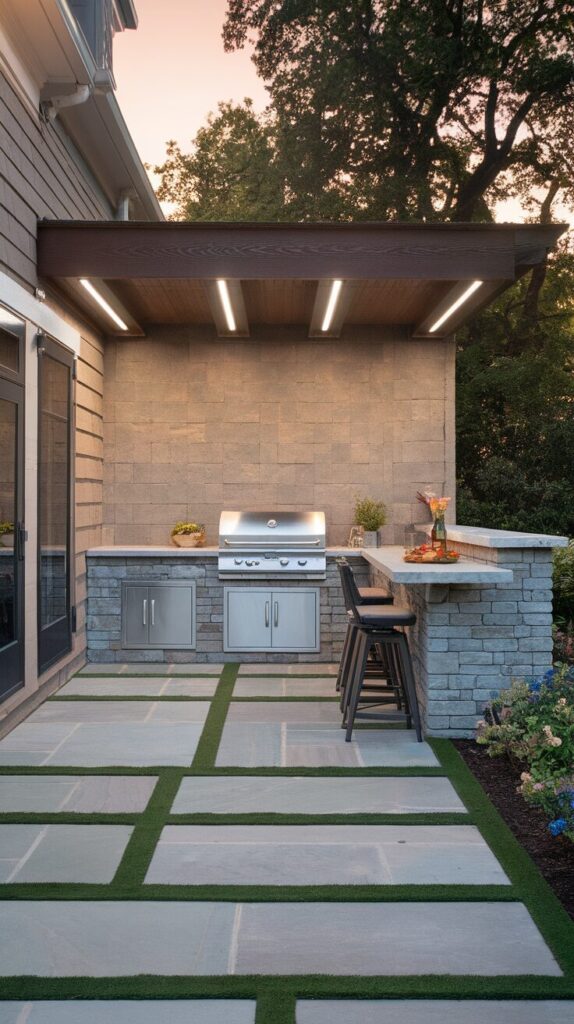
I used to think outdoor kitchens felt extra. Then I hosted one party where I stayed inside cooking all night. That experience converted me instantly.
This idea adds a functional kitchen extension with prep space, storage, and cooking elements. You stay present with guests instead of disappearing indoors. Outdoor living finally lives up to its promise.
Why This Works
Cooking zones anchor gatherings. People naturally gather near food and conversation flows easily. The patio becomes the social center instead of a side feature.
How to Do It
- Extend the patio near existing utility lines.
- Install a grill, counter, and storage first.
- Add bar seating to invite interaction.
Style & Design Tips
Use durable finishes like stone or stainless steel. Match counters to indoor kitchen tones for cohesion. Avoid cluttering surfaces with too many appliances.
Pro Tip or Budget Hack
Start with a movable grill island. You upgrade flexibility and delay costly permanent installs.
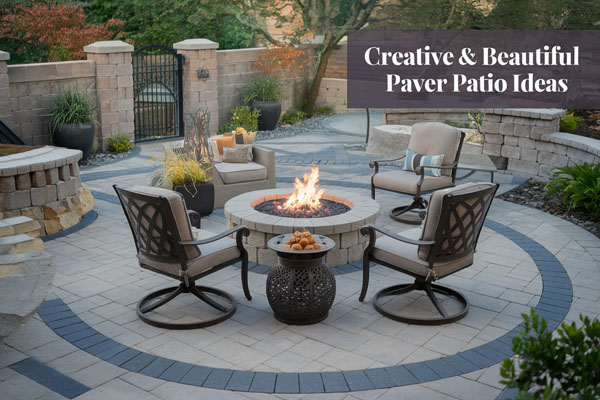
6. Create a Cozy Fire Pit Extension
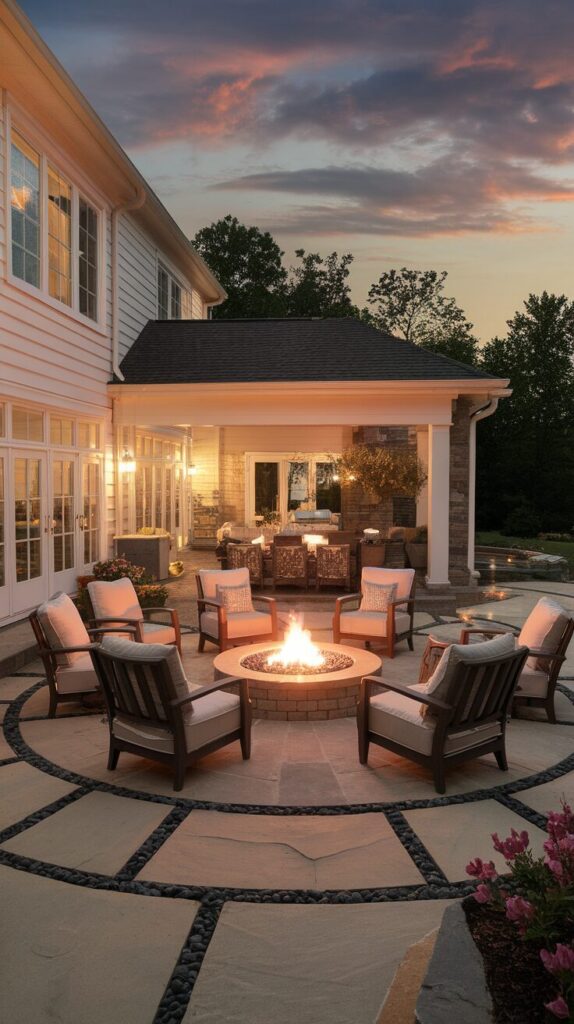
Short blunt truth: fire changes everything. People linger longer, talk deeper, and forget their phones exist. Extending your patio to include a fire pit proves worth it fast.
This idea adds a dedicated fire feature area. You create warmth, ambiance, and a natural gathering point. Nights outdoors feel intentional instead of chilly.
Why This Works
Fire draws attention and anchors seating layouts. The glow creates instant atmosphere without extra decor. Comfort increases while effort stays low.
How to Do It
- Extend the patio to allow safe clearance.
- Center seating around the fire pit.
- Choose gas or wood based on lifestyle.
Style & Design Tips
Round fire pits soften angular patios. Neutral stone blends with most designs. Avoid oversized pits that dominate the space visually.
Pro Tip or Budget Hack
Use portable fire bowls first. You test placement before committing to permanent installs.
7. Add a Garden-Integrated Patio Extension
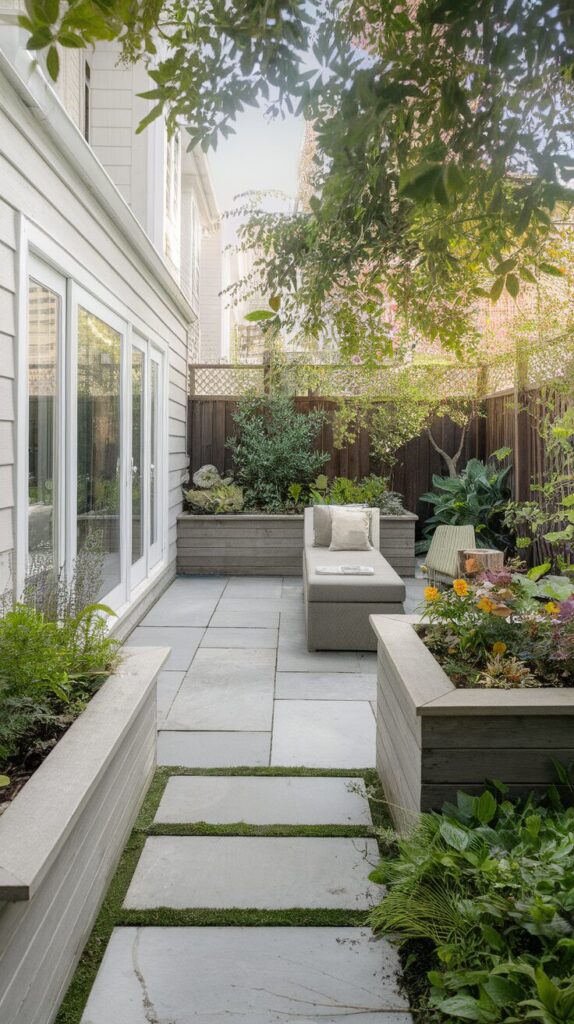
I love patios that feel alive. Hard surfaces alone feel cold to me, no matter how stylish. Integrating greenery fixes that instantly.
This idea extends the patio into garden edges or planters. Plants soften lines and add movement. The space feels organic instead of rigid.
Why This Works
Greenery balances hard materials. Plants cool the area and improve mood. Visual depth increases without clutter.
How to Do It
- Extend patio edges with built-in planters.
- Use raised beds to define boundaries.
- Choose low-maintenance plants for sanity.
Style & Design Tips
Stick to one or two plant types for cohesion. Mix heights for interest without chaos. Avoid overplanting, which overwhelms quickly.
Pro Tip or Budget Hack
Use large pots instead of built-ins. You keep flexibility and reduce construction costs.
8. Extend the Patio into a Walkway Connection

Ever feel like your patio floats randomly in the yard? That disconnected feeling bothers me more than it should. Walkway extensions solve that problem cleanly.
This idea links the patio to doors, gardens, or seating zones. The extension guides movement naturally. Everything feels planned instead of accidental.
Why This Works
Flow matters more than size. Connected spaces encourage use and exploration. The yard feels larger without adding square footage everywhere.
How to Do It
- Extend pavers in a clear path direction.
- Match materials to the main patio.
- Add subtle lighting for nighttime use.
Style & Design Tips
Curved paths feel relaxed, while straight lines feel modern. Keep width consistent for balance. Avoid mixing too many patterns along one path.
Pro Tip or Budget Hack
Use stepping stones with gravel gaps. You save money and add texture.
9. Design a Flexible Extension for Multiple Uses
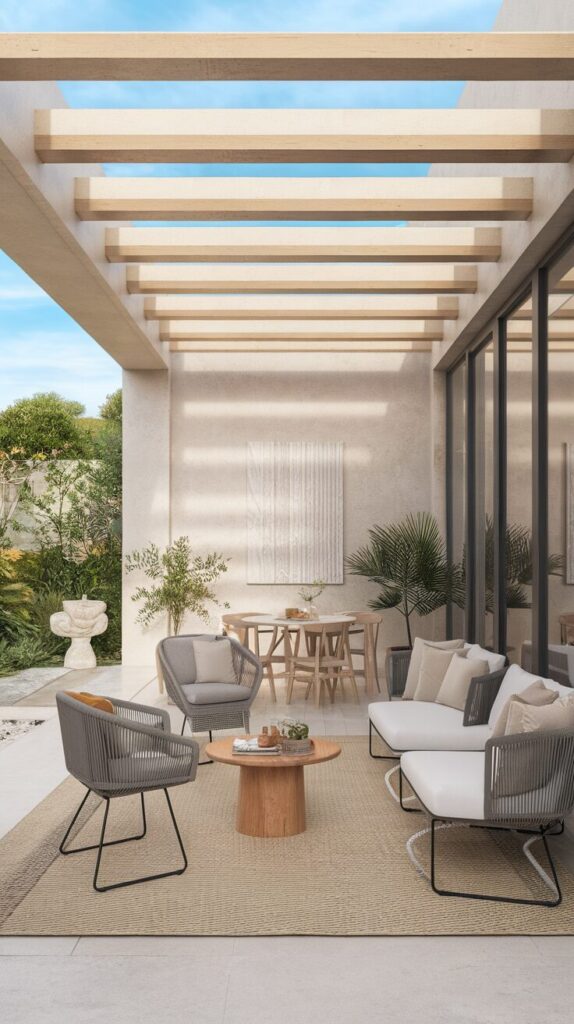
Lazy weekends taught me this lesson. Some days I want yoga space, other days I want seating. A flexible patio extension handles both without drama.
This idea creates open space without fixed furniture. You adapt layouts based on mood or event. The patio works harder without feeling busy.
Why This Works
Flexibility increases usage. You stop redesigning every season. The space evolves naturally with your lifestyle.
How to Do It
- Extend the patio with open clearance.
- Choose lightweight, movable furniture.
- Store extras nearby for easy swaps.
Style & Design Tips
Neutral bases allow quick styling changes. Layer with rugs or cushions when needed. Avoid permanent fixtures that limit options.
Pro Tip or Budget Hack
Use foldable outdoor furniture. You gain options without storage headaches.
10. Extend the Patio with Lighting as the Main Feature
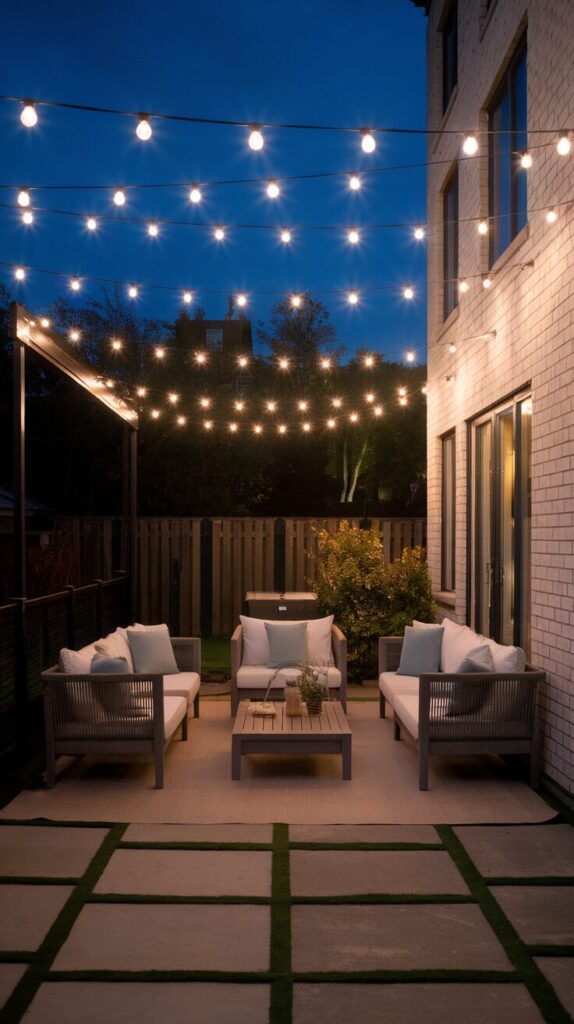
Here’s a flipped thought: lighting defines space more than furniture. I noticed this after string lights made a plain patio feel magical overnight. Extending with lighting in mind changes everything.
This idea expands the patio specifically to highlight lighting zones. The glow creates boundaries and mood. Nights outdoors suddenly feel intentional.
Why This Works
Light guides attention and movement. It makes spaces usable after sunset. The patio gains personality without physical walls.
How to Do It
- Extend surfaces where lighting naturally falls.
- Install layered lighting at different heights.
- Use dimmable options for flexibility.
Style & Design Tips
Warm light feels inviting and flattering. Avoid harsh white tones outdoors. Overlighting kills ambiance, so keep it subtle.
Pro Tip or Budget Hack
Solar lights reduce wiring costs. Modern options look sleek and perform well.
Patio Extension Planning Framework: Start Smart Before You Build
You don’t need a massive budget to extend a patio, but you absolutely need a plan. Random upgrades create awkward layouts and wasted money fast. A simple framework keeps your project functional and cohesive from day one.
First, define the primary purpose of the extension. Decide whether you want lounging, dining, cooking, or multi-use flexibility as the main goal. One clear focus prevents design confusion and layout regret.
Next, measure everything twice. Account for walking clearance, furniture depth, door swings, and grill heat zones. Good spacing improves comfort more than expensive materials ever will.
Finally, align the extension with your home’s architecture. Match tones, materials, and proportions so the patio feels like a natural continuation of the house. Cohesion always looks more polished than trendy add-ons.
Budget Planning & Material Selection Guide
Material choice impacts durability, maintenance, and long-term cost. Concrete costs less upfront, while pavers allow easier repairs later. Natural stone looks premium but often raises installation expenses.
Think about climate before you commit. Freeze-thaw cycles crack cheap concrete, and constant sun fades low-quality finishes. Smart material selection protects your investment.
Set aside 10–15% of your total budget for unexpected adjustments. Projects almost always require minor grading, drainage tweaks, or layout changes. Planning for that cushion keeps stress levels down.
Outdoor Furniture & Layout Measurement Standards
Furniture placement determines whether your extended patio feels luxurious or cramped. Leave at least 36 inches for walkways around dining tables. That clearance allows smooth movement without awkward sidestepping.
Lounge seating needs breathing room. Keep 18 inches between seating and coffee tables for comfort. Balanced spacing improves usability and visual flow at the same time.
Anchor zones with rugs or lighting to define purpose. Clear boundaries reduce visual clutter. The patio feels structured instead of chaotic.
Safety & Building Considerations
Safety should never feel optional in outdoor design. Maintain proper clearance between fire features and seating areas. Follow manufacturer guidelines strictly for grills and heat sources.
Check local building codes before installing permanent roofs or outdoor kitchens. Many municipalities require permits for structural changes. Handling paperwork early prevents expensive corrections later.
Ensure proper drainage away from your home’s foundation. Poor water management leads to long-term structural damage. Slight grading adjustments protect your house and patio investment.
Seasonal Maintenance & Longevity Tips
Extended patios need routine care to stay sharp. Clean surfaces regularly to prevent mold, stains, and discoloration. Simple maintenance extends lifespan significantly.
Seal stone or concrete every few years if recommended. Protective sealants reduce cracking and weather damage. Preventative care costs less than full replacement.
Store cushions during extreme weather. Even weather-resistant fabrics last longer when protected. Small habits protect both aesthetics and budget.
Common Mistakes to Avoid
Many people extend patios without considering sun direction. Afternoon glare can make a lounge area unbearable. Always observe sunlight patterns before finalizing layout.
Oversizing furniture ruins flow quickly. Massive sectionals shrink walking space and overwhelm modest patios. Choose scale carefully for comfort and proportion.
Ignoring drainage creates long-term frustration. Water pooling damages surfaces and attracts insects. Plan proper slope and runoff from the beginning.
Mixing too many materials leads to visual clutter. Stone, brick, tile, and wood together often compete instead of complement. Stick to two primary materials for cohesion.
Skipping lighting during installation forces messy retrofits later. Plan wiring and fixture placement early. Thoughtful lighting elevates both safety and ambiance.
Frequently Asked Questions
How much should I budget for a patio extension?
Costs vary widely based on materials and size. Basic concrete extensions cost significantly less than natural stone or outdoor kitchens. Start with a realistic budget and prioritize function over luxury finishes.
Do I need a permit to extend my patio?
Many areas require permits for structural additions like roofs or built-in kitchens. Simple slab extensions sometimes skip permits, but rules vary by location. Always confirm local regulations before construction.
What is the best material for long-term durability?
Pavers offer flexibility and easier repairs over time. Concrete provides affordability but may crack. Natural stone delivers premium durability with higher installation costs.
How large should an extended patio be?
The ideal size depends on intended use. Dining areas require clearance around tables, while lounge zones need open walking space. Plan based on furniture dimensions rather than guessing square footage.
Can I extend a patio myself?
DIY works for small paver or gravel projects. Larger concrete pours, grading adjustments, and structural builds often require professionals. Evaluate your skill level honestly before starting.
How do I make a small patio feel larger?
Use light-colored materials and consistent flooring patterns. Connect spaces with walkways to improve flow. Strategic lighting and minimal clutter create the illusion of more space.
Final Thoughts
Extended patios don’t need massive budgets or dramatic builds to work. Small, intentional changes improve comfort and flow faster than you expect. I always recommend starting with one upgrade and living with it for a while.
Pick the idea that solves your biggest outdoor annoyance first. You’ll feel the difference immediately, and the rest will come naturally.