17 Galley Kitchen Ideas for Narrow Compact Homes
Ever stood in your narrow kitchen and thought, why does this feel tighter than my jeans after Eid? Yeah, I’ve been there, and galley kitchens love to test our patience.
I’ve designed, used, and tweaked more compact kitchens than I can count, and trust me, a narrow space can still feel stylish, smart, and surprisingly roomy with the right ideas.
Let me walk you through what actually works, minus the fluff and design-world nonsense.

Understanding Why Galley Kitchens Actually Work
People love to complain about galley kitchens, but honestly, they make a lot of sense when you lean into their strengths. A galley layout keeps everything within arm’s reach, which means less walking and more actual cooking.
Ever noticed how professional kitchens use this layout for speed and efficiency?
I always tell friends that a galley kitchen rewards smart decisions and punishes clutter fast. You don’t get to hide mistakes here, but when you get it right, the space feels intentional and efficient. IMO, that’s not a bad trade-off.
The Real Advantage of Narrow Layouts
A narrow kitchen forces you to prioritize function, and that usually leads to better design. You stop buying useless gadgets and focus on what you actually use every day. That mindset alone transforms how the space feels.
Another bonus involves workflow, because galley kitchens naturally support the classic work triangle. You move smoothly from fridge to sink to stove without crossing the room like you’re running laps.
1. Stick With Light Colors That Bounce Light Around
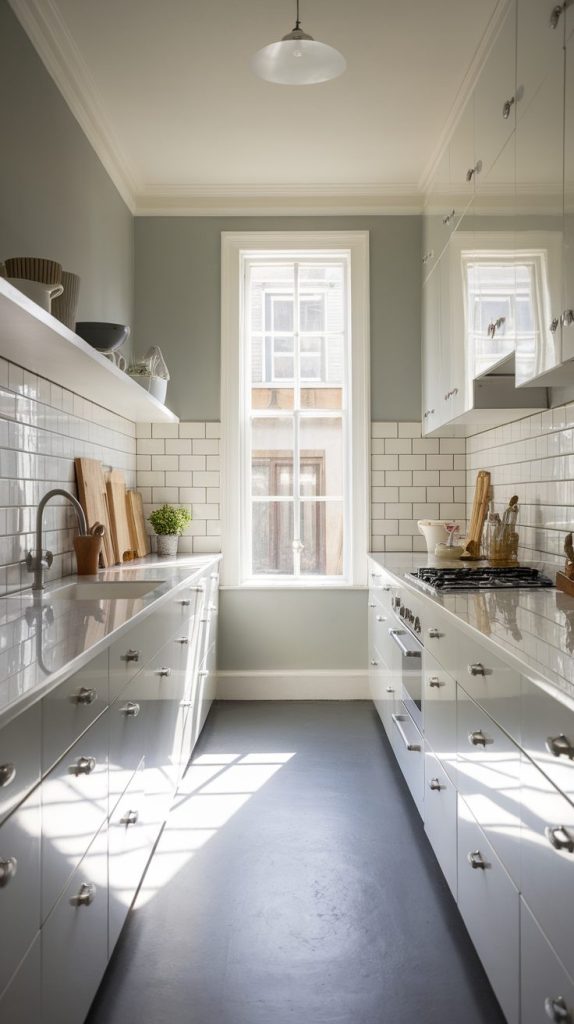
Light colors save small kitchens, and I will die on this hill. White, soft cream, pale grey, and light beige reflect light instead of swallowing it whole. You want the walls and cabinets to work together to create openness.
I once repainted a dark galley kitchen in warm white, and the difference shocked even me. The room felt wider within hours, not days. That’s the kind of instant payoff everyone loves.
Best Light Color Combos That Actually Work
Some color combos look great on Pinterest but feel flat in real life. These combinations consistently deliver in narrow spaces.
- White cabinets with soft grey walls
- Cream cabinets paired with warm beige
- Light wood cabinets with white walls
- Pale grey cabinets with glossy white backsplash
Bold colors can work, but only if you limit them to accents. Let the main palette stay light and calm.
2. Use One Continuous Flooring Material
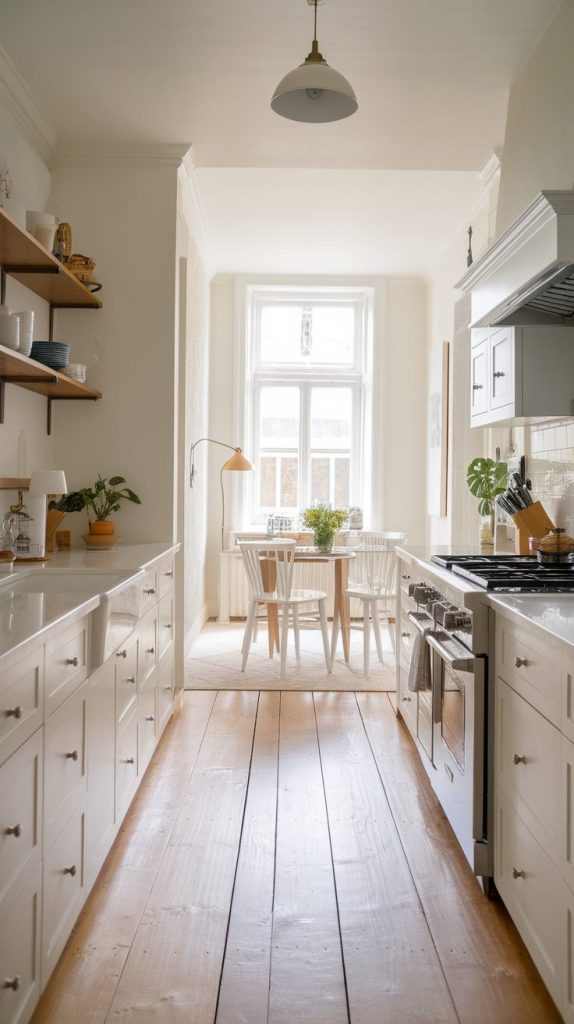
Nothing chops up a narrow kitchen faster than busy flooring. I always recommend one continuous flooring material that flows into adjacent rooms if possible. This trick visually stretches the space.
Wood-look tiles, vinyl planks, or light-toned hardwood work beautifully here. The fewer visual breaks you create, the longer and wider the kitchen appears.
Flooring Direction Matters More Than You Think
Lay planks lengthwise to emphasize depth, not width. This direction naturally draws the eye down the kitchen and reduces the tunnel effect. FYI, diagonal layouts sound cool but often feel chaotic in small spaces.
3. Install Handleless or Slim Hardware Cabinets
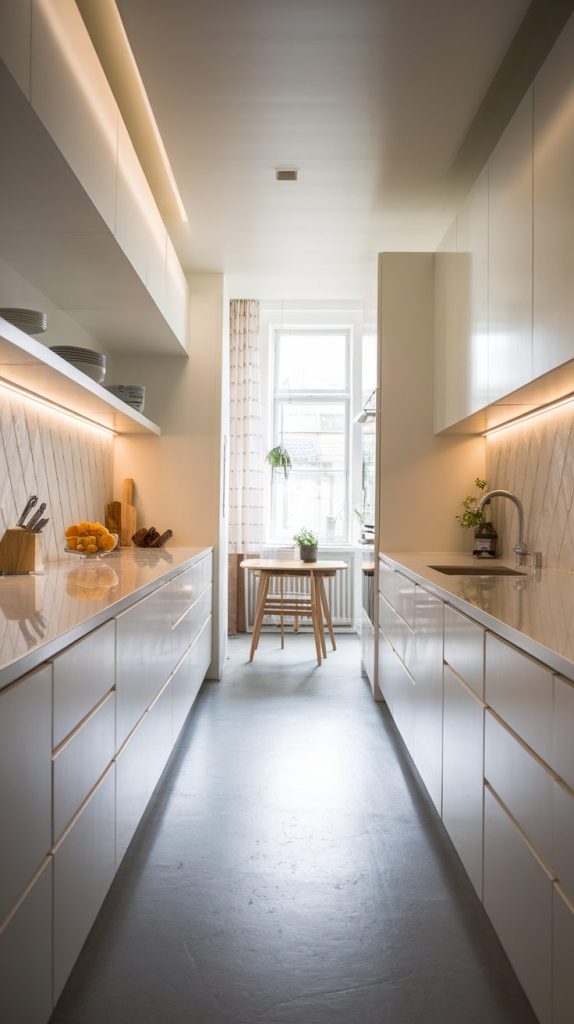
Bulky handles love to snag clothes and hips in tight kitchens, and nobody enjoys that daily reminder of limited space. Handleless cabinets or slim-profile pulls reduce visual clutter and physical obstacles.
I swapped chunky handles for sleek edge pulls in my own galley kitchen, and the space instantly felt calmer. Small change, big impact, zero regret.
Best Hardware Styles for Narrow Kitchens
Choose hardware that blends in rather than demands attention.
- Integrated finger pulls
- Recessed handles
- Slim bar pulls in matte finishes
- Push-to-open mechanisms
Keep finishes consistent to avoid visual noise.
4. Go All the Way Up With Cabinets
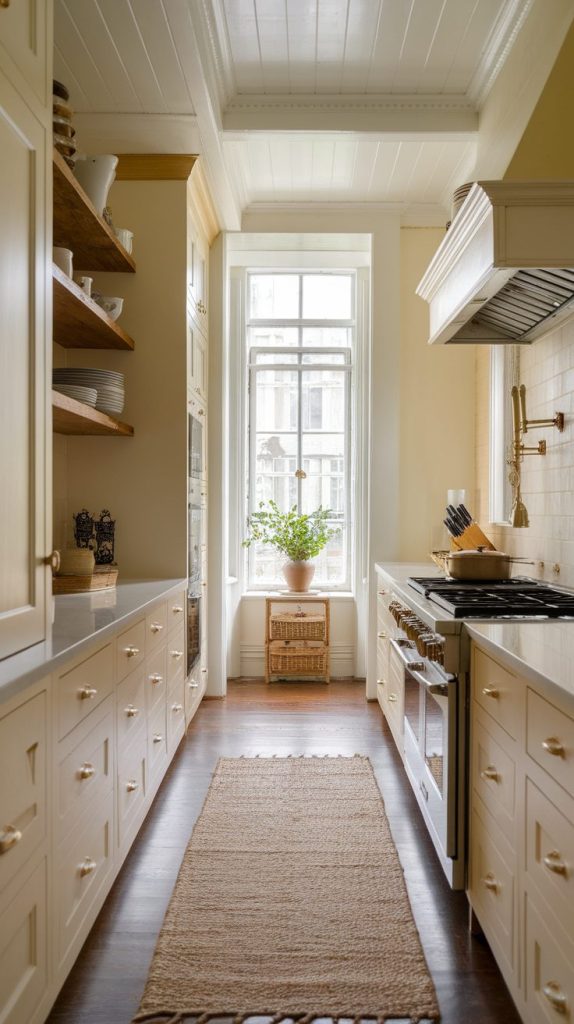
Short cabinets waste vertical space, and narrow kitchens need every inch to work overtime. Floor-to-ceiling cabinets maximize storage while creating a clean, built-in look.
I love how tall cabinets draw the eye upward, making ceilings feel higher. They also hide clutter that would otherwise sit on countertops and stress you out daily.
Smart Ways to Use Upper Storage
Use upper sections for items you don’t need daily, like seasonal cookware or backup pantry supplies. Keep frequently used items within easy reach so you don’t curse your cabinets every morning.
5. Choose Glossy or Semi-Gloss Finishes
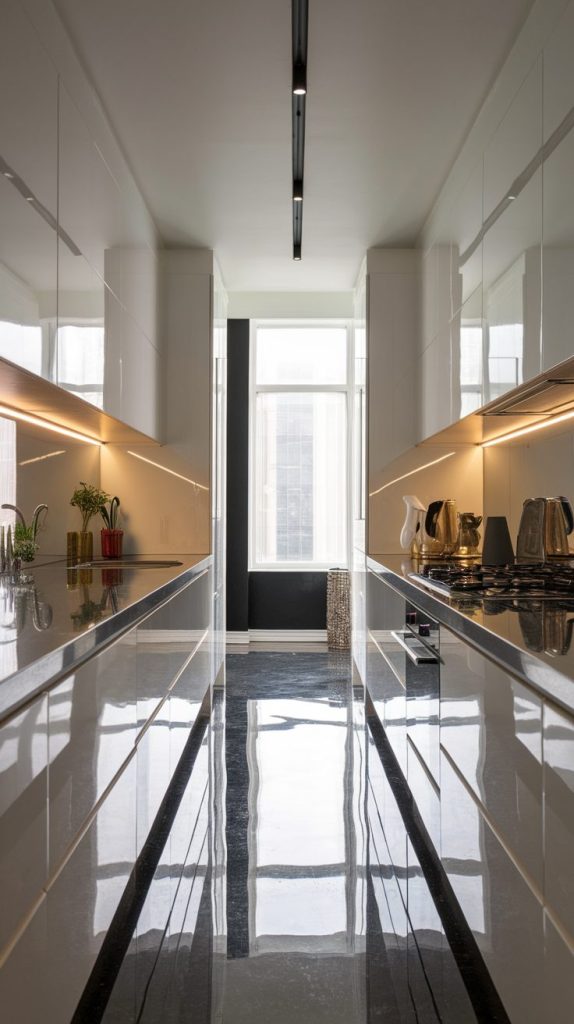
Matte finishes look trendy, but glossy surfaces reflect light and visually expand narrow kitchens. Cabinets, backsplashes, and even countertops benefit from a bit of shine.
I once hesitated to use glossy cabinets because I feared fingerprints, but modern finishes clean easily. The brightness payoff outweighs the extra wipe-down, trust me.
Where Gloss Works Best
Gloss doesn’t need to cover everything to make an impact.
- Cabinet doors
- Backsplashes
- Lacquered panels
- Polished stone countertops
Balance glossy surfaces with subtle textures so the space doesn’t feel sterile.
6. Open One Side With Shelving
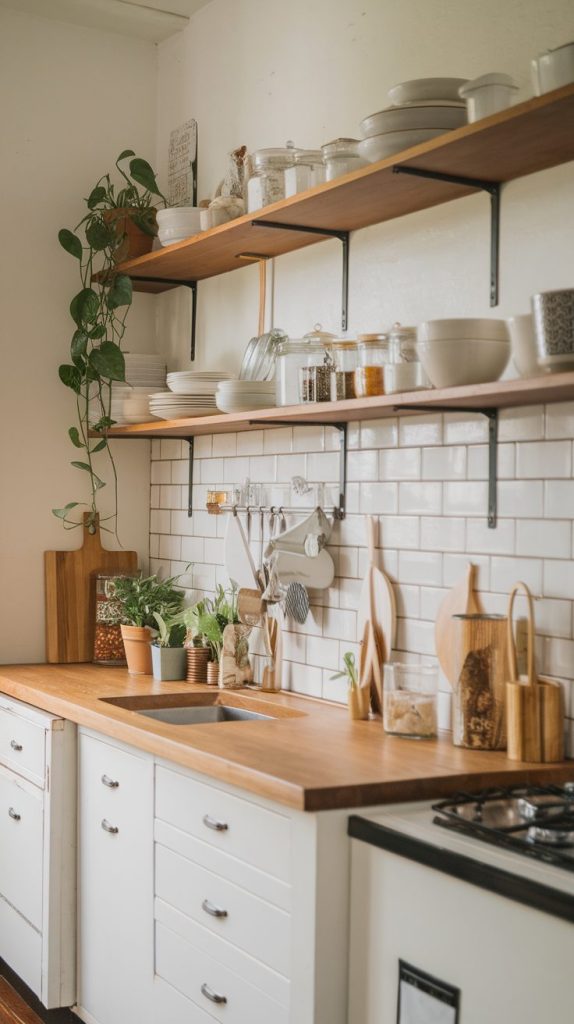
Upper cabinets on both sides can make a galley kitchen feel boxed in fast. I often remove cabinets from one side and replace them with open shelves.
This approach lightens the space visually and adds personality through styling. Just don’t overload shelves with clutter unless you enjoy chaos.
Styling Open Shelves Without the Mess
Stick to a simple rule of thirds and repeat colors for cohesion.
- Neutral dishware
- Glass jars
- A small plant or two
- Minimal decorative items
Edit often, because shelves expose everything.
7. Keep Countertops Clear On Purpose
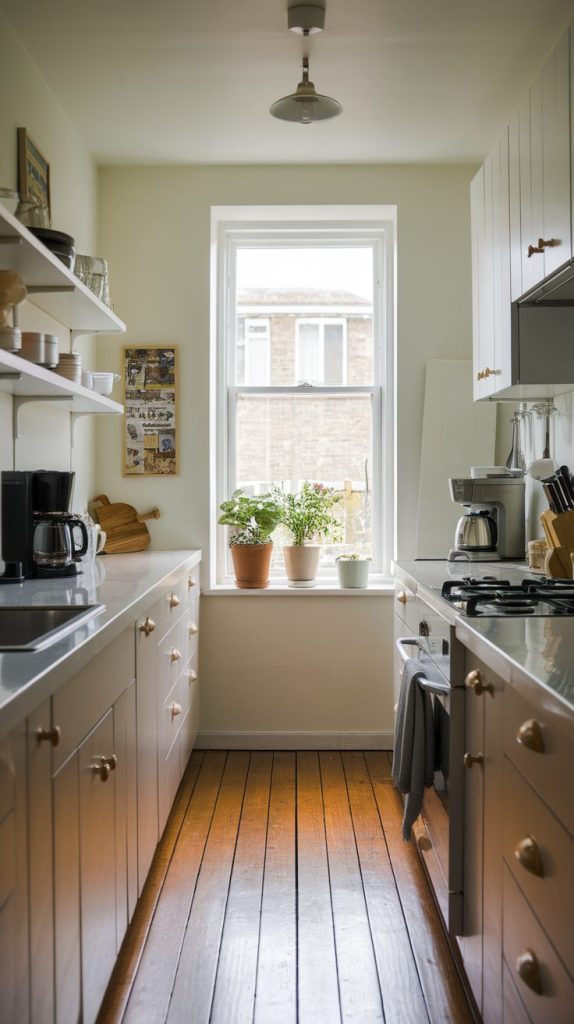
Clutter kills small kitchens faster than bad lighting. I design galley kitchens with the mindset that countertops deserve breathing room.
You don’t need every appliance out all the time. Store what you can and leave only essentials visible.
Easy Countertop Decluttering Strategy
Ask yourself one question for every item. Did I use this in the last 48 hours? If not, it goes into storage. This rule saves space and sanity.
8. Use Integrated Appliances for a Seamless Look
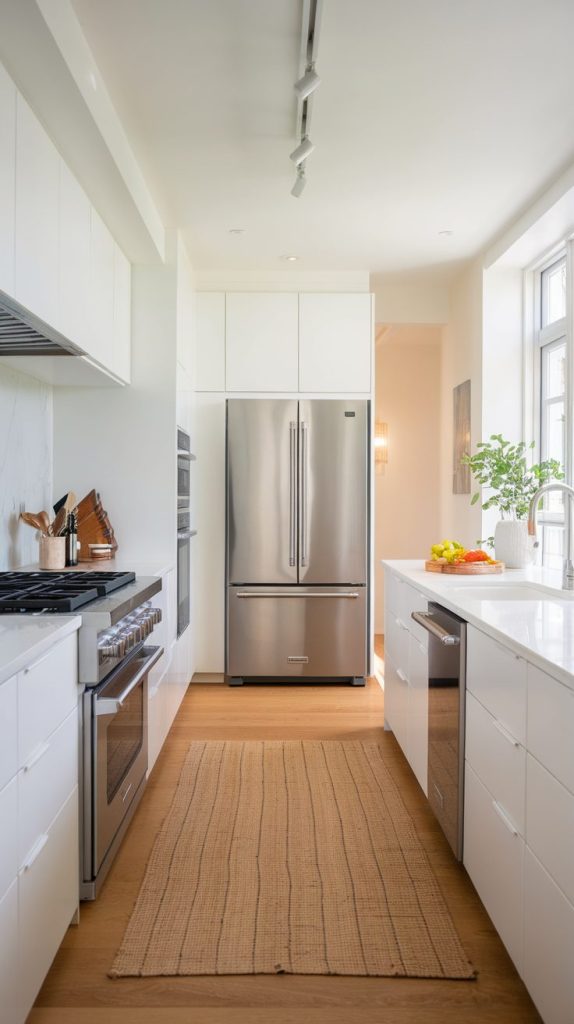
Integrated appliances blend into cabinetry and reduce visual interruptions. In a narrow kitchen, that seamless look matters more than you think.
I’ve seen galley kitchens look twice as wide just by hiding appliances behind cabinet panels. It’s like visual magic without the wand.
Appliances Worth Integrating
Focus on appliances that dominate sightlines.
- Refrigerators
- Dishwashers
- Microwaves
- Trash pull-outs
The cleaner the lines, the calmer the space feels.
9. Install Under Cabinet Lighting Everywhere
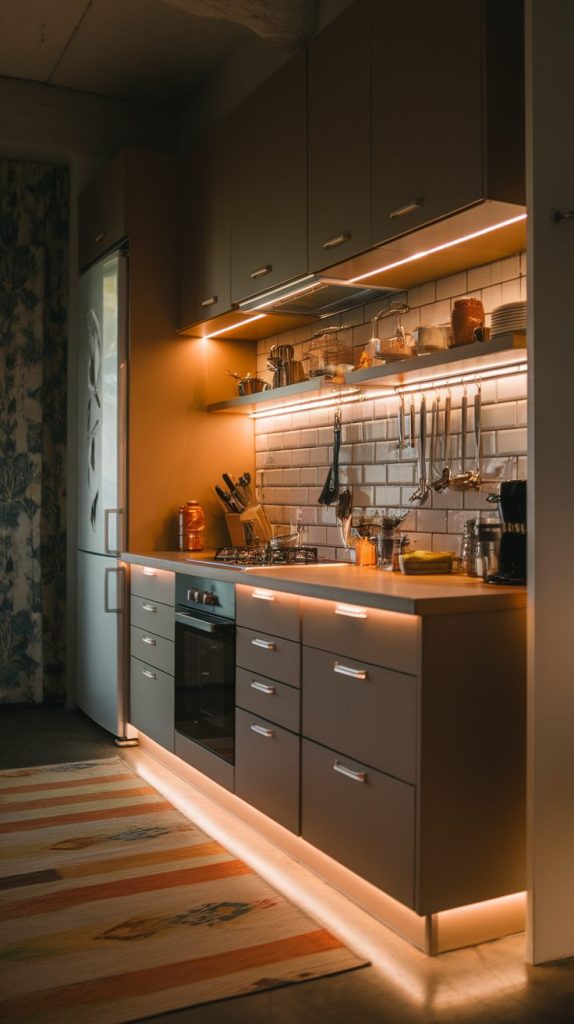
Good lighting changes everything in a narrow kitchen. Under cabinet lighting removes shadows and makes work surfaces feel open and inviting.
I always recommend warm white LEDs because they flatter both food and people. Nobody wants to cook under hospital lighting.
Lighting Placement Tips
Install continuous strips rather than spot lights for even coverage. Hide fixtures behind cabinet lips to avoid glare and keep the look polished.
10. Choose A Slim Sink And Faucet Combo
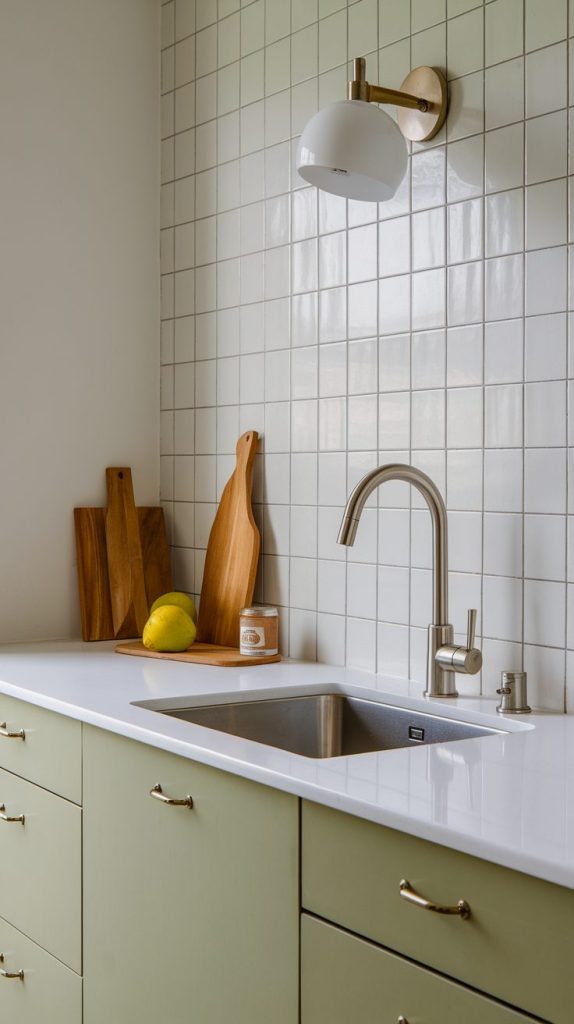
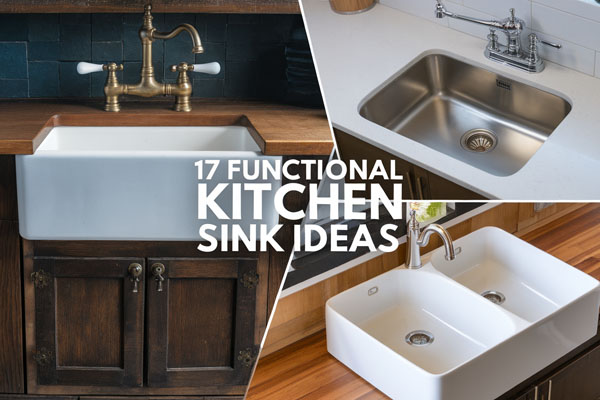
Oversized sinks eat counter space in tight kitchens. A slim, deep sink paired with a compact faucet saves room without sacrificing function.
I personally prefer single-bowl sinks in galley kitchens because they handle large pots better. Double bowls sound nice but often feel cramped.
Faucet Styles That Save Space
Look for faucets with clean lines and minimal reach.
- Pull-down spray faucets
- Low-profile designs
- Single-handle controls
Avoid bulky commercial-style faucets unless you truly need them.
11. Create Visual Continuity With Matching Backsplash
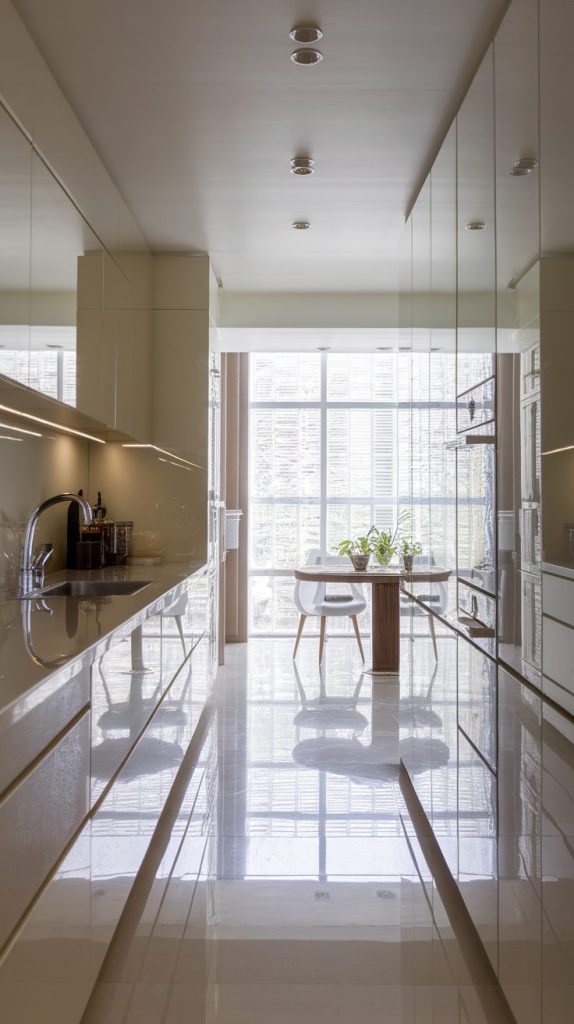
A backsplash that runs uninterrupted along the wall helps elongate the kitchen visually. I usually recommend extending it from countertop to upper cabinets.
Consistent materials reduce visual breaks and make the kitchen feel cohesive. It’s a subtle trick that delivers big results.
Best Backsplash Materials For Narrow Kitchens
These materials perform well visually and practically.
- Subway tiles in light colors
- Glass tiles
- Large-format tiles
- Slab stone backsplashes
Avoid busy patterns that fight the narrow layout.
12. Use Mirrors Or Reflective Surfaces Strategically
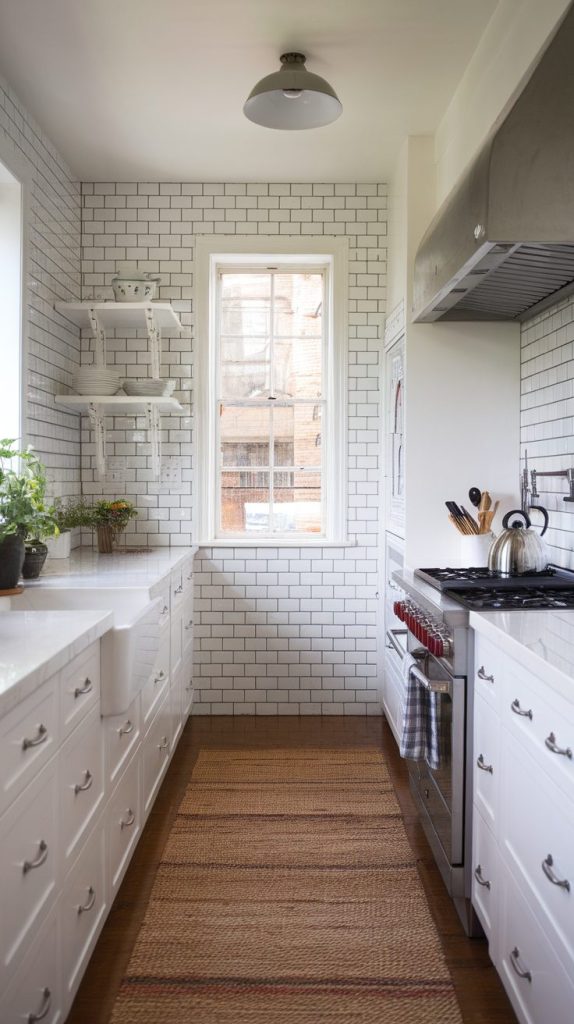
Mirrors sound odd in kitchens, but reflective surfaces work wonders. Glossy cabinet finishes, mirrored backsplash panels, or reflective tiles bounce light beautifully.
I once installed a mirrored backsplash in a galley kitchen, and guests thought the space doubled. That reaction alone made it worth it.
Where Reflection Works Best
Use reflection sparingly to avoid a funhouse effect.
- Backsplash behind sinks
- Upper cabinet panels
- Glass cabinet doors
Balance reflection with solid textures.
13. Keep Walkways Comfortable And Clear
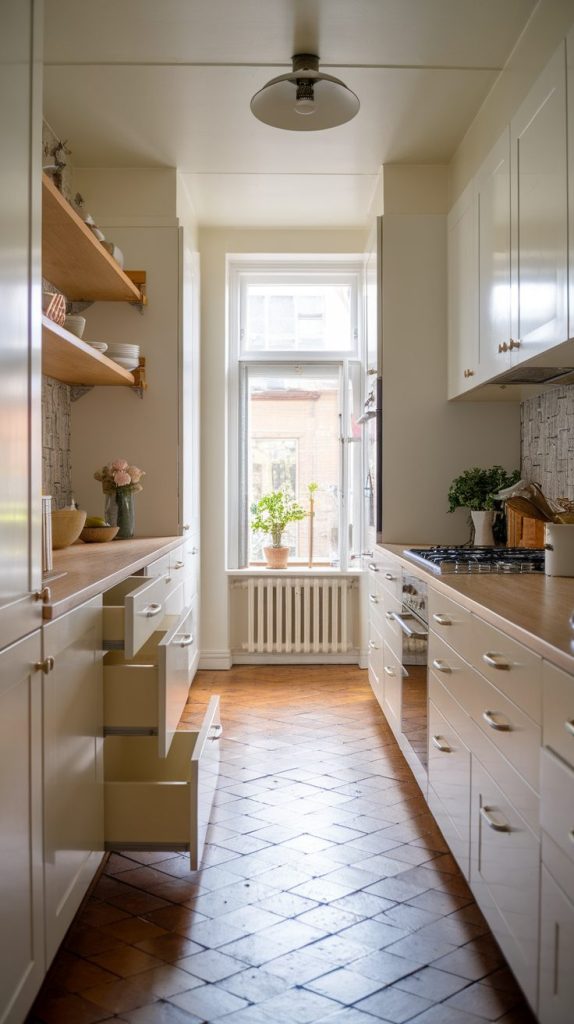
A cramped walkway ruins even the prettiest kitchen. Aim for a minimum of 42 inches between opposing cabinets if possible.
I always test walkways by opening drawers and doors simultaneously. If movement feels awkward, adjustments need to happen.
Smart Layout Adjustments
Reduce cabinet depth on one side if space allows. Even shaving off a few inches improves comfort significantly.
14. Add Vertical Storage Solutions
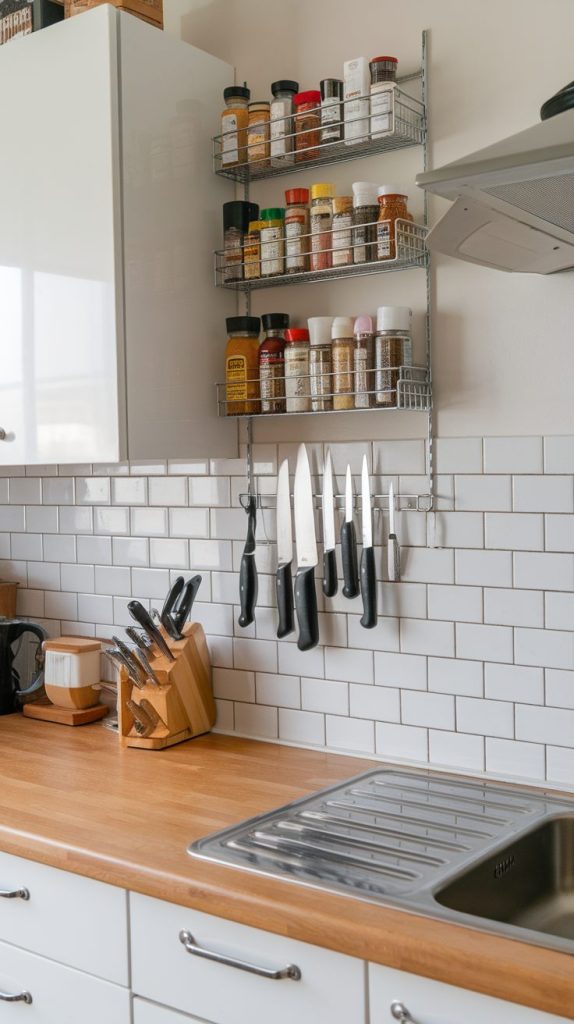
Walls deserve love too, especially in narrow kitchens. Vertical storage uses height without crowding the floor.
I install magnetic knife strips, wall rails, and slim hanging organizers to free up drawers. The result feels organized and intentional.
Best Vertical Storage Ideas
Choose items that stay functional and tidy.
- Magnetic knife strips
- Wall-mounted spice racks
- Hanging utensil rails
- Slim pantry towers
Keep frequently used items within easy reach.
15. Use Sliding Or Pocket Doors Instead Of Swing Doors
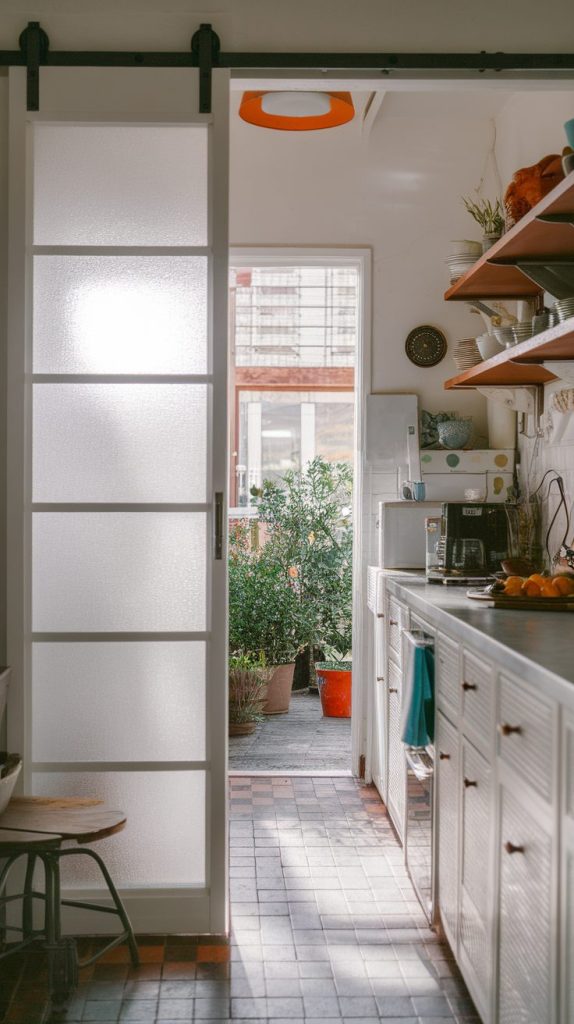
Swing doors steal valuable space in tight layouts. Sliding or pocket doors eliminate clearance issues entirely.
I switched a swing door to a pocket door in one project, and the kitchen instantly felt less claustrophobic. It’s one of my favorite upgrades.
When Sliding Doors Make Sense
Use them when doors interfere with cabinets or appliances. Glass sliding doors also help light travel through the space.
16. Introduce Texture Without Adding Bulk
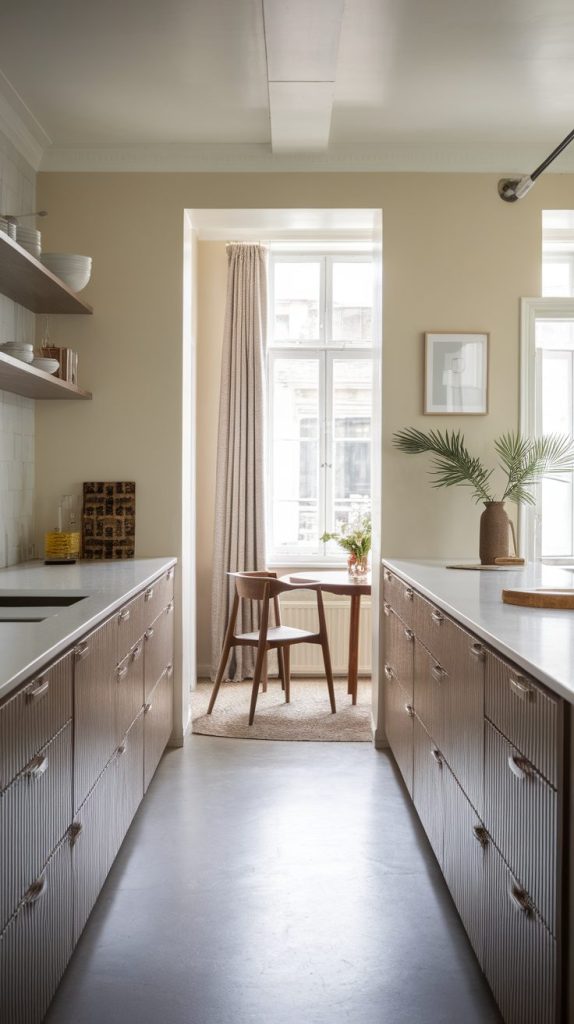
Texture adds depth and interest without crowding the space. I love using textured tiles, subtle wood grains, or ribbed cabinet fronts.
The key involves keeping textures subtle and consistent. Too much variation creates visual chaos in a narrow room.
Texture Ideas That Stay Subtle
These options add interest without overwhelming.
- Fluted cabinet panels
- Light wood grain
- Soft stone textures
- Textured ceramic tiles
Limit textures to one or two surfaces.
17. Personalize With Purposeful Decor
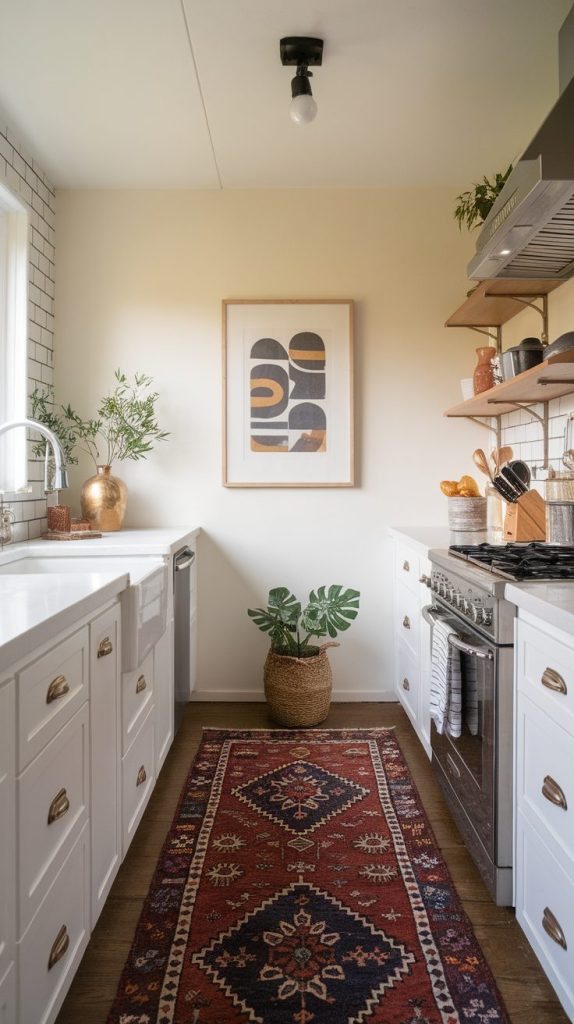
Even small kitchens deserve personality. I add character through carefully chosen decor rather than random accessories.
One or two framed prints, a stylish runner, or a statement light fixture goes a long way. Remember, less truly works better here.
Decor Rules I Always Follow
Decor should earn its place.
- Functional first
- Minimal quantity
- Consistent color palette
- Easy to clean items
If decor creates clutter, it doesn’t belong.
The Foundation Strategy Behind a Functional Galley Kitchen
Before anyone buys new cabinets or tears out a backsplash, I always focus on strategy first. A narrow galley kitchen rewards planning and punishes impulse decisions, so you need a solid foundation before choosing finishes or decor.
I build every compact kitchen plan around three core pillars: layout efficiency, vertical optimization, and visual continuity. When these three elements align, even the tightest kitchen feels intentional instead of restrictive.
Layout Efficiency Comes First
A galley kitchen works best when you protect the natural flow between sink, stove, and refrigerator. I always map out movement patterns on paper before finalizing cabinet placement because small miscalculations create daily frustration.
Keep these layout priorities in mind:
- Protect a clear walkway of at least 36–42 inches
- Avoid placing appliances directly opposite each other if doors collide
- Keep prep space between sink and stove whenever possible
- Group storage based on usage zones
When you design around real cooking habits instead of Pinterest trends, the space performs better long term.
Vertical Optimization Changes Everything
Narrow kitchens often lack width, but they rarely lack height. I push storage upward intentionally because vertical space adds capacity without crowding the walkway.
Focus on:
- Tall pantry units
- Stacked upper cabinets
- Ceiling-height storage
- Wall-mounted organizers
This approach creates storage density without visual chaos.
Visual Continuity Expands The Space
The eye needs uninterrupted lines to perceive openness. I always limit harsh contrasts and unnecessary material changes because they break visual flow.
Stick with:
- Consistent cabinet finishes
- Continuous flooring
- Unified backsplash materials
- Cohesive hardware finishes
When surfaces flow seamlessly, the room automatically feels larger.
Planning for Long-Term Durability and Resale Value
Design decisions should serve you today while protecting future resale potential. I never recommend ultra-trendy finishes in narrow kitchens because compact layouts already challenge buyers emotionally.
Instead, lean into timeless materials and neutral palettes. They make the kitchen feel brighter now and attract more interest later.
Materials That Hold Up Over Time
In small kitchens, surfaces work harder because they receive concentrated use. Choose durable materials that resist wear.
Smart long-term investments include:
- Quartz countertops for stain resistance
- Porcelain or ceramic tile backsplashes
- Solid plywood cabinet boxes
- High-quality drawer hardware
I have seen budget cabinets sag within a few years, and trust me, replacement costs hurt more than initial upgrades.
Smart Budget Allocation
Not every element deserves equal spending. I prioritize structural quality over decorative upgrades because strong foundations last longer.
Allocate budget strategically:
- Spend more on cabinet construction
- Invest in reliable appliances
- Save on decorative hardware
- Choose affordable but durable flooring
This balance protects both performance and aesthetics.
Lighting Strategy That Professionals Use
Lighting defines how a galley kitchen feels more than color alone. I design compact kitchens using layered lighting because relying on a single overhead fixture creates shadows and visual compression.
A strong lighting plan includes three layers working together.
Task Lighting
Task lighting ensures safe food preparation and daily comfort. Under-cabinet LED strips provide consistent illumination across countertops.
Focus on:
- Warm white 2700K–3000K bulbs
- Continuous light strips instead of spot fixtures
- Hidden placement for clean lines
Ambient Lighting
Ambient lighting fills the entire space evenly. Flush mount or slim linear ceiling fixtures work best in narrow layouts.
Avoid oversized chandeliers unless ceiling height supports them.
Accent Lighting
Accent lighting adds personality without clutter. Consider subtle toe-kick lighting or interior cabinet lights.
These touches elevate the kitchen without overwhelming the narrow footprint.
Storage Zoning System for Compact Kitchens
Organization determines whether a galley kitchen feels functional or chaotic. I use a zoning system that assigns specific areas to specific activities.
This method prevents random storage placement and reduces daily friction.
Create Clear Functional Zones
Divide the kitchen into defined areas:
- Prep zone near sink
- Cooking zone around stove
- Cleaning zone near dishwasher
- Pantry zone in tall cabinets
When every item has a logical home, clutter disappears naturally.
Use Drawer Dividers and Pull-Out Systems
Small kitchens demand efficient interiors, not just attractive exteriors. Deep drawers with dividers maximize usability compared to traditional shelves.
Invest in:
- Pull-out pantry systems
- Drawer organizers
- Corner storage solutions
- Vertical tray dividers
These upgrades improve daily efficiency dramatically.
Common Mistakes to Avoid in Galley Kitchen Design
Even well-intentioned homeowners sabotage narrow kitchens with avoidable errors. I have seen beautiful remodels fail because someone ignored spatial realities.
Let’s fix that right now.
Overcrowding Both Walls With Upper Cabinets
Installing upper cabinets on both sides often creates a tunnel effect. Balance storage with openness by mixing cabinets and shelving strategically.
Choosing Dark, Heavy Finishes Everywhere
Dark cabinets can look dramatic, but they shrink already tight spaces. Use darker tones sparingly and balance them with lighter surfaces.
Ignoring Ventilation
Compact kitchens trap heat and odors quickly. Always install proper ventilation to maintain comfort and air quality.
Skipping Professional Measurements
Guesswork ruins layout flow. Always measure carefully before ordering cabinetry or appliances.
Sacrificing Function for Trends
Trendy fixtures might look stunning online, but functionality matters more in narrow kitchens. Prioritize practicality over Instagram appeal.
Maintenance and Longevity Considerations
A well-designed galley kitchen should remain functional for years, not just look good for photos. Maintenance planning protects your investment.
Choose Easy-Clean Surfaces
Compact kitchens show mess faster because everything sits closer together. Select materials that wipe clean easily.
- Quartz or sealed stone countertops
- Gloss or semi-gloss cabinetry
- Large-format tiles with minimal grout lines
Protect High-Traffic Areas
Install durable flooring and reinforce high-use zones near sink and stove. Preventative care reduces long-term repair costs.
Regular maintenance extends the life of your design significantly.
Frequently Asked Questions
Is a galley kitchen good for small homes?
Yes, a galley kitchen works extremely well in small homes because it maximizes efficiency and reduces wasted space. When designed properly, it feels practical and streamlined.
How wide should a galley kitchen walkway be?
Aim for at least 36 inches, but 42 inches offers greater comfort. Proper clearance prevents cramped movement and improves daily usability.
Can I use dark cabinets in a narrow kitchen?
You can use dark cabinets strategically, but balance them with lighter walls, countertops, and flooring. Too much darkness compresses the space visually.
Are open shelves practical in a galley kitchen?
Open shelves work well when styled minimally and kept organized. They lighten the visual weight of upper walls.
What flooring works best in a narrow galley kitchen?
Light wood, vinyl planks, or large-format tiles perform best. Continuous flooring visually extends the space.
Should I remove a wall to widen my galley kitchen?
Removing a wall helps if structure and budget allow it, but smart layout adjustments and lighting improvements often solve spatial issues without demolition.
Final Thoughts
A narrow galley kitchen doesn’t need to feel cramped or boring when smart choices guide the design. Light colors, seamless surfaces, thoughtful storage, and intentional layout decisions transform tight spaces into efficient, stylish kitchens you actually enjoy using.
Take these ideas, tweak them to fit your lifestyle, and don’t be afraid to trust your instincts, because even the smallest kitchens deserve big personality and comfort.