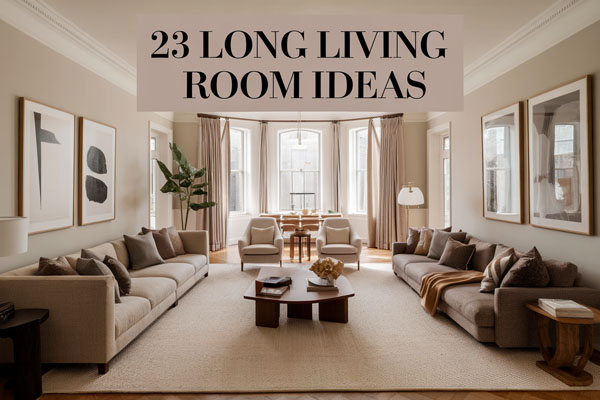
15 Stunning Large Living Room Ideas for Open Spaces
You know that moment when you walk into a big living room and it still somehow feels empty or awkward. I’ve been there, standing in the middle of all that space, wondering why it doesn’t feel as cozy or impressive as it should.
Large living rooms sound dreamy, but they need intention, or they just feel unfinished.
I love talking about this stuff because open spaces give you freedom and pressure at the same time. You can do almost anything, yet every choice shows.
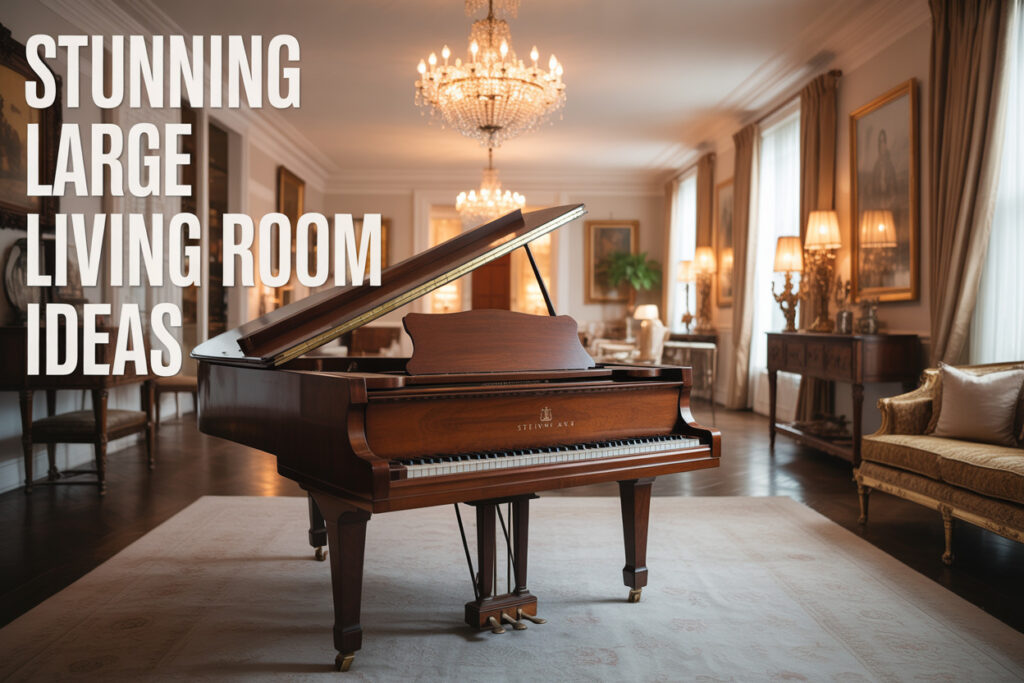
Let me walk you through ideas I genuinely like and would actually use, not those “looks good once” setups.
1. Define Zones Without Breaking the Flow
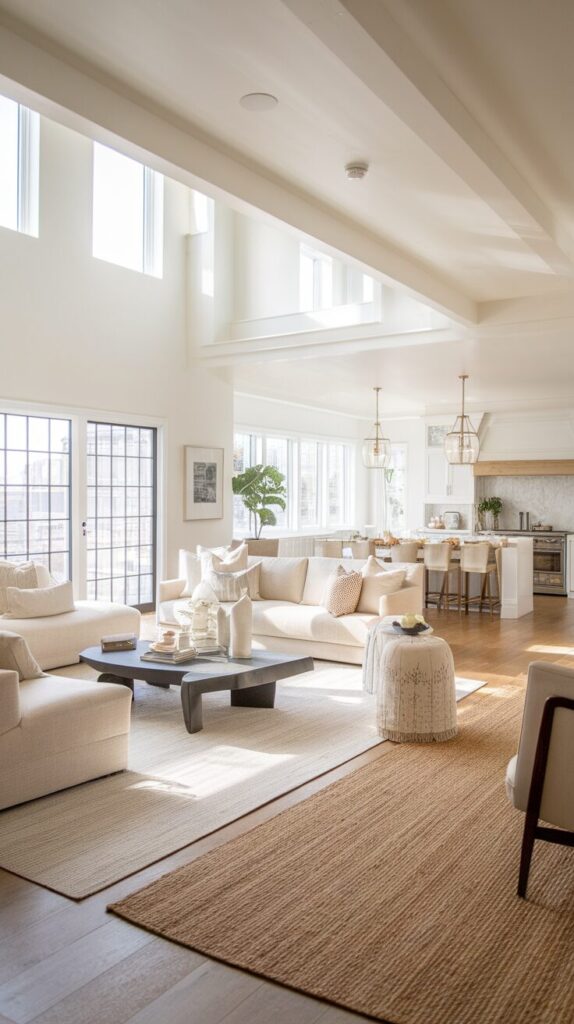
A large living room feels overwhelming when everything floats without purpose. I always start by mentally dividing the space into zones that make sense for real life. You want structure without killing that open, airy vibe you probably love.
I usually create a main seating area first because that’s where life happens. Sofas, chairs, and a coffee table anchor the room and give your eyes somewhere to land. Once that zone feels solid, everything else becomes easier.
Rugs work like magic here, and I mean that seriously. A big area rug instantly says, “This is the conversation zone,” without adding walls. IMO, oversized rugs beat small ones every single time in large spaces.
You can add secondary zones like a reading nook or a game corner if the room allows. I once added a small lounge chair and lamp in an unused corner, and it became everyone’s favorite spot. The room finally felt intentional instead of random.
Keep sightlines open between zones so nothing feels boxed in. Furniture placement should guide movement, not block it. If you can walk through the room naturally, you nailed it.
2. Go Big With Sectional Seating
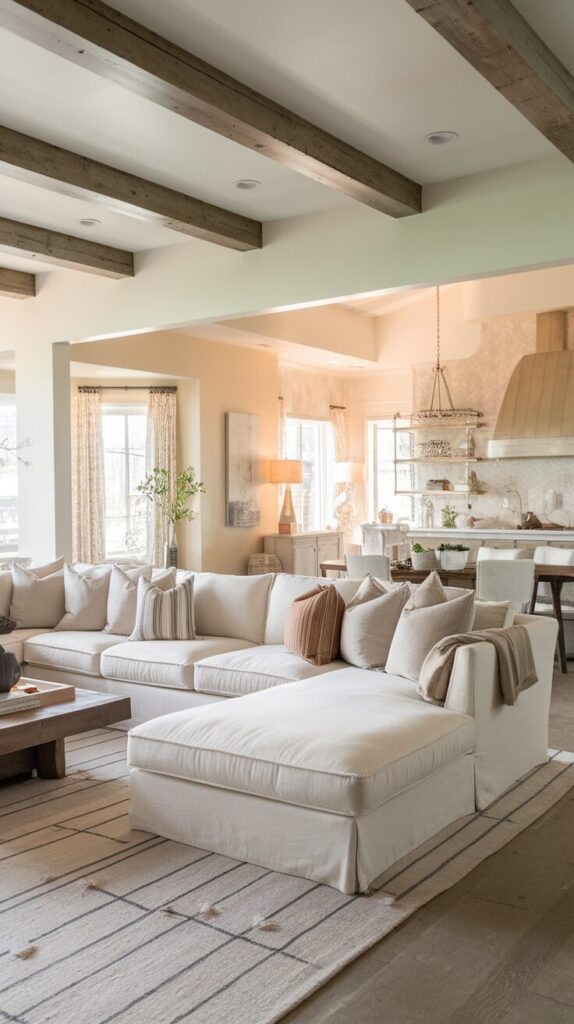
Large living rooms beg for bold seating choices, and sectionals answer that call perfectly. A tiny sofa floating in a huge room looks lost, and I hate that look. Big rooms deserve furniture with confidence.
I love deep sectionals because they instantly ground the space. They invite people to sit, sprawl, and actually relax instead of perching politely. Comfort matters more when you have the room to support it.
Placement matters just as much as size here. I usually float the sectional away from walls to define the main seating area. This move alone makes the room feel more designed and less like a furniture showroom.
Choose fabrics wisely because big sofas show everything. Neutral tones keep things calm, while textured fabrics add interest without noise. FYI, performance fabrics save lives if you host often or have pets.
Balance the sectional with lighter pieces like accent chairs or glass tables. You don’t want the room to feel heavy on one side. When everything feels visually balanced, the space suddenly clicks.
3. Use Oversized Rugs to Anchor the Space
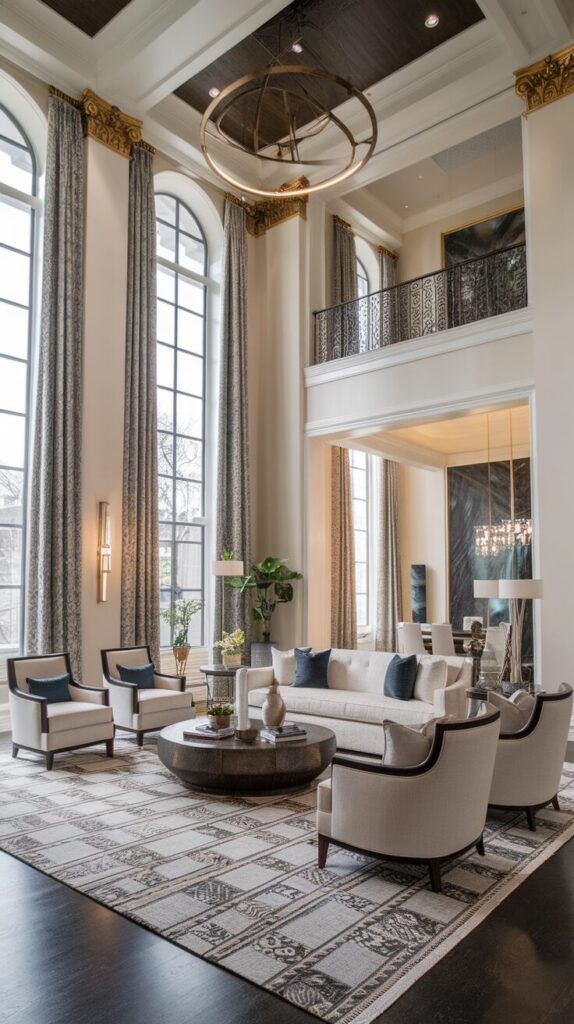
Small rugs ruin large living rooms faster than almost anything else. I see this mistake constantly, and it drives me a little crazy. Big rooms need rugs that match their confidence.
An oversized rug pulls furniture together and creates a clear focal point. All front legs of seating should sit on the rug, no exceptions. This single rule instantly makes the room feel cohesive.
Patterns work beautifully in large rugs because you have room to breathe. Subtle geometrics or organic designs add personality without overwhelming the space. I personally lean toward low-contrast patterns that age well.
Texture matters just as much as size. Flatweaves feel casual, while plush rugs bring warmth and luxury. I choose based on how the room gets used, not just how it looks online.
Layering rugs can work if done thoughtfully. A neutral base with a patterned top rug adds depth and personality. When done right, the room feels styled instead of staged.
4. Create a Statement Focal Wall
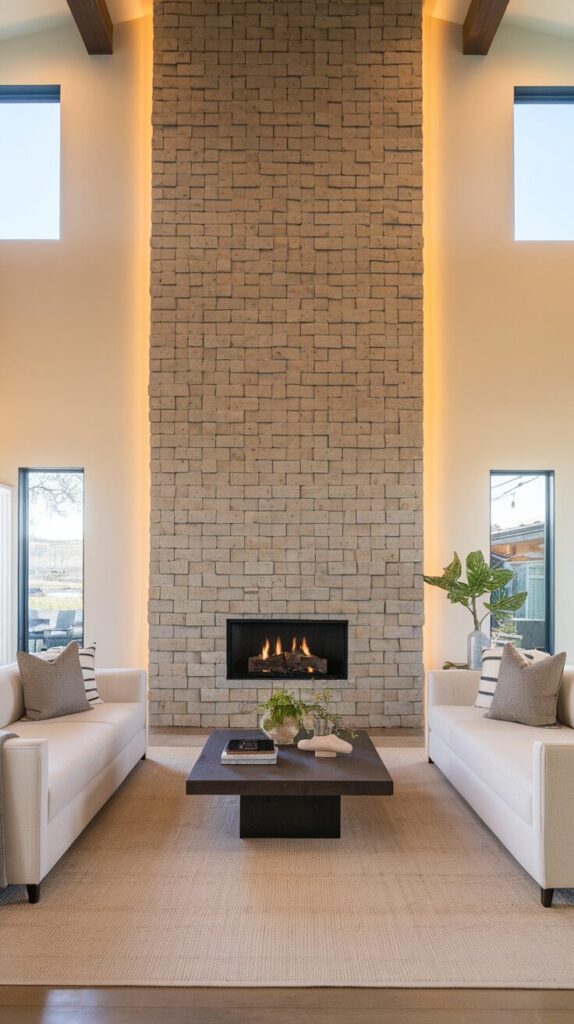
Large living rooms need a visual anchor, or your eyes won’t know where to rest. A statement wall gives the room direction and purpose. Without one, everything can feel a bit bland.
I love using textured materials like wood panels, stone, or even limewash paint. These finishes add depth without screaming for attention. They feel rich and intentional rather than trendy.
Artwork also works beautifully as a focal point if you go big. A single oversized piece beats a cluttered gallery wall in open spaces. Scale matters more than quantity here.
Fireplaces naturally become focal points, so enhance them instead of ignoring them. I’ve seen simple fireplaces transformed with tile or built-ins, and the difference feels dramatic. The room suddenly feels designed, not accidental.
Keep surrounding décor minimal so the focal wall shines. Too many competing elements weaken the impact. When one feature leads, the whole room follows.
5. Layer Lighting for Depth and Mood
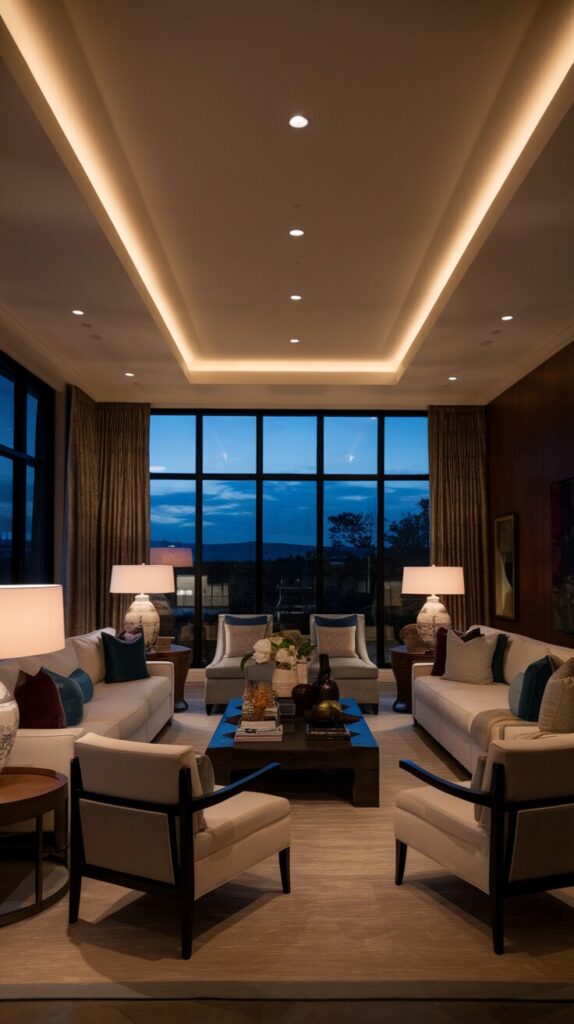
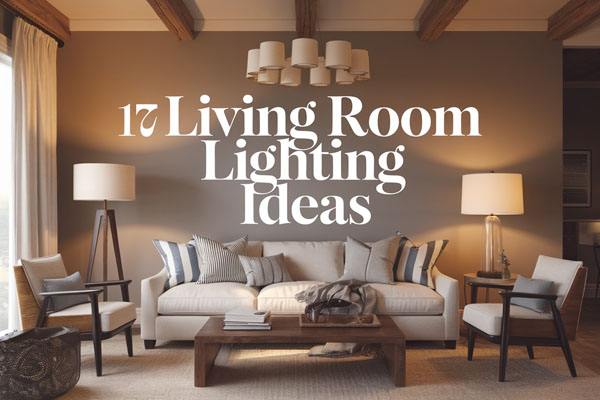
Overhead lighting alone kills the vibe in a large living room. I always layer lighting because it changes how the room feels at different times. One light source never does the job.
Start with ambient lighting like recessed lights or a statement chandelier. This sets the general tone of the room. I prefer warm light because it instantly feels more inviting.
Add task lighting next, especially near seating areas. Floor lamps beside sofas or reading chairs make the room functional. Plus, they add height variation, which large rooms desperately need.
Accent lighting takes things to the next level. Table lamps, wall sconces, or even LED strips highlight architectural details. This layer adds depth and makes the space feel intentional.
Use dimmers whenever possible because flexibility matters. Bright during gatherings, soft during quiet nights, and cozy always. Lighting control completely changes how you experience the space.
6. Embrace Tall Curtains and Full-Height Windows
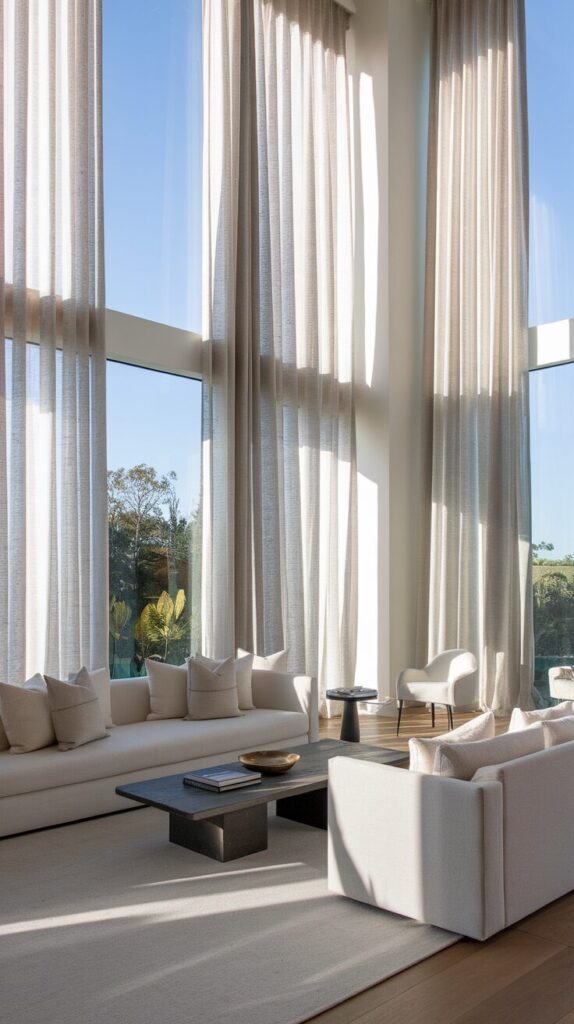
Large living rooms often come with tall ceilings, so short curtains look awkward. I always hang curtains high and wide to emphasize the room’s scale. This trick makes everything feel grander.
Floor-to-ceiling curtains draw the eye upward and enhance vertical space. Even average windows look impressive when framed correctly. It’s one of the easiest upgrades you can make.
Choose lightweight fabrics if you want to keep things airy. Linen or sheer blends soften the room without blocking light. Heavy fabrics work too, but they create a more formal mood.
I usually extend curtain rods beyond the window frame. This makes windows appear larger and lets in more light when curtains stay open. Small detail, big payoff.
Stick to neutral colors if the room already has strong elements. Curtains should frame the space, not fight it. When they blend seamlessly, the room feels polished.
7. Balance Scale With Large-Format Furniture
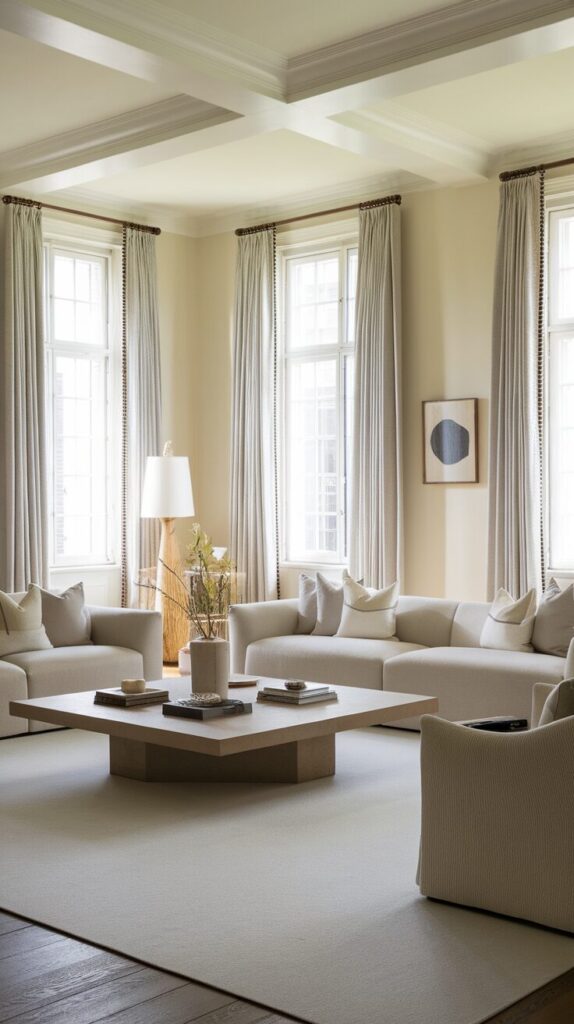
Tiny furniture pieces disappear in big rooms, and that’s just reality. Large-format furniture fills space confidently and looks intentional. Scale matters more than matching sets.
I prefer fewer, larger pieces over many small ones. A big coffee table or oversized ottoman grounds the seating area instantly. These pieces add presence without clutter.
Spacing matters just as much as size. Give furniture room to breathe so the layout feels relaxed. Crowding large pieces together defeats the purpose.
Mix materials to avoid heaviness. A chunky wood table pairs well with lighter upholstered seating. Contrast keeps the room visually interesting.
Trust your instincts when something feels too small. If you hesitate, it probably is. Big rooms reward bold choices, so don’t play it too safe.
8. Add Architectural Interest With Built-Ins
Built-ins transform large living rooms from empty shells into custom spaces. They add structure without closing things off. I’m a huge fan when they fit the room’s style.
Bookshelves around fireplaces create instant balance. They frame the focal point and add storage at the same time. Function and style win together here.
Use built-ins to display meaningful items instead of random décor. Books, art, and personal pieces make the room feel lived-in. Empty shelves feel just as awkward as empty rooms.
Color matters more than people think with built-ins. Matching them to the wall feels seamless, while contrast adds drama. I choose based on how bold the room already feels.
Lighting inside shelves elevates everything. Soft LED lighting highlights textures and objects beautifully. It’s subtle but powerful.
9. Use Color Strategically to Warm Up the Space
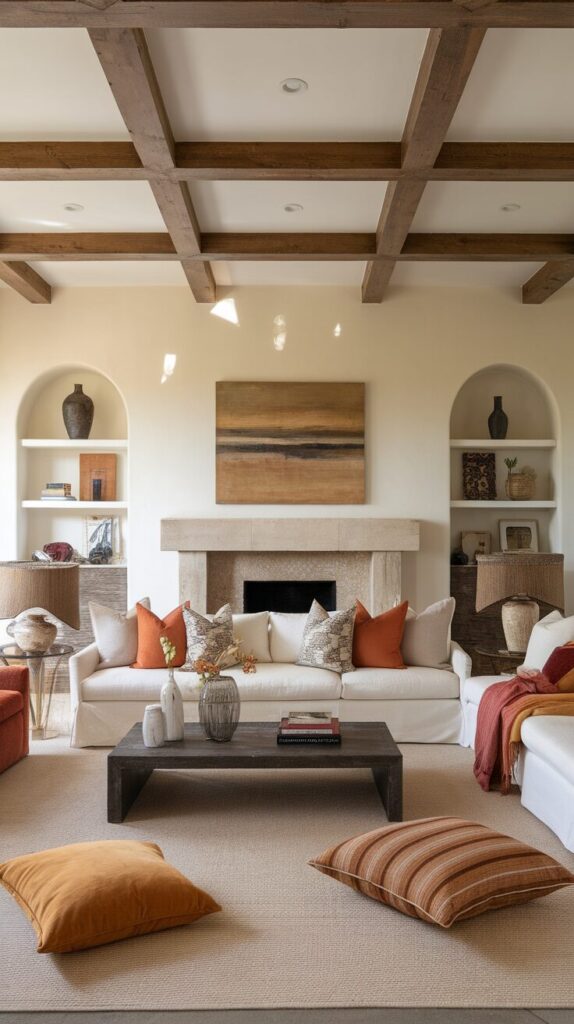
Large living rooms can feel cold if you ignore color. Even neutral lovers need warmth somewhere. I use color intentionally to create balance.
Start with a neutral base and layer color through accents. Pillows, throws, and art feel flexible and low-risk. You can always swap them later.
Accent walls work well in open spaces if done thoughtfully. Deeper tones add intimacy without shrinking the room. I love earthy colors because they feel timeless.
Avoid spreading too many colors around randomly. Repeating the same tones across zones creates cohesion. The room feels calmer and more intentional.
Trust your emotional response to color. If a shade makes you feel relaxed or energized, that matters. Design should feel good, not just look good.
10. Incorporate Statement Art Pieces
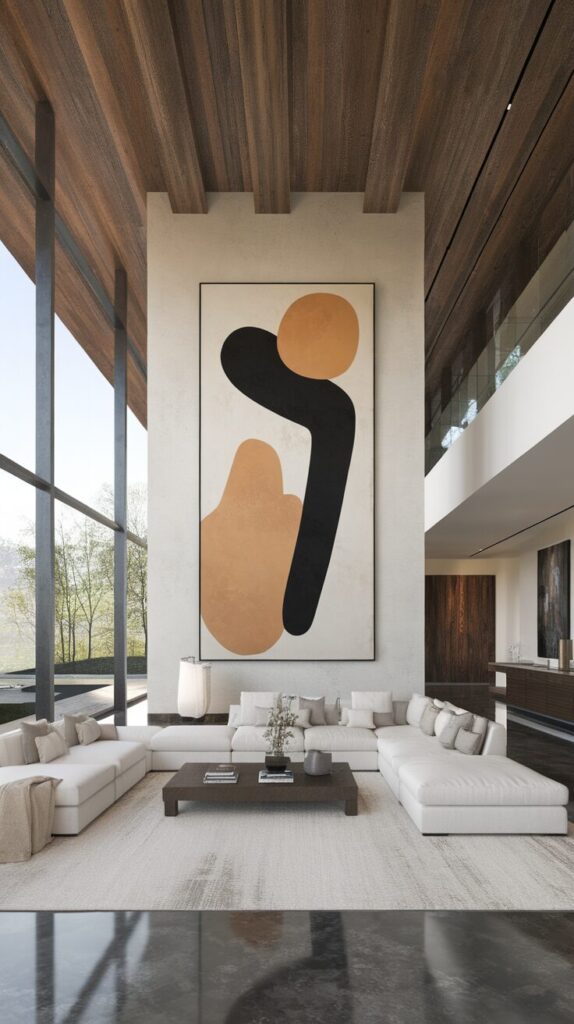
Large walls beg for bold art choices. Tiny frames look lost and sad in open spaces. I always think big when it comes to wall art.
Oversized artwork fills space confidently and sets the tone. One strong piece beats five small ones any day. It feels curated instead of cluttered.
Abstract art works beautifully because it adds emotion without dictating style. Landscapes and photography also shine when scaled properly. Choose what speaks to you, not just trends.
Hang art at eye level, even in tall rooms. People often hang pieces too high, and it throws everything off. Eye-level placement keeps the room grounded.
Let the art breathe with negative space around it. Crowding walls reduces impact. Sometimes less really does say more.
11. Bring in Natural Elements for Balance
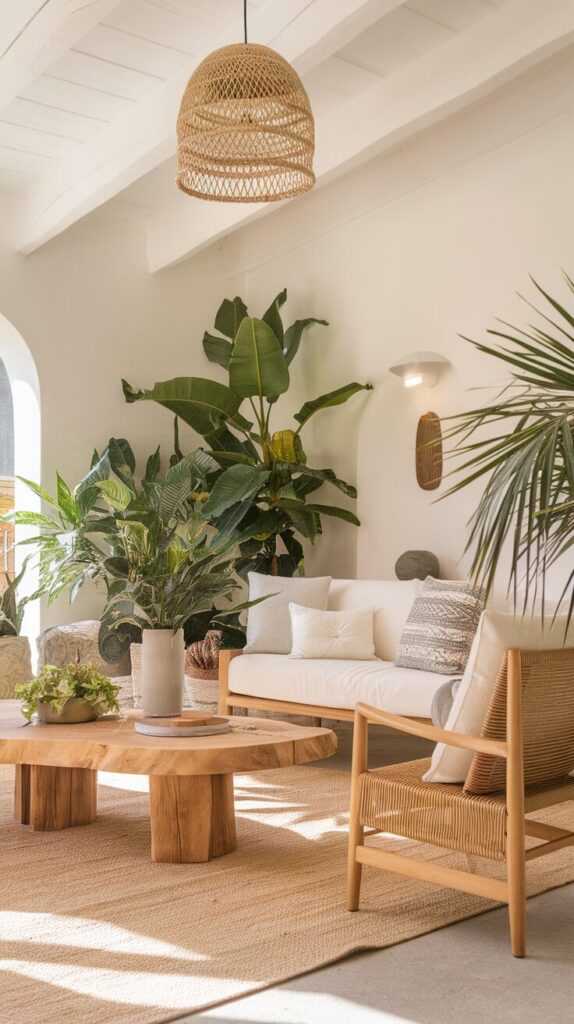
Large living rooms feel more welcoming when you add natural elements. Wood, stone, and plants soften all that open space. I always include at least one organic element.
Indoor plants add life and movement to the room. Tall plants work especially well in open spaces. They fill vertical gaps beautifully.
Wood furniture or accents warm things up instantly. Even small touches like trays or side tables make a difference. Natural textures add depth without noise.
Stone or ceramic décor adds grounding weight. These materials feel timeless and sturdy. They balance softer elements like fabric and rugs.
Mixing natural materials keeps the room from feeling sterile. When the space feels alive, people relax. That’s always the goal.
12. Float Furniture Away From Walls
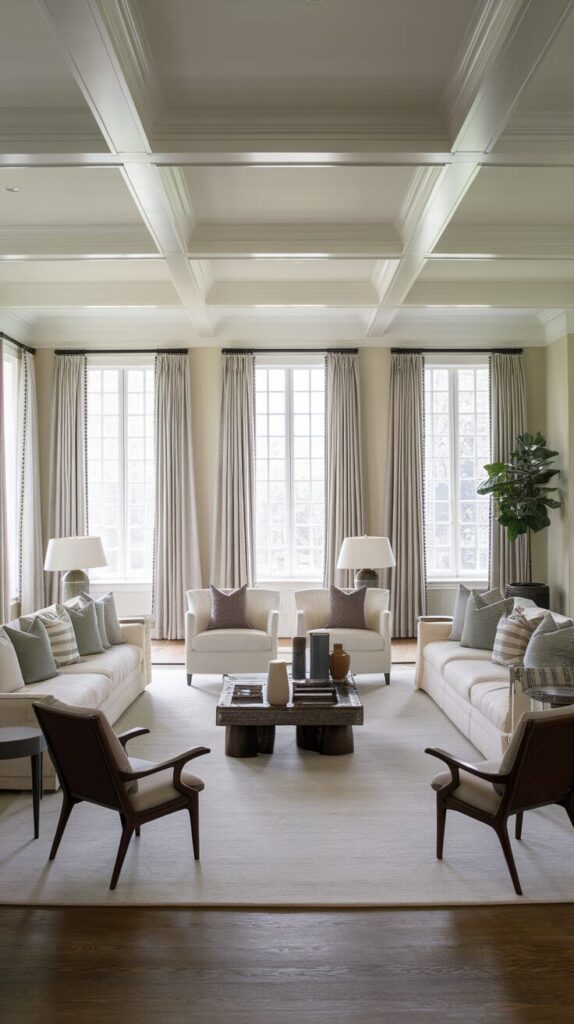
Pushing everything against walls makes large rooms feel empty in the middle. Floating furniture creates intimacy and better flow. I almost always pull seating inward.
Start with the main seating group and work outward. Leave walking paths around the edges. The room suddenly feels more intentional.
Floating furniture defines zones without physical barriers. It keeps the space open while adding structure. This balance matters in open layouts.
Use consoles or tables behind sofas for functionality. They add surfaces without closing things off. Plus, they look great styled simply.
Trust the space to support this layout. Big rooms can handle it. Once you try it, you’ll never go back.
13. Mix Textures to Avoid a Flat Look
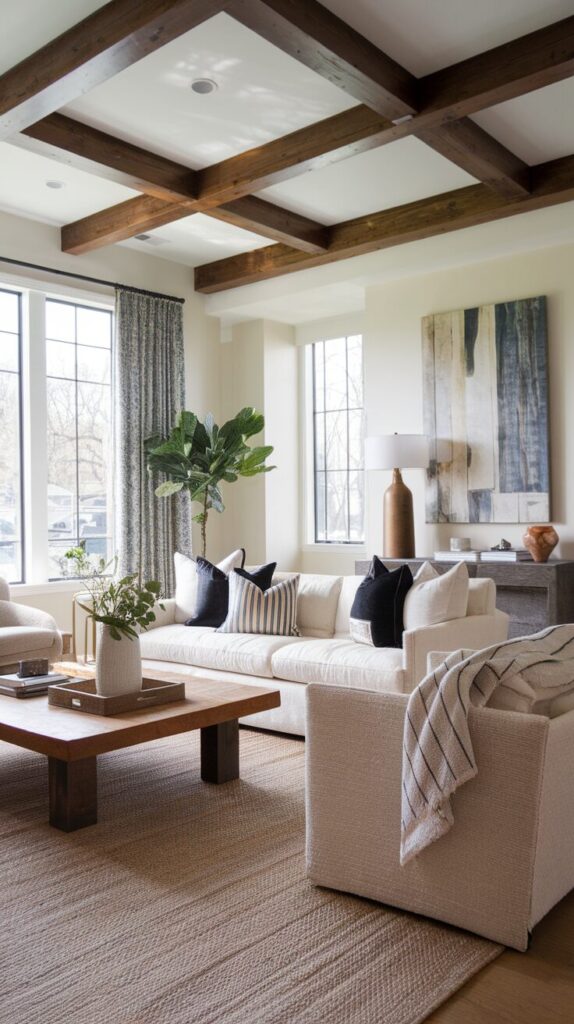
Large living rooms need texture, or they feel flat and boring. I layer textures everywhere I can. It adds depth without chaos.
Combine soft and hard materials thoughtfully. Plush sofas pair beautifully with metal or wood tables. Contrast keeps things interesting.
Textiles matter more than people think. Throws, pillows, and curtains add softness and movement. I rotate them seasonally for freshness.
Even walls can add texture through finishes or paneling. Flat walls everywhere feel unfinished. A little variation goes a long way.
Texture makes neutral spaces feel rich. It’s the difference between simple and boring. Choose variety, not clutter.
14. Design for Real-Life Movement and Flow
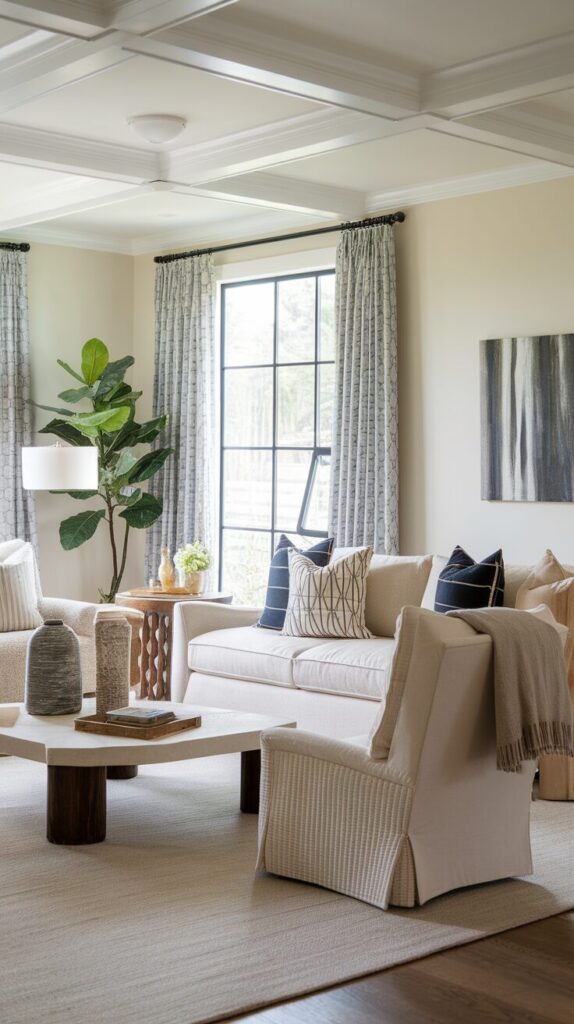
Large living rooms must work for daily life, not just photos. I always think about how people move through the space. Flow matters more than symmetry.
Leave clear pathways between zones. Nobody wants to zigzag around furniture. Easy movement makes the room feel comfortable.
Arrange seating to encourage conversation. Chairs should face each other naturally. If people feel awkward sitting down, something feels off.
Test layouts by actually walking the room. I do this every time. If it feels natural, it usually looks right too.
Function should guide design choices. Beautiful rooms mean nothing if they frustrate daily life. Comfort always wins.
15. Personalize the Space With Meaningful Details
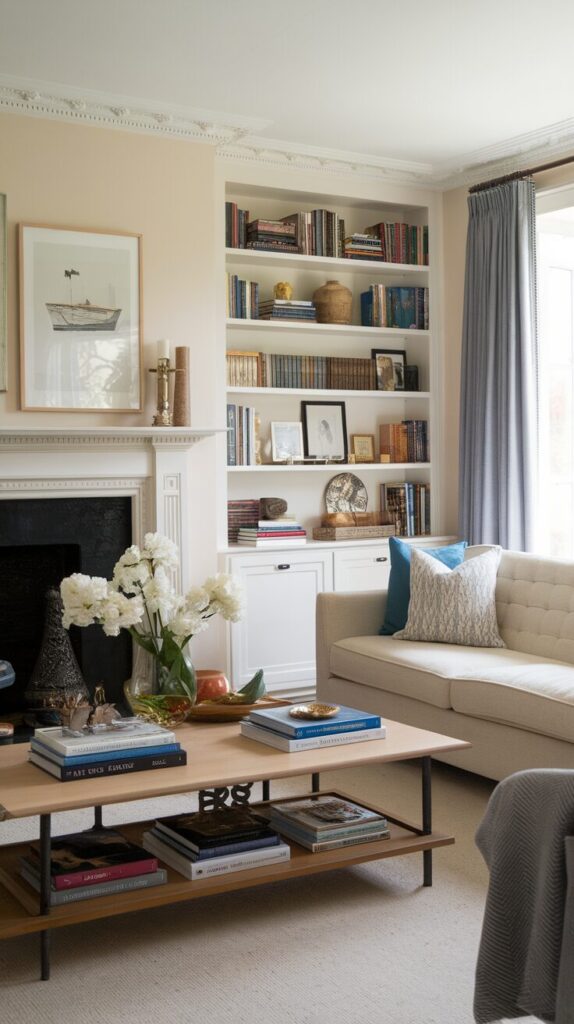
Large living rooms feel empty without personal touches. I always add items that tell a story. Personality brings warmth.
Display things you actually love, not just trendy décor. Travel souvenirs, books, or family pieces work beautifully. They make the space yours.
Avoid over-styling surfaces. A few meaningful objects beat a cluttered shelf. Let items breathe and stand out.
Rotate décor occasionally to keep things fresh. I swap small pieces every few months. It keeps the room feeling alive.
Your living room should reflect how you live. When it feels personal, it feels right.
Large Living Room Design Strategy: A Practical Foundation That Actually Works
Before you buy anything or move a single sofa, you need a clear strategy for your large living room layout. I always start with a simple plan because big spaces amplify every decision, good or bad. If you don’t define your foundation early, you’ll waste money fixing mistakes later.
First, identify your primary purpose for the room. Do you host large gatherings, enjoy movie nights, or want a quiet reading-friendly environment? Your layout, lighting, and furniture scale should support that main function before anything else.
Next, map out your zones on paper or digitally. Sketch where seating, traffic paths, focal points, and secondary areas will live. This small step prevents overcrowding and keeps the room balanced.
Always measure the room and your furniture before committing. Large rooms trick your eyes into underestimating size. Accurate measurements protect you from buying pieces that feel either tiny or overwhelming.
Finally, commit to cohesion. Choose a clear design direction, such as modern organic, transitional, or contemporary luxe. When every decision supports that core direction, the room feels curated instead of random.
Smart Budget Planning for Large Living Rooms
Large living rooms tempt you to overspend because you feel pressure to “fill” the space. I recommend focusing your budget on high-impact elements first. Invest in quality seating, lighting, and one major focal point.
Allocate your budget like this:
- 40% on main seating and anchor furniture
- 20% on rugs and lighting
- 20% on secondary pieces like tables and storage
- 20% on décor, art, and accessories
This breakdown keeps the room balanced without overspending on decorative items. A solid foundation makes everything else easier.
Also, plan for phased upgrades if needed. Buy the essentials first, then layer in décor over time. Large living rooms benefit from thoughtful evolution instead of rushed styling.
Quality always beats quantity in open spaces. Fewer high-quality pieces create more impact than filling the room with average ones.
Common Mistakes to Avoid in Large Living Room Design
Large living rooms look forgiving, but they expose mistakes fast. I’ve seen gorgeous spaces lose their impact because of a few avoidable errors. Let’s make sure you don’t fall into them.
Ignoring Scale and Proportion
Undersized furniture remains the most common mistake. A small coffee table in a massive seating area looks awkward immediately. Always match your furniture scale to your room size.
Artwork and rugs often suffer from the same problem. Tiny art pieces and small rugs create visual imbalance. Bigger rooms require confident sizing.
Overcrowding the Space
Some people panic and add too many pieces. Open space doesn’t mean empty space; it means intentional breathing room. Let negative space work for you instead of against you.
Avoid filling every corner just because you can. Leave some areas visually calm. Your room will feel more refined.
Relying on One Light Source
A single chandelier or ceiling light never feels enough in a large living room. Poor lighting creates shadows and flattens the room. Layered lighting solves this instantly.
Add ambient, task, and accent lighting strategically. The combination creates depth and flexibility. Your room will feel dynamic instead of dull.
Pushing All Furniture Against Walls
Wall-hugging layouts make large rooms feel disconnected. The center becomes an empty void instead of a welcoming zone. Pull furniture inward to create intimacy.
Floating furniture supports conversation and flow. The room feels purposeful and inviting.
How to Make a Large Living Room Feel Cozy Without Shrinking It
Large open spaces often feel cold or echoey. You can warm them up without making them feel smaller. The trick lies in layering comfort elements intentionally.
Start with textiles. Thick rugs, soft throws, and plush cushions add warmth immediately. These elements absorb sound and visually soften the space.
Add warm lighting tones instead of harsh white bulbs. Warm light makes the room feel intimate, even at night. Dimmer switches give you full control.
Use deeper accent colors sparingly. Earthy tones, rich blues, or warm neutrals create depth without closing the room in. Strategic color adds emotional warmth.
Finally, incorporate personal items that tell your story. Books, framed memories, or meaningful décor make the room feel lived-in. Cozy always comes from personality, not just furniture.
Frequently Asked Questions About Large Living Room Ideas
1. How do I fill a large living room without cluttering it?
Focus on zoning and scale instead of quantity. Choose fewer, larger pieces that anchor the space confidently. Let open areas remain intentional rather than forcing décor everywhere.
2. What size rug works best for a large living room?
Choose a rug large enough to fit under all front legs of your seating. In most large living rooms, that means 9×12 feet or larger. Oversized rugs create unity and balance.
3. Should I use dark colors in a large open space?
Yes, you can absolutely use dark colors strategically. Deep tones add intimacy and depth without shrinking the room when you balance them with light elements. Use them on accent walls, textiles, or statement furniture.
4. How many seating areas should a large living room have?
Base your decision on how you use the room. Many large spaces benefit from two defined zones, such as a main conversation area and a secondary lounge or reading nook. Always prioritize function over symmetry.
5. Can I mix different furniture styles in a large living room?
Yes, but keep one dominant style as your anchor. Blend complementary elements rather than contrasting extremes. Cohesion keeps the room sophisticated.
6. How do I make a large living room look luxurious?
Invest in scale, texture, and lighting. Large artwork, layered lighting, and high-quality fabrics elevate the space instantly. Clean styling and intentional spacing create a refined look.
Final Design Reminder for Large Open Living Spaces
Large living rooms reward thoughtful planning and confident choices. When you focus on scale, flow, lighting, and warmth, the room transforms from empty to extraordinary. Every detail works harder in open spaces, so choose them carefully.
Design for real life, not just aesthetics. If the room supports your daily routines and feels welcoming every time you walk in, you’ve done it right.
Conclusion
Large living rooms give you freedom, but they demand intention. When you define zones, balance scale, and add warmth, the space finally feels complete. Every choice works together instead of competing.
I always remind myself that big spaces don’t need more stuff, just better decisions. Trust your instincts, stay bold, and design for real life. When the room feels good to live in, everything else falls into place.