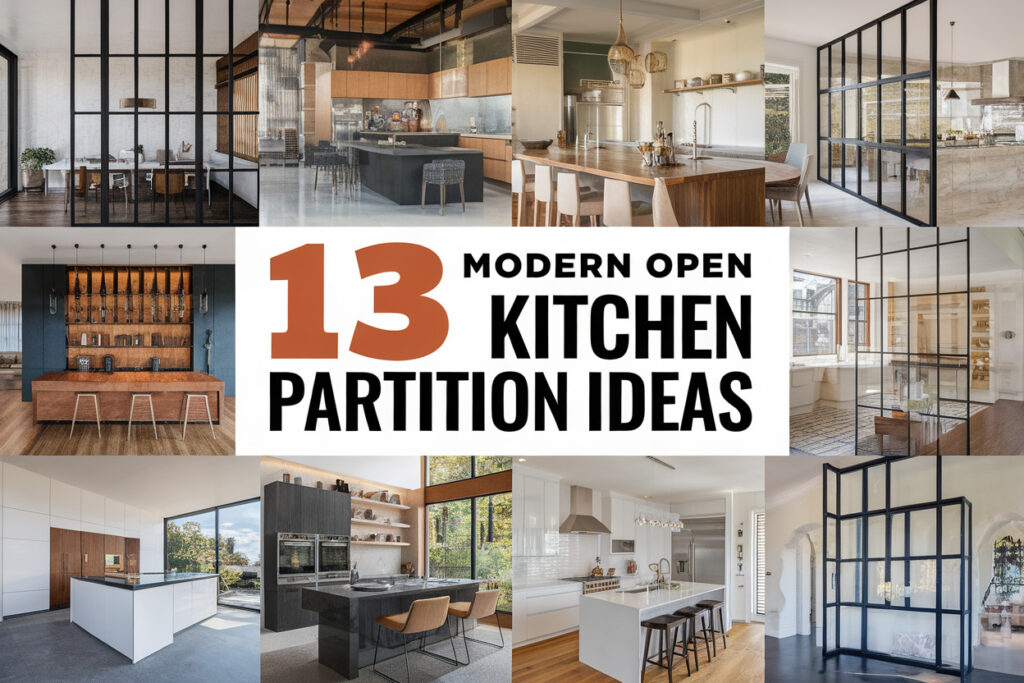
13 Open Kitchen Partition Ideas for Dividing with Style
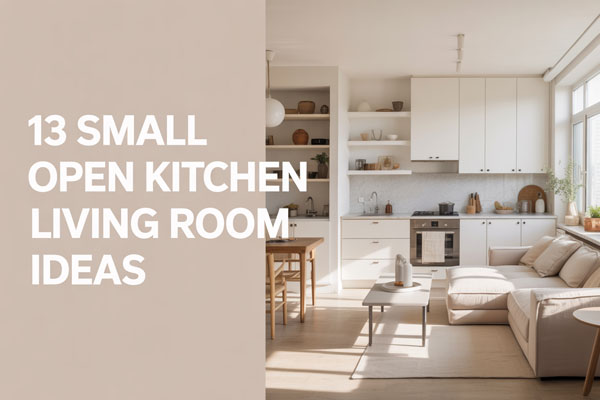
Open kitchens look amazing in photos, but real life feels louder, messier, and way more chaotic. I learned that the hard way after cooking one curry and smelling it in my sofa cushions for two days straight.
You don’t need walls to fix that problem, and you definitely don’t need a renovation budget either.
You just need smart partitions that divide space without killing the vibe.
1. Half-Wall Kitchen Partition with a Countertop Finish
I love this idea because it gives structure without turning your kitchen into a box. A half wall creates a visual break while keeping the space open and social. I tried this in a rental-friendly way, and it instantly made the kitchen feel intentional instead of accidental.
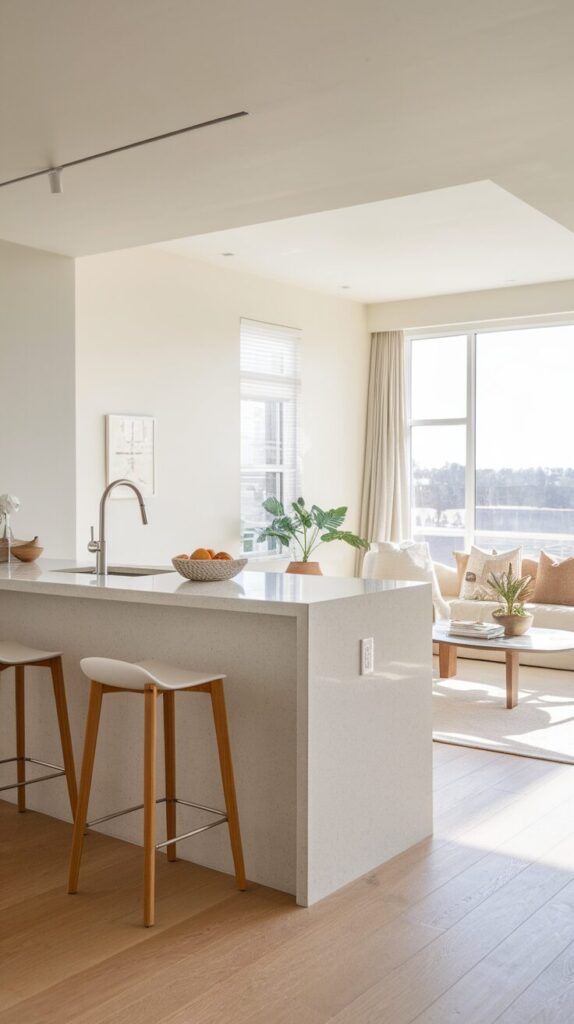
Open kitchens often blur into the living area and make everything feel unfinished. A half wall fixes that by defining zones while staying light and open. You get separation, extra counter space, and a clean line that feels deliberate. IMO, this option works best if you want subtle division without drama.
Why This Works
The half-wall height blocks clutter at eye level while letting light flow freely. The countertop finish gives it purpose, so it doesn’t look like a random wall stub. Your brain reads it as furniture, not construction. That mental trick alone makes the space feel calmer.
How to Do It
- Build the wall to waist or chest height so it doesn’t block light
- Add a durable countertop like quartz, wood, or laminate
- Match the countertop with existing kitchen finishes for flow
- Use the surface as a serving counter or casual dining spot
Style & Design Tips
Stick to clean lines and avoid bulky trims that feel outdated. Match the wall color to either the kitchen cabinets or living room walls to keep things cohesive. Avoid dark colors if the space lacks natural light. Keep the design simple so it feels intentional.
Pro Tip or Budget Hack
Use a wood slab or butcher block instead of stone to save money. You can even repurpose an old countertop for a custom look. Seal it properly, and it lasts longer than you expect.
2. Vertical Wooden Slat Partition for Warm Texture
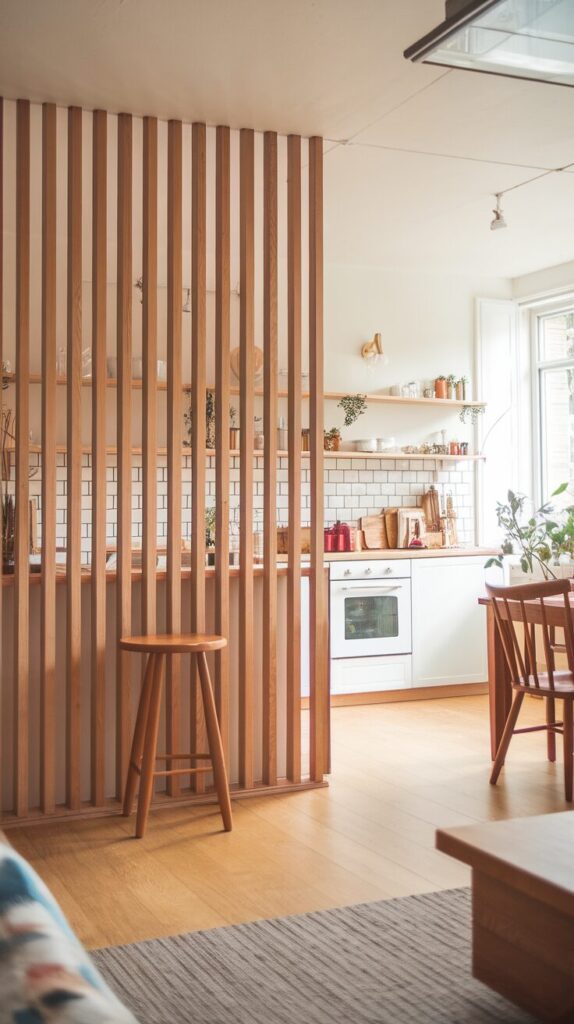
I used to think slat partitions belonged only in fancy homes, but that belief aged badly. Wooden slats add warmth, texture, and separation without blocking light. This idea instantly upgrades an open kitchen without feeling heavy.
Open kitchens can feel cold and echoey with too many hard surfaces. Vertical wooden slats soften the space while subtly dividing zones. They add warmth and rhythm, which makes the room feel designed. I love this look because it feels modern but still cozy.
Why This Works
The gaps between slats allow airflow and light to pass through. Your eye sees separation, but the room stays open. Wood also balances out glossy cabinets and appliances. That contrast keeps the space from feeling sterile.
How to Do It
- Choose evenly spaced vertical slats for a clean look
- Secure them from floor to ceiling or half-height
- Use treated wood to handle kitchen humidity
- Anchor them firmly for safety and stability
Style & Design Tips
Keep the slats evenly spaced for a polished look. Match the wood tone with furniture or flooring nearby. Avoid overly dark stains in small spaces. Let the texture do the work instead of adding decoration.
Pro Tip or Budget Hack
Use MDF or plywood strips instead of solid wood. Paint or stain them for the same effect at half the cost. Most people won’t notice the difference.
3. Glass Partition with Black Metal Frames
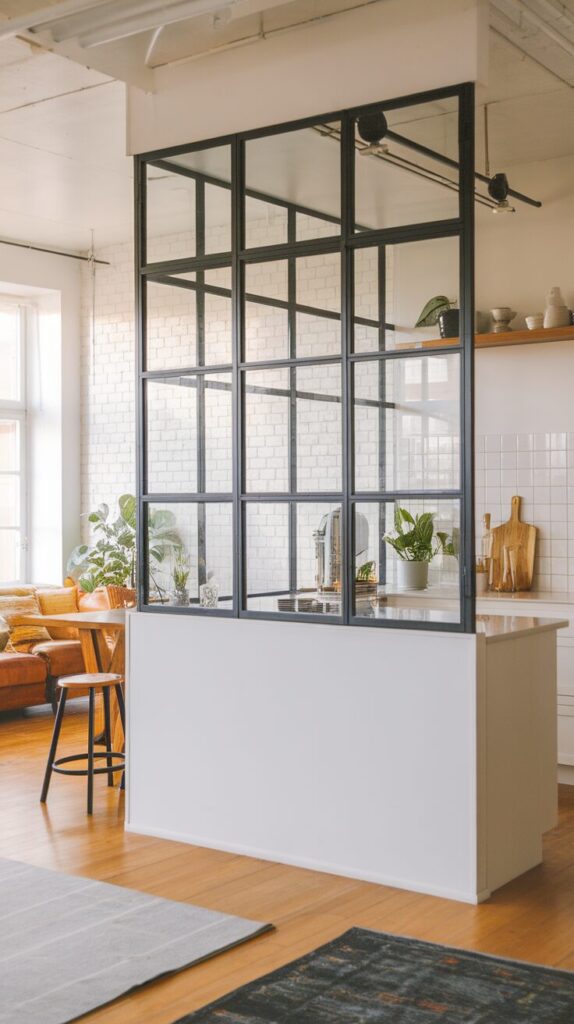
This idea screams modern without trying too hard. Glass partitions keep the kitchen visible but contained. I recommend this if you love light but hate kitchen chaos on display.
Cooking messes can ruin the calm vibe of an open living area. A glass partition solves that without blocking light. Black metal frames add structure and style. This setup feels intentional and architectural.
Why This Works
Glass keeps visual flow intact while controlling sound and smells. The metal frame outlines the kitchen like a picture. Your space feels divided but still connected. It’s a balance that works in both small and large homes.
How to Do It
- Install tempered glass for safety
- Choose slim black frames for a modern edge
- Add sliding or hinged doors if needed
- Seal edges properly to prevent grease buildup
Style & Design Tips
Stick to matte black frames for a timeless look. Avoid thick frames that overpower the space. Keep glass clear rather than frosted for maximum light. Clean it regularly so it stays sharp.
Pro Tip or Budget Hack
Use glass panels only halfway up for a cheaper alternative. Pair them with a solid lower panel. You still get light without full-wall costs.
4. Open Shelving as a Soft Divider
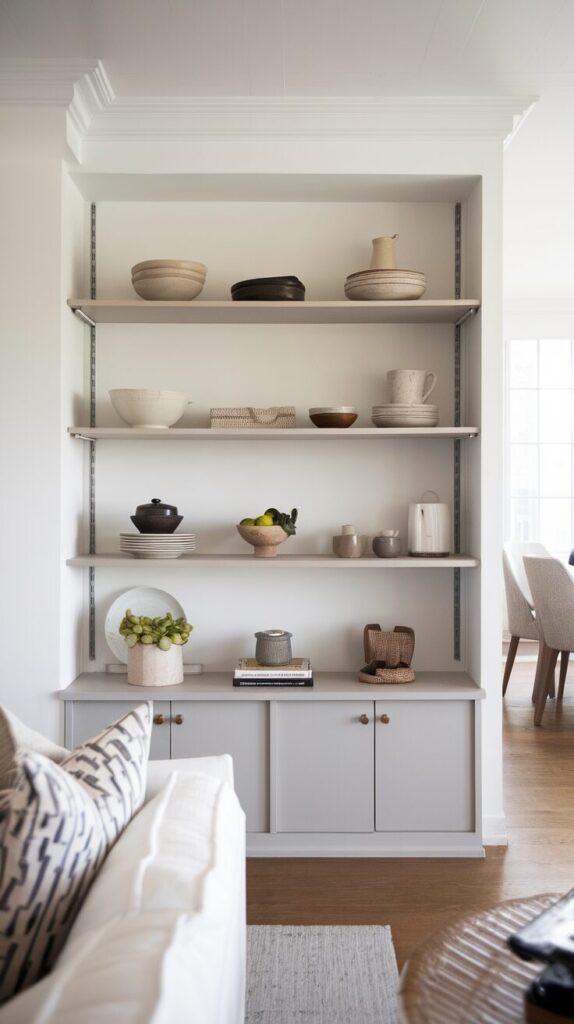
This idea works when you want function and separation in one move. Shelving divides space while adding storage. I love this option for smaller apartments.
Open kitchens often lack storage and boundaries. A shelving unit solves both problems. It creates a visual break while holding everyday items. This approach feels practical and lived-in.
Why This Works
Shelves block sightlines without stopping airflow. They also give you storage exactly where you need it. The open design keeps things light. Your space feels organized instead of cramped.
How to Do It
- Choose open shelves with a sturdy frame
- Place them perpendicular to the kitchen
- Secure them properly to avoid wobbling
- Use baskets or boxes for visual calm
Style & Design Tips
Keep shelves neatly styled with repeating colors. Avoid overcrowding them with random items. Mix functional pieces with decor. Balance matters here.
Pro Tip or Budget Hack
Use a bookshelf instead of custom shelving. Anchor it safely, and it works just as well. Paint it to match your décor.
5. Sliding Barn Door Partition
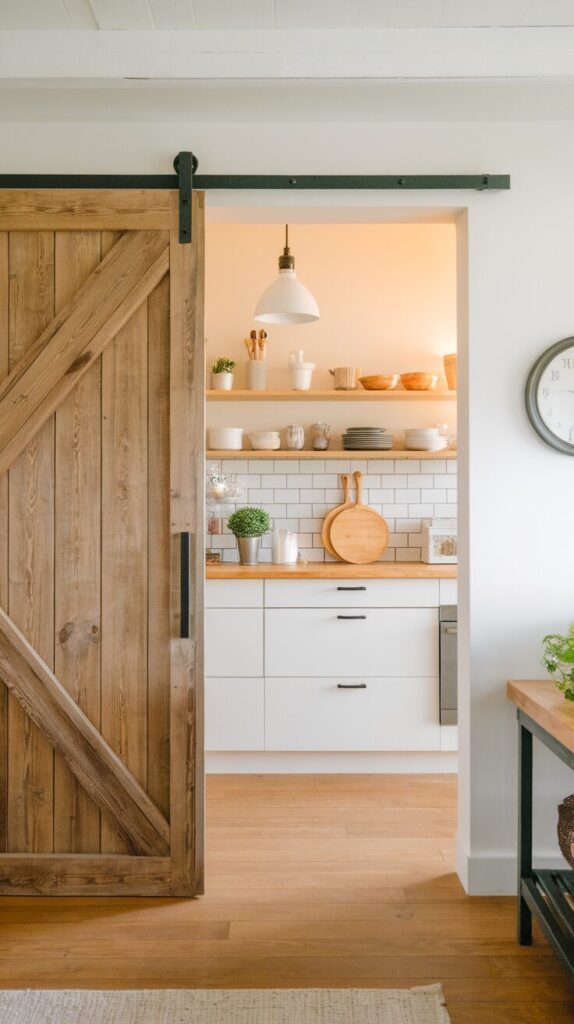
Barn doors add character fast. I didn’t expect to like them in kitchens, but they work surprisingly well. They give flexibility without permanent division.
Sometimes you want the kitchen open, and sometimes you don’t. A sliding barn door gives you that choice. It adds charm and function in one move. This option works great for busy households.
Why This Works
The sliding mechanism saves space. You avoid swing clearance issues completely. The door becomes a design feature instead of a barrier. That dual purpose makes it smart.
How to Do It
- Install a sturdy track above the opening
- Choose lightweight but solid door material
- Ensure smooth sliding action
- Add a soft-close mechanism if possible
Style & Design Tips
Choose simple designs over rustic overload. Neutral colors work best in modern homes. Avoid overly distressed finishes. Let the door complement the space.
Pro Tip or Budget Hack
Use hollow-core doors to cut costs. Paint them well, and they look high-end. Hardware matters more than the door itself.
6. Kitchen Island as a Natural Divider
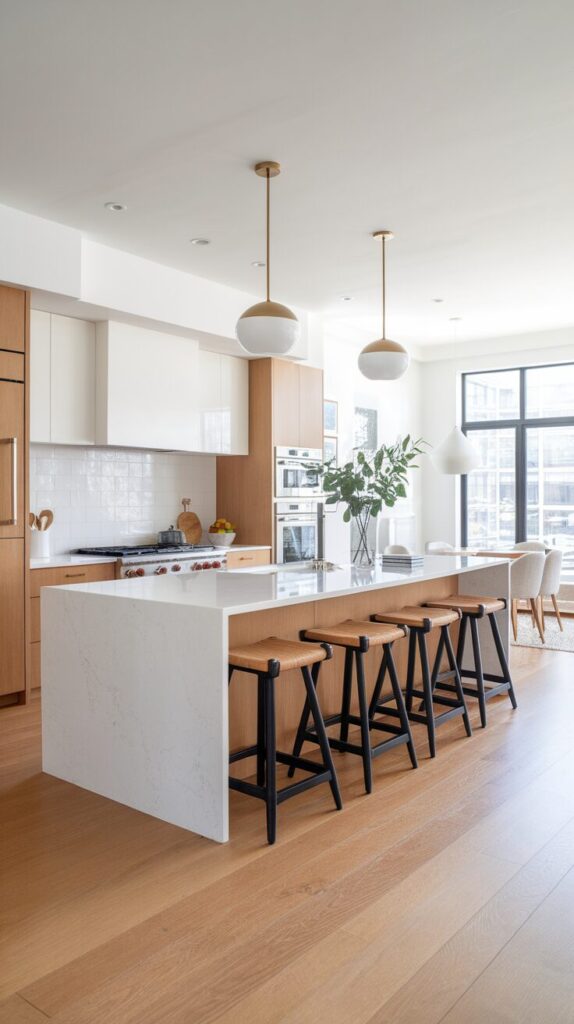
This one feels obvious, but people often underestimate it. A well-sized island defines space instantly. I rely on this idea in almost every open kitchen layout.
Open kitchens sometimes lack a clear boundary. A kitchen island creates one naturally. It separates cooking from living without blocking interaction. Plus, you get storage and prep space.
Why This Works
Islands anchor the kitchen visually. They guide movement and create flow. Your brain reads the island as the kitchen edge. That clarity reduces visual noise.
How to Do It
- Size the island proportionally to the room
- Leave enough clearance for movement
- Add seating on one side for function
- Use contrasting finishes for definition
Style & Design Tips
Use contrast to define the zone clearly. Avoid oversized islands in small spaces. Keep the design clean. Function always comes first here.
Pro Tip or Budget Hack
Use a movable island or cart. It costs less and adds flexibility. Lockable wheels keep it stable.
7. Folding Screen Partition for Flexibility
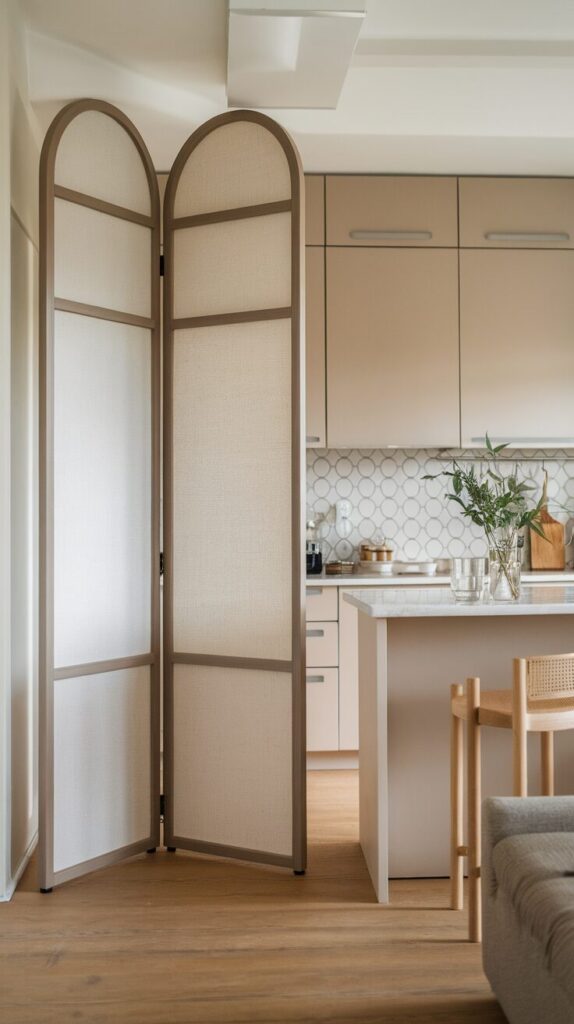
This option feels underrated, but it works beautifully. Folding screens give instant separation with zero construction. I like them for renters or commitment-phobes.
Permanent partitions don’t suit everyone. Folding screens offer instant division without effort. They add texture, color, and flexibility. This option feels relaxed and adaptable.
Why This Works
Screens block sightlines without permanent changes. You can move them as needed. They also add softness to hard kitchen edges. That flexibility makes them practical.
How to Do It
- Choose a screen tall enough for coverage
- Place it where traffic stays minimal
- Fold it away when not needed
- Secure it slightly if pets roam
Style & Design Tips
Pick neutral patterns for longevity. Avoid busy prints in small spaces. Let the screen complement furniture nearby. Balance keeps it stylish.
Pro Tip or Budget Hack
DIY a screen using hinges and panels. Paint or wallpaper it yourself. Custom looks cost less than you think.
8. Curtain Divider for Soft Separation
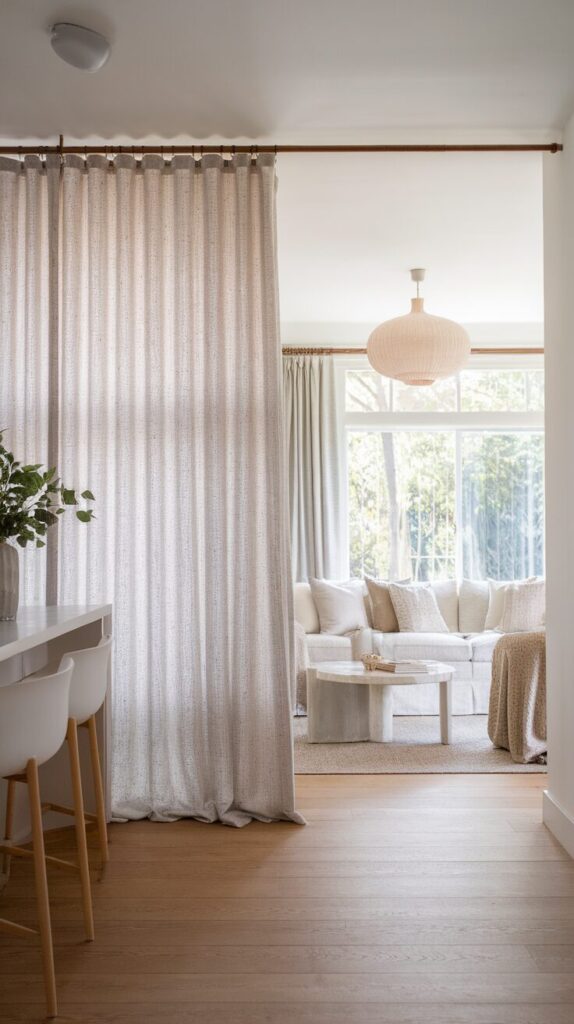
Curtains sound simple, but they work. I use this idea in casual spaces. It feels cozy and low-pressure.
Hard partitions can feel too rigid. Curtains soften the transition between kitchen and living areas. They give privacy when needed and disappear when open. This idea feels effortless.
Why This Works
Fabric absorbs sound and softens light. Curtains also adapt easily. You control openness with a simple pull. That flexibility suits daily life.
How to Do It
- Install a ceiling-mounted track
- Choose washable, durable fabric
- Keep the curtain length floor-grazing
- Tie it back when open
Style & Design Tips
Stick to light fabrics for airflow. Avoid heavy drapes near cooking zones. Neutral tones work best. Let texture add interest.
Pro Tip or Budget Hack
Use shower curtains or IKEA panels. They cost less and wash easily. Nobody needs to know.
9. Low Cabinet Partition Facing the Living Area
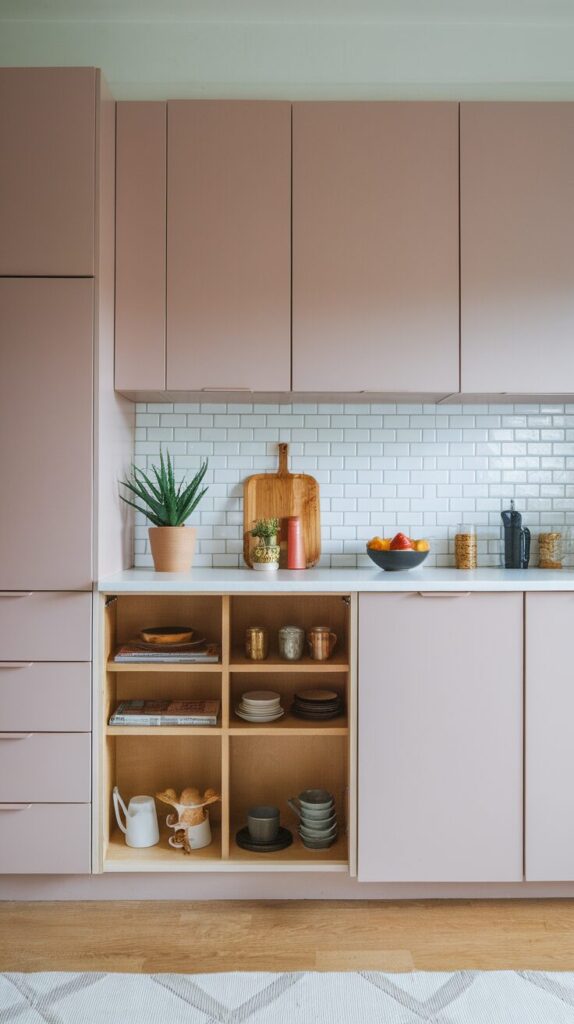
This idea combines storage and division. I love anything that multitasks. This one earns its keep.
Open kitchens often waste wall potential. A low cabinet creates separation and storage. It defines space while staying useful. That efficiency matters.
Why This Works
Cabinets block clutter visually. They also store items close to where you need them. The low height keeps the space open. It’s a smart compromise.
How to Do It
- Build cabinets at waist height
- Face them toward the living area
- Use flat fronts for a clean look
- Secure them firmly to the floor
Style & Design Tips
Choose handle-less designs for a sleek finish. Match cabinet color to living furniture. Avoid busy hardware. Keep it calm.
Pro Tip or Budget Hack
Use pre-made cabinets instead of custom. Modify depth if needed. Custom look, lower price.
10. Metal Grid Partition for Industrial Style
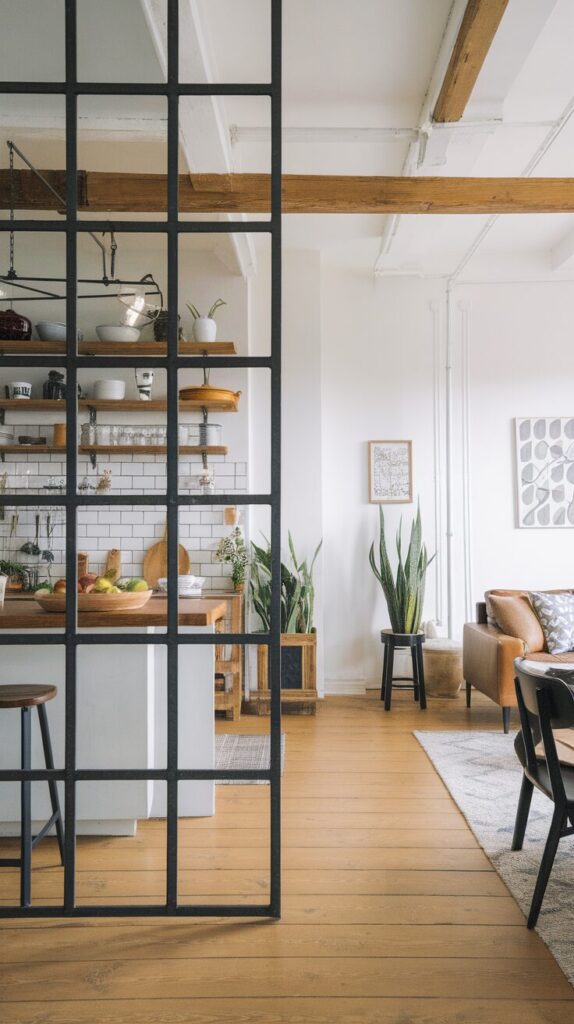
This one feels bold, and I respect that. Metal grids bring structure without heaviness. They suit modern or industrial homes well.
If you like edgy interiors, this idea fits. Metal grids divide space while staying airy. They add character instantly. This option feels confident.
Why This Works
Grids create visual boundaries without solid walls. Light flows through easily. The structure adds interest. It feels intentional and modern.
How to Do It
- Choose powder-coated metal for durability
- Install floor-to-ceiling or half-height
- Secure anchors properly
- Pair with softer elements nearby
Style & Design Tips
Balance hard metal with wood or fabric. Avoid overly thick grids. Keep lines clean. Let contrast work naturally.
Pro Tip or Budget Hack
Use wire shelving panels as dividers. They cost less and look similar. Paint them for cohesion.
11. Plant Wall or Green Divider
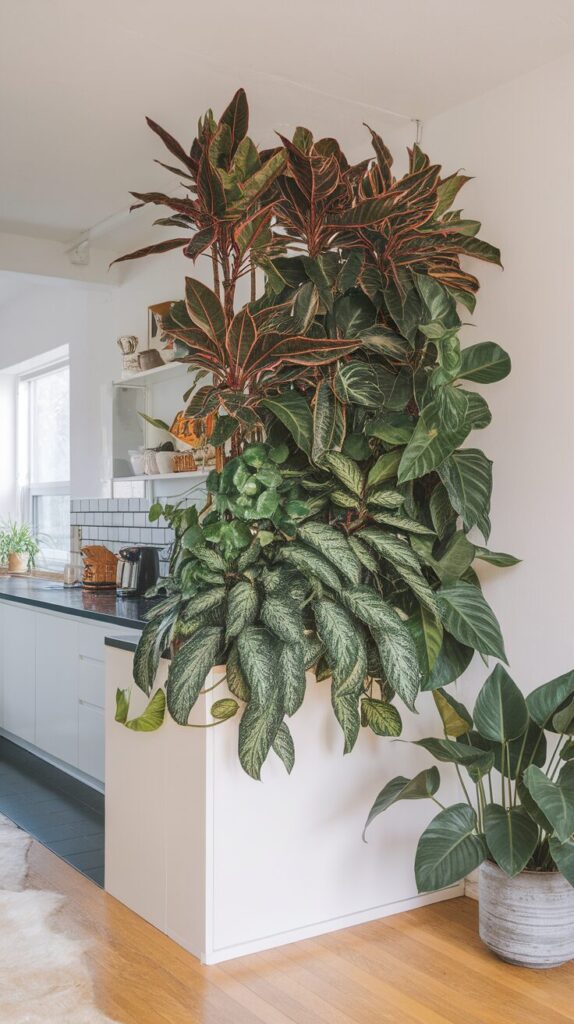
Plants fix almost everything, honestly. They soften space and clean the air. I love this idea for relaxed homes.
Open kitchens can feel sterile. Plants add life and separation at once. A green divider feels fresh and calming. This idea feels alive.
Why This Works
Plants create visual barriers without blocking light. They improve air quality too. Your space feels healthier. That matters more than trends.
How to Do It
- Use tall plants or vertical planters
- Choose low-maintenance varieties
- Place them in stable containers
- Water consistently but carefully
Style & Design Tips
Stick to similar plant types for cohesion. Avoid cluttering with too many pots. Keep colors natural. Let greenery lead.
Pro Tip or Budget Hack
Use faux plants if maintenance scares you. Quality faux options look convincing. Zero stress, same vibe.
12. Frosted Glass Panel Divider
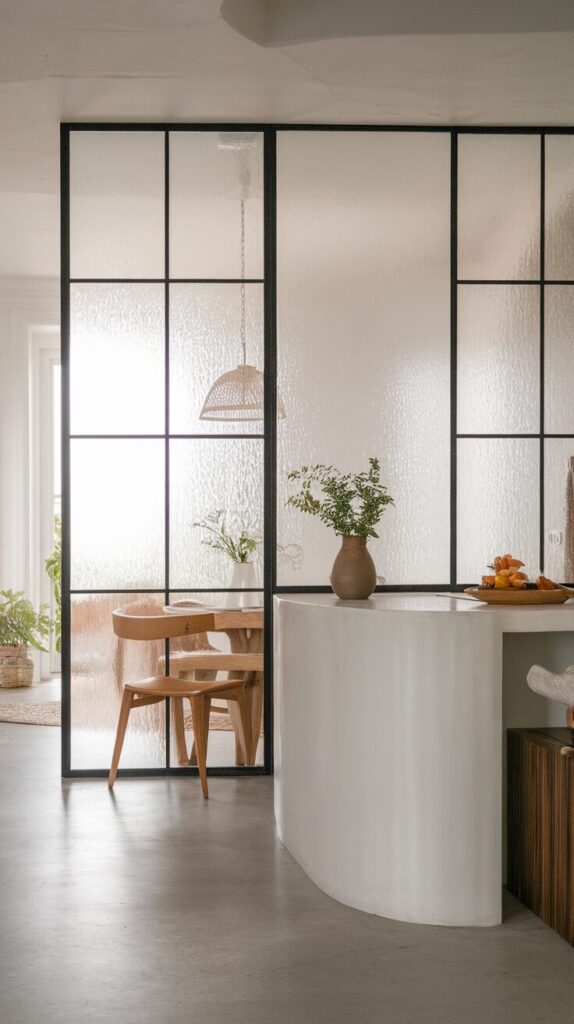
This option feels clean and modern. It offers privacy without darkness. I recommend it for minimalist spaces.
Some people want separation without full visibility. Frosted glass delivers that balance. It hides mess while letting light through. This idea feels polished.
Why This Works
Frosting diffuses light beautifully. It softens harsh edges. The kitchen feels separate but bright. That balance feels intentional.
How to Do It
- Install tempered frosted glass panels
- Frame them lightly or go frameless
- Seal edges carefully
- Clean regularly to avoid buildup
Style & Design Tips
Choose simple frosting patterns. Avoid decorative prints that date quickly. Keep lines clean. Less always works better here.
Pro Tip or Budget Hack
Use frosted window film on clear glass. It costs less and installs easily. You can remove it anytime.
13. Multi-Panel Room Divider with Mixed Materials
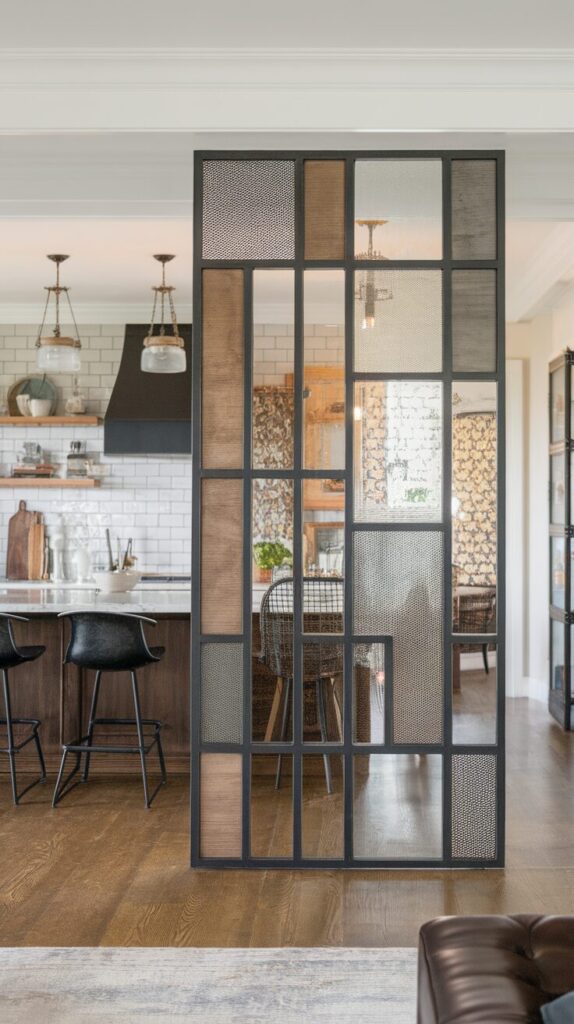
This final idea mixes everything I love. Wood, glass, and metal work together. It feels custom and creative.
Open kitchens don’t need one-note solutions. A mixed-material divider adds interest and function. It feels intentional and unique. This option suits bold decorators.
Why This Works
Different materials define space visually. Each panel plays a role. The mix keeps things dynamic. Your space feels layered.
How to Do It
- Combine wood, glass, or metal panels
- Keep panel widths consistent
- Secure everything properly
- Plan spacing carefully
Style & Design Tips
Maintain color harmony across materials. Avoid clashing finishes. Keep the design balanced. Cohesion matters most.
Pro Tip or Budget Hack
Use reclaimed materials. Old doors or panels work well. Unique looks cost less.
Open Kitchen Partition Planning Strategy: Design with Purpose First
Most people jump straight into Pinterest saves and forget to plan the actual function of the space. You need to define what problem you’re solving before choosing a partition style. Start with clarity, not aesthetics.
Identify your main goal first. Do you want to reduce cooking smells, block visual clutter, improve storage, or create better traffic flow? Once you lock in that purpose, every design choice becomes easier and more intentional.
Measure everything twice and walk through the space physically before committing. I always recommend taping the floor where a divider might go so you can feel how it changes movement. That quick test prevents expensive layout regrets.
Think about light sources early in the process. Open kitchens rely heavily on shared natural light, so any divider should either allow light through or redirect it intentionally. Brightness affects mood more than most people realize.
Finally, align your partition style with your home’s overall design language. A hyper-industrial metal grid in a soft farmhouse home creates tension that rarely works. Cohesion builds trust in your design.
Layout & Flow Principles That Make Open Kitchens Work
Open kitchens succeed when movement feels effortless. Your partition should guide traffic instead of interrupting it. Always maintain clear pathways between cooking, dining, and lounging areas.
Use visual anchors to define zones. Kitchen islands, rugs, lighting fixtures, and ceiling details can reinforce the partition’s role. These layered cues help the space feel structured without heavy walls.
Balance vertical and horizontal elements. If you install tall slats or glass panels, offset them with lower furniture pieces. That contrast keeps the room from feeling top-heavy.
Pay attention to sightlines from entry points. When someone walks into your home, their first view should feel organized. Strategic partitions help hide sink clutter or prep mess without isolating the kitchen.
Budget Planning & Installation Considerations
Budget decisions shape everything, so set clear limits before exploring materials. Custom glass partitions cost significantly more than shelving or curtains. Knowing your spending range saves time and frustration.
Factor in installation complexity. Some ideas require professional help, especially glass panels or structural half walls. Others, like screens or shelving, allow for easy DIY projects.
Always account for long-term maintenance. Glass requires frequent cleaning, wood needs sealing, and fabric curtains demand washing. Choose materials that match your lifestyle, not just your aesthetic preference.
Check local building codes if you plan structural changes. Some half walls or built-ins require approval depending on your location. Responsible planning protects your investment.
Common Mistakes to Avoid
Many homeowners choose partitions that block too much light. Heavy materials in small spaces shrink the room visually and create an enclosed feeling. Always prioritize openness in open-plan layouts.
Oversizing the divider ranks high on the regret list. A massive island or bulky shelving unit can choke traffic flow. Keep proportions aligned with the room’s scale.
Ignoring ventilation causes problems later. Dividers that fully enclose cooking zones without airflow trap heat and smells. Maintain air circulation whenever possible.
Clashing design styles create visual confusion. Mixing ultra-modern glass with ornate traditional cabinetry often feels disjointed. Keep materials consistent with your overall theme.
Skipping anchoring and safety measures leads to hazards. Tall shelving units or slat walls must remain secure, especially in homes with kids or pets. Stability should never be optional.
Safety & Practical Use Considerations
Kitchen partitions should support daily life, not complicate it. Choose materials that tolerate heat, moisture, and grease exposure. Durability matters more than trendiness.
Maintain clear access to electrical outlets and switches. Poor placement can block functionality and create awkward workarounds. Plan around utilities from the start.
Keep cleaning routines simple. Smooth surfaces wipe down easily, while intricate grids collect dust and grease. Consider how often you want to maintain the feature.
Ensure stability in movable options. Folding screens and mobile islands must remain balanced and secure. Practical use always outweighs aesthetic novelty.
Frequently Asked Questions
Do open kitchen partitions make small spaces feel smaller?
No, smart partitions actually improve small spaces when they allow light and airflow. Choose airy designs like slats, glass, or open shelving.
What is the most budget-friendly kitchen partition option?
Curtains, folding screens, and repurposed shelving units offer the lowest-cost solutions. They provide flexibility without construction expenses.
Can I install a partition without professional help?
Yes, many options like shelving, screens, and curtains work well for DIY installation. Structural walls or glass panels often require professional expertise.
Which partition style works best for modern homes?
Glass panels, metal grids, and clean-lined slat dividers complement modern interiors. Keep finishes minimal and cohesive.
How do I reduce cooking smells in an open kitchen?
Use partitions that guide airflow while maintaining ventilation. Pair your divider with a strong range hood for better odor control.
Should I match the partition color to the kitchen or living room?
Match it to the dominant tone in the space for cohesion. If you want contrast, keep it subtle and intentional rather than dramatic.
Final Thoughts
You don’t need walls to create order, and you definitely don’t need to do everything at once. Pick one idea that fits your space and your lifestyle, then build from there.
I always say start small, live with it, and adjust later. Your home should feel flexible, not stressful.